


Syndigo PIM: Features, Use Cases and Implementation
Short answer: Syndigo PIM is the product information management module of Syndigo’s SaaS platform. It centralizes product data, enrichment, digital assets, and workflows, and connects directly to Syndigo’s syndication network, MDM (from Riversand), and, since 2025, 1WorldSync’s GDSN data pool.
In the fast-paced realm of eCommerce, marked by intense competition and constantly shifting consumer expectations, efficient product information management is critical. As the linchpin of thriving online retail operations, PIM serves as a central hub, orchestrating the organization, enrichment, and distribution of crucial product data.
It provides a structured framework for managing and improving each product’s information.
- Consistency: PIM ensures consistency in product information across all channels, preventing discrepancies that could confuse or deter potential customers. Consistent data builds consumer trust and credibility.
- Accuracy: By centralizing product information, PIM reduces errors from manual data entry or updates. Accurate, reliable product data is crucial to giving customers the information they need to make informed purchasing decisions.
- Efficiency: PIM streamlines workflows by providing a single platform for managing product information. This efficiency not only saves time but also allows businesses to adapt quickly to market changes and updates.
- Enrichment: PIM lets businesses enrich product data with images, videos, specifications, and marketing content. This enriched data improves product presentation and creates a more engaging, informative shopping experience.
- Adaptability: As businesses expand and diversify their product offerings, PIM ensures scalability and adaptability. It provides a flexible infrastructure that can accommodate new products, attributes, and channels without compromising data integrity.
Without a robust PIM solution, businesses often struggle with data inconsistencies, errors, and delays in updating product information across multiple channels. This not only hampers the customer experience but can also lead to missed sales opportunities and increased operational costs.
Syndigo’s PIM module is a game-changer, offering businesses a comprehensive toolkit to tackle these challenges head-on. By providing a centralized repository for all product information, Syndigo’s PIM module becomes the cornerstone for maintaining data accuracy, facilitating team collaboration, and ensuring seamless integration with various e-commerce platforms.
Overview of Syndigo
Syndigo leads the way in innovative solutions for businesses in product information management. As a leading global provider, Syndigo empowers companies to excel in the competitive eCommerce landscape with a comprehensive suite of tools designed to streamline and optimize how they manage and distribute product information.
Syndigo’s commitment to excellence is reflected in its cutting-edge technologies, tailored to meet the diverse needs of businesses across industries. From data enrichment to digital asset management, Syndigo’s solutions are crafted to enhance the efficiency of product information workflows, ultimately enabling businesses to deliver accurate, consistent, and compelling product content to their customers.
Syndigo PIM: Quick Summary
| Question | Short answer |
|---|---|
| What it is | The PIM module of Syndigo’s SaaS product content platform |
| Deployment | SaaS (vendor-hosted) |
| Related modules | MDM (Riversand), syndication, enhanced content, content analytics |
| Recent change | Syndigo acquired 1WorldSync in September 2025 |
| Best for | Brands, CPG, foodservice, and distributors that syndicate to many recipients |
| Pricing | SaaS subscription, quote-based |
Key Features and Capabilities of Syndigo PIM
1. Data Enrichment and Quality Control
Enhancing product data is a pivotal aspect of Syndigo’s PIM solution. It lets businesses enrich product information with additional details such as images, videos, specifications, and marketing content.
The module also includes robust quality control mechanisms to keep data accurate and consistent and ensure it adheres to predefined standards.
2. Integration Capabilities
Understanding businesses’ diverse technology landscapes, Syndigo’s PIM module offers seamless integration with eCommerce platforms, content management systems, and other essential business applications. This lets businesses use Syndigo’s PIM module within their existing infrastructure, creating a cohesive, integrated ecosystem.

Ready to Elevate Your Product Data and Enhance Customer Experiences? Discover the Transformative Power of Syndigo’s PIM Module with Us
3. Workflow Automation
Syndigo’s PIM module streamlines and automates critical product information management workflows. From data entry to approvals, automation reduces manual errors, speeds time-to-market, and improves overall operational efficiency.
This feature is particularly beneficial for businesses dealing with a high volume of products and frequent updates.
4. Centralized Product Data Management
Syndigo’s PIM module provides businesses with a centralized hub to aggregate and manage all aspects of product data. This centralized repository ensures accurate, up-to-date information is readily accessible to all stakeholders, supporting collaboration and consistency across channels.
5. Digital Asset Management
Recognizing the importance of visual content in eCommerce, Syndigo’s PIM module includes advanced digital asset management capabilities. Businesses can efficiently organize, store, and retrieve multimedia assets, such as images and videos, ensuring a compelling and consistent visual presentation across online platforms.

Syndigo’s PIM module addresses the multifaceted challenges of product information management through innovative features and capabilities. Whether it’s centralizing data, ensuring quality, or automating workflows, Syndigo’s PIM module gives businesses a robust toolkit to meet and exceed the expectations of the modern eCommerce landscape.
Benefits of Syndigo’s PIM Module
Syndigo’s PIM module offers a range of benefits, addressing key challenges in product information management. By leveraging this innovative solution, organizations can improve operations and deliver a better experience for both internal teams and customers.
1. Enhanced Collaboration and Workflow Efficiency
Syndigo’s PIM module catalyzes improved collaboration among teams involved in the product information management process. With centralized access, teams can collaborate seamlessly on data enrichment, updates, and approvals.
Automation features further amplify workflow efficiency, reducing the time and effort required to manage product information. This collaborative, efficient approach speeds time-to-market for new products and updates.
2. Streamlined Product Content Syndication
Syndigo’s PIM module excels in streamlining product content syndication, ensuring that the right product information reaches the right channels seamlessly. With integrated syndication capabilities, businesses can distribute consistent, enriched product data to eCommerce platforms, marketplaces, and other digital channels.
This not only expands product reach but also strengthens online presence and visibility, driving potential sales.
3. Improved Data Accuracy and Consistency
One of the primary advantages of Syndigo’s PIM module is significantly improved data accuracy and consistency. By centralizing product information, businesses can reduce errors from manual data entry or disparate data sources.
This creates a single, reliable source of truth that ensures consistent, accurate product data across all channels and builds consumer trust.
4. Time and Cost Savings in Managing Product Information
The streamlined workflows and automation in Syndigo’s PIM module translate into tangible time and cost savings. Reduced manual effort, fewer data discrepancies, and less need for constant corrections not only speed up operations but also cut associated costs.
Businesses can allocate resources more strategically, focusing on value-added tasks rather than routine data management. Together, these benefits position Syndigo’s PIM module as a transformative tool for businesses seeking to optimize their product information management processes.
As organizations embrace improved accuracy, collaboration, efficiency, and streamlined syndication, they are better equipped to navigate the complexities of the eCommerce landscape and stay ahead in a competitive market.
Ready to Embrace the Benefits of Syndigo’s PIM Module to Elevate Your Business Efficiency and Customer Satisfaction
Industry-wide Application of Syndigo PIM
Let’s explore how Syndigo PIM benefits businesses across industries.
1. Automotive Aftermarket
Syndigo’s PIM module helps automotive aftermarket businesses manage extensive product catalogs. It keeps product details, fitment information, and compatibility data accurate and readily available.
This is essential for providing a seamless online shopping experience for customers looking for specific automotive parts.
How Does PIM Empower Your Automotive Aftermarket eCommerce Journey?
2. Foodservice
In the foodservice industry, regulatory compliance is crucial. Syndigo’s PIM module enables businesses to manage and communicate accurate nutritional information, ingredient lists, and allergen details.
This helps ensure compliance with food safety regulations and builds consumer trust.
3. Restaurants and Operators
For restaurants and operators, managing menu items, pricing, and nutritional information is crucial. Syndigo’s PIM module supports efficient menu management, enabling quick updates, accurate pricing, and rich media content to enhance dish presentation.
4. Retailers and Distributors
Retailers and distributors benefit from Syndigo’s PIM module by streamlining product information workflows. This improves collaboration, reduces time-to-market for new products, and streamlines updates and management of product data across channels.
5. Energy
In the energy sector, where technical specifications are critical, Syndigo’s PIM module centralizes detailed product information. This includes specifications for equipment, machinery, and technical components, ensuring accurate communication of product features and capabilities.
6. Healthcare
Healthcare businesses deal with complex product information, including medical devices and pharmaceuticals. Syndigo’s PIM module helps manage and disseminate critical product data while ensuring compliance with regulatory standards, making it easier to meet industry-specific requirements.
7. Manufacturing
Syndigo’s PIM module helps manufacturing businesses centralize and manage vast amounts of product data, including specifications, dimensions, and materials. This ensures consistent product information across all channels and improves collaboration among teams.
8. Consumer Packaged Goods (CPG)
CPG companies rely on brand consistency for consumer recognition. Syndigo’s PIM module helps maintain consistent product information, packaging details, and marketing content across retail channels, supporting a unified brand image.
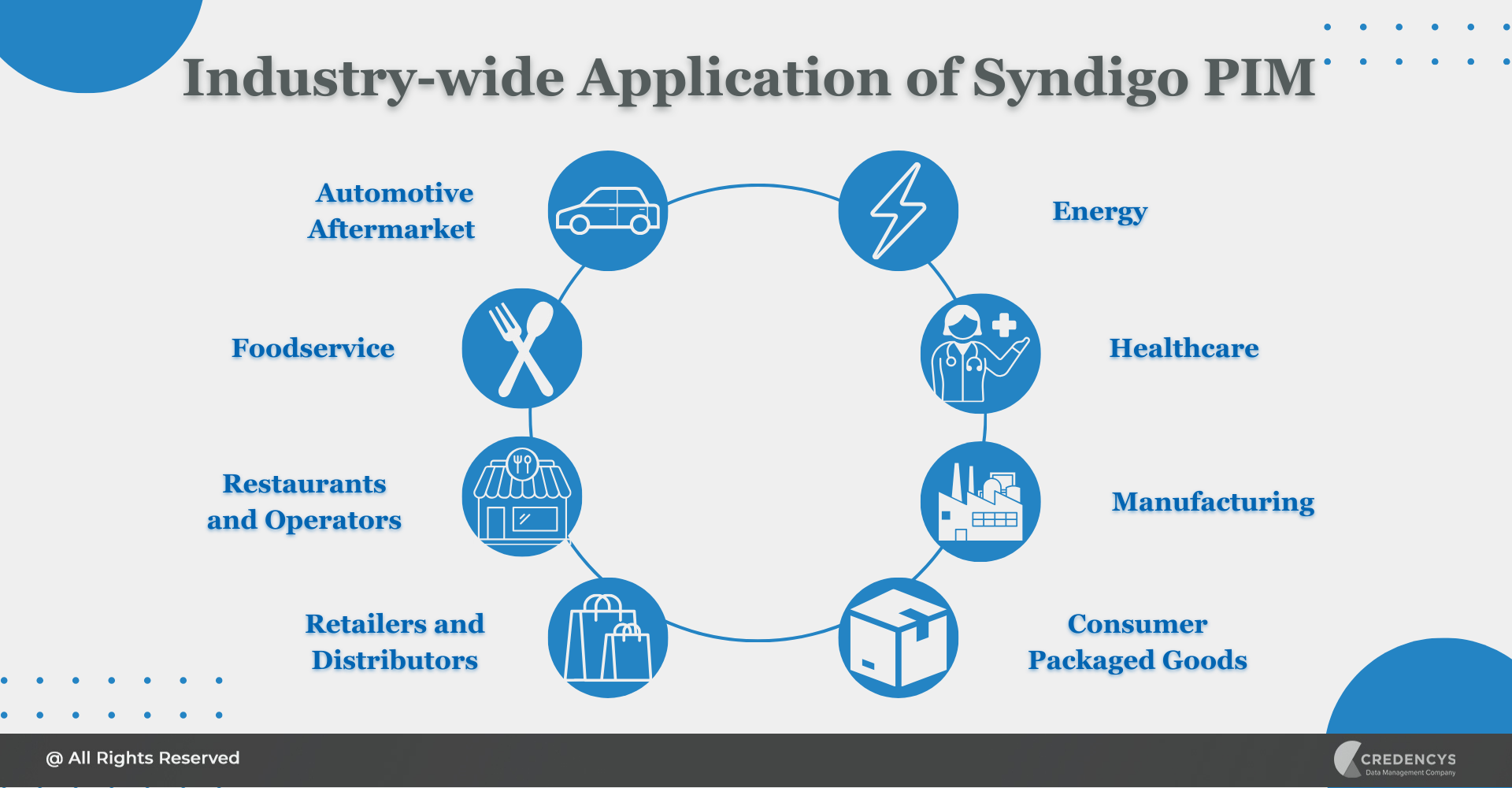
In summary, Syndigo’s solutions offer industry-specific features and capabilities by addressing the unique challenges each sector faces in managing and disseminating product information. Syndigo’s PIM module centralizes data, improves efficiency, and increases accuracy, supporting better operations, stronger customer experiences, and greater competitiveness across these industries.
Steps to Implement Syndigo’s PIM Module
Implementing Syndigo’s PIM module is a strategic process that requires careful planning, collaboration, and customization to align with a business’s specific needs. Here are the key steps in implementing Syndigo’s PIM module:
1. Assessment and Planning
Conduct a comprehensive assessment of the current state of product information management within the organization. Define specific goals and objectives for implementing the PIM module, considering data accuracy, workflow efficiency, and syndication needs.
2. Customization and Configuration
Customize the PIM module to align with the business’s unique requirements. This includes configuring data fields, workflows, and user roles to match the organization’s structure and processes.
3. Data Migration
Migrate existing product data into the PIM module to ensure a smooth transition. This involves cleansing and organizing data to meet the business and Syndigo PIM system standards.
4. User Training
Provide comprehensive training to users who will interact with the PIM module. This includes instruction on data input, enrichment processes, and utilizing automation features to optimize workflow efficiency.
Want to Know the Benefits of Equipping your Team with the Skills They Need for Seamless Data Management
5. Testing and Quality Assurance
Conduct thorough testing to ensure that the PIM module functions as intended. This includes testing data accuracy, workflow automation, and integration with other systems.
6. Go-Live and Monitoring
Launch the PIM module across the organization, monitor performance, and address any issues that arise during the initial phases of implementation.
Establish a feedback loop to continuously refine and optimize the system based on user experiences and evolving business needs.
Key Considerations While Integrating Syndigo’s PIM with Existing Systems and Software
Syndigo’s PIM module is designed to seamlessly integrate with a variety of existing systems and software, enhancing its versatility and adaptability. The integration process involves the following key considerations:
1. Identify Integration Points
Assess your existing technology ecosystem and identify which systems need to integrate with Syndigo’s PIM module. This may include eCommerce platforms, ERP systems, content management systems, and more.
2. API Integration
Leverage Syndigo’s robust APIs to facilitate smooth integration with other systems. APIs enable real-time data exchange and synchronization, keeping information consistently updated across all connected platforms.
3. Customization for Compatibility
Customize integration parameters to ensure compatibility with existing software. Syndigo’s PIM module offers flexibility to adapt to different data formats, protocols, and communication standards.
4. Data Mapping and Transformation
Define data mapping and transformation rules to ensure that data flows seamlessly between Syndigo’s PIM module and other integrated systems. This is crucial for maintaining consistency and accuracy in information exchange.
5. Testing Integration
Conduct thorough testing to verify the integration’s effectiveness. Test data flow, data consistency, and system behavior under various scenarios to identify and address any potential issues.
6. Continuous Monitoring and Optimization
Implement monitoring tools to track integration performance in real time. Regularly assess and optimize integration processes to accommodate changes in business requirements or technology updates.

By following these steps, businesses can ensure a successful implementation of Syndigo’s PIM module and seamless integration with existing systems, unlocking the platform’s full potential to enhance product information management and overall operational efficiency.
Syndigo PIM: Results From Our Projects
- Fashion retailer on Syndigo: 60% less time on content updates, 70% better data accuracy
Need hands-on help? See our Syndigo implementation services or hire Syndigo developers.
Frequently Asked Questions
What is Syndigo PIM?
The product information management module of Syndigo’s SaaS platform, used to centralize, enrich, and govern product data and syndicate it to retailers, marketplaces, and data pools.
Does Syndigo include MDM?
Yes. Syndigo offers master data management, built on Riversand, which it acquired in 2021.
Is Syndigo connected to GDSN?
Yes. Syndigo supports data pools, and since acquiring 1WorldSync in September 2025, it also owns a GDSN-certified data pool.
How long does a Syndigo PIM implementation take?
A focused first release typically takes 3 to 6 months; larger programs run in phases over 6 to 12 months or more. The number of recipients, integrations, and data quality drive the timeline.
Credencys – A Trusted Syndigo PIM Implementation Partner
Credencys Solutions is a seasoned and reliable Syndigo PIM implementation partner dedicated to transforming the digital landscape. Credencys’ deep understanding of Syndigo’s innovative PIM module and its proficiency in seamless integrations positions Credencys as the ideal implementation partner for businesses aspiring to optimize their product data workflows.
From the initial assessment of your unique business requirements to the meticulous customization of Syndigo’s PIM module, Credencys is committed to tailoring solutions to your specific needs. Credencys doesn’t just implement; it collaborates to improve operational efficiency, making Syndigo’s PIM module a catalyst for accuracy, consistency, and streamlined workflows.
Closing Thoughts
Syndigo’s PIM module emerges as a game-changing solution for businesses seeking to excel in the intricate realm of eCommerce product information management. From its intuitive user interface to robust features like centralized data management, enrichment capabilities, and workflow automation, Syndigo’s PIM module offers a comprehensive toolkit to meet the diverse needs of industries ranging from manufacturing to healthcare.
As the eCommerce landscape evolves, Syndigo’s PIM, supported by Credencys, meets and exceeds market demands, helping businesses stay ahead in a competitive arena. Embrace this transformative journey, elevate your product information management practices, and thrive in the digital age with Syndigo and Credencys by your side.
Unlock the Full Potential of Syndigo’s PIM Module with Our Expert Guidance




Tags: