Mbaas: The major Breakthrough in Enterprise Mobility!

Mobile is a digital tipping point for businesses!

And, now it’s become the hallmark for the enterprise services.

85% of organizations allow employees to bring their own mobile to work, predicted by IDG research.

The custom mobile application has added a new frontier in the enterprises.

According to Forrester research, 53% of work-related information is accessed by the employees with their own personal devices.

As, more people living in the mobile moments demand enterprises to make mobile apps out of the door today, not tomorrow.

“We are moving to a world where mobile is driving cloud adoption in the enterprise. So IT is looking for a cloud-based service that the line of businesses can use and consume in a completely self-service fashion.” — Kinvey

Developing and deploying the mobile apps quickly that also align with business requirements is very difficult.

Plus, the investment in mobility apps needs to be done in a strategic way as it will be liable to bring top line revenues.

Also, enterprises need to ensure that mobile app can be easily connected to back-end app & data services, secured, and pretty more.

The core premise

A lot of time and resources are wasted in arranging and maintaining this infrastructure.

So, is there any solution?

Yes, MBAAS perfectly fits the balls!

MBaaS- Mobile back end as a service meet the goals and addresses all concerns in an optimized way.

Take a glance, what MBaaS is?

Well, it works much like its full form and makes handling of back-end handy.

It is a specialized solution that provides pre-built APIs, custom SDKs, cloud-hosted components for developing the mobile app backend.

Highly scalable and innovative services enabled to store and link the applications to a backend cloud infrastructure with feature rich in data synchronization, push-notification support, user management and file-handling.

Doesn’t it sound like a fairy tale?

Yes, it is.

Before the enterprise could have even started designing any strategy for the mobile solution, the entire back end is ready. Moreover, MBaaS can be architected to create cross-platform native app seamlessly.

According to MarketsandMarkets forecast, the MBaaS market will be worth $7.7 billion by 2017, up from $216.5 million in 2012.

Now, let’s see how MBaaS can be a game changer for the enterprises to implement mobility solutions effortlessly

Making app development agile

In today’s competitive environment, enterprises are going mobile to prove their worth in the niche market.

Worth mentioning, enterprises are more focused on business needs and want to deliver the same experience to the customer quickly.

But during the development process, developers are left with no choice and have to use the specific tools, and deal with unfamiliar tool, API or SDK.

However, MBaaS create a great deal of freedom for enterprises by letting developers to choose any app development platform that organization team have expertise in.

It maximizes the flexibility and minimizes the time team take to deliver the mobile app that finely tuned with business needs.

The unparalleled technical tool turns out to be finest fabric of all businesses.

Presently, many applications depend on the MBaaS platforms provided by Kinvey, salesforce.com, Microsoft Azure and Parse.

More focus over UI/UX

Every enterprise creates more emphasize to have mobile app with an out-of-box User interface and user experience.

From the business perspective, it’s true, but when it comes to development part, the idea is put off.

Why?

Developers get into the weeds of back-end infrastructure. It demands huge effort and time, and team race against the clock to finish the task. Consequently, adjustments are made on UI/ UX side.

Leveraging MBaaS vendor, developers don’t need to manage cloud-based database, push notification server and user management system. Plus, the uptime and scalability of the backend is also handled by MBaaS.

Adoption of this platform will make the enterprises thrive as team can give more attention to the UI and UX.

Complexity of development Reduced

Application development leads to deal with complex server side programming, redundancy in creating back-end code blocks, integrating features and pretty more issues.

Deploying MBaaS require a little coding and maintenance as majority of the logic is available within native SDKs.

Moreover, for the app engineering across cross-platform using MBaaS become quite easy as it generates dynamic SDKs with custom object classes, native data caching, documentation, and test scripts.

Speed up app delivery

For the development of either cross-platform or native app, the core components or infrastructure have to keep in place that would require a good amount of time.

The total time it takes to develop the solution sometimes, reduces the value of the app over the period of time.

For instance, enterprises before building any strategic rationales analyzes the POC (Proof of concept) of the solution, but if the same POC will take months to build, then how long the whole strategy implementation and app crafting will take.

Instead, if in this mean time, technology changes and consumer demand altered, then the built solution will be of no use.

Here MBaaS would come to rescue. MBaaS makes the app out of the door swiftly along with robust security and scalability.

Conclusion

The landscape is changing by minutes; no enterprise can operate or reach out millions of customers without mobile. Instead, building enterprise solutions is not enough, while developing mobility app in an agile way and with secured back-end is of utmost importance.

MBaaS is the top line platform that mobilizes the organizations in an agile way and eases development process.

Leading enterprises are increasingly embracing the MBaaS to built apps quickly and connect to all back-end app and data services easily.

Make MBaaS, the DNA of your enterprise today!
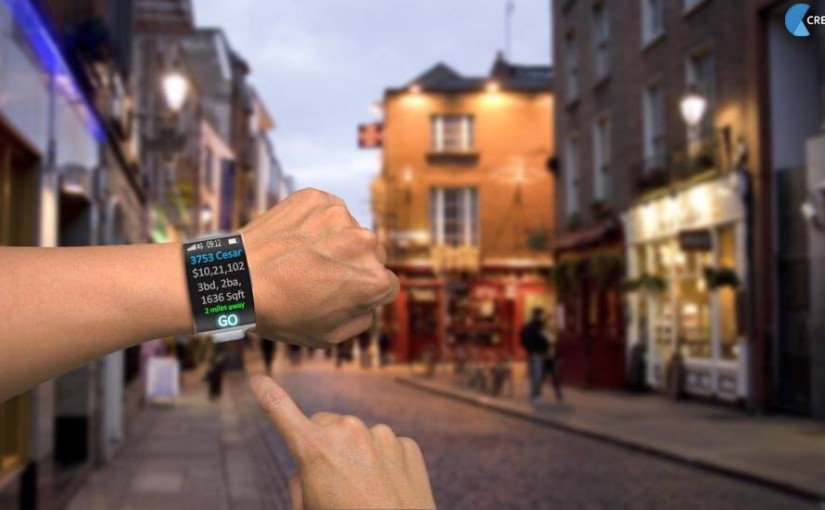
Real – Time Marketing with Wearables: The Secret to Attracting Your Distracted Prospect

Ever since Sergey Brin’s Ted Talk on Google Glass hit the web, wearables have become the most talked after technology. And why not?

Swedish Market Research Firm Berg Insight predicts that the wearable shipments will hit 168 million units by 2019.

Technology has always made our lives better, hasn’t it?

While 2014 saw half of the world talk about Wearable, 2015 will be the year of mass adoption. Whether it is smart glass, smart watch or a clothing accessory, wearable will have a dominating presence in our lives this year.

Back in 2012, the wearable market was valued at around USD 75 million but come 2018 and the market will explode to a whopping USD 6 billion.

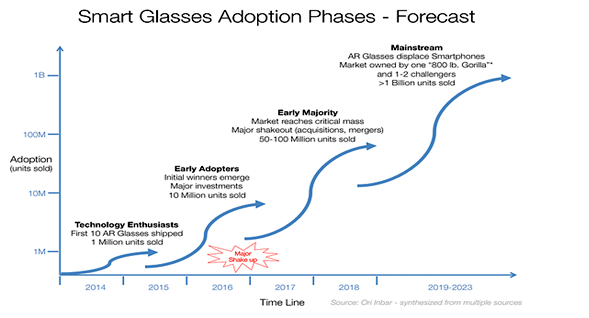
If we talk about smart glasses, its shipment is estimated to be around 1 million by this year’s end. At the end of the decade, the shipments are expected to cross 1 billion.

statistics

Despite the rumors that Google Glass will be dead, the shipments of smart glasses will show no signs of slowdown. Because, it’s pretty clear that whether it is an enterprise or a consumer, there will be no one who will not be impacted by this technology.

Whether it’s healthcare or real-estate, industries are gradually realizing how wearable are impacting the way they do business. And, even marketing one’s product/service is not left untouched by wearable.

To understand, how wearable will impact marketing, how one can utilize the power of wearable for real-time marketing, we will consider the Real-Estate Industry.

Going beyond Mobile Technology

Realtors and agents who have now realize the importance of having a mobile app to help prospects search their dream properties might find themselves a bit overwhelmed. For those who have just started with mobile technology, wearable technology might lead them to scratch their heads.

However, as a real-estate agent, if you want to get ahead of the pack, you should start contemplating on how you market your business differently. The hi-tech times ahead will test you brutally because just having a website or a mobile presence won’t be good enough. Plus, with prospects, today, becoming more informed than ever, you risk losing your business if you don’t stay ahead of times and become an early adopter of technology.

Getting Noticed: The Real-Estate Marketers Big Problem

With so much of competition brewing up in the real-estate market, how do you get your business/brand known to your prospects? There are countless, ruthless sharks waiting out there in the deep waters to eat your share. Remember, these are the times when your competitor’s site is just a click away. The way you market your business needs to be changed. Gone are the days, when you would just sit in your office and expect prospects to come over, inquire and buy properties. A little arrogance from your side, and your business goes to the graveyard.

The way your prospects feel when they interact with your brand matters the most. The way you make them feel about upcoming properties determines whether they will buy or not. Remember, purchase decisions are based on psychology and emotions. Information certainly plays a role in buying but deep inside there are the wants, needs, and concerns of prospects waiting to be addressed.

The entire experience of you showing them under-construction properties is going to play a huge role in deciding whether their core needs are addressed or ignored.

So, how is wearable going to help you solve this problem?

Let’s get going and enter the 21st century of marketing your real-estate business.

Provide Contextual Intelligence

If you have been implementing mobile marketing strategies for your business, you must be aware of location-aware marketing. It involves targeted offers and advertising messages based on the user’s location and his/her preference. Apply this to wearable

Let’s say your prospect is wearing a smart glass and has your company’s app installed on his/her device. When he/she enters a particular area, targeted information can be sent on the device relating to houses that are available for sale in that specific area based on their choice.

It’s like you have a virtual assistant with you which gives you information that’s rightly aligned to your needs.

Or consider this.

When a user steps into the area where she/she needs to purchase a property. With your app installed on glass, they can view your 30 second powerful elevator speech. It helps you deliver personalized messages to your audience as per their convenience and preference.

Trulia is a classic example of this.

The Google Glass App looks for property listings in a database, matches a user’s search preferences and renders data on the glass.preferences and renders data on the glass.

See it for yourself here.

Know Your Prospect Better

David Nichols rightly said, “If you use the standard research methods you will have the same insights as everyone else.”  Today, just tapping into the location of your prospect won’t win you games. It’s a standard practice that everyone follows. But, in order to understand and woo your prospects, you need to tap into their emotional state too. Wearables come equipped with minuscule sensors that give you insights on a user’s response while purchasing and using your product/service. Tracking such metrics in real-time will obviously help you deliver more impactful marketing messages.

Redefine your Selling Experience

Imagine this scenario. As a real-estate agent, you are wearing a glass. You get a call from a property-seller. You visit the site, take a video of the property in real-time and help evaluate its price. With glass by your side, you can create advertisements in real-time, push your messages on social media platforms with voice commands. And, all this happens in minutes as opposed to hours, wherein you go back to office, evaluate the property and send in the price details. Then, hunt for a buyer and blah blah.

Wearable like smart glasses helps you quote in real-time to a customer, reducing the turnaround time and thereby increasing the possibility of you making revenues quickly.

Road to Success

From managing and tracking your marketing campaigns to talking to your prospects and existing customers in real-time, wearable applications can turn your company’s fortunes like never before. However, the path you look to tread can be quite challenging.

The things discussed here are not as simple as they seem.

Remember, your prospects will keep you in mind, based on the initial experience you have delivered. The user experience has to be given the prime importance because if it’s intuitive and seamless, you have won your prospect’s heart and if not they will discard you without a second thought.

Beacon Technology : 3 Brands Share their Success Stories

Beacons have invaded every sphere of our lives.

You will find these in retail stores, football stadiums, airports, fashion outlets, libraries and now banks, too, have geared up for using this technology for improving in-branch experience.

The point is, Beacon Technology, is already been seen upto as the next big thing for brands that heavily rely on PROXIMITY MARKETING.

For those of you, who are not aware of this tech, head on to this article.

In 2014, 8% of US retail locations were equipped with beacon technology, according to BI Intelligence. This figure is expected to hit 32% in 2015 and 85% in 2016.

Half of the top 100 retailers in the U.S. were testing beacons in 2014. This new technology is expected to be found in 1/3 of their store locations by the end of 2015.

The beacon base in the US will consist of 4.5 million active beacons by the end of 2018, with 3.5 million of these devices in use by retailers.

Source: Business Insider

Beacon Technology is turning out to be a game-changer for multichannel retailers and fasion & electronic outlets as it allows sending custom notifications to customers while they are in-store. Now, these notifications could range from videos to product promotions to showcasing store maps.

It is even acting as a great tool to offer customized loyalty offers. Beacons help set up highly personalized messages by helping segment purchase behavior, demographics, heavy app users and returning visitors.

Here are 3 brands that are doing it RIGHT when it comes to BEACONS…

Hillshire Brands

As a distributor of cured meat products, Hillshire Brands, (in collaboration with inMarket and BPN) used the beacon technology to push notifications regarding their products and promotions to customers while they were inside the store.

And, the results were phenomenal.

The brand’s goal was to improve brand awareness for its product called American Craft Link Sausages.

There was a 20x increase in purchase intent when customers were exposed to in-store messaging on their mobile devices. It also saw over 500% increase over the CPG for average mobile ads.

The iBeacon campaign not only allowed them to improve sales, it also uplifted brand awareness by almost 36%. Studies, such as the one conducted by inMarket, clearly prove that customers are 19x more likely to engage with an advertised product in-store after receiving personalized messages.

By being an early adopter of this tech, Hillshire Brands, indeed saw huge returns coming in within a very short span of time.

McDonalds

This brand needs no introduction. We are all lovers of the BIG MAC.

The Fast Food Giant tested Apple’s iBeacons in some limited locations across Columbus. The campaign involved sending information on attractive deals via push notifications to customers who downloaded its mobile app.

The location-based message was sent once a customer came in contact with beacons. This was actually a four-week test conducted before rolling out the campaign to other locations.

The results were good enough.

McChicken saw an 8% increase in sales, where the same was 7.5% for McNuggets. There were almost 18,000 offer redemptions across the stores.

American Eagle

Back in January 2014, American Eagle Outfitters in collaboration with Shopkick installed the shopBeacon technology over 100 locations.

The initial test involved sending messages to customers when they entered into the store, which meant little incentive for visiting the fitting rooms. Subsequently, the data proved that the percentage of Shopkick users who went to the fitting room to try on clothes was more than twice for those who received the shopBeacon messages vis-a-vis for the ones who didn’t receive the message.

Offering timely rewards to customers impacted their sales significantly.

Lessons to Learn

  • Understand the nuances of implementing iBeacons. Don’t do it just for the sake of doing it. Just because your competitor rolled out the technology, does not mean you need it to.
  • Focus on improving the experience of your customers and addressing their real in-store problems. See if the Beacon Technology can, truly, help you answer the tough questions.
  • Deliver timely, contextual information that your customers are looking for. Give them what they want to see while they are in-store and you will do wonders.

Good luck

If you know of any other brand that has benefitted dramatically from iBeacons, please share in the comments below.

Top 10 Challenges of Engineering an iBeacon App

It’s handy to get a way to, say, nearest Dominos, but when it comes to navigating inside the shopping mall, GPS service won’t work.

What to do then?

How would you get the way?

iBeacons will take the charge of it by helping you navigate the indoor space hassle free!

When you step inside the shopping mall, you will be triggered about the events at the retail store, toy house, shoe store, sales rack or café promptly based on your distance from the beacons.

iBeacons- Get the inside scoop!

BLE Beacons are the piece of hardware that can be attached to the wall or anywhere and transmit messages to smartphones or tablets on Bluetooth connection. It is proximity based, so when user enters the zone of particular beacon, the message of that context is pushed to them.

Presently, iBeacon is in nearly 200 million devices around us.

Shop owners, leveraging the potential of this technology, are able to deliver an incredible experience to their customers by means of proximity marketing, frictionless payment and personalized shopping.

Remarkable technology, iBeacons is making things easier for customers.

However, developing an iBeacon app is not simple and presents unexpected challenges before a developer.

Here are the challenges that developers face for engineering an app that delivers a rewarding experience to your customers.

Frequency variance

All beacons do not have the same frequency and do not transmit signals of same power. It presents a challenge before the developers to make the beacon transmit messages to the users when they step in the proximity, even if the signals are weak.

Fluctuation in signal accuracy

Beacon signal quality is affected by weather conditions, temperature, device power and polling intervals. All this makes signal accuracy highly variable and user will not get the information when it has to be delivered.

For instance: users are getting the welcome message after completing their shopping in the shopping mall which has to be otherwise delivered when they are at the entrance.

Difficulty in tracking during triangulation

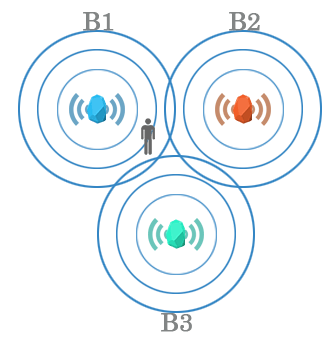
This problem arises when the three beacons are enough closer and the user comes in the vicinity of all the three. It creates difficulty for the app to find in which range user would fall and then messages are sent accordingly.

For instance, Mr. A visiting the store comes under the vicinity of these three beacons- B1, B2, & B3. Now, it becomes tricky to track that user is near to which beacon.

ibeacons process

Signal bouncing by physical space

An iBeacon app transmits signals using external radios based on proximity of the beacon. Radio waves bounce by the physical location and thereby find difficulty in detecting user’s presence.

Wi-fi creates interference

It’s not possible that one could find only one type of signal circling around the place. The spectrum band of wi-fi and Bluetooth LE is same, which may interfere with the signal. Consequently, it obstructs the context information to be delivered appropriately.

No way to check message recipiency

iBeacons are one-way radios, so no two-way communication is possible between an iBeacon and a user. It creates difficulty in knowing whether the user is getting the broadcasted message or not.

Arduous to maintain security

It is tough to maintain security because it is both hardware and software dependent and involves both physical device and authentication keys to change the settings on Beacon.

Addition of features

Developers need to carefully weigh which feature is to be kept in an app. As bombardment of so many messages will ruin the great experience, thus it’s good to push the message according to user preference and current conditions.

Avoiding identity theft

Also, when the user is notified about the list of all the users at the same beacon of matching interest, then keeping the identity of all the users confidential is essential. The major challenge is to provide the list of users with filtered data keeping the privacy of user intact.

Uploading on the app store

Make it on the app store, especially iTunes, it’s difficult for the developers to create a demo video of an iBeacon app of maximum time limit 30 seconds and of 500 MB memory.

Wrap up

Building an iBeacon app is not a run-of-the-mill job for developers as it requires them to do coding against unpredictable hardware conditions while maintaining users’ expectation and experience.

What can be done to overcome these challenges?

With the right pre-built tools, library extensions, SDKs, and APIs, developers can build an iBeacon app impeccably.

How do you deal with any such problems? And, what did you do to sort these out? If yes, then please share with us in the comments below.

Mobile Point-of-Sale Systems: Creating Disruptions in the Retail Environment

Smartphone population has now outnumbered the human population.

A World Bank Report stated that there were an estimated 7.3 billion devices on the planet as compared to 7 billion people. Almost 64% of people worldwide use mobile devices to shop.

So, it’s a no-brainer to conclude that our shopping processes have evolved tremendously over the last 70 years.

The Cash Register is an extinct species, especially in the western world and here in India, it’s almost endangered.

Retailers, no longer, need to maintain those bulky registers and keep account of their transactions. Thanks to the rise of the smartphone and tablet era. Mobile technologies have brought sweeping changes not only in the retail space but every single aspect of our lives.

Those who have visited an Apple Store must have their faces lit up. They know the kind of experience I am talking about. No standing in long queues and no check-out counters.

You might wonder – What makes this possible?

Welcome to the world of mobile point of sale systems.

You step into a store, select the merchandise, the representative scans a barcode and you make payment and leave the store. Period.

Mobile POS is enabling retailers to process payments anytime, anywhere using any payment mode like loyalty and gift cards, credit cards, debit cards etc.

How Mobile POS Works?

Mobile POS will process nearly $670 billion transactions in 2015.

Mobile POS comprises of a mobile device with a card payment reader including a handy printer. Once a store representative swipes your card, the data is encrypted and sent over a wireless network. When the charge is authorized, you sign on the screen of the device and you get a receipt immediately.

4 concerns Mobile POS is helping Retailers overcome easily

1) Longer Queues

I once went to Big Bazaar to shop merchandise of daily use. I clearly remember it was Sunday evening. The crowd there was overwhelming. We put a good number of products in the basket and made our way towards the payment counter. There were about 4-5 terminals. When we reached the counter, we were like no way we are going to stand in those long queues wasting a couple of hours. What did we do? We dropped our basket and came out empty-handed.

When there’s a huge influx in your retail store, customers get limited to the number of counters you have. Like me, much more left that day. The result? They lost a good number of customers.

Now, when you have a mobile POS deployed, you can easily handle thousands of customers without losing one. When a particular location of your store experiences such a deluge of customers waiting to avail those special discounts and schemes, mobile devices can be dispatched from other locations to handle this chaos. Mobile devices are intertwined with the store’s central ERP system and hence all information is stored in a single place. Nothing additional needs to be done.

Mobile POS brings in flexibility to your store’s operations, especially in such circumstances.

More importantly, if you implement an mPOS, you can clear up the floor space that goes into setting up cash counters. Mobile POS = Super Fast Check Out!

2) Fighting Inefficiencies

Retailers have always struggled with reducing transaction times and thereby improving customer experience. Research suggests that Mobile POS systems cut the average transaction time by half and making contactless credit card payments 5 times faster than those that require a signature.

With such technologies, you can truly deliver an advanced, sophisticated experience to your customers and combat inefficiencies at the same time. When you have such systems in place, your customers are less likely to abandon their shopping carts. It may also happen that they actually increase their basket size too.

3) Showrooming

Another big concern for retailers. Many people like me go to a retail store to actually see and experience a product but deliberately don’t purchase it. This is because when you seek to shop online, you cannot TOUCH and FEEL a product. So, the smart customer goes to a physical store to experience it. And, then ends up buying from an online retailer.

When you have a mobile POS, your store representative can help deliver detailed information on the spot and an experience that’s absent online. This increases the probability of selling more too. What’s more, if a product is not in a store, the inventory can be checked online and a sale can still happen because the other location-store might have it.

4) Marketing

Many times, retailers fail to make impact when it comes to promotions and marketing. There is this need to deliver more contextual, timely information to customers regarding upcoming schemes, product launches or discounts. With a Mobile POS system in place, while making a sale, you can collect feedback from that customer and use it for highly targeted advertising which leads to better marketing ROI and higher impact.

Conclusion

Mobile devices have fundamentally altered the way we shop. Mobile technologies will definitely propel the growth of mPOS systems. It is expected that mobile point of sale terminals will achieve 46% market penetration by 2017. As a retailer, it’s in your interest to embrace mobile technology to turn the tables for your brand. It can be your next game-changer!

Good luck

With Smart Glass, Law Enforcement is Stepping into the Digital Age

Daily, millions of crimes are reported across the globe.

And, the police is liable to solve all the cases!

This real life drama and action, in which cops are involved, is not a run-of-the-mill job.

However, they encounter many difficulties in catching suspects like – different blockades are created at different places, all vehicles are stopped and checked, number plates are checked and then manually cross-checked from the database.

Even, suspects are individually recognized and their identity is checked for verification.

This whole process is quite time-consuming and annoying, but at the same time necessary too.

Fortunately, technology has an answer to address such concerns.

Cops are now relying on wearable technology like smart glass to get hold of suspects and ensure law enforcement is seamless.

Calgary police Chief Rick Hanson says, “Technology is not going to slow down and we can’t afford to slow down.”

Leveraging the power of advanced technology like- Smart glass, cops can turn the tables. Using Smart Glass (Augmented reality device), police officers can easily find the suspicious thing, track cars on the move, get alerts whenever wanted criminals are around and much more!

After recognizing the potential of wearable technology, law enforcement personnel in Dubai, New York, Byron, Georgia, and Rialto also used Google glass.

Before we begin counting the amazing advantages of Smart Glass, let’s take a sneak peek inside it

The smart glasses look like a simple pair of glasses, but they actually are wearable computers that add more information to the reality. The internet connected glass accepts touch or voice command, projects digital images, video, audio and much more in real time. These hands-free devices connect everyone and let them do everything that they do with their smartphones.

Why is Smart Glass the next big thing for law enforcement?

Becomes a cop’s third eye

Smart glass has extended the vision of cop’s eyes. With glass, police can identify you at a glance using facial recognition software.

Currently, in USA, FBI is working on next generation identification facial recognition program wherein the central database has 13 millions of images which is expected to reach 52 million in near future.

Police department by bringing facial recognition software and smart glass together, can empower their workforce to wear hi-tech glasses to recognize a person just by looking at him/her. Glass can scan the face of an individual, then check from the database and alert police that a suspect is criminal or not.

Byron police tested eyewear in real world condition and at traffic stop found the driver to have an outstanding warrant and arrested her.

Check wanted vehicles on the fly

It’s really quite tedious task to check every vehicle and then cross-verify with the computing system that vehicle is wanted or not. However, smart glass can make this quite handy as by looking at the vehicle, the complete information of it can be known and it can be easily detected whether the vehicle is wanted or not.

Cops wearing glass simply look at the number plate of the vehicle; the glass scans the number and sends it to the server along with time, date and exact location. And, in a couple of seconds, vehicle database is checked and alert is made describing whether the vehicle is wanted or not.

Dubai police is using the smart service to issue the fines on erring motorists and identify wanted vehicles. Police developed software that enables a connection between the wearer and a database of wanted vehicle

Instant help in real time

At times, police might miss hidden gun or a person during identification or get stuck in a situation wherein they need to defuse the bomb about which they are completely unaware of. In such cases, smart glass proves to be a blessing.

Backup support can be provided to the cops from the central location as video streaming live through the eyewear of cops is monitored there. Cops are immediately alerted with the prompt message if they miss out on something during searching.

Even, experts at headquarters can guide them how to disarm a bomb along with watching how the officer is doing. This way the situation can be monitored and remote expert guidance can be provided.

Turns handy in emergency situation

In critical situations, patrolling becomes absolutely essential. However, those people constantly need to update the concerned person regarding the situation. This might affect their focus and it may prove to be fatal in emergency situations.

Smart glass lets officers transfer information without turning their attention away from the scene. Recon Jet glass with Motorola’s APX Radio and LEX 700 Mission Critical Handheld technology has come up with an innovative “Connected police officer solution.”

It lets officers monitor current situation and manage the data transfer without even lifting their finger.

Conclusion

Smart glass has reshaped the law enforcement landscape. It has brought never seen before transparency levels and helped ease out operations. Also, when people know everything is being recorded, they think twice before doing anything wrong or suspicious.

Digital glasses, indeed, are helping transform every aspect of our lives.

What do you think?

If you have come across any such uses of smart glass in the law enforcement space, please share in the comments below.

TCP v/s UDP: What works best for Taxi Apps

The transportation and logistics landscape is on the cusp of a digital overhaul. Taxi booking apps and private-car-for-hire services are selling like hot cakes.

The success of any on-demand taxi service depends on the overall user experience. Being able to share your location in real-time with a driver forms the heart of taxi booking apps.

Users need instant information on available taxis nearby. A slight delay can cause your users to abandon the app permanently. It is for this reason; one needs to be extremely cautious in choosing the technology that will shape the back-end architecture of your taxi application.

When writing a taxi app, you have to select the type of socket you are going to use. Mainly there are two types of sockets – TCP and UDP.

In light of the fact that taxi apps transmit data over the network, let’s catch a glimpse at the features of each of these sockets. Once you have this information, you will be able to make the right decision.

A Quick Introduction

TCP

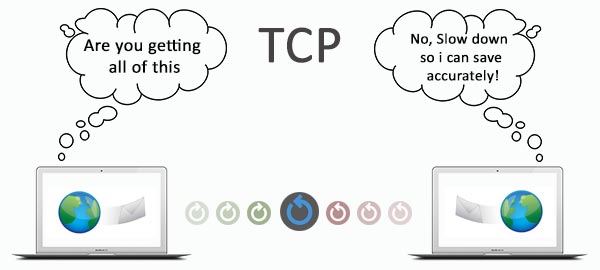
Transmission Control Protocol or better known as TCP forms the backbone of anything and everything one does on the internet. Right from emails to web browsing, everything is built using TCP.

The TCP socket is known for its reliability. What happens is, a connection is made between two machines/devices and the data is sent to and fro.

TCP-works

The reason why it is reliable is because all the data you send is guaranteed to be received by the other device/machine exactly in the order you sent. Since you are sending in a stream of data, TCP breaks down the data into packets and sends these over the network.

UDP

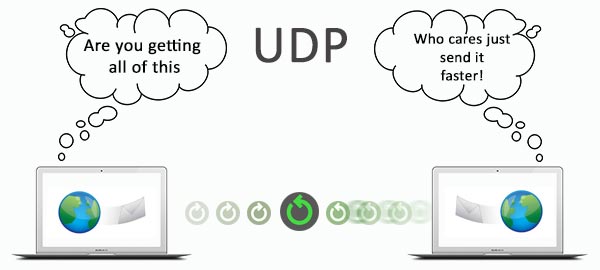
User Datagram Protocol or UDP allows sending and receiving packets directly unlike TCP. It is also known as a connectionless protocol.

DP is highly used in transferring/transporting messages. Herein, one device/machine can send tons of packets to another and that’s it.

UDP-works

UDP is used when the amount of data to be transferred is small (such as data that fits into a single packet), when you do not want the overhead of establishing a TCP connection.

Its nonexistent acknowledge packet (ACK) permits a continuous packet stream, unlike TCP that acknowledges a set of packets.

It’s time to make the call

When it comes to taxi applications, real-time location sharing is the crux. Drivers need to keep sharing their location with passengers and vice-versa.

If you use TCP as the backbone of these apps, it won’t allow for real time location sharing.

Why?

Because the driver data is sent to the server which then passes on that information to the passenger.

There will be a considerable delay which will ultimately hamper your users’ experience.

TCP provides a one-to-one, connection-oriented, reliable communication service, where socket must first be established before data can flow. It handles two-way communications, acknowledgment of data received is sent on every packet.

The IP program layer encapsulates each TCP packet with a header that includes the source and destination IP addresses including the packets time-to-live which makes smaller data heavier. Thus TCP becomes slower. It’s only suited for apps that need higher reliability and where transmission time does not play a big role.

Driver-passenger applications require real-time, fewer data to be shared which requires speed in sharing of a particular location. TCP tries and buffers the data and fills a full network segment thus making more efficient use of the available bandwidth. So it takes considerable time.

UDP, on the other hand, puts the packet on the wire immediately with lots of small packets. This results in faster data transmission.

Take-away

UDP is the most used and highly recommended protocol if you are looking out to build a robust, intuitive and dynamic taxi application.

The use of this protocol enhances the user experience by sending and receiving real-time location information seamlessly. Users can track taxi-drivers on a map-view and see them approaching towards them.

If your taxi app has to pit itself against competitors, UDP is the way to go.

5 Reasons Why Mobility Will Work Like Magic for Your Manufacturing Business

With the rise in globalization, enterprises across industries, continue to face stiff competition in all forms.

Dwindling profits, limited resources, ever-increasing customer demands, and the need to reduce operational costs without compromising on quality have emerged as some of the biggest concerns for manufacturers worldwide.

Thankfully, MOBILITY has emerged as the go-to SOLUTION for manufacturers to achieve operational excellence and take their business into the next orbit.

A survey of 3300 professionals (mostly IT decision makers) in the manufacturing sector showed 70% viewing mobility as the key to converting downtime into productive time, recovering a daily average of 42 minutes per employee.

80% of Manufacturers are increasing their reliance on Mobility.

Studies also show that approximately 10% of the mobile users are in a factory or on a construction site. And, most importantly, this number continues to grow.

On average, the IT operational spending was 4% in manufacturing companies as opposed to 2.2% across other industries. Mobile applications take up a huge chunk of this investment. In 2013, 80% of manufacturing companies developed mobile applications (Source: IDC).

Where does Mobility fit into the Manufacturing Value Chain

With technology evolving, it makes more sense to embrace mobility because of the kind of competitive advantage it will offer you.

Whether you are dealing with customers or seeking to improve field sales operations, mobility helps you overcome bottlenecks and make better business decisions.

Improve Customer Experience

Enterprise solutions are helping manufacturers make high impact on customers in terms of how they deal with them. For instance, using mobile applications, you can deliver product information in real-time anytime, anywhere. What’s more, manufacturers can help dealers view product stock, post queries, and book appointments. This is especially in say, for e.g. car manufacturing.

Mobility can also be used for customer feedback. The traditional medium of collecting feedback can prove disastrous. If critical feedback reaches you late, it could mean a loss of market share. Mobile applications help you stay closer to customers. These facilitate seamless collection of feedback from the point of contact.

Plus, mobility solutions, help customers get in touch with you faster. Meaningful insights can be taken from their feedback to improve products.

Field Sales

Inefficient business processes coupled with tiresome manual paperwork can eat into your profits. By arming your field sales force with mobile applications you can not only enhance customer retention but also improve business opportunities. It even helps in planning, promotion and marketing of your product. By integrating CRM with your enterprise solution, you can deliver accurate, timely information to your field staff on-the-go to make better decisions.

With RIFD Implementation, manufacturers can identify and track tags by tagging stationary equipment. It helps track shipments, handle materials smoothly. Mobile applications play a huge role in minimizing critical downtime by giving real-time information on stock levels, order progress, and inventory movement.

Supply Chain Management & Warehousing

When it comes to manufacturing, logistics, SCM and Warehousing can be a nightmare. Some challenges involve inefficiency in material handling & tracking due to inaccuracy in inventory management. Then there is paperwork here too. Inability to locate specific documents or information on spare parts can cost companies a fortune. Enterprise apps step in to overcome these concerns and make your processes more streamlined and efficient.

GPS-based applications are particularly helpful for warehouse management. Whether it is load scheduling, delivery management, route tracking or container management, a mobile app can make your workers’ life lot easier and productive.

Operations Management

Plan operation management is a big task for manufacturers. Getting shop-floor information on machine downtime, task scheduling, locating right people for specific jobs, managing workers and other resources can be quite a hellish experience for your supervisor.

Mobile applications with intuitive dashboards can make accomplishing all these tasks a matter of few minutes instead of hours.

Quality Assurance

Your QA & Testing processes can be more streamlined and efficient with enterprise mobility. Right from getting notification alerts for faulty parts/products to batch tracking, these solutions can help you do everything. Moreover, apps can also be tailored for inspection processes.

For example, if you manufacture toys, you can reduce paperwork and increase worker productivity by having mobile applications for inspecting raw materials, maintaining your plant and inspecting finished products.

Success Story of ArcelorMittal

ArcelorMittal needs no introduction.

Being the world’s largest steel production company, its core competency is centered on manufacturing steel for use in automotive, construction, packaging and household appliances. It has its facilities spread over 60 countries.

The company achieved excellence in its sample testing process with mobile applications.

ArcelorMittal Atlantique (in Northern France) faced significant challenges in meeting customer expectations and ensuring that its product quality was phenomenal. The process involved sending samples of manufactured steel to laboratory for mechanical and physical testing.

There was no place for tracking information between sample creation and delivery. There was no way to see the sample delivery schedule. This had resulted in testing delays ultimately leading to delays in final delivery.

Here’s what they did.

These guys implemented a mobile solution that helped track samples from production to testing. The staff was given mobile devices to scan barcodes that linked to the laboratory’s information management system.

Benefits they achieved

  • Improved visibility of sample status between collection and delivery.
  • Reduction in errors, before the samples, were sent to the lab.
  • Enhanced productivity with improved workload planning.
  • Efficiency in sample traceability.

Conclusion

By adopting mobility in the right way, you will see returns come in all forms through better customer engagement, increased worker productivity, profitable business decisions and increased profits. It’s time to mobilize your manufacturing processes to set-up a next generation operation.

Get in touch with our consultants today!

Game UI Design: The Science Behind

Angry Birds. I will be honest. I spend atleast one hour playing that game every day.

It makes most people ponder, what makes this game so addictive like weed? Just so that you know, this casual game has been downloaded over 2 billion times. Many of us did not even mind shelling out a few cents to buy the advanced version. 200 million people still play it every month. Players, across the globe, spend a whopping 200 million minutes a day playing Angry Birds which roughly boils down to 1.2 billion hours in a year.

Now, that’s super-impressive.

Game Engineers, today, are often asked to develop games similar to Angry Birds. It’s not uncommon to find your clients saying,

“Can you help us develop a game that has an excellent UI like the one similar to Angry Birds?”

This game’s UI design has, sort of, become a de-facto standard. It serves as an inspiration to all in the gaming community. With some help from cognitive science and behavior psychology, let’s see how you can create games with a truly wonderful UI design.

Understanding the user’s psychology

It’s always a smart move to consider the basic principles of psychology and philosophy to design a smarter interface. Understanding users’ behavior is the key to avoiding costly mistakes too.

This video on the Psychological Basis for UI Design Rules can be a good starting point for you. Implementing a great UI design is all about making users behave the way you want them to. This even means you do in-depth research about analyzing a user’s eyesight patterns. Cognitive Flow is imperative if you want to engineer a game that leads to heightened forms of engagement.

Sean Baron from Microsoft Studios has written this exceptional article for Gamasutra titled Cognitive Flow:

The Psychology of Great Game Design. It says there are four critical elements you need in a great game

  • Concrete goals with manageable rules
  • Goals that fit players capabilities
  • Clear and timely feedback
  • No room for distractions

Check out here.

Playing with the dopamine system

Michael Chorost, Ph.D., calls Angry Birds fiendishly addictive. So, much so that, he went ahead and deleted this game from his iPhone. He explains Angry Birds triggers what is called as a neurophysiological response. He goes on to say that this game is a terrific manipulator of the brain’s dopamine system.

Dopamine gets activated in you when something happens which is usually followed by some sort of reward. When we talk about Angry Birds, the firing of a bird, and being rewarded in the form of screaming birds, popping pigs and crashing pieces is stimulating for the gamers. The anticipation is what does the trick. Because I don’t know what’s exactly going to happen after I fire the bird and it hits the target.

This uncertainty stirs up tension leading the brain to crave release. It makes you do whatever it takes to create the release. This translates to you pulling more slingshots and firing more shots. This is the entire neurochemical stuff behind why Angry Bird is so addictive.

The point I am trying to make is games that are obviously simple, rewarding and feel realistic to users do tremendously well. Make sure your game has an element of tension to get the users’ adrenaline going.

Mysterious is great

If you pay a close attention, all great games have an element of mystery attached to them. Angry Birds is just one of them. By adding mystery to your UI design, you can not only make a game more compelling but also enjoyable. Mystery is always present in subtle forms.

Angry Birds has the followings–

  • Tiny Bananas spread only in some play sequences
  • Houses containing pigs shake slightly in the beginning
  • Play space showcases cross section of underground rocks and dirt
  • Birds somersault into the slingshot only sometimes

Keep engaging interactions

Simple, easy to learn interactions are always engaging. Seems cliché right? Well, most of the game developers get this wrong. However, creating simpler things is quite complex.

The UI design of your game should be such that after a brief interaction, users should be fully informed and engrossed. Angry Birds is engaging because its UI adds more detail in the users’ mind at the right time. It allows players to quickly create a picture of how things are going to work including the strategy, point system etc. The birds are engineered to elicit clever behaviors that expand the user’s mental model at the right point when the play becomes more complex.

Evoke emotions through sound

Neuroscience proves that music & sound trigger emotional response. By applying the right kind and type of music in your game, you can make it all the more engaging. Angry Birds’ sound may seem simple to you but in reality, it is more than complex. Almost every game has music/sound effects, but few have the power to take it to the next level. Angry Birds, very expertly, uses the concept of ‘Action Syncing’ when applied to audio. When audio elements are implemented in the right degree, they help reinforce new levels of engagement.

Hop on to this interesting article by Charles Mauro to have a detailed look at the concepts discussed here.

Are you aware of more such factors/concepts that make games addictive?

We would love to hear what you have to say.

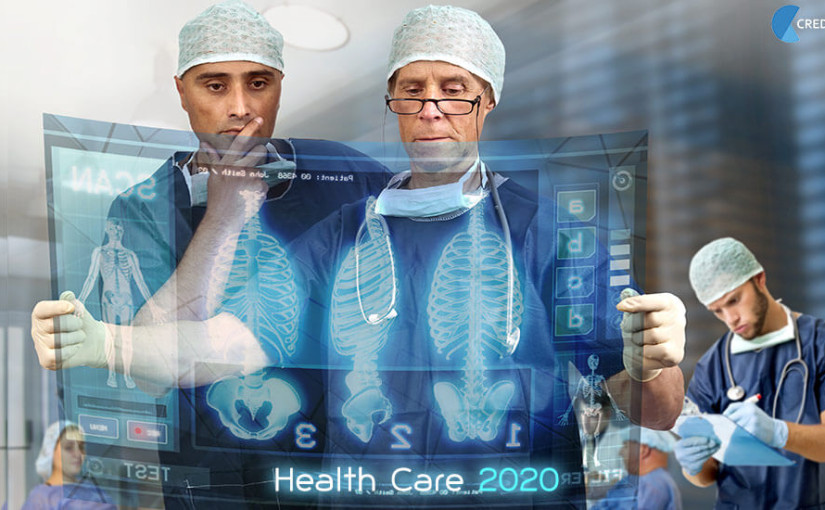
Health Care 2023 – Lets Board the ‘WEARABLE’ Time Machine

The fast paced life has left us fatigued, tired, always ready to retire to bed and always willing to hog on junk. There is practically no time, rather, no motivation for many people around us including ourselves, to spare time for our health and wellbeing.

And when the last straw strikes, we end up spending lump some for mega operations and micro therapies.

Well, we guess there is a slight change in the plot. With wearables entering the scenario, health care has tip-toed its way into a brighter future.

Talk about doctors using magnifying augmentations on operation tables to give précised results, or talk about your 60 years old dad going for a morning jog, with a calorie telling wristband you gifted him a few months ago, wearable technology is redefining future for healthcare.

And as such, we expect the future to look somewhat brilliant.

Eye gears using augmented reality

We all have heard of Google glasses, right? And why not? It topped the ‘Google’ babies for quite some time. While Google has not yet focused its forces to give a healthcare expertise to its glasses, we expect, it would do that soon!

And when that happens, we visualize doctors using smart to scan through history of patients, learning about their allergies and weaknesses while administering medications or learn about earlier treatments, while operating on specific organs.

Better yet, we are expecting it to redefine the way OTC drugs would be sold. Imagine people reading about tablets and capsules using their glasses before they bought them!

Pain management

Tired of taking pain-killers? A few years more, and chronic pain will find its place in history books.

This technology is still in-vitro, but we would love to mention its role here. A portable device using Transcutaneous Electrical Nerve Stimulation is being developed. It is supposed to emit low voltage electric charge to relieve pain in patients who have chronic pain problem. Further, since the device is portable, it would allow its users to take care of excruciating pain at many pain points on their bodies.

Bands and workout gears

They are already there! And you would be amazed with how one gear can motivate people to increase their workout duration! Fitbit users take 43% more steps a day and STRIIV users walk 60 minutes daily!

It can only get better.

Think about it in this way. While the wrist wearables and smart watches now-a-days give the wearer a complete detail of his work-out schedules and results; a bit of tweaking with Augmented Reality can result in such details to be shown in the air, rather than on the device screen!

Whoa! That’s fascinating.

So a jogger would be notified about his accomplishments after every kilometer on a screen in front of him. A brisk walker will be intimated about her burnt calories and that old man could have a better look at his sugar statistics….because all of it would be there right in front of his eyes in magnified form.

Fantastic yeah?? The world is approaching sci-fi.

And they didn’t leave the feet untouched!

Yes, now they have wearables for your feet! Future winters would not mean freezing toes. They are developing a wearable for feet, and they call it digitsole insole. You have to fix it in your shoes and control the shoe’s temperature using a mobile app that is supposed to be synced with that sole in your show.

Increase or decrease temperatures and your foot will be warmed up or cooled off accordingly.

So can the bright shiny tomorrow be shinier?

Well of course yes! Wearable technology is still in its cradle now. It will take time and a lot of conscious research to make it really work. What is fascinating us today will make us shrug in indifference tomorrow, and our future generation will grow with wearable devices.

Let’s see how with an example.

There is a point if you take the pain to scroll up, that says, doctors can use smart glasses on operation tables.

Oh yes! They can, but only if the operation promises to end within half an hour…..that’s because smart glasses don’t work for more than half an hour at a stretch.

There is a lot that can be done….

And the peak of wearable technology will probably leave us dumbstruck.

Remember your expressions the last time you watched Hunger Games? Heavens! That entire movie is all about augmentations and wearable technology!