A Step Inside The Technology of iBeacon

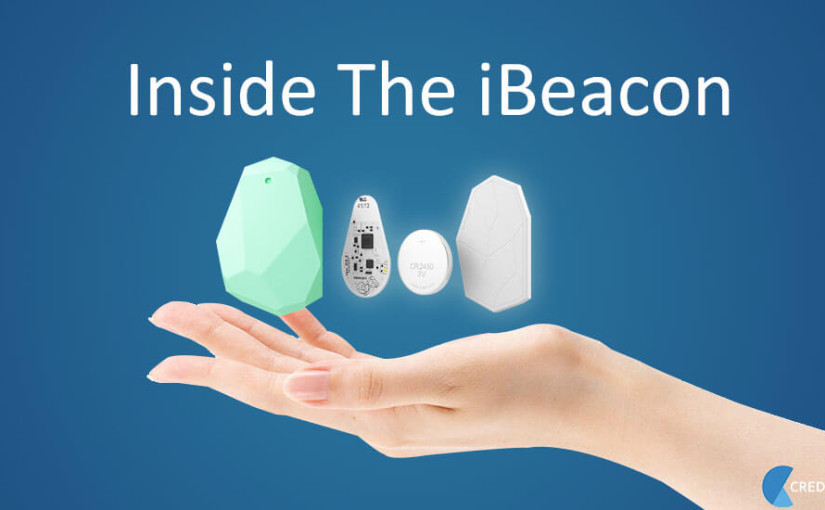
iBeacon is the name for Apple’s technology standard, which allows Mobile Apps to listen for signals from beacons in the physical world and react accordingly. In essence, iBeacon technology allows Mobile Apps to understand their position on a micro-local scale, and deliver hyper-contextual content to users based on location. The underlying communication technology is Bluetooth Low Energy.

In laymen language

iBeacons can help a phone show notifications of items nearby that are on sale, and it can enable payments at the point of sale where customers don’t need to remove their wallets or cards to make payments.

How it works?

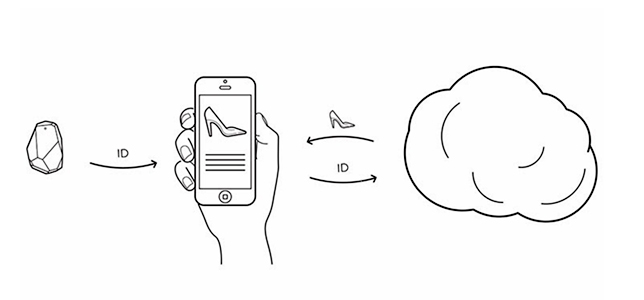
iBeacon is Apple’s version of the Bluetooth-based beacon concept, which allows Bluetooth devices to broadcast and receive tiny information within short distances. In simplistic words, it consists of two parts: a broadcaster (beacon device) and a receiver (smartphone app). The broadcaster is always advertising “I am here, and my name is…”, while the receiver detects these beacons and do whatever it needs to do based on how close or far it is from them.
It uses BLE for detection.

What is Bluetooth Low Energy (BLE)?

Bluetooth Low Energy is a wireless personal area network technology used for transmitting data over short distances.

Reported Distance between a Mobile Device and a Single Beacon

While ranging the Beacons (measuring the distance between your smartphone and a Beacon), you might notice that reported distance fluctuates heavily. That’s because the signal is simply a 2.4 GHz radio wave, which makes it susceptible to external factors, like multipath propagation, diffraction, absorption and interference.

Also, keep in mind that the fluctuations will be more visible and generally greater on Android. That’s because Apple’s CoreLocation framework for iOS already has noise reduction methods implemented. Android Bluetooth stack, on the other hand, still lacks those.

Probable Zones

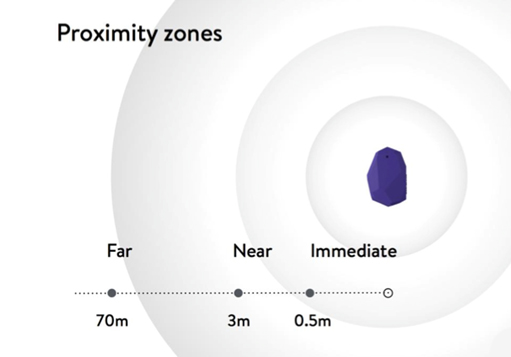
There are three static zones that surround each beacon.
iBeacon

Zones are not adjustable; they are pre-set boundaries that fit within the confines of the radio signal’s reach. As an example, if the range is reduced to 10 m, all three zones remain available. If the range is further reduced, to just 1.5 m, two zones remain available; immediate and near.

How does iBeacon use BLE communication?

With iBeacon, Apple has standardized the format for BLE Advertising. Under this format, an advertising packet consists of four main pieces of information.

UUID

This is a 16 byte string used to differentiate a large group of related beacons. For example, if Coca-Cola maintained a network of beacons in a chain of grocery stores, all Coca-Cola beacons would share the same UUID. This allows Coca-Cola’s dedicated smartphone app to know which beacon advertisements come from Coca-Cola-owned beacons.

Major

This is a 2 byte string used to distinguish a smaller subset of beacons within the larger group. For example, if Coca-Cola had four beacons in a particular grocery store, all four would have the same Major. This allows Coca-Cola to know exactly which store its customer is in.

Minor

This is a 2 byte string meant to identify individual beacons. Keeping with the Coca-Cola example, a beacon at the front of the store would have its own unique Minor. This allows Coca-Cola’s dedicated app to know exactly where the customer is in the store.

Tx Power

This is used to determine proximity (distance) from the beacon. TX power is defined as the strength of the signal exactly 1 meter from the device. This has to be calibrated and hardcoded in advance. Devices can then use this as a baseline to give a rough distance estimate.

Example


A beacon broadcasts the following packet
UUID: 12345678910245
Major: 22
Minor: 2
A device receiving this packet would understand it’s from the Coca-Cola Beacon (UUID) in the Target on 1st Street (Major) at the front of the store (Minor).
Example

Biggest Enterprise Mobility Trends of the Year 2015

Today, for many organizations, Enterprise Mobility forms the basis of their operations be it field operations or customer service.

And, why not, Enterprise Mobility has the power to turn around any company’s fortunes, if applied in the right sense and right way.

Before we dive into what 2015 has to offer, let’s quickly recap why more companies are gearing towards adopting an enterprise mobility strategy and what 2014 was all about.

Companies, mainly, embrace mobility for four reasons:

  • Improving Cost Savings
  • Addressing Productivity Concerns
  • For Employees Needs
  • Counter Competition

Industries like Banking, Entertainment, Education, Automobiles, Financial Services, Retail, Manufacturing, and Healthcare are heavily relying on Enterprise Mobility to take their businesses to the next level.

A look at the year gone by

There’s little doubt that Enterprise Mobility is booming. And, 2014 was a testament to this fact.

The year saw a lot of employees using their own devices for accessing enterprise mobile apps. And, this is going to fuel the demand for enterprise mobility solutions in the coming years.

An increasing number of companies showed interest to connect their key stakeholders like employees and customers through new channels, but didn’t know the best approach for implementing this.

There is still this thing called as Tunnel Vision.

Companies are failing to look beyond costs when it comes to implementing mobility. Many still think it as an Expense rather than as Investment.

Though mobility seemed to be one of the topmost priorities for CIOs in 2014, organizations, still have a long way to go when it comes to deploying such advanced solutions. For many the plan still remains on the paper.

Undoubtedly, implementing mobility solutions is certainly not a piece of cake.

Companies encounter several challenges. For instance, enterprise mobility strategies fail to bring in desired results when you think about the system first rather than users.

Also, security is another beast that you need to tame.

The need to implement efficient, advanced security strategies has never been greater. Coca-Cola is a case in this point.

Besides, there were also some highs for enterprise mobility in 2014 like the collaboration of Apple and IBM. This partnership opened up some bright avenues for industries like retail, healthcare and banking.

Another thing worth mentioning is the launch of new Android devices, Android L, which can certainly boost this market in the days to come. Also, 2014 saw a rise in the number of more mobile independent software vendors.

Mobile enterprise applications are now being perceived with same importance as web applications were a few years ago.

Simply put, Enterprise Mobility will dominate 2015.

Engineering for Users

Companies are gradually realizing the importance of designing enterprise apps that align with the needs of their users rather than systems. It’s evident that building apps for systems are doomed to die. In 2015, we will find more of apps that are beautiful, logically designed keeping in mind users’ perspectives and having workflows that help them address concerns and conduct specific tasks seamlessly.

IT organizations will dedicate at least 25% of their software budget to mobile application development, deployment, and management by 2017.

BYOD Policies

Expect a lot of organizations to implement BYOD (Bring Your Own Device) policy. With the rise in popularity of Phablets (like Samsung Galaxy Note 4 and iPhone 6 Plus), employees will bring in more such devices to work on the go. You must consider taking into account the view point of your workforce. More people want to be more productive using their personal devices.

Importance of EMM will rise

Enterprise Mobility Management decisions will shape up the development of enterprise apps this year. Companies will be more focused towards policy management and app provisioning. Where requirements become complex, priority will be given to identity/access management, contextual capabilities and lot more.

Over 50% of Large Organizations Will Invest in Enhanced Enterprise Mobility Management (EMM) Capabilities to Secure Apps and Data in 2015

Security will be a big talking point

Addressing security challenges, has always been on top of the list when it comes to mobility. This challenge will only grow this year. But, companies will take up this matter seriously and try to address it head on.

By the End of 2015, Only 15% of Large Organizations Will Have Adequate Mobile Security Governance for Process and Policy.

Wearable Technology will take-off

As smartglasses take the centre stage in 2015, we will see a new dimension to enterprise mobility. Think of this scenario. Your employees are at an offshore oil drilling site to do a monthly operational check. They are wearing advanced smartglasses like Epson Moverio and the enterprise app loaded on it tells them where an oil leak is happening and how to fix it. Such a future is not very far.

Conclusion

Enterprise Mobility will be big in 2015.

Whether you are into banking or retail, considering implementing mobility will be on top of your agenda. Whatever be the concern you are looking forward to address – worker productivity or ramping up your revenues, Enterprise Mobility can help you achieve that, if done in the right way.

Source: IDC Enterprise Mobility Survey, 2014

How One Technology is helping Airlines Tackle Maintenance Issues

The chances of dying in a plane crash is 11,000,000:1.

As per the Aviation Safety Database, 2014 turned out to be an extremely dangerous year for the aviation industry involving as many as 80 incidents including civilian and military.

Causes of air accidents vary ranging from bad weather conditions, pilot error to improper maintenance.

Experts state that about 12% of air accidents result due to faulty maintenance.

According to maintenanceassistant.com,

Maintenance gets the blame in more than 1/3rd of the cases which involve aircraft equipment malfunctioning. What’s more, when an engine delay is encountered, it is the maintenance error which accounts for 50% of its causes.

Maintenance errors caused about 42% of fatal airline accidents from 1994 to 2004 in the United Stated alone.

Check out this interesting PDF to learn more about accidents caused by maintenance.

Aviation Maintenance – A Complex Quagmire

Maintenance personnel and inspection staff are under tremendous pressure while performing tasks and duties because of various factors involving time, efficiency, cost and much more.

Airlines have to ensure that their aircraft fleet undergoes different types of inspection checks commonly referred to as A check, B check, C check and D check. The former being the lighter ones whereas the latter are generally denser.

For instance, A check requires to be done after every 500 flight hours and needs approximately 20-50 man-hours involving an overnight check.

Engineers and Technicians have to follow a certain industry standard and constantly refer to their task cards while performing maintenance.

Since maintenance is quite stressful, here are some risks worth mentioning:

  • Skipping specific passages in procedures leading to safety violations
  • Technical misunderstandings relating to maintenance documentation (manuals, job cards)
  • Following procedures that might not be appropriate for that moment
  • Lack of IT skills to work on new generation of aircraft
  • Misinterpretation of facts, lack of adequate technical training
  • Improper workstations, lot of noise and inadequate lighting

Augmented Reality: A Next-Generation Approach to Solving MRO (Maintenance, Repair and Overhaul) Problems

Consider this scenario.

Joseph works as the chief supervisor with XYZ Airline and is based in New Zealand. While working, he gets a notification on his Tablet that a sensor on a passenger aircraft at a facility in Jakarta has detected a major fault. This alert is also sent to the facility in Jakarta, where Alex responds.

Now, Alex is a highly skilled technician but lacks Joseph’s experience.

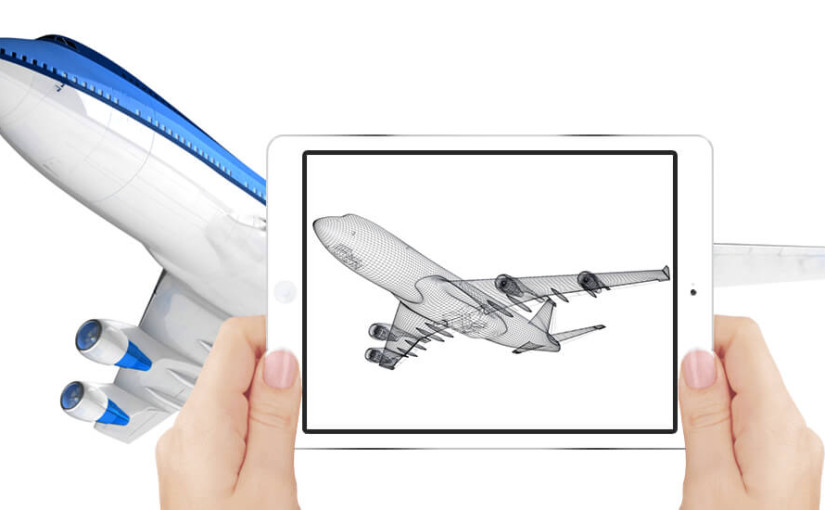
With the help of a secured connection via an application, both these gentlemen have a voice discussion. Alex points his tablet’s in-built camera towards the aircraft and the 3D-viewer captures video data and image for Joseph to have a look. With the help of the location-specific information overlayed on the images shown, Joseph gives expert guidance to Alex.

The data gets analyzed super-fast. Thanks to the rendering and tracking algorithms and that too in the cloud. The data is transferred seamlessly between these two devices at distant locations consisting of the technical information. The problem is diagnosed on time and repair is done.

This is how Augmented Reality works. It allows you to superimpose digital information in the form of animation, video, audio and 3D models on real-world physical objects.

Benefits

Speed-up Decision Making

Rather than going through those bulky maintenance manuals or task cards, Augmented Reality Applications can connect technicians with experienced engineers and solve complex issues on time and within budget. It also reduces the probability of human error as everything gets sorted out in real-time. Also, advanced apps help inspectors and technicians know the exact points where repair and maintenance needs to be done.

Real-Time Updates

With Augmented Reality Applications, you can now say good-bye to paper-work and keep records electronically allowing you to make updates instantly anytime, anywhere. This even helps during future inspections.

Achieve Cost-Effectiveness

Highly qualified MRO personnel are required to carry out maintenance tasks. Moreover, airlines also need to invest in training these people to better output and efficiency. Augmented Reality Applications helps you train technicians and inspectors in a more engaging way. Rather than reading boring manuals, animated videos work better leading to improved knowledge retention. Also, when you need to connect with specialists residing in remote locations, AR apps come to your rescue and save lots of money.

Augmented Reality Glasses: A Step Further

EasyJet, the European Airline, has already stepped into the future by providing wearables like smartglasses to their engineers to inspect aircraft.

Its Engineering Team uses advanced AR Glasses to take images of faulty aircraft parts and send it back to the central engineering team in the UK to minimize delays and save costs. This also leads to better clarity on specific technical issues, irrespective of the fact that experts are sitting hundreds of miles away.

Conclusion

Aircrafts being complex pieces of machinery have to be maintained with caution. A single mistake can turn into a catastrophe within seconds. With Augmented Reality and Wearable Technology, MRO processes can be improved to a large extent. Most importantly, this will lead to improved aircraft and passenger safety.

Google Glass: An Easy Fix for All Logistic Problems!

Well, in 2014, Google glasses stands where desktop computer was in 1978. Instead, its miraculous effect has created a lot of buzz around the world. Organizations are adopting the cutting-edge wearable tech to boost their productivity and outperform.

Research says, in the next 12 months, 1 in every 5 U.S. adults plans to purchase wearable device.

In almost every industry, Logistics constitutes an important part that includes right from picking orders to the final delivery. In logistics, it is estimated that around 40 to 60 percent of time is wasted not in dynamic traffic or at distribution centre while in the last-meter navigation, Last-mile secured delivery and at assembly line.

This final step in the supply chain is quite expensive. Although promising technology, Google glass app for logistics would help in driving down the cost and increasing the profit.

Before taking a look at how this over-hyped tech solve the problems, let’s take an inside view of Google glass

Smart glass is a futuristic pair of sunglasses that will work through a Smartphone via Bluetooth or Wifi. Hands-free technology let the users to connect in real time and provide digital information like- image, video, audio or animation relevant to the object. The wearable accept touch, gesture or voice command would be the next big thing in Logistics industry.

Take a glance at how smart glass optimize and enriched the logistics services

Recognizing the recipient without asking anything

After handling, loading, and driving in a better way, the next challenge stands before the driver is to deliver the parcel in right hand. After finding a specific building, it is extremely important to deliver at the correct door in secured way.

But, how driver can identify the recipient whom did he has to deliver the parcel?

Glass showcases the consignee details and if he is not there then displays alternate consignee details. Using facial recognition technology, glass helps the driver to identify the person without seeing any ID. It takes the picture of recipient and matches with secured database. Instantly, recipient would receive the delivery notification.

Well, this process requires the prior permission of the person for using face-recognition technique. Although it is not much practiced yet, but received a great level of appreciation from the people, speed up the delivery process and also provides a high level of security.

Quality assurance in Assembly & Repair

Groundbreaking technology helps the logistics to add a value to their processes by letting them to offer assembly and repair services to their customers.

For instance, DHL Express, a division of the German logistics company collects the material from the component providers of Audi and assembles them into door panels. These door panels are then later delivered to the Audi production plant in Germany.

Glass provides the staff, a step-by-step instruction before their eyes that reduces significant training costs and saves time as well. Using wearable devices in logistics assembly process, every work step is monitored through image recognition and errors can be detected easily.

Identification and fixing of errors would become simple for repairing staff. The interactive visual guide helps in real-time and thereby improving the efficiency of work system in logistics at warehouse.

Outlook

Wearable solution for logistics industry seems to be revolutionary tool that eases the every step of supply chain. It assists right from enterprise to workers to the customers. Glass solution that connects one at lightning speed in real time has already generated a huge profit to the early adopters.

Wearable technology for logistics and transportation which keeps people hands-free will continue to grow. So, get ready for the exciting journey and look at reality in new way with integration of smart glass for logistics.

Behind The Scenes: Engineering Mobile Apps That Require P2P, Real-Time Sharing & Broadcasting On Same Wi-Fi

The last few years have witnessed an explosive growth in the mobile landscape. As hand-held devices and wireless communications continue to evolve, mobile P2P (Peer-to-Peer) applications have emerged as the new kids on the block.

Current P2P mobile apps are widely used across sectors like education and gaming to elevate the existing experience of users. However, designing and building such genre of apps can be like venturing into tricky waters.

A little bit of brief before we dive in

To put simply, mobile P2P applications help teams and groups collaborate by helping them share real-time information to achieve a specific goal. As ScienceDaily, very aptly explains, P2P apps allow people to connect and work together without having to go through a central communications unit first.

Consider this to understand how P2P applications are actually redefining the education domain.

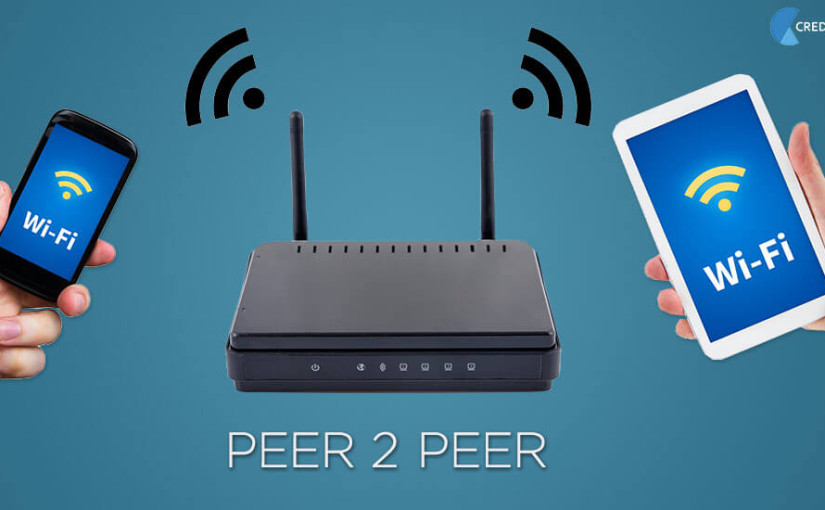
Think of a classroom where everyone is equipped with a tablet having a P2P app. Each tablet is connected with each other over Wi-Fi. The teacher starts the app, selects the subject and opens up a chapter from an e-book. Imagine, all this activity being performed on individual tablets of students too!

Any action that the teacher undertakes is shown to the students in real-time.

Be it white-board collaborations or sending out quizzes, P2P applications have turned out to be the next-generation tools for people who want to collaborate and team up in a more efficient way.

Options for building P2P applications

Building these applications is highly complex. There are a couple of ways using which you can engineer these apps:

  • The data from sender’s app goes to the server and the receiver’s app has to constantly send requests to server to ensure it receives the updated information. In this approach, the receiver’s app constantly looks up for server update to see any new information is to be received. The problem with this approach is that the device battery continuously gets drained.
  • Next approach is to make the use of Google Cloud Messaging (GCM). Herein, the app sends data to server which then sends it to GCM, which in turn broadcasts the information to users. Herein, the battery consumption is optimized as the receiver’s app does not have to continuously send requests to server to get updated information. GCM sends in information only when the sender’s app initiates an action or performs a task.

Examining closely, you will notice that there is a server involved here. Pushing data to the server and pulling back the updated data from server delays real-time sharing.

This approach does not work effectively with applications that involve real-time sharing such as in a classroom scenario as explained above. Screens cannot be shared amongst teachers and students if this approach is followed.

When it comes to mobile apps and specifically P2P applications, user experience is something which you cannot compromise on. The real-time sharing of information has to be seamless.

A second’s delay can disrupt communication and ruin the whole experience.

Is there an alternative

Luckily, Qualcomm came with up with a brilliant solution to this challenge – AllJoyn.

An open source framework, AllJoyn, provides an object-oriented approach to make peer-to-peer sharing easy, avoiding the need to ever deal with lower level network protocols and hardware. There is no server involved here.

AllJoyn makes it easier to develop applications that require proximity-based device to device communication on the same network. Its architectural topology is like a virtual bus that connects multiple AllJoyn daemons and links including bus attachments.

AllJoyn makes it easier to develop applications that require proximity-based device to device communication on the same network. Its architectural topology is like a virtual bus that connects multiple AllJoyn daemons and links including bus attachments.

The virtual bus connects multiple AllJoyn receivers’ service in the background. Sender uses a process of advertising to broadcast their existence, which then connects to other AllJoyn daemon’s, offloading the work to establish the connection (locally or over Wi-Fi or Bluetooth).

Once the connection is established between sender and one or multiple receivers, receivers are ready to get the signals. They can accept simple and complex data types as arguments and can return. This data will is transferred in fraction and can be processed as required.

The way to go

In nutshell, since no server comes into play while using AllJoyn Framework, P2P apps function seamlessly sharing real-time information in fractions of a second. This helps deliver the ultimate user experience.

So, if you are thinking of developing a multiplayer-game with peer-to-peer, cross platform capability or an app that requires multi-screen sharing, AllJoyn is your answer!

4 Ways Custom Mobile App Revolutionized the Entertainment Industry

In the digital world, a seismic shift is underway and every industry is turning towards application. High proliferation of smart phones is responsible for this major transformation that has made everything possible at fingertips. Its impact can be experienced right from shopping to education to the entertainment.

Mobile solutions change the way you interact with the world. Over the past few years, entertainment market has changed radically and embraced mobile entertainment with a deep understanding of user’s insight.

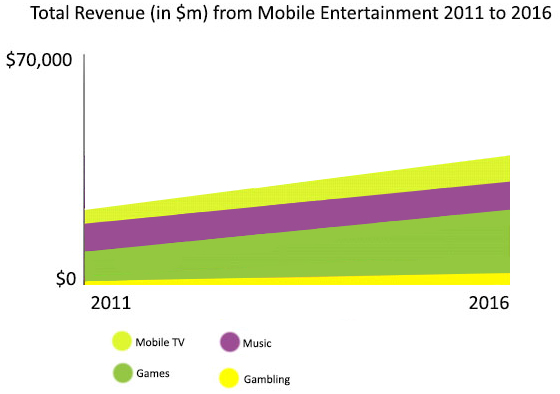
According to Juniper Research, the global mobile entertainment is estimated to reach $65.9 billion in 2016 from $36.1 billion in 2011, registering a CAAGR of over 12%.

Here, question arises why customer prefer to go mobile for entertainment.

Earlier, for different sort of fun, one is required different assets like- theaters for watching movies, physical games, casinos or headphones for gaming, gambling or listening music. Instead, lone smartphone aptly fits the balls.

Now, people don’t need TV, DVD, theaters, games, casinos or more for entertainment, while hand-held device right in their pocket can provide all this anytime, anywhere. Custom mobile apps have created ripples in the entertainment industry and catalyzing the mobile entertainment boom.

Take a glance, how custom mobile apps revolutionized different entertainment verticals

Gaming

Presently, gaming industry is not like as it was a decade before. Also, demands of users have shifted too. However, mobility solutions using breathtaking technology presented such games that knock gamer socks off. Consequently, significant interest of not only teenagers while of every age group is witnessed towards the mobile games.

All this is because of the engaging game play that helped in gaining more traction. The increasing use custom mobile apps for games and infotainment will drive over $65 billion revenues by 2016.

Music

Listening music is the ultimate entertainment for the music lovers. Music mobile apps aided the music industry by increasing their reach to masses. Different music apps like- Pandora, Shazam, Spotify, Slacker radio and a lot more are loaded with additional features that stream the song for people they want to listen.

Using these apps, people have the unlimited access to tens of millions songs and can turn the device to dynamic FM radio. Even, some apps like Google play music allow the user to store the songs at cloud for free online and then can stream the music to any device after logged on to their account.

According to juniper research, Music app users would rise to 178 million by 2015.

Gambling

More often, people avoid taking the pain of moving to physical casinos. Online gambling is the best alternative for the gamblers, but mobile gambling apps let the people place their bets without tied to desktop or laptop.

Bevy of gambling apps available on various platforms allows the people play with money or without money and have fun of real casinos. Now, about 1 in 5 online gamblers use mobile device for gambling on the go.

Movies

Mobility solutions are helpful in spreading the word about the films through trailers, star cast interviews, release updates, latest reviews, etc. IMDB movies, Yidio, BBC iPlayer and much more have the huge collection of entertainment information that has made watching movies so easier which has never been so far.

One can search for any Movies across Netflix, Hulu Plus, Amazon, HBO, iTunes, CBS and more, all in one app. Out of this, some provides content for free while some charges a certain amount for the movie they provide.

Even, movies animated the real life characters in mobile games which had proven to be even more successful in alluring the audience and generating more revenue.

information of app


The future ahead

No doubt, mobile entertainment will go mainstream in near future. As the technology evolves and time moves on, an upsurge in the mobile content consumption would surely increase. Entertainment mobility services will become rich and more engaging using advanced technology like- augmented reality, virtual reality, etc.

At Credencys, our prolific team engineer feature-rich entertainment mobile solutions with expertise using cutting-edge technology. Get ready to employ and deploy such mobile solutions!

How Augmented Reality Can Modernize The Online Fashion Space?

Shoppers find it strenuous to move around the stores and seek what they like. Smartphones take away this pain by bringing thousands of the stores mushrooming around the world in the palm of user’s hand. Different online shopping apps like- Flipkart, Snapdeal, Amazon and a lot more, yield hands-on experience to the users.

But, still with online shopping, shopper finds difficulty in getting the designer wears what they actually desires and want to customize them. It is not enough while they left undecided whether it will suit or not. These are the major challenges that fashion retailers face today.

Research says, 15-50% of the clothing items is returned because ill-fitting or looks different after delivery.

Advanced technology is aimed to reduce return rates, increase conversion rate by filling the gap between shoppers and retailers.

Fashion world is at the cusp of dramatic change with the incorporation of Augmented reality. Digital technology provided many solutions that help customers to tailor the clothes virtually, view how it looks like and let them choose from fabric to textile pattern, and much more!

Take an inside view of Augmented reality that can bring the major shift in online fashion landscape

The technology shows multimedia content like audio, video or image overlaying the real world object, when the app enabled camera is projected over the object.

Using burgeoning technology, e-retailers can offer a great level of customization and personalization that suits to ones style and fashion.

With plethora of potential advantages, let’s see how AR resolves the challenges of fashion E-retailers.

Design your own clothes virtually

With increasing trend of consumerism, people demand unique things and also want their preference visible. The virtual tailoring solutions are amazing that engages the user by letting them to select style, fabrics, textile, color and design. With 3D visualization engine, customers can design their own clothes in an exclusive way.

With augmented reality, guessing game is now no more and people can co-create and visualize that it suits to them or not.

Creyate, the online custom clothing brand build on the pillar of customization allow the customer to design, and then generate such garments in fully automated factory and finally delivered them to the doorstep.

Try on clothes virtually

Many times, it becomes difficult for the shoppers to decide whether this color would looks good or not and a lot more concerns. They want to see, how the dress would look like when they wear it or want to show the same to their distant friend.

Also, at times they want to check whether their closet item matches with the one they are viewing online or not. Alas! It is not possible with simple online shopping app.

But now, with use of augmented reality in shopping, one can view how the clothing would look like in real-time and even can snap photos and send to friends for instant feedback online.

Online retailer can integrate the augmented reality apps to provide an advanced product-viewing tool for the shoppers. Using emerging technology, shopper’s app enabled camera is turn into interactive mirrors and customers can select any piece of cloth and can see if piece of item is right for them.

Conclusion

Augmented reality fashion solution perfectly answers the top most concern of the clothing shoppers, “Does it suits” and “How it looks.” Retailers should digitally makeover the traditional shopping with the adoption of these augmented reality shopping apps to boost their sales and take the personalized experience to the next stage. It’s the time, fashion should meet technology!

Experience Better Sales of Your Travel Agency Through Mobile App

In an era where consumers can rage and criticize the brands that don’t please them, with just a click of a button, it has become extremely crucial for the business to define and establish a brand carefully.

Among all the industries, one that has been deeply affected with the digital explosion is the travel and tourism industry. Gone are the days where people used to travel around maps, guidebooks, compasses or printed stuffs. Today consumers want to be served at all times rather than the office hours of tourism providers.

So what is that determines the customer’s path to conversion in Traveling Industry?

Today, the increasing use of mobile technology has completely changed the way people plan, research and book their travel arrangements.

  • According to Juniper Research, more than 31 billion apps downloaded to mobile devices in 2011 and are predicted to gain more than 66 billion in 2016.
  • 40% of smartphone users use mobile to find destination information.
  • 34% of smartphone users use mobile to make reservations
  • 44% of smartphone users use an app to plan travel
  • 12% have downloaded a mobile-travel related app

Hence, those travel companies that wish to communicate effectively with their customers, sell more tours or excursions or increase brand awareness, should definitely need to go mobile.

Why Mobile Apps are the best solution for travel agencies to acquire customers?

Mobile apps are proven out to be a great way to engage the customers after purchase. It provides best ways to organize travel plans and get all the required trip information at the fingertips. By incorporating such mobile apps, travel agencies can increase the number of their customers by retaining old clients and acquiring new ones.

Let’s see how

Convenient Booking

These days nobody wants to go through a complicated booking process. Making it quick and easy surely attract them towards your business. A mobile app helps your client save passport information, travel preferences and payment details through secured network.

No Communication Gap

Client may face problems sometimes while traveling. This might be, for instance, unable to find a place in a hotel upon arrival or cab service. A mobile app accommodates the traveler with local information about the country including geographical location, culture, climate and places of interest.

No restrictions in Payment Gateway

Mobile app also provides clients the possibility to pay for a wide range of goods and services instead of paying with cash, checks or credit cards.

Improved Customer Service

With mobile apps you can constantly be in touch with the clients and inform them about any changes concerning arrival or departure, flight status and delays. This result in improved customer service and also enhance the sales opportunities.

Brands that are already leveraging the benefits of mobile app

Expedia

Expedia is among the most popular groups of online travel brands, offering free iPhone and iPad apps that let their clients book a flight to anywhere in the world, provide notifications for flight delays, gate changes, default to the current location for fast, on-the-go booking and much more.

Travelocity

Travelocity has positioned its app as the hub for all the parts of consumer’s trip. Apart from hotel, car and flight booking, the app also users find nearby attractions. With a Travelocity account, users can easily store and manage their travel plans. Additionally, when it comes to booking and deals, prices are prominently promoted with the lowest price at the top.


Final Take

For travel business, it becomes hard sometimes to streamline businesses processes and acquire new clients. Having a mobile app not only help to increase the reach but also increase the revenue and encourage recommendations and repeat bookings.

Google Glass Emerging as a Quick Remedial Step for Stroke Patients

Stroke!! A life threatening medical condition which occurs due to the sudden loss of brain function when blood flow to the brain is interrupted.

The condition includes the sudden onset of various symptoms like difficulty in speaking, exhausted face or slurred speech, being off balance, weakness in a limb, visual loss or a really severe headache.

A Closer look at Stroke Numbers

Every year, around 1, 10,000 people suffer from stroke in England, which is said to be the third largest cause of death, after heart disease and cancer.

Around 1 in every 4 people who has a stroke will die and those who survive are often left with long-term problems ensuing from the injury to their brain.

Three quarters of hospitals do not have enough doctors to care for those patients admitted to hospitals at weekends after suffering a stroke, a national report has found.

Lack of round-the-clock care consigning too many stroke patients to lifetime disability, said Jon Barrick, the chief executive of the Stroke Association.

The new audit, which covered more than 74,000 patients in England, Wales and Northern Ireland, found widespread shortages of nurses and doctors.

So, why there has been no improvement in death or re-hospitalization rates of stroke patients?

A neurologist says, if he gets a stroke victim within 3 hours, the effects of stroke can be totally reversed through early medication.

However, the current scenario involves the queued up process for the treatment of patient suffering from stroke attack. Initially, he has to wait for an arriving ambulance, which is then followed by completing the formalities as asked by the hospital management. The patient is then moved to the treatment area upon the completion of former processes.

Such time taking procedures adversely affects in worsening patient’s condition.

Can it be changed?

Well, Yes.

As technology improves every day, the advancements in treatments and breakthroughs in information have served medical sector with new tools to practice medicine.

One such trailblazing technological Solution that has improved many lives is – Google Glass

Google Glass is a headset which includes a tiny camera that can be worn like a pair of eyeglasses. It has small prism-like screen inserted into the upper corner of the frame that keeps the wearer constantly plugged into the emails, calls and other notifications in real time via Internet.

By using this technology, medical responder, at sites of emergencies, is able to live stream the status of the patients and the associated trauma to the physicians in hospitals so that they can get prepared for an emergency treatment once the patient reaches the hospital.

Let’s see how

Practical Dictation

Generally physicians have to spend hours on patients’ health records and documentation. With the help of Google Glass app, they can access important information of patients in real time without being tethered to a computer. Doctors can always maintain a direct contact with their patients while the conversations are securely recorded along with the visual information.

Easy Communication with Emergency Medical Services

The use of Google glass allows Emergency Medical technicians stream images and videos of the stroke patients to the room physicians so they can examine the trauma before arrival. Doctor can further offer advice and treatment options to the EMTs which ensure better recoveries and reducing long term disabilities.

Improved Patients Experience

At the end, all that matters for doctors is their patients’ satisfaction. With Google-Glass, patients are able to get superior treatment from the comfort of their homes. The recorded medical records and instructions eradicate all the chances of forgetting instructions or reminding incorrectly.

Uniformity

Google Glass also assures that proper processes should be followed and communications should be conducted in accordance with the hospital policies and government regulations, thereby shaping the future of healthcare landscape.

Conclusion

Google Glass is an emerging technical innovation that has paved the way for truly remarkable journey within healthcare by improving the delivery of care along with the overall quality and patient experience.

Apple Watch SDK Is Out! Let’s Begin Crafting Apple Watch Apps

There has been a lot of buzz around for Apple watch and now, it is nearly here. Apple’s latest release- Apple watch SDK for future iWatch gives the people, a glimpse of how the experience of Apple watch would be.

The use of iWatch will greatly rely on iPhone and always require the user to have iPhone with them. Even, one could say, for Apple Watch app- iPhone works as backbone and Apple watch is an extendable interface.

Watchkit, an Apple watch SDK has two components- Watch app on Apple watch and the Watchkit extension that runs on iPhone. New SDK let the developers start building iWatch app ahead of its release and test the app before Apple watch hardware which debuts early next year.

Here, are the tools that are provided by the Watchkit SDK

> Look
There are some guidelines that Apple has set for the third party apps like- A standard black background color for all apps, new font termed as ‘San Francisco,’ user interface and standardized navigation through an app. Developers can customize some of them to make it more attractive.

> Notification
With Apple watch app, user can easily access the alerts of iPhone right on their wrist. There are two types of Apple watch notifications- Short look and Long look.

Long look notifications are actionable notifications that are more informative and customizable. Longer version allows the user to view brief content from the app and take some actions like- Comment, Favorite or Dismiss.

Short look notifications are called Glances which are quick snapshots of different information that includes- an app icon, app name and brief information. Even, they can be termed as read-only notifications.

Both varieties of notification should fit on a single page and by tapping Glance; user can enter into the corresponding app.

Let’s take a glance at what are the opportunities Apple Watch developers have to extend and tailor the apps to Apple watch.

> Developers can change the colors for titles, status, notifications and much more. They have complete freedom to use custom fonts, but it requires a little effort and text should be preferably aligned to left.

> User interface can either be hierarchical to make one choice per screen or page-based to swipe horizontally. Developers cannot combine this two, but have to choose either one of them and can also add gestures like vertical or horizontal swipes to improve navigation experience through Apple watch.

> Using Handoff, developers can let the Apple watch users to pick back up right where they left off in the app, when theyswitch Appl e devices.

Watchkit provided many options before the developers and with optimum use of talent and knowledge, they can bring wonders before the world.

What’s the Future?

The new SDK simplified the design scheme of Apple watch apps and prevent the Apple watch app development becoming too strenuous. As Apple watch is on the wrist of people at all times can act as a potential revenue generator for various industry verticals. So, search the right developer, get your watch app ready and monetize right away!

Here, at Credencys, our proficient team of developers had good amount of experience and skills in building wearable apps. Our experts are all set to redefine different spaces across the globe with breathtaking Apple watch solutions.