Mobile Point-of-Sale Systems: Creating Disruptions in the Retail Environment

Smartphone population has now outnumbered the human population.

A World Bank Report stated that there were an estimated 7.3 billion devices on the planet as compared to 7 billion people. Almost 64% of people worldwide use mobile devices to shop.

So, it’s a no-brainer to conclude that our shopping processes have evolved tremendously over the last 70 years.

The Cash Register is an extinct species, especially in the western world and here in India, it’s almost endangered.

Retailers, no longer, need to maintain those bulky registers and keep account of their transactions. Thanks to the rise of the smartphone and tablet era. Mobile technologies have brought sweeping changes not only in the retail space but every single aspect of our lives.

Those who have visited an Apple Store must have their faces lit up. They know the kind of experience I am talking about. No standing in long queues and no check-out counters.

You might wonder – What makes this possible?

Welcome to the world of mobile point of sale systems.

You step into a store, select the merchandise, the representative scans a barcode and you make payment and leave the store. Period.

Mobile POS is enabling retailers to process payments anytime, anywhere using any payment mode like loyalty and gift cards, credit cards, debit cards etc.

How Mobile POS Works?

Mobile POS will process nearly $670 billion transactions in 2015.

Mobile POS comprises of a mobile device with a card payment reader including a handy printer. Once a store representative swipes your card, the data is encrypted and sent over a wireless network. When the charge is authorized, you sign on the screen of the device and you get a receipt immediately.

4 concerns Mobile POS is helping Retailers overcome easily

1) Longer Queues

I once went to Big Bazaar to shop merchandise of daily use. I clearly remember it was Sunday evening. The crowd there was overwhelming. We put a good number of products in the basket and made our way towards the payment counter. There were about 4-5 terminals. When we reached the counter, we were like no way we are going to stand in those long queues wasting a couple of hours. What did we do? We dropped our basket and came out empty-handed.

When there’s a huge influx in your retail store, customers get limited to the number of counters you have. Like me, much more left that day. The result? They lost a good number of customers.

Now, when you have a mobile POS deployed, you can easily handle thousands of customers without losing one. When a particular location of your store experiences such a deluge of customers waiting to avail those special discounts and schemes, mobile devices can be dispatched from other locations to handle this chaos. Mobile devices are intertwined with the store’s central ERP system and hence all information is stored in a single place. Nothing additional needs to be done.

Mobile POS brings in flexibility to your store’s operations, especially in such circumstances.

More importantly, if you implement an mPOS, you can clear up the floor space that goes into setting up cash counters. Mobile POS = Super Fast Check Out!

2) Fighting Inefficiencies

Retailers have always struggled with reducing transaction times and thereby improving customer experience. Research suggests that Mobile POS systems cut the average transaction time by half and making contactless credit card payments 5 times faster than those that require a signature.

With such technologies, you can truly deliver an advanced, sophisticated experience to your customers and combat inefficiencies at the same time. When you have such systems in place, your customers are less likely to abandon their shopping carts. It may also happen that they actually increase their basket size too.

3) Showrooming

Another big concern for retailers. Many people like me go to a retail store to actually see and experience a product but deliberately don’t purchase it. This is because when you seek to shop online, you cannot TOUCH and FEEL a product. So, the smart customer goes to a physical store to experience it. And, then ends up buying from an online retailer.

When you have a mobile POS, your store representative can help deliver detailed information on the spot and an experience that’s absent online. This increases the probability of selling more too. What’s more, if a product is not in a store, the inventory can be checked online and a sale can still happen because the other location-store might have it.

4) Marketing

Many times, retailers fail to make impact when it comes to promotions and marketing. There is this need to deliver more contextual, timely information to customers regarding upcoming schemes, product launches or discounts. With a Mobile POS system in place, while making a sale, you can collect feedback from that customer and use it for highly targeted advertising which leads to better marketing ROI and higher impact.

Conclusion

Mobile devices have fundamentally altered the way we shop. Mobile technologies will definitely propel the growth of mPOS systems. It is expected that mobile point of sale terminals will achieve 46% market penetration by 2017. As a retailer, it’s in your interest to embrace mobile technology to turn the tables for your brand. It can be your next game-changer!

Good luck

With Smart Glass, Law Enforcement is Stepping into the Digital Age

Daily, millions of crimes are reported across the globe.

And, the police is liable to solve all the cases!

This real life drama and action, in which cops are involved, is not a run-of-the-mill job.

However, they encounter many difficulties in catching suspects like – different blockades are created at different places, all vehicles are stopped and checked, number plates are checked and then manually cross-checked from the database.

Even, suspects are individually recognized and their identity is checked for verification.

This whole process is quite time-consuming and annoying, but at the same time necessary too.

Fortunately, technology has an answer to address such concerns.

Cops are now relying on wearable technology like smart glass to get hold of suspects and ensure law enforcement is seamless.

Calgary police Chief Rick Hanson says, “Technology is not going to slow down and we can’t afford to slow down.”

Leveraging the power of advanced technology like- Smart glass, cops can turn the tables. Using Smart Glass (Augmented reality device), police officers can easily find the suspicious thing, track cars on the move, get alerts whenever wanted criminals are around and much more!

After recognizing the potential of wearable technology, law enforcement personnel in Dubai, New York, Byron, Georgia, and Rialto also used Google glass.

Before we begin counting the amazing advantages of Smart Glass, let’s take a sneak peek inside it

The smart glasses look like a simple pair of glasses, but they actually are wearable computers that add more information to the reality. The internet connected glass accepts touch or voice command, projects digital images, video, audio and much more in real time. These hands-free devices connect everyone and let them do everything that they do with their smartphones.

Why is Smart Glass the next big thing for law enforcement?

Becomes a cop’s third eye

Smart glass has extended the vision of cop’s eyes. With glass, police can identify you at a glance using facial recognition software.

Currently, in USA, FBI is working on next generation identification facial recognition program wherein the central database has 13 millions of images which is expected to reach 52 million in near future.

Police department by bringing facial recognition software and smart glass together, can empower their workforce to wear hi-tech glasses to recognize a person just by looking at him/her. Glass can scan the face of an individual, then check from the database and alert police that a suspect is criminal or not.

Byron police tested eyewear in real world condition and at traffic stop found the driver to have an outstanding warrant and arrested her.

Check wanted vehicles on the fly

It’s really quite tedious task to check every vehicle and then cross-verify with the computing system that vehicle is wanted or not. However, smart glass can make this quite handy as by looking at the vehicle, the complete information of it can be known and it can be easily detected whether the vehicle is wanted or not.

Cops wearing glass simply look at the number plate of the vehicle; the glass scans the number and sends it to the server along with time, date and exact location. And, in a couple of seconds, vehicle database is checked and alert is made describing whether the vehicle is wanted or not.

Dubai police is using the smart service to issue the fines on erring motorists and identify wanted vehicles. Police developed software that enables a connection between the wearer and a database of wanted vehicle

Instant help in real time

At times, police might miss hidden gun or a person during identification or get stuck in a situation wherein they need to defuse the bomb about which they are completely unaware of. In such cases, smart glass proves to be a blessing.

Backup support can be provided to the cops from the central location as video streaming live through the eyewear of cops is monitored there. Cops are immediately alerted with the prompt message if they miss out on something during searching.

Even, experts at headquarters can guide them how to disarm a bomb along with watching how the officer is doing. This way the situation can be monitored and remote expert guidance can be provided.

Turns handy in emergency situation

In critical situations, patrolling becomes absolutely essential. However, those people constantly need to update the concerned person regarding the situation. This might affect their focus and it may prove to be fatal in emergency situations.

Smart glass lets officers transfer information without turning their attention away from the scene. Recon Jet glass with Motorola’s APX Radio and LEX 700 Mission Critical Handheld technology has come up with an innovative “Connected police officer solution.”

It lets officers monitor current situation and manage the data transfer without even lifting their finger.

Conclusion

Smart glass has reshaped the law enforcement landscape. It has brought never seen before transparency levels and helped ease out operations. Also, when people know everything is being recorded, they think twice before doing anything wrong or suspicious.

Digital glasses, indeed, are helping transform every aspect of our lives.

What do you think?

If you have come across any such uses of smart glass in the law enforcement space, please share in the comments below.

TCP v/s UDP: What works best for Taxi Apps

The transportation and logistics landscape is on the cusp of a digital overhaul. Taxi booking apps and private-car-for-hire services are selling like hot cakes.

The success of any on-demand taxi service depends on the overall user experience. Being able to share your location in real-time with a driver forms the heart of taxi booking apps.

Users need instant information on available taxis nearby. A slight delay can cause your users to abandon the app permanently. It is for this reason; one needs to be extremely cautious in choosing the technology that will shape the back-end architecture of your taxi application.

When writing a taxi app, you have to select the type of socket you are going to use. Mainly there are two types of sockets – TCP and UDP.

In light of the fact that taxi apps transmit data over the network, let’s catch a glimpse at the features of each of these sockets. Once you have this information, you will be able to make the right decision.

A Quick Introduction

TCP

Transmission Control Protocol or better known as TCP forms the backbone of anything and everything one does on the internet. Right from emails to web browsing, everything is built using TCP.

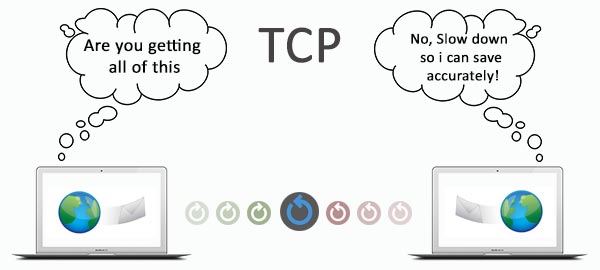
The TCP socket is known for its reliability. What happens is, a connection is made between two machines/devices and the data is sent to and fro.

TCP-works

The reason why it is reliable is because all the data you send is guaranteed to be received by the other device/machine exactly in the order you sent. Since you are sending in a stream of data, TCP breaks down the data into packets and sends these over the network.

UDP

User Datagram Protocol or UDP allows sending and receiving packets directly unlike TCP. It is also known as a connectionless protocol.

DP is highly used in transferring/transporting messages. Herein, one device/machine can send tons of packets to another and that’s it.

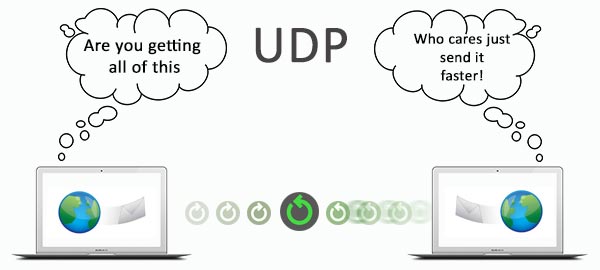
UDP-works

UDP is used when the amount of data to be transferred is small (such as data that fits into a single packet), when you do not want the overhead of establishing a TCP connection.

Its nonexistent acknowledge packet (ACK) permits a continuous packet stream, unlike TCP that acknowledges a set of packets.

It’s time to make the call

When it comes to taxi applications, real-time location sharing is the crux. Drivers need to keep sharing their location with passengers and vice-versa.

If you use TCP as the backbone of these apps, it won’t allow for real time location sharing.

Why?

Because the driver data is sent to the server which then passes on that information to the passenger.

There will be a considerable delay which will ultimately hamper your users’ experience.

TCP provides a one-to-one, connection-oriented, reliable communication service, where socket must first be established before data can flow. It handles two-way communications, acknowledgment of data received is sent on every packet.

The IP program layer encapsulates each TCP packet with a header that includes the source and destination IP addresses including the packets time-to-live which makes smaller data heavier. Thus TCP becomes slower. It’s only suited for apps that need higher reliability and where transmission time does not play a big role.

Driver-passenger applications require real-time, fewer data to be shared which requires speed in sharing of a particular location. TCP tries and buffers the data and fills a full network segment thus making more efficient use of the available bandwidth. So it takes considerable time.

UDP, on the other hand, puts the packet on the wire immediately with lots of small packets. This results in faster data transmission.

Take-away

UDP is the most used and highly recommended protocol if you are looking out to build a robust, intuitive and dynamic taxi application.

The use of this protocol enhances the user experience by sending and receiving real-time location information seamlessly. Users can track taxi-drivers on a map-view and see them approaching towards them.

If your taxi app has to pit itself against competitors, UDP is the way to go.

5 Reasons Why Mobility Will Work Like Magic for Your Manufacturing Business

With the rise in globalization, enterprises across industries, continue to face stiff competition in all forms.

Dwindling profits, limited resources, ever-increasing customer demands, and the need to reduce operational costs without compromising on quality have emerged as some of the biggest concerns for manufacturers worldwide.

Thankfully, MOBILITY has emerged as the go-to SOLUTION for manufacturers to achieve operational excellence and take their business into the next orbit.

A survey of 3300 professionals (mostly IT decision makers) in the manufacturing sector showed 70% viewing mobility as the key to converting downtime into productive time, recovering a daily average of 42 minutes per employee.

80% of Manufacturers are increasing their reliance on Mobility.

Studies also show that approximately 10% of the mobile users are in a factory or on a construction site. And, most importantly, this number continues to grow.

On average, the IT operational spending was 4% in manufacturing companies as opposed to 2.2% across other industries. Mobile applications take up a huge chunk of this investment. In 2013, 80% of manufacturing companies developed mobile applications (Source: IDC).

Where does Mobility fit into the Manufacturing Value Chain

With technology evolving, it makes more sense to embrace mobility because of the kind of competitive advantage it will offer you.

Whether you are dealing with customers or seeking to improve field sales operations, mobility helps you overcome bottlenecks and make better business decisions.

Improve Customer Experience

Enterprise solutions are helping manufacturers make high impact on customers in terms of how they deal with them. For instance, using mobile applications, you can deliver product information in real-time anytime, anywhere. What’s more, manufacturers can help dealers view product stock, post queries, and book appointments. This is especially in say, for e.g. car manufacturing.

Mobility can also be used for customer feedback. The traditional medium of collecting feedback can prove disastrous. If critical feedback reaches you late, it could mean a loss of market share. Mobile applications help you stay closer to customers. These facilitate seamless collection of feedback from the point of contact.

Plus, mobility solutions, help customers get in touch with you faster. Meaningful insights can be taken from their feedback to improve products.

Field Sales

Inefficient business processes coupled with tiresome manual paperwork can eat into your profits. By arming your field sales force with mobile applications you can not only enhance customer retention but also improve business opportunities. It even helps in planning, promotion and marketing of your product. By integrating CRM with your enterprise solution, you can deliver accurate, timely information to your field staff on-the-go to make better decisions.

With RIFD Implementation, manufacturers can identify and track tags by tagging stationary equipment. It helps track shipments, handle materials smoothly. Mobile applications play a huge role in minimizing critical downtime by giving real-time information on stock levels, order progress, and inventory movement.

Supply Chain Management & Warehousing

When it comes to manufacturing, logistics, SCM and Warehousing can be a nightmare. Some challenges involve inefficiency in material handling & tracking due to inaccuracy in inventory management. Then there is paperwork here too. Inability to locate specific documents or information on spare parts can cost companies a fortune. Enterprise apps step in to overcome these concerns and make your processes more streamlined and efficient.

GPS-based applications are particularly helpful for warehouse management. Whether it is load scheduling, delivery management, route tracking or container management, a mobile app can make your workers’ life lot easier and productive.

Operations Management

Plan operation management is a big task for manufacturers. Getting shop-floor information on machine downtime, task scheduling, locating right people for specific jobs, managing workers and other resources can be quite a hellish experience for your supervisor.

Mobile applications with intuitive dashboards can make accomplishing all these tasks a matter of few minutes instead of hours.

Quality Assurance

Your QA & Testing processes can be more streamlined and efficient with enterprise mobility. Right from getting notification alerts for faulty parts/products to batch tracking, these solutions can help you do everything. Moreover, apps can also be tailored for inspection processes.

For example, if you manufacture toys, you can reduce paperwork and increase worker productivity by having mobile applications for inspecting raw materials, maintaining your plant and inspecting finished products.

Success Story of ArcelorMittal

ArcelorMittal needs no introduction.

Being the world’s largest steel production company, its core competency is centered on manufacturing steel for use in automotive, construction, packaging and household appliances. It has its facilities spread over 60 countries.

The company achieved excellence in its sample testing process with mobile applications.

ArcelorMittal Atlantique (in Northern France) faced significant challenges in meeting customer expectations and ensuring that its product quality was phenomenal. The process involved sending samples of manufactured steel to laboratory for mechanical and physical testing.

There was no place for tracking information between sample creation and delivery. There was no way to see the sample delivery schedule. This had resulted in testing delays ultimately leading to delays in final delivery.

Here’s what they did.

These guys implemented a mobile solution that helped track samples from production to testing. The staff was given mobile devices to scan barcodes that linked to the laboratory’s information management system.

Benefits they achieved

  • Improved visibility of sample status between collection and delivery.
  • Reduction in errors, before the samples, were sent to the lab.
  • Enhanced productivity with improved workload planning.
  • Efficiency in sample traceability.

Conclusion

By adopting mobility in the right way, you will see returns come in all forms through better customer engagement, increased worker productivity, profitable business decisions and increased profits. It’s time to mobilize your manufacturing processes to set-up a next generation operation.

Get in touch with our consultants today!

Game UI Design: The Science Behind

Angry Birds. I will be honest. I spend atleast one hour playing that game every day.

It makes most people ponder, what makes this game so addictive like weed? Just so that you know, this casual game has been downloaded over 2 billion times. Many of us did not even mind shelling out a few cents to buy the advanced version. 200 million people still play it every month. Players, across the globe, spend a whopping 200 million minutes a day playing Angry Birds which roughly boils down to 1.2 billion hours in a year.

Now, that’s super-impressive.

Game Engineers, today, are often asked to develop games similar to Angry Birds. It’s not uncommon to find your clients saying,

“Can you help us develop a game that has an excellent UI like the one similar to Angry Birds?”

This game’s UI design has, sort of, become a de-facto standard. It serves as an inspiration to all in the gaming community. With some help from cognitive science and behavior psychology, let’s see how you can create games with a truly wonderful UI design.

Understanding the user’s psychology

It’s always a smart move to consider the basic principles of psychology and philosophy to design a smarter interface. Understanding users’ behavior is the key to avoiding costly mistakes too.

This video on the Psychological Basis for UI Design Rules can be a good starting point for you. Implementing a great UI design is all about making users behave the way you want them to. This even means you do in-depth research about analyzing a user’s eyesight patterns. Cognitive Flow is imperative if you want to engineer a game that leads to heightened forms of engagement.

Sean Baron from Microsoft Studios has written this exceptional article for Gamasutra titled Cognitive Flow:

The Psychology of Great Game Design. It says there are four critical elements you need in a great game

  • Concrete goals with manageable rules
  • Goals that fit players capabilities
  • Clear and timely feedback
  • No room for distractions

Check out here.

Playing with the dopamine system

Michael Chorost, Ph.D., calls Angry Birds fiendishly addictive. So, much so that, he went ahead and deleted this game from his iPhone. He explains Angry Birds triggers what is called as a neurophysiological response. He goes on to say that this game is a terrific manipulator of the brain’s dopamine system.

Dopamine gets activated in you when something happens which is usually followed by some sort of reward. When we talk about Angry Birds, the firing of a bird, and being rewarded in the form of screaming birds, popping pigs and crashing pieces is stimulating for the gamers. The anticipation is what does the trick. Because I don’t know what’s exactly going to happen after I fire the bird and it hits the target.

This uncertainty stirs up tension leading the brain to crave release. It makes you do whatever it takes to create the release. This translates to you pulling more slingshots and firing more shots. This is the entire neurochemical stuff behind why Angry Bird is so addictive.

The point I am trying to make is games that are obviously simple, rewarding and feel realistic to users do tremendously well. Make sure your game has an element of tension to get the users’ adrenaline going.

Mysterious is great

If you pay a close attention, all great games have an element of mystery attached to them. Angry Birds is just one of them. By adding mystery to your UI design, you can not only make a game more compelling but also enjoyable. Mystery is always present in subtle forms.

Angry Birds has the followings–

  • Tiny Bananas spread only in some play sequences
  • Houses containing pigs shake slightly in the beginning
  • Play space showcases cross section of underground rocks and dirt
  • Birds somersault into the slingshot only sometimes

Keep engaging interactions

Simple, easy to learn interactions are always engaging. Seems cliché right? Well, most of the game developers get this wrong. However, creating simpler things is quite complex.

The UI design of your game should be such that after a brief interaction, users should be fully informed and engrossed. Angry Birds is engaging because its UI adds more detail in the users’ mind at the right time. It allows players to quickly create a picture of how things are going to work including the strategy, point system etc. The birds are engineered to elicit clever behaviors that expand the user’s mental model at the right point when the play becomes more complex.

Evoke emotions through sound

Neuroscience proves that music & sound trigger emotional response. By applying the right kind and type of music in your game, you can make it all the more engaging. Angry Birds’ sound may seem simple to you but in reality, it is more than complex. Almost every game has music/sound effects, but few have the power to take it to the next level. Angry Birds, very expertly, uses the concept of ‘Action Syncing’ when applied to audio. When audio elements are implemented in the right degree, they help reinforce new levels of engagement.

Hop on to this interesting article by Charles Mauro to have a detailed look at the concepts discussed here.

Are you aware of more such factors/concepts that make games addictive?

We would love to hear what you have to say.

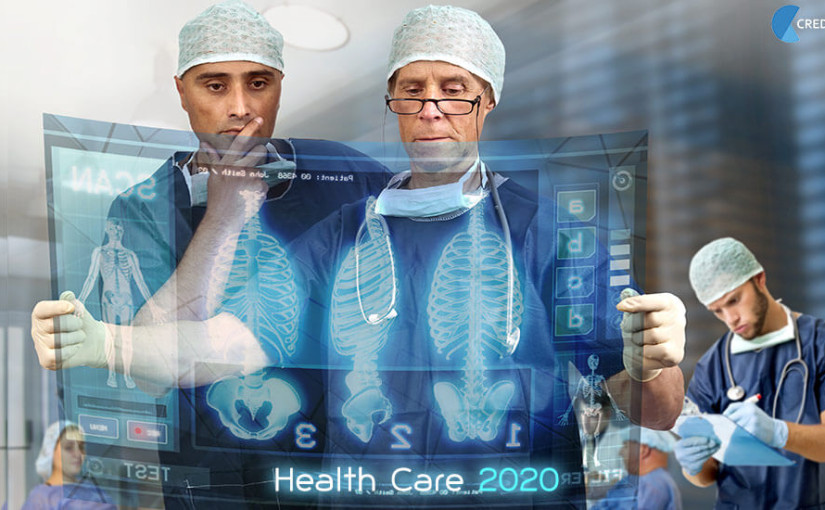
Health Care 2023 – Lets Board the ‘WEARABLE’ Time Machine

The fast paced life has left us fatigued, tired, always ready to retire to bed and always willing to hog on junk. There is practically no time, rather, no motivation for many people around us including ourselves, to spare time for our health and wellbeing.

And when the last straw strikes, we end up spending lump some for mega operations and micro therapies.

Well, we guess there is a slight change in the plot. With wearables entering the scenario, health care has tip-toed its way into a brighter future.

Talk about doctors using magnifying augmentations on operation tables to give précised results, or talk about your 60 years old dad going for a morning jog, with a calorie telling wristband you gifted him a few months ago, wearable technology is redefining future for healthcare.

And as such, we expect the future to look somewhat brilliant.

Eye gears using augmented reality

We all have heard of Google glasses, right? And why not? It topped the ‘Google’ babies for quite some time. While Google has not yet focused its forces to give a healthcare expertise to its glasses, we expect, it would do that soon!

And when that happens, we visualize doctors using smart to scan through history of patients, learning about their allergies and weaknesses while administering medications or learn about earlier treatments, while operating on specific organs.

Better yet, we are expecting it to redefine the way OTC drugs would be sold. Imagine people reading about tablets and capsules using their glasses before they bought them!

Pain management

Tired of taking pain-killers? A few years more, and chronic pain will find its place in history books.

This technology is still in-vitro, but we would love to mention its role here. A portable device using Transcutaneous Electrical Nerve Stimulation is being developed. It is supposed to emit low voltage electric charge to relieve pain in patients who have chronic pain problem. Further, since the device is portable, it would allow its users to take care of excruciating pain at many pain points on their bodies.

Bands and workout gears

They are already there! And you would be amazed with how one gear can motivate people to increase their workout duration! Fitbit users take 43% more steps a day and STRIIV users walk 60 minutes daily!

It can only get better.

Think about it in this way. While the wrist wearables and smart watches now-a-days give the wearer a complete detail of his work-out schedules and results; a bit of tweaking with Augmented Reality can result in such details to be shown in the air, rather than on the device screen!

Whoa! That’s fascinating.

So a jogger would be notified about his accomplishments after every kilometer on a screen in front of him. A brisk walker will be intimated about her burnt calories and that old man could have a better look at his sugar statistics….because all of it would be there right in front of his eyes in magnified form.

Fantastic yeah?? The world is approaching sci-fi.

And they didn’t leave the feet untouched!

Yes, now they have wearables for your feet! Future winters would not mean freezing toes. They are developing a wearable for feet, and they call it digitsole insole. You have to fix it in your shoes and control the shoe’s temperature using a mobile app that is supposed to be synced with that sole in your show.

Increase or decrease temperatures and your foot will be warmed up or cooled off accordingly.

So can the bright shiny tomorrow be shinier?

Well of course yes! Wearable technology is still in its cradle now. It will take time and a lot of conscious research to make it really work. What is fascinating us today will make us shrug in indifference tomorrow, and our future generation will grow with wearable devices.

Let’s see how with an example.

There is a point if you take the pain to scroll up, that says, doctors can use smart glasses on operation tables.

Oh yes! They can, but only if the operation promises to end within half an hour…..that’s because smart glasses don’t work for more than half an hour at a stretch.

There is a lot that can be done….

And the peak of wearable technology will probably leave us dumbstruck.

Remember your expressions the last time you watched Hunger Games? Heavens! That entire movie is all about augmentations and wearable technology!

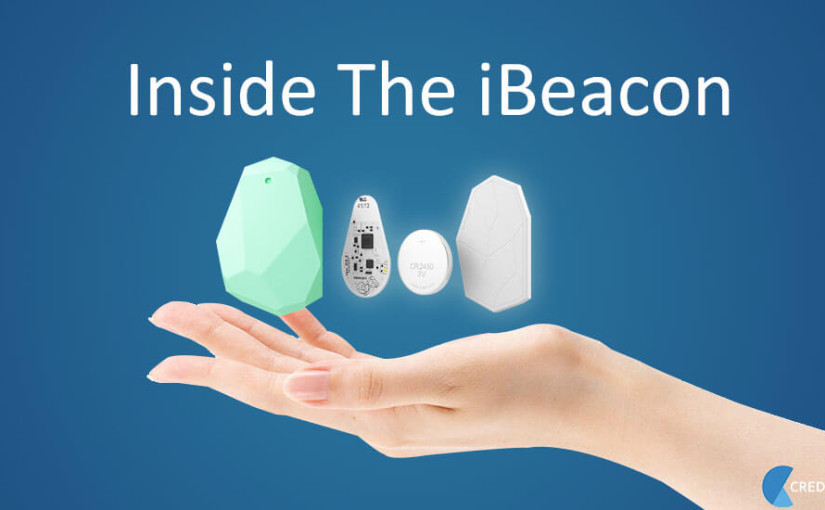
A Step Inside The Technology of iBeacon

iBeacon is the name for Apple’s technology standard, which allows Mobile Apps to listen for signals from beacons in the physical world and react accordingly. In essence, iBeacon technology allows Mobile Apps to understand their position on a micro-local scale, and deliver hyper-contextual content to users based on location. The underlying communication technology is Bluetooth Low Energy.

In laymen language

iBeacons can help a phone show notifications of items nearby that are on sale, and it can enable payments at the point of sale where customers don’t need to remove their wallets or cards to make payments.

How it works?

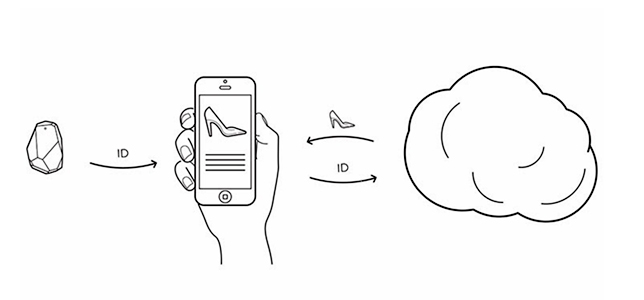
iBeacon is Apple’s version of the Bluetooth-based beacon concept, which allows Bluetooth devices to broadcast and receive tiny information within short distances. In simplistic words, it consists of two parts: a broadcaster (beacon device) and a receiver (smartphone app). The broadcaster is always advertising “I am here, and my name is…”, while the receiver detects these beacons and do whatever it needs to do based on how close or far it is from them.
It uses BLE for detection.

What is Bluetooth Low Energy (BLE)?

Bluetooth Low Energy is a wireless personal area network technology used for transmitting data over short distances.

Reported Distance between a Mobile Device and a Single Beacon

While ranging the Beacons (measuring the distance between your smartphone and a Beacon), you might notice that reported distance fluctuates heavily. That’s because the signal is simply a 2.4 GHz radio wave, which makes it susceptible to external factors, like multipath propagation, diffraction, absorption and interference.

Also, keep in mind that the fluctuations will be more visible and generally greater on Android. That’s because Apple’s CoreLocation framework for iOS already has noise reduction methods implemented. Android Bluetooth stack, on the other hand, still lacks those.

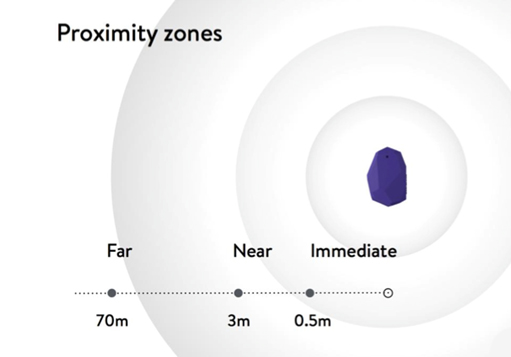
Probable Zones

There are three static zones that surround each beacon.

iBeacon

Zones are not adjustable; they are pre-set boundaries that fit within the confines of the radio signal’s reach. As an example, if the range is reduced to 10 m, all three zones remain available. If the range is further reduced, to just 1.5 m, two zones remain available; immediate and near.

How does iBeacon use BLE communication?

With iBeacon, Apple has standardized the format for BLE Advertising. Under this format, an advertising packet consists of four main pieces of information.

UUID

This is a 16 byte string used to differentiate a large group of related beacons. For example, if Coca-Cola maintained a network of beacons in a chain of grocery stores, all Coca-Cola beacons would share the same UUID. This allows Coca-Cola’s dedicated smartphone app to know which beacon advertisements come from Coca-Cola-owned beacons.

Major

This is a 2 byte string used to distinguish a smaller subset of beacons within the larger group. For example, if Coca-Cola had four beacons in a particular grocery store, all four would have the same Major. This allows Coca-Cola to know exactly which store its customer is in.

Minor

This is a 2 byte string meant to identify individual beacons. Keeping with the Coca-Cola example, a beacon at the front of the store would have its own unique Minor. This allows Coca-Cola’s dedicated app to know exactly where the customer is in the store.

Tx Power

This is used to determine proximity (distance) from the beacon. TX power is defined as the strength of the signal exactly 1 meter from the device. This has to be calibrated and hardcoded in advance. Devices can then use this as a baseline to give a rough distance estimate.

Example


A beacon broadcasts the following packet
UUID: 12345678910245
Major: 22
Minor: 2
A device receiving this packet would understand it’s from the Coca-Cola Beacon (UUID) in the Target on 1st Street (Major) at the front of the store (Minor).

Example

Biggest Enterprise Mobility Trends of the Year 2015

Today, for many organizations, Enterprise Mobility forms the basis of their operations be it field operations or customer service.

And, why not, Enterprise Mobility has the power to turn around any company’s fortunes, if applied in the right sense and right way.

Before we dive into what 2015 has to offer, let’s quickly recap why more companies are gearing towards adopting an enterprise mobility strategy and what 2014 was all about.

Companies, mainly, embrace mobility for four reasons:

  • Improving Cost Savings
  • Addressing Productivity Concerns
  • For Employees Needs
  • Counter Competition

Industries like Banking, Entertainment, Education, Automobiles, Financial Services, Retail, Manufacturing, and Healthcare are heavily relying on Enterprise Mobility to take their businesses to the next level.

A look at the year gone by

There’s little doubt that Enterprise Mobility is booming. And, 2014 was a testament to this fact.

The year saw a lot of employees using their own devices for accessing enterprise mobile apps. And, this is going to fuel the demand for enterprise mobility solutions in the coming years.

An increasing number of companies showed interest to connect their key stakeholders like employees and customers through new channels, but didn’t know the best approach for implementing this.

There is still this thing called as Tunnel Vision.

Companies are failing to look beyond costs when it comes to implementing mobility. Many still think it as an Expense rather than as Investment.

Though mobility seemed to be one of the topmost priorities for CIOs in 2014, organizations, still have a long way to go when it comes to deploying such advanced solutions. For many the plan still remains on the paper.

Undoubtedly, implementing mobility solutions is certainly not a piece of cake.

Companies encounter several challenges. For instance, enterprise mobility strategies fail to bring in desired results when you think about the system first rather than users.

Also, security is another beast that you need to tame.

The need to implement efficient, advanced security strategies has never been greater. Coca-Cola is a case in this point.

Besides, there were also some highs for enterprise mobility in 2014 like the collaboration of Apple and IBM. This partnership opened up some bright avenues for industries like retail, healthcare and banking.

Another thing worth mentioning is the launch of new Android devices, Android L, which can certainly boost this market in the days to come. Also, 2014 saw a rise in the number of more mobile independent software vendors.

Mobile enterprise applications are now being perceived with same importance as web applications were a few years ago.

Simply put, Enterprise Mobility will dominate 2015.

Engineering for Users

Companies are gradually realizing the importance of designing enterprise apps that align with the needs of their users rather than systems. It’s evident that building apps for systems are doomed to die. In 2015, we will find more of apps that are beautiful, logically designed keeping in mind users’ perspectives and having workflows that help them address concerns and conduct specific tasks seamlessly.

IT organizations will dedicate at least 25% of their software budget to mobile application development, deployment, and management by 2017.

BYOD Policies

Expect a lot of organizations to implement BYOD (Bring Your Own Device) policy. With the rise in popularity of Phablets (like Samsung Galaxy Note 4 and iPhone 6 Plus), employees will bring in more such devices to work on the go. You must consider taking into account the view point of your workforce. More people want to be more productive using their personal devices.

Importance of EMM will rise

Enterprise Mobility Management decisions will shape up the development of enterprise apps this year. Companies will be more focused towards policy management and app provisioning. Where requirements become complex, priority will be given to identity/access management, contextual capabilities and lot more.

Over 50% of Large Organizations Will Invest in Enhanced Enterprise Mobility Management (EMM) Capabilities to Secure Apps and Data in 2015

Security will be a big talking point

Addressing security challenges, has always been on top of the list when it comes to mobility. This challenge will only grow this year. But, companies will take up this matter seriously and try to address it head on.

By the End of 2015, Only 15% of Large Organizations Will Have Adequate Mobile Security Governance for Process and Policy.

Wearable Technology will take-off

As smartglasses take the centre stage in 2015, we will see a new dimension to enterprise mobility. Think of this scenario. Your employees are at an offshore oil drilling site to do a monthly operational check. They are wearing advanced smartglasses like Epson Moverio and the enterprise app loaded on it tells them where an oil leak is happening and how to fix it. Such a future is not very far.

Conclusion

Enterprise Mobility will be big in 2015.

Whether you are into banking or retail, considering implementing mobility will be on top of your agenda. Whatever be the concern you are looking forward to address – worker productivity or ramping up your revenues, Enterprise Mobility can help you achieve that, if done in the right way.

Source: IDC Enterprise Mobility Survey, 2014

How One Technology is helping Airlines Tackle Maintenance Issues

The chances of dying in a plane crash is 11,000,000:1.

As per the Aviation Safety Database, 2014 turned out to be an extremely dangerous year for the aviation industry involving as many as 80 incidents including civilian and military.

Causes of air accidents vary ranging from bad weather conditions, pilot error to improper maintenance.

Experts state that about 12% of air accidents result due to faulty maintenance.

According to maintenanceassistant.com,

Maintenance gets the blame in more than 1/3rd of the cases which involve aircraft equipment malfunctioning. What’s more, when an engine delay is encountered, it is the maintenance error which accounts for 50% of its causes.

Maintenance errors caused about 42% of fatal airline accidents from 1994 to 2004 in the United Stated alone.

Check out this interesting PDF to learn more about accidents caused by maintenance.

Aviation Maintenance – A Complex Quagmire

Maintenance personnel and inspection staff are under tremendous pressure while performing tasks and duties because of various factors involving time, efficiency, cost and much more.

Airlines have to ensure that their aircraft fleet undergoes different types of inspection checks commonly referred to as A check, B check, C check and D check. The former being the lighter ones whereas the latter are generally denser.

For instance, A check requires to be done after every 500 flight hours and needs approximately 20-50 man-hours involving an overnight check.

Engineers and Technicians have to follow a certain industry standard and constantly refer to their task cards while performing maintenance.

Since maintenance is quite stressful, here are some risks worth mentioning:

  • Skipping specific passages in procedures leading to safety violations
  • Technical misunderstandings relating to maintenance documentation (manuals, job cards)
  • Following procedures that might not be appropriate for that moment
  • Lack of IT skills to work on new generation of aircraft
  • Misinterpretation of facts, lack of adequate technical training
  • Improper workstations, lot of noise and inadequate lighting

Augmented Reality: A Next-Generation Approach to Solving MRO (Maintenance, Repair and Overhaul) Problems

Consider this scenario.

Joseph works as the chief supervisor with XYZ Airline and is based in New Zealand. While working, he gets a notification on his Tablet that a sensor on a passenger aircraft at a facility in Jakarta has detected a major fault. This alert is also sent to the facility in Jakarta, where Alex responds.

Now, Alex is a highly skilled technician but lacks Joseph’s experience.

With the help of a secured connection via an application, both these gentlemen have a voice discussion. Alex points his tablet’s in-built camera towards the aircraft and the 3D-viewer captures video data and image for Joseph to have a look. With the help of the location-specific information overlayed on the images shown, Joseph gives expert guidance to Alex.

The data gets analyzed super-fast. Thanks to the rendering and tracking algorithms and that too in the cloud. The data is transferred seamlessly between these two devices at distant locations consisting of the technical information. The problem is diagnosed on time and repair is done.

This is how Augmented Reality works. It allows you to superimpose digital information in the form of animation, video, audio and 3D models on real-world physical objects.

Benefits

Speed-up Decision Making

Rather than going through those bulky maintenance manuals or task cards, Augmented Reality Applications can connect technicians with experienced engineers and solve complex issues on time and within budget. It also reduces the probability of human error as everything gets sorted out in real-time. Also, advanced apps help inspectors and technicians know the exact points where repair and maintenance needs to be done.

Real-Time Updates

With Augmented Reality Applications, you can now say good-bye to paper-work and keep records electronically allowing you to make updates instantly anytime, anywhere. This even helps during future inspections.

Achieve Cost-Effectiveness

Highly qualified MRO personnel are required to carry out maintenance tasks. Moreover, airlines also need to invest in training these people to better output and efficiency. Augmented Reality Applications helps you train technicians and inspectors in a more engaging way. Rather than reading boring manuals, animated videos work better leading to improved knowledge retention. Also, when you need to connect with specialists residing in remote locations, AR apps come to your rescue and save lots of money.

Augmented Reality Glasses: A Step Further

EasyJet, the European Airline, has already stepped into the future by providing wearables like smartglasses to their engineers to inspect aircraft.

Its Engineering Team uses advanced AR Glasses to take images of faulty aircraft parts and send it back to the central engineering team in the UK to minimize delays and save costs. This also leads to better clarity on specific technical issues, irrespective of the fact that experts are sitting hundreds of miles away.

Conclusion

Aircrafts being complex pieces of machinery have to be maintained with caution. A single mistake can turn into a catastrophe within seconds. With Augmented Reality and Wearable Technology, MRO processes can be improved to a large extent. Most importantly, this will lead to improved aircraft and passenger safety.

Google Glass: An Easy Fix for All Logistic Problems!

Well, in 2014, Google glasses stands where desktop computer was in 1978. Instead, its miraculous effect has created a lot of buzz around the world. Organizations are adopting the cutting-edge wearable tech to boost their productivity and outperform.

Research says, in the next 12 months, 1 in every 5 U.S. adults plans to purchase wearable device.

In almost every industry, Logistics constitutes an important part that includes right from picking orders to the final delivery. In logistics, it is estimated that around 40 to 60 percent of time is wasted not in dynamic traffic or at distribution centre while in the last-meter navigation, Last-mile secured delivery and at assembly line.

This final step in the supply chain is quite expensive. Although promising technology, Google glass app for logistics would help in driving down the cost and increasing the profit.

Before taking a look at how this over-hyped tech solve the problems, let’s take an inside view of Google glass

Smart glass is a futuristic pair of sunglasses that will work through a Smartphone via Bluetooth or Wifi. Hands-free technology let the users to connect in real time and provide digital information like- image, video, audio or animation relevant to the object. The wearable accept touch, gesture or voice command would be the next big thing in Logistics industry.

Take a glance at how smart glass optimize and enriched the logistics services

Recognizing the recipient without asking anything

After handling, loading, and driving in a better way, the next challenge stands before the driver is to deliver the parcel in right hand. After finding a specific building, it is extremely important to deliver at the correct door in secured way.

But, how driver can identify the recipient whom did he has to deliver the parcel?

Glass showcases the consignee details and if he is not there then displays alternate consignee details. Using facial recognition technology, glass helps the driver to identify the person without seeing any ID. It takes the picture of recipient and matches with secured database. Instantly, recipient would receive the delivery notification.

Well, this process requires the prior permission of the person for using face-recognition technique. Although it is not much practiced yet, but received a great level of appreciation from the people, speed up the delivery process and also provides a high level of security.

Quality assurance in Assembly & Repair

Groundbreaking technology helps the logistics to add a value to their processes by letting them to offer assembly and repair services to their customers.

For instance, DHL Express, a division of the German logistics company collects the material from the component providers of Audi and assembles them into door panels. These door panels are then later delivered to the Audi production plant in Germany.

Glass provides the staff, a step-by-step instruction before their eyes that reduces significant training costs and saves time as well. Using wearable devices in logistics assembly process, every work step is monitored through image recognition and errors can be detected easily.

Identification and fixing of errors would become simple for repairing staff. The interactive visual guide helps in real-time and thereby improving the efficiency of work system in logistics at warehouse.

Outlook

Wearable solution for logistics industry seems to be revolutionary tool that eases the every step of supply chain. It assists right from enterprise to workers to the customers. Glass solution that connects one at lightning speed in real time has already generated a huge profit to the early adopters.

Wearable technology for logistics and transportation which keeps people hands-free will continue to grow. So, get ready for the exciting journey and look at reality in new way with integration of smart glass for logistics.