Role of Product Information Management (PIM) in Personalization

Look around, brands are unleashing the power of personalization.

While the concept of personalization isn’t novel, recent technological advancements have expanded its scope and application. Whether customers engage through social media, visit websites, or interact via email, the expectation for a personalized touch has intensified, fostering a sense of value and priority.

This blog delves into the critical role of Product Information Management (PIM) in reshaping customer journeys, highlighting its ability to customize product information and recommendations according to individual preferences and behaviors.

Let’s explore how data transforms into personalized magic, crafting unique and unforgettable interactions for every customer.

Definition of Personalization

Personalization is a process that creates a relevant, individualized interaction between two parties designed to enhance the experience of the recipient. – Gartner

Significance of Personalization in the Modern Retail Landscape

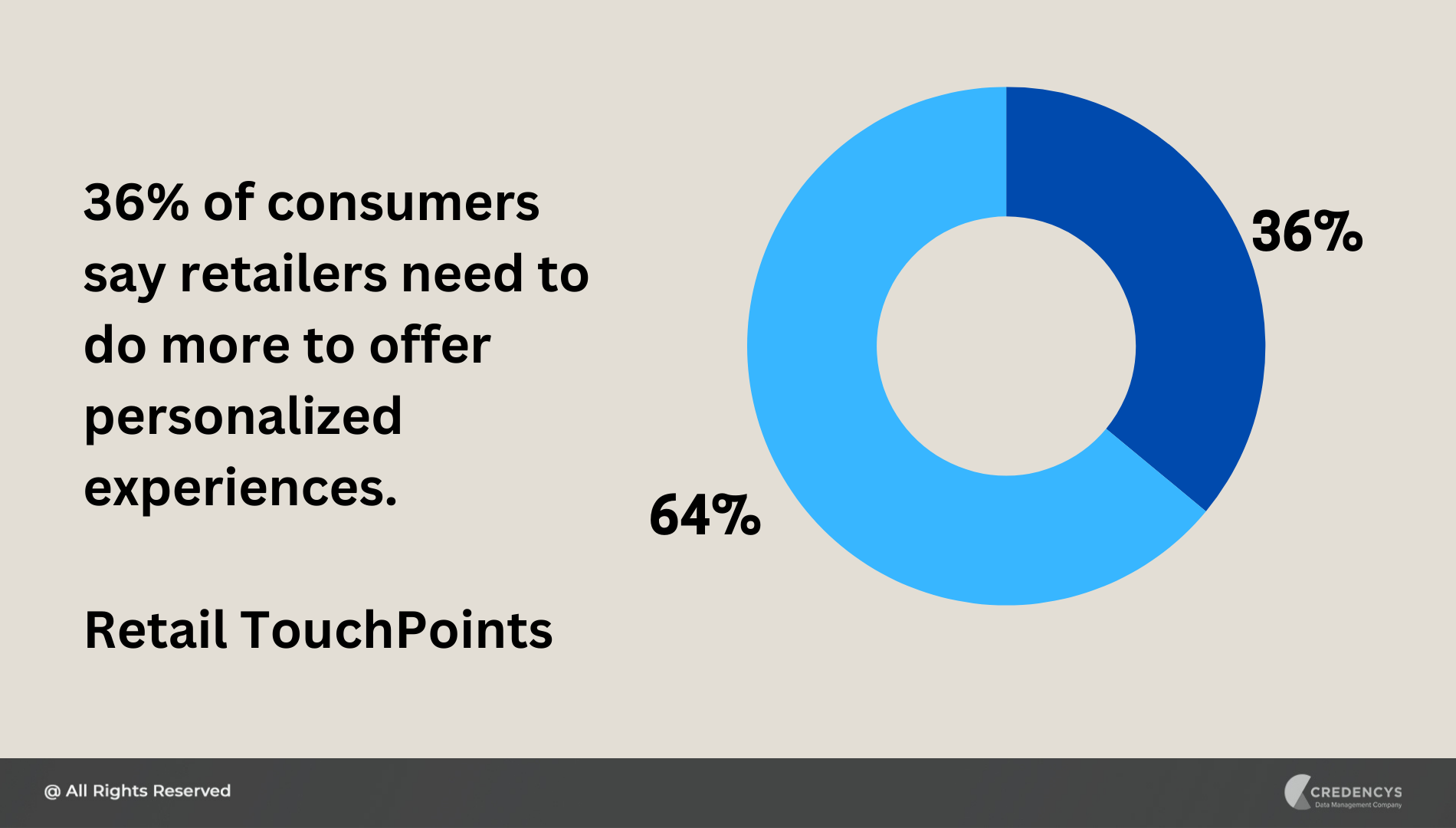
36% of consumers say retailers need to do more to offer personalized experiences

36% of consumers say retailers need to do more to offer personalized experiences. – Retail TouchPoints

The significance of personalization has emerged as a pivotal factor in reshaping customer experiences and driving business success in the ever-evolving landscape of modern retail. Personalization goes beyond a mere trend; it has become a fundamental strategy for retailers aiming to thrive in a competitive and dynamic market.

Moreover, personalization is a potent tool for retailers to cut through the noise of information overload. By delivering targeted and relevant content, recommendations, and promotions, retailers can capture the attention of their audience in a crowded digital space, leading to increased engagement and conversion rates.

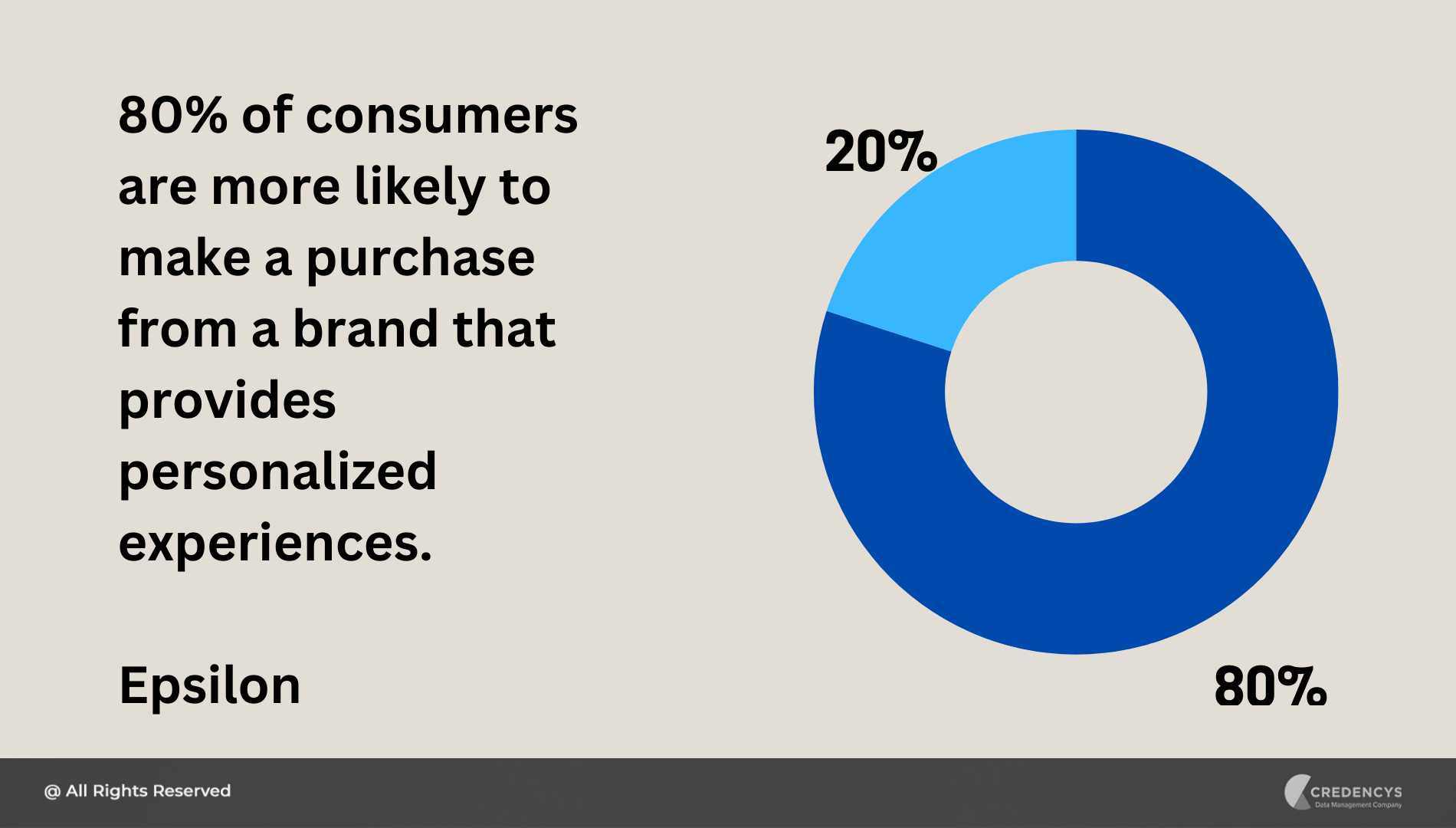
80% of consumers are more likely to make a purchase from a brand that provides personalized experiences

80% of consumers are more likely to make a purchase from a brand that provides personalized experiences. – Epsilon

The Role of PIM in Personalization

In the intricate web of modern commerce, where customer expectations are ever-evolving, the role of PIM in personalization has become the heart of businesses striving to deliver tailored and meaningful experiences.

PIM, once primarily associated with the organization and dissemination of product data, has now evolved into a strategic enabler of personalization across various touchpoints.

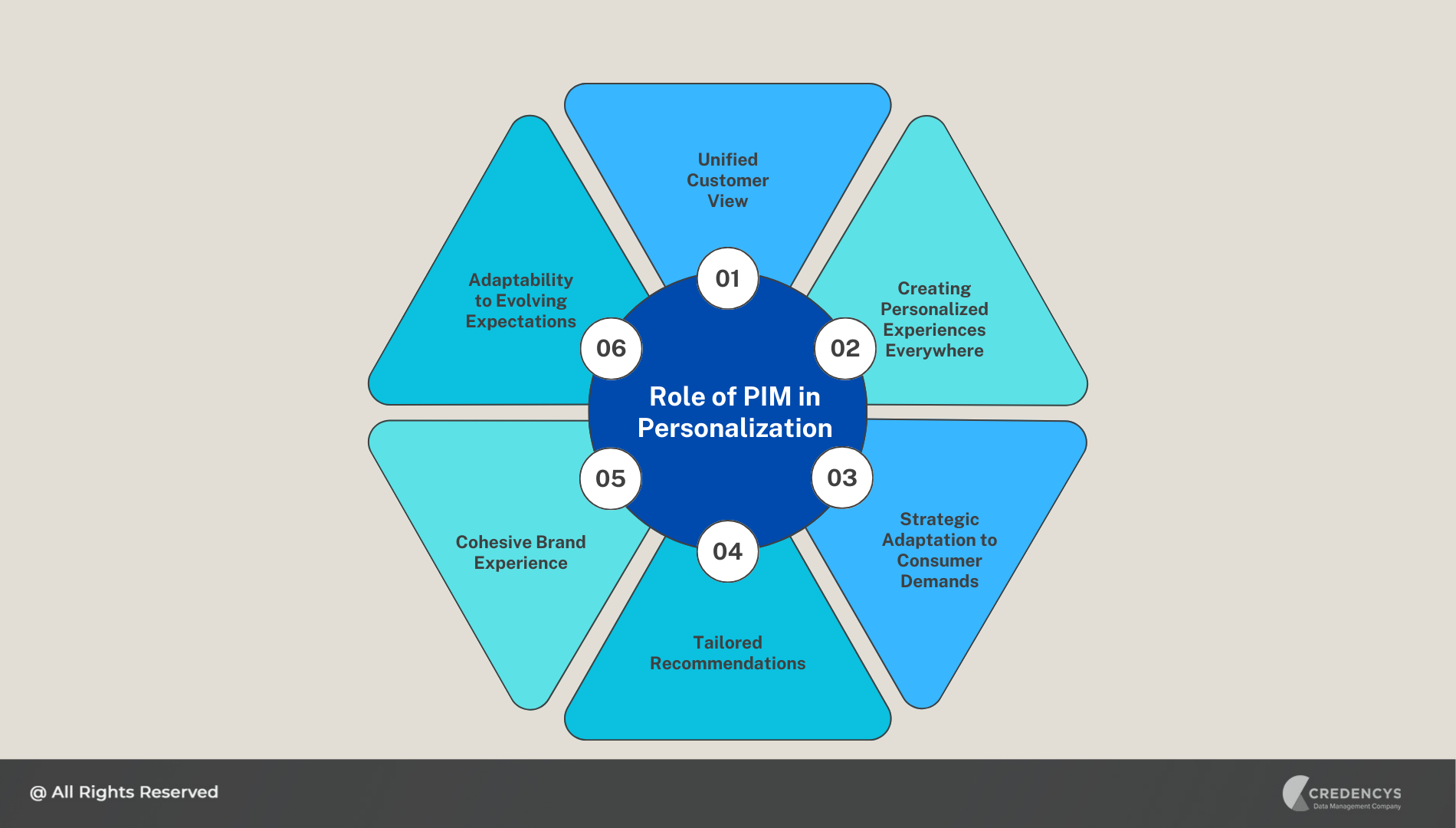
Role of PIM in Personalization

1. Unified Customer View

PIM consolidates product information from diverse sources, creating a comprehensive view of each product’s attributes, specifications, and related content.

This unified view serves as the foundation for tailoring recommendations and content based on individual customer behaviors and preferences.

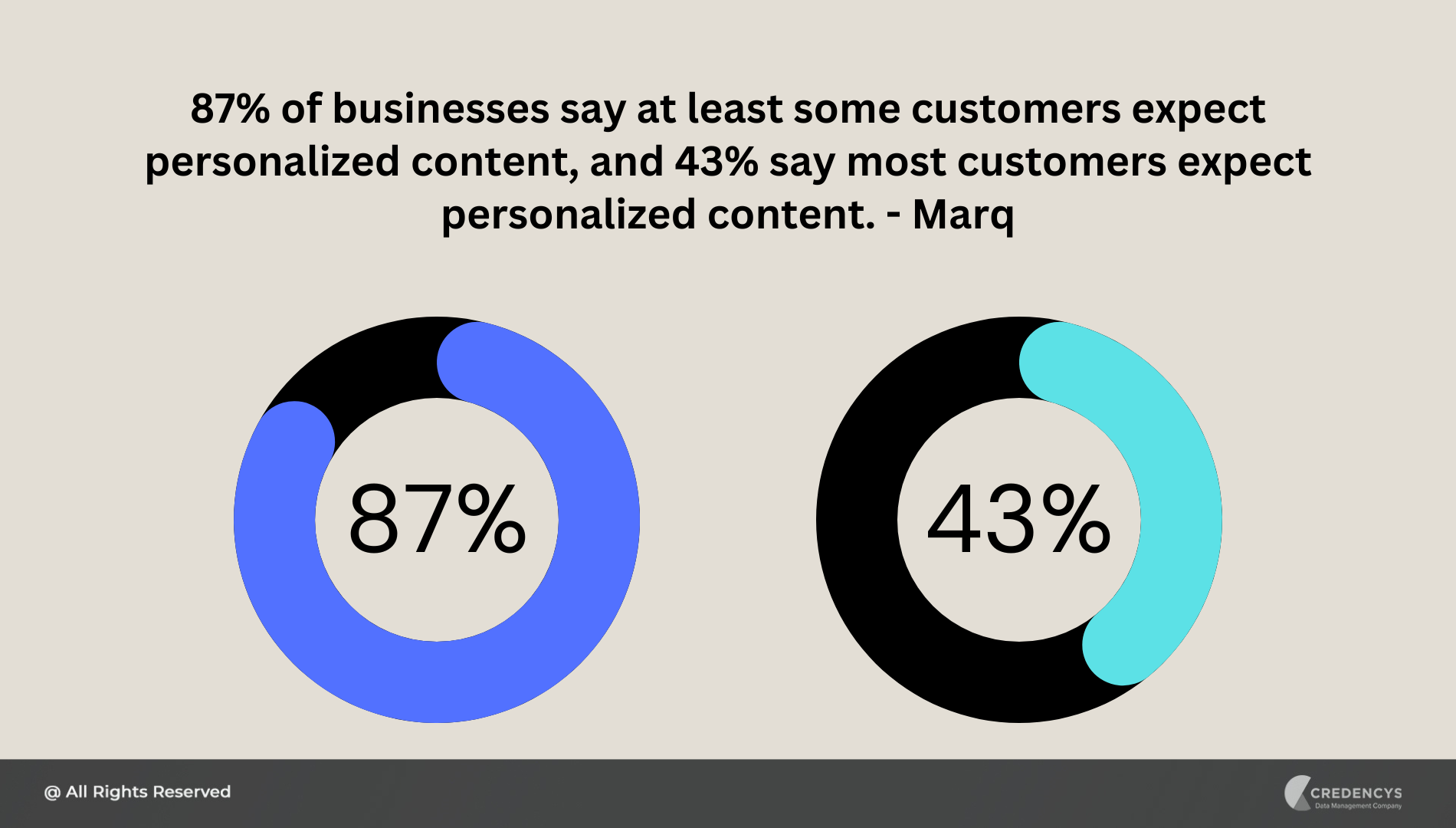
87% of businesses say at least some customers expect personalized content, and 43% say most customers expect personalized content

87% of businesses say at least some customers expect personalized content, and 43% say most customers expect personalized content. – Marq

2. Creating Personalized Experiences Everywhere

PIM makes sure that personalized experiences are crafted seamlessly across various channels, keeping product information consistent.

Whether through an e-commerce website, mobile app, or in-store interaction, PIM aligns product information with individual preferences, enhancing customer satisfaction and brand cohesion.

3. Strategic Adaptation to Consumer Demands

As personalization becomes a key driver in customer engagement, PIM transforms into a strategic tool for businesses to adapt to changing consumer demands.

PIM goes beyond managing product data; it becomes a catalyst for innovation, allowing businesses to deliver experiences that resonate on a personal level.

4. Tailored Recommendations

The comprehensive product data managed by PIM acts as a foundation for tailoring recommendations based on individual customer behaviors.

By understanding customer preferences, PIM ensures that recommendations are not only accurate but also aligned with the unique tastes of each customer.

5. Cohesive Brand Experience

PIM contributes to a cohesive brand experience by ensuring that product information is consistent and aligned across various touchpoints.

This consistency enhances the overall brand perception and fosters a seamless experience for customers, regardless of the channel through which they interact with the brand.

6. Adaptability to Evolving Expectations

In the ever-evolving landscape of customer expectations, PIM’s role is adaptive, allowing businesses to stay ahead of trends and deliver personalized experiences that meet evolving customer preferences.

PIM’s adaptability positions it as a crucial element in crafting personalized narratives that resonate with the audience.

The role of PIM extends beyond data management; it becomes a strategic ally in the pursuit of personalized commerce, empowering brands to forge meaningful connections with their customers.

How PIM Helps Crafting Tailored Customer Journeys?

In today’s business landscape, personalization stands out as a crucial factor influencing customer engagement and shaping product strategies for numerous companies.

Product Information Management (PIM) systems emerge as powerful tools, uniquely equipped to empower marketers and merchandisers. Explore the ways in which PIM can effectively facilitate the creation and management of personalized product experiences on a significant scale.

How PIM Helps Crafting Tailored Customer Journeys

Ensures efficient product personalization

PIM facilitates seamless product personalization, tailoring offerings to individual preferences, and enhancing the overall shopping experience. Integral to customer experience strategies, it’s a boon for businesses seeking broad-scale personalization.

Centralizing product data, PIM streamlines management, enabling effortless creation of personalized experiences and aligning strategies with customer needs and preferences.

Creates customized customer experiences

PIM is a robust tool for crafting personalized customer experiences by managing product information across channels. It ensures a consistent, customized experience, fostering customer satisfaction and loyalty.

Essential for businesses seeking to tailor products and services, PIM centralizes information, enhancing understanding of customer needs and preferences for an improved experience.

Simplifies the process of crafting personalized product offerings

Product personalization is a key brand differentiator, and PIM (Product Information Management) systems simplify the creation of tailored product offerings. Centralizing product data, PIM facilitates easy management and customization based on individual customer preferences.

It enables segmentation for targeted offerings, and by analyzing customer behavior, businesses can continually enhance and personalize their products for a more engaging and sales-driven customer experience.

Provides scalable personalized customer experiences

In an era of escalating customer expectations, the role of Product Information Management (PIM) is paramount in meeting the demand for personalized experiences. PIM serves as the linchpin, harnessing customer data to facilitate scalable personalization.

Businesses leverage PIM to efficiently manage and disseminate product information across diverse channels, ensuring consistency and adaptability to evolving customer preferences. This centralized approach guarantees a unified and accurate presentation of product details, irrespective of the customer’s engagement channel.

Top 5 Benefits of PIM in Personalization

Personalization has become the cornerstone of customer-centric strategies, and Product Information Management (PIM) emerges as the catalyst for realizing its full potential. Here are key benefits businesses can harness through PIM-driven personalization:

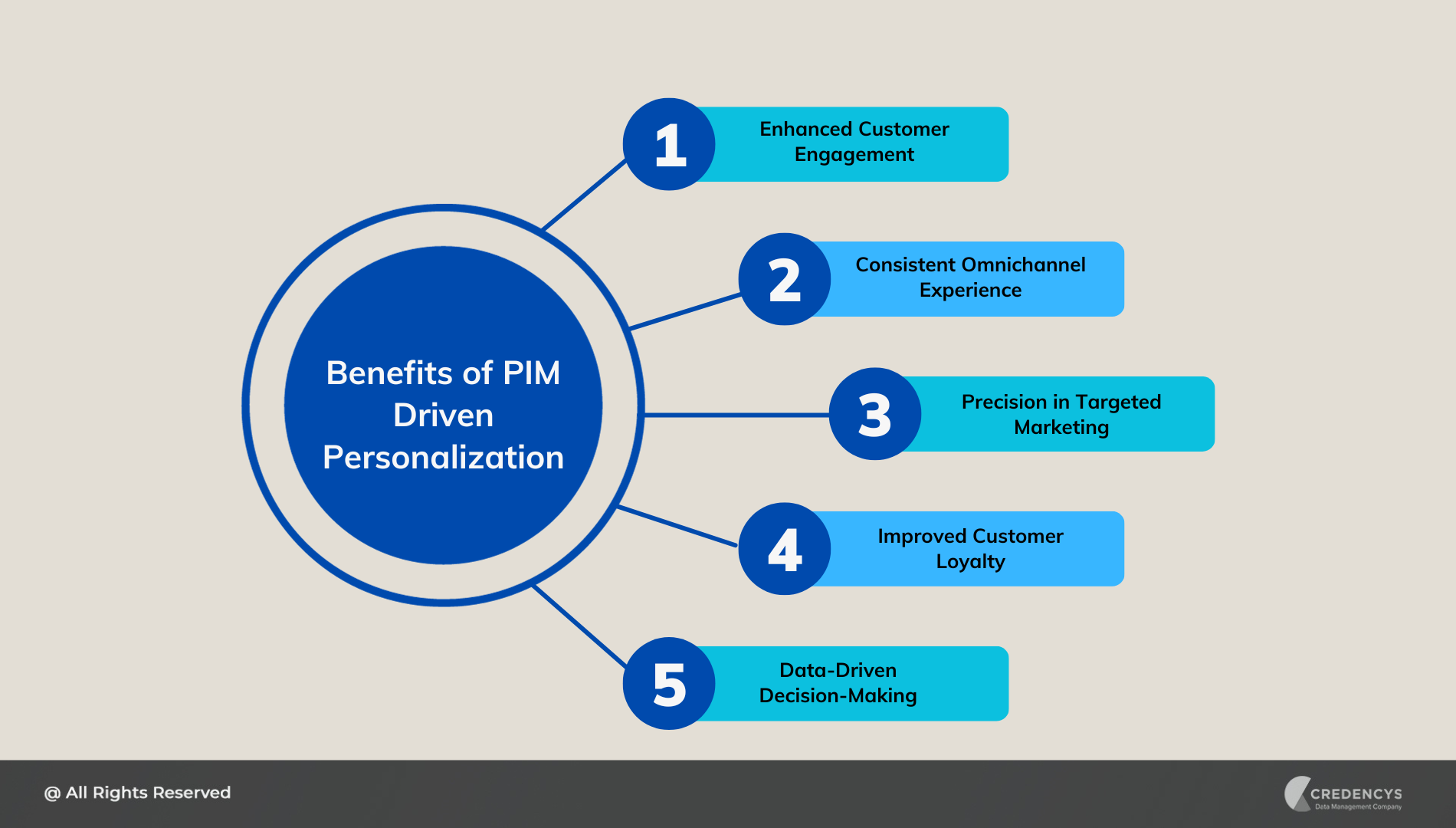
Benefits of PIM Driven Personalization

1. Enhanced Customer Engagement

PIM allows businesses to tailor product information based on individual preferences, creating a more engaging and relevant customer experience.

2. Consistent Omnichannel Experience

PIM centralizes product data, ensuring uniformity across channels. This consistency is vital for delivering a seamless omnichannel experience, where customers receive coherent information, regardless of the platform.

3. Precision in Targeted Marketing

With a comprehensive view of customer preferences, businesses can use PIM to craft targeted marketing campaigns. This precision enhances the effectiveness of promotions and increases the likelihood of conversion.

4. Improved Customer Loyalty

Personalization builds a deeper connection with customers. Through PIM, businesses can offer personalized recommendations, discounts, and experiences, fostering loyalty and repeat business.

5. Data-Driven Decision-Making

PIM facilitates data-driven decision-making by providing insights into customer behavior and preferences. Businesses can leverage this information to refine their strategies and stay ahead of market trends.

Elevate Personalization with Credencys’ PIM

To meet your customer expectations, Credencys’ PIM stands as the catalyst for unparalleled experiences. Ensuring seamless consistency across channels and adeptly anticipating evolving preferences, our PIM-driven personalization becomes the strategic differentiator.

Businesses adopting our paradigm position themselves at the forefront of customer-centricity, fostering unwavering loyalty and unparalleled success. To leverage personalization in PIM, talk to our PIM experts.

Luxury Retail Industry Trends with a Focus on Fashion PIM

As we step into 2024, the dynamics of the industry are poised to witness a paradigm shift, with technological advancements at the forefront. As per a recent report by

The global luxury fashion market size is anticipated to expand to a value of US$ 327.1 billion by 2032, reflecting a compound annual growth rate (CAGR) of 3.14% from 2024 to 2032.

To make the most of it, luxury fashion brands are compelled to adapt to emerging trends that redefine exclusivity and luxury. Among the key drivers of change, fashion PIM is emerging as a pivotal tool, enabling brands to navigate the dynamic landscape successfully.

The major trends in luxury retail for 2024 will revolve around innovation, sustainability, and personalized experiences. Let’s explore how fashion PIM can help you use them to your benefit.

Trend #1: Sustainability as a Fundamental Commitment

The growing concern for environmental impact is steering luxury brands towards a commitment to sustainability.

Consumers, particularly in the luxury market, are becoming more environmentally conscious and socially aware. They are seeking products that align with their values, including sustainability and ethical sourcing.

luxury fashion PIM

Additionally, Luxury brands are realizing that a commitment to sustainability enhances their reputation and helps build a positive brand image. Luxury retailers are aligning with this consciousness, embracing eco-friendly packaging and responsibly sourced materials.

REI, a prominent outdoor retailer, is recognized for its strong commitment to sustainability. The company’s “REI Used Gear” platform exemplifies its dedication to the circular economy by facilitating the buying and selling of gently used outdoor gear and clothing. This initiative aligns with REI’s philosophy of extending product lifespans, reducing the need for new production, and promoting a culture of reuse and recycling.

The platform provides consumers with a sustainable alternative and actively contributes to minimizing waste and conserving natural resources. REI’s sustainability efforts extend beyond rhetoric, embodying a proactive approach to environmental responsibility in the outdoor retail sector.

How Fashion PIM Supports Sustainability

Fashion Product Information Management (PIM) systems play a crucial role in supporting sustainability initiatives within the luxury retail sector:

  • Supply Chain Transparency: Enable luxury brands to provide detailed information about the entire supply chain of their products.
  • Traceability of Materials: Facilitate the tracking and tracing materials used in the production process. Brands can showcase the origin and sustainability of raw materials.
  • Efficient Communication: Streamline the communication of sustainability features across various channels.
  • Compliance Management: Assist in monitoring and managing compliance with sustainability standards and certifications.

Trend #2: Personalization Redefined with Fashion PIM

Personalization has always been synonymous with luxury, but in 2024, it will reach new heights. Artificial intelligence (AI) and machine learning (ML) analyze consumer data to curate personalized shopping experiences.

Tailor-made product recommendations and bespoke in-store services ensure that every interaction feels uniquely crafted.

Burberry is enhancing its customer service through smart automation. The luxury brand utilizes AI to study customer data and generate personalized product suggestions. Additionally, they’ve introduced a chatbot that understands and responds to customer questions using natural language.

The brand has made substantial investments in combining digital and physical experiences. They now provide digital screens with a ‘click and collect’ feature, allowing customers to make online purchases and conveniently pick up their orders in-store.

How PIM Supports Advanced Personalization

Fashion PIM plays a crucial role in facilitating and enhancing the redefined personalization trend in luxury retail:

  • Detailed Product Information: Ensure that product information is comprehensive and accurate.
  • Customer Profiling: Enable the creation and maintenance of detailed customer profiles.
  • Dynamic Content Management: Empower luxury brands to showcase personalized content on various channels.
  • Cross-Channel Consistency: Maintain consistency across different channels and touchpoints.

Trend #3: Experiential Retail

While experiential retail is not new to luxury, its evolving trends create new tools and opportunities for businesses. Immersive, memorable experiences go beyond mere transactions, encompassing exclusive events, VIP access to limited collections, and integrated entertainment elements within retail spaces.

Investing in flexibility is essential to adapt to emerging trends. Building an expandable software architecture enables future integrations, staying ahead in the ever-changing landscape. Additionally, Technologies such as artificial intelligence, augmented reality (AR), and virtual reality (VR) lead the way in creating unique shopping experiences, both online and offline.

Adapting experiential retail strategies for online shopping involves creating virtual showrooms, personalizing customer experiences through AI-powered recommendations, and offering interactive content and live shopping events.

Louis Vuitton has transformed its luxury stores to provide immersive in-store experiences, featuring digital elements, unique layouts, virtual assistants, and personalized services. In a groundbreaking move, Louis Vuitton ventured into the virtual realm by establishing a virtual showroom within the popular video game, League of Legends, boasting a massive player base of over 115 million. This virtual space enabled players to explore the brand’s latest collection and make purchases using in-game avatars. Additionally, Louis Vuitton introduced virtual skins inspired by its real-world collections, available for purchase by players. Furthermore, Louis Vuitton offers customization services such as personalized luggage tags, perfumes, hot-stamped initials, and bespoke bags.

How Fashion PIM Facilitates Experiential Retail

PIM plays a pivotal role in supporting the experiential retail trend in the luxury sector. By leveraging fashion PIM capabilities, luxury retailers can create immersive, memorable, and seamless experiences that resonate with their discerning clientele.

  • Personalized Content for Experiences: Enable luxury retailers to manage and organize vast amounts of product information, including details on features, benefits, and unique selling points.
  • Consistent Brand Messaging: Maintain consistent brand messaging across various channels.
  • Product Storytelling and Rich Media: Enable the management of product-related content, including images, videos, and descriptive narratives.

Wrapping Up: Fashion PIM with Credencys

The luxury retail sector is undergoing a paradigm shift, where technology, sustainability, and inclusivity are integral to retailers’ strategies. With a focus on Fashion PIM, luxury brands can navigate these changes successfully, ensuring that the shopping experience becomes more immersive, personalized, and socially responsible. As these trends evolve, the luxury retail sector is poised to redefine opulence and exclusivity in the years to come.

PIM Trends Reshaping the Retail Landscape

As we approach 2024, the retail landscape continues its transformative journey, shaped by technological breakthroughs, changing consumer behaviors, and a renewed focus on sustainability. eCommerce is no longer a side venture but an integral part of the retail ecosystem, and physical stores are evolving into experiential hubs.

Against this backdrop, Product Information Management (PIM) continues to facilitate the seamless integration of online and offline experiences. The year 2024 is poised to witness an increased emphasis on personalization, automation, and omnichannel strategies.

Retailers are reimagining their approaches to meet these evolving demands, and PIM is central to this evolution, ensuring that product information remains not only accurate but also tailored to meet the unique expectations of individual consumers.

Upcoming PIM Trends in Retail

In this blog post, we will delve into the key PIM trends that will shape the retail landscape in 2024.

1. Automation in Product Management

The relentless pace of change demands not only innovation but also efficiency in managing vast amounts of product data. In 2024, PIM will be a powerful catalyst for automation and efficiency in product management in the following ways:

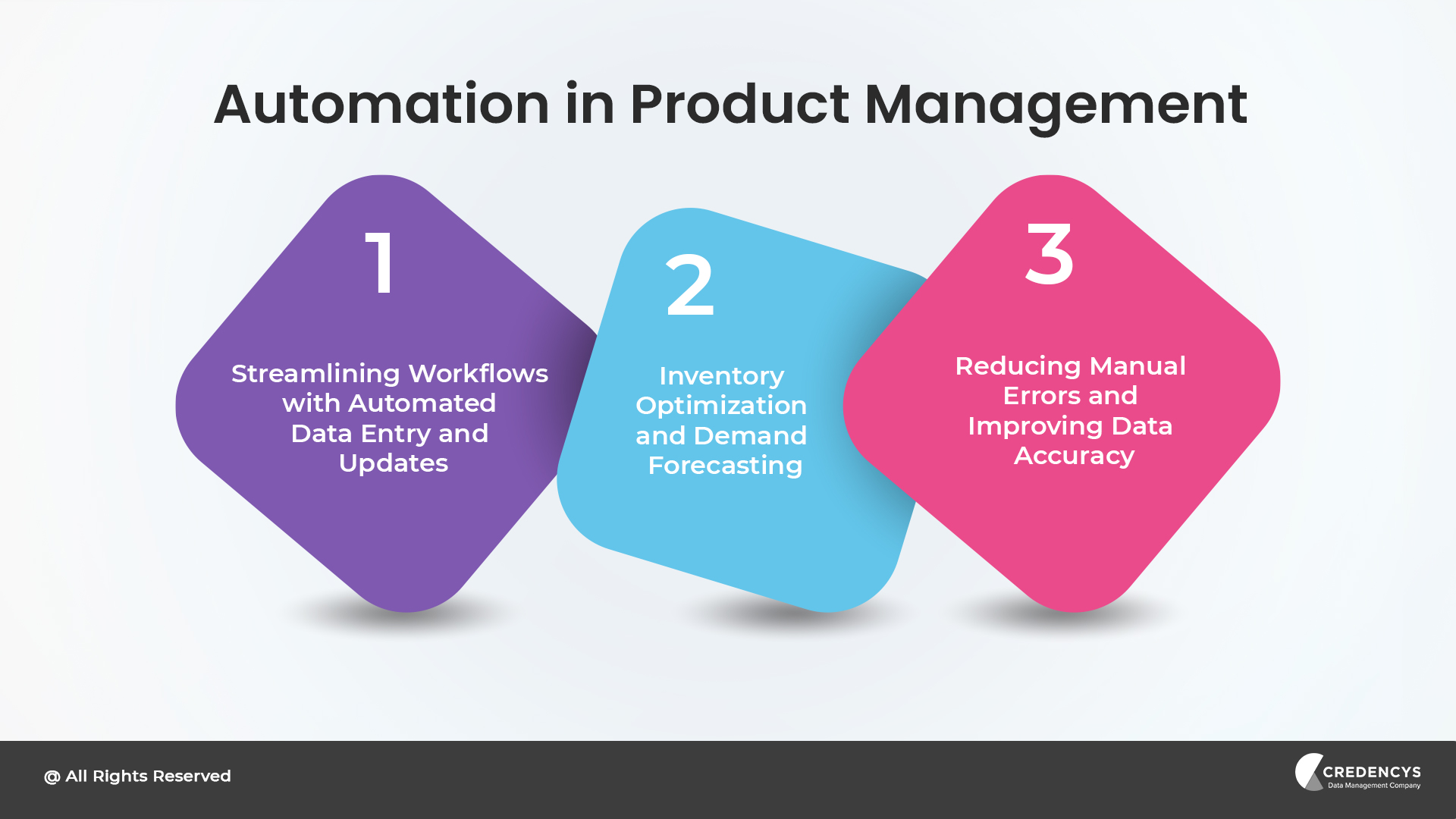
Automation in Product Management

1. Streamlining Workflows with Automated Data Entry and Updates

PIM systems are revolutionizing the way retailers handle data by automating repetitive tasks. Through intelligent automation, these systems are eliminating the need for manual data input, ensuring that product information is consistently accurate and up to date across all channels.

For example, when a product undergoes a price change or a new feature is introduced, PIM automates the dissemination of this information across various platforms. This saves significant time, creating a more streamlined and error-reducing workflow.

As a result, retailers can adapt swiftly to market changes, bringing products to market faster and maintaining a competitive edge.

2. Inventory Optimization and Demand Forecasting

Efficient inventory management is a cornerstone of successful retail operations, and PIM plays a pivotal role in optimizing inventory and demand forecasting processes. By centralizing product information, PIM systems enable retailers to gain a holistic view of their inventory levels and sales data.

PIM contributes to inventory optimization by providing real-time insights into product demand, allowing retailers to align their inventory levels with market trends. Additionally, PIM facilitates demand forecasting through data analytics, leveraging historical sales data and market trends to predict future demand accurately.

This proactive approach not only prevents overstock situations but also ensures that popular products are adequately stocked, reducing instances of stockouts. The result is a more agile and responsive supply chain, allowing retailers to meet customer demand with precision.

3. Reducing Manual Errors and Improving Data Accuracy

Manual data entry is inherently prone to errors, and in the expansive realm of product information management, inaccuracies can have far-reaching consequences. PIM systems mitigate this risk by leveraging automation to reduce manual intervention, thereby enhancing data accuracy.

By automating data enrichment, categorization, and validation processes, PIM systems minimize the likelihood of errors in product information. This not only improves the reliability of product data but also instills confidence in customers who rely on accurate information for making informed purchase decisions.

Moreover, automation reduces the burden on human resources, allowing teams to focus on strategic initiatives rather than routine data management tasks. This shift towards a more strategic use of human resources not only improves job satisfaction but also contributes to overall operational efficiency.

2. Hyper-Personalization and Improved Customer Experience

In 2024, the role of PIM in shaping personalized customer experiences will stand out prominently.

Role of PIM in Personalization and Improved Customer Experience

1. Customized Product Information

The era of one-size-fits-all marketing is giving way to a more tailored and personalized approach, and PIM is at the forefront of this paradigm shift.

PIM systems allow for the creation of dynamic product profiles, accommodating variables such as size, color, and usage patterns. This level of granularity ensures that customers receive accurate and relevant information about the products that align with their unique tastes.

Whether it’s suggesting complementary items or showcasing specific features, PIM empowers retailers to provide a personalized shopping journey that resonates with each customer.

2. Dynamic Content Delivery

PIM systems are not merely static repositories of product data; they are dynamic engines that enable retailers to deliver content based on customer preferences in real time. By integrating customer data and purchase histories, PIM systems can dynamically adjust the content presented to individual customers across various touchpoints.

For instance, if a customer frequently purchases athletic wear, the PIM system can prioritize showcasing new arrivals or promotions related to sportswear in their online interface. This dynamic content delivery not only enhances the relevance of the shopping experience but also increases the likelihood of customer engagement and conversion.

3. Omnichannel Personalization

Omnichannel retailing has become a cornerstone of modern retail strategy. And PIM plays a crucial role in supporting omnichannel personalization by ensuring consistency in product information across all channels.

Whether a customer is browsing products on a mobile app, exploring a brick-and-mortar store, or making a purchase through an eCommerce website, PIM ensures that the product information remains uniform. This cohesion not only builds trust but also enhances the overall customer experience, as shoppers can seamlessly transition between channels without encountering discrepancies in product details.

Furthermore, PIM enables retailers to implement personalized promotions and recommendations consistently across various touchpoints, reinforcing the brand message and fostering a sense of continuity in the customer journey.

PIM on Customer Experience Management

3. Integration of AI in PIM

In 2024, PIM platforms will propel retail efficiency and customer experience to unprecedented heights with the use of AI.

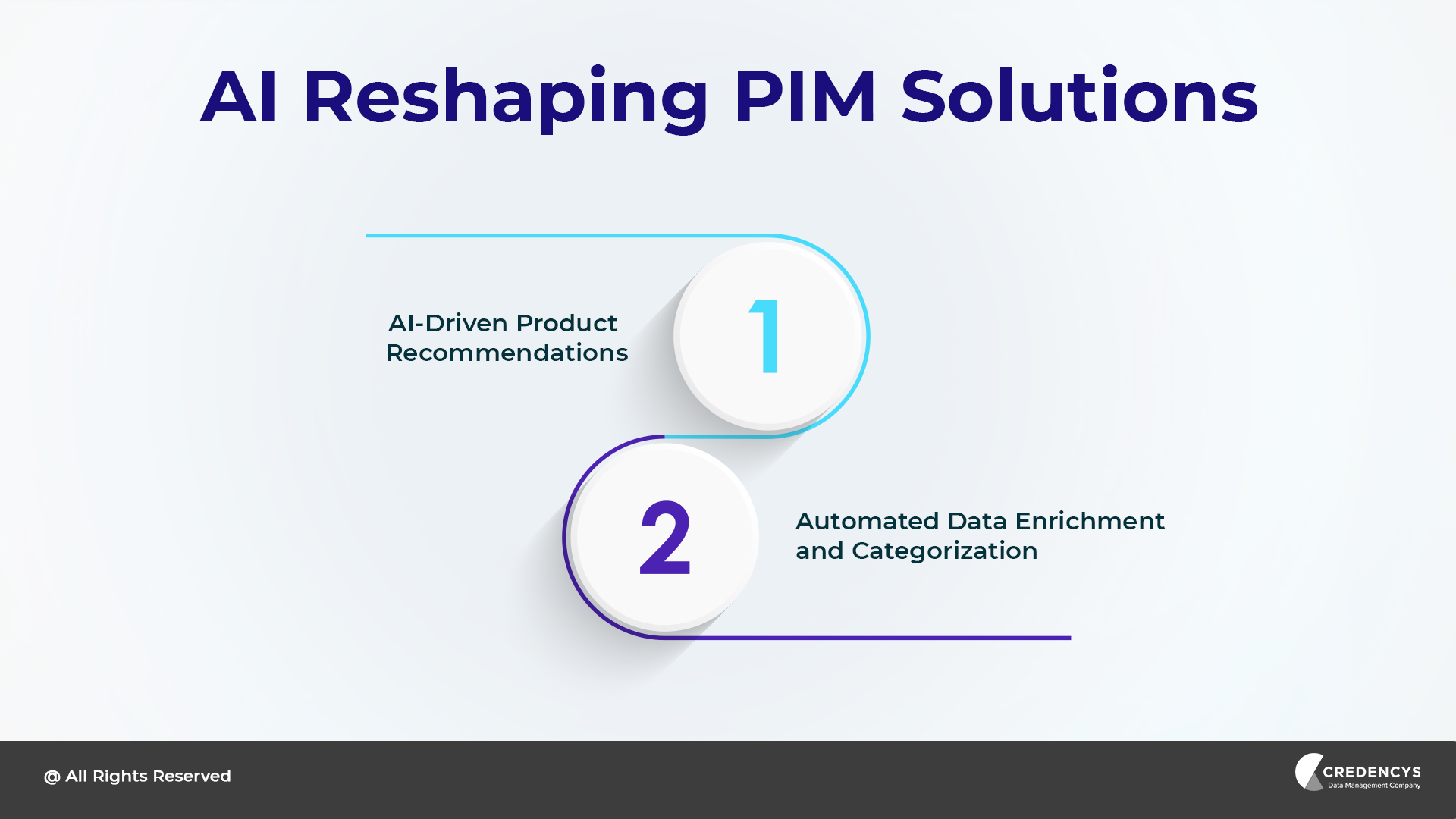
AI Reshaping PIM Solutions

1. AI-Driven Product Recommendations

One of the standout features transforming PIM systems is the integration of Artificial Intelligence for dynamic and personalized product recommendations. By leveraging machine learning algorithms, PIM systems can analyze customer behavior, historical purchase data, and contextual information to deliver tailored product suggestions.

This not only enhances the customer shopping experience but also drives increased sales by presenting relevant offerings at the right moment.

2. Automated Data Enrichment and Categorization

PIM systems are now equipped with advanced algorithms that automate data enrichment and categorization. Through natural language processing and image recognition, these systems can intelligently analyze and tag product information, ensuring accuracy and consistency.

This not only saves time for manual tasks but also minimizes the risk of human errors in managing extensive product catalogs.

4. IoT Integration in PIM

In the context of PIM, IoT integration introduces a new dimension, providing real-time data and insights that can significantly impact how retailers manage and present product information.

This enables retailers to maintain optimal stock levels, reduce instances of stockouts, and enhance overall inventory management efficiency. By leveraging IoT data, PIM systems can dynamically adjust pricing and promotions based on factors such as demand, inventory levels, and even the presence of specific customer segments in-store.

PIM, coupled with IoT, contributes to a more personalized and immersive customer experience. For example, smart mirrors equipped with RFID technology can recognize products a customer is trying on and provide detailed information, such as available sizes and colors, directly from the PIM system.

Beyond the store, IoT integration in PIM extends to the supply chain. Connected devices can provide visibility into the entire supply chain, from manufacturing to distribution, enabling better traceability, and ensuring the authenticity and quality of products.

5. Augmented Reality Experiences

In the dynamic landscape of retail, the integration of Augmented Reality (AR) has emerged as a transformative trend, reshaping how customers interact with products and brands. Within the framework of PIM, AR experiences introduce a new dimension, revolutionizing how retailers manage and present product information.

PIM systems integrated with AR enable customers to visualize products in their real-world environments. In the fashion and beauty sectors, AR integrated with PIM facilitates virtual try-on experiences, enabling customers to see how clothing items, accessories, or makeup will look on them before making a purchase.

AR experiences enhance traditional product information by providing additional layers of context. Users can point their devices at a product and receive detailed information, reviews, or even step-by-step usage instructions directly from the PIM system.

6. Cloud-Based PIMs

The traditional on-premises infrastructure is gradually making way for cloud-based PIM solutions, and this shift is driven by a need for increased agility, scalability, and accessibility. Retailers are recognizing the advantages of these systems, which transcend the limitations of traditional models.

The flexibility offered allows retailers to scale their PIM infrastructure based on evolving business needs. Whether managing a small product catalog or an extensive array of offerings, cloud-based PIM accommodates the spectrum, providing a scalable solution that grows with the business.

Furthermore, the accessibility of these systems is a game-changer in an era where remote work is becoming the norm. Teams can collaborate seamlessly, accessing the PIM platform from any location, fostering greater collaboration and responsiveness.

On-Premises Vs Cloud PIM – Finding Your Best Fit

7. Mobile Accessibility and Real-Time Collaboration Features

In response to the increasingly mobile nature of business operations, PIM systems prioritize mobile accessibility. Retail businesses can access and manage product information on the go, fostering real-time collaboration and decision-making.

This not only accelerates the pace of operations but also ensures that product information remains current and synchronized across all channels. Real-time collaboration features further amplify the agility of PIM systems.

Multiple team members can work concurrently on product updates, with changes reflected instantly. This collaborative approach enhances communication among teams, streamlining processes and reducing time-to-market for new products or updates.

Bottom Line

As we peer into the future of retail, the role of PIM is poised to undergo further transformation. In 2024 and beyond, PIM technology is not merely a static solution but a dynamic force at the forefront of shaping the way retailers manage and leverage product information.

As technology continues to advance, PIM will evolve into a more intelligent and adaptable solution, driving innovation and efficiency in how retailers manage and present product information. Retailers that embrace these anticipated trends and innovations in PIM are likely to stay ahead in an ever-evolving and competitive retail landscape.

How Does AI-powered PIM Transform Retail with Intelligent Data Management?

Step into the future of retail operations where AI-powered PIM (Product Information Management) is changing the game.

Imagine a digital ecosystem where your product information is not just managed but smartly handled with the power of Artificial Intelligence (AI).

In this post, we’ll explore how this intelligent data management system is revolutionizing the way retailers operate, making things smoother, smarter, and more efficient.

Get ready to discover how AI transforms the retail landscape, helping businesses make informed decisions and enhancing the overall shopping experience for customers.

Let’s delve into it.

Overview of Product Information Management (PIM) in Retail

In retail, where lots of products are sold, keeping track of details is essential. Product Information Management makes this job easy by creating a central hub for all product information. It helps businesses stay organized, saving time and avoiding mess. Think of it as the go-to place where all the information about products is available, bringing everyone on the same page.

Moreover, PIM for retail contributes significantly to driving customer engagement. When people shop online or in stores, they want to know everything about a product – what it looks like, how it works, and why it’s special. PIM ensures that this information is accurate and available, making the shopping experience enjoyable and hassle-free.

So, in the world of retail, PIM makes sure that everyone – from businesses to customers – has the right information at the right time.

Introduction to AI-powered PIM in Retail

PIM makes sure that every product’s information is not just stored but also organized in the smartest way possible. It helps retail businesses keep track of what they sell, from how much it costs to what it looks like. AI adds an extra layer of intelligence, making PIM even more efficient and helpful.

One of the fantastic things about AI-powered PIM is its ability to understand patterns and trends. It can look at how customers behave and use that information to suggest better ways to present products.

Moreover, AI-powered PIM works magically when it comes to pricing. It can analyze what’s happening in the market and recommend the best prices in real-time. This ensures that customers get fair deals and businesses stay competitive.

The combination of AI and PIM simplifies the management of product information for retailers. It’s here to make things smarter, faster, and more in tune with what customers need.

Prepare for a journey where technology and retail come together to create a more intelligent and enjoyable shopping experience.

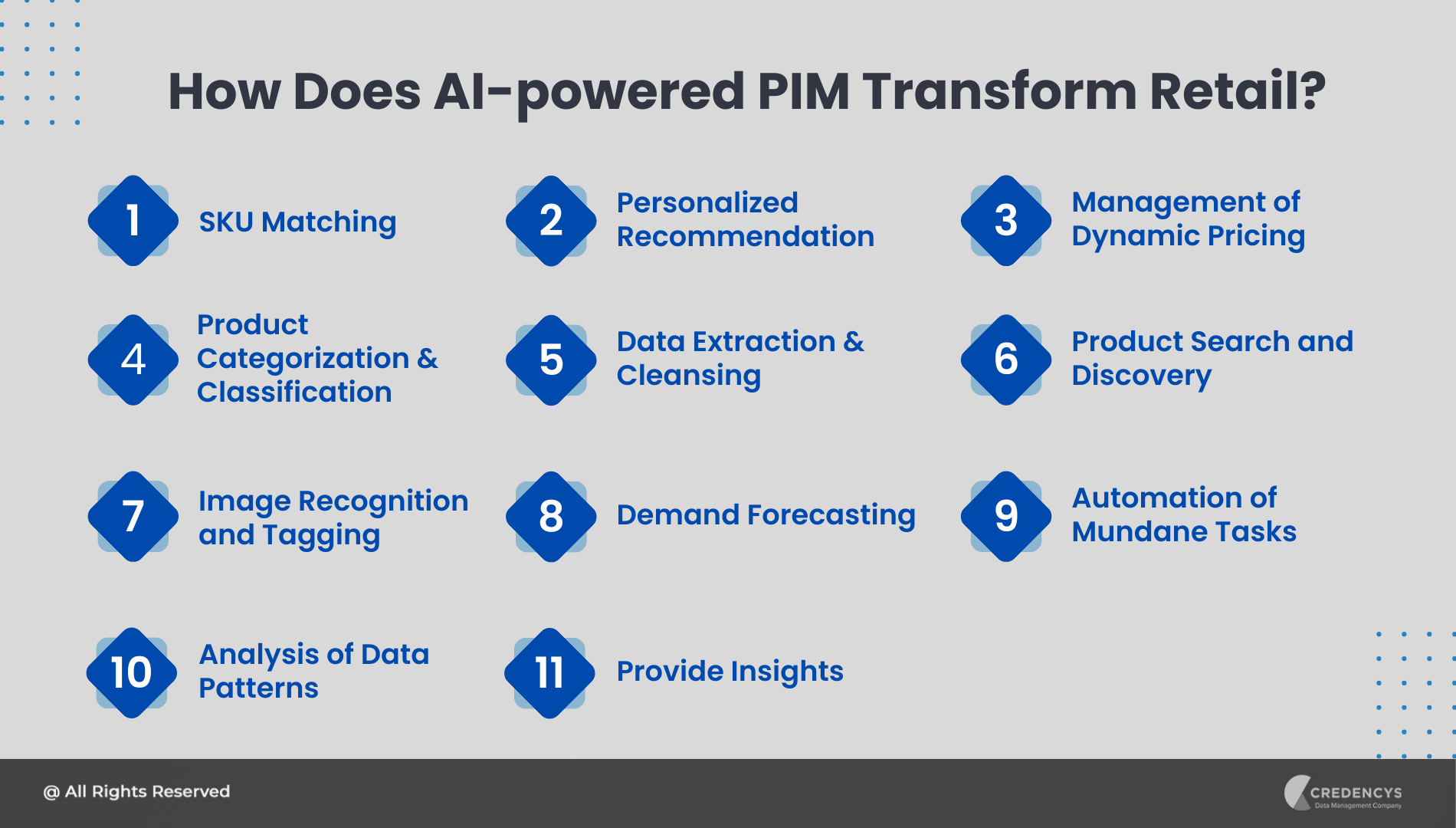
How Does AI-powered PIM Transform Retail?
How Does AI-powered PIM Transform Retail

1. Effective SKU Matching

AI within PIM facilitates retailers with efficient SKU management. AI-driven SKU matching tools enable the consolidation of product variants. By intelligently identifying and matching similar SKUs, retail organizations maintain a more accurate database within PIM, ensuring data integrity.

2. Personalized Product Recommendation

AI’s personalized recommendation engines in retail PIM enhance customer-centricity. These engines utilize collaborative and content-based filtering to provide tailored product suggestions. By analyzing past user interactions and preferences, AI enables cross-selling and upselling, enriching the overall shopping experience in retail PIM.

3. Efficient Management of Dynamic Pricing

In retail, dynamic pricing provides a competitive edge and it can be achieved through AI within PIM. By analyzing customer behavior and market dynamics, AI recommends real-time price adjustments. This approach not only maximizes profitability but also offers competitive pricing and tailored offers to retail customers.

4. Automated Product Categorization and Classification

Traditionally, product categorization has been a laborious task in retail PIM. AI revolutionizes this process by intelligently classifying products based on their attributes, streamlining the management of extensive catalogs. AI models analyze product data, swiftly identifying patterns and relationships for accurate categorization.

5. Simplified Data Extraction & Cleansing

In the sphere of retail product data management, AI stands out as a transformative force for PIM. It automates the extraction and standardization of product data from diverse sources, addressing the challenge of maintaining precise data. These algorithms continuously cleanse and standardize data, ensuring the accuracy of product information across all the output channels.

6. Enhanced Product Search and Discovery

Enhanced product search and discovery are pivotal in retail PIM systems. AI-driven solutions, leveraging natural language processing and machine learning, surpass conventional keyword matching. Instead, they delve into user intent and context, delivering tailored search results that significantly enhance customer satisfaction.

7. Image Recognition and Tagging

AI-driven image recognition and tagging processes within retail PIM streamline the organization of visual content. By analyzing product images, AI discerns attributes like color, shape, and texture. This automates the process of product classification and enriches visual search capabilities, providing an enhanced user experience in the retail domain.

8. Demand Forecasting

Accurate demand forecasting, crucial in retail inventory management, benefits from AI within PIM. These systems analyze a wealth of data, including historical sales trends, website analytics, and market conditions. This analysis informs recommendations for optimal inventory levels, enhancing cost-efficiency and customer satisfaction in retail.

9. Automation of Mundane Tasks

In the retail industry, AI-powered PIM streamlines varied operations by automating repetitive tasks like data entry, data classification, and data enrichment. This not only results in significant time savings but also reduces errors in crucial data processes.

This streamlined automation empowers retail companies to shift their focus towards more critical tasks, fostering efficiency and enabling informed decision-making for enhanced overall performance.

10. Analysis of Data Patterns

AI plays a pivotal role in swiftly analyzing extensive datasets, and uncovering intricate patterns that might be challenging or impossible for humans to identify.

For retailers, this analytical capability goes beyond data processing, offering valuable insights into customer behavior, sales trends, and other crucial metrics. AI-driven analysis and insights serve as a foundation for making well-informed business decisions in the dynamic landscape of the retail sector.

11. Provide Insights

In the retail industry, AI-driven PIM software serves as a valuable tool in providing insights that guide companies toward informed decision-making.

These insights extend to offering recommendations for product bundles, pricing strategies, and even insights into new product development. By harnessing the power of AI, retailers can navigate the complexities of the market with a data-driven approach, optimizing their strategies for better outcomes.

How Does AI Empower the Retail PIM Processes?

How Does AI Empower the Retail PIM Processes

AI-powered PIM drives efficiency to the different parts of product data management processes including data onboarding, data optimization, product content creation & enrichment, and data syndication to different channels.

1. Product Data Onboarding

  • Data Sourcing

Utilizing advanced algorithms, AI facilitates seamless product data onboarding in the retail industry, effortlessly handling data from diverse sources and formats. This ensures a comprehensive and streamlined process.

  • Information Creation and Optimization

AI-supported PIM performs text creation and optimization for retail businesses, particularly during data onboarding. This includes the customization of parameters such as intonation, length, format, bullet points, language, and more. This ensures that product descriptions are not only accurate but also tailored to resonate with the target audience.

  • Data Mapping

Within the retail industry, AI brings efficiency to product data mapping tasks by intelligently suggesting matches between products and their attributes and SKUs. AI optimizes data integration by proposing consistent and effective data mapping. This streamlines processes and ensures accurate product data mapping for retail businesses.

  • Data Validation & Enrichment

AI plays a crucial role in ensuring accurate and consistent product information across various retail channels through robust data validation and enrichment mechanisms. This guarantees that customers receive reliable and precise details about products.

2. Data Optimization

  • Data Consolidation

AI identifies patterns and relationships within data for retailers, ensuring a thorough consolidation process. Automation in this realm saves valuable time, minimizes errors, and guarantees the creation of a unified and accurate product database for retail businesses.

  • Data Quality

Integrated seamlessly with PIM, AI becomes a driving force in automating deduplication, consolidation, normalization, and validation processes, aligning product data with the highest quality standards. This commitment to data quality ensures that retailers maintain a reliable and standardized repository of product information.

3. Product Content Creation and Enrichment

  • Content Enrichment

To maintain the accuracy and relevance of product information across diverse channels, AI in retail PIM identifies correlations, extracts valuable insights, and associates relevant metadata. This approach ensures that enriched data aligns seamlessly with the needs and expectations of retail customers.

  • Contextualized Retail Experiences

AI enhances contextualization in the retail sector by delving into data, understanding intricate product attributes, and customizing content based on unique customer personas. This results in a more personalized and resonant shopping journey for consumers.

  • Language Translation Support

Facilitating the translation journey, AI employs advanced algorithms to accurately interpret and convert text between languages. This ensures that product information is accessible and meaningful to a broader audience, contributing to a globalized retail experience.

  • Dynamic Content Enhancement

AI in retail PIM ensures the delivery of dynamic and captivating product experiences. By leveraging syndicated insights, it ensures that every interaction with product content is not just informative but also immersive, enhancing the overall retail customer experience.

4. Data Syndication

  • Content Relevance (through Channel Insights)

In the retail landscape, AI ensures the relevance and effectiveness of content. By analyzing data from diverse channels, AI identifies successful content elements, providing invaluable insights. These insights empower retailers to refine and enhance existing content strategies for maximum impact and customer engagement.

  • Channel Performance Optimization

AI in retail PIM excels in channel performance optimization. Leveraging continuous insights, AI enables retailers to fine-tune their content strategies dynamically. This not only enhances the overall performance of retail channels but also contributes to increased conversions, ensuring a seamless and optimized shopping experience for customers.

5 Benefits of AI-powered PIM for Retailers

5 Benefits of AI-powered PIM for Retailers

Leveraging AI in Retail PIM brings forth a multitude of advantages, revolutionizing the way businesses handle and leverage product data. Here are the key benefits tailored for the retail context:

1. Streamlined and Automated Data Management

AI automates time-consuming product data management tasks like data entry and classification, reducing manual effort and errors. This automation ensures that retail businesses can focus on strategic and creative aspects, significantly enhancing operational efficiency.

2. Elevated Customer Experience

AI-powered PIM systems in retail analyze customer behavior, providing personalized product recommendations. This not only boosts engagement but also enhances customer satisfaction and loyalty. Additionally, AI facilitates the rapid creation of tailored marketing content that resonates with retail customers.

3. Advanced Analytics and Insights

AI-based PIM systems extract valuable insights from retail product data, identifying patterns and correlations. These insights empower strategic decision-making in areas such as product development, pricing, inventory control, and marketing. Ultimately, retailers benefit from optimized business outcomes and increased competitiveness.

4. Scalability and Operational Efficiency

AI-powered Retail PIM systems efficiently handle large volumes of data, managing and distributing product information effectively. Through automation, retailers can reduce manual efforts, enabling them to scale their operations without significant resource investments.

5. Competitive Advantage

The adoption of AI-powered PIM solutions in retail streamlines data management offers personalized customer experiences and provides accurate product information. This positively impacts customer satisfaction, optimizes retail operations, and positions businesses ahead of market trends, securing a competitive edge.

Walmart: The Best Example of AI in Retail PIM

Walmart has harnessed the power of AI to revolutionize product tagging and metadata enrichment, particularly within its Sam’s Clubs. The retail giant employs floor scrubbers equipped with inventory intelligence towers that capture real-time images of every item in the store as they clean. This results in over 20 million daily photos, providing an unprecedented level of precision in understanding product locations and brands.

  • Real-time Image Capture: Walmart uses floor scrubbers with inventory intelligence towers to capture continuous real-time images, maintaining a dynamic inventory understanding for accuracy.
  • Precision in Product Tagging: Detailed images enable precise tagging, ensuring accurate representation to customers and achieving an impressive accuracy rate of over 95%.
  • Building a Retail Graph with AI: Walmart actively constructs a retail graph with comprehensive product information, enhancing customer product discovery experiences through AI.
  • NLP-Based AI Models: AI models based on Natural Language Processing extract entities from metadata, aiding in the creation of a retail graph and organizing vast product-related information.
  • AI-powered Substitute Recommendations: Walmart employs deep learning AI to suggest substitutes for out-of-stock products, analyzing variables like brand, size, and customer preferences in real-time.
  • Continuous Learning and Improvement: Customer feedback refines AI algorithms; seeking customer approval or decline for substitutes contributes to ongoing algorithm enhancement for future accuracy.

Walmart’s strategic use of AI in product information management not only ensures operational efficiency but also elevates the customer experience through precise tagging, innovative substitute recommendations, and continuous algorithmic improvement. This case study showcases how AI is driving transformative advancements in retail practices.

Challenges of Implementing AI-powered PIM in Retail

Challenges of Implementing AI-powered PIM in Retail

While integrating AI into Retail PIM offers numerous benefits, it also poses several challenges that demand attention. Key challenges include:

Data Quality and Integration

Maintaining the quality and integrity of data used in AI-driven Retail PIM systems can be challenging. Issues related to accuracy, consistency, and compatibility arise when integrating data from various sources.

User Adoption and Change Management

The introduction of AI-powered systems in Retail PIM may face resistance from employees unfamiliar with AI or concerned about job automation. Effective change management strategies, including training, education, and clear communication, are essential for user adoption.

Expertise and Talent Acquisition

Implementing AI in Retail PIM requires skilled professionals with expertise in AI technologies, data analysis, and management. The scarcity of such talents in the job market poses challenges for businesses aiming to build AI capabilities within their Retail PIM operations.

Ethical and Legal Issues

The use of AI in Retail PIM introduces ethical and legal concerns. Businesses must ensure that AI algorithms adhere to ethical standards, avoid biases, and comply with data privacy regulations. Transparency in AI decision-making processes is vital for maintaining trust and regulatory compliance.

Cost and Resource Allocation

AI implementation in Retail PIM involves significant costs, including infrastructure, software, and talent acquisition. Allocating resources for training data, model development, and ongoing maintenance can be resource intensive. Businesses must carefully assess the cost-benefit ratio and allocate a budget for desired outcomes.

Scalability and Performance

With growing data volumes and user demands in Retail PIM, AI systems must scale to handle the load. However, maintaining optimal performance and responsiveness while managing computational requirements can be a challenging aspect of implementation.

Top 5 Future Trends in AI-powered Retail PIM

Top 5 Future Trends in AI-powered Retail PIM

The landscape of retail is undergoing a transformative shift, driven by the integration of AI into PIM systems. Here’s a glimpse into the future trends shaping the AI-powered PIM landscape for retail:

1. Hyper-Personalization

The future of AI-powered PIM in retail revolves around hyper-personalization. Systems will leverage AI algorithms to analyze intricate customer data, offering truly personalized shopping experiences. From tailored product recommendations to individualized marketing content, the focus is on making each customer interaction unique.

2. Real-Time Data Analytics

AI-driven PIM systems will evolve to provide real-time data analytics, enabling retailers to make agile and informed decisions. This trend involves instant insights into changing customer preferences, market trends, and inventory dynamics. Retailers can adapt swiftly to market shifts, ensuring a competitive edge.

3. Integration of AR and VR

The future of AI-powered PIM in retail will witness a seamless integration of Augmented Reality (AR) and Virtual Reality (VR). Customers will engage in immersive shopping experiences, virtually trying out products before purchase. This integration extends beyond customer experiences, also impacting internal processes like collaborative design and prototyping.

4. Voice-Activated Commerce

Voice-activated commerce is set to become more prevalent in the AI-powered PIM future. Retailers will optimize their PIM systems to align with the growing use of voice-activated devices. This involves refining product data structuring to cater to natural language patterns, enhancing accessibility, and providing a seamless user experience.

5. Blockchain Integration for Enhanced Security

Security will take center stage in AI-powered PIM for retail. The integration of blockchain technology will enhance data security, ensuring the integrity and confidentiality of product information. This not only safeguards sensitive data but also builds trust among consumers in an interconnected digital retail environment.

As we look ahead, the fusion of AI and PIM in retail promises a dynamic and innovative future. Retailers embracing these trends will not only stay ahead of the curve but will also redefine the retail experience for customers in the years to come.

Conclusion

The transformative impact of AI-powered PIM in retail is evident in its ability to streamline operations, enhance customer experiences, and drive strategic decision-making. With automated data management, personalized recommendations, and advanced analytics, AI has revolutionized how retailers manage and leverage product information.

The precision in tagging, real-time insights, and improved scalability contribute to operational efficiency and competitiveness. While challenges exist, such as data quality and talent acquisition, the overall trajectory is one of innovation and adaptability.

As AI continues to evolve, its role in shaping the future of retail PIM becomes increasingly pivotal, unlocking new possibilities and efficiencies.

Top 9 Product Information Management Trends to Watch Out in 2024

In the ever-evolving realm of commerce, where information is not just data but a strategic asset, Product Information Management (PIM) takes center stage.

According to AlliedMarketResearch, “The global product information management market size was valued at $9.90 billion in 2019, and is projected to reach $59.25 billion by 2027, growing at a CAGR of 25.2% from 2020 to 2027.”

Product Information Management (PIM) Market Size

As 2024 is around the corner, the landscape of PIM is set to undergo transformative changes, shaping the way businesses manage and leverage their product information.

In this post, we unravel the “Top Product Information Management Trends to Watch Out in 2024.” From the integration of artificial intelligence to the rise of 3D printing, this exploration delves into the innovations poised to redefine how we organize, analyze, and deploy product data.

Get ready to navigate the future of PIM with insights that transcend the ordinary and propel your business into the next era of digital excellence.

Top 9 Product Information Management Trends to Warch Out in 2024

Top Product Information Management Trends

1. Artificial Intelligence Integration

In 2024, Artificial Intelligence (AI) will be integral to product information management, transcending its status as a mere trend. AI’s capacity to automate repetitive tasks is poised to revolutionize the work of product managers, enabling a shift towards more strategic areas.

Beyond task automation, AI will play a crucial role in analyzing intricate data, offering profound customer insights, and elevating decision-making processes. AI is set to provide personalized user experiences by adapting products to individual preferences and behaviors.

AI-powered data enrichment will enable businesses to automatically enhance their product information. This advancement will empower companies to ensure that their product catalogs not only boast accuracy but are also enriched with valuable data, encompassing detailed product descriptions, images, specifications, and even user-generated content.

2. Machine Learning Integration

Machine learning integration within Product Information Management (PIM) signifies a paradigm shift towards a data-driven and adaptive approach. By employing algorithms to analyze extensive datasets, identify patterns, and continuously learn, PIM systems enhance their intelligence over time.

This evolution enables more accurate predictions, proactive issue identification, and a higher level of automation, reducing manual efforts and improving the overall reliability of product information.

Machine learning integration transforms PIM into a dynamic and strategic asset, enabling businesses to navigate the complexities of modern markets with agility and foresight.

3. Multichannel Integration

Multichannel integration within Product Information Management (PIM) is a transformative strategy. It helps businesses meet the diverse and interconnected demands of modern commerce.

It involves syndicating product information across various channels – be it eCommerce websites, mobile applications, or social media platforms. This integration ensures a consistent and seamless customer experience, irrespective of the channel chosen for interaction.

Multichannel integration addresses the evolving shopping behaviors of customers who, in the digital age, seamlessly transition between online and offline channels. It also enhances organizations’ ability to reach customers where they are, fostering engagement and facilitating informed decision-making.

In the era of multichannel commerce, the effective management of product information becomes not just a strategic advantage but a necessity for businesses aiming to thrive in the dynamic areas of consumer preferences and market trends.

Related Read: How to Overcome Multichannel eCommerce Challenges using PIM?

4. Data Analytics

Data analytics is the process of examining, interpreting, and drawing meaningful insights from vast datasets to inform decision-making and strategy. In the realm of Product Information Management (PIM), data analytics plays a pivotal role in extracting valuable patterns, trends, and correlations from the multitude of product-related information.

By leveraging advanced analytical tools and techniques, businesses can gain a deeper understanding of customer behaviors, market dynamics, and the performance of their products. This data-driven approach empowers organizations to make informed decisions, optimize product offerings, and enhance overall operational efficiency.

Data analytics allows businesses to proactively adapt their product strategies, forecast demand, and stay ahead of market shifts. Ultimately, data analytics in PIM transforms raw information into actionable intelligence, providing businesses with the insights needed to thrive in the ever-growing consumer demands and market dynamics.

5. Emotional Intelligence

The emergence of emotional intelligence in Product Information Management (PIM) represents a paradigm shift in how businesses connect with their customers on a deeper, more personal level. Emotional intelligence in PIM involves the integration of capabilities that enable systems to comprehend, interpret, and respond to the emotional signs and preferences of consumers.

PIM systems equipped with emotional intelligence can tailor product information and recommendations based not only on functional attributes but also on the emotional context that influences consumer decision-making.

By analyzing sentiment data, social interactions, and customer feedback, PIM systems can gauge the emotional response to products and marketing strategies. This nuanced understanding enables businesses to refine their approaches, enhancing customer satisfaction, and fostering brand loyalty.

In an era where consumers seek more than just products – they seek experiences and connections – the emergence of emotional intelligence in PIM signifies a transformative shift towards a more empathetic and consumer-centric approach to product management.

6. Cybersecurity

Cybersecurity within the realm of Product Information Management (PIM) is a paramount concern, as businesses grapple with the imperative of safeguarding sensitive product data from evolving cyber threats.

It involves the implementation of robust measures to protect PIM systems, databases, and the overall digital infrastructure from unauthorized access, data breaches, and malicious attacks. The stakes are particularly high in PIM, where the integrity and confidentiality of product information are crucial for maintaining customer trust and compliance with regulatory standards.

A comprehensive cybersecurity strategy in PIM encompasses a range of measures, including encryption protocols, access controls, and continuous monitoring for anomalies.

The integration of cybersecurity in PIM not only safeguards sensitive product data but also fortifies the entire product management ecosystem, ensuring the resilience and reliability of operations in an interconnected digital arena.

7. Augmented Reality (AR) and Virtual Reality (VR) Integration

The integration of Augmented Reality (AR) and Virtual Reality (VR) in Product Information Management (PIM) indicates a transformative era where the boundaries between the physical and digital realms blur.

AR enhances the real-world environment by overlaying digital information onto physical products. In the context of PIM, this means consumers can use AR to visualize products in their own space, experiencing them virtually before making a purchase decision.

On the other hand, VR immerses users in a completely digital environment, offering an interactive and immersive experience. In PIM, VR integration can revolutionize product presentations, allowing customers to virtually explore and interact with products in a simulated environment, enhancing engagement and understanding.

The impact of AR and VR integration in PIM extends beyond the customer experience to the internal processes of businesses.

For instance, in product development, teams can use VR simulations for collaborative design and prototyping, facilitating more efficient and creative workflows.

Furthermore, these technologies enable businesses to convey complex product information in a more digestible and engaging manner, bridging the gap between physical products and the digital realm. The integration of AR and VR in PIM exemplifies a forward-looking approach that enhances customer interactions.

8. Voice Search Optimization

Voice Search Optimization in Product Information Management (PIM) is a strategic response to the changing landscape of how consumers interact with technology. With the proliferation of voice-activated devices and virtual assistants, businesses must adapt their PIM strategies to align with the growing prevalence of voice search.

It involves optimizing product information and content to cater to the natural language patterns used in spoken queries. As consumers increasingly use voice commands to search for products, PIM systems need to ensure that product data is structured, enriched, and articulated in a way that aligns with the conversational nature of voice searches.

This optimization is not only about adapting to the shift in search behavior but also about enhancing the accessibility and convenience of product information for consumers. PIM systems that effectively implement Voice Search Optimization enable users to find the information they seek effortlessly, driving a more seamless and user-friendly experience.

9. 3D Printing

The rise of 3D printing has ushered in a transformative era in Product Information Management (PIM), revolutionizing the way products are conceptualized, prototyped, and manufactured.

In PIM, 3D printing, also known as additive manufacturing, is a groundbreaking technology that enables the creation of three-dimensional objects layer by layer from digital models. This integration allows businesses to manage not only traditional product information but also intricate 3D models, specifications, and manufacturing details.

3D printing in PIM facilitates more agile product development cycles, as teams can rapidly prototype and iterate designs, reducing time-to-market and fostering innovation.

Moreover, the rise of 3D printing in PIM extends beyond product development to actual production. As the technology becomes more advanced and cost-effective, businesses can leverage 3D printing for small-batch or custom manufacturing, enabling a more personalized and responsive approach to customer demands.

This shift towards 3D printing within the PIM signifies a paradigm shift in how products are conceived, produced, and brought to market, unlocking new possibilities for creativity, customization, and efficiency in the realm of product management.

Credencys – Your True PIM Implementation Partner

At Credencys, we don’t just implement Product Information Management (PIM) solutions; we orchestrate transformative journeys. As your true PIM implementation partner, we bring a wealth of expertise and a commitment to innovation, ensuring that your PIM system aligns seamlessly with your business objectives.

Our approach to PIM implementation is rooted in a deep understanding of your unique needs. We collaborate closely with your team to comprehend your product landscape, data intricacies, and overarching business goals.

This collaborative ethos sets the stage for a tailored PIM solution that not only centralizes and enriches product information but becomes a catalyst for operational efficiency and strategic growth.

With Credencys by your side, embark on a PIM journey that transcends conventional boundaries, unlocking the true potential of your product information and propelling your business towards unparalleled success. Talk to PIM experts for effective PIM implementation now!

Top 5 Master Data Management Trends That Will Go Mainstream in 2025

As business data are getting more and more consolidated, the need for Master Data Management is becoming extremely critical for businesses, especially when there is a rapidly increasing variety of systems, applications, and customers creating and accessing a large volume of data every day. Today, businesses have no choice but to smartly manage their exploding volumes of data if they want to survive and grow in today’s competitive environment.

As we step into the promising realm of 2025, the role of Master Data Management (MDM) is poised to become more pivotal than ever. Join us as we delve into the future of MDM, unveiling the top five trends that are set to redefine the landscape in 2025.

From innovative technologies to novel approaches, these trends promise to shape the way businesses harness the power of their data, paving the way for unprecedented efficiency and competitiveness.

MDM Trends That Will Go Mainstream in 2025 and Beyond

Let’s delve into the intricacies of the top five MDM trends that promise to shape the future of data management and decision-making.

1. AI-Driven MDM for Intelligent Insights

Artificial Intelligence (AI) is transforming the Master Data Management landscape by infusing intelligence into data governance processes. AI-driven MDM leverages machine learning algorithms to automate tasks such as data profiling, cleansing, and matching.

This not only enhances the accuracy and consistency of master data but also empowers organizations to derive actionable insights from their data.

Key Components

  • Automated Data Governance: AI algorithms assist in automating data governance tasks, reducing manual efforts and minimizing errors in data management processes.
  • Intelligent Matching: Advanced matching algorithms use machine learning to identify and link duplicate records, ensuring a single, accurate version of master data.
  • Predictive Analytics: AI enables predictive modeling for better forecasting and decision-making based on historical and real-time data trends.

Benefits

  • Enhanced Data Quality: AI-driven MDM improves data quality by proactively identifying and rectifying inconsistencies, redundancies, and inaccuracies in master data.
  • Efficient Decision-Making: Organizations can make more informed decisions by leveraging AI insights and predictive analytics, contributing to improved overall business performance.
  • Cost and Time Savings: Automation of repetitive tasks reduces the time and resources spent on manual data management, leading to cost efficiencies.

2. Blockchain Integration for Enhanced Data Security

Blockchain technology is making inroads into Master Data Management, offering a decentralized and secure approach to managing and verifying data. By employing a distributed ledger, organizations can enhance the security and integrity of their master data, preventing unauthorized alterations and ensuring trust in data transactions.

Key Components

  • Decentralized Data Storage: Blockchain eliminates the need for a central authority, decentralizing data storage and reducing the risk of a single point of failure.
  • Immutable Record Keeping: Once data is recorded on the blockchain, it becomes tamper-resistant, providing an auditable and transparent history of data changes.
  • Smart Contracts: Automated, self-executing smart contracts can be utilized to enforce predefined rules for data transactions, ensuring consistency and compliance.

Benefits

  • Data Integrity and Trust: Blockchain’s inherent security features enhance data integrity, instilling trust in the accuracy and reliability of master data.
  • Reduced Fraud and Errors: The immutability of blockchain records reduces the risk of fraud and errors, making it an ideal solution for critical master data.
  • Streamlined Data Transactions: Smart contracts facilitate automated and secure data transactions, streamlining processes and reducing the need for intermediaries.

3. Cloud-Native MDM Solutions

The adoption of cloud-native Master Data Management solutions involves leveraging cloud infrastructure to host and manage master data. This approach offers scalability, flexibility, and accessibility, aligning with the broader trend of organizations migrating their operations to the cloud.

Key Components

  • Scalability: Cloud-native solutions allow organizations to scale their MDM systems seamlessly in response to changing data volumes and business needs.
  • Flexibility and Agility: Cloud-based MDM systems provide the flexibility to adapt quickly to evolving business requirements, enabling agile responses to market dynamics.
  • Collaborative Capabilities: Cloud platforms facilitate collaboration among geographically dispersed teams, enhancing the efficiency of data governance processes.

Benefits

  • Cost Efficiency: Organizations can benefit from a pay-as-you-go model, reducing upfront infrastructure costs and optimizing resource utilization.
  • Global Accessibility: Cloud-native MDM solutions enable secure and remote access to master data, supporting the needs of a distributed workforce.
  • Rapid Deployment: Cloud deployment accelerates the implementation of MDM solutions, allowing organizations to realize value more quickly.

4. Integration of IoT Data into MDM Processes

With the proliferation of Internet of Things (IoT) devices, organizations are integrating IoT data into their Master Data Management processes. This trend involves adapting MDM systems to handle the unique challenges posed by the vast volume, velocity, and variety of data generated by IoT devices.

Key Components

  • IoT Data Modeling: MDM systems need to incorporate specific data models to accommodate the diverse types of data generated by IoT devices.
  • Real-time Data Processing: IoT data often requires real-time processing to extract timely insights, necessitating adjustments in MDM processes to support rapid data updates.
  • Device Identity Management: MDM plays a crucial role in managing the identities of IoT devices, ensuring accurate and consistent information about each device.

Benefits

  • Holistic View of Data: Integrating IoT data into MDM provides organizations with a holistic view that includes both traditional and IoT-generated data.
  • Improved Decision-Making: Merging IoT insights with existing master data enables organizations to make more informed decisions and respond quickly to changing conditions.
  • Efficient Resource Management: MDM helps organizations optimize the utilization of IoT resources by providing a centralized and organized view of device information.

5. Personalized and Dynamic MDM Approaches

As organizations recognize the diverse needs of different business units and user roles, MDM systems are evolving towards more personalized and dynamic approaches. This involves tailoring master data models and governance processes to specific contexts, fostering user-centric experiences.

Key Components

  • Contextual Data Models: MDM systems will be designed to support contextual data models that cater to the specific requirements of different business units or user roles.
  • User-Centric Interfaces: The user interfaces of MDM systems will become more intuitive and user-friendly, enabling non-technical users to interact with and contribute to master data.
  • Role-Based Access Control: MDM solutions will implement role-based access control to ensure that users have access to the relevant master data based on their roles and responsibilities.

Benefits

  • Increased Adoption: User-centric MDM approaches enhance user adoption by providing interfaces and functionalities that align with the specific needs of different user groups.
  • Enhanced Collaboration: Tailoring MDM processes to different business units fosters collaboration and communication, breaking down silos and promoting a unified data strategy.
  • Adaptability to Change: Dynamic MDM approaches enable organizations to adapt quickly to changes in business processes, ensuring that master data remains relevant and accurate.

Closing Thoughts

In conclusion, these five Master Data Management trends are poised to shape the data management landscape in 2025. Organizations that embrace these trends will be better positioned to harness the power of their data, drive innovation, and maintain a competitive edge in an increasingly data-driven world.

FAQs

Q1: What is Master Data?

Master data refers to the foundational and critical information that is essential for the operations of an organization. It represents the core business entities and their attributes that are consistently used across various departments and business processes.

Master data serves as a central reference point and is typically shared across an entire organization to ensure uniformity and accuracy.

Q2: What is the significance of Master Data Management?

Master Data Management (MDM) holds significant importance for organizations across various industries due to its impact on data consistency, accuracy, and overall business operations. It is foundational to effective data governance, promoting a unified and accurate view of essential business data.

Its significance extends across various aspects of organizational functioning, influencing strategic decision-making, operational efficiency, and overall business resilience in an increasingly data-centric landscape.

Q3: Are these MDM trends applicable to businesses of all sizes, or are they more suited to larger enterprises?

The outlined MDM trends are relevant to businesses of various sizes. While the scale of implementation may vary, the underlying principles of leveraging AI, blockchain, cloud, IoT, and personalized approaches can benefit organizations of different sizes and industries.

Q4: How can organizations begin implementing these MDM trends in their existing systems?

Implementing MDM trends involves a strategic approach, considering the specific needs and goals of the organization. It often starts with a comprehensive assessment, followed by the adoption of relevant technologies and the development of a robust MDM strategy aligned with business objectives.

Q5: Are there any potential challenges associated with adopting these MDM trends?

Challenges may include the need for skilled personnel, data privacy concerns, and the complexity of integrating new technologies into existing systems. Overcoming these challenges requires careful planning, investment in training, and a phased approach to implementation.

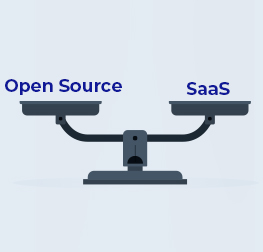
Choosing Between Open-Source and SaaS PIM Solution

PIM refers to a comprehensive system designed to centralize and manage product-related information across an organization. It serves as a centralized hub for collecting, enriching, and distributing product data, ensuring consistency and accuracy across various channels.

PIM also plays a pivotal role in driving efficiency and ensuring a seamless customer experience. As we delve into the intricacies of PIM, it becomes evident that the choice between Open Source and Software as a Service (SaaS) solutions is pivotal for organizations aiming to streamline their data management processes.

Open-Source PIM

Open-source software refers to programs whose source code is made available to the public, allowing users to inspect, modify, and distribute the software freely. Open-source PIM leverages this collaborative development approach to offer a flexible and customizable solution for managing product information.

Open Source PIM

Characteristics of Open-Source PIM Include

  • Transparency: The source code is accessible to anyone, promoting transparency and allowing users to understand how the software functions.
  • Flexibility: Users have the freedom to customize and adapt the PIM to suit their specific needs, making it a versatile solution for diverse business requirements.
  • Community-driven: Open-source PIMs often benefit from a community of developers and users who contribute to ongoing improvement, bug fixing, and feature development.

Advantages of Using Open-Source PIM

Customization and Flexibility

Open-source PIM solutions provide unparalleled customization options. Businesses can tailor the software to meet their unique requirements, adapting it to specific industry standards, workflows, or integration needs.

This flexibility is especially valuable for enterprises with distinct and evolving product information management needs.

Community Support

The collaborative nature of open-source projects fosters a strong community of developers, users, and contributors. This community support is advantageous for problem-solving, sharing best practices, and staying updated on the latest developments.

Users can tap into a wealth of knowledge and experience from the community, enhancing the overall effectiveness of the PIM implementation.

Cost Considerations

Open-source PIM solutions are typically cost-effective compared to proprietary alternatives. The absence of licensing fees reduces the financial burden on businesses, making it an attractive option for organizations with budget constraints.

Additionally, the cost savings extend to the ability to use the software on multiple servers without incurring additional charges.

Challenges of Open-Source PIM

Complexity of Implementation

While open-source PIM offers customization, the complexity of implementing and configuring the software can be a challenge, especially for organizations with limited technical expertise. The need for skilled personnel during the setup phase may increase upfront costs and time investments.

Maintenance and Support

Open-source software relies on community support, and while this can be advantageous, it may also pose challenges. Maintenance and ongoing support depend on the engagement of the community.

In some cases, the availability of timely updates, patches, and comprehensive documentation may vary, requiring businesses to be proactive in managing their PIM system.

Scalability Issues

Scalability can be a concern as businesses expand and their data management requirements grow. Open-source PIM solutions may face challenges in scaling seamlessly to accommodate increasing volumes of product data and users.

Ensuring that the chosen open-source solution is designed with scalability in mind becomes crucial for long-term success.

Open-source PIM presents a compelling option for businesses seeking a customizable and cost-effective solution. However, organizations must carefully weigh the advantages against the challenges, considering factors such as technical capabilities, long-term support, and scalability requirements before opting for an open-source PIM implementation.

SaaS PIM

Software as a Service (SaaS) is a cloud computing model that delivers software applications over the internet on a subscription basis. SaaS eliminates the need for users to install, maintain, and manage the software locally, allowing them to access the application through a web browser.

SaaS PIM

Key Characteristics of SaaS Include

  • Accessibility: SaaS applications are accessible from any device with an internet connection, providing users with the flexibility to work remotely and collaborate seamlessly.
  • Subscription Model: SaaS operates on a subscription-based pricing model, where users pay a recurring fee for access to the software. This approach often includes maintenance, updates, and support in the subscription cost.
  • Centralized Management: SaaS applications are centrally hosted and managed by the service provider, relieving users of the burden of software installation, updates, and server maintenance.

Advantages of Using SaaS

Accessibility and Ease of Use

SaaS PIM solutions prioritize user accessibility and ease of use. With a web-based interface, users can conveniently access the PIM system from anywhere, facilitating collaboration among teams spread across different locations.

This accessibility promotes efficient workflow management and ensures that product information is readily available to users regardless of their physical location.

Regular Updates and Improvements

SaaS PIM providers take responsibility for maintaining and updating the software. Subscribers benefit from regular updates, feature enhancements, and improvements rolled out by the service provider.

This ensures that organizations using SaaS PIM always have access to the latest tools and technologies, keeping them at the forefront of product data management capabilities.

Scalability and Resource Management

SaaS PIM is designed to be scalable, accommodating the evolving needs of businesses. As product catalogs expand and user bases grow, SaaS PIM solutions can seamlessly scale to meet increased demands.

The burden of resource management, including server infrastructure and performance optimization, is shifted to the service provider, allowing organizations to focus on core business activities.

Challenges of SaaS PIM

Limited Customization

While SaaS PIM solutions offer convenience, they may come with limitations in terms of customization. Businesses with highly specific or unique requirements may find it challenging to tailor the software to fit their exact needs.

This limitation contrasts with the high level of customization offered by open-source alternatives.

Subscription Costs

The subscription-based pricing model of SaaS PIM, while inclusive of maintenance and updates, can result in ongoing costs that may accumulate over time. For some businesses, especially those with budget constraints, the cumulative subscription fees may become a significant factor when considering the total cost of ownership.

Data Security and Privacy Concerns

Entrusting product data to a third-party SaaS provider raises concerns about data security and privacy. While reputable providers implement robust security measures, businesses must carefully assess and ensure compliance with industry regulations to safeguard sensitive product information.

This is especially crucial for organizations operating in sectors with strict data protection requirements.

SaaS PIM offers a user-friendly and scalable solution for product information management. However, organizations must weigh the advantages against the challenges, considering factors such as customization needs, budget considerations, and the critical importance of data security and privacy in their decision-making process.

Key Considerations in Choosing Between Open Source and SaaS PIM

Choosing between Open-Source and SaaS Product Information Management (PIM) solutions requires a thoughtful evaluation of various factors. Each option comes with its own set of advantages and challenges.

Here are key considerations to guide organizations in making an informed decision:

Key ConsiderationsOpen Source PIMSaaS PIM
Business Requirements and Scalability
  • Ideal for businesses with highly specific or unique requirements.
  • Offers extensive customization options, allowing tailored solutions to meet specific business needs.
  • Provides scalability, but the degree may depend on the expertise of the development team.
  • Suited for businesses with standard PIM needs and those prioritizing ease of use.
  • Generally, offers scalability without requiring extensive technical expertise from the user.
Budget Considerations
  • Often perceived as more cost-effective due to the absence of licensing fees.
  • However, costs related to customization, implementation, and ongoing maintenance may vary.
  • Involves subscription-based pricing, providing predictable costs.
  • Initial costs may be lower, but long-term subscription fees should be considered.
IT Infrastructure and Technical Expertise
  • Requires a robust IT infrastructure and in-house technical expertise for installation, configuration, and maintenance.
  • Well-suited for organizations with a dedicated IT team or the ability to hire external expertise.
  • Minimizes the need for in-house technical expertise, as the service provider manages infrastructure and updates.
  • Suitable for organizations looking to offload technical responsibilities to focus on core business activities.
Data Security and Compliance
  • Places the responsibility of data security on the organization, requiring robust measures to ensure compliance with industry regulations.
  • Offers greater control over data security protocols and practices.
  • Relies on the security measures implemented by the service provider.
  • Reputable SaaS providers often adhere to industry standards and compliance requirements but necessitate careful vetting.
User Experience and Training
  • User experience may vary depending on the level of customization and the user interface design.
  • Training needs may be higher, especially for teams utilizing complex or extensively customized features.
  • Generally, offers a more standardized and user-friendly experience.
  • Training requirements are often reduced, as SaaS solutions are designed to be intuitive and accessible.

Future of PIM Solutions

Looking ahead, the future of PIM solutions holds exciting prospects. The integration of advanced technologies, the emphasis on cross-channel integration, and a commitment to data governance and compliance are set to shape the evolution of PIM.

Cloud-based solutions, personalization features, and collaborative workflows will become integral components, enabling businesses to stay agile in a rapidly changing digital landscape.

Closing Thoughts

Organizations must align their choice with not just their current needs but also the anticipated future demands of product information management. Whether opting for the flexibility of Open Source or the convenience of SaaS, businesses should choose PIM solutions that not only address immediate challenges but also position them strategically for future growth and innovation.

As the digital marketplace continues to evolve, the effective management of product information remains a cornerstone for success, and the right PIM solution catalyzes achieving that success.

PIM Features You Need For Data Management

What do businesses care about most?

These days, the answer seems to be customer experiences.

Business leaders know that if they want to deliver an exceptional customer experience, then automation is a must. Investing in an innovative product information management solution with rich PIM features is the smart move. PIM acts as a central hub for storing, updating, and sharing data, allowing you to effortlessly distribute optimized content across various sales channels.

To expand and stay ahead of their competition, companies in a variety of industries have been investing in and implementing emerging technologies such as PIM.

With numerous options available out there, it’s very difficult for businesses to choose the right solution with right PIM features. Each one has its own pross and weaknesses, so it’s important to find a solution that fits your needs now and in the future.

5 PIM features that you should consider for your business:

PIM Features

Here’s a list of 5 PIM features that you should consider before implementing a solution in 2024:

  1. AI for Product Description

In the era of automation, artificial intelligence (AI) is at the forefront of revolutionizing how product information is managed. The AI product description generator PIM feature allows you to Automatically create high-converting product descriptions for thousands of products.

Different channels require unique product content. Whether you’re selling on Amazon, Walmart, eBay, or more, use AI to generate product descriptions that are customized for each of your sales channels, effortlessly.

Our AI tool does the work for you and generates compelling descriptions with all of your accurate and up-to-date product information. How the feature benefits your business:

  • Save hours of work by automatically generating compelling, high-quality content.
  • Write SEO-friendly product descriptions to boost your search engine rankings and drive more organic traffic to your website.
  • AI allows businesses to effortlessly generate tailored product descriptions that cater to the specific requirements of each channel whether it’s Amazon, Walmart, eBay, or other platforms.
  • Expand your reach by automatically translating your product descriptions into multiple languages.

Fact: According to a survey by Gartner, businesses that leverage AI for product descriptions experience a 25% increase in customer engagement.

  1. The Ability to View Data by Channel

The Ability to View Data by Channel is a crucial feature within a PIM system that empowers businesses to manage and present product information consistently across various marketing channels.

An effective PIM system should provide a comprehensive view of product data across various channels. This feature is indispensable for businesses with a multi-channel presence, enabling them to maintain consistency and coherence in product information across websites, mobile apps, marketplaces, and other platforms.

How the PIM feature benefits your business:

  • Centralize repositories for product information, consolidating data from different sources and departments within an organization.
  • Product details, such as descriptions, images, prices, and specifications, remain uniform across all channels.
  • Customize and optimize product information for each channel’s unique requirements.
  • Simplify the process of updating and modifying product information.
  1. Automate Repetitive Tasks

Automation is a game-changer in data management, especially for tasks that are repetitive and time-consuming.

The feature of “Automate Repetitive Tasks” in a Product Information Management system is one of the most important PIM features designed to streamline and expedite routine, time-consuming tasks associated with managing and maintaining product information. This feature leverages automation to enhance efficiency, reduce manual errors, and free up valuable resources within an organization.

How the PIM feature benefits your business:

  • PIM Equipped with automation can significantly reduce the need for manual data entry and automate repetitive tasks extends to bulk editing and processing.
  • Automatically validate and standardize data according to predefined rules and criteria.
  • Integration with external systems to communicate with other business systems, such as ERP or CRM platforms.
  • Tasks that need to be performed regularly or at specific intervals, such as data backups or updates, can be scheduled for automated execution.

Fact: A study by McKinsey found that businesses that automate repetitive tasks witness a 30% increase in productivity.

  1. AI-powered Automation to Streamline Workflows

Beyond just automating tasks, AI-powered automation in PIM systems can streamline entire workflows.

The PIM feature of “AI-powered Automation to Streamline Workflows” in a Product Information Management (PIM) system is a powerful capability designed to optimize and accelerate various processes associated with managing product information. By integrating artificial intelligence (AI) into workflow automation, this feature enhances efficiency, reduces manual intervention, and ensures a more seamless and intelligent handling of data. How the feature benefits your business:

  • Automated AI-driven categorization to automatically categorize and enrich product data.
  • Perform advanced data quality checks, identifying inconsistencies, errors, or missing information.
  • AI can be integrated into workflows to trigger specific actions or alerts based on predefined conditions. For example, sending notifications for low stock levels, upcoming product launches, or data discrepancies.
  • Automated relationship establishment to intelligently match and link related products, attributes, or components within the PIM system.
  1. Real-time Analytics for Data-Driven Insights

Real-time analytics within PIM systems empower businesses with data-driven insights.

The feature of “Real-time Analytics for Data-Driven Insights” in a Product Information Management (PIM) system is a crucial capability that empowers businesses to gather, analyze, and act upon real-time data related to product information. By providing instantaneous access to key metrics and insights such as monitoring product performance, customer behavior, and market trends in real-time, this feature facilitates data-driven decision-making and ensures that businesses can adapt swiftly to changing market conditions. How this PIM feature benefits your business:

  • Real-time analytics in PIM allows users to access up-to-the-minute information regarding product performance, customer engagement, and other relevant metrics.
  • Monitor the performance of products across various channels in real-time.
  • Real-time analytics enables the analysis of customer behavior as they interact with product information.
  • Real-time analytics often includes customizable reporting features, allowing users to tailor reports to their specific needs.

Fact: A survey conducted by Aberdeen Group revealed that organizations using real-time analytics are 2.5 times more likely to improve their operational efficiency.

Other essential PIM Features you should have for your business

Simplified Data Importation:

Efficient data importation is a crucial aspect of PIM systems, especially when dealing with multiple devices, operating systems, and tools for storing data.

Bulk Editing Convenience:

Editing data scattered across multiple locations can be challenging. The best PIM software offers bulk editing capabilities, allowing you to make cumulative edits effortlessly.

Adaptable Data Structure and Taxonomy:

A flexible data structure is essential in today’s rapidly changing business landscape. Businesses need to adapt to evolving needs to remain competitive.

Powerful Search and Navigation:

A flexible data structure and well-defined product catalog categories facilitate easy searching and navigation through product information. Enhanced searchability saves time and effort.

Multilingual and Multicurrency Support:

For global eCommerce, where you target diverse regions with various currencies, a PIM solution allows you to manage multiple stores in numerous languages and currencies.

Efficient Workflow Management:

Workflow management is one of the most crucial PIM features  for organizing and accurately managing data throughout the process.

Roles and Access Control:

To enhance product data quality, understanding who is updating product information is vital. PIM systems allow you to create roles for employees, departments, service providers, and business partners, with varying levels of access.

Product Relationship Management:

This PIM feature supports selling strategies based on studying online store user behavior. By defining complementary or substitute products, you can establish links between various products, categories, and product-category relationships in your PIM system.

Wrapping Up

We navigate the evolving landscape of data management in 2024 and beyond, the imperative for robust Product Information Management (PIM) features becomes increasingly evident. The demands of the modern business environment necessitate comprehensive solutions that not only address current challenges but also anticipate future complexities. By embracing advanced PIM features, organizations can fortify their data management strategies, ensuring agility, accuracy, and scalability in the dynamic marketplace.

Sometimes, you might need features for your business that need customization. Connect with our PIM experts to learn how Credencys can elevate your product data management capabilities and drive sustained success in a rapidly changing landscape.

An Insightful Guide to Building Vs Buying a PIM Solution

Having recognized the need for their organization to integrate a PIM platform, retail businesses are now faced with a critical decision – to build or to buy. Building a PIM system offers unparalleled customization and control but comes with the challenges of development time and ongoing maintenance.

On the other hand, buying a PIM solution provides a quicker route to implementation, vendor support, and regular updates, albeit with potential limitations in customization. While both options present their own set of advantages and drawbacks, we firmly assert that, for the majority of organizations, opting for a readymade PIM solution from a vendor is the clear preference.

Allow us to elucidate why we believe so. From assessing individual business needs to considering long-term scalability, we will delve into the intricacies of each option to help you make an informed and strategic decision for your organization’s unique requirements.

The Build Vs Buy Decision

Before diving deep into the pivotal decision of building or buying a PIM solution, let’s explore a concise comparison highlighting key factors to help you make an informed choice.

ParameterBuildingBuying
ScalabilityCustom solutions may require significant adjustments for scalability.Many pre-built solutions are designed to scale effortlessly with growing data and business needs.
Third-Party IntegrationsRequires building integrations and connections to other systems.Established vendors often have an ecosystem with pre-built integrations, easing connectivity with other business applications.
Support & MaintenanceInternal team responsible for ongoing support and maintenance, potentially leading to longer resolution times.Solution providers offer dedicated support and regular updates, ensuring optimal performance and quicker issue resolution.
CostInitial costs may appear lower, but TCO includes ongoing maintenance, updates, and potential scalability expenses.Upfront costs may be higher, but TCO is often more affordable, encompassing support, updates, and scalability within the subscription.
ControlBuilding a PIM offers unparalleled control over customization and features.Buying a PIM solution provides a solution with less hands-on control.
ResourcesBuilding a PIM demands significant in-house resources, including hiring and training.Buying leverages the specialized skills of a solution provider, reducing the need for extensive in-house expertise.
FeaturesBuilding a PIM takes considerable time and resources to tailor features to specific needs.Buying leverages the specialized skills of a solution provider, reducing the need for extensive in-house expertise.
Time to MarketBuilding a PIM is a complex undertaking increasing your time-to-market.A pre-packaged solution enables you to have your new PIM operational almost immediately.
User Training & AdoptionCustom solutions may require more extensive user training due to unique interfaces.Standardized interfaces may lead to quicker user adoption, with vendors often providing training resources.

Now that we’ve outlined the essential factors in the build vs. buy decision, let’s delve deeper into each aspect to guide you in making the right choice for your organization’s PIM strategy.

1. Scalability

When considering scalability in the context of building a PIM solution, the journey involves intricate considerations. Building a PIM often demands meticulous planning and execution to accommodate the growing demands of data, expanding product catalogs, and increased user activity.

Scaling a home-built PIM may necessitate substantial adjustments to the underlying architecture, database structures, and overall system design. These adjustments can be resource-intensive, requiring both time and specialized expertise to ensure seamless expansion without compromising performance.

Pre-built PIM solutions, on the other hand, are crafted with scalability in mind from the outset. Established vendors understand the evolving nature of businesses and design their solutions to effortlessly scale with growing data volumes and expanding business needs.

These solutions often feature modular architectures and cloud-based infrastructures that facilitate smooth scaling without significant manual interventions. This not only streamlines the process but also ensures that your PIM system can seamlessly adapt to the evolving dynamics of your organization, saving valuable time and resources.

2. Third-Party Integrations

Embarking on the journey to build a PIM solution involves not only creating the core system but also building integrations and connections to other systems within your organization’s ecosystem. This process demands dedicated effort and expertise to ensure seamless communication between your PIM solution and other crucial business applications, such as ERP systems, eCommerce platforms, and CRM tools.

Each integration point requires meticulous planning, development, and testing, potentially leading to a more resource-intensive and time-consuming endeavor. Choosing to buy a PIM solution from an established vendor often comes with the advantage of a pre-built ecosystem.

These vendors understand the importance of interoperability and typically offer a range of pre-built integrations with commonly used business applications. This not only simplifies the implementation process but also ensures that your PIM system can seamlessly connect with other systems right out of the box.

Leveraging a vendor’s established ecosystem streamlines connectivity, reduces implementation timelines, and minimizes the need for extensive custom development work.

3. Support and Maintenance

Opting to build a PIM solution means shouldering the responsibility of ongoing support and maintenance internally. Your organization’s internal team becomes the first line of defense against issues, ranging from minor glitches to more complex challenges.

While having an internal team provides a certain level of control, it also introduces the potential for longer resolution times, especially if the team lacks specific expertise or is juggling multiple responsibilities.

Choosing to buy a PIM solution comes with the advantage of dedicated support and regular maintenance from the solution provider. Established vendors typically offer comprehensive support packages that include timely updates, bug fixes, and optimizations.

This not only ensures optimal performance but also minimizes the burden on your internal team, allowing them to focus on strategic initiatives rather than day-to-day troubleshooting. The vendor’s expertise in PIM solutions translates to quicker issue resolution, often backed by service level agreements (SLAs) that outline response times and resolution commitments.

4. Cost

Let’s talk about the cost aspect. One apparent advantage of building your own system is the upfront expense.

If your company has in-house software developers or designers, you might be tempted to use them to create a PIM instead of paying a hefty upfront cost or ongoing licensing fees. While developing your solution may save you from the initial expenses of a packaged PIM subscription, it won’t spare you from the ongoing maintenance your custom application will need.

If your system is on-premises, consider the costs of acquiring and maintaining hardware, integration, connectivity, and remote access, especially in the current environment. On the other hand, with a purchased, cloud-based PIM, the software provider takes care of all the maintenance costs, including improvements, fixes, upgrades, and more.

This means you avoid spending money on depreciating assets like hardware and the expenses associated with supporting a technology crucial to preparing your products for sale.

5. Control

Creating your own solution offers a significant advantage: control. As the owner, creator, and manager of a PIM platform, you hold the reins on how the software functions.

Your team has the freedom to choose which features matter most, determine the optimal user interface, and prioritize updates, fixes, and other crucial decisions. However, this control also comes with a weighty responsibility.

Building your own PIM system means you bear the responsibility of updating the solution. This involves making decisions about adding new features or implementing changes.

On the flip side, when you opt to buy, your vendor consistently updates the SaaS PIM solution, delivering a continuous stream of upgrades and enhancements at a pace that your IT team might struggle to match. Collaborating with a solution provider relieves you of concerns about enhancing or maintaining your solution.

Instead, you can concentrate on utilizing the solution to deliver exceptional product experiences.

6. Resources

Let’s talk about resources beyond hardware and software costs. Building your own PIM is a big task that demands a lot of resources.

Imagine what it takes for a software vendor to create a solution: many specialized software engineers, product and project managers, and technical support experts, all focused solely on PIM, investing countless hours and lines of code to make a PIM solution that suits all your channels, products, and markets.

For your organization to benefit from a PIM solution, you will need to make a substantial investment, not just in terms of money but also involving your people, processes, and priorities. Alternatively, if you aim for the most efficient way to run your business, consider partnering with a PIM vendor.

They have already put in all the necessary investments and more into their solution.

7. Features

If you aspire to equip your PIM solution with cutting-edge capabilities like embedded workflows, user management features, support for product variants, integrated digital asset management, data quality insights, and more, a homemade solution may not be the optimal choice. Opting to buy a PIM is the quickest and most straightforward path to keeping up with the evolving needs of your growing business.

This approach allows you to concentrate on selling your products without the concern of managing the tools essential for their readiness. Instead of investing precious resources outside your primary expertise, entrust the design of a PIM solution to experts who specialize in this field.

This way, you can dedicate your attention to running your business while your solution provider ensures the smooth and secure operation of your PIM on a cloud infrastructure.

8. Time to Market

A significant advantage of any PIM whether bought, built, or otherwise is the heightened speed of product creation and enrichment, resulting in a faster time-to-market. This grants your team more days for selling, simultaneously cutting enrichment costs and propelling revenue growth.

However, developing, designing, and refining a PIM is a complex and time-intensive undertaking. If you spend time building your own customized solution, your team might miss out on these advantages.

Opting for a readymade solution enables you to have your new PIM operational almost immediately, allowing you to swiftly experience the benefits and monitor the ROI of your PIM implementation.

9. User Training and Adoption

Opting to build a PIM solution implies the creation of a solution tailored to your organization’s unique needs. While this customization offers a high degree of flexibility, it may result in interfaces and workflows that are distinct from standard industry practices.

Consequently, your internal users, ranging from data entry personnel to management, may require more extensive training to familiarize themselves with the custom interfaces. The learning curve can impact user adoption, potentially leading to a slower transition and increased reliance on ongoing training efforts.

Choosing to buy a PIM solution often entails standardized interfaces designed based on industry best practices. Established vendors prioritize user experience, offering interfaces that align with familiar patterns and usability conventions.

This standardized approach can contribute to quicker user adoption, as users are likely to encounter features and workflows that are consistent with widely used applications. Moreover, vendors often provide training resources, tutorials, and documentation to support users in getting up to speed swiftly, minimizing the need for extensive training sessions.

What’s Right for Your Business?

When you think about all the things that matter when deciding whether to build or buy PIM like how long it takes, how much it costs, and how fast you can start using it, as well as the features it comes with it’s pretty clear that for most businesses, buying a PIM system is the smart choice.

Choosing to buy a PIM system lets you concentrate on making awesome experiences for your customers and growing your business, without wasting time, money, or effort on things that are not your main focus.

How to Overcome Multichannel eCommerce Challenges using PIM?

Gone are the days of in-store shopping!

The evolution of the Internet has impacted customers’ buying behavior significantly. Now, the Internet has become a global shopping hub.

Buyers worldwide no longer stick to a single online channel; they explore web stores, popular marketplaces like Amazon and Walmart, and various social media platforms.

As a retailer, staying informed about your customers’ preferences across these diverse channels is crucial. Numerous online store owners have excelled in multichannel eCommerce by recognizing its essence early on.

However, the aim of creating a powerful presence on multiple channels comes with its own set of challenges. By understanding and addressing these challenges, you can position yourself for success across the online landscape.

Let’s delve into the details!

What is Multichannel eCommerce?

Multichannel eCommerce refers to a business strategy in which a seller engages with and sells products or services to customers through multiple online and offline channels. These channels can include a combination of a company’s website, third-party marketplaces, social media platforms, mobile applications, physical stores, and other online or offline touchpoints.

Multichannel eCommerce

The goal of multichannel eCommerce is to provide customers with a seamless and integrated shopping experience, allowing them to interact with and purchase from a brand across various channels based on their preferences, convenience, and behavior.

This approach enables businesses to reach a broader audience, increase brand visibility, and enhance overall customer satisfaction by meeting them wherever they choose to shop.

Importance of Multichannel eCommerce in Retail Businesses

In 2020, multichannel online retailers generated more than 350 billion U.S. dollars in e-commerce sales in the United States. The figure was expected to exceed 575 billion by 2023.

Insider Intelligence

Multichannel eCommerce Retail Sale

These numbers depict the continuous growth of the eCommerce market and customers’ preference to shop online over offline.

Embracing a robust multichannel eCommerce strategy, retail businesses ensure consistent growth and success. The importance of multichannel eCommerce lies in its ability to provide a seamless and diversified shopping experience for customers, meeting them at every point of their online journey.

73% of shoppers use multiple channels before completing a purchase. Haward Business Review

By expanding beyond traditional brick-and-mortar stores to encompass websites, mobile apps, social media platforms, and digital marketplaces, retailers significantly increase their reach and accessibility. This approach not only caters to the diverse preferences of modern consumers but also enhances brand visibility and establishes a robust online presence.

Moreover, in an era where technology continues to evolve, adopting a multichannel eCommerce model prepares retailers for the future, allowing them to explore emerging platforms like IoT and the metaverse.

Ultimately, businesses that recognize the importance of Multichannel eCommerce position themselves to stay competitive, foster customer loyalty, and drive sustained growth in the ever-evolving retail landscape.

Top 5 Multichannel eCommerce Challenges that Retail Businesses Encounter

To gain a competitive edge, many retailers are ready to implement a multichannel eCommerce strategy. However, it’s easier said than done. On the way to implementing a multichannel eCommerce strategy, retailers encounter several challenges.

Let’s explore the most common challenges.

Top 5 Multichannel eCommerce Challenges that Retail Businesses Encounter

1. Massive Number of Product Data Retailers Need to Manage

Managing product data across various retail channels can be a daunting task due to the large volume of information to handle.

It’s not just about showcasing what you offer; it’s about creating a connection with customers. High-resolution images, compelling product titles, and persuasive descriptions are essential to engage potential buyers.

However, managing this wealth of product information across multiple platforms can quickly become chaotic, leading to issues like lagging spreadsheets, costly errors, scattered data, and storage limitations.

Many businesses have experienced the challenges of handling extensive product data and recognize the need for a streamlined approach.

A centralized solution for media, product information, and marketing data proves invaluable for efficient multichannel distribution, ensuring a smoother process for managing vast amounts of product data across diverse sales channels.

2. Each Sales Channel has Different Requirements

Dealing with a massive amount of product data becomes even more challenging when each sales channel comes with its unique set of requirements. These platforms have specific rules governing image sizes, product descriptions, titles, and branding to ensure an optimal customer experience.

Adhering to these requirements is crucial, as it can lead to valuable benefits such as featuring prominently on platforms like Amazon’s Buy Box or receiving advertising credits. Failure to meet these guidelines, however, may result in account suspension, hindering the goals of successful multichannel selling.

Fortunately, the solution lies in leveraging a product content tool, simplifying the complexities of multichannel distribution. Such a tool streamlines the organization of content and accelerates the distribution process to various channels in the correct format, significantly faster than manual efforts.

By selecting products and relevant attributes for a specific channel, the tool generates a feed that meets all requirements in a matter of seconds. This not only saves time but also ensures error-free, accurate data.

Embracing such intelligent tools allows businesses to remove laborious content creation tasks and welcome a more straightforward and faster process, allowing them to focus on delivering their products to customers effectively.

3. Product Listing Optimization

When it comes to excelling on marketplaces, it’s not just about meeting requirements; it’s about ensuring your product information ranks prominently on the desired first page.

Picture yourself as a customer – would you scroll through numerous pages of search results, or trust the options on the first page? Most likely, you’ll stick to the initial pages. As a marketplace seller, aiming for that first-page spot is crucial.

To secure a prime ranking, optimizing your product listing is key. Product Listing Optimization (PLO) is vital, especially for platforms like Amazon, enhancing product visibility. Understanding search engine algorithms is the first step, utilizing them to boost your ranking and, subsequently, increase sales.

Given that each sales channel has unique algorithms, target keywords, and specific formatting requirements, the workload increases.

This involves extensive research on relevant keywords to optimize product elements like titles, features, and descriptions, alongside providing high-quality images and accurate pricing.

This streamlined approach ensures the distribution of optimized content across all sales channels, ultimately enhancing your chances of securing a prime spot on the first page.

4. Ineffective Multichannel Inventory Management

Effectively managing inventory across multiple channels can be a challenge that even your ERP system may struggle to handle. The need for accurate, real-time inventory data and efficient warehouse management becomes critical in such scenarios.

Without a dedicated multichannel inventory management tool, you may encounter issues such as understocking, overselling, and outdated inventory information across channels. Visibility into stock levels across various channels and warehouses can become a major concern.

Integrating a comprehensive inventory management tool into your system can significantly enhance your inventory control.

By seamlessly integrating with your ERP, this tool provides a centralized location for an overview of inventory and product information. This centralized approach facilitates efficient stock management, making warehouse tracking more straightforward.

Additionally, having rich product information for each item ensures the accuracy, consistency, and descriptiveness of the data shared with suppliers. This proactive approach helps prevent errors that could potentially lead to delays in product arrival.

5. Difficulty in Managing Customer Experience on Various Channels

Ensuring customer satisfaction and driving sales for your eCommerce business requires prioritizing a seamless customer experience across various channels. Creating a consistent customer journey becomes more challenging when managing multiple sales channels.

To achieve this, understanding customer pain points, emphasizing product value, delivering top-notch customer support, and providing a seamless overall experience is crucial. Utilizing a product analytics tool allows you to effortlessly monitor and analyze your customers’ experiences.

By centralizing your data, advanced tools enable flexible segmentation of product and channel groups, providing a comprehensive view of product impressions for both your web store and marketplaces in one location.

How to Overcome Multichannel eCommerce Challenges using PIM?

Navigating the complexities of multichannel eCommerce can be a daunting task, but with the right approach, you can handle the challenges effectively. Leverage Product Information Management (PIM) that emerges as a powerful solution to overcome these challenges.

How to Overcome Multichannel eCommerce Challenges using PIM

Here’s how PIM can be your strategic ally in tackling Multichannel eCommerce hurdles:

1. Centralized Data Management

PIM provides a centralized hub for managing and organizing product information. This eliminates the chaos of scattered data across various channels, ensuring consistency and accuracy in your product details.

2. Consistent Branding Across Channels

Maintaining consistent branding across multiple channels is crucial for building brand identity. PIM allows you to manage and enforce consistent product information, ensuring that your brand image remains cohesive and strong across diverse platforms.

3. Real-Time Updates

With Product Information Management, changes to product information are reflected in real-time across all channels. This ensures that customers receive the latest and most accurate information, leading to improved customer trust and satisfaction.

4. Adaptability to New Channels

As new sales channels emerge, adapting to them becomes seamless with PIM. The flexibility of the system allows you to easily incorporate new channels into your multichannel strategy without disrupting your existing workflows.

5. Enhanced Customer Experience

Product Information Management contributes to an improved customer experience by ensuring that customers receive consistent and accurate product information across all touchpoints. This leads to increased customer satisfaction and loyalty.

6. Efficient Product Listing Optimization (PLO)

PIM plays a crucial role in optimizing product listings for different channels. It allows you to tailor product information, including titles, descriptions, and images, to meet the specific requirements of each channel.

This ensures that your products not only appear on various platforms but also stand out with compelling content that resonates with your target audience.

7. Inventory and Order Management

PIM goes beyond product information by integrating with inventory and order management systems. This integration streamlines processes, preventing issues like overselling or understocking. It provides a holistic view of your inventory status, allowing for better decision-making and customer satisfaction.

Implementing PIM addresses not only the foundational challenges of Multichannel eCommerce but also enhances various aspects of your business operations, ensuring a robust and future-ready approach to managing diverse sales channels.

⁠Credencys Implements Robust PIM Solution that Empowers Your Multichannel eCommerce Strategy

Unlock the potential of your multichannel eCommerce strategy with Credencys’ robust Product Information Management (PIM) solution. Our cutting-edge PIM implementation is designed to revolutionize the way you manage and present product data across diverse sales channels, ensuring a seamless and impactful customer experience.

Benefits of Credencys’ PIM Implementation

Benefits of Credencys PIM Implementation

1. Enhanced Customer Experience

Deliver a consistent and engaging customer experience across all channels with accurate and compelling product information.

2. Increased Operational Efficiency

Streamline internal processes, reduce manual errors, and optimize workflows for increased operational efficiency.

3. Improved Time-to-Market

Accelerate product launches with a centralized hub for efficient data management and real-time updates.

4. Scalability and Adaptability

Scale your multichannel eCommerce operations effortlessly and adapt to evolving business needs with our flexible and scalable PIM solution.

Empower your business with the robust capabilities of Credencys’ PIM solution and elevate your multichannel eCommerce strategy to new heights. Experience the ease of managing product data, the efficiency of streamlined workflows, and the impact of a consistent brand presence across diverse sales channels. To share your multichannel eCommerce challenges, connect with our PIM experts.