Multichannel Retailing: What Retailers Need for Generation Z

“Multichannel Retailing”

It’s not just a buzzword; it’s a critical strategy for retailers aiming to cater to the demands and preferences of Generation Z, the generation that has grown up with technology at their fingertips.

In this blog, we will delve into what multichannel retailing is, why it’s essential for reaching Generation Z, and the advantages it offers. We’ll also distinguish between multichannel and omnichannel retailing and provide real-world examples to illustrate these concepts.

Understanding Generation Z

Before we dive into multichannel retailing, let’s take a moment to understand the demographic we are addressing – Generation Z. Born between the mid-1990s and early 2010s, Generation Z, also known as Gen Z, is the first generation to grow up in a digital world. They are digital natives who are accustomed to instant access to information, products, and services through smartphones, tablets, and computers.

Gen Z

Fore retailers, Gen Zers have distinctive characteristics and preferences that make them a unique demographic:

  • Tech-Savvy: Gen Z is highly tech-savvy, with an innate ability to navigate digital interfaces and adapt to new technology trends quickly.
  • Independent Shoppers: They prefer independent shopping, where they can research and make purchase decisions on their own.
  • Socially Connected: Social media plays a significant role in their lives. They rely on social platforms for recommendations, reviews, and staying updated with the latest trends.
  • Demand Convenience: Convenience is a top priority. They expect a seamless shopping experience with options for fast delivery and easy returns.
  • Experience Seekers: Gen Z is inclined towards experiences rather than just buying products. They seek immersive, interactive, and personalized shopping experiences.
  • Ethical and Sustainable: Many Gen Zers are environmentally and socially conscious, making them more likely to support brands that align with their values.

Now that we understand what type of shoppers Gen Z are, let’s understand the significance of Multichannel retailer for them.

What is Multichannel Retailing?

Multichannel retailing refers to a strategy where retailers engage with customers and sell products through multiple channels. These channels can include physical stores, e-commerce websites, mobile apps, social media platforms, marketplaces, and more. In essence, multichannel retailing acknowledges that consumers interact with brands and shop in various ways.

Why is Multichannel Retailing Essential for Generation Z?

Multichannel retailing is of paramount importance when it comes to reaching Generation Z for several reasons:

Meeting Them Where They Are

Gen Zers are active on various platforms, from Instagram and TikTok to e-commerce websites. Retailers need to have a presence on these platforms to engage with them effectively.

Choice and Convenience

Gen Z values choice and convenience. By offering multiple channels, retailers provide them with options to shop how they want, whether it’s online, in-store, or via a mobile app.

Seamless Experience

Gen Z expects a seamless shopping experience. They want to start their shopping journey on one channel and easily switch to another without any disruption.

Data-Driven Insights

Multichannel retailing allows retailers to gather valuable data and insights about Gen Z’s preferences, behaviors, and purchase patterns, enabling more personalized marketing and product recommendations.

Gen Zers are more likely to be loyal to brands that offer a consistent and engaging experience across multiple channels.

Why Your Business Needs Multichannel Retailing

One key advantage of multichannel retailing is the ability to reach a wider audience. By being present on various platforms and offering diverse shopping options, retailers can cast a broader net, attracting customers from different demographics and catering to their individual preferences. This not only increases the customer base but also enhances brand visibility and reputation.


A Multichannel Retailer Is One That…

Strategically expands its presence and sales across multiple channels to provide customers with a seamless and interconnected shopping experience. This approach goes beyond merely having a website or a physical store; it’s about integration and consistency across all touchpoints where the customer interacts with the brand.

To be considered a successful multichannel retailer, one must:

  • Offer Multiple Sales Channels: This includes physical stores, e-commerce websites, mobile apps, social media storefronts, and more.
  • Integrate Inventory and Data: Inventory management and data integration are crucial for ensuring that customers can access product information, availability, and pricing consistently across all channels.
  • Provide a Unified Customer Experience: A multichannel retailer should offer a cohesive and seamless experience, where customers can transition from one channel to another without disruptions.
  • Leverage Data and Analytics: Data-driven decision-making is essential to understand customer behavior and preferences across different channels.
  • Adapt to Emerging Technologies: Embracing new technologies and trends is vital to stay competitive and meet the changing expectations of consumers.

Is multichannel similar to omnichannel?

A lot of our retailers get confused between the two. While both omnichannel and multichannel retailing aim to create a seamless shopping experience across various channels, there are key differences between the two approaches:

Omnichannel vs. Multichannel Retail

Both multichannel and omnichannel strategies have their advantages, and the choice between them depends on a retailer’s capabilities and the level of integration they aim to achieve.
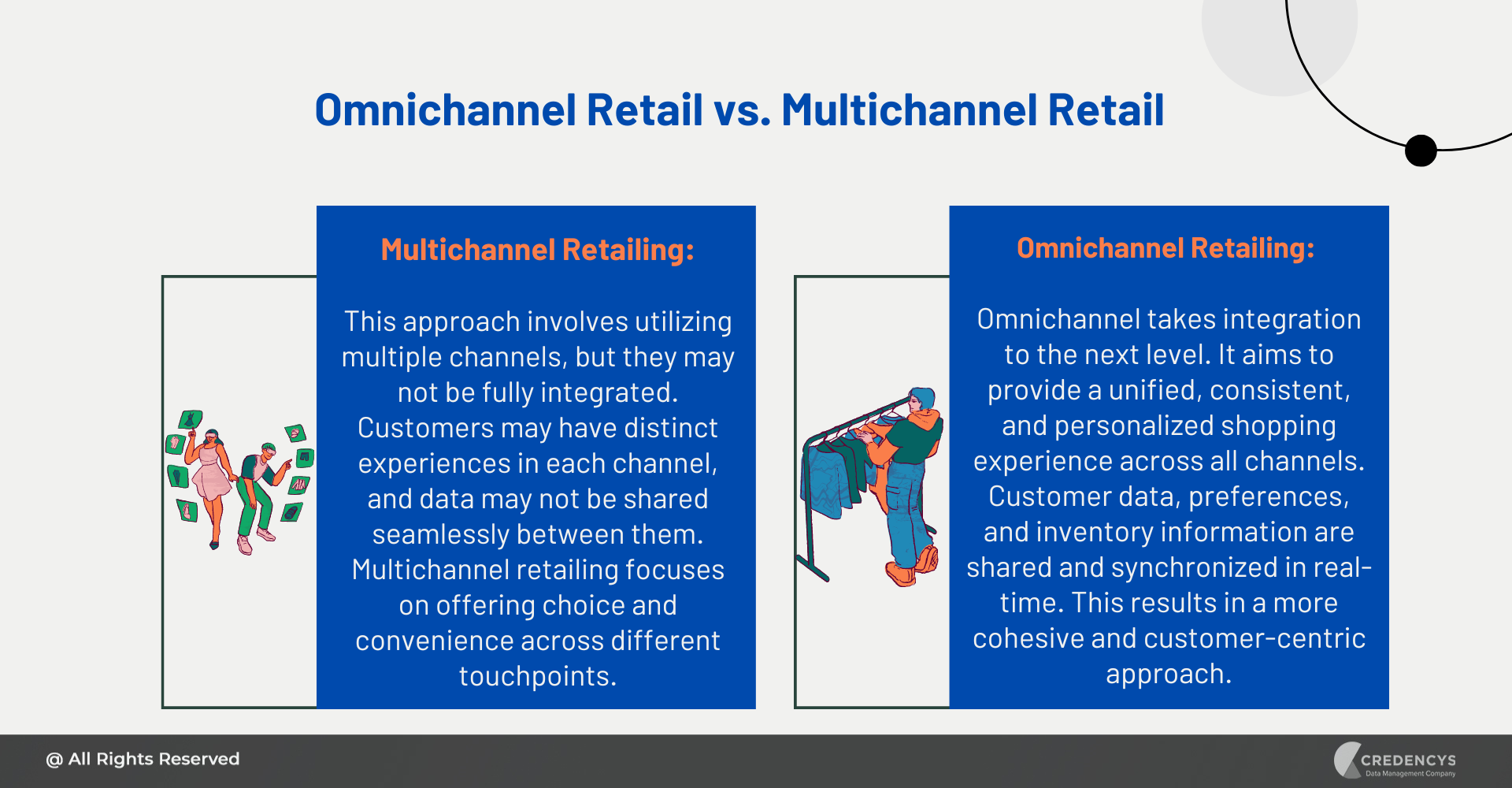
Omnichannel Retail vs. Multichannel Retail

Key Components of a Successful Multichannel Retail Strategy

To succeed as a multichannel retailer and effectively reach Generation Z, there are several key components to consider:

  1. Online Presence and E-commerce Platforms

Online presence is essential for any multichannel strategy. Retailers should have a well-designed e-commerce website that is user-friendly, responsive, and offers a secure shopping experience. This platform should seamlessly integrate with other channels and provide customers with a convenient way to browse and purchase products.

  1. Mobile Apps and Responsive Websites

Mobile apps have become a primary point of interaction for Gen Z. Retailers must invest in mobile app development, ensuring that their app is responsive, fast, and feature-rich. Responsive websites are also crucial to accommodate shoppers who prefer to use mobile browsers.

  1. Social Media Engagement

Social media is where Gen Z spends a significant amount of their time. Retailers should maintain an active presence on platforms like Instagram, TikTok, and others relevant to their target audience. Engaging content, influencer partnerships, and shoppable posts can enhance the social media shopping experience.

  1. Physical Stores and Experiential Retail

Brick-and-mortar stores still play a vital role in the shopping journey. To attract Gen Z, physical stores should focus on creating memorable, experiential environments. Interactive displays, in-store events, and click-and-collect options can all contribute to a more immersive shopping experience.

  1. Customer Service and Support

Excellent customer service is non-negotiable. Retailers must offer responsive customer support through various channels, including chat, email, and phone. Furthermore, easy returns and exchanges should be part of the multichannel experience, providing Gen Z with the flexibility they expect.

Modern retailers are already turning Gen Z shoppers into their loyal customers.

Success Story of Multichannel Retailers

Let’s explore the case study of Sephora, who has successfully implemented multichannel strategies to reach Generation Z:

Sephora

We all know Sephora!

Sephora, a leading beauty retailer, has mastered the art of multichannel retailing. Their mobile app allows customers to browse products, watch tutorials, and make purchases. Sephora’s website is user-friendly and informative, providing a wealth of product information. They excel in social media engagement, with an active presence on platforms like Instagram and YouTube. In their physical stores, Sephora offers personalized consultations and beauty services, creating an immersive in-store experience. Their multichannel strategy caters to Gen Z’s love for beauty and self-expression.

What Trends Can Help You Join The Community of Multichannel Retailing?

Multichannel Retail Trends

As the retail landscape continues to evolve, it’s essential to stay ahead of emerging trends. Some of the ongoing trends in multichannel retailing include:

Augmented Reality (AR) and Virtual Reality (VR): These technologies are being used to create immersive online and in-store experiences, allowing customers to “try before they buy.”

Voice Commerce: Voice-activated devices like Amazon’s Alexa are becoming more prominent, opening up new sales channels.

Sustainability and Ethical Shopping: Gen Z’s focus on sustainability will drive retailers to adopt eco-friendly practices and offer sustainable product lines.

AI and Personalization: Artificial intelligence will play a crucial role in providing personalized shopping recommendations and experiences.

Blockchain Technology: Blockchain can enhance supply chain transparency and secure transactions.

Multichannel Retailing with PIM

Multichannel retailing, coupled with  Retail Product Information Management (PIM), revolutionizes the way businesses operate in the modern marketplace. Multichannel retailing involves engaging with customers across various platforms, both physical and digital, creating a seamless shopping experience. PIM serves as the backbone of this strategy, ensuring consistent and accurate product information across all channels.

PIM centralizes and organizes product data, enabling businesses to efficiently manage and update information such as descriptions, prices, and images. This centralized control minimizes errors, enhances data accuracy, and accelerates time-to-market for new products. In a multichannel environment, this streamlined product information flow is indispensable.

It’s time for retailers to understand that a multichannel approach is not an option; it’s a retailing imperative in the era of Generation Z.

Are you a retailer looking to adapt to multichannel retailing and reach Generation Z effectively? We can help you create and implement a tailored multichannel strategy that aligns with your business goals. Contact us for a consultation and take the first step towards a more successful and future-proof retail business.

Building a PIM Roadmap for Unified Commerce Success

The traditional boundaries that once defined retail experiences are rapidly dissolving in modern commerce. Consumers no longer distinguish between online and offline shopping—they expect a seamless journey, effortlessly transitioning between digital platforms and physical stores.

This paradigm shift has given rise to a revolutionary approach known as unified commerce. More than a buzzword; unified commerce is a strategic imperative, a transformative vision reshaping the way businesses engage with their audience.

What is Unified Commerce?

Unified Commerce refers to the seamless integration and coordination of various channels and touchpoints in a retail or business environment, providing customers with a consistent and cohesive experience across online and offline platforms. In a unified retail commerce strategy, channels such as online stores, mobile apps, social media, and physical stores operate harmoniously, creating a holistic and customer-centric approach to retail.

The significance of unified commerce lies in meeting the evolving expectations of modern consumers who demand a seamless and interconnected shopping experience. With customers expecting consistency and convenience, businesses adopting unified commerce strategies can gain a competitive edge, enhance customer satisfaction, and drive overall business success.

Role of PIM in Achieving Unified Commerce Goals

A PIM roadmap plays a crucial role in the successful implementation of unified commerce strategies. In the context of unified commerce, a well-defined PIM roadmap acts as a guide to systematically implement and optimize PIM solutions tailored to the unique needs of a unified commerce environment.

Businesses can align their product information management strategies with the broader goals of unified commerce. This includes streamlining data workflows, integrating diverse data sources, and ensuring that product information meets the requirements of different channels.

Let’s delve into the core components of unified commerce, discussing the challenges businesses face in managing product information across diverse channels. We shall shed light on the critical role that a well-constructed PIM roadmap plays in overcoming these challenges and establishing a foundation for a successful unified commerce strategy.

Challenges in Managing Product Information in a Unified Commerce Environment

In unified commerce, businesses encounter multifaceted challenges in managing product information.

  • The diversity of channels – online stores, marketplaces, and brick-and-mortar locations introduces complexities in maintaining consistent, accurate, and up-to-date product data.
  • Disparate systems, data silos, and varying data formats exacerbate these challenges, leading to discrepancies in product information across touchpoints.
  • The demand for real-time updates and personalized content further amplifies the intricacy, necessitating a strategic solution to streamline and harmonize product data management.

Importance of a Structured Plan for Implementing PIM

Amidst the challenges posed by unified commerce, a structured plan for implementing PIM becomes paramount. Without a clear roadmap, businesses risk ad-hoc solutions that may temporarily address issues but lack a comprehensive, sustainable strategy.

A PIM roadmap outlines a systematic approach, starting with a thorough assessment of current processes, data sources, and stakeholder needs. It provides a blueprint for selecting and implementing a PIM solution, ensuring that it aligns with the overarching goals of unified commerce.

A structured plan not only addresses immediate challenges but positions the business for long-term success by fostering adaptability and scalability.

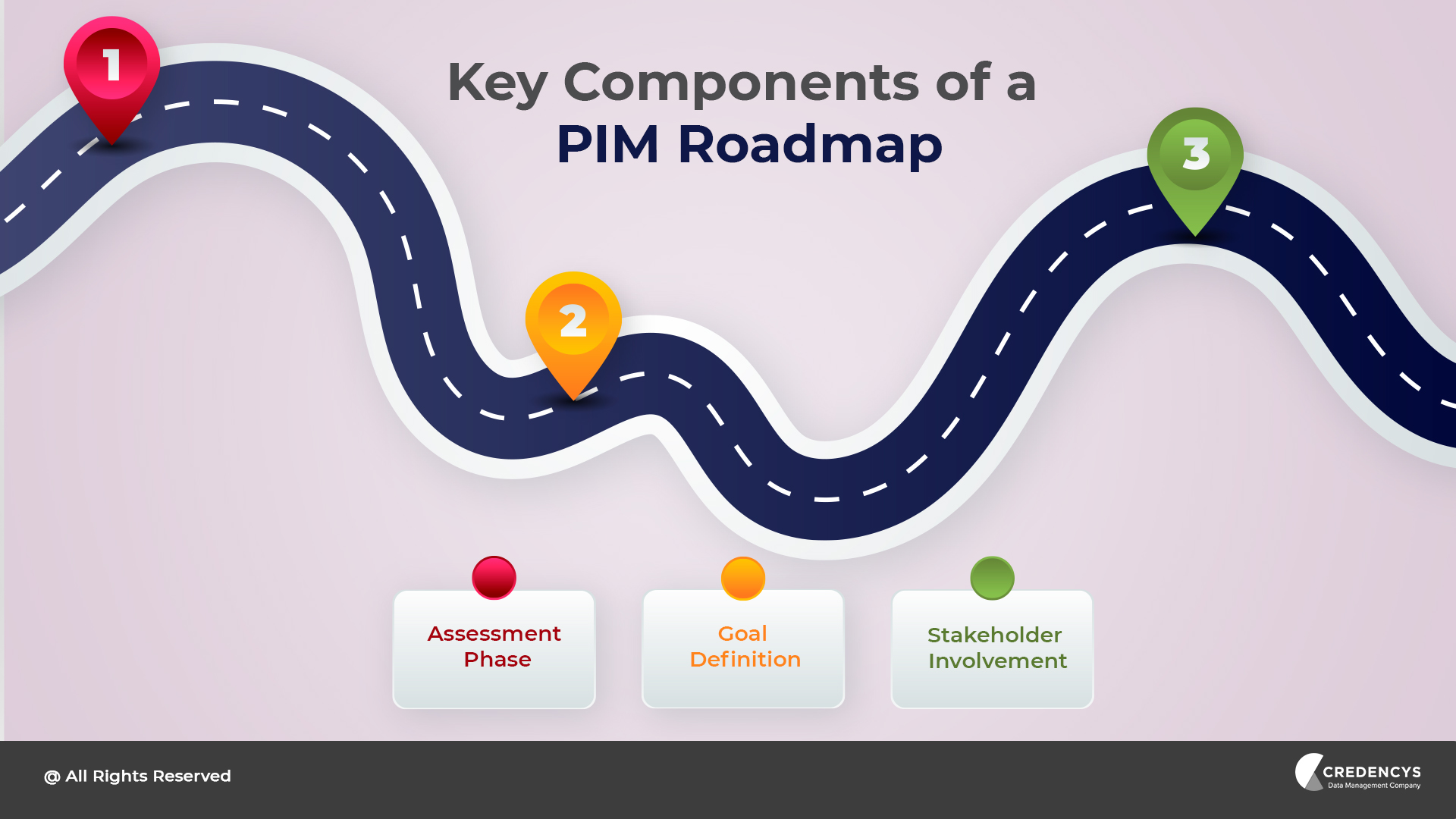
Key Components of a PIM Roadmap

Assessment Phase

Conducting a Thorough Analysis of Current Data Management Processes: Before embarking on a PIM implementation journey, a comprehensive understanding of existing data management processes is essential. This involves mapping out the flow of product information, from creation to distribution across various channels.

Through data audits and assessments, businesses can identify existing systems, data sources, and the quality of data.

Identifying Pain Points and Areas for Improvement: The assessment phase aims to uncover pain points and inefficiencies in current data management. This includes pinpointing data discrepancies, manual entry bottlenecks, and any other challenges that hinder the seamless flow of information.

This critical analysis forms the foundation for crafting targeted solutions in the subsequent stages of the PIM roadmap.

Goal Definition

Establishing Clear Objectives for Implementing PIM in the Context of Unified Commerce: Clearly defined objectives are the cornerstone of a successful PIM roadmap. Goals may include improving data accuracy, reducing time-to-market for new products, or enhancing the overall customer experience.

By aligning these objectives with the overarching strategy of unified commerce, businesses can ensure that the PIM implementation addresses specific pain points and contributes to broader organizational goals.

Aligning Goals with Overall Business and Customer Experience Objectives: It’s imperative that the goals set for PIM implementation are in harmony with the overall business strategy and customer experience objectives. Whether aiming for cross-channel consistency or faster product launches, the alignment ensures that the PIM roadmap is not merely a technical solution but a strategic enabler of the business vision.

Stakeholder Involvement

Identifying Key Stakeholders Across Departments: Successful PIM implementation requires collaboration and input from various departments, including marketing, sales, IT, and customer service. During this phase, key stakeholders are identified, ensuring that perspectives from each relevant department are considered.

Involving representatives from all facets of the business helps create a more holistic and inclusive PIM roadmap.

Ensuring Collaboration and Communication Throughout the PIM Implementation Process: Effective communication and collaboration are pivotal for the success of any implementation. This involves creating channels for continuous dialogue, sharing updates, and addressing concerns.

By fostering a collaborative environment, businesses can harness the collective expertise of stakeholders, leading to a more robust and well-rounded PIM roadmap.

Key Components of a PIM Roadmap

The key components of the PIM roadmap—assessment, goal definition, and stakeholder involvement—lay the groundwork for a strategic and tailored approach to PIM implementation in the unified commerce landscape. Each step contributes to the overall success of the roadmap, ensuring that it not only addresses current challenges but also aligns with long-term business objectives.

Building a PIM Roadmap of Unified Commerce

Listing Essential Features and Functionalities Needed for Unified Commerce

The first step in building a PIM roadmap is identifying the specific features and functionalities required to meet the demands of unified commerce. This includes capabilities such as cross-channel data consistency, support for diverse data formats, scalability, and integration with existing systems.

Businesses must carefully articulate their needs to create a comprehensive list of requirements.

Prioritizing Requirements Based on Business Needs

Once the requirements are listed, it’s crucial to prioritize them based on business needs. Some features may be critical for immediate problem-solving, while others may contribute to long-term strategic goals.

Prioritization ensures that the PIM implementation focuses on high-impact elements that align with the overall objectives of unified commerce.

Researching and Shortlisting Potential PIM Solution Providers

With requirements in hand, businesses embark on the process of researching and shortlisting potential PIM solution providers. This involves evaluating the market, reading reviews, and considering factors such as industry reputation, customer support, and technology stack compatibility.

A curated list of vendors lays the foundation for the next step in the selection process.

Evaluating Vendor Capabilities Against Defined Requirements

The shortlisted vendors are then subject to a rigorous evaluation process where their capabilities are assessed against the defined requirements. This evaluation goes beyond feature checklists; it involves understanding the vendor’s approach to data governance, integration capabilities, and scalability.

This step ensures that the chosen PIM solution aligns seamlessly with the unique needs of unified commerce.

Creating a Realistic Timeline for PIM Implementation

Time is of the essence in implementing a PIM solution. A realistic timeline is essential to manage expectations and ensure a smooth transition.

This involves setting milestones, considering data migration efforts, and accounting for potential challenges. A well-thought-out timeline provides a roadmap for the implementation team and helps in resource planning.

Phasing the Rollout Based on Priority and Complexity

Not all aspects of PIM implementation need to happen simultaneously. Phasing the rollout based on priority and complexity allows businesses to address critical needs first, achieving quick wins before moving on to more intricate elements.

This approach minimizes disruption, manages resource allocation effectively, and enables continuous improvement throughout the implementation process.

The steps for building a PIM roadmap; defining requirements, vendor evaluation and selection, and creating an implementation timeline guide businesses through a systematic and strategic approach. By following these steps, organizations can ensure that their PIM implementation not only meets immediate needs but is also aligned with the broader objectives of unified commerce, fostering long-term success.

Challenges in Building a PIM Roadmap

Building and implementing a PIM roadmap for unified commerce is a transformative journey, but it comes with its share of challenges. Identifying these challenges is crucial for proactive problem-solving.

Common hurdles include:

Resistance to Change

Employees and stakeholders may resist the changes brought about by implementing a PIM roadmap. This resistance can stem from a lack of understanding or fear of disruptions in established workflows.

Data Quality Issues

Poor data quality is a persistent challenge. Inaccuracies, inconsistencies, and incomplete data can hinder the effectiveness of the PIM solution and compromise the desired unified commerce experience.

Integration Complexity

Integrating a PIM solution with existing systems, databases, and diverse channels can be complex. Compatibility issues, data mapping challenges, and varying data formats pose integration hurdles.

Resource Constraints

Limited resources, both in terms of personnel and budget, can impede the smooth execution of the PIM roadmap. Adequate funding, skilled personnel, and time are essential for success.

Challenges in Building a PIM Roadmap

Strategies to Overcome and Address These Challenges

Change Management and Communication

Addressing resistance to change requires a robust change management strategy. Communicate the benefits of the PIM roadmap clearly, involve stakeholders in the process, and provide adequate training to ensure a smooth transition.

Transparency about the impact on daily workflows and emphasizing the long-term advantages fosters acceptance.

Data Governance Framework

Tackling data quality issues begins with implementing a robust data governance framework. Define data standards, establish data ownership, and institute regular data quality checks.

Automation tools can assist in maintaining high data quality standards and preventing inaccuracies.

Comprehensive Integration Planning

Overcoming integration complexities involves thorough planning. Conduct a detailed analysis of existing systems, understand data flows, and create a phased integration plan.

Ensure that the PIM solution seamlessly integrates with other tools and platforms in use.

Strategic Resource Allocation

Addressing resource constraints requires strategic resource allocation. Prioritize tasks, allocate resources efficiently, and consider outsourcing or collaborating with external partners when needed.

A clear understanding of resource requirements at each stage of the PIM roadmap ensures optimal utilization.

Iterative Implementation and Continuous Improvement

Recognize that the PIM roadmap is a dynamic process. Implement changes iteratively, gather feedback, and continuously refine processes. Regularly reassess goals, technology, and market trends to stay agile and adapt the PIM roadmap accordingly.

Training and Skill Development

Invest in training programs to enhance the skills of personnel involved in PIM implementation. This ensures that the team is well-equipped to handle challenges and leverage the full potential of the PIM solution.

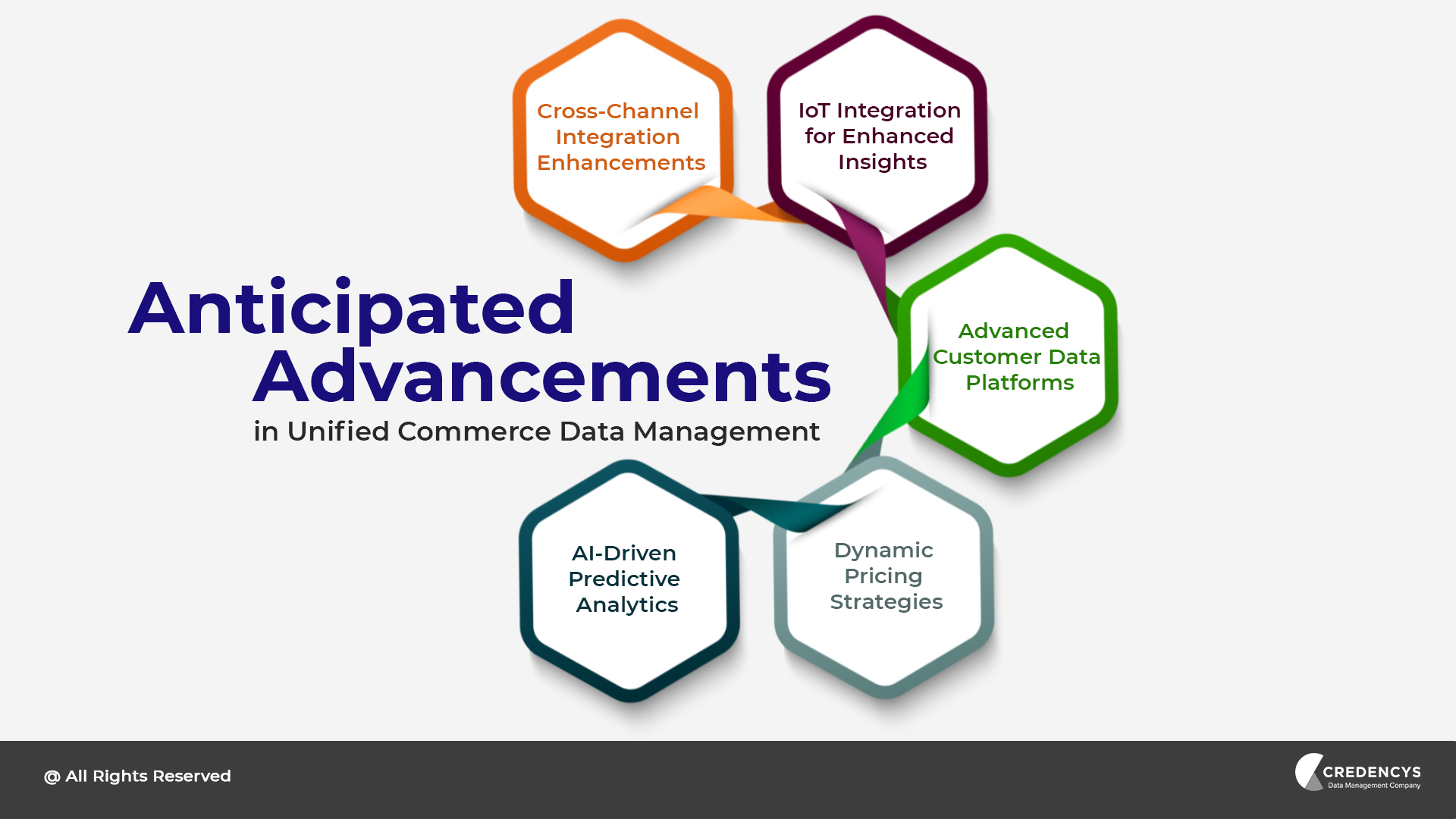
Anticipated Advancements in Unified Commerce Data Management

Unified commerce data management is undergoing transformative advancements, shaping the future of seamless customer experiences:

Cross-Channel Integration Enhancements

Future unified commerce strategies will focus on even more seamless integration across channels. Businesses will leverage advanced integration frameworks to ensure real-time data synchronization and consistency, providing customers with a unified experience regardless of the touchpoint.

IoT Integration for Enhanced Insights

The Internet of Things (IoT) will play a more prominent role in unified commerce data management. Connected devices will provide valuable data insights, enabling businesses to understand customer behavior, optimize inventory management, and personalize offerings in real time.

Advanced Customer Data Platforms (CDP)

The evolution of Customer Data Platforms will continue, offering more advanced capabilities for unifying customer profiles. Enhanced CDPs will provide a comprehensive view of customer interactions across channels, enabling businesses to deliver hyper-personalized experiences.

Customer Data Platform: The Ultimate Guide

Dynamic Pricing Strategies

Unified commerce data management will witness advancements in dynamic pricing strategies. Businesses will leverage real-time data to adjust pricing dynamically based on market conditions, competitor pricing, and customer behavior, optimizing revenue and competitiveness.

AI-Driven Predictive Analytics

Predictive analytics powered by AI will become more sophisticated, helping businesses anticipate customer needs and market trends. This data-driven foresight will guide decision-making in product launches, inventory management, and personalized marketing campaigns.

Advancements in Unified Commerce Data Management

Closing Thoughts

As businesses navigate the ever-evolving landscape of unified commerce, the imperative to embrace a PIM roadmap becomes increasingly evident. The benefits are not only immediate such as enhanced operational efficiency and data accuracy but extend to the long-term cultivation of a customer-centric approach.

Unified commerce, with its seamless integration of diverse channels, presents both opportunities and challenges for businesses. A well-crafted PIM roadmap acts as a guiding compass, addressing the complexities of managing product information across varied touchpoints.

Businesses can unlock the potential for seamless customer experiences, improved brand consistency, and agility in adapting to market changes. As technology advances and consumer expectations evolve, businesses with a strategic PIM plan in place will not only meet the challenges head-on but will position themselves as industry leaders, driving innovation and setting new standards for data management excellence.

The Challenges of Managing Product Data in Spreadsheets & How PIM can Address them

Are you managing product data in spreadsheets?

If yes, then you might be dealing with a handful of products and a modest array of variations because spreadsheets look like a perfect solution for that.

Imagine a bigger scenario!

As your business expands, your product catalog expands too. It will reach hundreds or even thousands of data points. Then, the spreadsheet management that seemed efficient before turned into a daunting task.

Now, you might agree because you have experienced the spreadsheet struggle. If you are interested in exploring how you can address your spreadsheet challenges or looking for a solution that helps you get rid of the use of spreadsheets, you are at the right place.

Let’s unravel the challenges associated with managing product data in spreadsheets and unveil an automated solution that might just be the game-changer you’re looking for.

Pitfalls of Managing Product Data in Spreadsheets

Spreadsheets are a highly popular and widely used platform in businesses as they are versatile and easy to set up. It provides a familiar grid-like interface where you can effortlessly perform tasks like summing, sorting, and filtering data.

For most small businesses, creating a spreadsheet to manage data is a no-brainer—it’s quick, simple, and appears to be an efficient solution at first glance.

The Pitfalls

It’s not as easy as it seems. Even if a spreadsheet seems affordable, the hidden costs can quickly pile up. It causes poor data management that impacts businesses significantly.

According to Gartner, poor data management costs organizations an average of $12.9 million a year.

This number varied based on your business size. However, the chances you are losing more than necessary by managing your product data in spreadsheets.

Managing product data in spreadsheets causes mistakes in product data, delays in updating information, and more challenges that result in a waste of time and money of your business resources.

Top 10 Challenges for Managing Product Data in Spreadsheets

Now, let’s explore the major problems that arise while considering spreadsheets for product data management. With this knowledge, you can either address these challenges or consider an alternative solution (which we’ll discuss later in this post).

Challenges for Managing Product Data in Spreadsheets

1. Scattered Data

Scattered data poses a formidable challenge in the realm of product information management.

In practical terms, scattered data refers to the fragmented storage of crucial product details across various spreadsheets, files, and documents. To access the complete, correct, and updated product data, you need to assemble all the information every time.

For instance, essential product descriptions may reside in one file, while pricing information is stored in another. Marketing and sales teams might maintain separate sets of files, contributing to the dispersion of vital data.

This scattered arrangement of data creates chaos across the organization, hindering the efficient retrieval and management of comprehensive product information. The result is a time-consuming process, where the search for accurate and consolidated data becomes necessary to navigate through disparate sources.

2. Inaccurate Data

Dealing with inaccurate data is a pervasive challenge that can significantly impact the effectiveness of product information management. In the context of managing product data in spreadsheets, inaccuracies act like a hidden threat, gradually eroding the foundation of business operations.

Inaccuracies can come from various sources, including manual entry errors, a lack of validation processes, reliance on outdated information, formula errors, and the presence of duplicate data.

Inaccurate data can compromise the robustness of business processes. It introduces uncertainties, undermines decision-making, and erodes the trustworthiness of the information relied upon for critical tasks.

Addressing the challenge of inaccurate data in spreadsheet-based management requires meticulous attention to detail and continuous vigilance. Implementing stringent validation checks, regular updates, and automated processes can help mitigate the risk of inaccuracies and ensure the reliability of product data.

3. Data Sharing Becomes Complex & Time-consuming

Navigating the challenge of complex and time-consuming data sharing is a critical aspect of managing product data in spreadsheets.

As businesses grow, the need for seamless collaboration and data sharing becomes increasingly vital. However, spreadsheets are not the right platform for these purposes.

In the context of product data management, sharing crucial information across departments or with external partners can become a cumbersome process.

Unlike a centralized system, spreadsheets lack the inherent structure and accessibility needed for efficient data sharing. This leads to challenges such as version control issues, difficulty in tracking changes, and delays in obtaining the most up-to-date information.

Example;

Consider the scenario of multiple teams working on different aspects of a product—marketing, sales, and logistics. Each team may require specific data sets, and coordinating these requirements through spreadsheets often results in a tangled web of files, making collaboration challenging.

Moreover, as data evolves and undergoes modifications, ensuring that everyone has access to the latest version becomes a logistical headache. The risk of errors and miscommunication amplifies, potentially impacting critical business decisions.

4. Inefficient sharing of product data on multiple sales channels

Tackling the challenge of inefficiently sharing product data across multiple sales channels is a common pain point when relying on spreadsheets for data management.

As businesses expand their reach through various sales platforms, ensuring consistent and accurate product information becomes paramount. However, spreadsheets often prove to be inefficient in handling the complexities of managing data across diverse channels.

Example;

Consider a scenario where a company sells its products on an e-commerce website, a mobile app, and through third-party retailers. Each of these sales channels may have distinct requirements regarding product details, specifications, and formatting. Managing this diversity in a spreadsheet-based system can lead to inefficiencies, resulting in errors, inconsistencies, and delays in updating information.

The lack of synchronization across multiple sales channels poses a significant hurdle. Maintaining separate spreadsheets for each channel can lead to version control issues, making it challenging to track changes and update product data uniformly.

Inefficient sharing may result in disparities between the product information presented on different platforms, potentially leading to customer confusion and lost sales opportunities.

5. Version Control

Dealing with version control in spreadsheets can be a major headache. In a bustling business atmosphere where various team members constantly update data, it’s all too easy to find yourself wrestling with conflicting versions of the same spreadsheet.

The aftermath involves the arduous task of merging documents, resolving discrepancies, and deciding which changes take precedence. Every minute spent on this process is a minute diverted from the core business.
To tackle this issue, you’re forced to implement rigorous processes, hoping that your versions stay unraveled. This demands careful file organization and a team committed to maintaining order. Unfortunately, it often becomes a delicate balancing act that can impede your business’s overall productivity.

Are you facing difficulty in managing the product data along with its version history? Credencys builds a PIM solution that helps you track each version of product data updates. – Let’s talk

6. Data Security Issue

Insufficient data security poses a perilous path to pervasive errors in product information management.

Shielding product information becomes paramount, especially when disseminating it to diverse external entities. In scenarios where multiple users access the same spreadsheet, the risk of exposing highly sensitive data, such as pricing, to unauthorized eyes becomes significant. While spreadsheets do offer certain product data security features, they have limitations.

When dealing with product information, security must extend to the granular level, down to each attribute. This detailed security becomes invaluable when certain attributes need to be concealed from external users.

Take pricing, a common security challenge; it may vary across retail partners, marketplaces, or channels. Sending a single spreadsheet with prices across all channels to various sales representatives risks revealing varying prices, potentially undermining long-term retail partnerships.

Spreadsheet’s workaround involves creating separate spreadsheets for each retail partner, consumer, or channel, a cumbersome and time-consuming process that compromises efficiency.

For eCommerce businesses, prioritizing security is imperative. Spreadsheets, often the culprit behind unintentional data leaks, lack the specialization required for multichannel and omnichannel distribution.

7. Scalability

Spreadsheets come with their limitations, especially when your data starts to grow. Beyond a certain point, whether it’s the number of rows, columns, or tabs, you’ll begin to notice a decline in performance.

Here are the common challenges that emerge as your data expands:

File Size Limitation

With an increasing number of products, your spreadsheet files can transform into large and un sizes, hampering performance and leading to potential crashes.

Increased Complexity

More products translate to more fields, records, and tabs, elevating the spreadsheet’s complexity. This makes data management more challenging.

Manual Updating

Spreadsheets require the manual effort required to update product information across various channels and partners. This not only consumes more time but also strains resources.

Search and Filtering Issues

Spreadsheets aren’t optimized for advanced search and filtering, a functionality that becomes crucial as your data volume expands.

To address these challenges effectively, transitioning to software designed to handle larger datasets with features tailored to your needs is the key. Keep reading to discover a solution that could be a game-changer for you.

8. Smooth & Real-time Collaboration is not Possible

Traditional spreadsheet programs typically lack robust support for concurrent collaboration among multiple users.

While some advanced cloud-based iterations do offer real-time collaboration features, they often carry inherent limitations. Platforms like Google Sheets impose user restrictions, necessitating meticulous management of spreadsheet permissions for each document.

Ensuring the correct individuals are working on designated tasks requires ongoing attention. Despite well-organized team structures, conflicting versions frequently emerge, resulting in wasted time devoted to reconciling changes.

The error-prone nature of spreadsheets intensifies when collaborating with external retail partners outside the organization.

In essence, the collaborative functionality of standard spreadsheet programs tends to be inadequate, leading to inefficiencies and increased risks of errors, especially when extending collaboration beyond internal teams.

9. Spreadsheets do not Manage Digital Assets

From your thumbnail images and photo packs to your documentation and PDFs, a multitude of digital assets accompany your products. The limitations of spreadsheets make it impractical to integrate these digital assets seamlessly.

Consequently, you’re compelled to manage digital assets independently, introducing an additional layer of complexity.

Navigating through version controls and organizing digital media becomes a distinct challenge within the spreadsheet paradigm. Establishing a coherent system that caters to the diverse needs of your sales team, e-commerce managers, and marketers becomes imperative.

Providing access to these files across different teams is essential for streamlined workflows and efficient task completion.

10. Prone to Data Corruption

Spreadsheets are highly susceptible to data corruption, mainly occurring during file transfers, especially when emailing, messaging, or converting spreadsheets into other document types.

When a spreadsheet containing product data gets corrupted, it becomes unreadable, and users may lose valuable information during transport or overwriting. Without a backup, retrieving the file can be challenging, often requiring complex technical solutions dependent on the software involved.

The Serious Impact of Data Corruption

Data corruption poses significant challenges for businesses, leading to wasted time in re-gathering and reorganizing lost product data. The consequences extend to resource drain and reduced productivity, causing setbacks in project timelines.

Unlike spreadsheets, utilizing a dedicated product information database with cloud storage eliminates the risk of data corruption. Platforms like Product Information Management (PIM) ensure secure cloud-based data storage, offering robust backup options and version history to prevent data loss.

Are you struggling with challenges like data corruption? Credencys would love to help you by developing a tailored Product Information Management solution. – Consult Credencys

PIM: A Comprehensive Solution to Address Your Spreadsheet Challenges

After navigating through the significant challenges of managing product data in spreadsheets, ranging from scattered information to intricate collaborations with retail partners, let’s explore how a Product Information Management (PIM) system stands as a remedy for these concerns, addressing each issue systematically.

How PIM Addresses Your Spreadsheet Challenges

Dealing with Scattered and Inaccurate Data

PIM systems serve as a centralized repository for all your product data, eliminating the need to jump between files. With PIM, you gain a single source of truth, ensuring data consistency and accuracy across the board.

Streamlining Data Sharing with Retail Partners

Bid farewell to manual exports and conversion hassles. PIM systems empower you to tailor data exports to meet the specific requirements of each retail partner, automating a process that used to be complex and time-consuming.

Efficient Multichannel Distribution

PIM’s standout feature lies in its seamless ability to dispatch data to multiple sales channels with just a few clicks. Say goodbye to the laborious task of manually updating each channel individually.

Resolving Version Control Issues

With real-time updates and robust versioning capabilities, PIM systems ensure that everyone works with the latest data set. No more concerns about outdated or conflicting versions.

Scalability for Growing Needs

As your product range expands, a PIM system grows alongside you. Unlike spreadsheets, which become unwieldy with growth, PIM systems effortlessly handle increased data complexity.

Enabling Real-time Collaboration

PIM systems offer multi-user environments with customizable permission settings, making real-time collaboration not only possible but also efficient and secure.

Keeping Products with Their Digital Assets

Storing images, videos, and other digital assets becomes effortless with PIM. These systems often include integrated Digital Asset Management (DAM) features, simplifying the association of assets with specific products or variants.

Credencys can help you develop a powerful Product Information Management solution that streamlines your varied data management processes by automating them. – Contact a PIM expert

Unlock Credencys’ Product Information Management Excellence

Unlock Credencys’ Product Information Management Excellence is a game-changer in the dynamic world of business, offering a centralized hub to effortlessly manage and optimize product data.

With an intuitive user interface, real-time collaboration features, and multi-channel publishing capabilities, this solution ensures streamlined workflows, data accuracy, and efficient cross-functional communication.

Credencys’ PIM Excellence not only integrates seamlessly with existing systems but also scales with your business, providing a flexible and customizable approach to product information management.

Experience the benefits of time savings, increased accuracy, and accelerated time-to-market, ultimately boosting sales and customer satisfaction. Elevate your data management strategy and unlock the full potential of your product information with Credencys. Let’s connect to discuss your challenges.

Retail PIM Implementation – Key Takeaways from Our Exclusive Webinar

In the dynamic landscape of retail, where products flood the market from various sources, maintaining accurate and consistent product information is paramount. This is where PIM implementation becomes a strategic necessity for retail organizations.

PIM acts as the central hub for organizing, enriching, and distributing product data across diverse channels, ensuring a seamless and coherent customer experience. However, the road to a successful PIM implementation is laden with challenges that organizations must navigate.

From intricacies in planning to prioritization dilemmas and adoption hurdles, the journey demands careful consideration and strategic manoeuvring. Understanding these challenges and preparing for them is crucial for any organization aiming to harness the full potential of PIM.

The purpose of this blog post is to illuminate these common pitfalls and provide valuable insights and strategies to navigate through them successfully. Leveraging our extensive experience, particularly over seven years of implementing PIM solutions in the retail sector, we aim to empower organizations with the knowledge needed to streamline their PIM implementation process.

We will delve into the pitfalls, unpacking their nuances and presenting actionable strategies to avoid or overcome them. By the end of this blog post, readers will gain a comprehensive understanding of the challenges associated with PIM implementation and acquire a toolkit of strategies to enhance the efficiency and effectiveness of their own implementations.

Pitfalls Encountered in PIM Implementation

The pitfalls faced by organizations during PIM implementation are multifaceted. The intricate nature of product data, coupled with the need for collaboration across various departments, often leads to pitfalls that can impede progress.

Planning Paradox

The planning paradox involves the delicate balance between underplanning and overplanning PIM implementation. Organizations may find themselves

  • misaligned with business goals
  • facing exclusionary rollouts
  • entangled in an extended blueprinting phase

The impact of poor planning is felt in the form of diverted focus, lack of inclusivity, and delayed implementation.

Scope and Priority Trap

The scope and priority trap catch organizations that attempt to tackle too much at once. It can lead to

  • complex and extended implementations
  • longer return on investment (ROI) timelines & increased rework
  • heightened management’s anxiety

It underscores the importance of thinking big, acting small, and adopting an iterative approach to PIM implementation.

Adoption Obstacle

The adoption obstacle is a human-centric challenge where

  • dissatisfaction among early adopters
  • escalations from business users
  • doubts about ROI

can hinder the successful integration of a PIM system. Overcoming this obstacle requires effective communication, facilitation, user training, and continuous monitoring of adoption rates.
Clients that risked falling into PIM implementation pitfalls

Strategies to Avoid These Pitfalls

Successful PIM implementation is not just about tackling challenges head-on; it’s about strategically maneuvering through potential pitfalls. In this section, we’ll explore key strategies to avoid the three common pitfalls associated with PIM implementation.

Planning Paradox

Implementing a PIM system comes with its unique set of challenges.

1. Understanding PIM-Specific Challenges

To overcome the planning paradox, where misalignment with business goals, exclusionary rollout, and extended blueprinting phases can occur, it is crucial to understand and address PIM-specific challenges head-on.

Here are key strategies to navigate these challenges effectively:

  • Complex Product Taxonomies: Begin by comprehending the intricacies of product taxonomies. Identify categories, attributes, and relationships that contribute to the complexity. Implement a hierarchical structure that reflects the relationships between different product attributes. This helps in organizing information logically and facilitates easier navigation.
  • Data Quality & Standardization: Conduct a thorough assessment of your existing data. Identify areas of inconsistency, inaccuracies, or incompleteness. Establish standardized protocols for data entry and maintenance. This ensures data quality and consistency across the PIM system, contributing to its effectiveness.

What is Data Quality – Everything Businesses Need to Know

  • Integration Readiness: Evaluate your existing systems to determine their compatibility with the PIM solution. Identify potential integration points and dependencies. Explore middleware solutions that can seamlessly connect diverse systems, streamlining data flow and ensuring integration readiness.
  • Supplier Data Management: Foster collaborative partnerships with suppliers. Establish clear communication channels to ensure a constant flow of accurate and updated product information. Implement automated validation processes to verify the accuracy of data provided by suppliers. This reduces manual errors and enhances data reliability.

Navigating Retail Success – The Crucial Role of Supplier Data Management

  • Syndication for the Future: Anticipate future market and industry changes. Develop syndication strategies that allow your PIM system to adapt and evolve alongside emerging trends. Implement agile syndication protocols that enable quick adjustments to product information dissemination, ensuring your business stays ahead in a dynamic market.

2. Planning Pillars

Successfully navigating PIM challenges requires a strategic approach to prioritize and address the most impactful issues. Follow these steps:

  • Prioritize Challenges: Conduct a thorough impact assessment to identify challenges with the highest business impact. Develop a priority matrix to categorize challenges based on urgency and significance. Address high-impact items first to yield immediate benefits.
  • Take No More Than 2 Challenges to Resolve: Limit the number of challenges tackled simultaneously to maintain a focused and efficient approach. Allocate resources effectively by concentrating efforts on a select few challenges, ensuring a higher probability of successful resolution.
  • Define MVP: Identify and prioritize essential features that constitute the minimum viable product. Adopt an iterative development approach, focusing on delivering key features incrementally. This allows for continuous improvement based on user feedback.
  • Define Success Factors and Business Outcomes: Establish clear success metrics that align with overall business goals. This provides a tangible measure of the effectiveness of PIM implementation. Regularly evaluate success factors and adjust strategies as needed to ensure ongoing alignment with business objectives.
  • Define Stakeholder Engagement: Identify key stakeholders involved in the PIM implementation process, both internal and external. Foster collaborative involvement by keeping stakeholders informed, engaged, and receptive to changes throughout the implementation process.

3. Creating a Roadmap

Emphasizing the role of creating a roadmap is instrumental in guiding a successful PIM implementation. Consider the following elements:

  • Strategic Alignment: Ensure alignment between the PIM roadmap and broader business strategies. This alignment guarantees that PIM implementation directly contributes to overarching organizational goals.
  • Milestones and Metrics: Define clear and achievable milestones for different phases of the PIM implementation. Establish metrics to measure progress toward each milestone, providing quantifiable indicators of success.
  • Stakeholder Engagement: Maintain open and transparent communication with stakeholders throughout the roadmap execution. Implement feedback mechanisms to gather insights from stakeholders, allowing for real-time adjustments to the roadmap as needed.
  • Change Management Plan: Develop a comprehensive communication plan to manage and communicate changes effectively. Provide adequate training and support mechanisms to help stakeholders adapt to new processes and technologies seamlessly.

Scope and Priority Trap

Implementing a PIM system often falls into the scope and priority trap, where the complexity and extent of data management can become overwhelming.

1. Data Scope Management in PIM

To overcome this challenge, it’s essential to focus on strategic data scope management. Here are detailed strategies to navigate this aspect successfully:

  • Essential Attributes First: Begin by identifying the essential attributes that are crucial for your business operations and customer experience. Prioritize the inclusion of these core attributes in the initial phase of PIM implementation to establish a solid foundation for product information.
  • Quality Vs Quantity: Emphasize the importance of data quality over quantity. Conduct thorough assessments to ensure that the included data is accurate, reliable, and meets defined standards. Resist the temptation to include excessive data that may not add significant value. Prioritize relevance and usefulness to avoid information overload.
  • Incremental Enrichment: Implement a strategy of incremental enrichment, focusing on gradually enhancing product data over time. Gather feedback from users and stakeholders to identify areas for improvement and enrichment. Use this input to guide the ongoing enhancement process.

How Does PIM Software Enrich Your Product Data?

2. Prioritizing Business Outcomes for Retail Success

  • Catalog Management: Implement a structured catalog management system that aligns with your business goals and customer expectations. Ensure catalogs are dynamic and can be updated efficiently to reflect changes in product information, pricing, and availability.
  • Integration Capabilities: Prioritize integration capabilities that facilitate seamless communication between your PIM system and other enterprise systems (e.g., ERP, CRM). Aim for real-time data flow to enhance operational efficiency and provide accurate and up-to-date information across all channels.
  • Omnichannel Consistency: Focus on maintaining a consistent brand message and product information across all channels, including online and offline. Prioritize omnichannel consistency to enhance the overall customer experience, ensuring that customers receive the same accurate information regardless of the channel they use.
  • Agile Response to Retail Trends: Stay vigilant to emerging retail trends and changing consumer preferences. Develop an agile approach to respond quickly to market trends. Ensure that your PIM system can adapt and accommodate new product attributes or information in response to evolving market demands.
  • Always Start With an Accelerator: To overcome challenges related to the scope and priority trap, consider starting your PIM implementation with an accelerator. Utilize pre-built templates and configurations offered by PIM accelerators to expedite the implementation process. Focus on achieving quick wins by prioritizing high-impact features that can be implemented rapidly. Use the accelerator as a foundation for iterative enhancements, allowing you to address immediate needs while continuously improving and expanding the PIM system over time.

Adoption Obstacle

Implementing a Product Information Management (PIM) system involves more than just technology—it requires a thoughtful approach to address the human element. Overcoming the adoption obstacle involves acknowledging the role of individuals within the organization and ensuring their engagement, understanding, and cooperation.

Here’s a detailed exploration of strategies to navigate the adoption obstacle:

1. Acknowledging the Human Element

Understand that individuals within the organization, from leadership to end-users, play a crucial role in the success of PIM implementation. Consider the organizational culture and ensure that PIM strategies align with existing practices and values.

2. Emphasizing Communication, Facilitation, and User Training

  • Engagement from the Top: Secure commitment and active support from top leadership. When leaders champion the PIM initiative, it sets a positive tone for the entire organization. Ensure that leaders communicate the importance of PIM and its alignment with strategic objectives. Clarify how PIM will benefit the organization as a whole.
  • Communication Plan: Develop a comprehensive communication plan that ensures transparency about the PIM implementation process, milestones, and expected outcomes. Foster an environment of open communication where feedback from all levels of the organization is welcomed and addressed.
  • User-Centric Training: Design training programs that cater to the specific needs and roles of different users within the organization. Provide hands-on training opportunities to allow users to interact directly with the PIM system, fostering a deeper understanding.

3. Strategizing and Iterating

  • Iterative Feedback: Establish mechanisms for gathering feedback throughout the PIM implementation process. Use this feedback to identify areas for improvement and make adjustments accordingly. Involve end-users in the feedback loop, ensuring their insights are considered when refining the PIM system.
  • Incentive for Adoption: Introduce incentives, recognition, and rewards for individuals and teams that actively contribute to the successful adoption and utilization of the PIM system. Highlight success stories of teams or individuals who have effectively embraced PIM, showcasing the positive impact on their workflows and outcomes.
  • Monitoring & Measuring Adoption: Define KPIs to measure the adoption and effectiveness of the PIM system. This may include user engagement metrics, data quality improvements, and time saved in product information management.

Closing Thoughts

The journey towards a successful PIM implementation is not merely a technological transition; it’s a strategic and cultural transformation that demands careful navigation. Today, when information is as valuable as the products themselves, a well-executed PIM implementation sets the stage for enhanced customer experiences, streamlined operations, and sustained growth.

By embracing proactive strategies, recognizing the human element, and staying attuned to evolving needs, organizations can navigate the PIM implementation landscape with confidence and resilience.

As you embark on your own PIM journey, remember that success lies not just in the technology you adopt but in the strategic, cultural, and human-centric approach you embrace.

Background on Credencys

Credencys stands as a beacon in the realm of technology solutions, particularly renowned for its pioneering work in PIM. As a seasoned player in the industry, Credencys brings over a decade of expertise to the table, consistently delivering innovative solutions to address the evolving needs of businesses.

The insights shared in this blog post are not arbitrary; they stem from a collective wealth of knowledge amassed by Credencys over the years.

On-Premises Vs Cloud PIM – Finding Your Best Fit

Since you are exploring various types of PIM solutions, we assume that you are already acquainted with the concept of PIM and its potential to effectively address your challenges when implemented correctly, utilized efficiently, and aligned with your specific objectives. If you are in the market for a PIM solution, you are likely evaluating two main options: On-premises or Cloud PIM.

Although both options facilitate the streamlining of product information management for businesses, it is crucial to be aware of distinct differences between them. Over the past couple of years, numerous business leaders have embraced PIM solutions, while others have been slower to adopt them due to the difficulty in finding the right fit.

A pressing question for those in the decision-making process is whether to opt for an on-premises or cloud-based PIM. As businesses embark on their PIM journey, it is essential to keep their overarching business goals and objectives at the forefront.

Considerations should include what you aim to achieve and the timeframe for achieving it. Additionally, envisioning the future trajectory of the business plays a pivotal role.

The responses to these fundamental questions will significantly influence the choice between on-premises and cloud-based PIM solutions.

Organizations appear drawn to the PIM cloud as a potential lower-cost and lower-risk replacement for traditional PIM deployment. However, organizations must carefully examine both options to determine which is more flexible and advantageous.

If you are also in the process of gathering comprehensive information before reaching a final decision, stay with us. In this article, we will break down the distinctions between the two and assist you in identifying the option that best aligns with your needs.

What is On-Premises PIM?

On-premises PIM refers to the software that is physically installed and hosted on an organization’s premises or offices. When an organization decides to implement on-premises PIM, it purchases a license for the software and takes responsibility for installing it on its own servers.

The on-premises model offers full control over various aspects of PIM, including implementation, integration, upgrades, maintenance, and customizations. To ensure the smooth operation of the system, organizations typically require a dedicated IT team.

On-premises PIM systems come in two types: open-source and proprietary platforms. In an open-source system, users can access and modify the source code according to their business requirements. In a proprietary platform, the PIM vendor takes responsibility for adding new features and upgrades.

One of the key reasons organizations opt for on-premises PIM is enhanced security. All data is stored on the organization’s own servers, behind its firewall.

However, maintaining high-level security requires expertise, either from the vendor or in-house security professionals. While the implementation of on-premises PIM may take time, it provides the organization with complete control and customization to meet specific business needs.

The pricing model for on-premises PIM typically involves a one-time license fee, requiring a higher initial investment. However, operational costs tend to be lower in the long run, covering only updates, support, and training.

This approach allows organizations to prioritize departments, arrange employee training as needed, and have confidence in the security and local storage of their product data.

Advantages of On-Premises PIM

  • Control: Businesses have full control over their PIM data, including where it’s stored, who can access it, and how secure it is.
  • Customization: On-premises PIM offers greater flexibility and customization. Businesses can tailor the software to fit their specific needs, although this depends on the chosen solution.
  • Security: Data is stored on the company’s own servers, providing a higher level of security.
  • One-time Cost: On-premises PIM is usually a one-time purchase, meaning there are no ongoing subscription fees.

Disadvantages of On-Premises PIM:

  • Upfront Costs: Businesses need to make a significant upfront investment in purchasing software and setting up the necessary infrastructure, which can be challenging for early-stage businesses.
  • Maintenance: Companies are responsible for maintaining and upgrading the platform, which can be time-consuming and costly. Additionally, they often need to handle underlying infrastructure maintenance.
  • Scalability: On-premises PIM may not scale as easily as Cloud-based solutions. As businesses grow, they may need to invest in additional hardware and software.
  • Futureproofing: On-premises PIM solutions may lag behind in adapting to the fast-paced changes on the web. They may not be well-suited for new technologies that enhance user experiences and content delivery to various screens.

What is Cloud PIM?

Cloud PIM is a software solution hosted off-site by a third-party provider on the cloud. This means that the PIM software is not installed on a user’s physical premises but is accessible over the internet or through an application.

Once a license is purchased, the PIM software can be accessed from any location worldwide and at any time. Cloud-based PIM operates on a subscription model, where the provider makes the software available for use as long as the subscription is active.

The infrastructure for cloud PIM is typically supported by major cloud service providers such as Amazon Web Services (AWS) or Google. This eliminates the need for users to download, install, or manage the PIM solution on their devices.

Cloud PIM offers several advantages, including flexibility, scalability, and mobility. The subscription-based model, with predictable monthly or annual payments, is particularly appealing to small and middle-sized businesses.

This approach eliminates the need for companies to invest in their own infrastructure, hardware, or operational staff. Updates are handled automatically by the PIM provider, relieving users from concerns about equipment aging or software maintenance.

The deployment of cloud PIM is efficient, requiring less time than traditional on-premises solutions. It allows users to access product data without worrying about complex installation processes or compatibility issues.

Cloud PIM accommodates diverse business needs, from on-demand product data access to managing extensive product catalogs. Despite its popularity, it’s worth noting that some concerns about security persist within cloud PIM, even as efforts are made to address these issues.

Advantages of Cloud PIM

  • Speed: Cloud PIM deployment is faster because there’s less time spent on installation and setup. It gets you to market quickly.
  • Scalability: Cloud PIM is highly scalable, meaning it can adapt easily to businesses of all sizes, making it a strong choice.
  • Accessibility: Businesses can access Cloud PIM from anywhere with an internet connection, promoting remote collaboration and flexibility.
  • Security: Cloud PIM has a single API endpoint, reducing the risk of harmful attacks compared to on-premises solutions.
  • Cost: Cloud PIM is often less expensive upfront since businesses don’t have to handle infrastructure. Ongoing subscription fees can also be more manageable than maintaining On-Premises solutions.
  • Maintenance and Upgrades: The provider typically takes care of maintaining and upgrading Cloud PIM, reducing the workload and costs for businesses.
  • Frontend Agnostic: Cloud PIM avoids vendor/tech lockdowns, ensuring adaptability to evolving technologies.

Disadvantages of Cloud PIM

  • Control of Data: While Cloud PIM providers implement security measures, businesses may not have complete control over their data, relying on the provider’s security measures.
  • Customization: Cloud PIM solutions may not offer the same level of customization as On-Premises solutions since businesses are limited to the provider’s software and features.

Top Parameters to Select the Best PIM Solution for Your Business

Time-to-Market

In the fast-paced world of business, speed is crucial for success. The ability to meet customer demands quickly increases your chances of winning customers.

An easy-to-implement PIM solution plays a key role in getting to the market faster and offering the right products at the right time. Cloud PIM is a game-changer in speeding up time to market.

It minimizes deployment activities, allowing you to start working on your product data immediately, automate catalog creation, and run multiple marketing campaigns. The beauty of a cloud PIM system is that you don’t have to worry about hosting applications, maintaining systems, or handling security upgrades – the PIM vendor takes care of it all.

On the flip side, an on-premises PIM solution is a time-consuming process. Successfully implementing it requires your team to handle installation, hosting, configuration, and maintenance responsibilities.

While on-premises solutions offer high customization and data control, they demand a significant time investment in resource planning, system maintenance, and equipment setup.

Winner: Cloud PIM

Cost

Cloud deployment comes with a clear and significant cost advantage. Businesses not only enjoy lower setup costs, but maintenance costs are also notably reduced because the cloud environment is usually handled by the PIM provider.

The expense of Cloud deployment is often much less compared to the combined hardware and software costs of on-premises setups. The affordable subscription cost makes it easy for small and medium businesses (SMBs) to quickly expand their customer base.

Cloud allows them to access high-end PIM software without the heavy financial burden. On the flip side, on-premises PIM deployments typically demand substantial investments.

This includes expenses for software licensing, hardware, servers, installation, integration, maintenance, and system upgrades. Additionally, there are costs for hiring and onboarding resources, training internal staff, integrating the PIM platform with existing applications, migrating data from old systems, and establishing processes and custom workflows.

Beyond the initial upfront costs, on-premises PIM also involves ongoing expenses for continuous upgrades and new plug-ins to customize and keep your systems up to date with the latest customer demands.

Winner: Cloud PIM

Level of Control

When considering control in a PIM system, there are two essential aspects to think about: control over your data within the PIM system and control over the platform itself. If you want complete control over how you access, store, and manage product data, a cloud-based PIM may not be the best fit.

While a cloud PIM handles installation and configuration, much of the control remains with the provider. For example, if the provider introduces a new version or upgrades the system, it applies to all clients without individual consent, leaving certain issues beyond your control.

On the other hand, with on-premises implementation, you have full control over your PIM system. Since the application is hosted on your own servers, you have complete command over your product data and system design.

You can manage system versions and customize the application to align with your specific business needs. Having the PIM system physically on-site allows you to securely store information, swiftly retrieve data, address version concerns, and ultimately have better control over your product data.

Winner: On-Premises

Security

Data security and privacy are major concerns for any business owner when adopting a new software tool. Whether using on-premises or cloud PIM, it’s crucial to ensure that your PIM guarantees the complete security of your product information.

In a cloud-based PIM setup, the responsibility for securing your data rests with the PIM vendors. Most cloud PIM providers implement strong security measures, following widely accepted standards for platform security, network, operating systems, and infrastructure.

However, because everything operates in the cloud, you have limited control over the security in cloud PIM. This is why many businesses opt for on-premises PIM solutions, prioritizing higher security and reliability.

Enterprises dealing with extremely sensitive product information often choose on-premises PIM. With data stored on-site and nowhere else, you have greater control over maintaining the availability, confidentiality, and integrity of your data.

Winner: On-Premises

Scalability

Both on-premises and cloud PIM exhibit notable differences when it comes to scalability. Cloud PIM providers, investing in advanced technologies, offer higher scalability to enterprises, a crucial advantage in today’s highly competitive market.

Cloud PIM allows businesses to swiftly adapt to changes in demand caused by market fluctuations. It eliminates the need to hire extra resources or install new server capacity.

Instead, it provides a streamlined way to meet growing business needs and enhance time to market—a critical factor in today’s dynamic business landscape. On the flip side, on-premises PIM applications face challenges in scalability due to their reliance on physical servers.

Adding new systems when facing increased demands, and reverting to the original configuration when demand decreases, is not as straightforward. Therefore, regardless of the strength of your on-premises PIM systems, if they cannot scale according to changing customer demands, you risk missing out on potential opportunities.

Winner: Cloud PIM

Accessibility

The speed and ease of accessing data are crucial factors in determining digital business success and should not be underestimated. A cloud-based software application is accessible from anywhere and anytime, provided there is a secure internet connection.

This allows employees the freedom to work remotely or on the go, supporting around-the-clock operations for global expansion. However, connectivity issues can hinder data access, leading to frustration.

On the other hand, an on-premises PIM system stores data on your own servers, providing direct access to product information without relying on an internet connection. Yet, on-premises PIM has some restrictions on remote access, limiting the ability to access data at any time and from anywhere.

Essentially, access is possible only when the systems are functioning. Moreover, setting up a remote connection for employee access adds complexity to the implementation process.

Winner: Cloud PIM

ParameterOn-premises PIMCloud PIMWinner
Time-to-MarketInstallation, hosting, configuration, and maintenance is a time-consuming process.Minimized deployment activities speed time-to-marketCloud PIM
CostSoftware licensing, hardware, servers, installation, integration, maintenance, and system upgrades demand substantial investments.The affordable subscription cost of cloud deployment comes with a clear and significant cost advantageCloud PIM
Level of ControlTotal control over data and systemSome control; the provider manages certain aspects.On-premises PIM
SecurityGreater control over maintaining the confidentiality and integrity of dataLimited control over the security of dataOn-premises PIM
ScalabilityLimited scalability due to physical serversHigh scalability for quick adaptation to changing demandsCloud PIM
AccessibilityRestricted remote access; data accessible when systems are functioningAnywhere, anytime access with internet connection; supports remote workCloud PIM

On-premises Vs Cloud PIM: Which is Right for Your Business?

Choosing between on-premises and cloud PIM solutions is a critical decision for businesses aiming to streamline their product information management. Each option comes with its own set of advantages and considerations, and the right choice depends on the unique needs and priorities of your organization.

It’s crucial to align your choice with your organization’s goals, budget, and IT infrastructure. Evaluate factors like data control, scalability, accessibility, and overall cost to determine which solution best meets your business needs.

10 PIM Strategies for eCommerce Businesses to Win Big on Black Friday and Cyber Monday

Black Friday and Cyber Monday (BFCM) have become synonymous with unparalleled shopping extravaganzas, marking the unofficial commencement of the holiday shopping season. For eCommerce businesses, Black Friday and Cyber Monday represent pivotal moments in the annual retail calendar.

The significance lies not only in the sheer volume of sales but also in the opportunity to attract new customers, boost brand visibility, and strategically position products in a highly competitive market. Consumers actively seek out discounts and promotions during these events, making it a critical period for businesses to capitalize on heightened consumer demand and drive revenue.

Significance of BFCM for eCommerce Businesses

The success of an eCommerce business during Black Friday and Cyber Monday is often indicative of its overall health and competitive strength. The ability to stand out amid the noise of promotions and entice shoppers to choose one brand over another requires a combination of strategic marketing, compelling offers, and an optimized shopping experience.

PIM and Its Role in Boosting Sales

At the heart of a successful eCommerce strategy lies the effective management of product information. A robust Product Information Management system enables businesses to centralize, organize, and distribute product data across various channels.

The role of a PIM becomes particularly crucial during the frenetic Black Friday and Cyber Monday period. It serves as the backbone for presenting accurate and compelling product information to consumers.

In a landscape where attention spans are short and choices are abundant, having a robust PIM strategy ensures that businesses not only meet but exceed customer expectations. From streamlining product data to optimizing images and ensuring cross-channel consistency, PIM plays a pivotal role in enhancing the overall customer experience and, consequently, boosting sales during these high-stakes shopping events.

Let’s delve into specific PIM strategies that eCommerce businesses can employ to maximize their success during BFCM.

PIM Strategies for BFCM eCommerce Success

1. Streamline Product Data

In the fast-paced environment of BFCM, consumers make quick decisions. Accurate and comprehensive product details play a pivotal role in capturing their attention and trust.

From specifications to features and usage instructions, ensuring that every piece of information is not only correct but also easily digestible is key. Streamlining product data minimizes the chances of confusion or misinformation, fostering a positive buying experience.

Techniques to Streamline Product Data

Implementing a robust PIM system is the first step. Utilize tools that allow for the centralized management of product information, making it accessible and updatable in real time.

Product information can be organized efficiently through categorization, tagging, and attribute management. Integration with other business systems, such as ERP or CRM, can further enhance the efficiency of data management.

2. Optimize Product Images

Visual appeal is a significant factor influencing consumer purchasing decisions. High-quality, engaging images not only showcase products effectively but also contribute to building trust.

During BFCM, where competition for consumer attention is fierce, compelling visuals can set products apart from the crowd.

Best Practices for Image Optimization

Optimize images for speed and clarity without compromising quality. Utilize various angles and close-ups to provide a comprehensive view.

Ensure consistency in image styles across your product range for a cohesive and professional appearance. Compress images for faster loading times on your website or mobile app.

3. Implement a Cross-Channel Consistency Plan

With consumers navigating through multiple channels before making a purchase, maintaining consistency across all touchpoints is crucial. Whether it’s your website, social media, or third-party marketplaces, presenting uniform product information instills confidence and avoids confusion.

Tools for Maintaining Consistency in Multichannel Marketing

Leverage PIM tools that support multichannel distribution and synchronization. Automation can help in updating product information simultaneously across various platforms, reducing the likelihood of disparities.

Regularly audit and update content to align with any changes in product details or marketing strategies.

How to Succeed in Multi-channel Marketing Using the PIM System?

4. Leverage Product Reviews and Ratings

Customer reviews and ratings provide social proof and significantly influence the purchasing decisions of potential buyers. During the BFCM shopping frenzy, positive reviews can act as powerful endorsements, instilling confidence in hesitant shoppers.

How to Integrate Reviews & Ratings into Product Information Strategy

Encourage customers to leave reviews by implementing post-purchase review requests. Integrate review widgets on product pages to showcase real-time feedback.

Address negative reviews promptly and transparently, demonstrating your commitment to customer satisfaction. Use PIM systems that allow seamless integration with review platforms.

5. Personalize Product Recommendations

Personalization enhances the shopping experience by presenting products tailored to individual preferences. During BFCM, personalized recommendations can capture the attention of consumers overwhelmed by choices, increasing the likelihood of conversion.

Algorithms for Implementing Effective Product Recommendations

Invest in recommendation engines that analyze user behavior, purchase history, and preferences. Machine learning algorithms can dynamically adjust recommendations based on real-time data.

Implement cross-selling and upselling strategies to maximize the value of each transaction.

6. Mobile Optimization for PIM

The ubiquity of smartphones has transformed the way consumers shop, with a significant portion of BFCM transactions occurring on mobile devices. Optimizing product information for mobile users is no longer an option but a necessity.

Strategies for Optimizing Product Information for Mobile Users

Ensure that your website and product pages are mobile-responsive. Condense product information for easy reading on smaller screens.

Implement touch-friendly navigation and provide a seamless mobile checkout experience. Leverage mobile-app-specific features to enhance engagement.

7. Inventory Management and Availability Updates

Inventory issues can be detrimental during high-demand periods. Stockouts frustrate customers, while overstocks tie up capital and can lead to markdowns. Maintaining an optimal balance is critical for maximizing sales.

Technologies for Real-Time Inventory Management and Updates

Implement inventory management systems that offer real-time tracking and alerts. Integrate these systems with your PIM to ensure that product information reflects current stock levels.

Utilize demand forecasting tools to anticipate surges in demand and adjust inventory accordingly.

8. Pricing Strategy and Dynamic Updates

Pricing is a major factor influencing consumer decisions, especially during Black Friday and Cyber Monday when deals abound. Competitive pricing can attract price-sensitive shoppers and position your products favorably against competitors.

Implementing Dynamic Pricing Strategies for BFCM

Utilize dynamic pricing tools that analyze market trends, competitor pricing, and customer behavior. Implement flash sales, time-limited discounts, and tiered pricing to create a sense of urgency.

Ensure that pricing information is consistent across all channels.

9. Seamless Checkout Experience

A seamless and user-friendly checkout process is essential for converting interested shoppers into paying customers. Complicated or time-consuming checkouts can lead to cart abandonment, especially during high-traffic periods.

Incorporating PIM into the Optimization of the Checkout Process

Streamline the checkout process by pre-populating customer information from your PIM system. Implement single-click purchasing options and multiple payment gateways to cater to diverse customer preferences.

Continuously test and optimize the checkout flow based on user feedback and analytics.

10. Post-Purchase Engagement

The relationship with customers doesn’t end after the purchase. Building post-purchase engagement is crucial for fostering loyalty and encouraging repeat business beyond the holiday season.

Using PIM for Post-Purchase Communication and Engagement

Leverage your PIM system to send personalized post-purchase communications, such as order confirmations, shipping updates, and follow-up emails. Implement loyalty programs and exclusive offers for returning customers.

Use customer data from your PIM to tailor post-purchase communication to individual preferences and behaviors.

Elevate Your Black Friday Cyber Monday Game with Credencys

As you embark on the journey to implement these powerful PIM strategies for Black Friday and Cyber Monday success, having a reliable partner can make all the difference. At Credencys, we understand the intricate dynamics of eCommerce and the pivotal role that PIM plays in driving sales.

Our team of experts is dedicated to helping businesses like yours streamline product data, optimize images, and implement cross-channel consistency to enhance the overall shopping experience. With a proven track record in PIM implementation and a commitment to staying ahead of industry trends, Credencys is your trusted ally in navigating the complexities of the eCommerce landscape.

Don’t just meet the demands of the holiday shopping season; exceed them with Credencys as your PIM implementation partner. Contact us today to explore how our expertise can transform your eCommerce strategy and set you on the path to sustained success.

An Essential Guide to Product Data Syndication

In the dynamic world of eCommerce, where customer expectations are continually evolving, the importance of high-quality product data cannot be overstated. Consumers today demand not just products, but an immersive and seamless shopping experience.

This experience hinges on accurate and comprehensive product information, from specifications and features to pricing and availability. This is where Product Data Syndication comes in.

This blog post is meticulously crafted to guide eCommerce businesses through the intricacies of product data syndication, offering a comprehensive exploration of its nuances, benefits, challenges, and best practices. From establishing a foundational understanding of syndication to unveiling the tools and technologies that drive its success, we’ll journey together through expert insights and future trends.

This post aims not only to inform but also to empower businesses with the knowledge needed to unlock the full potential of their product data in the eCommerce arena.

What is Product Data Syndication?

Product data syndication is the systematic process through which crucial product information is curated, standardized, and disseminated across various digital platforms and marketplaces. It involves the meticulous distribution of essential product details—attributes, images, and descriptions—from a centralized source to multiple online destinations.

It’s the mechanism that allows a business to maintain a harmonious narrative across diverse channels, enabling consumers to experience a product with clarity and uniformity, fostering trust and brand loyalty.

Key Components of Product Data

Attributes

These are the distinct characteristics that define a product—size, color, specifications, and more. Syndication ensures that these attributes are not lost in translation as a product navigates the digital landscape.

Consistency in attribute presentation is crucial for customers to make informed decisions, regardless of the platform they choose.

Images

The visual allure of a product is a powerful tool in the eCommerce arsenal. Syndication ensures that high-quality images, capturing every facet of a product, are consistently displayed across platforms. This visual continuity not only enhances the overall aesthetic but also contributes to a cohesive brand image.

Descriptions

The narrative that accompanies a product, the description is the voice that speaks directly to the consumer. Syndication maintains the authenticity of these descriptions, ensuring a consistent tone and style. Whether a product is featured on a boutique website or a major e-commerce platform, the storytelling remains true to the brand’s identity.

Components of Product Data

Why Product Data Syndication is Important for eCommerce Success?

The significance of product data syndication becomes paramount for several compelling reasons:

Consistency Across Platforms

Syndication is the guardian of consistency, ensuring that a product’s story is told uniformly across diverse platforms. This consistency builds trust among consumers, who can confidently engage with a brand’s offerings, knowing they can rely on accurate and reliable information.

Enhanced Customer Experience

Product data syndication contributes to a seamless customer experience journey. Standardizing product data across platforms eliminates confusion and provides customers with a unified and enjoyable shopping experience, from discovery to purchase.

The Role of PIM in Enhancing Customer Experience for Fashion Retailers

Expanded Reach and Visibility

For businesses aspiring to expand their digital footprint, product data syndication acts as the catalyst. By effortlessly disseminating product data across various channels, businesses can broaden their reach, ensuring their products are discoverable wherever customers choose to explore and make purchase decisions.

Benefits of Product Data Syndication

Let’s delve into the tangible advantages that syndicating product data brings to the table, shaping the narrative of success for businesses navigating the intricacies of the online marketplace.

Improved Visibility and Reach

  • Global Presence: Product data syndication acts as a passport to the global marketplace, enabling businesses to extend their reach beyond geographic boundaries. By seamlessly disseminating product information across diverse platforms, brands can cultivate a truly international presence, reaching new audiences and untapped markets.
  • Multi-Channel Visibility: With the proliferation of online channels, from marketplaces and social media platforms to specialized e-commerce websites, syndication ensures that products are visible across a spectrum of touchpoints. This multi-channel visibility not only broadens the audience but also positions products where customers are actively searching.

Enhanced Customer Experience

  • Consistent Information: One of the primary benefits of product data syndication is the ability to provide customers with consistent and accurate information, regardless of the platform they choose for their shopping journey. This consistency contributes to a seamless and trustworthy customer experience.
  • Rich Media Experience: Syndication enables businesses to showcase products in their best light by standardizing high-quality images and compelling descriptions. This rich media experience captivates customers, fostering engagement and encouraging informed purchasing decisions.

Consistency Across Multiple Platforms

  • Brand Integrity: Maintaining brand integrity in the digital space is crucial for building trust. Product data syndication ensures that the brand’s image remains consistent across various online channels, reinforcing a unified identity and solidifying the brand in the minds of consumers.
  • Efficient Updates: As products and information evolve, syndication streamlines the process of updating and modifying data across multiple platforms. This efficiency not only saves time and resources but also ensures that customers are always presented with the most accurate and current information.

Improved ROI and Revenue

  • Optimized Conversions: By providing customers with a cohesive and immersive shopping experience, product data syndication plays a pivotal role in optimizing conversion rates. When customers encounter reliable and consistent information, they are more likely to make confident purchasing decisions.
  • Marketplace Compliance: Many online marketplaces have specific data requirements. Syndicating product data in compliance with these standards enhances a brand’s visibility on these platforms, leading to increased discoverability and potential sales.

Benefits of Product Data Syndication

Challenges in Product Data Syndication

While the advantages of product data syndication are undeniable, navigating the landscape comes with its set of challenges. Let’s explore the hurdles that businesses may encounter on their journey toward effective syndication.

Recognizing and understanding these challenges is the first step in developing strategies to overcome them and maximize the benefits of this essential eCommerce practice.

Data Accuracy and Quality

  • Inconsistencies in Data: Maintaining data accuracy across various channels can be challenging, leading to inconsistencies in product information. Discrepancies in attributes, pricing, or availability can erode customer trust and impact the overall shopping experience.
  • Quality Control: Ensuring the quality of product data is a continuous effort. Inaccurate or incomplete information can lead to customer dissatisfaction and increased return rates. Establishing robust quality control processes is essential to address this challenge.

Managing Updates and Changes

  • Timely Updates: With products evolving and information changing, ensuring timely updates across multiple platforms can be a logistical challenge. Delayed updates may result in outdated information being presented to customers, impacting their purchasing decisions.
  • Version Control: Managing different versions of product data across platforms can lead to confusion and errors. Implementing a robust version control system is crucial to track changes and ensure that the latest and most accurate data is consistently presented.

Ensuring Compliance with Channel Requirements

  • Diverse Channel Standards: Each online marketplace or retail channel may have specific data format and attribute requirements. Ensuring compliance with these diverse standards can be complex and time-consuming, especially for businesses operating on multiple platforms.
  • Ever-Changing Requirements: Online channels frequently update their data requirements. Staying abreast of these changes and adapting product data accordingly is a perpetual challenge, requiring businesses to maintain agility in their syndication processes.

Overcoming Integration Challenges

  • Integration with Existing Systems: Integrating product data syndication processes with existing systems, such as Enterprise Resource Planning (ERP) or Customer Relationship Management (CRM) systems, can pose integration challenges. Compatibility issues may arise, affecting the smooth flow of data.
  • Data Security Concerns: Transmitting sensitive product data across platforms requires robust security measures. Businesses must navigate the delicate balance between seamless data flow and ensuring the protection of confidential information from potential threats.

Best Practices for Effective Product Data Syndication

Navigating the intricate terrain of product data syndication demands a strategic approach and adherence to best practices. Let’s delve into the guidelines and methodologies that businesses can adopt to ensure the seamless and effective syndication of their product data, maximizing its impact across diverse eCommerce channels.

Establishing a Centralized Product Information Management (PIM) System

  • Unified Data Repository: Implementing a centralized PIM system serves as the foundation for effective product data syndication. It consolidates all product information in one unified repository, facilitating streamlined management and updates.
  • Attribute Standardization: Enforce standardized attributes across all product listings. Consistency in attribute names, formats, and values ensures a uniform representation of products across different platforms.

Standardizing Data Formats and Taxonomies

  • Consistent Taxonomies: Develop and adhere to consistent taxonomies for categorizing products. A standardized taxonomy ensures that products are classified uniformly, enhancing searchability and discoverability across channels.
  • Data Format Compatibility: Ensure that the product data format is compatible with the requirements of various channels. This includes standardizing image sizes and file formats and structuring data in a way that aligns with the specifications of each platform.

Automating Data Updates and Distribution

  • Real-time Updates: Implement automated processes for real-time updates. This ensures that changes in product information, such as pricing or availability, are swiftly propagated across all channels, minimizing the risk of presenting outdated data to customers.
  • Scheduled Syndication: Establish a regular schedule for syndicating product data. Whether daily, weekly, or according to product release cycles, a consistent syndication schedule helps maintain data accuracy and keeps customers informed.

Monitoring and Measuring Syndication Performance

  • Analytics and Reporting: Utilize analytics tools to monitor syndication performance. Track key metrics such as product visibility, click-through rates, and conversion rates to assess the effectiveness of syndication strategies.
  • Feedback Loops: Establish feedback loops to capture customer insights and experiences. Customer feedback can highlight areas for improvement in product data presentation and guide ongoing optimization efforts.

Best Practices for Effective Product Data Syndication

Future Trends in Product Data Syndication

The future of product data syndication holds exciting prospects, marked by the integration of cutting-edge technologies and the evolution of industry standards. Let’s delve into the emerging trends that are set to shape the future of product data syndication, offering a glimpse into the transformative possibilities awaiting businesses navigating the dynamic digital marketplace.

Integration of AI and Machine Learning for Enhanced Syndication

  • Automated Content Generation: AI and ML algorithms are set to revolutionize content creation. Businesses can leverage these technologies to automate the generation of product descriptions and enhance the richness of product data.
  • Predictive Analytics for Consumer Behavior: AI-driven predictive analytics will play a pivotal role in understanding consumer behavior. By analyzing data patterns, businesses can anticipate trends, preferences, and buying behaviors, optimizing product data syndication strategies for maximum impact.

Rise of Blockchain in Ensuring Data Security and Integrity

  • Immutable Data Records: Blockchain technology offers an immutable and decentralized ledger, ensuring the security and integrity of product data. As businesses seek to address data security concerns, blockchain will emerge as a robust solution for transparent and tamper-proof data records.
  • Smart Contracts for Channel Compliance: Smart contracts on blockchain networks can automate compliance with diverse channel requirements. This ensures that product data syndication processes align seamlessly with the evolving standards of various eCommerce platforms.

Evolving Standards and Protocols in the Syndication Landscape

  • Industry-wide Data Standards: Collaborative efforts within the industry will lead to the establishment of standardized data formats and taxonomies. This simplifies the syndication process and enhances interoperability across different platforms.
  • Adoption of Schema.org Markup: The adoption of Schema.org markup language will become more prevalent. This structured data markup enhances the way search engines understand and display product information, improving visibility and search engine rankings.

Personalization and Customization of Product Data

  • Dynamic Product Recommendations: Personalization algorithms will become more sophisticated, offering dynamic and context-aware product recommendations. Businesses can tailor product data syndication to individual customer preferences, enhancing the overall shopping experience.
  • Interactive Product Displays: Future syndication trends may include interactive product displays, allowing customers to engage with 3D models, virtual try-ons, and immersive experiences. This level of interactivity transforms the traditional online shopping journey into a personalized and engaging exploration.

Summing Up

As we conclude our exploration into the intricacies of product data syndication, it becomes clear that this process is not just a technical necessity but a strategic imperative for businesses navigating the dynamic digital marketplace. From establishing a centralized product information management system to standardizing data formats and taxonomies, the best practices outlined provide a roadmap for businesses to ensure the seamless and effective syndication of their product data.

By embracing these best practices and anticipating future trends, businesses can position themselves not only to thrive but to lead in the increasingly competitive and transformative world of eCommerce.

Benefits of Grocery Store PIM System for Your Business

Are you a grocery store manager faced with the daily challenge of keeping your shelves stocked with an extensive range of products, from fresh produce to pantry staples? You also need to make sure your online store offers an equally diverse selection to meet the demands of your tech-savvy customers.

Consider managing this on a larger scale, with hundreds of products, suppliers, and customer touchpoints that a typical grocery store handles.

This is where a Product Information Management (PIM) system becomes invaluable.

PIM helps grocery retailers manage, enrich, and distribute product data seamlessly from a single platform.

In this post, we are going to explore how PIM transforms grocery retail by sharing accurate, and appealing product information to your customers, both in-store and online.

Let’s dive into it!

Online Grocery Shopping Market – An Overview

The online grocery shopping market has undergone a significant transformation in recent years, driven by changing consumer behaviors and the lasting effects of the COVID-19 pandemic. The industry has become a dynamic force in the e-commerce industry, marked by its focus on convenience.

Shoppers increasingly opt for online grocery services due to the time saved and the ability to order essential items from the comfort of their homes.

Urban consumers appreciate the convenience offered by these services, and this trend shows no signs of slowing down. This has significantly impacted sales of grocery products.

According to Oberlo, “In 2023, online grocery sales in the US are expected to hit $185.6 billion, spurred by hundreds of millions of digital grocery buyers across the country. This sales figure is forecast to mark an 18.7% annual increase from the previous year, the largest annual increase expected between the forecast period of 2023 to 2027.

Online Grocery Shopping Market

Top Challenges Faced by Online Grocery Retailers

Staying competitive requires efficient product data management in the dynamic landscape of online grocery retail. The key to success lies in delivering an exceptional customer experience, achieved through accurate and up-to-date information.

Grocery retailers, handling a large volume of products across physical and digital platforms, encounter unique challenges demanding innovative solutions for streamlined data operations.

To address these challenges effectively, implementing Product Information Management (PIM) solutions becomes crucial, ensuring a competitive edge and meeting consumer expectations in the ever-growing online grocery market.

Top Challenges Faced by Online Grocery Retailers

Vast Product Catalog

Grocery stores typically carry a vast range of products, including different brands, sizes, and variations. Managing and presenting such an extensive catalog with correct and updated information to the target customers is a considerable challenge. However, accurate product information is essential to enable customers to find the right products among the extensive options available.

Frequent Product Changes

The grocery industry sees frequent product changes due to seasonal variations, consumer demands, and supplier alterations. Keeping track of these changes and updating product data in real time is a challenge.

Complex Data Structures

Grocery retailers deal with complex data structures that include nutritional information, ingredient lists, allergen details, and more. Retailers must present this complex data in a way that is easily understood by customers. Organizing and presenting this data in a consumer-friendly manner is essential.

Data Synchronization

Many grocery retailers operate through multiple channels, including physical stores, e-commerce websites, marketplaces, and mobile apps. Ensuring that product data is consistent across all these channels is crucial for a seamless customer experience. Real-time synchronization is key to eliminating disparities.

Regulatory Compliance

The grocery industry is subject to various regulations related to food safety, labeling, and nutritional information. Compliance with these regulations adds an extra layer of complexity to data management. Maintaining compliance while ensuring data accuracy demands meticulous attention and robust processes.

Supplier Collaboration

Establishing effective collaboration with suppliers and distributors is crucial. Grocery retailers rely on timely and accurate product data from their partners to provide customers with reliable information. Streamlined communication is essential.

Product Images and Media

High-quality images and media content are essential for online grocery shopping. Managing and updating these visual assets for a wide range of products can be time-consuming when done manually.

Inventory Management

Accurate product data is critical for effective inventory management. Grocery retailers need to ensure that stock levels, expiration dates, and other inventory-related information are accurate.

Consumer Expectations

Today, consumers are well-informed and health-conscious. They expect access to detailed product information, including ingredients, nutritional value, and allergen details. Balancing these expectations with the need for data accuracy is an ongoing challenge.

Competitive Pricing

Dynamic pricing strategies are essential in the grocery retail sector, but they require precise execution. Grocery retailers must manage and update pricing information to stay competitive and attract value-conscious customers.

To address these challenges, many grocery retailers are turning to Product Information Management (PIM) systems. These systems help centralize, standardize, and synchronize product data, making it easier to manage vast catalogs and provide accurate, consistent information across all channels.

Product Information Sources in Grocery Stores

Accurate product information is essential to influence the purchasing decisions of the customers. Grocery stores collect product data from various sources to provide customers with up-to-date and trustworthy data on the products they sell.

Let’s dive into the primary product information sources that grocery stores rely on.

Product Information Sources in Grocery Stores

1. Supplier Data

Grocery stores often work closely with suppliers to obtain accurate product information. Suppliers provide details on product specifications, ingredients, nutritional facts, and allergen information. This data forms the foundation of the product information available to customers.

2. In-House Data Management

Many grocery stores have developed their in-house data management systems. These systems allow them to maintain control over product information. Retailers can customize data based on their specific needs, ensuring accuracy and consistency.

By maintaining their own data management systems, grocery stores have the flexibility to adapt to specific market needs. This enables them to provide information that aligns precisely with their customers’ expectations.

3. GS1 Standards

The use of GS1 standards plays a vital role in the exchange of product information in the grocery sector. GS1 standards facilitate global identification and data synchronization, allowing retailers to streamline information flow between trading partners.

4. Nutritional Databases

For information related to product nutrition, grocery stores rely on nutritional databases and organizations specializing in this field. These sources offer precise details on nutritional content, ingredient lists, and allergen data. Customers can depend on these databases for accurate and comprehensive nutritional details.

5. Distributor Data

Distributors also play a part in providing product information. They ensure that retailers receive accurate and up-to-date details about the products they deliver. This collaboration helps maintain consistency in product data.

6. Government Regulations

The government regulates the information required on food product labels. Grocery stores adhere to these regulations and use them as a source of authoritative product data. Compliance is crucial to ensure that customers receive accurate information.

7. Consumer Product Brands

Data from the brands themselves is another primary source. Brands supply information on product features, packaging, marketing claims, and other relevant details that help customers understand the product.

8. Consumer-Generated Content

Some grocery stores embrace consumer-generated content, which includes product reviews, ratings, and feedback. This data is a valuable source of insight for other shoppers, as it reflects real-life experiences.

9. AI and Machine Learning

In the digital age, artificial intelligence and machine learning technologies are becoming increasingly important. These technologies assist in collecting and organizing data from various sources, ensuring it’s readily available to customers.

Leveraging AI and machine learning technologies, grocery stores can not only collect data efficiently but also analyze it to identify trends and preferences, ultimately enhancing the customer experience.

10. Data Aggregators

Many grocery stores also partner with data aggregators who compile and maintain vast databases of product information. These third-party sources offer valuable data that can enhance the shopping experience.

Accurate and accessible product information is a key differentiator in the grocery domain. These sources collectively ensure that customers have the information they need to make informed choices, fostering trust and loyalty in the brand.

For C-suite professionals in the grocery sector, understanding and utilizing these sources effectively is paramount to success in meeting customer expectations and regulatory compliance.

What is PIM and How PIM Addresses the Challenges of Grocery Retailers?

What is PIM?

At its core, Product Information Management (PIM) is a digital platform that centralizes and streamlines the management of product information, right from sourcing to customer-facing data. In simple terms, it’s the key to organizing, optimizing, and sharing essential product details efficiently.

Related Posts:

What is a PIM and Why Do You Need a PIM?

Product Information Management – An Exclusive Guide

How Does PIM Address the Challenges of Grocery Retailers?

How Does PIM Address the Challenges of Grocery Retailers

PIM is the unsung hero that simplifies the lives of grocery retailers. Here’s how:

Centralized Data Hub

PIM acts as a single source of truth for all product data, neatly organizing it. Every detail, from ingredients to nutritional facts, is managed cohesively. This reduces the chaos and eliminates data duplication.

Efficiency and Accuracy

With PIM, grocery retailers enjoy a faster onboarding process for new products. It allows for easy updates, ensuring that customers access the latest and most accurate information. This accuracy is essential when dealing with perishable products and dietary requirements.

Regulatory Compliance

The grocery industry is heavily regulated, especially when it comes to food products. PIM systems help retailers stay compliant by managing and updating product information in adherence to these ever-changing standards.

Customer-Centric Data

PIM focuses on what truly matters – the customer. It facilitates the creation of customer-centric product information. This means that customers can access the information they need, whether they’re looking for gluten-free options, ingredients, or anything else.

Data Consistency

Inconsistencies in product data can lead to confusion. PIM ensures that data remains consistent across all channels, be it in-store or online, creating a seamless and reliable shopping experience.

Supply Chain Integration

Effective supply chain management is vital in grocery retail. PIM systems integrate with other systems, allowing for real-time updates. This is particularly valuable when dealing with inventory management and restocking products efficiently.

Empowering Customer Choice

PIM ensures that customers can make informed decisions. They can access precise data on products, enabling them to pick the right products that suit their dietary requirements and personal preferences.

Thus, PIM holds the diverse and dynamic world of grocery retail effectively. It provides clarity, consistency, and compliance in an industry where these elements are crucial. By centralizing data, optimizing processes, and ultimately empowering the customer, PIM is the key to success for grocery retailers in the digital age.

Benefits of Grocery Store PIM System

In the world of online grocery shopping, it’s not just about having products on the virtual display; it’s about creating an experience. Imagine a digital showcase where every product stands out, providing accurate and appealing details. That’s where Product Information Management (PIM) works its magic.

PIM isn’t just a solution; it’s like a retail expert turning ordinary data into a delightful customer experience. Let’s explore PIM benefits to grocery businesses that can significantly impact the bottom line.

Benefits of Grocery Store PIM System

1. Enhanced Data Accuracy

Accuracy is paramount in grocery retail, where incorrect product information can lead to losses and compliance issues. PIM ensures that your product data is consistently accurate, up-to-date, and compliant with regulations, safeguarding your brand’s integrity.

2. Streamlined Operations

Grocery retail involves intricate processes, from procurement to stocking and sales. PIM simplifies these operations by centralizing product data, reducing data entry errors, and ensuring that the right information is available across the supply chain.

3. Improved Customer Experience

In an era where consumers expect detailed product information, PIM empowers grocery retailers to provide rich, consistent, and comprehensive data. This leads to greater customer trust, improved purchase decisions, and increased loyalty.

4. Reduced Costs

Efficient data management through PIM reduces operational costs by minimizing data errors and optimizing workflows. By preventing issues like overstocking or understocking, you can manage inventory more effectively.

5. Improved Productivity

PIM automates many data-related tasks, saving time and effort. This allows your team to focus on strategic activities, such as customer engagement and market expansion, leading to improved productivity.

6. Better Collaboration and Communication

Effective communication with suppliers and partners is critical in grocery retail. PIM offers a centralized platform for data management and exchange, streamlining collaboration and ensuring everyone is on the same page.

7. Increased Speed to Market

In a fast-paced industry, agility is key. PIM streamlines the data onboarding process that expedites product launches and updates, enabling you to respond quickly to market demands, seasonal changes, and trends.

8. Better Data Insights

PIM provides valuable insights into your product data. By analyzing this data, you can make informed decisions, spot market trends, and tailor your offerings to customer preferences.

By reducing costs, enhancing productivity, and ensuring data accuracy, PIM empowers grocery retailers to not only survive but thrive in an ever-evolving industry. It’s a tool that aligns with the needs and expectations of modern consumers while keeping operations efficient and profitable.

How Does Credencys Help Online Grocery Retailers by Offering Grocery Store PIM System Implementation?

Credencys, a leading PIM implementation provider, facilitates online grocery retailers with a robust PIM solution that efficiently manages and distributes product information across various platforms.

Here’s how Credencys empowers your grocery business by offering lucrative benefits.

Credencys Empowers Online Grocery Retailers by Implementing PIM System

1. Enhanced Product Data Management

We have a team of 150+ certified data engineers who understand the unique challenges faced by grocery retailers in managing an extensive range of product data.

We implement a PIM system that streamlines the process of creating, updating, and distributing product information. This not only reduces errors but also improves the overall quality and consistency of product data.

2. Multichannel Synchronization

In the grocery business, it is essential to maintain consistency in product information across various online marketplaces and the client’s website.

Credencys ensured that the PIM system seamlessly synchronized data across these channels, reducing the risk of discrepancies and ensuring a seamless shopping experience for customers.

3. Time and Cost Efficiency

By automating several aspects of product data management, our client witnessed significant time and cost savings. This allowed them to reallocate resources to other critical areas of their business.
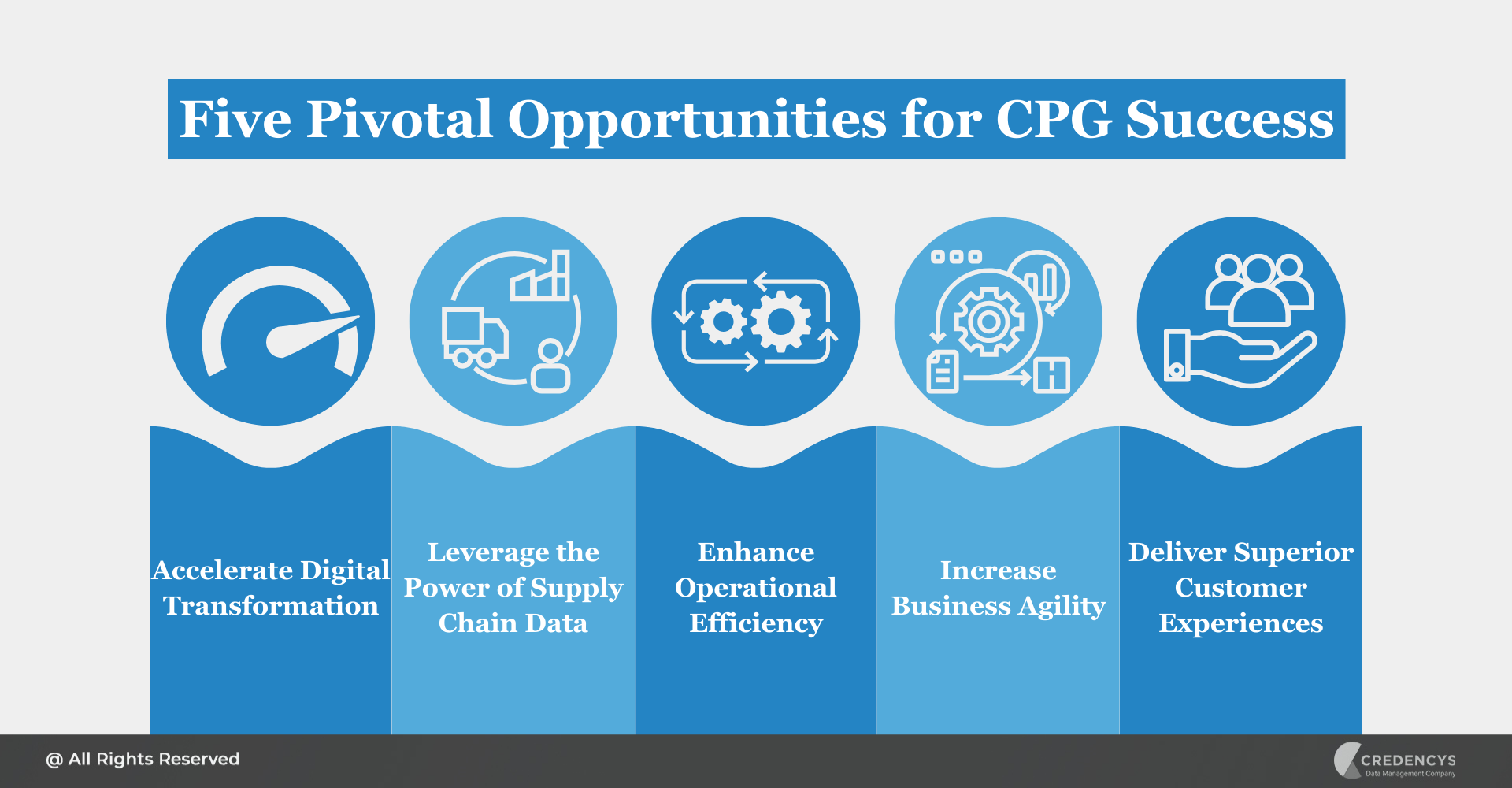
4. Improved Customer Experience

With accurate and up-to-date product information, our clients could offer customers a better online shopping experience. Customers could make informed decisions, leading to increased trust and loyalty.

Technical Differentiators of Credencys

Retail Accelerator

Step into the future of grocery retail with Credencys Grocery Retail Accelerator – your quick and easy solution for mastering Product Information Management (PIM). Designed for a speedy start, it’s more than just a tool; it’s your grocery ally. It simplifies data management processes for the grocery business with

  • Rapid data Onboarding
  • Pre-built Data Models
  • Pre-built Workflows
  • Rapid Integration
  • Customization

Credencys Grocery Retail Accelerator is not just a tool; it’s your helper, making your PIM dreams come true effortlessly. Get ready to fast-track your grocery PIM plans by unleashing the potential of the retail accelerator.

Product Management Portal

Credencys has partnered with leading PIM platforms including Pimcore, Syndigo, and Semarchy. Sometimes, non-technical users find it difficult to operate the solution based on these platforms, especially Pimcore, due to its highly technical user interface.

Credencys has developed a Product Management Portal (App Bundle) that comes with extremely simple UI/UX. It simplifies product data management for non-technical users like suppliers, data managers, and non-technical stakeholders.

Credencys is proud to have played a crucial role in helping our client enhance their online grocery retail business through seamless PIM implementation. We understand that in the e-commerce world, data is king, and efficient PIM is the crown that ensures its rule. We look forward to more opportunities to drive digital transformation and make a positive impact in the online retail landscape.

Conclusion

With an ever-expanding product showcase and the intricacies of managing vast catalogs, grocery retailers are turning to Product Information Management (PIM) systems as an indispensable tool.

As the market continues to grow, the adoption of PIM becomes imperative for grocery retailers aiming to enhance customer experience, stay compliant with regulations, and efficiently navigate the complexities of supply chain management.

Credencys deploys a PIM solution that not only streamlines processes but also empowers businesses to deliver an improved customer experience, fostering trust, loyalty, and ultimately, sustainable growth. Being a leading PIM implementation provider, Credencys remains committed to driving digital transformation and making a positive impact in the online retail landscape.

Connect with our PIM experts to discuss the product information management challenges of your grocery business and get a free 30-minute free consultation to understand how PIM helps address your challenges effectively.

Cloud MDM – The Future of Master Data Management

In today’s data-driven business environment, information is more than just numbers and text; it’s the lifeblood of organizations. Master Data Management (MDM) has emerged as the guardian of this critical resource, ensuring that it remains accurate, consistent, and reliable.

However, as technology and business needs evolve, MDM itself has transformed, giving rise to Cloud MDM. For many years, traditional on-premises MDM solutions were the norm.

These solutions required organizations to maintain their data management infrastructure within their own premises. However, as technology advanced and the business landscape evolved, the limitations of on-premises MDM became increasingly apparent.

This is where the concept of Cloud MDM enters the scene.

What is Cloud MDM?

Cloud MDM is a contemporary approach to the management and governance of an organization’s master data. This innovative solution combines the principles of traditional Master Data Management with the advantages of cloud technology, allowing businesses to efficiently centralize, maintain, and distribute their master data assets.

Cloud MDM serves as the custodian of your organization’s most vital data, which typically includes information about customers, products, suppliers, employees, and more. It ensures that this data remains consistent, accurate, and readily available to support various business functions.

Significance of Cloud MDM

Cloud MDM brings a range of benefits that go beyond what traditional MDM could offer. It provides greater flexibility, scalability, and accessibility.

With data stored in the cloud, organizations can adapt more quickly to changing data needs, support remote work, and integrate data seamlessly with other cloud-based services.

This blog post will guide you through the journey from traditional MDM to the world of Cloud MDM. We’ll explore the key features and advantages of Cloud MDM, the differences between cloud-based and on-premises solutions, as well as the crucial considerations for security and compliance.

We’ll also provide insights on selecting the right Cloud MDM solution and implementing it successfully, empowering you to harness the full potential of your organization’s data in the cloud. Let’s embark on this exploration of the dynamic landscape of Cloud MDM.

Key Features of Cloud MDM

Cloud MDM offers a robust set of features designed to help organizations efficiently manage and govern their critical data assets. These features empower businesses to maintain data integrity, improve data quality, and unlock the full potential of their master data.

Let’s explore the key features that make Cloud MDM a valuable solution:

Data Centralization

Cloud MDM provides a centralized repository for all master data, consolidating information about customers, products, suppliers, and more into a single location. This centralization eliminates data silos, ensuring that everyone within the organization accesses the same, up-to-date data.

Data Quality Management

Data quality is of paramount importance. Cloud MDM includes features for data cleansing, validation, and enrichment, which help maintain the accuracy and consistency of master data.

This ensures that the data used for decision-making is reliable and error-free.

Data Governance

Effective data governance is a core component of Cloud MDM. It establishes rules, policies, and procedures for managing and protecting data.

With Cloud MDM, organizations can define and enforce data governance policies to ensure compliance, security, and accountability.

Scalability

Cloud MDM solutions are highly scalable, allowing businesses to grow without concerns about data management constraints. As data volumes increase or more users require access, Cloud MDM can adapt to meet these evolving demands.

Real-Time Data Updates

Cloud MDM enables real-time data updates, ensuring that any changes made to master data are immediately reflected across the organization. This real-time synchronization keeps data current and accurate.

Integration Capabilities

Cloud MDM can seamlessly integrate with other cloud-based services and enterprise systems, including Customer Relationship Management (CRM), Enterprise Resource Planning (ERP), and data analytics tools. This integration enhances the overall value of master data by making it accessible where it’s needed.

Accessibility

Cloud-based solutions offer accessibility from anywhere with an internet connection. This feature is particularly valuable for businesses with remote or distributed teams.

Team members can access and update master data from various locations, fostering collaboration and agility.

Role-Based Access Control

Cloud MDM allows organizations to implement role-based access control, ensuring that the right individuals have the appropriate levels of access to master data. This security feature helps protect sensitive information and maintain data privacy.

Cloud-Based Security

Cloud MDM providers prioritize data security. They implement robust security measures, such as encryption, data backup, and compliance with industry standards and regulations.

This ensures that your data is protected from threats and breaches.

Cost-Efficiency

Cloud MDM solutions typically operate on a subscription-based model, reducing the upfront costs associated with on-premises solutions. This cost-efficiency makes it accessible to organizations of various sizes.

Reduced IT Overhead

With Cloud MDM, organizations can reduce the IT overhead associated with maintaining and managing on-premises hardware and software. This allows IT teams to focus on more strategic initiatives rather than routine maintenance and updates, making the most of their expertise and resources.

Disaster Recovery and Business Continuity

Cloud MDM providers typically offer robust disaster recovery and business continuity solutions. This means that in the event of data loss or system failure, your master data can be quickly restored, minimizing downtime and data-related disruptions.

Global Reach

Cloud MDM solutions often have data centers in multiple geographic locations, allowing organizations to store data closer to their end-users and customers. This global reach enhances data access and performance, especially in a globally dispersed business environment.

Key Features of Cloud MDM

These key features collectively empower organizations to manage their master data efficiently, ensure data quality and governance, and support data-driven decision-making. Cloud MDM is a strategic asset for businesses seeking to harness the full potential of their data while adapting to the dynamic and evolving data landscape.

How Does Cloud MDM differ from Traditional On-Premises MDM?

Infrastructure

One of the most prominent distinctions between Cloud MDM and traditional MDM is the infrastructure. Traditional MDM solutions are installed and hosted on the organization’s own servers and data centers.

In contrast, Cloud MDM leverages cloud-based infrastructure, which means data management processes and storage are hosted on the servers of a third-party cloud service provider. This shift eliminates the need for an organization to maintain and upgrade its own infrastructure, reducing hardware and IT costs.

Accessibility

Traditional MDM solutions are often limited to on-premises access, making it challenging for remote or distributed teams to work with master data efficiently. Cloud MDM, on the other hand, offers remote accessibility via the Internet.

Team members can access the centralized master data from anywhere, facilitating collaboration and data-driven decision-making, particularly in a world where remote work is increasingly prevalent.

Scalability

Cloud MDM is designed to be highly scalable. It can easily accommodate growing data volumes, additional users, and changes in data management needs. Traditional MDM solutions may require substantial hardware and software upgrades to achieve the same scalability, leading to higher costs and complexity.

Integration

Traditional MDM solutions can be complex to integrate with other enterprise systems and cloud services. In contrast, Cloud MDM solutions are often designed with integration in mind.

They can seamlessly connect with various cloud-based services, such as Customer Relationship Management (CRM) systems, Enterprise Resource Planning (ERP) platforms, and analytics tools, providing a more cohesive data ecosystem.

Implementation Time

Traditional MDM implementations can be time-consuming and resource-intensive, often taking months or even years to become fully operational. Cloud MDM implementations tend to be quicker and more straightforward.

With cloud-based solutions, organizations can get up and running faster, achieving a faster return on investment.

Cost Structure

Traditional MDM typically requires significant upfront investments in hardware, software, and ongoing maintenance costs. Cloud MDM follows a subscription-based pricing model, allowing organizations to pay for the services they use on an ongoing basis.

This makes Cloud MDM more cost-effective for businesses of all sizes and minimizes the financial risks associated with technology adoption.

Maintenance and Upgrades

Cloud MDM providers handle maintenance, security, and updates, reducing the burden on in-house IT teams. In contrast, traditional MDM solutions require organizations to manage and update their own software and hardware, which can be resource-intensive.

In summary, Cloud MDM offers a paradigm shift in how organizations manage their master data. It provides greater flexibility, accessibility, scalability, and cost-efficiency compared to traditional on-premises MDM solutions. These differences make Cloud MDM an attractive option for businesses looking to streamline data management while adapting to the dynamic needs of the modern business environment.

Security and Compliance Considerations for Cloud Master Data Management

When adopting Cloud MDM, organizations must prioritize robust security measures and compliance adherence to safeguard their critical data. Here are key considerations in ensuring the security and compliance of Cloud MDM:

Data Encryption

  • In-Transit Encryption: Ensure that data transmitted between your organization and the Cloud MDM service is encrypted using secure protocols (e.g., TLS/SSL). This safeguards data as it travels over the internet.
  • At-Rest Encryption: Implement encryption for data stored in the cloud. This protects sensitive information even when it’s not actively being transferred.

Regular Security Audits and Assessments

  • Penetration Testing: Conduct regular penetration testing to identify and address potential vulnerabilities in the Cloud MDM system.
  • Security Audits: Perform periodic security audits to evaluate the effectiveness of security controls and protocols.

Data Backups and Recovery

  • Regular Backups: Ensure regular, automated backups of your master data. This is crucial for data recovery in the event of accidental deletion, system failures, or data corruption.
  • Disaster Recovery Planning: Develop and regularly test a comprehensive disaster recovery plan to minimize downtime and data loss in the face of unexpected events.

Vendor Security Assurance

  • Vendor Security Standards: Assess the security measures implemented by the Cloud MDM service provider. Ensure that they adhere to industry best practices and standards.
  • Contractual Agreements: Clearly define security responsibilities in contractual agreements with the service provider, including incident response procedures and data breach notification requirements.

Audit Trails and Logging

  • Audit Trails: Implement comprehensive audit trails to log user activities and changes made to master data. This aids in forensic analysis, compliance reporting, and detecting anomalous behavior.
  • Log Management: Regularly review and monitor logs to identify and respond to security incidents promptly.

Identity and Access Management (IAM)

  • Authentication and Authorization: Implement strong authentication mechanisms, such as multi-factor authentication, to verify the identity of users accessing the Cloud MDM. Use role-based access controls to ensure that users have appropriate permissions.

Compliance with Data Regulations

  • GDPR, HIPAA, and Other Regulations: Understand and adhere to data protection regulations that apply to your industry and geographic location. For example, comply with the General Data Protection Regulation (GDPR) for European Union data or the Health Insurance Portability and Accountability Act (HIPAA) for healthcare data in the United States.

Data Residency and Sovereignty

  • Choose Data Centers Wisely: Understand the locations of the data centers hosting your Cloud MDM solution. Consider data residency requirements and ensure compliance with local laws and regulations regarding data sovereignty.

Regular Software Updates

  • Patch Management: Stay current with software updates and patches provided by the Cloud MDM provider. Regularly apply updates to address security vulnerabilities and enhance system stability.

Employee Training and Awareness

  • Security Training: Educate employees on security best practices and the importance of data protection. Ensure awareness of phishing threats and social engineering tactics.

Privacy by Design

  • Data Minimization: Adopt a privacy-by-design approach, minimizing the collection and storage of unnecessary personal or sensitive information. Only retain data essential for business purposes.

Security & Compliance Regulations for Cloud MDM

How to Choose the Right Cloud MDM Solution?

Choosing the right Cloud MDM solution is a crucial decision that can significantly impact your organization’s data management capabilities. Here’s a comprehensive guide on how to make an informed choice:

Define Your Requirements

Clearly define the types of master data you need to manage, such as customer data, product information, or employee records. Understand your organization’s data governance requirements, including data quality, security, and compliance.

Assess Scalability

Evaluate the scalability of the Cloud MDM solution. Ensure it can handle your organization’s anticipated growth in data volume, users, and complexity.

Integration Capabilities

Assess how well the Cloud MDM solution integrates with your existing systems, including CRM, ERP, and other relevant applications. Ensure that the solution offers robust APIs for seamless integration with other cloud services and applications.

Data Quality and Governance

Evaluate the solution’s data quality management features, including data validation, cleansing, deduplication, and enrichment capabilities. Assess the governance tools provided, such as role-based access controls, audit trails, and compliance reporting.

Security Measures

Verify that the Cloud MDM solution implements robust encryption standards for data in transit and at rest. Ensure the solution provides granular access controls and authentication mechanisms to protect sensitive data.

Compliance Considerations

Confirm that the Cloud MDM solution aligns with relevant data protection regulations and industry-specific compliance requirements. Check if the solution offers audit trails and reporting features to facilitate compliance audits.

User-Friendly Interface

Choose a solution with a user-friendly interface that is intuitive and accessible for both technical and non-technical users. Evaluate the level of customization allowed to tailor the solution to your organization’s specific needs.

Performance and Speed

Assess the solution’s performance in terms of data retrieval speed, especially when dealing with large datasets. Evaluate how the solution performs as the volume of master data increases.

Vendor Reputation and Support

Research the reputation and track record of the Cloud MDM solution provider. Consider factors such as reliability, customer satisfaction, and the provider’s financial stability. Assess the level of customer support offered, including response times, availability, and the quality of support resources.

Total Cost of Ownership

Understand the pricing structure, whether it’s a subscription-based model or involves additional costs for specific features and usage. Identify any potential hidden costs, such as fees for additional storage, data transfer, or support services.

Future Roadmap and Innovation

Investigate the vendor’s product roadmap to understand their commitment to ongoing development and innovation. Assess how well the solution can adapt to emerging technologies, such as AI and machine learning, to enhance master data management capabilities.

Trial Period and Proof of Concept

If possible, take advantage of trial periods or demos to assess the solution’s functionality and ease of use. Consider conducting a proof of concept to test the solution’s performance in a real-world scenario.

By thoroughly evaluating these factors and aligning them with your organization’s specific needs, you can make an informed decision when selecting a Cloud Master Data Management solution. This proactive approach ensures that the chosen solution not only meets your current requirements but also scales and adapts to the evolving landscape of master data management in the cloud.

Credencys – A Trusted MDM Implementation Service Provider

Choosing the right partner for the implementation of your MDM solution is paramount. Credencys stands as a trusted MDM implementation service provider, offering a comprehensive suite of services designed to empower organizations in their journey toward effective data governance and management.

Why Choose Credencys for MDM Implementation?

Proven Expertise

Credencys boasts a team of seasoned experts with extensive experience in MDM implementation across diverse industries. Our professionals possess in-depth knowledge of industry best practices and cutting-edge technologies.

End-to-End Services

From initial consultation and strategy development to implementation, integration, and ongoing support, Credencys offers end-to-end MDM services. This comprehensive approach ensures a seamless and efficient implementation process.

Scalability & Flexibility

The MDM solutions provided by Credencys are designed for scalability and flexibility, adapting to the evolving needs of businesses. Whether your organization is a small startup or a large enterprise, our solutions can scale to meet your requirements.

Cutting-Edge Technologies

Leveraging the latest technologies and industry trends, Credencys ensures that your MDM implementation remains at the forefront of innovation. We incorporate advanced features to enhance the capabilities of your data management solution.

Transparent and Collaborative Approach

Transparency and collaboration are core values at Credencys. We believe in fostering open communication throughout the implementation process, ensuring that our clients are informed and involved at every stage.
Why Choose Credencys for MDM Implementation
In choosing Credencys as your MDM implementation service provider, you are selecting a partner dedicated to your organization’s success in managing and deriving value from your master data. Our commitment to excellence, technological proficiency, and client-focused approach make us a trusted ally in navigating the complexities of modern data management.

Experience the difference with Credencys as you embark on your MDM journey.

Navigating the Future: CPG Industry Trends and Opportunities

In times of economic uncertainty, the Consumer Packaged Goods industry is typically the first and most heavily impacted sector. This market is particularly sensitive to any shifts in consumer preferences or behavior and can provide valuable insights into the state of the economy at large.

The past few years have witnessed a series of macroeconomic events that have sent shockwaves through the global economy, with the CPG market feeling the reverberations. The COVID-19 pandemic, international tensions, and turbulent domestic affairs have combined forces, leading to global supply chain shortages and contributing significantly to inflation.

As the prices of consumer goods continue to surge, many CPG companies find themselves navigating uncharted waters, striving to stay afloat without succumbing to the trade-down effect. The challenges are evident, with elevated costs in packaging, ingredients, and transportation, along with the persistent pressure of inflation directly affecting consumers.

Yet, amidst these turbulent times, some CPG companies are demonstrating the value of innovation and an openness to new approaches. They are not merely surviving but thriving.

For CPG companies today, it’s not just about adapting; it’s about staying ahead of the curve and understanding the evolving landscape of consumer behavior, market trends, and the competitive arena. The objective is to avoid information blind spots and mitigate the risk of falling behind.

Stats

5 Ongoing Trends CPG Brands Face in 2024 and Beyond

The proliferation of new apps, platforms, and services has been reshaping consumer shopping behavior for years. The pandemic accelerated the pace, fueled by critical trends, which are further substantiated by data:

Increased Digital Media Consumption and Commerce

Data indicates that this trend is expected to persist for the next 12 months, with consumers increasingly using new apps, websites, and social commerce to research and purchase CPG products online.

Greater Convenience Driving Online Purchase

Approximately 90% of consumers assert that convenience is a pivotal factor influencing their shopping decisions. This data-driven consumer behavior takes into account product availability, the ease of finding products, the checkout process, and timely and varied delivery options.

Increased Consumer Interest in Health and Sustainability

Data shows that products marketed as sustainable are growing nearly six times faster than conventionally marketed products.

Private Label Retail Brands on the Rise

Data supports the claim that nearly 70% of consumers believe retail-branded products are of equal quality to more familiar, comparable consumer brands.

Consumers Embracing D2C Brands and Business Models

Direct-to-consumer brands have gained traction as they satisfy the demand for unique, authentic products supported by engaging experiences. Subscription business models offer added convenience and have the data to back it up.

5 Ongoing Trends CPG Brands Face in 2024 and Beyond
As we can observe, a common thread running through these trends is a growing demand for data transparency. Consumers want more detailed information about the products they purchase, including details about ingredients, origin, production methods, and the brands and companies behind them.

Addressing these needs necessitates more transparent consumer interactions and the provision of additional types of information that customers wish to access. To deliver on these expectations, brands require a centralized Master Data Management (MDM) foundation that offers accurate, trustworthy data to retail partners and consumers.

This must be combined with a stringent system for data privacy and governance. By capitalizing on the acceleration of these trends, many companies are reassessing their strategic and operational processes.

They are placing a strong focus on the role of data, recognizing that while most companies grasp the immediacy of the opportunity, a smaller number are confident in their ability to rise to the challenge. As we navigate the uncertain terrain of the Consumer Packaged Goods industry, it is vital for companies to not just react but to proactively shape their strategies.

The key lies in embracing data transparency, along with innovative methods to manage and deliver value from data across the entire business value chain. The ability to act with agility, access accurate information, optimize supply chains, and enhance customer experiences is the cornerstone of CPG’s success in 2023 and beyond.

This calls for a unified view of data and an investment in an integrated Master Data Management solution to eliminate data silos, improve data quality, and extract maximum value from the vast data landscape. The Consumer Packaged Goods industry is evolving, and those who recognize the pivotal role of data transparency will emerge as leaders in this dynamic landscape.

Five Pivotal Opportunities for CPG Success

Each of the discussed trends paves the way for corresponding opportunities for CPG brands. To harness these opportunities, CPG leaders must wholeheartedly embrace data transparency and seek innovative approaches to effectively manage and extract value from their data throughout the entire business value chain.

Accelerate Digital Transformation

While many CPG manufacturers have been on the digital transformation journey for years, the increasing reliance of consumers on digital channels underscores the need for an acceleration of this process. Access to accurate and up-to-date information, essential for supporting the latest innovative tools and technologies, is of paramount importance.

Enabling data transparency across the enterprise and with partners and customers becomes a critical component in delivering the engaging experiences that consumers not only demand but expect.

Leverage the Power of Supply Chain Data

This entails utilizing product-level data attribution to extract, validate, and share information related to environmental impact, sustainability, and product origin. Such practices enhance traceability and provide the ability to better measure and share data on corporate social responsibility, thereby reinforcing trust in your company, products, and brand.

Enhance Operational Efficiency

With CPG brands relying on an ever-evolving array of channels, utilizing them effectively and consistently results in a surge in the volume, variety, and complexity of data sources. Streamlining data processes and workflows through automation is the key to ensuring that teams work efficiently.

This, in turn, brings about benefits like improved collaboration and decision-making.

Increase Business Agility

As consumer behavior undergoes constant transformation, brands must be capable of responding proactively and adapting swiftly. The inability to efficiently manage and share data, and the absence of data transparency, hampers business agility.

It also renders the process of onboarding products, expanding assortments, and optimizing value from new digital channels more costly and challenging. A single, trusted source of data empowers businesses to efficiently share information with retailers and partners and meet their high expectations and deadlines.

Deliver Superior Customer Experiences

Adopting a singular, centralized approach to master data provides a 360° view of customers, enabling brands to disseminate accurate, relevant information and personalized offers. Leveraging such data transparency significantly enhances the customer experience (CX), driving higher levels of engagement, loyalty, and growth.

The consistent delivery of rich content to retail and distribution partners becomes an indispensable component of creating an engaging product/brand experience. Achieving this requires a proven solution that can extract value from data by connecting, enriching, governing, and syndicating it to reach anyone, anywhere, precisely when they need it.

Five Pivotal Opportunities for CPG Success

By implementing an integrated solution for master data management, one can eliminate data silos, integrate data across systems and domains, and establish partnerships with third-party resources. The potential of master data management to address data challenges and lay the foundation for success may not be universally acknowledged, but it is an invaluable asset for those who recognize its significance.

How CPG Businesses Can Thrive in the Present and Beyond?

Here are practical guidelines for CPG businesses, offering insights into achieving success within this dynamic industry:

Efficient Information Sharing

Responding to individual requests for new items can be a laborious and complex task. One innovative solution is the introduction of a data catalog.

This streamlined approach expedites the process, allowing manufacturers to provide retailers with access to their complete product catalog. This empowers retailers to retrieve the product data and rich, accurate content they require precisely when they need it.

Enhancing and Evaluating Product Data Accuracy Across All Channels

Ensuring that consumers can easily find products on various retail platforms necessitates meticulous attention to keywords and product descriptions on every digital channel. With numerous listings and diverse retailers, maintaining visibility into how each item is listed can be challenging.

To address this, consider implementing a product comparison and scoring feature, facilitating an understanding of disparities between data listings and what is currently published on retail websites. This feature allows for updates where necessary, ensuring accuracy.

Effective Management of Complex Customer Relationships

Understanding the genuine value of customers, identifying and mitigating risks, and implementing successful sales strategies all require a comprehensive perspective of the entire customer ecosystem—both indirect and direct. Master Data Management (MDM) plays a pivotal role in creating this comprehensive understanding.

By consolidating organizational profiles, hierarchies, and relationships, MDM enables more informed decision-making, more cost-effective processes, and improved Business-to-Business Customer Experience (B2B CX).

Efficiently Handling the Expanding Volume and Variety of Data

A flexible, cloud-native solution, founded on a proven integrated platform conforming to industry standards, is an excellent starting point. Look for a user-friendly interface that facilitates rapid navigation for both business and technical users.

Features such as best-in-class search capabilities and the ability to establish a multidomain hub for centralized access to diverse data types ensure the scalability of the solution to meet the ever-growing demand.

Enhancing Process Efficiency and Data Quality and Value

A multidomain master data management solution coupled with an embedded analytics platform offers users the ability to seamlessly connect and integrate various data types. It does not need separate, intricate Business Intelligence (BI) tools or place additional burden on already stretched analytics teams.

The embedded analytics platform can identify unique and valuable insights, empowering better, quicker, and more confident decision-making. This, in turn, fuels overall business innovation and brand enhancement.

How CPG Businesses Can Thrive

In summary, these guidelines offer a foundational understanding of the imminent trends and opportunities for CPG companies. Master Data Management emerges as a robust strategy for businesses aiming to seize these opportunities.

Importantly, this strategy is not merely pertinent to the present; it is equally critical for the coming decade. Therefore, selecting a master data management solution tailored to address your specific challenges and requirements is pivotal.

It is equally vital that the chosen solution provider possesses deep expertise in the CPG sector to ensure its relevance and effectiveness.

Credencys – A Trusted MDM Implementation Partner

At Credencys, we understand the critical role that data plays in the success of Consumer Packaged Goods (CPG) businesses. In an era where data transparency and Master Data Management (MDM) are pivotal, having a reliable partner can make all the difference.

As a leading technology solutions provider, Credencys has a proven track record of helping businesses in the Consumer Packaged Goods industry harness the power of data to drive growth, streamline operations, and enhance customer experiences. We specialize in MDM implementation, and our expertise extends to a wide range of industries, including CPG.

Why Choose Credencys as Your MDM Implementation Partner?

  • Experience: With years of experience in MDM implementation, we have a deep understanding of the unique challenges and opportunities in the CPG sector.
  • Proven Solutions: Our solutions are not just theoretical; they have been tested and proven to deliver results. We have successfully helped numerous CPG businesses optimize their data management processes.
  • Tailored Solutions: We don’t believe in one-size-fits-all solutions. Our team works closely with you to understand your specific challenges and needs, and we tailor our MDM solutions to align with your business objectives.
  • Cutting-Edge Technology: We stay at the forefront of technology trends, ensuring that our solutions are built using the latest tools and platforms for maximum efficiency and effectiveness.
  • Dedicated Support: Our commitment to your success doesn’t end with implementation. We provide ongoing support and maintenance to ensure your MDM solution continues to deliver value.

If you are ready to unlock the full potential of data transparency and MDM for your CPG business, we invite you to reach out to our team. Let us be your trusted partner on the journey to success.