PIM for B2B vs. B2C: Tailoring Solutions for Different Business Needs

In today’s digital marketplace, PIM systems have become essential for businesses looking to manage, enrich, and distribute their product data seamlessly. PIM streamlines product data management, enhances accuracy, and delivers consistent information across multiple channels.

However, the requirements for PIM differ significantly between B2B (business-to-business) and B2C (business-to-consumer) models due to distinct customer expectations and data management needs. This blog explores how PIM solutions can be tailored to address the unique needs of B2B and B2C businesses, offering insights into the critical differences and features that make PIM a powerful tool for both.

Understanding PIM Requirements for B2B & B2C Businesses

Before diving into how PIM can be tailored, it’s essential to understand the unique needs of B2B and B2C businesses:

B2B Businesses

In B2B, companies sell products or services to other businesses, often involving large quantities, specialized technical details, and compliance requirements. The sales cycle in B2B is typically longer, with multiple decision-makers involved in the purchasing process.

B2C Businesses

B2C businesses sell directly to end consumers, focusing heavily on user experience and quick purchasing decisions. In B2C, customer loyalty, convenience, and personalized recommendations are crucial to driving sales and creating positive brand experiences.

Understanding these differences sets the stage for a PIM solution tailored to each business model’s unique goals.

Differentiation AspectB2BB2C
Product Data ComplexityB2B companies require detailed technical specifications, certifications, and regulatory information to comply with industry standards. Clients in this space rely on precise and comprehensive product information to make informed decisions. PIM in B2B should support detailed product descriptions, user manuals, and other complex data formats.In B2C, the focus shifts towards consumer-friendly, visually appealing product information. B2C product pages often include high-quality images, engaging descriptions, and user-generated content like reviews. Here, PIM should enhance the presentation of products by centralizing rich media and providing easy-to-digest details.
Data SyndicationB2B businesses often require syndication to specific marketplaces, distributor networks, or custom catalogs for different clients. PIM systems for B2B should support flexible catalog management, allowing businesses to create custom data sets for various clients or partners based on their requirements.For B2C, data syndication spans multiple online channels, including eCommerce platforms, social media, and third-party marketplaces. B2C PIM solutions should enable seamless integration with these channels, ensuring consistent product data distribution and content for each platform to maximize engagement and reach.
Personalization NeedsIn B2B, personalization often involves customized catalogs and pricing models for different client segments. B2B PIM solutions need to support role-based access, where specific clients can view tailored product catalogs and pricing based on negotiated agreementsIn B2C, personalization is driven by consumer behavior and preferences. PIM solutions for B2C should integrate with CRM and eCommerce platforms to facilitate personalized recommendations, dynamic pricing, and tailored offers based on browsing and purchase history, creating a customized shopping experience that enhances customer engagement.
Product Lifecycle ManagementB2B industries often handle products with extended lifecycles, requiring careful version control, compliance with evolving standards, and detailed change logs. A PIM for B2B should streamline product lifecycle management with tools for version control, regulatory tracking, and compliance documentation.B2C product lifecycles are more fast-paced, with seasonal updates and trend-driven inventory changes. PIM solutions tailored to B2C should prioritize agility, allowing businesses to rapidly update product information in response to trends or customer feedback.

Features to be Tailored in PIM Solutions for B2B

To meet the specialized needs of B2B businesses, PIM solutions should offer the following features:

1. Support for Complex Product Hierarchies

B2B businesses often deal with a variety of configurations and customizations for products, requiring a PIM that can handle complex product hierarchies and variants.

2. Role-Based Access

B2B transactions often involve multiple stakeholders who need specific access to product data. Role-based access ensures that each team member or client can access relevant information securely.

3. Custom Pricing Models and Bulk Ordering

B2B companies often have customized pricing structures for different clients. A PIM tailored to B2B should support various pricing models and bulk ordering features to accommodate large or specialized orders.

4. Integration with ERP and CRM Systems

To streamline sales processes and client communications, B2B PIM solutions should integrate seamlessly with ERP and CRM systems, providing a unified view of product data across the organization.

Features to be Tailored in PIM Solutions for B2C

For B2C companies, PIM solutions should focus on enhancing the end-user experience with the following features:

1. Enhanced User Experience (UX/UI)

B2C PIM solutions should prioritize an intuitive interface, allowing for easy navigation and data access. Visual appeal is crucial to attract and retain customers in a highly competitive market.

2. Integration with DAM for Visual Content Management

B2C relies heavily on rich media to showcase products effectively. Integrating PIM with a DAM system enables better management and use of visual assets, such as images, videos, and banners.

3. Advanced Search and Filtering Options

For a seamless customer experience, PIM should offer advanced search and filtering options, helping customers find the products they need quickly and improving conversion rates.

4. Personalization Engines

To drive engagement, B2C PIM should leverage customer data to deliver personalized product recommendations and offers. Integrating with AI-driven personalization tools allows B2C brands to offer unique experiences tailored to individual consumer preferences.

Features to be Tailored in PIM Solutions for B2C

Benefits of a Tailored PIM Approach

Implementing a PIM solution that caters to the unique demands of each sector can deliver significant benefits:

Benefits for B2B Businesses:

  • Simplifies complex ordering processes.
  • Improves operational efficiency by centralizing extensive product data.
  • Enhances client satisfaction through tailored, precise product information.

Benefits for B2C Businesses:

  • Boosts conversion rates by improving the quality and consistency of product information.
  • Enhances customer experience, making it easy for consumers to make informed purchasing decisions.
  • Increases brand loyalty through personalized product interactions and recommendations.

Conclusion

PIM solutions serve as a cornerstone for efficient product data management, but the needs of B2B and B2C businesses differ significantly. Tailoring a PIM solution to align with these differences allows companies to meet customer expectations, streamline operations, and stay competitive in their respective markets.

Whether your business operates in the B2B or B2C space, a customized PIM solution is essential to manage and present product data effectively, enabling a stronger market presence and improved customer satisfaction.

Enhancing Grocery Customer Experience with Accurate Product Information through PIM

In today’s grocery market, 73% of shoppers say that accurate product information, including ingredients and origin, significantly impacts their purchase decisions.

This demand for transparency is reshaping grocery retail. Delivering accurate and comprehensive product information is crucial for grocery retailers.

With consumers seeking transparency on nutritional content, allergens, and origin, inaccurate details can easily lead to mistrust. Ensuring reliability helps retain customers and builds loyalty over time.

Role of PIM in Enhancing Customer Experience

PIM is central to meeting these expectations. A robust PIM solution helps grocery businesses manage and distribute accurate product details consistently across all channels, leading to a seamless and trustworthy customer experience.

Importance of Accurate Product Information in Grocery

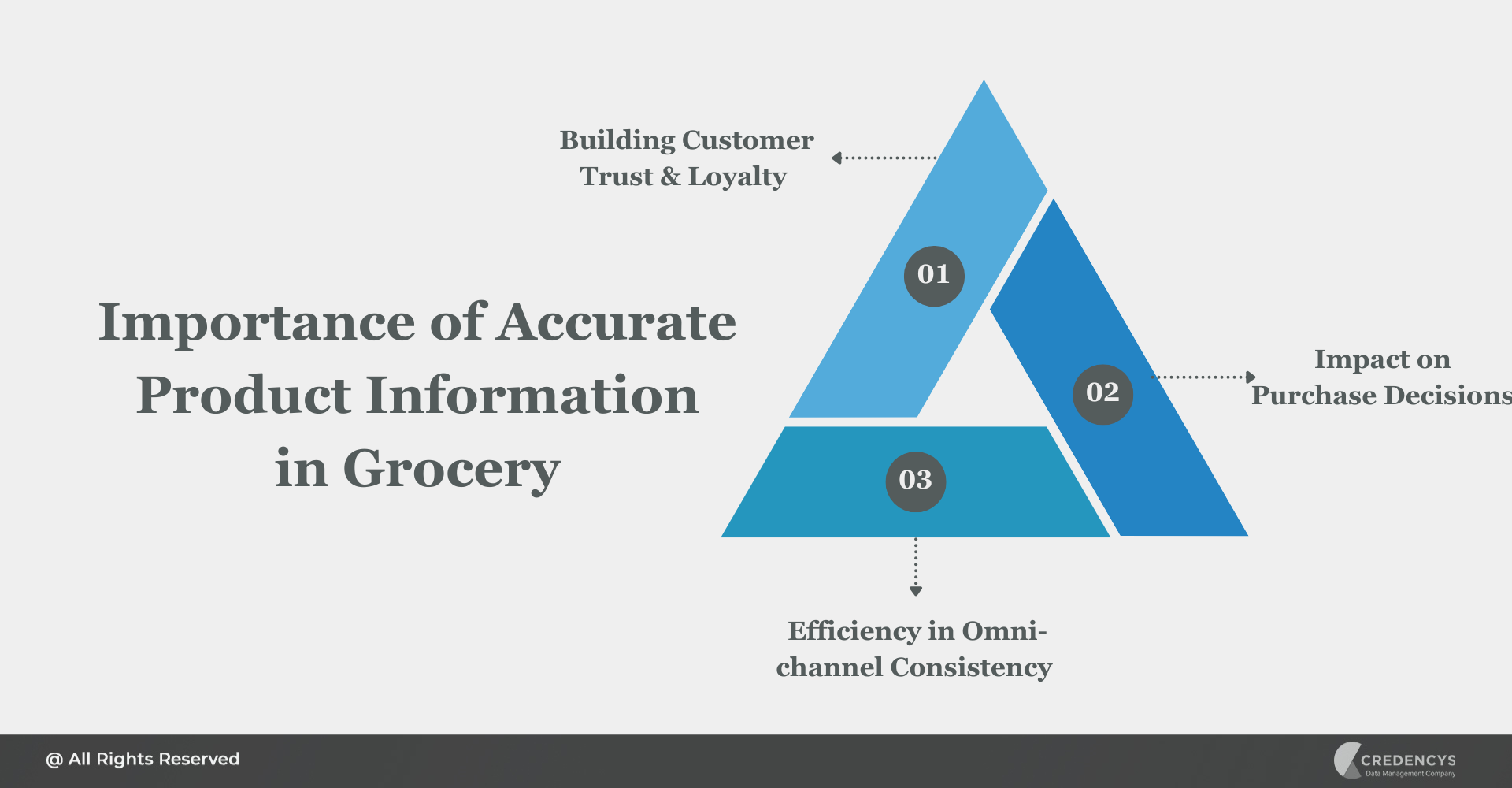
1. Building Customer Trust and Loyalty

When customers receive accurate product information, they are more likely to trust a brand. Reliable information on nutrition, ingredients, and other details fosters a sense of reliability.

2. Impact on Purchase Decisions

Product data that is clear and accurate directly influences customer choices. With the right information, customers can make faster and more confident decisions.

3. Efficiency in Omni-channel Consistency

Consistency across in-store, online, and mobile platforms is essential. PIM enables grocery retailers to synchronize product information across all channels, ensuring that customers have a uniform experience wherever they shop.

Importance of Accurate Product Information in Grocery

Key Benefits of PIM for Grocery Retailers

PIM solutions provide several key benefits to grocery retailers:

1. Centralized Product Data Management

PIM consolidates data from various sources, creating a “single source of truth.” This centralization reduces errors and keeps information up-to-date.

2. Seamless Data Updates Across Channels

Real-time updates through PIM prevent discrepancies in pricing, availability, or descriptions. Accurate data across all touchpoints enhances the shopping experience.

3. Enhanced Regulatory Compliance

Grocery retailers must manage nutritional information and allergens carefully. PIM simplifies the process, ensuring compliance with food labeling standards.

4. Streamlined Supplier Collaboration

PIM helps retailers gather, verify, and update product details directly from suppliers, leading to faster and more reliable data flow.

Simplifying Supplier Management in Grocery Businesses with MDM Solutions

Essential Product Information Elements Managed by PIM

Accurate and detailed product information is vital for grocery retailers. Key elements managed by PIM include:

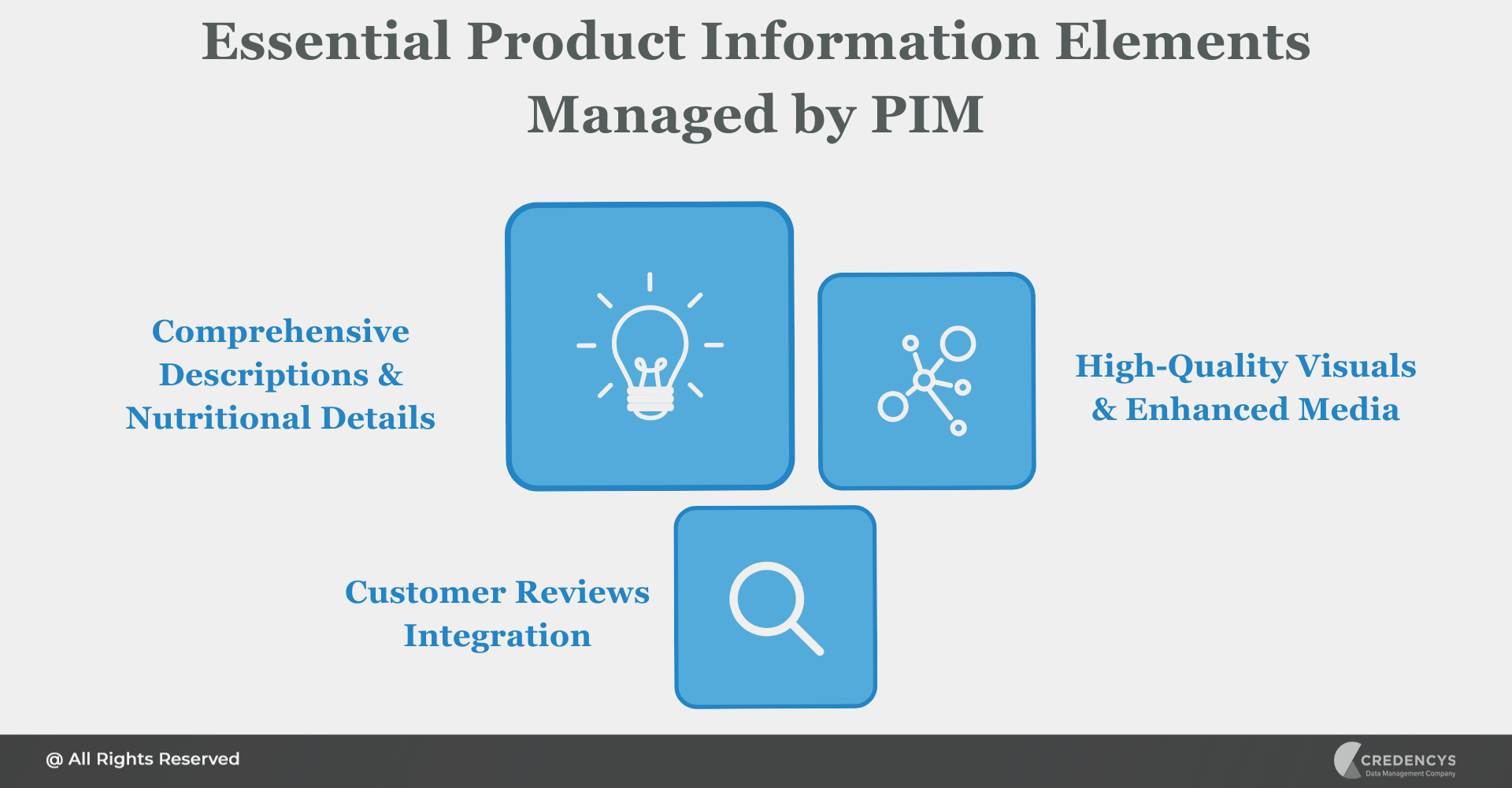
1. Comprehensive Descriptions and Nutritional Details

PIM allows for easy handling of detailed product data, from descriptions to nutritional values. These elements help customers make informed choices and build trust in the brand.

2. High-Quality Visuals and Enhanced Media

Visuals like images and videos play a significant role in grocery shopping. PIM enables better management of digital assets, providing customers with clear visuals and attractive product displays.

3. Customer Reviews Integration

PIM solutions allow retailers to sync and display customer reviews across platforms. These authentic insights enrich the shopping experience and offer reassurance to new buyers.

Essential Product Information Elements Managed by PIM

How PIM Enhances the Grocery Customer Experience

PIM doesn’t just streamline operations; it directly impacts customer satisfaction in various ways:

1. Personalization with AI-Enhanced PIM

AI-driven PIM enables personalized product recommendations based on customer preferences, enhancing their shopping experience.

2. Seamless Cross-Channel Experiences

Consistent information across stores, apps, and websites ensures a smooth customer journey. PIM keeps product details updated on all platforms, reducing confusion.

3. Time-Efficiency for Customers

Real-time product availability info helps customers find the items they need without unnecessary hassle, making the shopping process smoother and more satisfying.

Best Practices for Implementing PIM in Grocery

For grocery retailers considering a PIM solution, here are some best practices:

1. Centralized PIM System Selection

Choose a scalable PIM that can handle the complexity and volume of grocery data.

2. Automated Data Validation

Use PIM’s data validation features to identify and fix errors in product information automatically, ensuring accuracy.

3. Regular Supplier Collaboration

A PIM-driven approach to collaborating with suppliers ensures that information is up-to-date and accurate, directly benefiting customer experience.

Best Practices for Implementing PIM in Grocery

Conclusion

Accurate product information enhances the grocery shopping experience by building trust, supporting informed decisions, and providing consistency across channels. PIM is instrumental in achieving these outcomes by centralizing data and automating updates.

For grocery retailers aiming to elevate their customer experience, PIM offers a powerful solution. With Credencys’ expertise in PIM implementation, grocery brands can transform data management, enhance transparency, and deliver the reliable information today’s consumers demand.

Pitfalls to Avoid in PIM Data Quality: Lessons from Real-World Mistakes

If you’ve worked with Product Information Management (PIM) systems, you know how crucial it is to have high-quality data. Managing product data might seem straightforward at first, but in reality, the smallest errors can create big headaches—especially in fast-moving industries like retail or e-commerce.

Poor data can frustrate customers, harm brand credibility, and result in costly mistakes.

The goal here is simple: let’s walk through the common pitfalls companies face and see what real-world mistakes teach us about maintaining top-tier data quality.

Incomplete Data Entry: Don’t Let the Details Slip

Have you ever tried to buy something online but abandoned the cart because you couldn’t find enough information about the product? Incomplete product data not only confuses customers but also results in lost revenue.

Example of a renowned electronics retailer:

An electronics retailer introduced a new line of products without updating their website with complete specs. Not only did this cause customer complaints, but it also overwhelmed the support team with inquiries. Competitors with more comprehensive product descriptions happily scooped up those lost sales.

How to Avoid It:

  • Make sure every product page has mandatory fields.
  • Use built-in validation to flag missing data before it goes live.

Inconsistent Data Formats: A Recipe for Chaos

When multiple systems manage product data, inconsistent data formats can creep in. One team might list product weights in pounds, another in kilograms. This may seem trivial—until orders get delayed or product returns spike.

Example:

A furniture company expanded internationally, but half of its online product listings used inches, and the other half used centimeters. Confused customers ordered the wrong items, leading to higher returns and frustrated buyers.

How to Avoid It:

  • Standardize data units across all channels.
  • Use automated tools to convert measurements and flag inconsistencies.

Outdated Product Information: The Trust Breaker

Publishing old or incorrect information can wreck customer trust. Imagine buying a product only to receive an older version—annoying, right? This can lead to not just refunds but also damaged reputations.

Example:

A popular online store listed both the old and new versions of a tech gadget on the same page. Some customers accidentally bought the outdated model, which resulted in angry reviews and returns.

How to Avoid It:

  • Set up real-time data syncs to prevent outdated info.
  • Use alerts for product updates or discontinuations.

No Clear Data Ownership: When Everyone’s in Charge, No One’s in Charge

When responsibility for product data is scattered across teams, mistakes are inevitable. Without proper ownership, conflicting information can slip into the system, creating a mess for customers and staff alike.

Example:

A fashion retailer allowed multiple departments to input product details into their PIM system. As a result, online and in-store catalogs displayed conflicting information—leading to unhappy customers and lost sales.

How to Avoid It:

  • Assign clear roles for managing product data.
  • Train staff on data entry and maintenance best practices.

Skipping Data Validation: The Silent Saboteur

Data validation may feel like an extra step, but skipping it opens the door to costly mistakes. You won’t notice a product name typo until it starts appearing on search engines and confuses potential buyers.

Example:

A food supplier missed an allergen warning on their product listing. This not only led to compliance issues but also risked consumer safety. Their reputation took a serious hit, forcing them into damage control mode.

How to Avoid It:

  • Use automated validation tools to catch errors quickly.
  • Create business rules for critical product attributes.

Ignoring Localization: Not Every Market is the Same

Localization isn’t just about translating words—it’s about adapting product descriptions and specs for specific regions. A one-size-fits-all approach often backfires, reducing the appeal of your products in certain markets.

Example:

An international retailer kept their product descriptions in English, even for non-English-speaking regions. Sales dropped, and customer feedback was overwhelmingly negative. Local buyers felt ignored and took their business elsewhere.

How to Avoid It:

  • Use translation tools to localize content.
  • Adapt descriptions to align with local preferences.

Poor Integration Between PIM and Other Systems: The Bottleneck

Your PIM system doesn’t exist in a vacuum. It needs to communicate with other platforms, like your eCommerce store, ERP, or CRM. Poor integration results in data silos and miscommunication—leading to delays, errors, and unhappy customers.

Example:

An online retailer experienced delayed shipping because their PIM system didn’t sync properly with their ERP. Inventory levels were outdated, causing overselling and backorders that customers weren’t too happy about.

How to Avoid It:

  • Use APIs or middleware to connect your systems.
  • Regularly test data flows for any bottlenecks.

Neglecting Product Categorization: Confusion at Every Turn

Proper product categorization helps customers find what they’re looking for quickly. If your categories are messy or inconsistent, users will leave—no matter how great your products are.

Example:

A beauty store used different category names for similar products across platforms. Some items were under “Face Care,” while others appeared under “Skincare.” This inconsistency confused customers and hurt search relevance.

How to Avoid It:

  • Align categories with industry standards.
  • Use customer feedback to fine-tune product tags.

Final Thoughts: Learn from the Mistakes of Others

Product data quality isn’t just about inputting the right numbers or names—it’s about ensuring that every piece of information adds value. Even seasoned companies stumble, but the good news is that you can avoid these common pitfalls by learning from their mistakes.

High-quality data in PIM systems doesn’t happen by accident. It takes deliberate planning, routine audits, and ongoing training. If you get it right, the benefits are well worth the effort: happier customers, smoother operations, and stronger sales.

Accurate Product Information: Key to Enhancing Customer Experience in CPG

In the fast-paced CPG industry, customer expectations are higher than ever. Shoppers demand accurate, detailed, consistent product information across all touchpoints, whether browsing online, shopping in-store, or exploring social media.

When brands provide clear and reliable product information, they create a seamless customer experience that boosts satisfaction and builds loyalty. Conversely, inaccurate or incomplete data can lead to confusion, lost sales, and damaged trust.

This is where PIM plays a pivotal role. PIM ensures that brands maintain accurate, centralized product data, making it easy to deliver consistent information across all channels.

Why Accurate Product Information Matters in CPG

Accurate product data is essential for several reasons:

1. Informed Purchasing Decisions

Customers rely on clear product details, such as ingredients, usage instructions, and sustainability information, to make educated choices.

2. Building Customer Trust

Transparency around product attributes (e.g., sourcing, certifications) helps brands foster customer trust and credibility.

3. Consistency Across Channels

Whether online or in-store, consistent product information builds trust and enhances the shopping experience.

Why Accurate Product Information Matters in CPG

On the other hand, inaccuracies in product data, such as inconsistent information between a website and a physical store, can quickly erode trust, leading to customer dissatisfaction and loss of brand loyalty.

Challenges in Managing Product Information in CPG

Managing product data is complex, especially in the CPG industry, where brands often deal with:

  • Compliance Requirements: Meeting regulatory standards for product labels, ingredients, and packaging across different regions.
  • Manual Processes: Relying on manual updates increases the risk of errors and inconsistencies.
  • Data Silos: Information scattered across different systems, resulting in inconsistent data across platforms.
  • High SKU Volume: Managing large product catalogs with numerous SKUs and frequent updates.

Without a centralized system like PIM, managing this vast amount of data becomes inefficient, leading to poor customer experiences due to outdated or incorrect product information.

How PIM Enhances Customer Experience by Ensuring Accurate Product Information

A PIM system helps CPG brands overcome the challenges of managing large volumes of product data, ensuring that accurate and up-to-date information is consistently available across all channels. Here’s how PIM enhances the customer experience:

1. Faster Time-to-Market

Launching new products or updating existing ones can be time-consuming when product data needs to be manually updated across multiple platforms. PIM automates this process, ensuring that new or updated product information is quickly reflected everywhere, improving speed to market.

Reducing Time-to-Market for CPG Businesses with PIM Solutions

2. Omnichannel Consistency

Customers interact with brands through eCommerce platforms, physical stores, mobile apps, and social media. PIM ensures that the product information customers encounter is the same across all these channels, delivering a seamless shopping experience.

3. Data Accuracy and Compliance

PIM systems offer tools to validate and enrich product data, ensuring compliance with industry regulations. Whether ingredient transparency, sustainability certifications, or proper labeling, PIM helps brands meet regulatory standards while maintaining customer trust.

Enhancing Product Data Accuracy and Consistency in Automotive Aftermarket

4. Centralized Data Management

PIM acts as a single source of truth for all product information. By centralizing data, PIM eliminates inconsistencies when information is managed in multiple systems.

How PIM Enhances Customer Experience by Ensuring Accurate Product Information

Key Features of PIM that Benefit CPG Brands

Implementing a PIM system provides CPG brands with several advantages:

  • Seamless Integration: PIM integrates with other business systems, such as ERP and eCommerce platforms, allowing for smooth data flow and real-time updates, which enhances data accuracy across the organization.
  • Multilingual Support: CPG brands often operate in multiple regions with different language requirements. PIM enables brands to manage product information in multiple languages, ensuring consistency across global markets.
  • Data Enrichment: PIM allows brands to add detailed product attributes (e.g., nutritional information, allergens, packaging details) that customers care about, providing a more complete picture of the product.
  • Automated Data Validation: PIM tools ensure product data is accurate and consistent by automatically checking for errors or missing information, reducing the risk of inaccuracies.

Benefits of Using PIM for Accurate Product Information in CPG

Accurate product data, powered by PIM, delivers several key benefits to CPG brands:

1. Higher Conversion Rates

Customers are more likely to complete purchases with access to comprehensive and reliable product information, leading to higher sales and reduced cart abandonment.

2. Reduced Returns

When customers know exactly what they’re purchasing, there is less chance of product returns due to misunderstandings or incorrect expectations.

Reducing Product Returns with Accurate Product Information

3. Increased Customer Trust

Providing clear and consistent product information across all channels helps build and maintain customer trust, leading to stronger brand loyalty.

4. Regulatory Compliance

PIM ensures that all product data meets regulatory requirements, helping brands avoid fines or legal issues while maintaining consumer confidence.

Conclusion

Accurate product information is critical to delivering a positive customer experience in the CPG industry. As consumers demand transparency and consistency, brands must ensure that product data is reliable across all touchpoints.

Implementing a PIM system is a powerful way for CPG brands to manage their product data efficiently. This ensures that customers always have access to accurate, up-to-date, and complete product information.

By adopting PIM, brands can not only enhance customer experience but also drive trust, loyalty, and business success.

Mastering Multichannel Commerce: How PIM Powers Seamless Customer Experiences

Are you truly delivering the seamless, consistent experiences your customers expect across every channel?

According to a recent study, 73% of consumers now use multiple channels to shop and engage with brands, and they expect each interaction to be smooth and cohesive.

In an era where consumers freely switch between online, mobile, in-store, and social shopping experiences, businesses that cannot offer a unified, consistent experience risk losing customer trust and loyalty.

To address this challenge, many executives are turning to Product Information Management (PIM) systems. A robust PIM system plays a pivotal role in synchronizing and optimizing product data across multiple sales channels, leading to enhanced customer experiences. This blog explores the critical role PIM plays in mastering multichannel commerce, transforming product data into a powerful asset that fuels customer engagement, loyalty, and growth.

Why Multichannel Commerce Requires a Unified Product Information Approach

As the retail landscape becomes more complex, multichannel commerce has become a must rather than an option. Managing product information across different platforms, however, is no easy feat, especially with challenges like data inconsistency, delayed updates, and fragmented information. Here’s why a unified approach is necessary:

1. Consumer Demand for Consistency

Today’s customers interact with brands across various channels, and any inconsistencies in product information (e.g., prices and descriptions) can lead to confusion, mistrust, or even lost sales.

2. Increased Product Complexity

As companies expand their product lines and variations, maintaining accurate and up-to-date product data across all channels can become daunting without a streamlined approach.

3. Agility and Speed to Market

With new trends emerging rapidly, companies need the ability to update product details instantly across all channels to stay competitive.

4. Improved Decision-Making

Unified data helps executives make informed, data-driven decisions, ensuring the right products are showcased to customers at the right time.

Key Benefits of PIM for Multichannel Commerce Optimization

A robust PIM system offers numerous advantages for companies looking to thrive in a multichannel environment. Here are some key benefits:

1. Centralized Data Management

  • One Source of Truth: With PIM, businesses have a single, centralized repository for all product-related information, reducing discrepancies across channels.
  • Streamlined Workflows: Simplifies data entry and reduces redundancies, making it easier to manage large volumes of product information.
  • Enhanced Collaboration: Teams can easily access, update, and manage product information, ensuring consistency in every customer interaction.

2. Improved Customer Experience

  • Consistent Product Data: Ensures customers receive the same accurate, complete information regardless of the channel they’re using.
  • Personalized Shopping Experiences: Enables businesses to tailor product information to different regions or audience segments, fostering a more personalized shopping journey.
  • Reduced Returns and Complaints: Accurate and detailed product information minimizes the likelihood of customer disappointment due to mismatches between expectations and reality.

3. Enhanced Operational Efficiency

  • Reduced Manual Work: By automating repetitive tasks related to product data management, PIM allows teams to focus on higher-value activities.
  • Seamless Integrations: Many PIM systems integrate with eCommerce platforms, ERP systems, and marketing channels. This reduces the need for manual data transfer and minimizes errors.
  • Scalability: As companies grow, PIM systems can accommodate an expanding product portfolio without causing bottlenecks in data management.

4. Agility and Faster Time-to-Market

  • Instant Updates Across Channels: PIM enables real-time updates. This ensures that new products or product modifications are instantly reflected across all customer touchpoints.
  • Rapid Expansion Opportunities: With a PIM in place, brands can quickly adapt their product offerings to new regions or channels. This facilitates smoother market expansion.
  • Improved Response to Trends: Companies can rapidly update information, descriptions, and images. This ensures their products are always relevant to customers.

How PIM Drives Seamless Customer Experiences Across Channels

A successful multichannel strategy is about meeting customers where they are with consistent, engaging product information. Here’s how PIM powers seamless experiences in different sales channels:

1. eCommerce Platforms

  • Accurate and Engaging Listings: PIM enables dynamic product descriptions, high-quality images, and detailed specifications, enhancing the eCommerce experience.
  • Unified Product Pages: Customers receive identical product details across all channels. This includes the website, mobile app, and social commerce platforms.
  • Localization for Global Reach: Many PIM systems offer localization features, enabling brands to tailor descriptions, images, and pricing to local markets. This boosts engagement and sales in new regions.

2. Brick-and-Mortar Stores

  • Connected In-Store Experiences: PIM provides accurate data that can be used on in-store tablets, kiosks, and digital price tags, creating a tech-driven, informative shopping experience.
  • Sales Associate Support: Equips in-store staff with real-time access to product details, empowering them to answer customer queries and deliver a more informed service.
  • Inventory and SKU Management: Streamlines SKU information across channels, ensuring that physical stores have up-to-date, accurate inventory information at all times.

3. Social Media and Marketplaces

  • Optimized Product Listings: PIM enables consistent, enriched product information on social platforms and third-party marketplaces, supporting social commerce growth.
  • Brand Integrity: Ensures that product information is aligned with brand guidelines and consistent with other channels, helping build and maintain brand credibility.
  • Improved Customer Interactions: With clear, complete product information, customers can make informed purchasing decisions directly on social media or marketplace platforms, increasing conversion rates.

4. Digital Advertising and Marketing Channels

  • Targeted Campaigns: PIM systems can feed product information to digital ads, allowing brands to create tailored, data-rich ads that resonate with specific audiences.
  • Dynamic Content Management: Enables instant updates to product details in ad campaigns, helping businesses keep their marketing fresh and relevant.
  • Data-Driven Insights: PIM’s data can inform marketing strategies, allowing for more targeted promotions, bundles, and seasonal offers that appeal to key customer segments.

Implementation Challenges and How to Overcome Them

While PIM systems are invaluable, implementing them can come with some challenges. Here’s how to navigate these issues:

  • Data Quality Issues: Cleanse and standardize product data before implementing a PIM system to ensure high-quality, reliable information.
  • Change Management: Educate and train teams on the PIM system, demonstrating its benefits and aligning it with their workflows for easier adoption.
  • Integration Complexity: Work with technology partners to ensure smooth integrations with eCommerce, ERP, CRM, and other systems, reducing data silos.
  • Scaling Flexibility: Choose a scalable PIM solution that can grow alongside your business and handle an expanding product portfolio without performance dips.

Wrapping Up: Mastering Multichannel Commerce with PIM

Mastering multichannel commerce is a strategic imperative for modern businesses, and a robust PIM system is central to achieving this goal. By creating a single source of truth for product information, PIM enables brands to deliver consistent, accurate, and engaging product experiences across every touchpoint, from eCommerce platforms to in-store interactions and social media channels.

For executives, investing in PIM isn’t just about managing product data; it’s about future-proofing the business in a fast-evolving marketplace where customer expectations for seamless experiences continue to rise.

Mastering MDM: Best Practices for Automotive Success

The automotive aftermarket is a vast and complex industry, driven by the demand for replacement parts, accessories, and services long after a vehicle has left the showroom. Managing data efficiently becomes critical with the proliferation of new vehicle models, parts, and suppliers.

Over 80% of businesses struggle with inconsistent data across systems, which leads to inefficiencies and missed opportunities. – Gartner

Automotive companies must ensure that the right part is available at the right time and place, whether for a vehicle repair shop or an online marketplace. MDM is pivotal in helping aftermarket businesses manage and streamline their complex data environments.

Without a proper MDM strategy, companies may struggle with data silos, inaccurate information, and inefficient processes. This article will explore the best practices for implementing MDM solutions in the automotive aftermarket industry, helping companies optimize their operations and stay competitive in a rapidly evolving market.

Key Benefits of MDM for the Automotive Aftermarket

Implementing an MDM solution provides numerous benefits for automotive aftermarket businesses:

1. Faster Time to Market

MDM enables quicker updates and product data synchronization across different sales channels, allowing businesses to introduce new parts or services to the market faster. This agility is crucial in an industry where demand for new vehicle models or parts can shift rapidly.

2. Compliance with Industry Standards

The automotive aftermarket is heavily regulated, requiring businesses to adhere to standards such as ACES and PIES. MDM helps ensure that all data complies with these industry norms, reducing the risk of penalties or delays due to non-compliance.

3. Better Customer Experience

Accurate and consistent product information enhances customer satisfaction. Whether a customer is purchasing parts online or at a physical store, MDM ensures that they receive the right information about product availability, compatibility, and pricing, which builds trust and loyalty.

4. Improved Data Accuracy

One of the primary advantages of MDM is ensuring data consistency across multiple platforms. For example, part descriptions, compatibility data, and pricing can be aligned between the supplier database, website, and point-of-sale systems.

5. Enhanced Supply Chain and Inventory Management

With centralized data, automated companies can more effectively manage their inventory and supply chain operations. This results in reduced lead times, better demand forecasting, and fewer stockouts or overstock situations.

Key Benefits of MDM for the Automotive Aftermarket

MDM Best Practices for the Automotive Aftermarket

Automotive aftermarket companies must implement certain best practices to fully harness the power of MDM. These practices ensure that MDM systems operate efficiently and provide long-term benefits to the business.

1. Centralize Data Across Systems

Automotive aftermarket companies often use multiple systems to manage different aspects of their business, such as inventory, customer data, and sales. Integrating these disparate systems into a centralized MDM solution is essential for reducing data silos and improving overall data accuracy.

A centralized data hub allows businesses to synchronize information between systems like ERP, CRM, and eCommerce platforms, enabling real-time updates and consistent data flow. This ensures that when a part is added to the inventory, it’s available immediately on both the company’s website and in-store systems, improving customer experience and operational efficiency.

2. Leverage Automation for Efficiency

Automation is key to maximizing the efficiency of an MDM system. Businesses can reduce manual effort and errors by automating repetitive tasks like data updates, synchronization between systems, and catalog management.

For example, automating the update of part information when new models are released ensures that data is always current and accurate. AI and machine learning can also predict market trends, helping companies stay ahead of demand for certain parts or services.

Automated workflows streamline operations and allow teams to focus on more strategic tasks.

3. Focus on Scalability

The automotive aftermarket constantly evolves, with new vehicle models, parts, and technologies emerging regularly. An MDM solution must be scalable to accommodate future growth and changes in the industry.

Whether your business is expanding into new markets, adding new product lines, or adopting new technologies like electric vehicles, your MDM system should be able to handle these changes seamlessly. By designing a flexible and scalable MDM strategy, automotive companies can future-proof their data management processes and remain agile in a dynamic market.

4. Ensure Data Quality and Standardization

One of the primary goals of MDM is to maintain high-quality data. Implementing tools and processes for data validation, cleansing, and standardization is essential.

This ensures that the information used across your organization – whether for part numbers, product descriptions, or supplier information, is accurate and adheres to industry standards. Complying with standards like ACES and PIES is crucial for the automotive aftermarket.

These standards help ensure product information compatibility and consistency, making it easier to distribute data across different platforms and partners.

5. Establish Clear Data Governance

A successful MDM implementation starts with a well-defined data governance framework. This includes clearly defining ownership for data management so everyone in the organization understands who is responsible for data accuracy and maintenance.

It also involves establishing rules and guidelines for how data is entered, updated, and maintained across systems. For example, defining protocols for creating and updating vehicle part numbers can prevent duplication or errors.

Assigning data stewardship roles to teams ensures accountability and helps maintain data quality over time.

6. Monitor and Optimize MDM Performance

Implementing an MDM solution is not a one-time task; it requires ongoing monitoring and optimization. Regularly assess the performance of your MDM system by tracking key metrics such as data accuracy, processing time, and system efficiency.

Using analytics to measure the impact of your MDM practices will help you identify areas for improvement. Continuous optimization ensures that your MDM system evolves with your business, supporting long-term success in the automotive aftermarket.

Conclusion

In an industry as complex as the automotive aftermarket, having a solid Master Data Management strategy is crucial. MDM not only ensures that data is accurate and consistent but also enhances supply chain operations, speeds up product launches, and improves customer satisfaction.

By following these best practices – establishing clear data governance, centralizing systems, ensuring data quality, leveraging automation, focusing on scalability, and regularly monitoring performance, automotive businesses can stay ahead in a competitive market. The future of the automotive aftermarket is data-driven, and companies implementing strong MDM practices will be better equipped to navigate this evolving landscape.

Fashion Data Strategy – How Accurate Product Data Drives Growth

Product data isn’t just about what you sell – it impacts customer trust, satisfaction, and overall brand performance.

Fashion brands rely heavily on eCommerce to reach customers in today’s digital world. With competition increasing, accurate product data has become crucial.

This blog explores why accurate product data is so important for fashion brands and how it impacts different business aspects.

What is Product Data in Fashion?

Product data in fashion refers to all the information related to a product, from technical details to marketing descriptions. This includes:

  • Size (measurements, fit guides)
  • Color (accurate swatches, variations)
  • Material (fabric content, texture)
  • Pricing (current, discounted)
  • Photos (high-quality images, alternative angles)

Product data can be divided into three types:

  • Technical data: Measurements, material composition, manufacturing details.
  • Marketing data: Keywords, SEO descriptions, customer reviews.
  • Descriptive data: Color, style, season, design features.

Having this data organized and accurate helps streamline operations and improves customer experience.

Reducing Customer Returns with Better Product Data

One of the biggest challenges in fashion retail is managing returns. A significant number of returns happen due to incorrect or incomplete product data.

By providing precise information, brands can:

  • Reduce return rates: Detailed size guides, fabric details, and care instructions help customers make informed decisions.
  • Minimize discrepancies: Accurate color representation and product images lower the chances of disappointment upon delivery.
  • Enhance post-purchase satisfaction: When customers receive exactly what they expect, they’re more likely to keep the product and return for future purchases.

How Accurate Product Data Reduces Customer Returns

This can improve customer satisfaction and reduce the cost and hassle of handling returns.

Reducing Product Returns with Accurate Product Information

Enhancing SEO with Accurate Product Data

Accurate product data is vital in Search Engine Optimization for fashion brands. Well-structured and keyword-rich product descriptions can help improve visibility on search engines, driving organic traffic to the brand’s website.

Key strategies include:

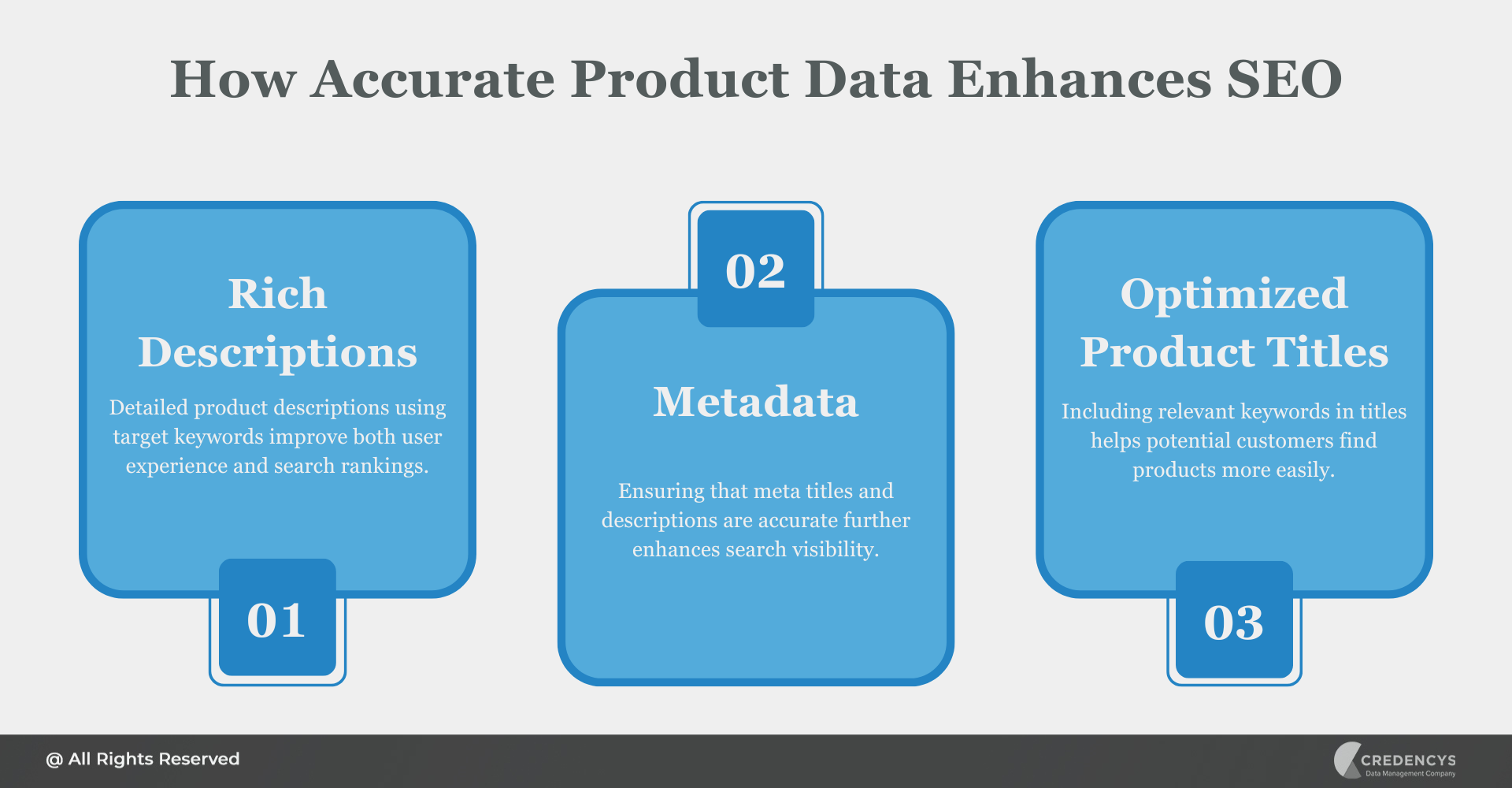
  • Rich descriptions: Detailed product descriptions using target keywords improve both user experience and search rankings.
  • Metadata: Ensuring that meta titles and descriptions are accurate further enhances search visibility.
  • Optimized product titles: Including relevant keywords in titles helps potential customers find products more easily.

How Accurate Product Data Enhances SEO

By improving SEO with accurate product data, brands can enhance their online presence and attract more potential buyers.

Role of Product Data in Global Fashion Expansion

As fashion brands expand globally, accurate product data becomes even more critical. Different regions have unique requirements, and brands must adapt their data to meet these needs.

Accurate product data helps in:

  • Adapting to local markets: Localizing product descriptions and size guides to reflect the preferences and standards of different countries.
  • Managing cross-border logistics: Accurate data is crucial for managing taxes, tariffs, and shipping regulations in various regions.
  • Handling multiple languages: Offering translations of product data ensures clear communication with international customers.

Role of Product Data in Global Fashion Expansion

When expanding globally, detailed and localized product data can help brands thrive in international markets.

Data Consistency Across Multiple Platforms

Fashion brands often sell across multiple platforms, including websites, marketplaces like Amazon, and social media. To avoid confusion, it is crucial to ensure consistent product data across all these channels.

Brands should:

  • Maintain uniformity: To build trust, product descriptions, images, and prices should be identical across all platforms.
  • Prevent customer dissatisfaction: Inconsistent data can lead to customers abandoning purchases or losing confidence in the brand.
  • Use data management tools: Employ systems like PIM to synchronize and update product data across platforms.

Consistency in product data fosters reliability and improves the shopping experience, no matter where the customer shops.

How to Resolve Data Inconsistency Across All Retail Channels: Challenges and Solutions

Compliance and Legal Considerations

Fashion brands must comply with various regulations related to product labeling, sustainability, and safety. Inaccurate data can lead to legal issues, fines, or a loss of consumer trust.

Accurate product data helps in:

  • Sustainability transparency: Accurate information on sourcing, materials, and production practices is critical for eco-conscious consumers and regulatory bodies.
  • Meeting labeling requirements: Ensuring materials, sizes, and care instructions meet legal standards in different regions.
  • Avoiding legal penalties: Brands can prevent costly legal challenges by maintaining truthful, complete product data.

Staying compliant protects the brand legally and enhances its ethical image.

Data Integration and Automation for Fashion Brands

Maintaining accurate product data can be challenging, especially for brands with large inventories. Automation tools and data integration systems, such as PIM, make the process easier by:

  • Saving time: Automated tools reduce the time spent on manual data management, allowing teams to focus on other important tasks.
  • Streamlining operations: Integration between platforms ensures that updates made on one system reflect across all sales channels.
  • Reducing human error: Automated systems prevent mistakes in data entry and update processes.

These systems are essential for keeping product data accurate and up-to-date, especially as brands scale.

Role of Product Data in Inventory Management

Accurate product data is essential for efficient inventory management. Fashion brands can track inventory levels in real-time when product details are correctly inputted and updated.

This helps in:

  • Avoiding overstocking and understocking: Accurate data allows brands to predict demand better and maintain the right stock levels.
  • Real-time updates: Instant updates on inventory help businesses react quickly to restock or remove out-of-stock items.
  • Managing multiple channels: Brands selling across various platforms need synchronized data to avoid stock discrepancies.

Proper data management can significantly reduce operational costs and improve overall business efficiency.

Optimizing Retail Inventory Management Solutions with PIM

How Accurate Product Data Impacts Fashion Brand Reputation

Accurate product data directly influences a fashion brand’s reputation. Customers who receive products that match the description are more likely to trust and return to the brand.

Key benefits include:

  • Maintaining consistency: Brands delivering accurate information are perceived as more professional and reliable.
  • Long-term loyalty: Positive experiences with accurate product data foster customer loyalty and promote repeat purchases.
  • Building trust: Reliable product data builds trust, encouraging customers to shop confidently.

A strong reputation for reliability can be a significant competitive advantage in the fashion industry.

How Accurate Product Data Impacts Consumer Experience

The online shopping experience relies heavily on the accuracy of product information. When consumers shop online, they can’t physically feel or try on the product, so they depend entirely on the information provided.

Accurate product data helps in:

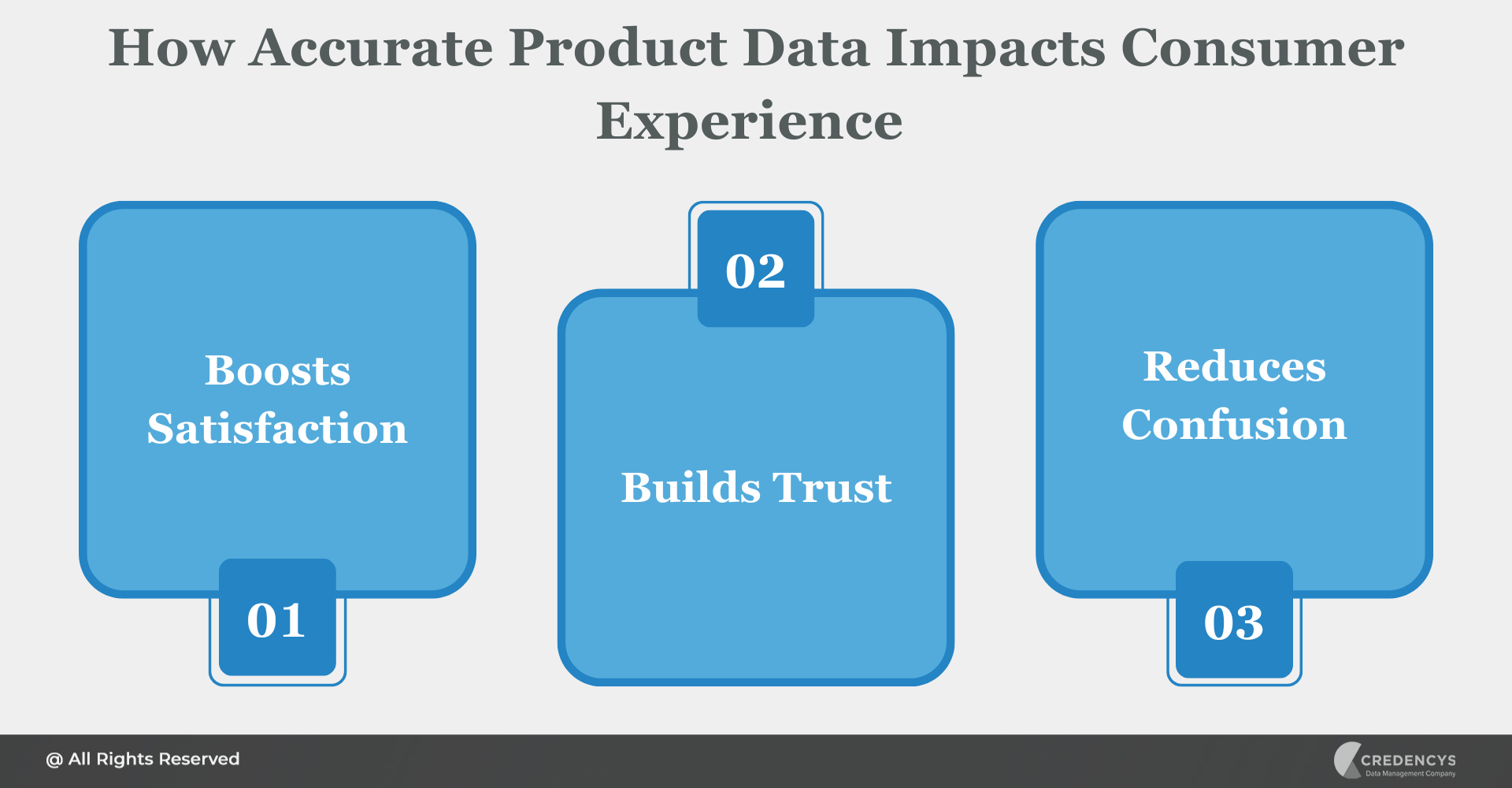
  • Boosting satisfaction: Customers are less likely to return items when they know exactly what they’re buying.
  • Building trust: Clear, reliable data makes customers more confident in purchasing.
  • Reducing confusion: Avoid mismatches between product descriptions and actual items.

How Accurate Product Data Impacts Consumer Experience

Fashion brands risk losing customers and damaging their reputations without accurate product data.

The Role of PIM in Enhancing Customer Experience for Fashion Retailers

Product Data and Personalization in Fashion Retail

Personalization is becoming a key trend in fashion retail, and accurate product data plays a crucial role in making it possible. Personalized experiences can be created through:

  • Tailored content: Providing relevant content based on customer history or behavior enhances the shopping experience.
  • AI-driven recommendations: AI algorithms use product data to suggest items based on user preferences.
  • Custom sizing: With accurate data, brands can offer personalized size recommendations, reducing returns.

Accurate product data allows brands to deliver a seamless and customized shopping journey that boosts customer loyalty and conversion rates.

Conclusion

Accurate product data is essential for the success of any fashion brand. It enhances the customer experience, streamlines inventory management, improves SEO, and reduces returns.

Maintaining accurate and consistent data becomes even more critical as fashion brands grow and expand globally. With the right tools and strategies, brands can overcome challenges and build a reputation of trust and reliability.

Mastering Manufacturing Data Strategy Using PIM Solutions

Data-driven solutions are transforming the manufacturing industry. Companies are increasingly relying on data to enhance operations, reduce costs, and stay competitive.

In fact, studies show that 73% of manufacturers believe that data-driven decisions are crucial to future success.

A well-structured data strategy is essential to maximize the potential of data. It helps manufacturers streamline production, optimize processes, and make informed decisions.

Implementing tools like PIM and MDM solutions plays a crucial role in this process. These systems enable manufacturers to manage product information and centralize key business data for improved efficiency.

Understanding the Importance of Data in Manufacturing

Data has become a critical asset in modern manufacturing. It helps companies optimize operations and improve decision-making. Key data sources include:

  • IoT devices that monitor equipment and production lines.
  • Machines that generate performance data.
  • Enterprise Resource Planning (ERP) systems for operational data.
  • Customer Relationship Management (CRM) systems for customer insights.

PIM solutions help manage product-related data across channels, ensuring accuracy and consistency. MDM centralizes business-critical information, enabling better collaboration and decision-making across departments.

Key Components of a Successful Data Strategy for Manufacturing Businesses

1. Data Governance and Management

Effective data governance ensures that the data being collected is accurate, secure, and compliant with industry standards. Key elements of data governance include:

  • Establishing clear policies for data accuracy and usage.
  • Defining roles and responsibilities for data management.
  • Ensuring compliance with industry regulations (e.g., GDPR, ISO).

MDM systems are essential for maintaining standardized data across departments. They ensure that all data is consistent, secure, and reliable, making collaboration and decision-making smoother.

2. PIM in Manufacturing

PIM systems play a vital role in organizing and distributing product data. Key benefits of PIM in manufacturing:

  • Centralizes all product-related information (technical specs, product variants, etc.).
  • Ensures accuracy and consistency across different channels (online catalogs, suppliers, etc.).
  • Supports efficient supply chain management by keeping product data up-to-date.

Use cases for PIM include managing complex product catalogs and maintaining technical details that impact both manufacturing processes and customer experience.

3. Data Storage and Infrastructure

Choosing the right infrastructure for data storage is essential for long-term scalability and efficiency. Manufacturers must decide between:

  • On-premise storage for complete control over data.
  • Cloud storage for flexibility and scalability.
  • Hybrid systems that combine both.

Best practices for securing manufacturing data:

  • Regular backups.
  • Strong encryption methods.
  • Ensuring that the infrastructure can handle high data volumes, especially with the integration of IoT and real-time analytics.

4. Data Collection and Integration

  • Identify critical data sources across machines, sensors, and software platforms.
  • Integrate these data sources into a unified system for better visibility and decision-making.
  • Use MDM to centralize data from different departments, ensuring accuracy and consistency.

A unified data framework helps manufacturers:

  • Track performance in real-time.
  • Identify inefficiencies quickly.
  • Make data-driven decisions to optimize production and reduce waste.

Key Components of a Successful Data Strategy for Manufacturers

Challenges in Developing a Data Strategy for Manufacturing

While a data strategy can offer many benefits, there are several challenges that manufacturers face when implementing one. Overcoming these obstacles is critical for success.

1. Managing Change and Workforce Adoption

Introducing new data processes can be challenging, particularly when it comes to workforce adoption. Key issues:

  • Resistance to change, especially from employees who are used to traditional processes.
  • Lack of data literacy among staff, making it difficult to leverage new technologies like PIM and MDM effectively.

To overcome these challenges:

  • Provide regular training to employees on new systems and the benefits of data-driven processes.
  • Foster a data-driven culture that encourages the use of data in everyday decision-making.

2. Data Security and Compliance

With the increasing reliance on data, manufacturers must ensure that their data is secure and compliant with regulations. Key concerns include:

  • Cybersecurity threats, such as hacking or data breaches.
  • Compliance with data protection regulations (e.g., GDPR, ISO).

To mitigate these risks, manufacturers should:

  • Implement strict security protocols.
  • Use encryption and multi-factor authentication.
  • Ensure MDM systems are compliant with industry standards for secure data handling.

3. Data Silos and Integration Issues

Data silos are one of the biggest hurdles in manufacturing. Challenges include:

  • Different departments (R&D, production, supply chain) storing data in separate systems.
  • Lack of communication between these systems, leading to inefficiencies.

MDM solutions help break down these silos by creating a single source of truth. This centralization ensures that all departments have access to the same accurate data, improving collaboration and decision-making.

Why is it Important to Have a Data Strategy in Manufacturing?

A well-defined data strategy is crucial for manufacturers looking to maintain a competitive edge in today’s rapidly evolving industry. Here are key reasons why having a comprehensive data strategy is essential:

1. Improves Collaboration Across Departments

Data silos can hinder collaboration between departments. A centralized data strategy, supported by PIM and MDM systems, ensures that all departments have access to accurate, consistent data. This improves communication and operational efficiency.

2. Enhances Decision-Making

A data-driven approach ensures that business decisions are based on accurate, real-time insights. Manufacturers can forecast demand, manage resources more effectively, and make better strategic decisions with a unified data framework.

3. Optimizes Operations

Data allows manufacturers to track performance in real time, identify inefficiencies, and optimize processes. With a data strategy, manufacturers can streamline production, reduce downtime, and increase overall efficiency.

4. Facilitates Compliance and Risk Management

Manufacturing involves strict regulatory requirements. A well-managed data strategy helps manufacturers ensure compliance with industry standards, reduce the risk of breaches, and maintain data security.

Importance of Data Strategy in Manufacturing

How Can PIM Systems Help Manufacturers Develop a Data Strategy?

PIM systems are key enablers for manufacturers looking to develop and implement an effective data strategy. Here’s how PIM can support this process:

1. Streamlined Data Distribution

With PIM, manufacturers can easily distribute product data across multiple platforms, including eCommerce websites, partner portals, and supply chain systems. This streamlining reduces errors, speeds up time-to-market, and ensures that all stakeholders are working with the latest data.

2. Support for Multichannel Selling

Manufacturers often sell their products through multiple channels, including online stores, third-party marketplaces, and retail partners. PIM ensures that the same accurate product data is distributed across all these channels, improving customer experience and brand consistency.

3. Improved Product Lifecycle Management

PIM helps manufacturers manage product lifecycles more efficiently. From product development to marketing and sales, a PIM system keeps product data updated throughout each phase, ensuring that all teams have access to the most current information.

4. Centralized Product Data

PIM systems create a single, centralized repository for all product-related information. This includes technical specifications, product descriptions, pricing, and more. By centralizing this data, manufacturers ensure consistency and accuracy across all departments and channels.

5. Data Accuracy and Compliance

Ensuring product data accuracy is essential for compliance with industry regulations and standards. PIM systems help manufacturers manage complex product information with automated validation checks, ensuring that data is always compliant and up-to-date.

6. Scalability for Future Growth

As manufacturers grow, the volume of product data increases. PIM systems are designed to scale with the business, allowing manufacturers to manage increasing amounts of data without sacrificing accuracy or efficiency.

Conclusion

By leveraging tools like PIM and MDM solutions, manufacturers can effectively manage product-related information and centralize critical business data. These systems play a crucial role in ensuring data accuracy, breaking down silos, and maintaining consistency across departments.

These tools are not just essential for managing today’s data, but they also prepare companies for the future of smart manufacturing, where data will continue to be the cornerstone of innovation and growth.

Tackling Grocery Inventory Management Challenges with PIM

Inventory management in grocery retail is a critical yet complex task. Maintaining accurate stock levels is challenging with hundreds of SKUs, fluctuating demand, and perishable products.

Common issues like overstocking, understocking, and spoilage can lead to financial losses and customer dissatisfaction. To stay competitive and efficient, grocery retailers must turn to technology.

One of the most effective tools available today is PIM systems, which streamline data management, enhance inventory visibility, and help reduce stock-related issues.

Key Challenges in Grocery Inventory Management

1. Stock Inconsistencies

Grocery retailers often struggle with stock discrepancies, leading to either overstock or stockouts. Overstocking ties up capital and increases waste, especially for perishable items, while stockouts result in missed sales and unhappy customers.

2. Managing Seasonal Demand Fluctuations

Grocery retailers often face challenges in adjusting inventory to match seasonal demand shifts. Predicting demand accurately can be difficult, leading to stockouts during peak seasons or excess stock during off-peak periods.

3. Data Management Complexities

The grocery industry deals with various suppliers, each providing product data in different formats. Manually organizing and managing this information leads to inefficiencies, inaccuracies, and increased workload for employees.

4. Lack of Visibility

Managing multiple stores and warehouses can complicate inventory tracking. Without real-time visibility into stock levels, retailers face difficulties making informed decisions, leading to costly errors.

5. Spoilage and Expiration

Perishable goods present the additional challenge of managing shelf life. Without an organized way to track expiration dates, grocery stores risk losing valuable stock to spoilage.

6. Handling Multi-Channel Sales

With the rise of eCommerce, grocery stores often struggle to maintain consistent inventory data across multiple sales channels, including physical stores and online platforms.

Key Challenges in Grocery Inventory Management

How PIM Solutions Address Inventory Challenges

1. Consistent Multi-Channel Synchronization

PIM offers centralized product data management that synchronizes inventory across all channels. This ensures that the same accurate information is available whether customers shop online or in-store.

This prevents issues like overselling or misleading product availability, enhancing customer satisfaction.

2. Enhanced Inventory Visibility

PIM systems offer real-time updates on stock levels, enabling grocery retailers to have better control over their inventory. This increased visibility helps retailers avoid shortages or overstock situations by responding proactively to changes in demand.

3. Automation and Accuracy

Automating inventory updates through PIM minimizes manual work and ensures data consistency across the entire system. This reduces human error and allows staff to focus on more strategic tasks, leading to more efficient operations.

4. Centralized Product Data Management

A PIM system provides a single platform for managing product information across all locations and channels. Centralizing data simplifies SKU management, reduces errors, and ensures accurate inventory records.

5. Better Supplier Collaboration

PIM platforms facilitate smoother supplier communication by streamlining product data sharing and integration. This leads to better inventory planning and optimized replenishment processes, ensuring products are available when needed.

6. Forecasting and Automating Stock Adjustments for Seasonal Demand

PIM systems integrate historical sales data with inventory tools to forecast demand. Automated stock adjustments ensure optimal inventory levels across seasons, reducing excess stock and preventing shortages.

RetailOne: A Comprehensive Solution for Grocery Inventory Management

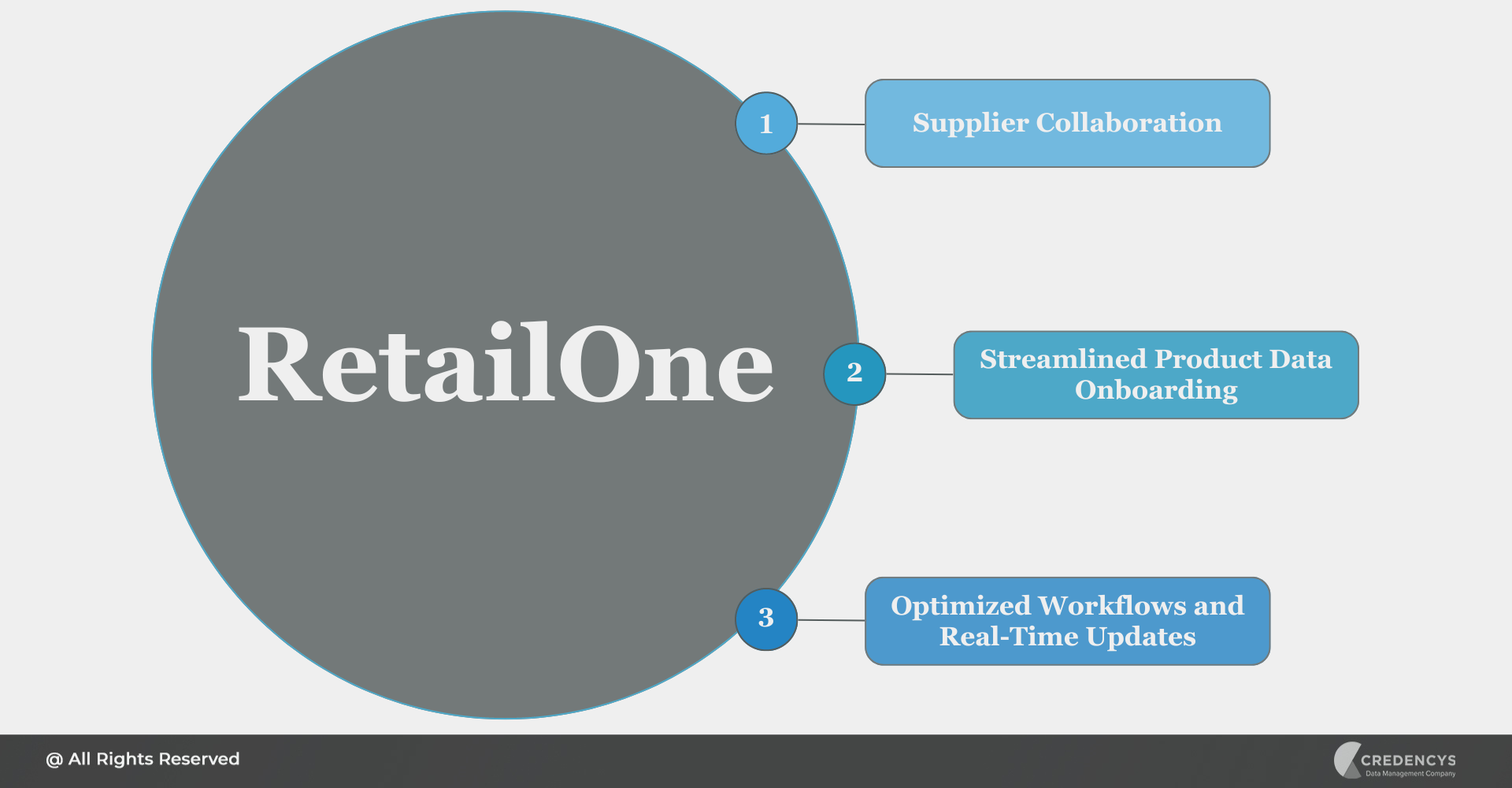
RetailOne by Credencys is an advanced PIM solution designed specifically for the retail industry, including grocery stores. This Pimcore-powered solution enables businesses to manage their product data efficiently, enhancing inventory control and ensuring accurate stock levels across all locations.

  • Supplier Collaboration: RetailOne’s supplier portal facilitates smooth communication and collaboration between retailers and suppliers. This ensures accurate and timely product replenishment, helping grocery stores maintain optimal stock levels and reduce waste due to expired goods.
  • Streamlined Product Data Onboarding: RetailOne simplifies the onboarding of product data from multiple suppliers by using pre-built templates, reducing manual entry, and minimizing errors. This results in better SKU management and more accurate inventory tracking.
  • Optimized Workflows and Real-Time Updates: RetailOne supports customized workflows that ensure inventory updates happen in real-time. This allows retailers to make informed decisions about stock levels and avoid issues like overstocking or stockouts.

RetailOne

RetailOne empowers grocery retailers by providing a unified platform for managing product information and improving inventory visibility. This allows them to minimize stock discrepancies, enhance operational efficiency, and improve customers’ overall shopping experience.

Conclusion

Maintaining accurate inventory levels is essential to reducing waste, increasing sales, and improving customer satisfaction for grocery businesses. PIM solutions like RetailOne offer grocery retailers the tools to centralize product data, enhance inventory control, and streamline supplier communication.

By leveraging a robust PIM system, grocery retailers can not only overcome common stock issues but also optimize their operations, leading to better business outcomes and long-term profitability. Now is the time for grocery retailers to invest in PIM solutions to transform their inventory management and stay ahead in an increasingly competitive market.

Unlock the Power of PIM: 7 Key Data Types You Can Store and Manage in a PIM Solution

The right product information ensures customers make informed purchasing decisions, builds trust, and enhances the overall shopping experience, while also streamlining internal processes and driving business growth across all sales channels.

According to a report by Statista, global e-commerce sales reached nearly $5.7 trillion in 2022, with millions of products sold across various channels.

This incredible growth has made managing product information more critical than ever. As brands scale their online presence, the challenge of handling and distributing product data consistently becomes increasingly complex. That’s where Product Information Management (PIM) tools come in.

PIM solutions centralize and streamline product data management, enabling businesses to distribute accurate, consistent, and up-to-date information across multiple sales platforms. But what exactly can a PIM system store? Let’s dive into the seven essential types of data that every company can manage efficiently with a PIM tool.

1. Product Descriptions

A well-detailed product description is often the deciding factor for online buyers. Whether you’re selling electronics, apparel, or automotive parts, consumers rely on comprehensive descriptions to make informed purchasing decisions. A PIM tool allows you to centralize all product descriptions, ensuring they are consistent across all sales channels—be it your website, Amazon, or social media ads.

  • Consistency across platforms: Ensure the same product description appears across e-commerce, marketplaces, and social media.
  • SEO optimization: Centralize product descriptions to enhance search engine visibility.
  • Increased conversions: Provide detailed information that helps customers make informed decisions, reducing cart abandonment.

Why It Matters:

According to a survey by Salsify, 87% of shoppers say accurate product content is extremely important to them when making a purchase. Inaccurate or incomplete product descriptions can lead to reduced customer confidence, increasing the chances of cart abandonment.

2. Technical Specifications

Different industries rely heavily on precise technical specifications to define a product’s key attributes. For example, an automotive parts retailer will list specs like dimensions, material composition, and compatibility, while a clothing brand will focus on sizes, fabric, and care instructions.

  • Error reduction: Minimize manual errors by centralizing technical specifications.
  • Data enrichment: Enable easy updates and improvements to specifications over time.
  • Cross-channel accuracy: Ensure the correct specifications are shared across different platforms.

PIM tools allow you to manage this highly detailed, technical data without the risk of error that comes with manual updates. By using PIM, companies can avoid costly mistakes that arise from inconsistent or missing product information.

Industry Example:

Maintaining accurate specs is crucial in the automotive aftermarket. A report by McKinsey noted that the global automotive aftermarket could reach $1 trillion by 2030, emphasizing the importance of efficient data management as businesses grow.

3. Digital Assets (Images, Videos, & PDFs)

In today’s highly visual world, images and videos are just as important as the text-based data. Product Information Management tools allow companies to store and manage a vast array of digital assets like product images, instructional videos, and user manuals.

  • Centralized asset management: Store all images, videos, and PDFs in one location for easy access.
  • Consistency: Ensure all platforms have up-to-date and high-quality images and media.
  • Faster localization: Easily associate localized assets for different regions or markets.

By associating these assets with specific products in your PIM system, you ensure that every platform—whether it’s a marketplace like eBay or a retailer like Walmart—uses the most accurate and up-to-date visual content.

Why It Matters:

A study by MDG Advertising revealed that 67% of consumers say the quality of a product image is “very important” in their purchase decision. Consistent, high-quality visuals increase engagement, trust, and conversions.

4. Pricing Information

Pricing is highly dynamic and often varies based on geography, customer segments, and special promotions. A robust PIM system allows you to maintain up-to-date pricing across different markets, ensuring that all pricing data is consistent regardless of the platform or channel.

  • Multi-currency support: Manage pricing in different currencies with automatic conversions.
  • Promotions and discounts: Centralize and update promotional pricing for different campaigns or regions.
  • Localized pricing: Set pricing based on regional taxes, shipping costs, and customer preferences.

You can also manage regional taxes, shipping costs, and even currency conversions, allowing for a more personalized shopping experience. Keeping your pricing data in one centralized system helps reduce errors and prevents situations where customers see outdated or incorrect prices.

Why it Matters:

According to a PwC survey, 86% of buyers are willing to pay more for a product if it comes with a better customer experience, which includes transparent and up-to-date pricing.

6. Supplier and Manufacturer Information

A complete view of your product often requires more than just what you’re selling—it also involves where the product comes from. PIM tools allow businesses to store detailed information about their suppliers and manufacturers. This data might include certifications, sustainability claims, or warranty details, all of which are critical for building trust with eco-conscious consumers.

  • Supplier transparency: Store certifications and sustainability details to share with consumers.
  • Easier management: Quickly reference supplier and manufacturer information when needed.
  • Detailed sourcing: Ensure ethical sourcing practices with full supplier visibility.

This is especially important for industries like jewelry, where consumers increasingly demand transparency about the ethical sourcing of materials, such as conflict-free diamonds or recycled metals.

7. Compliance and Regulatory Data

In industries like healthcare, manufacturing, and automotive aftermarket, complying with industry regulations is non-negotiable. A PIM system can store regulatory information, safety guidelines, and compliance certificates, ensuring that your product meets all legal requirements for every region you operate in.

  • Compliance tracking: Keep records of all certificates and regulatory documents.
  • Automated updates: Set alerts for renewals or when certifications need updating.
  • Reduce risks: Avoid costly fines or recalls by ensuring compliance is always met.

PIM tools also allow you to set automatic alerts for when certifications or compliance documents need updating, minimizing the risk of regulatory infractions and costly recalls.

Industry Insight:

A report from Deloitte indicates that over 40% of manufacturers expect regulatory requirements to increase in the coming years, making compliance management more important than ever.

Storing and managing product data is essential for maintaining accuracy, improving customer experience, achieving operational efficiency, ensuring regulatory compliance, and enabling business scalability. A strong product data management strategy positions companies for growth and long-term success in an increasingly complex and competitive market.