


Tackling Grocery Inventory Management Challenges with PIM
Grocery inventory management depends on product data more than most retailers realize. Wrong GTINs, pack sizes, or units cause stock errors, failed orders, and empty shelves.
This guide explains the challenges and how a PIM helps. Inventory management in grocery retail is a critical yet complex task.
Maintaining accurate stock levels is challenging with hundreds of SKUs, fluctuating demand, and perishable products. Common issues like overstocking, understocking, and spoilage can lead to financial losses and customer dissatisfaction.
To stay competitive and efficient, grocery retailers must turn to technology. One of the most effective tools today is a PIM system, which streamlines data management, improves inventory visibility, and helps reduce stock-related issues.
Key Challenges in Grocery Inventory Management
1. Stock Inconsistencies
Grocery retailers often struggle with stock discrepancies, leading to either overstock or stockouts. Overstocking ties up capital and increases waste, especially for perishable items, while stockouts result in missed sales and unhappy customers.
2. Managing Seasonal Demand Fluctuations
Grocery retailers often struggle to adjust inventory to match seasonal demand shifts. Predicting demand accurately can be difficult, leading to stockouts during peak seasons or excess stock during off-peak periods.
3. Data Management Complexities
The grocery industry deals with various suppliers, each providing product data in different formats. Manually organizing and managing this information creates inefficiencies, inaccuracies, and a heavier workload for employees.
4. Lack of Visibility
Managing multiple stores and warehouses can complicate inventory tracking. Without real-time visibility into stock levels, retailers struggle to make informed decisions, leading to costly errors.
5. Spoilage and Expiration
Perishable goods present the additional challenge of managing shelf life. Without an organized way to track expiration dates, grocery stores risk losing valuable stock to spoilage.
6. Handling Multi-Channel Sales
With the rise of eCommerce, grocery stores often struggle to keep inventory data consistent across multiple sales channels, including physical stores and online platforms.

How PIM Solutions Address Inventory Challenges
1. Consistent Multi-Channel Synchronization
PIM offers centralized product data management that synchronizes inventory across all channels. This ensures that the same accurate information is available whether customers shop online or in-store.
This prevents issues like overselling or misleading product availability, enhancing customer satisfaction.
2. Enhanced Inventory Visibility
PIM systems provide real-time stock-level updates, giving grocery retailers better control over inventory. This visibility helps retailers avoid shortages or overstock by responding proactively to demand changes.
3. Automation and Accuracy
Automating inventory updates through PIM reduces manual work and keeps data consistent across the system. This reduces human error and allows staff to focus on more strategic tasks, leading to more efficient operations.

Take Control of Your Grocery Inventory with PIM Solutions that Enhance Visibility, Accuracy, and Synchronization Across All Channels. Ready to Transform Your Operations?
4. Centralized Product Data Management
A PIM system provides a single platform for managing product information across all locations and channels. Centralizing data simplifies SKU management, reduces errors, and keeps inventory records accurate.
5. Better Supplier Collaboration
PIM platforms streamline supplier communication by simplifying product data sharing and integration. This improves inventory planning and optimizes replenishment processes, ensuring products are available when needed.
6. Forecasting and Automating Stock Adjustments for Seasonal Demand
PIM systems integrate historical sales data with inventory tools to forecast demand. Automated stock adjustments ensure optimal inventory levels across seasons, reducing excess stock and preventing shortages.
RetailOne: A Comprehensive Solution for Grocery Inventory Management
RetailOne by Credencys is an advanced PIM solution designed specifically for the retail industry, including grocery stores. This Pimcore-powered solution helps businesses manage product data efficiently, improving inventory control and ensuring accurate stock levels across all locations.
- Supplier Collaboration: RetailOne’s supplier portal facilitates smooth communication and collaboration between retailers and suppliers. This ensures accurate, timely product replenishment, helping grocery stores maintain optimal stock levels and reduce waste from expired goods.
- Streamlined Product Data Onboarding: RetailOne simplifies onboarding product data from multiple suppliers with pre-built templates, reducing manual entry and minimizing errors. This improves SKU management and more accurate inventory tracking.
- Optimized Workflows and Real-Time Updates: RetailOne supports customized workflows that ensure real-time inventory updates. This allows retailers to make informed decisions about stock levels and avoid issues like overstocking or stockouts.
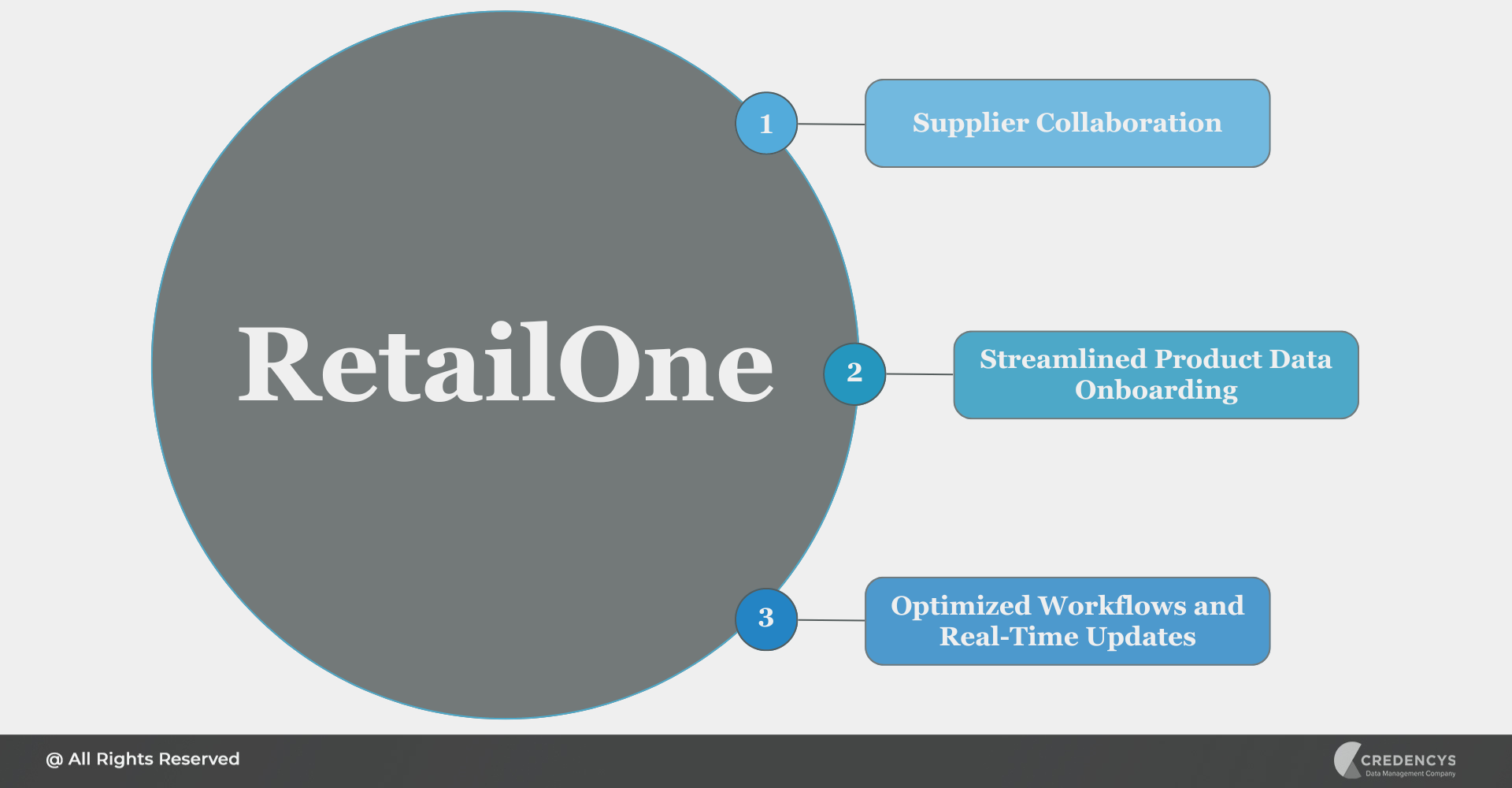
RetailOne empowers grocery retailers with a unified platform to manage product information and improve inventory visibility. This helps them reduce stock discrepancies, improve operational efficiency, and enhance the overall customer shopping experience.
The Product Data Behind Inventory Problems
Many grocery inventory issues are really product data issues. When a supplier changes a pack from 6 to 8 units and doesn’t update the GTIN or pack size everywhere, stock counts, replenishment orders, and online availability all go wrong at once.
When units of measure differ between the supplier file and your system, you can count a case as a single item. A PIM fixes this at the source.
Each item and each pack level gets one record with its GTIN, units, and dimensions. The ERP and website check supplier changes before they reach stores.
Nutrition, allergen and pack data stay consistent, so the same product looks and counts the same everywhere. That is why grocery retailers often start their PIM program with supplier onboarding: good data in means fewer inventory surprises later.
See PIM for grocery and our guide to GDSN, which many grocery suppliers use to share pack and product data.
Conclusion
Accurate inventory levels are essential to reducing waste, increasing sales, and improving customer satisfaction for grocery businesses. PIM solutions like RetailOne offer grocery retailers the tools to centralize product data, enhance inventory control, and streamline supplier communication.
By leveraging a robust PIM system, grocery retailers can not only overcome common stock issues but also optimize operations, improving business outcomes and long-term profitability. Now is the time for grocery retailers to invest in PIM solutions to transform their inventory management and stay ahead in an increasingly competitive market.
Take the First Step Toward Transforming Your Grocery Inventory Management Today.
Grocery Inventory Management: FAQ
How does a PIM help grocery inventory management?
By keeping GTINs, pack sizes, units, and product data correct and consistent, so stock, ordering, and channels all work from the same facts.
Does a PIM replace an inventory management system?
No. The inventory system tracks stock; the PIM keeps the product data that inventory depends on accurate.
What product data matters most for grocery inventory?
GTINs, pack sizes and hierarchies, units of measure, dimensions and supplier item codes.
Can suppliers send data through GDSN?
Yes. Many grocery suppliers publish through GDSN, and a PIM can receive, validate, and enrich it.




Tags: