On-demand Grocery Delivery App: Must Have Features and Estimated Cost

Shopping is the favorite activity of most of the people. But, when it comes to grocery shopping, it becomes a tedious job. In offline grocery shopping, people need to visit the supermarket, pick the products, stand in a long queue for payment, and ultimately bring the products to home. It is too tiring! To enable shoppers with the next level of comfort, the concept of the on-demand grocery delivery app came into existence.
on-demand-grocery-delivery-app

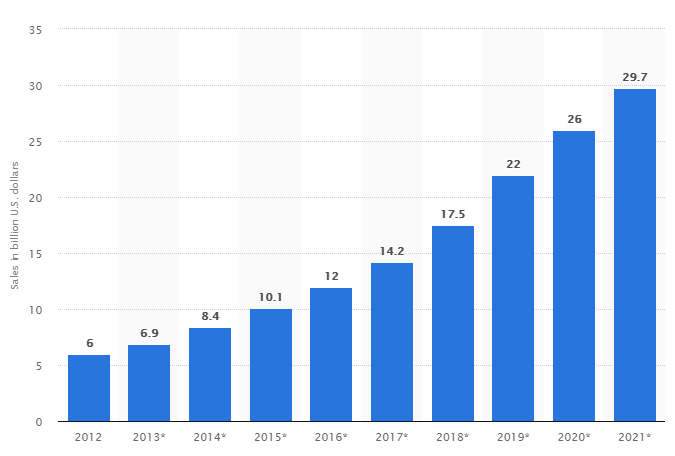
According to Statista, “The U.S. online grocery market is estimated to generate sales worth of about 14.2 billion U.S. dollars in 2017, with sales forecast to reach 29.7 billion U.S. dollars by 2021.”

Online grocery sales is expected to grab 20% of the market by 2025, stated by CNBC.

On-demand grocery delivery mobile app market is highly competitive, as a lot of applications are available in the market. In this post, we are going to have insights about the different types of grocery apps, on-demand grocery application workflow, a variety of features (users, admin, & delivery app), and cost estimation.

Types of On-demand Grocery Mobile Apps

E-commerce Grocery App

E-commerce grocery app allows users to browse a wide variety of items irrespective of their locations. Buyers can schedule the timing for delivery as per their comfort. E-commerce grocery shopping apps are being used by online retailers across Amazon, Flipkart, etc.

Independent Stores Grocery App

There are a lot of retailers, who are specifically dedicated to offering grocery products. They choose to develop a personalized mobile app to take the customer experience to a whole new level. These apps allow buyers to create grocery lists, share them with the store, and set items for shopping. Best example of independent grocery apps are BigBasket and Grofers.

In-store Grocery App

Supermarkets like Publix and Costco have started using mobile apps to sell their grocery items. These type of apps combines the functionality of e-commerce and independent grocery app. They engage customers using beacon technology and push notifications while the customer is nearby to the store.

Aggregators

Such a grocery delivery app contains a list of the stores available in a particular region. Buyers can select the nearby store, browse the menu, select the grocery items, and place the order with the required quantity. Once the buyer confirms the order, he/she can track the order and delivery status in real-time.

Grocery Chains

The giant grocery chains such as Walmart have their own on-demand mobile app to enable buyers with a great level of comfort. These apps are similar to the individual store that manages micro-level operations seamlessly.

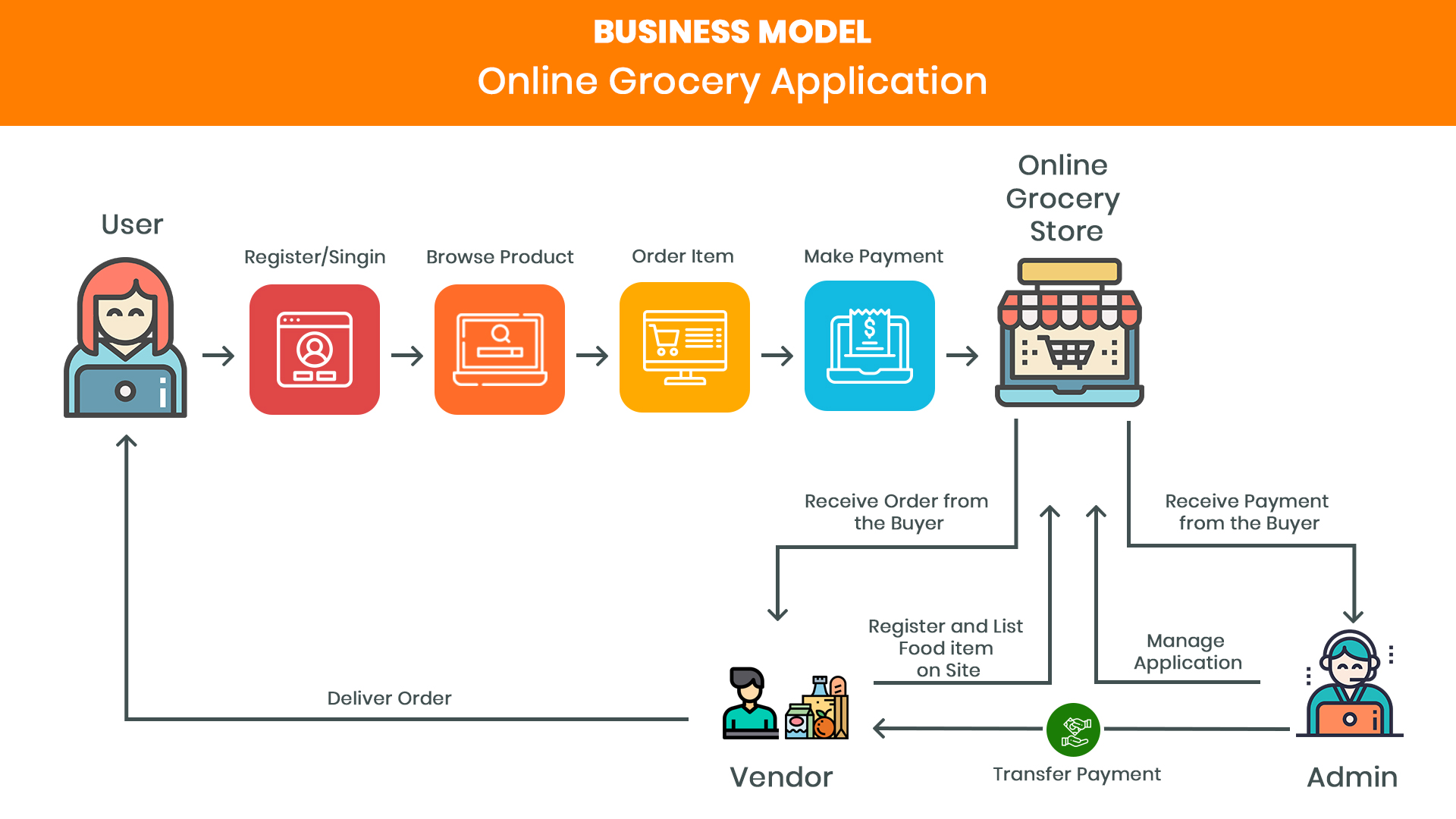
Business Model – Flow of On-demand Grocery Delivery App
on-demand-grocery-app-development

Features of On-demand Grocery Delivery Apps

User Panel Features

User Registration/ Login
The most significant part of an application where users need to login via their email id or contact number. These days, users prefer to have an option of login through social media accounts such as Facebook.

Profile Management
After login into the app, users need to create their profile by adding the required personal information such as name, residential address, age, etc. They can edit the details whenever required. Accessing users’ personal data, grocery business owners can send them the most relevant push notifications.

Browse & Search Products
It allows users to select a preferred product from all the categories of grocery items that are listed in the app with description. Shoppers can choose their preferred products by applying different filters, sorting, and search criteria.

Add to Cart
Enable customers with an option of Add to Cart. Allow them to add the items of their choice and buy it later.

Product Management
Customers can check and manage the products they intended to buy before making the payment. Using this feature, users can ensure that nothing has been left behind or added extra into the list.

Multiple Payment Options
All the payment options should be integrated into the app such as Debit Card, Credit, Card, Online Payment, Net Banking, Cash on Delivery, etc. Buyers should have the flexibility to make a payment in a convenient and reliable way.

Payment Gateway
Allow users to pay online by integrating secured Payment Gateway in your on-demand grocery delivery app. There are distinctive payment gateways available in the market such as PayPal, Apple Pay, Stripe, Braintree, and more. Enable customers to make payment in a hassle-free manner.

Schedule Delivery
The feature permits customers to schedule a specific time duration for receiving the orders or deliveries as per their convenience.

Order & Delivery Tracking
With the help of Google Positioning System (GPS), grocery businesses can allow shoppers to track the real-time status of their placed orders and driver’s location. Integrating Google Map feature, you can increase the trustworthiness of your business in many folds.

Order Management
Leverage this feature for placing the order in a very convenient way. Buyers can access the order history anytime and place the same order whenever required.

Customer Loyalty Program
Create a discounts and offers zone for buyers where customers can view the latest deals. Also, provide appropriate rewards to loyal purchasers to engage them for the long term.

Push Notifications
Keep the users updated about your latest products or service offerings, discounts/offers/rewards, and new app features by sending Push Notifications to the users.

Customer Feedback
Customers reviews and ratings help flourish your app better. Collect users experiences about your app, it helps you improve your mobile app, provide better services, and plan stronger strategies for further growth.

Customer Support
Provide 24*7 customer support by choosing the right communication product. You can consider phone, email, and online chat options to respond to customer queries and concerns.

Admin Panel Features

Dashboard
An intuitive dashboard allows the admin to track all orders received from the customers, manage various business activities, and provide services on the go and swiftly.

Assign Orders
After receiving a confirmation about an order, the store manager can assign the order to the respective delivery person to deliver the grocery products at the mentioned date, time and place.

Inventory Management
Manage huge stock of inventory using this feature. Track the real-time status of product inventory and manage all the orders efficiently. Admin can get better insights about whether the product is in-stock or out of stock. If the product is not available, business owners can take the required decisions.

Product Management
Admin has the right to add products in bulk from the app backend. As per the availability of the items, the admin user can enable or disable the product. Also, the app allows to remove any team whenever required.

User Management
Admin can view and communicate with all users of the application. Moreover, the business owner has the right to add or remove any users from the admin panel.

Payment Management
The feature allows admin to manage and view all the transactions occurred in the applications. Also, admin can manage tax and commission related data in the grocery app.

Real-time Analytics
Real-time analytics tracks loyal customers and extracts the important data that help businesses to define a strategy and plan on how to boost the user experience. Admin can see the most successful discounts and offers that customers have highly consumed by the buyers and accelerate their business growth.

Delivery Panel Features

Delivery Request Notification
Once buyer confirms the order, vendor will receive the request for grocery deliveries along with the order number and required details such as delivery address, contact number, etc.

Accept/Reject the Delivery Request
The delivery person can accept or reject the request if the location of buyer is too far and it does not fall within the specified distance of free delivery.

Customer Location Tracking
Integrating Geo-Location services, the vendor can assist delivery person to track the buyers’ location easily. There is a varied option available for location tracking such as GPS, Apple Map, Google Map, etc. Vendor can integrate any one of these to leverage this feature.

In-app Calling or Chatting
The delivery person can communicate with buyers through voice call or chat using the grocery app only.

Delivery Notification
Store manager receives a notification about the delivered order along with order number.

How much Does It Cost to Develop An On-demand Grocery Delivery App?

The cost of on-demand grocery delivery app development depends on varied aspects such as business model, type of app (simple, complex & large scale), number of features and functionality, pricing model, platforms, the development team, and more.
To get an exact estimation of your on-demand grocery delivery app, you should opt for an experienced mobile app development company.

Summing Up

If you are planning to create an on-demand grocery delivery app, this post will help define the essential features that you have considered. Credencys has a detailed insights about developing on-demand mobile applications for varied industries and different purposes. Stay ahead in the cut-throat competition by leveraging our more than a decade long experience. Let’s work together to bring your app idea to life by developing a robust grocery delivery app.

FAQs – On-demand Grocery Delivery App: Must Have Features and Estimated Cost

How much does it cost to make an on-demand grocery delivery app?

Cost is a critical factor for developing an on-demand grocery delivery app as it completely depends on the complexity level of the app. You can build an app with basic features or you can choose to go for an advanced app with high-end functionality development. But the approximate cost of a simple on-demand grocery app can be $10000-$22000 and highly complex app costs more than $55000.

How much time it will take to develop an on-demand grocery delivery App?

The development time of the on-demand grocery delivery app is based on the complexity of the app. An app with all the advanced features takes up to 10 months to get ready and go live while a simple app can be built and deployed within 4-5months. The more features and functionality you want to add it will increase the development time.

How do on-demand grocery delivery apps make money?

The on-demand grocery delivery apps earn bucks through different monetization strategies such as advertising, in-app purchase, and the freemium model.

How does on-demand grocery delivery app work?

The on-demand grocery delivery app allows customers to order groceries online from local and nearby supermarkets or vendors. Customers can create a list of required groceries within the app, define quantity for each item, select whether the grocery items will be picked up or delivered, apply filters to choose their preferred brands, and more. The app connects the local grocery stores or supermarkets with the customers and allows them to earn by delivering the grocery items at customers’ doorsteps.


Food Delivery App Development – Success Formula Revealed!

Disclaimer: This is the most-detailed Food Delivery App Development Guide on the Internet!

We examined top food delivery apps like UberEATS, DoorDash, Swiggy, and many others before writing this guide.

In this expert-written guide, you will learn A to Z about Food Delivery Apps including:

  • Success Formula used by every God-Damn Food Delivery App out there.
  • Common & must-have features to consider in your own Food Delivery App Development.
  • And most importantly, how to replicate the business model of top food delivery apps & make millions of dollars.

Let’s dive right in!

Hectic schedules, unpredictable work hours, and chaotic life has made it impossible for people to cook meals at home, let alone visit a restaurant for lunch during work hours.

Thanks to food delivery apps, people can get their food delivered at their doorsteps.

You might already be aware of some of these food delivery apps like UberEATS, GrubHub, or DoorDash.

But the important question here is, is it still worth investing in food delivery app development?

Short Answer: Yes, it definitely is. Because…

Food Delivery App Market Still Has Room Left for Innovation!

If you’re considering to enter the food delivery app market but the level of competition is stopping you, here are some stats that prove

A) The food delivery market still has the potential for robust growth in the near future.

B) It is still possible to establish your brand among top food delivery app startups.

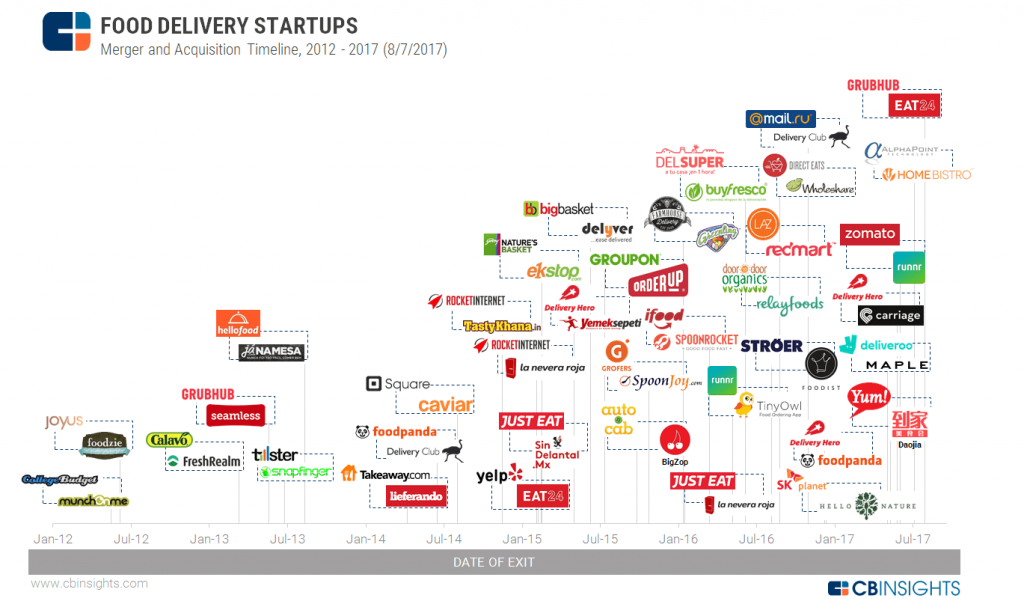
The below image shows that despite the high competition, how food delivery app startups started at the bottom but still found success.

Food Delivery Startups

Now, if that’s not enough to convince you, consider the following stats of food delivery market.

  • According to a survey by RetailMeNot, one-fourth of users have at least one food delivery app installed in their smartphones.
  • Jakpat also questioned 300 adults in Indonesia and found that 13% said that they don’t have time to cook meals at home, 31% said that they’re not able to go to a restaurant, and 48% think ordering from food delivery apps is more practical.
  • According to Statista, the online food delivery revenue amounts to $94,385 Million USD in 2019.
  • The same report also revealed that the revenue will grow at 9.3% growth rate annually and reach $134,490 Million USD by the year 2023.

Food Delivery Apps 2

The above stats clearly prove that there is plenty of opportunities for newcomers and the future of online food delivery startups is bright.

Now, let’s move forward and see what it will take for your food delivery app to succeed.

Types of Food Delivery Apps

Before you proceed for the development of food delivery app of your own, it’s critical that you about the types of food delivery apps you can build.

Let’s take a quick look at each type of food delivery app and how they work.

1 – Order-Focused Food Delivery App

Order-focused food delivery apps basically work as an intermediate between customers and local restaurants. These apps allow customers to browse through different restaurants and place an order.

Once an order is placed, the food delivery app then passes the order to the restaurant and the restaurant is responsible for the delivery of the order.

The app owner usually charges a fixed amount of money from restaurants for each order in this type of food delivery apps.

2 – Order + Logistics-Focused Food Delivery App

The main goal of order + logistics-focused food delivery apps is to offer food delivery services from restaurants that don’t have their own delivery system. This way, customers can still order food from their favorite restaurants even if the restaurant doesn’t deliver on their own.

That means, logistics-focused apps don’t only handle the order aspect, but they also handle the delivery aspect. Simply put, delivering food from restaurant to customer’s location is the responsibility of the startup rather than the restaurant.

As far as the delivery costs are concerns, most logistics-focused food delivery startups charge a delivery fee to the customers to cover the delivery costs.

3 – Restaurant-Specific Food Delivery App

This type of food delivery app is only suited for restaurant owners who’ve their own delivery fleet and wants to extend their services through a mobile app.

Generally, a restaurant-specific food delivery app works like this – customers look at the daily menu, places an order, and the restaurant delivers the food at customers’ doorstep.

So, if you don’t own a restaurant, this model is not for you. Plain and simple.

But, that doesn’t mean you can’t enter the online food delivery market. You still have 2 options available. Now, if your goal is to make as much money as possible, then the order + logistics-focused model is a better choice for you.

In addition, since almost all small & medium sized restaurant don’t have delivery drivers, building order + logistics-focused food delivery app makes more sense.

However, in order to establish a successful order+logistics-focused food delivery startup, you will need to build 3 separate apps, which are explained below.

Number of Apps You Need to Build

In order to create a perfect food delivery app solution, you need to build 3 apps for each stakeholder.

1 – Food Delivery App Development for Customers

As the name suggests, the customer-side app is for end-users of your food delivery startup. In this app, customers should be able to browse different restaurants and their menu, place their order, pay online, and write a review for the food as well as service.

However, in order to make your app popular among users, you need to ensure smooth user experience and provide important features for their convenience.

We analyzed top 10 food delivery apps and created a list of must-have features for the customer-side app.

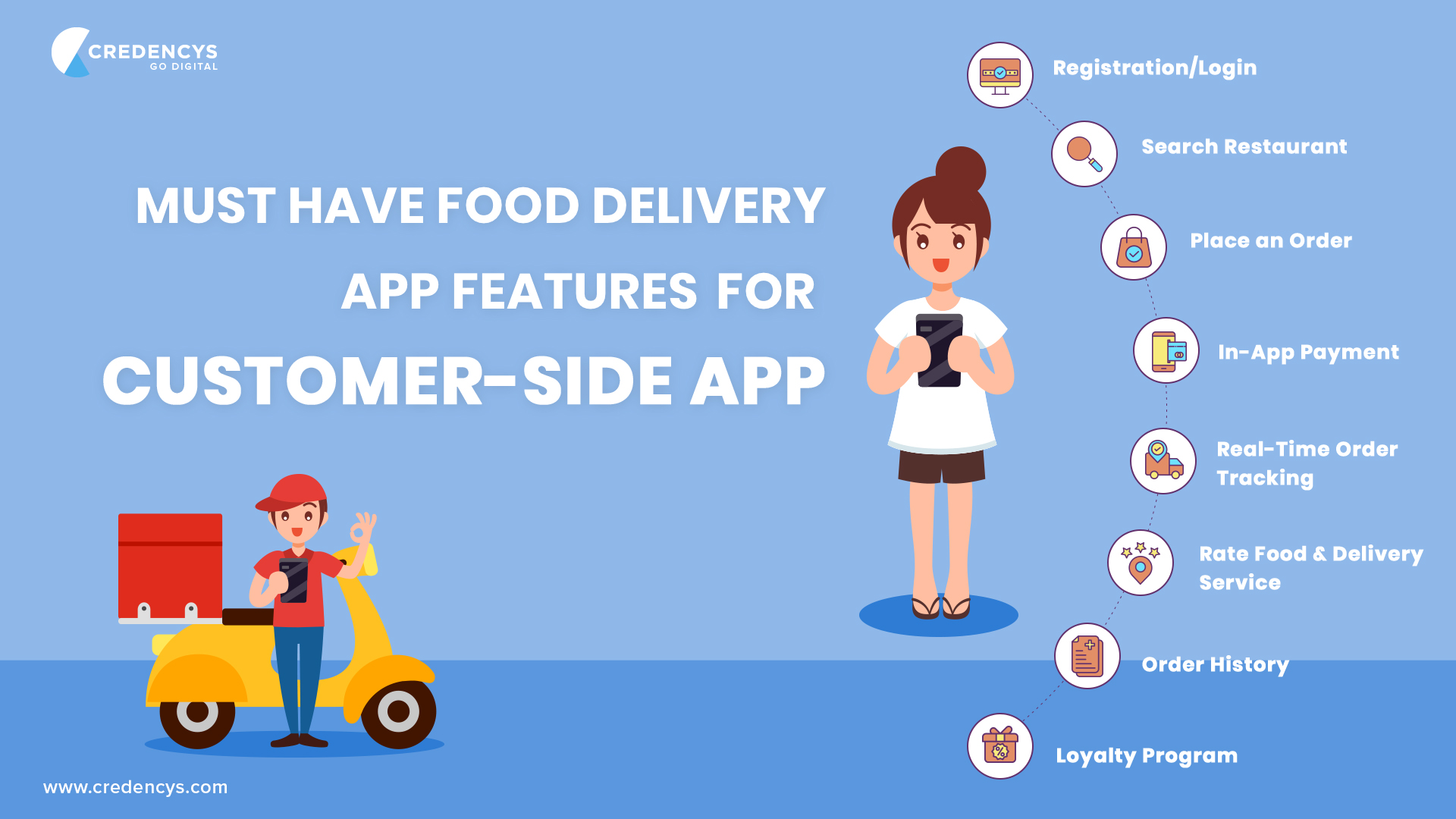
1.1 – Must-Have Food Delivery App Features For Customer-Side App

food-delivery-app

1.1.1 – Registration/Login

Every user’s journey should begin with the registration. This helps you collect important user data like name, email address, phone number, etc which you can use later to retain them with offers and loyalty programs.

While you’re at it, try to keep the registration process as crisp and simple as possible. The best way to get more and more users to sign up is by including “Sign Up using social media” like Facebook, Twitter, and Gmail.

1.1.2 – Search Restaurant

Once the users register themselves, they should be redirected to search restaurant page, where they can browse different restaurants using filters like dishes names, cuisine, etc.

However, in order to display the restaurant list, you will have to partner with as many local restaurants as possible so that the possibility of a user placing an order through your app increases.

1.1.3 – Place an Order

Once a user finds something he wants to eat, he should be able to place an order.

Simply put, you must provide the freedom and ability to add, remove, or edit food items in their cart. In addition, it is also a common practice to display a summary of their order.

1.1.4 – In-App Payment

Once the customer finalizes his or her order, they should be able to pay for their order in the app itself. Remember, the more options you provide for online payment, the better the user experience will be.

1.1.5 – Real-Time Order Tracking

Real-time order tracking is a crucial feature for any kind of delivery application. It just helps customers to be relieved from guessing how much time would their delivery take.

1.1.6 – Contact Delivery Agent/Restaurant

This feature basically allows customers to submit a special request to either restaurant like make their food extra spicy or to ask the assigned delivery agent to leave the delivery at the reception of their office in case they’re in an important meeting.

1.1.7 – Rate Food & Delivery Service

What happens after the food is successfully delivered to the customers? – Ask them how their experience was. Ratings help in collecting important feedback from customers like the quality of food, delivery handling, the attitude of the delivery agent, etc.

Based on this data, you can improve your services and increase the chances of getting more orders placed through your food delivery app.

1.1.8 – Order History

Every user should be provided with an option to check their previous orders. The reason for adding this feature is to provide a reorder option so that customers can easily order their favorite food from their restaurant without having to go through all steps like typing the restaurant name in the search and then finding their favorite dish and ordering it.

1.1.9 – Loyalty Program

Offering rewards for loyalty is a great way to boost the number of orders on your food delivery app. For example, offering free delivery on every 3rd, 5th, and 10th order can encourage customers to come back.

Another proven way to earn the loyalty of customers is to offer cashback on orders above a certain amount or giving a fixed amount of cashback for referring their friends or family members to download your app.

2 – Food Delivery App Development for Delivery Agents

In order+logistics-focused food delivery app, picking up the food from the restaurant and delivering it to the customer’s location will be entirely your responsibility. And to fulfill that responsibility, you will need delivery agents.

On top of that, you will also need to provide them a separate app to handle the delivery aspect.

A delivery agent app can help your drivers to manage pickup & drop off of orders in real-time and communicate with restaurants and customers.

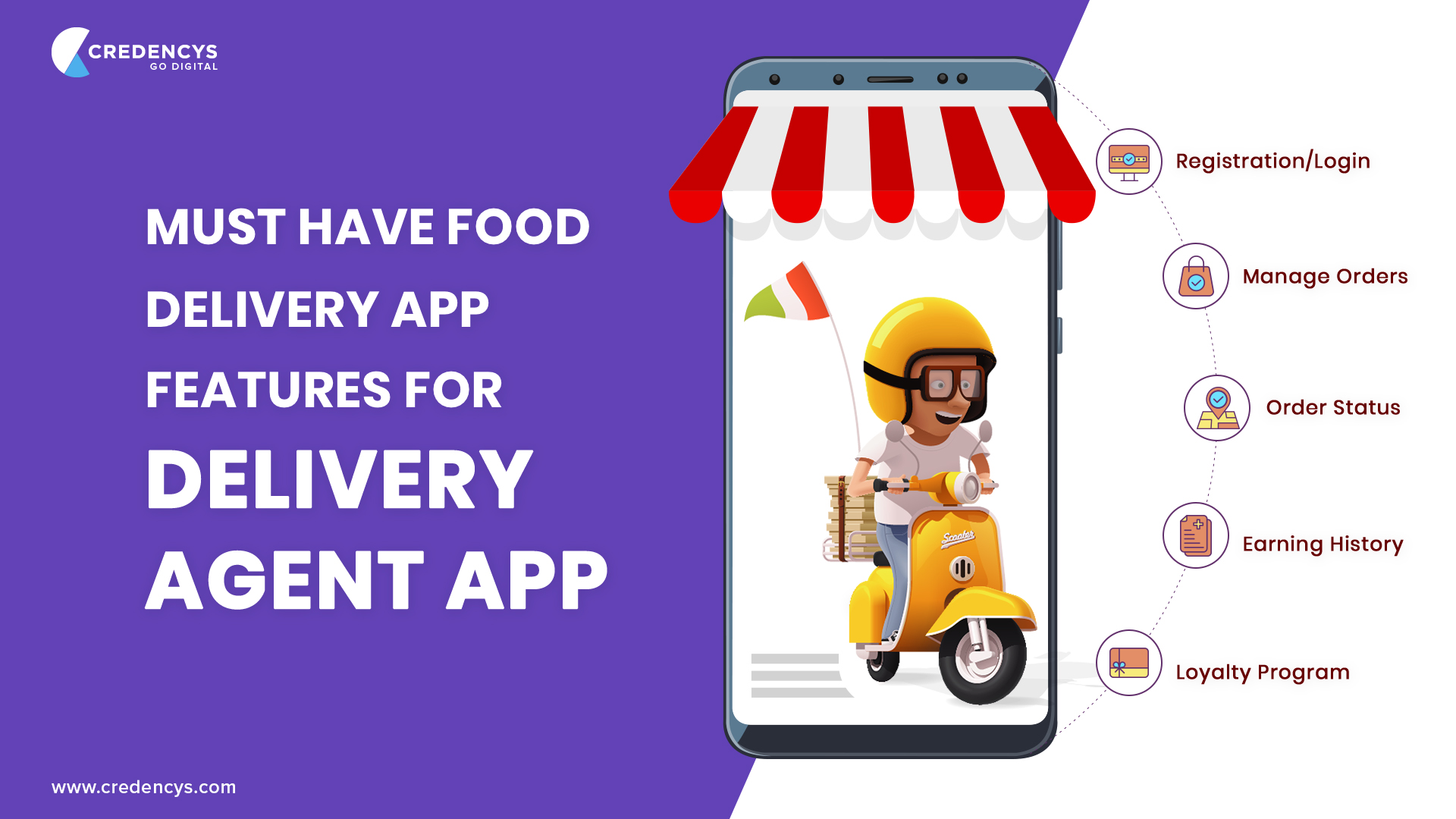
Typically, there are 4 features that your delivery agent app must have.

2.1 – Must-Have Food Delivery App Features For Delivery Agent

Food Delivery App

2.1.1 – Registration/Login

Just like customers, the delivery agents also must register themselves first.

The registration of delivery agents can be done either phone number, email address, or using their social media accounts. However, they also must submit extra documents for verification purpose. For example, upload a digital copy of their legal documents like driving license.

2.1.2 – Manage Orders

Once delivery agents register themselves, they should be redirected to manage orders page where they can change their status like “active and looking for orders” and “offline”.

In addition to the above option, the delivery agent should also be provided with an option to either accept or reject an order delivery. And if a delivery agent rejects a delivery task, that task should automatically be reassigned to another active delivery agent.

2.1.3 – Update Order Status

Once a delivery agent accepts a delivery task, they must be prompted with the option to update order status like “on the way to the restaurant to pick up the order”, “order picked up and on the way to deliver it”, and “order successfully delivered”.

Once the order is delivered by the delivery agent and the customer confirms it, the payment is then distributing into the delivery agent’s bank account.

2.1.4 – Earning History

At the end of the day, all delivery agents should be able to check their daily earning along with a few filter options like yesterday’s earning, last week earnings, last 30 days earning, and lifetime earning.

2.1.5 – Loyalty Program

Just like customers, you also need to attract as many delivery agents as possible to sign up on your platform. And because of the competition, you need to provide certain rewards in order to boost their loyalty towards your startup.

In order to do this, you can provide a sign up bonus, reward them with cash for each friend referred to join as a delivery agent, and for completing a certain number of deliveries each day.

This can help you increase their loyalty towards your platform and you can add more delivery agents in your fleet.

3 – Food Delivery App Development for Restaurants (Web Portal)

Similar to customers & delivery agents, all restaurants need to go through the same registration process in order to list their dishes on the app.

The only difference is, rather than a mobile app, it is better to build a web app for restaurants to manage the orders. Following are the main 3 features that your restaurant web app must have to ensure a smooth experience.

3.1 – Must-Have Features in Restaurant Web Portal

Food Delivery App

3.1.1. – Admin Dashboard

Once restaurant owners complete the registration process, they should be redirected to a dashboard page where they can track, monitor, and manage orders in real-time.

In short, the dashboard should to provide a summary of all orders received from customers.

3.1.2 – Manage Content

The restaurant version is a bit different than customer and delivery agent app. They need to attract customers by regularly adding new dishes to their menu.

Therefore, it is important to provide restaurant with functionality to update menu by adding or removing dishes, changing prices, and uploading photos of dishes.

3.1.3 – Accept/Reject Orders

Sometimes, a restaurant may run out of ingredients to make a specific dish. When that happens, the restaurant should be given the option to either accept or reject an order.

So, once a customer places an order, it is important to take immediate confirmation from the restaurant and notify the customer whether the restaurant accepted or rejected their order request.

3.1.4 – Cross-interface communication

The restaurant should be able to update both the delivery agent and the customer with order status. For example, the order is ready for pickup, or delivery agent has picked up the order, etc.

3.1.5 – Receive Payments

Restaurants should be able to receive payments automatically once the food gets delivered by the delivery agent. Although, you need to make sure that the payment is released only after the customer confirms that their order has been received.

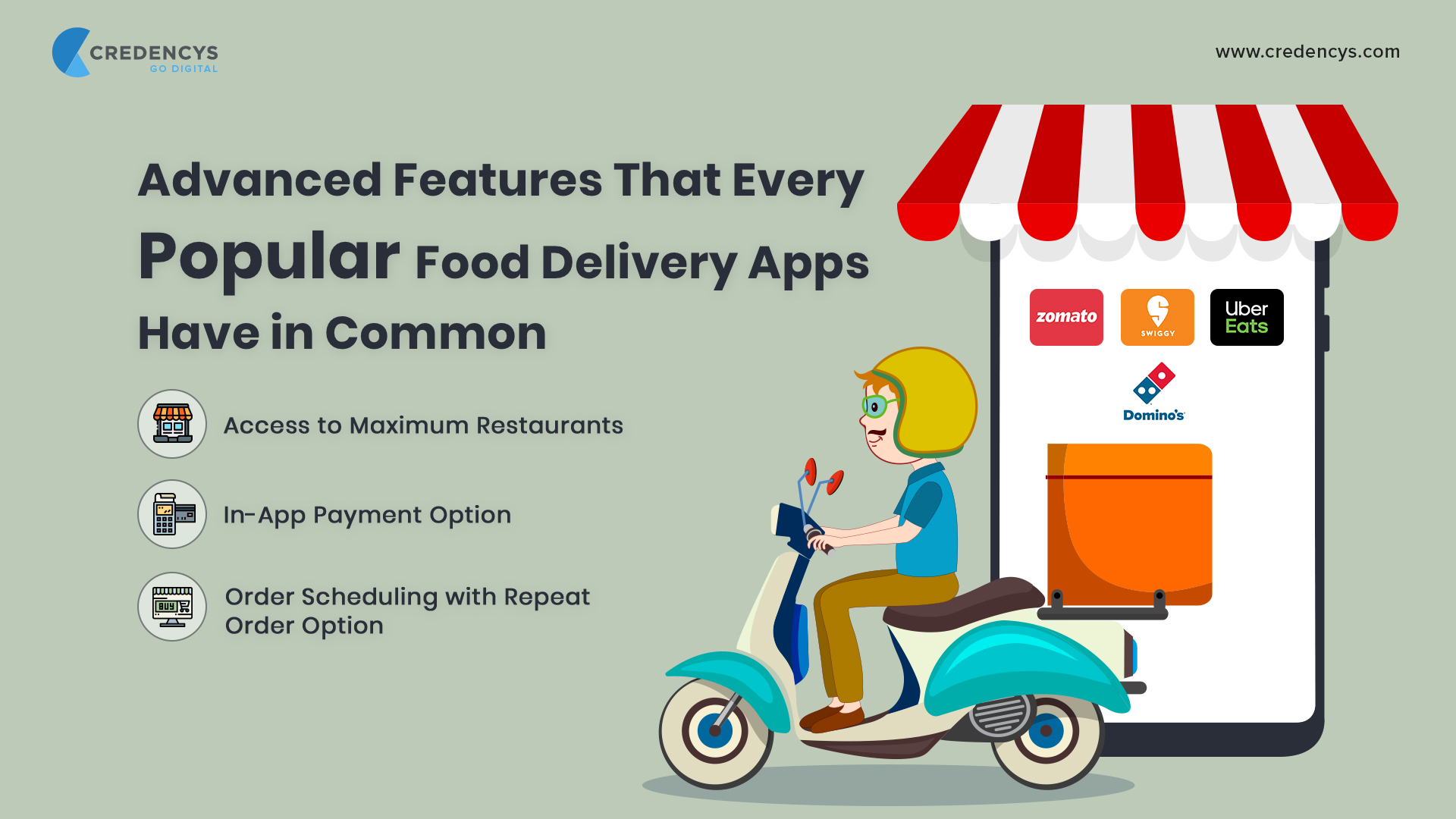
Advanced Features That Every Popular Food Delivery Apps Have in Common

Food Delivery App

1 – Access to Maximum Restaurants

This is extremely important and most serious concern, especially if you’re new in the food delivery app industry.

There are already dozens of food delivery app startups out there. And in order to compete with them and make money, you need to add as many restaurants in your restaurant partner list as possible.

The good news is, most restaurants love to partner with multiple food delivery services to receive more orders. So, convincing restaurants won’t be a big deal. The only problem will be contacting them and adding them in your list as fast as possible.

To boost your credibility and increase the chances of getting maximum restaurants to sign up on your platform, you can hire a PR team to market your startup.

2 – In-App Payment Option

Though we already discussed this feature above, but we just want to highlight the fact that in-app payment option is no longer a nice-to-have feature, but a mandatory one.

So, make sure to integrate it from the very beginning to allow customers to pay for their orders via credit cards as well as debit cards. In addition, you can also allow customers to pay via popular wallet apps available in your city so that they don’t necessarily have to put their card details in your food delivery app.

3 – Order Scheduling with Repeat Order Option

One unique feature that you can incorporate in your food delivery app is the order scheduling facility. This is particularly handy for customers who don’t want to go through the same hassle again and again.

Using this option, customers can just set the delivery time like 12 PM and order the food for the entire week. This will grow your retention rate drastically and will add value to the overall user experience of your mobile app.

How Food Delivery Apps Make Money? – [4 Monetization Options]

So, now that you know about necessary features of each app and some advanced features to consider as well, let’s see how popular food delivery app startups make millions of dollars in revenue and how you can replicate their business models.

Also Read – How Do Free Apps Make Money 2019 – [9 PROVEN Strategies]

1 – Delivery Charges

Since you’re going for the order+logistics-focused food delivery app development, you can earn a fair amount of money from delivery fees.

This delivery fee can be either a flat fee that you charge for each order delivery or a small percentage of the total order price.

Deliveroo, for example, uses this monetization model and according to reports, Deliveroo earned £129 Million only from delivering food from restaurants to customers’ location in 2016 alone.

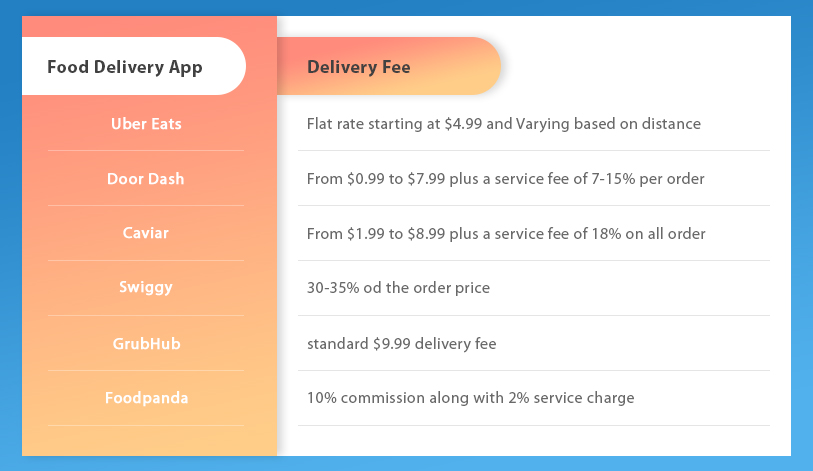
Since delivery charges can make you huge amount of money over time, let’s compare the delivery charges of other popular food delivery app startups.

food-delivery-app-development

Since the majority of food delivery apps rely on this model to generate revenue, delivery charges is indeed a good approach. However, we do not recommend to stay afloat on this model alone. Therefore, we’ve mentioned a few other revenue models for you to consider.

2 – Peak Hours

Peak Hours is one more way to generate revenue with your food delivery app. This monetization option basically involves a delivery surcharge (just like Uber) during peak hours.

For example, during peak hours, you can limit restaurants and locations and charge extra fees to make them available.

While charging extra during peak hours is a great way to make lots of money, but know that the majority of customers do not like paying extra. So, applying this monetization strategy in your food delivery app might piss off your customers and they may go to your competitor the next time they want to order food.

3 – Advertisement

Advertisement is a favorite way among top food delivery apps to make money.

In this model, you can offer to list a restaurant on top for a fixed amount of monthly fees. In fact, this model has proven to be the most effective one for Swiggy, a popular food delivery startup in India.

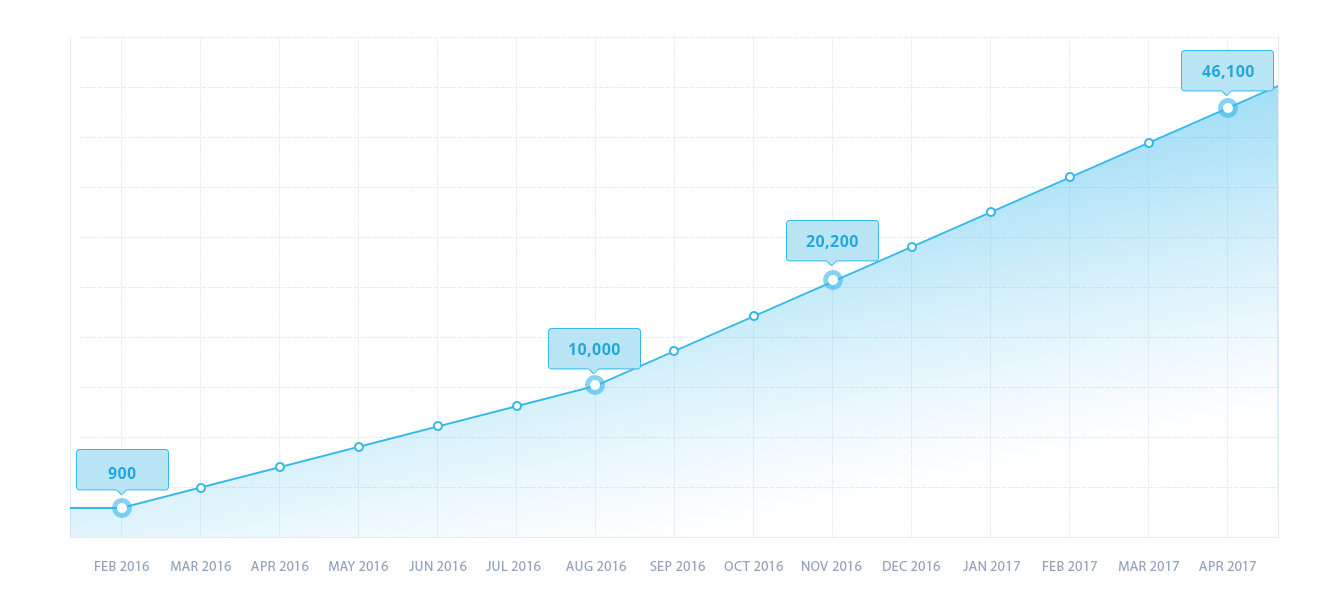
UberEATS is another startup that earns money from the advertising model. The following graph shows the number of paid restaurant partners UberEATS has since 2016.

food-delivery-app-development

Since the majority of restaurants have witnessed the ability of food delivery apps to bring more orders in, they don’t hesitate in spending money to be on of the list. Therefore, advertising is an excellent revenue model with no downside at all.

4 – Commission

The commission model is similar to delivery charge model. The only difference between the two is, the delivery charges model asks customers to pay extra for delivery while the commission model charges a small percentage of total order price to restaurants.

Take Just Eat for example. The company generates majority of its revenue by simply charging a fixed commission charges for each order. Today, the company’s market capitalization has surpassed $3.5 billion USD.

Overall, the commission-based business model is a good way to make money.

Ready to Create Food Delivery App of Your Own?

With this blog, we hope we’ve answered all your questions regarding food delivery app development. In case we missed something, please write it down in comment box below and we will surely help you with whatever is your concern.

Lastly, the food delivery app market has great potential for growth in the future. And if you’ve decided to launch your own food delivery app startup, make sure to revisit this blog to make sure that you don’t leave anything out.

If you’re unsure where to start or need advice, you can always contact us for expert advice. We are always happy to help!

Frequently Asked Questions

How much does it cost to make a food delivery app?

The cost of an on-demand food ordering app completely depends on the features and functionality you want to incorporate in the app. But a simple food delivery app development costs you around $10000 -$20000 while if you want to build an app with advanced functionality then it will cost you more the $50000.

How much time it will take to develop an on-demand food delivery App?

The development time of the on-demand food delivery app is based on the complexity of the app. The more features and functionality you want to add it will increase the development time. A simple app can be built and deployed within 4-5months. On the other hand, an app with all the advanced features takes up to 10 months.

How do food delivery apps make money?

The on-demand food delivery apps earn bucks by charging a fee to the restaurants to get them listed on the app, asking restaurants for a share of every order placed through the food delivery system, and charging your customer’s delivery fee or convenience charges.

How does on-demand food delivery app work?

The on-demand food delivery app allows customers to order food online from local and nearby restaurants or food cooperative. Customers can also find their favorite restaurants, select whether food will be picked up or delivered, and apply filters to choose their preferred cuisine type. It connects the restaurants with the customers and allows them to earn by delivering food orders at customers’ doorsteps.


JavaScript Framework List – Top 10 Frameworks To Use 2023

Since the time Internet has emerged, the tech world has witnessed the rise of a wide range of technologies and brought drastic changes around the globe. It started with the emergence of websites and is leading businesses to make an online presence. Today, a majority of these entrepreneurs are on the verge of adopting mobile apps to cater to the specific needs of their customers having different smartphones.

With the increasing use of different smartphones, developers are coming up with amazing mobile apps and web applications. Technically speaking, they build mobile apps for iOS, Android, and Windows platforms using different programming languages like Objective-C, and .NET respectively.

Now, programmers use different frameworks to develop specific applications and websites among which, JavaScript is one of the most popular ones.

What is a JavaScript Framework?

An application framework written in JavaScript is typically known as a JavaScript framework. It enables programmers to manipulate the functions to their advantage while developing particular applications or websites.

JS frameworks also make it possible for developers to code the application as device-responsive. It is one of the main reasons for its popularity when it comes to using a high-level machine language.

Now, let us jump to the most significant JS frameworks to look for in 2019.

Top 10 JavaScript Framework List

1. Angular

It is one of the most powerful, efficient, and open-source JS frameworks. Google operates it, and developers implement it for developing a Single Page Application (SPA). Angular implements the HTML in the app and interprets the attributes to perform data binding. Businesses commonly AngularJs Web Development company to build applications for their trade.

2. Vue.JS

Developed in 2016, Vue.JS has effectively made its way into the market and proved its worth by offering diverse features. Dual integration is one of its most engaging features for creating high-end Single Page Application. It is considered to be a reliable platform for building cross-platform.

3. Meteor

Meteor serves the larger portion of the software development. It is majorly used in backend development, management of the database, business logic and rendering of the front-end part of the websites.

4. React

Facebook created the React framework, and it has earned popularity within a short duration. Developers use it to create and operate the dynamic User Interface of the web pages with high incoming traffic. React uses a virtual DOM, which makes the integration with any application quite easier. You can hire React Js Developers if you are planning to build a robust web application.

5. Ember.js

Ember.js hit the market in 2015 and gained immense popularity with its wide application area. Its features support two-way data binding, thereby building a reliable platform for managing the complicated User Interfaces. Famous websites like LinkedIn, Netflix, Nordstrom and more use the Ember.JS platform for their sites.

6. Node.js

It is open-source and a server-side JavaScript run-time environment, which works on cross platforms. This framework has the capability of managing asynchronous I/O with its event-driven architecture. As it runs in the JavaScript Runtime environment, it has similar properties of JAVA like threading, packages, and forming of loops. Companies popularly hire node js developers these days to accomplish their relevant projects.

7. Aurelia

Aurelia framework is the latest version of the JavaScript. Developers use it to implement any interface. It is considered as the next generation of the framework for building robust websites. This framework can extend HTML for several purposes that include data binding. The modern architecture of Aurelia assures that the toll can be used for interpretation of client-side and server-side at a time.

8. Mithril

It is a client-side JavaScript framework, which is primarily used in building Single Page Applications. It is easy to deploy the framework, as its functions are not derived from a base class. It is small and offers routing & XHR utilities out of the box. A few features are similar to React.

9. Polymer

The Polymer is an open source JavaScript library developed by Google. It can create elements of websites without going into a complex level. Moreover, it also supports one-way and two-way data binding, thereby making the application area wider.

10. Backbone.js

Backbone.js is one of the most popular JavaScript frameworks. You can easily understand and learn this framework. It can be used to develop Single Page Applications. This framework enables all the server-side functions to flow smoothly through an API. As a result, it helps in achieving complex functionalities by writing less code.

Let us dig deeper into the benefits the JavaScript framework list offers.

Advantages of Adopting JavaScript Frameworks

1. Speed

Speed of client-side JavaScript is very fast, as it can run immediately within the client-side browser. JavaScript is uninterrupted by network calls to a backend server unless outside resources are required. It is not needed to be compiled on the client side, which increases the speed.

2. Popularity

JavaScript is popular among developers, as it offers numerous features to build robust applications and websites. The language as a whole has gained a lot of traction in the industry in recent years.

3. Efficiency

JS Framework consists of pre-built functions, which adds to the numerous benefits it offers. As a result, the developer can build applications faster with less code. It means that the task of development that used to take hours can now be completed within a few minutes.

4. Interoperability

Developers can effectively take advantage of combining JavaScript with other languages to build a variety of applications. Unlike PHP or SSI scripts, you can conveniently integrate the framework into any web page irrespective of the file extension. Moreover, you can also use JavaScript inside scripts written in other languages like Perl and PHP.

5. Security

The more you use a framework, the more security you require. Therefore, it is beneficial to use a framework that has a large and active community, which acts as long-term testers. As a result, in the case of security issues, they can report and also provide solutions to these troubles. JavaScript is one of those secured frameworks.

6. Versatility

One of the benefits of JavaScript is its versatility. Now, you can use it in various ways through Node.js servers. For example, if you want to bootstrap node.js with Express, then you can use a document database such as MongoDB. Also, you use JavaScript on the front-end for clients to make it possible to build an entire JavaScript app from front to back using only JavaScript.

Summing Up

From the discussion above, it is clear that JavaScript Framework proves to be the best framework when you need to use one for building applications.

When you plan to develop a robust application, Credencys strive to offer excellent web development services. We have the best Angular Js, Node Js, and React JS developers to help you accomplish your desired project using JavaScript frameworks.

Frequently Asked Questions

What does a JavaScript framework do?

JavaScript is a collection of JS code libraries that enables developers with pre-written code. They use the JavaScript code while programming tasks and features for developing a web application or website.

Which is best JavaScript framework?

The most popular JavaScript frameworks are Angular, React, Vue.js, Ember.js, Meteor, Mithril, Node.js, Polymer, Backbone.js, Aurelia, and more.

Why do we need JavaScript frameworks?

JavaScript is an application framework that enables developers with ready to use yet customization code for a website or web application development. Programmers can manipulate the functions and use them as per their convenience.

What are the latest JavaScript frameworks?

The highly advanced JavaScript frameworks are Spring, Grails, Blade, Google Web Toolkit, JavaServer Faces (JSF), Play, and Struts.


Node JS Vs PHP – Choosing The Right Backend Technology

Even though PHP is a decade-old technology, it’s still being used by 79.1% of all websites on the internet. And the good news is, it’s still one of the preferred programming languages for backend development of a web application.

Node JS, on the other hand, is also a backend development technology that became wildly popular in the past recent years. Currently, Node JS is used by many popular platforms such as Medium.com, Unsplash, Wall Street Journal, and Gizmodo to name just a few.

If you want to see more examples of Node JS, we have also written a comprehensive blog on Famous Companies that use Node JS. Be sure to check that out.

Coming back to the subject, the Node JS Vs PHP battle has been going on for a while now. So, with this blog, we aim to share how to choose the right backend technology for your next project.

Node JS Vs PHP – Let’s Settle The Debate!

Before we get into the details, let’s get over basics.

While both Node JS and PHP are two most powerful server-side technologies, but that’s sort of the only thing common between them.

PHP, for example, is a programming language, while Node JS is actually an open-source JavaScript Runtime Environment.

Node JS was, in fact, the first to make it possible to use JavaScript language for the backend development. That being said, if you’re interested in getting a deeper understanding, read our blog: What is Node JS.

Where PHP is Better?

PHP is a general-purpose programming language that became popular due to its CMS (content management systems) such as WordPress, Magento, Laravel, and many more.

Let’s look at some of the things PHP is best for.

1 – Mixing content with code

In PHP, everything is a template!

What we mean by this is that there are no extra files required to code in PHP. You can just open up a PHP file, use PHP tags, and start writing code in a matter of seconds.

Apart from this, PHP also allows mixing content with the code. For example, let’s say you’re writing thoughts into text for your website and half-way through you come up with an idea to add a little if-else statement to make it intuitive.

2 – Deep code base

PHP came out in 1994 and since then, it’s been used everywhere. For example, the most popular website development platforms WordPress, Joomla, and Drupal are written in PHP. And not only these platforms, but most of their plugins are written in PHP as well.

In a nutshell, today the world wide web is filled with PHP code and it’s just waiting for you to download and use as per your needs.

3 – SQL

PHP was built with MySQL and all its variants in mind. But, even if MySQL isn’t what you want to use, you can still use other databases from Microsoft and Oracle.

In addition, if you want to transition from MySQL to any other database, it can be easily done with just a few changes to your existing database queries.

Overall, if you want to use SQL and your app heavily relies on database queries, PHP might be the ideal choice for you.

4 – Coding speed

If you ask any web developer who has been coding for a little while, he/she will tell you that writing code in PHP always feels faster.

In fact, it actually is. This is mainly because PHP has no compilers, no preprocessors, no deployment, or no JAR files. And it’s for this reason PHP is sometimes a better option to develop a project quickly.

Where Node JS is Better?

Node JS, as mentioned earlier, is an open-source, cross-platform JavaScript runtime environment that helps to build large-scale and efficient web applications.

Ever since its inception, Node JS has quicked gained the number 1 position among the best web frameworks and is now being used by over a hundred thousand websites over the world.

That being said, let’s talk about the things where Node JS is best for.

1 – Separating concerns

While the possibility of mixing content with code sounds perfect on the surface, but it often ends up crippling your project.

Node JS, on the other hand, helps developers to separate the cosmetic layer from the logic layer to make the code cleaner to understand, maintain, and modify later.

In fact, if you ask any expert Node JS developer, they’ll tell you that Node JS frameworks running on the Node JS environment actually make the application development process better by separating the model, view, and controller.

2 – More modern features

PHP was released 15 years ago before Node JS and therefore it has more open-source PHP files than Node JS. And while looking at numbers using PHP sounds perfect, but there are lots of PHP plugins whose developers are praying that someone will download and use.

Not only that, but there are also lots of PHP libraries that have not been updated, while the Node JS plugins are a lot newer and all of them are built keeping latest architectural approaches in mind.

In addition, you can also reconfigure or extend any Node JS plugin and pass functions around objects, making the Node JS much more flexible to use for web application development.

3 – JSON

If you’d like to use Node JS, but your application demands using SQL, Node JS still has you covered. In simple terms, Node JS also has open-source libraries through which you can use SQL in your application development project.

In fact, in addition to SQL support, the Node JS libraries also provide support for all modern NoSQL databases through JSON. Though PHP also has its own JSON libraries but the JSON libraries in Node JS are far simpler to use compared to PHP.

4 – Application speed

While we mentioned that coding applications in PHP is faster than Node JS, but if you think about it, having a fast application speed is much more important than having a higher coding speed.

Node JS helps to achieve its fast application speed through its callback mechanism. It’s so brilliant that it helps to save a lot of time in terms of server response.

5 – Richness

Though “Less is more” is perfectly said by Ludwig Mies van der Rohe. But it doesn’t really apply to the web application industry anymore.

Today, we have smartphones with more power than a room of Cray computers and personal computers with video cards that can handle almost any heavy-processing. So, why should we consider stripping down application richness when we can have big websites with eye-catching and dramatic effects?

Node JS is capable of building slick websites with powerful and intuitive user interfaces compared with PHP.

In a Nutshell…

As you just saw above, between Node JS Vs PHP, Node JS is clearly a winner for building backends of modern web applications. Therefore, you should definitely go ahead and hire Node JS developer to start building your project.

PHP, on the other hand, should only be considered when you have very specific requirements in your project and when you want to avail the PHP benefits.

Overall, if you want to build a standardized solution, use PHP. For almost all other requirements, including chat apps, single-page applications, or building collaboration tools, Node JS is without any doubt a perfect choice.

How Do Free Apps Make Money 2023 – [9 PROVEN Strategies]

If you’re an aspiring entrepreneur who wants to learn how do free apps make money, then you’ve come to the right place.

Mobile app development requires huge capital investment. Therefore, it’s critical to learn how to capitalize on your free app before the development process begins.

Now, when it comes to app monetization strategies, you will often come across the following three strategies:

  • Advertisements
  • In-App Purchase
  • Freemium Model

While all these strategies definitely work for the majority of the free mobile apps, but these are not the only app monetization methods that are out there.

In fact, if you’re planning to use only these three strategies, then achieving the million-dollar mark in revenues will probably take forever considering today’s market conditions and competition.

So, what are the other ways to make money with apps?

In this blog, we have shared 9 proven app monetization strategies that still work in 2019 and it will continue to work in the future as well.

Are you ready to learn how do free apps make money?

Let’s dive right in then!

1 – Advertising

Advertising is one of the easiest and most common app monetization options to make money from free mobile apps.

In fact, the mobile app advertising revenue has already reached $159+ billion worldwide in 2018 and the same is forecasted to cross $250 billion by 2023.

Mobile Internet Ad spending worldwide

What’s more is that according to eMarketer, over 67% of all digital ad spending will soon go towards mobile.

Why?

Well, it’s mainly because mobile apps provide a dynamic environment in which the ads can be seamlessly integrated within in-app content.

In simple terms, ads in mobile apps look a relevant suggestion rather than an unwelcomed distraction, which ultimately increases users’ app experience.

Although, it’s imperative to choose the right ad format to ensure ads don’t annoy your users.

Below, we’ve shared all ad formats so that you can learn how each ad format will affect users’ experience while using your mobile app.

Now, when it comes to mobile app ads, there are two main categories – Video Ads & Display Ads.

Let’s start with Video Ads.

Video Ad Formats

As the name suggests, Video ads are basically short promotional videos that can effectively deliver brand messages across all users.

The following are the main 4 video ad formats you can consider to integrate within your free app.

Interstitial Video Ads: Interstitial video ads are basically full-screen advertisement videos that appear automatically when a user takes a natural break within the app.

interstitial_ad

For instance, when a user completes a level in a mobile game or is trying to go to the homepage of the application, the ad automatically pops-up and starts playing. Overall, the Interstitial video ad is extremely effective as it fills the user’s screen and allows telling a rich story.

Rewarded Video Ads: This video ad format is majorly used in gaming apps. It basically enables users to earn virtual points or goods to advance in-game faster in return for watching a video ad.

rewarded_ad

Unlike the Interstitial video ad, the rewarded video ad is opt-in, meaning the user has an option to skip it and continue using the app without having to watch the ad. And it’s for this reason, rewarded video ad has the highest viewability rate among all ad formats.

Outstream Video Ads: Outstream video ads basically don’t take up the entire screen of users’ devices. Instead, they are placed in between the in-app content as shown in the below image.

outstream_ad

This video ad basically auto-play when the ad properly reaches the viewable area of the screen. And just like rewarded video ads, the Outstream video ad also has a high viewability rate as it also provides an option to close or pause an ad.

Instream Pre-Roll Video Ad: Instream pre-roll video ads basically play either before, in between, or after a video content within the app’s video player. This video ad format has increasingly become popular and is an effective way to grab users’ attention.

instream_pre_roll

The best example of an instream pre-roll video ad is Youtube. Remember those “skip in 5-second ads” that appear at the beginning and sometimes in between a video you’re watching? – It’s an instream pre-roll video ad.

So, these are the main video ad formats you can consider using in your free app.

Now, let’s look at the display ad formats that you can also consider using.

Display Ad Formats

Display ads, as you might already know, are static or GIF image ads that help brands broaden their reach within the in-app environment.

Below are the main four display ad formats that you can consider using in your free app.

Interstitial Display Ad: Just like the interstitial video ad, the interstitial display ad is a full-screen ad that appears when a user takes a natural content break within the app.

interstitial_ad

Since this ad format covers the entire device screen, they’re believed to be one of the most engaging display ads.

Banner Display Ad: Banner display ad was probably the first-ever ad format introduced in the mobile apps. It is basically a tiny banner that is placed either at the top, in-between, or at bottom within the app’s content.

banner_ad

Though this ad format is small in size, but they still have huge reach and impact that can help in increasing a brand’s awareness.

Medium Rectangle Ad: Medium Rectangle Ad, to explain in simplest terms possible, is basically a large square ad.

medium_rectangle_ad

Unlike the Banner Display ad, the Medium Rectangle ad provides much more room for promotional content with high viewability.

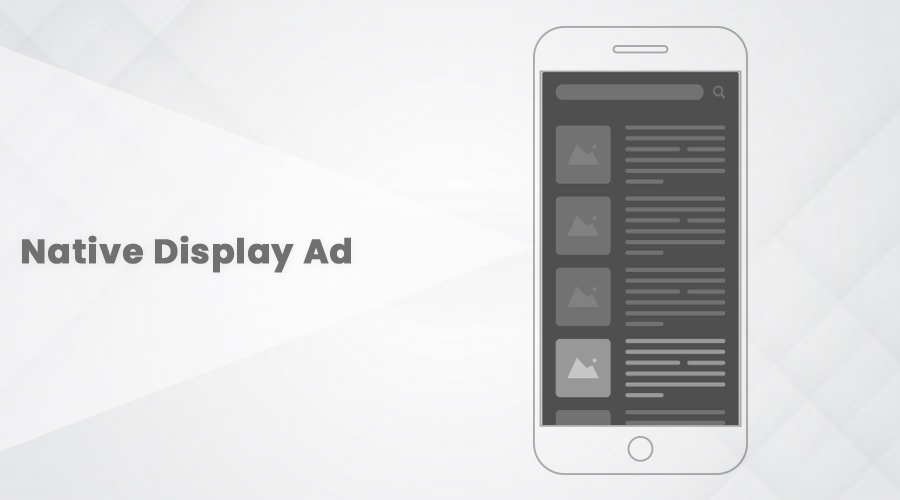
Native Display Ad: The Native Display ad basically fits in in a way that it doesn’t look and feel like an ad at all.

native_ad

As a result, it creates a highly-impactful user experience in which the native display ads are perceived as a welcome idea.

So there you have it!

These are all best practices for the in-app advertisement using which you can to start making money with apps.

Now let’s move on to the next app monetization option.

2 – In-App Purchases

In-App Purchase is also another common app monetization strategy.

As the name suggests, the in-app purchase basically allows the app providers to sell different sorts of virtual items such as extra bonuses, virtual goods, game currency, or premium content within the app.

According to Forbes, free apps that have used the in-app purchase monetization model generate the highest revenue, and this model is also forecasted to continue dominating in the years to come.

That being said, here are the three categories of the in-app purchase model.

Subscription: You can provide an in-app subscription where users can unlock premium content for a limited period of time. Example: Insider News Stories.

Consumable: This could be a digital product that can be bought and used within the app. Example: Premium Stickers in a Chat app.

Non-Consumable: This could be a feature that users can buy for unlimited Usage. Example: Nutrition tracker in a Diet Tracking app.

By using any one or mix of these categories, you can easily start earning money from your free app.

3 – Freemium Model

MXPlayer

Freemium basically means an app is offered to download and use for free of charge with minimal features.

Then, if users feel that the content of your app is worth paying for, then they can get access to all functionality by purchasing a PRO version of your free app.

Although, you can also implement this strategy even if you do not have any extra features to offer.

For instance, you can integrate different ads in the free version of your app and if users would like to enjoy an ad-free experience, they can do so by purchasing a PRO version of your mobile app.

The best example of this strategy is MX Player. It is a video player app in which the free version often shows both videos as well as display banner ads.

However, users can get rid of all ads in MX Player by purchasing its PRO version for a small amount of money.

4 – Referral Marketing

Referral Marketing basically means promoting a third-party service or product.

You, as an owner of a free app, can partner with brands and sell affiliate services and products based on different models.

There are 3 referral marketing models you can implement to make money with apps.

Referral Marketing

Cost per View (CPV)

Cost per View, as you might have guessed, is about the number of views an affiliate ad gets on your free mobile app.

You can implement this model by using the Interstitial Video ad format to display affiliate ads at regular intervals.

Cost per Click (CPC)

This referral marketing model is about the number of clicks a displayed ad receives in your free app.

In simple terms, you can earn money a fixed amount of money each time a user clicks on the displayed referral ad. The ad can be either a video or a display ad.

AdMob and Adfonic are two of the most popular platforms to partner with brands and earn money per click in your free app.

Cost per Acquisition (CPA)

In this referral marketing model, you basically promote mostly other apps through a pop-up video or display ad. If your users, for example, clicks on the ad and installs the advertised app, you will earn a fixed amount of money.

There are many CPA affiliate platforms you can join to start making money. To help you get started immediately, here is the list of best mobile CPA networks for you to check out.

5 – Subscription Model

subscription model

The Subscription model is quite similar to the subscription category we discussed in the In-App Purchase strategy.

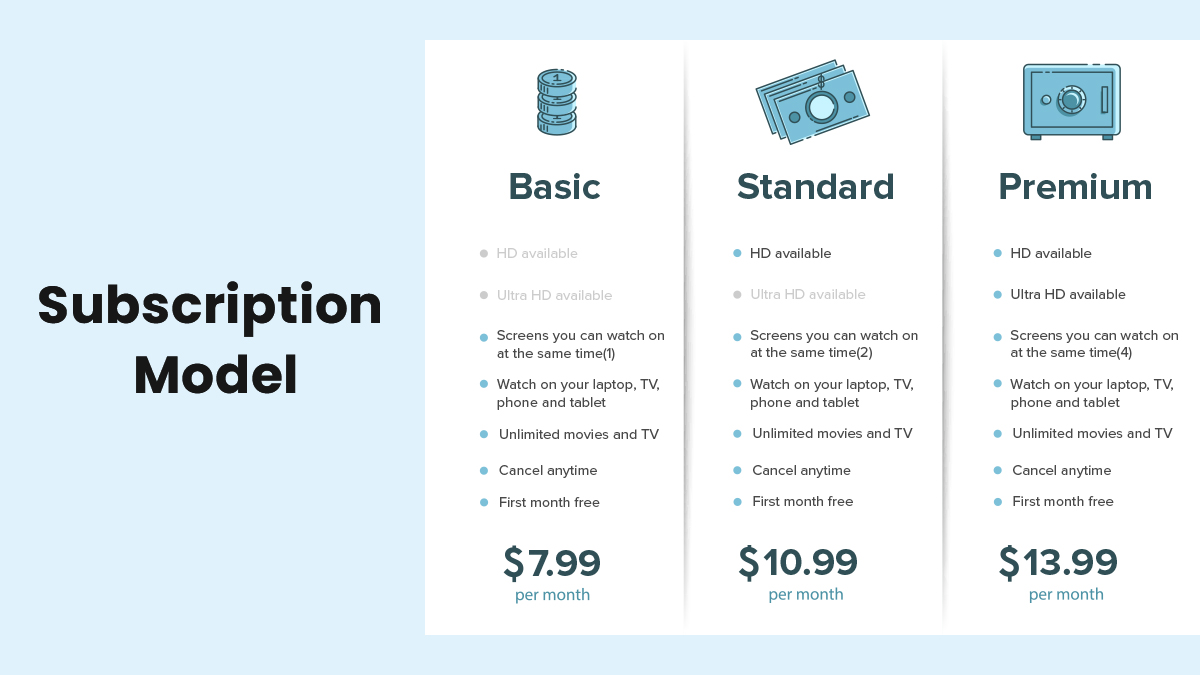
The difference between the two is that in this model you provide all features or content free of charge for a short period of time. And then, lock all features and charge a monthly/annual subscription fee to users who want to continue using your app.

The best example of this app monetization strategy is Netflix.

As you might all know that when you sign up on Netflix for the first time, you get free access to all content for 30 days, and if you want to continue watching on Netflix after 30 days, you’ve to purchase any of their subscription plans.

This app monetization model is often used in online music & video streaming apps such as Netflix, Amazon Prime Video, Spotify, and others.

6 – Sponsorship

The Sponsorship Model, to be honest, is not for everyone.

However, it is still one of the most powerful app monetization options if you’re building your app in the right niche.

For those who don’t know, App sponsorship is similar to website/blog sponsorship where sponsors approach app owners who have the same target audience as the sponsoring brands and companies.

To make the most out of this model, it’s wise to create a list of brands & companies that can benefit from the partnership before building the app.

Another way to embed the sponsorship model in your free mobile app is by allowing users to promote their own products or posts.

The best example of this is Social Media apps. Facebook, for instance, allows users to promote both their products as well as posts to a large target audience.

Similarly, if you’re building an app that allows users to post, share, or advertise something, providing paid sponsorship option is a powerful way to make money with apps.

7 – Selling Physical Products

This app monetization strategy is strictly for entrepreneurs, startups, and retailers who wants to sell their products online.

Today, the eCommerce industry is a booming market and the majority of the credit goes to mobile apps. Ever since mobile traffic surpassed desktop traffic in 2015, entrepreneurs from all around the world started investing in building Ecommerce apps.

According to MarketWatch, today 60% of traffic to eCommerce stores comes through mobile apps.

What this means is that if you own a retail store or want to start an ecommerce startup, then now is the time.

8 – Selling Merchandise

Selling Merchandise

Selling Merchandise, as you might have guessed, is similar to the eCommerce model.

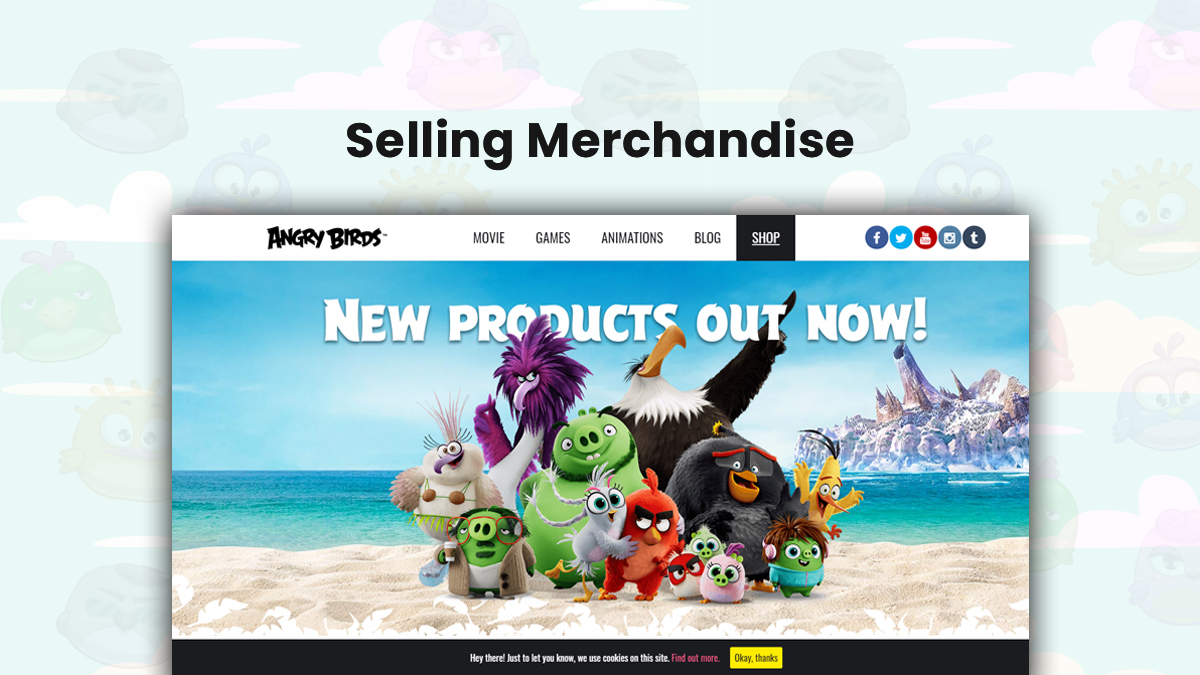
This model, however, is a sort of best fit for popular brands & companies. In this model, a brand or a company basically builds a mobile app to sell its own merchandise products such as toys, Tshirts, mobile cases, backpacks, stickers, and a lot of others.

Rovio, for example, the maker of Angry Birds game managed to earn an additional revenue of 1 million per month through this app monetization model.

A business, on the other hand, can use services like Amazon Merch to sell custom-branded products within their free mobile apps.

All you need to do is create & upload your artwork on Amazon and promote it among your followers. Amazon takes care of the delivery of items and payments.

9 – Selling User Data

Lastly, you can also make a handsome amount of money off your users’ data.

There are hundreds of thousands of companies and research firms that are always on the lookout for fresh users’ data.

Mobile apps, on the other hand, collect lots of different kinds of users’ data such as user behavior data, daily time spent, email addresses, personal preferences, social media accounts, etc., which you can later sell to international research companies.

All you need to do is build an app with a huge userbase and try to collect as much data as possible.

Concluding Thoughts…

With this, we’ve come to the end of this blog.

We hope you found your answer to the question ‘how do free apps make money’.

As you saw, there are a lot of ways to monetize an app other than advertising, in-app purchase, and the freemium model.

Now, if you’ve now decided to go ahead, there is only one thing you need to keep in mind – don’t overuse the above-mentioned app monetization models.

We understand that after investing a huge amount of money, time, efforts, and resources into your mobile app development, it’s tempting to apply multiple monetization strategies all at once, especially when you’ve built a large userbase.

However, you must remember not to make your app inconvenient to use for users. Your app will bring profits only when users continuously use your app. And if they don’t feel comfortable or find ads annoying, they’ll uninstall your app instantly.

Therefore, make sure to deliver a great user experience and not worry about money in the beginning.

Now, if you’ve any further questions or doubts, feel free to reach out to our experts.

FAQs:

Q1 – What are the most common strategies to make money with free apps?

Advertising, In-app purchase, and freemium model are the three most commonly used app monetization strategies to make money with free apps.

Q2 – How do free apps make money without ads?

If you don’t want to annoy your users with unnecessary ad banners inside your app, there are still many ways to make money without ads. For instance, you can earn money from referral marketing, selling merchandise, selling physical products, and a lot more.

Q3 – How much do apps make?

According to reports, 25% of iOS app developers or publishers make $5000 USD from their apps, while only 16% of Android app developers make $5000 USD from their apps.

Q4 – Can you become a millionaire by making an app?

Of course, you can definitely become a millionaire by making an app. However, reaching the million-dollar mark in mobile app revenue is only possible with a kickass business model. If your app becomes becomes popular and is used by millions, there are many ways to earn millions from your mobile app.


What is DevOps as a Service? (A Complete Guide to DevOps)

What is DevOps?

They say that ‘collaboration is the key to success’ in software development. DevOps does exactly that. It is a culture which promotes collaboration between the development team and the operations team. That is how the word “DevOps” has been derived. DevOps is one of the factors which makes an Agile software development company ‘Agile.’

We know that software delivery is no child’s play. That is why Agile organizations leverage DevOps to develop, test, deploy, and maintain an app with great speed, superior quality, and excellent control.

Agile organizations like Credencys offer DevOps as a service (DaaS) to serve those customers who deployed their apps without implementing DevOps. But, what is all the fuss? Why does software development require DevOps so badly?

Why DevOps is more than a need?

#1 Shorter Development Time, Faster Delivery

Before DevOps, the development and operations team worked in different silos. Due to it, the project got finished with more number of development cycles or didn’t finish at all. Now, as the development and operations teams work together, the number of development cycles have been reduced.

Key Takeaway

It helped business and enterprises to reduce their application time-to-market. Which means now they have more time to test market penetration of their app. They can do more marketing experiments with their app than earlier.

#2 Reduce Deployment Failures, Increase Recovery Time

DevOps increases the probability of finding errors in code. Faster the developers find a bug the quicker they will be able to solve it. DevOps not only makes development quicker but also reduces the risk of deployment failure as there will be minimum to almost none bugs in a code release.

Key Takeaway

It decreases rollbacks and increases the recovery time of an application. It will save developer’s time and energy as there will be lesser failures in every build release.

#3 Better Communication

DevOps is a culture. A software development culture that enables development and operations team to work together to produce stunning results. This collaboration will increase the productivity of both developers and operations team.

Key Takeaway

The wait for results is no longer. The ritual of turning over the application to operations people and await the result will be over. Since the developers can fix bugs and build the app faster, the deployment team will deploy the app quicker and reduce time-to-market.

#4 Higher Efficiency

DevOps helps developers to increase their programming efficiency. Development firms who follow DevOps are also using automation testing tools such as Selenium, Appium, Watir, etc. These tools help developers to identify the bugs quicker than manual testing methods.

Key Takeaway

The development process will become faster and less prone to errors at the same time.

#5 Reduce Cost by Reducing IT Staff

DevOps benefits to both software development companies as well as their customers. It helps to reduce human resources required to develop software. With automation testing and faster development, businesses can now hire fewer developers and still deploy their app on-time.

Key Takeaway

DevOps helps business, start-ups, and enterprises to save money on their mobile app or web app development project.

How DevOps is different from traditional IT?

DevOps is no different than traditional IT. Well, not literally. DevOps is a value addition to traditional IT. It adds value to every aspect of software development, which includes a software development company and its employees, customers, and the software itself.

DevOps is no rocket science. It’s the practices and policies of DevOps, which makes it different and better than traditional IT. Below are a few key factors which differentiate DevOps with traditional IT.

what-is-devops-as-a-service

DevOps Lifecycle

So far we have identified that DevOps is good and it has greater benefits than what people see. These benefits are covered further in this article. But, before jumping on to the benefits of DevOps knowing its lifecycle is important.

There is a reason why we have an infinity symbol in DevOps. It stands for continuous improvement. Below is a continuous DevOps lifecycle.

lifecycle-devops-as-a-service

DevOps Process Flow

DevOps lifecycle is all about bringing agility in development by means of introducing automation in various processes such as software testing. The DevOps process flow is all about driving production by bridging the gap between development and operations team through continuous integration, deployment, delivery, and feedback.

Continuous Integration

Continuous Integration or CI is a process where developers can update their small codes in a repository shared with the entire project team. Here their code is being tested and validated automatically. This repository helps to reduce delays as any team member can find the most up-to-date and validated version of the code at any time.

Continuous Delivery

After CI the next logical step would be CD or Continuous Delivery. CD helps the operations team to automatically build, test, and pack the code changes done during CI for release. Similar to CI, CD automates the delivery process for faster build releases.

Continuous Deployment

Unlike Continuous Delivery, Continuous Deployment is a process where no human intervention is required. There are tools which automatically tests and then release the code as soon as it detects the change in code.

Continuous Deployment eliminates the need to schedule release dates and quickens the feedback loop.

Continuous Feedback

Continuous Feedback is also a process which includes tools that help the operations team to detect bugs in a system and update the development team about them at the same time. It ensures higher reliability and better security of the software.

DevOps Principles

There are 6 principles one must keep in mind while implementing DevOps.

#1 Take Customer-Centric Actions

A DevOps company must always think from customer point-of-view and continually invest in services and products which adds value to their business.

#2 End-to-end Accountability

A DevOps team is accountable to deliver high-quality products to its customers and is also responsible to provide full support until the product expires.

#3 Continuous Improvement

DevOps culture believes in continuous improvement for which it has the CI/CD process which guarantees to minimize development time and cost.

#4 Automation Everywhere

Automation is at the core of DevOps. The process of DevOps is incomplete without automation. It increases the efficiency of software development.

#5 Teamwork

DevOps promotes teamwork. A DevOps team (designer, developer, and tester) sit together and work collaboratively in a single silo.

#6 Testing and Monitoring

As DevOps culture believes in continuous improvement, DevOps teams must test and monitor the application on a continuous basis.

What is DevOps as a Service?

DevOps as a service is a philosophy adopted by many mobile app development companies around the world. It is a culture which every software development firm must adopt because it makes software development faster and risk-free. Credencys is one such company who not only follow DevOps practices but also offer DevOps as a service.

The main reason to offer DevOps as a service to customers is to migrate their existing applications to the cloud and make it more reliable, efficient, and high functioning.

The main aim of DevOps as a service is to make sure that the changes or actions carried out during the delivery of software are trackable. It helps companies to achieve breakthrough outcomes and excellent business value from software by implementing DevOps strategies such as Continuous Integration and Continuous Delivery.

Benefits of DevOps as a Service

There are immense benefits of DevOps as a service. Below are some of the prominent benefits one can achieve by implementing DevOps as a service to upgrade their legacy systems.

Better collaboration

Cloud-based DevOps makes it easier for developers, designers, and testers to collaborate because of easy accessibility to all the files.

Faster testing and deployment

Cloud-based automation testing tools provide great power to the testers where they can test and deploy a piece of code faster than ever.

Reduces complexity

DevOps reduces the complexity of data and information flow. It means that now a software developer can test his/her code and an operations manager can make changes in the code wherever necessary through code and configuration management tools which save overall development and deployment time.

Highest quality product

Since DevOps is a continuous process, it leaves no room for enhancements and upgrades at the end of a software delivery unless there are changes in requirements.

Coexists with internal DevOps

It is not necessary to have DevOps in each and every process of development and delivery. DevOps mainly help to reduce turnaround time and increase collaboration among various team members of the project.

Final thoughts

Opting DevOps as a service will help you grow your business faster and allow you to deliver more value to your customers. Outsourcing DevOps services from a reputable company will help you escape from the worry about product planning, development, testing, deployment, and delivery. Whether you’re looking to develop a new application or you’re looking to upgrade your legacy apps, opting DevOps as a service is your ultimatum to customer success.

FAQs

1) What are the key components of DevOps?

Since DevOps is a culture rather than a technology, there are three main components of DevOps, which are People, Process, and Technology.

2) What is the DevOps model?

DevOps is the combination of cultural philosophies, tools, and practices that increases an organization’s ability to deliver services and apps at high speed.

3) How is DevOps different from Agile?

Agile refers to an iterative approach that concentrates on collaboration, customer feedback, and rapid, small releases. DevOps is viewed as a practice of bringing operations and development teams together.

4) What is the need for DevOps?

The main aim of DevOps is to enable faster release and deployment cycles by taking advantage of agile software development methodologies.


How Much Does Android App Development Cost

Acquiring a large user base, Android rules the mobile app market. More and more businesses are considering Android app development on a priority basis. But, cost is the key concern for SMEs or startups as they feel Android app development cost is quite high. There are a lot of examples where the projects are not reaching to even the development phase because clients are running out of the budget.

Actually, it is very difficult to estimate an exact cost, whether you want to develop an iOS app or Android app, as the pricing can vary according to the tailored project requirements. It’s a very common scenario in the mobile app development industry that the project starts with an estimated budget, but it ends with a different amount, it could be more or less.

To avoid such scenarios, the best way is, businesses can have a rough estimation before approaching any Android app development company in USA.

Surprised or Confused?

Don’t worry, we are not going to discuss any technical aspect of Android app development. This post unveils different factors that affect the costing of your application.

Business Model

App development journey starts with the revenue generation plan of business. The ultimate goal of any organization is to increase the cash flow and app development is an integral part to achieve this objective. The Android app development cost depends on which businesses model you are choosing to boost the ROI.

Free App – The app is available to users for free to download. Users can access the basic functionality of the application. In order to use premium features, users need to pay. It is the best model to expand your existing customer base.

Paid Apps – Users need to pay a certain amount to download and use your paid Android app.

In-app Purchase – It is the best business model to generate revenue for the long term. Businesses can sell their products and services from inside an application on a mobile device.

In-app Advertising – Run the advertisements of your products or services in your Android app. You can monetize your app by allowing other businesses to post their ads in the paid space.

Android App Development Approach

Native

Build your application specifically for the Android platform by embracing Native app development approach. Leverage an outstanding application in terms of performance, speed, security, user experience, personalization, and reliability. It allows to build a next-generation Android app by leveraging the full access to hardware and software of the OS. Native app development is costlier and more time consuming than Hybrid apps due to its capabilities.

Hybrid

Hybrid is the best choice if you want to target multiple mobile OS such as Android, iOS, Windows, etc. Yes, this approach allows to write the code once and use it anywhere. It is a very cost effective approach and also helps you to reach out larger target audience by covering a wide range of devices. But when it comes to performance and efficiency, Hybrid apps are a bit slower than Native apps. Also, You can not take full advantages of the default OS features.

Type of Android Apps

Table based App

It is the simplest form of app development. Table based Android app allows businesses to provide options, present the information, and redirect to other content. It requires less efforts and thus you need to invest less to build this app compared to other types of apps.

Dynamic App

These applications are complex to develop and deploy. They require varied technical integrations to perform different functions effectively. Dynamic apps do not really connect with outer resources but they extract information from the outside resources with the help of APIs.

Database App

Database apps are highly complex and increase Android app development cost too. These applications process the data swiftly and display it in a logical way through the visually rich presentation. Database Android apps connect to varied websites, servers, and other online services. The app collects information from different platforms and broadcast request data.

Gaming App

Gaming applications are very costly due to complex design, UI/UX, graphics, animations, media elements, and many other effects. As per the custom requirements, the functionality and integrated technologies vary that impact the client’s budget.

Android App Development Time

Android app development cost depends on the time and efforts requires to build custom applications that deliver the expected output. More complex design, features, and functionality require more time for development.

Android App Development Cost (Approx.)

android-app-development
*The pricing is a rough assumption. It can be more or less as per the custom project needs.

Common Features in Android App

Android app development cost depends on the number of features and functionality you want to integrate into it. More complex and large scale applications require more time to build the app. Exceeded timeline directly impacts the project cost. All Android apps are having a few very common features.

Login – After downloading the app, users need to login with their email id or phone no. or Facebook or other social accounts. Most of the Android apps are having this feature. For the convenience of users, it is better to allow them to login with Facebook.

Profile – The Android app fetches the user’s information from his/her email id or Facebook account and integrates & use the data to create a user’s profile.

Push Notification – It helps to keep your users updated with the advanced features of the app and new product or service offerings.

Payment – Users can take instant purchase decision by making payment through an integrated payment gateway anytime anywhere.

Social Integrations – Social Media integration is offered by almost every Andoird app. It allows users to share any information from the app to their preferred social media platforms.

Geo-positioning – For the apps that require location tracking as the main feature, integration of Geo-positioning is very essential. For example; a cab booking app like Uber needs to track the real-time location of a customer and driver so they have to consider this feature.

Chatbots – Chatbots help businesses to interact with their buyers instantly. It helps companies to improve customer engagement and increase sales.

Wrapping Up

Credencys, a renowned Android app development company in USA, holds proven expertise in developing robust applications for diversified industry domains. During our decade long industry establishment, we have successfully handled and delivered different type and size of Android projects. We have developed the right solutions that help companies to address their business challenges and requirements.

In this post, we would like to help businesses to have a rough idea about Android app development cost when they are planning to build a mobile app for the Android platform. The final cost will differ as per the specific features, functionality, and pricing model you choose.

Frequently Asked Questions

How do free Android apps make money?

To monetize your free to download Android app, you can consider paid advertisements, sponsorship, in-app purchase, freemium upsell, email marketing, subscriptions, etc.

How much does it cost to put an Android app in Google Play?

Google Play charges $25 as a one time fee to make your app available on the store. The store fees become much lesser as you sell more apps.

How much money do Android apps make per download?

If you are planning to go with the paid model, you can easily earn the bucks. If your app downloads charge is $10 and you need to earn $100 each day, then you need at least 10 downloads in a day. For a free app, if you want to make $10 a day with ads, you require at least +- 2500 downloads for a day. Only then it will give you +- 4 to 15 dollars a day.

How can I create my own Android app?

To transform your idea into an app, you need to define your app idea in detail, do market research, create mockups/wireframes/prototypes, create graphic design, develop the landing page, build an app with Java or Kotlin, launch the app on Play Store, consider App Store Optimization (ASO), and app enhancement.


Top Mobile App Development Companies in Los Angeles

Do you have a mobile app idea?

Great!

Are you looking for an ideal mobile app development company in Los Angeles?

Superb!

Today we’re going to share with you a list of top mobile app development companies in Los Angeles.

Now, before you make any assumptions, we’d like to make one thing crystal clear. –

This is not just another list blog of top mobile app development companies in Los Angeles.

These mobile app development companies in LA were carefully selected based on a number of important key factors like their:

  • Top Achievements
  • Past Work Record
  • Number of Clients & Their Reviews
  • Capabilities
  • And lots more

In this blog, you’ll not only know which are top mobile app development companies in Los Angeles (LA), but you’ll also know about their strengths, expertise, capabilities, and of course, their hourly rate.

But first, we’d like to shed some light on the importance of mobile apps.

If you’re someone who thinks that mobile application development is only for big brands, then you are wrong.

Mobile apps have actually become go-to-strategy among small businesses nowadays.

Why?

Because developing a mobile app can bring lots of benefits to small businesses.

For instance, mobile apps can help you expand your market reach, increase customer engagement, help you stand out from the crowd by positioning your brand as unique and provide you a direct marketing channel to retain customers.

So, if you’re a small business looking for the right mobile app development partner, you’ve come to the right place.

After reading this blog, you’ll not only know about the top companies for mobile app development in Los Angeles available, but you’ll find out the average cost of building a mobile app.

Let’s dive right in!

Top Mobile App Development Companies in Los Angeles

NameEmployee StrengthMinimum Project SizeHourly Rate
Credencys Solutions Inc.120-150$10,000 USD$25-50 USD
Fueled90-100$75,000 USD$175 USD
S-PRO150$50,000 USD$25-49 USD
Creative2715-20$25,000 USD$120 USD
Cubix100-150$25,000 USD$25-49 USD
App Makers LA10-25$10,000 USD$100 USD
Consagous Technologies Pvt. Ltd.100-125$2000 USD$20-30 USD
Promatics Technologies Private Limited100-200$5000 USD$18 USD
Vipra Business Consulting Services Pvt. Ltd.50-75$5000 USD$15 USD
Clarion Technologies500-550$10,000 USD$25-50 USD
SoluLab Inc.100-125$25,000 USD$25-50 USD

What you saw above is just the highlights of top mobile app development companies in Los Angeles.

Now, we’ll briefly review each company individually so that your decision process becomes even more easier.

1 – Credencys Solutions Inc.

Credencys Solutions Inc., a prominent agile software development company, offering web and mobile app development services. Based in U.S. & India, the company has a strong focus on enterprise mobile app development.

According to a Gartner Report, Credencys is one of the few companies who has developed their own Agile platform through which Credencys provides a single source of truth, from project documentation to sprint planning & execution and client reporting & quality testing – all in a single platform.

In fact, it’s what makes the company deserve the #1 rank on this list.

Founded In – 2012

Employees – 120-150

Services – Mobile App Development, Android App Development, iPhone App Development, AR/VR App Development

Clients – Cisco, Samsung, McDonald’s, Taco Bell, Emerson, Weight Watchers

Minimum Project Size – $10,000 USD

Hourly Rate – $25-50 USD

Websitehttps://www.credencys.com/

2 – Fueled

Fueled is the world’s leading app developer. We strategize, design, and develop apps that win in the marketplace. With the capabilities of international agency and the ethos of a startup, Fueled builds uniquely innovative products that are designed to scale. Our team consists of the types of outside-of-the-box thinkers that you don’t see at traditional dev shops and, leveraging our proprietary agency-ified version of Silicon Valley’s proven methods, we stay laser-focused on creating apps that set trends.

A unique resource for a global roster of Fortune 500s like Verizon, Rite Aid, and MGM Resorts, Fueled specializes in creating innovative products that address the needs of millions of consumers. We brought Afterlight and QuizUp to Android, we put the Barneys app on the iPad, and we made getting locked out of your house a thing of the past with KeyMe. From powerhouses like Google and Apple to unicorn startups like Warby Parker, clients of all shapes and sizes come to Fueled when they need to get the job done—the right way.

We’ve amassed extensive expertise in all things mobile since the early days of the App Store but we also spend a lot of time thinking about the future—from blockchain development and dApps to AR and VR, we like to stay a few steps ahead of the times.

Come visit our New York office in SoHo, have tea with us in London, or shoot an email to to learn why there’s an app, and then there’s a Fueled app.

Founded In – 2009

Employees – 90-100

Services – App Development, App Design, Web Development, Growth Marketing, Digital Marketing, UI/UX, AR/VR, dApp Development

Minimum Project Size – $75,000 USD

Hourly Rate – $175 USD

Websitehttps://fueled.com

3 – S-PRO

S-PRO provides software development solutions ranging from analytics and consulting to delivery and launch. We work as a technical partner to enterprises and startups, taking responsibility for product development.

All our team members are in-house employees; we do not outsource projects to third parties. We have a two-stage development approach that allows us to deliver a quote for any project.

Our team is prepared to take ownership of both the budget and timeline for the deliverable product. We take pride in being customer-focused.

S-PRO ensures that every product we design is delivered fully completed & on-time. We are positioned to be your lifetime partner in technologies and beyond. Visit our website for more information about us and our extensive portfolio.

Founded In – 2014

Employees – 150

Services – Big Data, Artificial intelligence, Cross-platform mobile & web app development, UI/UX design & branding, Blockchain implementation, Enterprise automatization, Technology Consulting

Minimum Project Size – $50,000 USD

Hourly Rate – $25-49 USD

Website – https://s-pro.io/en/

4 – Creative27

We are a multi-disciplinary digital product design and development powerhouse agency with a successful product across the globe.

Founded In – 2006

Employees – 15-20

Services – App Strategy, Research & Discovery & Insights, User Experience Design, User Interface Design, Interactive Prototyping, Wearable Devices, App Development, Testing & Quality Assurance, Support & Maintenance, Social Media Marketing Campaign & Editorial, Search Engine Optimization (SEO), Promo Product Landing Pages, Video Production & Motion Graphics, Content Marketing

Minimum Project Size – $25,000 USD

Hourly Rate – $120 USD

Website – https://creative27.com/

5 – Cubix

Cubix began developing mobile apps in 2008 and have grown into a full-cycle, mobile-first software development company with highest team satisfaction in the industry, independent analyst recognition, and an ever-growing list of delighted clients who work with us again and again. Cubix helped Estee Lauder & Clinique, Swatch Group, Politico, and dozens of startups develop their software, we know what defines successful software across all industries.

Founded In – 2008

Employees – 100-150

Services – Software Development, Mobile App Development, Game Development, MVP Development

Minimum Project Size – $25,000 USD

Hourly Rate – $25-49 USD

Website https://www.cubix.co/

6 – App Makers

App Makers LA is a full-service mobile application development company, concentrating particularly on software development and website design across all platforms (e.g., iOS & Android). Abiding by the mantra that technology serves as the catalyst that provides the platform to transform imagination into relation, we are devoted to assisting individuals and businesses, of all sizes, at any stage of the process.

Founded In – 2015

Employees – 10-25

Services – Mobile Application Development, Mobile Application Design, Website Design

Minimum Project Size – $10,000 USD

Hourly Rate – $100 USD

Website – https://www.AppMakersLA.com

7 – Consagous Technologies Pvt. Ltd.

Consagous Technologies possesses a vast array of experience and expertise in mobile app & web development services. We have a robust team of professionals to help you deploy emerging technologies and enable organizations to fulfill the user’s requirement efficiently and securely. From corporate websites, mobile applications, business process solutions, we are a one-stop solution.

With an expansive 10+ years of experience in the industry, We have implemented over 100+ projects for clients worldwide using all the latest technologies. We are informed, knowledgeable and versed with technologies like mobile, cloud, IoT, wearable, Big Data, Dynamic 365, Salesforce on-demand, iBeacon and more. Our journey started in 2008 with the aim to create innovative IT projects. Our journey is full of positive client reviews, rewards, and recognition on a global scale.

Founded In – 2008

Employees – 100-125

Services – Mobile App & Web Development Services

Minimum Project Size – $2000 USD

Hourly Rate – $20-30 USD

Website – https://www.consagous.com/

8 – Promatics Technologies Private Limited

Promatics since its inception has been committed to delivering services that surpass excellence and tailored to cater the needs of an ever-evolving digital landscape. Promatics designs, develops and delivers mobile applications that drive today’s businesses, ameliorate and enhance business capability, reduce customer acquisition lead times, accelerate top-line growth, create better brand and ultimately beat the competition. Supported by excogitative research and development, Promatics uses its strengths in technology, software, mobile as well as customer service to create new revenue-generating opportunities for its customers and at the same time reducing the overheads, while enabling them to quickly deploy and better manage and direct their businesses.

Founded In – 2008

Employees – 100-200

Services – Mobile Apps Development, iPhone App Development Services, Android App Development Services, iPad App Development, Cross Platform App Development, Wearables App Development, Hire Dedicated Resources, Product Development

Minimum Project Size – $5000 USD

Hourly Rate – $18 USD

Website – https://www.promaticsindia.com/

9 – Vipra Business Consulting Services Pvt. Ltd.

Vipra is a Leading Product Engineering Company with 60+ Engineers on board, we have assisted Startups to Fortune 5000 Companies, we have strong Hands-on Mobile and Web Application development, be it Enterprise or commercial, we have a great experience on it.

Founded In – 2014

Employees – 50-75

Services – Mobile Application Development, Web Application Development, Software Development, Digital Marketing.

Minimum Project Size – $5000 USD

Hourly Rate – $15 USD

Website – https://www.viprabusiness.com/

10 – Clarion Technologies

Clarion Technologies is a leading IT Outsourcing company with 3 state-of-the-art development centers in India. Our unique engagement model helps our clients leverage the best of outsourcing world – high-quality resources, world-class technical supervision, and infrastructure. Clarion has been an innovation partner for several small and medium enterprises and pioneering start-ups across the world.

Our differentiated IT outsourcing model, agility, technical prowess, and flawless execution enables us to deliver immaculate projects across industry verticals such as IT, E-commerce, FinTech, E-learning, Digital Media, Healthcare, and Travel & Hospitality.
With a strength of 400+ technically affluent engineers, Clarion has served more than 1000 clients across North America and Europe. Clarion Technologies focuses on Web & Mobile development, Cloud Strategy & Development, Internet of Things, Analytics & BI, Applications Testing, and Agile Project Management.

Founded In – 2000

Employees – 500-550

Services – Web & Software Development, Application Development, Mobile Development, Content Management Systems, Application Maintenance, Mobility, Ecommerce, Quality Assurance, Offshore Product Development, Rich Internet Applications, Cloud Strategy & Development, Information Security, Analytics & BI, Agile Project Management, Internet of Things (IoT), Software Testing Services.

Minimum Project Size – $10,000 USD

Hourly Rate – $25-50 USD

Website – https://www.clariontech.com/

11 – SoluLab Inc.

SoluLab Inc is a leading Enterprise Blockchain, Mobile Apps and Web development company, started by ex-vice president of Goldman Sachs and ex-principal software architect of Citrix. SoluLab Inc provides full spectrum, 360-degree services to enterprises, startups and entrepreneurs helping turn their dreams into awesome software products.

Founded In – 2014

Employees – 100-125

Services – Blockchain development, Mobile App Development, and Custom software development

Minimum Project Size – $25,000 USD

Hourly Rate – $25-50 USD

Website – https://www.solulab.com/

So, there you have it. Consult with any of the company for mobile app development in Los Angeles.

Now, let’s talk about how much will it cost to develop a mobile app for your business.

How Much Does It Cost to Develop a Mobile App in Los Angeles?

Generally, the cost of mobile app development depends on the following multiple factors:

  • Number of Platforms (Android, iOS)
  • Design and Development Requirements
  • Number of Features
  • Complexity of Features

Based on these factors, the average cost of developing a mobile app ranges for

Simple Mobile App – $10,000 USD to $50,000 USD

App with Database – $50,000 USD to $100,000 USD

App with Complex Functionalities – $100,000 USD to $250,000 USD

Although, the actual amount might vary depending on the specific requirements.

Conclusion

In the last recent years, Los Angeles has become a home to hundreds of tech startups, but so is to mobile app development companies.

As a result, it has become highly difficult for entrepreneurs and small businesses to identify a reliable mobile app development company in Los Angeles.

With this list, we hope that we’ve solved your problem.

If you still have any doubts, feel free to reach out to us.

FAQs

1) How do I develop an app?

To develop an app first, you need to have an app idea. Do the market research, create a design prototype, develop the application for Android and iOS platforms, test the app, and finally deploy on App Store and Play Store.

2) How much does it cost to develop an app?

While the typical cost range stated by mobile app development companies is $100,000 – $500,000; however, small apps with few basic features could cost between $10,000 and $50,000.

3) What is the most popular programming language for mobile apps?

Some of the most popular programming languages for mobile app development are Java, Python, PHP, Swift, Objective-C, JavaScript, C#, HTML5, React Native, and more.

4) Can you make your own apps?

Yes, you can. Many app builders in the market allow you to build apps with simple drag and drop action. However, apps build using app builders are not scalable; hence, it is recommended to go with app development companies like Credencys.


Unlock the Potential of IoT in Defense to Build Modern Armies

The military is the hidden treasure of the nations that works day and night selflessly keeping their lives at the stake. They are armed with the latest weapons to fight on the battlefield. Instead, constant improvement leveraging advanced technology is needed for the tools to enable military forces to edge out the enemies.

Earlier, we have discussed how augmented reality is reshaping military operations. what more can be done?

Presently, the defense system needs high connectivity to get real-time information and know situational awareness. All this is possible by leveraging IoT for defense. With the connected technology (Internet of things), soldiers will have more powerful, efficient and effective weapons.

According to Statista, “The total installed base of Internet of Things (IoT) connected devices is projected to amount to 75.44 billion worldwide by 2025, a fivefold increase in ten years.”

Number of IoT Devices

Image Source: Statista

Let’s dig deeper into how exponentially increased adoption IoT applications in defense would give a leg up to the defense system.

1) Provide Battlefield Situational Awareness

Surveying the battlefield in advance would help the officers in taking apt decisions at the right time. How would the officers come to know about the landscape before actually been there? This is possible by combining IoT with Drone.

The assessment is possible with unmanned aerial vehicles where attached sensors sense the data and send it to the command center in real-time. At the center, the data is analyzed and based on the situation commands are executed.

The network-centric warfare uses IoT communication gateways to connect battlefield assets back to headquarters. This way instant decisions could be taken at ease.

2) Proactive Equipment Maintenance

Maintenance of military vehicles is very important and that has to be done at regular intervals. Sometimes, sudden breakage or failure in the vehicle could be fatal on the battlefield.

How about if the military system would know the unanticipated part failure or unnecessary part replacement in the vehicle before the damage happen? Yes, it will be great. Predictive maintenance of equipment in real-time is possible by developing IoT applications for defense.

The onboard sensors are retrofitted in the fleet of vehicles that constantly measure and monitor engine performance. When any fluctuation is sensed by the sensors in the engine, the maintenance staff will be reported. This way mission reliability and security is enhanced, and reduction in manpower cost due to the maintenance staff shrinking. Also, the alerts facilitate on-demand ordering of parts in real-time and optimize the supply chains.

Are you ready to drive a big transformation and reap the benefits by considering IoT for defense?

Let’s Connect