Simplifying Complex Product Relationships in Automotive Aftermarket Businesses with PIM

The automotive aftermarket industry is a vital sector that encompasses the manufacturing, remanufacturing, distribution, retailing, and installation of all vehicle parts, chemicals, equipment, and accessories after the sale of the automobile by the original equipment manufacturer (OEM).

This industry serves a diverse range of customers, including repair shops, individual consumers, and fleet operators, who rely on aftermarket products to maintain, repair, and enhance their vehicles.

With the global automotive aftermarket industry valued in the hundreds of billions of dollars, it plays a crucial role in ensuring vehicle longevity and performance, contributing significantly to the economy.

Importance of Managing Complex Product Relationships and Dependencies

Managing complex product relationships in the automotive aftermarket is of paramount importance.

  • Intricate Dependencies: Products must be compatible with specific vehicle makes, models, and years.
  • Detailed Attributes: Each product has various attributes (size, material, performance specifications) that need accurate tracking.
  • Challenges of Poor Management: Inaccurate product information leads to increased returns, customer dissatisfaction, and operational inefficiencies.
  • Benefits of Effective Management: Ensures customers receive the right products, enhancing their experience and trust in the business.

PIM Systems in the Automotive Aftermarket Industry

In the automotive aftermarket industry, a PIM system serves as a single source of truth for all product-related information, enabling businesses to maintain accurate, consistent, and up-to-date data. By implementing a PIM system, automotive businesses can streamline their operations, improve data accuracy, enhance the customer experience, and ultimately drive growth.

Key Features of an Effective PIM System for the Automotive Aftermarket

1. Centralized Data Repository

  • Single Source of Truth: A centralized data repository consolidates all product information into one accessible location.
  • Improved Accuracy: Reduces the risk of errors and inconsistencies by maintaining up-to-date and accurate data.
  • Enhanced Collaboration: Facilitates better collaboration across departments, ensuring everyone has access to the same information.

2. Advanced Search and Filtering Capabilities

  • Quick Data Retrieval: Advanced search functionality allows users to quickly find specific products and information.
  • Customizable Filters: Users can apply various filters (e.g., make, model, year) to narrow down search results.
  • Efficiency: Saves time and increases productivity by streamlining the process of locating relevant data.

3. Integration with Other Systems

  • Seamless Connectivity: Integrates with other essential business systems such as ERP, CRM, and eCommerce platforms.
  • Data Synchronization: Ensures real-time synchronization of product information across all channels and systems.
  • Operational Efficiency: Enhances overall operational efficiency by creating a unified ecosystem for managing all business processes.

4. Bulk Editing and Updating Features

  • Mass Updates: Allows for the simultaneous update of multiple products, saving significant time and effort.
  • Consistency: Ensures consistent updates across the entire product catalog, maintaining data integrity.
  • User-Friendly: Simplifies complex data management tasks, making it easier for users to keep information current.

5. Support for Multiple Data Formats and Standards

  • Industry Standards Compliance: Supports industry-specific standards like ACES and PIES.
  • Data Format Flexibility: Handles various data formats like CSV, and XML, facilitating smooth data import and export.
  • Regulatory Compliance: Helps businesses comply with industry regulations and standards, avoiding potential legal issues.

Features of an Effective PIM System for the Automotive Aftermarket

How to Simplify Complex Product Relationships Using PIM

1. Managing Cross-References and Compatibility Information

  • Cross-Referencing: PIM systems manage cross-references, linking products that can be used interchangeably.
  • Compatibility Data: Maintains detailed compatibility information, ensuring that customers can easily find products that fit their specific vehicle make, model, and year.
  • Easy Updates: Allows for easy updates to compatibility information as new vehicle models are released.
  • Reduced Returns: Accurate compatibility information minimizes the risk of customers purchasing incorrect parts, thereby reducing returns and enhancing customer satisfaction.

2. Ensuring Up-to-Date and Accurate Fitment Data

  • Fitment Data Management: PIM systems ensure that fitment data is always current and accurate, which is crucial for the automotive aftermarket.
  • Regular Updates: Enables regular updates and checks to fitment information, ensuring reliability.
  • Customer Trust: Accurate fitment data builds customer trust, as they can be confident that the products they purchase will fit their vehicles.

3. Real-Time Updates and Synchronization Across Channels

  • Real-Time Data: PIM systems provide real-time updates, ensuring that product information is always current across all channels.
  • Synchronization: Ensures that any changes made in the PIM system are automatically reflected in connected systems like ERP, CRM, and eCommerce platforms.
  • Consistency: Maintains consistent product information across all sales channels, improving customer experience and operational efficiency.

4. Simplifying the Purchasing Process for Customers

  • User-Friendly Search: Structured hierarchies and attributes make it easier for customers to search and filter products based on their specific needs.
  • Accurate Information: Provides customers with accurate and detailed product information, helping them make informed decisions.
  • Seamless Experience: Enhances the overall shopping experience by making it simpler and more intuitive.

5. Creating Structured Product Hierarchies and Attributes

  • Hierarchical Organization: PIM systems create structured product hierarchies, organizing products into categories, subcategories, and groups.
  • Attribute Management: Each product is assigned specific attributes (e.g., size, color, material), making it easier to manage and differentiate.
  • Clear Structure: Provides a clear structure for product information, facilitating easier navigation and management.

6. Linking Related Products and Accessories

7. Handling Product Variants and Configurations

  • Variants Management: PIM systems efficiently handle multiple product variants, such as different sizes, colors, and specifications.
  • Configurability: Allows businesses to configure products to meet specific customer requirements.
  • Clear Differentiation: Ensures that each variant is clearly differentiated, reducing customer confusion and improving the buying experience.

Benefits of Simplifying Complex Product Relationships

For the Business

  • Operational Efficiency: Streamlined data management processes lead to greater operational efficiency.
  • Reduced Returns: Accurate product information and compatibility data reduce the number of returns due to incorrect purchases.
  • Increased Sales: Improved customer experience and satisfaction can lead to increased sales and repeat business.

For the End Customer

  • Ease of Use: Customers find it easier to locate the right products quickly and accurately.
  • Informed Decisions: Detailed product information helps customers make better-informed purchasing decisions.
  • Enhanced Trust: Reliable and accurate information builds trust in the brand, encouraging repeat purchases.

Benefits of Simplifying Complex Product Relationships

Final Thoughts

Managing complex product relationships is critical for the success of automotive aftermarket businesses. PIM systems play a pivotal role in the automotive aftermarket industry.

These systems provide a centralized repository for all product-related data, ensuring accuracy and consistency across various channels. By organizing product data into structured hierarchies and attributes, PIM systems simplify the purchasing process for customers, leading to a more seamless and satisfying shopping experience.

Given the numerous benefits, it’s highly encouraged for businesses to consider implementing PIM solutions to enhance their data management and achieve better business outcomes. They improve the accuracy of product information, reducing errors and enhancing customer satisfaction, which can also lead to fewer returns.

To start on this journey, businesses should first assess their current data management challenges and needs. Taking the first step towards implementing a PIM system can enhance product information management, streamline operations, and improve customer satisfaction.

The Ultimate Guide to Apparel Data Management

Have you ever wondered how leading apparel brands are able to stay ahead of trends, successfully position their inventory, and deliver personalized experiences to millions of consumers?

How do they identify fashion trends for the next season or ensure the smooth running of their supply chain?

The answer lies in one powerful tool: Data.

Data is more valuable than ever, especially for the apparel industry. It drives every decision from design and manufacturing to marketing and sales. Effective data management of apparel is essential for fashion brands to remain competitive, adapt to changing consumer needs, and optimize their operations.

Whether you’re a data analyst, a fashion salesperson, or someone eager to understand the interface between fashion and technology, this guide will give you the knowledge and strategy you need for apparel data management.

What is Apparel Data Management?

Did you know, that the average person is expected to purchase approximately 24.1 pieces of apparel in this year (2024). And the volume in the Apparel market is projected to reach 196.1bn pieces by 2028.

A typical t-shirt can have around 20-30 distinct pieces of product data associated with it for effective management. This number can vary based on the specific needs of the business and the complexity of the product management system in use. Imagine the amount of product data an Apparel Brand like you needs to manage, if you have around 10,000+ products.

Apparel data management is the systematic process of collecting, organizing, storing, and analyzing data related to various facets of the apparel industry. This process involves handling a vast amount of information, ranging from inventory levels and sales figures to customer preferences and supply chain logistics.

Apparel Data Management

The primary goal of apparel data management is to transform raw data into actionable insights that drive decision-making, improve operational efficiency, and enhance customer satisfaction.

What Challenges Does the Apparel Industry Face in Data Management?

Despite the benefits of effective data management, the apparel industry faces several challenges that can hinder seamless data integration and utilization. Understanding these challenges is crucial for overcoming them and leveraging data to its full potential.

Data Silos and Fragmentation

Data is often isolated in different departments or systems, preventing a comprehensive view of operations and hindering holistic analysis.

Managing Large Volumes of Data

The apparel industry generates vast amounts of data daily, requiring robust systems to store, process, and analyze this information efficiently to avoid data overload.

Data Quality Issues

Inaccuracies, inconsistencies, and outdated information can significantly impact decision-making. Ensuring data accuracy and consistency requires regular audits and data cleansing.

Keeping Up with Technological Changes

The rapid pace of technological advancements requires continual adaptation and investment in new tools and ongoing staff training to maintain seamless operations.

Ensuring Compliance with Data Regulations

Compliance with data protection regulations like GDPR and CCPA requires robust data governance policies and practices, which can be complex and resource-intensive.

Data Integration Across Multiple Channels

Integrating data from physical stores, online platforms, and mobile apps is challenging due to different systems and formats. Seamless integration is essential for a consistent customer experience.

Security and Privacy Concerns

Protecting sensitive data from breaches and unauthorized access requires robust security measures like encryption and access controls, balancing security with accessibility.

Best Practices and Solutions for Robust Apparel Data Management

To tackle the challenges in apparel data management and ensure a robust and future-proof strategy, adopting best practices and leveraging Product Information Management (PIM) solutions are crucial. Here’s how to address each challenge head-on:

Data Silos and Fragmentation

Solution: Implement a unified PIM system that integrates data from various sources into a single platform. This ensures all departments access the same, up-to-date information, facilitating a comprehensive view of operations.

Best Practice: Encourage cross-departmental collaboration and data sharing. Regularly review and update data integration processes to maintain a holistic approach.

Managing Large Volumes of Data

Solution: Utilize scalable PIM solutions that can handle large data volumes efficiently. These systems offer advanced data storage and processing capabilities, making it easier to manage and analyze extensive datasets.

Best Practice: Regularly archive outdated data and focus on maintaining current, relevant information. Implement automated data processing workflows to streamline data management tasks.

Data Quality Issues

Solution: Employ a PIM system with built-in data validation and cleansing tools to ensure data accuracy and consistency. These tools automatically detect and correct errors, reducing the risk of inaccurate information.

Best Practice: Conduct regular data audits and implement strict data governance policies. Train staff on data entry best practices to minimize errors at the source.

Keeping Up with Technological Changes

Solution: Choose a flexible and upgradable PIM solution that can adapt to new technologies and integrate with emerging tools. This ensures your system remains current and capable of leveraging the latest advancements.

Best Practice: Stay informed about industry trends and advancements. Allocate budget for ongoing technology investments and staff training to keep your team and systems up-to-date.

Ensuring Compliance with Data Regulations

Solution: Implement a PIM system that supports compliance with data protection regulations like GDPR and CCPA. These systems often include features for data encryption, access controls, and audit trails.

Best Practice: Develop and enforce comprehensive data privacy policies. Regularly review and update your practices to ensure ongoing compliance with evolving regulations.

Data Integration Across Multiple Channels

Solution: Utilize a PIM solution that seamlessly integrates data from multiple channels, providing a unified view of inventory, sales, and customer interactions across physical stores, e-commerce platforms, and mobile apps.

Best Practice: Standardize data formats and protocols across all channels to facilitate smooth integration. Monitor and optimize data flows regularly to maintain consistency and accuracy.

Security and Privacy Concerns

Solution: Implement robust security measures within your PIM system, including data encryption, access controls, and regular security audits. These features help protect sensitive data from breaches and unauthorized access.

Best Practice: Educate employees on data security best practices. Regularly update security protocols and conduct security training to ensure everyone is aware of the latest threats and protection methods.

How Credencys Can Help in Apparel Data Management with Its PIM and MDM Implementation Services

Credencys Solutions Inc. offers tailored PIM and MDM implementation services that address the critical challenges of data management in the apparel industry. By leveraging Credencys’ expertise and advanced solutions, apparel businesses can achieve streamlined data integration, improved data quality, compliance with regulations, and robust security.

This strategic partnership empowers companies to harness the full potential of their data, driving innovation, efficiency, and growth in a competitive market. Connect with our Apparel Data Experts.

PIM Strategies for Cross-Selling and Upselling in Automotive Aftermarket

In today’s highly competitive automotive aftermarket, businesses are continuously seeking innovative ways to boost their sales and enhance customer satisfaction. One of the most effective strategies to achieve this is through cross-selling and upselling.

These tactics not only help increase the average order value but also improve the overall customer experience by offering tailored solutions that meet the specific needs of each customer.

Cross-selling and Upselling in the Automotive Aftermarket

Cross-Selling

This involves recommending additional, complementary products to customers based on their current purchase. For example, if a customer is buying new tires, suggesting tire accessories such as valve caps or a tire repair kit would be a cross-selling tactic.

The objective is to provide added value by offering related products that enhance the primary purchase.

Upselling

Upselling focuses on encouraging customers to buy a more expensive or upgraded version of the product they are interested in. For instance, if a customer is considering a basic oil change, proposing a premium oil change package that includes additional services like a filter replacement and a car wash is an upselling strategy.

The goal is to increase the transaction value by highlighting the benefits of premium products or services.

Importance of Cross-Selling and Upselling

  • Revenue Growth: Implementing cross-selling and upselling strategies effectively can significantly boost sales by increasing the average order value. These methods allow businesses to generate more revenue from existing customers, reducing the reliance on new customer acquisition for growth.
  • Customer Retention: Effective cross-selling and upselling can enhance customer satisfaction by providing comprehensive solutions tailored to their needs. This personalized approach helps build strong customer relationships, fostering loyalty and encouraging repeat business, which is essential for sustained success in the automotive aftermarket.
  • Enhanced Customer Experience: By offering relevant and useful recommendations, businesses can improve the overall buying experience. Customers appreciate suggestions that help them make better-informed decisions, leading to higher satisfaction and a greater likelihood of future purchases.

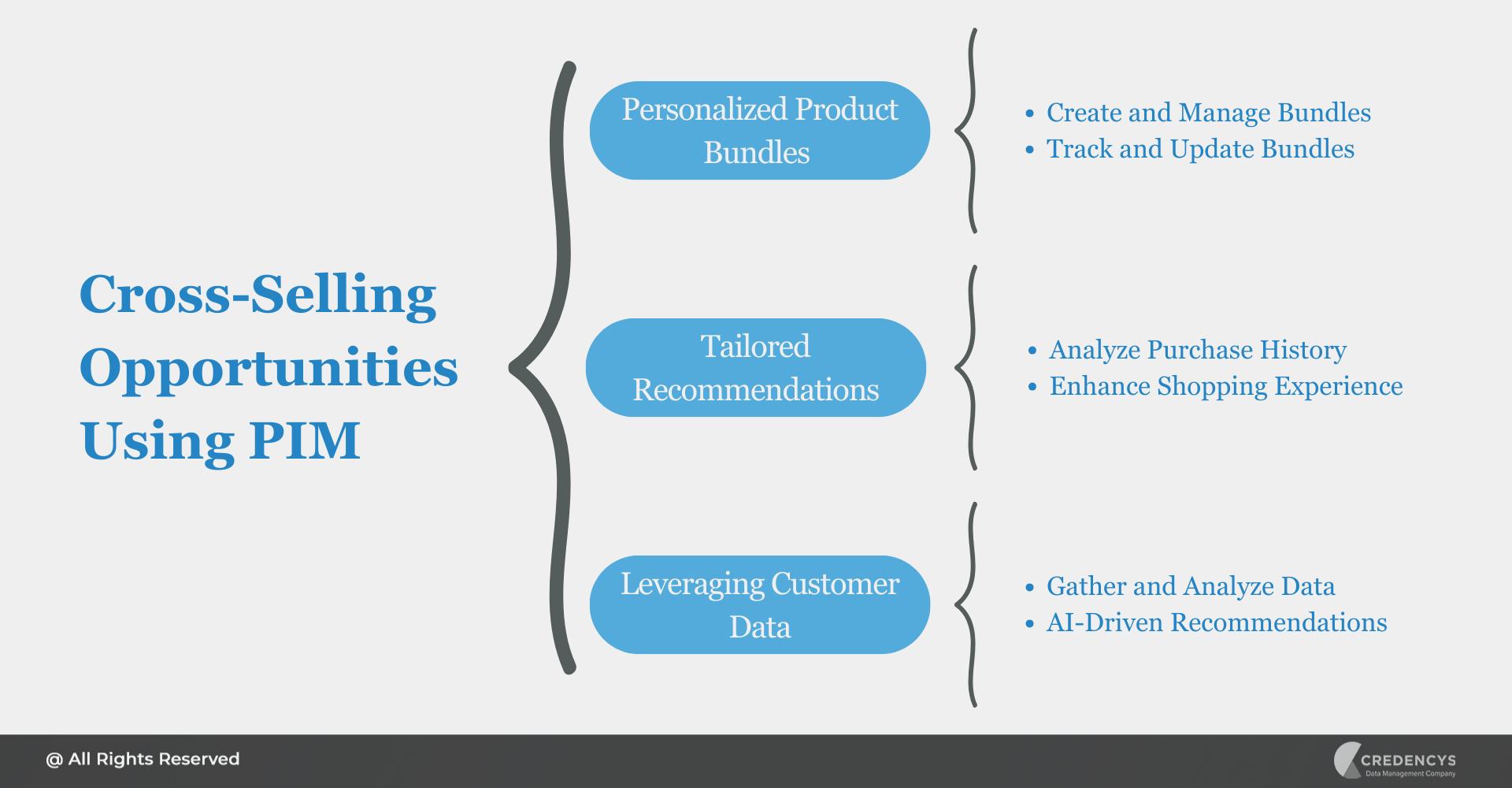
Cross-Selling Opportunities Using PIM

1. Personalized Product Bundles

  • Create and Manage Bundles: PIM systems allow businesses to create and manage product bundles that cater to the specific needs of their customers. For example, a tire bundle might include new tires, a tire repair kit, and wheel alignment services. These bundles can enhance the perceived value of the purchase and encourage customers to buy more items at once.
  • Track and Update Bundles: With PIM, it’s easy to track the performance of various product bundles and update them based on inventory levels and customer demand. This ensures that the bundles remain relevant and appealing to customers, which can help increase sales. For instance, if a particular bundle is selling well, the PIM system can flag this and suggest creating similar bundles to capitalize on the trend.

2. Tailored Recommendations

  • Analyze Purchase History: PIM systems can analyze customers’ purchase histories to identify patterns and preferences. This data can be used to make tailored product recommendations during checkout. For example, if a customer frequently buys car maintenance products, suggesting related items such as premium oil filters or high-performance brake pads can be very effective.
  • Enhance Shopping Experience: Personalized product suggestions improve the shopping experience by making it easier for customers to find what they need. When customers see relevant recommendations based on their previous purchases or items currently in their cart, they are more likely to add those items to their order. This not only boosts sales but also demonstrates a high level of customer service.

3. Leveraging Customer Data

  • Gather and Analyze Data: PIM systems are powerful tools for collecting and analyzing customer data. This data can be used to understand customer behavior and preferences, which is essential for effective cross-selling. For instance, if data shows that customers who buy spark plugs often purchase car batteries within a few months, this insight can inform cross-selling strategies.
  • AI-Driven Recommendations: Implementing AI-driven recommendations through PIM can further enhance cross-selling efforts. AI can analyze large datasets to identify patterns and make real-time recommendations that are highly relevant to each customer. For example, AI can suggest additional accessories or upgrades that complement the items in a customer’s shopping cart, increasing the likelihood of additional purchases.

Cross-Selling Opportunities Using PIM

By using PIM to create personalized product bundles, offer tailored recommendations, and leverage customer data, automotive aftermarket businesses can significantly improve their cross-selling strategies. These approaches not only increase sales but also enhance the overall customer experience, leading to greater customer satisfaction and loyalty.

Upselling Strategies Enhanced by PIM

1. Premium Product Highlighting

  • Showcase Higher-End Products: PIM systems can be used to highlight premium products or upgraded versions of items that customers are viewing. For instance, if a customer is looking at a standard set of brake pads, the PIM system can also display a premium option that offers better performance and durability. This strategy not only increases the visibility of high-margin items but also helps customers make more informed decisions by presenting them with superior alternatives.

2. Add-On Services

  • Offer Additional Services: When selling parts, it’s beneficial to offer add-on services such as installation, extended warranties, or maintenance packages. PIM systems can manage these add-ons efficiently, ensuring they are presented to customers at the right time during the purchase process. For example, if a customer is buying a new car battery, the system can suggest an installation service or an extended warranty, enhancing the value of the purchase and increasing the overall transaction value.
  • Timing and Relevance: PIM ensures that add-on services are suggested at the most opportune moments, such as during checkout. This timely presentation maximizes the chances that customers will take advantage of these additional offerings, thereby boosting upsell opportunities.

3. Incentives and Limited-Time Offers

  • Create Urgency: Limited-time promotions and discounts can create a sense of urgency that encourages customers to make quicker purchasing decisions. PIM systems help track these offers and ensure they are applied correctly across all sales channels. For example, a PIM system can automate the display of a 10% discount on premium oil changes for a limited period, making it easy for customers to see and act on the offer.
  • Consistency Across Channels: PIM ensures that promotional offers are consistent across all platforms, whether it’s the company’s website, mobile app, or physical store. This consistency helps maintain customer trust and encourages them to take advantage of the offers, knowing they will receive the same deal regardless of how they shop.

By leveraging PIM to highlight premium products, offer relevant add-on services, and manage incentives and promotions, automotive aftermarket businesses can effectively enhance their upselling strategies. These tactics not only increase sales but also improve customer satisfaction by providing them with more valuable and relevant options.

Upselling Strategies Enhanced by PIM

Final Thoughts

Implementing a PIM system offers substantial advantages for businesses in the automotive aftermarket, particularly when it comes to cross-selling and upselling strategies. In conclusion, the integration of a PIM system into your business operations can unlock significant cross-selling and upselling opportunities, driving both revenue growth and customer satisfaction.

By centralizing product information and leveraging customer data, PIM systems provide a robust foundation for a successful and dynamic sales strategy. Consider adopting a PIM solution to stay competitive and ensure your business thrives in the fast-paced automotive aftermarket.

How Can PIM Optimize Product Discovery and Searchability in Automotive Aftermarket

The automotive aftermarket industry plays a crucial role in the global automotive ecosystem. It includes products like replacement parts, accessories, tools, and services for repairs and upgrades.

This industry significantly contributes to the economy supporting millions of jobs across the manufacturing, distribution, and retail sectors.

Importance of Efficient Product Discovery and Searchability

  • Future Trends: The continued growth and evolution of the automotive aftermarket industry will depend heavily on innovations in product discovery and searchability, ensuring businesses can adapt to changing consumer needs and technological advancements.
  • Digital Transformation: The shift towards eCommerce in the aftermarket industry highlights the need for robust online platforms with advanced search capabilities and comprehensive product databases to meet customer expectations.
  • Complexity: The increasing variety of vehicle makes and models, along with technological advancements, makes accurate and timely access to parts more challenging and crucial for competitive advantage.
  • Critical for Operations: Efficient product discovery ensures repair shops, DIY enthusiasts, and retailers can quickly find the correct parts, reducing vehicle downtime and improving customer satisfaction.

Current Challenges in Product Discovery and Searchability

1. User Experience Issues

  • Poor Search Functionality on Many Platforms: Many aftermarket platforms have suboptimal search tools that lack advanced filtering and intuitive navigation. This makes it hard for users to quickly refine their searches to find the right product, leading to frustration and potential loss of sales.
  • Difficulty in Finding the Right Products Quickly: Consumers and professionals often struggle to locate the exact parts they need due to the sheer volume of options and the complexity of ensuring compatibility. This challenge is compounded by poor categorization and tagging of products.

The Role of PIM in Enhancing Customer Experience for Fashion Retailers

2. Data Silos and Inconsistencies

  • Fragmented Data Sources: Information about products often comes from multiple sources, such as manufacturers, suppliers, and retailers. These disparate data streams can lead to incomplete or duplicated records, making it difficult to maintain a unified product catalog.
  • Inconsistent Product Information: Variations in data formats and standards can cause inconsistencies. For example, the same part might be listed under different names or specifications, confusing customers and complicating the search process.

3. Complexity of Product Catalogs

  • Diverse Range of Products and Parts: The automotive aftermarket includes a vast array of products and parts, from basic components to advanced technologies. This diversity makes cataloging and organizing products challenging.
  • Compatibility Issues with Different Vehicle Models: Ensuring compatibility across various makes and models is complex. Parts must be accurately matched to specific vehicles, considering variations in model years and specifications.

Challenges in Product Discovery and Searchability

Key Strategies for Optimizing Product Discovery and Searchability Using PIM

PIM systems are essential for automotive aftermarket businesses, enhancing product discovery and searchability. Here’s how PIM systems can significantly benefit these businesses:

1. Improved Search Functionality

  • Advanced Search Technologies: By integrating AI and machine learning, PIM systems enhance search capabilities. Technologies like Natural Language Processing (NLP) and predictive search help customers find products quickly and accurately.
  • Enhanced User Experience: With accurate and enriched product data, PIM systems improve the overall user experience, making it easier for customers to navigate large catalogs and find what they need.

2. Centralized Data Management

  • Consolidated Information: PIM centralizes all product data, ensuring uniformity and accuracy across various platforms. This eliminates the chaos of fragmented data sources, providing a single source of truth for product information.
  • Data Enrichment: PIM systems enhance product data with additional details like vehicle fitment information and compatibility, making it easier for customers to find the right parts.

The Role of PIM in Automotive Fitment Data Management: An Overview

3. Enhanced Customer Trust and Satisfaction

  • Accurate Product Data: By ensuring product data is accurate and up-to-date, PIM systems minimize errors and inconsistencies, reducing the chances of customer dissatisfaction and returns.
  • Improved Compatibility Information: PIM systems provide precise fitment and compatibility details, ensuring that customers purchase the right parts for their vehicles, thereby enhancing customer satisfaction.

4. Efficient Catalog Management

  • Automatic Updates: PIM systems automate the update process for product information across all sales channels, reducing the risk of inconsistencies or outdated information.
  • Streamlined Onboarding: Adding new products becomes more efficient with PIM, thanks to templates and standardized processes that simplify incorporating new items into the catalog.

5. Compliance with Industry Standards

  • ACES and PIES Standards: PIM ensures that product data adheres to industry standards like ACES (Aftermarket Catalog Enhanced Standard) and PIES (Product Information Exchange Standard). This consistency is crucial for maintaining accurate fitment and compatibility information.

Best Practices for Implementing PIM in the Automotive Aftermarket

1. Conduct a Requirement Assessment

  • Identify Key Requirements: Start by understanding the specific needs of your business. Determine the primary goals for implementing a PIM system, such as centralizing product data, ensuring compliance with industry standards, or enhancing search functionality. This clarity will guide the selection and implementation process.
  • Stakeholder Involvement: Engage key stakeholders from different departments (e.g., IT, marketing, sales, product management) to gather comprehensive requirements. This ensures the PIM system addresses the needs of all users and fosters organizational alignment.

2. Train Your Team

  • Comprehensive Training Programs: Provide thorough training for all users to ensure they understand how to use the PIM system effectively. This training should cover both basic functionalities and advanced features.
  • Ongoing Support and Resources: Offer continuous support and resources to help users stay updated with system features and best practices. Regular refresher courses and easy access to help desks or knowledge bases can be beneficial.

3. Choose the Right PIM Solution

  • Scalability: Choose a PIM system that can grow with your business. It should handle increasing volumes of product data and support future business expansions.
  • Integration Capabilities: Ensure the PIM system integrates seamlessly with your existing systems, such as ERP (Enterprise Resource Planning), CRM (Customer Relationship Management), and e-commerce platforms. This interoperability is crucial for maintaining data consistency across all channels.

4. Monitor and Optimize

  • Regular Audits: Conduct regular audits of your PIM system to ensure data accuracy and system performance. These audits can identify any discrepancies or issues that need to be addressed.
  • Feedback Loops: Establish mechanisms for gathering feedback from users and customers. This feedback is valuable for continuous improvement of the PIM system and adapting to changing business needs.

5. Leverage Advanced Features

  • AI and Machine Learning: Utilize advanced features like AI and machine learning to enhance product discovery. Technologies such as Natural Language Processing (NLP) and predictive analytics can significantly improve search functionality and user experience.
  • Automation: Implement automation for routine tasks such as data updates, compliance checks, and reporting. Automation increases efficiency and reduces the risk of human error.

6. Plan for Data Migration

  • Data Cleansing: Before migrating data to the new PIM system, clean and standardize your existing data. This process eliminates inconsistencies, duplicates, and errors, ensuring high-quality data enters the PIM system.
  • Phased Migration: Consider a phased approach to data migration. Gradually transferring data minimizes disruptions to daily operations and allows for testing and adjustments along the way.

7. Focus on Data Governance

  • Establish Policies and Procedures: Develop clear guidelines for data management, including data entry standards, update protocols, and quality control measures. These policies ensure consistency and accuracy over time.
  • Assign Data Stewards: Designate individuals responsible for maintaining data quality and consistency. These data stewards will oversee adherence to data governance policies and handle any issues that arise.

Best Practices for Implementing PIM

Product Discovery and Searchability Future Trends in the Automotive Aftermarket

1. Augmented Reality and Virtual Reality

  • Virtual Showrooms: AR and VR technologies are creating immersive virtual showrooms where customers can visualize how parts and accessories will look and fit on their vehicles before making a purchase. This not only enhances the shopping experience but also reduces the likelihood of returns.
  • Interactive Product Manuals: AR can provide interactive product manuals, guiding customers through installation processes or showcasing detailed product features in real time. This hands-on assistance helps customers make informed decisions and increases satisfaction.

2. Internet of Things (IoT)

  • Connected Vehicles: IoT is playing a significant role in the automotive aftermarket with connected vehicles that provide real-time data on past performance and maintenance needs. This data helps businesses recommend parts based on actual vehicle usage and conditions, improving the relevance of product suggestions.
  • Proactive Maintenance: IoT enables proactive maintenance alerts, suggesting necessary parts and services before issues arise. This approach enhances customer satisfaction and loyalty by preventing problems rather than reacting to them.

3. AI and Machine Learning

  • Personalized Search Results: AI and machine learning technologies are transforming product discovery by offering highly personalized search results. These technologies analyze user behavior, preferences, and purchase history to predict what customers are looking for and suggest the most relevant products (SME).
  • Predictive Analytics: Predictive analytics help businesses anticipate customer needs and stock products accordingly. By analyzing patterns and trends, businesses can improve inventory management, reducing instances of stockouts and overstocking.

4. Blockchain Technology

  • Enhanced Data Security: Blockchain technology offers robust security and integrity for product data, creating a tamper-proof record of product information and transactions. This ensures that the data customers and businesses rely on is accurate and trustworthy.
  • Supply Chain Transparency: Blockchain can enhance supply chain transparency by tracking parts and components from manufacturer to customer. This traceability ensures authenticity, reduces the risk of counterfeit products, and builds customer trust.

5. Voice Search

  • Voice-Activated Assistants: The increasing use of voice-activated assistants like Siri, Alexa, and Google Assistant is changing how customers search for products. Optimizing product data for voice search is becoming crucial for businesses to stay relevant.
  • Natural Language Processing: Advances in NLP are making voice searches more accurate and effective. Customers can use natural, conversational language to find products, which simplifies the search process and improves user experience.

How Can Credencys Solutions Help?

At Credencys, we specialize in implementing tailored PIM solutions that meet the unique needs of the automotive aftermarket industry. Our PIM implementations are designed to centralize and standardize your product data, ensuring accuracy and consistency across all platforms.

Here’s what sets Credencys apart:

  • Scalable Solutions: Our PIM systems grow with your business, capable of handling increasing volumes of product data as your catalog expands.
  • Seamless Integration: Credencys PIM integrates smoothly with your existing ERP, CRM, and e-commerce platforms, maintaining data consistency across all channels.
  • Advanced Technologies: We leverage AI and machine learning to enhance search functionality, including Natural Language Processing (NLP) and predictive search, ensuring your customers find what they need quickly and accurately.
  • Data Governance and Compliance: Our solutions ensure compliance with industry standards like ACES and PIES, providing accurate fitment and compatibility information.
  • Expert Support: Our team provides comprehensive training and ongoing support, helping you maximize the benefits of your PIM system.

In addition to this, Credencys has its own PIM solution for Automotive Aftermarket businesses DRIVE, which plays a pivotal role in this optimization by centralizing and standardizing product data. This high-quality data is easily syndicated to major retailers and eCommerce platforms, enabling customers to find the right products quickly and efficiently.

As a result, businesses can improve their visibility in the market, increase customer satisfaction, and drive higher sales. By leveraging DRIVE, automotive aftermarket companies can streamline their product information management processes, making it easier for customers to discover and purchase their products.

Contact Credencys today to learn more about how our tailored PIM solution can transform your product discovery and searchability. Schedule a demo or consultation with our experts to see how we can meet your specific needs.

Closing Thoughts

As the automotive aftermarket industry evolves, optimizing product discovery and searchability is no longer optional, it’s essential for staying competitive. Implementing a PIM system can help your business overcome current challenges.

Moreover, it prepares you for future trends like AI-driven personalization, IoT-connected vehicles, and voice-activated searches. Don’t wait until these challenges impact your bottom line.

Enhancing Product Data Accuracy and Consistency in Automotive Aftermarket

The automotive aftermarket industry is a vital sector that supports the ongoing maintenance and enhancement of vehicles after their initial sale. This industry encompasses a wide range of products and services, including replacement parts, accessories, lubricants, and various tools and equipment necessary for vehicle upkeep.

The global Automotive Aftermarket Industry size is projected to grow from $418.95 billion in 2023 to $527.25 billion by 2030. This growth is driven by factors such as the increasing average age of vehicles, advancements in vehicle technology, and a growing number of vehicles in use.

Understanding Product Data in Automotive Aftermarket

Product data in the automotive aftermarket encompasses various types of information critical to the sale, use, and maintenance of automotive parts and accessories. This data includes:

  • Specifications: Details such as dimensions, weight, material composition, and performance ratings.
  • Compatibility: Information about which vehicles a part fits, often described in terms of year, make, model, and engine type.
  • Pricing: Retail, wholesale, and suggested prices.
  • Other Attributes: Additional details such as warranty information, manufacturer part numbers, and digital assets like images and manuals.

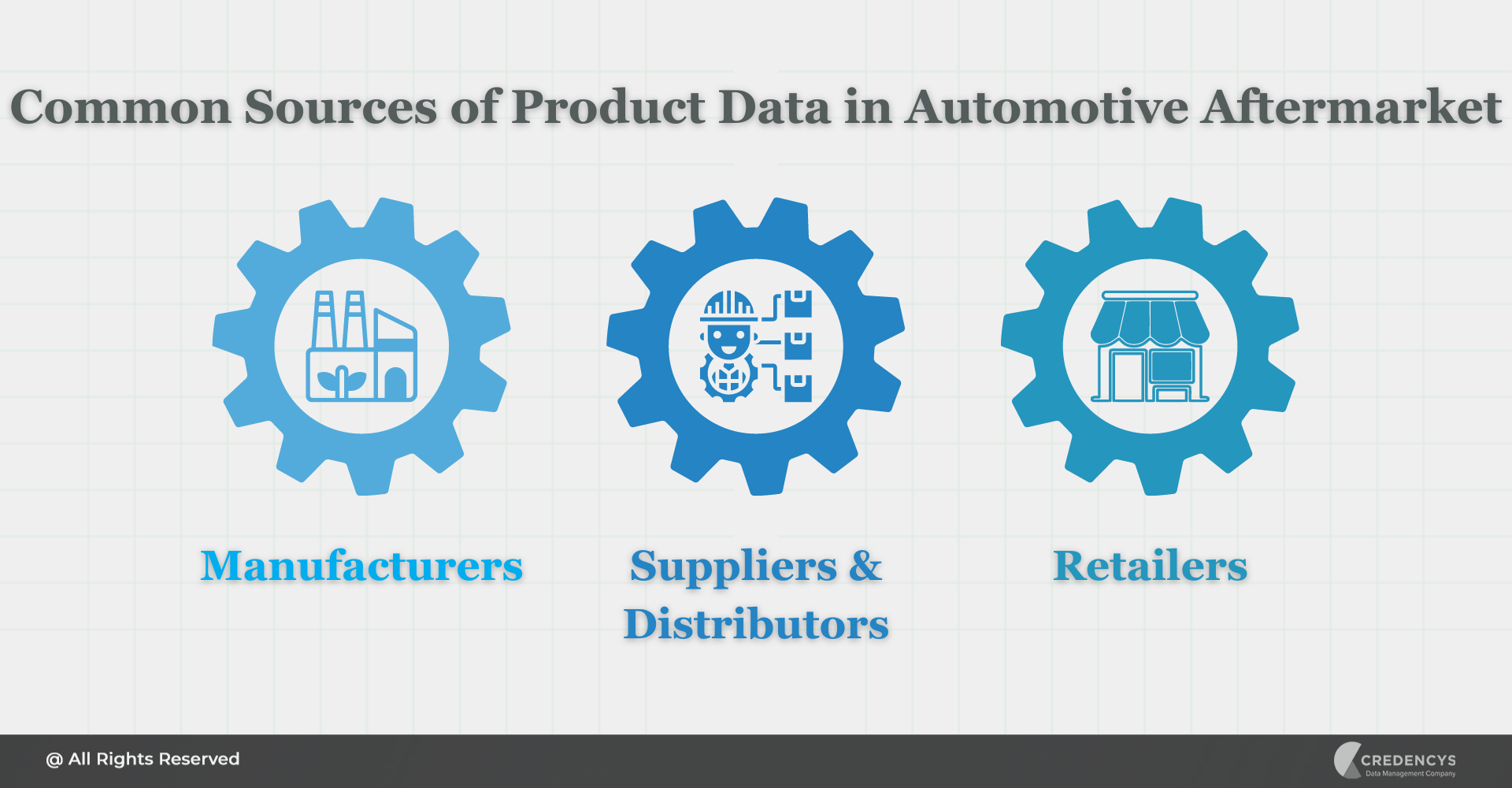
Common Sources of Product Data

Product data is typically sourced from:

  • Manufacturers: The primary source, providing detailed specifications, compatibility, and pricing information.
  • Suppliers and Distributors: They add layers of data, such as local pricing, stock levels, and alternative product recommendations.
  • Retailers: Often the final link in the chain, they may enhance data with customer reviews, sales performance metrics, and application notes.

Common Sources of Product Data in Automotive Aftermarket

Challenges Faced with Product Data

The automotive aftermarket faces several challenges in managing product data effectively:

  • Data Inconsistency: Different sources may provide conflicting information about the same product, leading to confusion and errors.
  • Data Volume: The sheer number of parts and variations can make data management complex and resource intensive.
  • Data Accuracy: Ensuring that the data is up-to-date and accurate is crucial, as incorrect data can lead to incorrect orders, increased returns, and customer dissatisfaction.
  • Compatibility Issues: Managing and verifying fitment data (which parts fit which vehicles) is particularly challenging due to the numerous variables involved.
  • Standardization: The need to adhere to industry standards like ACES (Aftermarket Catalog Exchange Standard) and PIES (Product Information Exchange Standard) adds another layer of complexity.

Impact of Inaccurate and Inconsistent Product Data

1. Consequences for Businesses

Inaccurate and inconsistent product data can have severe consequences for businesses in the automotive aftermarket. One of the primary impacts is lost sales. When product data is incorrect, customers may order parts that do not fit their vehicles, leading to returns and lost revenue opportunities.

This not only affects immediate sales but can also harm long-term customer relationships. Additionally, increased returns due to incorrect product information can lead to higher operational costs, as businesses must manage the logistics of returns and restocking.

This process can also cause inventory inaccuracies, further complicating inventory management and planning.

2. Operational Inefficiencies and Increased Costs

Operational inefficiencies are another significant impact of poor product data management. When data is inaccurate, it can lead to errors in inventory management, order processing, and supply chain operations.

These inefficiencies increase operational costs, as additional resources are required to correct errors, manage returns, and handle customer complaints. Furthermore, the time and effort spent resolving these issues divert attention from other critical business activities, hampering overall productivity and growth.

3. Customer Frustration and Loss of Trust

Customers rely heavily on accurate product data to ensure they purchase the correct parts for their vehicles. When the data is wrong, it leads to frustration, as they may receive parts that do not fit or meet their expectations.

This frustration can quickly turn into a loss of trust in the retailer or supplier, resulting in customers taking their business elsewhere.

Impact of Inaccurate & Inconsistent Product Data in Automotive Aftermarket

Strategies to Enhance Product Data Accuracy and Consistency

1. Automation and AI Integration

Leveraging automation for data entry and validation can drastically reduce human errors and improve data accuracy. Automation tools can handle repetitive tasks more efficiently, ensuring consistent data quality.

Additionally, AI technologies can predict and correct data inconsistencies by analyzing patterns and anomalies in large datasets. AI-driven solutions can enhance data management by providing predictive analytics and automated corrections, leading to more accurate and reliable product data.

2. Data Standardization

Adopting industry standards like ACES and PIES is crucial for ensuring data accuracy and consistency. These standards provide a common framework for defining and sharing product information, which helps streamline communication between manufacturers, suppliers, and retailers.

Standardized data formats and terminologies reduce errors, improve data quality, and facilitate smoother integration across various systems and platforms.

3. Centralized Data Management

Implementing a centralized data management system, such as a PIM system, creates a single source of truth for all product data. This approach helps prevent discrepancies by ensuring that all stakeholders access the same, up-to-date information.

PIM systems are particularly beneficial in managing complex product data, enabling better data governance, and enhancing overall data reliability.

4. Supplier Collaboration

Establishing clear data exchange protocols with suppliers is vital for maintaining data consistency. Real-time data sharing and updates can significantly reduce the time lag between product changes and their reflection in the system.

Collaborative platforms and tools that facilitate seamless data exchange and communication between suppliers and retailers are instrumental in achieving this goal.

5. Regular Data Audits and Cleaning

Routine data audits are essential for maintaining data accuracy. Regularly reviewing and cleaning data helps identify and correct inaccuracies, remove duplicates, and update obsolete information.

Effective data cleansing methods involve automated tools and processes that can systematically validate and rectify data entries, ensuring that the database remains accurate and reliable over time.

PIM System – A Solution to Accurate and Consistent Product Data

Implementing a PIM system addresses the unique challenges of the automotive aftermarket industry, such as data fragmentation, compliance with industry standards, and the need for real-time updates. By leveraging PIM, automotive businesses can enhance their operational efficiency, reduce costs, and deliver a superior customer experience.

PIM helps automotive businesses with:

  • Centralized Product Data Management
  • Standardization and Compliance
  • Enhanced Fitment Data Management
  • Improved Product Discoverability
  • Seamless Omnichannel Experience
  • Agile Product Lifecycle Management

Credencys – A Trusted PIM Implementation Partner

Credencys Solutions Inc. stands out as a trusted partner for implementing Product Information Management systems, especially tailored to meet the complex needs of the automotive aftermarket industry. Here’s why Credencys is the ideal choice:

1. Proven Success Stories

Credencys has successfully implemented PIM solutions for various clients in the automotive industry, showcasing their ability to handle complex projects and deliver tangible results. For instance, they helped Tractmotor streamline their product information management, leading to improved time-to-market, enhanced catalog creation efficiency, and a single source of truth for all departments.

Such success stories highlight Credencys’ capability to deliver impactful PIM solutions that drive operational excellence and business growth.

2. Extensive Experience and Expertise

Credencys has a proven track record of delivering robust PIM solutions across various industries, including automotive. Their expertise lies in understanding the unique challenges of managing vast amounts of product data, ensuring data accuracy, and maintaining consistency across multiple channels.

By leveraging their deep industry knowledge and technical skills, Credencys can design and implement PIM systems that cater to the specific needs of automotive aftermarket businesses.

3. Customer-Centric Approach

Credencys is committed to understanding the unique needs of its clients and delivering customized solutions that drive business success. They work closely with automotive aftermarket businesses to ensure their PIM systems are not only implemented effectively but also optimized for ongoing performance.

This customer-centric approach ensures that businesses receive continuous support and training, helping them to maximize the benefits of their PIM investment.

4. Comprehensive Solutions Tailored to Automotive Needs

Credencys offers end-to-end PIM solutions that address the unique requirements of the automotive aftermarket. This includes managing complex fitment data, adhering to industry standards such as ACES and PIES, and ensuring real-time data synchronization across all platforms.

Their solutions are designed to streamline product data management, enhance operational efficiency, and improve customer satisfaction by providing accurate and consistent product information.

5. Innovative Use of Technology

Credencys integrates cutting-edge technologies such as AI and automation into their PIM systems to enhance data accuracy and efficiency. Their solutions include advanced features like automated data entry and validation, predictive analytics for identifying and correcting data inconsistencies, and real-time data updates.

This innovative approach ensures that businesses can maintain high-quality product data with minimal manual intervention.

6. Global Reach and Scalability

With a global presence and a scalable approach, Credencys can support automotive aftermarket businesses of all sizes, from small enterprises to large multinational corporations. Their solutions are designed to grow with the business, ensuring that as the company expands, the PIM system can scale accordingly to handle increased data volume and complexity.

By choosing Credencys as a PIM implementation partner, automotive aftermarket businesses can leverage their extensive experience, innovative technology solutions, and customer-centric approach to achieve superior data management and operational efficiency.

Why Choose Credencys as Your PIM Implementation Partner

DRIVE – Credencys’ PIM Solution for Automotive Aftermarket Businesses

Enhancing product data accuracy and consistency in the automotive aftermarket has never been easier with DRIVE, a comprehensive Product Information Management solution from Credencys. Automotive aftermarket businesses can significantly improve their data management processes, reducing errors and enhancing compliance.

This not only ensures that product information is accurate and up-to-date but also enhances the overall customer experience, driving sales and growth in a highly competitive market. The platform’s robust features make it an indispensable tool for any business looking to streamline its product information management and stay ahead in the automotive aftermarket industry.

Final Thoughts

The automotive aftermarket industry is evolving rapidly making accurate and consistent product data not just a necessity but a strategic advantage. The above-discussed strategies form a comprehensive approach to tackling the prevalent challenges of data inaccuracies and inconsistencies.

By implementing these strategies, automotive businesses can significantly enhance operational efficiency, improve customer satisfaction, and ultimately drive growth. Businesses need to recognize the importance of investing in robust data management solutions like Product Information Management systems, which can serve as the backbone for all product-related information.

Partnering with a reliable PIM implementation expert, such as Credencys, ensures that businesses not only adopt the right tools but also leverage best practices tailored to their specific needs. By doing so, you position your business to better meet market demands, enhance customer experiences, and stay ahead of the competition in the automotive aftermarket industry.

How PIM Streamlines Product Data Across Multiple Channels for Automotive Aftermarket Businesses

The automotive aftermarket industry plays a crucial role in the automotive ecosystem, serving as the backbone for vehicle maintenance, repair, and customization.

Unlike the primary automotive market, which focuses on the sale of new vehicles, the aftermarket sector deals with a wide array of products and services designed to meet the needs of vehicle owners post-purchase.

From replacement parts and accessories to performance upgrades and styling enhancements, the aftermarket industry caters to the diverse preferences and requirements of vehicle owners.

This sector encompasses a vast network of manufacturers, distributors, retailers, and service providers, contributing significantly to the global economy.

In the fiercely competitive landscape of the automotive aftermarket, where consumers demand seamless shopping experiences and instant access to product information, PIM has become indispensable for businesses striving to stay ahead of the curve.

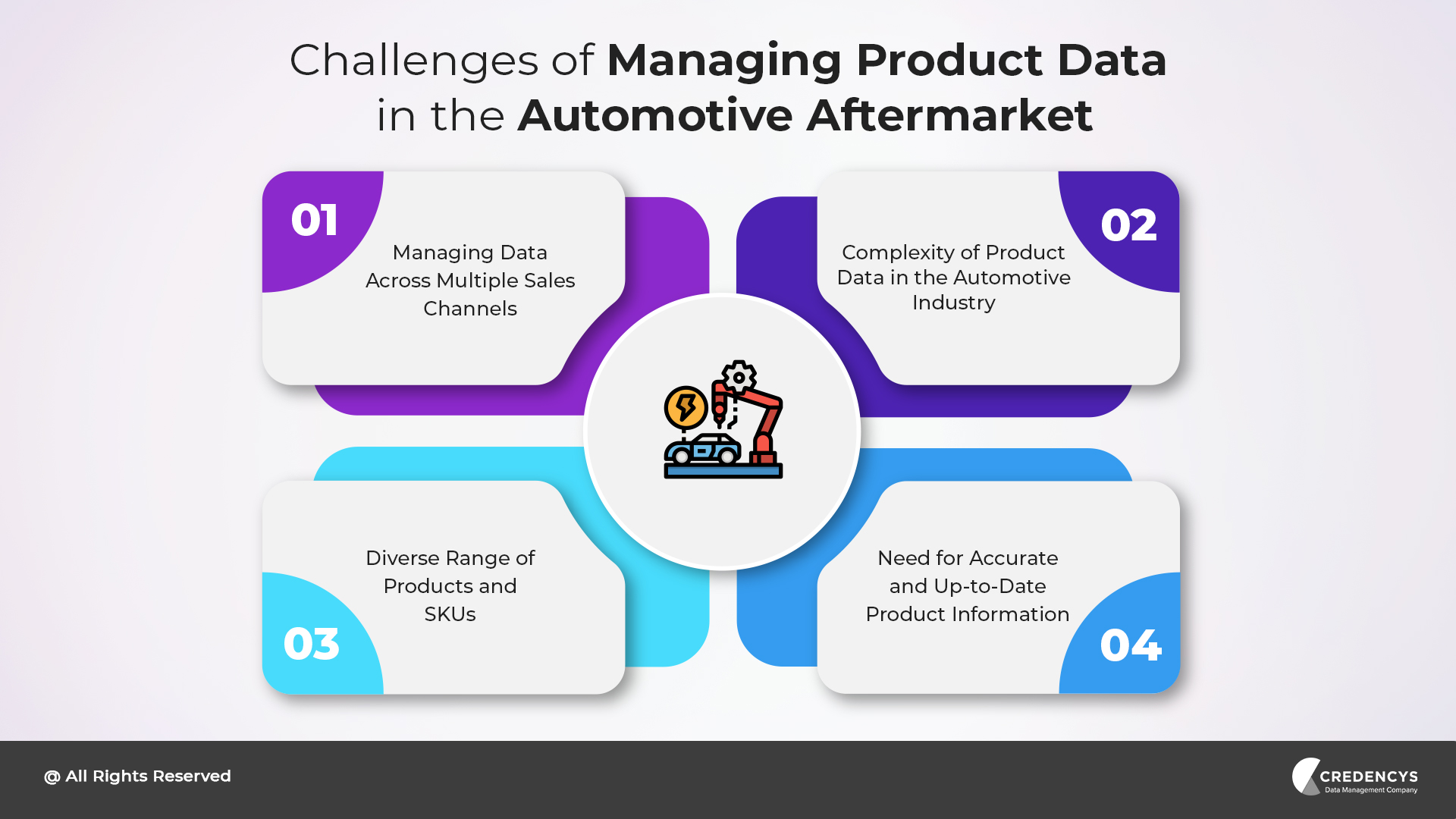
Challenges of Managing Product Data in the Automotive Aftermarket

1. Managing Data Across Multiple Sales Channels

With the proliferation of digital channels and the rise of omnichannel retailing, automotive aftermarket businesses must navigate the complexities of managing product data across a multitude of sales channels. Whether it’s eCommerce platforms, marketplaces, brick-and-mortar stores, or even mobile applications, ensuring consistency and coherence in product information across all touchpoints is essential for delivering a seamless customer experience.

However, disparate systems, data silos, and manual processes often hinder the flow of information between channels, leading to discrepancies in product listings, pricing discrepancies, and disjointed customer interactions. This lack of integration not only undermines operational efficiency but also impedes businesses’ ability to capitalize on sales opportunities and meet the evolving needs of today’s connected consumers.

2. Complexity of Product Data in the Automotive Industry

The automotive aftermarket industry is characterized by a myriad of products, each with its own set of specifications, compatibility requirements, and variations. From replacement parts such as filters, belts, and brakes to performance upgrades like exhaust systems and turbochargers, the sheer diversity of products poses a significant challenge for businesses when it comes to managing product data effectively.

Unlike other industries where products may have relatively straightforward attributes, automotive aftermarket products often require detailed technical specifications, fitment data, and compatibility information to ensure they are suitable for specific vehicle makes, models, and years. Managing this complexity manually or with outdated systems can lead to errors, inconsistencies, and inefficiencies in product data management.

3. Diverse Range of Products and SKUs

In addition to the complexity of product data, the automotive aftermarket is characterized by a vast array of products and stock-keeping units (SKUs). From OEM replacement parts to aftermarket accessories and customization options, businesses in this sector must contend with a seemingly endless assortment of products, each with its own unique identifiers, pricing, and availability.

Managing this extensive product catalog becomes increasingly challenging as businesses expand their offerings to cater to diverse customer preferences and market demands. Without robust systems in place to organize and classify products effectively, businesses risk overwhelming their customers with choices and struggling to differentiate their offerings in a crowded marketplace.

4. Need for Accurate and Up-to-Date Product Information

In the automotive aftermarket, accuracy and timeliness are paramount when it comes to product information. Customers rely on accurate data to make informed purchasing decisions, whether they are searching for a specific replacement part, comparing features and specifications, or verifying compatibility with their vehicle.

Outdated or incorrect product information can not only lead to customer frustration and dissatisfaction but also result in returns, exchanges, and potential damage to the brand’s reputation. Moreover, in industries where safety and performance are critical factors, such as automotive, inaccuracies in product data can have serious consequences for both businesses and consumers.

Navigating the Challenges in the Automotive Aftermarket Industry – Insights from Our Exclusive Webinar

Challenges of Managing Product Data in the Automotive Aftermarket

How PIM Helps Centralize and Manage Product Data Efficiently

PIM serves as a centralized repository for storing, organizing, and enriching product information, ensuring consistency, accuracy, and accessibility throughout the product lifecycle. It offers a range of features and functionalities to facilitate the effective management of product data which include:

  • Centralized Product Catalog
  • Data Enrichment Tools
  • Taxonomy and Classification
  • Versioning and History Tracking
  • Integration Capabilities

PIM plays a crucial role in centralizing and managing product data efficiently by:

  • Enhancing Data Accessibility: PIM systems provide role-based access controls and permissions, allowing authorized users to access and manage product data securely, while also facilitating self-service access for internal teams and external partners.
  • Eliminating Data Silos: By consolidating product data from disparate sources into a single repository, PIM solutions eliminate data silos and ensure a unified view of product information across the organization.
  • Streamlining Workflows: PIM solutions streamline the process of creating, editing, and publishing product information, enabling teams to collaborate more effectively and accelerate time-to-market for new products and updates.
  • Improving Data Accuracy and Consistency: PIM systems enforce data governance rules and standards to ensure the accuracy, consistency, and integrity of product data, reducing errors and discrepancies.

Streamlining Product Data Across Multiple Sales Channels

In today’s omnichannel retail landscape, automotive aftermarket businesses must effectively manage and distribute product data across a variety of sales channels to reach and engage customers wherever they prefer to shop. Let’s explore how PIM solutions streamline product data across these diverse channels:

1. Synchronization with Brick-and-Mortar Stores

Despite the rise of eCommerce, brick-and-mortar stores remain a critical component of the automotive aftermarket retail landscape. PIM solutions facilitate synchronization between digital and physical channels, enabling businesses to manage product data consistently across both online and offline sales channels.

By centralizing product information in a PIM system, businesses can ensure that updates made to product data, such as pricing changes or inventory updates, are reflected accurately across all sales channels, including brick-and-mortar stores. This synchronization not only enhances operational efficiency but also ensures a seamless shopping experience for customers, whether they choose to shop online or visit a physical store.

2. Integration with eCommerce Platforms

eCommerce platforms serve as digital storefronts for automotive aftermarket businesses, allowing them to showcase their products and facilitate online transactions. PIM solutions integrate seamlessly with eCommerce platforms, such as Shopify, Magento, and WooCommerce, enabling businesses to synchronize product data in real time.

Through this integration, businesses can ensure that product information, including titles, descriptions, images, pricing, and inventory levels, remains consistent and up-to-date across all online sales channels. By automating the process of updating product data, PIM solutions help businesses minimize manual effort, reduce errors, and improve operational efficiency, ultimately enhancing the online shopping experience for customers.

3. Connectivity with Marketplaces (e.g., Amazon, eBay)

Marketplaces like Amazon, eBay, and Walmart Marketplace have become essential channels for automotive aftermarket businesses to reach a broader audience and drive sales. PIM solutions offer robust connectivity with these marketplaces, allowing businesses to seamlessly list and manage their products across multiple platforms.

With PIM integration, businesses can efficiently publish product listings, manage inventory levels, and synchronize pricing and promotions across various marketplaces. Moreover, PIM solutions enable businesses to comply with marketplace-specific requirements and standards, such as categorization, attribute mapping, and content guidelines, ensuring that product listings are optimized for maximum visibility and discoverability.

4. Ensuring Consistency and Accuracy of Product Information Across All Channels

One of the key challenges in managing product data across multiple sales channels is ensuring consistency and accuracy. PIM solutions play a crucial role in addressing this challenge by serving as a single source of truth for product information.

By consolidating product data from various sources into a centralized repository, PIM solutions enable businesses to maintain consistency in product attributes, descriptions, and specifications across all channels. Moreover, PIM systems enforce data governance rules and standards to ensure data accuracy, reducing the risk of errors and discrepancies in product information.

Benefits of Implementing PIM for Automotive Aftermarket Businesses

Implementing a PIM solution can bring numerous benefits to automotive aftermarket businesses, from streamlining operations to enhancing customer satisfaction and driving sales growth. Let’s explore some of the key advantages:

1. Enhanced Customer Experience Through Accurate and Consistent Product Information

In today’s competitive marketplace, providing accurate and consistent product information is essential for delivering a positive customer experience. PIM solutions enable businesses to maintain consistency in product attributes, descriptions, and specifications across all sales channels, including eCommerce platforms, marketplaces, and brick-and-mortar stores.

By ensuring that customers have access to reliable and comprehensive product information, businesses can increase trust and confidence in their brand, leading to higher conversion rates and customer satisfaction. Moreover, accurate product data reduces the likelihood of returns and exchanges, minimizing customer frustration and enhancing loyalty in the long run.

2. Increased Sales and Revenue Opportunities

By centralizing and optimizing product data, PIM solutions enable businesses to capitalize on sales opportunities and drive revenue growth. With accurate and up-to-date product information, businesses can improve search visibility, enhance product discoverability, and better showcase their offerings to customers.

Moreover, PIM solutions facilitate cross-selling and upselling opportunities by enabling businesses to group related products, recommend complementary items, and personalize product recommendations based on customer preferences and purchasing behavior. This targeted approach to sales and marketing can lead to higher average order values and increased customer lifetime value.

3. Better Inventory Management and Reduced Errors

Effective inventory management is crucial for automotive aftermarket businesses to ensure product availability, minimize stockouts, and avoid overstocking. PIM solutions help businesses maintain accurate inventory levels by synchronizing data across all sales channels in real-time.

By providing visibility into inventory levels, PIM solutions enable businesses to make informed decisions about stock replenishment, pricing, and promotions, optimizing inventory turnover and reducing carrying costs. Moreover, by minimizing errors and discrepancies in product data, PIM solutions mitigate the risk of stockouts and backorders, improving fulfillment rates and customer satisfaction.

4. Improved Efficiency in Managing Product Data

PIM solutions streamline the process of managing product data by centralizing all information in a single repository. This eliminates the need for manual data entry, reduces the risk of errors, and ensures that all stakeholders have access to the most up-to-date information.

With PIM, businesses can automate tasks such as product onboarding, enrichment, and syndication, saving time and resources. This improved efficiency allows teams to focus on more strategic activities, such as product development, marketing initiatives, and customer engagement, ultimately driving business growth and innovation.

Business Benefits of PIM (Product Information Management)

Benefits of Implementing PIM for Automotive Aftermarket Businesses

DRIVE – A Comprehensive PIM Solution for Automotive Aftermarket Businesses

DRIVE is the ultimate Product Information Management solution specifically designed for the automotive aftermarket industry. Powered by Syndigo, DRIVE excels in integrating data from various sources, ensuring a unified, comprehensive view of product information.

This platform enhances data quality, guarantees compliance with industry standards such as ACES and PIES, and facilitates seamless syndication to major retailers and eCommerce platforms.

Closing Thoughts

In closing, we urge automotive aftermarket businesses to consider the transformative potential of PIM and take proactive steps to implement these solutions within their organizations. Whether you are a small independent retailer or a large multinational corporation, PIM can help you unlock new opportunities for growth, efficiency, and innovation.

If you are still on the fence about PIM implementation, we encourage you to speak with our industry experts and evaluate the potential return on investment for your business. The benefits of PIM extend beyond operational improvements to encompass tangible business outcomes, such as increased sales, improved customer satisfaction, and a stronger competitive position in the market.

Take the first step towards harnessing the power of PIM and embark on a journey towards a more efficient, customer-centric, and profitable future for your business.

How to Measure the ROI of Master Data Management

Master Data Management (MDM) plays a pivotal role in the modern data landscape, providing organizations with a foundation of accurate, consistent, and reliable data.

However, measuring the return on investment (ROI) of MDM initiatives can be challenging due to the complexity of data ecosystems and the wide-ranging impact of MDM across various business functions.

In this guide, we will try to cover:

  • How can you determine the tangible benefits of MDM implementation?
  • What factors influence the ROI of MDM initiatives?
  • Are there direct and indirect benefits associated with MDM?
  • How do capital and operational costs affect the overall ROI of MDM solutions?

Understanding Master Data Management

Before delving into ROI measurement, it’s crucial to grasp the essence of Master Data Management. MDM involves the processes, governance, policies, standards, and tools that consistently define and manage critical data across an organization.

This data, often referred to as master data, includes customer information, product details, employee records, and other core entities essential for business operations.

key benefits of MDM

Factors that Affect Master Data Management ROI

Master Data Management (MDM) initiatives can yield significant returns on investment (ROI) for organizations, but several factors influence the extent of these returns. Understanding these factors is crucial for maximizing the ROI of MDM implementations.

Here are some key factors that affect Master Data Management ROI:

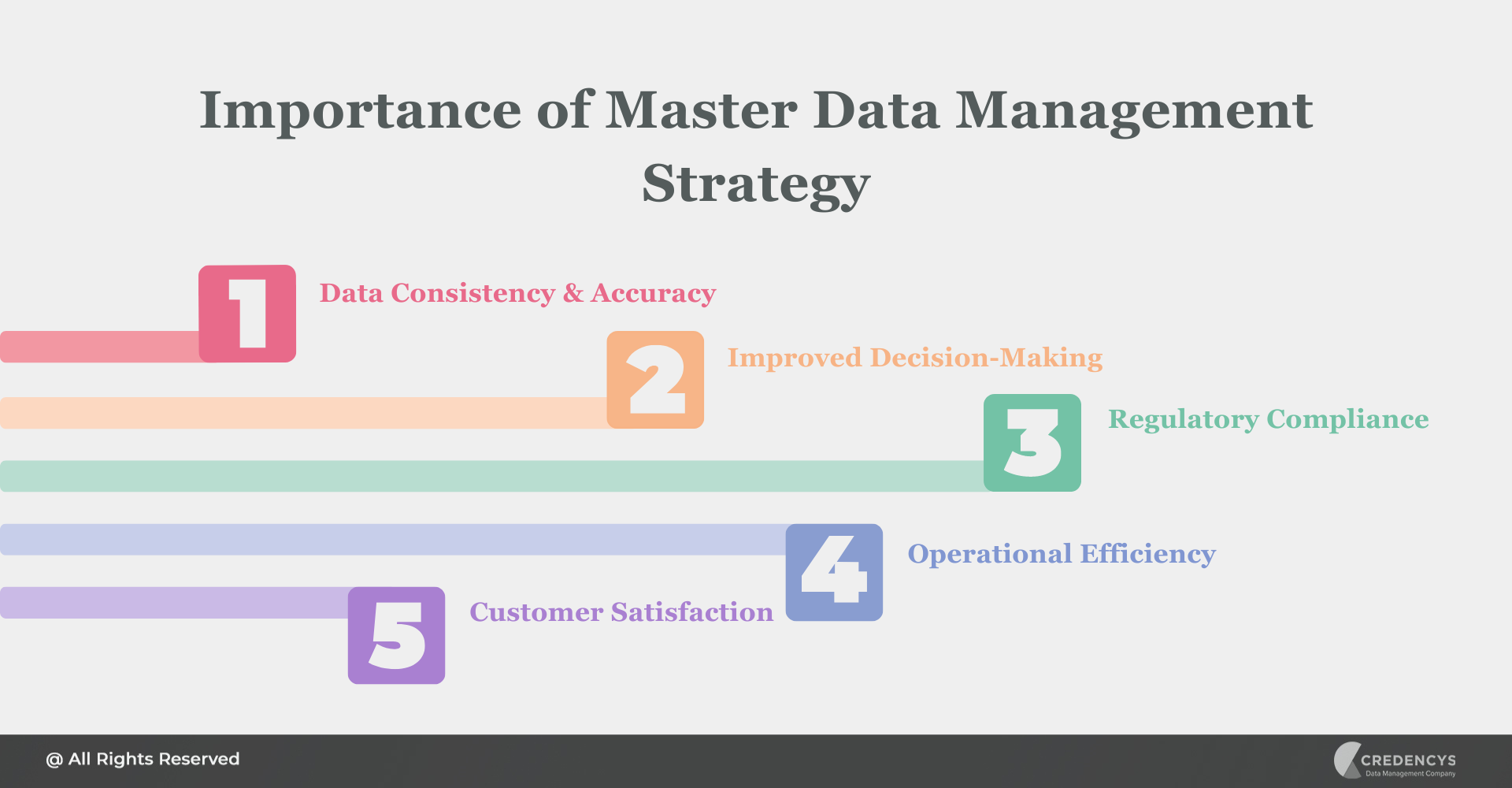
1. Data Quality Enhancement

MDM ensures data accuracy, consistency, and completeness. Improved data quality leads to better decision-making, reduced errors, and enhanced customer satisfaction.

2. Operational Efficiency

Streamlined processes, automated workflows, and reduced manual intervention optimize operational efficiency, saving time and resources.

3. Regulatory Compliance

Compliance with data regulations such as GDPR or CCPA mitigates risks associated with non-compliance, avoiding costly penalties and legal consequences.

4. Enhanced Analytics

Clean, standardized data enables more accurate analytics, facilitating insights for strategic planning, forecasting, and market analysis.

5. Customer Experience Improvement

Consistent, reliable data across systems enhances customer interactions, loyalty, and retention rates.

How MDM Delivers ROI through Direct and Indirect Benefits

Master Data Management delivers ROI through both direct and indirect benefits that encompass cost reduction, operational efficiency, regulatory compliance, data-driven decision-making, enhanced customer experience, innovation enablement, employee productivity, and brand reputation.

By recognizing and quantifying these benefits, organizations can justify MDM investments, prioritize initiatives, and maximize the value of their data assets.

Direct Benefits:

  • Cost Reduction: By eliminating duplicate data, minimizing errors, and automating processes, MDM reduces operational costs associated with manual data management.
  • Revenue Generation: Improved data quality leads to better customer targeting, cross-selling, and upselling opportunities, driving revenue growth.
  • Resource Optimization: MDM optimizes resource allocation by eliminating redundant tasks and reallocating the workforce to more value-added activities.

Indirect Benefits:

  • Risk Mitigation: Data governance and compliance measures mitigate risks associated with data breaches, fines, and reputational damage.
  • Decision-making Improvements: Reliable data fosters confident decision-making, leading to better strategic initiatives and competitive advantage.
  • Brand Reputation: Enhanced data quality and customer experience contribute to a positive brand image, attracting more customers and retaining existing ones.

How Capital and Operational Costs Can Affect MDM ROI

Both capital and operational costs heavily influence the calculation of ROI. These costs represent significant investments required to establish and maintain effective MDM practices. Understanding how each aspect affects ROI is crucial for organizations aiming to optimize their data management strategies.

Capital Costs

  • Software Licensing: Upfront costs for MDM software licenses and implementation services.
  • Hardware Infrastructure: Investment in servers, storage, and network infrastructure to support MDM systems.
  • Training and Change Management: Expenses for training employees on MDM tools and managing organizational change.

Operational Costs

  • Maintenance and Support: Ongoing investment for software updates, maintenance, and technical support.
  • Data Integration: Costs associated with integrating MDM solutions with existing systems and applications.
  • Data Governance: Investment in data governance policies, procedures, and personnel to ensure ongoing data quality and compliance.

Methodologies for Measuring MDM ROI

Measuring the ROI of MDM requires a comprehensive approach that considers both quantitative and qualitative factors. Here are key methodologies to evaluate the ROI of MDM implementations:

Cost Savings Analysis

  • Identify cost reduction opportunities attributable to improved data quality and operational efficiencies.
  • Calculate savings from reduced data errors, manual data reconciliations, and process redundancies.
  • Include direct cost savings from data storage optimization and reduced data management overhead.

Revenue Enhancement

  • Quantify the impact of MDM on revenue generation through improved customer targeting, cross-selling, and upselling opportunities.
  • Measure the increase in sales conversion rates and customer retention resulting from enhanced data-driven marketing and sales initiatives.
  • Analyze the contribution of MDM to new product development and faster time-to-market, leading to revenue growth.

Risk Mitigation

  • Assess the financial implications of regulatory non-compliance and data-related penalties.
  • Estimate the potential costs associated with data breaches, privacy violations, and legal liabilities mitigated through MDM.
  • Factor in the value of reputation protection and brand integrity maintained by ensuring data accuracy and compliance.

Productivity Gains

  • Measure improvements in data-related processes such as data entry, data integration, and reporting.
  • Quantify time savings achieved by employees in accessing reliable data for decision-making.
  • Evaluate the impact of MDM on reducing data-related project delays and improving overall project delivery timelines.

Intangible Benefits

  • Consider qualitative factors such as improved stakeholder trust, organizational alignment, and data-driven culture.
  • Assess the impact of MDM on employee satisfaction, collaboration, and morale.
  • Capture the strategic value of MDM in enabling digital transformation initiatives and future-proofing the organization against data challenges.

Steps to Determine the ROI of a Master Data Management Implementation

Determining the ROI of a Master Data Management (MDM) implementation involves several steps to assess the impact of the initiative on the organization accurately. Here are the key steps to follow:

Step #1: Establish Clear Objectives

Begin by clearly defining the goals and objectives of the MDM implementation. These objectives should align with the organization’s overall strategic priorities, such as improving data quality, enhancing operational efficiency, or driving revenue growth. Clear objectives will provide a roadmap for measuring the success and ROI of the MDM initiative.

Step #2: Identify Key Metrics

Identify the key performance indicators (KPIs) and metrics that will be used to measure the impact of the MDM implementation. These metrics may include data quality metrics (e.g., accuracy, completeness), operational metrics (e.g., process efficiency, time-to-market), and financial metrics (e.g., cost savings, revenue increase). Select metrics that are relevant to the objectives established in the first step.

Step #3: Quantify Costs

Estimate the costs associated with implementing and maintaining the MDM solution. These costs may include software licensing fees, implementation services, infrastructure costs, training expenses, and ongoing maintenance and support fees. It’s essential to consider both upfront implementation costs and ongoing operational expenses to accurately assess the total cost of ownership.

Step #4: Calculate Benefits

Quantify the anticipated benefits of the MDM implementation in financial terms. These benefits may include cost savings from improved data quality and operational efficiency, increased revenue from better customer insights and targeting, and risk mitigation from regulatory compliance and data security improvements. Use the identified metrics to estimate the magnitude of each benefit and assign monetary values where possible.

Step #5: Calculate ROI

Calculate the return on investment (ROI) by comparing the total benefits against the total costs of the MDM implementation over a specified period of time. It’s not an exact calculation as MDM has many indirect benefits, however, it will give you an idea of what ROI you can expect.

Wrapping Up: The Metrics of MDM

Master Data Management represents a strategic investment for organizations seeking to unlock the full potential of their data assets. While measuring the ROI of MDM can be complex, adopting a holistic approach that encompasses cost savings, revenue enhancement, risk mitigation, productivity gains, and intangible benefits provides a comprehensive view of its impact.

By effectively measuring and articulating the ROI of MDM initiatives, organizations can justify investments, prioritize resources, and drive continuous improvement in data management practices, ultimately driving sustainable business success in the data-driven era.

Connect with an MDM Expert to get more details about Implementation investment and ROI.

Harnessing MDM for Automotive Aftermarket Excellence

The automotive aftermarket industry serves as a crucial component of the broader automotive sector, encompassing all products and services related to vehicles after their initial sale. Unlike the original equipment manufacturer (OEM) segment, which focuses on producing vehicles, the aftermarket sector revolves around the maintenance, repair, customization, and enhancement of existing vehicles.

This expansive industry caters to the diverse needs of vehicle owners, ranging from routine maintenance parts like oil filters and brake pads to performance upgrades and accessories that allow for personalization. The aftermarket industry is characterized by a vast ecosystem of manufacturers, distributors, retailers, service providers, and consumers, all working together to keep vehicles operating efficiently and meeting evolving consumer preferences.

From small independent shops to large chains and eCommerce platforms, the aftermarket landscape is dynamic and highly competitive, driven by innovation, quality, and customer satisfaction.

Key Players and Stakeholders

The automotive aftermarket industry comprises a wide array of stakeholders, each playing a crucial role in shaping its dynamics and evolution. These key players include:

1. Manufacturers

Companies are responsible for designing, producing, and distributing aftermarket products such as replacement parts, accessories, and performance upgrades. Manufacturers range from large multinational corporations to small and medium-sized enterprises (SMEs) specializing in niche markets.

2. Distributors and Wholesalers

Entities tasked with procuring aftermarket products from manufacturers and supplying them to retailers, repair shops, and other end-users. Distributors play a pivotal role in ensuring product availability, logistics, and inventory management within the aftermarket supply chain.

3. Retailers

Channels through which consumers purchase aftermarket products and services. Retailers encompass a diverse range of businesses, including automotive parts stores, eCommerce platforms, specialty shops, and franchised dealerships, offering convenience and accessibility to customers.

4. Service Providers

Entities offering automotive maintenance, repair, customization, and installation services. Service providers include independent repair shops, franchised dealerships, auto service chains, and specialty garages, catering to the diverse needs of vehicle owners.

5. Consumers

Individuals or organizations that purchase aftermarket products and services for their vehicles. Consumers drive demand within the aftermarket industry, seeking quality, reliability, affordability, and customization options to meet their specific requirements.

Key Players in the Automotive Aftermarket Industry

Challenges Faced by the Industry

Despite its resilience and adaptability, the automotive aftermarket industry confronts several challenges that impact its operations, profitability, and competitiveness. Some of the key challenges include:

1. Digital Transformation and eCommerce

The rise of digital technologies and eCommerce platforms is reshaping consumer behavior, purchasing habits, and competitive dynamics within the aftermarket industry. Embracing digital transformation, enhancing online presence, and optimizing omnichannel strategies are imperative for aftermarket businesses to capitalize on emerging opportunities and stay ahead of the curve.

2. Counterfeit and Substandard Products

The proliferation of counterfeit and substandard aftermarket products poses significant risks to consumer safety, brand reputation, and regulatory compliance. Mitigating this risk requires robust quality control measures, supply chain transparency, and collaboration among stakeholders to uphold industry standards and consumer trust.

3. Regulatory Compliance and Standards

The automotive aftermarket industry is subject to various regulations, standards, and compliance requirements governing product safety, emissions, labeling, and environmental sustainability. Navigating this regulatory landscape demands vigilance, adherence to best practices, and continuous monitoring to avoid legal and reputational risks.

4. Rapid Technological Advancements

The automotive industry is witnessing rapid technological advancements, including electrification, connectivity, and autonomous driving technologies. Adapting to these changes requires aftermarket businesses to invest in innovation, skills development, and product diversification to stay relevant and competitive.

5. Fragmented Market Landscape

The aftermarket sector comprises numerous players, channels, and product categories, resulting in fragmentation and complexity. Managing relationships, supply chains, and data across this diverse ecosystem can pose challenges for stakeholders seeking efficiency and collaboration.

Navigating the Challenges in the Automotive Aftermarket Industry – Insights from Our Exclusive Webinar

Role of Data in Decision-Making

Data plays a pivotal role in driving informed decision-making processes within the automotive aftermarket industry. In an increasingly competitive and complex marketplace, aftermarket businesses rely on data-driven insights to optimize operations, enhance customer experiences, and capitalize on emerging opportunities.

Here’s how data influences decision-making in the aftermarket:

1. Product Development and Innovation

Data analytics provide valuable insights into customer preferences, product performance, and market demand, guiding aftermarket businesses in developing new products, improving existing offerings, and innovating to stay ahead of competitors and meet evolving consumer needs.

2. Supply Chain Management and Optimization

Data-driven supply chain visibility allows aftermarket businesses to track inventory levels, monitor supplier performance, and mitigate supply chain risks such as disruptions, delays, and cost fluctuations, enabling efficient inventory management, procurement strategies, and logistics planning.

3. Market Analysis and Forecasting

Data analytics enable aftermarket businesses to analyze market trends, consumer behavior, and competitive dynamics, empowering them to anticipate demand, identify growth opportunities, and make strategic investments in product development, inventory management, and marketing initiatives.

4. Performance Monitoring and Optimization

By tracking key performance indicators such as sales, inventory turnover, customer satisfaction, and service quality, aftermarket businesses can assess their operational efficiency, identify areas for improvement, and optimize resource allocation to achieve business objectives.

5. Customer Segmentation and Targeting

Data segmentation allows aftermarket businesses to categorize customers based on demographics, purchasing behavior, preferences, and lifecycle stages, enabling personalized marketing campaigns, product recommendations, and customer service strategies tailored to specific audience segments.

Role of Data in Decision-Making

Types of Data Involved in the Automotive Aftermarket Industry

The automotive aftermarket industry generates and utilizes a wide range of data types across various business functions and processes. These include:

1. Operational and Performance Data

Metrics and analytics related to aftermarket operations, processes, and performance indicators such as productivity, efficiency, quality, and service levels. Operational data enables aftermarket businesses to monitor performance, identify bottlenecks, and implement continuous improvement initiatives to enhance operational excellence and customer satisfaction.

2. Supplier and Vendor Data

Details about aftermarket suppliers, vendors, manufacturers, and partners, including contact information, contracts, agreements, performance metrics, and compliance requirements. Supplier data facilitates relationship management, procurement negotiations, and supply chain collaboration to ensure timely and cost-effective sourcing of products and services.

3. Customer Data

Personal and transactional data associated with aftermarket customers, including contact details, purchase history, preferences, feedback, and loyalty program participation. Customer data enables aftermarket businesses to personalize marketing efforts, improve customer service, and foster long-term relationships.

4. Sales and Financial Data

Data pertaining to aftermarket sales transactions, revenues, profits, expenses, margins, and financial performance metrics. Sales and financial data provide insights into revenue streams, profitability drivers, and overall business health, informing strategic decision-making and financial planning.

5. Inventory Data

Information on aftermarket inventory levels, stock-keeping units (SKUs), locations, turnover rates, and replenishment cycles. Inventory data helps aftermarket businesses optimize stock levels, minimize stockouts, and reduce carrying costs while ensuring product availability and fulfillment efficiency.

6. Product Data

Information related to aftermarket products such as part numbers, descriptions, specifications, compatibility, pricing, and availability. Product data is essential for inventory management, cataloging, pricing optimization, and online merchandising.

Challenges in Managing Automotive Aftermarket Data

Despite the myriad benefits of data utilization in the automotive aftermarket industry, organizations face several challenges in effectively managing aftermarket data:

1. Data Security and Privacy

Safeguarding aftermarket data against cyber threats, data breaches, and regulatory compliance requirements such as GDPR and CCPA poses significant challenges for organizations, necessitating robust data security measures, encryption protocols, and privacy controls.

2. Scalability and Agility

As aftermarket businesses grow and evolve, they must scale their data management infrastructure and capabilities to accommodate increasing data volumes, diverse data sources, and evolving business requirements while maintaining agility and flexibility.

3. Data Quality and Accuracy

Ensuring data quality and accuracy is a persistent challenge for aftermarket businesses, as data may be incomplete, outdated, or inaccurate due to manual entry errors, system integrations, or data migration issues.

4. Integration Complexity

Integrating disparate data sources, systems, and formats within the aftermarket ecosystem can be complex and time-consuming, requiring interoperability solutions, data mapping, and synchronization efforts to achieve seamless data exchange and collaboration.

5. Data Fragmentation

Aftermarket businesses often encounter data silos and fragmentation across different systems, departments, and stakeholders, leading to inconsistencies, redundancies, and inefficiencies in data management and utilization.

Challenges in Managing Automotive Aftermarket Data

Role of MDM in the Automotive Aftermarket Industry

Master Data Management (MDM) plays a crucial role in driving efficiency, accuracy, and innovation within the automotive aftermarket industry. By centralizing, harmonizing, and governing critical data assets, MDM enables aftermarket businesses to streamline operations, enhance decision-making, and deliver superior customer experiences.

Here’s how MDM contributes to various aspects of the automotive aftermarket:

1. Enabling Personalized Customer Experiences

Personalization is increasingly becoming a key differentiator for aftermarket businesses looking to attract and retain customers in a competitive marketplace. MDM empowers aftermarket businesses to capture, analyze, and leverage customer data to deliver personalized product recommendations, targeted marketing campaigns, and tailored customer experiences across various touchpoints.

By consolidating customer data from disparate sources, including transaction history, preferences, and interactions, MDM enables aftermarket businesses to gain a holistic view of customer behavior, segment customers based on their preferences and purchase patterns, and deliver relevant and timely offers and communications, thereby enhancing customer engagement, loyalty, and lifetime value.

2. Improving Supply Chain Visibility

Supply chain visibility is critical for aftermarket businesses to track the movement of products, monitor supplier performance, and mitigate supply chain risks such as disruptions, delays, and cost fluctuations. MDM facilitates end-to-end supply chain visibility by integrating data from multiple sources, including suppliers, distributors, logistics providers, and internal systems.

By consolidating and harmonizing supply chain data, MDM enables aftermarket businesses to identify bottlenecks, optimize logistics routes, and proactively address issues such as stockouts, order delays, and quality issues, thereby improving supply chain resilience, agility, and responsiveness to changing market conditions.

3. Ensuring Regulatory Compliance

The automotive aftermarket industry is subject to various regulations, standards, and compliance requirements governing product safety, emissions, labeling, and environmental sustainability. MDM helps aftermarket businesses ensure regulatory compliance by establishing data governance frameworks, data quality standards, and audit trails to track and manage changes to critical data attributes.

By maintaining accurate and complete records of product information, certifications, and compliance documentation, MDM enables aftermarket businesses to demonstrate compliance with regulatory requirements, mitigate legal and reputational risks, and build trust and confidence among customers, suppliers, and regulatory authorities.

4. Enhancing Inventory Management

Effective inventory management is essential for aftermarket businesses to optimize stock levels, minimize stockouts, and reduce carrying costs while ensuring product availability and fulfillment efficiency. MDM enables aftermarket businesses to maintain accurate and up-to-date inventory data by synchronizing inventory levels, locations, and replenishment cycles across multiple systems and locations.

By providing real-time visibility into inventory levels, demand patterns, and supplier performance, MDM enables aftermarket businesses to improve inventory forecasting, optimize procurement decisions, and reduce excess inventory holding costs, ultimately enhancing operational efficiency and profitability.

5. Streamlining Product Information

One of the primary challenges in the automotive aftermarket is managing vast amounts of product information across diverse systems, formats, and channels. MDM facilitates the centralization and standardization of product data, including part numbers, descriptions, specifications, pricing, and compatibility information.

By establishing a single source of truth for product information, MDM enables aftermarket businesses to streamline cataloging, enhance data quality, and ensure consistency across sales channels, leading to improved product discovery, faster time-to-market, and increased customer satisfaction.

Final Thoughts

Looking ahead, the future of MDM in the automotive aftermarket industry is poised for continued growth and evolution as organizations embrace digital transformation, data-driven strategies, and customer-centric approaches to business operations. As aftermarket businesses navigate an increasingly complex and competitive marketplace, MDM will play a pivotal role in driving innovation, differentiation, and sustainable growth.

In addition, the regulatory landscape is expected to evolve, with an increasing focus on data privacy, security, and transparency. MDM will play a critical role in helping aftermarket businesses navigate regulatory requirements, ensure data compliance, and mitigate legal and reputational risks.

How to Build a Successful Master Data Management Strategy? 

In today’s data-driven world, managing vast amounts of information efficiently is crucial for businesses to thrive. Among the myriad of data management strategies, Master Data Management stands out as a cornerstone for ensuring data integrity, consistency, and reliability across an organization.

What is Master Data Management?

Master Data Management, commonly abbreviated as MDM, refers to the practices, processes, and technologies used by organizations to create and maintain a single, consistent, accurate, and complete view of their most critical data entities, often referred to as “master data.” This master data typically includes information about customers, products, suppliers, employees, and other core entities that are essential for business operations and decision-making.

MDM aims to eliminate data silos, reconcile conflicting information, and establish a trusted source of truth that can be leveraged across the enterprise. By centralizing master data and enforcing standardized governance and quality controls, MDM enables organizations to unlock the full value of their data assets while mitigating risks associated with data inconsistency and fragmentation.

What is Master Data Management (MDM)?

Importance of Master Data Management Strategy for Businesses

The importance of MDM for businesses cannot be overstated, particularly in today’s highly competitive and data-driven landscape. Here are some key reasons why MDM is indispensable:

1. Data Consistency and Accuracy

Inaccurate or inconsistent data can lead to costly errors, misinformed decisions, and damaged customer relationships. MDM ensures that all stakeholders have access to reliable, up-to-date information, thus fostering trust and confidence in business operations.

2. Improved Decision-Making

By providing a single, authoritative source of truth, MDM empowers organizations to make better-informed decisions. Whether it’s identifying cross-selling opportunities, optimizing supply chain processes, or personalizing customer experiences, having reliable master data is essential for strategic planning and execution.

3. Regulatory Compliance

Many industries are subject to stringent regulatory requirements regarding data privacy, security, and governance. MDM helps organizations maintain compliance with regulations such as GDPR, CCPA, HIPAA, and others by establishing robust data governance frameworks and controls.

4. Operational Efficiency

Data fragmentation and duplication are common challenges that can impede operational efficiency and productivity. MDM streamlines data integration, reduces redundancy, and enhances data accessibility, thereby enabling smoother business processes and workflows.

5. Customer Satisfaction

Consistency and accuracy in customer data are paramount for delivering seamless experiences across various touchpoints. MDM ensures that customer information remains accurate and up-to-date, facilitating personalized interactions, targeted marketing campaigns, and enhanced customer satisfaction.

Importance of Master Data Management Strategy

Types of Master Data

Master data can be categorized into several key types, each representing a distinct aspect of an organization’s operations. Some common types of master data include:

1. Customer Data

Information about individuals or entities who engage with the organization, including contact details, preferences, purchase history, and account information.

2. Product Data

Details about the products or services offered by the organization, such as descriptions, specifications, pricing, and inventory levels.

3. Employee Data

Data related to employees, including personal information, job roles, qualifications, salary details, and performance evaluations.

4. Supplier Data

Information about vendors and suppliers, including contact details, contracts, payment terms, and performance metrics.

5. Location Data

Details about physical locations or sites associated with the organization, such as addresses, facilities, and geographic coordinates.

6. Asset Data

Information about assets owned or managed by the organization, including equipment, vehicles, machinery, and facilities.

Each type of master data plays a crucial role in supporting various business processes and functions, making it essential to manage and maintain them effectively.

Benefits of Successful MDM Strategy

Implementing a successful Master Data Management strategy offers a wide range of benefits that can positively impact various aspects of an organization’s operations. From improving data quality to enhancing decision-making processes and ensuring regulatory compliance, the advantages of MDM are numerous and significant.

1. Improved Data Quality and Consistency

One of the primary benefits of a successful MDM strategy is the improvement in data quality and consistency. By centralizing master data and establishing standardized governance and quality controls, organizations can ensure that their data is accurate, complete, and up-to-date.

This helps minimize errors, reducing data redundancy, and enhancing overall data reliability. With high-quality master data, organizations can make better-informed decisions, execute more effective business processes, and provide superior customer experiences.

2. Enhanced Decision-Making Processes

A successful MDM strategy enables organizations to make more informed and timely decisions by providing a single, authoritative source of truth. With consistent and reliable master data at their disposal, decision-makers can gain deeper insights into key business metrics, trends, and relationships.

This empowers them to identify opportunities, mitigate risks, and optimize strategies with greater confidence and accuracy. Whether it’s optimizing inventory levels, targeting marketing campaigns, or allocating resources, access to trustworthy master data streamlines decision-making processes and drives better outcomes.

3. Compliance with Regulations and Standards

In today’s regulatory environment, compliance with data protection regulations and industry standards is paramount. A successful MDM strategy helps organizations maintain compliance by establishing robust data governance frameworks, implementing data quality controls, and ensuring data integrity and security.

Whether it’s GDPR, CCPA, HIPAA, or industry-specific regulations, MDM provides the necessary mechanisms to track and manage compliance requirements effectively. By adhering to regulatory standards, organizations mitigate legal risks, protect sensitive information, and build trust with customers and stakeholders.

4. Streamlined Operations and Cost Savings

Another significant benefit of a successful MDM strategy is streamlined operations and cost savings. By centralizing master data and eliminating data silos, organizations can streamline business processes, reduce redundancy, and improve operational efficiency.

This leads to reduced manual effort, faster response times, and fewer errors in data handling. Moreover, by optimizing data management practices, organizations can realize cost savings through reduced data storage costs, improved resource utilization, and increased productivity.

Whether it’s minimizing data maintenance efforts, avoiding data-related errors, or optimizing IT infrastructure, MDM enables organizations to operate more efficiently and cost-effectively.

Steps to Build a Successful MDM Strategy

Building a successful Master Data Management strategy requires careful planning, execution, and continuous refinement. By following a structured approach, organizations can effectively harness the power of MDM to unlock the full potential of their data assets and drive business success.

1. Assess Current State

Before embarking on your MDM journey, it’s essential to assess the current state of your data management processes and systems. This involves:

  • Evaluating existing data management processes and systems: Review the systems, databases, and processes currently in place for managing master data. Identify strengths, weaknesses, and areas for improvement.
  • Identifying pain points and areas for improvement: Determine the challenges and bottlenecks that hinder effective master data management. This could include issues such as data inconsistency, duplication, fragmentation, or lack of governance.

2. Define Objectives and Scope

Once you have a clear understanding of your current state, define the objectives and scope of your MDM strategy:

  • Set clear goals for the MDM strategy: Identify the specific outcomes you aim to achieve with your MDM initiative. Whether it’s improving data quality, enhancing decision-making, or ensuring regulatory compliance, articulate clear and measurable objectives.
  • Determine which master data domains to focus on initially: Prioritize the master data domains that are most critical to your organization’s operations and strategic objectives. This could include customer data, product data, employee data, or other key entities.
  • Define success metrics and KPIs: Establish key performance indicators (KPIs) and metrics to measure the success of your MDM strategy. These could include data accuracy rates, time to onboard new data sources or improvements in operational efficiency.

3. Establish Governance Framework

A robust governance framework is essential for ensuring the success and sustainability of your MDM strategy:

  • Develop a governance structure with clear roles and responsibilities: Define the roles and responsibilities of stakeholders involved in master data management, including data stewards, data owners, and governance committees.
  • Define data governance policies and procedures: Establish policies, standards, and procedures for managing master data, including data quality rules, metadata management practices, and data access controls.
  • Obtain executive buy-in and support: Secure buy-in from executive leadership for your MDM initiative. Communicate the strategic importance of MDM in driving business value and securing support and resources for implementation.

4. Select Technology Solutions

Selecting the right technology solutions is critical for implementing your MDM strategy effectively:

  • Evaluate MDM software vendors and solutions: Assess different MDM software vendors and solutions based on factors such as functionality, scalability, vendor reputation, and customer support.
  • Choose a solution that aligns with your organization’s needs and objectives: Select an MDM solution that meets your organization’s specific requirements and aligns with your strategic objectives. Consider factors such as integration capabilities, data governance features, and ease of use.
  • Consider scalability, flexibility, and ease of integration: Ensure that the chosen MDM solution can scale to meet future growth and adapt to evolving business needs. Evaluate its flexibility in supporting various data models and integration with existing systems and applications.

5. Implement MDM Solution

With your MDM strategy and technology solution in place, it’s time to implement:

  • Plan and execute the implementation in phases: Break down the implementation into manageable phases, starting with the most critical master data domains or use cases. Develop a detailed implementation plan with clear milestones, timelines, and resource allocations.
  • Ensure proper data migration and integration: Migrate existing master data from legacy systems to the new MDM solution while ensuring data integrity and consistency. Establish integration processes to synchronize master data across relevant systems and applications.
  • Train users and stakeholders on the new MDM processes and tools: Provide comprehensive training and support to users and stakeholders involved in master data management. Ensure that they understand the importance of MDM and how to effectively utilize the new processes and tools.

6. Monitor and Continuously Improve

Once your MDM solution is implemented, it’s essential to monitor its performance and continuously improve:

  • Establish ongoing monitoring processes for data quality and compliance: Implement data quality monitoring tools and processes to continuously assess the accuracy, completeness, and consistency of master data. Monitor compliance with data governance policies and regulatory requirements.
  • Collect feedback from users and stakeholders: Solicit feedback from users and stakeholders on their experiences with the MDM solution. Identify any issues, challenges, or areas for improvement and take corrective actions as needed.
  • Iterate and refine the MDM strategy based on insights and learnings: Use feedback, performance metrics, and insights gained from monitoring to iterate and refine your MDM strategy continuously. Adapt to changing business requirements, technology advancements, and best practices in master data management.

Steps to Build a Successful MDM Strategy
By following these steps, organizations can build and implement a successful MDM strategy that drives significant improvements in data quality, decision-making processes, operational efficiency, and overall business performance.

Closing Thoughts

A well-executed MDM strategy not only improves data quality and consistency but also enhances decision-making processes, ensures compliance with regulations and standards, and streamlines operations to drive cost savings and efficiency gains. By centralizing master data, establishing robust governance frameworks, and leveraging technology solutions, organizations can overcome the challenges of data fragmentation, inconsistency, and silos, thereby transforming data into a strategic asset that fuels business growth and innovation.

By taking these steps and investing in a well-executed MDM strategy, you can position your organization for success in today’s data-driven world. Don’t wait any longer, start building or improving your MDM strategy today and unlock the full potential of your data assets.

PIM for Manufacturers: Streamlining Process and Enriching Data for Global Manufacturers

In the ever-evolving landscape of global manufacturing and distribution, the need for efficient and streamlined processes is paramount. As manufacturers and distributors expand their reach across borders, managing product information becomes increasingly complex.

This is where Product Information Management (PIM) plays a crucial role. PIM for manufacturers is not just a buzzword; it’s a strategic solution to enhance data accuracy, streamline workflows, and ultimately improve overall operational efficiency.

The Significance of PIM for Manufacturers

Manufacturers, especially those operating on a global scale, deal with an extensive array of products, each with its unique attributes, specifications, and compliance requirements. In this scenario, a robust PIM system acts as a centralized hub that consolidates and manages all product-related information.

By leveraging PIM for manufacturers, organizations can ensure data consistency, eliminate redundancies, and maintain a single source of truth for product information.

Challenges for Manufacturers without a PIM Solution

Manufacturers face significant challenges when operating without a Product Information Management (PIM) system in place:

1. Data Fragmentation: Product information is scattered across multiple platforms and systems, leading to inconsistency and inefficiency in managing product data.

2. Inaccurate Product Information: Without a centralized repository for product data, there’s a higher risk of errors and discrepancies in product information, leading to customer dissatisfaction and potential loss of sales.

3. Time-consuming Manual Processes: Without automated workflows provided by a PIM system, manufacturers must rely on manual processes for data entry, updates, and maintenance, which can be time-consuming and prone to human error.

4. Limited Scalability: Scaling operations become challenging without a PIM system, as manual processes and fragmented data management become increasingly burdensome as the business grows.

5. Difficulty in Multichannel Marketing: Inconsistent product information across different sales channels can confuse customers and damage brand reputation. A PIM system helps ensure uniformity and accuracy in product data across all channels.

6. Missed Opportunities for Personalization: Without a centralized database of customer and product information, manufacturers may struggle to leverage data for personalized marketing campaigns and customer experiences.

7. Compliance Risks: In industries with strict regulatory requirements, managing compliance without a PIM system can be arduous and increases the risk of non-compliance penalties.

8. Limited Insights and Analytics: Without a centralized system for product data, manufacturers may lack the necessary insights and analytics to make informed business decisions and optimize product performance.

Also read: Why Should Manufacturers Need Product Information Management?

Benefits of PIM for Manufacturers

Implementing a Product Information Management (PIM) system offers numerous benefits for manufacturers:

1. Centralized Product Data

PIM centralizes all product information in one repository, making it easily accessible and manageable. This eliminates data silos and ensures consistency across all channels and touchpoints.

2. Improved Data Quality

With standardized data models and validation rules, PIM helps ensure data accuracy and integrity. Manufacturers can trust that product information is up-to-date, consistent, and free from errors.

3. Streamlined Product Lifecycle Management

PIM facilitates the management of product information throughout its lifecycle, from creation to retirement. This streamlines processes such as new product introductions, updates, and discontinuation.

4. Enhanced Efficiency and Productivity

Automation features in PIM reduce manual data entry and streamline workflows. This frees up valuable time for employees to focus on more strategic tasks, leading to increased productivity and efficiency.

5. Optimized Multichannel Marketing

PIM enables manufacturers to easily syndicate product information to various sales channels, including e-commerce platforms, marketplaces, and print catalogs. This ensures consistency and accuracy across all channels, enhancing the customer experience.

6. Faster Time-to-Market

By centralizing and automating product data management processes, PIM helps manufacturers bring new products to market more quickly. This agility is essential for staying competitive in fast-paced industries.

7. Improved Customer Experience

Consistent and accurate product information leads to a better customer experience. With PIM, manufacturers can provide detailed product descriptions, specifications, and images, helping customers make informed purchasing decisions.

8. Scalability and Flexibility

PIM systems are scalable and adaptable to evolving business needs. Whether expanding product lines, entering new markets, or integrating with other systems, PIM can accommodate growth and change without compromising performance.

9. Data Governance and Compliance

PIM enforces data governance policies and ensures compliance with regulatory requirements. Manufacturers can maintain control over sensitive product information and mitigate risks associated with non-compliance.

10. Actionable Insights and Analytics

PIM provides valuable insights into product performance, customer behavior, and market trends through robust reporting and analytics capabilities. Manufacturers can leverage this data to make data-driven decisions and optimize their product strategies.

Benefits of PIM for Manufacturers

Choosing the Right PIM Solution for Manufacturers

With the growing recognition of the importance of PIM for manufacturers, the market is flooded with a plethora of PIM solutions. However, not all are created equal, and selecting the right one is crucial for maximizing the benefits. Here are some key considerations when choosing a PIM solution:

1. Scalability

A PIM solution should be scalable to accommodate the growing product portfolio and expanding business operations. Whether a manufacturer is dealing with hundreds or thousands of products, the chosen PIM system should be able to scale effortlessly without compromising performance.

2. Integration Capabilities

Manufacturers often operate multiple systems for different aspects of their business, such as Enterprise Resource Planning (ERP) and Customer Relationship Management (CRM) systems. A robust PIM solution should seamlessly integrate with these existing systems, creating a cohesive ecosystem where data flows seamlessly across all platforms.

3. User-Friendly Interface

The effectiveness of a PIM system relies on how easily it can be adopted by the teams within an organization. A user-friendly interface ensures that employees across different departments can quickly learn and navigate the system, minimizing training time and accelerating the implementation process.

4. Data Security

Given the sensitive nature of product information, data security is a top priority. A reliable PIM solution should have robust security measures in place to protect against unauthorized access, data breaches, and other cyber threats. Compliance with industry standards and regulations is also crucial to ensure the confidentiality and integrity of product information.

Credencys PIM Experts: Your Trusted Partners in PIM Implementation

As manufacturers embark on the journey of implementing PIM, partnering with experienced experts becomes instrumental. Credencys, a leading provider of PIM solutions, offers a team of seasoned professionals dedicated to ensuring a seamless and effective PIM implementation for manufacturers.

Connect with our experts to choose and implement the perfect PIM solution for your business.