


Retail 2.0: Harnessing AI & Analytics for Growth, Efficiency & Customer Engagement
The retail industry is undergoing a massive transformation, driven by advancements in Artificial Intelligence (AI) and Data Analytics. From predicting customer preferences to optimizing supply chains, AI-powered solutions are enabling retailers to make smarter, faster, and more data-driven decisions.
Retailers today have access to vast amounts of data—customer purchasing behavior, sales trends, inventory levels, and more.
AI is already transforming retail – is your business ready!
73% of retailers are investing in AI-driven automation to improve customer experiences (IBM).
AI and analytics in retail help convert this raw data into actionable insights, allowing businesses to personalize experiences, reduce inefficiencies, and maximize profits.
Why Retailers Need AI & Data Analytics
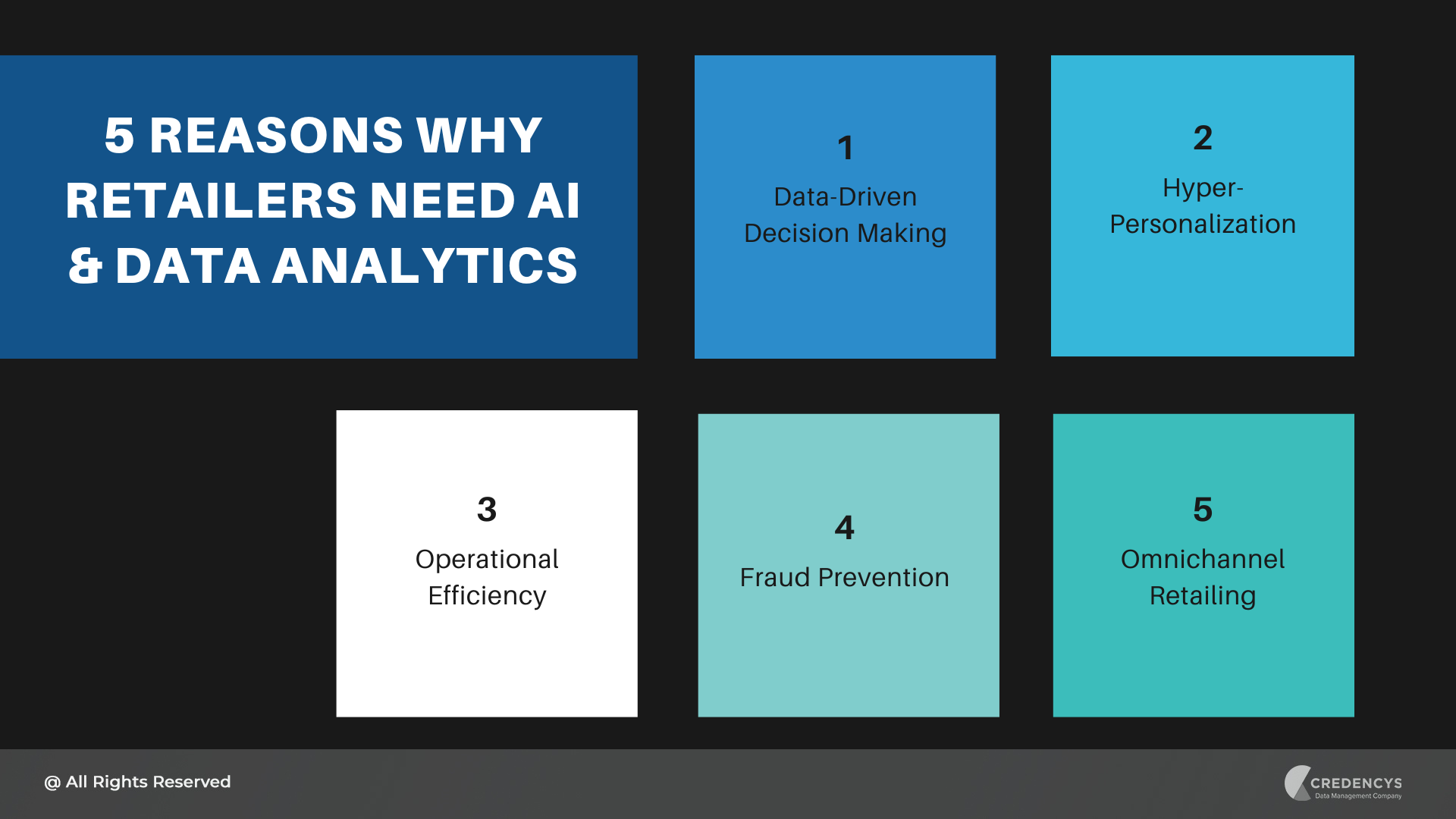
The retail landscape is more competitive than ever, with evolving consumer expectations, supply chain complexities, and digital disruption. AI and analytics provide a strategic advantage by enabling:
- Data-Driven Decision Making: Retailers can leverage AI to analyze customer trends, predict demand, and optimize pricing strategies.
- Hyper-Personalization: AI algorithms can tailor recommendations, promotions, and shopping experiences based on individual customer preferences.
- Operational Efficiency: From inventory management to automated checkouts, AI reduces manual tasks and enhances efficiency.
- Fraud Prevention: AI-powered fraud detection systems help retailers safeguard transactions and customer data.
- Omnichannel Retailing: AI bridges the gap between online and offline shopping, creating a seamless customer experience across multiple channels.
Key Benefits of AI & Analytics in Retail
1. Improved Efficiency
- AI automates repetitive processes, such as inventory tracking and demand forecasting, reducing operational costs.
- Predictive analytics ensures the right products are stocked at the right time, minimizing waste and stockouts.
2. Revenue Growth & Profitability
- AI-driven pricing strategies adjust prices dynamically based on demand, competition, and consumer behavior.
- Advanced analytics help retailers identify upselling and cross-selling opportunities to increase sales.
3. Enhanced Customer Experience
- Personalized recommendations and AI-driven chatbots improve customer engagement.
- AI optimizes supply chain operations to ensure timely deliveries and minimize disruptions.
- Computer vision technologies enable cashier-less stores and faster checkout experiences.
How Does AI Work in Retail?
Artificial Intelligence (AI) refers to the simulation of human intelligence in machines that can analyze data, recognize patterns, and make decisions. In retail, AI enables automation, personalization, and efficiency, helping businesses optimize operations and enhance customer experiences.
How AI Works in Retail:
- Data Processing: AI collects and analyzes vast amounts of customer and business data.
- Pattern Recognition: Machine learning models detect trends, shopping behaviors, and anomalies.
- Automated Decision-Making: AI-driven insights power personalized recommendations, pricing strategies, and demand forecasting.
- Action & Optimization: AI continuously refines its predictions based on new data, ensuring businesses stay ahead of market trends.
What is Retail Analytics? Key Metrics & Data Sources
Retail analytics involves collecting, analyzing, and interpreting data to improve business performance. It helps retailers make informed decisions based on real-time insights.
Key Metrics in Retail Analytics:
- Sales Performance: Revenue, average transaction value (ATV), conversion rates.
- Customer Insights: Customer lifetime value (CLV), retention rates, purchase frequency.
- Inventory & Supply Chain: Stock levels, turnover rate, demand forecasting accuracy.
- Marketing & Promotions: Campaign effectiveness, ROI on promotions, customer engagement rates.

Discover how AI-driven analytics can boost efficiency, personalize customer experiences, and drive growth.
Key Data Sources for Retail Analytics:
- Point of Sale (POS) Systems: Track in-store transactions and trends.
- E-commerce Platforms: Provide online shopping behavior insights.
- Loyalty Programs: Offer data on repeat customers and preferences.
- Social Media & Customer Feedback: Help gauge brand sentiment and emerging trends.
- Supply Chain & Logistics: Monitor inventory movement and delivery performance.
The Role of Machine Learning & Predictive Analytics
Machine Learning (ML) is a subset of AI that enables systems to learn from data and improve decision-making without explicit programming. It plays a critical role in retail analytics by making data-driven predictions and automating key processes.
Applications of Machine Learning in Retail:
- Personalized Recommendations: AI suggests products based on browsing history and preferences.
- Demand Forecasting: Predicts future sales patterns to optimize inventory levels.
- Fraud Detection: Identifies suspicious transactions and prevents financial losses.
- Dynamic Pricing: Adjusts prices in real-time based on demand, competition, and customer behavior.
- Chatbots & Virtual Assistants: Enhance customer service through automated responses and support.
Predictive Analytics in Retail:
Predictive analytics uses AI and ML to forecast future trends based on historical data. Retailers use it to:
- Anticipate customer demand and avoid overstocking or understocking.
- Identify potential churn risks and implement retention strategies.
- Optimize marketing campaigns by targeting the right audience at the right time.
AI & Analytics Use Cases in Retail

AI and analytics are transforming the retail industry by enhancing customer experience, optimizing operations, and improving profitability. Below are some of the most impactful use cases of AI in retail.
1. Customer Experience & Personalization
1.1 AI-powered Recommendations
AI-driven recommendation engines analyze customer browsing and purchase history to suggest personalized products. These recommendations improve conversion rates, increase average order value, and enhance the shopping experience.
Examples:
- E-commerce platforms like Amazon suggest products based on user behavior.
- AI-powered in-store kiosks provide tailored recommendations to shoppers.
1.2 Chatbots & Virtual Assistants
AI-powered chatbots enhance customer service by handling inquiries, assisting with purchases, and resolving issues in real-time. Virtual assistants also provide voice-enabled shopping experiences.
Benefits:
- 24/7 customer support without human intervention.
- Faster response times, improving customer satisfaction.
- Personalized shopping assistance based on past interactions.
Example:
- Retailers like Sephora and H&M use chatbots to help customers find products and receive beauty/fashion advice.
2. Demand Forecasting & Inventory Management
2.1 Predictive Analytics for Stock Optimization
AI-driven demand forecasting predicts future sales trends based on historical data, seasonality, and market conditions. Retailers can adjust inventory levels to avoid overstocking or stockouts.
Benefits:
- Reduces excess inventory costs.
- Prevents lost sales due to stock shortages.
- Improves supply chain efficiency.
Example:
- Walmart uses AI to analyze real-time sales data and adjust inventory in different locations accordingly.
2.2 Automated Restocking & Supply Chain Analytics
AI-powered inventory systems automatically reorder products when stock levels run low, ensuring shelves are always stocked with the right products.
Use Cases:
- AI-driven warehouse management systems optimize stock movement.
- Supply chain AI tools predict disruptions and optimize logistics.
Example:
- Zara uses AI to optimize inventory restocking based on store-specific demand.
3. Pricing & Promotion Optimization
3.1 Dynamic Pricing Strategies
AI-powered pricing models analyze demand, competitor pricing, and consumer behavior to adjust prices in real-time.
Benefits:
- Maximizes revenue and profitability.
- Keeps pricing competitive without manual adjustments.
- Enhances customer satisfaction by offering fair prices.
Example:
- Amazon and Uber use dynamic pricing to optimize sales and revenue.
3.2 AI-driven Discount & Promotion Planning
AI helps retailers create personalized discount strategies based on individual customer behavior, purchase history, and spending patterns.
Use Cases:
- Optimizing seasonal promotions.
- Sending targeted discounts to high-value customers.
Example:
- Starbucks uses AI to personalize offers through its rewards app.
4. Fraud Detection & Security
4.1 AI for Transaction Monitoring
AI detects unusual spending behavior, preventing fraudulent transactions before they occur.
Benefits:
- Identifies and blocks fraudulent payments.
- Reduces chargebacks and financial losses.
- Protects customer data and privacy.
4.2 Preventing Retail Fraud with Machine Learning
AI-powered fraud detection systems analyze past transactions and flag suspicious activities in real time.
Examples of AI in Fraud Prevention:
- Credit card fraud detection using AI algorithms.
- Retail loss prevention by detecting unusual store behavior through security cameras.
5. In-store & E-commerce Enhancements
5.1 AI-powered Visual Search
AI allows customers to search for products using images instead of keywords. Visual search enhances e-commerce by making it easier for customers to find what they’re looking for.
5.2 Smart Checkout & Autonomous Stores
AI-powered checkout systems eliminate the need for cashiers, reducing wait times and improving efficiency.
Use Cases:
- Just Walk Out technology (used by Amazon Go).
- AI-powered self-checkout systems in supermarkets.
Example:
- Amazon Go stores use AI-driven cameras and sensors to track purchases and allow cashier-less checkouts.
The Future of AI & Analytics in Retail
AI and analytics will continue to shape the retail industry, making businesses more efficient, customer-centric, and data-driven. Here are key emerging trends that will define the future of retail.
1. Generative AI for Retail Marketing & Customer Interaction
Generative AI (like ChatGPT) is transforming content creation, ad copywriting, and customer support automation. Retailers can use AI-generated product descriptions and personalized marketing messages to enhance customer engagement.
2. AI-Powered Robotics in Warehousing & Delivery
Retailers are adopting AI-powered robots for automated inventory management and order fulfillment. Drones and autonomous delivery vehicles will also become more common for last-mile deliveries.
3. Hyper-Personalization with AI
AI will drive next-level personalization, where retailers predict customer needs before they even search for products. Real-time recommendation engines and AI-generated dynamic content will enhance customer experiences.
The Role of AI in Sustainable & Ethical Retail
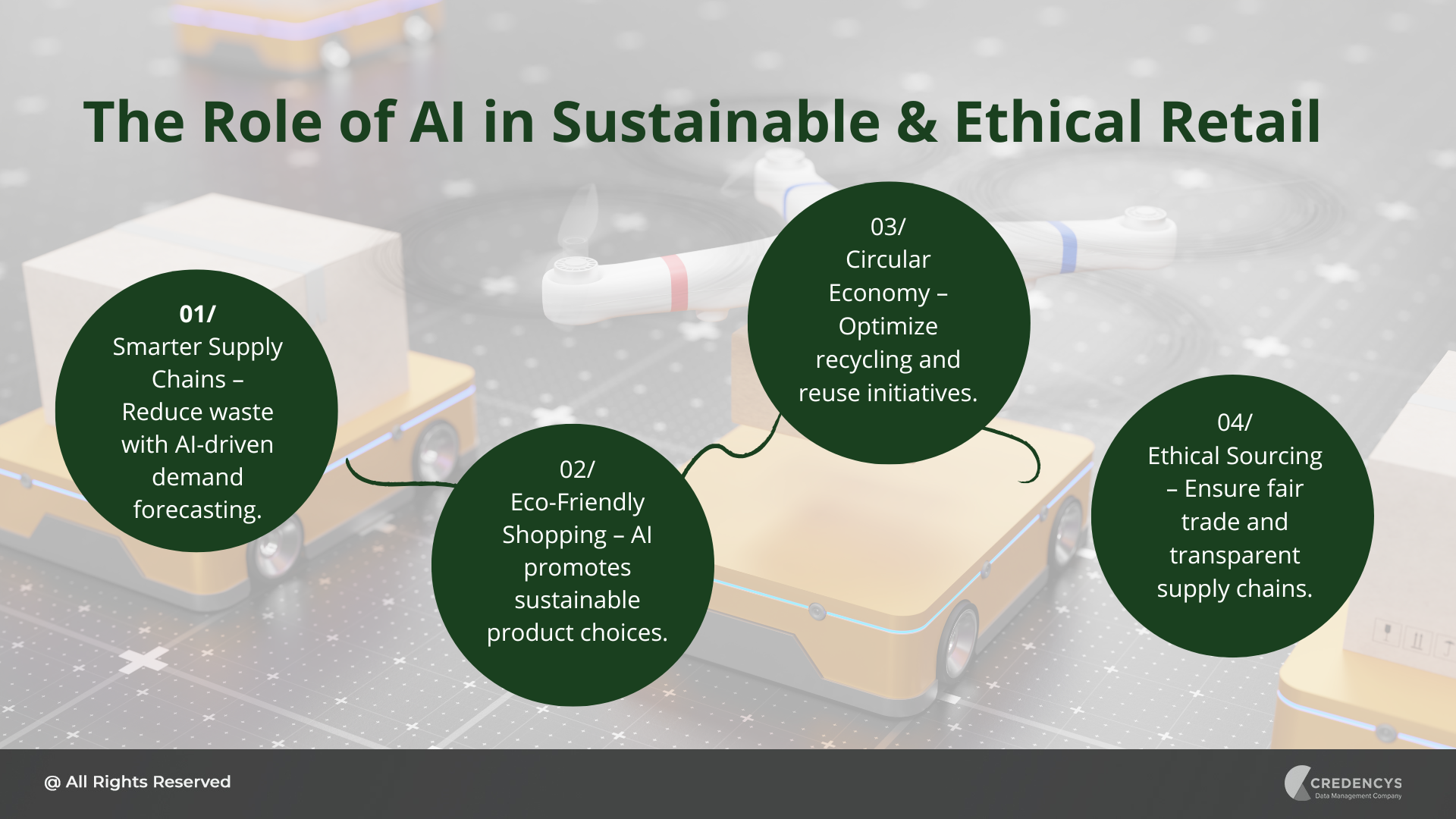
Retailers are under increasing pressure to adopt sustainable practices. AI and analytics can help by:
- Optimizing supply chains to reduce waste.
- Predicting sustainable inventory needs to prevent overproduction.
- Enhancing energy efficiency in stores through AI-driven smart systems.
Learn how top retailers are leveraging AI for smarter decision-making and increased profitability.
What’s Next for Retailers?
Retailers that embrace AI-driven decision-making will stay ahead of competitors. The future will focus on:
- Omnichannel AI-powered experiences (seamless online & offline shopping).
- Voice and AR shopping innovations powered by AI.
- Increased automation in retail operations, from customer service to fulfillment.
Connect with our AI and Retail experts to help you analyze how AI and Analytics can transform your retail business.






Tags: