


The Power of AI Demand Forecasting: Predicting Market Trends with Precision
Accurate demand forecasting is essential for businesses to optimize inventory, reduce costs, and enhance customer satisfaction. Traditional forecasting methods, which rely on historical data and manual analysis, often struggle to keep up with rapid market changes, leading to inefficiencies and missed opportunities.
AI-driven demand forecasting is transforming this process. By leveraging machine learning, real-time data processing, and advanced algorithms, AI enhances prediction accuracy and helps businesses adapt to shifting demand patterns.
According to research, 45% of companies are already leveraging AI and ML for forecasting and 43% of the remaining are planning to do so in the near future.
It enables smarter decision-making, minimizes risks, and improves overall efficiency. This article explores how AI improves demand forecasting, its working mechanism, key benefits, and real-world applications, offering valuable insights for businesses looking to stay ahead in a competitive market.
What is AI Demand Forecasting?
AI demand forecasting is the use of artificial intelligence to predict future customer demand based on historical data, market trends, and external factors. Unlike traditional forecasting, AI leverages machine learning algorithms to analyze large datasets, identify complex patterns, and continuously improve predictions.
Key technologies involved include:
- Deep Learning: Advanced neural networks analyze vast datasets and recognize intricate demand patterns.
- Big Data Analytics: AI processes real-time information from multiple sources to enhance forecasting accuracy.
- Machine Learning: AI models learn from past data to detect trends and make accurate forecasts.
- Natural Language Processing: AI interprets text data, such as market news and customer reviews, to refine predictions.
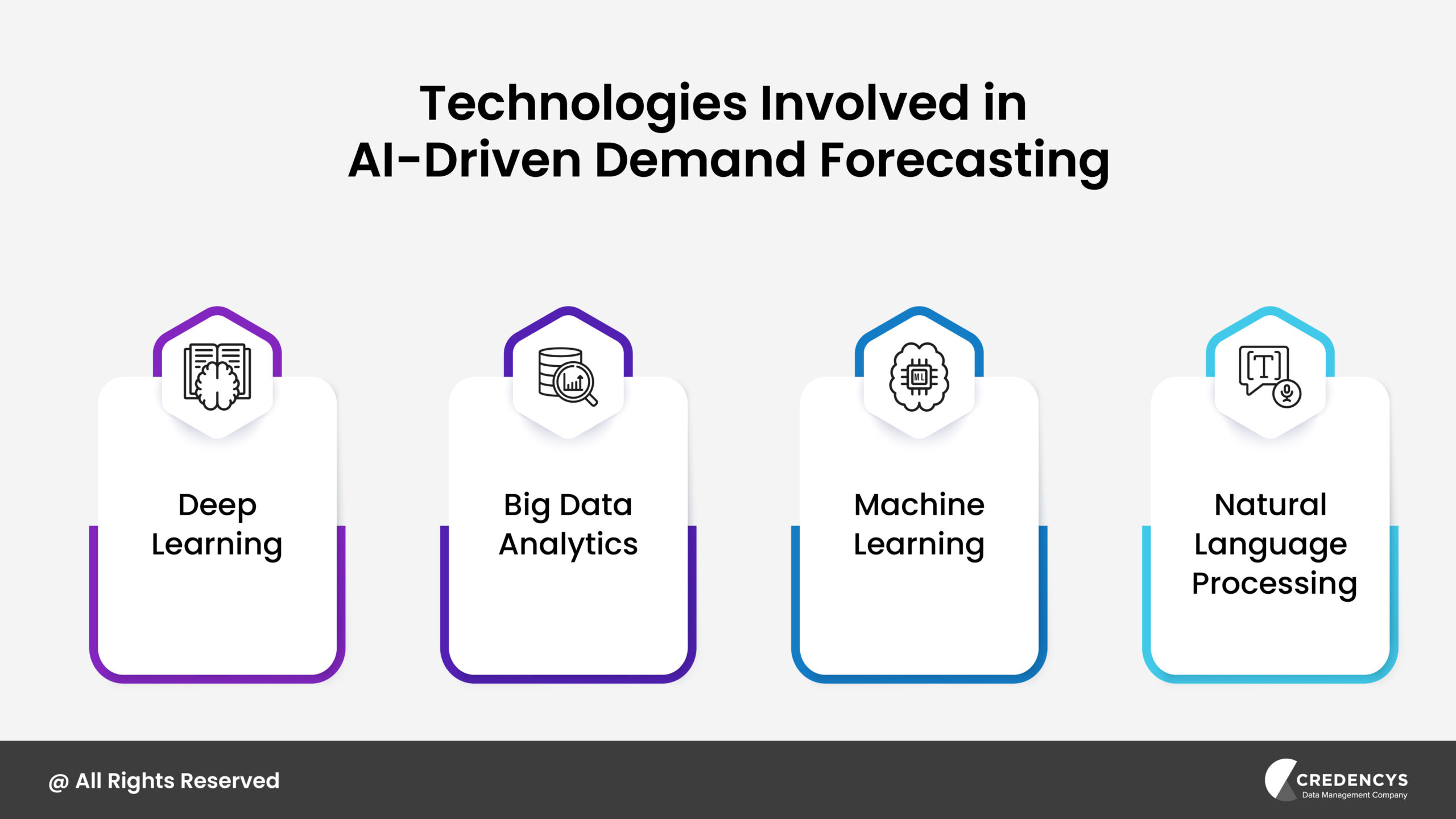
By incorporating these technologies, AI helps businesses respond proactively to market fluctuations, optimize resource allocation, and improve overall operational efficiency.
How It Works?
AI demand forecasting follows a structured approach that involves data collection, model training, and continuous refinement. The process typically includes the following steps:
- Data Collection: AI gathers data from multiple sources, including historical sales, market trends, weather patterns, and economic indicators.
- Data Preprocessing: The collected data is cleaned, structured, and standardized to ensure accuracy and consistency.
- Feature Engineering: AI identifies relevant variables that impact demand, such as seasonality, promotions, and customer behavior.
- Model Training: Machine learning algorithms analyze patterns and trends in the data, learning to make accurate predictions.
- Prediction & Analysis: The trained AI model generates demand forecasts, offering insights into expected sales and inventory requirements.
- Continuous Learning & Improvement: AI continuously refines its forecasts by incorporating new data and adapting to market changes.
By automating and optimizing this process, AI-driven forecasting helps businesses make data-driven decisions, reduce uncertainty, and improve supply chain efficiency.
Benefits of AI Demand Forecasting
AI-driven demand forecasting offers several advantages that help businesses stay competitive and agile. Key benefits include:
- Improved Inventory Management: Businesses can optimize stock levels, reducing overstock and minimizing the risk of stockouts.
- Cost Reduction: With more accurate forecasting, businesses can optimize resource allocation, reducing waste and operational expenses.
- Enhanced Decision-Making: AI-driven forecasts provide actionable insights, helping companies make informed decisions about production, pricing, and marketing.
- Real-Time Insights: AI continuously processes new data, allowing businesses to adjust their strategies in response to changing market conditions.
- Better Customer Satisfaction: Meeting demand accurately ensures that customers get the products they need when they need them, enhancing overall satisfaction and loyalty.
- Higher Accuracy: AI analyzes vast amounts of data, identifying trends and anomalies that traditional methods might miss. This leads to more precise demand predictions.
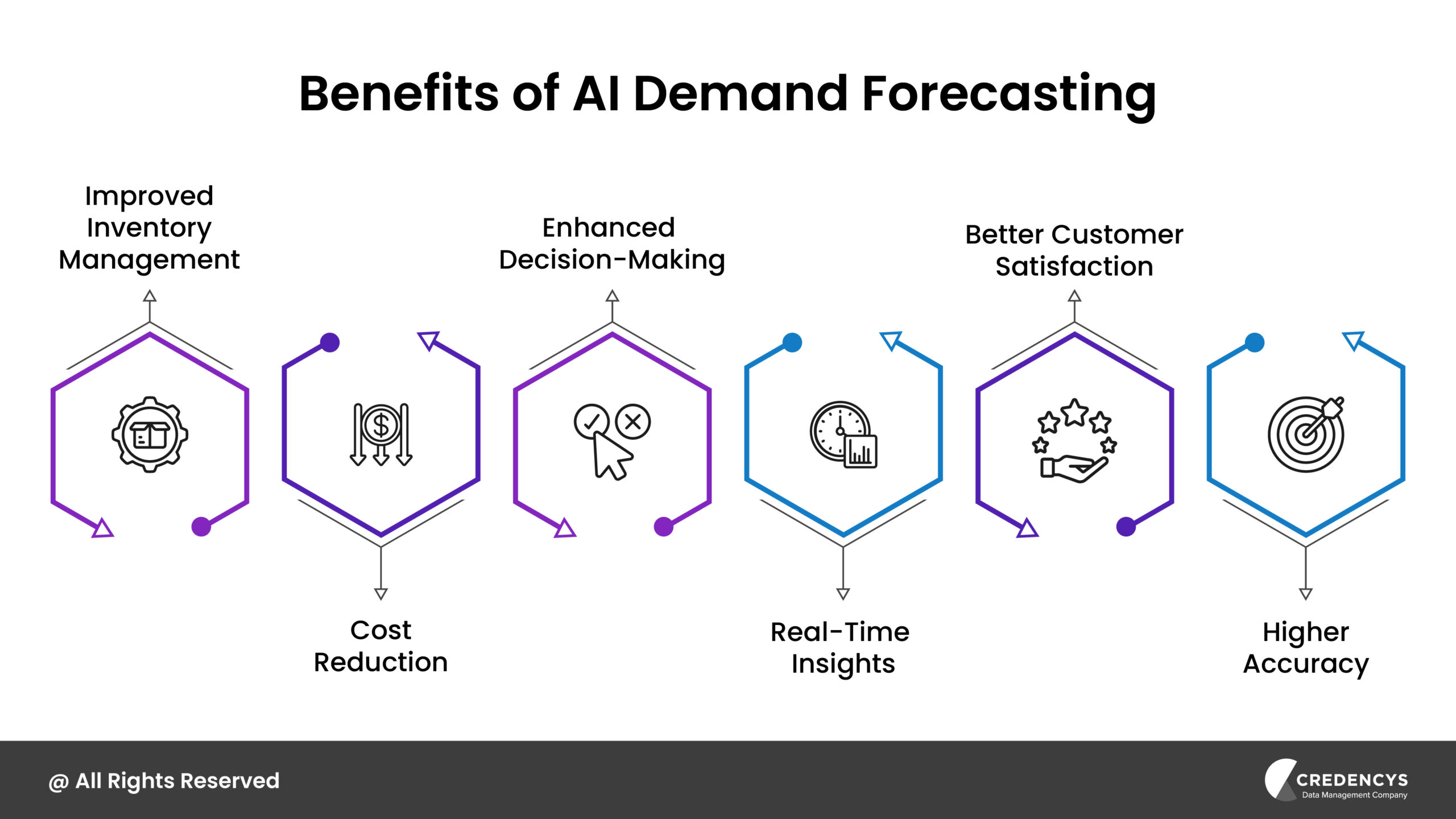
By leveraging AI, companies can improve efficiency, reduce risks, and stay ahead in an increasingly dynamic market.

Ready to Enhance Your Demand Forecasting with AI? Leverage Data-Driven Insights to Optimize Inventory and Boost Efficiency.
Use Cases
AI-powered demand forecasting is widely used across industries to improve planning and decision-making. Some key use cases include:
- Supply Chain & Logistics: AI enhances inventory planning, optimizes warehouse management, and reduces transportation costs by predicting demand fluctuations.
- Manufacturing: AI-driven forecasts help manufacturers adjust production schedules, manage raw material procurement, and minimize supply chain disruptions.
- Retail & eCommerce: AI helps predict demand for products, enabling retailers to stock inventory efficiently, avoid stockouts, and optimize pricing strategies.
- Automotive: AI helps manufacturers and suppliers forecast demand for vehicle models, spare parts, and production resources, optimizing supply chain management and reducing excess inventory.
By integrating AI, businesses can enhance operational efficiency, reduce costs, and improve customer satisfaction.
Future Trends in AI Demand Forecasting
AI-driven demand forecasting is continuously evolving, with new advancements shaping its future. Some key trends to watch include:
- Cloud-Based AI Solutions: More businesses will adopt cloud-based AI forecasting tools for scalability, flexibility, and cost efficiency.
- Advanced NLP & Sentiment Analysis: AI will analyze social media trends, news, and customer sentiment to predict demand fluctuations more accurately.
- Explainable AI (XAI): Businesses are demanding more transparency in AI models. XAI techniques will make AI-generated forecasts easier to interpret.
- Automated Decision-Making: AI will not only forecast demand but also recommend actions, such as dynamic pricing and inventory adjustments.
- Integration with IoT: AI will leverage real-time data from IoT devices, such as smart shelves and sensors, to refine demand predictions.

By staying ahead of these trends, companies can leverage AI to drive more accurate, agile, and efficient demand forecasting strategies.
Credencys – Your Partner in AI-Based Demand Forecasting Implementation
Implementing AI-driven demand forecasting requires expertise in data analytics, machine learning, and business intelligence. At Credencys, we specialize in helping businesses leverage AI to enhance decision-making and drive operational efficiency.
Why Choose Credencys?
- Real-Time Insights: Our solutions provide continuous demand monitoring, allowing businesses to adapt to market fluctuations instantly.
- Seamless Integration: We integrate AI-powered forecasting tools into your existing systems, ensuring smooth implementation and minimal disruptions.
- Industry-Specific Customization: We cater to industries like retail, manufacturing, supply chain, eCommerce, and automotive, ensuring precise demand predictions.
- AI & Data Expertise: Our team of AI specialists and data scientists develops custom AI models tailored to your business needs.
- Scalable Solutions: Whether you are a startup or an enterprise, our AI-driven demand forecasting models are designed to scale with your business growth.
Over to You
AI-driven demand forecasting is transforming how businesses predict and respond to market demands. By leveraging machine learning, big data analytics, and real-time insights, AI enhances forecasting accuracy, optimizes inventory management, and improves decision-making.
Despite challenges like data quality and implementation complexity, the benefits of AI-powered forecasting far outweigh the drawbacks. Businesses that embrace AI can reduce costs, increase efficiency, and stay competitive in a rapidly evolving market.
As AI technology continues to advance, integrating it into demand forecasting strategies will become essential for companies looking to improve agility and drive growth. Now is the time to harness AI’s potential and revolutionize your demand planning process.
Ready to Implement AI-Driven Demand Forecasting for Your Business? Partner with Credencys to Unlock Accurate Predictions and Smarter Decision-Making





Tags: