


AI in Supply Chain Optimization: Transforming Operations with Intelligence
In today’s volatile and interconnected world, supply chains face constant disruptions from geopolitical shifts and natural disasters to fluctuating customer demands and labor shortages. To stay competitive, businesses can no longer rely solely on traditional planning models and reactive strategies.
Enter Artificial Intelligence – a transformative force enabling companies to build intelligent, responsive, and resilient supply chains. By harnessing AI, businesses can unlock data-driven decision-making, enhance operational efficiency, and respond proactively to dynamic market conditions.
What is AI in the Context of Supply Chain?
Artificial Intelligence in supply chain refers to the application of intelligent algorithms and machine learning models to automate and optimize various aspects of the supply chain lifecycle. This includes:
- Computer vision for warehouse management
- Predictive analytics for demand forecasting
- Generative AI for scenario simulation and planning
- Natural Language Processing (NLP) for supplier communication
AI is an enabler of next-gen supply chain transformation, driving agility, transparency, and efficiency at every stage.
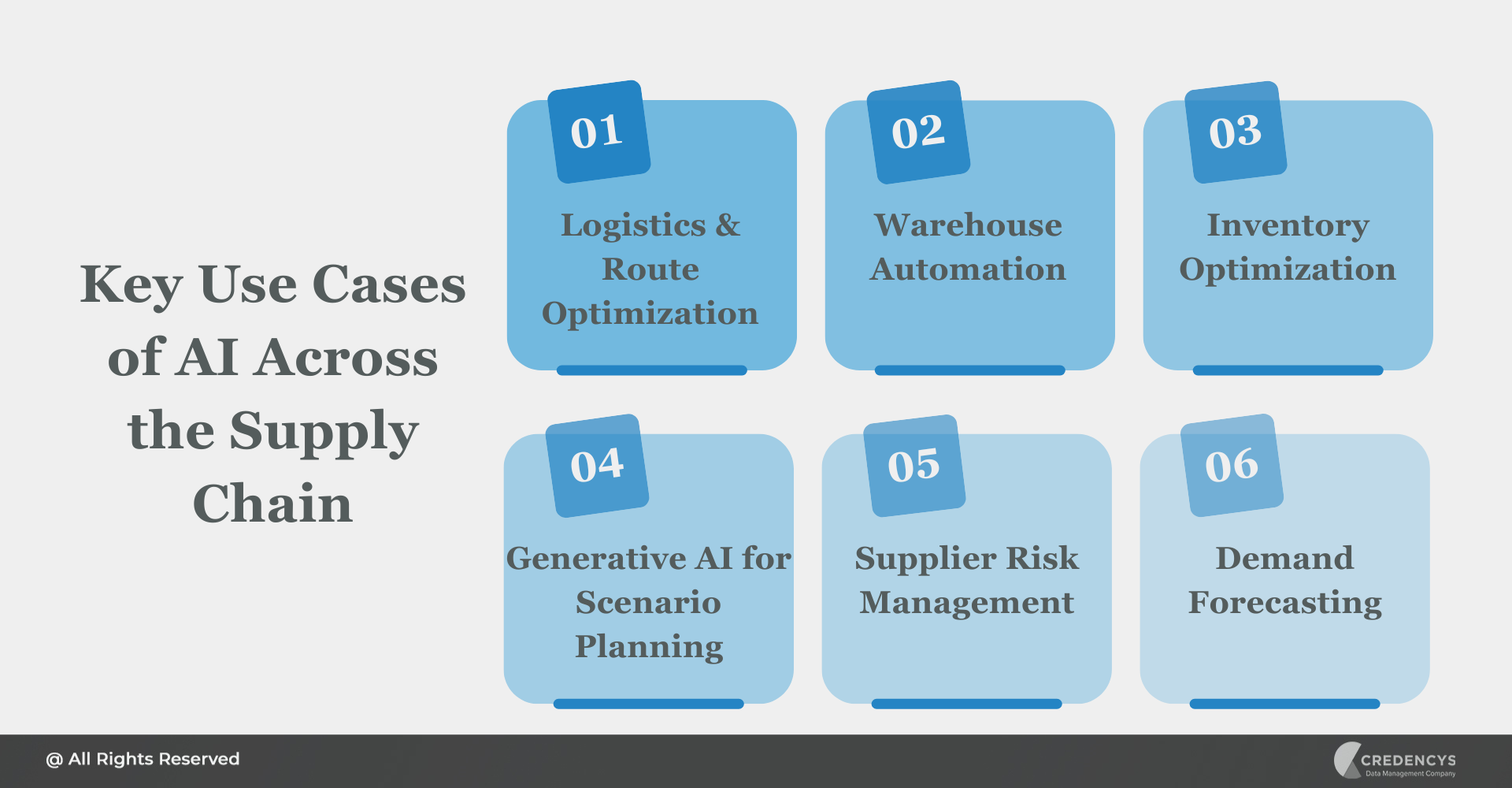
Key Use Cases of AI Across the Supply Chain
1. Logistics & Route Optimization
AI-powered logistics platforms use real-time traffic, weather, and vehicle data to optimize delivery routes, reduce fuel costs, and improve delivery timelines.
2. Warehouse Automation
From autonomous robots to smart picking systems, AI-driven warehouses can reduce manual labor, improve accuracy, and increase throughput with real-time inventory visibility.
3. Inventory Optimization
With real-time tracking and predictive analytics, AI enables dynamic inventory management. It suggests optimal reorder points, identifies slow-moving stock, and ensures product availability across channels.
4. Generative AI for Scenario Planning
Using generative models, companies can simulate multiple “what-if” scenarios (e.g., port closures, demand surges, supplier failures) to stress-test their supply chains and prepare contingency plans.
5. Supplier Risk Management
AI helps assess and monitor supplier performance, detect anomalies, and identify risks, be it financial instability, geopolitical exposure, or delivery delays. This empowers businesses to mitigate potential disruptions early.
6. Demand Forecasting
AI models analyze historical data, market trends, and external variables (like weather or events) to generate accurate demand forecasts. This helps businesses plan inventory more efficiently, reduce stockouts, and minimize excess stock.
Benefits of AI in Supply Chain
AI is unlocking unprecedented value across supply chains. Here’s a deeper dive into the tangible benefits:
1. Increased Operational Efficiency
Automation through AI minimizes manual intervention across key processes:
- Automated order management and fulfillment
- Intelligent scheduling and resource allocation
- Reduced lead times and quicker response to market changes
2. Sustainability Optimization
With growing pressure for greener operations, AI helps identify and implement sustainability initiatives:
- Minimizing waste through optimized inventory
- Enabling more efficient use of resources
- Reducing carbon emissions via smart logistics
3. Cost Reduction
By optimizing routes, inventory, labor, and warehouse processes, AI significantly reduces operational costs. Common areas of cost savings include:
- Transportation and logistics
- Inventory holding and carrying
- Labor and warehouse operations
4. Enhanced Forecast Accuracy
AI algorithms can process massive amounts of historical and real-time data to detect patterns humans may overlook. This leads to:
- Reduced forecasting errors
- More precise demand forecasting
- Better inventory planning and procurement decisions
5. Enhanced Resilience and Risk Management
AI enables businesses to anticipate risks and react faster during disruptions:
- Mitigation plans based on predictive insights
- Early warning systems for supplier delays or geopolitical risks
- Simulations for demand shocks, labor shortages, or logistics breakdowns

Stay Ahead of Disruptions with AI-powered Supply Chain Resilience. Let’s Build a Smarter, More Responsive Future Together
6. Improved Customer Satisfaction
Faster, more reliable deliveries and product availability lead to a better customer experience. AI helps ensure:
- Faster delivery through route optimization
- Personalized experiences through demand prediction
- The right products are available at the right place and time
7. Real-Time Supply Chain Visibility
AI-powered systems integrate data from suppliers, logistics providers, and internal operations to provide a 360° view of the supply chain, enabling:
- Proactive issue detection and resolution
- Transparency across multiple supply chain nodes
- Dynamic adjustments based on demand or disruptions
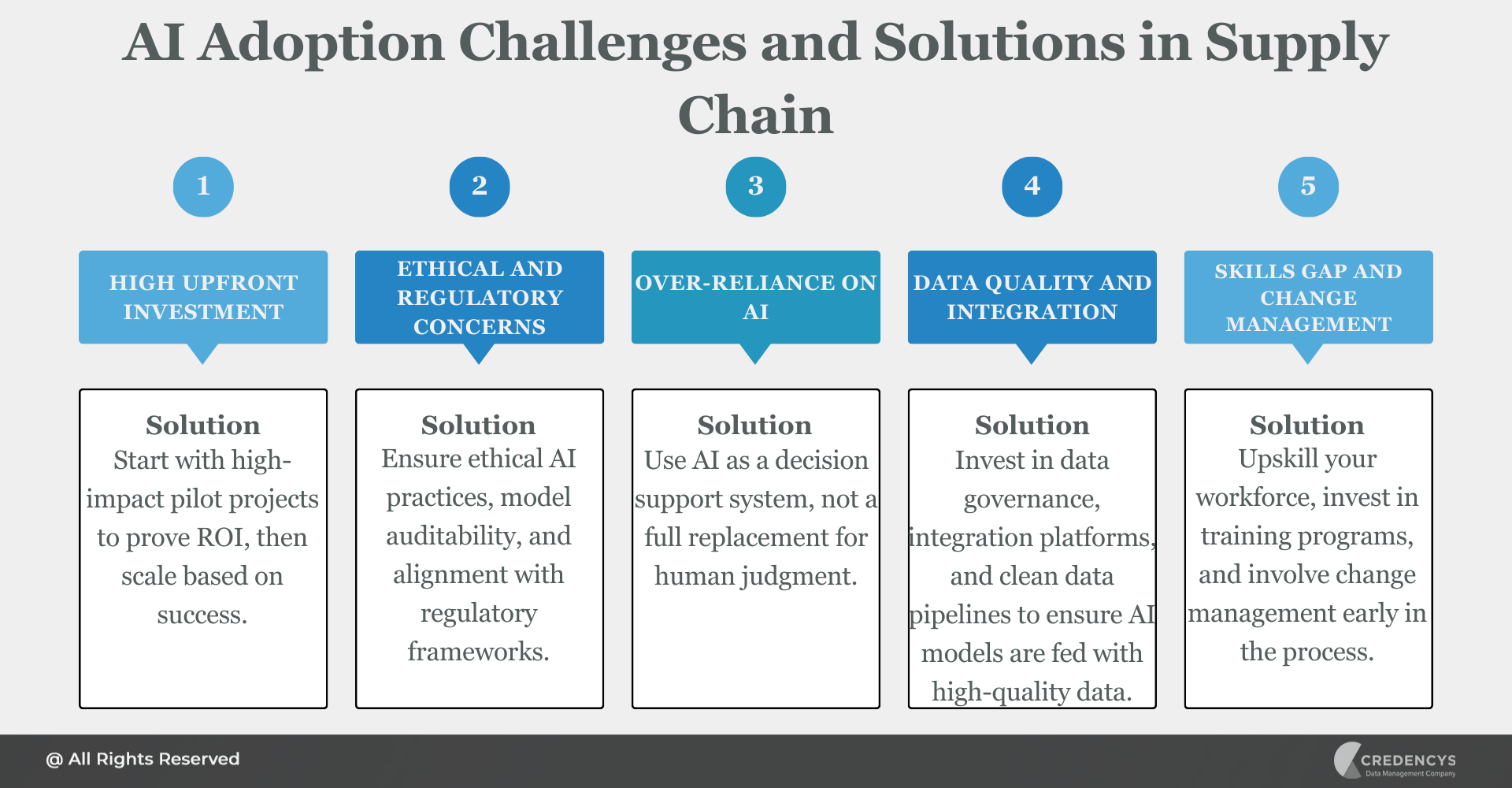
Navigating AI Implementation Risks & Potential Solutions
While the potential of AI in supply chains is immense, businesses must navigate several challenges to implement it successfully:
1. High Upfront Investment
AI implementations often involve significant upfront costs for:
- Infrastructure (cloud, data platforms)
- Software and AI tools
- Specialized talent
Solution: Start with high-impact pilot projects to prove ROI, then scale based on success.
2. Ethical and Regulatory Concerns
AI brings questions around:
- Transparency and explainability of AI decisions
- Bias in algorithms affecting supplier or customer outcomes
- Compliance with data privacy laws (e.g., GDPR, CCPA)
Solution: Ensure ethical AI practices, model auditability, and alignment with regulatory frameworks.
3. Over-Reliance on AI
While AI is powerful, it’s not infallible:
- Over-automation can lead to blind spots
- Unexpected scenarios may confuse models
- Human oversight is still critical for decision-making
Solution: Use AI as a decision support system, not a full replacement for human judgment.
4. Data Quality and Integration
AI systems rely heavily on data. However, many organizations struggle with:
- Fragmented systems and siloed data
- Inaccurate, incomplete, or outdated information
- Difficulty integrating internal and external data sources
Solution: Invest in data governance, integration platforms, and clean data pipelines to ensure AI models are fed with high-quality data.
5. Skills Gap and Change Management
Implementing AI requires more than just tech – it requires a shift in mindset:
- Shortage of skilled talent in AI, data science, and advanced analytics
- Resistance to change from employees and legacy teams
- Lack of internal AI literacy and understanding
Solution: Upskill your workforce, invest in training programs, and involve change management early in the process.
Future of AI in Supply Chain
Looking ahead, AI will play a central role in building autonomous supply chain systems that can self-correct, adapt, and evolve with minimal human intervention. Other exciting developments include:
- AI + IoT for real-time asset tracking
- AI + Blockchain for secure, transparent supplier networks
- AI for sustainability to monitor carbon footprints and optimize resource usage
How Credencys Can Help
At Credencys, we help enterprises unlock the full potential of AI in their supply chain operations. Our tailored solutions include:
- AI-powered demand forecasting & planning
- Intelligent pricing and promotion optimization
- Predictive maintenance and logistics automation
- Data strategy and consulting for AI transformation
Whether you are looking to enhance visibility, reduce costs, or improve service levels, our experts can guide your AI journey every step of the way.
Conclusion
AI is a critical enabler of modern, resilient supply chains. By adopting AI, companies can shift from reactive problem-solving to proactive planning, gaining a competitive edge in today’s fast-paced market.
Ready to Unlock the Full Potential of AI in Your Supply Chain? Partner with Credencys to Transform Challenges into Competitive Advantages with Intelligent, Data-Driven Solutions







Tags: