


Why Data Governance Is the Missing Link in Industry 4.0
Manufacturing has never been more connected, yet never more complex. Machines talk to each other, sensors collect endless streams of data, and analytics platforms promise real-time insights. Still, many organizations are struggling to see real results.
Industry 4.0 is changing how factories, suppliers, and logistics teams operate. Companies are spending heavily on AI, automation, and industrial IoT systems. But spending doesn’t always equal success.
- Gartner reports that poor data quality costs companies around 12.9 million dollars each year.
- Around 80 percent of data projects fail because no one defines ownership or governance upfront.
These figures reveal a simple truth. Data is everywhere, but trustworthy data is rare. Without proper management, Industry 4.0 becomes a collection of disconnected technologies rather than a true digital revolution.
This blog explains why data governance is the missing link in Industry 4.0 and how organizations can use it to improve efficiency, scalability, and resilience.
What is Industry 4.0
Before exploring data governance, it is important to understand what Industry 4.0 represents. It is not just about automation or digital tools. It is about merging the physical and digital worlds to create smarter, more responsive operations.
Industry 4.0 connects machines, sensors, and people through intelligent data networks. Every process, from production and maintenance to quality control and logistics, relies on real-time data to make better decisions.
Here are some of the technologies that make Industry 4.0 possible:
- IIoT (Industrial Internet of Things): Smart sensors and connected devices that collect real-time information from machines and production lines.
- Artificial Intelligence and Machine Learning: Intelligent systems that analyze data to predict failures, optimize workflows, and detect anomalies before they cause disruptions.
- Cloud and Edge Computing: Scalable infrastructure that processes and stores large volumes of industrial data quickly and securely.
- Digital Twins: Virtual models of machines, systems, or processes that allow teams to simulate performance and improve operational efficiency.
These technologies create a connected ecosystem that allows organizations to be proactive rather than reactive. However, they all depend on one thing: clean, consistent, and well-governed data.
What is Data Governance
Data governance is the framework that defines how data is created, managed, shared, and protected across an organization. It ensures that data remains accurate, consistent, and trustworthy.
Governance is not simply a set of policies. It is a discipline that brings structure and accountability to the way data is used. When done right, it helps organizations turn raw information into reliable insights.
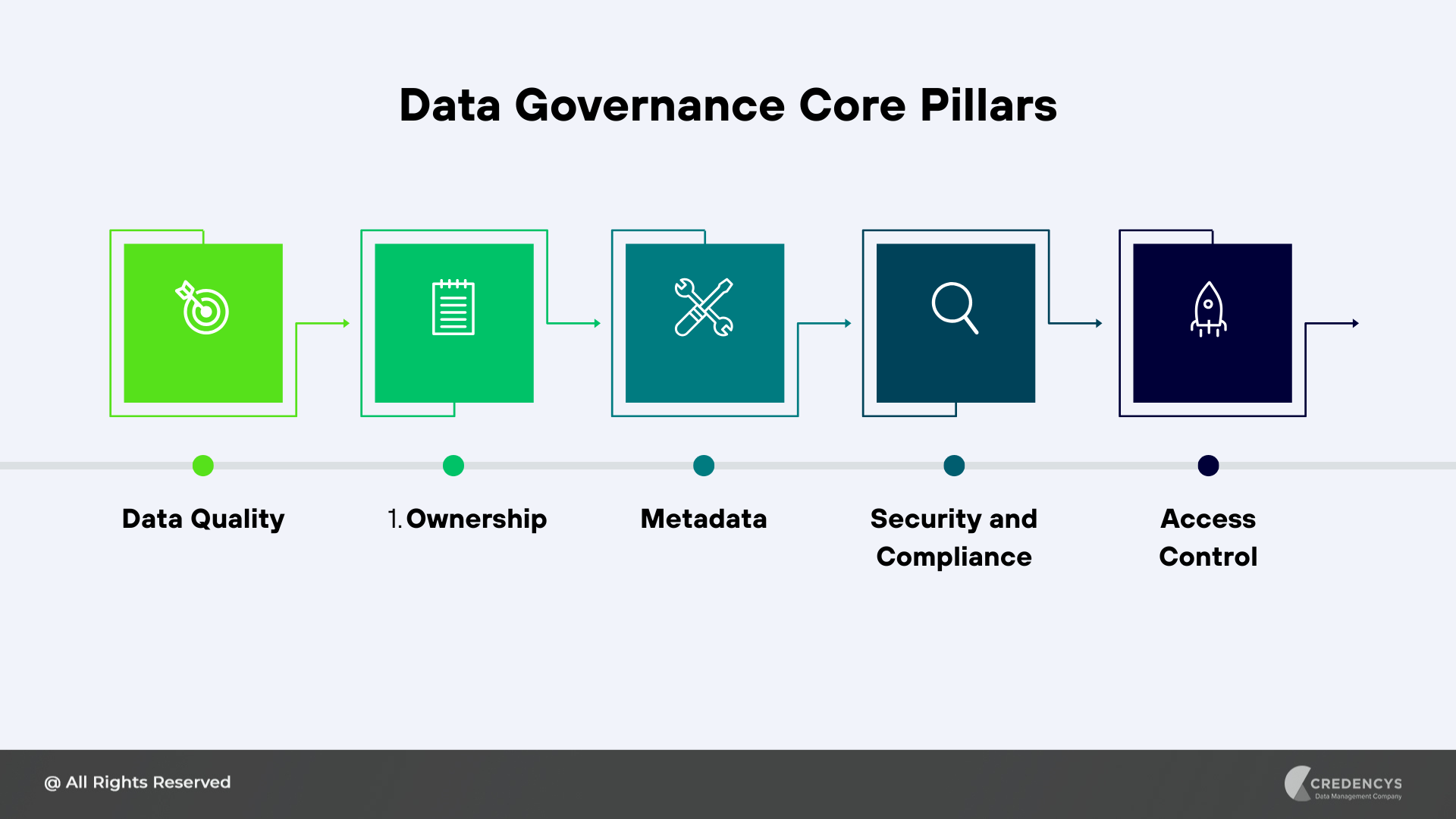
The key components of data governance include:
- Ownership and Stewardship: Assigning clear responsibility for each data domain so everyone knows who is accountable.
- Metadata Management: Documenting data definitions, origins, and relationships to make information easy to find and understand.
- Quality Control: Establishing standards for accuracy, timeliness, and completeness to ensure data reliability.
- Access Management: Controlling who can view, edit, or share data while maintaining security and privacy.
- Compliance and Security: Ensuring data practices comply with internal policies and external regulations.
When data governance becomes part of daily operations, teams stop questioning data accuracy and start focusing on driving business results.
Why Governance is the Missing Link for Industry 4.0
For Industry 4.0 to work effectively, data must be consistent, reliable, and available when needed. Governance bridges the gap between technology and trust, ensuring that every decision is backed by dependable information.
Here is why governance plays such a crucial role.
1. Reliable Data Fuels Smart Manufacturing
Smart manufacturing depends on accurate, real-time data. If sensor readings are inconsistent or mislabeled, AI models will make incorrect predictions and decisions. Data governance ensures that information is standardized, synchronized, and traceable across systems. This leads to fewer production errors, faster responses, and stronger performance.
2. Governance Creates a Shared Language Across Teams
In an Industry 4.0 environment, multiple teams work together, including IT, OT, production, and data science. Governance provides a shared framework that helps everyone interpret data consistently. This alignment prevents confusion and ensures collaboration.
3. It Ensures Compliance and Traceability
Manufacturers must meet strict industry regulations and quality standards. Governance ensures that data is fully traceable. Every data point can be linked to its source, timestamp, and context. This traceability simplifies audits and protects organizations from compliance risks.
4. It Unlocks AI and Predictive Maintenance
Artificial intelligence and predictive systems rely on well-structured data. Governance connects the dots between sensor readings, equipment identifiers, and maintenance records. This allows AI models to make accurate predictions, reduce downtime, and increase asset lifespan.
5. It Builds Trust and Adoption
The more teams trust their data, the more they rely on it. Governance establishes that trust. When reports, dashboards, and predictions are based on verified data, leaders can make confident decisions, and employees are more likely to adopt new digital tools.
The Cost of Missing Governance
When governance is ignored, organizations face hidden costs that slowly erode their efficiency and profitability. These costs may not be obvious at first, but they compound over time.
Here are some of the most common consequences:
- Operational Inefficiencies: Engineers and analysts spend significant time cleaning data rather than working on strategic improvements.
- Downtime Losses: Poorly managed maintenance data or faulty readings result in equipment failures and costly production delays.
- Poor Customer Experience: Inaccurate product information or reporting errors can cause compliance penalties, recalls, and loss of customer trust.
- Lost Innovation: Many AI and automation projects remain stuck in pilot stages because the underlying data is unreliable or fragmented.
The real loss is not just financial. It is the loss of confidence in data-driven decision-making. Once trust is broken, it takes significant time and effort to rebuild.
Common Pitfalls and How to Avoid Them
Implementing governance is not always easy. Many organizations start with good intentions but fail to achieve lasting impact. The key is to avoid common mistakes that can derail progress.
- Starting with Tools Instead of Goals: Governance is not a software solution. It should begin with business outcomes, not technology purchases.
- Overly Rigid Policies: Governance should support flexibility and collaboration. Avoid overly strict rules that make teams feel restricted.
- No Data Stewardship: Each data domain needs a clear owner responsible for quality and maintenance. Without this, governance will collapse.
- Lack of Visibility: Governance should be transparent. Use dashboards to show improvements in data quality and reliability so everyone can see the results.
By addressing these pitfalls early, organizations can establish a governance model that grows stronger over time.
Conclusion
Industry 4.0 is not only about smart machines. It is about smarter decisions. Every connected system, AI algorithm, and automated process depends on trustworthy data.
Without governance, even the most advanced technologies produce noise instead of insights. With governance, that same data becomes a powerful business asset that drives innovation and efficiency.
Data governance transforms uncertainty into clarity. It aligns people, processes, and technology around a single version of truth. It also builds confidence across the organization, from factory floors to executive offices.
The journey to Industry 4.0 success starts with small, practical steps. Begin by identifying your most critical data, defining ownership, and establishing a few simple quality checks. Over time, expand governance to cover more systems and teams.
Data governance does not slow progress. It accelerates it. It creates structure from chaos, trust from doubt, and intelligence from information. When your data is governed, your organization is ready for the future of Industry 4.0.

Don’t let poor data slow down your digital transformation.
Schedule a consultation with our team and build a governance strategy that drives real results.
Frequently Asked Questions
1. Why is data governance important in Industry 4.0?
Data governance ensures that the data coming from machines, sensors, and systems is accurate, consistent, and reliable. Industry 4.0 relies heavily on real-time information to power automation, AI models, predictive maintenance, and smart manufacturing decisions. Without governance, data becomes fragmented or incorrect, leading to errors, downtime, or failed digital initiatives.
2. What happens if a manufacturing company does not implement data governance?
Manufacturers that skip data governance often face problems like poor data quality, production delays, compliance issues, and failed analytics projects. Engineers spend more time fixing data instead of improving processes, and AI models deliver inaccurate results. Over time, this leads to higher operational costs and slower digital transformation.
3. How can a company start building a data governance framework for Industry 4.0?
A simple way to begin is to identify your most critical data sources and assign clear ownership. Then set basic data quality rules, define access permissions, and create a small, manageable governance process that fits your current workflows. As the organization grows, you can expand this framework to cover more systems, teams, and automation use cases.







Tags: