Reducing Time-to-Market for CPG Businesses with PIM Solutions

In today’s fast-paced consumer goods market, reducing time-to-market is crucial for brands looking to maintain a competitive edge. Rapid product launches can significantly impact a company’s market share, revenue, and customer satisfaction.

However, achieving a quick time-to-market can be challenging due to the complexity of managing extensive product information across multiple channels. Product Information Management solutions offer a streamlined approach to managing product data, enabling CPG businesses to accelerate their time-to-market.

This blog post explores how PIM systems can optimize product data management processes, thereby reducing time-to-market for CPG businesses.

Understanding Time-to-Market in the CPG Industry

Time-to-market refers to the duration it takes for a product to move from the initial concept phase to being available for purchase in the market. For CPG brands, this timeline includes product development, data management, marketing, and distribution.

Importance of Quick Time-to-Market for CPG Businesses

The faster a CPG brand can launch a new product, the sooner it can start generating revenue and capturing market share. Quick time-to-market is particularly important in the CPG industry, where consumer preferences can change rapidly, and new trends can emerge overnight.

Brands that can respond swiftly to market demands are more likely to succeed and outpace their competitors.

Challenges Faced by CPG Brands in Reducing Time-to-Market

Reducing time-to-market is not without its challenges. CPG brands often face several obstacles, including

  • Collaboration Barriers: Coordinating efforts between various teams, such as product development, marketing, and sales, can be difficult, especially if there are communication gaps or workflow bottlenecks.
  • Quality Assurance: Ensuring that product information is accurate, consistent, and up-to-date is critical but can be challenging without the right tools and processes in place.
  • Complexity of Product Data: Managing a vast amount of product information, including descriptions, specifications, images, and compliance data, can be overwhelming and time-consuming.
  • Data Silos: Product data is often scattered across different departments and systems, leading to inefficiencies and delays in data consolidation.

Challenges Faced by CPG Brands in Reducing Time-to-Market

How PIM Addresses These Challenges

1. Real-Time Data Synchronization

PIM systems facilitate real-time data synchronization across various channels, including online stores, marketplaces, and physical retail locations. This capability ensures that any updates to product information are reflected instantly across all channels.

It prevents delays and ensures that customers receive the most accurate information. For CPG brands, real-time synchronization is vital for maintaining a competitive edge and ensuring quick time-to-market.

2. Ensuring Data Accuracy and Consistency

Accurate and consistent product information is essential for successful product launches. PIM solutions ensure data accuracy by providing tools for data validation and enrichment.

These tools help to maintain high-quality data, reducing the risk of errors and discrepancies that can delay product launches. Consistent data across all channels also enhances the customer experience and builds trust in the brand.

Enhancing Product Data Accuracy and Consistency in Automotive Aftermarket

3. Breaking Down Data Silos

PIM solutions are designed to break down data silos within organizations. By integrating with other enterprise systems such as ERP, CRM, and eCommerce platforms, PIM systems ensure that all product data is consistent and accessible across different departments.

This integration promotes better collaboration and communication, reducing inefficiencies and delays caused by isolated data.

Benefits of PIM Solutions for Reducing Time-to-Market

1. Faster Product Launches

  • Centralized Data Access: PIM systems centralize all product information, ensuring data is easily accessible and up-to-date. This eliminates delays caused by searching for and consolidating data from multiple sources.
  • Automation of Routine Tasks: PIM solutions automate tasks such as data entry and approval processes, speeding up the product launch timeline.
  • Quick Decision Making: With all data in one place, teams can make informed decisions faster, accelerating the product launch process.

2. Streamlined Collaboration Across Teams

  • Unified Platform: PIM systems provide a single platform for product information, ensuring all teams have access to the same data. This reduces communication barriers.
  • Better Coordination: Improved coordination among product development, marketing, and sales teams ensures everyone is aligned and working towards the same objectives.
  • Workflow Automation: Automation features streamline the collaboration process, allowing teams to work more efficiently towards common goals.

3. Improved Efficiency in Product Data Management

  • Centralized Management: PIM solutions centralize product data management, reducing the time and effort required to handle large volumes of information.
  • Data Enrichment Tools: Advanced tools help enhance product information with additional attributes, descriptions, and media assets, ensuring high-quality data.
  • Real-Time Synchronization: Real-time data synchronization across various channels maintains data consistency and accuracy, ensuring updates are instantly reflected.

4. Better Customer Experience

  • Reliable Information: Accurate and consistent product information across all channels enhances the customer buying journey.
  • Increased Sales: A better customer experience can lead to increased sales and higher customer loyalty.
  • Stronger Brand Reputation: Providing excellent customer experiences helps maintain a competitive edge and ensures long-term success.

Benefits of PIM Solutions for Reducing Time-to-Market

Final Thoughts

In conclusion, PIM solutions are a powerful tool for CPG businesses looking to streamline product data management, improve efficiency, and accelerate time-to-market. By leveraging PIM, brands can enhance collaboration, ensure data accuracy, and provide a better customer experience, ultimately driving business success and growth.

Reducing Product Returns with Accurate Product Information

Mathew ordered a stylish new jacket online, only to receive it and find that the color doesn’t match the photos and even the size isn’t as described. Frustrated, Mathew initiates a return, leaving him disappointed and the retailer dealing with the cost and hassle of the return process.

This scenario is too common in e-commerce, where inaccurate product information can lead to an increase in product returns.

With the surge in online shopping, the need for accurate product information has become more critical than ever. Customers rely heavily on product descriptions, images, and reviews to make purchasing decisions. Retailers need to choose reliable ways to reduce product returns. Product Information Management (PIM) can help you reduce your product returns.

The Real Cost of Product Returns

Product returns are more than just an inconvenience—they come with significant costs that can affect a retailer’s bottom line and overall customer satisfaction.

The cost of product returns to U.S. retailers was estimated at $369 billion in 2020. This figure includes costs associated with reverse logistics, restocking, and potential loss of sales. Managing returns effectively is crucial to minimizing these financial losses.

According to the National Retail Federation, the average return rate for online purchases is around 20%, with some sectors experiencing even higher rates. This means that one in five products sold online is returned, creating substantial logistical challenges for retailers.

The transportation and processing of returns contribute to a significant carbon footprint.

A report by Optoro estimated that returns in the U.S. generate 5 billion pounds of waste and 15 million metric tons of carbon dioxide annually. Reducing returns not only benefits retailers but also has a positive environmental impact.

The Role of Accurate Product Information in Reducing Product Returns

Accurate product information is crucial in influencing purchasing decisions and setting the right customer expectations. Here’s how precise product details can help reduce returns:

1. Detailed Descriptions: Comprehensive product descriptions provide customers with all necessary details, reducing the likelihood of receiving products that don’t meet their expectations.

2. High-Quality Images and Videos: Visual content helps customers get a clear understanding of the product, including dimensions, colors, and features, thereby minimizing mismatches.

3. Specifications and Features: Accurate technical specifications and features ensure that customers purchase products suited to their needs and compatible with other items they own.

4. Customer Reviews and FAQs: Incorporating customer reviews and frequently asked questions can address common concerns and provide additional insights into the product.

How PIM Helps in Reducing Product Returns

PIM systems play a pivotal role in minimizing product returns. They ensure that customers receive accurate, detailed, and consistent information about products across all channels. Here’s a detailed look at how PIM systems help in reducing product returns:

1. Centralized Data Repository

Consistency Across Channels: PIM systems create a single source of truth for all product information. This means that every detail about a product—descriptions, images, specifications, and more—is stored in one central location. This centralization ensures that all sales channels, whether online stores, marketplaces, or physical stores, have access to the same accurate and up-to-date information.

Reduced Discrepancies: With centralized data, the chances of discrepancies between what is advertised and what the customer receives are significantly reduced. This consistency helps set accurate customer expectations and reduces the likelihood of returns due to misinformation.

2. Detailed and Accurate Product Descriptions

Comprehensive Information: PIM systems allow for detailed product descriptions that cover every aspect of the product. These descriptions include dimensions and materials as well as usage instructions and care tips. Providing comprehensive information helps customers make informed purchasing decisions, reducing the likelihood of returns due to unmet expectations.

Enhanced SEO: Accurate and detailed product descriptions help reduce returns. They also improve search engine optimization (SEO), making products more discoverable to potential customers.

3. High-Quality Images and Videos

Visual Clarity: PIM systems support the integration of high-quality images and videos that give customers a clear understanding of the product. Visual content can include multiple angles, close-ups, and videos demonstrating the product in use.

Minimized Mismatches: When customers clearly see what they are buying, they are less likely to receive a product that looks different. This helps ensure the product matches their expectations. This visual accuracy helps reduce returns due to aesthetic or feature mismatches.

4. Accurate Specifications and Features

Technical Accuracy: PIM systems ensure that all technical specifications and features of a product are accurately listed. This is particularly important for products like electronics, where compatibility and technical details are crucial.

Informed Decisions: Customers can make better purchasing decisions when they have access to accurate and detailed technical information. This reduces the likelihood of returns due to incompatibility or unmet technical expectations.

5. Customer Reviews and FAQs

User-Generated Content: PIM systems can integrate customer reviews and FAQs into product pages. Reviews provide real-world insights and experiences from other customers, while FAQs address common concerns and queries.

Building Trust: Access to reviews and FAQs builds customer trust and provides additional information that might not be covered in the product description. This additional layer of information helps customers feel more confident in their purchase, reducing the likelihood of returns.

6. Multi-Channel Consistency

Uniform Information: PIM systems ensure that product information is consistent across all sales channels, including e-commerce sites, mobile apps, marketplaces, and social media platforms. This uniformity ensures that customers receive the same information regardless of where they shop.

Seamless Experience: Consistent information across channels provides a seamless shopping experience, reducing confusion and the likelihood of returns due to conflicting information from different sources.

7. Efficient Data Enrichment

Timely Updates: PIM systems allow for easy and efficient updates to product information. PIM systems ensure that all changes are reflected across all channels promptly such as adding new features, updating descriptions, or changing images.

Up-to-date Information: Keeping product information up-to-date helps ensure that customers always have access to the latest and most accurate details. It reduces the chances of returns due to outdated or incorrect information.

8. Enhanced Collaboration

Cross-Functional Teams: PIM systems facilitate collaboration among different teams, such as marketing, sales, and product development. This collaboration ensures that all stakeholders contribute to and have access to accurate product data.

Improved Accuracy: PIM systems help ensure that all aspects of the product are accurately represented by involving multiple teams in the process. It reduces the likelihood of returns due to incomplete or inaccurate information.

Wrapping Up: Using PIM for Reducing PIM Returns

Accurate product information is key to reducing product returns. PIM systems provide a robust solution by centralizing and streamlining product data, ensuring consistency and accuracy across all channels.

By leveraging the capabilities of PIM systems, businesses can enhance their product information management, reduce return rates, and create a more satisfying shopping experience for their customers. Investing in a PIM system is not just about improving operational efficiency; it’s about building trust with customers and fostering long-term loyalty.

Enhancing Marketing Strategies Using Customer Data Integration in Fashion Businesses

In today’s digital age, the fashion industry is rapidly evolving. Customer preferences shift constantly, influenced by social media and trends.

To keep up, fashion businesses need a data-driven approach to marketing. Customer data integration consolidates data from various sources, providing deeper insights into customer behaviors and preferences.

This allows marketers to create highly targeted campaigns, leading to better engagement and higher ROI. This blog post explores how customer data integration can enhance marketing strategies in fashion, including benefits, types of data, and effective strategies.

Understanding Customer Data Integration

Customer data integration (CDI) involves consolidating data from multiple sources to create a unified, comprehensive view of each customer. This process is crucial for fashion businesses aiming to understand their customers’ behaviors, preferences, and purchase histories.

Key components of CDI include:

  • Data Collection: Gathering customer data from various touchpoints, such as online stores, social media, and in-store purchases.
  • Data Analysis: Using analytical tools to interpret the integrated data and derive actionable insights.
  • Data Utilization: Applying insights gained from the data to improve marketing strategies and customer experiences.
  • Data Integration: Merging collected data into a single, centralized database.

Components of Customer Data Integration

Types of Customer Data Relevant to Fashion Businesses

Fashion businesses can benefit from various types of customer data, including:

1. Demographic Data

  • Age, gender, location, and income level.
  • Helps in creating customer profiles and understanding the target audience.

2. Transactional Data

  • Purchase history, frequency, and average order value.
  • Useful for identifying loyal customers and predicting future purchases.

3. Social Media Data

  • Engagement metrics, follower demographics, and sentiment analysis.
  • Provides a pulse on brand perception and customer feedback.

4. Behavioral Data

  • Online browsing patterns, shopping behavior, and product preferences.
  • Offers insights into what customers are interested in and how they interact with the brand.

By integrating these data types, fashion businesses can create detailed customer personas and develop more personalized marketing campaigns.

Benefits of Customer Data Integration for Fashion Businesses

1. Improved Customer Segmentation

Integrating customer data enables fashion businesses to create more precise customer segments. This leads to:

  • Detailed Customer Personas: Combining demographic, behavioral, and transactional data helps in creating accurate and comprehensive customer personas. These personas represent different segments of the customer base, making it easier to tailor marketing efforts.
  • Personalized Marketing Messages: With detailed customer personas, businesses can craft personalized marketing messages that resonate with specific segments. This increases the likelihood of engagement and conversion.

2. Enhanced Customer Experience

A better understanding of customers through integrated data leads to an improved customer experience:

  • Predictive Analytics for Customer Preferences: By analyzing past behaviors and preferences, fashion businesses can predict future trends and tailor their offerings accordingly. This ensures that customers find products that match their tastes and preferences.
  • Tailored Product Recommendations: Using integrated data, businesses can offer personalized product recommendations to customers. This enhances the shopping experience and increases the chances of repeat purchases.

3. Streamlined Marketing Efforts

Customer data integration streamlines marketing efforts by making them more efficient and consistent:

  • Consistent Messaging Across Channels: With a unified view of the customer, businesses can ensure consistent messaging across all marketing channels. This reinforces brand identity and strengthens customer relationships.
  • Automation and Efficiency in Marketing Campaigns: Integrating data allows for the automation of marketing processes. Automated campaigns can be triggered by specific customer actions, ensuring timely and relevant communication.

Benefits of Customer Data Integration for Fashion Businesses

Strategies for Effective Customer Data Integration

1. Collecting Comprehensive Customer Data

To effectively integrate customer data, fashion businesses must first ensure they are collecting comprehensive data from all relevant sources:

  • Leveraging Social Media Analytics: Social media platforms offer valuable insights into customer behaviors and preferences. By analyzing social media data, businesses can understand what their customers are talking about and how they engage with the brand.
  • Using CRM Systems: Customer Relationship Management (CRM) systems are essential tools for collecting and managing customer data. They help in tracking customer interactions, preferences, and purchase history.

2. Integrating Data from Multiple Sources

Effective data integration involves merging data from various sources to create a unified view of the customer:

  • Combining Online and Offline Data: Fashion businesses must integrate online data such as website interactions and social media engagement with offline data like in-store purchases and customer service interactions. This holistic view provides deeper insights into customer behaviors.
  • Using Data Integration Tools: Various tools and platforms can facilitate data integration. These tools help in merging data from different sources, ensuring accuracy and consistency.

3. Ensuring Data Quality and Accuracy

High-quality and accurate data is crucial for effective customer data integration:

  • Regular Data Audits: Conducting regular audits of the data helps in maintaining its accuracy and relevance. Data audits involve reviewing the data for any discrepancies and making necessary corrections.
  • Data Cleansing Techniques: Regular data cleansing helps in removing duplicate, outdated, or incorrect data. This ensures that the integrated data is reliable and useful.

Best Practices for Implementing Customer Data Integration

1. Setting Clear Goals and Objectives

To successfully integrate customer data, fashion businesses need to establish clear goals and objectives:

  • Define Success Metrics: Identify key performance indicators (KPIs) such as increased engagement, higher sales conversion rates, and improved customer retention.
  • Set Achievable Targets: Ensure the goals are realistic and achievable within a specific timeframe.

2. Choosing the Right Technology and Tools

Selecting the appropriate technology and tools is crucial for effective data integration:

  • CRM Systems: Invest in robust CRM systems that can handle large volumes of data and provide detailed analytics.
  • Data Integration Platforms: Use platforms that can seamlessly integrate data from multiple sources, ensuring accuracy and consistency.

3. Training and Empowering Staff

Ensuring that staff are well-trained and empowered to use customer data effectively is key to successful integration:

  • Encourage Data-Driven Decision Making: Foster a culture where decisions are based on data insights rather than intuition.
  • Provide Comprehensive Training: Offer training sessions on how to use CRM systems and data integration tools.

4. Maintaining Data Privacy and Compliance

Maintaining customer trust by ensuring data privacy and compliance with regulations is essential:

  • Ensure Compliance with Regulations: Adhere to data protection laws such as GDPR and CCPA to avoid legal issues and maintain customer trust.
  • Implement Data Governance Policies: Establish policies that dictate how data is collected, stored, and used.

Best Practices for Implementing Customer Data Integration

Conclusion

Customer data integration is a transformative tool for fashion businesses. By consolidating data from various sources, businesses gain deep insights into customer behaviors and preferences.

Implementing effective strategies and overcoming challenges such as data silos and privacy concerns are crucial for success. Looking ahead, the integration of AI and machine learning, real-time data integration, and meeting evolving customer expectations will shape the future of customer data integration in fashion marketing.

FAQs

1. What is customer data integration?

Customer data integration involves consolidating data from various sources to create a unified view of each customer, enabling deeper insights and more effective marketing strategies.

2. How does customer data integration benefit fashion businesses?

It improves customer segmentation, enhances customer experiences, streamlines marketing efforts, and increases ROI through targeted campaigns and personalized marketing.

3. What are the challenges in customer data integration?

Common challenges include data silos and privacy concerns. Solutions involve implementing data governance policies, using secure data management systems, and leveraging data integration tools.

4. Why is real-time data integration important?

Real-time data integration offers immediate insights and allows for responsive marketing strategies, ensuring that businesses can act on the latest customer data and trends.

5 Key Benefits of PIM Implementation for Automotive Aftermarket

The automotive aftermarket industry is a dynamic and competitive sector, driven by a constant demand for replacement parts, accessories, and upgrades. With the increasing complexity of vehicle components and the proliferation of product variations, managing product information has become a significant challenge for businesses in this industry.

This is where Product Information Management systems come into play. A PIM system centralizes and streamlines the management of product data, ensuring accuracy and consistency across all channels.

For automotive aftermarket parts suppliers, PIM implementation can be a game-changer, offering a host of benefits that drive efficiency, improve customer satisfaction, and enhance overall business performance. Let’s have a look at the benefits of implementing PIM for automotive aftermarket businesses.

Improved Operational Efficiency

i) Faster Product Launches

Launching new products quickly is essential in the fast-paced automotive aftermarket industry. Delays in product launches can result in lost sales opportunities and give competitors an edge.

A PIM system accelerates the product launch process by streamlining the collection, management, and distribution of product information. With all data centralized, teams can efficiently prepare and release new products to the market.

According to a study by Forrester, businesses that adopt PIM systems can reduce time-to-market for new products by up to 50%.

ii) Efficient Collaboration Across Teams

In the automotive aftermarket industry, different teams—such as product development, marketing, and sales—need to collaborate closely to ensure the success of product launches and marketing campaigns. A PIM system provides a centralized platform where all team members can access and update product information in real-time.

This enhances communication and collaboration, ensuring that everyone is on the same page and that projects are completed more efficiently.

iii) Reduced Time Spent on Manual Data Entry

Manual data entry is not only time-consuming but also increases the likelihood of errors. By implementing a PIM system, businesses can automate many data entry tasks, freeing up valuable time for employees to focus on more strategic activities.

This automation reduces the workload on staff and minimizes the risk of human errors, leading to more accurate and reliable product information.

How PIM Implementation Improves Operational Efficiency

Simplified Compliance and Regulatory Management

i) Adherence to Industry Standards and Regulations

The automotive aftermarket industry is subject to various regulations regarding product safety, environmental impact, and quality standards. Keeping up with these regulations can be challenging, especially when managing a large product catalog.

A PIM system helps businesses stay compliant by providing tools to manage and track regulatory requirements. This ensures that all products meet the necessary standards before they reach the market, reducing the risk of non-compliance penalties.

ii) Efficient Handling of Recalls and Quality Issues

Product recalls and quality issues are inevitable in the automotive aftermarket industry. When they occur, having a PIM system in place can significantly streamline the process of identifying affected products and communicating with customers.

The centralized data repository allows businesses to quickly retrieve detailed product information, track distribution, and manage recall procedures effectively. This swift response helps mitigate the impact of recalls on the business and maintains customer trust.

iii) Centralized Data for Easy Access

Compliance with industry regulations and standards is critical in the automotive aftermarket industry. Ensuring that all products meet safety and quality requirements involves maintaining extensive documentation and records.

A PIM system centralizes all product data and associated documentation, making it easily accessible for compliance checks and audits. This centralized repository ensures that the necessary information is readily available, simplifying the compliance process.

Scalability and Flexibility

i) Support for Growing Product Catalogs

As businesses in the automotive aftermarket industry expand, so does their product catalog. Managing an increasing number of products with varied specifications, applications, and attributes can become overwhelming without a robust system in place.

A PIM system is designed to scale with the business, allowing for the efficient management of large and diverse product catalogs. This scalability ensures that businesses can continue to grow without being hindered by data management challenges.

ii) Adaptability to Market Changes

The automotive aftermarket industry is subject to rapid changes, driven by technological advancements, regulatory updates, and shifting consumer preferences. A PIM system provides the flexibility needed to adapt to these changes quickly.

Whether it’s updating product specifications, adding new product lines, or adjusting to new regulatory requirements, a PIM system allows businesses to respond swiftly and efficiently, ensuring they stay competitive in a dynamic market.

iii) Easy Integration with Other Systems

In addition to managing product information, businesses often rely on various other systems such as ERP, CRM, and eCommerce platforms. A PIM system can seamlessly integrate with these systems, ensuring smooth data flow and reducing data silos.

This integration enhances overall operational efficiency and allows for more comprehensive data analysis and reporting.

How PIM Implementation Enhances Scalability & Flexibility in Automotive Aftermarket Businesses

Better Customer Experience

i) Increased Customer Trust and Satisfaction

When customers consistently find accurate and reliable product information, their trust in the brand increases. A PIM system ensures that product data is consistent across all touchpoints, from online catalogs to in-store displays.

This consistency builds customer trust, leading to higher satisfaction and loyalty.

According to a survey by Salsify, 87% of customers are unlikely to return to an eCommerce site that provides inaccurate product information.

ii) Accurate and Comprehensive Product Information

Customers in the automotive aftermarket industry rely heavily on accurate and detailed product information to make informed purchasing decisions. Inaccurate or incomplete data can lead to dissatisfaction and returns.

A PIM system ensures that all product information is accurate, detailed, and up-to-date, enhancing the customer’s ability to find the right part quickly and confidently.

iii) Enhanced Search and Navigation on eCommerce Platforms

eCommerce platforms are a major sales channel for automotive aftermarket parts. A PIM system optimizes the search and navigation features on these platforms by providing structured and enriched product data.

This improves the user experience by making it easier for customers to find and compare products, ultimately leading to higher conversion rates.

Enhanced Data Accuracy and Consistency

i) Reduction in Errors and Duplicates

In the automotive aftermarket industry, maintaining accurate product information is crucial. Errors in product data, such as incorrect part numbers or specifications, can lead to costly mistakes, returns, and customer dissatisfaction.

A PIM system helps eliminate these errors by centralizing product data and enforcing data standards.

According to a report by Gartner, companies that implement PIM systems can reduce data errors by up to 30%.

ii) Streamlined Data Updates and Synchronization

Automotive parts frequently undergo updates in specifications, pricing, and availability. Manually updating this information across various platforms is time-consuming and prone to errors.

A PIM system automates data synchronization, allowing for real-time updates across all channels. This not only saves time but also ensures that customers and partners always have access to the most current information.

iii) Improved Data Management Across Channels

With multiple sales channels, including online stores, marketplaces, and physical retail outlets, ensuring consistent product information can be challenging. A PIM system ensures that all channels are updated simultaneously, providing a single source of truth for product data.

This consistency enhances the customer experience and reduces the risk of discrepancies.

How PIM Implementation Enhances Data Security & Consistency in Automotive Aftermarket

Closing Thoughts

The automotive aftermarket industry is increasingly recognizing the value of PIM implementation for its ability to streamline operations, enhance data accuracy, and improve customer experience. By centralizing and automating product information management, businesses can achieve greater efficiency, maintain compliance, and adapt to market changes with ease.

Investing in a PIM system is not just about improving data management; it’s about gaining a strategic advantage that can drive growth and success in a competitive industry. Automotive aftermarket businesses that embrace PIM implementation will be better positioned to meet customer demands, navigate regulatory complexities, and thrive in an ever-evolving market.

How to Resolve Data Inconsistency Across All Retail Channels: Challenges and Solutions

Data inconsistency in retail is a prevalent issue that can significantly impact business operations, customer satisfaction, and overall sales. Understanding the nuances of this problem and implementing effective product information management (PIM) solutions is critical for modern retailers.

This blog will delve into the challenges posed by data inconsistency and offer practical solutions to ensure data consistency across all retail channels.

What is Data Inconsistency?

Data inconsistency occurs when there are discrepancies or variations in data across different systems, databases, or channels. In the context of retail, this often refers to mismatched product information such as prices, descriptions, images, and availability across various sales platforms like online stores, physical stores, and third-party marketplaces.

A common instance of data inconsistency is when a product is listed at different prices on a retailer’s website and their physical store. For example, if a retailer’s online platform shows a discounted price while the physical store displays the original price, customers may feel misled or frustrated.

Why is Product Data Consistency Important?

Product data consistency is crucial for several reasons, including:

1. Customer Trust and Satisfaction: Consistent product information builds customer trust. When customers receive what they expect based on the product details they see online, their satisfaction increases.

2. Operational Efficiency: Consistency in product data streamlines operations by reducing errors and the need for manual corrections, thereby saving time and resources.

3. Regulatory Compliance: Ensuring accurate and consistent data helps retailers comply with industry regulations and standards.

According to a report by Aberdeen Group, companies that maintain consistent product data achieve 36% higher customer retention rates compared to those that don’t.

The Impact of Inconsistent Product Information

Inconsistent product information can have severe repercussions, such as:

1. Decreased Sales: Conflicting information can confuse customers, leading to abandoned carts and lost sales.

2. Brand Reputation Damage: Inconsistencies can tarnish a brand’s reputation, making customers less likely to return.

3. Increased Returns: Misleading product information often results in returns, increasing operational costs and straining customer service resources.

A study by Forrester found that 39% of customers are unlikely to make a purchase from a retailer again if they experience inconsistent product information.

Best Practices to Achieve Data Consistency in Retail Using PIM

Product Information Management (PIM) systems are essential tools for achieving data consistency in retail. Here are some best practices:

1. Centralized Data Management: Use a PIM system to manage all product information from a single source of truth.

2. Data Standardization: Standardize data formats and attributes across all channels to ensure uniformity.

3. Regular Audits and Updates: Conduct regular audits to identify and rectify inconsistencies. Keep product information updated across all channels.

4. Integration with Other Systems: Ensure seamless integration between the PIM system and other business systems like ERP and CRM for real-time data updates.

The Value of Consistent Product Information

Consistent product information provides significant value, including:

1. Enhanced Customer Experience: Customers enjoy a seamless shopping experience when they encounter consistent information across all touchpoints.

2. Improved Decision-Making: Accurate data aids better decision-making processes for marketing, inventory management, and sales strategies.

3. Competitive Advantage: Retailers with consistent product data are better positioned to compete in the market, as they can provide reliable and accurate information to their customers.

A survey by Data Council revealed that 87% of consumers are unlikely to make a repeat purchase from a retailer that provided inconsistent product information.

Conclusion: Data Inconsistency in Retail

Resolving data inconsistency across retail channels is vital for maintaining customer trust, operational efficiency, and overall business success. By leveraging PIM systems and following best practices, retailers can ensure consistent and accurate product information, thereby enhancing the customer experience and gaining a competitive edge in the market.

Implementing these strategies will not only address the current challenges but also pave the way for a more streamlined and effective retail operation.

Simplifying Supplier Management in Grocery Businesses with MDM Solutions

As grocery businesses strive to meet the demands of their customers, the complexity of managing numerous suppliers and vast amounts of data becomes increasingly challenging. This is where MDM solutions come into play.

MDM solutions provide a comprehensive approach to managing supplier data, streamlining operations, and enhancing overall efficiency. In this article, we will explore how MDM solutions can simplify supplier management in grocery businesses.

Understanding Supplier Management in Grocery Businesses

Supplier management involves overseeing and coordinating relationships with suppliers to ensure the timely and cost-effective procurement of goods and services. In grocery businesses, effective supplier management is vital for maintaining a consistent supply of fresh and packaged products.

Key challenges in supplier management specific to grocery businesses include:

  • Cost Control: Balancing cost efficiency with the quality and availability of products requires meticulous management.
  • Compliance Issues: Adhering to regulatory requirements and ensuring supplier compliance is critical but complex.
  • Communication Gaps: Ensuring effective communication and collaboration with numerous suppliers can be challenging.
  • Data Fragmentation: Managing data from multiple suppliers can lead to inconsistencies and errors.

Effective supplier management positively impacts grocery business operations by enhancing supply chain efficiency, reducing costs, improving product quality, and ensuring compliance with industry regulations.

Navigating Retail Success – The Crucial Role of Supplier Data Management

Role of MDM Solutions in Supplier Management

MDM solutions are designed to centralize and streamline the management of critical data across an organization. In the context of supplier management, MDM solutions offer several advantages:

  • Enhanced Collaboration: MDM solutions facilitate better communication and collaboration with suppliers by providing a single source of truth for supplier information.
  • Improved Compliance: With accurate and up-to-date data, grocery businesses can ensure compliance with regulatory requirements and industry standards.
  • Data Centralization: MDM solutions provide a centralized repository for supplier data, ensuring consistency and accuracy across the organization.
  • Streamlined Data Management: By consolidating data from various sources, MDM solutions eliminate redundancies and reduce the risk of errors.

Role of MDM Solutions in Supplier Management

MDM solutions enable grocery businesses to manage supplier relationships more effectively, leading to improved operational efficiency and better decision-making.

Key Features of MDM Solutions for Supplier Management

MDM solutions come with a suite of features specifically designed to address the complexities of supplier management. Key features include:

  • Real-time Data Updates and Synchronization: MDM solutions enable real-time updates and synchronization of supplier data across different systems and departments, ensuring everyone can access to the most current information.
  • Integration with Existing Systems: MDM solutions can integrate with other enterprise systems such as ERP, CRM, and SCM, providing a seamless flow of data across the organization.
  • Data Quality and Accuracy: MDM solutions include tools for data cleansing, deduplication, and validation, ensuring that supplier data is accurate and reliable.
  • Centralized Data Repository: An MDM solution consolidates supplier data into a single, centralized repository, making it easier to manage and access.

5 Essential Features of a Robust Master Data Management (MDM) Solution

By leveraging these features, grocery businesses can enhance their supplier management processes, resulting in better operational performance and strategic decision-making.

Benefits of Using MDM Solutions in Grocery Businesses

Implementing MDM solutions in grocery businesses offers a multitude of benefits that streamline supplier management and enhance overall efficiency:

1. Enhanced Data Visibility and Reporting

With a centralized data repository, grocery businesses gain greater visibility into supplier data. This improved transparency allows for more accurate reporting and better decision-making, helping businesses to identify trends and optimize their supply chains.

2. Increased Efficiency in Supply Chain Management

MDM solutions streamline the flow of data across different systems and departments, leading to more efficient supply chain management. This results in faster response times, reduced lead times, and improved overall supply chain performance.

3. Reduction in Operational Costs

By eliminating data redundancies and inaccuracies, MDM solutions help reduce operational costs associated with data management. Additionally, improved supplier collaboration can lead to better negotiation of terms and prices, further driving down costs.

4. Improved Supplier Collaboration and Communication

MDM solutions facilitate better communication and collaboration with suppliers by providing accurate and up-to-date information. This ensures that all parties are on the same page, reducing misunderstandings and improving working relationships.

Benefits of Using MDM Solutions in Grocery Businesses

Steps to Implement MDM Solutions for Supplier Management

Implementing MDM solutions for supplier management in grocery businesses requires careful planning and execution. Here are the key steps to consider:

1. Assessing Current Supplier Management Processes

Start by evaluating your existing supplier management processes to identify areas of improvement and determine the specific needs of your business. This assessment will help you understand the current state of your data and the challenges you face.

2. Selecting the Right MDM Solution

Choose an MDM solution that aligns with your business needs and goals. Consider factors such as scalability, ease of integration, and the specific features offered by the solution.

Look for a solution that can handle the complexity of your supplier data and support your long-term objectives.

3. Integrating MDM with Existing Systems

Ensure that the MDM solution can seamlessly integrate with your existing enterprise systems, such as ERP, CRM, and SCM. This integration is crucial for maintaining a consistent flow of data across your organization and maximizing the benefits of the MDM solution.

4. Training Staff and Ensuring Compliance

Provide comprehensive training for your staff to ensure they understand how to use the MDM solution effectively. Establish clear guidelines and protocols for data management to ensure compliance with industry standards and regulatory requirements.

By following these steps, grocery businesses can successfully implement MDM solutions and transform their supplier management processes.

Overcoming Common Challenges in MDM Implementation

While implementing MDM solutions can bring significant benefits, there are common challenges that grocery businesses may face. Addressing these challenges is crucial for successful implementation:

1. Addressing Data Silos and Fragmentation

One of the primary challenges is dealing with data silos and fragmentation. MDM solutions must be able to consolidate data from various sources and eliminate silos to provide a unified view of supplier information.

2. Ensuring Data Security and Compliance

Data security and compliance are paramount when dealing with sensitive supplier information. Implementing robust security measures and ensuring compliance with regulatory requirements is essential to protect data integrity and build trust with suppliers.

3. Managing Change Within the Organization

Implementing MDM solutions often requires changes in processes and workflows. Managing this change effectively, through clear communication and training, is crucial to ensure a smooth transition and acceptance of the new system.

Overcoming Common Challenges in MDM Implementation

By proactively addressing these challenges, grocery businesses can maximize the benefits of their MDM solutions and achieve seamless supplier management.

Best Practices for Effective Supplier Management with MDM Solutions

To fully leverage the potential of MDM solutions, grocery businesses should follow best practices for effective supplier management:

1. Continuous Training and Support for Staff

Provide continuous training and support to staff to ensure they are proficient in using the MDM solution. This will help them to effectively manage supplier data and utilize the system to its full potential.

2. Leveraging Analytics for Continuous Improvement

Use the analytical capabilities of MDM solutions to gain insights into supplier performance and identify areas for improvement. Leveraging analytics can help grocery businesses optimize their supplier management processes and drive continuous improvement.

3. Regular Data Audits and Maintenance

Conduct regular data audits to ensure data accuracy and completeness. Ongoing maintenance of the MDM system is crucial to keep supplier data up-to-date and reliable.

By following these best practices, grocery businesses can enhance their supplier management and achieve better outcomes with their MDM solutions.

Closing Thoughts

In conclusion, effective supplier management is critical for the success of grocery businesses, and Master Data Management solutions offer a powerful tool to simplify and enhance these processes. By centralizing supplier data, improving data quality, and facilitating better collaboration, MDM solutions can help grocery businesses overcome the challenges of supplier management.

Implementing MDM solutions requires careful planning and execution, but the benefits such as improved efficiency, cost savings, and enhanced data visibility make it a worthwhile investment.

FAQs

1. What is supplier management in grocery businesses?

Supplier management in grocery businesses involves coordinating and overseeing relationships with suppliers to ensure timely and cost-effective procurement of goods and services.

2. How do MDM solutions improve supplier management?

MDM solutions improve supplier management by centralizing supplier data, enhancing data quality, facilitating better communication, and ensuring compliance with regulatory standards.

3. What are the key features of MDM solutions for supplier management?

Key features include a centralized data repository, tools for data quality and accuracy, real-time data updates, and integration with existing systems like ERP, CRM, and SCM.

4. What are the benefits of using MDM solutions in grocery businesses?

Benefits include improved supplier collaboration, enhanced data visibility, reduced operational costs, and increased efficiency in supply chain management.

5. What future trends in MDM solutions should grocery businesses watch?

Future trends include AI and machine learning integration, predictive analytics and forecasting, and blockchain technology for enhanced transparency.

Significance of PIM Strategies in CPG Product Data Management

In today’s competitive consumer packaged goods (CPG) market, ensuring product data consistency, reducing errors, and enhancing customer trust is crucial for business success. PIM systems offer a robust solution to these challenges.

This article explores how effective PIM strategies and tools can revolutionize CPG product data management.

Importance of PIM in the CPG Industry

For CPG businesses, where managing vast amounts of product data is a daily challenge, PIM systems are indispensable. They streamline data management, improve data quality, and ensure consistency across multiple touchpoints.

This consistency is vital for maintaining a strong brand image and meeting regulatory requirements.

Key Features of Effective PIM Systems

Effective PIM systems typically offer features such as centralized data storage, real-time updates, automated workflows, data validation, and seamless integration with other business systems. These features collectively enhance data accuracy and operational efficiency.

1. Consistency Across All Channels

Consistency in product information across all channels—online and offline—is essential for building customer trust. PIM systems ensure that the same high-quality product data is available everywhere, from eCommerce sites to physical stores, creating a seamless and trustworthy customer experience.

How to Overcome Multichannel eCommerce Challenges using PIM?

2. Real-Time Data Updates and Synchronization

PIM systems facilitate real-time data updates and synchronization across all channels. This ensures that any changes made to product information are instantly reflected everywhere, from internal databases to e-commerce platforms, reducing the risk of outdated or incorrect information.

3. Transparency in Product Information

Providing transparent and accurate product information builds customer trust. PIM systems enable businesses to offer detailed product descriptions, specifications, and other relevant information, ensuring that customers have all the information they need to make informed purchasing decisions.

4. Reducing Manual Data Entry

By automating data entry processes, PIM systems significantly reduce the reliance on manual data input. This not only speeds up the data management process but also minimizes the likelihood of errors caused by manual entry.

5. Integration with Other Business Systems

PIM systems seamlessly integrate with other business systems, such as ERP, CRM, and supply chain management. This integration ensures that product data flows smoothly across different departments, enhancing overall operational efficiency and data accuracy.

6. Centralized Data Management

One of the primary benefits of a PIM system is centralized data management. By consolidating product information into a single repository, PIM ensures that all stakeholders access the same data, reducing discrepancies and inconsistencies.

7. Automated Data Validation and Error Checking

PIM systems include automated data validation and error-checking features that detect and correct errors in real-time. This automation minimizes the need for manual checks, reducing human error and ensuring high data quality.

8. Providing Detailed and Accurate Descriptions

Accurate and detailed product descriptions are crucial for customer satisfaction. PIM systems ensure that all product information is comprehensive, accurate, and up-to-date, which enhances the customer experience and reduces returns and complaints.

9. Standardization of Product Information

PIM systems enforce standardization by using predefined templates and formats for product data. This standardization simplifies data entry, reduces errors, and ensures that all product information adheres to the same quality standards.

Key Features of Effective PIM Systems

Best Practices for Implementing PIM Strategies

1. Assessing Your Current Data Management Practices

Before implementing a PIM system, it’s essential to assess your current data management practices. Identify the pain points and areas for improvement and set clear objectives for what you want to achieve with a PIM solution.

2. Training and Support for Staff

Successful PIM implementation requires proper training and support for your staff. Ensure that all team members understand how to use the PIM system effectively and are aware of its benefits.

Continuous training and support will help maximize the system’s potential.

3. Continuous Monitoring and Improvement

PIM implementation is not a one-time task but an ongoing process. Regularly monitor the system’s performance, gather feedback from users, and make necessary adjustments to improve its effectiveness.

Continuous improvement will ensure that your PIM system remains aligned with your business needs.

15 Best Practices for Successful Product Information Management (PIM) Solutions

Conclusion

In conclusion, effective PIM strategies are essential for CPG businesses to manage product data consistency, reduce errors, and enhance customer trust. By centralizing product information, automating data validation, and ensuring accurate and transparent data across all channels, PIM systems play a crucial role in achieving operational excellence and customer satisfaction.

As the CPG industry continues to evolve, adopting robust PIM solutions will be key to staying competitive and meeting the ever-changing demands of the market.

FAQs

1. Why is PIM important for CPG businesses?

PIM is important for CPG businesses because it centralizes and standardizes product data, ensuring consistency and accuracy across all channels.

2. How does PIM help in reducing errors in product data?

PIM systems reduce errors by automating data validation, minimizing manual data entry, and integrating with other business systems to ensure smooth data flow and accuracy.

3. What are some popular PIM tools for CPG businesses?

Popular PIM tools for CPG businesses include Akeneo, inRiver, Pimcore, Salsify, and Syndigo. These tools offer features like centralized data management, real-time updates, and robust integration capabilities.

4. How can PIM systems enhance customer trust?

PIM systems enhance customer trust by providing transparent, accurate, and consistent product information across all channels, helping customers make informed purchasing decisions.

5. What are the best practices for implementing a PIM strategy?

Best practices for implementing a PIM strategy include assessing current data management practices, providing training and support for staff, and continuously monitoring and improving the PIM system’s performance.

Unlocking the Power of Accurate Product Data Management in Retail

Did you know that retailers lose approximately $1 trillion annually due to poor product data quality?

In a world where consumers demand accurate and immediate information, this staggering figure highlights the critical importance of managing product data effectively. Imagine a customer browsing an online store, only to find outdated or incorrect product information.

The likelihood of them abandoning their cart or switching to a competitor increases significantly. Accurate product data isn’t just a back-end concern—it’s a front-line issue that directly impacts customer satisfaction and sales.

Stats

Properly managed product data giving accurate information can reduce the return rates by a large margin.

Furthermore, precise product data aids in efficient inventory management, reducing overstock and stockouts, and streamlining operations. In this blog post, we will delve into the concept of product data management, exploring its critical role in the retail sector.

We will examine how accurate product data enhances customer experience, improves inventory management, and ensures consistency across omnichannel platforms. Additionally, the challenges associated with managing product data will be addressed, along with strategies for overcoming them.

Understanding Product Data Management

Product Data Management (PDM) refers to the systematic process of managing and maintaining all the data related to a product throughout its lifecycle. This data encompasses everything from product specifications, descriptions, and pricing to images, videos, and marketing materials.

Effective PDM ensures that accurate, consistent, and up-to-date information is available across all platforms and channels, providing a single source of truth for both internal teams and customers.

The scope of PDM is extensive, covering:

  • Product Information Management: Focused on the centralized management of product information. PIM systems store and manage all the detailed product data that is used across various channels.
  • Master Data Management: Involves managing the core data that is essential to the operation of a business. MDM ensures that this data is accurate, consistent, and shared across the enterprise.

Both PIM and MDM work together to provide a holistic approach to product data management, ensuring that all data is accurate, reliable, and easily accessible. PDM also integrates with other business processes such as supply chain management, CRM, and ERP, ensuring a seamless flow of information throughout the organization.

Importance of Accurate Product Data Management in Retail

In the retail sector, accurate product data management is essential for several reasons:

  • Omnichannel Consistency: Retailers often sell products through multiple channels, including online stores, physical stores, and mobile apps. Consistent product data across all these channels is vital to providing a seamless and cohesive shopping experience.
  • Improved Decision Making: Accurate and up-to-date product data enables better business decisions. Retailers can analyze sales trends, customer preferences, and inventory levels to make informed decisions about product assortment, pricing, and promotions.
  • Enhanced Customer Experience: Customers rely on accurate product information to make informed purchasing decisions. Detailed and consistent product descriptions, images, and specifications help build trust and enhance the overall shopping experience.
  • Inventory Management: Accurate product data is crucial for effective inventory management. It helps retailers maintain optimal stock levels, reduce overstock and stockouts, and streamline the supply chain.
  • Regulatory Compliance: Retailers must comply with various industry regulations and standards. Accurate product data ensures that all regulatory requirements are met, reducing the risk of non-compliance and associated penalties.

Importance of Accurate Product Data Management in Retail

Benefits of Accurate Product Data Management

1. Improved Decision Making

Accurate product data management provides a wealth of reliable information that is essential for making informed business decisions. When product data is precise and consistently maintained, it enables retailers to:

  • Analyze Sales Trends: By examining accurate sales data, retailers can identify which products are performing well and which are not. This insight helps in making decisions about product assortment, stocking levels, and promotional strategies.
  • Personalize Marketing Campaigns: With accurate customer and product data, retailers can create targeted marketing campaigns that resonate with specific customer segments, improving conversion rates and customer loyalty.
  • Optimize Pricing Strategies: Accurate data on costs, competition, and customer demand allows retailers to set competitive prices that maximize profit margins while still appealing to customers.
  • Forecast Demand: Precise product data aids in predicting future demand, enabling better inventory planning and reducing the risk of stockouts or overstock situations.

2. Increased Sales and Revenue

The correlation between accurate product data and sales performance is clear. When customers have access to detailed, accurate, and up-to-date product information, they are more likely to make a purchase.

Key aspects include:

  • Improved Customer Confidence: When customers trust the information provided about a product, they are more likely to proceed with the purchase. Clear and comprehensive product descriptions, high-quality images, and accurate specifications all contribute to building this trust.
  • Reduced Cart Abandonment: By providing all necessary product information upfront, retailers can reduce the likelihood of customers abandoning their shopping carts due to uncertainty or lack of information.
  • Enhanced Product Discoverability: Accurate product data, including keywords and descriptions, improves search engine optimization (SEO), making it easier for customers to find products online.
  • Upselling and Cross-Selling Opportunities: Accurate data allows retailers to suggest complementary products, increasing the average order value and overall sales.

3. Reduced Returns and Complaints

Accurate product descriptions and information are critical in setting the right expectations for customers. When customers receive exactly what they expected based on the product information provided, the likelihood of returns and complaints decreases significantly.

Benefits include:

  • Cost Savings: By minimizing returns and complaints, retailers can save on the costs associated with processing returns, restocking items, and handling customer service inquiries.
  • Improved Customer Satisfaction: Accurate product data ensures that customers are satisfied with their purchases, leading to fewer complaints and higher levels of customer satisfaction.
  • Fewer Returns: Detailed and precise product information helps customers make well-informed purchase decisions, reducing the chances of returns due to mismatched expectations.

4. Compliance and Regulation

Retailers operate in a highly regulated environment, with various industry standards and regulations that must be adhered to. Accurate product data management ensures that all product information is compliant with these requirements, which is crucial for several reasons:

  • Customer Trust and Safety: Providing accurate information about product ingredients, materials, and usage instructions is vital for customer safety and trust. This is particularly important for products such as food, pharmaceuticals, and electronics, where incorrect information can have serious consequences.
  • Avoidance of Penalties: Non-compliance with industry standards and regulations can result in hefty fines and legal repercussions. Accurate data helps retailers avoid these penalties by ensuring all products meet the necessary requirements.
  • Market Access: Compliance with regulatory standards is often a prerequisite for selling products in certain markets. Accurate product data ensures that retailers can expand their market reach without facing regulatory hurdles.

Challenges in Managing Product Data

1. Data Silos

Data silos refer to isolated collections of data that are not easily accessible or shareable across different departments or systems within an organization. In the context of product data management, data silos present several challenges:

  • Inconsistent Information: When product data is scattered across various systems or departments, it often leads to inconsistencies. Different versions of product data may exist, making it difficult to determine which version is accurate or up-to-date.
  • Lack of Collaboration: Data silos hinder cross-departmental collaboration. For example, the marketing team may not have access to the latest product specifications from the product development team, leading to misaligned marketing campaigns.
  • Inefficiencies: Data silos can cause inefficiencies as employees may spend significant time searching for information or reconciling conflicting data. This slows down processes and reduces productivity.
  • Difficulty in Comprehensive Analysis: Isolated data sets prevent a holistic view of product performance, making it challenging to perform comprehensive analysis and derive actionable insights.

2. Data Quality

Maintaining high-quality, accurate product data is a significant challenge for many retailers. Data quality issues can arise from various sources, including human error, outdated information, and incomplete data entries. Key challenges include:

  • Outdated Information: Keeping product data current is essential, but it can be challenging to ensure that all information is regularly reviewed and updated. Outdated data can mislead customers and result in poor decision-making.
  • Data Validation: Implementing processes to validate and verify product data is complex but necessary to maintain high-quality information. Automated validation tools can help, but they must be correctly configured and monitored.
  • Incomplete Data: Missing attributes or incomplete product descriptions can make it difficult for customers to find the information they need, leading to poor user experience and lost sales.
  • Duplicate Data: Redundant entries can create confusion and inconsistencies. For example, the same product might be listed multiple times with slight variations, complicating inventory management and reporting.
  • Inaccurate Data: Errors during data entry or updates can lead to incorrect product information being stored. This affects everything from inventory management to customer satisfaction.

3. Integration

Integrating Product Data Management systems with other business systems, such as ERP or CRM, is crucial for seamless operations but presents several challenges:

  • Compatibility Issues: Different systems may use varying data formats, structures, and protocols, making integration complex. Ensuring that PDM systems can communicate effectively with ERP, CRM, and other business applications requires careful planning and configuration.
  • Change Management: Introducing new systems or integrating existing ones requires managing change within the organization. Employees need to be trained in new workflows, and resistance to change must be addressed to ensure smooth adoption.
  • Scalability: As a business grows, its data management needs become more complex. Ensuring that integrated systems can scale effectively to handle increasing volumes of product data without performance issues is a significant challenge.
  • Data Synchronization: Maintaining data consistency across integrated systems is challenging. Changes made in one system must be accurately reflected in all other connected systems in real-time to avoid discrepancies and ensure data integrity.
  • Security Concerns: Integrating multiple systems can create potential security vulnerabilities. Ensuring that data is securely transmitted and stored across all integrated systems is essential to protect sensitive information.
  • Customization Needs: Retailers often have unique processes and requirements that may necessitate custom integration solutions. Developing and maintaining custom integrations can be resource-intensive and require specialized expertise.

Challenges in Managing Product Data

Strategies for Effective Product Data Management

1. Centralized Data Systems

Implementing a centralized data system is a crucial strategy for effective product data management. A centralized system acts as a single source of truth for all product data, ensuring consistency and accuracy across the organization.

Key aspects of this strategy include:

  • Unified Data Repository: A centralized data system consolidates all product information into a single repository. This repository houses all product details, specifications, descriptions, images, pricing, and more. By having all data in one place, organizations can eliminate data silos and ensure that every department has access to the same, up-to-date information.
  • Enhanced Collaboration: A centralized system facilitates better collaboration among different teams such as marketing, sales, product development, and customer service. Each team can access the necessary product information without having to rely on other departments, streamlining workflows and improving efficiency.
  • Improved Data Consistency: Centralization helps maintain consistency in product data. Any updates or changes made to the product information are reflected across all systems and channels in real-time, ensuring that there are no discrepancies.
  • Simplified Data Management: Managing product data becomes more straightforward with a centralized system. Data governance policies can be more easily enforced, and it is simpler to track data changes and ensure data integrity.

2. Automation Tools

Leveraging automation tools is another essential strategy for effective product data management. Automation can significantly reduce the manual effort involved in data entry, updates, and validation, thereby improving data accuracy and efficiency. Key benefits and applications of automation tools include:

  • Automated Data Entry: Automation tools can streamline the data entry process by capturing product information from various sources such as suppliers, manufacturers, and online databases. This reduces the likelihood of human error and ensures that data is entered accurately and consistently.
  • Data Updates: Automation tools can be programmed to regularly update product information. For instance, pricing changes, stock levels, and new product attributes can be automatically updated in the centralized system, ensuring that all data is current.
  • Integration Capabilities: Automation tools can facilitate seamless integration between the PDM system and other business systems such as ERP, CRM, and e-commerce platforms. This ensures that data flows smoothly across all systems without manual intervention.
  • Scalability: Automation tools are scalable and can handle large volumes of data efficiently. As the business grows and the amount of product data increases, automation tools can manage the additional load without compromising performance.
  • Data Validation: Automated validation tools can continuously monitor product data for errors, inconsistencies, and missing information. These tools can flag discrepancies and prompt corrective actions, ensuring that only high-quality data is maintained.

3. Regular Audits and Updates

Establishing routine checks and updates is essential for maintaining the accuracy and reliability of product data. Regular audits help identify and rectify data issues before they impact business operations. Key practices for regular audits and updates include:

  • Scheduled Audits: Conducting scheduled audits of product data ensures that any discrepancies, errors, or outdated information are identified and corrected promptly. Audits should be comprehensive and cover all aspects of product data, including descriptions, specifications, images, pricing, and stock levels.
  • Update Protocols: Setting up protocols for updating product data ensures that changes are made systematically and consistently. This includes having clear guidelines for who can make updates, how updates should be documented, and how they are communicated across the organization.
  • Data Review Processes: Implementing systematic data review processes where teams periodically review and validate product information. This can be done quarterly, monthly, or even weekly, depending on the volume and complexity of the data.
  • Training and Awareness: Regular training sessions for employees on the importance of accurate data and how to manage it effectively. Keeping employees informed about best practices and new tools or processes helps maintain a high standard of data quality.
  • Use of Analytics: Leveraging analytics tools to monitor data quality trends and identify potential areas of improvement. Analytics can provide insights into common data issues, allowing for targeted interventions to enhance data quality.
  • Feedback Mechanisms: Establishing feedback mechanisms where employees and customers can report data issues. Promptly addressing these reports helps maintain data accuracy and demonstrates a commitment to high-quality information.

Why Choose Credencys?

Credencys Solutions Inc. is a leading data management company specializing in implementing PIM and MDM solutions. With a focus on retail, Credencys helps businesses manage and maintain accurate, consistent, and up-to-date product data.

Our team of experts leverages the latest technologies and best practices to deliver customized solutions that meet the unique needs of our clients. By ensuring high-quality product data, Credencys empowers businesses to enhance customer experience, streamline operations, and drive growth.

Credencys Solutions’ expertise in PIM and MDM has helped numerous clients overcome their product data management challenges, leading to enhanced operational efficiency, improved customer experience, and increased revenue. By partnering with Credencys, businesses can leverage our advanced solutions and industry expertise to achieve their data management goals and drive success.

Transform Your Financial Services Business with Intelligent Digital Asset Management

In today’s digital age, managing a growing repository of digital assets is a significant challenge for businesses across various industries. Whether it’s high-resolution images, videos, marketing materials, or other digital content, companies need an efficient way to organize, manage, and distribute these assets.

This is where Digital Asset Management (DAM) systems come into play, offering a centralized solution to streamline these processes.

What is Digital Asset Management (DAM)?

Key Digital Asset Management Challenges Faced by Financial Services Businesses

1. Fragmented Asset Storage

One of the primary challenges businesses face is the fragmentation of digital asset storage. Assets are often scattered across different departments, and stored on individual computers, local servers, or various cloud services.

This decentralization leads to difficulties in locating and managing assets efficiently.

2. Version Control Issues

Maintaining version control is another significant challenge. Without a centralized system, tracking the latest versions of assets can be problematic, leading to the use of outdated or incorrect files in marketing and other business activities.

3. Metadata Management

Effective metadata management is crucial for categorizing and retrieving digital assets. However, many businesses struggle with inconsistent or incomplete metadata, making it hard to search for and utilize assets effectively.

4. Scalability

As businesses grow, so does their repository of digital assets. A system that works for a small volume of assets may not be scalable, leading to inefficiencies and increased costs as the volume of assets expands.

5. Compliance and Rights Management

Ensuring compliance with usage rights and licensing agreements is essential, yet challenging without a robust DAM system. Mismanagement can lead to legal issues and financial penalties.

Digital Asset Management Challenges Faced by Businesses

How a DAM System Addresses These Challenges

1. Centralized Storage

A DAM system provides a centralized repository for all digital assets, ensuring that all departments have access to the same files. This eliminates the fragmentation of storage and makes it easier to manage and retrieve assets.

2. Version Control

DAM systems offer robust version control features, allowing businesses to track changes and maintain a history of asset versions. This ensures that teams always use the most current and approved versions of files.

3. Enhanced Metadata Management

With a DAM system, businesses can implement consistent and comprehensive metadata standards. This improves the searchability and retrieval of assets, ensuring that users can quickly find what they need.

4. Scalability

DAM systems are designed to scale with the growth of a business. They can handle increasing volumes of digital assets without compromising performance, ensuring continued efficiency as the company expands.

5. Compliance and Rights Management

DAM systems include features for managing usage rights and compliance, such as tracking licensing agreements and setting permissions. This helps businesses avoid legal issues and ensures that assets are used in accordance with their terms.

Transforming Digital Asset Management for a Leading Financial Services Business

Our recent client, a leading financial services business, faced significant challenges with its existing digital asset management.

Background

A leading financial services provider was facing significant challenges in managing its extensive library of digital assets. The marketing team often struggled to find the right images and videos for campaigns, and there were frequent issues with outdated assets being used.

The company also faced difficulties in managing metadata and ensuring compliance with licensing agreements.

Challenges

The client was facing numerous challenges including:

  • Fragmented Storage: Assets were scattered across different departments, making it hard to locate and manage them efficiently.
  • Outdated Assets: Frequent use of outdated images and videos in marketing campaigns due to lack of version control.
  • Metadata Issues: Inconsistent and incomplete metadata, making it difficult to search for and utilize assets.
  • Compliance: Struggles with managing licensing agreements and ensuring asset usage compliance.

Solution

  • Centralized Storage: Implemented a DAM system to provide a single repository for all digital assets.
  • Version Control: Utilized robust version control features to ensure teams always used the most current and approved files.
  • Enhanced Metadata Management: Applied consistent and comprehensive metadata standards to improve asset searchability and retrieval.
  • Rights Management Tools: Integrated tools for tracking licensing agreements and setting permissions to ensure compliance.

Results

  • Improved Efficiency: Centralized storage allowed all teams to access the latest versions of assets quickly, reducing time spent searching for files.
  • Consistent Asset Usage: Version control features ensured that only approved and up-to-date assets were used in campaigns.
  • Better Searchability: Enhanced metadata management capabilities allowed the marketing team to find the assets needed more efficiently.
  • Compliance Maintenance: Rights management tools helped the company avoid legal issues by maintaining compliance with licensing agreements.

Ready to Transform the Future of Your Digital Assets?

Implementing a robust DAM system addresses several challenges such as fragmented storage, version control issues, and metadata inconsistencies. By centralizing asset storage, enhancing metadata management, and ensuring compliance, a DAM system can transform a company’s digital asset management processes, leading to significant improvements in efficiency and asset utilization.

For businesses looking to implement a DAM system, choosing the right partner is essential. Credencys, with its extensive experience and expertise in digital asset management solutions, is the ideal partner for your DAM implementation. Our team works closely with clients to understand their unique needs and tailor a solution that fits their specific requirements.

From initial consultation to system deployment and ongoing support, Credencys ensures a seamless and successful implementation process. Partner with Credencys to harness the full potential of your digital assets and drive your business forward.

Contact us today to learn more about how we can help you transform your digital asset management strategy.

How can Automotive Aftermarket Businesses Leverage PIM Solutions?

In the fast-paced and highly competitive automotive industry, efficient data management is crucial. The sector deals with an extensive range of products, each with numerous specifications, fitment details, and compatibility requirements.

Effective data management ensures that accurate and up-to-date information is available across all channels, which is vital for maintaining customer satisfaction and operational efficiency. With the rise of eCommerce and digital transformation, customers expect seamless access to comprehensive and precise product information.

Hence, robust data management practices are essential for meeting these expectations and staying competitive in the market.

What is Product Information Management?

Product Information Management refers to the systems and processes used to manage and centralize product data across various channels. A PIM system acts as a single source of truth, consolidating product information from diverse sources such as suppliers, manufacturers, and internal databases.

It ensures that all product data is accurate, consistent, and readily available for various business functions, including marketing, sales, and customer service. By streamlining the management of product data, PIM systems enhance operational efficiency and improve the overall customer experience.

What is a PIM and Why Do You Need a PIM?

Unique Challenges Faced by Automotive Businesses in Managing Product Data

Managing product data in the automotive industry comes with several unique challenges:

1. Vast and Complex Data Sets

Automotive businesses deal with a wide variety of products, each with detailed specifications, fitment information, and compatibility data. The sheer volume and complexity of this data make its organization and maintenance a daunting task.

2. Fragmented Data Sources

Product data often originates from multiple sources, including suppliers, manufacturers, data pools, and retailers. Consolidating this information into a single, cohesive dataset requires sophisticated data integration and management capabilities.

3. Compatibility and Fitment Issues

Ensuring that automotive parts are compatible with various vehicle makes and models is critical. Managing and updating fitment data accurately to reflect the latest vehicle specifications and aftermarket parts compatibility is a significant challenge.

4. Data Accuracy and Integrity

Maintaining accurate and consistent product information is vital. Errors or inconsistencies in data, such as incorrect part numbers or specifications, can lead to customer dissatisfaction, increased returns, and damage to brand reputation.

5. Regulatory Compliance

The automotive industry is heavily regulated, with standards such as ACES (Aftermarket Catalog Exchange Standard) and PIES (Product Information Exchange Standard) governing product data. Ensuring compliance with these standards while keeping up with evolving regulations is a complex task.

6. Complex Supply Chain Dynamics

The automotive supply chain involves numerous stakeholders, including manufacturers, distributors, and retailers. Coordinating inventory management, order fulfillment, and logistics across this complex ecosystem requires efficient data management and seamless communication.

7. Digital Transformation and Customer Expectations

As the industry embraces digital transformation, businesses must meet growing customer expectations for personalized experiences and seamless transactions. This requires agile data management strategies and advanced technology adoption to stay competitive and responsive to market trends.
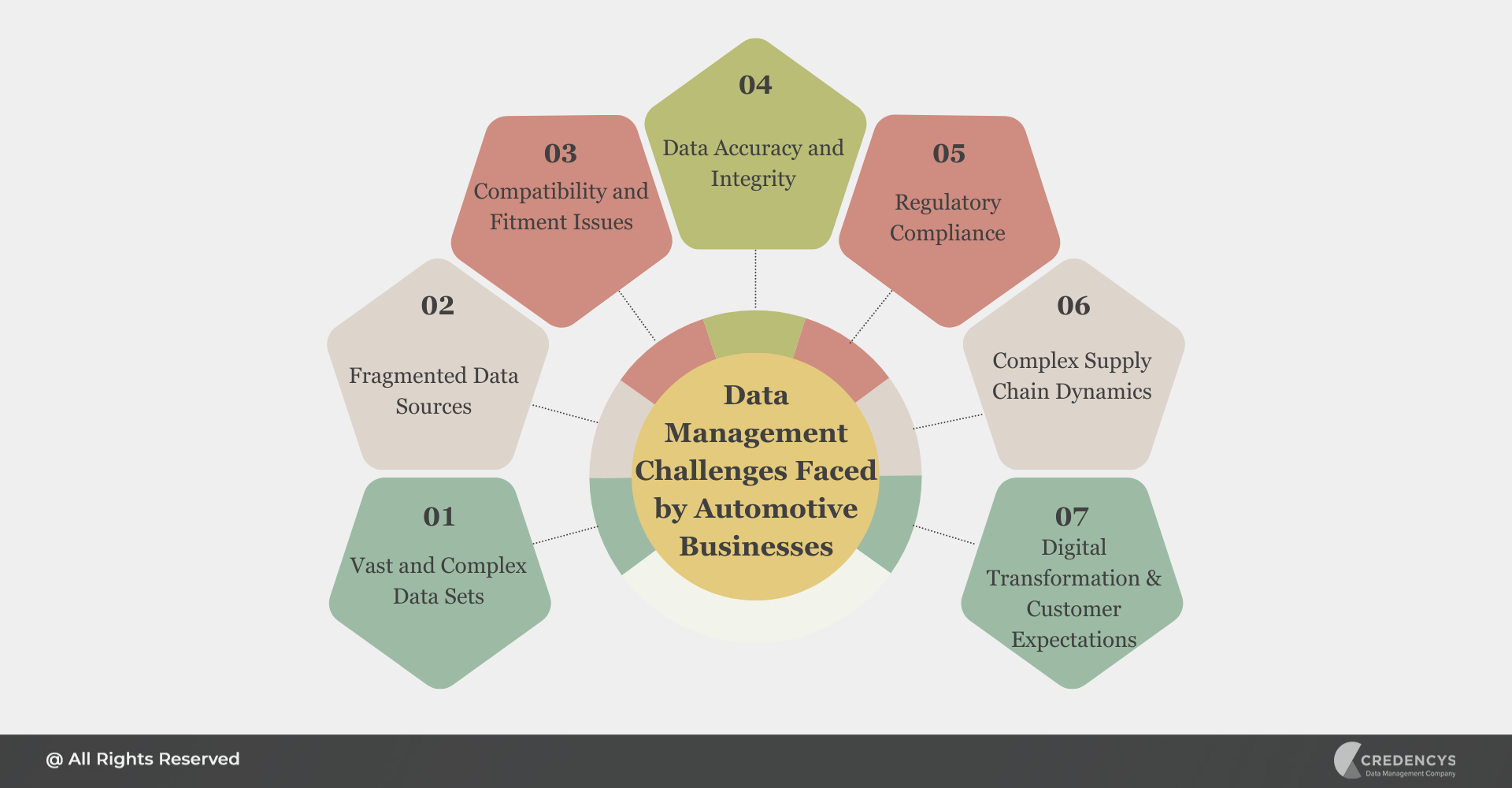
Data Management Challenges Faced by Automotive Businesses

By addressing these challenges through effective PIM solutions, automotive businesses can streamline their operations, improve data accuracy, and deliver better customer experiences, ultimately driving growth and competitiveness in the market.

Overcoming Automotive Product Data Challenges with PIM

Let’s see how a PIM is beneficial for automotive businesses.

Seamless Omnichannel Experiences

Customers these days expect a seamless shopping experience whether they are browsing a website, using a mobile app, scrolling through social media, or visiting a physical store. Product Information Management systems play a crucial role in ensuring that product information, pricing, and availability are consistent across all sales channels.

Here’s how PIM systems achieve this:

1. Unified Product Data Repository

PIM systems centralize all product data into a single repository, which serves as the definitive source of truth for product information. This centralization means that any updates to product data such as new product launches, price changes, or stock availability are automatically reflected across all channels.

This ensures consistency in product information, regardless of where the customer encounters the product.

2. Real-Time Data Synchronization

PIM systems enable real-time synchronization of product data across various platforms. Whether a customer is viewing a product on a website, mobile app, or social media, they receive the most current and accurate information.

This synchronization is crucial for maintaining consistent pricing and availability, which helps prevent customer frustration caused by outdated or incorrect information.

3. Channel-Specific Data Management

While ensuring overall consistency, PIM systems also allow for customization of product information tailored to specific channels. For example, product descriptions and images may be optimized differently for social media platforms compared to eCommerce websites, enhancing the shopping experience while maintaining data integrity.

4. Integration with ERP and Inventory Systems

PIM systems often integrate with Enterprise Resource Planning and inventory management systems to ensure accurate stock levels and availability information across all channels. This integration helps manage inventory more efficiently and prevents scenarios where a customer orders a product online that is out of stock.

Centralized Data Management

Product Information Management systems are designed to centralize the vast and complex arrays of product data that automotive businesses must manage. This includes various types of critical information such as part numbers, specifications, fitment details, pricing, and imagery.

By consolidating this data into a single, centralized repository, PIM systems ensure that all information is organized, accessible, and up-to-date across the entire organization.

  • Specifications: Detailed product specifications, such as dimensions, materials, and technical features, are critical for both marketing and operational purposes. PIM systems enable the centralized storage and management of these specifications, ensuring that all stakeholders have access to the most current and accurate data.
  • Fitment Details: Fitment data indicates the compatibility of parts with various vehicle makes and models. Accurate fitment data is essential to prevent mismatches and returns. PIM systems allow businesses to maintain detailed fitment data, ensuring that parts are properly matched to compatible vehicles.
  • Pricing: Consistent and accurate pricing information is crucial for sales and customer trust. PIM systems centralize pricing data, making it easier to update and distribute across all sales channels, thus avoiding discrepancies and ensuring consistency.
  • Part Numbers: Automotive parts often have unique identifiers which need to be accurate and consistently used across different platforms. PIM systems help maintain uniform part numbers across all channels, reducing the risk of errors.
  • Imagery: High-quality images are vital for e-commerce and marketing efforts. PIM systems store and manage product images centrally, ensuring that all visual content is consistent and aligned with the latest product information.
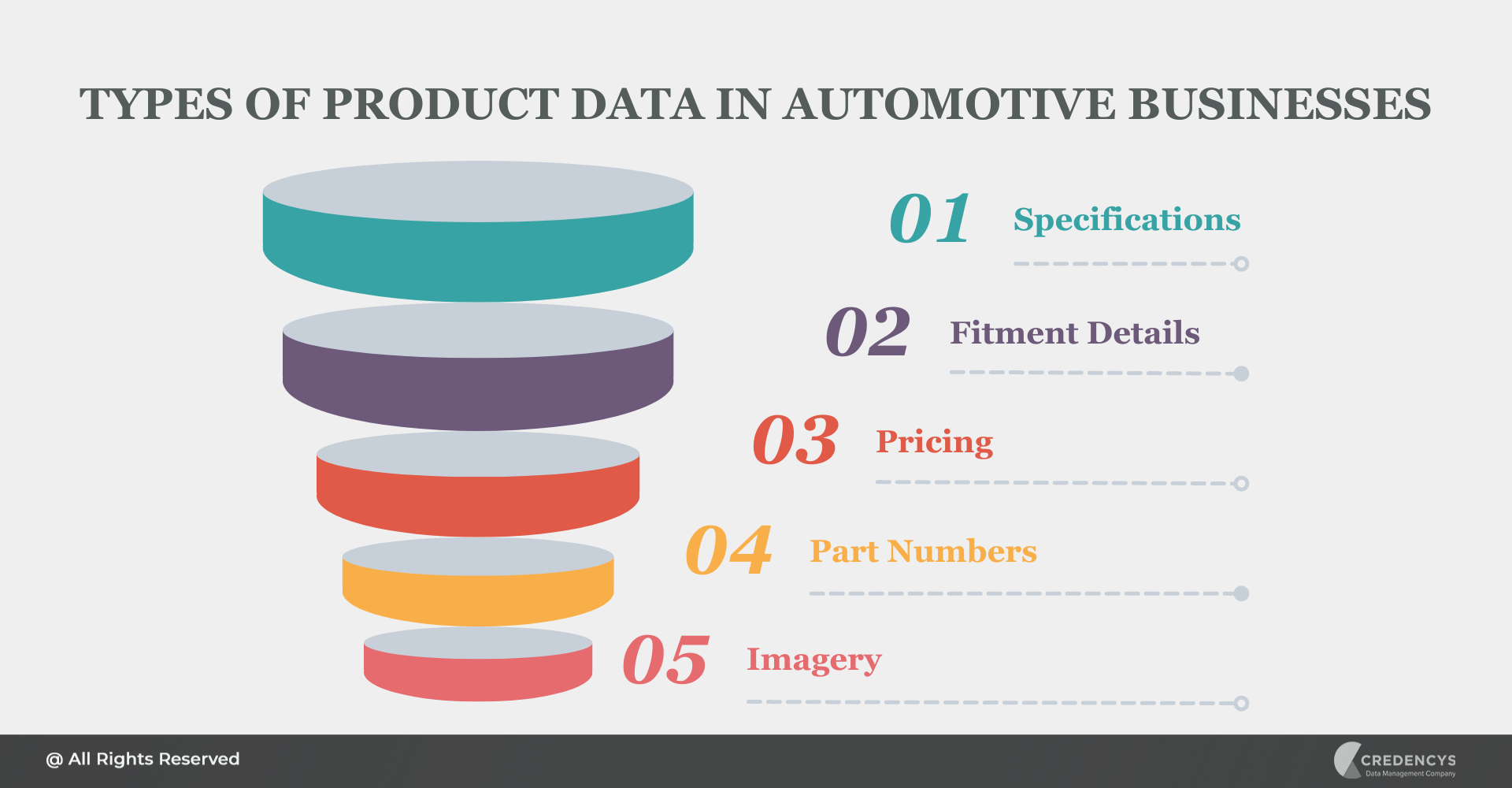
Types of Product Data in Automotive Businesses

Enhanced Fitment Data Management

In the automotive industry, the accuracy of fitment and compatibility information is crucial. Fitment data ensures that automotive parts are compatible with specific vehicle makes, models, and years. This data is essential for several reasons:

  • Operational Efficiency: Accurate fitment data streamlines the sales process, reducing the likelihood of returns and the associated logistical costs. It also simplifies inventory management by ensuring the right parts are stocked based on vehicle compatibility.
  • Customer Satisfaction: When customers purchase parts, they rely on accurate fitment data to ensure the parts will fit their vehicles. Incorrect fitment information can lead to returns, customer dissatisfaction, and damage to the brand’s reputation.
  • Trust and Reliability: For both B2B and B2C transactions, accurate fitment data builds trust. Retailers and repair shops rely on this data to recommend and install the correct parts, ensuring safety and reliability for end consumers.
  • Regulatory Compliance: Adhering to industry standards such as ACES and PIES requires precise fitment data. These standards facilitate the seamless exchange of product information across the supply chain, ensuring compliance and operational efficiency.

Streamlined Operations and Reduced Costs

Product Information Management systems significantly streamline operations by automating key processes such as data entry, updates, and syndication. This automation reduces manual efforts, minimizes errors, and enhances overall operational efficiency.

Here’s how PIM systems achieve this:

1. Real-Time Data Updates

PIM systems enable real-time updates to product information across all channels. When a product specification, price, or availability changes, the PIM system automatically updates this information in the central repository and synchronizes it across all platforms.

This automation prevents outdated or incorrect information from being displayed to customers.

2. Syndication of Product Information

PIM systems facilitate the efficient syndication of product data to various sales channels, including eCommerce websites, marketplaces, and partner networks. This automated syndication ensures that all platforms have consistent and up-to-date product information, enhancing the accuracy and reliability of the data presented to customers.

3. Error Minimization

By automating data entry and updates, PIM systems significantly reduce the likelihood of human errors. Manual data entry is prone to mistakes, which can lead to inconsistencies, misinformation, and customer dissatisfaction.

PIM systems ensure that product data is accurate and consistent, thereby minimizing errors.

4. Automated Data Entry

PIM systems automate the collection and entry of product data from various sources, such as suppliers, manufacturers, and internal databases. This automation ensures that product information is entered accurately and consistently, reducing the time and effort required for manual data entry.

How PIM Streamline Operations for Automotive Businesses

Improved Product Discoverability

Product Information Management systems play a crucial role in enhancing product discoverability and searchability, which are vital for driving traffic to eCommerce sites and increasing sales. By optimizing product data for search engines, PIM systems ensure that products are more easily found by potential customers. Here’s how PIM enhances product discoverability:

  • Optimizing Product Data for Search Engines: Search engines are often the starting point for consumers looking for automotive parts. PIM systems help in optimizing product data to ensure that search engines can easily index and rank these products.
  • Enriching Metadata, Keywords, and Tags: Enriched metadata, keywords, and tags significantly improve online visibility and drive traffic to e-commerce sites. PIM systems facilitate the creation and management of this enhanced product information.

How Can PIM Optimize Product Discovery and Searchability in Automotive Aftermarket

Over to You

For automotive businesses looking to stay ahead in a competitive market, the adoption of PIM solutions is a strategic move that can deliver substantial benefits. Whether it’s enhancing data accuracy, improving product discoverability, or providing a seamless omnichannel experience, PIM systems offer the tools needed to elevate business operations and drive growth.

Automotive businesses are encouraged to consider PIM implementation to:

  • Enhance Customer Satisfaction: Ensure accurate, consistent, and up-to-date product information across all channels, providing a superior shopping experience.
  • Boost Efficiency: Automate and streamline data management processes, reducing manual workload and minimizing errors.
  • Gain a Competitive Edge: Improve product discoverability and visibility, attract more customers, and increase sales.

Investing in PIM solutions can lead to significant improvements in how automotive businesses manage their product data, ultimately driving better business outcomes and positioning them for long-term success in a dynamic market.