PIM Development Services for Complex Product Data
Off-the-shelf PIM covers the basics. Most companies also need something specific: a data model for configurable products, an ERP connector that respects their pricing rules, a supplier portal, or AI that drafts product descriptions for review. Our PIM development services build those pieces on Pimcore and other open-source PIM platforms, so the system fits your products and processes instead of the other way round.
We are a Pimcore Strategic Partner with 80+ certified Pimcore experts and 15+ years in product data. We build new PIM solutions, extend existing ones, and take over platforms that other teams started. Need extra hands on an existing PIM? Hire dedicated PIM developers.
Fits Your Products
Data models for variants, bundles, configurable and technical products.
Fits Your Systems
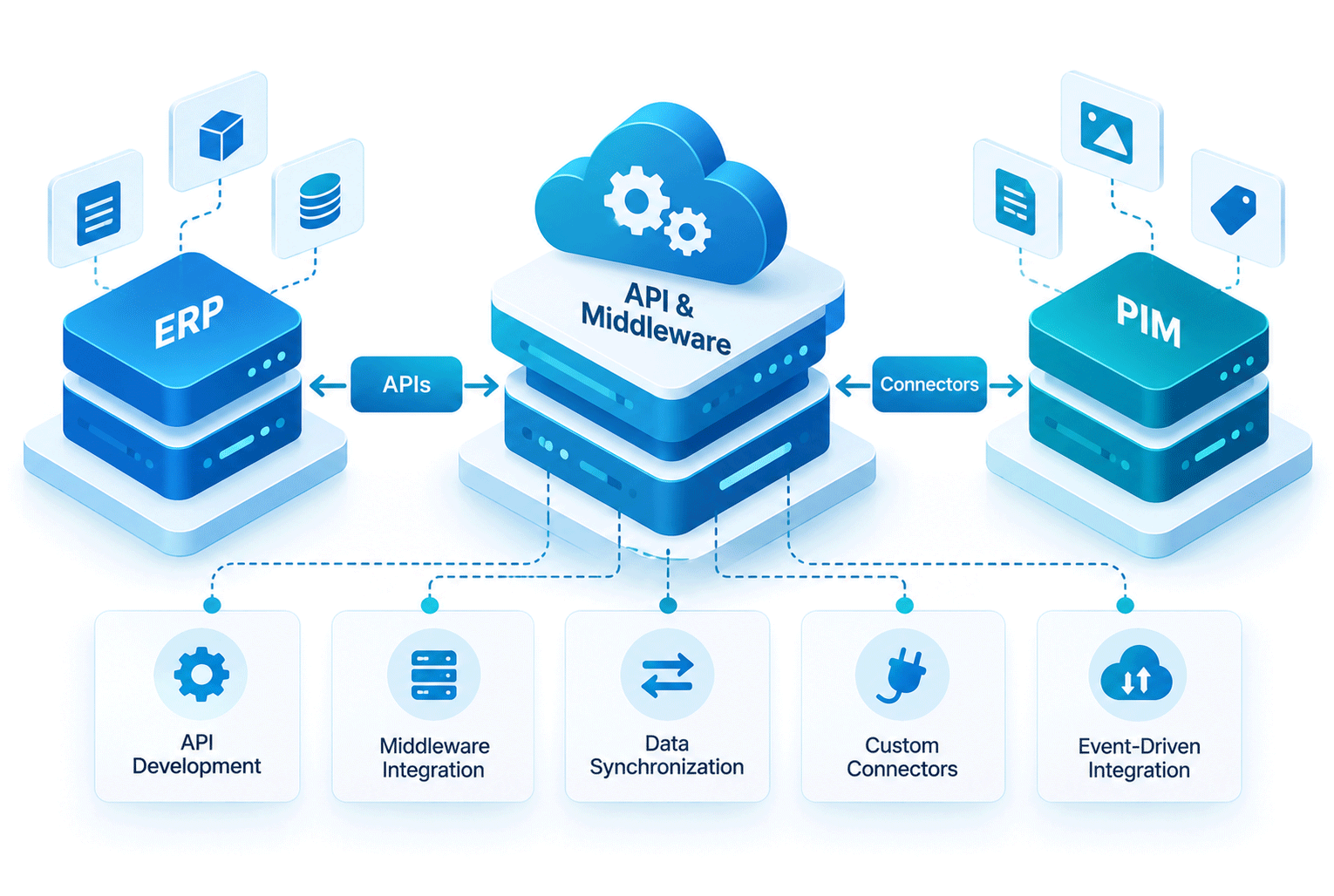
Connectors to your ERP, eCommerce, DAM, PLM and marketplaces.
Fits Your Teams
Workflows, roles and portals for staff, suppliers and partners.
Ready for AI
Clean, governed data and AI enrichment with human review.

How healthy is your product data?
8 questions: a score, your two weakest areas and a 30/90-day plan.
Check my product dataPIM Development vs PIM Implementation
Most projects need both: implement the standard features first, then develop only what makes your business different.
 PIM implementation
 PIM development
Goal: set up a PIM platform with standard features
Goal: build what the platform does not do out of the box
Configuration, data migration and training
Custom data models, connectors, portals and extensions
Best when your needs match the platform's standard features
Best when your products, channels or processes are unusual
Starting from scratch? See PIM implementation services.
Who Needs PIM Development?
Companies whose products, channels or processes go beyond what a standard PIM setup covers.
Retailers and eCommerce
Large, fast-changing assortments across stores and marketplaces. PIM for eCommerce.
Manufacturers
Technical, configurable products and dealer content. PIM for manufacturing.
Distributors
Supplier onboarding and huge catalogs. PIM for distribution.
Brands and Marketplaces
Channel-specific content and feeds from one record.
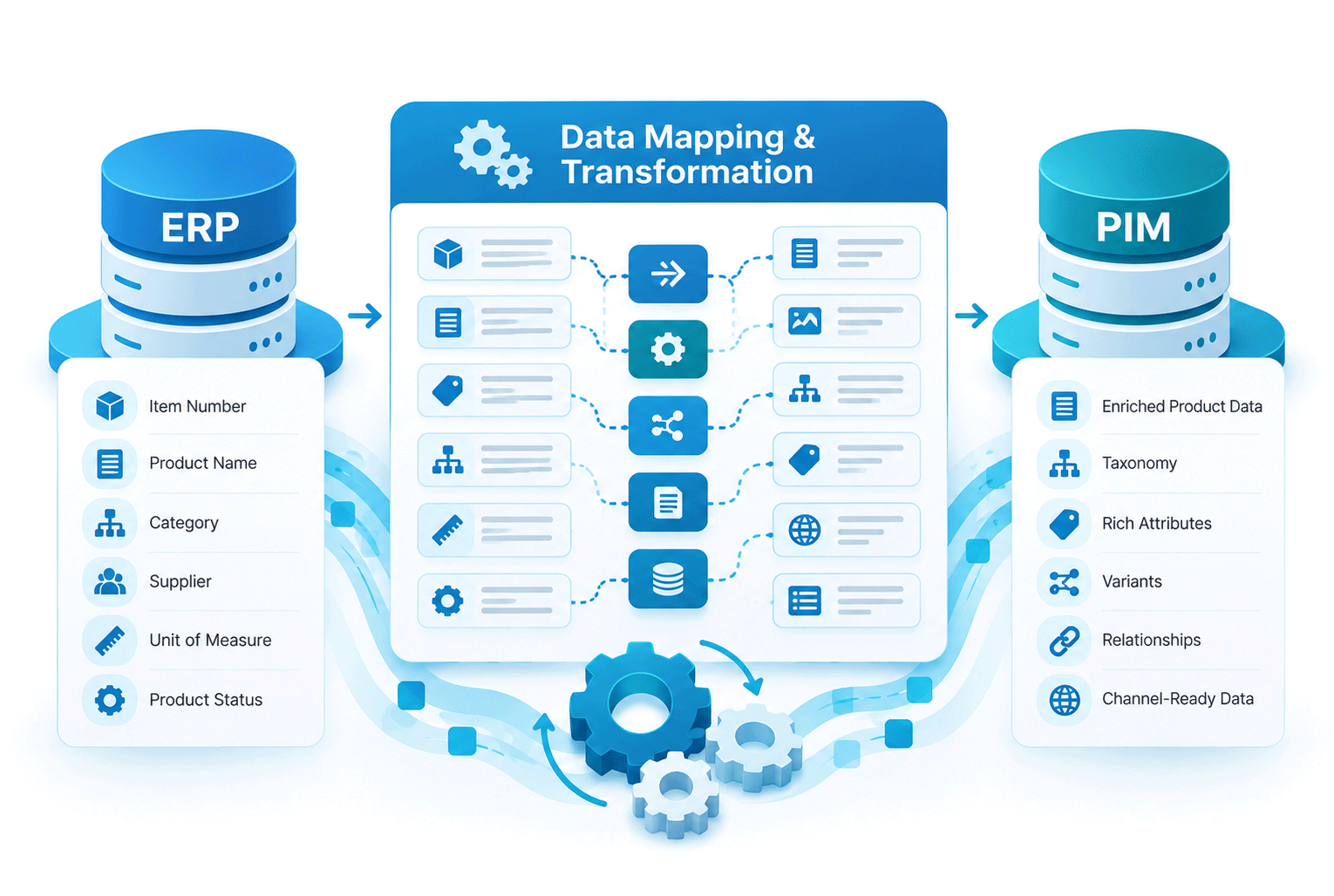
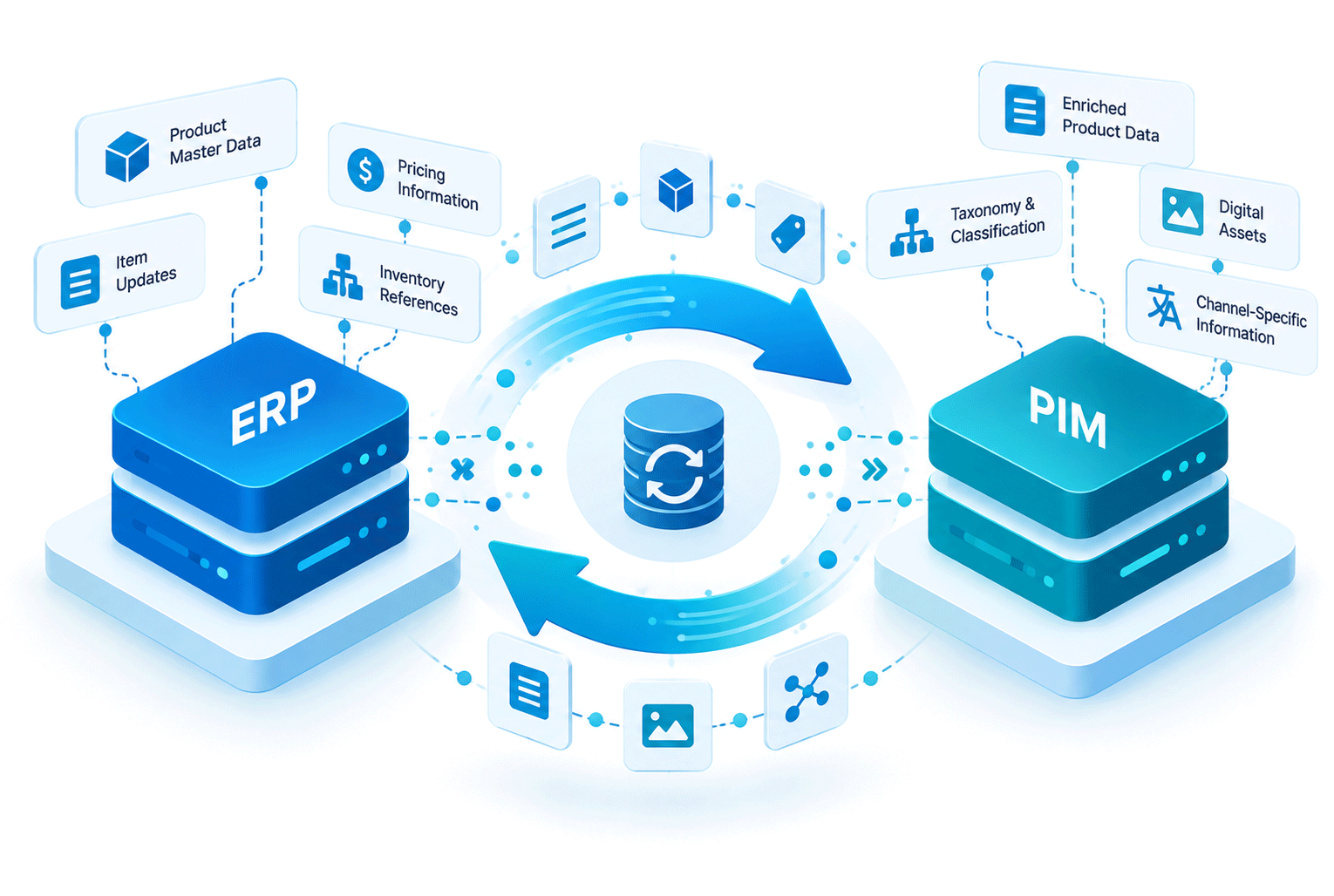
The exact system of record depends on your existing architecture, applications, business processes, and product-data governance model. The objective is not to duplicate information between ERP and PIM.
It is to ensure that each system owns the right data and that approved information moves reliably between them.