

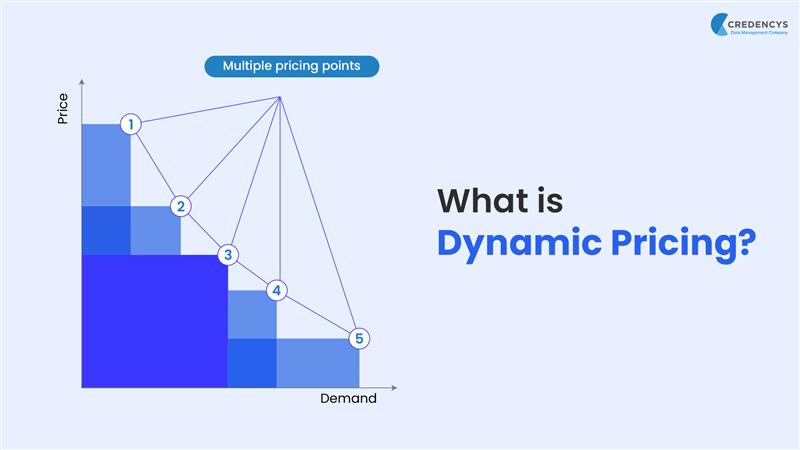
What is Dynamic Pricing?
Imagine booking a flight today for $200, only to find out tomorrow that the price has jumped to $250. Or consider how ride-hailing apps surge their prices during peak hours.
This isn’t random—it’s dynamic pricing at work.
In an era where consumers demand both affordability and fairness, businesses struggle to balance profitability with customer trust.
According to McKinsey, companies that implement pricing optimization strategies can see a 5-10% increase in revenue.
But how does dynamic pricing work, and is it the right fit for every business? Let’s dive in.
What is Dynamic Pricing?
It is a pricing strategy where businesses adjust the price of their products or services based on real-time market demand, competition, and other influencing factors. Unlike static pricing, where prices remain fixed, dynamic pricing allows companies to optimize revenue by leveraging AI and data analytics.
This pricing strategy is used across various industries, from e-commerce and hospitality to airlines and entertainment.
Dynamic Pricing vs. Static Pricing: Key Differences
| Feature | Dynamic Pricing | Static Pricing |
|---|---|---|
| Definition | Prices fluctuate based on demand, competition, and other factors. | Prices remain fixed regardless of market changes. |
| Flexibility | Highly adaptable, adjusting in real time. | Rigid and requires manual updates. |
| Revenue Potential | Maximizes revenue by capitalizing on peak demand. | Limited growth as prices don’t adjust dynamically. |
| Competitiveness | Helps businesses stay ahead of competitors by reacting to pricing trends. | May lead to lost sales if competitors adjust prices more frequently. |
| Customer Perception | Can be seen as fair if implemented transparently, but risky if perceived as price gouging. | Easier to understand but may not always offer the best deal. |
Dynamic pricing offers agility and profitability but requires strong data analytics. Static pricing is simple and predictable but may miss revenue opportunities.
How does Dynamic Pricing Work?
Dynamic pricing operates through algorithms that analyze key factors, including:
- Demand fluctuations – Prices rise when demand is high and drop when demand is low. Businesses use historical data to predict demand patterns and adjust pricing accordingly.
- Competitor pricing – AI-driven tools continuously track competitors’ pricing strategies and automatically adjust prices to remain competitive.
- Customer behavior – Personalized pricing is implemented based on browsing history, purchase history, and engagement patterns. Businesses can target specific customer segments with tailored discounts.
- Time-based pricing – Seasonal, daily, or hourly fluctuations affect pricing strategies. For example, hotels charge higher rates during peak tourist seasons.
For instance, a recent study by Retail Systems Research found that 56% of retailers believe AI-driven pricing helps them stay competitive in the fast-paced digital landscape.
Types of Dynamic Pricing Strategies
Dynamic pricing is not a one-size-fits-all model. Businesses implement different pricing strategies depending on their industry, goals, and customer expectations. Here are the most common types:
1. Time-Based Pricing
This strategy adjusts prices based on the time of day, day of the week, or season. Businesses in hospitality, airlines, and event management frequently use time-based pricing to maximize revenue.
Example: Airlines charge higher fares for flights during peak travel seasons (holidays and weekends) and offer lower prices for off-peak times.
Benefits: Maximizes revenue by capitalizing on predictable demand fluctuations.
Challenges: Customers may delay purchases if they anticipate price drops.
2. Segmented Pricing
Segmented pricing, also known as price discrimination, involves charging different prices to different customer segments based on factors like location, device type, or purchase history.
Example: Online stores may offer discounts to first-time buyers while charging regular prices to repeat customers.
Benefits: Helps businesses tailor pricing strategies to different audience segments, increasing conversion rates.
Challenges: If not implemented transparently, customers may feel they are being unfairly charged.
3. Peak Pricing (Surge Pricing)
Peak pricing increases prices during high-demand periods when supply is limited. This is common in industries where demand fluctuates sharply based on external factors.
Example: Ride-sharing apps like Uber and Lyft increase prices during rush hours, bad weather, or large events.
Benefits: Ensures availability of services and encourages supply-side participation.
Challenges: Can frustrate customers, leading to negative brand perception if prices become excessively high.
4. Competitor-Based Pricing
This strategy involves adjusting prices in real time based on competitors’ pricing. Businesses use automated tools to monitor market prices and respond instantly.
Example: Amazon changes product prices multiple times a day to stay competitive in the e-commerce space.
Benefits: Helps businesses remain competitive and attract price-sensitive customers.
Challenges: Can lead to price wars, eroding profit margins if not strategically managed.
5. Penetration Pricing
Penetration pricing starts with lower prices to attract customers and then increases prices as the product gains traction in the market.
Example: SaaS companies often offer introductory discounts or free trials before shifting customers to full-price plans.
Benefits: Quickly builds a customer base and market share.
Challenges: Customers may expect continued low prices and resist price increases.
6. Value-Based Pricing
Instead of setting prices based on costs or competition, value-based pricing adjusts prices according to how much a customer perceives a product’s worth.
Example: Luxury brands like Apple and Rolex charge premium prices based on their brand reputation and exclusivity.
Benefits: Maximizes revenue from customers willing to pay for quality and brand status.
Challenges: Requires strong brand positioning and deep understanding of customer psychology.
Each of these dynamic pricing strategies can be used alone or in combination to create a customized pricing approach. Businesses must carefully evaluate customer behavior, competition, and demand trends before choosing the right strategy.
Benefits of Dynamic Pricing
For businesses, dynamic pricing is a game-changer:
- Maximized Revenue: Businesses can charge higher prices when demand peaks, ensuring optimal profitability.
- Competitive Edge: Real-time adjustments help companies stay ahead in price wars without compromising margins.
- Better Inventory Management: Prevents stockouts and overstocking by influencing demand through price adjustments.
- Personalization: Customers receive tailored pricing based on their shopping behavior, increasing conversions and brand loyalty.
- Data-Driven Decision Making: Businesses can make informed pricing decisions based on accurate real-time analytics rather than guesswork.
AI in Dynamic Pricing
Artificial intelligence (AI) plays a pivotal role in enhancing dynamic pricing strategies. AI-powered pricing models use vast amounts of data to predict optimal price points and automate price changes in real time. Here’s how AI contributes to dynamic pricing:
1. Real-Time Price Optimization
AI algorithms process massive datasets from various sources, such as market trends, competitor prices, and customer behavior, to adjust prices instantly. Retailers like Amazon use AI to tweak product prices every few minutes, ensuring they remain competitive while maximizing revenue.
2. Predictive Analytics
Machine learning models analyze historical data to forecast future demand and price sensitivity. For example, an AI-powered system can predict when hotel bookings will peak and adjust room rates accordingly.
3. Personalized Pricing
AI can customize prices based on individual customer data, such as purchase history, location, and engagement levels. E-commerce platforms use this to offer exclusive discounts to loyal customers or incentivize hesitant buyers.
4. Automated Competitor Analysis
AI continuously monitors competitors’ pricing strategies and adjusts prices dynamically. This is crucial in highly competitive industries like electronics and fashion retail.
5. Fraud Prevention and Price Fairness
AI-driven dynamic pricing ensures fair pricing by preventing price manipulation or sudden price spikes that might alienate customers. By analyzing consumer sentiment, businesses can adjust pricing strategies to maintain trust and transparency.
6. Dynamic Bundling and Upselling
AI helps businesses create dynamic product bundles by analyzing customer preferences. For example, an online retailer might offer discounts on complementary products when a customer adds a particular item to their cart.
Future of Dynamic Pricing
With AI and machine learning advancing, dynamic pricing is becoming more sophisticated. Businesses now integrate predictive analytics, enabling hyper-personalized pricing. AI-driven models can anticipate market shifts, helping companies proactively adjust prices before competitors.
The rise of blockchain technology may also bring new transparency to dynamic pricing, allowing customers to verify price changes in real time. Companies that fail to adopt AI-driven pricing risk falling behind in an era where every cent matters.

So, is your business ready to embrace the future of pricing? AI-driven dynamic pricing can be the ultimate revenue optimization tool in your arsenal.
Common Questions About AI-based Dynamic Pricing
1. How does AI-based dynamic pricing work?
AI analyzes real-time data—demand, competitor prices, customer behavior, and market trends—to automatically adjust prices for maximum revenue and profitability.
2. What are the benefits of AI-driven dynamic pricing?
It boosts sales, improves profit margins, enhances competitiveness, and personalizes pricing based on customer segments and buying patterns.
3. Which industries use AI-powered dynamic pricing?
Retail, e-commerce, travel, hospitality, ride-hailing, and SaaS companies leverage AI to optimize pricing based on supply-demand dynamics and customer trends.



Tags: