


Why Data Analytics in Retail is a Game-Changer for Modern Businesses
The impact of data analytics on the retail industry is substantial. From understanding customer preferences to optimizing supply chains, data analytics empowers retailers to make informed decisions that enhance efficiency, boost sales, and improve customer satisfaction.
According to projections by Fortune Business Insights, the global retail analytics market size is expected to reach $18.33 billion by 2028, highlighting the growing importance of data-driven strategies in retail.
Retailers collect vast amounts of data from various sources, including sales transactions, customer interactions, website behavior, and in-store traffic. However, without the right analytical tools, this data remains untapped potential.
By leveraging data analytics, retailers can uncover hidden patterns, predict market trends, and personalize shopping experiences – giving them a competitive edge in an increasingly digital marketplace. This article explores how data analytics is revolutionizing the retail industry, highlighting key applications, benefits, and future trends that are shaping the way businesses operate.
The Role of Data Analytics in Retail
The retail industry thrives on customer preferences, market trends, and operational efficiency. Data analytics plays a crucial role in helping businesses navigate these factors, turning raw data into actionable insights.
Below are three core ways data analytics is shaping modern retail:
1. Enabling Data-Driven Decision-Making
Retailers no longer rely on guesswork when making strategic decisions. With advanced analytics tools, they can:
- Optimize pricing strategies based on real-time market data
- Assess sales performance across different stores and online channels
- Improve customer satisfaction by analyzing feedback and sentiment data
Data-driven retailers are 23 times more likely to acquire new customers and six times more likely to retain them, according to Forbes.
2. Understanding Customer Behavior and Trends
Retailers today have access to vast customer data, including purchase history, online browsing behavior, and social media interactions. By analyzing this data, businesses can:
- Identify shopping patterns and trends
- Understand customer preferences for personalized recommendations
- Predict future buying behaviors to optimize inventory and promotions
According to a McKinsey report, companies that leverage customer analytics outperform competitors by 85% in sales growth and more than 25% in gross margin.
3. Enhancing Operational Efficiency
Data analytics helps retailers streamline their operations by optimizing supply chains, inventory management, and workforce planning. Some key benefits include:
- Reducing waste and overstock by accurately predicting demand
- Enhancing employee scheduling to align with peak business hours
- Improving supply chain logistics through real-time tracking and AI-driven forecasting
A study by IBM found that businesses using AI-driven analytics in retail operations experience up to a 20% reduction in operational costs.

Key Applications of Data Analytics in Retail
Data analytics is transforming retail operations across multiple areas, helping businesses enhance customer experiences, optimize inventory, and improve profitability. Below are some of the most impactful applications:
1. Dynamic Pricing Strategies
With real-time pricing analytics, retailers can adjust product prices based on demand, competitor pricing, and other market factors.
How it Works:
- Monitoring competitors’ pricing and adjusting accordingly.
- Using AI to analyze customer willingness to pay.
- Implementing automated price adjustments in eCommerce stores.
Dynamic Pricing in Retail: A Game-Changer for Profitability and Competitiveness
2. Predictive Analytics for Marketing Optimization
Retailers use data analytics to fine-tune their marketing campaigns for better customer engagement and higher ROI.
How it Works:
- Analyzing past marketing campaigns to identify success patterns.
- Using AI to predict customer responses to specific promotions.
- Optimizing ad spend for maximum reach and engagement.

Unlock the Full Potential of your Marketing with Data-driven Insights. Start Leveraging Predictive Analytics for Smarter Campaigns Today!
3. Supply Chain and Logistics Optimization
Retailers rely on analytics to improve the efficiency of their supply chains, reducing costs and ensuring timely deliveries.
How it Works:
- Tracking real-time shipment data for better route planning.
- Using IoT sensors to monitor warehouse conditions.
- Predicting supply chain disruptions and adjusting procurement strategies.
4. Personalized Customer Experiences
Consumers expect personalized interactions, and data analytics makes it possible by leveraging customer data.
How it Works:
- Segmentation based on demographics, preferences, and past purchases.
- AI-driven product recommendations (e.g., Amazon’s “Customers who bought this also bought…”).
- Personalized promotions and discounts delivered through emails and apps.
5. Demand Forecasting for Inventory Optimization
Managing inventory efficiently is crucial in retail. Data analytics enables businesses to forecast demand with greater accuracy, preventing stockouts and overstock situations.
How it Works:
- Analyzing historical sales data, seasonal trends, and external factors (e.g., weather, economic conditions).
- Using AI and machine learning to predict future demand.
- Optimizing warehouse management and replenishment schedules.
The Power of AI Demand Forecasting: Predicting Market Trends with Precision
Data analytics is reshaping retail by enhancing efficiency, improving customer satisfaction, and boosting profitability.
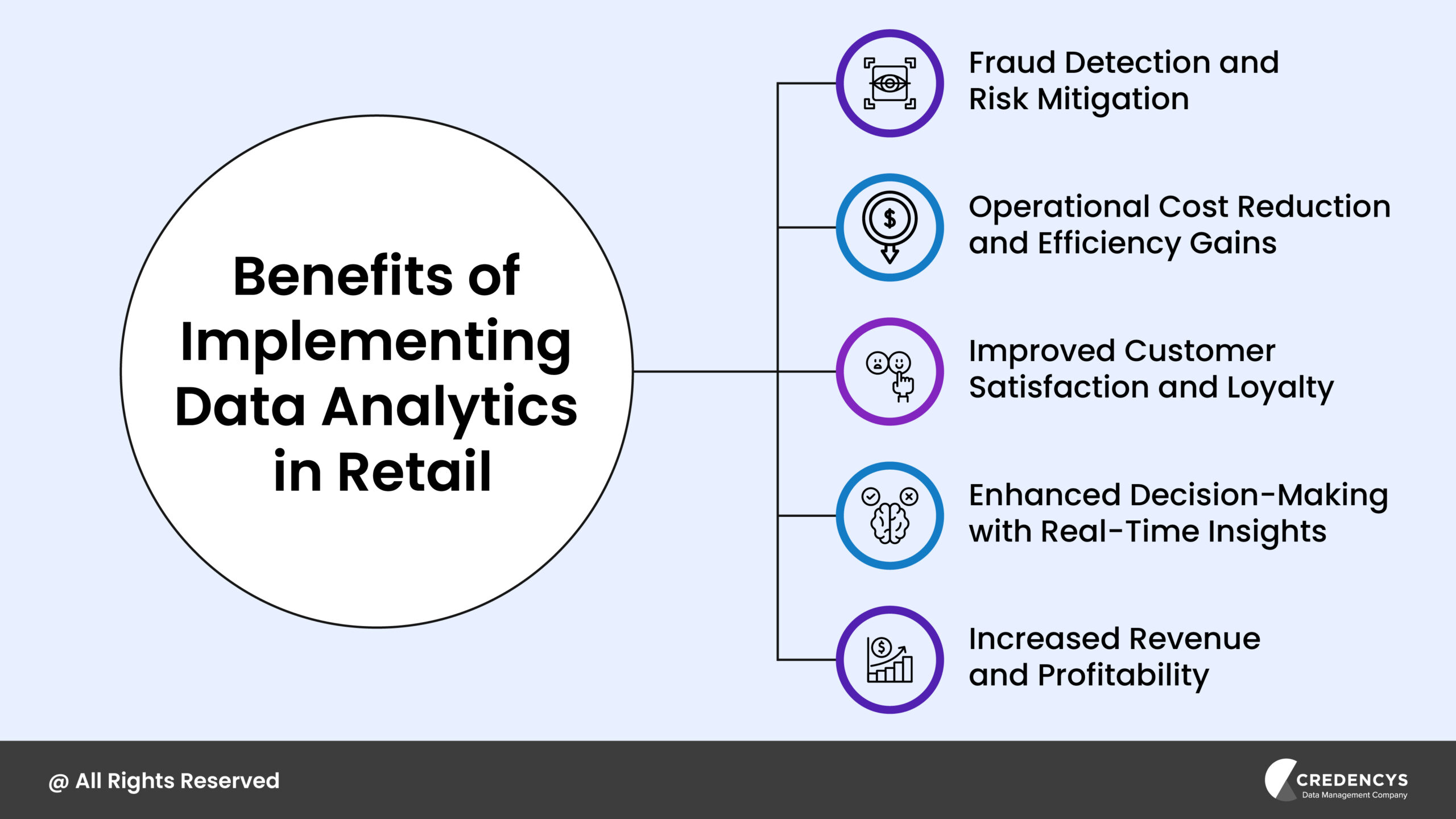
Benefits of Implementing Data Analytics in Retail
Data analytics is a powerful tool that enables retailers to improve decision-making, enhance customer experiences, and streamline operations. Here are some of the key benefits:
1. Fraud Detection and Risk Mitigation
Advanced analytics helps retailers detect fraudulent transactions, identify suspicious patterns, and enhance security measures. By reducing fraud-related losses, businesses can protect their revenue and build customer trust.
2. Operational Cost Reduction and Efficiency Gains
Optimizing inventory management, workforce scheduling, and supply chain operations reduces costs and minimizes inefficiencies. With data-driven insights, retailers can prevent stockouts and overstock situations, ensuring smooth business operations.
3. Improved Customer Satisfaction and Loyalty
Retailers can create personalized shopping experiences by analyzing customer behavior and preferences. Targeted promotions, personalized recommendations, and loyalty programs enhance customer engagement, fostering long-term relationships and repeat purchases.
4. Enhanced Decision-Making with Real-Time Insights
Retailers can make data-backed decisions quickly by accessing real-time insights on sales performance, customer behavior, and market trends. This agility enables them to respond proactively to changing demand, competitive pressures, and emerging opportunities.
5. Increased Revenue and Profitability
By leveraging data insights, retailers can optimize pricing strategies, identify high-performing products, and personalize marketing efforts. This leads to higher conversion rates and increased sales.
Predictive analytics helps businesses allocate resources more effectively, maximizing profitability.
With these benefits, data analytics is becoming an essential component of modern retail strategies.
The Future of Retail Belongs to Data-Driven Businesses
By leveraging data-driven insights, retailers can enhance customer experiences, optimize operations, and make informed business decisions. From personalized recommendations and demand forecasting to fraud detection and real-time analytics, the impact of data analytics is undeniable.
However, businesses must also address challenges like data security, integration complexities, and talent shortages to fully realize its potential. As emerging technologies like AI, IoT, and blockchain continue to shape the future of retail analytics, forward-thinking businesses that invest in data analytics today will be better positioned for long-term success.
The key takeaway is clear: retailers that harness the power of data will gain a competitive edge and thrive in the evolving market. Now is the time for retailers to embrace data analytics and transform their operations for a smarter, more profitable future.
Ready to Transform Your Retail Business with Data Analytics? Leverage Powerful Insights to Boost Sales, Optimize Operations, and Enhance Customer Experiences.




Tags: