


What is Customer 360? The Ultimate Blueprint for Customer Data Success
Businesses interact with customers across multiple channels; websites, apps, social media, emails, and in-store experiences. But managing data from these sources is a challenge.
Disconnected data silos make it difficult to understand customers, leading to missed opportunities and ineffective engagement.
According to studies, 73% of consumers expect companies to understand their unique needs, yet many businesses fail to deliver due to data silos and poor insights.
This is where Customer 360 comes in.
It consolidates all customer data into a single, unified view, helping businesses:
- Gain deeper insights into customer behavior
- Personalize interactions based on preferences
- Make data-driven decisions for better engagement
By integrating data from multiple touchpoints – purchase history, online activity, customer support, and social media companies can build a complete customer profile that enhances loyalty and increases revenue. Industries such as retail, eCommerce, manufacturing, and supply chain particularly benefit from Customer 360 approach.
What is Customer 360?
Customer 360 is a comprehensive, unified view of customer data across all touchpoints. It helps businesses understand customer behavior, preferences, and interactions by consolidating data from multiple sources.
Instead of dealing with fragmented information across different systems, Customer 360 brings everything together, ensuring that businesses can make data-driven decisions and deliver personalized experiences.
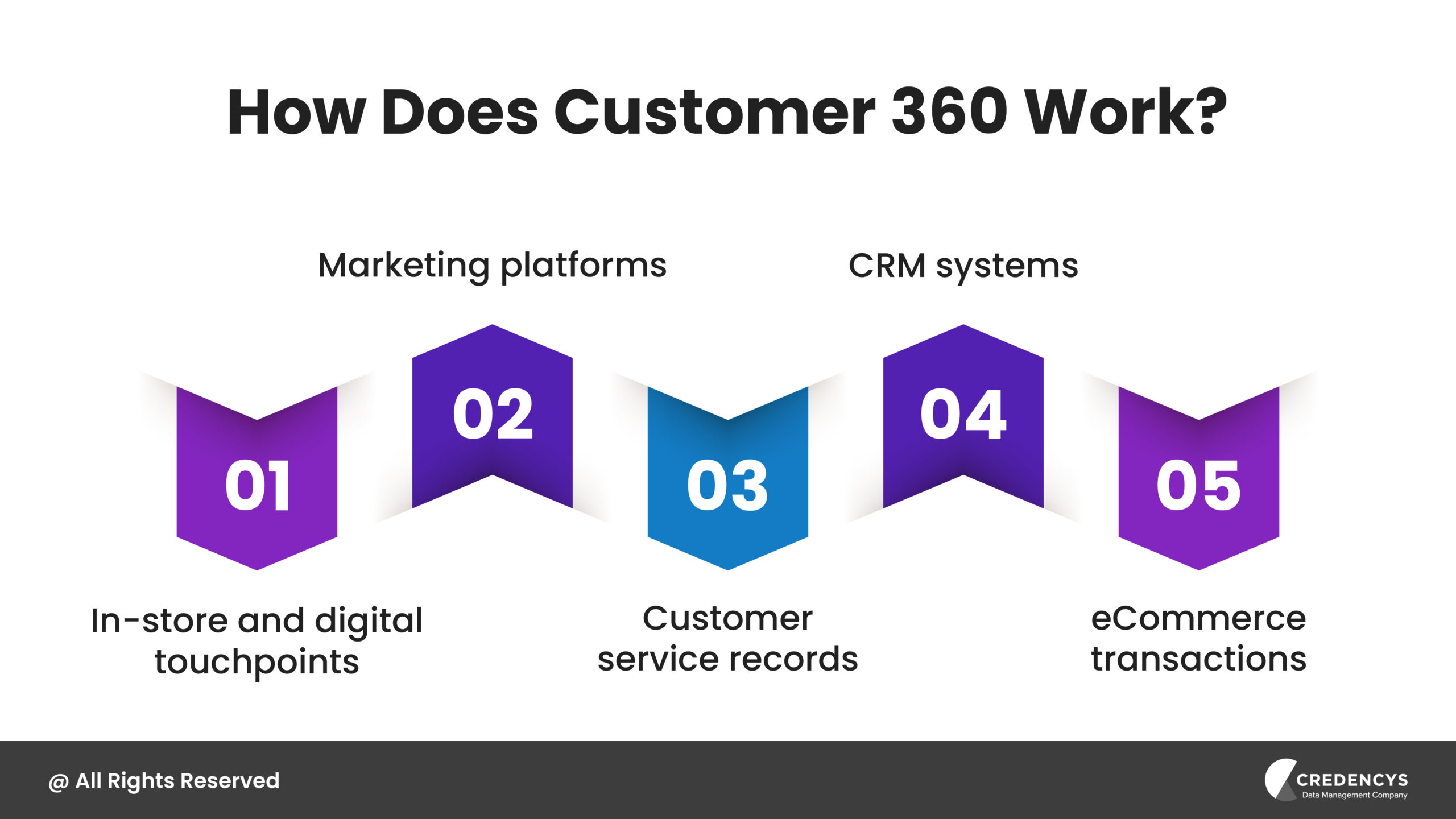
How Does Customer 360 Work?
Customer 360 integrates data from:
- In-store and digital touchpoints: Loyalty programs, feedback surveys
- Marketing platforms: Email campaigns, social media interactions
- Customer service records: Chatbot interactions, call center logs
- CRM systems: Customer profiles, purchase history, support tickets
- eCommerce transactions: Browsing behavior, cart activity, order history
By combining this data, businesses can create a single source of truth for every customer. This eliminates duplicate records, reduces inconsistencies, and enables more accurate customer insights.
Why is Customer 360 Important?
- Operational Efficiency: Reduces redundant data entry and enhances collaboration across departments.
- Personalized Engagement: Businesses can tailor recommendations, offers, and messages based on real-time data.
- Stronger Customer Relationships: A complete view of interactions helps brands understand customer needs and improve loyalty.
- Better Decision-Making: Teams across sales, marketing, and customer support can access the same insights, ensuring consistency.
Customer 360 is not just about collecting data; it’s about making data actionable. When businesses leverage it effectively, they can enhance customer satisfaction, increase retention, and drive revenue growth.

Unlock the Full Potential of your Customer Data with a Customer 360 Strategy. Start Delivering Personalized Experiences and Driving Business Growth Today
Key Components of Customer 360
Building a Customer 360 strategy requires integrating multiple data sources and ensuring data accuracy. Here are the essential components that make it work:
1. Data Aggregation
Collecting and consolidating data from various sources, including:
- CRM systems
- Marketing platforms
- Transactional databases
- Customer support channels
- Website and mobile app interactions
This ensures businesses have a centralized repository of customer data.
2. Identity Resolution
Many customers interact with businesses using different touchpoints – email, phone, social media, or in-store visits. Identity resolution helps by:
- Eliminating duplicate entries
- Matching customer records across platforms
- Creating a single, unified customer profile
3. Customer Segmentation
Not all customers are the same. Businesses need to categorize them based on:
- Preferences (product interests, brand loyalty)
- Demographics (age, location, income level)
- Behavioral data (purchase history, engagement patterns)
This enables more targeted marketing and personalized experiences.
4. Advanced Analytics & AI
AI and machine learning play a big role in extracting insights from customer data. They help with:
- Predicting customer behavior
- Recommending personalized products and services
- Identifying trends for proactive decision-making
5. Real-Time Data Processing
A Customer 360 strategy is most effective when businesses can act on insights in real-time. Modern data platforms, like Databricks, allow companies to:
- Provide instant customer insights
- Process streaming data from multiple sources
- Enable real-time personalized interactions

These components work together to create a single source of truth for customer data, helping businesses enhance engagement, increase loyalty, and optimize operations.
Benefits of Implementing a Customer 360 Strategy
A well-executed Customer 360 strategy provides businesses with a holistic view of customer interactions, leading to improved decision-making, personalized experiences, and operational efficiency. Here are the key benefits:
1. Revenue Growth & Business Expansion
- Companies can identify upselling and cross-selling opportunities.
- Higher engagement and retention lead to increased sales.
- Predictive analytics help businesses forecast demand and optimize pricing strategies.
2. Operational Efficiency
- Reduces redundant and manual data entry.
- Streamlines business processes across marketing, sales, and customer support.
- Breaks down data silos by ensuring all departments work with the same customer data.
3. Personalized Customer Experiences
- Improves engagement across marketing, sales, and customer service.
- AI-driven insights help predict what customers need before they ask.
- Businesses can tailor recommendations, offers, and messaging based on customer preferences.
4. Improved Decision-Making
- Marketing teams can fine-tune campaigns based on past customer behavior.
- Sales teams can prioritize high-value leads with a complete customer profile.
- Access to real-time, accurate customer insights helps businesses make data-driven decisions.
5. Higher Customer Satisfaction & Loyalty
- Increases retention rates by delivering experiences that build trust.
- Customers receive seamless and consistent interactions across all touchpoints.
- Resolving issues becomes faster when support teams have a full history of past interactions.
By leveraging Customer 360, businesses turn raw data into actionable insights, driving both customer satisfaction and business success.
Ready to Transform your Customer Data into Growth Opportunities? Leverage Customer 360 to Drive Revenue, Efficiency, and Loyalty.
Challenges in Implementing Customer 360
While a Customer 360 strategy offers significant benefits, implementing it comes with challenges. Businesses must overcome data integration complexities, privacy concerns, and technological limitations to create a seamless customer data ecosystem.
1. Data Quality & Accuracy
- Duplicate, outdated, or incorrect customer data can lead to poor decision-making.
- Businesses must regularly clean, validate, and update customer records to maintain accuracy.
- Identity resolution plays a key role in ensuring a single, accurate customer profile.
2. Data Privacy & Compliance
- Implementing role-based access controls and customer consent management is essential.
- Organizations must ensure secure storage, encryption, and compliance to avoid legal risks.
- Strict regulations like GDPR, CCPA, and HIPAA require businesses to handle customer data responsibly.
3. Organizational Adoption & Cross-Team Collaboration
- Strong leadership support and training are essential for smooth adoption.
- Different teams (marketing, sales, support) may operate in silos, making data sharing difficult.
- Companies must foster a data-driven culture where departments align their strategies using a centralized Customer 360 platform.
4. Data Integration Complexity
- Different departments may use incompatible data formats, requiring data transformation and standardization.
- A robust data management platform like Databricks can help unify and process this data efficiently.
- Customer data exists in multiple systems (CRM, marketing tools, sales platforms, etc.), making integration difficult.
5. Technology & Infrastructure Requirements
- Solutions like customer data platforms (CDPs) can help streamline data processing.
- A scalable data architecture is necessary to process massive customer data volumes in real time.
- Businesses may need to invest in cloud-based platforms, AI tools, and advanced analytics for efficient data unification.

Despite these challenges, the right strategy, technology, and governance can help businesses successfully implement Customer 360 and unlock its full potential.
Break Down Silos and Boost Teamwork with a Unified Customer 360 Approach. Empower your Teams with Real-time Insights for Smarter Collaboration
How to Get Started with Customer 360
Implementing a Customer 360 strategy requires a structured approach to ensure success. Here’s a step-by-step guide to help businesses get started:
1. Assess Your Current Data Landscape
- Identify all the data sources (CRM, marketing platforms, sales records, support tickets, etc.).
- Evaluate data quality to identify gaps, inconsistencies, or duplicates.
- Determine where data silos exist and how they impact customer insights.
2. Define Business Objectives
- Set clear goals—what do you want to achieve with Customer 360?
- Better personalization?
- Improved customer retention?
- Higher sales conversions?
- Align these objectives with key business functions (marketing, sales, customer support).
3. Choose the Right Technology Stack
- Select a centralized data platform to integrate all customer data. Popular choices include:
- Ensure the platform supports real-time analytics, AI-driven insights, and identity resolution.
4. Implement Data Integration & Identity Resolution
- Use ETL (Extract, Transform, Load) pipelines to consolidate data from different sources.
- Apply identity resolution techniques to eliminate duplicates and merge customer records.
- Ensure data governance policies are in place to maintain accuracy and compliance.
5. Leverage AI & Analytics for Insights
- Deploy AI-driven models to analyze customer behavior, predict trends, and recommend actions.
- Segment customers based on demographics, behavior, and purchase patterns.
- Use real-time analytics to optimize marketing and sales efforts.
6. Foster Cross-Team Collaboration
- Encourage marketing, sales, and customer service teams to work with a unified customer data view.
- Provide training on how to leverage Customer 360 insights for better decision-making.
- Ensure leadership support for a data-driven culture.
7. Continuously Monitor & Optimize
- Track key Customer 360 performance metrics (customer engagement, retention, conversion rates).
- Gather feedback from teams using the system and refine the approach.
- Scale and enhance capabilities as the business grows.

Starting with Customer 360 requires the right strategy, technology, and collaboration. By following these steps, businesses can unlock deeper customer insights and drive growth.
Closing Thoughts
A Customer 360 strategy is a necessity for businesses aiming to deliver personalized experiences, improve customer retention, and drive revenue growth. By integrating data from multiple sources, resolving customer identities, and leveraging AI-driven insights, companies can gain a holistic view of their customers and make smarter, data-driven decisions.
As industries increasingly rely on real-time insights and data-driven decision-making, adopting a Customer 360 approach will set businesses apart from the competition. The key to success lies in choosing the right technology stack, defining clear business goals, and continuously optimizing data strategies.
Ready to Unlock the Full Potential of Customer 360? Transform your Customer Data into Actionable Insights and Drive Business Growth with Credencys







Tags: