

The Complexity of PIM Migration
PIM migration is rarely a simple data-transfer exercise. Product information is usually connected to ERP, DAM, eCommerce, marketplaces, supplier systems, catalogs, workflows, and downstream applications.
Legacy environments may also contain years of duplicate records, inconsistent attributes, outdated taxonomies, broken relationships, and undocumented integrations. Without a structured migration approach, those issues can move directly into the new platform or disrupt business operations during cutover.
Fragmented Legacy Product Data
Product information may be distributed across legacy PIM platforms, ERP, spreadsheets, databases, custom applications, supplier files, and departmental systems. Identifying the authoritative source for every product attribute is often one of the first migration challenges.
Complex Product Models and Relationships
Categories, attributes, variants, bundles, accessories, compatibility relationships, replacements, inheritance, and product hierarchies must be accurately recreated in the target PIM. Incorrect mappings can affect product discovery, channel publishing, and downstream integrations.
Poor Data Quality
Duplicate records, missing attributes, obsolete information, inconsistent terminology, and invalid values increase migration risk. Moving poor-quality data without cleansing simply recreates legacy problems in the new system.
Digital Asset and Document Dependencies
Images, videos, datasheets, manuals, certificates, and other digital assets must remain connected to the right products and variants. Broken relationships can create incomplete product experiences after migration.
Enterprise Integration Dependencies
PIM often connects with ERP, DAM, PLM, eCommerce, marketplaces, CMS, middleware, and custom applications. Changes to product identifiers, structures, or schemas can affect every connected system.
Business Continuity Risks
Product-data teams, sales channels, digital commerce, catalogs, and operational systems may rely on PIM every day. Migration must be planned around controlled cutover, validation, fallback, and post-go-live stabilization.

How Ready Is Your Product Data for PIM Migration?
Identify data-quality issues, migration complexity, integration dependencies, and potential implementation risks before moving to a new PIM environment.
Get Your Migration AssessmentOur PIM Migration Services
Credencys provides end-to-end PIM migration services covering strategy, data preparation, transformation, migration, integration, validation, and post-deployment support. Our goal is not simply to move existing information. We help organizations use migration as an opportunity to improve the product-data foundation they will depend on going forward.
PIM Migration Assessment & Strategy
We assess your current PIM environment, product-data sources, data quality, business processes, integrations, workflows, and downstream dependencies. The assessment helps define migration complexity, scope, priorities, sequencing, and risk.
- Current-state PIM assessment
- Data-source inventory
- Data-quality analysis
- Integration dependency mapping
- Migration scope definition
- Migration-wave planning
- Risk and cutover assessment
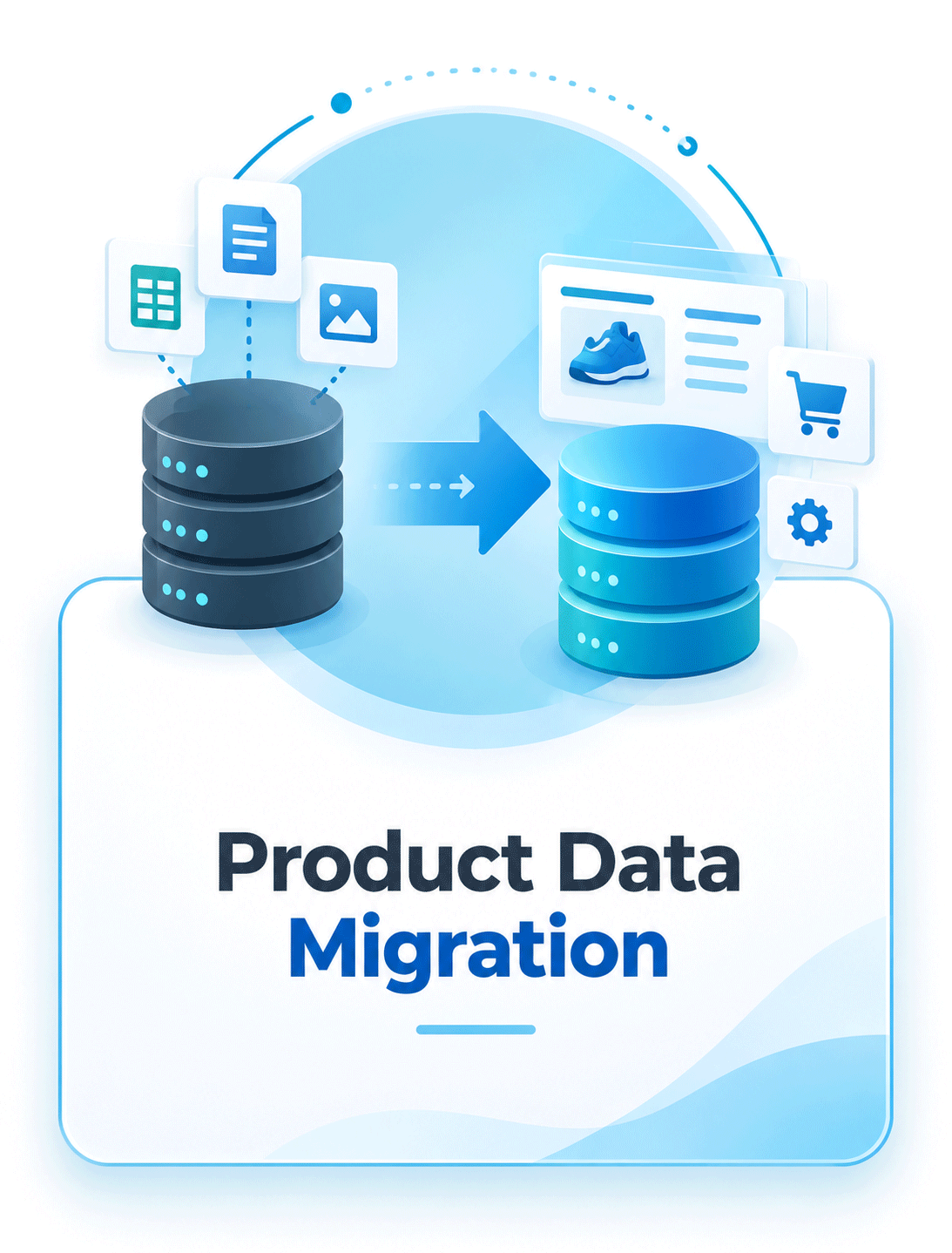
Product Data Migration
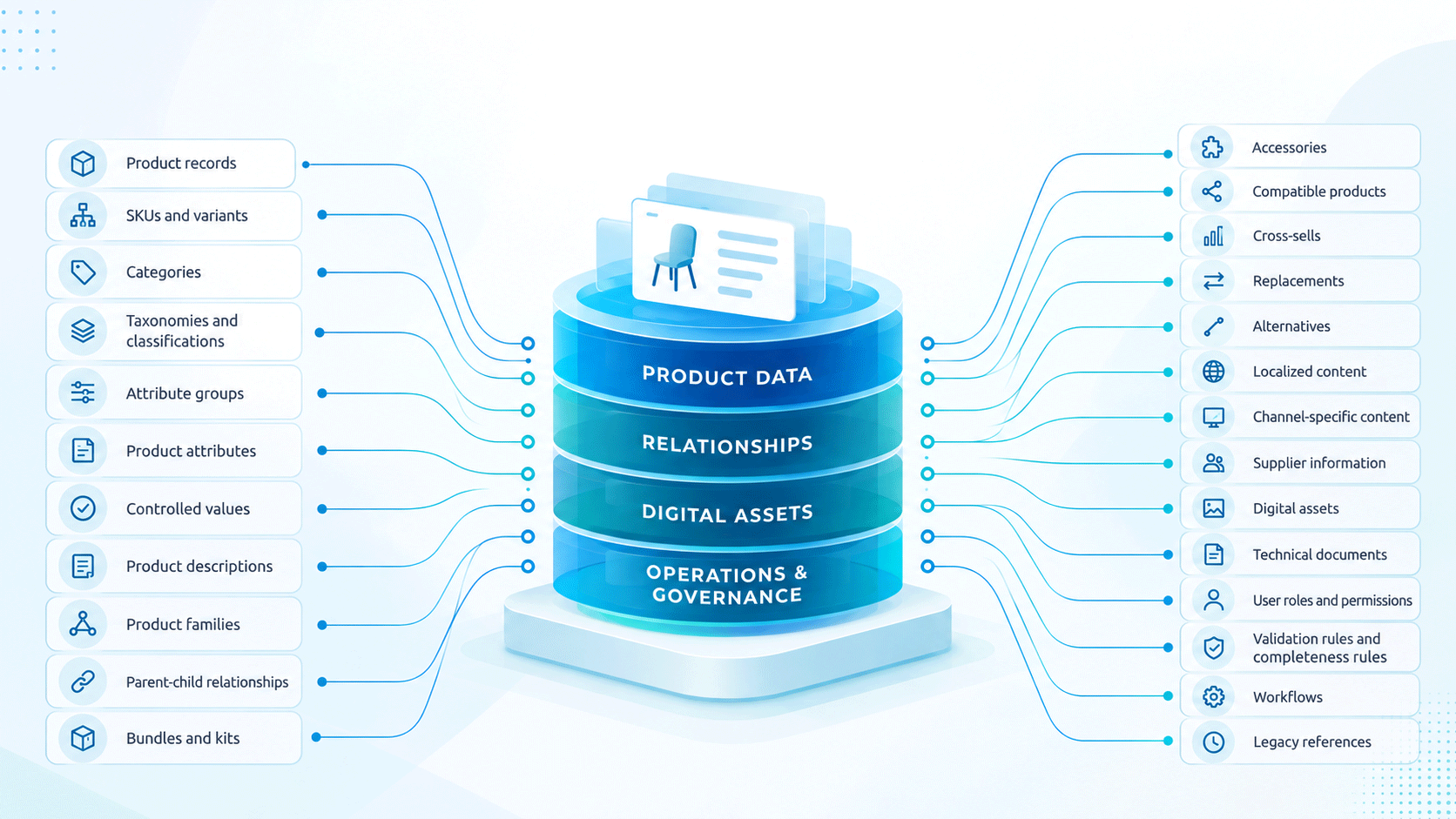
We migrate structured product information from legacy PIM systems, ERP, spreadsheets, custom databases, and other product-data sources into the target platform. Migration can include:
- Products and SKUs
- Product attributes
- Product descriptions
- Variants
- Categories
- Classifications
- Product families
- Product relationships
- Localized information
- Supplier information
- Channel-specific content
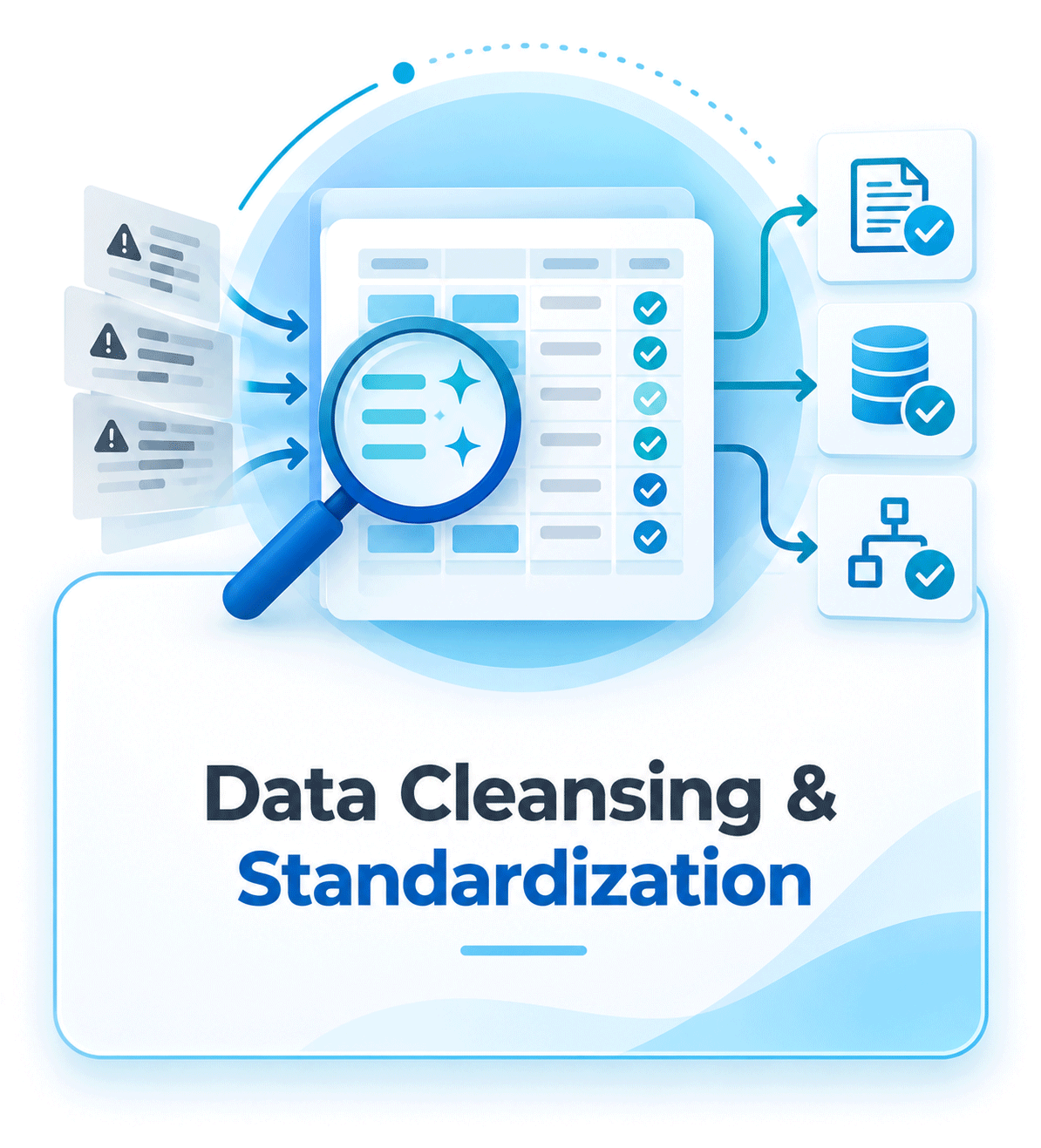
Data Cleansing & Standardization
Migration is an opportunity to correct product-data problems before they become part of the new environment. We help standardize, validate, normalize, and deduplicate product information before and during migration.
- Remove duplicate records
- Normalize attribute values
- Standardize units of measure
- Correct inconsistent terminology
- Identify incomplete records
- Remove obsolete information
- Validate required attributes
- Establish controlled values
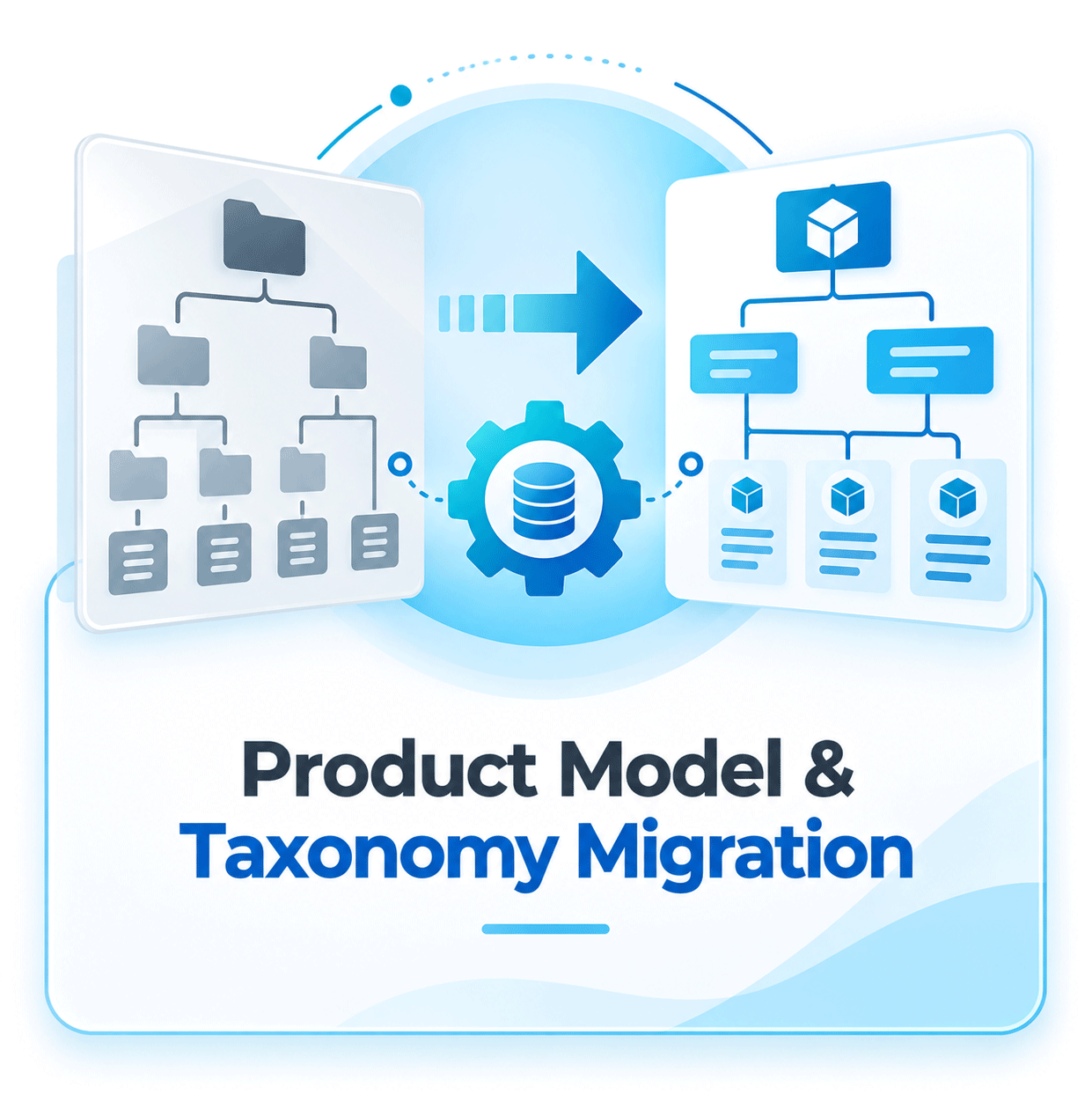
Product Model & Taxonomy Migration
Legacy product structures may not fit the future operating model. We migrate or redesign product categories, attribute groups, product families, inheritance rules, classifications, and relationships so the new PIM supports current and future product-data requirements.
- Category and taxonomy mapping
- Product-family migration
- Attribute-group redesign
- Parent-child hierarchy mapping
- Inheritance-rule configuration
- Product relationship mapping
- Classification transformation
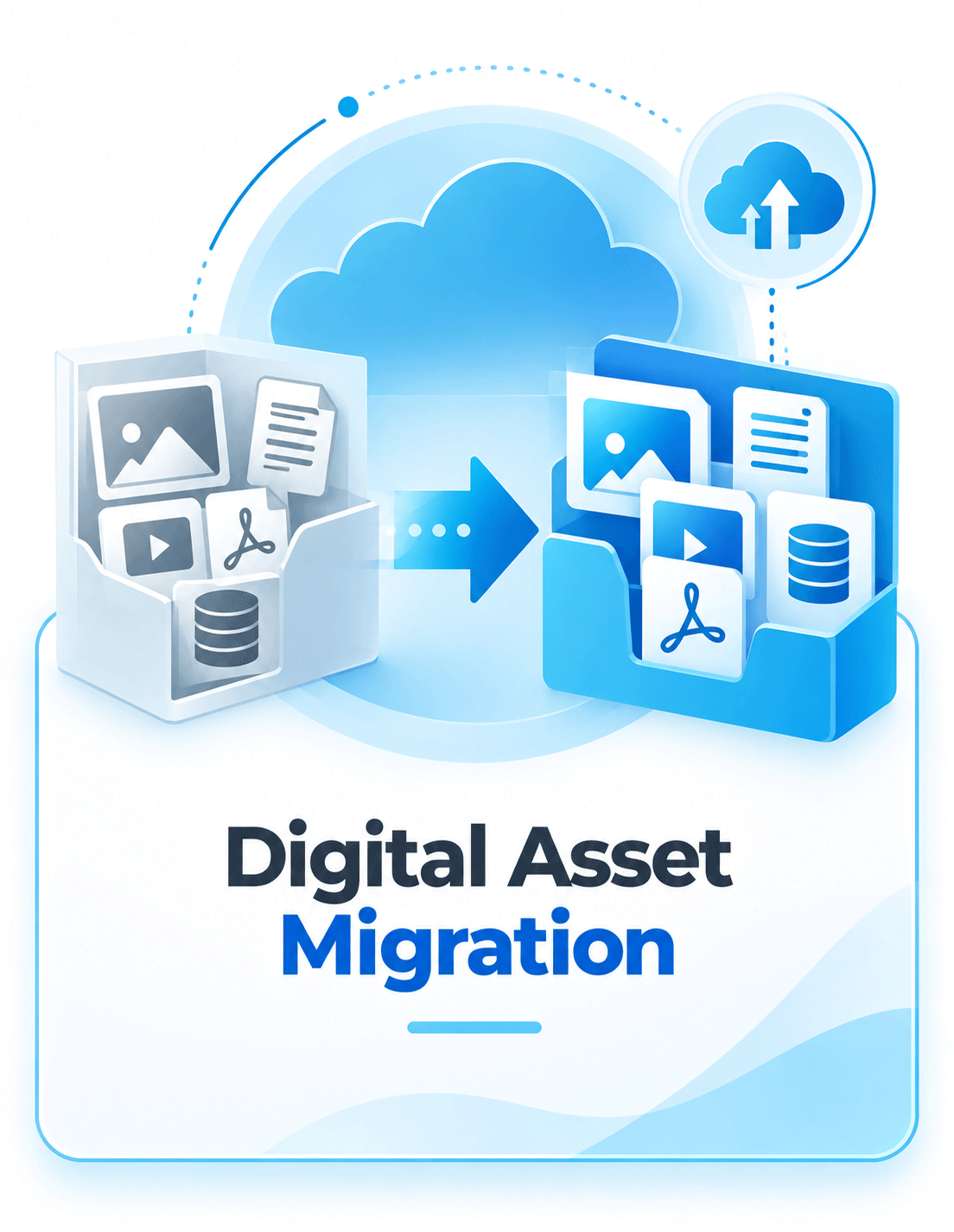
Digital Asset Migration
Product information frequently depends on images, videos, documents, certificates, manuals, and other digital content. We preserve the relationships between product records and their associated assets during migration.
- Product images
- Lifestyle imagery
- Videos
- Technical datasheets
- User manuals
- Certificates
- Product drawings
- Marketing documents
- Product-to-asset relationships
- DAM metadata
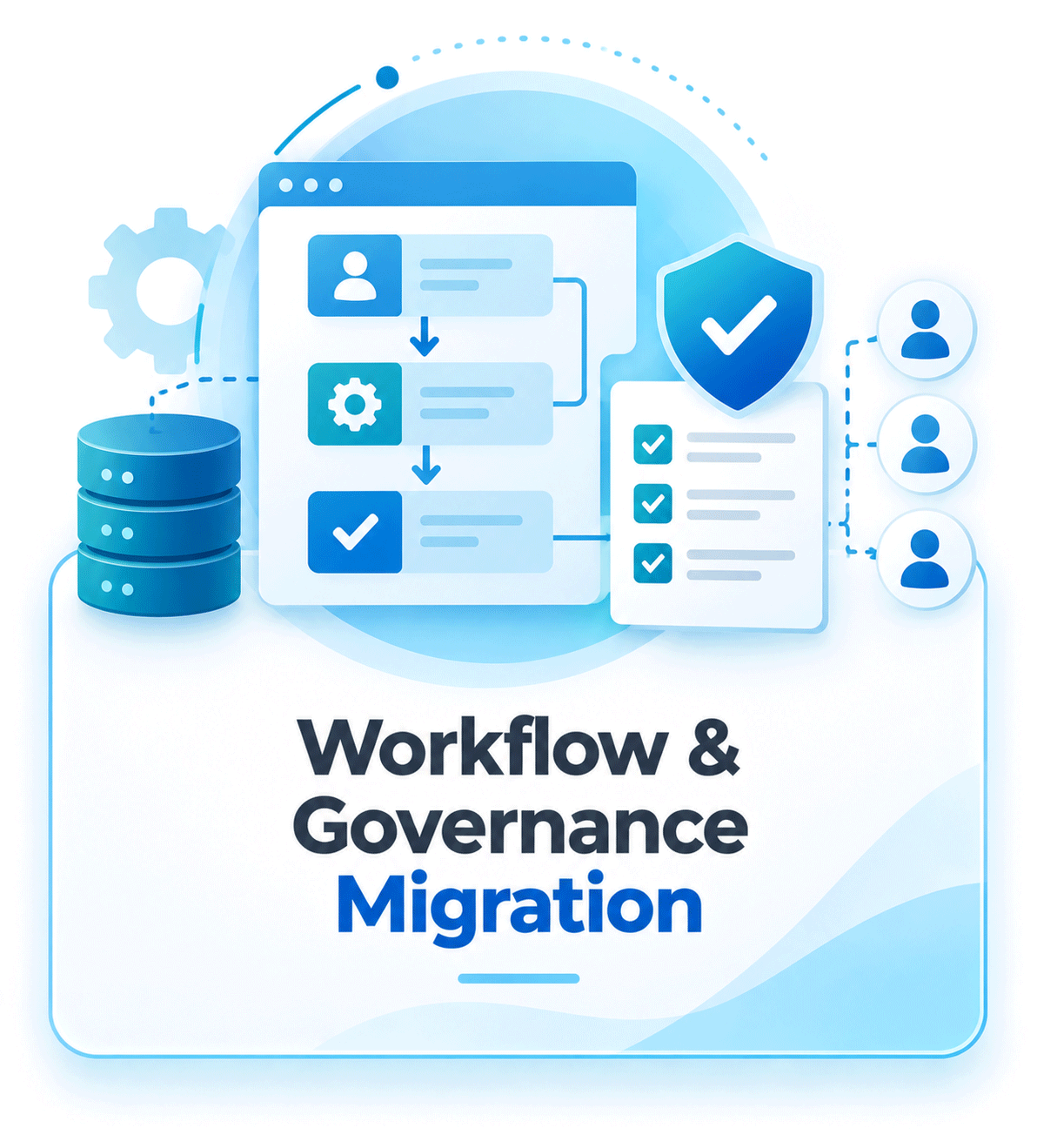
Workflow & Governance Migration
PIM migration should preserve the processes and controls that keep product information reliable. We migrate or redesign product enrichment, review, approval, validation, ownership, and governance workflows for the target environment.
- Product ownership
- User roles
- Permissions
- Approval workflows
- Enrichment workflows
- Validation rules
- Completeness rules
- Data-governance processes
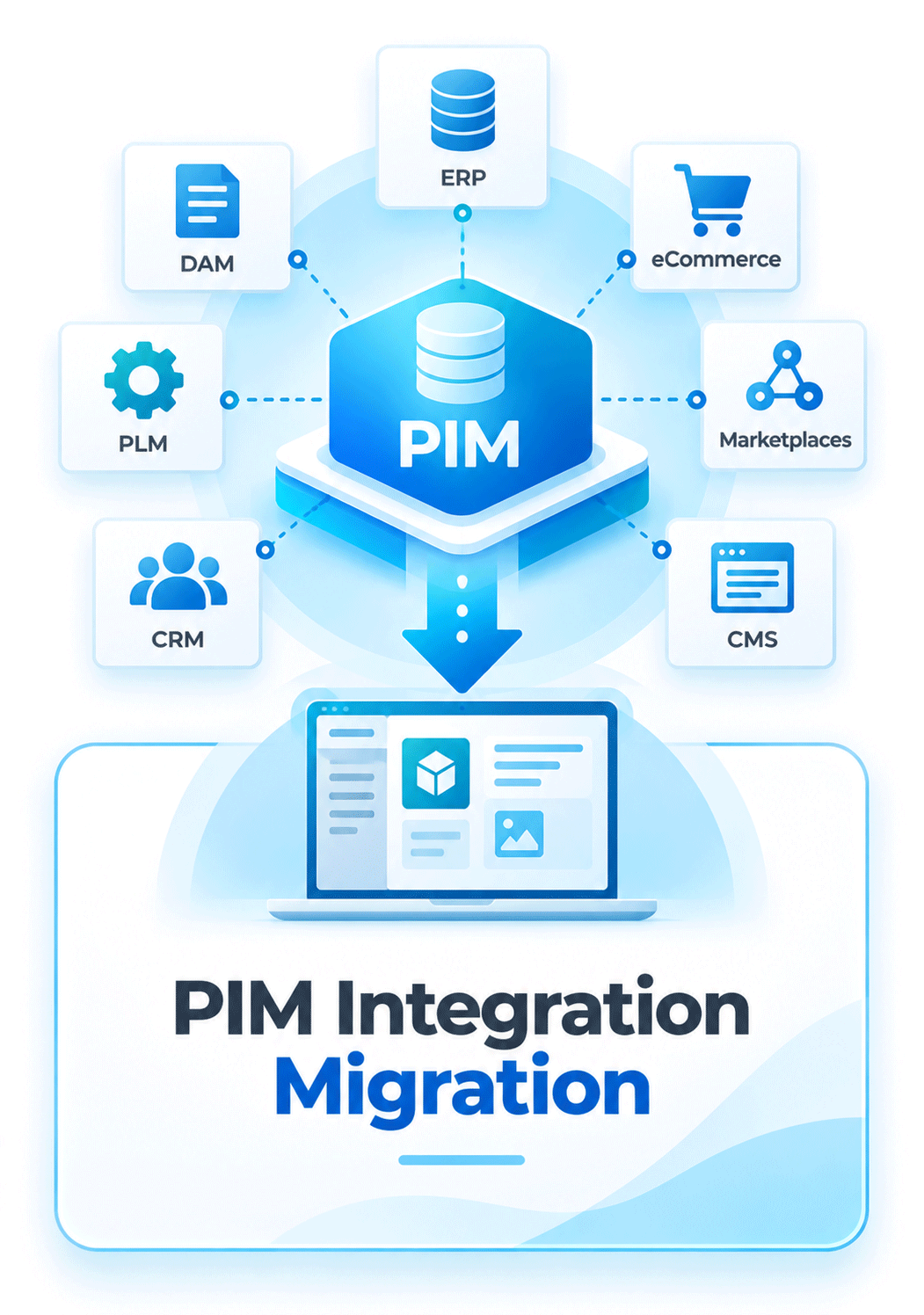
PIM Integration Migration
A PIM platform rarely operates in isolation. We rebuild, modernize, and validate integrations between the new PIM and upstream or downstream enterprise systems.
Integrations may include:
- ERP
- DAM
- MDM
- PLM
- eCommerce
- Marketplaces
- CMS
- CRM
- Supplier systems
- Middleware
- Data warehouses
- Custom APIs
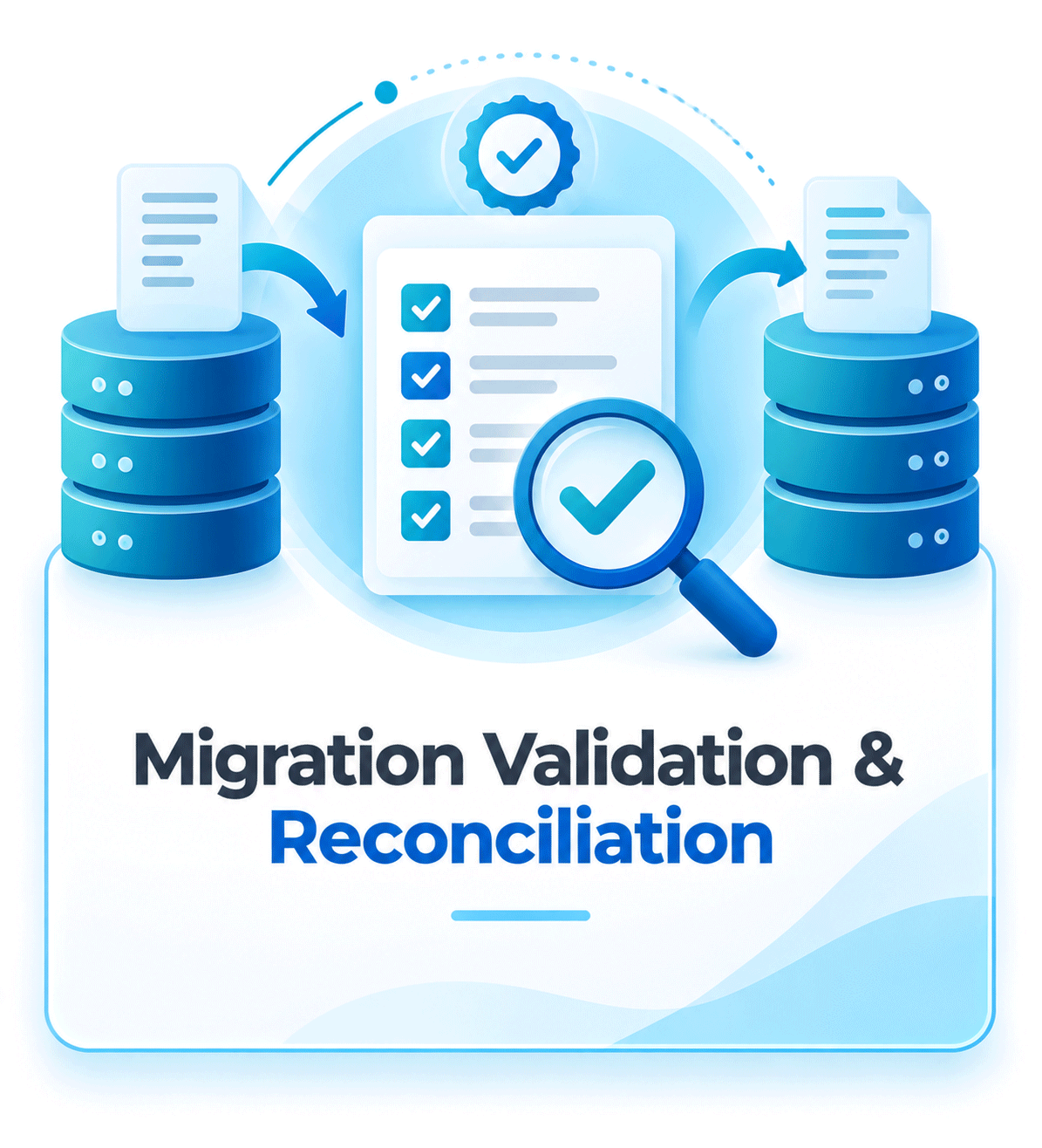
Migration Validation & Reconciliation
Every migration should be verified before users and downstream systems depend on the new environment. We perform structured validation and reconciliation to confirm that product records, attributes, relationships, assets, workflows, and integrations migrated correctly.
- Record-count reconciliation
- Field-level validation
- Product relationship checks
- Asset association validation
- Taxonomy validation
- Integration testing
- Channel-output testing
- User acceptance testing
PIM Migration Scenarios We Support
Different organizations migrate PIM for different reasons. Credencys supports a range of migration scenarios based on platform lifecycle, business growth, architecture modernization, and product-data complexity.

Our Approach to PIM Migration
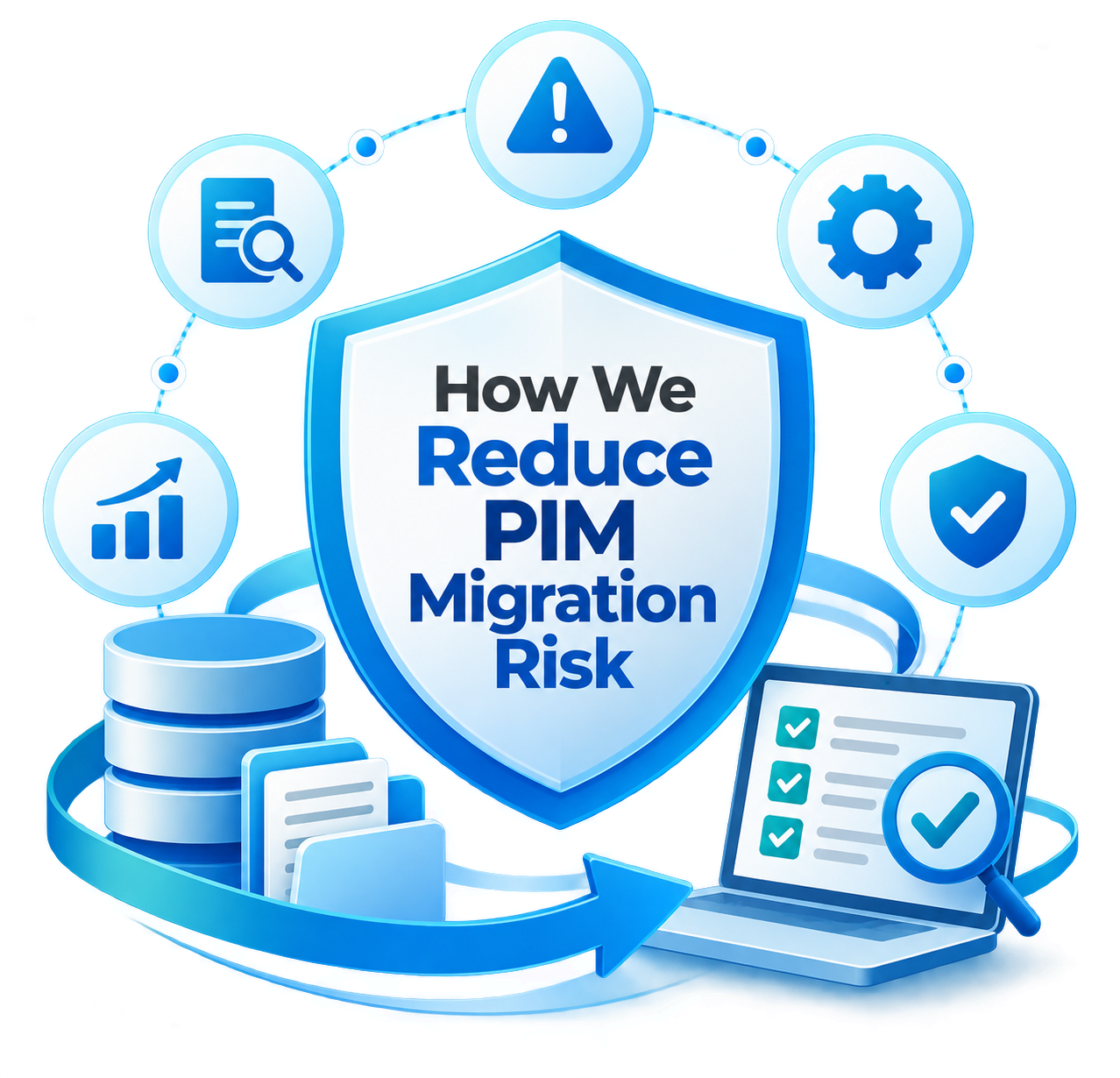
We follow a structured migration approach designed to reduce risk, improve data quality, and maintain continuity across business systems and channels.
Business Impact of PIM Migration
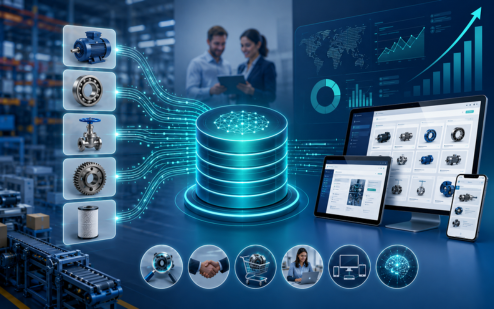
A successful PIM migration creates an opportunity to improve both technology and product-data operations.
Cleaner Product Data
Remove duplicate, obsolete, incomplete, and inconsistent product information before it becomes part of the new PIM environment.
Improved Data Quality
Introduce standardized attributes, controlled values, completeness rules, validation, and stronger product-data governance.
Reduced Legacy-System Dependency
Move product-data operations away from outdated systems, spreadsheets, custom databases, and manual processes.
Faster Product Operations
Simplify enrichment, approvals, data maintenance, and channel preparation through a modern PIM architecture.
Modernized Integrations
Replace fragile legacy integrations with more scalable APIs, middleware, and automated data flows.
Better Product Data Completeness
Track required information by product category, market, or channel and identify incomplete records earlier.
Improved Omnichannel Publishing
Create a stronger foundation for distributing governed product information across commerce, marketplaces, retailers, catalogs, and digital channels.
Scalable Foundation for AI & Automation
Structured and governed product information creates a more reliable foundation for automated enrichment, search, recommendations, copilots, and AI-driven product experiences.
Why Choose Credencys for PIM Migration?
PIM migration requires deep understanding of product data, enterprise architecture, integration dependencies, and operational processes. Credencys combines PIM expertise with data-management and integration capabilities to support migration from assessment through post-go-live stabilization.

Deep Product Data Expertise
We understand product models, attributes, taxonomies, variants, relationships, classifications, digital assets, and channel requirements.

End-to-End Migration Capability
Our teams support assessment, strategy, cleansing, transformation, migration, integration, testing, cutover, and stabilization.

Enterprise Integration Expertise
We consider ERP, DAM, PLM, MDM, commerce, marketplaces, APIs, and other enterprise dependencies as part of the migration, not as separate afterthoughts.

Data Quality Before Data Movement
We help organizations clean and standardize product information rather than simply transferring legacy data problems into a new PIM.

Business Continuity Focus
Migration planning includes phased execution, testing, validation, cutover planning, and post-go-live monitoring.

Post-Migration Optimization
After migration, we can help improve governance, enrichment, workflows, integrations, syndication, and product-data operations.
50+
Enterprise Clients
100%
Certified Consultants
15+
Years Experience
4.9/5
Client Satisfaction
Ready to Move Beyond Your Legacy PIM?
Migrate to a scalable product-data foundation without losing critical product information, relationships, digital assets, integrations, or business continuity.
Discuss Your PIM MigrationFrequently Asked Questions
PIM migration is the process of moving product information from an existing PIM, ERP, spreadsheet-based environment, custom database, or other legacy product-data system into a new product information management platform. It can include product records, attributes, taxonomies, variants, relationships, digital assets, workflows, users, integrations, and channel-specific information.
A company may consider PIM migration when its existing environment becomes difficult to scale, expensive to maintain, heavily customized, poorly integrated, unsupported, or unable to support changing product-data and commerce requirements. Migration may also be triggered by mergers, acquisitions, cloud modernization, platform consolidation, or a failed implementation.
PIM migration timelines depend on product volume, data quality, number of data sources, complexity of product relationships, integrations, asset volume, customization, and target-platform requirements. Simple migrations can be significantly shorter than enterprise migrations involving millions of records, multiple business units, complex integrations, and global channels.
A migration assessment should be completed before defining a reliable implementation timeline.
PIM migration cost depends on factors such as data volume, data quality, migration complexity, number of source systems, integrations, digital assets, product-model redesign, customization, testing, and cutover requirements. Organizations should evaluate the total migration scope rather than estimating cost based only on the number of SKUs.
Yes. PIM-to-PIM migration typically involves mapping the source platform’s product model, attributes, taxonomies, relationships, assets, and workflows to structures supported by the target PIM.
In many cases, the target data model should be redesigned rather than copied exactly from the legacy system.
Trusted by Best
Choosing Credencys means partnering with a team that’s deeply committed to unlocking the true value of your data. Here’s why industry leaders trust us:
Our Valued Clientele


Send us a Message
