


The Rise of AI in Pricing: How Businesses Can Maximize Profitability
Pricing plays a pivotal role in determining a business’s success, directly influencing profitability, market competitiveness, and customer satisfaction. Traditional pricing methods, often reliant on historical data and manual adjustments, can be inefficient in today’s rapidly changing market environments.
The advent of AI has revolutionized pricing strategies by enabling real-time data analysis and dynamic price optimization. AI-powered algorithms can identify patterns, predict demand fluctuations, and adjust prices accordingly, allowing businesses to remain competitive and maximize revenue.
Notably, companies that have integrated AI into their pricing strategies have experienced significant revenue growth and enhanced market positioning. In this article, we will explore the transformative role of AI in pricing, examining key strategies and real-world applications that demonstrate its impact on modern business practices.
The Role of AI in Pricing
AI is transforming pricing by leveraging machine learning, big data, and real-time analytics to make informed pricing decisions. Unlike traditional pricing methods that rely on static rules and historical data, AI continuously adapts to market conditions, consumer behavior, and competitive landscapes.
How AI Analyzes Vast Datasets for Price Optimization
AI-powered pricing systems process massive amounts of data from various sources, such as:
- Inventory levels: Adjusting prices based on stock availability.
- Market trends: Identifying seasonal patterns and demand shifts.
- Competitor pricing: Tracking real-time price changes in the industry.
- Customer behavior: Understanding purchasing patterns and willingness to pay.
- Macroeconomic factors: Considering inflation, exchange rates, and economic conditions.
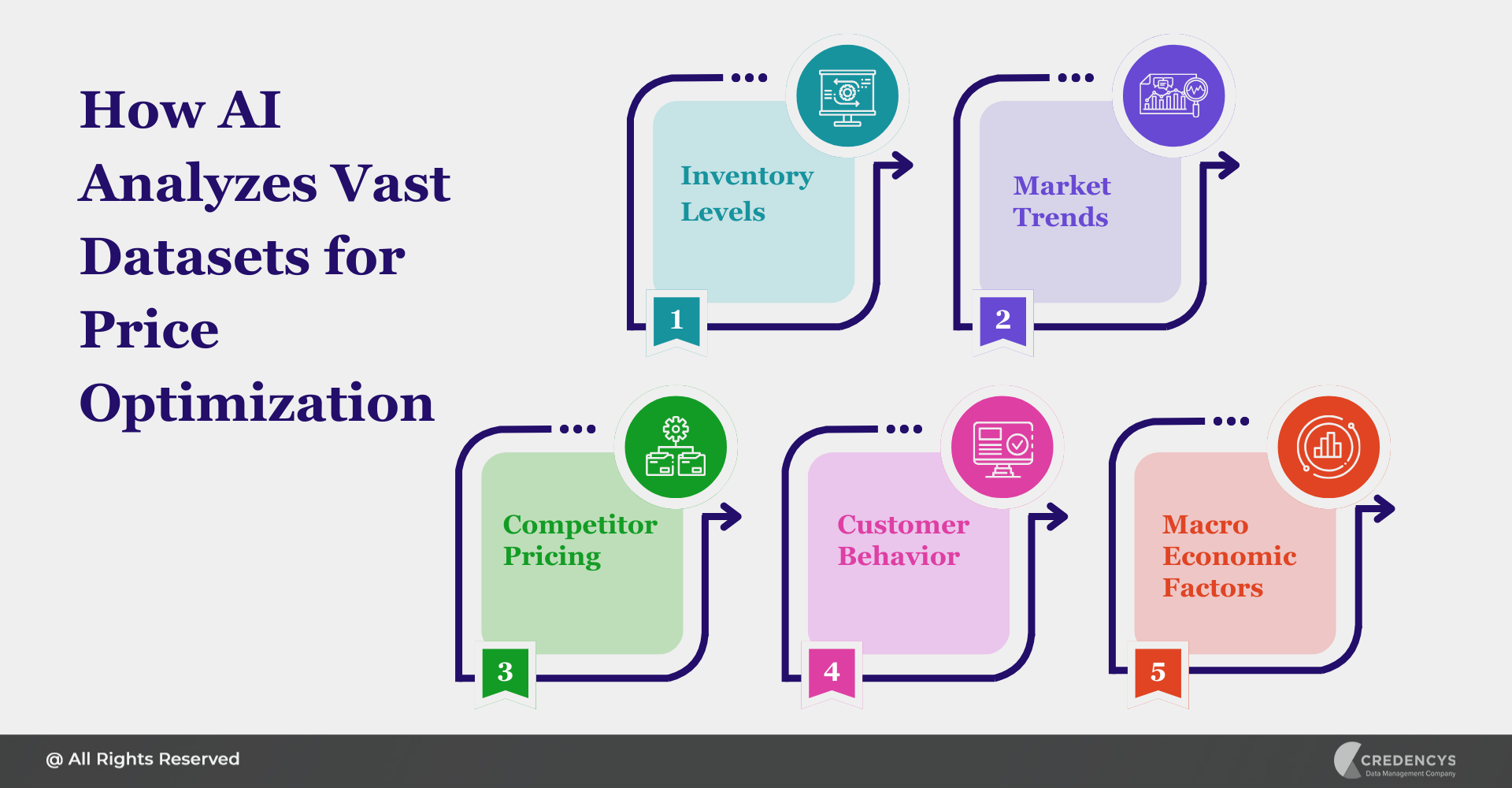
By analyzing these datasets, AI can determine the optimal price point that maximizes revenue while maintaining competitiveness.
Key Factors AI Considers in Pricing
AI pricing models consider several factors to optimize prices effectively:
- Demand Elasticity: How price changes impact customer demand.
- Competitor Pricing: Real-time adjustments based on market competition.
- Customer Segmentation: Offering personalized pricing based on purchasing history and demographics.
- Seasonality & Events: Adjusting prices based on holidays, sales events, and peak shopping seasons.
Machine Learning’s Role in Predicting Pricing Trends
Machine learning algorithms enhance pricing strategies by:
- Identifying pricing patterns that help predict future trends.
- Segmenting customers to personalize pricing for different audiences.
- Automating pricing decisions to respond quickly to market changes.
- Recommending optimal price points based on historical and real-time data.
By integrating AI into pricing strategies, businesses can move beyond traditional pricing models and implement dynamic, intelligent pricing that adapts to ever-changing market conditions.

Maximize your Pricing Efficiency with AI-driven Automation. Stay Competitive with Real-time Price Adjustments and Scalable Solutions
AI-Driven Pricing Strategies
Businesses can leverage AI to refine their pricing strategies, ensuring competitive pricing while maximizing revenue. Here are some of the most effective AI-powered pricing techniques:
| Fair and Transparent Pricing | Non-Discriminatory Pricing: AI models ensure fair pricing without bias, maintaining transparency and trust. |
| Clear Pricing Justifications: AI-powered explainable models provide reasons behind pricing decisions, enhancing credibility with customers. | |
| Automated Pricing Mechanisms | Scalability for Large Catalogs: AI-driven automation efficiently manages large-scale pricing updates across extensive product inventories. |
| Instant Price Updates: AI-powered systems ensure continuous price optimization based on real-time data, helping businesses stay agile. | |
| Smart Bundling & Promotions | AI-Powered Bundling: By identifying frequently bought-together products, AI suggests strategic bundling to enhance perceived value. |
| Optimized Discounts & Offers: AI analyzes past promotions to determine which discounting strategies lead to the best sales performance. | |
| Geographical Pricing | Localized Promotions: AI identifies underperforming regions and applies targeted promotional offers to drive sales. |
| Regional Pricing Adjustments: AI assesses market conditions, economic factors, and purchasing power in different locations to set appropriate prices. | |
| Personalized Pricing | Behavior-Responsive Discounts: AI studies real-time customer behavior to offer personalized deals, making pricing more relevant and attractive. |
| Segmented Pricing: Machine learning categorizes customers based on behavior, past purchases, and demographics, allowing for tailored pricing models. | |
| Inventory-Based Pricing | Optimized Pricing for Perishable Goods: AI ensures that perishable products sell before expiration by dynamically adjusting prices. |
| Stock-Sensitive Pricing: AI modifies prices based on supply levels, raising prices when stock is limited and offering discounts to clear excess inventory. | |
| Customer Lifetime Value Pricing | Loyalty-Driven Pricing: AI pricing models offer incentives to high-value customers to encourage repeat business. |
| Predicting Customer Value: AI evaluates how much revenue a customer is likely to generate over time and adjusts pricing to enhance retention. | |
| Seasonal and Time-Sensitive Pricing | Time-Based Pricing: Prices fluctuate depending on time-based trends, such as increasing on weekends or during peak shopping hours. |
| Seasonal Price Adjustments: AI predicts peak and low-demand periods, allowing businesses to modify pricing in advance for maximum profit. | |
| Dynamic Pricing | Competitor-Based Pricing: AI constantly tracks competitors’ pricing strategies and modifies prices accordingly to maintain a competitive position. |
| Demand-Driven Adjustments: AI examines past sales patterns, industry trends, and external factors to anticipate demand fluctuations. Prices rise when demand surges and drop during slower periods to encourage purchases. | |
| Elasticity-Based Pricing | Predictive Elasticity Models: AI assesses past data to understand how customers react to price changes and identifies the optimal pricing strategy. |
| Experimental Pricing (A/B Testing): Businesses can test multiple price points simultaneously, using AI insights to determine which pricing strategy yields the highest revenue. |
By adopting these AI-powered pricing strategies, businesses can optimize revenue, improve customer relationships, and stay competitive in an ever-changing market.
The Future of AI in Pricing
AI-driven pricing is a necessity for businesses looking to stay competitive in dynamic markets. By leveraging machine learning, real-time data analysis, and predictive modeling, AI enables businesses to optimize prices, maximize revenue, and enhance customer satisfaction.
As AI technology continues to evolve, its impact on pricing strategies will only deepen. Businesses that embrace AI-driven pricing will gain a significant competitive edge, driving sustainable growth and customer loyalty.
Unlock the Full Potential of AI-driven Pricing to Boost Revenue, Enhance Customer Satisfaction, and Stay Ahead of the Competition






Tags: