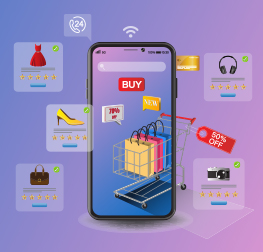
A Brief About Multichannel Listings Software & Its Essential Product Filtering Capabilities

Multi-channel software has the best functions to work as the hub of inventory, overseeing, and selling diverse online channels to align customer experience and also coordinate the data flow from the inventory management, analytics, and marketing. This system gives users the complete freedom to do admin of each sale channel all from the same dashboard.

What is Multichannel Listings Software?

Multi-channel listing software is designed to carry out product listings through automation and to set up product data descriptions in a centralized location. Also, it enables users to share product data to marketplaces through multiple channels.

Different types of individual channels can make use of the world-class listing software which computerizes the procedure of relisting, adding them to new platforms, and updating stock and values as per remaining inventory.

A good listing tool is designed to cover the complete product descriptions and needs of every channel. In addition, the tool allows its users to upload bulk images, effective management of cross-channel business rules, and streamline business workflow. Also, the tool offers a variety of assistance through filters and tags, and automation.

It assists its users to concentrate on your trade while overseeing catalog details of the multi-channel sales behind the scenes. It is successfully created to do lots of important things like put off selling out and backorders, computerize restocking and relisting products.

In addition, it delivers accurate product information consistently along with prices across multiple channels, saves a significant amount of time on inventory management, and introduces automating on order processing across channels.

Why Multichannel Listings Software is Important for Ecommerce?

The overall revenue of the business is increased when your business provides more than a few channels for shoppers to buy through. Online stores with an extra marketplace like eBay and Amazon give existing customers satisfied and new visitors to decide on and buy the best yet affordable products on time.

Modern retailers learn to expand their scope and find sales forums in different ways to optimize the multi-channel revenue. In such a situation, customers come from different channels and they are being driven to such channels from different sources. Social networking websites like Twitter and Facebook are the main influencers of purchasing decisions.

You can research and keep up-to-date with the multi-channel listing software at any time you like to find and use the best method to succeed in the competitive business sector.

The approach of every customer is also changing in our time. Everyone has likely visited so many channels and investigated a specific product they seek before they hand over payment info.

An effective multi-channel listing is very important as listing, selling, and managing everywhere your customer’s purchase. Customers are coming from everywhere. They are easily influenced by everyone. They expect the same shopping experience across all of your eCommerce channels.

To explore multichannel for marketers, don’t miss reading A Complete Guide to Multi-channel Attribution for Marketers.

Benefits of Using Multichannel Listings Software

All users of the multichannel listing software in our time get the most remarkable benefits and enhancements in their method to efficiently use this software. The following details explain to you the main benefits of implementing this software.

Sell more

Every user of this software can manage the maximum number of channels and expose their brand to more potential customers and chances to sell.

Increased efficiency

You can simplify the sales method with the multichannel listing application and save both money and time. You can scale your business devoid of experiencing the administrative burden.

Reduce human error

You can automate order management and fulfillment to reduce the chances of human error and enhance accuracy. You can rest at ease and make certain that your business workflows have some mistakes.

Focus on growth

You can focus on chances to grow your business instead of spending so much time as well as energy to manage everyday tasks associated with business development.

Customer satisfaction

This software helps to make certain timely and accurate order fulfillment, customer service, inventory, and other important things that lead to happy customers. Once you have decided to make your customers satisfied, you can prefer and use this multichannel listing software.

How To Select Right Multichannel Listings Software?

Investing in professional multichannel eCommerce software is the first step to developing the business in successful ways. You can research the important things about the successful method to select the suitable multichannel listing software right now.

The following guidelines about how to choose and invest in the right multichannel listing system give you confidence and encourage you to make a well-informed decision.

1. Structure and efficiency from the beginning

Professional multi-level listing software has comprehensive entry-level solutions and so many functions which make daily activities easy. It designs product data and channel management in simple and clear ways. It automatically controls the product ranges as per your specifications on the marketplaces.

2. Scalability for smooth growing

Very good tools are smoothly and easily scalable with increasing growth. These tools are scalable from an increasing number of orders to an increasing number of marketplaces and sales platforms.

3. Product data maintenance for central and channel-specific

Every marketplace has its own needs for product data. You must meet such requirements and ensure that your multichannel listing software has a module for optimizing the product data for all sales channels. You can use such a module to import, make, edit, and manage data.

4. Channel management –rule-based and automated

Rule-based and automated channel management is another important benefit for every user of the multichannel listing software. You can structure your growth in a structured and sustainable method. You will get remarkable benefits from a high degree of automation in the range control.

You can label your regulations for your range control. Users of the growth-oriented tools can control marketplaces and their online shops in successful ways.

5. Order management – automated and selective

The multichannel eCommerce system online has special elements to transfer product data to the complete sales channels and bring every order back to the system. Every tool in the multichannel listing category is different.

You must understand it and decide on and invest in the appropriate multichannel eCommerce tool. Intelligent order management is very important to get every order arrived in structured ways.

6. Stock updates – cross channel and virtual

An automatic stock update is very important to avoid overselling in multichannel trading especially across connected sales channels. If you do not use the multi-channel listing software, then you can run the risk of selling more than what you have in stock.

All shopping platforms such as Amazon and your customers are really sensitive when orders cannot be delivered. The virtual inventory management per channel guarantees optical control of offers and prevents over sales.

7. Billing model

It is too difficult to compare prices of the same category of products from various providers mainly because of the depth of function and software’s scope must be compared. Cost savings result in a small range of functions and a reduction in function depth.

You must consider what makes sense, especially in the long term. You have to think about which billing model creates sense for you with regard to the monthly fixed costs. Your costs maximize linearly with growth with increasing shopping cart value.

Most (6-8) Expected Product Filters on Your Multi-Channel Listings

Product filtering capability has a big impact on user experience and is available now with an excellent customer experience on demand. You can allow filter choice and let customers filter all the available products by product color, type, availability, and other options to find suitable products.

An effective filtering method increases the conversion rate by 26%. The following details reveal the most outstanding filters on multi-channel listings.

1. Price

Customers check the price tag of any product they wish to buy in the brick-and-mortar shop. The same thing applies online.

The cost of the product is a significant filter to look into as it helps a lot to assess whether you can afford such product at first before getting to invest in, you feel that the product is worth the cost attached to it, and make certain whether to get the best deal for the value of the product or not.

Details about the prices of all products give you an overview about how to decide on and buy the appropriate product on time. A price product filter is designed to offer every user various choices to select from.

2. Color

Color filtering is a method filtering type in many shopping platforms online to let customers see everywhere they shop. For example, an individual with an interest to buy a red t-shirt can land on the product listing and search for red color. A color filter is useful to find the red color and eliminate the unwanted colors from the product lists.

It assists its users to focus on finding the color he or she seeks. If there is no color filter in the product filtering list, then it is too difficult for new visitors and existing customers to find and access the color of products they search for.

3. Size

Customers have to prefer the suitable size regardless of what type of product customers seek. If they search for a brand-new pair of shoes, then such an item has to fit their feet. The size filter is very helpful to find and invest in a suitable product.

It is too difficult to deal with an inappropriate size of the product in any category. If any visitor to the shop online cannot find the appropriate size they need, then they lose their patience and look elsewhere.

4. Type

You simplify the path of every customer to find an appropriate product when you provide a product type filter option. You sell various types of bags like backpacks, duffel bags, bum bags, and other things along with the type filter to let visitors and customers immediately get to the type of product that matches their needs.

5. User ratings or reviews

Residents of many countries in recent years enjoy online shopping because they get to see what others have to say about the product they are really interested in. You can use the user ratings or reviews filters on your multichannel listings hereafter.

This approach helps visitors to the shop to assess whether the product offers any good value and whether it matches the details provided on a product listing.

6. Thematic filters

Thematic filters are designed to fulfill users’ desires for thematic browsing. The style filter is used to let users see only a “thematic subset” of products within the product category. The overall 20% of general eCommerce websites nowadays do not have such a filter despite selling products with obvious thematic elements.

You can choose and apply filters to enhance the overall convenience of every visitor to your shop online to decide on and invest in the best suitable products with no complexity and need to compromise anything.

How does PIM Enhances Product Listing Capabilities of Multichannel Listings Software?

Every customer has strong preferences when it comes to the overall products and decides to choose to buy what they like.

This is exactly what online shopping is all about. You have to know what happens when you fail to assist your customers with the basic product filters. You have to keep in mind that your customers will leave in such a situation and you will lose sales.

Business people with an expectation to avoid losing more sales must enhance their product taxonomy and organization. They can do it on their web store and still have other reliable sales channels to successfully and professionally take care of. You can begin a step to simplify life by investing in the best product information management system which is designed to handle multichannel management.

This is worthwhile to invest in and use the next-generation product information management tool to organize product information in a single place and let you automate the product filters inclusion to feed content into multichannel listings.

Bottom Line

All users of the multichannel listing software get 100% satisfaction and interest to recommend it to others. They get the most outstanding benefits from properly using the effective multichannel listing system to consolidate inventory across so many channels for efficient management and automate order processing across such channels without difficulty and delay.


How Does PIM Help Ecommerce Stores in Creating Effective Cross-Selling Recommendations?

Cross-selling becomes more common among online shopping portals; you may have encountered this many times while shopping in the virtual world. However, you may not be aware this is cross-selling. Apart from just increasing profit margin for shop owners, cross-selling creates awareness to customers about the presence of the products which are relevant to the items they added on carts.

Let’s discuss more on cross-selling products and what shop owners can get through cross-selling optimization. Also, how modern PIM solutions assist store owners to achieve the best cross-selling experience.

What is Cross-Selling?

In the online shopping world, Cross-selling is an effective sales tactic used by brands or online stores to increase their sales profit margin by suggesting additional products which are relevant to the items which customers intended to buy.

Cross-selling is a successful sale tactic but stores need to be more careful on driving good strategy on suggesting cross-selling products. In general, cross-selling seems to be more effective on attempting checkout pages, and success pages of carting items. Also, store owners must remember too much-promoting products will create frustration among visitors.

Benefits of Cross-selling in Ecommerce

For business people who look to generate more revenue without spending a penny on their eCommerce business can use cross-selling optimization Cross-selling is the best option to execute the product recommendation which is relevant to the items sought by the consumers. Cross-selling product recommendations yield maximum benefits to the store owners.

Here are the lists of a few attractive benefits stores can avail of through cross-selling

1. Helps to Connect With Customers

Best cross-selling optimization enables customers that brands or stores have understood their personalities well. For example, if a customer buys a pair of shoes, stores can show them matching socks along with matching jeans. This will create more connections and enable more sales.

2. Builds Customer Loyalty

Cross-selling creates more connections between customers and stores; they would likely stick with the store and keep shopping in the future. This will build loyalty among customers and even turn customers into brand ambassadors.

3. Increases Revenues

Once customers start visiting again and again because of a good experience, this will eventually increase sales and revenues for the store. In addition, best cross-selling optimization will motivate customers to purchase relevant products which they do not look to buy initially; this will increase the profit margin of a single sale for the store.

Examples & Best Practice of Ecommerce Cross-selling

As discussed above, cross-selling is a powerful weapon for encouraging customers to shop more from the store than the products they look for. Modern eCommerce stores can utilize cross-selling in many ways.

Store managers can use them, while customers are looking for their needed products, when customers added their desired products in carts, during the checkout process, and even cross-selling can be introduced post-purchase too.

Here in this section, we illustrated best practices to follow for introducing cross-selling in eCommerce along with perfect examples.

1. Recommending Relevant Products

Utilizing the power of data is the most significant advantage of cross-selling. Cross-selling ensures recommending the products which are relevant to the data which are gathered from customers or the products.

Once customers find it relevant to the products which they are looking for, there is a high chance of buying along with the products they are looking for. Also, shop owners can recommend products that are relevant to their previous purchases too.

Example: The UK-based online grocery selling & logistics business Ocado Group perfectly uses this cross-selling recommendation. They recommend products that are relevant to the previous purchase made by the specific customers during the order checkout. This will be useful for buyers if they have forgotten something they usually purchase.

2. Recommend Cross-selling Items without Interrupting a Purchase

Often the cross-selling recommendation products are added at the point where customers have already decided what to purchase. So, while displaying cross-selling recommendations you may have the risk of interrupting the shopping process of the customers.

To avoid such risk, make sure you are showing cross-selling recommendations with the option of adding to the cart without breaking the checkout process.

Example: While purchasing laptops or any tech gadgets from Laptops Direct, they display a pop-up window showcasing all products added to the cart along with a cross-selling recommendation. This will create no interruption; also buyers can easily add recommended products to the carts from that pop-up window itself.

3. Cross-selling through Products Bundling

Product bundling is one of the most successful tactics for cross-selling products. Through product bundling, stores can offer extra offers/discounts for buying relevant products together with the ease of adding them to the carts.

In this way, store owners can sell a bunch of relevant products to the customers easily. However, this cross-selling product through building products will force owners to offer extra discounts to the buyers.

Example: The British-based electrical retailer Currys uses this product bundling way of cross-selling products. If a buyer buys a camera means, on cross-selling recommendation buyers would get extra discounts for adding film rolls. In this way, both store owners and buyers benefit.

4. Cross-selling through Free-shipping Threshold

The free shipping threshold is a great way to encourage customers to shop more. If customers are close to getting a free shipping threshold, then offering a relevant cross-selling recommendation for availing of free shipping would be a great way to push buyers to add more products.

This method of using cross-selling recommendations too helps both store owners and shoppers.

Example: The UK-based online luxury & designer handbag seller MyBag uses this method with perfection. Almost every online shopping now started to introduce this method of cross-selling products through recommendations & by offering free shipping benefits.

5. Recommend Cross-selling Products as Key points through Customer Journey

Cross-selling recommendation plays a key role when customers are pretty sure about what they are going to purchase from your online store. However, recommending cross-selling products on the product detail pages won’t produce the desired results.

So, experts suggest enlisting the cross-selling products as key points at the checkout page or in the pop-up window which displays the confirmation message of items added to the cart.

Example: Almost every online shopping portal uses this, and displays their cross-selling products on their pop-up window showing item added to carts successfully page and also at the checkout page.

6. Use High-Margin Products as Cross-selling Recommendation

This method of cross-selling recommendation will help store owners to get a high margin over the products on which they don’t get a high margin. Also, stores or brands can utilize this option to offer mega discount offers during special occasions.

Example: Many online shopping portals use this method of cross-selling recommendation for offering mega discount offers during the festival. As we are on the verge of celebrating Christmas and New year, almost every online shop would make use of this.

7. Post Purchase Cross-selling Options

Cross-selling will trigger customers to shop more even after the post-purchase. Yes! By enlisting the recommended products and relevant products based on the previous shopping of specific customers will encourage them involved in the shopping process.

This can be done by sending post-purchase emails or SMS to the individual customers by enlisting all those recommended products with discounts and offers.

Example: The international home décor company Crate & Barrel uses this post-purchase cross-selling method to attract their customers to shop again by sending relevant cross-selling products through post-purchase emails.

8. Avoid Overdo Cross-selling

Finally, this is the most important thing to be remembered by store owners. Cross-selling may find as useful for buyers and also for store owners to sell more products. However, overdoing cross-selling recommendations will irritate customers and even force them to boycott the shopping process by ignoring carted products.

To avoid such cart abandoning activity by customers, each retails should determine the exact threshold point of cross-selling recommendation. Proper analysis of the data will help to find out whether cross-selling really deters your customers or it is not effective as expected.

Example: Petshop – An UK-based online shop for buying pet accessories uses cross-selling wrongly. You can find lengthy cross-selling recommendations during the checkout process on this site. The recommendation list goes beyond the 6 to 8 steps; this irritates buyers and ignores the cross-selling recommendation.

How PIM Helps Brands on Cross-selling Optimization

As modern technology has changed retailers’ business in an impeccable and also the behavior of new generation customers, business owners and retailers need to be more cautious & innovative to be successful.

Cross-selling is an important asset for eCommerce businesses, if it is done correctly businesses involved in eCommerce activity will yield high benefits. Introducing Cross-selling recommendations in online stores will provide maximum value to customers and also increase the business sales value without causing any extra cost, especially in marketing channels.

The demands of modern customers not only focused on product visibility assortments but also the quality of product content/information/details. To tackle those challenges and to manage, organize and share the product content in digital across multiple channels, eCommerce businesses require this automatic tool PIM (Product Information Management).

Recent study reports point out that online businesses utilizing the power of cross-selling witnesses about 44% of the increase in their sales. This section will illustrate how the quality content distributed by the Product Information Management system helps to improve customer experience and also supports businesses in offering cross-selling recommendations.

1. Connection between CX (Customer Experience), Product Content & Cross-Selling

The Customer Experience (CX) points to the connection between potential buyers and the brands or stores. In today’s digital world, the eCommerce experience faced by the customers lays the strong foundation for the success of the particular business/brands/stores. Once customers are satisfied enough on purchasing their desired products from a store, they start rating that store and it builds loyalty among them.

Experts suggest a loyal customer generates around 300% of income for a brand/store. However, winning customer loyalty isn’t that much easy, it is directly related to the quality of product content that brands place before them. The accuracy and completeness of the product content/details/information trigger customers to make a positive buying decision.

By knowing the importance of delivering quality content to customers/visitors, several top companies & brands prefer to cut their marketing/advertising costs and invest more in creating more quality & meaningful content. Having more accurate, meaningful, and up-to-date product content is the key to cross-selling success.

So, to achieve this success brands should take initiatives to move away from their traditional practices and utilize the power of modern PIM tools.

Read How PIM Solution Improves Customer Experiences (CX) Of Your Business?, to get insights into how PIM creates the best CX for your target audience.

2. PIM – The Most Comprehensive Management Tool

In-depth, PIM solutions act as a centralized repository for delivering all contents which customers face in the market. A PIM system apart from enriching the product data encompasses products and enables product syndication.

In today’s business world, brands are facing the below-mentioned problems in managing their product content.

  • Data Integration from various sources
  • Analyzing content effectiveness
  • Creation of more compelling content
  • Distributing or publishing data on various customer touchpoints

PIM helps brands to distribute the product content to multiple sources, sales channels, and various touchpoints from a centralized single location automatically. This enables brands to handle a large volume of product content with more efficiency.

To learn more about product information management, don’t miss to read What is PIM? – An Ultimate Guide for Product Information Management Services.

Also, to achieve comprehensive Customer Experience (CX) & better cross-selling, brands should be able to do these aspects

  • Frequent update to meet the current requirements
  • Optimal integration of product & analytics data
  • Optimal environment to manage and effective handling of product data
  • Performance analysis & performing data optimization according to the recommendation/expectation
  • Integrating & publishing various format content in multiple channels

All those above-mentioned aspects are handled effectively by the PIM system and it solves all those challenges faced by a brand or business involved in the eCommerce business.

Bottom Line

Businesses that invest in PIM solutions will be able to solve all those accumulated problems of the modern eCommerce world. PIM system acts like a prolific content management system and helps brands to improve business profitability by retaining customers and driving more sales.

In conclusion, the PIM system provides a great opportunity for brands or eCommerce businesses to achieve development through accurate data management and effective cross-selling management.

Role of DAM System in Future of Digital Marketing

Today’s marketing process goes beyond just promoting products and services in the virtual world. These days’ digital marketers prefer to place relevant ads to attract the target audience rather than just bombarding with large volume. Moreover, the advent of an ROI tracking tool has forced marketers to reevaluate their marketing tactics based on the business conversion rate.

As the digital world keeps evolving to meet the expectations of modern consumers, digital marketers need to adhere to those changes and stick with the latest trends.

Digital Marketing Trends 2022 & beyond

The digital world keeps evolving frequently, every year we are experiencing new and exciting developments in digital marketing. All those new developments revolve around the way of communicating with the target audience.

Here in this section, we have broken down the key digital marketing trends and provided the list that will give a competitive edge in 2022 and beyond.

1. Short Videos

It doesn’t matter whether it’s a product description or offering DIY videos, providing short video posts for the audience will drive more attention. Users and viewers will show more interest in viewing the short videos completely. In addition, short videos will create more engagement between the products & users.

Apart from that, brands can allow users to post short videos explaining their experience over their purchase. This will create more authenticity on user reviews; moreover, since it is a short video everyone can post a quick video.

2. Voice Search Optimization

Based on the recent survey report, over 50% of youngsters prefer voice-based search on their smartphones. This clearly indicates the popularity of voice search among the modern generation and this potential growth in the near future.

About 20% of modern houses have smart speakers for assisting their voice search for receiving personalized and attractive results. World’s leading search engine giant Google claims they improved their voice-based search results efficiency to 95%. With such efficiency and accuracy, it is expected around 50% of online shopping would happen through voice search.

3. Focus On Privacy, Transparency, and Trust Building

In recent times, consumers start feeling suspicious over the content as they are targeted through digital advertising. This caused experts in the digital marketing world to focus a lot on privacy restrictions and seek to alternate methods to track users’ behavior.

We are on the verge of developing a new era, where trust & transparency booming between the company and consumers. Companies should focus on explaining to consumers why they are collecting their data and how they are going to use it. Also, they should provide an option to consumers to opt-out of the program at any point.

4. Make Use of Micro-Influencer Marketing

Influencer marketing has already shown a positive response among enterprises and companies in recent years. Through the world’s leading platforms like Instagram and Youtube, top influencers attract more than a million followers and manage to earn 6-figure income from their deals & brands.

However, marketers still find infancy in influencer marketing as fake followers’ problem raises a lot. To avoid such worries, marketers need to focus and invest more in ‘micro-influencers’ who may not have a sheer number of followers but have a personal relationship with each of their individual followers.

5. Conversational Marketing & Quality Interaction

Marketing through conversation and interaction is nothing new and brands have been involved with this process over the years. However, introducing this conversational and interaction marketing aspect in tech platforms like social media, AI-powered chatbots, and so among the consumers will cause significant changes in business ROI.

As consumers show more interest in doing conversation and interaction with brands on the digital platform this creates an opportunity for brands to understand the behaviors and expectations of their consumers.

6. Consider Introducing NFTs & Crypto Currencies In Social Media Ecommerce

Though we are not sure whether global countries will accept cryptocurrencies, yet the rise of cryptocurrencies is nearly impossible to predict. If you look in general, it may not sound like a digital marketing trend.

We need to look much deeper. Leading social media platforms like Twitter are not taking initiatives on implementing cryptocurrency payment and display tools with in-app NFT purchases.

So stop being a passive thinker and start focusing on NFTs & Crypto on selling products through social media in the near future.

7. AI in Digital Marketing

Artificial Intelligence (AI) has become a prominent member of the list of digital marketing trends for the past few years. AI solution brings more intuitive reporting and introduces automation in the business operations including marketing. General marketing tasks like monitoring SEO, site traffic, and organic reach operations are automated through AI solutions.

Apart from that, AI helps business leaders and marketers to predict the customer’s next move and to offer the right services which they are looking for. By doing so, you are able to improve the ROI of your business by raising your business conversion rate.

To explore the capabilities of Artificial Intelligence (AI), don’t miss to read How AI & Automation Based Enrichment Of Product Data Enhance The Customer Experience Level?

8. Content Segmentation

Well, we can’t ignore the power of content segmentation. Segmentation has been sticking with digital marketing for several years. Many companies prefer segmenting their consumers to provide personalized service.

Apart from introducing opt-in & opt-out options for marketing strategies to consumers, brands should give importance to creating segmentation on email content with more details with the personalized data.

9. Interactive Storytelling With Immersive Marketing

Interactive storytelling by the brands will enable consumers to pick products of their own interest. Also, it allows consumers to select the appropriate channels and content types which they like to engage with the brands.

Brands should focus on providing immersive storytelling aspects like adding audio and videos. This will create more engagement and trigger consumers to share the stories with other communities. This is how brands can integrate physical life with digital experience for better promotion.

10. OmniChannel Customer Experience

Interactive storytelling with immersive marketing offers significant benefits to the brand, but in reality, brands are looking for a relatable customer experience to retain their existing customers and to beat the rising market competition.

Having a cohesive omnichannel marketing strategy will offer a consistent shopping experience to consumers. Once target audiences start witnessing a better shopping experience with your brand, they will keep visiting back to shop more no matter where they are and what they are looking for.

In simple words, omnichannel brings the in-store shopping experience to the consumers while they are doing online shopping with brands.

How DAM System Empowers Omnichannel Marketing?

Every piece of content used for digital marketing is considered a digital asset for a company/brand. Creating extraordinary digital assets for a brand requires a lot of determination, talent, and time.

The content supply chain is the key part of Omnichannel Marketing & sales. To excel in the content supply chain you need to concentrate on 3 core parts: creating engaging content, enriching stored content, and finally timely distribution of optimized accurate content.

The Digital Asset Management (DAM) solution helps marketers to excel in those three core parts, let’s take a look at how it is done.

Content Creation

Many small and large enterprises prefer to create new content to get rid of the hassles like creating faulty, poor-quality, and non-compliant content. However, with the presence of DAM solutions, brands can collect data relevant to products across multiple systems.

Also, the DAM solution allows you to carry out content editions with a properly structured workflow. The structured overflow gives you a sound overview of the versions of content change and seeks approval for changes.

Content Management

Managing organized content would be a daunting task for many brands because it requires the right people to handle it with perfection. The DAM system empowers brands to give access permission to the right people over the stored product data. Also, the easily searchable feature enables users to store content with meta-tags making it easy to find from the repository in the future.

Content Distribution

As the name suggests, it is about distributing or sharing the stored and organized content or product data among the internal or external systems of the brand’s entity.

The power of automation in the DAM solution makes content distribution a fast and seamless process. The proper content distribution through various channels indicates the streamlined business process and leads to business/brand growth.

By providing such remarkable changes in those 3 core parts, the digital asset management solution empowers the Omnichannel marketing and sales of a brand.

DAM System In The Complexities of Digital Marketing

Every day, digital marketing keeps getting more complicated and we can’t ignore the fact. Right from the digital avenues, the digital content creating team faces a lot of difficulties curating and maintaining high-quality content for creating engagement between customers and brands.

Also, they are in need of accurate and quick content to create attractive ads and organic posts on social media platforms to gain the attention of the potential audience.

When talking about the complexities of digital marketing, you need to sum up all those parts in it. Here we are mentioning images, videos, documents, logo files, audio files, and other relevant product details as the digital assets of a brand or company. When compared with the olden days, the modern digital marketing world faces a bit more complexity as augmented reality (AR) and virtual reality (VR) join hands in the content enrichment process.

To handle all those complexes, digital asset management (DAM) becomes a distinct and important element for digital marketers. The centralized platform of the DAM solution for storing product information allows experts to make use of those digital assets wisely and reuse them when required for the completion of the project. The DAM system acts as a personal assistant to marketers to keep track of all those digital assets with perfection.

Tips For Marketers To Be Prepared For The Future of Digital Marketing

In today’s digital world, changes and evolution are inevitable. The evolution in digital transformation is a growth curve having curves only in the upward direction. As a marketer, you need to be well-prepared for facing changes & evolution in the digital age.

This section illustrates how digital marketers can prepare themselves to face the future of digital marketing.

Be Prepare for Wearable Technology

Wearable tech gadgets starts getting more attention among the new generation of youngsters. Gadgets like smartwatches and other connected devices will give more opportunities for marketers to engage with consumers apart from other digital channels. Digital marketers need to be more prepared to access these new customer touchpoints to beat the rising competition.

Mixing Advertising & Marketing With Perfection

In general, advertising is about creating communication with the unknown audience and marketing is to communicate with the target audience through known channels. Now, think about what would happen if you mix advertising and marketing through the available advanced technology.

This will create more opportunities for marketers to know more about the consumer and make better engagement in the way they know your brand well.

Be Ready To Move To Hybrid Cloud Technology

Marketers need to be aware of the benefits of cloud technology. As the hybrid cloud would be the future, marketers need to utilize on-premise tools for performing data process techniques for moving relevant smaller portions of data to the cloud.

Focus More On Mobile Technology

Mobile technology has overtaken web technology in recent times. It illustrates the importance of data wealth to marketers. Marketers need to be aware of handling and adopting the right set of technology to create more engagement with the customer’s mobile device.

Stick To Email Marketing With Customer Intelligence

Many marketers think email marketing is dead. But in reality, it is far from dead and still effective marketing campaigns through emails offer substantial growth. By mixing analytical customer intelligence with it, marketers can provide a seamless and more relevant shopping experience to their potential consumers.

Bottom Line

We are in the digital world, where numerous digital interactions happen between brands and consumers every day. Having a proper DAM facility has become necessary for brands to tailor those conversations for delivering a good experience to consumers. For digital marketers, a DAM system plays a key role for them to march towards their marketing success.

Omnichannel eCommerce: The Secret Mantra For Your Success In eCommerce Business

Any type of business uses a different approach for their sales and distribution for enhancing their business. For a product-based industry, it is important to provide all the essential product details to all the members involved in the product supply chain across the different channels.

An eCommerce sales approach using multiple channels allows in giving unified experience to all the customers across various channels. It is important to understand the customers, their shopping trends, establish brand position, and create a consistent experience across multiple platforms.

What is Omnichannel eCommerce? Why is it so important?

The omnichannel includes various sales channels including the physical and the digital storefronts. It allows in creating a unified and seamless branding experience for the customers on different platforms. Omnichannel networking allows the customers to move freely from one channel to the other with ease for a better and improved shopping experience. It allows for better interaction with the customers for the improved buying experience and building customer relationships and brand loyalty.

Using different channels for sales does not make it an omnichannel. Spreading the brand across channels along by connecting those experiences makes it an omnichannel experience. The interaction between various channels builds an influence on one another; it helps in creating the omnichannel experience. Creating a coherent journey during the sales of the product across the different channels helps in providing an efficient omnichannel experience.

Importance of omnichannel eCommerce

The omnichannel approach provides the shopping experience to the customers wherein it understands them and provides them the products based on their needs and requirements. The omnichannel approach allows in understanding the expectations that the customers have from the enterprise, thus allowing them to build the commercial strategy to fulfill the needs.

Omnichannel eCommerce allows in identifying cross-channel shopping behaviors and designs seamless shopping experiences. It also leads to a better understanding of the customers and enhances business and customer loyalty.

Benefits of Omnichannel eCommerce

The omnichannel approach allows in marketing the product through the different retail channels like online, on-site, social media, mobile technology, various applications, etc., and integrating these channels to provide a better experience.

Integrated communication and analytics

The different channels used for the sales and promotion of the product uses different streams of information to understand the needs of their customers. The analytics allows in understanding the capabilities, quantification, and communication reviews with the customers.

The omnichannel approach allows in interacting with the customer data from the cross-references and generating data for customers across the different channels.

Meeting customers

The omnichannel approach provides the customer-centered viewpoint to all the retail businesses and an opportunity for managing the customer relationship across different channels. It provides interaction with customers on all the platforms, giving quality services, preventing loss of information, providing quality rewards to customers when they shop.

Obtaining data from each transaction

Omnichannel eCommerce allows tracking each customer on the different channels for the individual transactions. These transactions have a great potential for managing the business systems.

Target specific audiences

Having the customer and transaction analytics data in place, allows the marketing and the retail team to focus on the specific targeted markets. The customers that prefer purchasing generic products can be provided the coupons or rewards for purchasing the branded products. This gives the customers a chance to try a better product with a higher profit margin

Integrate the business

The omnichannel approach enables customer services, merchandising, sales, inventory, enterprise resource planning, etc. It allows the working of all the parts of the business together to provide the best and highest quality of products and services to their customers.

Channel communication management

For having a better shopping experience, the customer needs some detailed information about the product from the different channels. Customers can select the product from the online store and can expect to pick up the product from the store nearby them.

For this service, they need to have integrated communication. Providing customized service to their customers helps in building trust in the brand and also improves customer loyalty.

Experience and service focused shopping

The omnichannel approach in sales management is essential for having the service focussed shopping. It allows in providing the highest selection and services for any product of the customer requirements.

Improved customer experience

Omnichannel provides a seamless experience for the customers as it enables improved communication with the customers to understand their needs and demands.

As there are increased numbers of touchpoints for better shopping, seamless integration is very essential. Interaction with the customers to understand them better and provide the best service allows the customers to purchase with confidence in the product.

Increased sales and traffic

The omnichannel shopping experience allows the customers to look out for the products of their choice on the different channels and make their decision for the purchase.

Having different channels for making the search available to the customers, the addition of each channel to the omnichannel eCommerce leads to shoppers spending more money on the products thus increasing the sales.

Enhanced customer loyalty

Once the customers get the best shopping experience for any product, they depend on the same channel or the brand for the other products. Once the customers gain confidence in the brand for the quality of the product and the services provided, they return to the business for more shopping and suggest their friends and relatives do shopping.

Omnichannel eCommerce enables business leaders to provide discount coupons, mid-sale campaigns, etc. to create customer engagement and to build customer loyalty.

Tips For Choosing Right Omnichannel eCommerce Strategy For Your Ecommerce Business

The omnichannel strategy used for enhancing the business depends on the nature of the business. It also depends on the type of channel engaged for the marketing of the product and the behavior of the target audiences.

1. Allow the brand personality to shine

Personal connection with the audiences enables in making them feel connected to. It is important for creating a unique personality that makes the business relatable and more human. If there is a growing competition for the product, it is important that the brand personality enables in setting the enterprise apart and ahead of the competitors.

2. Align the omnichannel business with a cause

Consumers tend to pay more for supporting the companies that are committed to the social values they share. Corporate social responsibility works well with the marketing strategy for a well-defined cause. It is very important to support any cause with sincerity. Today’s customers value authenticity and will immediately reject the brand if they consider it to be insincere.

For an enterprise, it is important to embrace the selected cause wholeheartedly. The content created should be around and related to the selected cause. This allows in building a community around the brand and can anchor the omnichannel marketing strategy.

3. Stay localized as possible

It is better to be local but in the case of having worldwide audiences, providing localized content becomes critical. The customers are more likely to be engaged with the products that target their location. The customers feel closer to the brand if it is local and they are more likely to support and trust the business.

It is important to understand customer-specific segmentation. This enables the enterprise to craft or personalize the content and provide a customized experience to the customers.

4. Optimize mobile site

Omnichannel marketing is driven by smartphone penetration as most of the customers prefer shopping on mobile. The window-shopping research stage is usually done on mobile phones while the final purchase is completed through laptops or desktops.

It is important for optimizing the mobile sites by having a responsive website that works well with the mobile device. A good mobile website provides the details in an uncluttered manner and is easy to navigate.

5. Take benefit of user-generated content

The user-generated content needs to be created based on the details provided by the customers who have purchased and used the product. These reviews can be collected in the form of feedback on the sales page.

6. Make use of promos and discounts

These techniques like promos and discounts are old-fashioned but work efficiently as a marketing strategy for attracting more customers. Providing coupons, free delivery, offers, etc. also enables keeping the customer engaged across various channels. The setting expiry date for the offers and discounts can be used for communicating urgency.

7 Killing Omnichannel Marketing Strategies For Your Business Success

Different omnichannel marketing strategies that an enterprise needs to follow for having a successful business include:

1. Audit the existing marketing strategies

Before formulation or developing a new strategy for marketing, it is essential for auditing and understands the already existing strategy. This will help the enterprise to understand the positives and negatives in the existing strategy that they need to change and continue with. This will provide an insight into what worked for the business and what failed.

This will help in the efficient development of the new strategy and not repeat any previous mistakes made while making the strategy. The reviews provided by the customers can also act as a good point for development and improvement. It is suggested to monitor all the channels for getting insights for the improvement.

2. Analyze customer interaction with the brand

Understanding the customers is the main aim of the omnichannel marketing strategy. This understanding is not limited to the personal details of the customers like age, gender, and geographical location but also includes the online behavior of the customer towards the products and services, their product selections, the purchasing decisions, etc.

It is important to analyze how the customer interacts with the brand and how they connect with the enterprise. This will help the enterprise to understand their customers better and provide them with a personalized journey for the product purchase.

3. Smart segmentation of audiences

The organization needs to understand their customers and based on this understanding, it becomes easier for segmenting these audiences. This segmentation is crucial as it allows in personalizing the journey and ease of communication. The audience can be segmented based on a different array of criteria like their preferences, choices, online customer behavior, etc.

Based on the proper segmentation, the marketing team can plan for the different campaigns for different customers and personalize the content for them.

4. Personalization of content for each channel

Customers tend to switch between the different devices while making their selection for online shopping. On average a customer uses around nine applications on their smartphone. Thus the marketing team should plan to target most of the channels.

The different ways to target the channels include sending emails, SMSs, push notifications, etc. It is very important to craft a personalized message for the different channels.

5. Retargeting the audiences

The customer may not purchase the product at the first instance but the marketing strategy should be such to keep prompting the relevant banners to the customers on different platforms like social media, websites, etc for making the top-of-mind recall. This will encourage the customer to visit the site, look at the products and make the purchase.

6. Leverage on the automation tools

While planning the marketing strategy and communication with the customers, it is important to remember the leverage on benefits of automation tools for optimization. These automation tools will allow for smart segmentation of the audiences, sending personalized messages, scheduling the campaigns, etc.

7. Test, measure, and repeat

While planning the omnichannel marketing strategy, it is important for testing the strategy, measuring the outcome to understand how it is working. Based on the results of this analysis, the strategy can be altered for improvement by the addition of images, messages, schedule, segmentation, etc.

8. Work collaboratively

For the success of any enterprise, it is essential that all the teams within the organization work in unison with improved collaboration. A robust cross-functional team will heal all the departments or teams in the organization to work together and succeed in providing valuable inputs beneficial for the business.

Bottom Line

To enhance the business, an enterprise needs to understand their customers, create a strong and memorable position for the brand, prioritize the mobile experiences, and deliver a seamless experience for the customers across all the channels. The enterprise can efficiently do all these by using the omnichannel eCommerce strategy for sales and marketing.

Implementing the award-winning product information management platform, brands can take advantage of all the advanced capabilities of omnichannel eCommerce and marketing. With the PIM, eCommerce brands can manage product data, media assets related to products, eCommerce processes, and marketing & sales activities.

A Brief On Using Product Configurators in eCommerce Business

We are living in the digital era, where customer experience plays a key role in customers’ buying decisions with an online store. Modern consumers give more importance to their emotional state while purchasing products from an online shopping site. This enforces online shop owners to offer consumers a true sense, product visualization along with product customization options.

This is where product configurators come into play. Product configurators in the eCommerce business enable store owners to tackle the growing demands and also exceed the expectation of modern buyers.

Product Configurators in eCommerce Business

Product configuration has become a huge challenge for manufacturers in recent times, now with the availability of modern technology manufacturers manage to achieve a richer shopping experience for their products among prospective consumers.

The manufacturing process keeps evolving on a daily basis; online retailers are forced to respond to the growing demands of modern consumers on product personalization. Product configurators enable online retailers to achieve a personalized user experience.

What is a product configurator & what is its role in eCommerce? This would be a million-dollar question among the owners of an eCommerce business.

Well, product Configurator is interactive software that allows consumers to engage with the product configuration process and customize their configuration process with the available options. In general, consumers would be given the to customize a product’s color, size, texture, design, image, and so.

In simple words, a product configurator is a tool that allows customers to alter the product configurations in real-time according to their mode of interest.

Benefits of Product Configurators in eCommerce Business

The undeniable benefits offered by the product configurators to the eCommerce business make it more popular in today’s market. Here are a few lists of top benefits online stores can get because of product configurators.

Reduces Product Returns

The main objective of using product configurators is to provide absolute visualization of the product to the consumers. Once consumers start viewing the vivid pictures of the products along with accurate specific details they get more details to know about the product they purchase.

This reduces disappointments among the consumers after the product purchase, owing to that there will be a significant decrease in product returns.

Increases Customer Experience

The usage of product configurators in online stores creates more awareness about the products among the consumers. This creates an opportunity to spot the ideal products they are looking for in a quick session.

In addition, product configuration creates a fun-filled and seamless shopping experience for the consumers. Because of that, consumers get a happy shopping experience and prefer to shop again in the future.

Exceptional Management of Product Inventory

Selling customizable products doesn’t require large storage space for stocking your products and to use as an inventory. Since every product is going to be customized according to the customer’s mode of interest, there is no need for manufacturers to stock/store a large number of products.

At the same time, as a business owner, you need to make sure consumers get their customized products within the allocated time frame. Because it would be irritating for consumers if they were forced to wait for a long time to avail their customized products.

Increases Conversion Rate

Offering customized products is not something similar to selling normal products, you are about to manufacture products according to the individual customer’s mode of interest from a design perspective.

This makes the products unique and customers would love to purchase them. And without any second thoughts, they will be ready to pay more for buying those limited products. Owing to this, more potential consumers will show their interest in customizing production by using your product configurators and turn out to be reputed consumers in the future.

Configurators Acts as A Great Marketing Tool

By using product configurators, consumers can design and prefer to manufacture products according to their creative spirit. Literally, they would be like investors in creating such customized product creation for their own.

Because of that, they would love to share their configuration among their friends through social media and via other platforms. This will attract and trigger interest among more people to try their configurations using your product configurator.

Best Practices For Product Configurators in Ecommerce Platform

Well, so far you have read about product configurators and their role in the eCommerce business. The usage of product configurators has been around for years in the industry. However, it is the right time to make use of the configurators with the best practices to avail of its full benefits.

In this section, we will elaborate on the pinpoints of the best practices to be followed while using the product configurators in the eCommerce business.

1. Drive Your Customers Focus Towards Your Product

Shopping is an activity that entertains buyers or consumers with a lot of fun. In keeping that, you should offer an exceptional shopping experience to your consumers. Once your consumer reaches your product configurator, you should ensure that they get everything that they look for in the product configuration process.

By doing so, you are able to drive your consumer’s focus towards your products by providing all the necessary information. If you have more features for a single product, make sure you offer enough space to your buyers to learn all those features of that product. This creates more engagement between the products and the buyers.

The top eCommerce platform does this and makes sure all their consumers are insanely satisfied. The Pimcore platform offers such a flexible platform to add educational elements to your product configurators. Pimcore allows its users to carry out compatibility checks and enough space to search for getting additional information like ‘how-to’ details about the product.

By offering such a fun and educative kind of details, customers would get more satisfied and look to buy more products by visiting again. The leading gaming gear manufacturing computer hardware company Corsair gets it right by using this best practice in their product configurator.

2. Providing Customers a Seamless 360 Degree View Of the Products

As of today’s heavy competitive market condition, providing a 360-degree view of the products to consumers is considered as one of the prime and best practices to do. The implementation of the product configurator is to offer an in-store purchasing experience to the consumers who are using the eCommerce platform.

While purchasing a product in an offline store, consumers view the products from a different angle before purchasing them. The same experience has to be offered via product configurators. By doing, online shopping would reflect the in-store shopping experience.

By the way, offering such an in-store shopping experience along with real-time product features updates in an online store via omnichannel will create a strong impression and drive more potential consumers towards your online store.

The 3D configurator tool offered by Studio Shed uses this best practice and allows users to build & design their high-efficiency prefab modern sheds & backyard studios.

3. Showcasing All The Steps Involved In Product Configuration Process

Displaying all the steps involved in the product configuration process to the consumers will help your consumers to keep track of the product’s current position at any time. Apart from just tracking all the configuration processes, consumers are able to view the product configuration process at any stage by using the prolific navigation system.

The navigation features of tracking products configuration in any stage and tracking the current configuration process of the product will create a positive impact on consumers to make a positive final purchasing choice.

One of the great German-based motor vehicle manufacturers Volkswagen successfully implements this process of displaying all the 4 stages involved in the manufacturing of their motor vehicle to their consumers. Consumers can view the configuration process at any stage including the “interior” development through navigation.

4. Make Sure You Highlight All the Possible Way of Product Configuration To Customers

The main concept behind the introduction of the product configurator is to make the shopping process much simpler for the consumers. On considering that fact, while configuring your product configurator makes sure you simplified all those complex processes involved in the shopping at your store. Product configuration should be made upon the customers’ perceptions and by considering their purchase behavior.

If you have more than one way of configuring your products, then don’t hesitate to show them to your consumers. Modern consumers love creativity and show interest to customize their products during their configuration process.

The worldwide popular shoe manufacturer Vans follows this best practice and allows its customers to configure their shoe parts as per their wishes. Once, customers start to customize their shoes during the product configuration they start feeling the configuration process a fun-filled activity and perform the checkout with more satisfaction.

5. Providing Saving & Resuming Option To Customer On Product Configuration Process

While allowing your consumers to configure the products, make sure you provide them the option to save and resume the configuration process. With this, they can save the product configuration process before leaving, jump back again to the configuration process and continue the purchase at any time.

This can be done in multiple ways

  • By providing unique links to customer’s for configuring products
  • Providing save option in customers individual accounts
  • Utilizing the power of cookies to remember the preference with the help of the user’s system

The world’s popular multinational apparel manufacturing company Nike uses this practice on their product configurator. This enables their customers to save a design, editing the design right at the carting panel, and empowers users to switch to multiple designs quickly for the same products. Customers feel this intuitive process saves their precious time while configuring products using product configurators.

6. Give Customers The Option Of Star Over The Product Configuration

If your product configuration page doesn’t have the start-over option, then you should rethink your product configurator strategy. Customers often love to reset their whole configuration process and start again, if anything goes wrong instead of undoing all those features and variants they used before which may irritate customers.

Once again the American shoe manufacturer Vans uses this practice and does a great job by offering the ‘Start over’ option to the consumers. This enables consumers to start over their product configuration process whenever they want. Apart from offering satisfaction for consumers on configuring products, this practice allows consumers to stay longer and interact with your product configurator.

7. Give Transparency On Product Pricing

Having transparent pricing will always be a plus for eCommerce businesses. Using product configurators by the consumers will have an impact on product price sometimes because of the inclusion of extra features. This has to be highlighted to the consumers while configuring products so that they can know what kind of price they need to pay for the product in such configuration.

This can be done by indicating the features cost and how much it will cost extra when compared with the normal configuration. By highlighting the product cost right throughout the product configuration process will give them trust in having full control over the product cost upon their configuration.

The American-based electric vehicle manufacturing company Tesla, Inc. has introduced this price transparency on their product configurators. With this consumers will be aware of the product cost with all the additional features, Tesla offers 3 different financing options to its buyers and ensures they keep fully transparent on pricing.

For those who are thinking about using or creating your product configurators for your eCommerce business, this best practice section would help them. At the same time, we would like to inform you that Pimcore offers an exceptional platform where you can utilize any type of configurator for the products of your eCommerce business.

To know more about what the Pimcore platform offers for product configurators, feel free to get in touch with the Pimcore development experts.

Bottom Line

Without any doubt, product configurators offer an exceptional practical solution to the modern eCommerce businesses facing trouble with the growing demands from consumers on personalization. Before picking the right product configurator, make sure you remember your target audience and long-term business goals.

To leverage all the benefits of product configuration, you need to consider a robust product information management platform that enables you with all the basic and advanced capabilities to manage product-related data and processes. Credencys has successfully implemented avant-grade PIM solutions along with product configurators for leading eCommerce brands. Let our PIM experts help you create splendid customer experiences, improve customer engagement & conversion, and increase sales & revenue.

Omnichannel Retail: Key For Successful Digital Transformation of Your Business

Digital transformation and omnichannel retail have been among the hot topics around the business world for the past couple of years. Despite all those challenges faced by the organization, digital transformation offers numerous benefits including modernizing legacy processes, improving business efficiency, regulating business workflow, improving profits, and so.

This article briefs digital transformation and its benefits along by sharing the details of omnichannel retail and what it offers to a business in an eCommerce platform.

What is Digital Transformation?

Digital transformation is nothing but the integration of digital technology in all aspects of the business; the integration completely changes the business operation. The changes made due to digital transformation will reflect in all business areas, particularly in improving business culture and delivering more value to customers.

What are the Benefits of Digital Transformation?

Apart from being cost-related, digital transformation offers a wide range of benefits to organizations across industries. Here in this section, a few of the vital benefits that an organization can avail through digital transformation are briefed. Take a look.

Increases Data Collection

With digital transformation, everything becomes systematic because that data gathering and incorporating for business intelligence becomes easier.

Better Resource Management

Digital transformation is like altering the functional unit of an organization, it simply encompasses every aspect of a business. Every department of an organization can access and leverage sensitive & enriched business/product data, particularly the sales & marketing department.

Better Understanding of Customer

Consumer data plays a key role in predicting their shopping behavior and their needs. Based on their customer insights data, businesses can provide what customers are looking for. This eventually increases customer experiences.

Increases Profit

Business efficiency and productivity increase through digital transformation, owing to that profitability to increase dramatically. According to a study report, more than 80% of organizations transferred to digital experienced a profit increase of around 25%.

Increases Agility in Business Operation

Digital transformation gives more agility to an organization, especially when releasing new products. It speeds up the process of introducing new products to the market.

How to digitally transform your company?

It doesn’t matter whether you own a small or enterprise-level business, digital transformation is imperative in today’s digital era. Many think digital transformation is like moving every business operation to the cloud. But it’s not like that; digital transformation differs from company to company.

As mentioned above, digital transformation is the introduction of digital technology into all departments involved in the business. There are several reasons for a business to undergo digital transformation but the main reason could be the survival issue. The change in consumer habits along with the explosion of new technologies in today’s digital society has enforced businesses to digitize their operation.

For a complete and successful digital transformation, business leaders should give importance to the implementation of effective strategy with the right technology.

When it comes to digital transformation, omnichannel retail strategy becomes essential for organizations or businesses to tackle competitive markets and the needs of modern buyers. The upcoming section will discuss the omnichannel experience in detail.

Omnichannel Retail – What is it?

We all know that omnichannel is a kind of strategy in which business experts use a multi-channel approach to sell their products. Well, here we have mentioned omnichannel retail, so what is it?

Omnichannel is nothing but a kind of network which integrates multiple sales channels to provide a seamless shopping experience to customers. More importantly, Omnichannel retail strategy allows businesses involved in eCommerce activity to impress their consumers through product personalization through analysis of the customer’s previous shopping journey.

For modern-day businesses, omnichannel retailers become inevitable as they offer a seamless customer experience every time a customer shops. The kind of experience a customer gets while shopping in-store becomes an integral part of the omnichannel customer experience. So, it imperatively caters to the needs of the new age online shoppers.

Secrets to Omnichannel Retail Success

Technology has become inevitable for modern-day business. Consumers in this digital era prefer internet-connected devices to shop their products as an omnichannel movement infiltrated every eCommerce business.

Based on the recent survey, businesses utilizing the multi-channel approach receive 14% more shoppers than the businesses using the single-channel approach. The rising demands of modern consumers have enforced retailers into multi-channel shopping. However, to exhibit flawless experience across multi-channels retailers make use of the omnichannel approach.

This section covers all the secrets of omnichannel retail success.

1. Consumers Become First Priority

Unlike others, the omnichannel approach mainly focused on consumers rather than giving importance to media. While using the omnichannel approach, the marketing team should give importance to fixing the best channel for carrying marketing campaigns instead of opting for channels in which consumers get more awareness over the campaign carried through marketers.

However, you need to understand that omnichannel is not just about communicating through multiple channels, it’s about increasing customer experience. With omnichannel experience, business owners can provide personalized, sophisticated, and co-ordinate media for consumers which will yield a more positive experience.

2. Safest Way To Stay Ahead in Competition

Investing in Omnichannel retail business will be more on a customer-centric operation. Relying more on customer-centricity will help businesses to stay ahead in the competition. Boardrooms having CEOs and directors play a key role in making the omnichannel retail strategy a successful one.

This will create more opportunities for business leaders to communicate with more sponsors with an attractive business case that will improve business ROI.

3. Knowing Your Audience

The understanding audience is the key aspect of the omnichannel experience. The omnichannel approach helps business leaders to identify their target audience and to study their approaches like how they interact, what impresses them, what they like to shop, and so on. Based on the collected information, business leaders can offer optimized products and services.

Also, customer information collected through an omnichannel approach allows retailers to identify ineffective channels and to take necessary steps to improve.

4. Feasible Roadmap To Success

Having an effective omnichannel retail strategy that enhances the customer shopping experience is like having a good investment portfolio. Modern shoppers opt for online stores for shopping for their products instead of shopping at traditional stores. With the growing demands and heavy competition online, store owners & business leaders should take necessary measures and innovative plans to overcome the barriers.

A feasible roadmap offered by omnichannel retail will offer the convenience of in-store to the customers along with low time spent on a store. This can be achieved by allowing customers to find their products quickly. The roadmap of omnichannel retailers triggers agile deployments and delivers incremental value to the business growth.

5. Creates More Channels For Shopping

Creating desired awareness about the online presence of your business would be the first step towards your business success and growth. A true and effective omnichannel retail strategy should make all the customer touchpoints suitable for shopping.

This makes consumers easily spot your online store or business website and can perform seamless shopping.

6. Seamless Interactions between Channels

It is important to have seamless interaction between channels is the most important and final step when it comes to the omnichannel retail approach. This will create more opportunities for business leaders to understand the needs and preferences of their potential buyers.

Seamless interactions between channels will allow businesses to design their business operation effectively to meet the expectation of modern consumers.

Omnichannel Retail: Challenges

Omnichannel retail comes with a well-integrated approach to delivering an excellent customer experience to online shoppers. It helps eCommerce businesses to deliver a seamless customer experience to all customers from anywhere in the world.

This section elaborates on the challenges faced by the eCommerce business in Omnichannel retail strategy

Marketing

One of the biggest challenges of marketers is crafting the personalized purchase journey of the buyers. Modern buyers love to have a choice and they s56xearch, interact in the various online platforms to find brands offering a variety of choices.

Implementing a product information management platform with omnichannel helps marketers need to collect all those data from multiple channels and deliver personalized products to promote customer satisfaction. Also, it enables marketers to send notification emails to customers regarding the sales of personalized products/services.

Sales

Once the marketing team successfully manages to approach consumers with a personalized message, they need to interact with the sales team to extend the personalized offers to promote the customer experience.

Omnichannel offers seamless interaction between channels by using which marketing team can interact with the sales team and share the customer behavior based on previous purchase history, based on which sales team can mimic the personalization level according to the customers need.

Customer Service

To deliver seamless customer service, businesses need to get rid of silos data and offer a unified data management system with accessing rights to the sales & marketing team. This can be achieved with omnichannel retail, it allows the sales & marketing team to access enriched product information stored in a centralized storage location and deliver accurate product details to consumers.

How To Build An Omnichannel Retail Strategy?

To build an effective omnichannel retail strategy, businesses need to follow these upcoming 5 simple steps

Step1: The first and foremost step would be identifying the target customers based on various factors like demographic, behavior, gender, budget, and interest. Upon those factors, you need to determine the channels to create interaction with the target audience.

Step 2: Well, determining the channels would be the next step. This is where retails play a key role, they need to understand the customer behavior and pick the right sales channels to promote sales among the target groups.

Step 3: The next step is to find the customer’s shopping journey. No matter in what way consumers reach your eCommerce store, once you manage to provide exactly what they are looking for, you can create enough space for them to make repeat purchases after a while.

Step 4: By automating the process through AI-enabled bots can prevent customers to repeat their queries again and again to the customer support agents. Bots with AI features will create a seamless structured flow of conversation between the brands and customers.

Step 5: Final step would be to test, analyze, observe and rework. This enables businesses to test their product with real customers and study their behavior. Upon the results, they need to make necessary changes to promote customer experience and product sales.

Examples of Omnichannel Retail Companies

As of today’s count, you can find a huge number of companies and enterprises that have undergone a digital transformation and ready implemented omnichannel strategy. Here are the top companies experiencing benefits like brand consistency, offering consumers multiple options, customer-centric approach, and so, through omnichannel strategy.

Let’s take a look at how these leading retailers manage to succeed through omnichannel.

Apple

With the help of Omnichannel retail, tech giant Apple made an impactful change in customer service. Unlike the traditional model, the new program of customer service enables customers to talk directly to the Apple store employee and express their issues based on the issue priority. Employees will assign wait times and fix appointments with their retail stores.

Carrefour

The French-based multinational retail giant Carrefour has introduced a smart tool ‘connected kitchen’ which scans all your kitchen supplies and orders them automatically without the help of a smartphone. In addition, it also comes with voice-enabled features allowing customers to refill their groceries and other kitchen supplies without spending time on their smartphones.

Rebecca Minkoff

New York’s popular luxury fashion retailers Rebecca Minkoff has transformed her retail showroom into an interactive store where customers can easily interact with the giant mirror and browse all those latest fashion accessories. The mirror allows users to order drinks and download the mobile app to their smartphone directly.

Bottom Line

Hope you are now aware of how omnichannel smoothes the business operation and eases the online shopping process. Digital transformation along with omnichannel retail creates more relationships with the customers. Omnichannel delivers seamless interaction with the consumers by enabling business leaders to understand the needs and their preferences through advanced technology.

Product Configurators for Modern eCommerce Business – All You Need To Know

For a product-based business, it is very important to provide and manage all the product-related details efficiently and accurately. Providing accurate product details to all the members of the supply chain management is essential for increasing sales.

Product configuration process that allows in arranging the product details in a customized format that is easily accessed to fulfill the specific needs of the customers. The product configuration can be done manually but it is a tedious and time-consuming process.

A Specific tool as a product configurator helps in the process of this product configuration. The sales engineer or the person from the sales team needs to look into this product configuration either manually or automatically by using the configurator software.

This software includes the modules for CPQ that allows configuring, price, and quoting accurately. It functions as a collection of all the characteristics and parameters for a particular product.

The process of product configuration is interactive and allows communication between the product configurator and the users. It allows the user to choose a particular feature and the configuration engine allows validating the decision.

The user can proceed with the next decision. The configurator makes the configuration process simple by following the numerous configuration rules

Why does eCommerce Business need Product Configurators?

There are certain cases when the business needs to go for the product configurator. The different situations in which the business should have the product configurator include:

The number of products and features

Any organization that handles a large number of products and each of these products has more than 3 features should have the product configurator.

Testing new models and options for the product

While developing a new product, it is not required to manufacture the product. The product development team and create the virtual version of the product and test it in the product configurator. This helps in creating the models for the product and provides a detailed insight.

Determining the winning product

An organization that has several products, and they have to identify the winning product from the list, the product configurator software comes in handy. It allows analyzing the customer’s decision for configuring their products.

This makes it easy to identify the successful version of the product. Using these details the team can focus on manufacturing more winning products.

Effective use of time

It is the task of the sales team or the sales representative for keeping the record of the product details essential for the product configuration. Making use of the product configurator allows the sales representative to record all the product details automatically.

These details can be directly shared with the production team. The sales team can use this time saved while recording the details for selling the product.

Benefits of using product configurators for eCommerce business

1. Ensure that the manufacturers get the right order

A product configurator ensures your consumers are buying the right products which they looked for and ordered. It allows the customers to customize their product and save as the finished details.

This order gets saved and is directly sent to the manufacturing team. This ensures the customers that there will be no issue with the product order placed. It becomes easy for the manufacturing team as there will not be any mistakes in the order and lesser worries.

2. Reduction in lead time

The product configurator allows the customers to build their products thus the product formed will be a unique one. Implementation of the product configurator will make the sales process smoother. The sales representatives will get the information of the specific product editions and can immediately see the order by the customer thus reducing the lead time.

3. Increased customer satisfaction

Making use of the product configurator allows the customer to create the product ideal for their use. This building of the product is governed by the configuration rules.

The sole purpose of implementing these rules is to make sure that the product created is fully functional. This allows manufacturing the product without any issues. The product configurator helps in minimizing the issues thus improving customer satisfaction.

4. Better connection with the customers

The trend of online shopping has increased and used the product configurator will make the shopping experience much better. It gives the chance to the customer to design the product based on their needs and choice.

It allows them to share the picture and also archive it. Providing this configuration facility to the customers gives an improved opportunity to connect to the customers.

Different types of product configurators

There are different types of product configurators available based on the different purposes that they serve. For each of these types, the core use of these configurators remains the same. Organizations or businesses can select the best suitable type of product configurator based on their business and their needs.

Different factors need to be considered while selecting the tool and this includes the target audiences, the business goals, the complexity of the product, etc.

Marketing product configurator

The purpose of this type of configurator is to visually represent the complex product which wouldn’t be possible by making use of the traditional presentation. This configurator will not help in creating the quotes or for accurately determining the pricing of the product.

This makes use of the customer’s creativity to design their products and for visualizing how the created product will appear. This configurator is very helpful when the product is more complex.

Commercial product configurator

This is the common type of configurator used for the eCommerce industry. This configurator offers direct sales and detailed quotes. The sales representatives can directly follow up on these quotes and finalize the deal.

The commercial product allows the customers to customize their product with the smallest details required like in the case of the shoes or customizing the features required in a car, etc.

Technical product configurators

This type of configurator goes to the greatest length when considered in terms of details. As compared to the previous 2 types of marketing and commercial, this type lacks realistic visualization.

This type of configurator can cover the product variations and is used most commonly in B2B sales. The main advantage of this type of configurator is it allows in generating bills for materials along with the CAD files required for the manufacturing.

Internal configuration tools

This configurator does not directly play a role in sales but it helps the CAD designers and engineers for communicating with the main decision-makers and the machine operators. This collaboration feature in this type of tool is very useful for the business having different teams where frequent communication is essential.

For any product, getting the complete details is complex and cannot be handled by the tool. In this case, it allows optimizing the process and creating stronger connections with several stakeholders.

Impact of product customization on customers

The needs of every customer are different from any product. Not necessarily that all the customers will use the product in the same way. Considering an advanced product configurator from an award-winning product information management platform, you can improve customer engagement and conversion by creating an outstanding customer experience.

The product configuration process helps in serving the customers most efficiently. This enhances sales and business. It is also observed that the customers are willing to pay a higher cost for the purchase of the personalized product.

Advantages and disadvantages of using product configurators

Every process has its pros and cons. The process of product configuration looks simple and flawless but there might be many obstacles that the team needs to consider while implementing the different features.

Advantages of Using Product Configurators

1. Generate more sales

Making use of the product configuration leads to an increase in the sales revenue, it allows in enhancing customer satisfaction, promoting brand loyalty, improving product value, etc.

2. Stand out in the crowd

There are thousands of products in the market that create confusion in the minds of the customers while making the best choice. The customers check the product details and compare the various products to select one.

Making use of product configuration gives an edge to sales and marketing and allows in keeping the product ahead in this competitive world. It allows the customers to create a product that has all the required and best features.

3. Improved customer insights

There are important parameters like the customer data, customer trend, details regarding buying habits, etc. that are valuable assets for different types of business. It is very important to stay ahead in this competitive business and having customer insight acts as the differentiator.

Allowing the customers to create their customized products gives them a chance and opportunity to stay ahead of competitors. The configurator platform allows handling all the essential data efficiently.

4. Improves customer loyalty

The customer satisfaction level increases when they are allowed to create and design their product. This also leads to increased customer loyalty to the brand or the business. This helps to build an emotional connection between the business and the customers. Once this relationship and bond have strengthened, it is difficult for any competitors to win your customers.

Disadvantages of using the product configurators

1. High implementation cost

For product configuration, several additional features are required along with product customization. The cost of building the product configurator and developing the product customization process is a time and cost consuming process.

This process is expensive but has an outstanding investment for enriching the customer experience. The returns gained by this product configurator are higher.

2. Challenges faced for managing customer experience

Digitalization and online shopping experiences have increased the demand for same-day delivery, discounts, offers, etc. Competitors take advantage of this to attract customers. In the case of product customization and configuration, the cost of the product increases along with the time required to deliver the product.

This can act as an obstacle in managing the customer experience as a customer will expect to get the customized product at faster delivery and with discounts. The business needs to make it clear to their customers that customization is a premium service and thus delivery timeline will be prolonged and at an increased cost.

3. Slow down the manufacturing process

Customization allows the customer to add or select the different features that may be different from the standard features. It becomes difficult for the manufacturing team to predict the different combinations based on the product built by the customer.

The production timeline for these customized products will be different from the predefined combinations available for the product. It might take time to create customized combinations.

Essential product configurator software for Manufactures

If you own a manufacturing company, then you should have the below-listed absolute product configurator software to meet the expectation of modern consumers.

1. Visual product configuration

It is one of the most powerful tools used by different teams like the customers, sales team, distributors, etc. These tools help to build the product in 2D and 3D space along with the additional details like base options for sales, pricing, add-ons, upgrades, discounts, etc.

As customers prefer viewing the digital assets before making the purchase, the visual product configuration is gaining importance.

2. Flexible product rules engine

For any configuration, it is important to follow the rule engine. These rules and conditions define the proper configurations essential for the proper functioning of the product. It allows for adequate pricing, ordering, and output. While selecting the best configurator, it is important to check for its administration, maintenance, etc.

3. Document generation and leading to automated manufacturing

All the configurations made should be captured and passed to the CRM, PLM, and ERP. The CPQ solutions will allow in generating the CAD drawing and aid the production team in the manufacturing automation. The documents generated in the process of automation will benefit the production team.

4. Sales automation process

The different key areas need to be addressed that include dynamic pricing, auto-generated proposals, workflows, etc. This is essential as the customer configures the product, based on the features selected, the cost of the product will change. This costing should be controlled by the centralized pricing rules.

Bottom Line

Allowing the customers to create a unique product has its pros and cons. Providing these premium services of product configuration helps in improving customer engagement, enhanced customer satisfaction, etc. It allows the business to stay ahead in the competition. Using the right type of product configurator is also essential for its efficient functioning and depends on the company’s needs.

How Digital Asset Management (DAM) System Helps Brands Achieve Success?

Modern companies often struggle to maintain their digital assets because of that, they often fail to maintain their brand stability & brand expansion. Digital Asset Management (DAM) System offers a centralized platform in which administrative people can store, organize and even provide authorization to others to access the digital assets.

DAM solution plays a key role in keeping the business operation organized and stays all the activities on schedule through collaborations. This article elaborates how digital asset management systems assist brands to reach their business goal in detail.

What is Digital Asset Management? – Who Uses It?

Digital Asset Management (DAM) is a platform specifically designed to store enterprises or organizations to store and manage their digital assets. By doing so, they can increase their productivity and maintain their brand consistency.

DAM solution offers a platform that can be used by both internal users (Designers, Sales & marketing teams, IT people, Legal people, and so) and external users (Agencies, contractors/partners, and other business entities).

To explore every aspect of the Digital Asset Management system, don’t miss to read An Ultimate Guide to Digital Asset Management (DAM).

Why is Digital Asset Management (DAM) System Important?

Many companies are starting to use the Digital Asset Management (DAM) platforms to store, organize, find, retrieve, and share complete digital content. If you access the centralized, user-friendly, and quick-to-deploy nature of the digital library, then you can get a good improvement in your business development efforts as planned.

Every user of the first-class digital asset management (DAM) system gets 100% satisfaction and ensures an array of benefits from efficiently using this system every day.

1. Democratize asset management

Smart and experienced business people worldwide invest in digital asset management solutions for improving the overall collaboration between digital marketers and creative professionals.

Hospitality companies with the maximum touchpoints and file handoffs reap benefits from the appropriate use of the DAM.

It is a suitable time to store your enterprise’s files in the searchable online library by using the DAM. This is because DAM reduces the time personnel spends tracking down the appropriate files.

You can invest in and use the best-in-class nature of the DAM platform designed to be accessible to everyone devoid of requirements of additional technical proficiency. Democratizing asset management is very important for successfully streamlining the workflow of your team and freeing up time for other productive tasks.

2. Increase efficiency

Imagery and graphic designs in the marketing sector are used for elevating the content with the help of visual appeal. On the other hand, an effective DAM solution is used a lot to boost the overall productivity and efficiency through the elimination of requirements for requesting assets every time they are being used.

The design team can devote the entire time to creating first-class assets instead of searching for them when it accesses the complete housing of all illustrations and images in one location. This approach reduces the overall design requests and also prevents rework on assets that successfully have been completed.

3. Multi-channel

Content distribution across several marketing channels through the system for digital asset management is very cost-effective and time-efficient. If many channels are being operated, then there are ever-increasing requirements for efficiently using and administering such resources.

All digitally operating companies throughout the world in our time operate social media channels, websites, microsites, brand pages, partner channels, eCommerce channels, and other important things. These companies reap benefits from numerous integrations with other systems in particular cloud services, product information management systems, and content management systems.

The complete information is centrally and successfully stored in the digital asset management system. They can be displayed with the help of proper connectors for relevant channels devoid of any problem with media serving.

4. Very good security and encryption

There are so many favorite things associated with digital asset management software. However, the main advantage is high cyber security. If you are very conscious about how to protect the data and use data as efficiently as possible, then you can prefer and use the DAM.

All users of the open-source digital asset management system also ensure that their system is designed to successfully protect all files in the storage center and in every channel the content is sent through. They are happy to say goodbye to the file transfer protocol and add the complete enterprise-level encryption protocols and several related functions like the watermark in visual assets.

5. Speed up the asset creation and extend the life cycle of assets

The best digital asset management (DAM) system solutions are designed to properly speed up the new asset creation by up to 50% and render the available assets by 85%. Automation associated with this system helps a lot for all businesses regardless of their size.

If you use the modern DAM and automation facilities related to it, then you can set up rules and templates without delay and enter metadata once instead of duplicating the available and unnecessary work. This efficiency scales and lets the business concentrate on ideating and personalizing an outstanding campaign for the new business development journey.

6. Rich metadata

The most exceptional benefits of the DAM system encourage many people to prefer and invest in it. The speed and ease in which you search thousands of files are the main benefits for users of this system. All such benefits are achieved by successfully tagging assets with metadata.

Metadata is a descriptive annotation of the document designed to let it be searchable. It is very important for searching as it is designed to make it easy to search for particular details of digital assets. Digital assets with the maximum specific keywords association can be found easier than digital assets without such keywords association.

7. Controlled access and content backups

A digital asset management system registers every member and administrator with Read-only or Edit access. If anything changes, then you can know who has done it. The two-step authentication is another security measure associated with the DAM.

There is no problem for users of the DAM when there has been a wrong alteration or you require just going back to an old version. This is because the digital asset management system saves not only the history of the file but also previous versions of the file and such things can be recovered at all times.

8. Save time, money, and resources

Every user of the DAM solution saves time, costs, and resources. Many business people with years of experience in the competitive business development sector are happy and confident to invest in and use the digital asset management system. They use this system to achieve fast business processes, improve team coordination, and reduce the time-to-market for the launch of their products, and compatibility with any size of the business and its operations.

9. Copyright

Copyright management is an important asset in the competitive business world beyond doubt. There are so many roles assigned for controlling who has what level of access to the overall assets and how such things can be viewed.

The most outstanding DAM manages the overall license agreements for such assets. For example, photos are hidden without any human intervention when the license expires. This facility helps a lot in terms of the protection against copyright cases and associated legal expenses.

Read Why Do You Need a Digital Asset Management Platform? [Significance, Advantages, Common Issues & Criteria] to get better insights into the Digital Asset Management (DAM) system.

Features of Digital Asset Management (DAM) System

As the industry keeps on evolving, marketers are looking for a reliable platform where they can manage the end-to-end content lifecycle for creating effective marketing campaigns. DAM solution offers such an awesome platform for marketers; in addition, it provides some extra features which are listed below.

1. Content Organizing

Organizing content in the core feature of the digital asset management system, by offering a centralized library for storing product content DAM solution offers an easy-to-access to that library. Everyone can easily access the product digital asset store in the DAM’s centralized library.

Apart from just storing the digital asset of the product, the DAM solution organizes it perfectly and properly leveraged by authenticated users like employees, partners, and other entities to maximize its potential.

2. Content Searching

Digital asset management offers a platform in which users can easily find the right product. Without DAM, it would be time-consuming for users to find the product which they are looking for in an online store having hundreds of products.

The DAM system makes the product more easily discoverable by storing them along with keywords, product attributes, and other basic information regarding the product assets. Also, the DAM system provides a concise category structure for storing products, which makes things much easier for users to find the products they are looking for.

3. Downloading Content

Information or data stored in the DAM system is always valuable for your business and your employees, so they will require easy access & downloading of the digital asset from the centralized library. The DAM system allows you to download/share the assets stored in the centralized library in exact file format and resolution.

In addition, it authorizes users to make changes in asset formats and resolution, so that business leaders won’t face numerous requests for changing data format or resolution from teams.

4. Ability To Track Content Editing

DAM solution offers a platform where users can make changes and save; meanwhile, administrative people can track those changes made by the users viewing those previous versions of the digital asset. This feature will be very useful for business leaders to revert those changes at any time when they feel wrong about the edited version.

5. Content Sharing

To run a successful business, collaboration is very important among co-workers, agencies, and other business entities. In today’s market, you can use a lot of tools that allow you to share photos or other files with low resolution & size.

However, when it comes to sharing files with big size and high-resolution photos utilizing digital asset management would be the right option. DAM solution offers three ways to share content/files via email, lightboxes, and branded portals.

If you are planning to implement a Digital Asset Management (DAM) system but want to explore what aspects to be considered while selecting a DAM, read Digital Asset Management (DAM): An Ultimate Buyer’s Guide.

What Do You Get From a Digital Asset Management (DAM) system?

DAM solution offers an effective solution for managing a product’s digital asset. Through which enterprises or an organization can store, enrich and retrieve their company’s digital assets effectively. Here are a few more aspects you need to know about what DAM offers you.

Files Sharing & Access

Users can find it so easy to share and access the files stored in the DAM system. Also, they can share files easily & fast among their co-workers in a secured environment.

Simple & Easy Organization of Company Assets

Enterprises can store and organize their company’s digital assets in a centralized library and make it easy for all to access.

Easy Collaboration

The DAM solution offers a platform that acts as a hub where all your team can access and download content.

Advanced Searching

The DAM system has powerful search options that allow users to find the products easily & quickly. The ability to store assets along with keywords and metadata makes the searching option an advanced & more powerful one to sort down the right product.

Easy Publishing

Users of the DAM system can utilize digital publishing tools to share content with the stored files/data easily via multiple channels like social media, CMS, and so.

How to choose Digital Asset Management (DAM) system?

Looking to hire a DAM developer for developing prolific software for your business! Well, you should keep answering these upcoming questions to ensure you develop or purchase the right DAM solution for your business.

  • What is the actual business issue you are trying to solve through the DAM system?
  • Who is going to use the system?
  • Whether the DAM solution clears your business problem?
  • Are you going to use the DAM system as a warehouse and a platform to improve your company culture?
  • What type of file formats are supported by the DAM system?

To explore the capabilities of the Digital Asset Management (DAM) system, visit A Brief About Digital Asset Management & Tips To Choose The Right One.

Bottom Line

Without any doubt you can say, a DAM system acts as a central source of truth for marketers to access the digital asset. And for a management perspective, the DAM solution streamlines and manages the overall needs of the digital assets in business operation.

Finally, having a good digital asset management system will improve work efficiency and increase productivity; this helps businesses to achieve their goals without any struggle.

Importance of Pimcore Implementation For E-commerce Business in 2023?

Pimcore offers the best platform for eCommerce that can be a business accelerator. PIM eCommerce comes with solid APIs that enable developers to integrate various software and applications to build a supreme digital experience. With such a digital experience, eCommerce business owners can easily meet the demands of modern consumers.

This article elaborates on the essence of Pimcore implementation for the eCommerce business in 2023 and beyond. But before getting into the core topic, let us brush up on some basics of PIM.

What is Product Information Management (PIM)?

Well, we all know PIM stands for product information management and it is used to collect, store, organize and share product data in multiple channels. But what is PIM in eCommerce? Why is it so essential for the commerce industry? Let us brief you

PIM is always a critical component whether you are running a physical store or a virtual store. It helps business owners to manage all kinds of business information including the details needed for marketers and salespeople to sell products.

In addition, it brings complete control over the product content, data quality, consumer behavior, the product’s digital assets, product relationships, and so on. With such information, business leaders can provide a personalized commerce experience to their consumers.

To get exclusive insights about product information management, What is PIM? – An Ultimate Guide for Product Information Management Services.

What Makes PIM Ecommerce Outstanding?

PIM E-commerce offers a wide range of best-in-class functionality for businesses involved in commerce activity. Apart from that, here are the few aspects that make PIM an outstanding tool for commerce business.

  • PIM can handle millions of products.
  • With PIM eCommerce business owners sell products with customer-specific prices and assortments.
  • PIM can handle businesses in both B2B and B2C environments.
  • PIM eCommerce enables business leaders to offer customized checkout to their consumers.
  • Configuring complex product data becomes much easier with PIM.
  • Having PIM software enables eCommerce businesses to work with more than one client with the individual ERP systems.

Also, the presence of PIM tool eCommerce retailers, distributors, and manufacturers no need to compromise the data quality. PIM ensures product data enrichment and matches with the market requirements before sharing it. In today’s eCommerce climate, PIM is the best digital platform for managing all content with flexibility and consistency.

Meanwhile, Pimcore implementation comes with consolidation for various vital applications like PIM, MDM, DAM, and CMS, so that business leaders can face the digital transformation challenges with ease. The advanced technology and consolidated platform offered by Pimcore reduces the time taken by the new products to reach the market dramatically.

If you are interested to explore more about the eCommerce capabilities of a powerful PIM, dot’s miss to visit Product Information Management- PIM eCommerce? [What, How, & Why Answered].

Why Considering Pimcore Implementation for Ecommerce Business Becomes Essential in 2023?

To achieve success in the eCommerce platform, you need to pick the right digital commerce platform that allows you to integrate with other systems or 3rd party applications easily. In addition, the digital commerce platform should have the desired potential to tackle all those challenges your eCommerce business faces during its digital transformation.

Pimcore eCommerce has the ability and sustainability to make your pimcore eCommerce business a long-term successful one. Here are the key advantages that Pimcore eCommerce business.

1. Pimcore Supports Both B2B & B2C

As mentioned above, the Pimcore platform is the perfect open-source alternative for businesses looking for an enterprise-ready platform for managing both B2C and B2B business operations. Here are the lists of functionalities of the Pimcore platform that make it best for B2C and B2B businesses.

Framework Driven Approach

Unlike traditional platforms, Pimcore is framework-driven with the combination of data management & experience management. Also, it enables businesses to integrate with various open-source components & other microservices for its agility and growth.

Responsive Front-design

The framework of the Pimcore platform delivers a fully-responsive front-end design that can result in delivering an excellent digital experience to the buyers. This helps online stores to tackle all those challenges of multichannel & omnichannel.

Easy Searching & Filtering

Pimcore platform has advanced tools that make buyers sort out the needed products using indexing, listing, filtering, and searching options.

Flexible Pricing

The digital commerce platform provided by Pimcore allows business leaders to manage the complex product pricing structure based on various factors like product-specific, customer-specific, individual pricing, and so.

Real-time Promotion

Based on the ERP system, data collected from consumers, current market status, the Pimcore digital platform allows you to deliver real-time product promotion, time-based promotion, product-based promotion, and so.

Customized Checkout

The open-source pimcore eCommerce solution provided by the Pimcore platform allows you to be customer-centric and fully customize the easy-to-use checkout process according to your business model.

2. Headless API-driven Framework

Headless API-driven content delivering capability is one of the prime and most exciting features of the Pimcore digital commerce platform. The headless framework of the Pimcore platform uses Content-as-a-Service (CaaS) features and enables business leaders to deliver content across multiple customers’ touchpoints. This will result in creating an engaging & unified buying experience for consumers.

3. Built-In PIM Solution

Well, many organizations and enterprises spend extra on implementing PIM & DAM systems while implementing digital commerce platforms. However, in the case of implementing the Pimcore digital commerce platform, you don’t need to worry and spend extra money on implementing PIM & DAM systems. Pimcore platform comes with the built-in capabilities of PIM and DAM.

4. Open Source Omnichannel Technology

For modern businesses owning omnichannel becomes inevitable to survive in today’s digital commerce world. Pimcore eCommerce platform gives enhanced omnichannel capabilities that ensure your business avail excellent customer experience in all available channels.

Apart from that, Pimcore helps administrative leaders to have tight integrations with various customer touchpoints like POS machines, digital signage, and so.

5. Real-time Personalization

The content commerce platform provided by Pimcore offers a compelling and memorable digital experience to consumers throughout their buying journey. Also, the Pimcore implementation has a behavioral target engine that helps business leaders to provide personalized content to buyers.

With Pimcore’s digital commerce platform, business leaders or store owners can offer wish lists or gifts to the buyers and manage all customer-centric activities.

Pimcore ecommerce Implementation for Business – A Brief

In this modern digital world, product information management (PIM) has become crucial. With a PIM system, an eCommerce business can effectively manage a plethora of product information that is consistent and up-to-date at any given stage of the process. Pimcore implementation offers many benefits that help the business grow and promote higher profitability in the cutthroat markets.

Benefits of Pimcore Implementation for eCommerce Business

In many companies, it is a common fact that maintained product data is of sub-standard quality. Also, the teams have to work overtime to find out and solve the issues whenever an issue arises. With Pimcore integration, an pimcore eCommerce business can reach customers easily.

This system offers the right information, which further helps the customers in making a purchasing decision. Benefits of PIM implementation in e-commerce include:

1. Acts like a single source of product information

Any information related to products comes from various tools and departments. Pulling data manually from various teams and multiple systems becomes a daunting task. Also, this may lead to incomplete product data or unwieldy spreadsheets. However, with a PIM solution, this critical task is done accurately in no time. The PIM system automatically collects and stores the raw product data, creative assets, and marketing copies together.

The collected product information is then exported to your pimcore eCommerce website, social media shops, and marketplaces. In addition, if there is any update, corrections, or adjustment in the records, they are applied across the website and sales channels.

2. Easy Marketing

As PIM solutions manage product information efficiently, it is a great tool to launch a new product or sales channel. This is because your marketing and sales team can get all the needed information from ERP in the PIM system easily. So, there is no wastage of time for waiting on requests for product data and this saved time can be used for generating revenues.

PIM solutions also help to reduce confusion and long email threads around where to find updated product information. With such smart tools and automation of workflow, the need for manual data entry and wastage of time is reduced. This, in turn, results in faster workflow and allows teams to focus on sales and the launching of new products.

3. Better quality and consistency of product information

In the data-driven pimcore eCommerce landscape, incomplete or incorrect product information can cost your company tremendously. It affects sales and reduces profits. But with Pimcore implementation, it has become possible to collect, add, update, and review product data in one centralized system.

This system helps to improve the quality and consistency of the product information. Any corrections, updates, or changes made in the PIM system reflect across all your company’s e-commerce channels. Thus, it aids to build your company as a reliable brand.

4. Helps to create effective marketing strategies

Today, customers use multiple channels for their shopping. Hence, it has become crucial to offer a unified data and experience across customer touchpoints. By implementing PIM systems, your company can establish one centralized source for product information.

This system allows your company to offer a better user experience by ensuring the customers receive updated and accurate product data at every step of their purchasing process.

Read 16 Reasons Why Enterprises Need a Robust Pimcore Platform to explore more about why to consider Pimcore for your business.

Mistakes in Pimcore eCommerce implementation for eCommerce business

The most common mistake during the implementation of a PIM system is not including all the members of the product data management process. Another major mistake is overcomplicating the workflow before launching a product on any of the selected websites or channels.

These mistakes are generally the consequences of poorly prepared company requirements. With Pimcore implementation, the uncomplicated workflow can be achieved to enhance the growth of the business.

What are the steps for Pimcore implementation for eCommerce business?

Here are the important steps for efficient Pimcore implementation for your pimcore ecommerce business. These steps help to improve the quality of cross-channel customer experiences and aids in achieving business goals.

1. Reconciliation of information

For any eCommerce business, it is crucial to evaluate the available data points for each product in its catalog. This baseline architecture with the PIM integration helps the business to have reconciled product information from multiple data channels and sources. The reconciliation of work may look like a daunting task, but it is crucial to have consistent product data and help to manage your products successfully.

2. Unifying the product data

Unifying the product information in a centralized PIM system is a step to a successful business. Building such clean business architecture can take days, weeks, or even months, depending on the number of products and size of the catalog. The enriched, updated, and complete product data includes not only the internal business feeds but also third-party information.

3. Data modeling

It is crucial to have consistent product data and its attributes for any business. Some product information can be modified with the data flow. The step of data modeling is important, as, during this step, you can discuss the language localization of data and make the data consistent for the customers.

Logical and physical data modeling is possible with PIM application. In the case of logical modeling, it builds a relationship between all the products in the catalog. On the other hand, physical modeling helps to create a structure as short or long data points.

4. Review

The key to success for any business is to build better technical architecture. Sometimes, it is good to review and let go of the old systems and applications. The advancements in PIM systems help to build an effective business system. Its implementation in the new-age digital pimcore eCommerce business aids in generating revenue, as the company can evaluate each development phase.

The PIM implementation model is of great significance when the eCommerce business has many stakeholders. With PIM integration, stakeholders can evaluate the phases of development and can have an impact on the final version of the PIM system without interrupting the implementation process.

Bottom Line

PIM system implementation helps businesses to grow. Packaged solution of Pimcore eCommerce enables organizations to create an engaging digital experience for their consumers. Also, the personalized shopping experience provided by the digital platform addresses the demands of modern consumers and makes sure your business drives a successful path.

Why is Digital PIM Solution Important To Your Business In 2023?

Product Information Management (PIM) solution becomes inevitable for modern-day businesses. Over the years, the PIM system has been transforming how businesses control their business operations. But in recent years, businesses especially involved in commerce activity show more importance on having digital PIM solutions to gain a competitive edge in the marketplace.

This article elaborates why modern businesses show more interest in having Product Information Management (PIM) solutions.

Who needs a Product Information Management (PIM) solution?

Before discussing who needs a PIM system, Let us explain what is PIM?

Well, a PIM is a system that collects, manages, organizes, and enriches the product information/data in a centralized location. Also, it helps to streamline the business operation by sending accurate product data/information to multiple channels in time.

With the PIM solution marketers can able to access the right product information on time which will be more beneficial for creating product catalogs and running successful promotional campaigns.

To get better insights about product information management, don’t miss to read What is PIM? – An Ultimate Guide for Product Information Management Services.

A digital PIM system plays a key role in improvising the business value chain, so the PIM system interconnects all the departments of a business. Here we have listed a few of them for your reference.

Marketing & Sales

There is no need to explain why the marketing & sales department of a company requires a PIM solution. The consolidated and enriched product data/information is the key for conducting an effective marketing campaign at every possible customer touchpoint.

Suppliers

Supplying department deals more with the product data/information including the price and product inventory stock details. They are responsible for managing product inventory volume.

Procurement Department

The procurement department handles product details like price, quality, contract details, and supplier details. They collect and store that product information; also they streamline that information according to the supplier’s need.

Research & Development

Well, when it comes to the business value chain, no department going to miss it. The R&D development or design division of a business will utilize the PIM system to improvise the product development process.

Customer Care Department

The customer care department always is in touch with consumers by handling complaints, addressing FAQs and so. They are the right person to raise a special request to enhance the product-related data/information or product catalog or documentation according to the consumer’s mindset.

Customers

Finally, PIM digital system allows customers to add their reviews to the products along with photos & videos based on their experience with the product.

Why is the PIM solution so important?

The ultimate aim of the PIM solution is to offer product enrichment and enhancement at the same time. Also, with the PIM system, multiple team members are able to manage and edit product data/information which is stored in a single location. More importantly, the PIM system is designed to store all the edit works done by the users, so that business leaders are able to track all those changes done in the future and make necessary decisions.

The usage of the PIM system becomes so handy for the businesses that handle hundreds of products, unlike small businesses they can’t hire product specialists to maintain their huge sum of product list. In addition, here are a few more vital reasons that make usage of the PIM system essential for a business.

In today’s market, you can find a lot of software or tools that assist business leaders in evaluating, managing, and distributing products. However, none would offer benefits as the PIM solution does.

1. Increasing Business Efficiency & Productivity

A Digital PIM solution is a central hub and a one-stop solution for all your team needs on finding relevant product information/data. With the presence of the PIM digital system, your employees don’t need to spend more time on locating, organizing, and managing product data/information. Instead, they can utilize those saved time on launching new products and creating more efficient product catalogs.

Having an organized and well-maintained PIM system will always help businesses to keep things under control and allow business leaders to focus more on launching new products.

2. Improves Quality of Product Content

Using a PIM system will enrich the product content and get desired attention from the consumers. As a business leader, you would always expect consumers to read out the product data thoroughly however it won’t happen until it is perfectly optimized. If you fail to meet the expectation of the consumers, then surely they will move on.

A PIM system optimizes your product content and offers you the right infrastructure where you can streamline your business operation. Having a PIM digital solution will allow business leaders to present well-optimized product content along with attractive images and videos.

3. Provides Complete Control Over Product Information & Product Relationships

The integration features provided by the Product Information Management platform helps business leaders to streamline their product data/information process. Also, it gives complete control over the product information stored in multiple systems across business entities.

In addition, the PIM system helps businesses to make better relationships between products through its relativity. With the product relationships, businesses are able to achieve good sales and customer satisfaction.

4. Offers Single Source of Truth (SSoT)

PIM systems act as a single source of truth for product data allowing all the employees of an organization to access the same data/information while making an important business decision. The centralized data storage location ensures everybody in the organization/business access the single version of the product data.

5. Enhances Customer Experience (CX)

PIM allows Businesses to create customer-centric catalogs and structures for their products. Because of that, consumers can easily find what they are looking for. Once consumers start finding the right products in your store it will eventually lead to building a positive customer experience (CX).

Having a positive customer experience is a big plus for organizations/businesses that look to expand their business operation. A PIM system makes things easier for consumers to find the right products from your store and enhances the customer buying experience.

6. Increases ROI Of The Business

Modernized PIM solutions assist businesses in many ways and boost their revenue. It simply increases your sales conversion rate and transforms your sales significantly. Also, with better product data management consumers will show more interest in buying your products and the ratio of product returns will reduce dramatically.

As per the study report, a modern designed PIM system reduces product returns by 40% and increases the sales conversion rate by 4x, this eventually plays a positive role in a company’s/business’s ROI.

To explore the benefits of implementing a PIM solution for your business, visit What Are the Benefits of PIM (Product Information Management) Systems?

How to select the right PIM solution?

As today’s world experiencing digital transformation in every sector, businesses and organizations now moved on from asking, what is Product Information Management and starts recognizing the digital benefits of a Product Information Management platform.

Many Product Information Management platforms are available in the market so it is quite confusing for the brands to understand which one is right for their business.

However, the real quest for businesses begins with how to select the right PIM system? Well, this section will clear you on this, take a look.

Data Onboarding

Very often modern businesses face hard times in managing their product data on multiple spreadsheets, managing supplier data, and facing data on-board challenges.

So, you should consider picking a PIM solution with desired onboarding data capabilities allowing you to quicken the data uploading process along with easy digesting product digital assets. Also, it should ease the flow of communication between the entities including vendors.

Data Management

Data management is the second biggest problem faced by modern businesses. Product data plays a major role in gaining a good customer buying experience; businesses need to provide rich and accurate product data/information.

A PIM solution offers such internal data enrichment and allows business leaders to set data quality and completeness standards. This allows modern businesses to address the necessity of quality data in today’s market.

Data Distribution

For every business, data distribution is the final stage that requires businesses or organizations to connect with multiple systems.

A digital PIM system offers a seamless integration that allows easy communication between multiple systems and introduces automation in data transfer/distributions. Thus data distribution becomes so easy and accurate between various departments of a business/organization.

Apart from that, before stepping into the process of finding the right PIM system make sure you are well-determined with your business scope and requirements. By doing so, you can pick the right Product Information Management platform which offers exactly what you looking want for your business.

While selecting the PIM platform, you need to make sure it contains advanced features and functionality. To get insights into the most important features of PIM solution, read Must Have Features of Product Information Management System.

Product Information Management trends 2023 and beyond

Digitalization has led to the continuous evolution and implementation of new technologies for the development of the business. These advanced technologies enable scalability, flexibility, and smarter systems for managing operations, product data, and customer data.

Take a look over the latest Product Information Management Trends.

Use of AI and ML for improved data quality

Making use of Artificial Intelligence (AI) and Machine Learning (ML) in the PIM system improves the quality of product information. These technologies help in tracking the user’s search pattern, the product journey, and the data collection.

It leads to gathering information from different touchpoints. It provides a bigger picture of customer behavior and needs and optimizes sales and marketing.

Smoother product data sharing and distribution

Connecting the PIM system with the internet allows the organization to easily share and distribute the data to the different stakeholders.

The improved user using augmented reality

PIM implementation enhances the customer experience. Augmented reality enables the best experience for the customers.

Completeness of product data

Today’s customers are tech-savvy and they make use of different platforms for gathering the information for the products of their interest. They do detailed research for the product before making the purchase. PIM allows providing the best and accurate information to the customers’ thus building trust.

Make effective strategic decisions

PIM system allows the company to make strategic decisions. It allows managing the different product attributes and enables promoting them across the different multiple channels and leading markets.

Information Enrichment

The different participants like the vendors, suppliers, and dealers play an important role in enriching the product details and adding value to it. PIM allows access to multiple users for accessing the data based on their role.

Omnichannel experience

Making use of the omnichannel strategy allows the company to deliver the products to the customers along with end-to-end personalization. With an omnichannel approach, it is possible to purchase online or pick from the local market store.

It allows the customers to check the product before picking it. This ensured consistency, accuracy, flexibility, and also quick response to the queries.

Audio-visual-based product information

Customers prefer checking out the product specification, technical data, and graphical details of the product before making the purchase. PIM allows in managing the digital assets and providing the images, audio clips, and videos of the product that help in better product promotion.

Reach out to the global market with marketplace integration

PIM system is advanced and allows the enterprise to connect to the different leading marketplaces at a single click. PIM modules allow the company in mapping Product data on the preferred marketplace. This allows in adding revenue by increasing sales in different marketplaces.

For any product-based company for the development of the business, it is important to have accurate and best product information. A Product Information Management system allows the organization to provide the best details to the customers based on which customers select and purchase the product. Using a robust PIM system having all those latest Product Information Management Trends will help the organization to stay ahead of the competition.

To explore more about the latest trends of Product Information Management, read Product Information Management Trends to Watch Out in 2023 & Beyond.

Bottom Line

Hope this article would give you a clear vision of the digital PIM solutions and what they offer to modern business. However, the benefits of the PIM system are not limited to the above-listed points. In today’s technological renaissance, modern-day business requires such innovative investment in PIM solutions to reap those advanced benefits.

So what are you waiting for!

By this time almost 55% of organizations or businesses involved in eCommerce have already switched to a PIM environment. Don’t make it too long; start grabbing your opportunity by adopting to the PIM environment now.