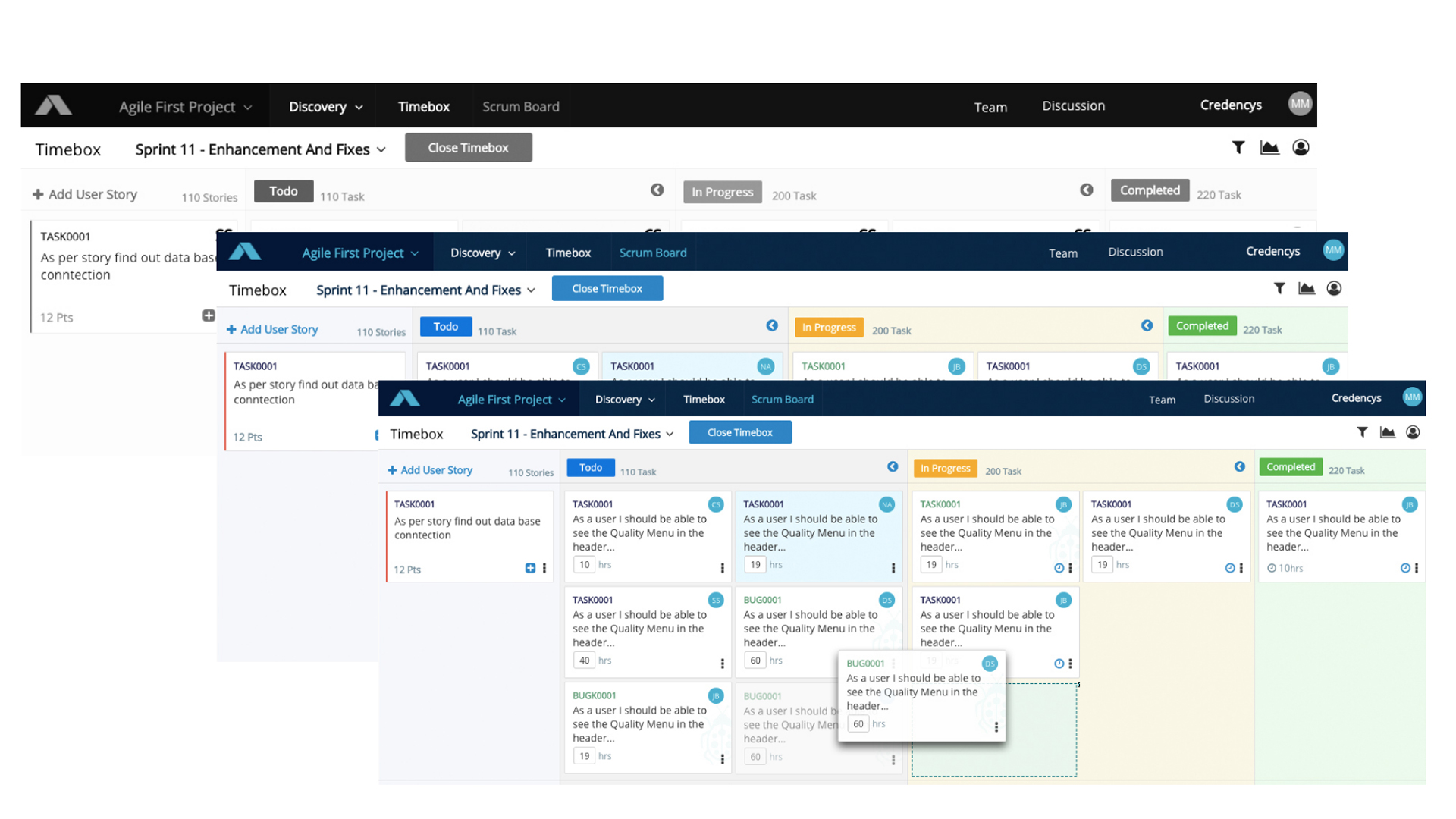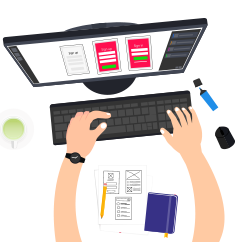
Gain Competitive Edge By Creating Eye-Catching UI/UX For Your iOS App

Today, the iPhone app development market is growing like a wildfire. There are billions of apps listed in the largest app marketplace: The App Store. While searching for an app on the app store, we can find more than one app which can do the same tasks.

It is said that “Don’t Judge a book by its cover.” But, in the case of iOS Apps, the users will judge the app by its User Interface. Although we create an app which has better functionality and features than our competitors, users will choose the competitors app if its UI is fluid and UX is customer oriented.

If you have competitors who offer the same services and solutions as you do and you want to beat them then create excellent UI/UX that helps you gain competitive edge. Attract more customers by creating a mind-blowing User Interface and awesome UX.

Increase Customer Loyalty by Creating Game Changing UI/UX

Today, the customers are so accustomed using iOS apps that they have a list of expectation from every new iOS app that launches. Majority of those expectations are related to its usability or UI/UX. As mentioned earlier in this post that the only thing which defines our app compared to competitor’s app is UI and UX. Customer will only download the app which is more comfortable to use and offers seamless user journey. Let’s have a sneak-peak on how to create an app which can beat your competitors and provide customers the experience they want.

Maintain The Balance Between Content and User Interface

One of the primary reasons behind the failure of an iPhone app is because of the lack in maintaining Content and UI ratio. In iPhone app development, fonts and line-spacing are the two things which needs to be taken care of while delivering written content. To engage customers more with your app, the content should be readable. Line-spacing more than the absolute limit will annoy customers as they’ll have to flip pages more often. Less line-spacing will create chaos on the screen and make it difficult for customers to read. If the content-interface ratio is not appropriate, then it might lead customers to move towards the competitor’s app.

Build An App with Perfect Features

Every iPhone app has a settings menu from where customers can tweak with the user interface. The iPhone app developer can see how many times a customer has gone to settings to change some of the features of the app such as background color, mode, fonts, etc. If that number is high, then we have a firm reason to worry about customer retention. The chances of customer retention decrease if there are elements in the UI which customers does not like. The only way we can hold on to those customers is by changing the UI as the customer want.

Avoid Using A Lot of Gestures

Gestures are an essential part of every iPhone app. They are shortcuts which provides customers an immersive experience. It makes our app look different than others. To attract customers, it is advisable to use gestures in the iPhone app. But, using too many gestures might confuse the user and lead to dissatisfaction. Gestures are used only to optimize the performance of the app and bring out productivity in customers. Hence, it is better to use just those gestures which are helpful to customers while they are using the app and remove others which does not make any sense.

Do Not Keep The Quit Button On The App

A standard feature which we can see in every other iPhone app is that they never close. There is no quit button on the app which will take customers outside of the app such that when they come back to the app, it gets restarted. With no quit button, customers can get the advantage of saving their work. When they come back, the app will start from where they left. It will help to utilize consumers’ time on the app efficiently.

Avoid Customer Login On The First Impression

For an e-commerce retailer, it is essential to know their customers. The easiest way to do this is by getting all the necessary information of the customers via login forms. The tradeoff is that the customers don’t like to give their personal information to the retailer until they get to know their offerings. The best thing that we can do is to allow the customer to login to the final stage of their shopping which is when they buy a product. One more way to make customers login is via social media sites such as Facebook, Google plus, Linkedin, etc.

Never Forget The End Goal

Customer satisfaction is at the core of iPhone app development. A businessperson should never forget that the end goal to develop an app is to enhance customer experience. Hence, instead of choosing the best UI themselves, one should try to find what kind of UI customers actually like or want. If you don’t have any clue what the customers are looking for, then you can always take help of professional iPhone app development services.

Once you’ve created the user interface based on the research considering all the likes and dislikes of customers, you’re good to launch the app and crash the market. Your end goal should be to attract new customers and retrieve old customers creating appealing iPhone app design.

Maintain Consistency And Clarity

Customers like a consistent user interface throughout the app. Hence, you’ll have to ask the iPhone app developer to manage all the content on the app in a way which does not affect UI/UX. Customers also like a UI to be unambiguous. The UI should be clear in terms of images and content presentation so that customers can easily get how the app works.

Create a UI Which Talks to Customers

A Responsive UI is all a customer wants from an iPhone app. Following the seven suggestions mentioned above, you’ve already won 80% of the battle. A Responsive UI here means zero lag in loading the app, providing instant notification whenever necessary, etc. By creating a responsive UI, you’ll be all set to launch the app.

Enhance consumer engagement with your brand by creating a UI which seems different yet familiar to them concerning usage.

Conclusion

Want to keep your customers engaged with your brand all the time? iPhone app development is one of the best options for you to gather the attention of more customers at the same time. But, to create a long-lasting impression among customers you’ll have to create a UI which leave your customers in awe. An efficient UI/UX is the key to achieve full customer satisfaction. To achieve that level of satisfaction, it is advisable to take help of iPhone app development services. Hire iPhone app developer to expand your customer base and achieve success. Get in touch with our experts now to discuss your idea.


Unlock the Best Opportunities for your Startup with Android App Development

Every start-up begins with an idea. An idea to make our lives even better. Start-ups can solve our day to day problems which we leave unnoticed. The foundation of every start-up is based on an innovative thought. Yet, almost 90% of the start-ups worldwide fail and shut their operations forever.

There is a strong reason behind such a high failure rate. Start-ups do not invest their time and money in searching the right market for their product. Even if they find the right market, they do not have a powerful strategy for customer engagement. Because of high competition nowadays it has become difficult to gain consumer attention. One of the ways to increase consumer base is to interact with them via mobile app.

There are two major mobile app development platforms in the world which are Android and iOS. Let us dive into the pool of benefits which Android app development provides especially to the start-ups.

Increase customer reach

When it comes to increasing consumer reach Android apps are the easiest way to do it. The global market share of Android is 87% which is more than the combined market share of Windows, Linux, and iOS. Hence, it is clear that globally Android users are prevailing. As a start-up founder if you want to connect with a broader audience and blow their mind with your product, then Android app development is the right choice for you.

Apart from reaching to bigger audience staying accessible to them all the time is equally crucial to increase customer reach. An android app will help you connect with your target audience instantaneously and help you connect to more customers.

Excellent ROI

One of the most significant concerns of start-ups is budget. The android app helps them overcome this concern like a piece of cake. As Android is an open source platform, we can create budget-friendly apps with it. Getting help from Android app development company will reduce your development cost even more.

There are two significant factors affecting Android app development cost. First one is that Android is an open source platform and second is that it uses Java for programming which is the most used programming language in the world. You’ll find numerous companies offering Android app development services. Choosing the right firm will help you climb the ladder of success quickly.

Better Customization options

Android app development will not only help you to gather more customers, but it will help you hold the old customers as well. Consumers are always hungry for having new experiences in the app. It can be anything starting from new User Interface to new service offerings. Android offers fantastic customization options with which you can regularly update your app and increase customer engagement.

Although, being an open source platform Android, can be your savior at the time when your start-up will be transforming into a big firm. Android is one of those few platforms which can handle both small and large consumer base seamlessly with its highly scalable framework.

Faster Development and Deployment

In this highly competitive market, it has become challenging to stay put and not lose customers. Faster we launch the app, more customers will get attracted. Being an open source platform Android can help you develop apps quicker.

After passing the first hurdle of developing apps faster, another hurdle to tackle is to receive app permission to make your app live. Another big reason to consider app development in Android platform is lower app approval time. Android apps also have better approval rates than any other platforms.

Improved marketing

An Android app can help you spread your brand name to thousands of potential customers simultaneously in just one day. It can do so by making you a part of world’s largest app marketplace: Google Play Store. Millions of users visit the Play Store every day. The Play Store has to offer dozens of advertising campaigns to offer from which we can choose the best appropriate campaign for our product.

Android app development is one of the best ways to generate more leads than ever. You can increase your customer base by uploading your Android app into third-party platforms such as Aptoid, ApkMirror, Amazon Appstore, etc.

Verdict

Ever since the inception of Android mobile apps has revolutionized the business space. Today, Android apps are not just for entertainment or amusement. It has become a necessity of every business around the world regardless of the industry. If you want to reduce time to market, increase consumer engagement and enhance the customer experience as a wholem, you should hire Android app developer as soon as possible. Got an idea but don’t know how to proceed? Get in Touch with our experts now to unlock the best possible opportunity for your start-up.

Cross Platform App Development: A Business Booster Technology for You!

‘I want to develop a iOS mobile app.’ This is all you want from a mobile app development company. Correct? Most of the entrepreneurs approach the app development firms with a concept. They are not clear about what type of application they want with which features, functionalities, technologies, platforms, and more. It’s so obvious as that’s not your job.

But a little bit knowledge about trending mobility technologies helps in making smart business decisions. In this blog post, we would like to share some key considerations to adopt Cross-Platform technologies over iOS and Android development.

Cross Platform App Development Buzzing Around!

It’s a budget and time friendly technology. Cross-Platform allows you to develop a single app that runs seamlessly on both the leading iOS and Android platforms with minimal code changes. There are several misperceptions about the cross-platforms like the apps are less reliable, less user-friendly in terms of design and difficult to update. Due to consistent evolution, cross-platform offers native-like performance for different mobility platforms and different device sizes and resolutions.

Types of Cross platform Mobile App Development

Native Cross-Platform

Both the operating systems use their own tech stack and software development kits (SDKs) to build high performing native iOS apps. Android uses Java as their development technology. On the other hand, iOS uses Objective-C and Swift for app creation.

To address the differences of iOS and Android platforms, developers have to create an API that works as a middleman between OSs and code base. They can develop native cross-platform applications with the help of third-party vendors who offer an integrated development environment (IDE). This environment is specifically designed for native cross-platform programming.

Hybrid HTML5

Code execution of mobile apps is managed on the backend servers. To deliver native-like experiences to iOS and Android users, cross-platform developers have to work around differences of both operating systems. They use various aspects for iOS app’s graphic user interface such as JavaScript, HTML5, and CSS. Due to advanced browser capabilities, developers use HTML5. It helps developers to create hybrid iOS apps that contain native frame of operating systems and the code which is executed in a Web View.

Native vs. Cross-Platform: How To Make A Smart Decision?

Native

  • Enhanced Usability: Native iOS apps are seamlessly integrated into the mobility platforms for which they are created. It offers familiar interface, user retention, and positive user experience.
  • Optimized App Visibility: Native iOS apps usually get high recommendations due to amazing experiences. So native apps have prime visibility on App Store or Play Store.
  • Best for Data-Driven Apps: Native mobility platforms are highly recommended for the app that requires an extensive data processing, runs a heavy amount of data such as media (images, animation, videos, etc.) & needs a lot of interaction.
  • Flawless Performance: Native iOS app works seamlessly on their respective mobility platforms. It can be customized as per user preferences. It gives a feeling that the app is truly an integrated part of the device.
  • Longer Development Time: It is too much time consuming as developers need to create a separate app for different mobile platforms.
  • Required Specific Skill Set: Highly skilled developers and different teams develop separate mobile apps for iOS and Android.
  • Increased Project Cost: Development of separate app requires more resources and time. Ultimately, it will increase the cost of mobile app development.

Cross-Platform

  • Code Reusability: As single code is used across the different platforms, cross platform development is comparatively quicker then Native development. Save time on platform customization and code rewriting.
  • One Team for Communication: Same code runs across various platforms, so need one team to develop the code and deploy it across the different mobility platforms. Less resources equal to cost-effective development process and deployment.
  • Maximized Profit: Along with improved time-to-market and reduced cost, cross platform development helps businesses connect with the wider target audience.
  • Quicker Updates: Either it’s an initial launch of the app or subsequent updates, cross platform development rolled out all the updates and changes simultaneously on all the platforms.
  • Performance: It delivers native-like performance that is not as seamless as Native.
    Limited Scopes of Customization: It doesn’t adopt the customization that users have made in their devices.

Why Should Cross-Platform Be Your Next Choice?

Leverage Cost Effective solutions

Cross-Platform mobile development reduces the cost of hiring developers. Unlike, Native iOS apps hybrid apps reduces hiring cost of iOS and Android developers because here we need only one team to build a mobile app that runs effectively on both OSs.

Improved Time-to-Market

Businesses can now deploy their product faster than ever. Delivering products more swiftly than the competitors can improve consumer engagement. With cross platform app development tools, the app development process becomes faster. As it uses a single code base, it can work seamlessly on leading mobility platform.

Maximum Output through Minimum Efforts

Mobile app development process has become much easier, reliable and faster. With the evolution of the cross platform mobile development tools like React native, Ionic, Xamarin, etc. the development efforts have been reduced. These platforms have richer libraries and better default functions which makes it easier for a developer to give better outputs with minimum efforts.

Efficient Development

Cross-Platform iOS apps help us bring more creativity and efficiency at the same time. It makes the design more efficient because of its uniformity. Developers now do not have to create separate UI for different mobility platforms. They can reuse 90% of the code and create both Android and iOS apps simultaneously.

Wider User Reach

Businesses can increase their customer reach with the help of cross-platform apps. Developing a single app, businesses can reach out to iOS and Android users. Enabling them interactive and intuitive user experience they can engage the target audience for the long-term.

Cross Platform Development Tools

React Native

React native is a ReactJS based platform developed by Facebook. The most significant benefit of using React Native is, it has an excellent community support. We can create some of the best User Interfaces with React Native development because it is a UI driven framework. It uses JavaScript for UI designing which is the most popular language among developers. The framework supports Native modules which makes it more comfortable for React Native developers.

Xamarin

Microsoft first developed Xamarin. Xamarin app development is known for Rapid Mobile App Development (RMAD). It uses C# for programming which is one of the most modern programming languages. With advance code sharing, we can reuse the majority of the code and create apps for Android and iOS simultaneously. The best part of Xamarin is Xamarin Component Store. It improves the accessibility of the Xamarin developers as they can use any components of their choice.

Ionic

Ionic app development is a preferred choice among developers because it is open source. It offers mobile-optimized code for JavaScript, CSS, and HTML which is another big reason to use Ionic. Ionic provides integration with AngularJS which is one of the most popular JavaScript libraries. It has a plethora of Default UI, which makes the development process faster for Ionic Developers.

PhoneGap

PhoneGap app development can help cut the cost as to develop PhoneGap based application no unique skill set is required. A PhoneGap developer should have basic knowledge of browser-based languages such as HTML5, CSS3, and JavaScript. iOS Apps built on PhoneGap are easy to download and install on any device. Also, the marketing of app becomes easier.

Kony

The most significant advantage of building Kony based apps is that it has one of the fastest development processes. It has over a hundred pre-coded modules which make it easy for developers to code faster. Also, there is a bunch of default APIs available for User Interface. We can easily modify them and make our app look great.

Verdict

Cross Platform mobile development is currently buzzing around the world. It has changed the way businesses used to operate. It has reduced the cost of mobile app development in every industry. It has not only reduced the development cost but also reduced maintenance efforts and cost. Cross Platform app development has made app marketing better than ever. Want to take your business sky high? Hire dedicated developers now to make your dream come true. Have any further questions? Get in Touch with our industry experts now to unveil the best service.

Let’s Discuss
Why Should Cross-Platform Be Your Next Choice?

Contact Us

It’s Time to Consolidate Foodservice Distribution with Mobility!

It was just another working day! I was getting late for the office and didn’t spare time to prepare my breakfast. While on the way to my office, I stopped my car at a restaurant and went to pack some food. While waiting for my order, I heard a conversation with the restaurant manager. He was talking with someone on a call annoyingly. Later on, I came to know he was frustrated with his distributor for not delivering enough quantity of food and non-food ingredients.

I suggested the restaurant manager to use a mobile app to avoid such conflicts. I was surprised when he said there is no any reliable mobile app to help them out. I was so shocked that how this sector left untouched by tech innovators. Then, I tried to understand the industry of foodservice and came across a few significant drawbacks.

Overview of Foodservice Distribution Ecosystem

The food services ecosystem has three participants restaurants, distributors, and suppliers. All the three entities are deeply interconnected with each other. Here, the role of the distributors is quite critical as they are responsible for receiving the order, collecting the ingredients, and delivering the food products on-time.

Role of Food Distributors

The job of food distribution companies is, to provide food or non-food items to the cafeteria, nursing homes, restaurants, hospitals and industrial caterers. Food distributors act as a bridge between food and non-food ingredients suppliers and the foodservice operators such as a chef, food stall owners, food service directors, etc. They buy food from suppliers, i.e., farmer, stores in huge silos and distributes it across the operators.

Key Challenges of Food Distribution Companies

Disturbed food distribution chain drives a considerable loss for the restaurants as they cannot address the requirements of their customers. On the other hand, distributors also face conflicts with restaurants. There are three major problems associated with the food distributors.

Maintaining Food Quality

Every restaurant is supposed to maintain the quality standard of the food, they are famous for. To maintain the quality; they have to buy food and non-food ingredients of a specific grade. It is the responsibility of food distributor to deliver quality products to the associated restaurants.

On the other hand, distributors buy the ingredients from different suppliers. It becomes tough for them to convey specific information about different quality and quantity of ingredients to the suppliers.

Lack of Cost Efficiency

If food distribution companies are connected with a few suppliers, they lose their competitiveness. They can not bargain on food product price as they have limited options to choose from. Connection with more suppliers helps distributors to get their desired quality and quantity of the food and non-food ingredients within the defined timeline.

Delay in Food Ingredient Delivery

Delay in food delivery can occur due to any reason. It can be either natural calamities or human errors. We cannot control the natural calamities. But, of course, we can avoid human errors like inaccuracy in the quantity delivered, specific time when products need to be delivered, and more with the help of advanced technologies. In both situations, distributors have to approach the suppliers of another region to get the required food and non-food products.

Streamline Your Foodservice Distribution Channel with Mobile App Development

Food distribution companies can address all the key concerns using mobility solutions. Distributors can add and manage N-number of restaurants and suppliers from a single platform. They can channelize their efforts by allowing restaurants and suppliers to control their respective activities through the app.

Restaurants can leverage online order booking, order tracking, and other facilities. While suppliers can get the information about required quality & quantity of the products, delivery timeline, etc. Thus, mobile app development changes the face of the distribution channel from inside out. It reduces the tedious process for the distribution ecosystem and improves accuracy, efficiency, and productivity of food distributors.

Let’s have an insight into the how mobile application drive positive change to the food distribution channel.

Offer High-Quality Food Ingredients

Deliver fresh food to the restaurants by interacting with suppliers on a consistent basis. Once the distributor receives the order from restaurants, he will pass the quantity and quality data to the suppliers using the app. Suppliers can dispatch the products of required quality and quantity. Day-to-day supply of food and non- food ingredient solves the issue of inventory management.

On-time Product Delivery

All the participants of the distribution ecosystem can track the journey of their orders in real-time through a mobile app. If any issue occurs during transportation of the food, the distributor can take help from other suppliers and ask them to supply designed quality and quantity of food on an immediate basis. Thus, they can manage to deliver food to the restaurants on-time.

Leverage Business Expansion

Distributors can expand their business cross geographical boundaries by creating massive networks of restaurants and suppliers with the help of mobile solution. Food distribution companies can invest a bit in food storage space and a few resources to manage the distribution channel across any state and country.

Boost Revenue Stream

More suppliers mean more power to choose the cost-effective one and gain the competitive edge. Distributors can track the prices of the required products from different suppliers from the mobility solution. He can give an order to the suppliers who provide quality food at the lowest price. By adding their higher margin, they can empower their revenue cycle.

Increased Customer Base

As distributors can get the products at competitive rates, they can offer food and non-food ingredient at the reasonable prices to the restaurants. Thus, they can increase their customer base.

Verdict:

The wave of digital transformation is on its way. It has the potential to change the fragmented business of food delivery completely. This is the best opportunity for the companies to transform their delivery system entirely to achieve high customer satisfaction. Got a better idea? Get in touch with one of our executives to seize the opportunity and become the face of future.

Let’s Discuss Your Mobile App Requirement

Contact Us

Boost Your Business with Enterprise Mobility Solutions for Retail

Like pagers in the 80s and 90s, smartphones have become an essential part of our day to day lives. According to Statista, the usage of smartphones has been reached to 2.87 billion in 2018 which is 10% more than 2011. With the increase in smartphone usage, app downloads have also increased in both Android and iOS platforms. There is an ocean of opportunities for retailers to grow their business with the help of retail mobile solutions.

Mobile apps have changed the face of retail industry from inside out. It has changed the way retailers used to advertise, market, sell and took feedback for their products from the customers. Managing goods and products have become more comfortable. Retailers like Walmart, Amazon, Flipkart, and Starbucks have changed the way other retailers used to do business by introducing their mobile apps. They have added a new flavor to the whole shopping experience for consumers.

Benefits of a mobile app for retailers:

Mobile apps in retail business were not generating much revenue till 2012. According to Statista, global mobile app retail commerce revenue hit $98 billion in 2013 and $669 billion in 2018. A staggering 582.65% increase in total revenue in just five years! These numbers are enough to convince any retailer for mobile app development. Below mentioned are the top 5 benefits which retailers can gain through mobility solutions for retail industry.

1. Improved Shopping Experience

According to a report by The App Solutions, 54% of the customers choose a mobile app for shopping because it is more user-friendly and loads faster than a mobile site. Integrating third-party payment applications and payment gateway, allow customers to make safer and faster transaction. Apart from these, there are some small features found only in apps enhances the customer experience and makes them shop using the app.

“The goal as a company is to have customer service that is not just the best but legendary”
-Sam Walton, Founder Walmart and Sam’s Club

2. Increased Brand Awareness

Building brand awareness via mobile advertising is a smart idea to let future customers know about your brand. There are billions of people around the world watching the advertisement on their smartphones in any app. It is easier for a retailer to attract customers via mobile advertising if they have a enterprise mobility solutions for retail. Advertising your brand on a smartphone is not only more comfortable than traditional marketing techniques but also effective than them. As soon as customers start understanding the brand value, they will shop more often using the app.

3. Enhanced Customer Engagement

One of the reasons why customers prefer to download an app is because they can connect with the retailer at any time and from anywhere. It is easier to provide information about the latest offers and discounts on the app. With GPS technology, retailers can send promotional offers to the customers whenever they come near the store. Retailers can also provide exclusive discounts on app referrals which helps them get more new customers.

4. Build Customer Loyalty

Develop customer loyalty program in your retail mobile solutions. Push notifications informs customers about discounts and coupon codes and engage them with the app. Retailers can also provide points to the customers whenever they make a purchase using a credit card and later on when a significant amount of points are gathered they can shop from the app using points without spending a penny.

5. Enhanced Productivity with Analytics

Integrate latest app analytics tools in your retail mobile solutions. It will help you determine the results of your investment in different domains of the company. For example, using analytics, we can learn how a particular marketing strategy made customers explore certain sections of the app or which type of offers and discounts attracted the majority of the customers, etc. There are many options available in analytics for an app compared to a website.

Verdict

An app featuring all the above specifications can help you skyrocket your sales by means of improving customer experience and customer satisfaction. We would love to hear from you! Hire iPhone app developers who gave enterprise mobility solutions for retail businesses multiple times and get the best service in the field of enterprise mobility.

Hire an Elite iPhone App developers Team

Hire Now

Transformation for Employees – The Intranet Is Dying!

It’s an era of digitization we live in! It is changing the way individuals and businesses interact with each other. Especially, organizations have a quite complex ecosystem as they have to deal with multifaceted audiences. This blog explains how enterprise mobility improves employee engagement with the company.

Ecosystems of A Business

Every company has 3 ecosystems – Customers, Partners/Vendors, and Employees. The mentioned ecosystems revolve around the products or offerings of the company.
blog_11

Smartphones Accelerate Digital Transformation

When smartphones started getting popular in 2008, businesses quickly grabbed the opportunity to use the smartphones for customer engagement.  Customers Ecosystem was the first that benefited from the wave of digital transformation. After 2008, businesses that had a basic web presence rush to use the smartphones as a medium to get engaged and transacted with their customers. Companies started creating mobile apps that the customers could download from the different application stores. It resulted in increased revenue for the businesses and enhanced convenience for the customers.

Around 2012, new businesses emerged that completely relied on the smartphone like Uber, WhatsApp, and others. The millions of mobile apps for games started exploding in the App Store. It resulted in the famous line being framed way back in 2010 by Apple – “There is an App for that!”

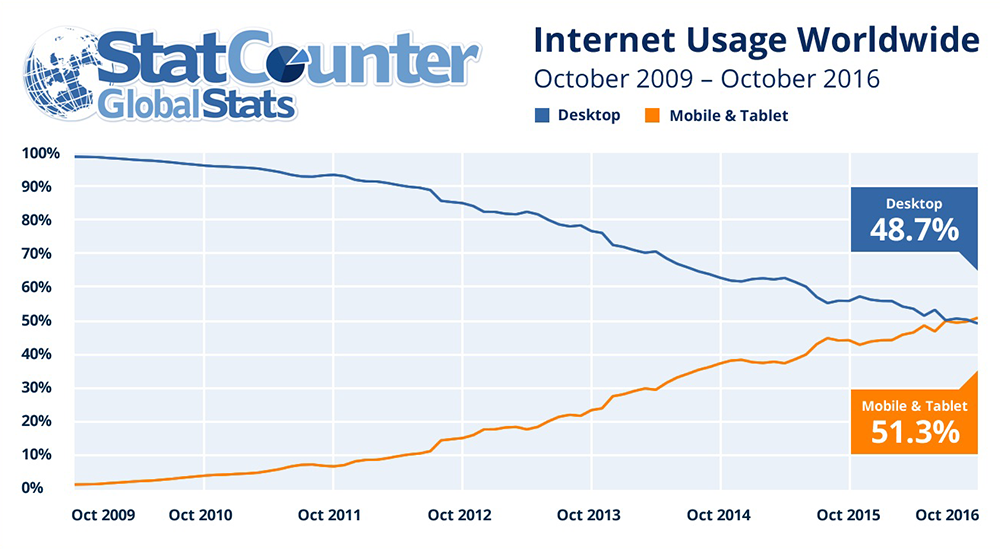
In 2016, for the first time, mobile internet usage (smartphone and tablets) surpassed the desktop Internet usage.

blog_12

By 2013, the big businesses had already established a strong connection with their customers using the smartphone. The small and medium enterprises were on their way to do the same.

The Partners Ecosystem was the next to get benefits. Businesses continuously sought out the ways to enhance collaboration and streamline activities with their vendors. Thus, businesses started creating enterprise apps for their partners.

The Employee Ecosystem

Until 2017, businesses never focused on the third and probably the most important ecosystem – EMPLOYEES.

Since last 2 years, I have been talking with several large and mid-sized companies who wanted to connect with their employees using the smartphones. Well, you must be thinking why to create a mobile app for employees. They have the intranet to stay connected with various internal systems like Expense Reporting, Leave Management, Payroll, Training, etc.

The answer is – that is not enough!

As the digital transformation wave progressed, it has become increasingly clear to the businesses that they are becoming more of a knowledge and product/offering-based business. Knowledge-based businesses rely on smart, productive, and more importantly happy employees. Now, businesses are fiercely looking to protect/retain their employees (who have the knowledge) and trying to attract better talent.

Core Concerns of Employees

An HR Head from one of the largest Insurance firms in the world told me once – “Our employees have started showing dissatisfaction the way they get engaged with the company and its internal systems. We need to find a solution for this”. After having detailed discussions with her, we started listing down pain points of the employees. They were as follows:

  • I do not feel connected to the company
  • I cannot collaborate efficiently with my peers
  • I have a little knowledge of what is going on in other departments
  • I have to log in to disparate systems to apply for a leave or upload a file of an expense report or consume training videos or consume corporate content or look at my pay stubs… and the list goes on and on
  • I feel that I have not been recognized by the company. No one knows about my achievements
  • I do not know when the company publishes a piece of content on the intranet
  • The intranet is an ocean. I cannot find the relevant content

Solution Offered by Credencys

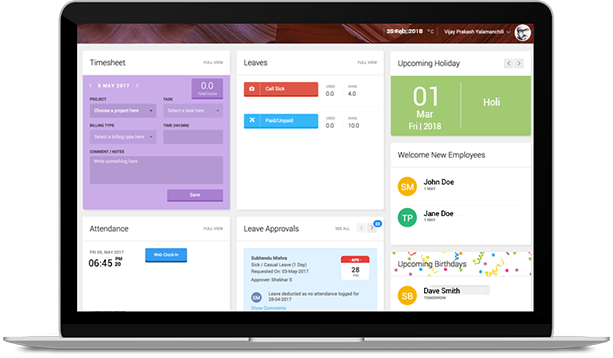
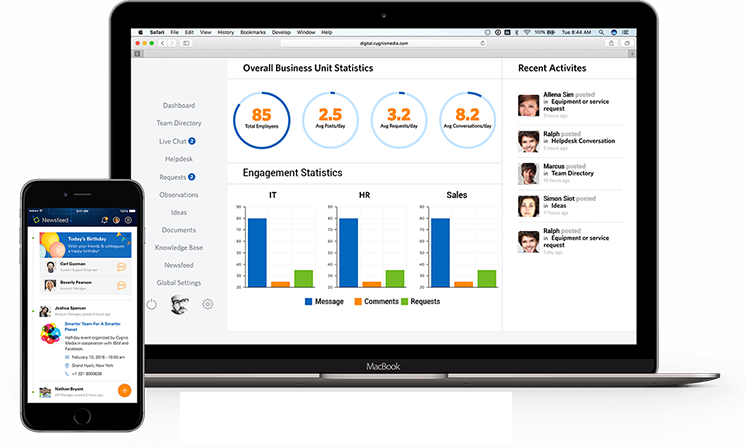
We started finding out the possible solutions. After deliberating around 2 hours – WE FOUND IT!! Eureka!! Well, this is a bit of an exaggeration on my part. But the solution was simple, a mobile app development for the employees. The Employee Mobile App becomes a single window for the staff from where they can access all or most of the internal systems within the company including content that is customizable as per the employees’ nature of work.

image3

Then, we listed out the features of the mobile app. They were as follows:

  • Pushing relevant content to the employees
  • Leave Management
  • Expense Reporting
  • Training Videos and Articles
  • Company Policies and update to these policies
  • Compliance Policies
  • Collaboration Platform for teams that work on specific projects
  • Talent Searching – like an internal LinkedIn within the company (The HR Head told me that they do not know if certain skill sets exist in other departments and they end up doing the redundant hiring which could have been prevented)
  • Ride Sharing
  • Rewards and Recognitions
  • Publishing Employee Blogs
  • Content on Company Events

And, the list continued to grow over the next 3 months.
After 3 months of listing down the features of the App (which became a 10-page document), the HR Head had 2 questions for me as the reality sank in.

1. It is not as -simple- as we thought. It is a huge system. How are we going to build it?
2. What will happen to our Intranet that we have maintained for over 15 years and poured millions into it?

The answer to her 1st question was…

Well, obviously the mobile app development for employees was not a simple undertaking. It required integration with existing systems of the company and needed a new custom platform to be created where employees could start to get engaged. We understood that it was going to be a long-term effort to achieve everything mentioned in the document. Thanks to Agile development processes, we decided on the most important user-stories (use-cases) and started working on them. The first version of their app was out in 4 months with the following set of features:

  • Pushing relevant content to employees
  • Pushing corporate content to employees (the content that generally gets published on the Intranet)
  • Leave Management
  • Expense Reporting
  • Training Videos and Articles

The HR Head was skeptical if there will be an adoption of this app after they had made the investment to build it.

Within 30 days of releasing the app and making the announcement, 85% of the employees had installed the app on their smartphones and the adoption of the app continued to grow after that.

image1

The answer to her 2nd question was…

The Intranet is dying and soon it will rest in peace!! The intranet paid off for 15 years by being the single point of contact for your employees. But now, times have changed, technologies have changed, and expectations have changed. It is time to move on. Move on to the new platform – THE EMPLOYEE APP.

Benefits of Employee Mobile App to the Insurance Company

  • 60% reduction in traffic of the Intranet in the first 2 months after releasing the app and it continued to go down as we started adding more and more features in the app.
  • Employee engagement rate on the Intranet was an average of 0.8 visits (site visits) per day per employee. With the new app, the employees were engaged with the company and their peers at an astounding 7.6 visits (app opens) per day per employee.
  • The Insurance Company saw a dramatic improvement in their social footprint when we integrated Social Media in to the app. Employees started liking and commenting on the company’s social media pages.

Overall, it was a WIN-WIN situation.  The employees loved the app and the company benefited by having a workforce that is more productive and more satisfied.

Verdict

Since the project started 2 years back, I have now been approached by at least 12 other companies who are interested to embark on the journey of Digital Transformation for their Employees Ecosystem.

I can see a huge wave of digital transformation that will completely change the way employees get engaged with the company.

Alas, the wave of digital transformation has reached to the employee coast!

Let’s Discuss Your Mobile App Requirement

Learn More

Improve Customer Experience with Enterprise Mobility Solutions for Retail

If you start counting the most competitive industry in these days than probably retail top the list. Incremental use of technologies has made this domain more tech-savvy and sophisticated. Especially, enterprise mobility solutions for retail has transformed the way industry operates. It has unveiled new direction for retailers to interact with customers, suppliers, internal staff, and partners.

To be the first choice for customers, it is imperative to deliver a meaningful customer experience. Optimize customer engagement by delivering interactive and seamless user experience on different mobile devices.

Here’re a few touchpoints that end up you by winning the customer loyalty, establishing lasting relations with them and generating repetitive business.

How Mobile Application Development for Retail Enhance the User Journey?

Embrace enterprise mobility solutions for retail to drive tremendous business opportunities. Simplify the product selection and purchase processes for the users. Use advanced technologies to develop an easy-to-use mobile app to enable people with immersive experiences. To cover your app visitors into loyal customers, create an intuitive user journey and offer them maximum benefits.

Increase Order Volume with Appealing Digital Product Catalog

Bring your products to the mobile platform by creating an interesting digital catalog. Deliver streamlined shopping experience for the buyers by allowing them to access required product information in a few seconds. Buyers can review the product such as product name, description, features, price, reviews and ratings, similar options, and more in one go.

On-Timely Product Delivery through Seamless Order Management

Provide better customer service by enabling shoppers with real-time order update and order tracking facilities. Retailers can effectively address the challenges of faster delivery expectations, supply chain complexities, and increasing marketplace channels by harnessing the potential of enterprise mobility solutions for retail. With an advanced order management, retailers can

  • Simplify & streamlined order processing
  • Provide real-time access to inventory, order and delivery information
  • Product stock monitoring to meet quantity demands
  • Improve user engagement by responding to customer inquiries instantly

Gain Customer Confidence by Offering Product Comparison

Allow customers to compare the pricing and features of the same product from different brands. Help them in making the suitable choice at the best price by evaluating various products in one go. You may lose the business at initial phase but you build a trust with customers for selling cost-effective products. Gradually, they get attached to your brand start buying your products.

Provide Better Visibility of Returned Products

Product return usually ends up getting either getting refunded or a replaced. Both the aspects require different processes. To deliver a better customer experience, go for mobile application development for retail that allows customers to track the status of returning products in real-time. So, they get the idea when they will receive the refund or a replaced item.

Simplify Offline Shopping through GPS based Personalization

Provide the ease of access to the customers to your retail stores by offering Geo location facility. Buyers can check all the locations of your stores on their mobile phones and visit the nearest one to buy the products. Thus, mobile application development for retail not only boosts the online sales but also improve foot traffic in your physical stores.

Boost Up Your Sales Funnel Integrating Mobile Payment Gateway

Help customers in making an instant purchase by integrating popular payment gateways like PayPal, Amazon Payments, Authorize.Net, etc. Simple and secure payment process increase buyers’ trust in your brand and encourages them for repetitive purchase. With enterprise mobility solutions for retail, you can reach out larger target audience, increase the sales and boost the revenue cycle.

Keep Customers Well-informed with Your Current Offerings

Update your product offerings on the mobile app regularly. Allows the buyers to discover what you are selling. Stop displaying the products that you are not dealing with anymore. Help shoppers to explore the latest offerings of your business and make the suitable purchase decision instantly.

Credencys Brings Your Ideas to Life for Enterprise Mobility

Leverage the Credencys’s mobile app development experience to build your desired enterprise mobility solutions for retail. We bring your offline retail business in the online platform and help you in generating more sales and ROI by engaging wider customer base. Integrating the latest technologies like Internet of Things (IoT), Augmented Reality (AR), and Virtual Reality (VR), we create an outstanding experience for your customers.

Credencys delivers next-gen mobile applications that go beyond just selling products and help you in establishing a lasting relationship with your customers by offering them highly personalized experience.
Get in touch with us for mobile application development for retail.

Let’s Discuss Your Mobile App Requirement

Contact Us

Ultimate Guide to Development: Evolve Dynamic Web Applications Through Proven Practices

Trends and technologies of web development are evolving with each passing day. Every day, it becomes better and omnipotent. Embracing a variety of web-based frameworks and programming languages, programmers build exclusively customized websites that work coherently with other technologies such as mobility, cloud, IoT, augmented reality, virtual reality, wearables, and more.

You already have a profound insight into web application prototype and core development activities. Now, it’s time to execute the client’s requirements and project assumptions. Explore the various web application development and deployment processes. Also, have a look at the ultimate deliverables!

Agile Development Using SCRUM

scrum-process

Agile Methodology

Agile is a highly preferred software development methodology in the mature technology markets like Europe and USA. The methodology covers several incremental and iterative web application development practices. Amongst all, SCRUM is the most renowned and widely used agile practice for website development across the globe. Credencys has hands-on experience working with the Agile SCRUM processes.

To build robust applications, Agile supports continuous feedback gathering and iterations throughout the web development process. Experience an extreme flexibility as the method allows for ongoing planning, testing, integrations, and evolution of the software and project. Core benefit of adopting Agile is, it empowers the people to interact with each other and make effective decisions together rapidly.

Agile Traits for Effective Web Development

  • Constant availability of customers is preferable throughout the web application development lifecycle.
  • Leverage facility to change the requirements at any point in time.
  • Prioritize the imperative features and functions first. Launch a valuable MVP by developing and deploying the important elements. It reduces the risk of investing in an unusable product development.
  • A dedicated team of business analysts, project manager, designers, coders and quality analysts works on the project by establishing a high degree of synchronization and coordination with the stakeholders.
  • It goes in-line with Time & Material model.

SCRUM Practices

Well-defined concepts and practices distinguish SCRUM from the other agile website development practices. It’s a subset of Agile and a lightweight framework for project development that is widely used by the reputed web application development company. SCRUM easily adjusts with frequently changing business requirements and creates pioneering websites that meet evolving organizational objectives.

How SCRUM Works?

Create Sprints

SCRUM divides the tasks into sprints. In agile methodology, sprints work as time-boxes. The timeline of the sprints is pre-decided. Ideally, web application development company needs to release the sprints after two weeks. It is not preferable to extend this timeline as it disturbs the overall development cycle.

Prioritize the Tasks

After analyzing user stories, developers create the list of required features and functions. They set the priority of all functionality and convert them into sprints. While creating sprints, programmers figure out the approx. time duration to develop each feature. Accordingly, they add the task to SCRUM backlogs.

Development and Deployment

As per the priority, engineers create a set of features and move ahead to execute them in order to build avant-garde web solutions. The website development cycle starts from writing the code, test the functionality, integrating third-party tools and technologies, to deploying a fully functional software on the server.

SCRUM Meeting

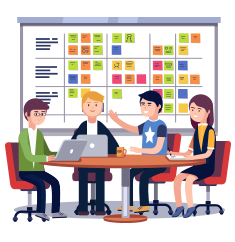
A meeting that involves developers, SCRUM master and stakeholders takes place every day in the morning for 15 minutes. All participants discuss the web development what they worked on the previous day, what they will work on that day, what are the roadblocks, and how to address barriers to website development process.

Feedback Gathering

When delivering the sprints, technical team offers a demo of developed features and functions to the stakeholders. Product owners review the sprints and share feedback. Though the feedback is related to current sprints, required modifications won’t be the part of existing sprints. Developers create fresh sprints of the changes and set them in backlog with the suitable remarks of adding and revising the items.

Sprint Retrospective

At the end of each sprint, SCRUM project management performs sprint retrospective. All members participate in the meeting including stakeholders and ScrumMaster. They discuss various aspects of the completed sprints and identify opportunities for improvement.

Benefits of Web Application Development Using SCRUM Practices

  • Create more precise estimation within less time
  • Improve the quality of deliverables
  • Effectively address the required changes
  • Control the project schedule and state
  • Focused and self-organized team
  • List out the requirements precisely in the form of stories
  • Cross-functional teams work as a single unit
  • Continuous improvements
  • Open interaction with the client to decide priority of features
  • Lower cost of development

Web Application Deployment Process at Credencys

continuous-work1

Credencys’s web application deployment process involves various phases starting from check-in to the product to test automation. Every step plays a key role in completing the deployment cycle effectively.

Step 1 – Check-in: Development team check-in the version control system to set up a web application development environment.

Step 2 – Fetch: System fetches various details of a web application like architecture, programming language, framework, technologies, 3rd party integrations, web services, etc. and send the data further for in-depth analysis.

Step 3 – Analysis: Programmers analyze the website development environment, check the compatibility of coding and generate a code coverage report.

Step 4 – Build: If the structure and development environment of a web application seems suitable, then move ahead to configure the code and build a success report.

Step 5 – Test: It’s a very imperative part of the web application deployment process. Developers generate a unit test report that contains various data such as

  • Define and execute acceptance criteria and test-cases
  • Coding standard tests
  • Performance and load testing
  • APIs, UI/UX, functional and integration testing
  • Bug reporting
  • Test-case, bugs and performance reports

Step 6 – Deployment: Once the web application passes through all tests, next move is to deploy the code in a real-time environment.

Note: Activities from web application analysis to deployment are performed in the continuous integration server.

Step 7 – Automation Test: Once the code deployed in a suitable environment, the final web application passes through automated testing before going live. Engineers generate automated reports for each testing environment. Automated testing enables developers to deliver more reliable and authenticated websites that run smoothly and seamlessly.

Deliverables

Fully Functional Application

After completing a development and deployment cycle, the stakeholders receive a fully functional web application. Tested in an isolated environment, the website helps businesses in achieving expected organizational objectives. The deliverable product went through the several stages of development and deployment processes. In every phase, each of the features and functions is verified again and again to build error-free web solutions.

Test-cases and Quality Assurance Reports

Test cases are the cornerstones of quality assurance. Testers check out variables or conditions applied in the web application and determine whether it satisfies the client’s requirements properly and effectively.

Progress Reports

Following Agile SCRUM practices, the web application development company submits progress reports after every two weeks. During these 15 days, developers work on predefined features and functions. While delivering a progress report, engineers hand over the updated system along with the demonstration of new development. Thus, clients can test the system from their end, and operate the software smoothly without any technical assistance.

Source Code

Once a fully-fledged solution starts running seamlessly, developers deliver application source code to the stakeholders. It eliminates the chances of software duplication.

Documentation

While developing a website, coders have to create a document that explains all the features and functions in detail. It guides users about the activities performed by each element. Documentation works as a helping hand for the clients if they stuck somewhere while operating the system.

Why Choose Credencys as Your Web Application Development Partner?

blog6.1

Design Thinking

Team Credencys creates amazing UX and intelligent architecture following simplified processes. Experienced designers of the company make interactive and intuitive web applications that not only impress the customers but also encourage them to explore more about various offerings. Work closely with industry leaders who excel in creating solution-centric website designs that fuel your revenue cycle.

Open Communication

If you want to understand others, it is important to listen up them carefully. Credencys always listens to the customers, understand their expectations, convert their unique ideas into concepts, and innovate the revolutionary web applications. Following Agile SCRUM practices, the company stays connected with the clients throughout the development phase in order to collect information and feedback.

Continuous Development

Going beyond the obvious and getting into the depth allows Credencys teams to solve complex problems and make the customers succeed.

Verdict

Now just check it out! Your web application runs smoothly and effectively. Offering end-to-end web development services, Credencys believes in a win-win partnership. Being a leading web application development company, it helps clients in gaining the ultimate output.

Rather than working for the clients, the company believes to work with them and attains various milestones by adopting and implementing emerging technologies. Developing innovative web solutions, Credencys makes clients happy, satisfies their expectations and keeps them coming back for all IT needs.

Let’s Discuss Your Web App Requirement

Contact Us

Ultimate Guide to Prototyping: Wireframing and UI/UX Design Is The Cornerstone of Successful Web Application (Part 2)

Prototyping is a journey in which an idea transforms into a proof of concept. Creating functional and interactive wireframes, get the clarity on what is your ultimate purpose for building a website or web application. Because without a destination, the journey will end up nowhere. Experienced and well-trained engineers of Credencys provide end-to-end website development services to help you in achieving the intended target. In Ultimate Guide to Prototyping: Wireframing and UI/UX Design Is The Cornerstone of Successful Web Application (Part 1), you have learned about the importance of prototyping in website development process and benefits you can avail by using it. In this blog, explore prototyping activities and deliverables of Credencys.

Web Application Development Life Cycle at Credencys

Untitled-1

Prototype Activities

Wireframe works as a master plan for developing a website. Through a clickable prototype, stakeholders can experience the would-be interface of the website. Functional prototypes enable users to test the structure from more than one dimension.

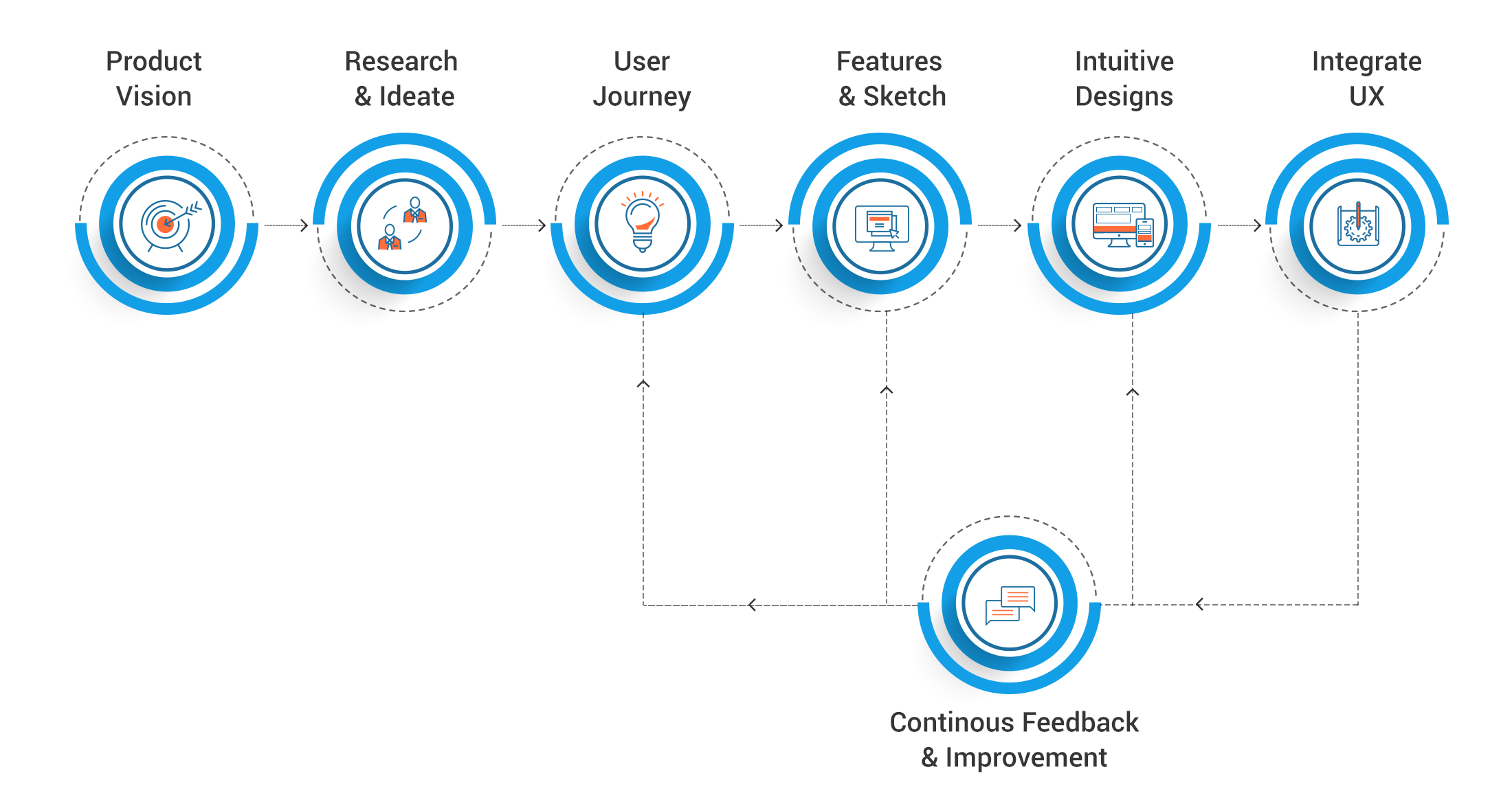
Understand Product and Vision

Usually, businesses misunderstand prototyping as web application design. Wireframe represents a logical flow of the website. Create a structure of your website in a functional or static wireframe by considering the ultimate business vision. Depict the entire flow, essential features, important functions, design patterns, and other essential elements into it.

Transparent and consistent interaction with the client helps a web application development company in understanding the project requirements. Gather and analyze the detail provided by stakeholders and check out the possibilities of practical implementation.

Research and Ideate

Rather than directly jump into the prototype designing, it is better to carry out detailed research in order to understand the expectations properly. When you have a brief of requirements, pick them one by one and start researching about them. List out the features, functions, 3rd party tools, design elements, etc. that you need to develop and integrate into the website.

The web application development company has to perform in-depth research to identify how these aspects help in achieving the ultimate business goals and what benefits they drive to the website. Create a functional prototype and share it with the stakeholders. Inform them about the technical feasibility and collect their feedback. Make the necessary changes in wireframe and start ideation of the website development.

Determine the User Journey

Define a smooth route for your web application so that users can easily move from one page to another. Set up the navigation accurately and establish logical interlinking amongst the site pages. Focus on creating a structure rather than wasting the time in improving its look and feel.

Draw out the user’s journey for each page. Prototypes help in identifying how many assumptions you have made and which details you have not considered. It is suggested to identify and work out on such issues at the initial phase rather than creating disputes during coding.

Define Features and Functionalities

Have you decided user’s journey? Great. Now, it’s time to decide features and functions of the website. Every organization has different objectives to build a web application. To achieve these goals, they have to identify, develop, integrate, and deploy the features and functions that work seamlessly with each other.

Usually, the first version of prototype contains lots of features as clients want to explore the idea. Later on, stakeholders realize that there are several unnecessary elements in the wireframe. They identify the important features and functions and remove extra integrations from the web application. Keep the website neat and clean by developing and deploying only required aspects.

Create Intuitive Designs

Start creating a basic and intuitive prototype design for your web application. Make it clickable so that stakeholders and users can have a high-level overview of navigation. Also, determine the places for content, images, call to action, etc. When you receive the approval from the client, you just need to convert the dummy structure into a beautiful website with all the required features and functions that run in real-time.

Prototype Development

Design a prototype that contains user journey, advanced features and functionalities, intuitive design format, and more. It should offer an exclusive overview of the would-be web application. It provides the basic format of the website’s look and feel, placement of text, images, call-to-action, as well as features and functions along with their would-be operations.

Proof of Concepts (POC)

Create a proof of concept of your idea. It is a kind of demonstration which verifies certain concepts and theories as well as check out their potential for real-world application. POC is a prototype that is designed to decide feasibility but it doesn’t represent deliverables.
Planning and Budgeting

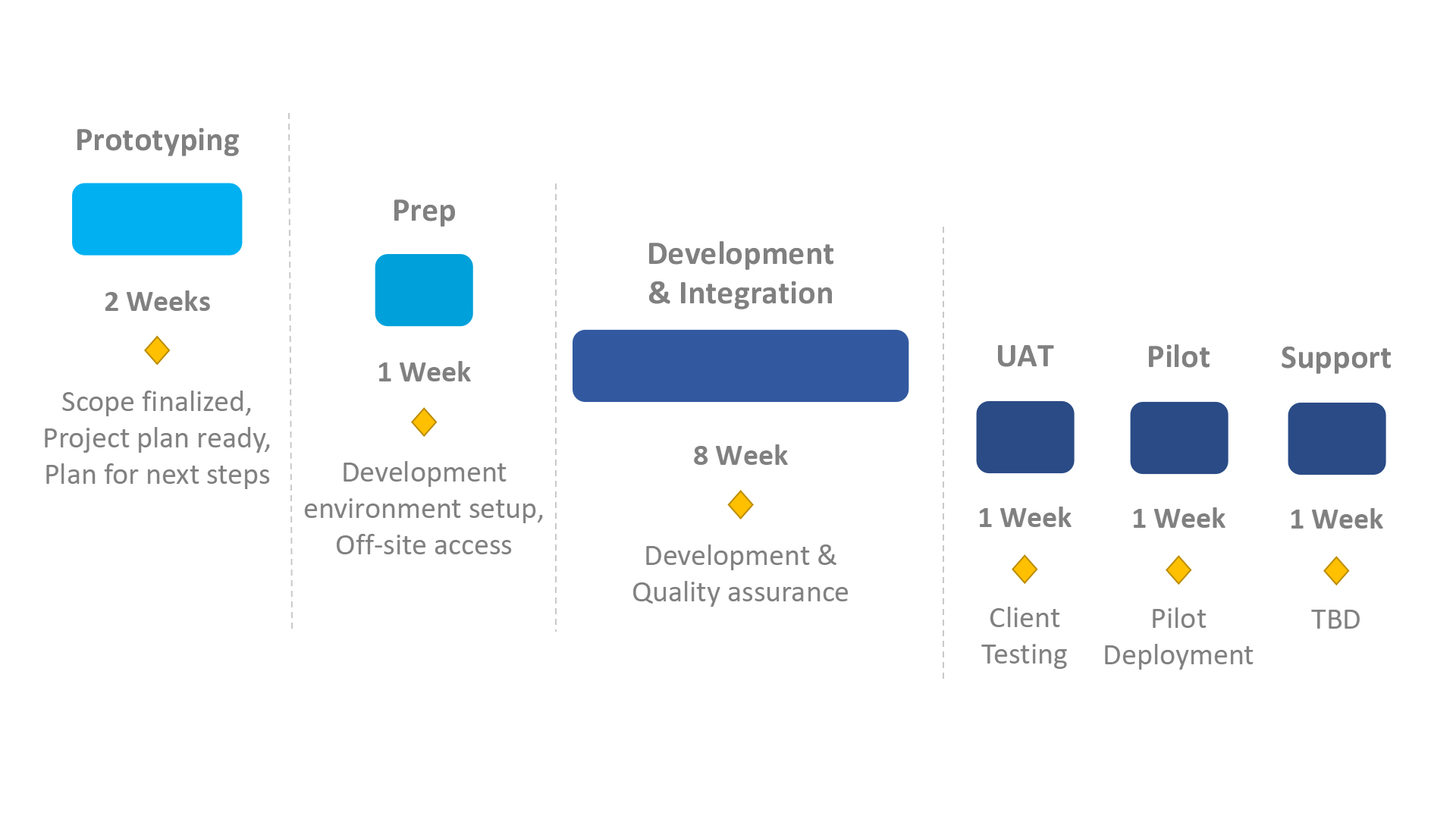
It’s quite easy to plan out the development phase as you have everything in-line. You can provide the estimation of efforts, hours, and money. All you need is to move ahead for real-time implementation of the project. At Credencys, project planning and budgeting involve prototyping, preparations, development & integration, UAT, Pilot, and support.

Prototyping Process at Credencys

flow1

Journey to Create a High Fidelity UI

Untitled-2

Prototype Deliverables

Prioritize feature set for agile development

Every feature carries a different level of importance. Prioritize them as per your preferences. Follow the Agile methodology to boost up your prototyping process. Define a set of functions under each feature and also introduce them in the wireframe. Determine all the essential features and develop them one by one in descending order from high to low priority. It helps in releasing the web application within a short time span.

User Persona and Use Cases

User persona is all about understanding the target audience. Knowing your customer helps in making your product more successful. Choose influential features and design elements to create the wireframe based on well – defined user persona. It enables clients to efficiently recognize and communicate the user’s’ needs.

Also, integrate use cases in prototypes that aid stakeholders in understanding the user’s journey and the different touchpoints. It works as a framework and guideline principles to deliver interactive user experience design. In the user experience brief, it is important to perform end-user research, competitor analysis, business objectives, key performance metrics, and more.

blog4.1

Designs and Style Guide

Create a style guide for your brand using intuitive website design. Add both of these factors in the prototype in order to make your would-be website eye-catchy with bright colors and professional look and feel. Use attractive images and dashing infographics to represent the information in a more engaging way. Set a simple navigation so users can easily switch from one page to another. Execution of decent style guide impresses the customers and inspires them to explore more about your offerings by visiting the website.

Click-through High-fidelity Prototype

The prototype should be clickable. It helps users in understanding when they click on A, they will land on a page B that unveils the relevant information related to A. Rather than using a diagram, wireframe offers a more appealing presentation format of website page navigation. Moreover, in a functional prototype, you can add a few pieces of content too.

Project Plan, Timeline, and Cost

Wireframe allows businesses and website development companies to decide the project plan at the initial phase. So, it becomes easy for them to step into development part and release the product on time. Brainstorming is over with the finalization of prototype. Based on the approved prototype, a web application development company can effectively plan out the project progress path and provide approx. estimation of time and cost.

Team

To create an accurate and perfect prototype, you need a team of business analysts who gather and understand the requirements, analyze them, prepare a wireframe and share it with the stakeholders. Analysts make required changes in the prototype as per the changing needs of clients. Once project scopes are determined, they share the wireframe with technical architects and designers to get the approx. estimation of time, efforts, and cost.

Final Words

Website prototyping is the best practice to accomplish the business objectives successfully and swiftly. Credencys works closely with the client to bring ideas to life. After the successful completion of prototype design, Credencys team steps into the development phase. Now, it’s time to develop and deploy the features and functions to shape out a website. Explore the website and web application development process of the company by reading the upcoming blog.

Let’s Discuss Your Web App Requirement

Contact Us

Ultimate Guide to Prototyping: Wireframing and UI/UX Design Is The Cornerstone of Successful Web Application

Before buying a mobile, you check out a sample of the device, explore the look and feel of it, ask for color options, take a demo of the product, learn about high-level features, and more. Of course, it is imperative to have an overview of ultimate tangible output. While investing in something, you always prefer to have some sort of proof that works as a source of reliability.

Appreciating your efforts of choosing a better smartphone that addresses your needs. But, are you equally concerned about your website and web applications? Have you ever asked your website development company to provide a mockup that contains would-be features and functions? If your answer is “NO”, then you might face complications in attaining the ultimate business objectives.

A website is the first point of interaction for any organization so it must be impressive. Make a smart selection while choosing a web application development company. Tie up with a reliable IT partner that holds a legendary presence for offering best in class website development services.

Credencys – A Prime Web Solution Provider in India

Early adopter of emerging technologies accomplishes all commitments and maintains transparency throughout the project lifecycle. Credencys is a renowned website development company that has streamlined processes in place for website design, development, and deployment.

Owning enduring industry experience and wider exposure, the company has worked with startups, SMEs, and corporate. Embracing latest and emerging technologies, Credencys effectively addresses custom needs of the clients.

Web Application Development Services at Credencys:

  • New Web Application Development
  • Web Application Re-engineering
  • Web Application Re-designing
  • Migrating legacy infrastructure of web application to the cloud
  • Support and Maintenance

Creating A Successful Web Application Involves

Creating A Prototype

Prototyping is the crux of website development process. It gives an overview of the would-be website and defines the user’s journey. A fully functional wireframe offers a click-through high-fidelity demo version of the website. Also, it could be a quick sketch or a detailed and well-framed vector file that depicts an exact flow of the website’s functionality.

Development

Coding and deployment of the website or web application take place in this phase. An implication of the pre-decided features and functionality comes under development. Using Agile methodology and SCRUM practices, you can improve time-to-market of the website and launch MVP with must-have functionalities within a very short time span.

Support

Most of the website development companies believe once the website goes live their job has been done. That’s not the case with Credencys. The company offers performance analysis and end-to-end tech support by following solution centric approach. During this phase, clients can ask for technical enhancement in order to keep the website updated as per the latest technology standards.

Prototyping

Benefits of Prototyping

All stakeholders see the same vision with Business objectives at center

When there is more than one stakeholder, they must have different views and opinions. If you create a website by considering all the suggestions provided by them, then it will be a mess. Better to put all of them into a wireframe and share it with the clients. It will be easy for them to make strategic decisions like which features and functions help them in achieving the business objectives and which could they avoid. It synchronizes and channelizes the application development efforts as well.

Set Right Expectations between Business and IT Teams

During the prototyping, web application development company finalizes the project scopes. Well, the process takes time. Project scopes keep changing as per varying demands of the clients. When stakeholders agree on common points, IT professionals move ahead to transform a scope document into a fully functional wireframe.

Enhanced Team Collaboration

Collaborative prototype makes website development more powerful. It reduces the misunderstandings, rework of the team, delivery time, and cost. Wireframe allows developers and designers to work simultaneously. The teams need to focus on pre-decided development scopes so there are no changes in design and coding. Prototype fills the gap between expectations and deliverables by optimizing collaboration amongst developers and designers.

Increased Velocity in Development and Delivery

After the requirement finalization, start focusing on executing the features and functionality. It accelerates the web application development and design processes and helps in delivering the product on time.

Clarity of timelines and budget planning

Based on the predefined singularity, a web application development company can offer an accurate estimation of efforts, time, and cost. They count the approx. hours to develop each and every feature and function. Once the time duration is in place, it is easy to calculate the approx. cost of project development. So, stakeholders can plan their budget according to the approx. timeline.

blog3.1

Why Is Prototyping An Inseparable Part of Development Process?

Determining the Product Functionality

A prototype is all about creating a structure of the would-be web applications. It can be clickable or static. Wireframe enables businesses with a high-level overview of deliverables. At the initial level, stakeholders do not have clarity about the required features and functions. They just provide a rough idea of their expected ultimate output.

Collect requirements, analyze them, develop the wireframe, insert all the functions into it, and share a prototype with the client. It might not be the exact one that business owners expect. Prototypes help them in identifying and removing unwanted features as well as adding or replacing the important functionality. Moreover, businesses can have an overview how the website will look like.

Drive Desired Output

The functional prototype contains all the essential functionalities and enables stakeholders with a basic structure of the would-be website. Stakeholders and website development company can analyze are they on a right track or missing any essential elements. They can visualize the future website. Also, they can estimate the time, efforts, and money to build a web application. Making required changes in features and functionality list, companies can achieve the ultimate goal and drive the expected output.

Iterate More Quickly

Wireframe designing is the beginning stage of website development. It would be great if the client has clarity about what is the ultimate purpose of developing a website or web application and which features and functions they want to integrate. Prototypes help them in understanding core requirements and incorporating new functions or replace the features at any point in time. Thus, iterations are quite easy to implement during the wireframing.

Reduced Overhead Cost

Ignorance of wireframe as an integral part of the website development lifecycle causes financial loss. Let’s say, when stakeholders approach a web application development company, they share their vision. They are unaware of the practical feasibility of their expectations. Clients are not clear what features and functionality they want to integrate into the website.

In such cases, if developers directly hand over the final product and later on the client realize it is not the piece they were looking for. Imagine the loss of time, efforts, and money. Prototyping helps in streamlining the web application development that saves a lot of time and money of the engineers and stakeholders respectively.

A Reference Tool for Developers

The prototype allows developers to illustrate the functionality that is not possible with the screen specifications. Let’s say if developers want to look into how a functionality will work, they can use a wireframe to get the basic idea about how a specific control or widget will help in attaining an ultimate goal.

Improved User Involvement

Developers interact with the stakeholders throughout the prototyping phase. They collect client’s feedback and improve the wireframe accordingly.

For an example; if a company wants to develop a web application to streamline its business operations. The app is going to be operated by different people of all the departments to perform versatile jobs. In such cases, the involvement of all the website users helps in driving a better understanding of the project. It aids coders to steer development and provide expected deliverables.

Interaction with users also assists companies to avoid any misunderstanding and confirm the project requirements or scopes. Moreover, developers move ahead for coding with precise requisites.

Gathering valuable user feedback on design concept

Create a basic version of the website using prototype. Cover all the essential and anticipated functionality into it. Share it with the clients and allow users to test it. Collect feedback from both the parties, judge them from a technical point of view and implement them into a wireframe. Develop a robust and attractive website by executing the required modifications.

Collect More Precise Requirements

Prototype covers all the major features and functions. The user’s journey also gets decided in this phase. After reviewing the prototype, clients can share their feedback regarding the required modifications as they get more clear idea about what they want and what they don’t.

Analyzing the wireframe of the would-be website, stakeholders give their suggestions and feedback. All the changes get implemented during the prototype phase only. So, the development takes place smoothly and effectively.

Verdict

Credencys understands the importance of prototyping and invests considerable time in designing end-to-end wireframes. Thus, the development process takes place smoothly and improves the website’s time-to-market. Well, it’s not over yet. There is much more to come in “A Client’s Guide to Website Prototyping: Wireframe Is A Stepping Stone of The Journey (Part 2)”. Stay tuned to explore about Credencys’s prototype activities, deliverables, process, application development lifecycle, and more.

Let’s Discuss Your Web App Requirement

Contact Us