The Secret Science of App Launch To Make Your Mobile Application Go Viral

Usually, clients complain about not getting expected responses from users though they have an excellent mobile app. Undoubtedly, you own a brilliant mobility product that contains robust features and runs seamlessly across various app stores. But, the crux is how to reach out the target audience and pitch the solution when you have competitors in millions.

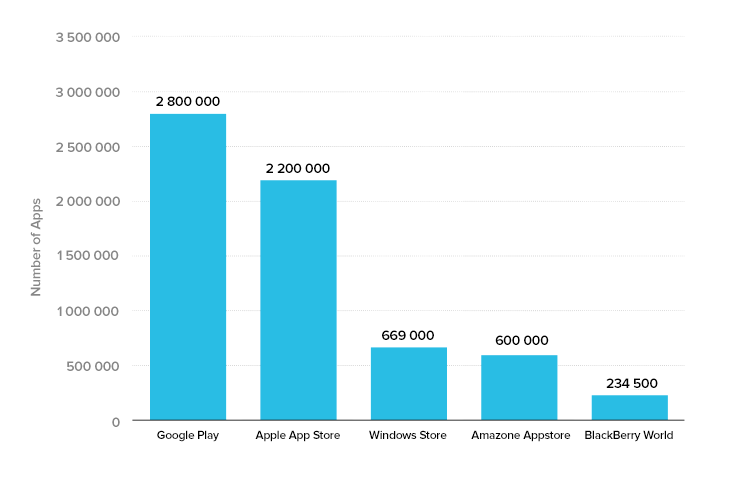
“As of March 2017. Android users were able to choose between 2.8 million apps. Apple’s App Store remained the second-largest app store with 2.2 million available apps.”
Statista

chartIt seems like a nightmare to get prime visibility by beating such a huge number of competitors. To get users attention, your mobile application has to be in limelight. That’s where almost all the developers either get stuck or fail!.
The real game starts once you launch the mobile app on different platforms. It takes almost 72 hours to get approved. The app store algorithms notice and analyze the mobile solution in order to optimize its ranking. Here we have listed a few smart and strong marketing strategies for quick and effective app launch.

Best App Launch Practices to Win Top Position on the Application Stores

1. Launch Time

It is suggestive, not to launch the app on weekends or Friday or Monday. Weekends are obviously a relaxation time for the people. On the other hand, Monday is the opening day and Friday is the closing day of a week when people mainly focus on accomplishing their high priority tasks. So, if you launch the app during these days, you won’t receive a good response.
Launch the app on Tuesday. By the weekend, it gains a good rank in its respective category. During the weekend, if people will have spare time, they will spend it on exploring and trying your new mobile applications.

2. Cover All Application Stores

Do you really think that launching an app on Apple’s App Store and Google’s Play Store is enough? To increase the app downloads, cover all the other popular stores like Windows, Blackberry, Opera, Amazon, and more. It helps you in achieving a competitive edge.
Enable users with something extra. Of course, allowing them to download the app for free doesn’t help you in winning a large user base. There are a few application stores that help in improving the app downloads by launching smart schemes. For example; Amazon allows users to download the app for free for one day. People will definitely like to try a paid app for free for a single day. Thus, organizations can gain increased app downloads.

3. Social Media

Create a buzz about your mobile app by promoting it on social media like Facebook, Twitter, Instagram, and more. It helps in attaining more eyeballs, early reviews, and extra downloads. By retweeting appropriate posts with a specific hashtag and responding people with simple “Thanks”, you can boost up your social media presence and also optimize your app ranking.

4. Cross Promotion

In order to create hype of the mobile app, this can be one of the best tactics. Start cross-promotion from a network of applications or you can buy the users through PPI (Pay Per Install) program. It helps in driving tremendous traffic by grabbing users’ attention. Several cross-promotion tools are available in the market such as Admob, Chartboost, Tapjoy, Fiksu, etc. that aids in optimizing the visibility of your app.

5. App Reviews

Submit the app on leading app review sites such as Techcrunch, IGN Wireless, Mashable, 148apps, and more. Applying this strategy, organizations can drive the users’ attention and improve the number of installs. Well, when it comes to app review websites, there are numerous websites available online. However, pick up the one that holds Alexa rank more than 50k. With this technique, your mobile solution will gain tremendous popularity across the market.

6. Press Releases

If the budget permits, then you can endorse your mobile app in a form of press release on various news platforms such as eRelsease, PR Web, NewsWire, and many others. By publishing your app on these premium platforms, you can get the attention of thousands of industry influencers.

7. Video

Instead of content, try to promote your mobile application through a video because pictorial presentation is always more effective than textual. Launch a video of your app with a sizzling background. Explain all the features in 1-2 mins long video and share it on Facebook, YouTube, and Vimeo.

Real-world Examples

Everybody is aware of Angry Bird, one of the most renowned gaming application. The overnight success of the app is due to the immense marketing efforts. The game is developed by Rovio Entertainment. Previously, the company launched 52 games and all faced a great failure. By reforming their marketing strategy, Rovio earned the iconic success.

The company promoted the app on social media website, online marketing, press releases, media rich advertising, etc. that helped them in achieving the prime position in the top 25 charts. Today, the app is ruling the world of games.

Verdict

Design a powerful marketing strategy for your mobile app launch because it will decide the success or failure of your application. Implementing the above tactics smartly, your mobility product can gain one of the top 25 slots on the various application stores.

Let’s Discuss Your Mobile App Requirement

Contact Us

7 Proven Strategies To Build Productive Enterprise Mobile Applications

It was a great move in tech history when the industry shifted from desktop-based development to the web and mobile app. The transition happened smoothly yet swiftly. Nowadays, web applications are mainly used as a centralized system that runs and manages multiple functionalities from different platforms using various technologies. It is mainly used by the large-scale organizations to maintain their huge project effectively.
But, mobility is the hottest and most trending technology of this time. Allowing people to get everything with one touch, Enterprise Mobile Applications have changed the business landscape as well as customers’ buying behavior. While comparing with software development, mobile apps consume less time, money, and efforts. Eventually, it ends up with generating greater ROI by investing less.
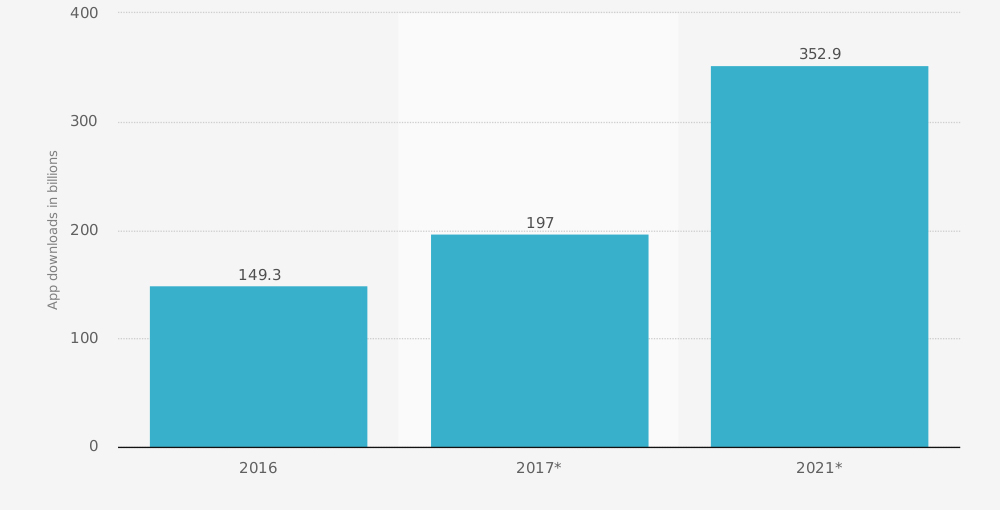
According to Statista, “In 2016, consumers downloaded 149.3 billion mobile apps to their connected devices. In 2021, this figure is projected to grow to 352.9 billion app downloads.”

statistic_id27Above statistics predict about the tremendous improvement in mobile app downloads within the 6 years of time span.

Wider adoption of mobile apps encourages organizations to develop advanced customer facing mobility products. Moreover, companies become conscious about the contribution of these handy devices in streamlining their business operations.
Innovative enterprise mobile application development is not a piece of cake in any way. Organizations have to consider various aspects such as end-user requirements, core objective, cost factors, technology to be used, usability, and more. Here, we share some insights that help in the effective planning of your mobility product development.

1. Define A Strategic Objective

Are you clear what you want to achieve through your mobile solution? It can be either simplified business processes or set up a long-term relationship with the clients. If you are not clear about the objectives, how could you judge the output? Eventually, you will end up by achieving nothing.
Let’s take an example of a textile industry. On-time production, dispatch, and delivery of the fabrics are more important aspects for a garment manufacturer. He can develop an enterprise mobile application that streamlines its manufacturing and supply chain processes. While a garment retailer needs to increase customer engagement and satisfaction so he has to develop a mobility product by considering the customers’ mindset.
An objective-driven enterprise app adds value to your business. Use of advanced technologies cannot give a purpose to your mobile app. Technology is just a way to achieve what you are aiming for.

2. Have The Best Tech Practices In Place

Following the best Enterprise Mobile Application Development Practices, you can create a revolutionary product that engages customers and generates greater revenue. Working with proven practices, brands can develop a high performing mobility product that helps users in accomplishing their tasks seamlessly. Develop customer-centric mobile products that address the various requirements of the end-users.

3. Create Awe-inspiring UI/UX

Through the conceptual user interface and interactive UX, you can convey your brand proposition to the customers. Pay attention to make a creative and unique design for the enterprise mobile application but don’t make it complex. Keep it simple and easy-to-use, so customers can easily understand the product navigation flow.
For an instance; while creating an online shopping app, you need to consider various factors like attractive product display, simple navigation, secure checkout process, etc. Design an application that appeals to end-users’ senses and encourages them to take positive actions.

4. Scrutinize Before Coding

Don’t jump into coding once you have requirements in place. Hold on, and get a proper understanding of client’s demands. Once you are clear in what client is expecting and what you need to deliver, start coding from scratch. Gain the detailed insights about what will be the workflow of the app, what will be the back end system like, whether the application will run online or offline, etc. Consider all these crucial elements before writing the long piece of code.

5. Keep It Simple but Significant

In order to impress users, app owners end up by developing a complex design and features for their mobility products. Keep your enterprise mobile solution simple, so users can easily access it and finish their expected tasks. Use simple design and develop groundbreaking features and functions to facilitate users with a memorable experience. Avoid to develop and integrate unnecessary features in the app.

6. Interact with End-users

Involve your end users in tech development process to develop next-generation enterprise mobile applications. Core expectation of users is to accomplish their task easily and quickly using a mobile product. After developing a few features, ask end-users to test them. Incorporate their feedback in the app to create a killer UI/UX and deliver a WOW experience.

7. Never Compromise on Testing

An avoidable part of an enterprise mobile application development process. Once the development part is over, QA team tests the compatibility of the app across various devices and different mobile OS to see how it performs. Most of the mobile application development service providers avoid the testing as it is too much expensive and time-consuming. However, testing is essential to identify the loopholes in the solution and make it more productive, effective, and secure.

Takeaway

It seems like the mobile app market will never go down. Through the seamless integration with other hi-tech technologies, mobile apps are reaching to a next level. Enterprise mobile applications are gaining more and more popularity by automating various business processes and engaging customers. Apart from the above-mentioned points, organizations have to identify and measure the success of the mobile product on a constant basis. Make sure the app has to be revolved around your business goals.

Let’s Discuss Your Mobile App Requirement

Contact Us

Boost your Quality Assurance with Agile Testing

On July 1st, India rolled out its much-hyped goods and services tax (GST). However, the software development community was particularly amused by a report published in a newspaper. Quoting Navin Kumar, the chairman of the GSTN (the network system which will support the nationwide rollout), the report said – “there is no time to do beta testing…it (software) will stabilize over three-four months from the GST introduction.”

Here’s his statement in verbatim:

“Nowhere in the world does the hardening of software take place before the roll-out. We would have loved to have a couple of months more before the roll-out. When you are about to deploy the software, there is a code freeze when code writing stops. In the next 10 days you do the testing. There is no time for that now. It takes three-four months for stabilization to happen.”

We can only hope that Mr. Kumar and his team have taken lessons from the failure of the “Obamacare” website in 2013.

Apparently, quality testing remains to be on the back burner for teams across the globe. While developers have become accustomed to the Agile software development practices, software testing teams are still facing issues. That’s why we often hear complaints about –

Testing being pushed so late in the sprint that there is no time to review, fix and retest the defects

Or

Not having enough time to go through functional, integration, regression, usability, security and other testing

This is despite the fact that Agile by definition makes Quality an uncompromisable entity. In Agile software projects, teams are expected to deliver a functioning, defect-free, potentially shippable product increment in every Sprint. Yet quality assurance is not an easy task. It might require the adoption of different approaches to testing to accomplish a superior quality code. This means that depending on the requirement, teams have to write different kinds of test cases as described below:

Functionality Test Cases

A type of black-box testing that checks if the application’s interface is working with the rest of the system and its users.

Performance Test Cases

These test cases check the responsiveness of the application under various loads. In large applications, performance tests are usually automated.

Integration Test Cases

An application consists of multiple software components, coded by different programmers.

The purpose of integration tests is to check that when all these components are put together, they function as per the expectation.

User Interface Test Cases

As the name suggests these test cases check the look and feel of the interface, design inconsistencies, typography, grammar, spellings etc. It usually also involves cross-browser testing.

Usability Test Cases

Usability testing evaluates the ease of application usage. As a test, users who may not have any prior knowledge of the application, are given certain tasks to perform. This helps in identifying issues from the first-time user perspective.

Database Test Cases

Database tests are performed to check if a developer has written the application code ensuring proper data storage and secure handling of data between the source and the destination database.

Security Test Cases

In the age of high-profile data breaches, application security testing is becoming a specialized endeavor and organizations sometimes maintain a full-time team just for the purpose. According to Open Source Security Testing Manual, Security Testing consists of seven major test areas:

  • Vulnerability Testing
  • Security Scanning
  • Penetration Scanning
  • Risk Assessment
  • Security Auditing
  • Posture Assessment
  • Ethical Hacking
Test your product idea in a 15-day design sprint
Build a POC/Prototype/MVP

START A BLUEPRINT

In addition to above test cases, quality assurance in Agile involves “User Acceptance Criteria” and “Definition of Done”.

User Acceptance Criteria

In Agile testing, User stories are incomplete without their Acceptance Criteria (AC). AC are critical documentation bits which help developers in a team to write accurate test cases without any ambiguity and understand business values better. Although, the Product Owner writes AC, Quality Analysts and Developers also contribute to improving the AC.

Standard Acceptance Criteria Format (derived from Gherkin)

Given <precondition(s)> When <some action> Then <a result/set of results>

Example: Given the user hasn’t ordered yet, when the user adds any apparel into the shopping cart, then apply a discount of 20% to the total

AC ensure that all the parameters of a User Story are met as per every stakeholders’ agreement. As these test cases are also used by the end-user or client, they together constitute an important phase of testing before going into production. Also, only when the AC are “Accepted” the user story is marked as “Done”.

Definition of Done (DoD)

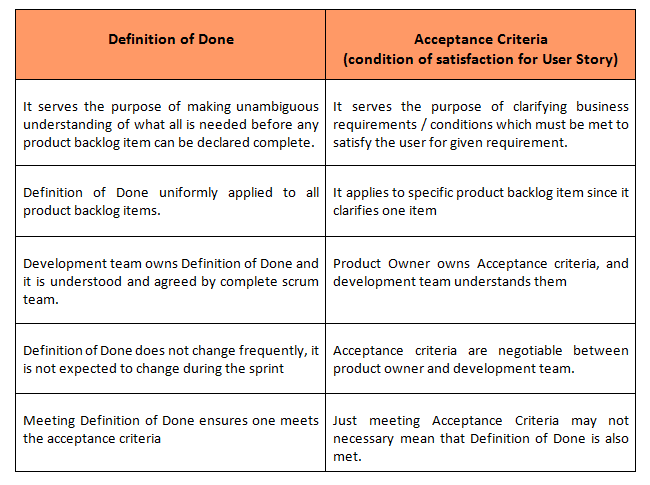
It’s the final piece of document in Agile testing used by cross-functional teams to evaluate the completeness of a business requirement. DoD is often confused with AC; in a discussion on StackExchange, an Agile practitioner writes:

“In my opinion, there is no difference. Definition of done and acceptance criteria are used interchangeably. You cannot meet the definition of done without all criteria being met and you cannot be not done if all criteria have been met. If you find yourself in the latter, then you simply have two sets of criteria for some unknown reason”

Another user in a blog on Scrum Alliance writes:

“…both the DoD and user story acceptance criteria are musts (and different). The Definition of Done (DoD) is a clear and concise list of requirements that the user story must satisfy for the team to call it complete. The DoD must apply to all items in the backlog. It can be considered a contract between the Scrum team and the product owner.”

If you have used AC or DoD, but not both, here’s a comparison which can help you understand their difference and significance:

Definition-of-done

Quality Assurance in Agile software projects depends on how well the team is collaborating. QAs have to be an integral part of the team and should be engaged throughout the sprint employing TDD/BDD approaches. This means the tests as described above, should be performed in parallel. While QAs can stick to black-box testing, developers should complete white-box tests. Further, your teams will need better project management tools for realistic sprint planning with accurate effort estimation, and user story prioritization to deliver quality builds in the committed time. Also, Automation will improve the reliability and speed up Agile testing to a great extent.

Credencys Credencys Solutions Inc is a leading mobile applications development company and solutions provider which has helped numerous businesses in their business growth. If you wish to develop a POC/Prototype/MVP, we can help you out with our Blueprint workshop.

Validate your idea with higher Agility
Build a POC/Prototype/MVP in a 15-day workshop

START A BLUEPRINT

Why you should adopt the Agile UX Design Process

From the very outset “Agile UX Design Process” sounds a bit of a mouthful and borderlines marketing jargon. However, it is a very practical process with tangible benefits for designers seeking efficient and intuitive designs, keeping user feedback at the center of the design process. In fact, for teams accustomed to Agile ways of working, the process is nothing new. It is just an application of Agile software development methodology to mobile app design.

How to design mobile application in an Agile way

You can checkout Interaction Design Foundation’s article describing the “The 5 phases of Google’s Design Sprint” as:

  • Unpack – An initial get-together to develop common understanding of the problem, its solution, and the market scenario
  • Sketch – Solution detailing
  • Decide – Prioritization of features required for prototype
  • Prototype – development of prototype
  • Test – Google recommends 6-20 users for testing of the prototype

While this can approach can be useful for those who are seeking guidance on how to design mobile application in an Agile way, UX designers who haven’t worked in an Agile team will take some time to adapt. Further, as every organization has it’s own work culture and methods to practice Agile, they can develop their own version of Agile UX design process.

To learn more about Credencys’ design thinking process, you can join our Blueprint workshop. Blueprint is a 15 day collaborative workshop which helps our clients create a roadmap for their application development starting from building a proof of concept to creating clickable prototypes and MVPs.

Blueprint Workshop
Start Developing Mobile Application Prototype Now

START A BLUEPRINT

The need for Agile UX Design Process

The biggest challenge in the adoption of Agile comes from the decentralization of accountability. It is also its biggest advantage. Agile makes every team member accountable for the success or failure of the project. This, in theory, means that the UX designers have to be a part of the entire software development cycle. The idea is to keep the entire team of business analysts, designers, and developers on the same page.

The work of a UX designer starts even before the start of a development Sprint. They need to work closely with project stakeholders in envisaging the software behavior and pinning down the mobile app design requirements. This often requires UX designers to collaborate within the same project management tools (Scrum, Kanban boards etc) as those used by the development teams.

This would mean that the designers would have to work on user stories defined for the design features by the project owner. However, in Agile it is often stressed that the most critical bits of software must be developed first in the initial sprints. The criticality of the features or user stories in a backlog is decided by the product owner. Usually, the sizing and prioritization of user stories in a backlog are done with Fibonacci effort points and MoSCoW prioritization method, respectively.

UX designers need to be a part of these early stages, not only to help in the grooming of the backlog but also to develop a better understanding of the business goals. Early collaboration between UX designers and business owners is also desirable as the designers can make a huge impact on the success of the project. As failing early, failing small is becoming an acceptable trend, UX designers can ensure that complacency in the design is not among the factors for this failure.

Shift From Abstract to Concrete
Reinvent UI and UX in a 15-day workshop

START A BLUEPRINT

Integrating Agile Methods with the Design Thinking Process

Design Thinking is an exploratory approach which relies on identifying end-user needs and discovering solutions to meet those needs. UX designers are generally better placed when it comes to thinking from the end-user’s point of view. Their job is to help in the development of solutions which are fun to use. That’s why being truly Agile goes beyond the use of tools – the designers need to understand their importance in the team and should be actively involved in providing design suggestions for the improvement of the software at all stages.

Sometimes, a small change in the interaction design can reduce a lot of problems faced by the developers. However, such changes in mobile app design are usually accompanied by an increase in the development work. The point is that Agile will need such changes being an iterative process where all those changes that help in achieving a business goal are always welcome. That’s why Agile is so effective in delivering quick value – it allows you to adapt quickly based on feedback and learning. This also means that the work of a UX designer is never over in an Agile project.

How Agile Makes Risk Management Easier

Software projects have conventionally been plagued by several risks forcing them off-schedule, over-budget and out-of-scope. Agile project management reduces this risk exposure by providing higher visibility and faster results to business owners. However, before we explain how exactly Agile mitigates Risks, it is important to have a general definition and brief understanding of the traditional risk management practices.

What is Risk

A risk is generally defined as a set of “uncertain conditions” which can together or individually have a definite measurable impact on at least one project objective. Some of these “uncertain conditions” are listed below:

Internal Uncertainties

Resource: The team size proves to be insufficient to meet the project goals.
Time: The timelines are not realistic or have been revised to such a level.
Budget: The allocated budget is insufficient to meet the project goals.
Skills Mismatch: The team does not have the required skills.
Lack of Clarity: There is a lack of consensus among stakeholders.

External Uncertainties

Disruption: A new technology might jeopardize the current technology investments.
Regulatory Landscape: There are challenges in meeting compliance.
Competitive Landscape: There are challenges in generating value proposition or USP.
Government Policies: Restrictions on outsourcing, higher trade tariffs.

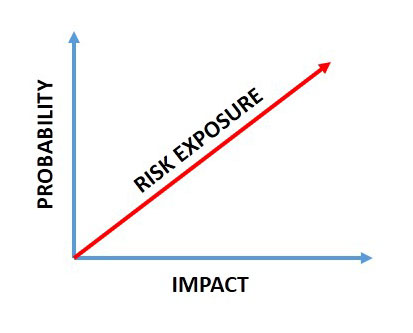
All these conditions have a certain likelihood or probability of occurrence. Further, their individual impact also varies. The product of probability and impact defines the risk exposure level for a project.

Impact x Probability = Risk Exposure

image3

In the traditional waterfall methodology management of risk was a major concern for project owners. The process frameworks in waterfall used to put perpetual pressure on teams to complete requirements and design even before starting any development work. This would translate into an opaque working environment where project owners were unable to attain any value from the ongoing work. Further, the long feedback and change management cycle used to deter business owners from recommending any changes.

Hence, Risk Management was recognized as an essential process for systematic identification, assessment, and mitigation of project detriments that if not addressed in time would damage the project beyond repair. Nonetheless, even this process involved significant time investment, documentation, and maintenance of a risk register. Complex CPM methods, mindmaps, and PERT charts were often used for estimation and risk management purposes.

Solve your Design Puzzle
Develop a POC/Prototype/MVP in a 15-day workshop

START A BLUEPRINT

How Agile provides implicit management of Risks

Agile methods implicitly manage risks where blockages or project impediments are identified in standup meetings on an ongoing basis. It is generally accepted that the short duration sprints effectively break down risks and provide an opportunity for their early mitigation. Risks are also minimized with the involvement of cross-functional teams that maintain a predictable project velocity with continuous feedback and transparency at all times.

Therefore, most project managers usually do not see any major value in assessing and documenting the risks elaborately in Agile project management. However, you can keep a simple risk register with limited fields for your reference. This could include a small description of the risks, their probability, impact, action items, and the final status. Further, you can also quantify risks for dealing with them in a prioritized manner.

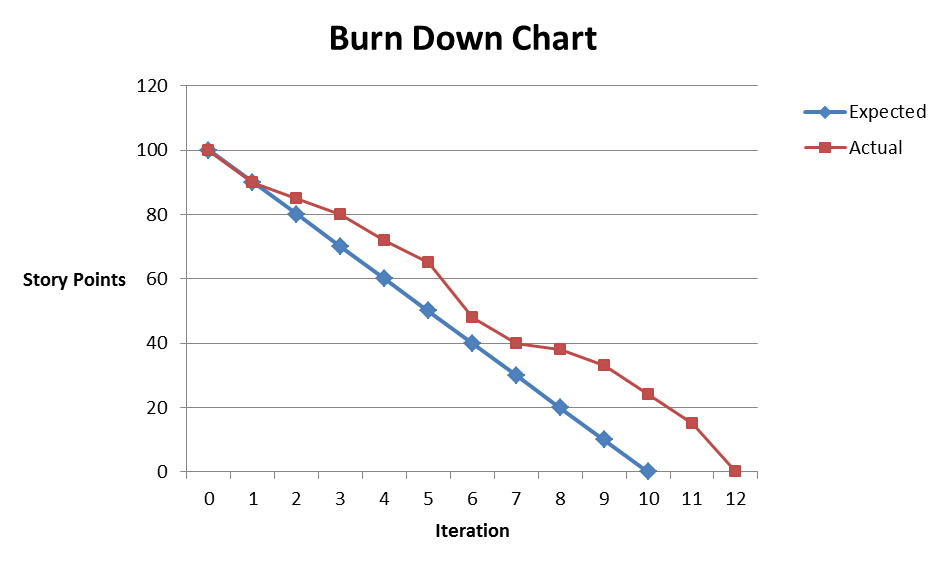
Risk mitigation with Burn-Down Charts

image2

A major part of traditional software project management involved tracking of schedule and cost overruns. The accuracy and frequency of these tracking measurements used to depend on the size of the project. As discussed, Agile makes this tracking easier. With burn-down charts, project managers can get a daily assessment of effort and schedule. These charts provide easy visibility into project progress and any major deviations from the ideal velocity help in early identification of issues/risks.

As discussed, the onus of identifying risks in Agile is shifted to the team members. Major risks can be discussed in the sprint review or sprint retrospective sessions. The retrospective session can help all stakeholders in identifying lingering issues and select the best way forward. Further it provides clarity for better planning on risks to be mitigated in the future sprints.

Design to Standout
Reengineer User Experience in a 15-day workshop

START A BLUEPRINT

It is seen that organizations are often wary of engaging with a new software development firm because of their inability to gauge their risk exposures. There is no way to ascertain if the vendor would be able to deliver quality results in a timely fashion. Paradoxically, the only definite way to quell these apprehensions is to start working with the vendor.

At Credencys, the Blueprint workshop addresses such concerns for our new clients by introducing them to our work approach. Blueprint is a 15 day collaborative workshop which helps our clients create a roadmap for their application development starting from building a proof of concept to creating clickable prototypes and MVPs.

Credencys Solutions Inc is a leading mobile applications development company and solutions provider. You can contact us for mobile strategy consulting and developing mobile apps for multiple platforms. Subscribe to our blogs for getting similar articles on software project management, strategy, leadership and more.


The best practices for managing your outsourced software project

CIOs and project managers are often overburdened with the management of multiple IT projects with several interdependencies. While application outsourcing is often seen as a viable option towards the reduction of this application development backlog, completing such projects within planned budgets and timeframes is never easy.

In the previous blog, we discussed how you can choose an application development company with a long-term business focus. This is crucial for optimum management of projects as dealing with a single vendor can help you achieve higher process efficiency and better coordination on multiple interlinked projects.

Aligning business objectives and project goals

It is a widely known fact that the majority of application outsourcing projects fail due to poor requirements gathering, analysis, and planning. For example, it is seen that retailers usually invest in mobile app development to increase online sales. However, the business objective of higher online sales can also be achieved with a mobile website or a progressive web app. Hence, it is important that the vendor and the client have a common understanding of business goals before they finalize a particular project requirement.

This entails higher collaboration between the client and the vendor in the early stages of solution definition. While business objectives are likely to remain more or less constant, the project requirements might change over the course of a project. For this change management, organizations used to create and rely on a requirement traceability matrix (RTM document). However, these days Agile based software project management tools provide better transparency with version-control and change-tracking facilities, effectively removing the need for RTM documentation.

Defining the Scope

Explore Design Thinking
Build a POC/Prototype/MVP in a 15-day workshop

START A BLUEPRINT

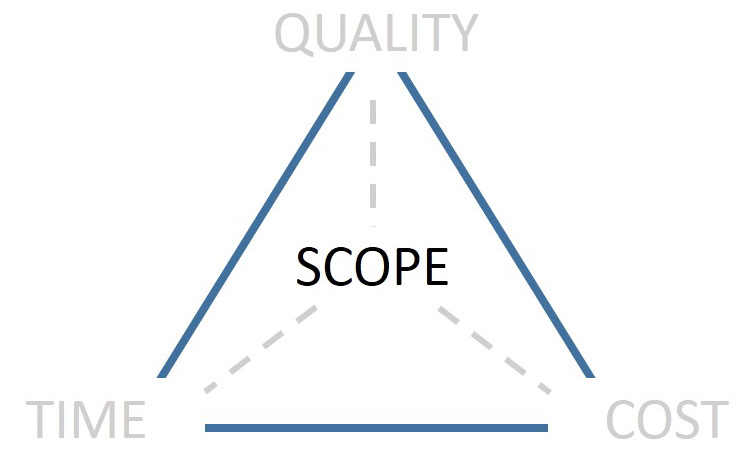
Scope

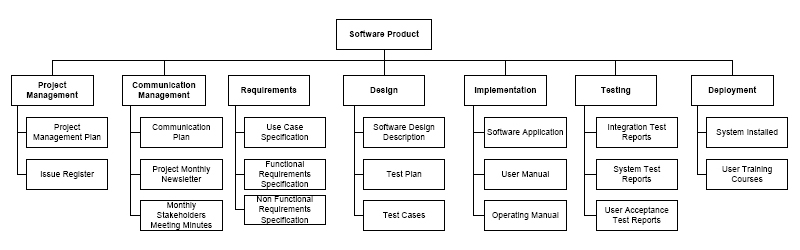
While business owners usually want to restrict their roles to validating and accepting the final builds, they must go beyond their comfort level in defining the scope of a project. In the traditional method of software project management, the software vendor was expected to create an outline of the key deliverables at every stage of the project. This used to translate into creation of a schedule of measurable deliverables, as described below:

project-management-institute

However, this method of requirements and scope documentation is very tedious and time-consuming as all requirements have to be envisioned in advance with considerable detail. While this method, in theory, left little to chance, the downside was that specification document used to eat up a lot of valuable time. Further, the requirements would change during the project with new discoveries often rendering the Scope document obsolete.

In an Agile project, Scope is defined by high-level requirements, also known as User Stories. While details on these requirements are critical, they are produced just-in-time. This means that detailed documentation of user stories is done on Sprint-by-Sprint basis, where there is a possibility to fail early, make new discoveries and make relevant changes in the User Story backlog for upcoming Sprints. This ensures that there is no wastage in specifying things that might not be needed. Further, this approach provides enough room for change – which otherwise becomes a point of debate in waterfall based methodologies. Change management is easier in Agile:

image

Things You Must Know about Change Management in an Agile environment

  • The goal of Agile is to enable change management, not prevent it.
  • Change management is inevitable in Agile.
  • There should be no change management during an iteration.
  • Change management does not mean no prioritization.
  • Change management does not change highest value story scheduling.
  • Agile does not eliminate change management challenges but provides a disciplined, streamlined way to manage them.
Source: TechTarget

Quality Assurance

quality

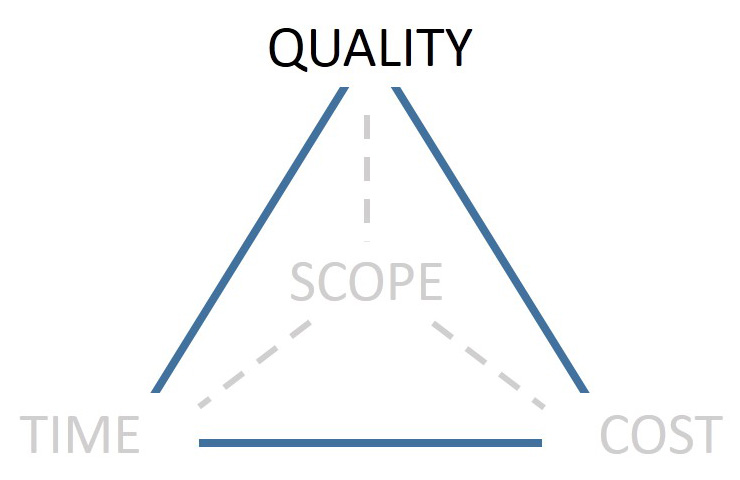
If you have subjective expectations on quality, then you are in for a surprise. As soon as you develop an understanding of the key deliverables for initial sprint, you should start working with the application development company on defining the parameters for quality assurance evaluation. In Agile this is accepted as a collaborative ongoing process where User Stories are developed just-in-time along with their Acceptance Criteria (AC). AC ensure that all the parameters of a User Story are met as per every stakeholders’ agreement. Only when the AC are “Accepted” the user story is marked as “Done”.

Ideally, AC should have only two values – either acceptable or not acceptable. There is no place for partially acceptable. To ensure this, AC have to be carefully defined with some measurable or tangible parameter. Sometimes, it might also be possible to link payments with AC. That’s why project management experts usually advise including AC in contractual agreements on external projects. However, this might involve lengthy documentation with AC being defined within the requirement and project scope statement. Nonetheless, defining AC in advance can save a lot of hours and money usually spent in change management related disputes.

Schedule Management

time

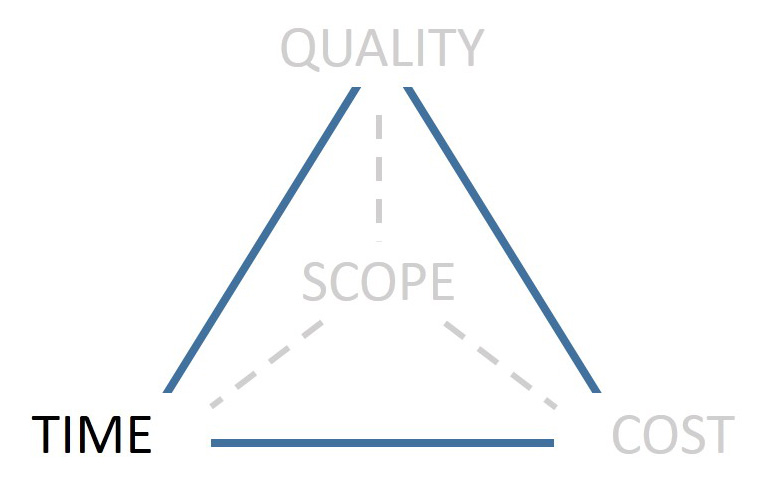
In the past, schedule management used to depend on a very lengthy document based procedure. It involved defining the critical-path, which was a complex process, often based on inaccurate assumptions/estimates.

Unlike the past, when the focus was to schedule every single task, an Agile approach relies on visually communicating the high-level definitions of the project deliverables. Agile provides facilities to schedule lower level features and tasks in a flexible way where builds are delivered in short sprints.

Planning of these short sprints is easier and more accurate than any other scheduling method used in the past. Teams using Scrum often size their backlogs with Fibonacci effort-points and prioritize feature deliveries with MoSCoW prioritization. As discussed earlier, the product owner will need a clear understanding of business objectives for this prioritization.Also, an Agile team can provide you a fairly accurate time-estimate which is based on the empirical data on effort-points, velocity, and approximate hours taken to complete one story point. Further, you can get the visibility into an ongoing project schedule during a team’s iteration planning meet and daily standups.

Also, an Agile team can provide you a fairly accurate time-estimate which is based on the empirical data on effort-points, velocity, and approximate hours taken to complete one story point. Further, you can get the visibility into an ongoing project schedule during a team’s iteration planning meet and daily standups.

Cost Projections

cost

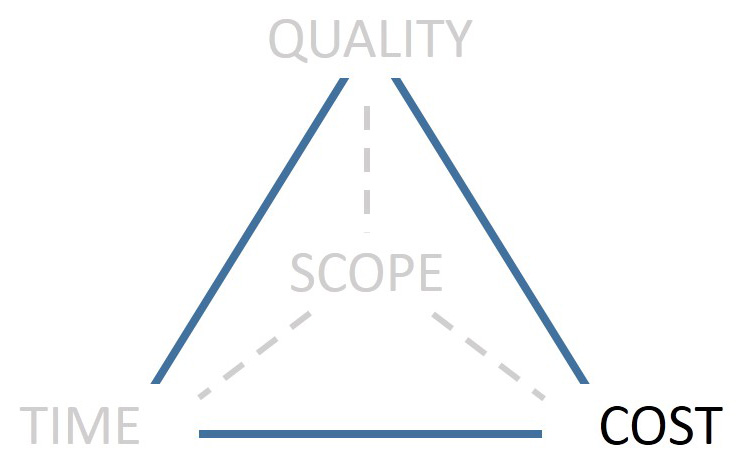
In addition to the quality, scope, and time, the cost of your offshore software development project will also depend heavily on the resource allocation. If you have a higher budget, you can easily reduce the time and improve quality by hiring a large team of experienced developers. A project manager can also put multiple teams in parallel to work on a prioritized backlog. Here’s the typical Agile team structure in an offshore software development project:

product

The term elastic team refers to a team in which additional resources are scaled up and down as needed. For all budget, timeline, and resource allocation related projections, you will need a Project Management Solution. You can checkout AgileFirst, which is a simple and free software project management software that allows you to manage your project in an Agile manner.

Agilefrist

Credencys is currently using an MVP version of this software to manage its Blueprint workshops with its clients. Blueprint is a collaborative workshop from Credencys for Small & Medium Enterprises. With the help of this workshop you can convert your mobile application’s idea into a working prototype/POC/MVP. The Blueprint workshop will help you create a roadmap for the mobile app development starting from building a proof of concept to creating clickable prototypes and MVPs.

Nix Complexity. Fix Design.
Build a POC/Prototype/MVP in a 15-day workshop

START A BLUEPRINT

Credencys Solutions Inc is a leading mobile application development company and solutions provider. You can contact us for mobile strategy consulting and developing mobile apps for multiple platforms. Subscribe to our blogs for getting similar articles on software project management, strategy, leadership and more.


How to Choose the Right Vendor for Custom Software Development

The technology is changing at an alarming pace and enterprises today have to rely on a fragmented IT infrastructure with systems and applications developed during a long span of time. In an ideal world, enterprises would have preferred to work with a single vendor to meet this ever growing demand for new software. However, usually, it involves working and collaborating with different vendors and companies that develop mobile applications.

Therefore, the foremost requirement for any enterprise is to identify an mobile application development company which is ready for a long-term engagement with capabilities to meet evolving software needs. The software vendor should employ standard processes to provide required transparency and maintain integrity at all times.

Needless to say, it is not an easy task and there is no one-size-fits-all strategy for selecting an app development company.

Mobile Applications Development Company: Offshore vs Nearshore vs Onshore 

There is no simple answer to this conundrum. Yet, sourcing managers have traditionally relied on a mixed model to meet their varied demands. There are projects which will require onsite collaboration due to security or policy constraints.Yet, at times it might be possible to rely upon application outsourcing to offshore locations. Nonetheless, the size of skilled resource pool, maturity level of the software processes, management of risk, and ultimately the costs continue to dictate these outsourcing decisions. Let’s explore these factors in detail:

The Size of Skilled Resource-pool

While the IT vendor should have the capability to allocate more resources to your project during the development, it is also crucial to evaluate how your software vendor will deliver in the long run. The application maintenance and support offered by the vendor will determine your business continuity and long-term value. As a part of your SLA with the application development company, you should make sure that there are enough engineers on the bench to support all the stages of software development, deployment, and support.

Maturity Level of the Software Processes

Agile and Scrum based processes along with DevOps have become a default route for application development. These processes will provide you granular visibility into the project progress and help you keep tabs on your software investment. Moreover, the processes heavily rely on clear communication and significantly reduce project risks. Further, vendors working in the Agile mode should be able to provide you early ROI with contracts requiring very short term engagement. This means you will get the opportunity to engage in a “Sprint” and evaluate if the processes set up by the vendor meet your expectations. You must also explore what tools the vendor will be using for the software project lifecycle management, general communication, task management, document sharing, code quality management, and administration.

Data Migration Strategy

It is alright that you are investing in application development that will help you scale up your business. However, most enterprises forget to take into account the cost of data migration. It is not advisable to spend a lot of time and money on a custom software which would refuse to work with your legacy systems.

Unlike the common conception, data migration isn’t a simple task and treating it as an afterthought can be costly for businesses. Application migrations are complex in nature as applications interact with each other on many levels and have their own data models. By design, they are not built to be portable. Hence, a middleware is often required to make application migrations successful. Make sure that your software vendor has a data migration strategy which covers all these aspects.

Accelerate your Time to Market
Develop a POC/Prototype/MVP in a 15-day workshop

START A BLUEPRINT

Security Procedures

It is often seen that enterprises mobility solutions is carried out without the involvement of internal IT and security teams. These teams are then tasked to ensure that there isn’t any security outage when the newly developed applications are deployed. However, traditional solutions for vulnerability and application scanning may take up to an entire day to complete a scan depending on the complexity of the application. Code review tools aren’t any faster. All this can significantly overburden your internal IT and security teams. Even with Web Application Firewalls, security continues to be a major concern for enterprises developing new software code on daily basis.

This means that the app development company you select should have set-up security measures at various levels of their development facility that will include physical security, networking, database security and ad hoc security procedures for any specific project requirement. When engaging with a third party iPhone application development vendor, you must evaluate the processes put in place by the vendor to ensure the security of all personally identifiable information (PII) or other critical data which might be exposed to the vendor during the outsourcing engagement.

Management of Intellectual Property

Another major aspect of security is related to the protection of intellectual property (IP). IP is not restricted to your copyrights, patents, designs, and trademarks, but can also be in the form of software code. The contract with the vendor should explicitly allow you to retain the IP rights over your code/technology, at all times. This means that you should have access to the API, data, and servers during the development. Further, the vendor should have strict processes detailing and restricting the access to critical data resources. You can also include NDA, NCA and other letters of non-disclosure depending on your needs. Further, as IP laws vary from country to country, it will make sense if you are dealing with companies that come under the purview of laws in your country.

General Administration

Working with an offshore mobile application development company might create some communication issues during the project. As the teams will be working in different time-zones, you must discuss the how the vendor will sync the timings during the project. Further, discuss the procedures for leave approvals, attendance management, and resource replacement. If possible try to gauge the employee retention rates and Glassdoor ratings of the vendor to evaluate the working conditions. This is crucial as too many members leaving your project in between can affect the project timeline (with the time lost in replacement/knowledge transfer).

Domain Expertise

Last but not the least, you must evaluate the past work and domain expertise of the vendor. It is possible that a particular vendor might be well known in the industry, but would have done limited projects in your domain. A vendor specializing in your domain will have set processes based on your business requirement and will provide swift decisions related to the selection of right technology stack, mobile applications development platform and so on.

Take your idea to a Development Ready Design
Engage in a 15-day workshop

START A BLUEPRINT

Credencys Solutions Inc is a leading mobile applications development company and solutions provider. You can contact us for mobile strategy consulting and developing mobile apps for multiple platforms. Subscribe to our blogs for getting similar articles on management, strategy, leadership and more.

Developing Strategies for Enterprise Mobile App Development

An interview with Credencys CTO, Sagar Sharma

sagar-sharma

  • Former Toyota and Oracle Solutions Architect Sagar Sharma is the CTO of Credencys, an LA-based mobile applications development company
  • Sagar has helped numerous startups, SMBs, and enterprises in choosing the right strategy for developing mobile apps
  • He is a proponent of Agile and is currently developing a project management system for Agile software deliveries

Enterprises today are engaged in a perpetual cycle of application development and overhaul for embracing latest disruptions. Developing mobile Apps takes up a major share of these activities as the smartphone is a common touchpoint for customers, partners, and employees. In this interview Sagar will answer some of the most common questions and challenges in the mobile strategy planning stage:

How do you develop a mobile strategy for your clients?

Although defining a mobile strategy is most often similar to defining a business plan, it’s very contextual. Some of the clients come to us with a business plan complete with SWOT analysis, competitive analysis, elevator pitch, GTM plan and everything you can think about it. I remember working with a couple of clients who had developed screens and workflows in-house and just required developers to implement those designs. You need not discuss strategy with such clients. On the other hand, we also have clients who come to us and say – I need an Uber-like App for my cab rental business. This is where a client’s needs and wants might differ. Developing a Mobile strategy is more important in such cases.

What can you tell us about the common misconceptions or mistakes done by businesses in developing a mobile strategy?

As I said, sometimes businesses do not have a long-term vision. The focus on solving an immediate need prevents them from looking at the larger picture. Developing mobile Apps with such a narrow focus rarely provides any substantial return to businesses. For example, enterprises often spend their budgets in developing separate mobile solutions for better collaboration, secure remote access, and real-time information exchange. However, there is rarely any planning for future or compatibility with existing legacy systems. Moreover, it is not rare to see multiple applications for doing a single task within an organization.

Such inefficiencies can be removed with proper planning, selection of correct technology stack and development of solutions that complement existing enterprise infrastructure. Further, enterprises should consider creating an internal group which leads all enterprise mobile initiatives. The creation of a centralized body for mobility initiatives helps in creating a mobile strategy which is aligned closely with key business goals.

How pronounced is the need to repurpose existing systems (websites, e-commerce tools, CRMs, CMS etc)?

There’s always a need, yet most of the legacy enterprise systems are so large that nobody wants to mess with them. Businesses are not keen to disturb their mission critical systems. These systems are disturbed only when they become annoyingly slow to sustain enterprise needs for higher collaboration and efficiency. Needless to say, such reactive measures compound the problem over a period of time.

There is a need to be proactive in transforming these legacy systems and make them work in sync with modern mobile platforms and browsers. A lot of times information flow is restricted due to complex interface and lengthy workflows. This complexity can be reduced with UX redesigning. Further, enterprises can allow employees and partners to design their personalized workflows depending on their needs. By integrating mobile closely within an enterprise ecosystem, organizations can significantly increase the efficiency of their existing systems.

How do you help companies align their business and mobility goals?

Having a sharp focus, concrete goals, KPIs and a sufficient budget is instrumental to any mobile strategy. If a business wants to compete in the B2C domain with its App, a proper understanding of the market is most critical. In such cases, businesses have to study the competition, evaluate incumbent’s offerings and list down the key opportunities, threats, and challenges. This can help businesses in creating a strong business case for their mobile application. On the other hand, businesses sometimes adopt blue ocean strategy to tap into new market spaces with unknown growth potential.

As defined by Gartner, most of the enterprise mobile initiatives are these days classified into two broad categories – Mode 1 and Mode 2 initiatives. Mode 1 initiatives refer to tried-and-tested models, where implementing a proven system is expected to provide a set outcome. Mode-2 initiatives carry an element of surprise. These are more exploratory and innovative in nature. As a strong follower of Agile, I have seen that Agile practices support both these initiatives very well. Adopting an Agile approach, I help my clients in better prioritization by telling them what is easily doable and can produce maximum value for their business or what could be done in the later versions. Further, I help clients to get started early and achieve maximum value without any elaborate documentation processes. That’s why we frequently engage with clients via Blueprint workshop which helps them design mobile application in a 15-day sprint.

Go Agile
Make your idea DEVELOPMENT READY in a 15-day Sprint

START A BLUEPRINT

Tell us something about the new project management system your team is working on.

AgileFirst is industry’s first project management system supporting Scrum based Behavior-Driven Development processes – which are central to our working methodology at Credencys. It aims to provide better collaboration between all stakeholders involved in creation and grooming of Backlogs. With this single tool, people can create user stories, acceptance criteria, notes & invites for their teams to collaborate on their backlog items.

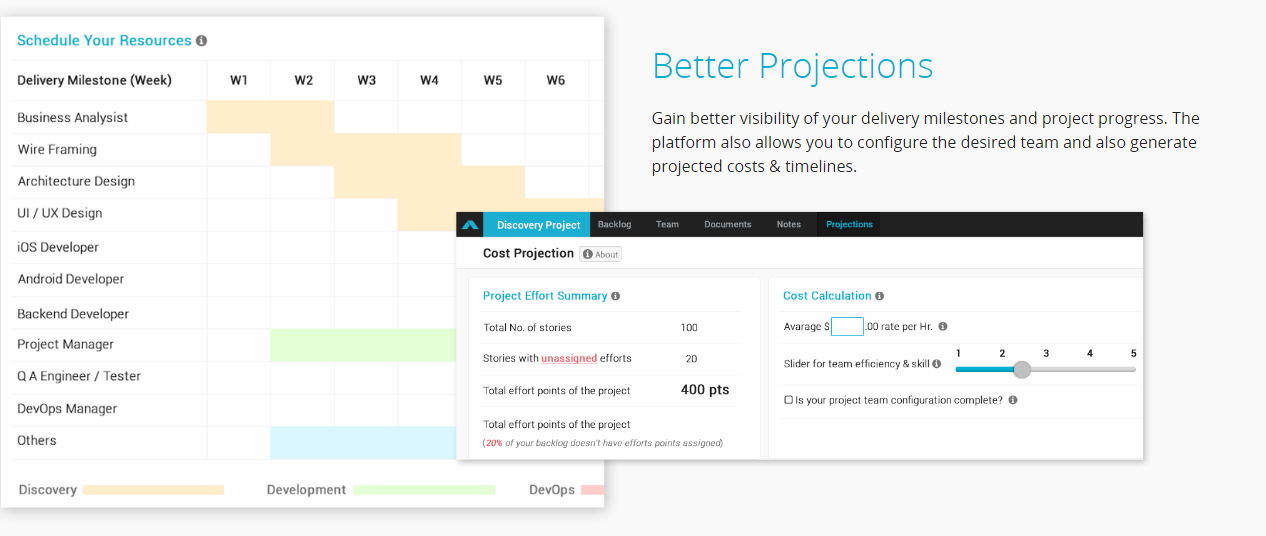
We have focussed on developing a highly intuitive interface supporting drag-and-drop of user stories. Project managers can manage and monitor user stories in four major dashboards. They can get a hawk-eye view of backlog stories in the List View, view associated scenarios in an infinite scroll in the Capture View, view stories with Fibonacci story points on Effort Board and get MoSCoW prioritization on the Value Board. The system will support entire software development cycle providing better visibility on delivery milestones and project progress. The system will also allow managers to configure their desired team and generate projected costs & timelines.

When is AgileFirst going LIVE?

The first phase is already LIVE and we are currently using it for running our Blueprint workshops. Organizations interested in evaluating the platform can use it for designing their products.

Can you share some insights on how organizations can prepare for the future of mobility?

Future is never too far away. All that an organization need is a bit of initiative to look beyond the obvious. Technology is already in place to support future innovations. Artificial Intelligence, Blockchain, Augmented and Virtual Reality, Internet of Things are all rapidly evolving technologies with a lot of scope for innovation. Businesses have to explore these technologies and create new products and revenue models for their business. As I said, a lot of this will involve sailing in the blue oceans. And that is where Credencys comes into the picture – we enable those organizations who are willing to experiment and leverage technology, not waiting for others to show them the way forward.

Routine. Extreme. Everything.
Build POCs, Prototypes & MVPs with the latest technology

START A BLUEPRINT

Credencys Solutions Inc is a leading mobile applications development company and solutions provider. You can contact us for mobile strategy consulting and developing mobile apps for multiple platforms. Subscribe to our blogs for getting similar articles on management, strategy, leadership and more.

Here’s the Enterprise Mobile Strategy for 2020and Beyond

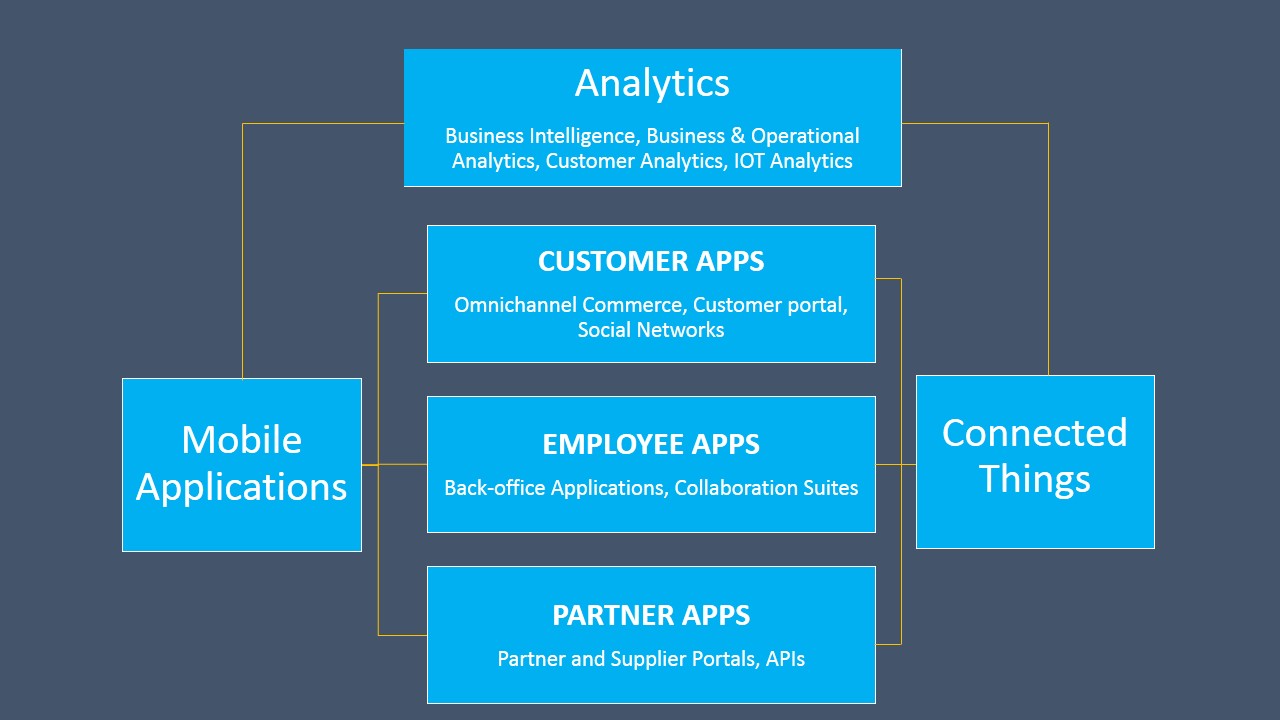
Many enterprises are today stuck in a complex IT ecosystem which needs mobility to leverage latest advancements. Mobile led initiatives are transforming every business sphere:

Enterprise-Mobile-Strategy1

While some of these mobility initiatives are strategically planned, some others, not so well. Most of the mobile application development projects are based on competitor offerings and immediate business needs. The lack of foresight and inability to form a holistic enterprise mobile strategy prevents organizations from harnessing good returns on their mobile-related investments. This article will help you align all your mobility initiatives with the proper mobile strategy planning and develop a framework which keeps all projects on track with minimal course correction.

6 strategic steps for the success of your mobile initiatives

1) Bring all stakeholders to a common ground

It is often seen that different IT stakeholders and strategic decision makers have different opinions, expectations, and agenda when it comes to leveraging mobile. For example, a CMO might not show a keen interest in developing enterprise mobile apps for the internal communications team. Further, the IT team is often tasked to look out for point solutions to meet immediate needs. This approach creates a complex ecosystem of applications and solutions which rarely works in sync or provides any value to the organization.

It is important for an enterprise to take a step back and redefine its mobile strategy to remove these inefficiencies arising from the fragmentation of IT. As discussed, the first step is to compile and map all immediate and future requirements with their respective end user/beneficiary groups. The above initiative will play an important role in providing clarity for the following mobile application development stages:

  • Goal Setting, business case identification: Identify and prioritize your enterprise mobility goals vis-a-vis your business goals. This will help you in better alignment of mobility strategy with your core business objectives.
  • Drawing the enterprise mobile roadmap: Create a roadmap with the team driving the mobility initiative. This shall help you create realistic deadlines while bringing everyone on the same page.
  • MADP platform evaluation and selection: It’s important to choose an MADP platform that not only meets business needs but also allows developers to create user-friendly solutions with ease.
  • Solution architecture, design, development, and deployment: Most businesses often lose track of their project during these critical stages. Organizations need to adopt latest Agile frameworks for better visibility and control over these processes.
  • Quality Assurance: Choose tools and methodologies to support quicker development without compromising on the quality. Most of this can be achieved with Automated testing.
  • API management and modernization: Enterprises have developed a complex ecosystem of APIs that interact with each other. There is a need to manage these APIs in a secure and scalable environment.
  • Mobile UX improvement: A lot of enterprise resources are never utilized as complex workflows hinder their access to the intended users. Improvements in UX can remove such inefficiencies.
  • Governance, Security, and Compliance: Develop policies to create a perfect balance between connectivity, security, and productivity needs of your organization.

2) Identify mobile-readiness and create a transition plan

Most organizations have a core business group which frequently interacts with partners and top executives. Somehow, their needs for mobility are well addressed as they have more freedom to experiment and adopt third party products. At the same time, internal employees and field workers continue to perform on legacy platforms. This creates pronounced differences in the way different groups in an organization collaborate. It also creates visible bottlenecks in the information flow and availability.

While there is a need to create a common mobile ready enterprise suite, it would not be prudent to force all your teams to suddenly jump onto this new system for routine office and field work. There could be many challenges:

  • Data Migration: Data migration can be a headache for the IT team and there could be compatibility issues
  • Reluctance to change: generally, people in an organization develop a working culture which is not conducive to adoption of new solutions
  • BYOD management: there could be security and authorization related concerns

During the mobile strategy planning, decision-makers need to create a transition plan for any mobile initiative which affects the entire organization. It is advisable to avoid any overlap with a business-critical initiative. A roadmap describing phased release can be drawn after taking inputs from all the teams.

3)  Gauge and improve user experience (UX)

Enterprise-Mobile-Strategy2

There are ‘n’ number of solutions to most problems – yet only certain solutions gain acceptance. UX is a critical factor in deciding this acceptance. If you are planning to solve a certain problem with a mobile solution, it must simplify things for the end-user. For example, improvements in the UX can not only make mobile a preferred medium for catalog viewing but also reduce shopping cart abandonments. Hence, UX is a key consideration for designing the functionalities and behavior of a customer App.

Further, a myriad of enterprise applications remains underutilized due to the similar UX deficiencies. As a business decision maker, you must ensure that all technology specific decisions – starting from the ‘selection between a native and a hybrid app’ to the selection of ‘data access points’ and a ‘content delivery network’ – are taken with UX as a top priority.

Capitalize on the UX
Build a Strong Foundation

START A BLUEPRINT

4) Work with Agile & DevOps communities

While creating an enterprise mobile strategy you will have to select a working methodology and tools that can support high speed development and collaboration among the developers. Agile and DevOps frameworks have become a default choice for companies that develop mobile applications with higher transparency, speed, and quality. DevOps will help you gain end-to-end visibility and access to your application designs, code, test scripts and other related documents. It will help you easily identify all the APIs and services used in the development.

Further, it is most suited for enterprise projects which are expected to run over a long frame of time with the involvement of multiple teams and vendors. Devops ensures that with continuous integration the code delivered by one team is reusable and can be integrated with a code delivered by another team. Also, DevOps will automate a lot of functional tests, ensuring that quality is not compromised for quicker deliveries. Make sure your software vendor is employing a DevOps framework to provide:

  • Continuous integration and continuous delivery
  • Automated testing and monitoring
  • Mobile app delivery

5) Setup Governance, Security, and Compliance policies

While high-profile data breaches involving advanced malware, APTs, and phishing scams hog most of the news headlines, the fact is that lost or stolen enterprise mobile devices (including laptops and tablets) continue to be the leading cause of data breaches. According to a news report “25.3 percent of data breaches that have occurred since 2006 were due to malicious actors getting their hands on a corporate mobile device”. To make sure that mobile doesn’t become a liability, your enterprise mobile strategy should clearly define a strong governance process. This will involve standardization of protocols for:

  • Mobile application development and deployment processes
  • Mobile sourcing vendor and vendor management
  • Mobile Device Management (password, encryption, data security, remote wipe, lockouts etc)
  • Mobile Application Management
  • Provisioning and de-provisioning of devices
  • Integration of MDM Solution with Enterprise Systems

6) Create a watch group to gauge disruptive trends

Enterprise-Mobile-Strategy3

During the mobile strategy planning, you should also evaluate its associated technology trends. The general perception of mobility has changed drastically in the last two decades. Facebook recently announced its plan to eliminate smartphones from the consumer space. Discarding any associated trends in the technology space without any proper evaluation can prove to be costly for enterprises.

Enterprises must keep track of the latest developments in Blockchain, IoT, Conversational Apps, Artificial Intelligence, and immersive technologies like AR & VR. To meet these objectives, enterprises often create R&D labs for testing and validation of new ideas with PoCs.

Further, organizations need to promote ideas and incentivize those who come forward and take a lead in such initiatives. These technology initiatives may or may not align with your core mobility efforts, but some of them might carry the potential to transform your organization.

Leverage the Latest
Create superfast PoCs, Prototypes & MVPs

START A BLUEPRINT

Credencys Solutions Inc is a leading mobile applications development company and solutions provider. You can contact us for mobile strategy consulting and developing mobile apps for multiple platforms. Subscribe to our blogs for getting similar articles on management, strategy, leadership and more.

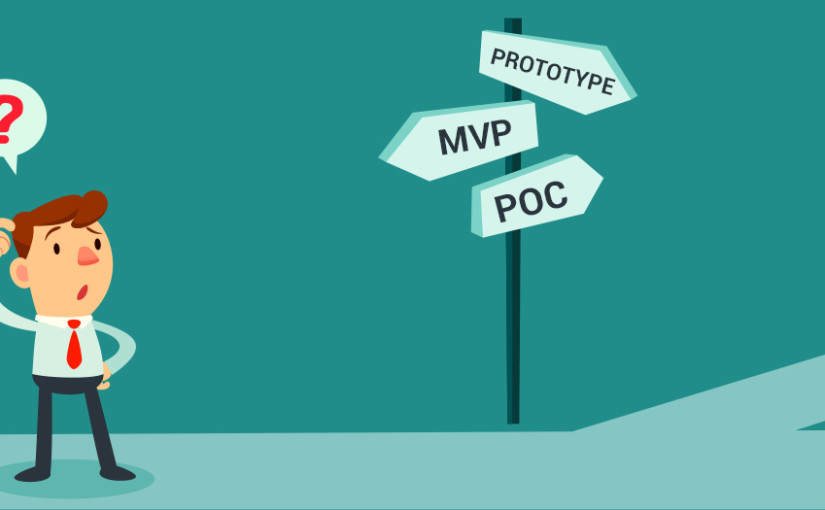
When people ask me “should I build an MVP or a POC or a Prototype?” I say, yes!

A lot of enterprises today have various teams working on different projects with ever expanding software needs. Almost every one of them feels the need to overhaul existing systems, create new customer experiences, and launch new business initiatives. There’s a massive backlog of mobile application development work that needs new approaches to decentralize and accelerate. Yet most of these software development projects never see the light of day (Chaos Report, The Standish Group) due to lack of proper planning, poor prioritizing, budget over-runs and numerous other project management related failures.

The need for rapid validation of new ideas

This has made enterprises more cautious about their software development related investments. Decision makers now seek better validation of new ideas prior to investing heavily in a project. They also need to validate new ideas with higher agility. This validation can be done with a Proof of Concept (POC), a Prototype, or a Minimum Viable Product (MVP). However, the teams that have not traditionally managed a software development project, may find it difficult to choose a starting point. Besides, there is no “one-size-fits-all” offering which can meet their varied needs.

So what should you build?

First of all, it is important to go beyond the buzzwords and identify the real business needs.

  • Identify what you are trying to validate
  • Identify who are your trying to convince
Say NO to Guesstimating.
See Your Idea Taking a Shape.

START A BLUEPRINT


POC

A POC is generally intended for internal consumption and it is employed to validate marketability on a very short budget. It is sometimes developed as part of the pitch targeted at those who decide future investments in your idea. In its simplest form, a POC would involve the creation of wireframes, flow diagrams and an initial design for a mobile or web application. With a POC, decision makers can better visualize the application/solution and its benefits from the end-user perspective.

Prototype

However, depending on the business needs, you can also take a POC further to develop a mobile application prototype. While a POC shows all the possible features in a mobile App with wireframes, mockups, and flow diagrams, Prototyping involves creating a clickable version. Mobile App Prototyping helps you create intuitive navigation schemes for your App. It is important to mention here that the purpose of Mobile App Prototyping is similar to a POC. Also, the end product is not market ready.

MVP

According to Eric Ries, the author of The Lean Startup, “The MVP is that version of a new product which allows a team to collect the maximum amount of validated learning about customers with the least effort”. This product should be sufficiently stable to be tested in the market. The term “minimum viable” suggests that the product should contain bare essential features to gauge the market response. Based on this response, iterative development stages would take the product further towards completion.

Team Structure

Usually, following roles are needed to be filled in for a development of POC/Prototype/MVP:

  • Lead Consultant – Solution understanding, Team Lead
  • Business Analyst – Business Goals, Competitive Analysis, SWOT Analysis, Documentation, Initial Wireframes
  • Software Architect – System Readiness Assessment, Server Infrastructure, App Architecture, Technology Stack, Integrations
  • Designers – UI and UX
  • Developers

The number of developers might vary and it is possible that a person might handle more than a single role.

Process Stages

Here are the common stages involved in the development of a POC/Prototype/MVP:

Requirement Gathering

  • Customer and business requirements
  • Functional requirements
  • Quality requirements (availability, usability, reliability, scalability, recoverability etc)
  • Security requirements
  • System requirement – upgrade, rollback, deployment etc
  • Performance requirement
  • Readiness and constraints

Designing Screenshots, Wireframes, Flow-diagrams and Prototypes

Following tools are commonly used in mobile UI wireframe and other mobile app design related processes:

Adobe MuseHTML/CSSPencil
Adobe PhotoshopInvisionPowerpoint
Adobe IllustratorJustinmindProto.io
AxureMacawUXPin
BalsamiqMockupsWebflow

Development (of MVP)

The above approach for designing a solution requires Agile development practices. A team managed on a Scrum will be able to give you constant visibility into the work progress so that you can provide them timely feedbacks. The size of the team will depend on the product requirement.

While the above definitions might clear a lot of doubts around these practices, they kind of oversimplify the procedures involved. Further, building an MVP is not the only approach to product development. The common aim of all the above practices is to ensure that the product development is put on a specific mobile strategy roadmap with clear goals and visibility for all the stakeholders.

Credencys Credencys Solutions Inc is a leading mobile applications development company and solutions provider which has helped numerous businesses in their business growth. If you wish to develop a POC/Prototype/MVP, we can help you out with our Blueprint workshop.


Get Ready For a Deep Dive and See Your App Come to Life.

START A BLUEPRINT