These 5 tech-trends are transforming the way content is created and consumed

When Apple launched its smartphone in 2007, little did the world know that the small screen devices will soon upend the online world. Businesses had to scramble to adopt the Mobile First approach and those who still haven’t, continue to miss the massive opportunity. Consumers spend a significant amount of daily time on their smartphones and use it as a preferred medium for researching before doing any purchase.

Mobile gives consumers a freedom to consume digital content at all times and places. This means businesses have more opportunities to display and advertise their content. Naturally, the formats have changed over the years and businesses are exploring new mediums and delivery channels.

Textual content

Long form journalism still exists, but certainly, has lost its popularity. With the democratization of distribution and the atomization of content, the readership for traditional newspapers has been declining at an alarming rate. While some may call it an evolution, the fact remains that people are unlikely to read a long article on their mobile phone where there are many other apps and notifications distracting them every now and then. However, there is still some hope for those who like to read in depth articles.

Spritz has developed a technology which makes “the reading experience more focused and efficient, resulting in less effort with the best comprehension.” The technology helps readers to increase their reading speed, and read articles across all screen sizes. Since its launch, the technology has been adopted by leading publishers across the globe.

Automated Content

Again the impact of technology is not restricted to reading; it’s also impacting the way articles are generated. Automated Insights offers Artificial Intelligence (AI) based natural language generation platform to publishers, which is being used extensively in publishing articles for sports and stock markets. The platform helps publishers create thousands of stories, reports, and articles within no time. Further, AI is not restricted to textual content. The Grid offers an AI engine named Molly, which creates web-pages with minimal human intervention. If webpages aren’t impressive enough, one can check out IBM Watson’s AI engine which recently spooked everyone by creating the following movie trailer:

360° Video and VR Content

While traditional long-form journalism has its own flavor, the consumers are inclined towards hyper-immersive formats such as 360° videos and Virtual Reality (VR) content. News providers such as ABC, CBS and New York Times are now offering an increasing number of 360° videos and VR content to engage their viewers. The trend is not limited to journalism; the technology first introduced for gaming and entertainment has become popular among retailers as a preferred medium for consumer engagement.
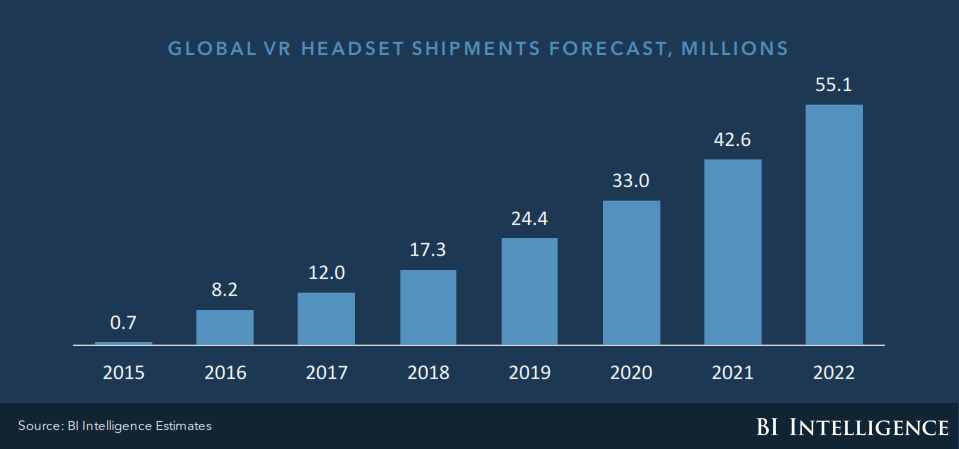
Driven by mobile based VR products, the Global VR content market is expected to grow at an exponential rate and is estimated to be worth $70 billion by 2020. For some perspective, that’s roughly the current market value of Uber.

OTT Video

OTT video refers to “Over The Top” content broadcasting by service providers such as Netflix, Hulu, and Amazon. It is increasingly becoming popular over traditional broadcasting, as consumers get more choice and freedom to watch their favorite shows in their own time. With high-speed connectivity, connected TVs and smartphones entering every major market around the globe, the infrastructure is already mature for OTT to become a global phenomenon.

Media companies have a lot to gain by making their video content available via the internet “over the top” of traditional broadcasting channels. For OTT service providers, there is a huge demand from emerging economies where most of this content is consumed on mobile phones, which is in contrast to the trends in the West. This perhaps explains why Indians are the fastest in the world at binge watching.

Further, OTT video content is ideal for LIVE events like concerts and sports. Twitter recently experimented with the format paying NFL a reported $10 million to stream 10 Thursday Night Football games for free. Around 20 million viewers followed these live streams. The experiment is seen as a major success for the company which has struggled to increase its user base over the years.

LIVE Streaming

“People comment 10 times more on Facebook Live videos than on regular videos” – says Facebook. In recent times, LIVE streaming with its inherent “must-see hype” has become a major priority for Facebook, Snapchat, Twitter, and YouTube, who are investing heavily on building their LIVE stream platforms as a default for everyone else. Though there is no clear leader at the moment, more and more brands are banking on LIVE streaming as it provides higher user engagement and instant feedback.

It is clear that the trends in content creation and distribution are changing rapidly with mobile still being central to all developments. Brands need higher agility to stay on top of these trends and make most of the opportunities in the digital space.

Credencys Solutions Inc is a leading software development services and solutions provider which has helped numerous businesses in their business growth. Subscribe to Insights by Credencys for similar company updates along with articles on business management, technology, strategy, leadership, and more.


Banks can Bank on IoT for Higher Efficiency

India employs around 35,000 men and 8,800 vehicles to maintain its more than 200, 000 ATMs. Despite its scale, the numbers don’t make headlines in normal circumstances. However, the recent demonetization drive did divert people’s attention towards these ATMs. Caught off-guard by the surprise decision, banks went in a state of mass delirium re-calibrating these 200,000 ATMs to fit the newly printed notes.

While these ATMs are a crucial part of India’s march towards financial inclusion, operating them has always been a huge task. The costs aren’t easy to ignore either if you start adding up costs involved in transportation and loading of cash, ATM’s annual maintenance and management, electricity bills, security (guard’s salary, security cams), space rent, interest for maintaining idle funds, and depreciation. A 2014 estimate (assuming an average ATM running cost at Rs 50,000/month) pegs India’s total annual expenditure on ATMs at around Rs 10,000 crore.

Banks have limited means to cut these costs and that’s why the burden is often shifted to the customers in terms of transaction charges. Further, these costs are unlikely to go down for banks if India if it has to match its global counterparts in terms of financial inclusion.

Banks can significantly reduce their AC operations cost with IoT

IoT can bring in significant cost savings in management and operations of ATMs. It is often seen that ACs are either not working or are cooling too much. These malfunctioning ACs can be detected via temperature sensors installed at each ATM premises. Further, malfunctioning doors can also be detected by sensors. By connecting these sensors to a central cloud-based reporting and management dashboard, banks can take preventive actions in time, eventually saving a lot on energy and maintenance costs.

Described above is just one of the many simple ways in which IoT can benefit banking organizations.

Other major use cases of IoT for Banks

Prevention of frauds

IoT can help in identifying debit/credit card transaction related frauds. Whenever a customer swipes a card, by matching the account holder’s mobile/device location with the transaction location, a bank can approve or decline the transaction with increased precision without any need for telephonic verification (which is the present method).

Reduction in NPAs

A significant earning for banks comes from lending to businesses. At the same time, they also constitute a major part of banks’ NPAs. By interpreting the data from sensor devices installed at borrower’s warehouse, banks can keep track of raw material and inventory stocks. This integration will help banks in ensuring that the loan amounts are paid when the inventory is sold. As modern warehouses increase IoT adoption, banks can leverage the same to reduce overhead costs in tracking and thus reduce their NPAs.

Agriculture lending

IoT is already modernizing agricultural landscape. However, banks can also receive advanced estimates for farm crops output based on real-time weather data and projections. Data analytics tools can help interpret this data into actionable intelligence for banks. This can improve advance planning for banks.

Capturing the factors affecting IoT adoption by Banks in India

StrengthsWeaknesses
  • Support for efficient operations
  • Support for automation
  • Better insights for marketing, cash flows and overdrafts
  • Support for financial inclusion goals
  • Lack of agility in decision making
  • Unclear roadmap for technology adoption
  • Lacking readiness for newer technology
OpportunitiesThreats
  • Increasing IoT adoption elsewhere
  • Higher consumer awareness & demand for swift and personalized services
  • The government’s push towards cashless transactions
  • Reduced costs for sensors and  technology enabling M2M connectivity
  • Evolving security threats
  • Market disruption by IoT startups

Despite its potential advantages, banks have so far shown little interest in developing IoT capabilities. The reputational and financial costs associated with threats in IoT are probably overweighing the opportunity costs at the moment. However, advanced platforms as those offered by IBM Watson and Xively are helping organizations across varied sectors expedite their IoT initiatives and banks can also take their advantage in building advanced IoT solutions for better efficiency.

Credencys Solutions Inc is a leading software development services and solutions provider which has helped numerous businesses in building strategies for their business growth. Subscribe to our blogs for getting similar articles on management, strategy, leadership and more.


Mobile App Development Trends for 2023 & Beyond

The Mobile World Congress (MWC) in Barcelona has become the default platform for businesses launching their next big smartphone. However, the biggest headline in this year’s Mobile World Congress was Nokia 3310 making a comeback, which isn’t exactly your regular smartphone. No need worry; dumbphones aren’t invading the market.

While smartphones are going stay here for a while, there is a need to gauge the evolving mobile App development trends in the industry. As per the data coming in, most of the growth in smartphone sales is projected to arise from emerging markets like India, China, Myanmar, Indonesia, and Japan. The high demand for smartphones in emerging economies stands in contrast to the declining unit sales in mature markets like Western Europe.

Developing applications for the next billion smartphones

As there is an apparent shift in the market, it is likely that most of the smartphone vendors would have to take into account the unique regional demands in Asia. It will be safe to say that Android is way ahead of iOS in the region, so far. This perhaps explains Apple’s move to start manufacturing in India. It will be too early to say if this move will give the company any definitive edge over numerous Android players operating in the market. Nonetheless, the war for supremacy is not going to be easier as Huawei is also getting vocal about its aspirations to be the market leader.

Applications running without the Internet

Cloud-based Apps and services with the ability to share and sync data in real time are becoming increasingly common. However, in the emerging economies, you will find that Internet penetration is not equal in urban and rural spaces. Needless to say, businesses operating in the region will have these issues at the back of their minds while developing mobile applications and solutions. Perhaps, these challenges will increase adoption of platforms like MeshKit which allow users to continue App usage, (sharing and forwarding data) even without the Internet.

meshkit

Though this isn’t a completely new idea, the technology enabling it in MeshKit has come of ages in terms of security, content exchange and nearby discovery. This means a lot for a country like India which is aiming to be a cashless economy. Applications enabling digital payments with multiple network protocols are likely to become more popular in the coming days.

Applications bringing a positive socio-economic change

Despite all the controversy surrounding the demonetization drive in India, the fact remains that technology is not something which prevents India from going cashless. In fact, it’s the opposite – it’s an enabler. Case in point – mPesa – a mobile payment service which has transformed the payments economy in Kenya. mPesa has more than 30 million users in 10 countries and it supports international transfers, loans, and health provision. In 2016, the service at its peak processed 529 transactions per second. mPesa has also made a significant impact in social value, creating opportunities for small businesses and reducing poverty. Similar applications have the potential to impact socio-economic structures in India and other emerging economies around the world.

Applications leveraging IoT

Apart from money transfer, in the emerging economies, there is a huge scope for mobile enabled IoT applications for healthcare, citizen’s information, electricity distribution, logistics, and governance. IoT Applications make tremendous value proposition by enabling access, increasing efficiency and customizing services to an individual level. Further, as Telecom operators start collaborating, operator agnostic solutions will also enter the market. A recent example is AT&T joining hands with China Mobile for developing a common IoT platform. According to the official press release, “the deal will help AT&T global business customers connect and deploy their assets and offerings in the Chinese market.” Such deals among telecom operators will tremendously expand the potential of IoT, globally.

Applications rich in Video Content

“AccuWeather “Video First” Strategy Drives 160% Video Audience Growth,” says official press release of AccuWeather, which is among world’s most trusted weather information channels. The company has responded well to consumer demand with its immersive 360-degree videos of storms, breaking weather coverage and other exciting video content on smartphone. According to another research report by ExchangeWire, Mobile is on track to be the “number one Video Screen in the UK”. As 4G services become increasingly affordable and widespread in the rest of the world, applications rich in video content are likely to become more common. According to Verizon’s Mobility report, globally the video content will rise to 60 percent of all App traffic by 2023 Mobile App Development Trends for 2023 & Beyond; that’s three years from now.

Applications with AR & VR Content

According to IDC forecasts, worldwide revenues for AR/VR market will reach $13.9 billion in 2017 from $6.1 billion in 2016 (annual growth of 130.5%). The market will reach $143.3 billion in 2023

and Retail will be the largest spender. Retailers are already experimenting with AR & VR creating immersive omnichannel experiences for their customers. However, beyond retail and entertainment, there are several other possibilities with these technologies which can be beneficial to emerging economies. The technologies can help architects, civil engineers, and automobile designers create better designs for buildings and cars. Medical professionals can have a better view of human anatomy with AR & VR. For industries like manufacturing, construction, and oil and gas, VR-based training simulations can be a great tool in preparing the workforce without exposing it to operational hazards. Such applications are bound to explode in the near future.

While it’s true that smartphone growth in the emerging economies is driven by the consumers, with widespread mobile connectivity, businesses are also leveraging the power of mobile for creating new revenue streams. Businesses are aware that mobility can make supply chain and logistics operations more efficient and streamlined. Not to mention, mobile is one of the best tools for marketing. It will not be a surprise if the next phase of growth for mobile Apps will come from the emerging economies.

Credencys Solutions Inc is a leading software development services and solutions provider which has helped numerous businesses in building strategies for their business growth. Subscribe to our blogs for getting similar articles on management, strategy, leadership and more.

Credencys to build IoT solutions with IBM Watson IoT

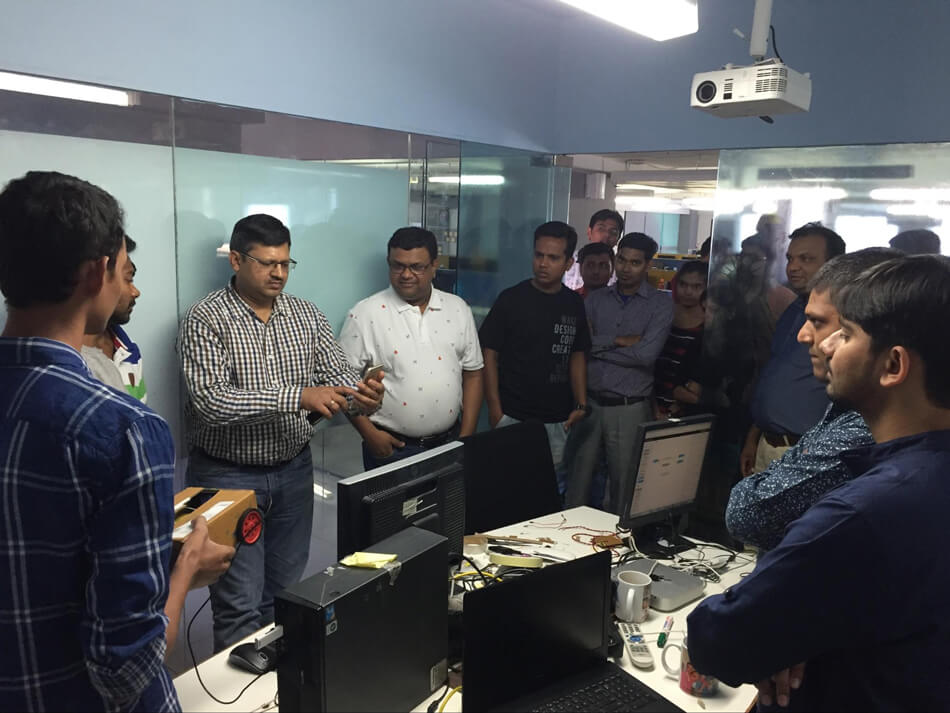
Credencys recently signed a multi-year strategic partnership agreement with IBM, adding Watson IoT (Internet of Things) and Bluemix platform capabilities to its enterprise application development services. A 48 hour ‘Hackathon’ was recently conducted by Credencys to create some unique POCs highlighting the power of IBMs platform. In this workshop, developers produced some applications while getting used to IBM’s tools, APIs, and frameworks.

Watson IoT platform is a unique platform which helps in expediting development of IoT solutions. It offers developers tools and ecosystem for connecting and managing different devices. By accessing the Watson IoT Platform on IBM Bluemix, developers can easily set up and manage IoT devices, gather live data, build dedicated mobile Apps, visualization dashboards and more. The partnership ensures that the developers at Credencys get access to all the tools and services required in building IoT applications at one place.

credencys-hackathon

The Hackathon event provided a unique opportunity to software developers at Credencys who worked with Arduino Microcontrollers and sensors (humidity, temperature, air quality etc) to develop multiple PoC solutions. Notable among these were a parking management system, a two-wheeler IP camera enabled rover which is controllable remotely via a smartphone and an automatic plant watering system.

credencys-hackathon Sanjay Mittal, Associate Director – IBM India and Sandeep Agrawal, CEO Credencys Solutions interacting with developers at Hackathon

While the above systems included IoT components, the teams also used Watson APIs to develop PoCs for a kids tutor (built on Watson’s visual recognition APIs) and real-time voice language translator (built on Watson’s speech and language translation APIs). These PoCs have the potential to solve numerous real world challenges as described below:

Watson in Works

The IoT Rover

This PoC can be expanded to create solutions for monitoring hazardous and critical industrial systems which are otherwise unapproachable by human inspectors. To enable all this, the rover can be customized to include sensors for detection of toxic gasses, high or low temperature (fire threat), water level, accurate location and distance, smoke, unauthorized access and more. Similar solutions can also be developed for surveillance, security and law enforcement purposes.

Parking Management System

In big cities, finding a parking space has become a daily nuisance. According to an estimate, people spend a total of 2,549 hours (~106 days) in their lifetime searching for a parking space whether it is on the school run, the local high street or a supermarket or airport car park. Technology can play a critical role in reducing this wastage. The parking management solution, which was developed using Watson’s engines at the Hackathon is planned to be a part of Credencys logistics solution offerings.

Interactive Kids Tutor

This application was designed to interact with 2-5-year-olds, helping them recognize real world objects like animals, fruits, birds etc. The application utilizes image and speech recognition and also has the conversational ability. The PoC can be expanded to create chatbots for customer support, counseling, office reception and numerous other applications requiring routine human interaction.

Automatic Plant Watering System

The solution developed by a Credencys team utilizes soil moisture sensors to gauge requirement for watering plants at home. This solution can be extrapolated to increase the efficiency of drip irrigation systems. Further, IBMs weather forecast data can improve the scope of this solution, creating systems which can plan irrigation, weeks in advance.

Real Time Voice Language Translator

As the name suggests, this application recognizes speech in any particular language and can translate it to another language on a real-time basis. With similar solutions, news channels can source LIVE news from across the world and can broadcast it to a local audience in their preferred language. Further, such applications can assist tourists in foreign locales, ease communication between doctors and patients, customs officers and immigrating nationals, and so on.


"The challenge with the technology is that it’s moving faster than most businesses perceive. IoT is enabling real-time interactions between factories, machines, systems and their human managers. Decision makers need to be on top of these interactions and this is where IBM Watson IOT platform makes the biggest difference. We have developed some impressive IoT applications in the past and we are certain that this partnership will add significantly to our application development capabilities"


SANDEEP AGRAWAL CEO Credencys Solutions Inc

Augment IoT with Watson’s Cognitive Abilities

A major advantage of Watson IoT platform is its Cognitive API which helps in building solutions that can leverage its proven cognitive analytics capabilities. As is well known, the real business value of IoT is not in connecting sensors, devices and things – it lies (largely untapped) in analyzing the data that all these ‘things’ produce. Applications built on Watson IoT Platform are well equipped to convert arcane data into meaningful insights for business decision makers. It’s up to businesses to explore, innovate and build applications that go beyond the obvious. For some inspiration, perhaps they should start taking science fiction seriously. Watson’s language, vision, speech and data APIs can offer an unparalleled edge to businesses. Here’s a small list of some of the more popular Watson APIs available on Watson Developer Cloud:

  • AlchemyLanguage – social media listening and intelligence
  • Conversation – chatbots that understand natural language
  • Language Translator – build once, broadcast across multiple languages
  • Speech – Speech-to-text and text-to-speech converters
  • Vision – systems that can comprehend visual content
  • AlchemyData News – smart news and trend analysis

Credencys Solutions Inc is a leading software development services and solutions provider which has helped numerous businesses in their business growth. Subscribe to Insights by Credencys for similar company updates, along with articles on business management, technology, strategy, leadership and more.


The Evolving World of Robo Advisors

Robots are getting faster and intelligent. Last year, a Rubik’s Cube was solved in less than a second (to be precise, 0.637 seconds) by a machine. It beats the previous best of 0.887 sec by another machine (Human best is 4.904 seconds). This year, an Artificial Intelligence (AI) powered machine won a 20-day poker tournament.

From Tesla’s autopilot to virtual personal assistants like Siri & Cortana – AI based machines are constantly improving our lives, for now. They have also entered the financial space – where they are acting as advisors on people’s wealth. It’s a welcome relief for those who never understood taxes or those who lost a fortune on bourses.

While Robo Advisors and human advisors work on the same algorithms and financial models, the machines do a better job being faster and free from any biases. Lower fees, transparency and easy access to a larger population are the three critical factors that make Robo Advisors a preferable option.

Consumers across all asset classes are receptive to robo advisors – including the wealthy. 49% of this group would consider investing some of their assets using a robo advisor – Business Insider

73% of respondents in a survey reported investing with automated investing platform satisfactory or very satisfactory – Financial Planning Association and Investopedia

Though most of the investments are still done in an old-school manner with investors preferring human advisors, the trend is likely to see a reversal. For wealth management firms, there is a largely untapped market opportunity in offering low-cost digital platforms to people who have so far lacked quality advisory for their investments.

Moreover, the technology will not be restricted to numerous proprietary algorithmic models as AI-powered advisors will make their space. Hedgeable, a wealth management company, last year announced its AI-powered system which simplifies specific tax management concerns for its high net worth clients. The system pulls data from more than 20,000 financial accounts, live real estate data, and is capable of self-learning.

Market Potential

Investment firms

Investment firms have already used the technology to assist their financial advisors (CFPs) in investment management and financial advice. Using this hybrid approach allows human advisors to focus on other critical areas where Robo Advisors have yet not entered (or being used sparingly). This is because people in particular cases have shown affinity to their traditional ways; examples include estate planning, tax-planning, and retirement planning. Thus, the firms offering a mix of both ‘personalized human’ and ‘low-cost automated platform’ based advisory are in particular better placed in the market.

High net worth individuals (HNIs)

“High-net-worth individuals use online investment tools more than other investors” –  My Private Banking

In the survey-report with inputs from 600 HNIs in the US and the UK, 70% respondents rated automated advisory tools positively. Their ratings were based on the experience with onboarding processes such as registration and account opening, which are more efficient, quicker and highly convenient with automated tools. Thus, investment firms seeking better investment experience for their prime accounts are increasingly adopting Robo Advisors.

Millennials, retirees, and almost everyone

Though figures and projections vary, almost everyone agrees that people interested in investing will have a high exposure to automated tools by 2020. As people get used to personal digital assistants and AI driven chatbots, trust and comfort levels with Robo Advisors are only likely to increase. This trend is likely to influence people across all relevant age groups and geographies.

Is it a disruptive trend?

Although it looks like a disruptive technology, it hasn’t gained traction. Startups relying on digital-only models have failed to make a considerable impact, partly because their major USP is only the lower service fees. While Robo Advisors reduce any oversights or guesswork, their returns are still comparable to what being offered by human advisors. Further, costs related to employee salaries, tech-infrastructure and compliance reduce their profit margins to unsustainable levels. Hence, the technology is being used to its maximum by incumbents – which is not much. The technology is primarily restricted to the US and some European markets. There is a need to extend this platform to emerging markets where there is a lot of space for accelerated growth.

The biggest uptake

While the industry is unanimous about the long-term viability of Robo Advisors, numerous tangible benefits can be drawn on an immediate basis. Incumbents have nothing to lose by experimenting with the platform. They can use the technology to expose, publicize and leverage their existing algorithms to a wider audience. By evaluating their performance, incumbents can scale up their business to automate a larger portion of their business. This approach can help incumbents to stay on top of the technology, offer better customer experience and make appropriate changes as and when required.

Credencys Solutions Inc is a leading software development services and solutions provider which has helped numerous businesses in their business growth. Subscribe to Insights by Credencys for getting similar articles on management, strategy, leadership and more.

India’s trucking industry to see a rebound by tech-startups

2016 was not an impressive year for many startups in India and the logistics sector was not an exception. According to a news report, as many as 212 startups had to wind up their operations including 6 logistics startups; these were – TheKarrier, Truckmandi, Trucksumo, Loadkhoj, Zaicus and Sastabhada.

However, 2017 seems to be a good year for such startups – India has been ranked second only to China on Emerging Markets Logistics Index, 2017. The index gauges the logistics industry in the world’s 50 leading emerging markets by size, business conditions, and infrastructure and transport connections. This is for the second consecutive year that India has been rated among the most favorable investment destinations across the globe.

GST to make an impact on transit times

Much has already been written about the impact of recently implemented GST (goods and services act) in India. The Act is likely to put the truck industry in the fast lane, literally. Trucks in India used to travel only 280 km on daily basis; in the US the corresponding figure is 800 km. With GST being implemented, they can add 164 km per day to their transit schedule. Further, reduction in paperwork and border checks will cut transportation cost by 20-30 per cent. All this will improve operating margins for truck operators.

The lingering challenges for the industry

For small time entrepreneurs in India, launching a trucking business has always been an easy option. To buy a truck, easy finance is available readily with a down payment of only 10% to 15%. Further, after repaying the loan in 3-4 years, the same truck could be resold at around 75% of its original cost. Hence, a small operator can easily accrue a RoI of 500%-700% within 3-4 years time. Despite smaller profit margins, the business return over a period of 4 years is quite impressive. This is not a secret recipe. As seen in the graph below; 75% of truck operators  (with a fleet size of 5 or below) rely on this business model.

ownership-of-trucks

Source: An Overview of the Trucking Sector in India: Significance and Structure, 2015

However, the above model works only for small fleet operators. Profitability ceases to increase  in the same proportion when the fleet size increases. The business follows the law of diminishing returns, as operations and management costs increase rapidly with larger fleets. A decrease in asset utilization, route planning challenges, slower invoicing and liberal credit terms with customers make operations inefficient. To overcome all this, businesses are forced to include a higher administration overhead, without any significant change in returns. Meanwhile, unavailability of drivers continues to plague truck operators. All these inefficiencies compound fleet expansion.


"Before diving into the technology business, I had run a successful retail business. Hence, I know that logistics in India is unlike anywhere else in the world. No management institution will teach you how to deal with truck operators and what to do when things go south. Thankfully, the tech-adoption is increasing and things are getting organized. We have seen increased demand and interest for applications and solutions for the industry."


Sandeep Agrawal CEO Credencys

Finding answers with technology

Tech-driven truck aggregators can make most of the lingering challenges in the industry. By using the tech-aggregation model, startups can allow individual fleet operators to expand without losing profitability. By offering benefits of scale they can reduce fragmentation in the industry. This is achievable as solutions built on artificial intelligence APIs, such as those offered by IBM, can assist fleet owners in route optimization for their vehicles and help them in increasing their asset utilization.

Further, real-time GPS-based vehicle tracking can bring transparency and reliability of service to India’s trucking industry which from the time immemorial has operated only on trust.

IoT is no more a buzzword and startups like Rivigo are already using IoT for real-time data collection of fuel, RPM, engine oil temperature, brake oil pressure and more. All this data can assist in predictive and diagnostic analysis like driver behavior, machine failures, diesel consumption and preventive maintenance.

Also, technology can help in reduction of paperwork such as that involved in lorry receipt, proof of delivery, and invoicing. Cloud-based solutions are particularly useful in this area. This anyway is going to be a mandate for operators as post GST implementation swift billing will be essential for customers to claim their GST input credits.


"200 + leading Indian logistics companies are accruing significant benefits like reduction in cost by 5 -10 %, increase in on-time deliveries by 20%, increase in asset utilization by deploying smart IT solutions in the logistic sector"


ET CIO Jan 23, 2017

Investment climate

There is every likelihood that PE/VC funding will help more startups to capture this vast and expanding space. According to India’s pre-budget economic survey “growth could recover sooner than expected after a shock scrapping of high-value banknotes to fight black money.” Recent investment trends have also been positive; Venture Intelligence reports that funds worth $5 billion flowed in via PE/VC route in 2016, an almost 10 per cent rise over 2015. Tech-startups with a strong business model and a long-term execution strategy can expect to make the most of this positive investment climate.

Credencys Solutions Inc is a leading software development services and solutions provider which has helped numerous businesses in their business growth. We can help you in building a custom fleet management solution. Know more about our services here.

10 Brilliant Psychology Hacks for Marketers

In an era driven by consumers, consumer behavior studies are increasingly getting relevant than ever before. Brands are constantly competing to transform consumer experience. In order to gain some control on consumer perceptions, you might have already invested in consumer studies and research. There is no replacement for insights gained from such studies. However, there are certain psychology hacks which are privy to people involved in business strategy and marketing campaigns. In the following article, we will briefly explore these biases, decision errors, paradoxes and more.

Survivorship Bias

More people are getting affected by Entrepreneurship Porn than ever and one can’t just blame journalists for this situation. Facebook, which has become a natural source of news for people, provides the kind of feed a person is most likely to approve, like & share. This eventually puts people into an endless cycle of reading, viewing and listening to stories that have a happy ending. Though, there is no harm in taking inspiration from successful entrepreneurs, sports persons, actors, writers, leaders, and musicians – these stories are only a small fraction of all the stories that were ever written. More people fail than succeed in any given field. Still, humans generally overestimate their chances of success and the society usually promotes this behavior. This is called Survivorship bias, which perhaps is the mother of all biases. For marketers, it is pretty straightforward to leverage this bias – it’s the oldest trick in the book. Share a successful case study, give it a personal touch to connect with your audience and voila – you’re a successful marketer! Yes, that’s yet another example of Survivorship Bias at work.

Scarcity Error

Hurry Up – Offer Valid Till Stocks Last!
Christmas Special Deal
“Flash Sale” – Register Now!

These are time-tested examples demonstrating the impact of scarcity. The fear of missing out forces consumers to buy with all haste. However, in the age of the internet, you might have to mask your tactics for using this decision error effectively. Flash Sales on e-commerce websites are the latest successful implementation and perhaps you can replicate the same

Loss Aversion

As a marketer, you’ve probably used Loss Aversion in your ad-copy. Instead of telling the benefits, you must have tried telling your customers about what they are losing by not using your product/service. The fear of losing ‘something’ is a better driver than the prospect of gaining something of similar value. This also explains why a newbie in a stock market keeps on holding to a stock for a much longer period than what experienced traders would advise. This type of thinking is slightly related with the Sunk Cost Fallacy, which every marketer should be cautious about. For example, consider your sales team investing a lot of time in persuading a prospect. You have also given your prospective client a better deal and a free trial period. But none of this has led to any business. If you decide to continue persuasion just because you have invested so much time and money in the process, it will make you a victim of the Sunk Cost Fallacy. Do not continue projects just because you’ve invested too much into them; decide future investments only on the basis of their projected future pay-off.

Ikea Effect

Now that we have discussed time investment, there’s something you could probably use for engaging customers. Anyone who has assembled an Ikea furniture would know that their installation manuals aren’t best of the breed. You must be a genius to understand those manuals and then do correct assembly in the first attempt. Moreover, whoever assembles the Ikea furniture starts taking a great pride in his/her masterwork. This is called the IKEA effect. Consumers value products highly if they get a chance to get involved in its creation. Allowing customers to make small customizations can also work. There are numerous e-commerce websites which allow designing, customizations and also allow people to boast about their creations in social channels. If you can make your product customizable, you can bank on this phenomena.

Decoy Effect

Every one of us has come across Decoy effect in one way or the other. It is seen that more than often a consumer will change a preference between two options when also presented with a third option (usually an absurd one). Here’s an example:

Decoy Effect

People would be equally divided when asked to choose between small ($3) and large ($7) popcorn. However, buyers are more likely to choose $7 large popcorn when presented with a third option – $6.5 decoy. The Decoy Effect works because one of the options appears considerably more desirable than the decoy. This affects even the best of rational minds, making them buy more than what they need.

The Availability Heuristic

Do you know which animal/insect/reptile is responsible for a maximum number of human deaths? The answer is Mosquito (7,25,000 deaths/year) followed by Snake (50,000), Dog (25,000), Snail (10,000) and Roundworm (5000). Still, people are generally more scared of a Shark bite or a Bear attack than a statistically more lethal mosquito bite. This is because they are affected more by the sensational news reports than boring facts. Hence, whenever people are asked to take a quick decision, the information at the top of their minds cloud their decision. Further, people would also rate the probability of certain events higher than they would be on paper.

For marketers, it is important to know that information most readily and impressively available affects their consumers’ decision. Hence, a story is almost always likely to be more helpful than a stats sheet. That’s why client testimonials and videos are essential for your website homepage.

Social Proof

People are more likely to queue up for a crowded counter in a trade show than an empty one. Same is true for a restaurant. People like and share online posts more readily if others have also done it in the past. These are all examples of Social Proof. As a marketer, if you can effectively demonstrate the social likeability or acceptance for your product/service, it will influence your consumers more. Again, humans are not naturally tuned to understand numbers; hence, use powerful stories to engage your customers.

Confirmation Bias

You must be aware of the health benefits of an Apple. People generally like Apple. However, there must be a kid somewhere in the world who would hate Apples – so he would google – “Apples are bad for health” and he would find something to support his revulsion for the fruit. This is an example of Confirmation Bias at work. Ever worked under a boss who made statements and asked you to validate those with some data? People who make corporate presentations and marketing plans do it all the time. You can find all kinds of contradictory information on the internet to support your personal theories, beliefs, and convictions. Moreover, humans have a tendency to discount any new information that contradicts their beliefs or views. This bias towards favorable information sets is known as Confirmation Bias. Consumers are likely to collect data which supports their choice of brand and ignore information which contradicts it. Also, marketers need to understand why consumers like their brand. Find more on Confirmation Bias and Brand Loyalty here.

Paradox of Choice

The Paradox of Choice – Why More Is Less’ is a 2004 book by American psychologist, Barry Schwartz. In his book, Barry explains how an abundance of choice has made buying difficult for consumers. He asserts that fewer options are often better for consumers. That is what differentiates iOS and Android – Apple loyalists don’t have too much to worry about – all they have to do is get a new iPhone. On the other hand, Android loyalists have to decide between an endless number of models and brands. Marketers can perhaps take some inspiration from this approach and avoid offering too many subscription plans or offers to their customers.

Winner’s Curse

Digital marketers know that bidding based PPC campaigns include a lot of guesswork. There’s isn’t any scientific formula for marketers to decide how far they should go in the bidding. The auction-based pricing is present everywhere – from eBay to Groupon to Google AdWords. If you’ve ever placed a blog writing assignment on any of the freelancing portals, you must’ve witnessed Winner’s Curse with writers claiming the job for pennies. Auction-based pricing can help you avoid underpricing or overpricing your products leaving the job to the market.

This article was originally published at ITarticle.net.

All you need to know about the infamous D word of Software

People usually misinterpret one of the Agile Manifesto’s declarations “Working Software over Comprehensive Documentation”. Documentation is not a profanity in Agile; all the manifesto says is to restrict it to a bare minimum and not let it become an impediment. The question arises, how to gather and document software requirements in Agile Software Development environment.

How to Document?

It is not rare for teams new to Agile to attempt moving their existing requirements into User Story format. This can create a backlog of thousands of user stories, followed by a lengthy prioritization cycle. At the end of the day, converting the software requirements gathered for a waterfall process to user stories meant for Agile is simply a waste of time; both vary a lot in their intent and scope.

Here’s how User Stories completely differ from traditional Software Requirement Specification (SRS) documents:

User StoryTraditional SRS Documents
Slim: Developed just-in-timeHeavy: Their equivalent Use Cases are much more elaborate
Accurate: During backlog grooming, User Stories are refined with developers’ feedbackInaccurate: Devoid of developers’ feedback, a lot of guesswork is involved in the documentation
Simple, fast and cheap Complex, slow and expensive
Rarely out of dateMostly out of date: Specifications developed today rarely capture the requirements and discoveries six months down the line

A user story is a very high-level definition of a requirement from a user point of view, containing minimum viable information for developers to estimate their effort and plan accordingly.

Standard User Story Format

As a <type of user>, I want <some goal> so that <some benefit>.

Example: As a registered user, I want to login so that I can access my account.

User stories are incomplete without their Acceptance Criteria (AC). AC are critical documentation bits which help developers in a team to write accurate test cases without any ambiguity and understand business values better. Although, the Product Owner writes AC, Quality Analysts and Developers also contribute to improving the AC. AC ensure that all the parameters of a User Story are met as per every stakeholders’ agreement. Only when the AC are “Accepted” the user story is marked as “Done”.

Standard Acceptance Criteria Format (derived from Gherkin)

Given <precondition(s)> When <some action> Then <a result/set of results>

Example: Given the user hasn’t ordered yet, when the user adds any apparel into the shopping cart, then apply a discount of 20% to the total


"According to me, Agile development teams are only concerned with user stories and acceptance criteria. That's all the documentation they need. For them, deployment and maintenance manuals are all Greek. We have separate guys for creating those manuals"


Jainam Shah Project Manager, Credencys

What to Document?

Each project has its own requirements, and your domain expertise will let you know what areas require major documentation. While this may logically tempt you to create repeatable templates; it’s not recommended. By keeping close coordination with the end users, you can identify the format and quantum of information they would like you to deliver. For instance, there could be two major document types; the one fed to the product backlog and used by developers and the one which is created at the end of sprint (to be read by client/support teams). Scrum facilitates this close coordination between developers and end users on a more frequent basis which means that documentation can be restricted to a high-level overview. This approach minimizes waste during all stages of documentations viz. discovery, design, development, QA, release and even post release/support cycles.

Where to Document?

This is quite obvious; you will want to keep all your documentation with proper backup and access to all stakeholders. This ensures that everyone is on the same page and there are fewer chances of overlaps or lapses. At the end of every Sprint, you might feel the need to compile all feature implementations, feature improvements, and bug fixes, in the form of a report which is usually referred as Release Notes. As the project progresses, you might consider developing a Wiki page with an index linking to all your documentations in some order.

When to Document?

As Agile is an iterative and incremental process, documentation would continue throughout the project. The best way to document is to do it in gradual phases, not investing too much of time so that feedback from concerned parties takes it into the right direction. Something written in one go, can be rejected in one go. Further, during sprints, it’s recommended to have only that much documentation ready in advance which is enough to fill the product backlog so that development team doesn’t have to wait. You can determine this by taking into account the Sprint duration. The goal of documentation in such time-boxed delivery cycles is to allow product owners provide clarity on what needs to be built with what priority.

Credencys Solutions Inc is a leading software development services and solutions provider which has helped numerous businesses in building strategies for their business growth. Subscribe to our blogs for getting similar articles on management, strategy, leadership and more.

Early Adopters to Bank on Blockchain in 2020

By the end of this year, Accenture predicts that Blockchain will enter early adoption phase forcing financial industry to explore new business models with this revolutionary technology. The Tipping Point is expected to arrive by 2018 and the technology will continue to grow till 2025 when it will become the mainstay of financial services.

01-Graph-Image


What is Blockchain?

Blockchain is a public distributed database which is constantly synchronized and secured with cryptography. Though people largely equate it with Bitcoins; it’s a gross misappropriation. To put this in perspective, Bitcoin is related to Blockchain as email is to the internet.

Blockchain = Database

Why is Blockchain so revolutionary?

Decentralization

…Blockchain technology facilitates peer-to-peer transactions without any intermediary such as bank or governing body… – Don Tapscott

It might sound counterintuitive that something which by definition negates central authority is getting investment from central banks and governing bodies. One of the financial industry’s inherent attraction towards Blockchain is its efficiency: as a common, ubiquitous ledger technology, Blockchain promises to remove all sorts of friction traditionally created in financial networks where numerous intermediaries work with their own sets of technology infrastructure. By removing both the intermediaries and their involved tech- inefficiencies, the financial industry will be able to ensure that there is no duplication of records, fewer reconciliation discrepancies and settlements are faster.

Early Adoption

Although, there is also a large room for other industries to innovate and explore, banking and financial services see immediate benefits with Blockchain facilitating Letter of Credits, Payment Remittances, Corporate Debt or Bond, Trading and Repurchase Agreements.

Payments

Bitcoin = Payments; that’s probably a more apt analogy. Bitcoin and 100 other similar currencies have held traders interest in the market. Still, their usage for day-to-day payments hasn’t captured public’s imagination. Nonetheless, the promise of instant payments across geographies is very interesting and banks want to bring this medium into common usage. Yet, regulation of crypto-currencies like Bitcoin is a challenge. At present, different countries have different regulations for Bitcoins and its counterparts. As the Blockchain technology evolves, it’s likely that Payments being only one of its many possible applications will find its place within a regulatory framework which is common to all countries.


"When we talk about cashless economy, we look towards Sweden. However, it’s Africa which leads mobile banking. No one could have predicted the success of mobile phones in India…it will not be a surprise that the biggest uptake of digital technologies like Blockchain will come up from countries in the so-called third world"


Sandeep Agrawal Founder & CEO, Credencys

Trade Finance

emc


Albert Einstein once commented, “The hardest thing in the world to understand is the income tax.” Perhaps, one should have invited him to comment on the practices in international trade. Letters of credit and bills of lading follow tedious information flows, generate daunting paperwork and it’s not rare for businesses to identify these procedures as a bottleneck. Blockchain can be the holy grail of Trade Finance automation.

Blockchain apps can facilitate information sharing between exporters, importers and the banks involved in the transaction on a common private distributed ledger. Such apps would improve speed, provide automation via self-executable digital smart contracts and improve real-time data visibility for all parties involved in the trade deal. Global banks have already done successful POCs and the technology is up for grabs. 2017 is likely to be the year when a larger number of banks, corporate clients, and shipping companies will come to a consensus to increase the Blockchain adoption in Trade Finance.

Capital Markets

The prospect of Blockchain transforming the capital markets has attracted huge attention and it has the biggest number of startups to its account. NASDAQ was one of the first to join the bandwagon announcing its POC on Blockchain-based transaction on 30th Dec 2015. Since then, Nasdaq Financial Framework has listed more than 100 of its market operator clients using its Blockchain services. According to Coindesk, 10 more bourses from Australia, Dubai, Germany, Japan, Korea and London have reported progress on investigating and implementing the technology.

Major Challenges

  • ROI: Implementation of Blockchain within their existing infrastructure might not be lucrative for most organizations. This could perhaps be addressed with the creation of shared Blockchain where banks or governments would invest in building the infrastructure.
  • Incentives: However, the present financial ecosystem has several players whose priority for using a shared Blockchain can perhaps create a conflict. This might deter large-scale adoption, again rendering shared Blockchains unviable.
  • Regulation: As discussed earlier large scale adoption is further restricted by regulatory differences. It is not always easy for regulatory bodies to enforce KYC and anti-money laundering rules with cryptocurrencies – a fact which drives its popularity in dark net, drugs, and mafia.
  • Security: At the end of the day, Blockchains will run on the internet – which can make any security expert shift uncomfortably in his/her seat. Hackers have already looted Bitcoin exchanges; hence, Banks will have to evolve secure standards to avoid such losses.
  • Simplicity: The internet would not have been successful if users were expected to learn DOS commands and use the CLI interface on their PCs for ordering a Pizza. Until user-friendly Apps are developed, Blockchain will continue to deter more people than it will attract.

The way organizations respond to above challenges will define their future. In one of our previous articles, we have already described Blockchain as a disruptive technology. More enterprises than ever are engaged in Blockchain PoCs and if you belong to Banking and Financial Services industry, then chances are that you will face more immediate competition in Blockchain innovation in the coming years.

Credencys Solutions Inc is a leading software development services and solutions provider which have helped numerous businesses in building strategies for their business growth. Subscribe to our blogs for getting similar articles on management, strategy, leadership and more.

10 Reasons Why Digital Signage is Beneficial to Your Business

Has the thought of implementing digital signage into your restaurants crossed your mind but wondered if the investment would be worth your time and money? It is absolutely okay to have concerns before getting on board with the idea, considering the daunting upfront installation costs. But if you are reluctant to give digital signage a shot, there is something you should know; digital signage can completely transform your business!

To show you how here are 10 reasons why your business would benefit from digital signage.

  • It eliminates the printing and logistics cost and waiting time incurred in the conventional translite signage set-up
  • It is aesthetically pleasing! Digital signage grabs more attention and it is a great way to attract customers. Not to mention, people tend to pay more attention if you display promotional offers
  • It gives you the accessibility to display anything, anytime and from anywhere across the globe
  • Digital signage will also allow you to generate more revenue from advertisers, especially for places such as metro stations, airports, and large malls
  • Digital signage can be used as a tool to interact with your customers while they are waiting for a sales or customer service executive
  • Placement of digital signage at the point of sale can help you create higher brand awareness and thus uplift their sales
  • You are in control of what is displayed. You have the ability to show and change relevant information depending on when is best for you
  • It goes without saying that digital signage displays make the atmosphere much more lively. If you’re after a unique atmosphere, augmented reality integrated with digital signage is the way to go
  • Digital signage is a great way to help your marketing team send the right message across to the customers
  • Finally, if your competitors have it, so should you!

Let us, at Xynage know if you can think of any more reasons as to why your business will benefit from digital signage.