

The Complexity of Product Content Syndication
Every retailer, marketplace, distributor, and commerce channel expects product content in a different structure. As catalogs and channels grow, teams spend increasing amounts of time reformatting attributes, rewriting content, mapping categories, preparing assets, fixing errors, and manually maintaining channel-specific product information.
Different Channel Content Requirements
Retailers and marketplaces may require different attributes, categories, titles, descriptions, image specifications, controlled values, and mandatory fields for the same product.
Manual Product Content Preparation
Teams repeatedly manipulate spreadsheets, templates, images, specifications, and product descriptions before content can be submitted to individual channels.
Fragmented Product Data and Digital Assets
Product attributes may reside in PIM, ERP, supplier files, and spreadsheets while images, videos, documents, and rich media are maintained separately.
Incomplete or Rejected Product Content
Missing attributes, invalid values, incorrect classifications, inconsistent identifiers, or unsuitable assets can delay publication and create repeated downstream corrections.
Constant Product and Channel Changes
New products, updated assortments, changing retailer requirements, marketplace schema changes, new assets, and regional content create continuous syndication work.

How Much is Your Product Data Costing You?
Get Your Score + 90-day action plan in 3 minutes.
Check Your ScoreThe Strategic Role of Product Content Syndication
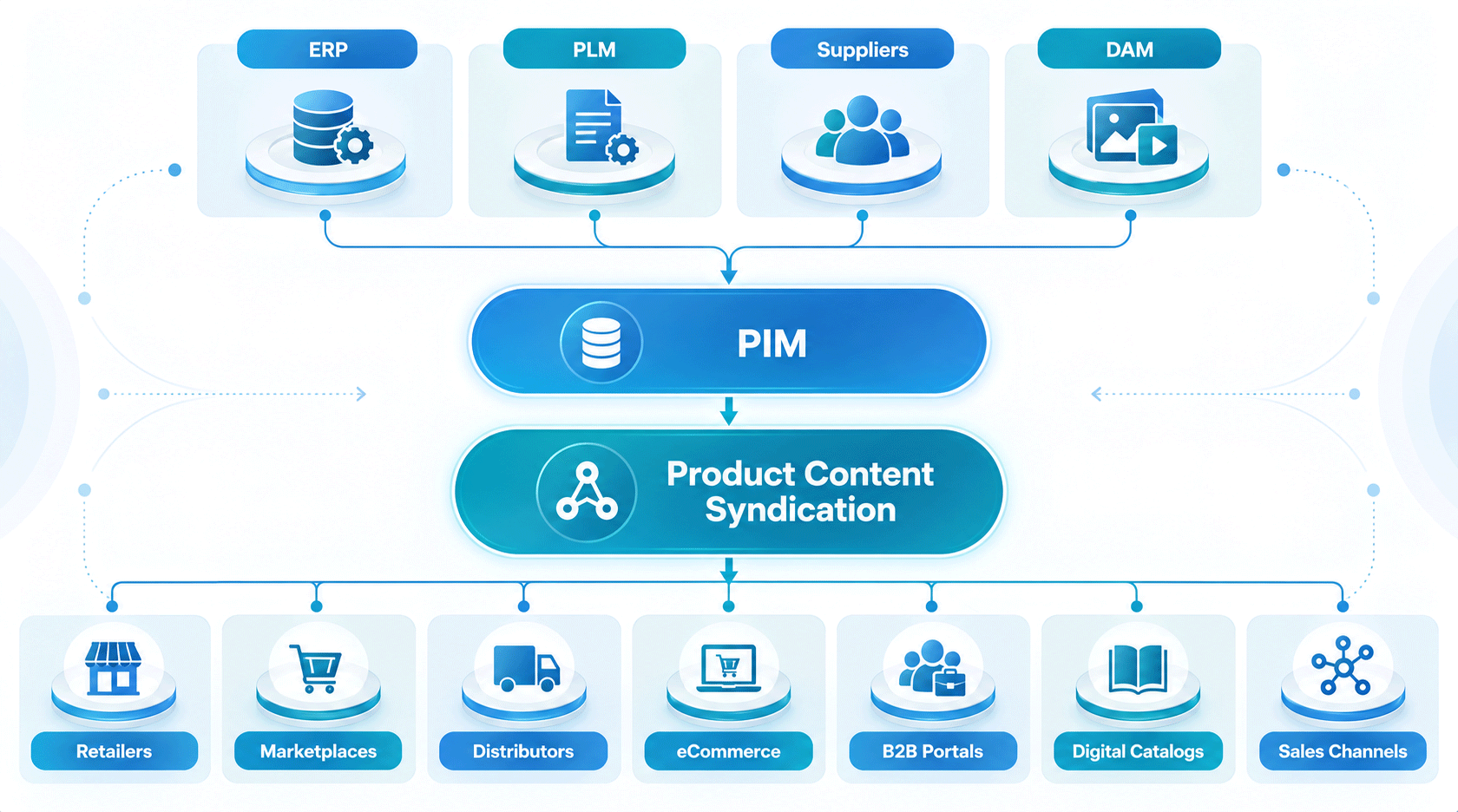
Product content syndication creates a controlled bridge between your governed product-information foundation and every destination that consumes product content. Instead of rebuilding product information separately for every retailer or marketplace, businesses can manage trusted core content once, transform it according to channel requirements, validate it, and distribute the appropriate version downstream.
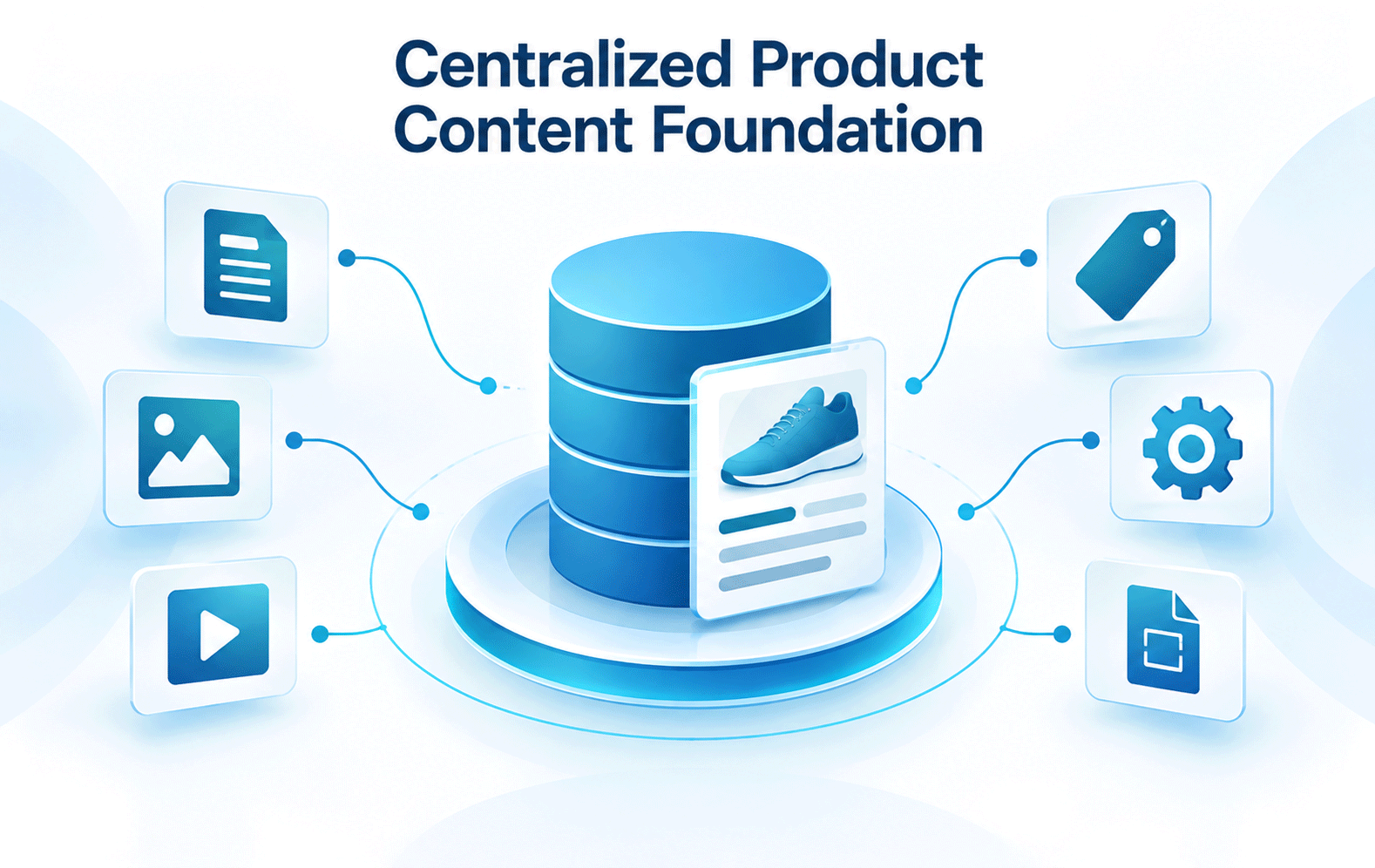
Centralized Product Content Foundation
Create a governed foundation for product attributes, descriptions, specifications, relationships, identifiers, marketing content, images, videos, documents, and other commerce-ready information.
- Consolidate content from PIM, DAM, ERP, suppliers, and spreadsheets
- Establish trusted product and content records
- Reduce duplicate and conflicting channel content
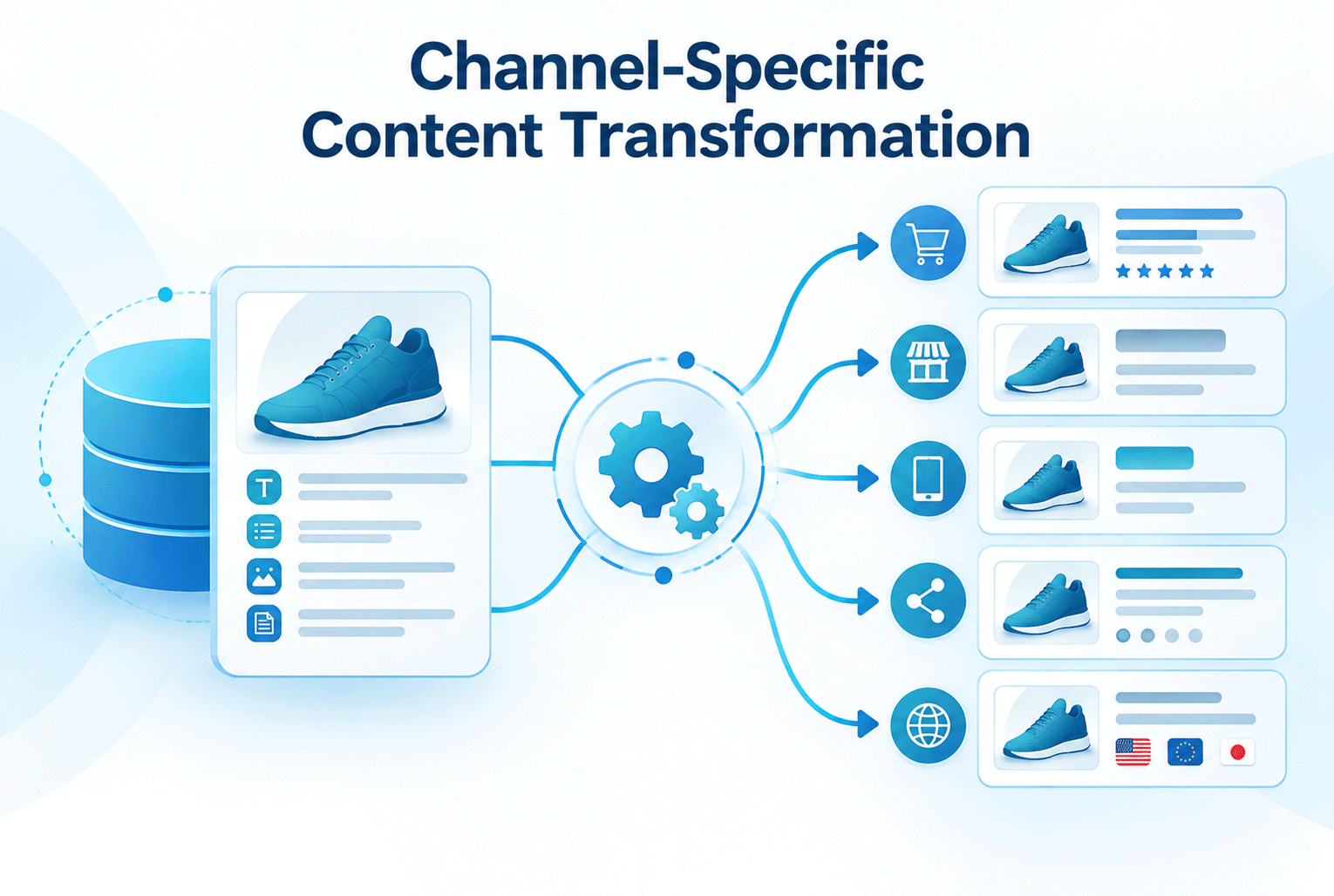
Channel-Specific Content Transformation
One product rarely needs exactly the same content everywhere. Product content syndication transforms governed information into channel-specific versions without creating disconnected master records.
- Map attributes and taxonomies to destination requirements
- Maintain channel-specific titles, descriptions, and feature content
- Apply formatting, character-length, localization, and controlled-value rules
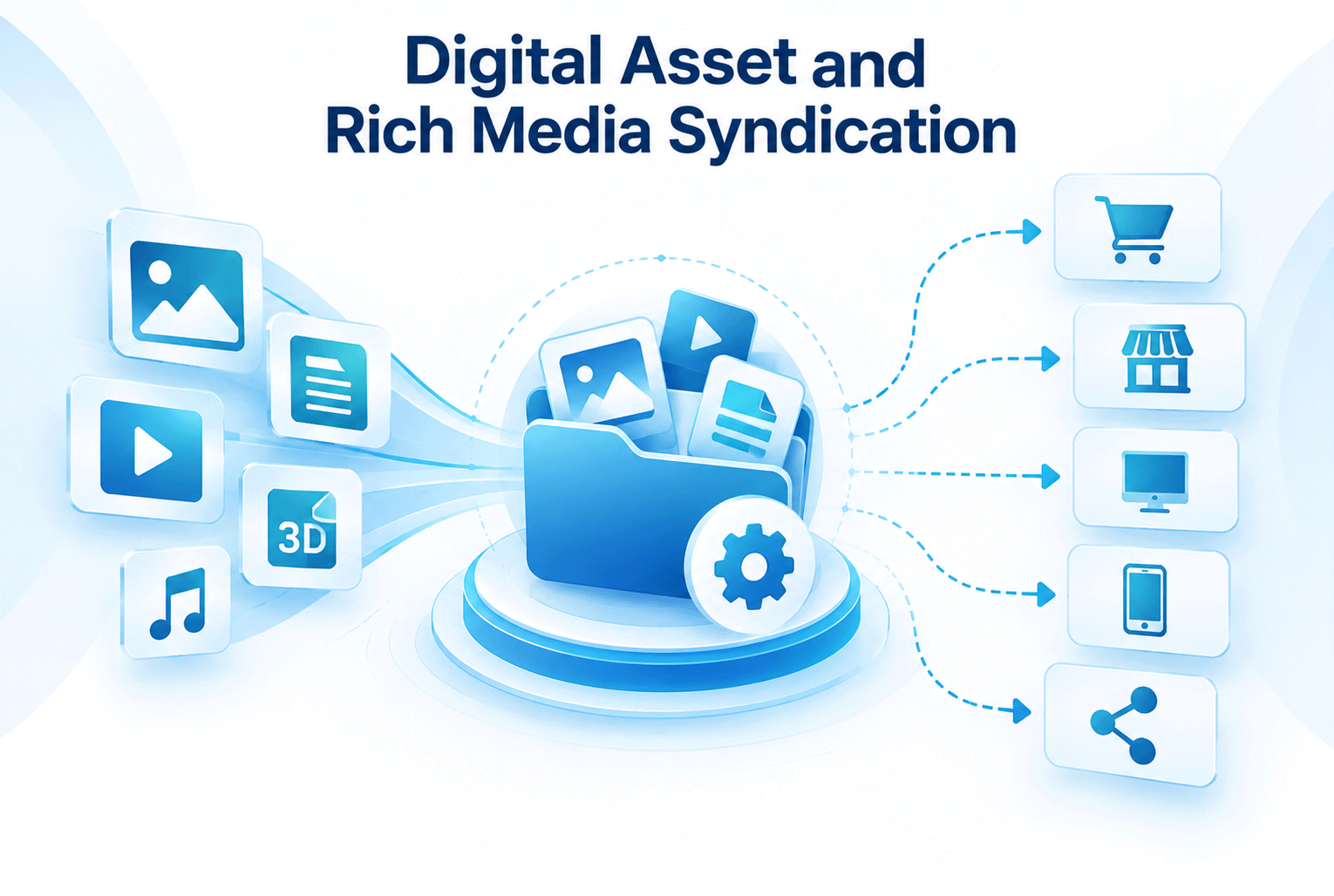
Digital Asset and Rich Media Syndication
Product experiences increasingly depend on more than structured attributes. Connect the right assets with the right products, variants, markets, and destinations.
- Syndicate product and lifestyle images
- Manage videos, documents, manuals, and rich media
- Apply channel-specific asset and image requirements
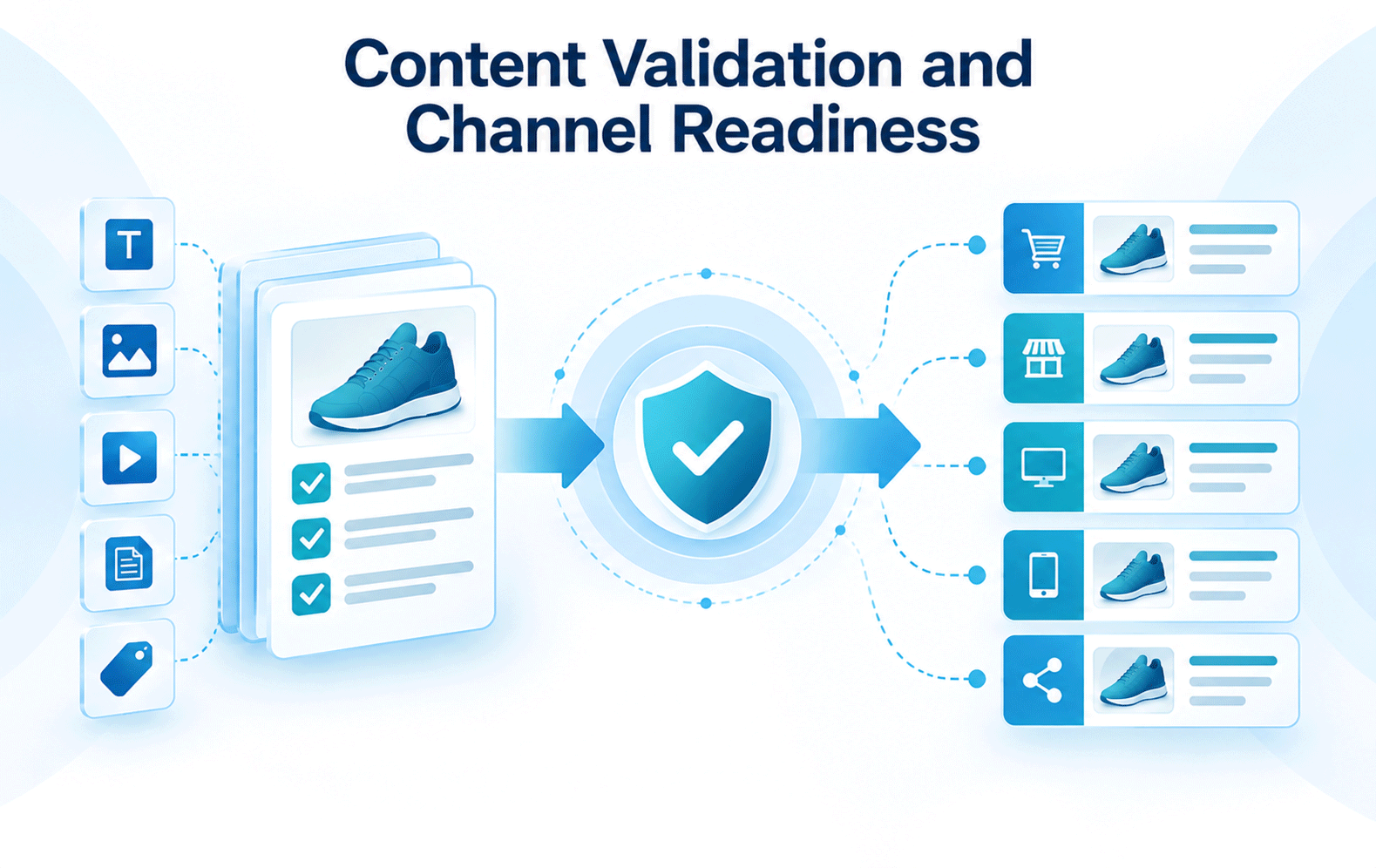
Content Validation and Channel Readiness
Identify content issues before products reach downstream channels. Apply completeness, quality, and destination-specific validation rules to determine whether each product is ready to publish.
- Validate mandatory attributes and controlled values
- Check content completeness by channel
- Route exceptions through review and enrichment workflows
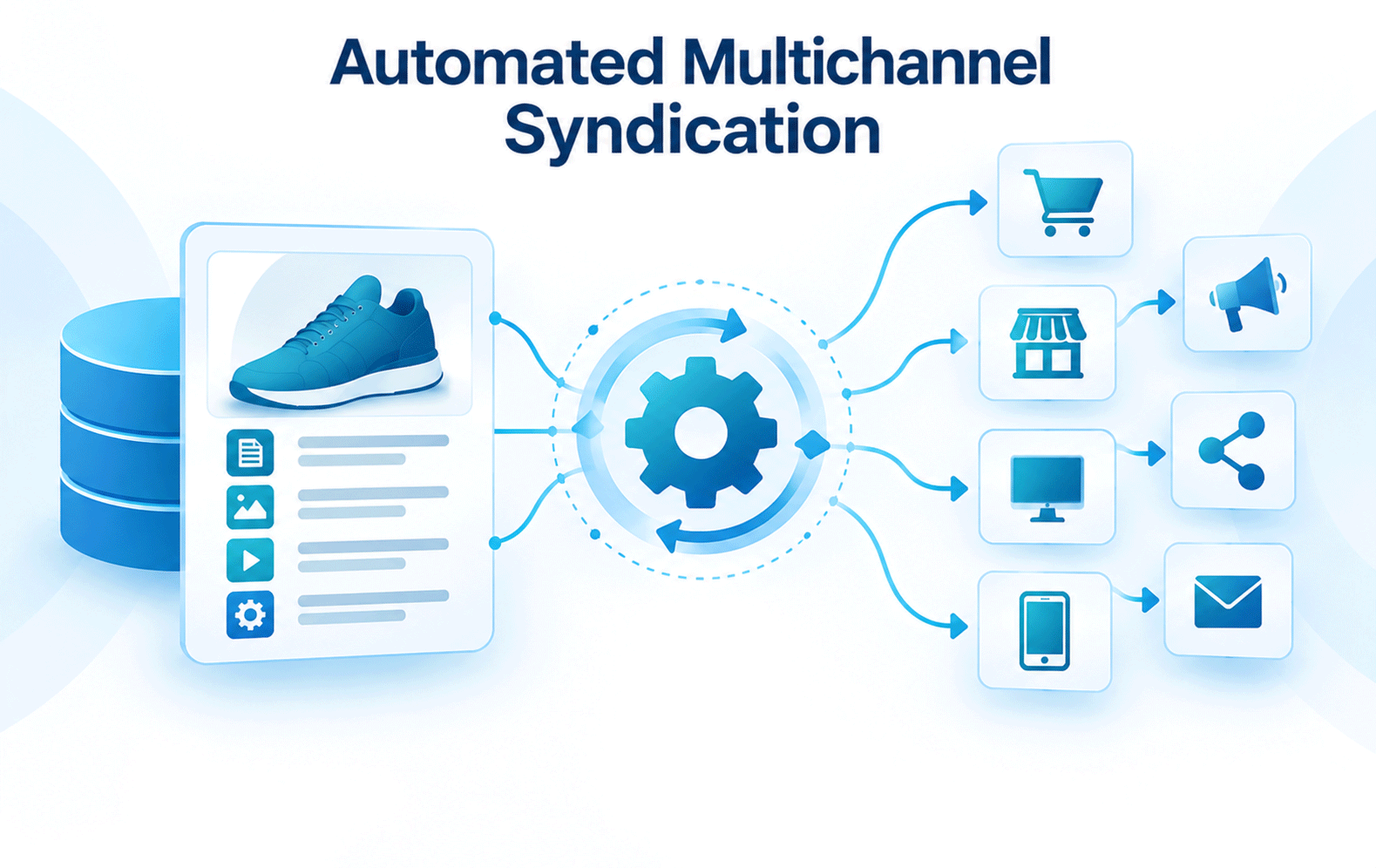
Automated Multichannel Syndication
Publish approved product content across commerce destinations without repeatedly preparing files and feeds manually.
- Retailers and marketplaces
- Distributors and trading partners
- B2B and eCommerce platforms

Our Approach to Product Content Syndication
From content assessment to automated distribution, Credencys follows a structured approach to create scalable syndication operations around your products, channels, and technology ecosystem.
Business Impact of Product Content Syndication
Product content syndication reduces repetitive channel work while helping teams deliver complete, accurate, and differentiated product experiences at scale.

Faster Channel Onboarding
Reduce the time required to prepare products for new retailers, marketplaces, distributors, and commerce destinations.
Fewer Content Errors and Rejections
Identify missing attributes, invalid values, incorrect categories, and asset issues before content reaches downstream channels.
Reduced Manual Content Work
Replace repetitive spreadsheet preparation, copy-and-paste processes, template filling, and channel-specific rework with controlled automation.
Faster Time-to-Market
Move products from enrichment and approval to downstream publication faster.
Consistent Product Experiences
Maintain one governed product-content foundation while still meeting destination-specific requirements.
Stronger Digital Shelf Content
Deliver richer product descriptions, attributes, imagery, media, and supporting information where customers evaluate products.
Scalable Channel Expansion
Add retailers, marketplaces, markets, and digital destinations without multiplying product-content operations at the same rate.
AI-Ready Product Content
Create structured, contextual, and governed product information that can support semantic discovery, recommendations, conversational commerce, and emerging AI shopping experiences.
Product Content Syndication for Different Business Models
Product content syndication requirements vary depending on how product information enters the organization and where it needs to go.
For Brands
Maintain brand consistency while adapting content to retailer, marketplace, regional, and digital-channel requirements.
For Manufacturers
Transform technical and operational product information into complete, enriched content that distributors, retailers, and buyers can use.
For Suppliers
Standardize product content once and fulfill multiple downstream retailer, distributor, and customer requirements more efficiently.
For Distributors
Normalize manufacturer content and redistribute accurate product information across catalogs, customer portals, marketplaces, and commerce experiences.
For B2B Commerce
Syndicate technical specifications, packaging information, documents, manufacturer data, product relationships, and enriched B2B content across customer-facing channels.
Real Business Impact: Product Content Syndication Success Stories
Global Jewelry Retailer
40%
Faster Data Syndication
Credencys implemented a centralized PIM and data syndication solution for a global jewelry retailer managing more than 4 million products across physical stores, eCommerce, and third-party marketplaces. The solution enabled channel-specific enrichment, approval workflows, and automated syndication to Magento, retail stores, Amazon, Flipkart, Myntra, and other downstream destinations.
Read MoreLeading U.S.-Based Retail Brand
40%
Improvement in Marketplace Control
Credencys implemented a Pimcore-based product-data solution for a retailer managing a complex product catalog across multiple marketplaces with destination-specific content requirements. The solution centralized product enrichment, introduced custom data-quality reporting, enabled bulk content updates, and streamlined targeted marketplace distribution.
Read MoreLuxury Watches & Jewelry Retailer
45%
Improvement in Product Data Accuracy
Credencys implemented an integrated PIM, DAM, MDM, and CMS solution to centralize complex luxury-product information and digital assets. Real-time syndication through webhooks enabled consistent product information to flow across multiple digital channels while automation reduced repetitive content-management work.
Read MoreReady to Scale Product Content Without Scaling Manual Work?
Centralize, enrich, validate, and distribute product content across retailers, marketplaces, distributors, and commerce channels from one governed product-data foundation.
Book a Free ConsultationWhy Leading Enterprises Choose Credencys?

End-to-End Data Expertise
From data modeling and governance to PIM, integration, and syndication, we address the complete product-data lifecycle rather than solving individual channel problems in isolation.

Domain-Focused Solutions
We design product-data models, workflows, and syndication processes around the requirements of your industry, catalog, channels, and customers.

Enterprise-Grade Partnerships
Our product-data expertise is supported by experience with enterprise PIM, MDM, integration, commerce, and syndication platforms.

AI-First
We help enterprises build structured, governed product-data foundations that can support intelligent automation, data-quality workflows, and future AI use cases.
50+
Enterprise Clients
100%
Certified Consultants
15+
Years Experience
4.9/5
Client Satisfaction
Frequently Asked Questions
Product content syndication is the process of preparing, transforming, validating, and distributing enriched product content to retailers, marketplaces, distributors, eCommerce platforms, B2B portals, and other downstream destinations.
It enables businesses to maintain governed product information centrally while delivering the format, attributes, descriptions, imagery, and other content required by each channel.
Product data syndication primarily focuses on distributing structured product information such as identifiers, attributes, specifications, classifications, and related data. Product content syndication extends this process to richer customer-facing content, including descriptions, feature bullets, images, videos, documents, merchandising content, and channel-specific versions.
PIM manages the governed product-information foundation. Product content syndication takes approved information from PIM and other systems, transforms it according to destination requirements, validates it, and distributes it downstream.
PIM therefore acts as the trusted source, while syndication manages the last-mile delivery of channel-ready content.
Product content is first collected and governed through systems such as PIM and DAM. The syndication process then:
- Maps source attributes to destination fields
- Applies channel-specific transformations
- Validates required information
- Associates appropriate digital assets
- Creates channel-ready outputs
- Distributes the approved content
- Identifies exceptions that require correction
The exact workflow depends on the destination and technology architecture.
Yes. Product syndication can connect products and variants with approved images, videos, PDFs, manuals, and other digital assets before distributing them to downstream channels.
A DAM system typically remains responsible for storing and managing the lifecycle of the assets themselves.
Trusted by Best
Choosing Credencys means partnering with a team that’s deeply committed to unlocking the true value of your data. Here’s why industry leaders trust us:
Our Valued Clientele


Send us a Message
