


Data Warehouse vs. Data Lake vs. Data Lakehouse: Which One Should You Choose?
Businesses, these days, generate and process massive volumes of information from various sources. To harness the full potential of this data, organizations rely on specialized data storage and management solutions.
Over the years, three key architectures have emerged to address different data processing needs – data warehouses, data lakes, and data lakehouses. Each of these solutions plays a critical role in data management, but they serve distinct purposes and cater to different business requirements.
- A data warehouse is designed for structured data and optimized for business intelligence and reporting.
- A data lake offers a more flexible approach, storing raw data in its native format, making it ideal for big data analytics and machine learning.
- The data lakehouse, a more recent innovation, combines the strengths of both, providing structured data management while preserving the scalability of a data lake.
In this article, we will explore the differences between data warehouses, data lakes, and data lakehouses, their advantages, use cases, and how organizations can determine the best fit for their needs.
Before diving into the differences between data warehouses, data lakes, and data lakehouses, it’s essential to understand what each of these architectures entails and how they function in modern data management.
Data Warehouse
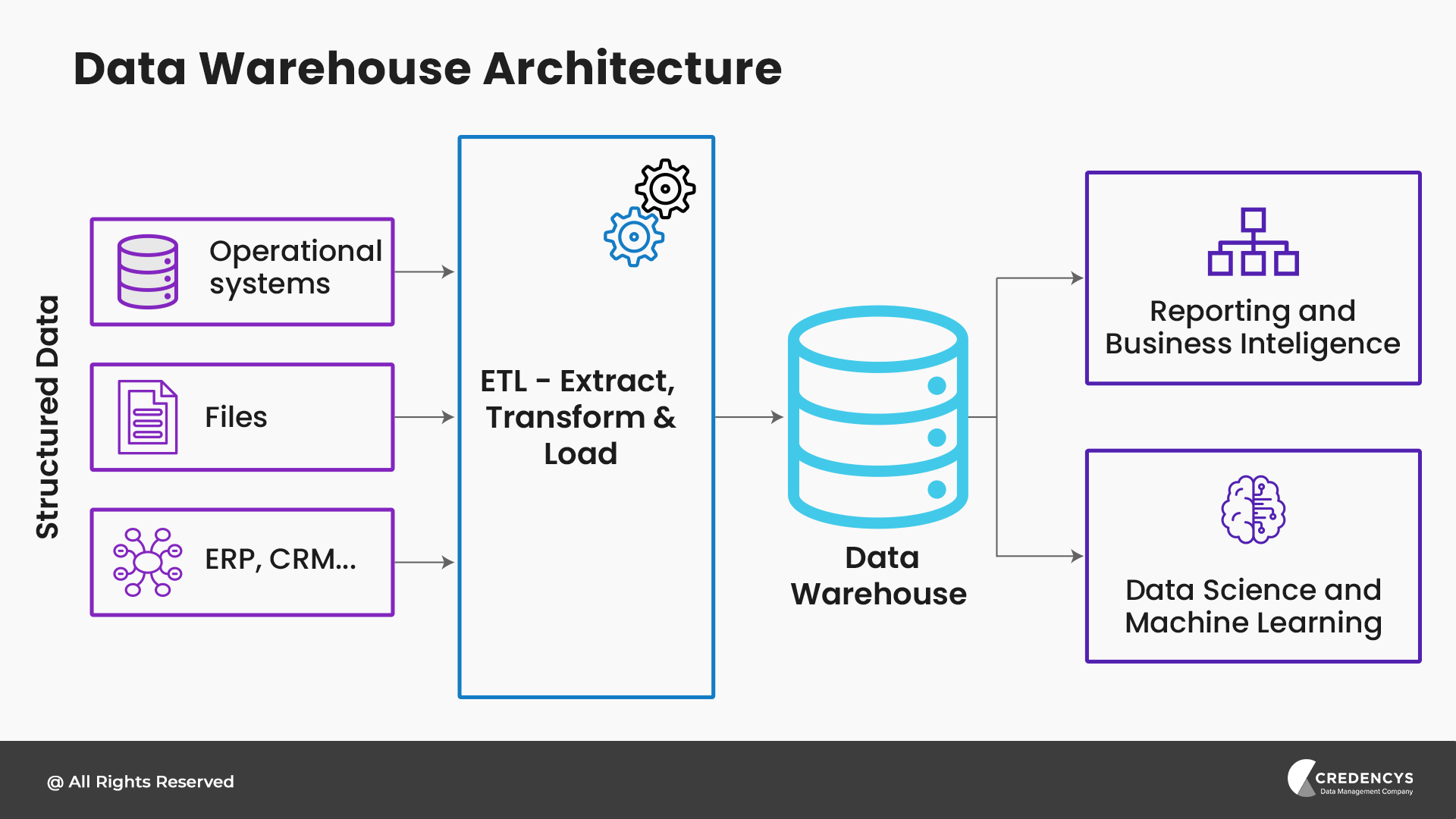
A data warehouse is a centralized repository designed for storing structured data from multiple sources. It follows a schema-on-write approach, meaning data must be cleaned, structured, and transformed before being loaded into the warehouse.
Key Characteristics:
- Stores structured data with predefined schemas.
- Optimized for business intelligence and reporting.
- Ensures high data quality, consistency, and governance.
- Uses SQL-based querying for fast and efficient analytics.
Common Use Cases:
- Financial and sales reporting.
- Customer relationship management.
- Supply chain and inventory management.
Data Lake
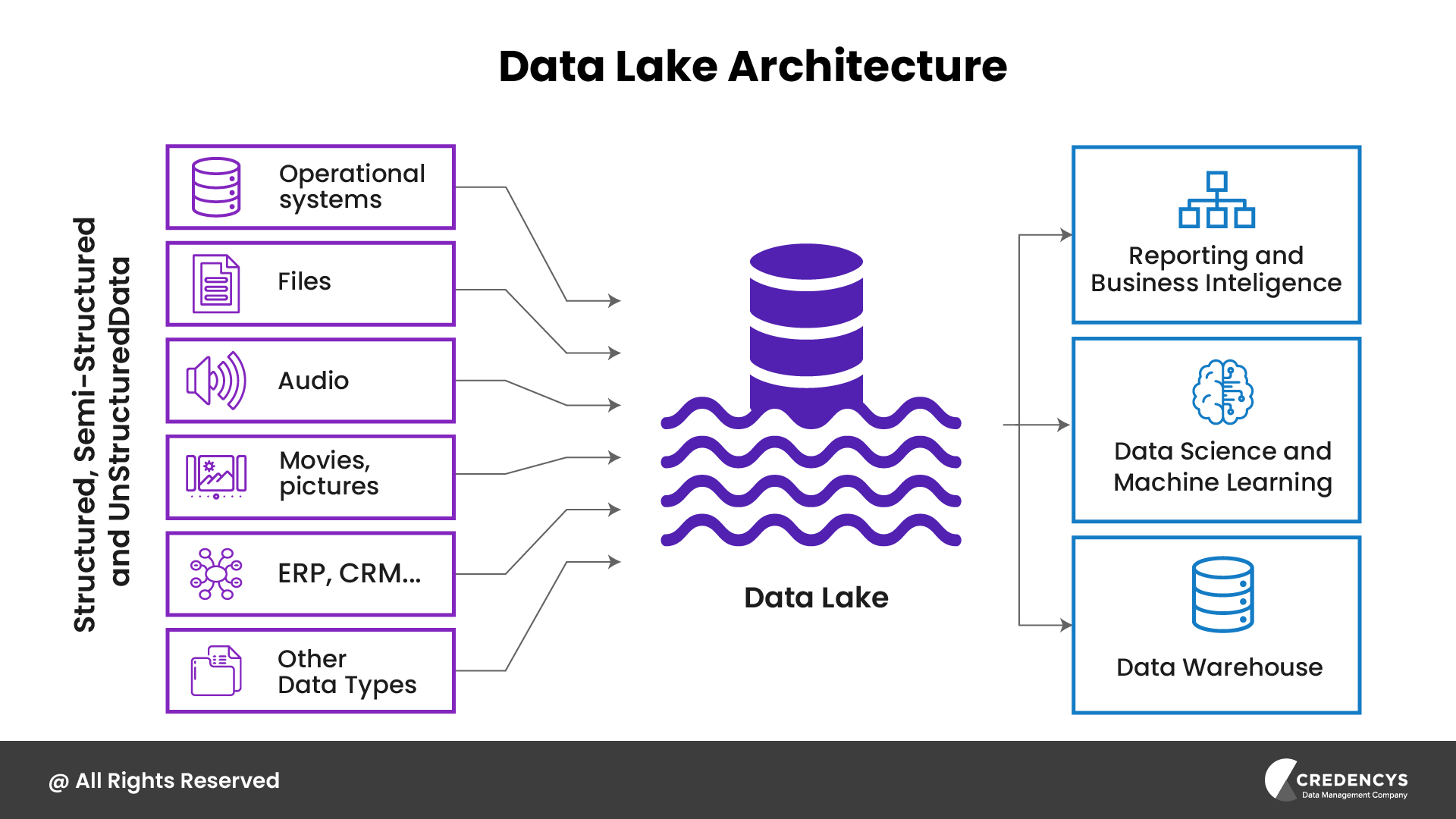
A data lake is a flexible storage repository that can hold vast amounts of raw data in its native format. Unlike data warehouses, data lakes use a schema-on-read approach, allowing data to be stored as-is and structured only when needed for analysis.
Key Characteristics:
- Supports structured, semi-structured, and unstructured data.
- Ideal for big data, machine learning, and real-time analytics.
- Requires strong governance to prevent turning into a “data swamp.”
- Stores data in its raw format, enabling flexibility and scalability.
Common Use Cases:
- Large-scale data ingestion and archiving.
- Machine learning and artificial intelligence model training.
- Storing IoT sensor data, logs, and multimedia files.
Data Lakehouse
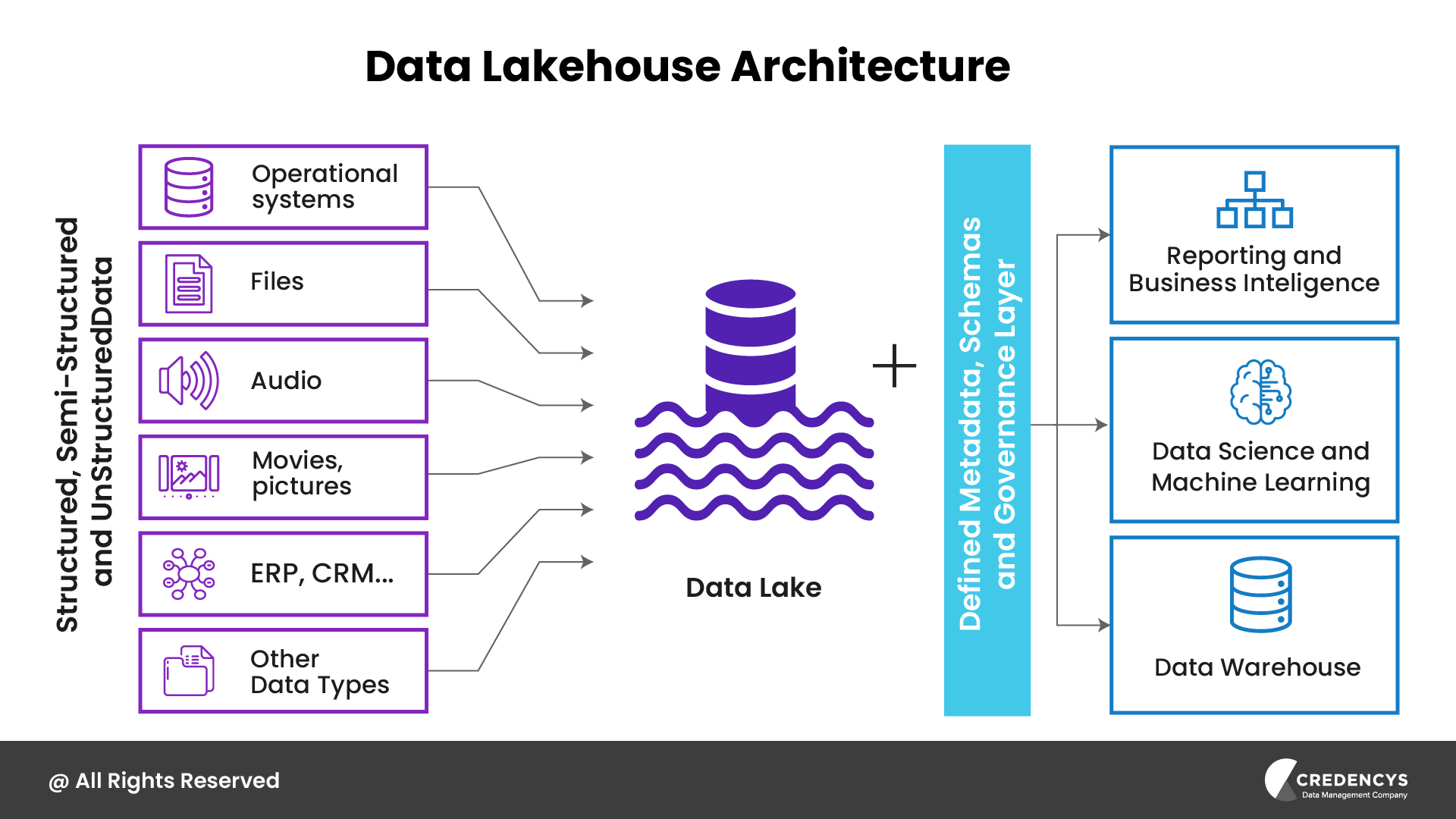
A data lakehouse is a hybrid architecture that combines the structured storage and management capabilities of a data warehouse with the flexibility and scalability of a data lake. It provides schema enforcement, ACID transactions, and governance, making it a powerful solution for modern analytics.
Key Characteristics:
- Allows for BI and advanced analytics on a single platform.
- Ensures data consistency, reliability, and governance like a data warehouse.
- Supports structured, semi-structured, and unstructured data like a data lake.
- Reduces data duplication by eliminating the need to maintain separate warehouses and lakes.
Common Use Cases:
- Cost-effective alternative to maintaining separate data architectures.
- AI/ML applications that require structured and unstructured data.
- Unified platform for real-time analytics and historical reporting.
By understanding these three data management solutions, businesses can make informed decisions about which architecture best aligns with their operational and analytical needs.

Unlock the Full Potential of Your Data with the Right Architecture. Connect with Our Experts to Find the Best Solution for your Business!
Key Differences: Data Warehouse vs. Data Lake vs. Data Lakehouse
Now that we have defined data warehouses, data lakes, and data lakehouses, let’s explore their key differences in terms of data structure, processing capabilities, cost, performance, and governance.
| Data Structure and Storage | ||
|---|---|---|
| Data Warehouse | Data Lake | Data Lakehouse |
| Stores only structured data that fits into predefined schemas. Data must be cleaned, transformed, and structured before being loaded. | Stores structured, semi-structured, and unstructured data in raw format, allowing for flexibility in data storage. | Supports structured and unstructured data while enforcing schemas when needed, offering a balanced approach. |
| If your business needs high-quality, structured data for analytics, a data warehouse is ideal. If you deal with a variety of data types (images, videos, logs, etc.), a data lake or data lakehouse is a better option. | ||
| Processing and Analytics | ||
|---|---|---|
| Data Warehouse | Data Lake | Data Lakehouse |
| Optimized for fast SQL-based queries and business intelligence (BI) applications. | Designed for big data analytics, AI/ML, and real-time processing, but may require additional tools like Apache Spark or Presto for querying. | Combines BI capabilities with advanced analytics and AI/ML support, making it versatile for multiple use cases. |
| If your organization relies heavily on BI and structured reporting, a data warehouse is best. If you need both BI and AI/ML capabilities, a data lakehouse provides a more unified solution. | ||
| Cost and Performance | ||
|---|---|---|
| Data Warehouse | Data Lake | Data Lakehouse |
| High storage and compute costs due to the need for optimized, structured data. | Lower storage costs, as raw data is stored in cheaper cloud-based object storage. However, additional compute power is needed for processing. | Balances cost and performance, reducing data duplication and leveraging cloud-native storage for efficiency. |
| Data lakes are cost-effective for storage but require extra processing power. Data warehouses provide high performance but can be expensive. Data lakehouses optimize costs while supporting various workloads. | ||
| Data Governance and Security | ||
|---|---|---|
| Data Warehouse | Data Lake | Data Lakehouse |
| Strong data governance, access control, and compliance mechanisms. | More challenging to govern, often leading to data swamps without proper management. | Supports structured and unstructured data while enforcing schemas when needed, offering a balanced approach. |
| If data governance and regulatory compliance (e.g., GDPR, HIPAA) are priorities, a data warehouse or data lakehouse is the best choice. | ||
| Flexibility and Scalability | ||
|---|---|---|
| Data Warehouse | Data Lake | Data Lakehouse |
| Less flexible due to rigid schema requirements but highly optimized for analytics. | Highly flexible and scalable, supporting all types of data but requiring additional tools for analysis. | Offers flexibility and scalability while ensuring structured querying capabilities. |
| If you need a highly scalable and flexible architecture, a data lake or data lakehouse is preferable. | ||
Advantages and Disadvantages: Data Warehouse vs. Data Lake vs. Data Lakehouse
Each data management architecture – data warehouse, data lake, and data lakehouse comes with its own strengths and weaknesses. Understanding these pros and cons can help businesses select the right solution based on their specific needs.
| Data Warehouse | |
|---|---|
| Advantages | Disadvantages |
|
|
Maximize the Power of Structured Data with a High-Performance Data Architecture. Let our Experts Help you Build a Scalable and Efficient Solution!
| Data Lake | |
|---|---|
| Advantages | Disadvantages |
|
|
| Data Lakehouse | |
| Advantages | Disadvantages |
|
|
Which One Should You Choose?
Choosing between a data warehouse, data lake, or data lakehouse depends on multiple factors, including business goals, data types, budget, and analytics needs. Here’s a breakdown to help guide your decision.
When to Choose a Data Warehouse
A data warehouse is the best choice if your organization primarily works with structured data and needs fast, reliable BI and reporting.
- You need high-performance analytics for structured data.
- Business intelligence (BI) and SQL-based reporting are key priorities.
- Data governance, security, and compliance are critical for your industry.
- You have limited need for unstructured data like images, videos, or IoT logs.
Best for: Finance, healthcare, retail, and industries where structured data is used for decision-making and regulatory compliance.
When to Choose a Data Lake
A data lake is the right choice for companies dealing with large volumes of diverse data types, including structured, semi-structured, and unstructured data.
- AI/ML and big data analytics are key business drivers.
- You work with massive raw datasets and need flexibility in analysis.
- Real-time data ingestion and processing (IoT, social media, logs, etc.) is required.
- Your company prioritizes cost-effective storage over immediate query performance.
Best for: AI/ML-driven industries, IoT applications, media & entertainment, and cybersecurity, where data variety and scalability matter most.
When to Choose a Data Lakehouse
A data lakehouse is the ideal solution for businesses that need both structured BI reporting and AI/ML capabilities within a unified system.
- You want structured and unstructured data in a single architecture.
- You need both BI and AI-driven analytics without maintaining separate platforms.
- Data governance and ACID transactions are important for compliance.
- Your business is moving towards a modern, cloud-based analytics approach.
Best for: Companies looking for a scalable, cost-effective, and future-proof data strategy that combines BI and AI capabilities.
Over to You
Choosing the right data architecture – data warehouse, data lake, or data lakehouse is crucial for building an efficient and scalable data strategy. Each approach serves a distinct purpose, and the best choice depends on your organization’s data types, analytics needs, and business goals.
As businesses continue to evolve, the demand for hybrid, scalable, and cost-effective data solutions is growing. Many organizations are now adopting the data lakehouse model to maximize flexibility, improve governance, and eliminate data silos.
Ultimately, the best choice depends on your organization’s data strategy, technology stack, and long-term analytics vision. By carefully evaluating your requirements, you can select the right architecture to drive innovation, efficiency, and data-driven decision-making.
Ready to Optimize your Data Strategy? Whether you Need a Data Warehouse, Data Lake, or Data Lakehouse, our Experts can Guide you to the Best Solution.



Tags: