


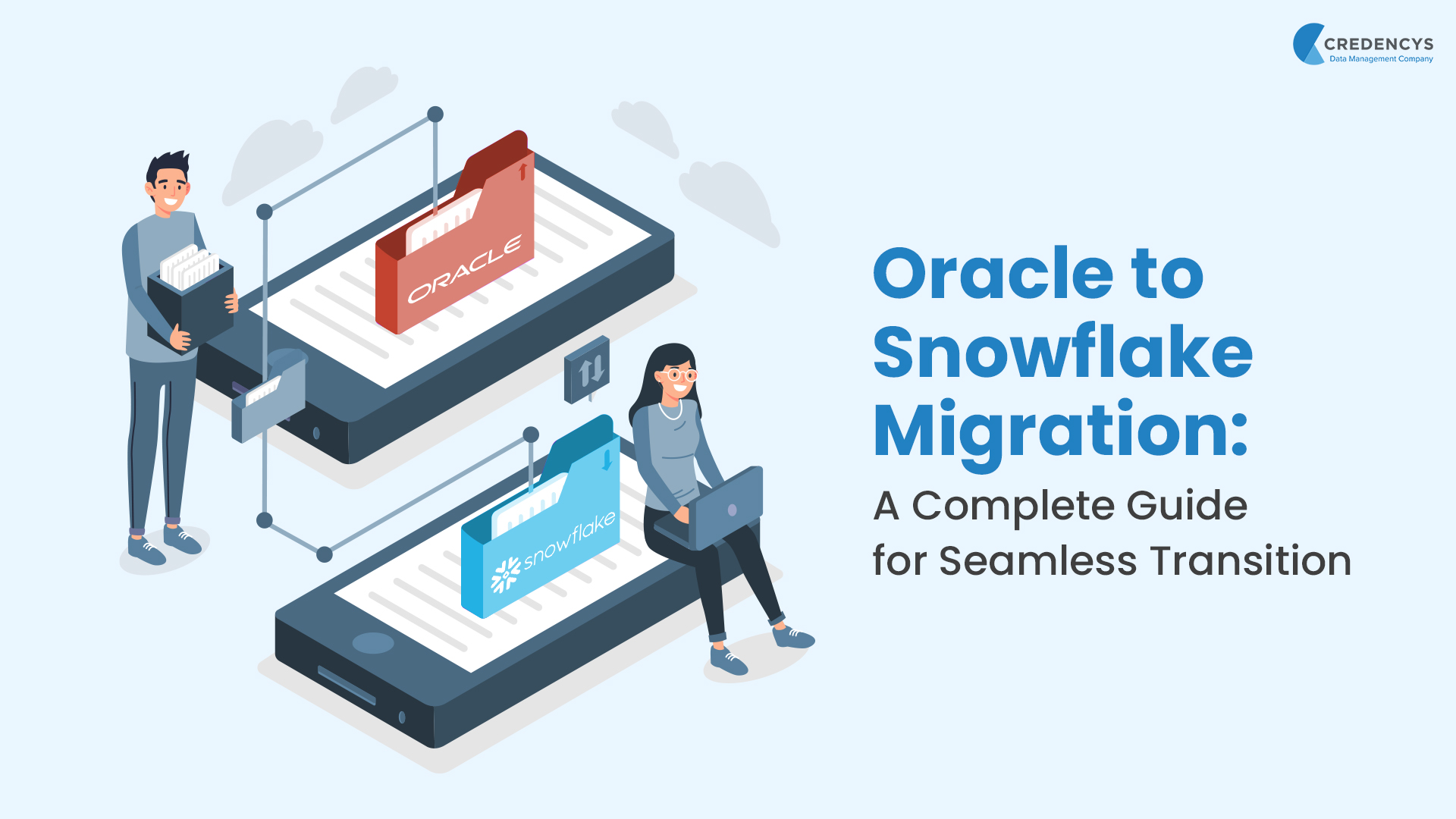
Enterprises today are under pressure to modernize their data infrastructure for speed, scale, and smarter decision-making. Oracle, while reliable, is often costly to maintain and lacks the flexibility needed for real-time analytics and cloud-native workloads.
That’s where Snowflake comes in: a modern, cloud-first data platform designed for the future of data. In this guide, we’ll walk you through everything you need to know about migrating from Oracle to Snowflake, including the benefits, challenges, best practices, and tools involved.
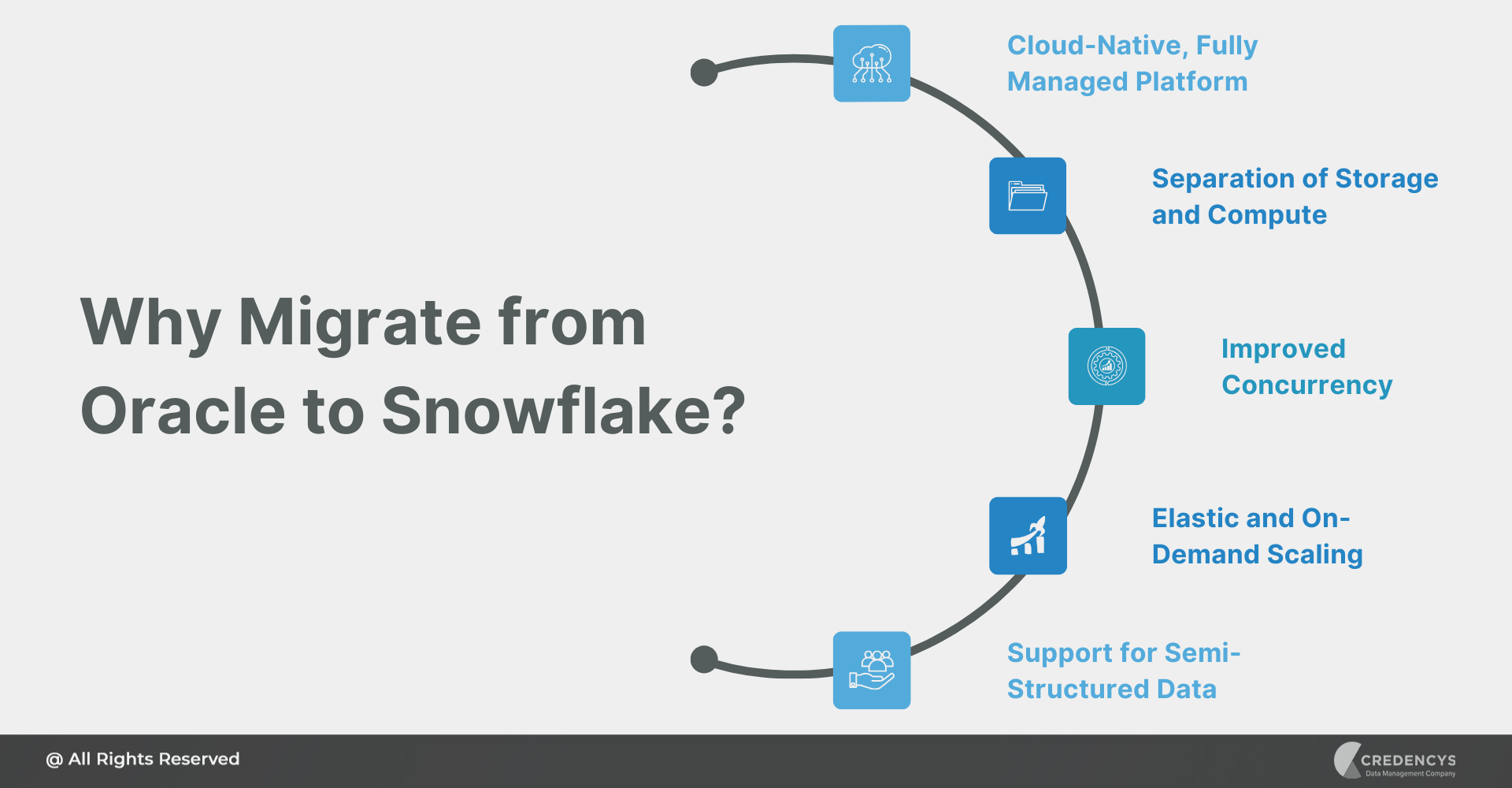
Why Migrate from Oracle to Snowflake?
Oracle has served as a foundation for enterprise databases for decades. However, as digital transformation accelerates, legacy systems often become bottlenecks.
Here’s why organizations are making the switch:
1. Cloud-Native, Fully Managed Platform
Snowflake is built from the ground up for the cloud. There’s no infrastructure to manage, no need to worry about hardware provisioning, backups, or maintenance.
It allows your teams to focus on insights, not operations.
2. Separation of Storage and Compute
Unlike Oracle, Snowflake separates storage and compute layers. This means you can scale each independently, optimizing both performance and cost.
You only pay for what you use when you use it.
3. Improved Concurrency
Snowflake’s architecture enables hundreds or thousands of users to query data simultaneously, without locking or performance degradation. This is a major step up from traditional Oracle setups.
4. Elastic and On-Demand Scaling
Snowflake can handle varying workloads without slowing down. Whether it’s ETL jobs, dashboards, or ad-hoc queries, each run in isolated virtual warehouses ensuring consistent performance.
5. Support for Semi-Structured Data
Modern data is messy; think JSON, XML, or Avro. Snowflake natively supports semi-structured data, making it easier to process complex datasets without cumbersome transformations.
Key Challenges in Oracle to Snowflake Migration
Migrating from Oracle to Snowflake is not a simple lift-and-shift. You’ll need to overcome several technical and operational challenges:
1. PL/SQL Code Translation
PL/SQL is proprietary to Oracle. Snowflake uses a different SQL dialect and does not support stored procedures or functions in the same way.
You’ll need to refactor business logic and procedural code manually or with translation tools.
2. Large Volume Data Transfers
Migrating terabytes or petabytes of data can be resource-intensive. You’ll need an efficient strategy for data extraction, network transfer, and loading, ideally with parallel processing and data compression.
3. Schema Incompatibilities
Oracle uses data types and structures that don’t always have direct equivalents in Snowflake. For example, handling CLOBs, BLOBs, or nested tables may require custom mapping and transformation logic.
4. Rebuilding Security & Access Controls
Role-based access, user permissions, and data governance policies in Oracle don’t directly map to Snowflake’s model. Re-establishing security in Snowflake requires careful planning.

Ensure Your Data Remains Secure and Compliant During Migration with Expert-led Governance Strategies Tailored to Snowflake
5. Real-Time Data Sync (CDC)
To minimize downtime and ensure continuity, Change Data Capture (CDC) tools are required to sync changes between Oracle and Snowflake during the migration window.
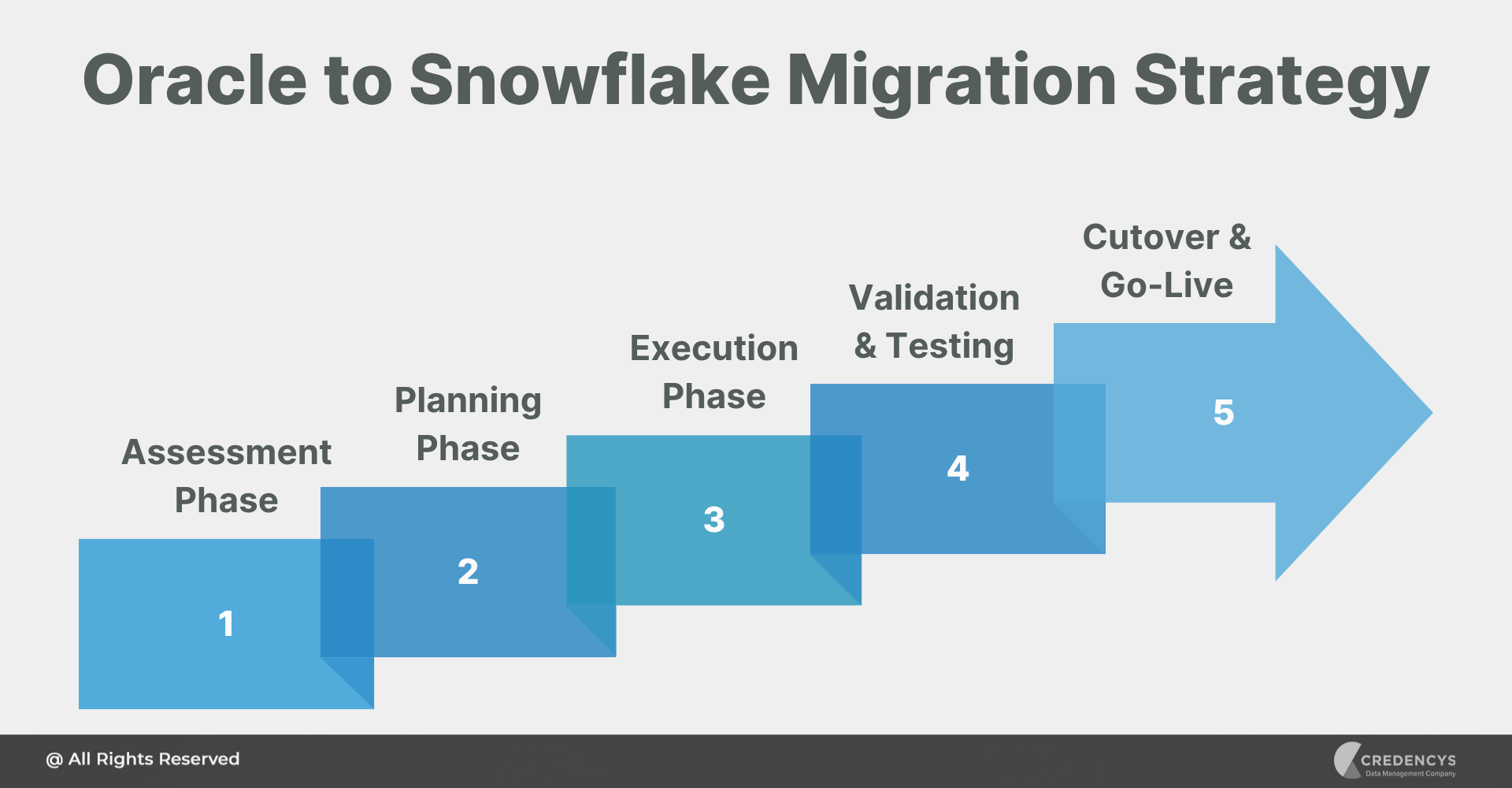
Oracle to Snowflake Migration Strategy
A phased and strategic approach helps reduce risks and ensures a smoother transition.
1. Assessment Phase
Start with a full inventory of your Oracle environment. Identify all schemas, tables, procedures, dependencies, and integrations.
Classify workloads based on complexity and business criticality to prioritize migration batches.
2. Planning Phase
Develop a migration roadmap. Decide what to move first, like low-risk or non-critical datasets.
Choose the tools and methods for data movement, SQL translation, and testing. Design a Snowflake schema that supports performance optimization and simplifies future scalability.
3. Execution Phase
Begin with data extraction from Oracle. Apply necessary transformations and load data into Snowflake.
Convert SQL code and rebuild objects like views and procedures. Use automation wherever possible to speed up execution.
4. Validation & Testing
Perform row-level data validation and integrity checks. Compare the results of critical queries run on Oracle vs. Snowflake.
Monitor performance to ensure SLAs are met or exceeded.
5. Cutover & Go-Live
Choose a cutover strategy: phased (by workload or department) or big bang. Prepare rollback plans.
During go-live, ensure stakeholders are ready to switch and that monitoring tools are in place to track usage and performance.
Best Practices for a Smooth Migration
- Clean Before You Move: Eliminate obsolete tables and unused columns in Oracle. A cleaner schema simplifies migration and reduces effort.
- Automate Wherever Possible: Use tools for repetitive tasks like SQL translation or ETL setup. This saves time and reduces manual errors.
- Migrate in Phases: Don’t move everything at once. Start with a pilot project or a non-critical workload to build experience.
- Validate Continuously: Run tests at every stage; post-extraction, post-transformation, and post-load.
- Train Your Teams: Snowflake has a different philosophy from Oracle. Equip your developers, data analysts, and admins with the knowledge to maximize its benefits.
How Credencys Can Help
Migrating from Oracle to Snowflake isn’t just a technical exercise; it’s a transformation journey. At Credencys, we bring proven expertise in data platform modernization.
Our end-to-end migration services cover:
- Discovery and readiness assessment
- Architecture and schema redesign
- Data pipeline setup and orchestration
- SQL refactoring and performance optimization
- Post-migration support and governance setup
With our experience across industries like retail, supply chain, and manufacturing, we ensure your Snowflake migration delivers maximum business value, quickly and securely.
Conclusion
Migrating from Oracle to Snowflake empowers your organization to embrace modern analytics, scale effortlessly, and drive faster decisions. But to reap the full benefits, you need a well-planned strategy, the right tools, and a reliable partner.
Ready to Future-Proof your Data Infrastructure? Partner with Credencys to Ensure a Smooth, Secure, and Cost-effective Oracle to Snowflake Migration Tailored to Your Business Needs






Tags: