


Snowflake Data Governance: A Comprehensive Guide for Modern Enterprises
Enterprises are harnessing massive volumes of data to drive strategic decisions, enhance customer experiences, and build competitive advantage. But with this explosion of data comes the growing need for robust data governance, ensuring that data is accurate, secure, accessible, and compliant.
Snowflake, a leading cloud data platform, has quickly become the go-to choice for organizations seeking agility, scalability, and performance in their data architecture. But beyond its technical prowess, Snowflake also offers a powerful and evolving suite of data governance capabilities designed to help enterprises manage their data responsibly and confidently.
This blog explores how Snowflake enables enterprise-grade data governance, covering core capabilities, integrations, best practices, and emerging innovations like Horizon, its new native data catalog.
What is Data Governance in the Snowflake Ecosystem?
At its core, data governance is the framework of policies, processes, roles, and tools that ensure an organization’s data is trustworthy, secure, compliant, and used responsibly. In the context of Snowflake, data governance is not an afterthought; it’s built into the platform’s DNA.
Snowflake’s data governance framework provides a scalable, cloud-native architecture that simplifies governance without compromising on performance or usability.
Key Pillars of Data Governance in Snowflake
- Data Quality: Ensuring accuracy, consistency, and reliability of data across sources.
- Security & Access Control: Using role-based access (RBAC), row-level security, and data masking to control who sees what.
- Compliance: Helping organizations meet regulatory requirements (e.g., GDPR, HIPAA, CCPA) with features like data classification and audit trails.
- Data Lineage & Traceability: Providing visibility into how data moves and transforms across the platform.
- Metadata Management: Capturing and managing technical, operational, and business metadata for better discovery and usage.
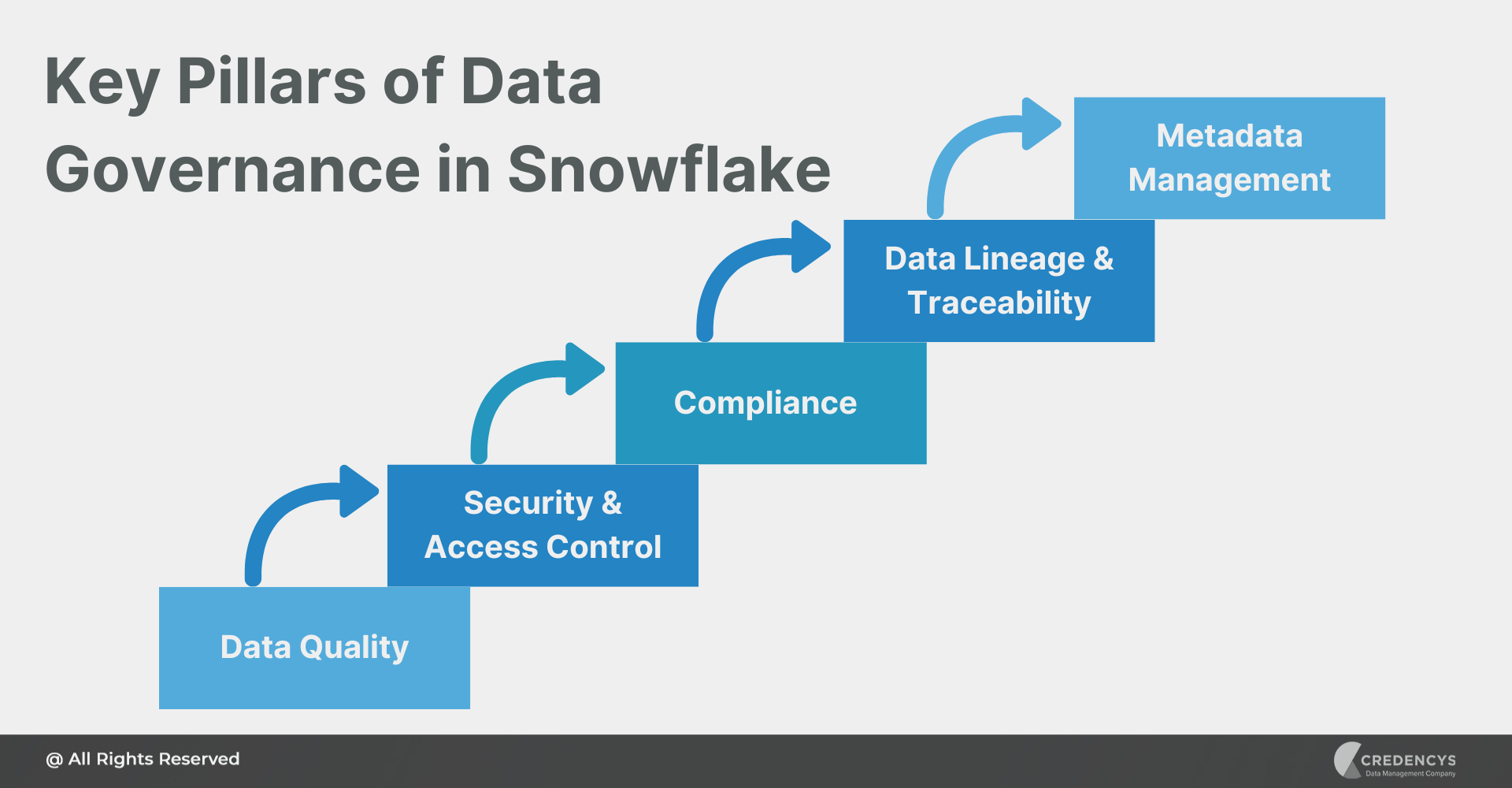
Snowflake’s separation of compute and storage, along with centralized metadata management, enables governance at scale, even across globally distributed teams and data products. In short, Snowflake turns governance from a bottleneck into an enabler of innovation.
Core Capabilities Enabling Data Governance in Snowflake
Snowflake offers a robust set of built-in capabilities that empower enterprises to implement effective data governance without relying heavily on external tools.
- Role-Based Access Control (RBAC): Assigns access based on user roles, ensuring only the right people have access to the right data.
- Object Tagging: Allows tagging of tables, columns, or other assets for classification, enabling policy enforcement and easier audits.
- Dynamic Data Masking & Row Access Policies: Mask or restrict data dynamically based on user roles, essential for managing sensitive information.
- Time Travel & Fail-safe: Enables historical data recovery and auditability by allowing access to previous data versions.
- Data Classification: Automatically detects and flags sensitive data to support privacy compliance initiatives.
- Metadata & Lineage: Captures detailed metadata for visibility into data flow, helping data teams understand where data came from and how it’s used.
These native features make Snowflake a powerful platform for organizations prioritizing data governance from day one.

Ready to Take Control of your Enterprise Data with Built-in Snowflake Governance Features? Partner with Credencys to Implement a Secure, Scalable Data Governance Strategy
Horizon – Snowflake’s Native Data Catalog
To further strengthen its governance offering, Snowflake introduced Horizon, its built-in data catalog and governance suite. Horizon brings visibility, control, and consistency to data management across the Snowflake platform.
- Data Discovery: Makes it easy for users to find and understand data assets across the organization.
- Data Lineage: Automatically maps how data flows from source to destination, helping teams trust the data and trace errors or transformations.
- Data Quality Indicators: Surfaces insights on data freshness, completeness, and reliability.
- Policy Enforcement: Supports centralized governance by enabling administrators to apply masking, row-level access, and tagging policies directly within the catalog.
- Collaboration-Friendly: Built for modern, distributed teams, Horizon fosters transparency and shared understanding of data.
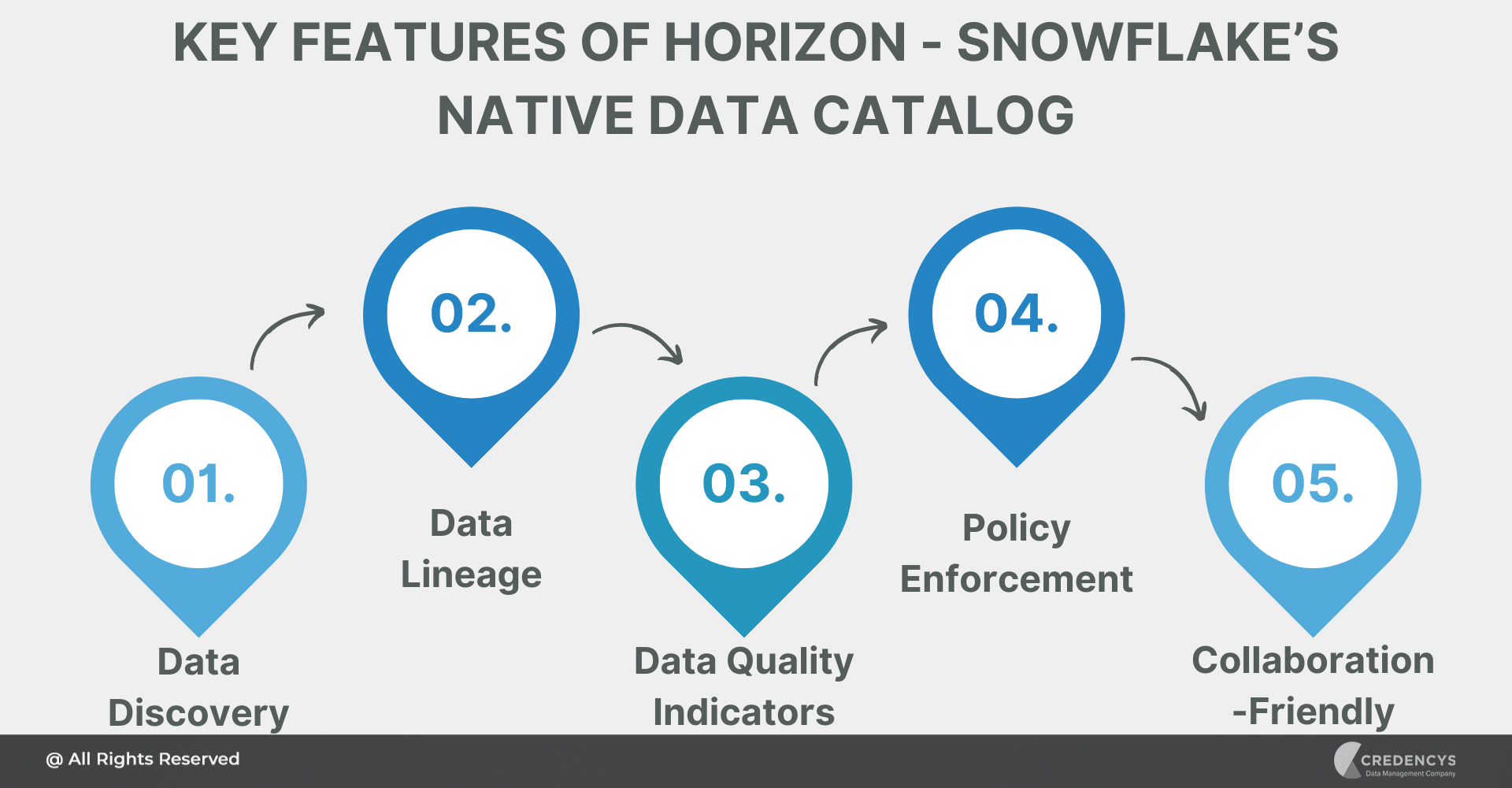
By centralizing governance and discovery into a native experience, Horizon simplifies compliance and reduces reliance on external data catalog tools, especially useful for fast-growing enterprises.
Best Practices for Implementing Data Governance on Snowflake
To get the most out of Snowflake’s governance capabilities, organizations need more than just tools, they need a thoughtful, strategic approach.
- Start with Clear Policies: Define data ownership, access rules, and compliance goals before diving into implementation.
- Use Tags Strategically: Tag sensitive data (like PII or financials) early and consistently to enable automated controls and audits.
- Automate Where Possible: Leverage dynamic data masking, auto-classification, and integrated monitoring to reduce manual efforts.
- Enable Role-Based Access: Design and enforce RBAC models aligned with user responsibilities and compliance needs.
- Engage Cross-Functional Teams: Include IT, security, compliance, and business users in governance planning and execution.
- Monitor & Iterate: Regularly audit data usage, access patterns, and policy effectiveness. Adjust as your data landscape evolves.
By aligning governance efforts with business priorities and leveraging Snowflake’s full feature set, organizations can ensure both control and agility in their data operations.
Challenges and How to Overcome Them
Implementing data governance in Snowflake or any platform can come with its own set of challenges. However, with the right strategies, these obstacles can be turned into opportunities.
- Data Silos: Different departments may have their own governance practices, leading to inconsistency.
- Unclear Ownership: Without defined data stewards, it’s hard to enforce policies or maintain quality.
- Manual Processes: Relying on manual tagging or reviews slows down governance and increases risk.
- Scaling Access Control: Managing user permissions across growing teams and datasets can become complex.
How to Overcome Them
- Centralize Governance Strategy: Align governance under a unified framework with organization-wide policies and standards.
- Define Roles & Responsibilities: Assign clear ownership for datasets, metadata, and policy enforcement.
- Automate Enforcement: Use Snowflake’s native tagging, masking, and classification features to automate governance at scale.
- Use External Tools Where Needed: Integrate with catalogs or platforms that enhance visibility and simplify compliance management.
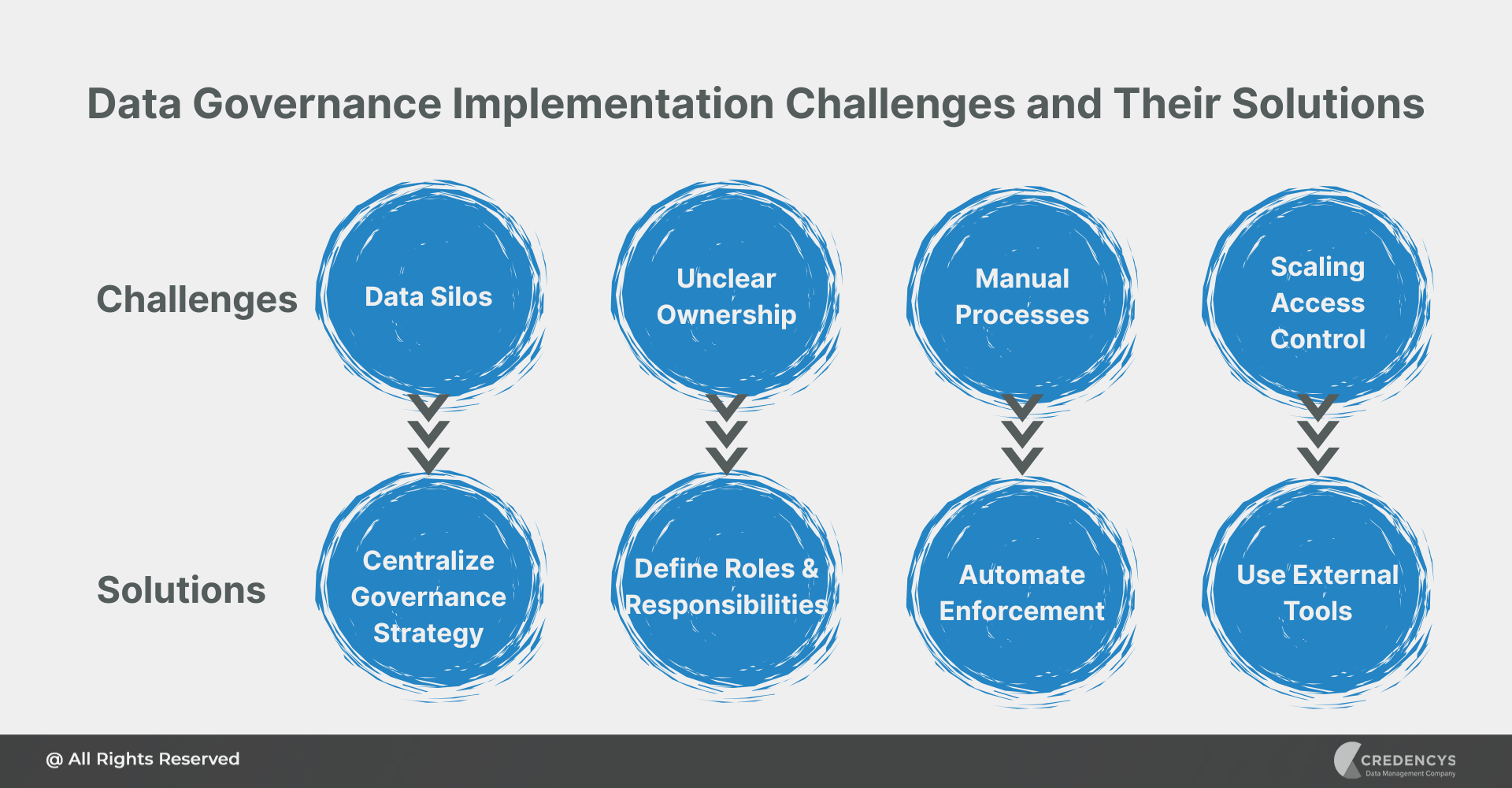
With a proactive mindset and the right mix of tools, governance can be both scalable and sustainable.
Conclusion
As enterprises continue to scale their data initiatives, robust data governance is no longer optional, it’s essential. Snowflake stands out not just for its performance and scalability but for its deep commitment to enabling secure, compliant, and well-managed data ecosystems.
From native capabilities like RBAC, data masking, and Horizon, to seamless integrations with top governance platforms, Snowflake offers everything modern organizations need to take control of their data without slowing innovation. By implementing best practices and addressing governance challenges head-on, businesses can unlock the true value of their data while staying compliant, secure, and future-ready.
Looking to Strengthen your Data Governance with Snowflake? Credencys Helps Enterprises Design and Implement Tailored Snowflake Data Governance Solutions that Ensure Compliance, Security, and Scalability.





Tags: