


Modern Data Warehouse: The Backbone of Scalable, AI-Ready Enterprises
As data volumes grow exponentially, over 328 million terabytes are created daily, and traditional data warehouses are struggling to keep up. Legacy systems weren’t designed for real-time analytics, unstructured data, or AI workloads, making them a bottleneck for innovation.
Enter the modern data warehouse: a cloud-native, scalable, and analytics-ready platform that enables businesses to process diverse data types at speed.
According to Gartner, by 2025, 80% of data warehouses will be cloud-based, driving faster insights, better decisions, and AI-readiness.
In this blog, we will break down what defines a modern data warehouse, its architecture, benefits, challenges, and how Credencys empowers enterprises to build one that’s future-ready.
What is a Modern Data Warehouse?
A modern data warehouse is a cloud-native platform designed to ingest, store, process, and analyze large volumes of structured, semi-structured, and unstructured data in real time. Unlike traditional warehouses, built for batch processing and limited to structured data, modern architectures are built to support agility, scale, and advanced analytics.
Key Characteristics
- Real-Time Processing: Supports streaming data ingestion and real-time analytics.
- Integrated Analytics & ML: Natively supports BI tools and machine learning frameworks.
- Decoupled Storage & Compute: Enables independent scaling of resources for performance and cost efficiency.
- Flexible Data Handling: Accommodates everything from transactional records to sensor data and customer interactions.
- Cloud-Based Infrastructure: Runs on platforms like AWS, Azure, or Google Cloud, offering elasticity and high availability.
In essence, a modern data warehouse acts as the central nervous system for enterprise data operations, powering dashboards, models, and decisions with clean, curated, and current data.
Key Features of a Modern Data Warehouse
Modern data warehouses are designed for the dynamic needs of today’s digital enterprises. From real-time analytics to AI readiness, here are the standout features that set them apart:
1. Elastic Scalability
- Handle peak loads without overprovisioning.
- Instantly scale compute and storage independently.
2. Cloud-Native & Hybrid Flexibility
- Deployed fully on the cloud or as a hybrid with on-premises systems.
- Benefits include high availability, disaster recovery, and global accessibility.
3. Unified Data Support
- Reduces the need for separate systems for different data types.
- Handles structured (SQL), semi-structured (JSON, XML), and unstructured data (video, audio, images).
4. Built-in Security and Governance
- Compliance-ready for GDPR, HIPAA, and other frameworks.
- Role-based access controls (RBAC), data masking, and encryption.
- Tracks lineage, quality, and audit trails for full observability.
5. Real-Time Data Ingestion & Processing
- Ingest data from streaming sources (e.g., IoT devices, app logs, clickstreams).
- Process and analyze data as it arrives.
- Enables up-to-the-minute decisions in retail, logistics, and manufacturing.
6. AI/ML Integration Capabilities
- Enables advanced use cases like customer segmentation, fraud detection, and predictive maintenance.
- Native support for data science and ML frameworks like TensorFlow, PyTorch, and Spark MLlib.

These features enable enterprises to unlock the full value of their data, delivering faster insights, more accurate predictions, and stronger governance, all at scale.
Core Architectural Components
Modern data warehouse architectures are purpose-built for flexibility, scalability, and performance. Here’s a breakdown of the core components that power their efficiency:
1. Analytics & BI Layer
- Supports self-service analytics, dashboards, and reporting for business users.
- Integrates with tools like Power BI, Looker, Tableau, or ThoughtSpot.
2. AI/ML Frameworks
- Connects with Spark, TensorFlow, or built-in cloud ML tools.
- Supports the training and deployment of machine learning models directly on warehouse data.
3. Cloud-Native Infrastructure
- Supports multi-cloud and hybrid deployment options.
- Offers elasticity, global availability, and reduced infrastructure maintenance.
- Built on scalable cloud platforms like AWS, Azure, or GCP.

Unlock the Full Potential of Cloud-native Architecture with a Modern Data Warehouse Tailored to your Business Needs
4. Decoupled Storage and Compute
- Separates data storage from compute resources.
- Enhances performance tuning and resource optimization.
- Enables independent scaling, reduces costs during low demand, and increases power during analytics bursts.
5. Data Lakes and Data Marts Integration
- Data Lake: Stores raw, diverse data at scale.
- Data Marts: Curated datasets for specific business units (e.g., marketing, finance).
- The combined approach supports both raw data exploration and business-ready reporting.
6. ETL/ELT Pipelines
- ETL (Extract, Transform, Load): Prepares data before loading it into the warehouse.
- ELT (Extract, Load, Transform): Loads raw data first, transforms it within the warehouse; ideal for large, cloud-scale environments.
- Allows flexible processing based on use case and latency needs.
Together, these components form a resilient, intelligent data ecosystem that supports real-time operations, enterprise reporting, and data science workflows within a single, unified architecture.
Business Benefits of Adopting a Modern Data Warehouse
Migrating to a modern data warehouse doesn’t just improve your tech stack; it transforms how your business operates, makes decisions, and competes. Here are the most impactful benefits:
1. Faster, Real-Time Decision Making
- Real-time data ingestion and analytics allow businesses to respond instantly to customer behavior, market changes, or operational issues.
2. Cost Efficiency with Cloud Economics
- Pay-as-you-go pricing eliminates overprovisioning.
- Decoupled storage and compute means you only pay for what you use.
- Auto-scaling capabilities reduce infrastructure overhead.
3. Enterprise-Wide Data Accessibility
- Centralized data repository accessible across departments.
- Self-service analytics tools empower teams to explore data independently.
- Breaks down silos between business units.
4. Scalability for Future Growth
- Easily accommodates growing data volumes, new data sources, and evolving analytics needs.
- Future-proofs your data infrastructure for innovations like GenAI and hyperautomation.
5. AI and Advanced Analytics Enablement
- Seamless integration with machine learning tools.
- Supports predictive analytics, recommendation engines, anomaly detection, and more.
- Makes data science a core driver of business value.
6. Improved Security, Compliance & Governance
- Built-in features like encryption, RBAC, and data masking.
- Easier compliance with standards like GDPR, HIPAA, and SOC 2.
- End-to-end lineage tracking improves trust and accountability.
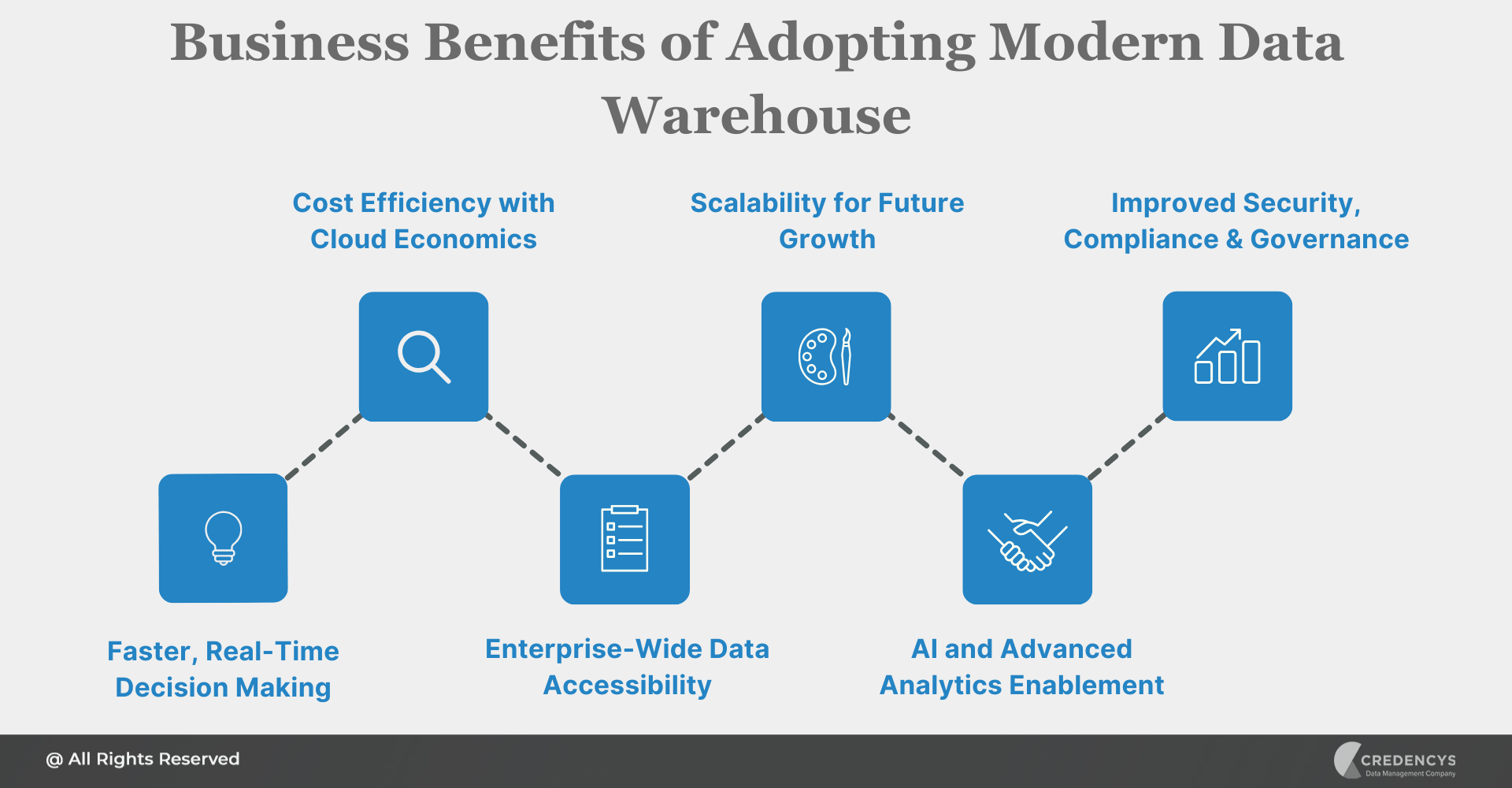
By adopting a modern data warehouse, organizations position themselves to be faster, smarter, and more resilient, turning data into a true strategic asset.
Challenges to Consider
While modern data warehouses offer immense advantages, the transition isn’t without hurdles. Enterprises must plan for these common challenges to ensure a smooth and successful implementation:
1. Skills and Talent Gaps
- Operating modern data stacks requires new skills: cloud architecture, data engineering, ML integration, and DevOps.
- Upskilling existing teams or hiring niche talent is essential.
2. Migration from Legacy Systems
- Shifting from traditional warehouses or on-prem systems involves the risk of data loss, downtime, and user disruption.
- Demands a phased, well-tested migration strategy often supported by expert consulting.
3. Cost Management Without Visibility
- While cloud platforms offer flexible pricing, a lack of observability can lead to cost overruns.
- Monitoring unused resources, inefficient queries, and data sprawl is critical to maintain ROI.
4. Complex Data Integration
- Combining structured, semi-structured, and unstructured data from multiple sources (databases, APIs, IoT, legacy systems) can be technically challenging.
- Requires flexible ETL/ELT pipelines and data quality assurance at scale.
5. Data Privacy & Compliance Complexity
- Managing personally identifiable information (PII) across diverse data sources requires strong access controls and governance.
- Adhering to regulations like GDPR, HIPAA, and CCPA demands encryption, audit trails, and robust policy enforcement.
Addressing these challenges proactively with the right architecture, tools, and partners ensures that your modern data warehouse delivers long-term business value, not just technical upgrades.
Overcoming These Challenges Starts with the Right Strategy and Expert Guidance. Let us Help you Build with Confidence
Best Practices for Successful Data Warehouse Implementation
Building a modern data warehouse isn’t just a technical project; it’s a strategic transformation. These best practices help ensure your implementation delivers long-term business value:
1. Start with Clear Business Goals
- Define what success looks like: faster reporting, predictive analytics, operational visibility, etc.
- Align stakeholders across IT, data, and business teams to ensure buy-in.
2. Focus on Data Quality from Day One
- Implement validation rules, cleansing routines, and anomaly detection early.
- Poor-quality data leads to poor insights; garbage in, garbage out.
3. Establish Strong Governance
- Define access policies, data ownership, and usage rules.
- Use data catalogs and lineage tools to maintain transparency and compliance.
4. Build for Scale and Flexibility
- Choose tools and architectures that support future growth in data volume and complexity.
- Leverage decoupled compute and storage to avoid scaling bottlenecks.
5. Invest in People and Processes
- Upskill your team in cloud data architecture, ELT, and analytics tools.
- Establish DevOps/DataOps practices to enable agile development and deployment.
6. Monitor, Optimize, and Iterate
- Use observability platforms to track performance, costs, and quality.
- Continuously refine pipelines, queries, and resource utilization based on usage patterns.
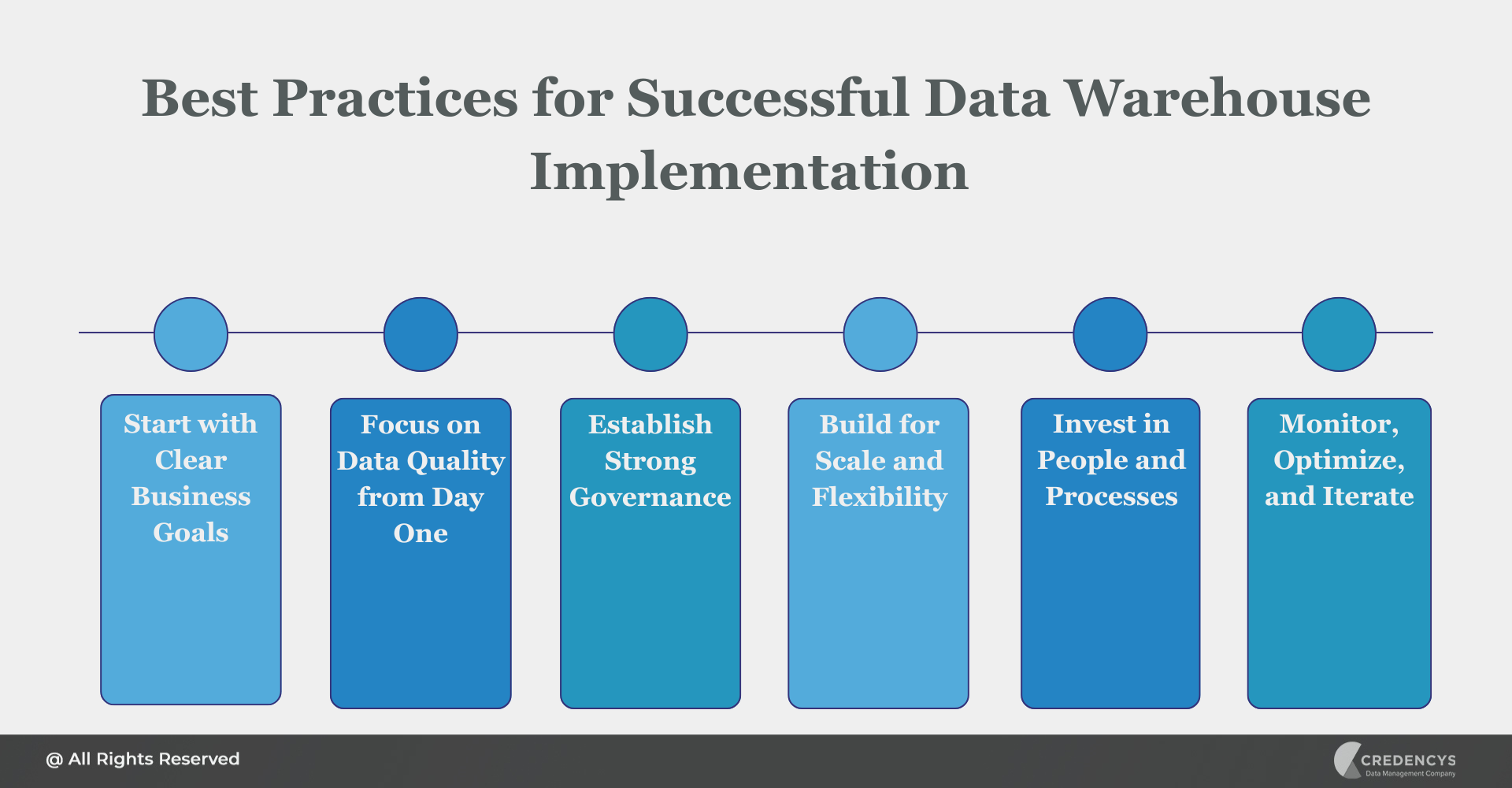
A thoughtful, goal-driven approach ensures your modern data warehouse is more than just an upgrade; it becomes a competitive differentiator.
How Credencys Helps You Build a Modern Data Warehouse
At Credencys, we don’t just implement data warehouses; we engineer intelligent, scalable, and future-proof ecosystems that fuel your business transformation. Here’s how we make it happen:
1. Strategic Data Architecture & Planning
- We design cloud-native architectures aligned with your business needs, whether you are starting fresh or modernizing a legacy system.
- From choosing the right platform (Snowflake, BigQuery, Redshift) to deciding between ETL and ELT, we guide you at every step.
2. End-to-End Data Engineering Services
- Data ingestion, cleansing, transformation, and modeling, we handle the entire pipeline.
- Our engineers build modular, reusable components that scale as your data grows.
3. BI, Analytics, and AI Enablement
- We integrate your warehouse with top BI tools and ML frameworks so that your teams can extract real value, be it through dashboards, recommendations, or predictive insights.
- Support for real-time use cases like dynamic pricing, demand forecasting, and customer segmentation.
4. Data Observability & Quality Assurance
- With built-in monitoring and data health checks, we ensure your pipelines run reliably and your insights are trustworthy.
- We implement governance frameworks to support compliance and internal data stewardship.
5. Accelerated Implementation with Proven Methodologies
- Our agile approach, accelerators, and industry-specific templates reduce time to value.
- You benefit from faster rollout, minimal risk, and higher ROI.
Whether you are looking to enhance your analytics maturity, power your AI initiatives, or simply make better decisions with cleaner, real-time data, Credencys is your partner in building a truly modern data warehouse.
Conclusion
In a world where data is the new oil, a modern data warehouse is the engine that drives enterprise intelligence. It’s no longer just a storage solution; it’s a strategic asset that enables real-time insights, operational efficiency, and AI-powered innovation.
From handling diverse data types to empowering teams with self-service analytics, modern data warehouses are essential for businesses looking to stay agile and competitive. But building one requires more than tools; it demands the right architecture, governance, and expertise.
Ready to Modernize Your Data Stack?






Tags: