


How a Global Auto Manufacturer Transformed Factory Operations with Databricks for Real-Time Intelligence
Manufacturing enterprises today generate vast volumes of data across machines, sensors, and production systems. Yet much of this data remains underutilized.
According to industry estimates, over 70% of industrial data remains underutilized, often trapped in siloed systems and delayed pipelines.
For organizations, this creates a critical gap. Organizations have access to data, but lack the ability to turn it into timely, actionable insights.
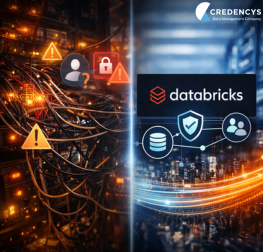
The challenge lies in traditional data architectures that rely on batch processing and fragmented systems. Insights are often delayed, which limits their impact on real-time operations.
In high-intensity manufacturing environments, even small delays can lead to:
- Missed signals of equipment inefficiency
- Escalation of environmental risks
- Increased energy consumption
- Reduced visibility into workforce conditions
This is why leading enterprises are shifting toward real-time data intelligence. The focus is moving from analyzing past events to acting on live data as it is generated. Platforms like Databricks enable this shift by combining data engineering, streaming, and AI into a unified environment. This allows organizations to process and act on data instantly, at scale.
This blog explores how a global manufacturing enterprise adopted Databricks to enable real-time visibility, reduce latency, and improve operational responsiveness.
The Strategic Imperative: Why Real-Time Intelligence is Now Critical
Manufacturing is entering a phase where speed of insight directly impacts performance. Operational environments are becoming more complex, with interconnected systems, distributed production units, and increasing reliance on automation.
In this context, delayed data is no longer just an inefficiency. It is a risk.
Traditional data systems were designed for reporting and historical analysis. They work well for understanding what happened, but fall short when it comes to responding to what is happening right now. This gap becomes more visible in scenarios where conditions change rapidly, such as fluctuations in machine performance or environmental factors within factory floors.
Real-time intelligence addresses this gap by enabling continuous monitoring and immediate action. Instead of waiting for periodic reports, teams can track conditions as they evolve and respond at the right moment.
This shift is important for several reasons:
- Operational continuity improves when issues are detected early and resolved before they escalate
- Resource utilization becomes more efficient as systems adapt dynamically to real conditions
- Decision-making becomes faster and more precise with access to live data
However, achieving this requires more than adding new tools. It requires rethinking the entire data flow, from how data is captured to how it is processed and consumed.
Modern platforms like Databricks make this possible by enabling real-time data pipelines, scalable processing, and unified analytics within a single environment.
The result is a shift from reactive operations to systems that can sense, analyze, and respond continuously.
The Challenge: Bridging the Gap Between Data and Action
Despite advancements in manufacturing technologies, many organizations still struggle to translate data into immediate action.
In this case, the organization had access to large volumes of operational data across its factory environments. However, the systems in place were not designed to deliver real-time visibility. Data was collected, but not processed fast enough to influence ongoing operations.
This created a disconnect between what was happening on the factory floor and how quickly teams could respond. Several limitations became apparent:
1. Delayed data processing
Telemetry data from equipment and environmental sensors was processed with noticeable latency. This meant that insights were often available only after conditions had already changed.
2. Limited environmental visibility
Critical factors such as temperature and humidity were not continuously monitored at a granular level. This reduced the ability to identify risk zones across different production areas.
3. Reactive issue management
Without real-time alerts, teams were responding to problems after they occurred rather than preventing them in advance.
4. Fragmented data architecture
Multiple intermediary systems between data sources and analytics layers introduced complexity, increased latency, and made scaling more difficult.
The impact of these challenges extended beyond operational inefficiencies. Delayed insights affected response times, increased energy usage, and limited the ability to maintain optimal working conditions. More importantly, it highlighted a broader issue seen across many manufacturing environments:
Data alone does not create value. The ability to act on it in real time does. Addressing this gap required a fundamental shift in how data was ingested, processed, and utilized across the organization.
The Solution: Enabling Real-Time Data Intelligence with Databricks
To overcome the limitations of delayed insights and fragmented systems, the organization reimagined its data architecture with a clear objective: enable real-time visibility and faster decision-making across factory operations.
At the center of this transformation was the adoption of Databricks as a unified data and AI platform.
Instead of relying on traditional multi-layered pipelines, the organization designed a streamlined architecture that prioritized speed, scalability, and simplicity.
1. Direct and Continuous Data Ingestion
Telemetry data from machines and sensors was streamed directly into Databricks through a high-performance ingestion layer. By minimizing intermediary systems, the organization significantly reduced latency and improved data flow efficiency.
This direct ingestion approach ensured that data was available for processing almost as soon as it was generated.
2. Real-Time Streaming and Processing
The architecture was built to support continuous data streams rather than periodic batch updates. This allowed the system to process environmental and equipment data in near real time.
As a result, operational teams could monitor changing conditions throughout the day instead of relying on delayed reports.
3. Unified Data and AI Platform
By consolidating data engineering, analytics, and AI capabilities within Databricks, the organization established a single, consistent environment for all data operations.
This eliminated silos and enabled:
- Faster data access across teams
- Consistent data definitions and quality
- Seamless integration of analytics and machine learning models
4. Built-In Governance and Control
A unified governance framework ensured that all incoming data was properly cataloged, secured, and accessible to authorized users.
This was critical for maintaining data reliability at scale while enabling wider adoption across the organization.
Foundation for Advanced Use Cases
Beyond real-time monitoring, the platform created a foundation for more advanced capabilities such as:
- Predictive maintenance
- Anomaly detection
- Energy optimization
These capabilities allowed the organization to move beyond visibility and toward intelligent, data-driven operations.
The Breakthrough: From Delayed Insights to Immediate Action
The shift to a real-time data architecture delivered a fundamental change in how the organization operated. What was once a system dependent on delayed insights became one that could respond instantly to changing conditions.
One of the most significant outcomes was the reduction in data latency.
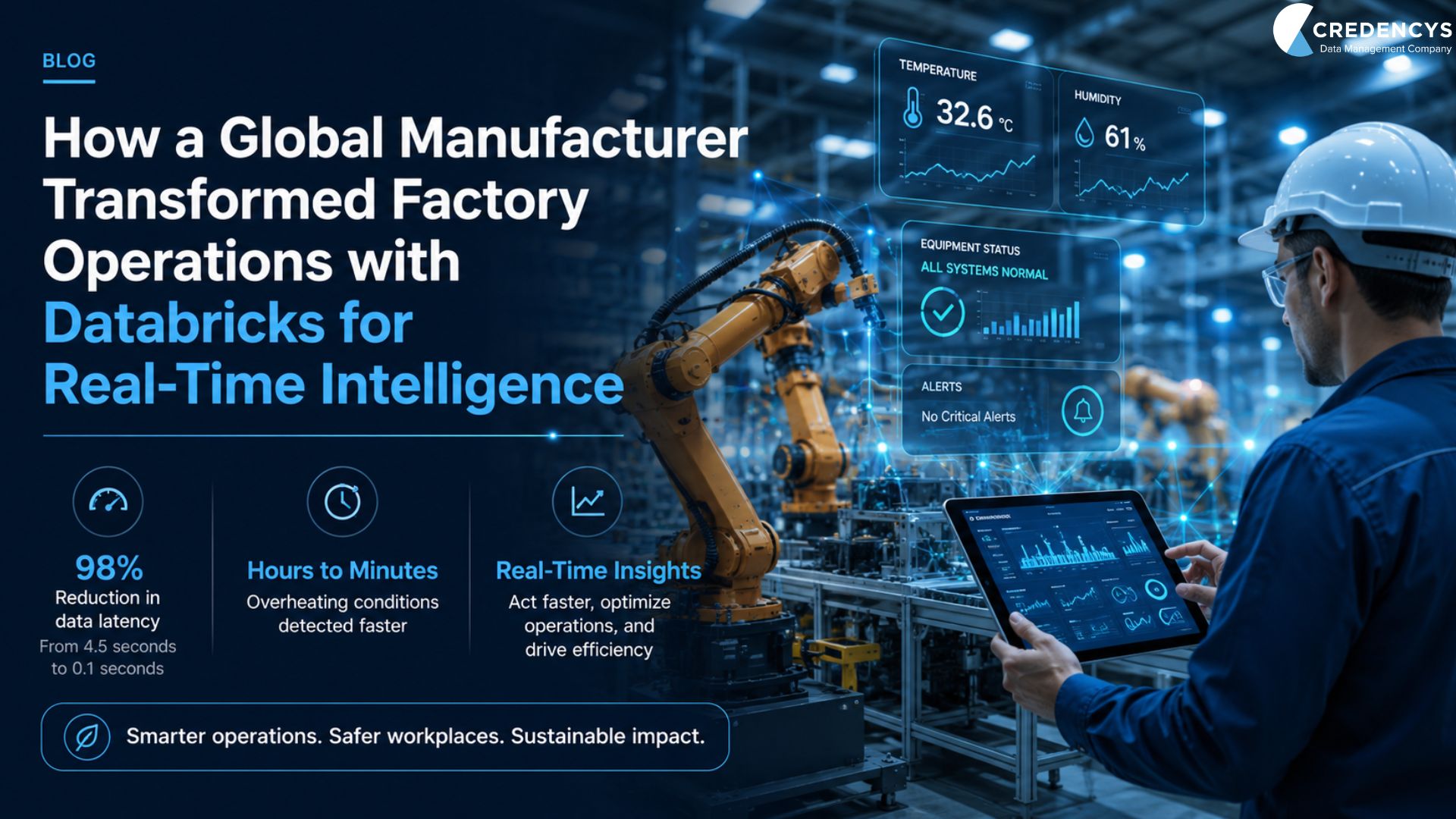
- Data latency decreased by 98%
- Processing time improved from 4.5 seconds to 0.1 seconds
- Detection of critical conditions improved from hours to minutes
These improvements were not just technical milestones. They directly influenced how quickly teams could identify risks and take corrective action.
1. Faster Detection of Operational Risks
With continuous data streaming, early signs of equipment stress and environmental changes became visible almost immediately. Conditions such as rising temperatures, which previously took hours to identify, could now be detected within minutes.
This allowed teams to intervene before issues escalated, reducing the likelihood of disruptions and maintaining stable operations.
2. Real-Time Alerts and Response
The system enabled instant alerts based on live data thresholds. Instead of manually monitoring systems or waiting for periodic updates, operators received timely notifications when conditions required attention.
This improved responsiveness while reducing dependency on manual checks.
3. Improved Operational Awareness
Real-time visibility provided a clearer understanding of what was happening across factory environments at any given moment. Teams could track patterns, identify anomalies, and make informed decisions with confidence.
This level of awareness was not possible with traditional batch-based systems.
4. Balancing Automation with Human Oversight
While the platform enabled automation, the organization retained human decision-making for critical actions. Operators reviewed alerts and determined the appropriate response based on context and experience.
This approach ensured reliability while still benefiting from speed and data-driven insights.
Why Databricks is a Strategic Enabler for Modern Manufacturing
As manufacturing organizations look to modernize their data ecosystems, the focus is shifting from isolated tools to unified platforms that can handle the entire data lifecycle.
This is where Databricks stands out.
Rather than treating data engineering, analytics, and AI as separate functions, Databricks brings them together into a single platform. This integration is critical for reducing complexity and accelerating time to insight.
1. Unified Approach to Data and AI
Traditional architectures often require multiple systems for ingestion, processing, storage, and analytics. This leads to data silos, duplication, and governance challenges.
Databricks addresses this by providing a unified environment where:
- Data is ingested, processed, and analyzed in one place
- Teams work on a shared, consistent data foundation
- Insights can move quickly from exploration to production
This unified approach simplifies operations and improves collaboration across teams.
2. Built for Real-Time and Scale
Modern manufacturing environments demand systems that can handle high-velocity data streams across multiple locations. Databricks enables:
- Scalable data pipelines that support continuous streaming
- High-performance processing for large volumes of telemetry data
- Real-time analytics without compromising reliability
This ensures that organizations can maintain performance even as data volumes grow.
3. Governance Without Friction
As data becomes central to operations, governance becomes equally important. However, traditional governance models often slow down access and innovation.
With built-in governance capabilities, Databricks allows organizations to:
- Maintain data quality and consistency
- Enforce access controls and security policies
- Enable teams to access trusted data without delays
This balance between control and accessibility is essential for scaling data initiatives.
4. Enabling Advanced Intelligence
Beyond real-time monitoring, Databricks provides the foundation for advanced use cases such as:
- Predictive maintenance to reduce downtime
- Anomaly detection to identify hidden risks
- AI-driven optimization for energy and resource efficiency
These capabilities allow organizations to move from operational visibility to intelligent automation over time.
Wrapping Up: Turning Real-Time Data into Competitive Advantage
The transformation outlined in this blog reflects a broader shift underway in manufacturing. Data is no longer just an asset for reporting. It is becoming the foundation for real-time decision-making and operational intelligence.
By adopting a unified platform like Databricks, organizations can move beyond fragmented systems and delayed insights. They can create environments where data flows continuously, insights are generated instantly, and actions are taken at the right moment.
This shift enables more responsive operations, better resource utilization, and improved resilience in dynamic production environments.
The value of data is not defined by how much is collected, but by how quickly it can be turned into meaningful action.
Organizations that embrace real-time data intelligence today will be better positioned to adapt, scale, and lead in an increasingly competitive landscape.


Tags: