


10 Signs You Need Building a Data Pipeline for Your Business (And How to Get Started)
In today’s digital economy, data is one of the most valuable business assets. Every click, purchase, transaction, and interaction generates valuable insights.
But most businesses face a common hurdle; they’re drowning in data but starving for insight.
According to IDC, the global volume of data created, captured, copied, and consumed is expected to reach 181 zettabytes by 2025 up from 79 zettabytes in 2021.
Yet, much of this data remains siloed, underutilized, or outdated. The gap between data generation and data activation is growing, and businesses that don’t modernize their data infrastructure risk falling behind.
The solution? A data pipeline.
A data pipeline automates the flow of data from multiple sources to a destination like a data warehouse, data lake, or analytics platform. It transforms raw, scattered data into a clean, unified, and analytics-ready format.
But how do you know if your business really needs one? This article explores 10 unmistakable signs that indicate your business needs a data pipeline and offers a simple roadmap to get started.
Why Data Pipelines Matter More Than Ever
Data volumes are exploding. But collecting data isn’t enough.
Businesses need to ingest, clean, transform, and deliver data to decision-makers in real time. That’s where pipelines come in.
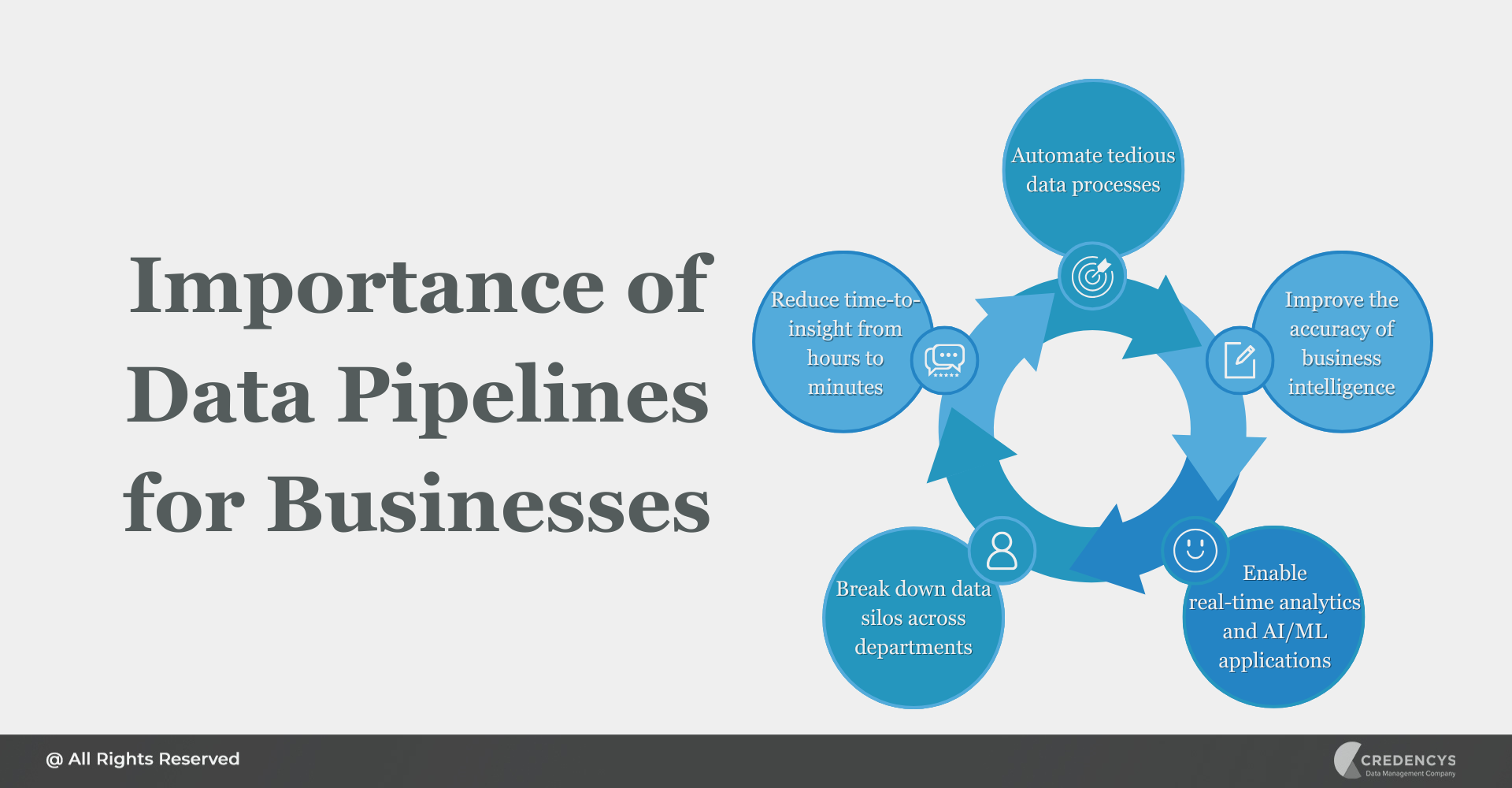
A well-structured data pipeline allows businesses to:
- Automate tedious data processes,
- Improve the accuracy of business intelligence,
- Enable real-time analytics and AI/ML applications,
- Break down data silos across departments,
- Reduce time-to-insight from hours to minutes.
Let’s dive into the signs that your business is ready for this critical upgrade.
10 Signs You Need Building Data Pipeline for Your Business
1. Real-Time Decision-Making Is Critical
Industries like retail, fintech, supply chain, and healthcare increasingly rely on real-time data to drive decisions. Whether it’s detecting fraud, adjusting prices dynamically, or personalizing product recommendations real-time pipelines make it possible.
What it costs you: Competitive disadvantage and slower time to action.
2. You Can’t Trust Your Data
If your reports frequently show inconsistent metrics, duplicated customer records, or missing values, you have a data quality problem. Data pipelines include validation, cleansing, and transformation stages that improve the reliability of your insights.
What it costs you: Poor decisions and loss of stakeholder trust.
3. You Spend Too Much Time on Manual Data Tasks
Do your teams still manually export and clean spreadsheets every week just to generate basic reports? Manual data handling is error-prone, time-consuming, and unsustainable at scale.
A data pipeline automates these repetitive tasks, allowing your teams to focus on strategic initiatives.
What it costs you: Productivity, accuracy, and employee morale.
4. Scaling Is a Nightmare
As your data sources grow, your system performance may start degrading. Manual workflows can’t keep up with increasing complexity.
A robust data pipeline can scale seamlessly, ingesting, transforming, and storing millions of rows per minute without breaking down.
What it costs you: Lost revenue from downtime, frustrated teams, rising operational costs.
5. Your Competitors Are Beating You with Data
If your competitors are faster at launching products, running campaigns, or predicting customer needs, they’re probably using data pipelines to their advantage. In today’s economy, data maturity is a competitive weapon.
Don’t fall behind because your infrastructure isn’t up to speed.
What it costs you: Market share, innovation potential, and long-term growth.
6. You Want to Adopt AI/ML, But Your Data Isn’t Ready
AI and machine learning require large volumes of clean, structured, labeled data. But without a pipeline, feeding high-quality data into your models is a major obstacle.
Data pipelines ensure that your data is curated, enriched, and ready for model training and deployment.
What it costs you: Stalled AI initiatives and poor model performance.

Ready to unlock the full potential of AI and machine learning with clean, reliable data? Let us help you build the right pipeline foundation.
7. Reporting Takes Days Instead of Minutes
If business users have to wait for IT to gather and clean data before they can access dashboards or reports, it’s a bottleneck. A modern data pipeline delivers clean, consistent data to BI tools automatically and on time.
Decision-makers get real-time visibility, not stale snapshots.
What it costs you: Delayed decisions, missed market opportunities.
8. You Operate Across Multiple Channels
Modern businesses sell and engage customers across websites, mobile apps, stores, marketplaces, and more. But without integration, your view of customer behavior remains fragmented.
A pipeline brings all these streams together creating a 360° customer view that powers personalization and better business decisions.
What it costs you: Ineffective marketing, poor customer experience, and lost loyalty.
9. Your Cloud Storage and Compute Costs Are Spiralling
Are you paying for data you rarely use? Are compute resources spiking during reporting or ETL jobs?
Inefficient or outdated data handling processes often result in bloated cloud costs. Data pipelines help optimize storage, processing, and query performance keeping your cloud costs in check.
What it costs you: Wasted budgets and poor ROI on cloud investments.
10. Your Data Lives in Silos
If your customer data sits in your CRM, inventory in your ERP, sales data in POS systems, and marketing metrics in Google Analytics, you’re operating in a fragmented environment. Without a pipeline to connect these sources, it’s nearly impossible to get a unified view of your business or customers.
Silos lead to inconsistent data, duplicated efforts, and missed opportunities.
What it costs you: Disconnected experiences, delayed insights, and operational inefficiencies.
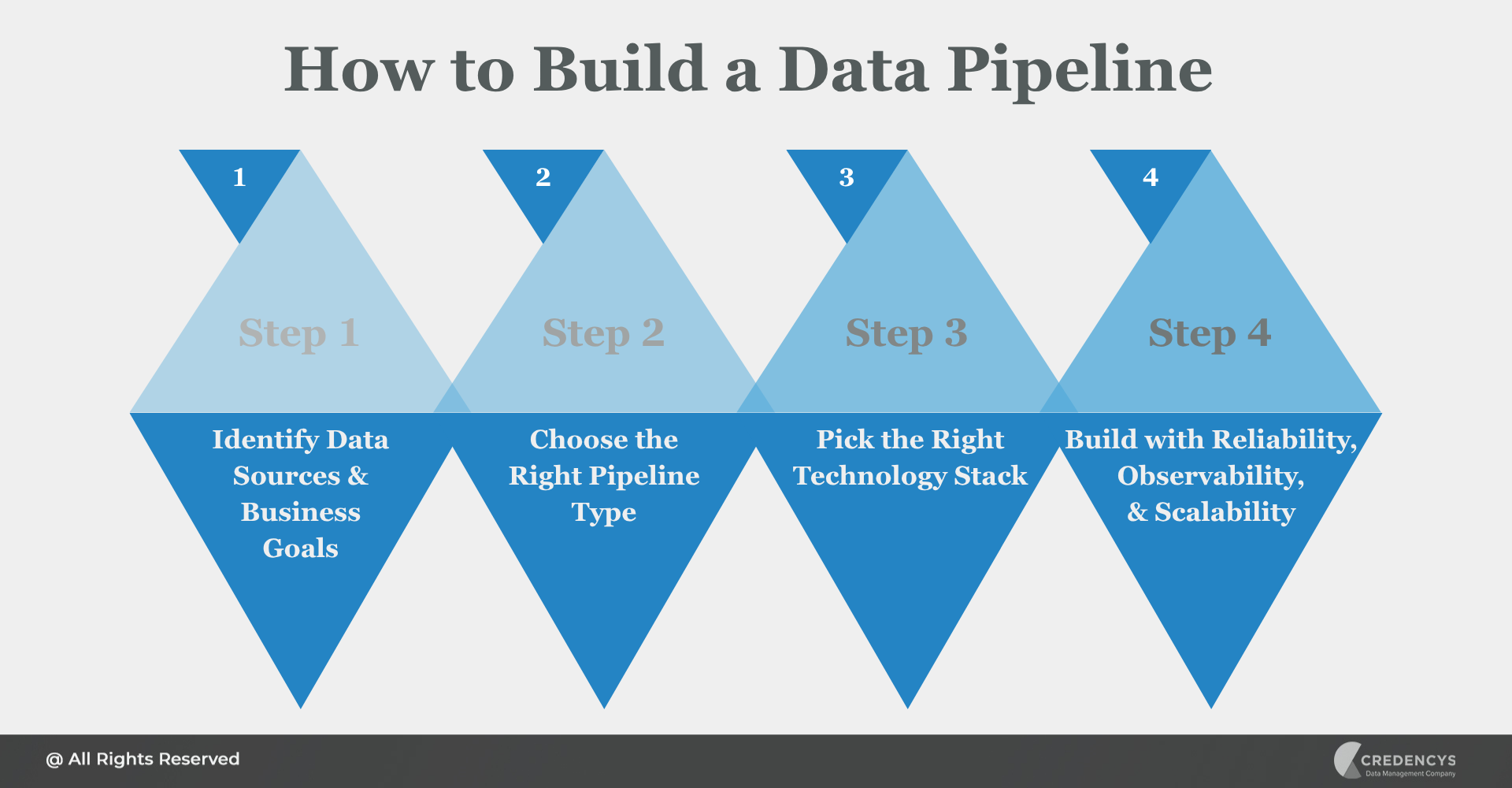
How to Build a Data Pipeline
Feeling seen? You’re not alone.
Here’s how you can begin the transformation.
Step 1: Identify Data Sources and Business Goals
Map all your current data sources, internal systems, cloud apps, IoT feeds, etc. Then align your pipeline goals with use cases like:
- Sales forecasting,
- Customer segmentation,
- Inventory optimization,
- Personalized marketing.
Step 2: Choose the Right Pipeline Type
- Batch pipelines process data at scheduled intervals (e.g., daily reports).
- Real-time pipelines process data as it arrives (e.g., fraud detection).
- Hybrid pipelines combine both depending on need.
Choosing the right model depends on your use case, data velocity, and business objectives.
Step 3: Pick the Right Technology Stack
There’s no one-size-fits-all solution. Your stack might include:
- Ingestion tools like Apache Kafka or Flume,
- Transformation engines like Apache Spark or dbt,
- Workflow orchestration with Apache Airflow,
- Storage solutions like Snowflake, Databricks, or BigQuery.
Working with a partner like Credencys ensures the best-fit architecture.
Step 4: Build with Reliability, Observability, and Scalability
Pipelines should be:
- Fault-tolerant (recover from failures),
- Observable (monitoring & alerting built-in),
- Scalable (handle growing data volumes without downtime).
Why Choose Credencys for Building a Data Pipeline?
At Credencys, we specialize in building modern data pipelines that transform your data into a business advantage. Whether you need batch, real-time, or hybrid pipelines, we help you:
- Ingest data from multiple sources and systems,
- Clean, transform, and enrich it at scale,
- Deliver it in real-time to analytics or operational systems,
- Reduce manual processes and operational complexity,
- Enable advanced analytics, AI, and data monetization.
With deep expertise in cloud-native tools and enterprise architectures, we’ve helped clients across retail, logistics, CPG, and other industries unlock the full value of their data.
Conclusion
Your data infrastructure should work for you, not against you. If your business is facing any of the signs we discussed, it’s time to act.
Whether you’re looking to automate manual data processes, improve data quality, support AI/ML efforts, or gain real-time insights, a modern data pipeline is essential.
Want to see how a custom data pipeline can transform your operations?



Tags: