​Pokémon Go is Pushing Businesses to Revisit Their Marketing Calendar

Pokémon Go is affecting traffic.

People are getting tickets because of Pokémon Go.

And it is affecting their work as well.


The memes have just started.

Pokemon

Pokemon Go

Smartphone users are going bonkers, trying to “catch” Pikachu or Squirtle or other creatures with their smartphone. It can be a good workout as catching the virtual creatures often requires a great deal of walking on streets and around public places. Users need to refer to an animated map akin to a Google map which pops up on their screens showing if or not there’s a Pokémon in their nearby areas. Well, if you haven’t collected Pokémon cards – it’s little difficult to understand the inherent fun factor it has for the players. Still, there’s no need to feel left out. Pokémon can be used for business and you don’t have to be an expert player for this:

Use Pokémon Lure for Increasing Footfall to your Retail Store

Pokémon Lure is a feature in the game which lures Pokémon to your area. However, when you turn it on, it also brings other Pokémon players to your area – as they would also be interested in catching the virtual creatures. This can help restaurants and retail store owners increase footfall to their premises. There is a limit to free Lures; however, you can buy more lures at very nominal charges.

It’s not the first time that a game app has been used for marketing and promotional purposes, but none of the apps in the past have panned out as Pokémon Go. It is reported that since its July 6th launch in the US, the app has added more than $7.5 billion in market value to Nintendo, which owns a part of The Pokémon Company.

Why is Pokémon Go such a big hit?

Analysts are wondering why it is such a big craze. It’s definitely not the novelty factor – Augmented Reality Apps have made their presence felt in the past too; Snapchat is a good example. Moreover, Pokémon Go is built using the same geo-location database as in Ingress, which is a similar game by the developers of Pokémon Go. So why did Ingress fail while Pokémon Go created Tsunamis? Some say the answer lies in the marketing. Pokémon is a big brand that millennials very easily relate to. Combine that with good timing and social proof – you already have the main ingredients for a good success recipe covered.

Whatever is the cause, one thing is for sure – there is a lot of scope for innovation in Augmented Reality and location based entertainment. Although not every business can expect to create another Pokémon Go, there is a higher probability today for their awesome app to be discovered by users than it used to be a few years ago – thanks to Google Nearby. Developers can use Google Nearby APIs to create better apps for local collaboration, screen sharing, multiplayer gaming and local messaging purposes; club it with AR, and you never know what magic it will create. Another possibility for retailers is to explore the possibilities with their in-store beacon network.

There are experts who may refute such innovations or call them a passing fad. Some are even raising doubts over Pokémon Go being hailed as an AR application. However, businesses are only concerned about the ROI and care less about what technology or innovation drives it. AR has long been termed as the technology which has failed to deliver. However, there is enough evidence to suggest that it is only a matter of time before it matures into something bigger and more ubiquitous than smartphones are today.

Credencys Solutions Inc has helped numerous businesses in retail leverage Cognitive Technologies (AR and VR Apps) for their business growth. The company came up with its Smart Mirror solution way back in 2013. Since then, Credencys has evolved into a leading software solutions and managed services provider for enterprises across the globe. See some of our related work here.


Wow your Customers with AR and VR

image_1
“First electricity, now telephones. Sometimes I feel as if I were living in an H.G. Wells novel” said Downton Abbey’s Dowager Countess, Violet. Her character is marked with similar steely indifference for novelty. No wonder she sees a phone as an “instrument of torture”. One doesn’t have to go too far to gauge how she would react to the rapid changes in technology that are happening these days – there is enough to be witnessed on YouTube:

AR (Augmented Reality) and VR (Virtual Reality) tools can dramatically freak out baby boomers, as shown in the above video; however, utilized in proper dosage and with the right treatment, these tools can wow them as well as audiences in any age group and demography.

Difference Between Augmented Reality and Virtual Reality

There is a lot of confusion in a general reader’s mind about the technologies and it is not rare to see people using the two terms interchangeably – which of course is gross ignorance on their part. Contrary to general perception, AR doesn’t create new experiences; rather it builds on or augments what exists in the real world. This means certain virtual elements are fitted (integrated) over the real world (physical space) On the other hand, VR is what creates new worlds or experiences. The technologies have reached high levels of maturity and are increasingly being utilized by businesses across sectors.

AR and VR Tools Hold Massive Market Opportunity

statistaSource: Statista

As can be seen in the above illustration, AR and VR is equally important for consumers as well as enterprises. Goldman Sachs predicts the industry to reach a value of $80 bn a year ($35 bn in software and $45 bn in hardware) by 2025. In line with the trends so far, Goldman Sachs believes that in future also video games, live events, and video entertainment will drive the consumer-focused segment of the technology. However, businesses can also innovate to leverage the technology for their benefit and it will not be a surprise if they beat the predictions.

10 Interesting AR and VR Apps You Must Check Out

1) Google Translate

If you haven’t used it already, here’s a small description – just hold the camera in front of the text you want to translate and the App will do the rest (provided the script is recognized or part of the App’s database). Though it might not be too useful for someone trying to translate and understand reams of classical french literature, it may help tourists to get English translations for sign boards on streets and shops in foreign locations.

2) iOnRoad Augmented Driving Pro

The driving assistance App provides collision and lane departure warnings making use of phone sensors, GPS and camera. The App can also help you avoid speeding tickets as it can read ‘speed sign’ boards and create alerts every time you cross the speed limit.

3) Field Trip

Visiting a new town; it’s the perfect guide you can get. The App will provide you information on local history, nearby cafeterias, markets and other special places of interest. The information pops up on your phone screen every time you are near to an important landmark.

4) Snapshop

The App helps you virtually place furniture inside your home to see if it suits the ambiance and fits in the space. You can choose furniture from IKEA, Crate&Barrel, CB2, Horchow and Pier1.

5) NYT VR

In an age when most of the news is read online, NYT has perhaps the best offering for its readers who can now view documentaries and other features via its VR App. New VR content is added every month; although, the VR headset is most recommended you don’t essentially need it to view the content.

6) GoPro VR

Adventure junkies across the world upload 360 degree GoPro videos in abundance on daily basis and you can catch all this action comfortably in your couch with GoPro VR App.

7) Cedar Point VR

There are numerous VR roller coaster rides and unarguably they make the best impression on a user experiencing VR for the first time. If you haven’t tried it yet, you may start with the VR version of Cedar Point’s Valravn roller coaster which is claimed to be the tallest, longest and fastest roller coaster in the world.

8) Virtuali-Tee (Prototype)

Virtuali-Tee is a smart T-Shirt that integrates with the App installed on smartphone/tablet to let viewers see through the T-Shirt to view bones, organs and blood vessels. Designed by Curiscope, the AR App is targeted at students learning human anatomy.

9) Within – VR

(formerly Verse) It’s a content aggregator with best of the world VR content from The New York Times, Vice, Saturday Night Live, U2 and others.

10) War of Words

If you love poetry, this App will take you back to 1916 and let you experience Siegfried Sassoon’s poem “The Kiss” in VR.

Increasing Relevance of AR and VR Tools for Retailers

AR and VR tools continue to gain traction and are now being employed by retailers. A Business Insider report has captured US consumer expectations from the technology in the retail sector (see exhibit below):

image_2

US consumers have shown a positive sentiment towards AR and VR’s adoption by retailers. According to the survey, a significant number of US consumers expect the technology to enhance their online shopping experience. However, retailers want to use AR and VR for attracting customers to their Brick and Mortar Stores. Perhaps, this mismatch in expectations offers an opportunity for omni-channel retailers to utilize AR and VR for improving customer experience on all fronts.

How Retailers are Experimenting with AR and VR Tools

Walgreens

The drugstore chain has been experimenting with the technology since 2014 as part of its loyalty program. During its trial run, Walgreen’s VR app provided customers a 3D map to locate products on shelves inside the store. With this App, Walgreen aimed to create an immersive gaming experience, providing customers points on visiting certain sections of their stores or build a bigger basket.

Dippin’ Dots

You might or might not love this “futuristic snack”, but the company has been very active in utilizing mobile apps for its promotions. Dippin’ Dots has launched various fun apps which provide loyalty points to customers. Their AR App – “making it rain Dippin’ Dots” allows customers to experience Dippin’ Dots raining inside the stores and even inside their homes if they wish so.

Lowe’s

The company’s much talked about Holoroom – a VR App, allows customers to build kitchen or bathrooms in a virtual space and then allows them to experience their design ‘in real’ with Oculus Rift or Google Cardboard. You might not be able to walk inside your designs for now; but that is not a distant future, it seems.

StubHub

The company has perhaps the most ingenuitive VR app, as it is hard to imagine what an online ticket-seller could possibly provide in terms of VR experience to its customers. StubHub’s VR App helps customers choose seats for events by offering them a 3D rendering of the stadium/auditorium. With 3D immersive view, customers can better decide if they want to select a particular seat at the back with unobstructed bird’s eye view or pay more money for seats available at the front. However, StubHub is not alone; Rukkus has taken seat maps to another level with panoramic photos.

Tommy Hilfiger

The company made headlines in October 2015 with the launch of its VR app, allowing store visitors to view the company’s coveted Fame runway show with a Samsung GearVR headset. If you enjoy catwalks, you may want to opt for the virtual experience – front row seats are always available.

Wayfair

The company has recently announced release of WayfairView – an AR App, which allows shoppers to select any furniture from its online store and then virtually place it inside their homes to see if it gels well or not. The app currently works with Lenovo PHAB2 Pro and allows customers to virtually move the furniture around, browse through various layouts and designs to finalize a product for purchase.

How Viable are AR and VR Apps for Smaller Players

Above are just some of the celebrated examples of how big retailers have utilized AR and VR apps for engaging their customers and providing them with new shopping experiences.

While designing a feature rich VR application with practical value for customers might not be possible for everyone; there are numerous examples of businesses utilizing AR in print ads. AR advertising makes presentation of catalogues easy for retailers. It provides businesses an opportunity to showcase their entire product range in 3D over a single page advertisement in any leading magazine. Further, small retailers and startups can create such ads with freemium versions of custom, white label app creation platforms bevond.

Still, the apps haven’t achieved the ubiquitous status. It is a challenge for businesses to ensure that the technology offers real value to their customers. There is no shortage of people who doubt any practical viability of such Apps. Also, overlaying anything virtual on a phone screen may appear gimmicky. Most of the present AR and VR solutions have a limited novelty value. It might be amazing for customers to receive promotions on phone screens when they point their phone camera to product shelves in a shop, but one should also realize that a mother shopping for grocery items, with her 2-year-old sitting in the trolley and a 7-year-old dragging her to the new toy’s section, would rather attend to her kids than fiddle with her phone. Holding tablets or smartphones in the air and scanning for offers might not be everyone’s cup of tea.

However, the perception of AR and VR being a marketing gimmick is about to change very soon as long awaited Google Tango has finally arrived in the consumer space.

Google Tango Enters Consumer Space

With Tango (AR platform) being finally made available for customers, more retailers will be eager to join the bandwagon and reap benefits of virtual commerce. For those who are not aware – Project Tango was started by Google and has been on developers table since 2014. It is a technology which uses sensors and multiple cameras for motion tracking, depth perception, and area learning. With these abilities, the technology enables a smartphone (presently available only in Lenovo PHAB2 Pro) to track its location in a 3D indoor space.

Moreover with this technology physical objects in a user’s surrounding (baseball bat, soccer ball etc) can be integrated into the simulation along with the actual user motion. This is unlike the present AR and VR tools where headsets are only able to project a stationary virtual space, with user body playing no part in the simulation. In terms of applications, Tango can allow retailers to overlay virtual 3D images of their products on their users’ surroundings.

What Lies Ahead?

AR and VR tools are up for grabs and while marketers have been the early adopters, businesses realize that these tools can also play an important role in improving their operations. Customer response for AR and VR Apps has also been very positive; this is reflected in the number of downloads for Google Cardboard which crossed 50 million mark on Google Play in May 2016. Moreover, according to Statista, the total number of active VR users is forecast to reach 171 million by 2018 and this opens a large space for retailers to make their presence felt. However, organizations must start early with a proper mobile strategy and make use of AR and VR solutions to create differentiation and gain first mover advantage in the hyper-competitive markets.

About Credencys

Credencys Solutions Inc has helped numerous businesses in retail leverage Cognitive Technologies (AR and VR Apps) for their business growth. The company came up with its Smart Mirror solution way back in 2013. Since then, Credencys has evolved into a leading software solution and managed services provider for enterprises across the globe. See some of our related work here:


The Future of Retail : US Retail Industry Trends, Stats & Forecasts

Being a leader in retail, the US defines major trends and direction for the industry all over the world. Walmart is not only the world’s largest company by revenue, with its 4000 stores it is also one of the world’s biggest employers. In fact, 76 of the largest retailing companies are US based and many of them have operations in other parts of the world as well.

The Ubiquitous Mobile

At present the industry is undergoing a massive overhaul with technology changes taking the center-stage. Advancements in mobile and e-commerce are changing consumer shopping preferences, forcing retailers to make huge investments in their consumer facing processes and also in their supply chain.

1.Casey-Carl

“We know that technology will continue to revolutionize retail, and that Target’s future will be built on innovation,”

Casey Carl, Chief Strategy and Innovation Officer, Target.

Target spent $1 billion in 2015 on strengthening its e-commerce capacity.

Mobile firmly established itself as the dominant shopping trend, for both traffic and sales…Mobile is making up more than 70% of traffic to Walmart.com, and now nearly half of our orders since Thanksgiving have been placed on a mobile device – that’s double compared to last year. Our customers went from previously mostly searching and browsing on mobile to making purchases at a much higher rate.

Fernando Madeira, President and CEO, Walmart.

fernando-madeira

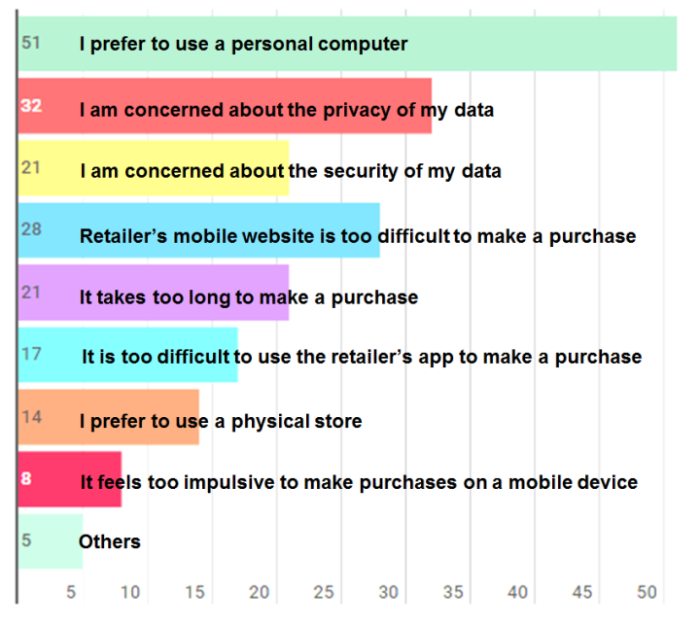
There is no dispute on mobile being the key channel for customers across all age groups and geographies. However; according to a Business Insider Report 40% of the top 100 global retailers do not have a dedicated mobile website. This is despite the fact that 71% of shoppers believe that they will get a better deal online than in stores. Also, 53% of all online traffic comes from smartphones, but they drive only 29% of all online sales. The basis for this anomaly can be found in PwC report which says that 70% of all consumers prefer researching for products online and buying them in stores. A report by The Economist Intelligence Unit sheds more light on what prevents consumers from completing their purchase on mobile:

Why don’t you purchase products or services using your mobile device more often?

Top 3 reasons (% respondents)

chart

Source: How mobile is transforming retail Bricks, clicks, tweets and texts across the omnichannel shopping mall, The Economist Intelligence Unit

It can be concluded from the above chart that while there may be a traditional bias towards using desktops for purchases, there are some lingering issues in the mobile strategy adopted by retailers. Many of the retail apps are not ready enough to provide a seamless shopping experience to customers. Moreover, a large number of retailers see mobile as merely a promotional tool and hence their apps carry a minuscule portion of what is being offered in store to ‘real buyers’. Having said that, promotions is a big category in itself and drives a lot of interest from customers. Retailers have the opportunity to make most of their promotions via mobile as 60% of US consumers want to receive real-time promotions and offers on their mobile. To get better deals, they are willing to share data on their likes and preferences and install such apps from retailers.

3.eric-nordstrom-e1466059371502

As customers’ definition of service continues to evolve, we are focused on being responsive and delivering services and experiences that are important to them…our customers have asked us to make Nordstrom Rewards more flexible. They’ve told us they want to be able to earn points whether they use their Nordstrom card when they shop with us or pay in another way, and today we hope we’ve delivered on their request.

Erik Nordstrom, Co-President, Nordstrom commented after the company’s decision allowing members to earn benefits regardless of how they choose to pay for purchases across its store, outlet store or digital channels.

The readiness for mobile based promotions has caught marketers’ attention and according to a report 60% of North American retailers plan to have tools for ‘suggested selling based on previous purchases’ in next 3 years. Yet, marketers also need to provide due importance to privacy and cyber-security related issues in their online strategy, as these are big concerns for consumers. The data breach at Target has not been completely forgotten; US consumers rate personal devices more vulnerable (44%) than POS devices at retail stores (23%).

Crafting New Shopping Experiences for Customers

The challenges with mobile are widely known and retailers are addressing these challenges on priority basis. At the same time they are scrambling to create differentiation utilizing wearable technologies, Internet of Things (IOT) solutions and Augmented Reality. They are trying to not only improve shopping experience for their customers, but also create entirely new experiences for them.

For instance, Tesco offers Scan as you Shop option to its customers which basically lets customers scan item bar codes; this makes drastic reduction in waiting time at the checkout counters. Nordstrom is another retailer which has made significant investments in mobility with multiple apps for its customers. The company recently launched TextStyle, which is a unique text based personalized service connecting customers with their favorite salesperson or personal shopper.

“You wake up this morning and there is no hot water. Your water heater is broken. Most people are going to go to Google and try to find a plumber, right? We’re going to be there with you saying, ‘We’ve already picked the plumber in your market, we’ll 100% stand behind that plumber and they will be in your house today to replace your water heater what nobody else can do’. So online lead generation, connecting you to the right service providers, making sure there is good communication back and forth between the customer and Home Depot, we are really shooting that services business with a shot of adrenaline.”

4.kevin hoffman

Kevin Hofmann – SVP and President, Online, The Home Depot explaining his company’s focus on building the Do-It-For-Me customer experience.

leena munjal 

“We’re using digital innovation and this new store space in a different way which will enable us to deliver a superior shopping experience to our members…the store in Ft. Collins is a great example of how we are focusing on our best categories, stores and members and how the right blend of a physical store with Sears’ digital capabilities can deliver a fresh, innovative and convenient way for our members to shop.”

Leena Munjal, SVP, Customer Experience and Integrated Retail, Sears Holdings on the opening of the company’s hi-tech store which includes a humongous 122-inch interactive digital display that helps customers visualize how new appliances would appear in a full-scale kitchen with customization options on their tablets

Crafting amazing customer experiences is delicate task and requires considerable experience in understanding consumer behavior. This is where Big Data analytics may prove to be beneficial. At the same time IOT and Cognitive Technologies may also offer answer to challenges in sales and management in modern retail.

NRF-FitForCommerce Omni-Channel Retail Index: 2015 Holiday Findings
86% of retailers in the index provide a shared shopping cart from mobile to desktop
28% offer BOPIS
70% allow customers to buy online and return in store
46% have in-store signage about omni-channel service
48% have online-offline compatible loyalty programs

The Evolving World of Omni-Channel Retail

Retailers are bullish on omni-channel strategies as omni-channel is seen as the Holy Grail for engaging smartphone addicted consumers.

“Omni-channel can have a compounding impact on growth. EY experience and even retail annual reports demonstrate that customers who shop online and in-store spend twice as much as those who only shop in-store.”

Matthew Burton, EMEIA Omni-channel Leader, Supply Chain & Operations, EY

Still, there isn’t any simple formula to make a retail chain successful on multiple fronts; even Walmart has failed to crack the code. While omni-channel has been proposed as a strategy which could help retailers compete with online giants like Amazon; its successful implementation poses tough challenges in terms of supply chain and inventory management. An EY survey on omni-channel strategy in 2015 also reported these issues:

  • Big Data Challenge: 74% of the retailers reported that they do not have IT systems and capabilities that enable seamless visibility and fulfillment to end consumers.
  • Fulfillment Challenge: 40% retailers reported no mechanism to fulfill out-of-stocks

BOPIS is the Way Forward

eb9ee9d3-87c2-4b48-b9ab-cec166f4baf8.HR

Source: Blackhawk Engagement Solutions

Retailers are eagerly adopting BOPIS as a main avenue for implementing their omni-channel strategy.

  • In 2015, BOPIS contributed 30.2% to Sam’s Club and 22.6% to Kmart’s online sales
  • In 2015 holiday season Walmart saw maximum users opting for BOPIS followed by Best Buy, Target, Kmart and Macy’s
  • 69% of shoppers who used BOPIS in Christmas holiday season last year purchased additional items while picking up in store

As discussed earlier, fulfillment is a major challenge against retailers. Often customers are able to see a product available in stocks at the time of online booking, but find it otherwise when they arrive at store for pickup. At other times, they have to wait in long queues as the store staff has to attend regular customers and the BOPIS customers at the same time. Nonetheless, the trend is here to stay and there is no way around. To make BOPIS seamless, retailers need better data and inventory management solutions and may have to invest in upgrading their existing software. Further, the store staff has to be equipped with mobile solutions for assisting customers promptly.

The Future of Retail

In the recent times, retail has declined despite the rise in consumer spending. Although, consumer confidence has taken a dip to 92.6 from 94.7 in April, the consumer spending which accounts for two-thirds of US economic activity registered a 1% rise in April 2016, the largest month-on-month gain since August 2009. Still, the US Retail Sales YoY is forecasted to stay unchanged at 3% in May 2016 and reach 3.9% by May 2017.

The recent spike and sales projections are in line with McKinsey’s observations on the state of US retail where it says “slower growth rate is likely to extend well beyond the five-year time horizon, becoming the “new normal”. Within a tepid overall market, however, there will be several pockets of strong growth.” McKinsey also made following projections about the consumer profiles:

  • Millennials (population between ages 13 and 30) which constitute 15% of the US consumers, will account for close to 33% of total spending by 2022
  • However, baby boomers will drive major categories such as food (92%), housewares (73%), and apparel (56%)

Meanwhile, retailers are blaming changes in consumer spending patterns for their dismal performance – it has been reported that Americans aren’t buying clothes and are instead spending on real-estate, home furnishings, cars and boats. It will not be too wishful to assume that the spending spree would halt and consumer demand for retail items and apparels would peak up again. Perhaps, retailers will utilize this brief lull to boost their infrastructure for tackling the challenges of future.

The technology landscape is changing rapidly and will decide the fate of retailers. It remains to be seen if CIOs in retail organizations would go beyond their comfort zone to harness the benefits of technology; Gartner predicts that “By 2018, CIOs of at least two of the world’s largest multichannel retailers will be sued for data breaches.” Eventually, the future of retail would be defined by leaders who do a better management of their security as well as marketing and operations while maximizing the benefits of technology for their retail businesses.

Credencys Solutions Inc is a leading software solutions and managed services provider which has helped numerous businesses in retail leverage Mobile, Cloud, Big Data, Internet of Things and Cognitive Technologies for their business growth. Check out our resources and portfolio to know more about our solutions.

Re-imagine Retail: The Key Takeaway from Walmart’s Shareholder Conference 2023

Walmart’s shareholder meeting 2016 was attended by its 5,700 store employees and the board, who were entertained by late night TV star James Corden and musicians Katy Perry, Nick Jonas, Maxwell and Andy Grammer. Their mood was further lifted by their CEO’s announcement of the company plans to add $60 billion in new revenue growth over next three years. All this happened even as everyone expected the elephant in the room to be addressed – Amazon has surpassed Walmart in terms of market cap and the company experienced an end to its growth run with revenues shrinking for the first time since it went public in 1970.

Walmart in CEO Doug McMillon’s words is planning to “re-imagine retail again”. Given below is a small summary of how the retail giant is planning to make a comeback and the key takeaway it offers to any retailer – big or small:

The Company Will Make More Use Of Technology In 2016

Walmart wants to reduce inventory build-ups and increase availability for its store customers. For this, it has equipped its staff with handheld devices and apps which help in managing stocks. The company is also going to make some real use of drones in inventory management. Walmart has tested its drones in its large distribution centers where they took pictures of products on aisles and created alerts for items that ran out of stock or were misplaced. Walmart claims that these drones will be utilized at its warehouses to carry out routine inventory checkup – a process which used to take 30 days will now be completed in one day with these drones. Further, the company has initiated home deliveries after joining hands with Uber and Lyft.

Walmart Will Be Increasing Its Online Options, Including Groceries In 2016

What usually appears to be an obvious step is not always easy to implement – that’s perhaps the only excuse for Walmart, allowing itself to be in the backseat while others took the lead in online sales. A giant like Amazon which posted more than $79 billion worth of product sales in 2015, reported a 16 percent growth rate, which was higher than Walmart’s 12 percent growth in its e-commerce channel which accounted for less than $15 billion in sales. Walmart’s under performance in the e-commerce sector has perplexed analysts. However, the company is finally addressing this area and is putting a strategic focus on improving online sales. It will only be fair to assume that Walmart trying to adopt online model will have lesser friction in its way than it will have for Amazon trying to enter Brick and Mortar model.

The Company’s Mobile Payment System Walmart Pay Will Be Seen At Every Store Across The US

Walmart Pay (which essentially is a mobile wallet) is a part of Walmart App that lets users create/log into their Walmart account, enter and save their card details, and then pay in-store by scanning a QR code. Walmart Pay, which works on both Android and iOS, had more than 24 million users at the end of 2015. The solution is likely to ease payments for the company’s 140 million plus weekly store visitors in the future. Mobile Wallets are a useful innovation as they improve customers’ shopping experience, help them store and manage their payment receipts and also allow merchants to roll out offers.

With the likes of Wallmart joining the mobile payments bandwagon, mobile wallets from Apple, Samsung, Google and PayPal will also get a boost as customers are seeing a wider acceptance of wallets from merchants. Mobile payments are showing an uptrend in the US and are seen as the future of payments; according to a Business Insider report, by 2019, mobile payment volume will touch the $800 billion mark.

The Key Takeaway – Do Not Pick Up Technology As An Afterthought!

There are some other major initiatives like making product prices more competitive and re-launching the smiley face logo – all of which can perhaps turn things around for Walmart. However, the key takeaway or learning for retailers around the globe lies in Walmart’s increased focus on technology. Walmart has suffered due to technology disruptions made by Amazon and their likes. By not acting fast enough, it has allowed online players to gain advantage over its brick and mortar model.

Hence, retailers should take note of this and include technology as a core business strategy and not as an afterthought. Tapping into the modern smartphone crazy consumer base is essential for any retailer’s business. Mobile payments, e-commerce, digital coupons and i-beacons aren’t gimmicky fads – retailers can make most of these opportunities in technology as they also offer a lot of room for innovation and growth. Although the online space is very competitive, with proper applications one can leverage technology to make significant improvements not only in online sales but also in-store footfall.

credencys_retail_solutions

Credencys Solutions Inc is a leading software solution and managed services provider which has helped numerous businesses in retail leverage Mobile, Cloud, Big Data, Internet of Things and Cognitive Technologies for their business growth. Check out our resources and portfolio to know more about our solutions.

Augmented Reality Glasses: The Future Of Theaters!

Every industry, be it logistics, manufacturing, education, healthcare or entertainment are showing their utmost interest in taking a digital dive.

In the entertainment sector, the technology adoption is adding utility and novelty to these vertical. In our previous blog, how theater space could be revitalized by bringing movie posters to life, adding AR content to social media promotion, entertain kids with AR games and improving theater ambiance with AR glasses was explained.

Christophe Plotard said, “The glasses are a world first and we felt the show must go on – we are resilient. This technology is about uniting cultures through the arts – a way to get to know another culture.”

But, one thing was left undescribed. What’s that? How about a traveler who is expediting in a country where a language barrier won’t let him enjoy, ruins their experience and make a trip to the theater less thriving. How could this experience be turned upside down?

Incorporating augmented reality glasses would be a great feat for the theaters because in turn, it will certainly increase native as well as non-native people footfall.

Recently, theaters in Paris and Atos launched multilingual augmented reality glasses that enable foreign spectators to view the French theater performances in various languages hassle-free. Wearing the specs, perfectly synchronized translation into the air can be viewed by the spectators in front of their eyes. Integration of technology has alleviated the constraints in live entertainment.

Let’s see how AR connected glasses works

The glasses are similar to Google glasses have larger screens and long battery life. The glasses show the translation above the stage or screen in different languages. The Wi-Fi powered glasses augment the screen in real-time and position the words on a virtual and transparent screen in a language that spectator understand. Moreover, projected surtitles can be configured for each individual glasses, even for the font size, brightness, and color within the spectator’s field of view.

The benefits that are explained above are just the tip of the iceberg and much more are about to come with more innovations. Let us outline all those advantages.

  • Breaking down the language barriers, foreign theatergoers can enjoy live performances with customizable subtitles
  • Visual/hearing impaired people could get the most out of the events in the theaters through some adjustments to the glass
  • In addition to subtitles, superimposed 3D animation, the appearance of rain or augmented sceneries could be provided that improves the overall experience of the visitor.

Wrap-up

Bespoke glasses that’s making the most out of the augmented reality is engaging the spectators and uniting the people belonging to different communities and places across the globe. Apt alignment of the technology would certainly give a boost to the visitors stepping inside the theaters which indirectly impacts theaters’ ROI.

Leading theaters have geared up to join the digital race. So, where do you stand? Do you want to add an elite feel to your theater space leveraging cutting-edge technology? If yes, our consultant would help you to get the solution that perfectly suits your needs.

Credencys team is well-versed in engineering augmented reality solutions and developers rocks in glass app development to the perfection. Don’t wait anymore, get in touch with us today!

10 Reasons Why Businesses Should Blaze A Mobile Trail

Now, mobility has become all-imperative! In every sphere, smartphones are making the lives of the people a lot easier and comfortable. With the exponential growth of mobile phones out there, an unprecedented growth in the mobile customers is also observed.

According to Comscore, 80% of internet users owns a smartphone.

The existing mobile customers expecting the brands to go mobile way. It implies having a dedicated mobility application for businesses helps them engage more customers, adds credibility to their brand and bring them on the crest of a wave.

The crucial shift in user’s behavior and content consumption habits compelling businesses to develop mobile channels. Take a look at all the reasons why businesses should embrace mobility-The Driver Of Change.

1) The world has gone mobile

The power of the internet has connected everything. With traditional websites, businesses have made their online presence, but now it does not suffice to sustain, grow and prosper anymore. There is an urgent need to make existing websites responsive or engineer a mobile app as people prefer to use the services at fingertips and it’s better to connect with your customers where they are.

Presently, 69 percent of mobile users now browsing and buying products on their devices that are up 10 percent from 2013.

2) Enhance communication

Social media has become an integral part of the modern society. People spend a good amount of time while communicating on Facebook, Twitter and pretty more. Making smart use of the social media brands can improve their social standing. So, getting built a mobile app and integrating social media features would give a boost to business services and offerings.

3) Offer on-the-go marketing

Allowing the customers to reach brands when they want and wherever they want would reinforce the businesses. Innovating the marketing through mobile would make customers aware about your new offerings or discounts, which in turn establishes a long-term relationship with customers.

78% of Facebook users are mobile-only

According to an ad network survey, almost one in five consumers expect over 50 per cent of their overall digital spending to be carried out via a mobile device in 2016.

4) Gain customers’ insights

Placing business in the customer’s pocket, not only put a hole into the customer’s pocket, but also helps in analyzing how customer’s purchase. The mobile solutions collect the information about customer preference and based on the data deliver relevant personalized content to different individuals. This customization helps business to understand customer perspective and take the next merchandising decision accordingly.

5) Better sales and service

Best services are a key to drive more sales. Mobility solution transforming the way customers view and analyze the company offerings before making any purchase. The app helps in making more informed decisions by providing all the information that users need. Value-added services and support build a trust which increases customer loyalty.

6) Elevate customer interest

To know about businesses, users have to extract the data from different places that’s an arduous task. Instead, a mobile app is a one-stop point where users can get all the information they need. Plus, if making any changes to the content is notified to them on a regular basis. All this makes customers to take interest in your business.

7) Accessible anytime, anywhere

People have mobile phones with them at every point of time and can access it on-the-go. A dedicated mobile app enables users to access business and track their activities even in the middle of the night. The accessibility and immediate response from the business help in winning more customers.

8) Take hold of the target audience

Today, a large share of young generation and Millennials owns smartphones. Obsolete digital devices are neither enough engaging nor appealing to this chunk as mobile. The new digital asset- Mobile is highly used by the new generation for communicating with friends, browsing, buying and a lot more. Businesses can easily reach this audience by virtualizing the business with a mobile app.

9) The best formula to engage customers

Making the place in the customer’s mind through mobile solution is easy. Mobile app with easy interface and navigation allows customers to interact with businesses in the most innovative manner. Plus, smartly embedding the technology into the mobile app adds personalized value and uplift brands.

10) Maximize ROI

When sales and services got better, customer’s interest get boosted, and knowing customers’ insights, brands can do wonders. Also, mobility improves workflow, streamline operations, optimize processes and empowers resources. Certainly, revenue generation would be impacted and businesses will grow by leaps and bounds.

Epilogue

To sum it up mobile experiences have changed the game and taking the businesses towards northwards. Examining the world’s biggest paradigm shift, top honchos have adopted mobility solution to ironclad their business strategies. Getting built a mobile solution would transform your organization and standing ahead in the competition would justify your technology investment, so don’t wait anymore. Contact our consultants today to know more about mobile app development.

How Internet Of Things Is Modernizing Agriculture Landscape?

An alarming fact!

According to the UN projections, world population will rise from 6.8 billion today to 9.1 billion in 2050 that signifies food production has to be raised to feed the one-third more mouths.

And, the agriculture industry is accountable for fulfilling humans’ need for food, energy, and shelter (To a great extent). Furthermore, the agriculture industry composes less than 5 percent of the combined GDPs of the world.

But, there is one more distressing fact revealed by Bureau of Labor Statistics, employment of agricultural workers is projected to decline 3 percent from 2012 to 2022.

Why is this employment supposed to reduce? And, what farm owners or farmers would do to sustain the productivity, increase yield and feed additional 2.3 billion people by 2050.

The only solution to all these problems is Agriculture Modernization that has already started by some of the tech-savvy farmers. For the next generation agriculture fields, data collected from sensors would become the fertilizer to grow crops. It’s really perplexing but true.

Embracing IoT (Internet of Things) would uncover the new ways that tap the full potential of agriculture yield and alleviate all the challenges that hinder the growth of the crop. Before heading to know how IoT solutions can turn out to be a magic bullet for the agriculture, let’s understand what IoT is.

IOT is the technology that extends the limit of internet connectivity from digital devices to physical objects. It enables the communication between digital devices, objects, and other systems. The data collected can be shared between person to person, machines to person or machine to machine, and data is stored and managed at Cloud.

With IoT remote water valves, weather forecasts, pest control, food storage and transportation data, and monitoring system could be connected and information exchanged via sensors is available to the farmer on the mobile phones.

Now, take a look how IoT can make agriculture more profitable and crop healthier at every step.

Decide which crop is the best to grow on a piece of land

Every crop requires different atmospheric conditions and land to grow, but concluding the same is tricky. How could farmers find which land or other conditions are the best fit for their crop? It can be identified by conducting a survey for the agricultural land combining the power of artificial intelligence and IoT in unmanned aerial vehicle (UAV).

UAV, a small airplane used for the in-flight observation and monitoring that gathers data like- visual, thermal, and multispectral imagery, air pressure, humidity, the weather condition at resolutions up to 1 cm/pixel. This data is really helpful for the farmers to take the decisive step.

Moreover, UAV also helps farmers in knowing plant height, weed detection, plant-counting, crop health and changes in the plant in different seasons.

Making irrigation smarter

Water supply at the right time, in right quantity and at the right place plays a vital role in the plant’s growth. Water management remotely is also challenging task, especially the management becomes more difficult during the shortage of water, which may otherwise damage the crop.

Connecting humidity sensors, water valves and monitoring system, water supply for irrigation can be managed easily. Humidity sensors smartly measure the soil moisture and based on that data, water valves provide water to the field automatically without any human interventions. Also, any leakage in the water pipes can also be identified. The complete data is accessible to the farmers at distance on the mobile.

With smart irrigation, there will be the least wastage of water, water consumption in the field can be tracked, in drought areas the crop water management could be done efficiently and unauthorized water consumption (If any) is detectable.

Know weather forecast information in advance

Climate and weather influence the crop production at large scale. This dependency on weather and frequent changes in the climate sometimes damage the crops and ultimately farmers suffer from a great loss. How about if the farmer knows weather information before they decide plantation or harvesting of crops. It’d be great. Isn’t it?

With IoT farmers would get accurate weather forecast in real-time and based on this information, they can pre-plan the different activities. Also, in case of future contingency, right steps could be taken beforehand to prevent the loss to happen.

Evaluate the growth performance of produce

Despite having right irrigation facility, perfect weather and optimum pest management, plants won’t grow well. Constant performance measurement and evaluation is necessary, but for that regular visit to the field is arduous. Smart technology makes this work done from a distance with sensors.

Implanting remote sensors would check the soil temperature, humidity, air temperature, pressure and pretty more! Getting this data, farmer can plan accordingly like- change the harvest time, irrigation time, determine heat events and improve plant health.

When plant breeding is done in such a perfect environment, the better would be the food quality and increased production.

Check the level of nutrient in the crops

Presently, getting a good quality food is essential, but having the right level of nutrients is vitally important. Now, farmers can manage the level of nutrients in the produce. Bewildered? As, how is it possible to check, control or manage the level of nutrients in the food. But, yes skyrocketing technology has made it possible.

The nutrient analyzers are built where sensors monitor the level of nutrients in the crops. Every sensor relates to a specific ion that would sit on one side of the membrane and when water passes through, these sensors detects the ion presence and its quantity. Simultaneous measurement of six ions can be done in the real-time. The analyzer is synced with mobile phone where all the data is displayed.

During plant’s growth, farmers knowing the ion level, they can change the mix of nutrients and improve the plant’s yield. Moreover, changing the proportion of nutrients, color and maturity rate of produce can also be altered.

Control the pest at the fingertips

Yes, the healthy crop becomes a prey to pests effortlessly and farmers have to suffer from a great monetary loss. It’s very crucial in the whole crop production cycle to identify when these pests would attack and what quantity of pesticides need to be used.

Here pest control sensors would help. The sensors monitor the pest behavior, pest’s population, and analyzes environmental parameters and plant growth. Based on this data the pesticides are automatically sprayed into the field at the place where it requires and in the right amount so that pests are disrupted initially.

The complete record of the pest’s attack on the crop, the amount of pesticides sprinkled and how much crop production is affected could be tracked. Implementing IoT reduces pesticide usage in the field and keep crop healthier.

Monitor the food storage safety

Once the crop is harvested, farmer’s work is not done. If you are thinking so, you are mistaken. As, crop storage is an essential part of the crop production process. Employing the correct grain storage techniques includes maintaining the accurate temperature, humidity, air control and pressure in the warehouse. But, getting real-time information is difficult and info received lately would result in the severe damage.

Integrating different IoT sensors at storage place would allow farmers to monitor the crop storage in real-time, control the storage temperature, humidity and a lot more. Plus, they would receive the alerts, in case any set parameter in the grain storage changes.

Bring coordination in logistics

Transferring the yield from storage to the market at the correct time through right means of transportation is very crucial. By optimizing the supply chain, farmers can reap good monetary benefits and reduce losses or overhead expenses.

With GPS sensors, the owner can easily track where the transport vehicle is and exact its location in the real-time. It helps in monitoring the vehicle and providing help to the vehicle in any emergency. Plus, installing the thermostat sensors in the vehicle would sense the change in the set temperature and if any fluctuation is found, then the owner would be informed.

Expected outcome

With the potential IoT innovations in the agriculture industry at large scale would certainly bring a global shift in the way farming is done and yields are produced. It is predicted that by 2025, there would be 600 million sensors implanted on 535 million farms worldwide and in 2015, these sensors would grow by three folds by the year 2020.

It concludes one thing- Be tech savvy to grow more and if you want to yield more, embrace IoT in your fields to stay at the top.

Our skilled professionals stand ahead in engineering IoT solutions for all industry verticals. If you want to have one such IoT application to modernize farming, consult our consultants today!

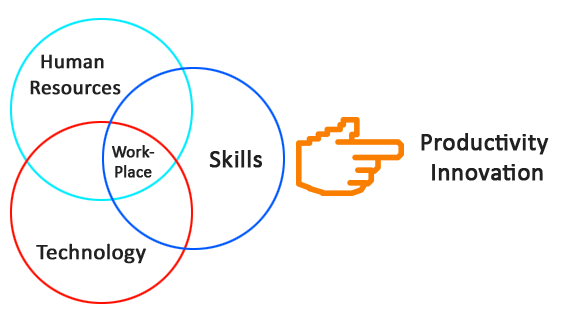
10 Reasons Explaining Why Mobility Is A Must For Next-Gen Workplaces

Mobility has slowly trickled down in our lives. Its benefits are impossible to ignore. Mobile usage is not limited to a means of communication, but now they have become an integral part of IT workforces working style. Even, presently, table tops of business lunch are more graced with mobile, laptops and other digital devices.

According to the latest report by Forrester, on mobile adoption in the enterprise, 66% of employees now use two or more devices every day, including desktops, laptops, smartphones and tablets.

Enterprise mobility

It signifies considering the latest trend and performance growth, enterprises should start investing in mobile technologies. Are you overwhelmed with change? Let’s take a look in what way going mobile can meet emerging workforce demands and help enterprises to be more productive. The 10 reasons are enumerated as follows:

1) Mobilize organization assets

Instead of storing bundles of files in the office shelves, it’s better to put all the company’s data and files into the cloud. It avoids the need to go to a particular site for a meeting or access system to get data, and adds flexibility to the work culture and reduce costs as well.

2) Keep the complete workforce on the same page

Making employees know about every activity initiated, awards received or new strategy deployed makes them feel connected, engage them and strengthen their bond with the company and its culture. This way they will be completely aware of what’s going on in the company.

3) Match the velocity of workforce changing behavior

According to The U.S. Bureau of Labor Statistics, Millennials will overtake the majority representation of the workforce by 2030. Millennials are more tech savvy, hyper-connected and high on technology. To keep pace with changing technology and workforce, employers must adopt mobility applications for the workplace.

4) Provide immediate support

Sometimes, when employees are away from the office, they need assistance or some files instantly to get things done. With the integration of a mobile solution, employees’ productivity can be improved with real-time help and they can handle the project in a better way.

5) Keep tabs on workforce

Going mobile, employers get to know how much time employees spend sitting idle, in business meetings or working on the desk. Also, in mobile with GPS tracker on, they can track the employees in real-time. All this helps in assessing employees’ work performance-productivity ratio and carrying out any action plan if required.

We need to bring learning to the people instead of people to learning- Elliott Masie

6) Training on mobile

In today’s competitive world, keeping the workforce updated with latest technology and knowledge is important, but along with managing business efficiencies, the things become difficult. Organizations could enable knowledge transfer on mobile and make employees learn at minimal cost leveraging technology.

7) Reduce carbon footprint

Employing E-training and E-learning would minimize the use of paper in the organization. Moreover, it alleviates the traveling cost that results in less carbon emission and makes the environment green.

8) A common ground for project teams

Employers can unify the communication with a mobile app chat feature where workforce can communicate, collaborate and discuss business projects they are handling. Also, by creating groups, employees can share the project challenges they are facing and get immediate assistance from the colleagues no matter where they are.

9) Data security

Mobilizing and connecting the IT infrastructure enable carrying out various business tasks without any pre-planned schedule. With restricted access, different level of data can be accessed securely by the range of workforce anytime, anywhere on the smart devices.

10) Strong physical authentication

Ensuring secured entry to physical space is absolutely vital. Replacing physical tokens with tokens on mobile is simple, robust and cost savvy. Leveraging software-based tokens, businesses can say goodbye to the clunky hard tokens that are shelling out big bucks. Also, a reset/upgrade can be easily made to mobile tokens that otherwise becomes cumbersome for the hard tokens.

The way forward

The convergence of mobile and technology innovations has the tremendous transformative potential to bolster workplace efficiency and strengthen security. Even, massive proliferation of mobile devices motivating the emerging workforce to bring their own device for work related projects.

According to Gartner research, by 2017, half of the employers will require employees to supply their own device for work purposes.

Time is changing and so is technology. With more innovations, enterprises are struggling to sustain and grow. Stay ahead in blood-thirsty competition by mobilizing your workplace and workforce!

Do you have any mobile app idea, but short on talent to engineer it? If yes, our pool of developers has great experience and expertise in building a range of mobility solutions. Explore the world of enterprise mobility solution development with us.


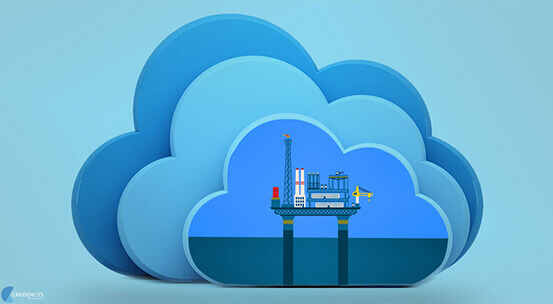
Why oil and gas sector should adopt big data and cloud computing?

Oil and gas industry- the well-known engine that drives the world economy! It’s true. Instead, the companies producing the most valuable resources suffer from either improper exploration methods, inefficient refining, manufacturing practices, or disconnected supply chains that directly impacts revenue generation.

Moreover, handling dozens of excel file manually is like herding cats and evaluation of huge data is a hard nut to crack for the oil and gas companies. Plus, getting access to the real-time data from the oil field or drilling platforms to collaborate, analyze and make quick decisions or instructing the workers at remote place where petroleum operations are carried out are the different challenges that oil and gas companies face. But, the sole problem that all of them find is in making the right choice for the technology.

The unique technology that has potential to wipe out all the worries of Oil and gas industry is Big data and cloud computing. The spectacular technology that’s shaping the future of every industry vertical along with fulfilling industry-specific needs would enable companies to operate more efficiently even during a downturn.

According to a Dell survey, companies using the cloud, mobility, big data enjoying 50% faster revenue growth.

Incorporating Big data and cloud computing would allow oil and gas companies work highly automated, increase collaboration, build enduring customer relationships and improve speed. Before we begin counting the advantages of embracing the oil and gas IT solutions, let’s understand first what the Big data and cloud computing are.

With big data, business would gain insights from the collected data and encourage data-driven processes. Cloud computing reshapes the IT infrastructure of traditional data centers computing data in the virtual world and bring out the actions.

Let’s take a look how the IT solution is a perfect fit for the oil and gas sector

Reduce IT costs

For any IT solution, companies are required to procure the necessary hardware or software setup on their company premises, which requires good amount of investment. With cloud computing, oil and gas companies can extend their existing IT capabilities without installing any hardware. Companies would work on pay by use basis where hosted services are offered over the internet and cloud is built over the premise company is running in a virtualized world where virtual computing is done on big data files.

The complete process requires just a thin client device like- iPad, laptop or desktop, zero down the maintenance costs, and significantly reduces capital expenditure requirements. Big data and cloud computing would transform the economics of IT by reducing IT expenses and complexity.

Plus, oil and gas software solutions would be helpful to the small operators, independent software developers, and consultants as the cost-of-entry to cloud-based computing are low.

Empower the communication and collaboration

The work of oil and gas companies is not limited to the walls of the oil and gas offices while experts need to collaborate with employees in the oil fields in the remote areas and sometimes required to instruct upstream and downstream petroleum operations as well. It demands to get real-time information which requires huge investment in IT infrastructure.

With cloud-based systems, regardless the size of an organization, partners, employees, stakeholders and individuals outside the company firewall can collaborate hassle-free. Experts can analyze the data, take quick decisions, and then inform the same to the person at oilfields or drilling platforms. The modern solution made oil and gas assets mobile and more connected.

To know about the rewarding benefits of the enterprise mobility in oil and gas sector, click here.

Making operations greener

Increased Server efficiency leads to less energy usage for the same amount of work done. For highly efficient operations, data centers try to cool the equipment by passing outside air or isolate the hot air expelled from the servers. While, with the virtualization of the server, server efficiency heightens up to 80%, carbon footprint and energy consumption get reduced, and money is saved that otherwise spent on energy.

According to the Carbon Disclosure Project, by 2020, large US companies that use cloud computing can achieve annual energy savings of $12.3 billion and annual carbon reductions equivalent to 200 million barrels of oil.

Data storage with zero security threats

Safeguarding the information by locking down the files behind the office locked doors is inconvenient if the company is having multiple branches around the world. How can files be shared? Plus, how to recover the files if destroyed in some local catastrophe like- flood or fire? The enclosed information is at the potential risks and it demands to keep the backup of data.

Instead, storing all the information in the cloud would eliminate the need to manage on-site storage, take complicated data back-up and maintain file security as data is secured behind the dedicated firewalls. Moreover, the data access security can be customized by enabling authentication to the network, applications and other files.

Centralization of data

Oil and gas industry is a large industry where work is done in multiple steps across several locations and that’s managed by a different rank of workers from managerial level employee to the field worker. All the processes and people involved requires access to a distinct set of data. Traditionally, manual management of data at multiple locations and by multiple people would heighten the chances of error, redundancy or data loss.

Incorporating big data and cloud, the complete information gets centralized at the server from where the staff could have immediate access to the data. The centralized system automates the process with no security threat by providing restricted access to the data to a different level of employees and eliminates the file versioning and management frustration.

The future

With unmatched capabilities of big data and cloud solutions, increasing number of oil and gas organization are migrating their existing legacy system to the cloud. Credencys professionals have the necessary expertise and a wealth of experience to offer a higher level of efficiency, and secure and controlled access across complex cloud implementations. Our consultant will discuss and suggests industry-best oil and gas software for your oil and gas company.

Enhance the value of your business and address the challenges you face by driving a new level of innovations with our big data and cloud engineers.

Top 12 Reasons Why Enterprises Should Embrace Big Data

With exponential increase in data, it has become extremely challenging for the organizations to systematically arrange the data, analyze it and compute actions out of it. Adoption of BigData technology is the panacea to all industries’ data storage and computation struggle. That’s why BigData is gaining momentum and increasingly making inroads in the enterprise.

According to IDG Enterprise Big Data research, 70% of enterprise organizations have either deployed or are planning to deploy big data-related projects and programs.

Enterprises ahead in big data initiatives

It’s a large share of the market! It implies ignoring or not utilizing the power of technology means a big deal to ignore. Simultaneously, there are also companies that suspect using and making something better leveraging bigdata.

To answer all the critical questions, here 12 reasons are outlined that strengthens the decision made by the enterprises to adopt BigData technology

1) With the intelligent tool, you can manage the growing variety of raw data hassle-free.

2) Extract the useful data for specific purpose from distinct data resources that’s unstructured and in different format like- audio, text or video.

3) It is cost savvy as without investing in single high-end hardware, enterprises can have multiple cheap hardware to store and analyze the massive data sets.

4) It enables working at speed. Bigdata hosted model abstract the complexity that enables immediate deployment and preconfigured sandbox environment make the developers set up the necessary configurations from scratch in a shorter span.

5) BigData applications let users visualize the data in real-time. Showcases the business intelligence data in easy-to-read charts, graphs, and slideshows which user can easily envision.

6) After getting insights out of the stored data, enterprises can get 360° view of their customers which aids in understanding customer’s needs and behavior.

7) Also, this valuable data creates business opportunities and helpful in taking new merchandising decision at right time, which in turns improves the productivity of an organization.

8) Enterprises can smartly capitalize on the analytics and generate more revenue and profitability.

9) Embracing ERP system in cloud, results in improved reliability, support, no ownership, low manageable costs and speedy setup.

10) Big data insights diminish the risk by optimizing the complex decisions involved in unplanned event or business decisions.

11) Searching the data from data warehouse is time consuming, but that could be done in no more time with big data.

12) Check the veracity of data by analyzing and drawing insights from the volume of data.

Wrap up

With magical bullet: big data, managing voluminous data, mining the required information and processing it on the fly is now no more daunting.

Big data that’s widely known for 3V’s: large Volume of data, huge Variety of data and Velocity at which data can be processed, impacts the enterprises from internal operations to the supply chain.

For instance, storing massive data by the manufacturing industry in traditional database is difficult to process that’s increasing day by day and identifying the valuable data instantly seems impossible. Also, industry has to spend a good amount of time and resources to extract the information and compute the action.

Consequently, in the absence of real-time insights, strategizing and initiating new merchandising decision promptly is not possible. However, embracing big data technology, things can be turned upside down and manufacturing industry would gain a performance edge.

In distinct ways, every industry is reaping the rewards and becoming more productive.

Are you ready to take a big leap with big data? If yes, do connect with our consultants as we have proficient team of bigdata experts.