Sphero – It’s Not Just A ball

There is always a fine line between stupid & clever. Just constantly seeing a ball rooming is stupid, but getting to do many things with it, is indeed clever, isn’t it?
We all love playing games. No matter at what age a ball has always fascinated us. In other words, ‘the ball’ has been a part of our lives in many ways but we have never noticed it. I mean when most of us were toddlers including me the only thing that was easy to play with was the ball, coming to teens it were ball-based games like baseball, basketball, football and even cricket and the list goes on. Soon I had to play with my pet and his favorite toy was also a ball.
Now since I am a grown up and become a full techno freak, here’s a small gadget that takes me into my past memories reminding me about that favorite ball that I loved playing with. A robotic engineering company – Orbotix has created Sphero.

Sphero is a robotic ball, which can be controlled remotely by an Android or iOS device and unlike other seen games this gaming gadget can be controlled with a tilt, touch or swing of your tablet or smart phone. Sphero gives you a “mixed- reality” experience. You get this experience as the ball is real and one can see its augmented form through some amazing apps. Wow, it looks as if I can enjoy my young memories still, with my favorite gadgets and so let’s have a look at the specialty of Sphero.

Both iOS & Android users can use Sphero. Sphero’s Bluetooth connection makes him ready to play as fast as you can launch an app. He also glows in thousands of colors. Now this is amazing but what I feel the best is its speed, Sphero speeds up of up to 3ft per second and a 50ft plus range. Also all the classic games that we all loved playing, are mixed with technology and can be played with Sphero

Well only, these handful features have impressed me and I want to know more features, more apps, more games and many more things about Sphero and so I shall stop here and start researching and soon let you know my detailed research.

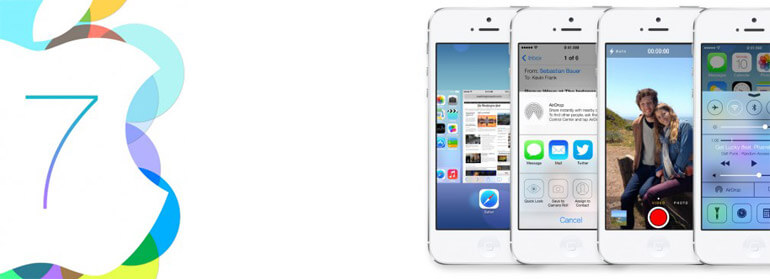
The Reasons Why We Love IOS 7

June – a month that witnessed the release of the latest operating system of Apple Inc. Yes, you all got it; I am definitely talking about the iOS 7. What has touched me the most is a promise from Apple. I know you all are wondering as to what is it? Well I would only like to say that the dawn of smart cars is here.

Today’s generation breathes & lives smart. Therefore, the good news is that Apple now plans to expand its reach by integrating iPhone into cars.

Surprised? Well now at this time almost the whole planet knows about iOS 7, which holds all kind of goods for many diversified industries and consumers.
So the feature – iOS in the car is just amazing. It would bring phone calls, iMessages, music, Apple maps and many more things to a vehicles in-dash display. According to Apple Inc, 95% of the cars sold today have some integration with iOS devices but the new feature has more to offer.
In iOS 7, the new feature allows drivers to use voice command through Siri. So now, I can rightly say Siri would act like your personal digital assistant. Siri would read messages for the drivers and it would also have access to information supplied by the Bing, Wikipedia and others.

The driver can ask Siri to play last voicemail, turn your Bluetooth on and switch it off as per your needs and increase and decrease the brightness.
Well I can just say that development is a continuous process, but sometimes it is at the cost of your safety. The features of the new operating system of Apple Inc when it comes to integrating with cars are just for the people who have grown up with these devices. Older drivers won’t be as demanding as the youngsters are. Many questions would pop-up in the young minds; some of them would be if they could use Facebook, twitter or other such social networking sites through this feature.

iOS in the car’ is a feature that would bring smart phone connectivity on the road but we believe that though there is great potential in harnessing this technology, the industry and the drivers would act responsibly relating to safety issues.

The Best seven New Features Of iOS 7

A company started by Steve Jobs, Steve Woznaik and Ronald Wayne has expanded from computers to customer electronics over the last 30 years. Undoubtedly, we all are iOS fans, but did you know that our favorite company had officially changed its name from Apple Computer, Inc to Apple, Inc in January 2007? Amazing isn’t it?
Well the most anticipated news is that Apple recently launched its latest operating system iOS 7, but the good news is that iOS 7 is filled with lots of new & better features than the previous systems so let’s have a look at the best new seven features of iOS 7.

Anti-theft Feature

Let’s us start with the Anti-theft feature. This feature tops my list though there are better features than this. This is because of its functions. We all know that absolutely no-security measures give 100% surety. I mean we have so many security measures but none of them are bulletproof. Today if we carefully observe then out of three, one robbery involves mobile devices. This is really scary, isn’t it? So here, for all Apple fans the new iOS 7 has an anti-theft feature, which would let you worry less about your iPhone being stolen. Now you would ask me that there is already a ‘Find my iPhone’ feature available in your iPhone then what is different in this ? Let me tell you the Anti-theft feature is different from your ‘Find my iPhone feature.’ Your iPhone cannot be traced because thieves just turn off the devices and wipe-them off before re-selling them. However when it comes to iOS 7, you have access to this completely new feature – Anti-theft feature, with which if anyone even steals your iPhone, he can use it only as a paperweight. The new activation lock setting is such that when a thief steals your iPhone he won’t be able to reactivate your iPhone without hacking your iCloud username as well as the password. Innovative isn’t it?

Modern Design

When I start speaking about design, I remember a famous quote from the father of Apple Inc – ‘Design is not just what it looks like and feels like. Design is how it works.’ Now I actually understand this quote by Steve Jobs on seeing the design of latest operating system. iOS 7 is designed in a completely new way from head to toe. In other words, the latest iOS version that is iOS 7 has a completely new design compared to the previous versions. The new operating system is flat and this is the biggest change since the launch of first iPhone. According to some websites, the modern look of iOS is confusing but I think you would just love it, as it’s simple to use. The new look is simple and cleaner. In addition, the new design gives you a transparency effect. That means you can view your favorite home screen photo that used to be hidden previously behind the apps while using iOS 7.

Back Button & iTunes Radio

Whether you believe or not, this time some ideas are actually borrowed from Blackberry 10 and third party iOS apps. There are security measures and the look is also completely new. The back button feature is not exactly a back button to go to the previous screen but a gesture. The back button is there when you need it. However, it doesn’t clutter up the screen when you don’t need it. As I said, the back button is a gesture and not exactly a button. Instead of the button you need to swipe in from the left side of the screen (bezel to screen) to start the feature. It works in many expected places like Safari Web Browser, apps like mail etc.

Along with this, another amazing feature is the iTunes Radio. Everyone after the launch started calling this, as the iRadio. I must say it’s a nice name for the iPhone Radio. As expected, this iRadio has a lot of similarity to the competitors as it gives the Pandora like experience. Like most of the streaming music apps, with the iTunes Radio you can play pre-loaded stations by genre or create your own ‘artist radio’ station. Well what I feel the best about this radio is that it’s different as it allows you to tie back to the iTunes store, allowing you to ‘wishlist’ your favorites and purchase those tracks, which you want to hear on demand. This app is free and ad-supported but ads are removed for iTunes Match subscribers.

Smarter Siri

This time we have a smarter Siri to our access. Therefore, I can rightly say Siri wants to know you better in iOS 7. There wasn’t any big focus on Siri in the keynote demo, but this feature has male and female voices, which are multi-linguistic. In other words, these voices can speak in French & German, with a promise that more languages would be spoken in the coming times. In addition to this Siri will no more mispronounce any name and if it does you can teach it the right pronunciation. Other than these things, it can control your device in a much better way than the previous versions. It can playback voicemails, turn on & off things like Bluetooth and it can increase and decrease screen brightness. The best thing about Siri is that it is now integrated with Twitter, Wikipedia and search results from Bing, so that it can read Wikipedia entries for you or just pull up web results.

Multi-tasking

Previously multi-tasking interface was accessed by a double tap on the home button, which brought up a small rack of app icons running in the background, but now in iOS 7 it shows larger windows with the app’s interface in action. The most important thing about multitasking is that that our favorite company Apple has claimed that though it’s better now, it won’t damage the battery life. Also along with this, all the apps are able to run in the background.

Notification Feature

The notification centre has gotten a makeover. In earlier versions, this feature was not of much use but now with the launch of iOS 7 things have changed. The notification centre splits your notifications wisely between various categories like “All”, “Missed” and “Today” giving you a glance at all your day’s notifications. Innovative I must say…!

So these were the seven best iOS 7 features but this is not all, there is a lot more to offer as this time Apple has come up with many new & exciting features like FaceTime & iMessage blocking etc.

iOS Software Development Kit – All You Need to Know

IOS SDK is a iOS software development kit developed by the Apple Inc, to develop native applications for IOS. An IOS uses XNU (an operating system kernel that apple inc. acquired and developed for the use in the Mac OS X Operating System) which used for developing on IOS is also based on X code.

The SDK are broken into the following Sets:

Cocoa Touch

Multi-touch Events & control

It is a touch sensing surface’s ability to recognize the presence of two & more point of contacts with the surface.

The functionality of Multi Touch is pinch to zoom, activating predefined programs

  • Accelerometer Support
  • View Hierarchy
  • Localization:

Localization & Internationalization are means of adapting computer software to different languages, Regional differences and technical requirements of a target market.

Internationalization is the process of designing a software application so that it can be adapted to various regions & languages.

Localization is the process of adapting internationalized software for a specific region or language by adding local specific component & translating the text.

  • Camera Support
  • Alerts
  • Web View
  • Image Picker
  • People Picker

Media

Open AL

Open AL (Open Audio Library) is a cross platform audio application programming interface. It is designed for efficient rendering of multi channel three dimensional positional Audio.
OpenGL is encoded in to source objects, Audio Buffers and single listener.

  • Source objects contain a pointer to a buffer, the velocity, position and direction of the sound. The listener object contains the velocity, position & direction of the listener.
  • Buffer contains audio data in Pulse code modulation format.
  • In Open AL application, sounds behave quite naturally as the user moves through the three-dimensional space of the virtual world.
  • It has two subsections of APIs the core consisting of the actual Open AL function calls, and the ALC (Audio Library Context)

Audio Mixing & recording

  • As the name suggests this API has the function of audio mixing process of multiple recorded sound and combined into one or more channels.
  • Video Playback
  • Image file Formats
  • Quartz
  • It is basically a graphic layer which refers to a pair of OS X technologies; it includes both a 2D renderer in Core Graphics and the composition engine that sends instructions to the graphics card.

Core Animation

  • Core Animation is the data visualization API used by IOS produced animated user interfaces.
  • Core animation can animate any visual element and it provides a unified way of accessing core image, core video and other quartz technologies. Core animation can be accelerated by the Graphical Processor (GPU).
  • It means core animation has the all the functionality of image, video & Quartz technologies. These functions clubbed in core animation and used by developers.

OPEN GL ES

  • It stands for OPEN GL for embedded System. Open GL (Open Graphic Library) is a cross language, multi platform API for rendering 2D and 3D computer Graphics. The API typically used to interact with GPU, to accelerate hardware accelerated rendering.

5 Quick points About Mobile Phone System Layer

These are the Mobile Phone system layer on which various applications can be developed.

1. Hardware Level

It is a first level or basic level of the mobile system. All the hardware is integrated in the ICs.

2. Operating system Layer

It is a layer of Operating system whether it an android or I phone operating system.

3. Libraries/ API (Application Programming Interface)

Libraries or Application Programming Interface can be on one layer and also on different layers.

Above this Operating system, there are various libraries are available which is developed by the OS developer. It is called a Native Library or core library. These Libraries are the set of programs and set of Instructions for the hardware embedded in the mobile device.
Application Programming interface is a software or protocol which used to communicate between hardware and the application layer. APIs act as a bridge between Application layer and the hardware. Each & every hardware has its different APIs.
Applications on application layer works by connecting each & every hardware by connection its APIs.

4. Third Party Library

Third Party APIs can be developed over the Native library/Native APIs Layer. The Library which doesn’t come as a part of operating system, It is taken from outside or it can be developed; such kind of library is called as third party library.
There are various third party library is available or it is continuously developed. One such kind of library is the Open CV.

Open CV: Opensource Computer Vision Library

Open CV is a library of programming functions mainly aimed at real time computer vision. Open CV is used in the different application development.
Open CV focuses on the real time image processing. OpenCV application area includes:

  • Facial Recognition
  • Gesture Recognition
  • Motion Recognition
  • Human-computer Interface

5. Application Layer

In the application Layer various applications will be developed from the help of the Native Library & 3rd Party Library while connecting with the hardware and OS Layer.
Additional Libraries:
There are also additional libraries with the native libraries. For example, if we want to develop an application in which you record a video by your phone and upload this video in real time on internet.

For that purpose, you have recorded one video but to upload the video in the same format, it is a very long process, for that purpose compression of the video should be done. So, the video can be uploaded easily and also can retrieve easily on internet.
For that purpose an additional library is available on IOS & Android OS. It is not a native library but it is additional library come with native library.

For Another example, if we want to develop one application in which you take a photo by your phone and the application gives you the various images results like concave image etc.
For that purpose, the image should be properly loaded in the application and there should be filters available in the OS library which gives the result which you want. Another example of filter is the font which is a filter of text.


Augmented Reality apps – Why We Love A Peek Inside

Augmented reality (AR) is a live, direct or indirect, view of a physical, real-world environment whose elements are augmented by computer-generated sensory input such as sound, video, graphics or GPS data. It is related to a more general concept called mediated reality, in which a view of reality is modified (possibly even diminished rather than augmented), by a computer.

So this was the technical definition of AR. Let’s talk something which a layman can also understand.

AR is something which modifies your real vision. Let’s take this example, you have your mobile, you start the camera and scan your hand and suddenly a small genie pops up into the screen of your mobile. Whoa where did that come from? When you look into the screen of your mobile you can see a genie on the palm of your hand but that’s not the reality. So how did it happen and what was that? That’s what augmented reality is. When we create an illusion of modifying the reality through our technology, that process is the augmented reality.
So now the question arises how did that genie pop in our mobile device? How is it done?
Basically for AR to happen, one needs a device with camera, preferably a mobile or tablet. An AR application scans the object/location/image and then the 3d model pops into our mobile.
AR technology is basically implemented with the help of many types of software. But before we talk about the type of software, let’s first discuss how many types of AR are there.

Basically there are three types of AR.
• Marker Based
• Marker less
• Location-Based

Marker Based AR

In this type of AR application, the app will scan the image and whenever it comes across the pre-defined marker for the app, it will project the 3d model on top of that image. Marker can be anything from a company’s logo to an image to a QR code. Thus any object or image having that marker will become the target. For marker based AR app to work perfectly, it will need a pre-defined marker to be specified to it. Although this was the first approach that came into existence with AR but now this has become bit redundant, reason being the fact that now AR software have much faster and amazing image processing algorithms. And thus there’s no need of specifying any marker.

Marker Less

In this type of Augment reality application, the app will scan any image or object and it won’t require any sort of marker for identification. Thus this approach becomes much easier. App won’t have to search for any marker and thus more options are available for the app. The scope will increase and it won’t be limited to some specific type of marker based image or picture. In this type app will scan the image or object based on the edges and texture. Undoubtedly this becomes a harder approach for the app but as mentioned earlier AR software have great image processing algorithms now and thus that is not an issue to worry about.

Location based

In this type of Augment reality application, the app will scan the location instead of image. It will use the GPS services to locate the exact location of the user. Many applications require the user to go to a certain location and then the AR effects happen.
After discussing the types of AR, let’s now discuss how an AR app is made. There are many types of software available today in the market to develop an AR app. These apps might be designed and made for various platforms as well.

For example:one might develop an app specifically for iOS or for android platform.

List of software available:
• Vuforia
• Metaio
• Junaio
• D’fusion
• Layar

What Will Bluetooth Connectivity Be Like In iOS ?

Bluetooth Connectivity in Apple devices Myth or the Truth?

Techno Freaks like me love researching here and there or say always staying ahead as to what is new in the market. So today, I was going through a discussion and the topic was one of my favorites – Bluetooth Connectivity in Apple Devices.

We all are aware of the constant fight between the iOS and Android users. Android Users boost and show off the conveniences they have at their disposal, especially when it comes to transferring files. Well thanks to Bluetooth for this. However, when it comes to iOS devices, file transfer may not be their strongest point, but if we look closer, there are some wonderful apps, which actually let you use Bluetooth in your iOS devices.

Amazed Or Shocked To Know This? Lets us get to know these Apps…

All iOS devices come with Bluetooth support but the biggest myth present is that one cannot use Bluetooth on iOS devices, and the only reason for this is that many of us are actually not aware about the way one can use Bluetooth on iOS devices. Well even, I was the one who believed this until I came across the following Apps. Here is a gist of those apps.
iShareFile App.

This app tops my personal list. Many of us feel that this app is not useful. However, the truth is when we go deep; we find this app useful. The only thing needed is that this app must be installed in both the iOS devices. You do not need to sign up or perform any configuration steps. Amazing isn’t it? All you have to do is to fire up the app on both the devices and click on the big Bluetooth button located in the middle of the screen. This app lets you transfer photos & contacts. The best part here is that this app allows you to transfer photos from two ways. The first simple way is just to transfer a photo from your camera roll into the other device. The second way is to just snap a photo from the camera of your device and send it to other device. The files transferred from iShareFile App users do not ask the permission but directly enter your device. In other words if this app is installed in your device and the Bluetooth is switched on, the photographs directly enter your device without your permission. However, you have the option to preview the images before saving them. These images after being saved get stored in the camera roll of your device.

Bluetooth Communicator – All in One Share.

The first app allows us to transfer only photos and contact cards but the second app allows us to do lot more. As the same suggests Bluetooth Communicator app allows you to share everything, from contacts to photos, to text, notes & voice messages. Indeed Amazing! Bluetooth communicator is a completely easy & user-friendly app. Bluetooth Communicator is the ultimate app for transferring files between iPad, iPhone and iPod. The most important thing to be taken care of is that both the devices should install the updated version to use this app and the best part of this app as said by one of the customer is that if one optimizes this app according to one’s needs the speed increases. So in other words I can say not only use this app but also optimize it in such a way that you actually get to see the increased speed of your file transfer.

Well this was just a gist but now the next time when any iOS user lands in a fight with an Android user about file transfer these apps can come to your rescue and this would definitely help you.

So finally, the “myth” has been broken & now whenever I see a discussion relating to the Bluetooth Connectivity of Apple Devices, these two apps would definitely come to my mind!!!

What about you?


Google Cloud Messaging for Android – Understanding the Basics

Google Cloud Messaging for Android (GCM) is a service that allows you to send data from your server to your users’ Android-powered device. This could be a lightweight message telling your app there is new data to be fetched from the server (for instance, a movie uploaded by a friend), or it could be a message containing up to 4kb of payload data (so apps like instant messaging can consume the message directly).

The GCM service handles all aspects of queuing of messages and delivery to the target Android application running on the target device. GCM is completely free no matter how big your messaging needs are, and there are no quotas.

Here are the primary characteristics of Google Cloud Messaging (GCM):

  •  It allows 3rd-party application servers to send messages to their Android applications.
  • An Android application on an Android device doesn’t need to be running to receive messages. The system will wake up the Android application via Intent broadcast when the message arrives, as long as the application is set up with the proper broadcast receiver and permissions.
  • It does not provide any built-in user interface or other handling for message data. GCM simply passes raw message data received straight to the Android application, which has full control of how to handle it. For example, the application might post a notification, display a custom user interface, or silently sync data.
  • It requires devices running Android 2.2 or higher that also have the Google Play Store application installed, or an emulator running Android 2.2 with Google APIs. However, you are not limited to deploying your Android applications through Google Play Store.
  • It uses an existing connection for Google services. For pre-3.0 devices, this requires users to set up their Google account on their mobile devices. A Google account is not a requirement on devices running Android 4.0.4 or higher.


Know about Apple Push Notification

Apple Push notification service is created by Apple Inc. in 2009. It uses the push technology through a constantly open IP connection to forward notification from the servers of the third party applications to the apple devices.

This service Pushes notifications to the apple devices not to the applications. These notifications may include badges, sounds and custom text alerts. When application is not open when notification is received, the app will be badge and added to dock (Until the badge is cleared) to notify users. Each notification restricted to maximum size 256 bytes.

Limitations:

  1. Apple Push notification payload is restricted to 256 bytes which include both the actual body message and the optional & additions messages attributes you want to send.

It is not designed for the large data transfer; it is used only to send small alerts messages.

  1. Push service doesn’t provide any feedback message for receiving the message that whether it was successfully delivered or not. This message is queued to the devices when application is not open, whenever the application gets open only the last send will be queued – overwriting any previously send messaged and any undelivered messages.
  2. It cannot be used to send critical messages because the service will be available only with internet connectivity.

Payload Content:

The payload is formatted in JSON. There is following payload content which will be sending via apple push notification services.

Alert:  the text strings which will be displayed on the device.

Badge: the integer number which will be displayed as a badge by the application Icon on the screen of the mobile device.

Sound: The text string of the name of sound to accompany the display of the message on the device.

AIRPUSH SDK – Mastering the Basics

Airpush is the 2nd largest ad network for Android and the first in terms of monetization performance for advertisers and developers. Over 40,000 apps from 150 countries use Airpush’s next-generation ad formats in order to generate 10-30x higher returns than traditional in-app ads. Many of the world’s top advertisers use Airpush to generate much higher ROI than previously possible with engaging campaigns that get noticed and drive results.

The Airpush Android SDK is a java-based library that allows publishers to monetize their app(s) with unique, innovative ad units.

There are 4 types of ad units available in this SDK.

1. Push Notifications Ads

Push notification ads are text ads shown in the notification tray of Android devices. Unlike traditional mobile ads, these ads are not placed inside apps. Each ad is also tagged with a permanent opt-out link, as well as the name of the app which delivered the ads.

A Push Notification Ad is an ad sent to the notification tray of Android devices, rather than inside of an app. This ad unit can monetize an app’s entire install base- both active and inactive. The developer can control how often ads are sent to your users from within his account.

 2. Icon Ads

Icon Ads are sponsored shortcuts that appear on the phone’s desktop and link to valuable user content such as mobile search and daily deals. Developers generate revenue for each Icon Ad which is distributed to a device.

This innovative ad unit is a shortcut placed on the home screen of Android devices which links to valuable content such as free apps and deals. This ad unit can also monetize an app’s entire install base- both active and inactive.

 3. SmartWall

SmartWall is a new interstitial mobile ad format which dynamically optimizes between multiple sub-formats such as Rich Media, AppWall, Video and Interstitials. With SmartWall, app developers no longer need to choose between the overwhelming numbers of full-page mobile ad formats available on the market. Via a single SDK, SmartWall determines the optimal full-page ad format to display in real-time based on yield, network connection type, and other parameters. SmartWall generates significantly higher CPMs than other leading full-page ad formats and represents a major leap forward for both developers.

Smart Wall, is a new full-page ad format, dynamically optimizes between multiple sub-formats including App Wall, Offer Wall, Dialog Ads, Video Ads, Rich Media, and More.

 4. Bugsense

Bugsense is Included in this SDK, It is an industry leading real-time crash analytics and bug tracking service. Airpush has forged an exclusive partnership with Bugsense which allows Airpush to offer the service free to the developers. You will be notified in the dashboard of your account any time errors occur in your app. You can view your real-time analytic under the ‘Crash Report’ tab under Reports.