


How Cloud-Based PIM Reshapes Data Management in Retail & CPG?
In the fast-paced world of retail and Consumer Packaged Goods (CPG), managing product information efficiently is critical to success. PIM efficiently manages and distributes product information across channels, ensuring consistency and accuracy.
This includes product details, specifications, pricing, and other information crucial to marketing, sales, and customer satisfaction. In retail and CPG, where product portfolios are diverse and constantly evolving, PIM plays a pivotal role in ensuring accurate, up-to-date information is available across all touchpoints, from eCommerce platforms and mobile apps to physical stores.
Evolving Landscape of Data Management in Retail & CPG
Traditionally, retail and CPG companies relied on on-premises solutions to manage product information. However, as data volumes grow exponentially, product complexity increases, and demand for real-time updates rises, these traditional approaches’ limitations have become evident.
Managing vast amounts of data manually or through legacy systems often leads to inefficiencies, errors, and delays. The evolving data management landscape in the retail and CPG sectors is shifting toward more agile, scalable, and collaborative solutions.
The need for a centralized repository that can handle the dynamic nature of product information has become paramount. As the challenges of traditional data management became apparent, cloud computing emerged as a new era.
Cloud-based solutions offer a dynamic and scalable alternative to on-premises systems. In recent years, a significant paradigm shift has moved toward cloud-based PIM in the retail and CPG sectors.
Understanding Cloud-Based PIM Solutions
Cloud-Based PIM refers to a modern approach to product information management that leverages cloud computing infrastructure. Unlike traditional on-premises solutions, cloud-based PIM systems are hosted on remote servers, offering users accessibility and flexibility.
Benefits of Cloud-Based PIMs
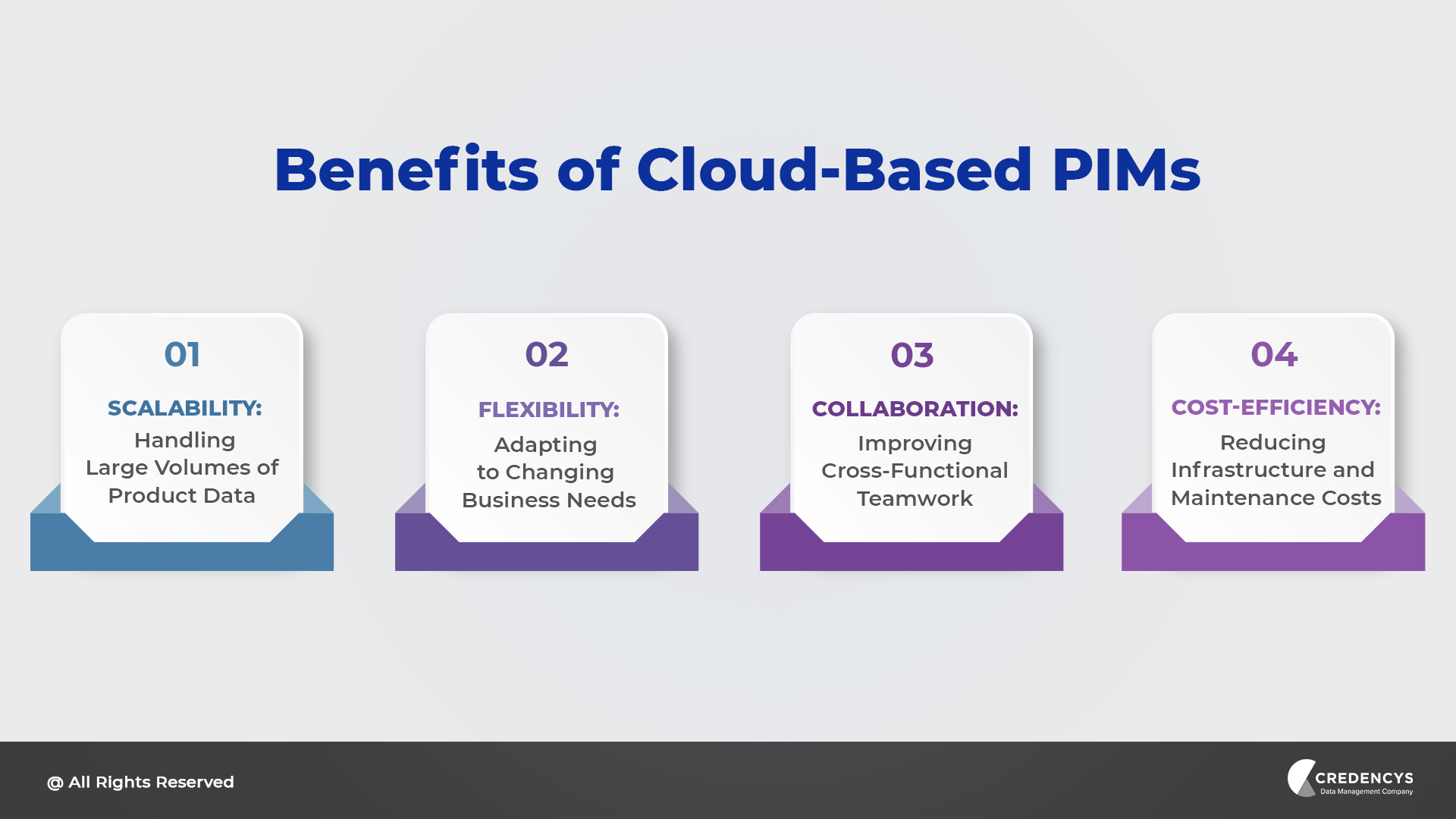
The benefits of adopting cloud-based PIMs include:
1. Scalability: Handling Large Volumes of Product Data
One defining feature of cloud-based PIM solutions is scalability. As retail and CPG companies grow and diversify their product offerings, handling large volumes of product data becomes paramount.
Cloud-based PIM solutions provide a dynamic infrastructure that scales resources to accommodate expanding product catalogs, ensuring optimal performance and responsiveness. This scalability is especially crucial during peak periods, such as product launches or seasonal promotions, when data activity surges.
Cloud resource elasticity lets businesses adapt seamlessly to demand fluctuations, preventing performance bottlenecks and ensuring a smooth user experience.
2. Flexibility: Adapting to Changing Business Needs
In fast-paced retail and CPG landscapes, adapting to changing business needs is essential to stay competitive. Cloud-based PIM solutions offer flexibility that traditional on-premises systems struggle to match.
Cloud architecture enables rapid deployment of updates, modifications, and integrations, helping businesses respond quickly to market trends, regulatory changes, and shifts in consumer preferences. This adaptability is especially valuable for companies experiencing rapid growth or undergoing digital transformation.

Ready to Elevate Your Data Management? Embrace the Power of Cloud-Based PIM!
Whether you’re adding new product attributes, integrating with eCommerce platforms, or adopting emerging technologies, cloud-based PIM solutions provide the agility needed to keep pace with evolving industry demands.
3. Collaboration: Improving Cross-Functional Teamwork
Effective collaboration is a cornerstone of successful data management, especially in organizations where cross-functional teams manage product information. Cloud-based PIM solutions facilitate collaboration by providing a centralized platform accessible to stakeholders such as product managers, marketers, sales teams, and external partners.
With real-time collaboration features, cloud-based PIM solutions let teams work on product data simultaneously, reducing silos and streamlining workflows. This collaborative environment improves communication, reduces errors, and ensures all stakeholders have access to the most up-to-date, accurate product information.
4. Cost-Efficiency: Reducing Infrastructure and Maintenance Costs
Traditional on-premises PIM solutions often require significant upfront investment in hardware, software licenses, and ongoing maintenance. Cloud-based PIM solutions, by contrast, use a subscription-based model, eliminating the need for businesses to manage and maintain complex infrastructure.
The cost-efficiency of cloud-based PIM extends beyond infrastructure savings. With automatic updates, businesses get the latest features and security patches without manual intervention.
Additionally, the pay-as-you-go model lets companies scale resources to meet demand, optimize costs, and pay only for the services they use.
Key Features of Cloud-Based PIM Solutions
Cloud-based PIM solutions offer features and capabilities that meet the dynamic needs of the retail and CPG industries. In this section, we will explore the essential features that make cloud-based PIM a powerful tool for scalable, efficient data management.
1. Centralized Data Repository
Centralization is at the core of effective PIM, and cloud-based solutions excel in providing a centralized data repository. This centralized hub serves as the single source of truth for all product information, ensuring consistency and accuracy across various channels.
Cloud-based PIM lets businesses consolidate product data from diverse sources and manage it seamlessly in one centralized location. A centralized data repository improves data quality, reduces redundancy, and simplifies data maintenance.
This feature is especially crucial when multiple teams, departments, or external partners need access to the same up-to-date product information.
2. Integration with Other Cloud Services and Applications
The interconnected nature of modern business operations underscores the need for seamless integration across tools and services. Cloud-based PIM solutions offer robust integration capabilities, allowing businesses to connect their PIM system with other cloud services, applications, and third-party tools.
Integration with eCommerce platforms, customer relationship management (CRM) systems, marketing automation tools, and analytics platforms ensures a smooth flow of information across the entire business ecosystem. This interoperability not only enhances overall efficiency but also provides a holistic view of data, empowering businesses to make informed decisions based on comprehensive insights.
Ready to Revolutionize Your Data Management? Discover the Power of Cloud-Based PIM Features!
3. Security Measures for Data Protection
Security is a top priority in data management, especially when handling sensitive product information. Cloud-based PIM solutions prioritize data protection through robust security measures.
Key security features include:
- Data Encryption: Encrypts data in transit and at rest to protect against unauthorized access.
- Access Controls: Role-based access controls ensure only authorized personnel can access specific information, reducing the risk of data breaches.
- Regular Audits and Monitoring: Continuous monitoring and periodic security audits help proactively identify and address potential vulnerabilities.
- Compliance Standards: Cloud-based PIM solutions often adhere to industry-specific compliance standards, assuring businesses that their data management practices meet regulatory requirements.
By implementing these security measures, cloud-based PIM solutions not only protect sensitive information but also build confidence among businesses, customers, and partners in the safety and integrity of their data.
4. Customization and Scalability Options
Every business has unique data management needs, and cloud-based PIM solutions acknowledge this by offering customization options. Businesses can tailor the PIM system to align with their specific requirements, including data fields, workflows, and user interfaces.
Scalability is a fundamental feature that ensures the PIM solution can grow alongside the business. Whether a company increases its product offerings, data volume, or user base, a scalable cloud-based PIM solution can adapt without compromising performance.
The flexibility to customize and scale the PIM solution empowers businesses to build a data management infrastructure that aligns precisely with their evolving needs and objectives.
Implementation Strategies for Cloud-Based PIM
Adopting a cloud-based PIM solution is a significant step toward scalable, efficient data management for retail and CPG companies. This section explores key implementation strategies to ensure a seamless transition and successful utilization of cloud-based PIM.
1. Assessing Current Data Management Processes
Before implementing a cloud-based PIM solution, businesses must thoroughly assess their current data management processes. This involves:
- Identifying Pain Points: Understand the challenges and inefficiencies in existing data management practices. This may include data accuracy issues, collaboration bottlenecks, or scalability limits.
- Mapping Workflows: Document current product information workflows. Identify touchpoints, involved teams, and the technologies currently in use.
- Data Audit: Conduct a comprehensive audit of existing product data. Identify inconsistencies, inaccuracies, and areas that require improvement.
- User Feedback: Gather feedback from end-users involved in data management. Understand their pain points and expectations from a new PIM solution.
The insights from this assessment provide a foundation for tailoring the implementation strategy to address business-specific challenges and requirements.
2. Choosing the Right Cloud-Based PIM Solution
Selecting the right cloud-based PIM solution is a critical decision that directly affects implementation success. Consider the following factors when choosing a PIM solution:
- Scalability: Ensure the chosen solution can scale seamlessly as your product catalog and data volume grow.
- Integration Capabilities: Look for a PIM solution that offers robust integration capabilities with other essential business applications, such as eCommerce platforms, CRM systems, and marketing tools.
- Customization Options: Assess how much the PIM solution can be customized to meet specific business needs and workflows.
Unleash the Potential of Your Retail or CPG Business
- Security Features: Prioritize solutions with strong security measures, including data encryption, access controls, and compliance with industry standards.
- User-Friendly Interface: A user-friendly interface promotes adoption and reduces the learning curve for staff.
Selecting a PIM solution that aligns with the business’s current and future needs is essential for long-term success.
3. Migration Considerations and Best Practices
Migrating from legacy systems to a cloud-based PIM solution requires careful planning and execution. Consider the following best practices:
- Data Cleansing: Cleanse and organize existing data before migration to ensure the new PIM system starts with accurate, reliable information.
- Phased Implementation: Consider a phased implementation, starting with specific product categories or business units before scaling up.
- Data Mapping: Clearly map data fields from the existing system to the new PIM solution to ensure a smooth transition and data consistency.
- Backup and Rollback Plan: Implement a robust backup and rollback plan to mitigate risks and prevent critical data loss during the migration.
By following these best practices, businesses can minimize disruptions and streamline the migration process, ensuring a successful transition to the new cloud-based PIM solution.
4. Staff Training and Change Management
Successfully implementing a cloud-based PIM solution requires a focus on staff training and change management. Key considerations include:
- Training Programs: Develop comprehensive training programs to familiarize staff with the new PIM system. This may include hands-on sessions, documentation, and online resources.
- Change Champions: Identify individuals within the organization who can serve as change champions for the new system and support and guide their colleagues.
- Communication Strategy: Communicate the benefits of the new PIM solution to all stakeholders. Clearly articulate how it will improve their workflows, collaboration, and overall efficiency.
- Feedback Mechanisms: Establish feedback mechanisms to gather end-user insights during the initial stages of implementation. Use this feedback to address concerns and optimize user experience.
Focusing on staff training and change management helps the entire organization embrace the transition to a cloud-based PIM solution, leading to more effective, sustainable data management practices.

Overcoming Concerns and Challenges
Adopting cloud-based PIM solutions in the retail and CPG industries comes with challenges. Let’s explore and address key concerns, with insights on how businesses can overcome these hurdles to ensure a smooth transition and successful use of cloud-based PIM.
1. Security and Data Privacy Considerations
One of the foremost concerns when migrating to the cloud is protecting sensitive product information. To address this:
- Encryption Protocols: Ensure the cloud-based PIM solution uses robust encryption protocols for data in transit and at rest.
- Compliance Standards: Choose a PIM solution that complies with industry-specific data protection regulations and standards to ensure your data is handled securely.
- Access Controls: Implement strict access controls to limit who can access, modify, or view specific pieces of product information within the system.
Secure Your Future with Cloud-Based PIM!
- Regular Audits: Conduct regular security audits to proactively identify and address potential vulnerabilities.
By prioritizing security measures, businesses can build confidence in the safety and integrity of their product data and address concerns about unauthorized access and data breaches.
2. Connectivity and Potential Downtime
Concerns about connectivity and potential downtime during the migration or operation of a cloud-based PIM solution can hinder adoption. To mitigate these concerns:
- Diligent Planning: Plan thoroughly to minimize disruptions during migration, including scheduled downtime during low-impact periods.
- Redundancy Measures: Implement redundancy measures to ensure continuous availability, such as failover systems and load balancing.
- Performance Testing: Conduct performance testing before and after implementation to identify and address potential bottlenecks and ensure optimal system performance.
- Communication Strategy: Clearly communicate scheduled downtime and system changes to stakeholders to manage expectations and minimize operational impact.
By implementing these strategies, businesses can proactively address connectivity and potential downtime concerns and ensure a seamless transition to a cloud-based PIM solution.
3. Integration with Existing IT Infrastructure
Integrating a cloud-based PIM solution with existing IT infrastructure is a critical consideration for businesses. To address integration challenges:
- API Capabilities: Choose a PIM solution with robust Application Programming Interface (API) capabilities to integrate seamlessly with other systems.
- Data Mapping: Conduct thorough data mapping exercises to ensure that data fields align correctly between the new PIM solution and existing systems.
- Middleware Solutions: Explore middleware solutions that connect different systems and simplify the integration process.
- Interdepartmental Collaboration: Foster collaboration between IT departments and other business units to ensure a cohesive integration approach.
Addressing integration challenges requires a strategic approach that combines technology with effective communication and stakeholder collaboration.
4. Cultural Shift Within the Organization
Implementing a cloud-based PIM solution often necessitates a cultural shift within the organization. To overcome resistance and foster a positive transformation:
- Change Management Programs: Develop comprehensive change management programs that educate and prepare employees for the upcoming changes.
- Engage Leadership: Ensure leadership actively supports and communicates the benefits of the new PIM solution to set the tone for a positive cultural shift.
- User Training: Invest in user training programs to help employees navigate and use the new system effectively.
- Feedback Mechanisms: Establish feedback mechanisms to continuously assess the cultural shift’s impact, allowing adjustments and improvements based on user experiences.
By addressing cultural-shift concerns and emphasizing the benefits of the new PIM solution, businesses can foster a positive environment that encourages adaptation and innovation.
Closing Thoughts
The journey towards scalable data management through cloud-based PIM solutions is not just a trend but a strategic imperative. Businesses that embrace this intersection are better positioned to thrive in an era where data is a cornerstone of success, and adaptability is key to staying ahead of the competition.
As we move forward, collaboration between PIM and the cloud will redefine how retail and CPG companies manage, distribute, and leverage product information to drive sustained growth and innovation.




Tags: