

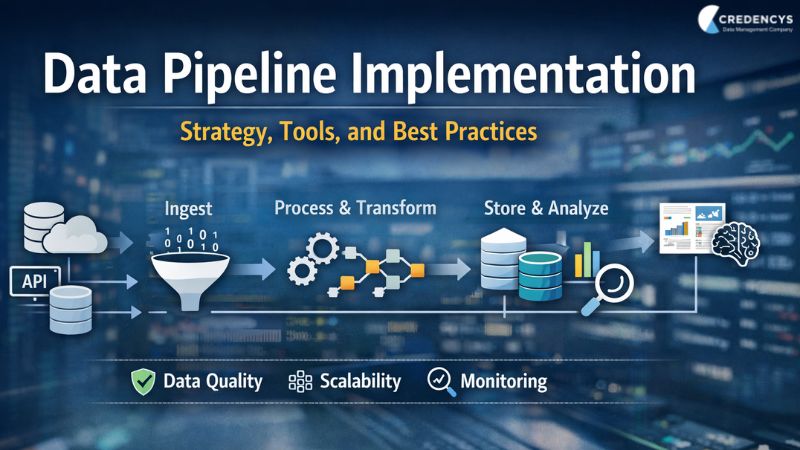
Data Pipeline Implementation: Step-by-Step Approach for Enterprise Success
Over 80% of data projects fail to deliver measurable business value, not because of a lack of data, but because of how that data flows. Poor integration, unreliable pipelines, and delayed processing continue to hold organizations back from becoming truly data-driven.
That’s where Data Pipeline Implementation becomes critical.
In today’s enterprise landscape, data is constantly moving across systems, applications, and channels. From customer interactions and product catalogs to operational and transactional data, every insight depends on how efficiently this data is collected, processed, and delivered.
But here’s the challenge. Most organizations do not struggle with access to data. They struggle with making data usable, reliable, and timely.
A poorly implemented data pipeline leads to:
- Data silos and inconsistencies
- Delayed analytics and reporting
- Increased operational overhead
- Limited trust in data across teams
On the other hand, a well-designed data pipeline enables:
- Real-time decision-making
- Scalable data operations
- Improved data quality and governance
- Faster time to insight
What are Data Pipelines?
This blog will walk you through how to get Data Pipeline Implementation right, covering the right strategy, essential tools, and proven best practices to help you build pipelines that are not just functional, but scalable, reliable, and aligned with business goals.




Tags: