
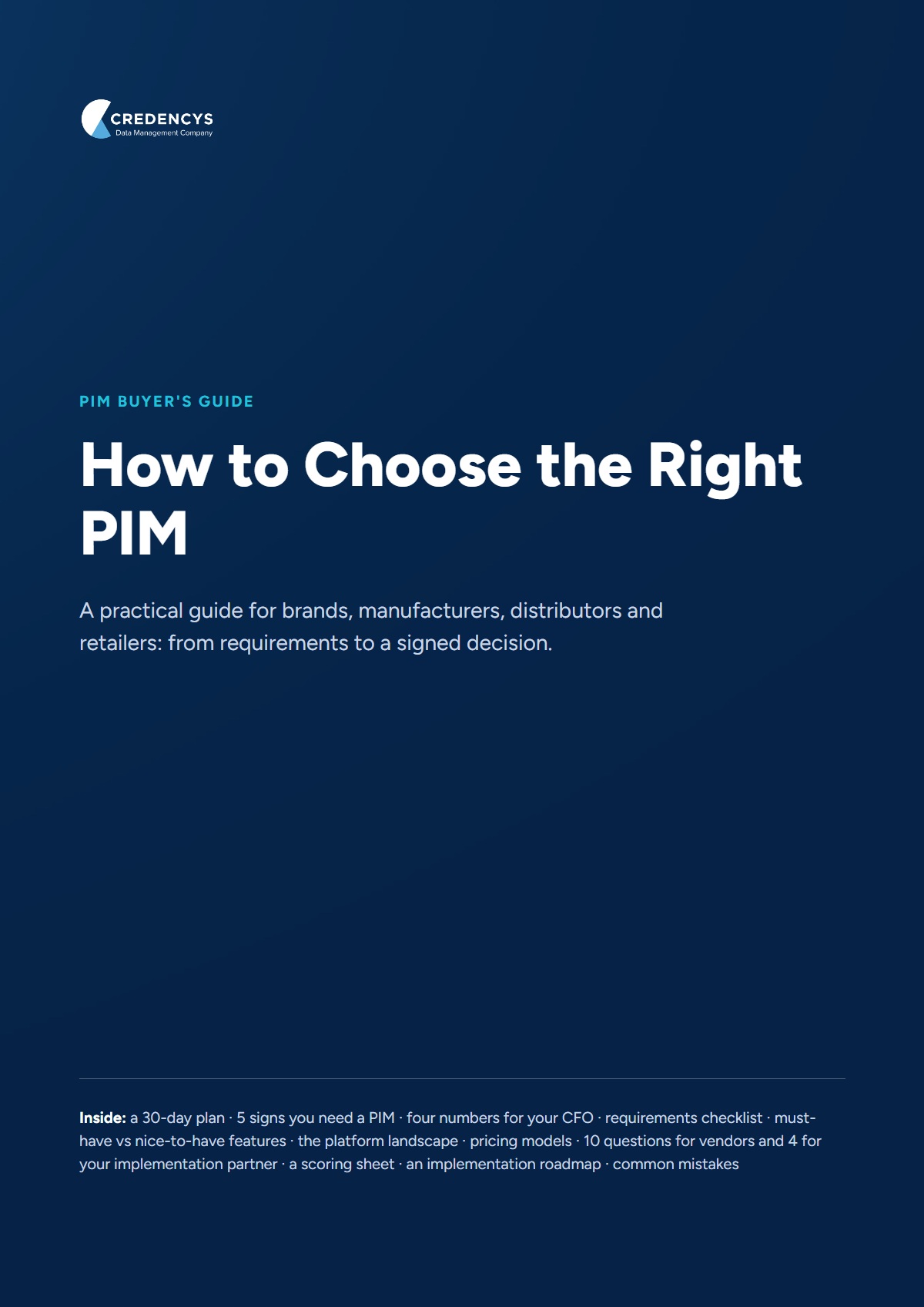
PIM Buyer's Guide: How to Choose the Right PIM
Choosing a PIM is a big decision. This free PIM buyer’s guide (12 pages) walks you through the whole process: from deciding whether you need a PIM, to writing requirements, comparing platforms and planning the implementation.
What’s inside
- 5 signs you need a PIM, and when you don’t yet
- A requirements checklist across data model, channels, workflow, DAM, AI and security
- Must-have vs nice-to-have PIM features
- The platform landscape: Pimcore, Syndigo, Akeneo, Salsify, inRiver, Stibo STEP, Informatica Product 360, Contentserv, Bluestone PIM, Pimberly and Plytix, and who each fits
- How PIM is priced: license models and what drives the cost
- 10 questions to ask every vendor, 4 for your implementation partner, plus a scoring sheet
- An implementation roadmap and the most common mistakes
- A 30-day plan and four numbers to measure before you talk to your CFO
Written by Credencys, a product data consultancy with 15+ years of PIM, MDM and DAM experience. We are a Pimcore Strategic Partner and a Syndigo partner, and we give independent advice on the other platforms.
5 signs you need a PIM
If two or more of these sound familiar, a PIM is probably the right next step. The guide also explains when you may not need one yet.
- Launches wait for data: New products are ready to sell, but descriptions, images or specs are still being collected by email and spreadsheet.
- Every channel shows something different: Your website, marketplaces and retailers show different names, prices or specs for the same product.
- Retailers and marketplaces reject listings: Each channel wants its own template, and listings fail on missing or wrongly formatted attributes.
- Supplier data arrives in many formats: Your team spends days cleaning supplier files before anything can be published.
- Nobody owns product data: There is no clear owner, no approval step and no way to see which products are complete.
Frequently asked questions
Who is this PIM buyer’s guide for?
Marketing, eCommerce, product and IT leaders at brands, manufacturers, distributors and retailers who are selecting a PIM for the first time or replacing one.
How long does a PIM implementation take?
A focused first release typically takes 3 to 6 months; larger programs run in phases over 6 to 12 months or more. The guide includes a phase-by-phase roadmap.
Does the guide recommend one platform?
No. There is no single best PIM, only the best fit for your data, channels and team. The guide shows where each platform usually fits and how to score them against your own requirements. Not sure you need a PIM yet? Take the free PIM Fit Check. Comparing vendors? Get the PIM RFP template and the PIM platform comparison matrix.
Who it’s for
- Teams deciding whether they need a PIM
- Teams comparing PIM platforms
- Leaders planning a PIM budget and roadmap
Questions about the guide
Is it free?
Yes. Enter your details and the download button appears straight away; we also email you a copy.
How long is it?
12 pages.
Does it cover pricing?
Yes: how PIM platforms are priced and what drives the cost, without made-up price lists.
From Credencys: Pimcore Strategic Partner with 80+ certified Pimcore experts, and a Syndigo partner.
Download the free guide