How to Select a Mobile Application Development Platform (MADP)?

With an ever-increasing demand for mobile apps, enterprises are adopting mobile application development platforms (MADPs) for accelerating the pace of development. MADPs expedite mobile application development for developers by providing them an integrated framework for designing, developing, testing, deploying, and maintaining their mobile applications.

According to Gartner “by 2020, more than 75% of enterprises will have adopted at least one mobile application development platform to accelerate their digital business transformation strategy, up from approximately 33% in 2015.”

What is the Mobile Application Development Platform?

A mobile application development platform (MADP) is a type of software that allows an organization to develop, test and deploy mobile apps rapidly for smartphones or tablets.

What Does A typical Mobile Application Development Platform (MADP) Offer?

  • A cross-platform development framework (iOS, Android, Windows, BlackBerry)
  • Native application development support
  • Extensible middleware for user management, security, and connectivity
  • A framework to connect client-side applications to middleware
  • Libraries that provide standard UI elements
  • MDM (Mobile Device Management) or MAM (Mobile Application Management) integration

However, selecting between the IBM, Kony, Adobe, Oracle, and SAP is not an easy task. It is crucial to evaluate these platforms based on their ability to meet both your business and technical requirements. These evaluations also help in your present and long term mobile application development requirements.

Top 6 Criteria to Consider While Selecting A Mobile App Development Platform (MADP)

1) Developer Tools

The tools provide a collaboration platform for developing, testing, debugging, deploying, hosting and maintaining apps in an Agile manner. A host of MADPs now offers low code application development with pre-designed templates and drag-and-drop support. While these tools might appear very promising, developers generally will prefer a CLI.

A CLI provides higher agility in setting up and managing the development environment. Hence, your developer team will play a crucial role in selecting the mobile app development platform as it has to be comfortable with the level of controls the MADP provides. Restrictions with CLI can be frustrating for a team of experienced developers.

2) Access to Open Source Libraries

The developer community is highly dependent on open source libraries and APIs. These libraries play a crucial role in increasing the development speed, integration, and delivery of the app. Make sure your MADP provides easy access and integration with such libraries.

3) Integration of Native and Web Components

The mobile space is highly volatile. There was a time when native mobile apps were considered as the holy grail of customer engagement. However, the trend seems to have passed and progressive web apps are now gaining a lot of attention. Nonetheless, you need to invest in a mobile app development platform that provides easy integration of native and web components and helps in developing mobile apps for multiple platforms.

4) Security

Lost mobile devices continue to haunt enterprises. Hence, enterprise apps on such devices need an additional layer of security with standard authentication/authorization mechanisms. The MADP under evaluation should provide easy and secure management of user/app/data under all environments. For this, you should evaluate the MADP’s integration with MDM and MAM tools.

5) App Monitoring and Analytics

User experience is a critical parameter for most enterprise applications. As organizations prefer Agile ways of development, user feedback triggering from the use of the app allows developers to accommodate necessary changes in a swift manner.

MADPs play a crucial role in converting this user data into visual insights. The MADP should be able to provide you easy monitoring of your app performance, crash events, application-to-server requests (push notifications), server-side logs, security logs, and analytics.

6) Deployment

MADPs can be deployed on-premise or can be availed as a cloud-based service. This will rekindle the classic cloud vs on-premise debate. The cloud service will help you start early without any significant upfront costs. On the other hand, an on-premise subscription might provide you the lower total cost of ownership (in the long run) with higher levels of security.

Although a mobile application development platform can significantly improve the development pace, it will have its own learning curve. Further moving away from traditional workflows can be an issue for mature development teams. Therefore, before making any investment, organizations must ascertain developers’ needs and MADP’s capability in delivering the same.

Credencys Solutions Inc is a leading mobile application development company and solutions provider. We can help you in selecting an MADP for your organization’s needs or in developing mobile apps for multiple platforms.

To evaluate our services, you can engage with us in a 15-day Blueprint Workshop. Blueprint is a collaborative agile workshop that can help you create a roadmap for your application development starting from building a proof of concept to creating clickable prototypes and MVPs.

Frequently Asked Questions

Which software is used for mobile application development?

Xamarin is a highly used mobile app development platform. It uses C# codebase to build an app for Android, iOS and Windows platforms. One of Xamarin’s best features is that it allows developers to write the code once and shares it across multiple platforms. Its the main characteristic of a cross-platform mobile app development technology.

What are the different types of platforms?

The common types of technology platforms are Operating Systems, Computing Platforms, Database Platforms, Storage Platforms, Application Platforms, Mobile Platforms, Web Platforms, Content Management Systems, and more.

What is the best mobile app development platform?

The best mobile app development platforms are Zoho Creator, BuildFire, Ionic, Xojo, Unity, Buildbox, ShoutEm, RhoMobile, and more.

What is the best tool for mobile app development?

The best mobile app development tools are PhoneGap (Apache Cordova), Appcelerator, Xamarin, Sencha Ext JS, MonoCross, Adobe Build, Kony AppPlatform, Convertigo, and more.



Top 10 AngularJs Development Tools You Need to Know

Web development has brought remarkable growth in various industries around the globe. The growing needs of businesses to show their online presence have accelerated the development of several web and mobile applications. Moreover, web development services providers have accelerated their services in this regard.

JavaScript frameworks have played a vital role in the growth and success of different web and mobile apps. Moreover, these frameworks have progressed significantly in the last few years. When it comes to building web applications, the bar has been raised particularly in large part due to the more accessible mainstream frameworks. They are used to create rich client mobile and web applications.

Among the different frameworks available today, AngularJs is quite reliable and popular across the developer community. Developers of Google created this framework to simplify the front-end development. It consists of several frameworks and plugins for designers and developers. AngularJS has become inevitable when it comes to building modern Single Page Applications (SPA).

It helps developers to develop most architectural and maintainable applications. Thus, AngularJS is considered as the next big thing for the web applications. It builds a successful connection between the HTML and JavaScript.

AngularJS offers a wide range of tools to help developers build high-quality and robust web applications. Let us take a look at a few of these tools.

Best 10 AngularJS Development Tools You Need to Know

1. WebStorm

WebStorm is a robust and intelligent IDE, which offers excellent coding assistance for JavaScript, HTML, and CSS. Moreover, it also facilitates to work with a broad array of modern web technologies. It efficiently helps in client-side development and server-side development with Node.js.

It offers insights for smart coding, autocompletion, refactoring features, progressive error prevention, and more. WebStorm improves your productivity and takes your development to a new level of success. It takes the support of popular frameworks like AngularJS & Meteor, integrated instruments for testing, debugging & code analysis, and integration with various VCS (Version Control System).

WebStorm works with all modern technologies. It offers a live editorial manager that allows you to see your coding being live without refreshing your page.

2. Karma

Karma is significantly a testing framework. It comes with a unique characteristic that allows developers to run test in a real ecosystem. With the help of this AngularJS tool, experts can test their products on real browsers and phones. It helps them identify potential glitches better on the ground compared to a lab setting.

It supports unit testing, midway testing, and E2E (End-to-End) testing. To work with Karma, you need to open programs that you have listed in the configuration file. It interacts with the dynamic program to utilize socket.io and requests, regardless of you run the test.

3. Ment.io

Ment.io introduces the use of Mentions and Macros widgets to remove dependencies on JQuery. As a result, it increases the flexibility to apply Ment.io directly to any component, and it accepts selectable text inputs.

4. Djangular

Developers use the Djangular tool for web app development based on AngularJS. It helps you create content easily. It employs Django and Angular, and you can create content for your project according to your requirements. Thus, you do not need to integrate each project with Django separately.

Moreover, you can create different namespaces and implement a consistent content structure for your apps. You can effectively increase your app’s security with the help of Djangular, as it enables CSPF protection.

5. NGX restAngular

NGX RestAngular helps you conveniently fetch data from any RESTful API when you plan to develop Angular-built web apps. It lets you specify custom HTTP methods when you need a unique response from the server, define names for the URLs, and utilize the nested Restful entities too.

Moreover, you can send requests such as GET, POST, DELETE and UPDATE with ease. These requests can be sent to different services and servers without facing issues. Also, you can send them from within an object. It omits the need to create separate objects for each new request.

6. Protractor

Protractor is one of the most prominent AngularJS development tools, which is again a testing framework. It offers an end-to-end testing capability for AngularJS apps. It has a peculiar characteristic of automatically syncing the web page and tests, immediately after one task finishes. It provides a real ecosystem experience to developers.

7. Angular Fire

Angular Fire proves to be a sound backend development tool when you want to develop an Angular application. It offers an active AngularJS development IDE in this relevance. The three main benefits of this tool include a flexible API, 3- way data binding, and rapid development capabilities. These advantages enrich developers’ experience.

8. Angular Deckgrid

Angular Deckgrid is significantly a lightweight grid for AngularJS. Developers use this tool particularly for code instructions, wherein the directive does not rely upon visual representations. It uses a CSS file to receive visual representations.

9. Mean

Mean is an AngularJS tool that functions as a boilerplate across various platforms. Developers use this tool to build apps for Mongo DB, Node.js, Express, and Angular JS. It consists of a preconfigured set of modules such as the Mongoose and Passport useful to a majority of developers.

10. Sublime Text

The Sublime Text editor helps develop and test codes for any app or web page. It tops the position as a text editor in a majority of developers’ list. It has Python application-programming interface and is an outstanding cross-platform source code editor. It allows developers to edit two locations in a single file side by side. Sublime Text editor helps in split screen editing that enhances developers’ speed.

You can combine it with Angular for editing source code. It consists of features that make the IDE ideal for developers. Let us take a look at the following features of this tool.

  • Goto Anything: It helps to take an instant and quick jump to the line or word
  • Goto Definition: it helps to get information with a mouse-hover over the symbol
  • Command Palette: It is helpful for a variety of things that includes syntax changing & shorting, and indentation setting changes.

Apart from these characteristics, the Sublime Text editor also includes Split Editing, Instant Project Switch, Cross-Platform, etc. which are helpful in the AngularJS development process.

How Credencys Can Help?

The above-mentioned tools will help you develop robust AngularJS applications. At Credencys, we leverage AngularJS to enable businesses to create fully functional AngularJS web and mobile applications. These applications enrich the digital experience of the end users across multiple devices. Our AngularJS web developers have experience of 100+ projects in the relevant field.

AngularJS Development Tools – General FAQs

1) Which is the best editor for AngularJS?

WebStorm is one of the best editors for AngularJS development. This code editor is supplied by IntelliJ. This IDE comes with a default support for TypeScript.

2) Which is the best AngularJS web development company?

Credencys is one of the top AngularJS development companies in the USA. They have a proven ten years of experience in AngularJS development.

3) How much does it cost to build an AngularJS web app?

The final cost of the application will depend on your requirements. AngularJS developers usually charge between $20-$50 per hour.

4) Which framework is better, AngularJS or NodeJS?

Angular is a front-end JS framework that allows programmers to create dynamic web applications, while Node JS is a back-end JS framework that allows writing server-side scripting to build fast & scalable web apps.


Digital Technologies Are Revolutionizing Trucking Business In India

India’s expanding consumer space, increased digital connectivity, infrastructural changes and improvements in government regulations have attracted everyone from Walmart and Ikea to Amazon and Alibaba.

According to Largest.org, India holds the second-largest position in the world when it comes to the road network with 3,481,725 miles. It is India’s fastest growing infrastructure sector with 5.9% CAGR. As per the National Highways Authority of India, about 65% of freight and 80% passenger traffic is carried by the roads.

And trucks are the inseparable part of the freight, aren’t they? Let’s have the glimpses of the truck business in India.

The Future of Truck Industry in India

Future of Truck Industry in India

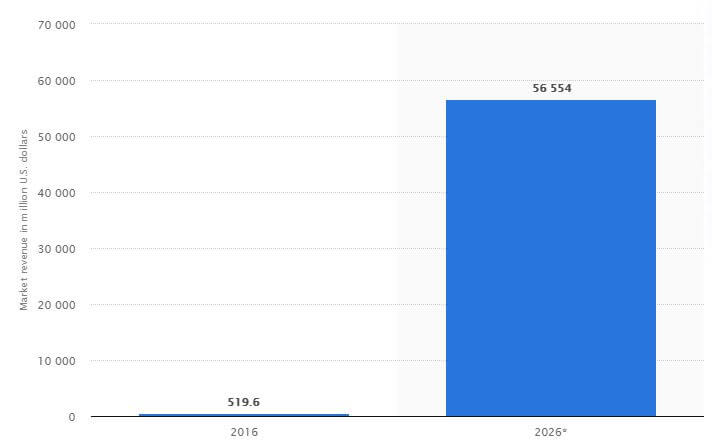
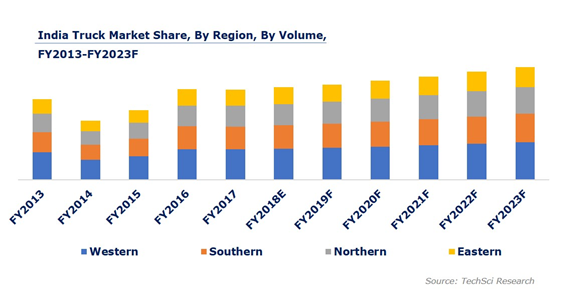
As per a TechSci research report, the Indian truck market stood at $8 billion in 2017 and it is expected to grow till $16 billion in 2023 due to increasing infrastructure and construction development projects.

major players of the Indian trucking industry

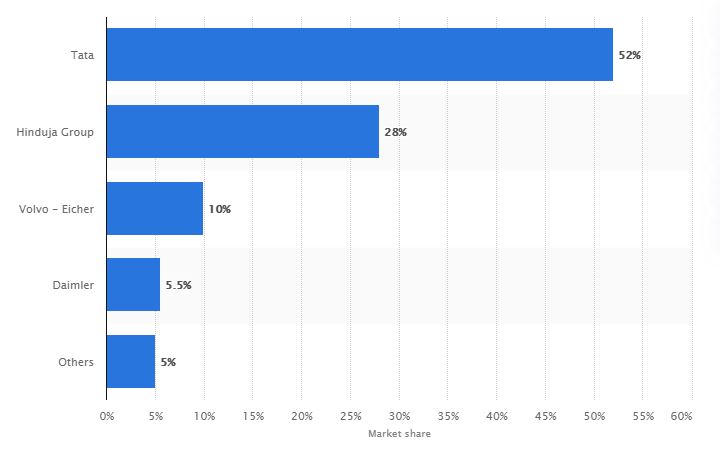
According to Statista, by 2026, TATA, Hinduja Group, Volvo Eicher, Daimler are expected to be the major players of the Indian trucking industry.

If we consider startups in the Indian trucking industry, then they are driven by VC funding which needless to say, is not always easy to get. Insufficient funds, low scale, and lower margins gradually make operations unsustainable. Startups like Truckmandi, Zippon, and others are examples of businesses that have failed to survive the competition.

This means that traditional players with goodwill, larger market share and considerable cash piles have a better opportunity to leverage technology. Software Advice gives a comprehensive list of companies offering ready to use transportation management system software.

However, it’s a humongous task to shortlist a perfect commercial-off-the-shelf-solution (COTS). It could be much easier for trucking businesses to hire a software consulting and development partner to get solutions developed as per their needs.

Challenges of Truck Business in India

Though it is one of the fastest-growing industries, the Indian trucking business facing a lot of issues related to inefficiencies, corruption, accidents and poor service levels.

  • The entire business runs mostly on trust, as most companies provide pathetic shipment tracking facility to customers.
  • Owners with just 1-5 trucks together account for three-fourth of the total number of trucks in India. It results in poor service quality as many players are competing only at the price point. The cutthroat competition eventually affects underpaid (at times underskilled) drivers, who are put under long shifts and demanding delivery schedules.
  • The driving conditions offer little help as Indian highways aren’t safe for driving in the world. As a result, even those who don’t have any employment rarely consider hauling a freight carrier as a job option.
  • The truck drivers get less pay than the cab drivers of Uber. According to a Business Today report, cab drivers are earning thrice as much as their counterparts engaged in the Trucking business.
  • The shortage of truck drivers has compounded every year. According to an official estimate, every day some 2.3 million vehicles (27% of total transport vehicles) remain idle because no one is ready to drive them. If the shortage continues its uptrend, it will reach an unprecedented 50 percent by 2022. At present, all this translates into an estimated annual economic loss of around Rs 4,20,000.

However, things are undergoing a massive change with investors backing technology-driven startups.

5 Best Technology Startups to Empower the Trucking Business in India

#1. Rivigo

Business Model Highlights

Driver Relay: Changing drivers every few hundred kilometers to allow them to return to their homes within 24 hrs

Technology Highlights

  • GPS-enabled freight management
  • IoT integration for real-time data collection of fuel, RPM, engine oil temperature, brake oil pressure
  • Data analytics for predictive maintenance and mileage improvement
  • Anti-collision (under development)

#2. BlackBuck

Business Model Highlights

Full Truck Load (FTL) Intercity Marketplace: it’s an Uber-like platform connecting Truckers and customers. The platform streamlines transactions using intelligent auction engines and smartphones.

Technology Highlights

  • Intelligent Auction Engine
  • GPS-enabled freight management
  • Track and trace facility for customers
  • Mobile app supporting six regional languages

#3. The Porter

Business Model Highlights

Uber-like Marketplace for Intra-city pickups and deliveries (operates light trucks)

Technology Highlights

  • GPS-enabled freight management
  • Track and trace facility for customers
  • Transparent Pricing
  • Offers APIs to SMEs

#4. Truckola

Business Model Highlights

FTL Cargo Service for long-distance interstate routes with Web and Mobile Apps for higher efficiency and transparency

Technology Highlights

  • Data and predictive analytics to enable companies with better supply-demand visibility, lower freight costs, and higher utilization of vehicles
  • GPS-enabled freight management
  • Track and trace facility for customers

#5. 4TiGo

Business Model & Technology Highlights

Technology – Cloud-based B2B marketplace for connecting consignors, consignees, fleet owners, transport companies and agencies
Operations – Indian Oil Corporation (IOC) provides secure parking, overnight stay, breakdown assistance, repair & maintenance via its 800 Networked Retail Outlets
Payments – Federal Bank to implement a B2B electronic payment platform

All these, (and nearly a dozen more) startups are using a mix of technologies to bring some sanity to the unorganized trucking businesses in India.

Top 5 Tech Trends in Indian Trucking Industry

  • Google Positioning System (GPS): GPS-based transportation management systems (vendor management, rate comparison, scheduling and tracking, analytics)
  • Data Analytics: Analytics for demand and supply mapping (dynamic scheduling based on capacity, availability, distance and idle time)
  • Automation: Mobile and web apps (registration, ordering, LIVE tracking, deviation alerts, delivery time estimations, invoicing, payments)
  • Customer Relationship Management (CRM)
  • IoT (safety and maintenance)

It is evident that the trucking and logistics space in India is attracting new entrants operating on truck aggregation and marketplace models. The technologies mentioned above are helping them create differentiation with better efficiency and management capabilities. At the other end of the spectrum, things are also likely to get better for truck drivers.

While trucking businesses can harness technology to improve overall efficiencies, the logistics infrastructure at present is pushing them to their limits. There is a need to increase the share of Railways and Waterways to create a balanced modal network that can meet the demand in the future.

Credencys Solutions Inc. is a leading software development services and solutions provider which has helped numerous businesses such as Cargoji in their business growth. We can help you with building a custom fleet management solution. Know more about our services, please connect with an expert.

Frequently Asked Questions

How much does it cost to build a trucking app?

The cost of a trucking app relies on the features you want to consider for your app. However, roughly a simple trucking app development with basic features costs you around $15000 -$20000 while if you want to build a mobile application with advanced functionality then it can cost you more than $50000.

How long does it take to develop a trucking app?

The development time of a trucking app is based on the features and functionality you want to integrate into the app. The more features you want to add the app development will take more time. A simple app can be developed within 5-6months. While an app with all the advanced features takes up to 11 months.

How do trucking apps make money?

To monetize your trucking app, you can charge registration fees from truck owners or truck drivers, retailers, movers and packers agencies, etc. Also, you can charge them for each ride they book.

How do trucking apps work?

Trucking app will be a platform that connects truck owners can truck drivers with the retailers, mover & packers, courier agencies, etc. The business can book trucks along with From and To location details as well as the date and time for transportation. Truck owners/drivers can confirm or reject the fleet. Moreover, the businesses that want to consume the truck services can pay online to the owners and drivers through the app.


How Mobile Apps for Retail Deliver Personalized Shopping Experience?

Gone are the days when customers purchase the products just by visiting your store. Modern buyers are not merely looking for products they are expecting a great experience too.
The paradigm shift in customers’ mindset has affected almost every industry but retail has a well-rounded omnichannel path so that it becomes a challenge for the retailers to deliver a consistent experience to the customers.

Are you determined to deliver a next-level omnichannel experience to your shoppers? Then, personalization is the key.

Personalization is all about enabling buyers with specific and tailored services or experiences that they are expecting. Well, it is easier said than done. Especially, when the relationship between shoppers and retailers are becoming complex day by day due to multiple touchpoints to make a purchase.

Smartphones are the highly preferred shopping platform that provides extreme personalization to buyers. This post will help you to figure out why mobile apps for retail could be a successful strategy for you to deliver personalized experiences to the customers.

Mobile Apps for Retail Industry Allow Retailers to Increase Conversions by

Understanding Customer Behavior

Retailers need to understand the buying context of shoppers to deliver highly customized and relevant experiences. Enable them with personalized recommendations, offers, deals, and notifications to provide the relevant experience.

Learning Buyers Expectations

Mobility plays a vital role in transforming customer expectations. Mobile apps for retail allow buyers to access the required information instantly and explore more options from different shopping platforms on the go. Moreover, retailers can get clarity on how they can stay relevant to the customers’ tailored requirements.

Simplifying the Path of Purchase

Whenever customers search for a service or product, they are derived by buying intent. Through the personalization, you can convert that intent into action. Retailers should encourage buyers to make a purchase using their preferred payment method, time, and medium. To deliver a true omnichannel experience, it is important retailers simplify the buying process for customers regardless of in-store, mobile, and online.

Do you want to improve customer retention by creating personalized retail experiences through a mobile app?

Talk to An Expert