How A Mobile App Landing Page Can Drive Huge Downloads?

Publishing the app on app store and thinking all of the advertising or visibility will come automatically- it’s a great misconception!

Many app creators and app marketers live with similar concept to drive million downloads.

But, this is really not the case.

It is important to remember that virality is not always an accident.

An app like any other type of product or service must take some aggressive, conscious and strategic marketing in order to get the viral results that you want.

It is true that App Store Optimization (ASO) does provide several great features that will help your effort, relying solely on these services is not wise. You should definitely use the features that are available to you such as selecting great keywords, making app screenshots and even providing previews that are sure to grab a user’s attention.

But along with these tools, you will also want to use other types of user acquisition strategies that include both paid and viral tactics.

Paid acquisition is pretty self-explanatory, but what remains a mystery for most people is viral success. It is elusive and attractive. Everyone wants it but few people know how to systematically make it happen.

Certainly, there have been apps that were just great and virality was a natural result despite the efforts of the creators. However, virality can be produced consciously as well.

Here, these key facts will enlist how mobile app landing page will help you in achieving your goal that’s a million downloads.

Viral Planning

In most cases, if you do not “plan” to go viral you won’t. This is because in order for something to easily go viral there must be certain elements built into the design and functionality of the app itself. Basically, it should be very easy and even be rewarding for users to share what they are doing with others in order to quickly spread the word.

The next step is to make sure you already have a strong web presence before the app makes its appearance. You want to establish a web presence outside of the app store. The fastest way to do this is to create stellar mobile optimized landing page.

Landing Pages Not Just For Websites

Most people associate landing pages with websites and more specifically websites that are selling products.

Well, apps are products, and that is why you need a landing page. People are much more likely to download your app when anticipation has already been built. Anticipation is a huge psychological factor in converting leads into sales.

Creating and sharing a landing page for your app is like getting your little snowball rolling down the hill. Another great tool that the landing page provides is that you can ask visitors to leave their email so that they can be notified when the app is first released.

People love the thought of being first, regardless of for what. You can pull this psychological string by offering landing page visitors the privilege of “being the first to download.”

Give Your App a Personality

Your landing page will also create a personality for your app and your business. Most app creators and marketers are looking to not simply create one app, but they are looking to create a business with a long and prosperous future.

Your landing page will help you to begin to create this personality for this business. If you are thinking long term then you should really consider the importance of your big picture, and make sure that everything on your landing page is cohesive to your big picture as well.

Higher Search Rankings

A landing page also provides you will greater visibility in searches. When you create a landing page you are tapping into another branch of marketing that most app developers and marketers never consider.

Not only does a landing page allow you to publicize your app in ways that the Google Play or Apple iTunes stores don’t make available, but you are also accessing an entirely different audience through regular web searches that you would not have accessed simply through the app stores.

With a strong web presence through a landing page app you will have an edge over the vast competition you are facing in the app market.

Conclusion

Having a landing page for your new app means you will have the freedom to promote and market on your landing page in ways that may not necessarily be allowed through the app store.

Great improvements have been made in app store sharing, but you still will not have all of the options you can have through an independently run landing page.

Even, following some key tactics, you can make your mobile app go viral at the first day.

These are the best practices with which you can drive huge downloads and optimum traffic to your landing page.

However, if you need the immediate result and a genuine targeted traffic, then opting for max visits website would be a great option. This website would boost your landing page popularity and reputation. Get ready to create an impact over your Alexa rank with Maxvisits.

Don’t hang fire and plan for a landing page before uploading your app onto the app store.

Good luck!

Top 5 Ways Virtual Reality can Revolutionize the Travel Space

Soon, a dream to roam around the world will be fulfilled by travel ads only.

It sounds shocking. Isn’t it?

YES, but it’s the truth, new innovations in advertisements are so impactful that alleviates the need to physical travel.

Without hopping in a car or plane, people can visit different landmarks, have fun of transportation and garner life-like experience of being in that place.

How is it possible?

“With Virtual reality, the field of view is so wide that a switch in your brain flips, and within a few seconds your brain feels like that is reality. It feels that what it’s looking at is actually where you are.” – Brendan Iribe

Yet, no video, images or animations are so influential that can completely immerse the one like this!

VIRTUAL REALITY has made it possible.

VR experience is breath-taking that will completely immerse the person wearing virtual reality headset by making them see, feel and smell their future trip.

Want to know what the virtual reality actually is? Click here.

Presently, the technology is trending in travel advertising campaigns to boost the number of visitors coming to the nation.

Australia tourism CMO and CIO said Virtual reality could be a future tool for telling stories about Australia and showing a virtual Australia to people far away might inspire them to visit the real Australia.

Virtual Reality (VR) is about to become mainstream and could be a $7 billion market by 2018, according to the Sophic capital.

Understanding the wide scope of VR in future and considering people believe what they experience, travel and tourism vertical is embracing it for their marketing campaigns.

Take a glance over the benefits what virtual reality has to offer

1) Try before you buy or fly

Travelling to new places is so expensive that it requires one to think before puzzle out. Shell out a good amount of money for any trip that does not suit your taste is really tricky because you don’t know what type of experience trip would render.

If the place would not like in which you are interested in, then it will ruin the travel fun and your thousand dollars as well.

Here, virtual reality would help you out by driving you at the place virtually where you have planned to visit. It’s really ultimate solution that allows you to experience how the place will be before buying travel package or flying to that place.

South African Tourism launched VR project that helps would-be travelers feel self-assured about booking travel to an area that they feel as too dangerous or exotic.

2) Interact with environment

The real spirit of location captivates the traveler’s brain when they are able to view and walk into the hotels, city attractions, museums, galleries, shops and a lot more.

Also, the true stories and history of different points can be viewed, and how user would feel in between them can also be experienced because VR headsets switch in brain flips in a few seconds and make them feel like it’s a reality.

3) Real-time simulation

Many times, it happens that we are unable to decide whether changes in season or weather would affect the travel badly or delight us. In real time, it’s difficult to decide and simulate the changes in the real world.

However, real-time impact of changes in environment over your excursion can be displayed leveraging virtual reality. Also, what things will be influenced by upcoming events and manifestations is showcased.

Real-time simulation eliminates every query or doubt, one might have in reference to changing conditions.

4) Game-changer for transportation

Truly, long travelling journeys in plane, bus or railway are boring. Here, transportation services often struggle to enrich and enhance passengers travelling experience.

Forward thinkers who are at forefront of innovation leveraging virtual reality technology can entertain and connect with their passengers in a unique way.

Qantas Airways has offered First Class passengers Samsung Gear VR headsets in premium cabins for a three-month trial. The company has taken step forward to give very best and latest in-flight experience of virtual Hollywood movies to the onboard passengers from the comfort of their seat 40,000 feet above the ground.

Game-changer for transportation - Qantas

5) Empower sales

When travel agencies start using virtual reality solutions to sell different travel packages, it becomes easy to make people not walk in someone else shoes, but see & experience the place themselves.

Interactive travel experience along with virtual tours inspires the people and perhaps, makes them book their trips in near future. Finally, it will pump up the sales and ascend revenues.

Wrap-up

Futurist Daniel Burrus said, “Virtual reality won’t replace real travel, as is often portrayed in sci-fi movies. It will become a new form of showrooming, an incredible 3D taste of a destination that will make travelers long to experience the real thing.”

The technology succeeded in convincing people to believe what’s there in their field of vision. Thousands of examples are proving the same.

The 360 degree paranomic view added a new frontier in travel and tourism industry with realistic and stunning virtual tour.

Let travel geeks soar through forests, hover above oceans, zoom through streets and fly in the sky.

Roll out offering VR travel experience today!

Top 5 Challenges Involved in Security and Back-end Integration During Mobile App Development

Security is a major threat to anything connecting to the Internet or wireless network.

The theft of credit card information, user profiles and essential data occurs on a daily basis, yet attention is directed to the problem only when a major data breach makes headlines.

Most of the large corporations integrate a high level of security into their networking infrastructure, right from the application development stage. While they constantly face threats and outside hacks, it does not mean smaller businesses and application developers have lesser things to worry about.

A lot of data, irrespective of who holds it, is valuable. Simple information like DOB, Social Security numbers, and shared passwords can allow hackers to break into an organization’s security perimeter. By improving upon crucial security and back-end problems, the chances of a breach can be greatly reduced.

Creating a mobile application that not only runs on multiple operating systems, such as iOS and Android, but is able to resize and function properly on different screens, resolutions, and dimensions, is far more challenging than many might realize.

It is not simply a copy and paste process from one application to another. Beyond creating the necessary programming capable of working on these different devices, making sure the apps are secure and possess correct back-end integration is vital to the quality of the app and even the longevity.

There are some challenges involved in Back-end integration and security that all mobile application designers deal with, regardless of what the app is for.

Let’s take a glance over them

Not Properly Storing The Data: Far too many app developers, especially smaller companies who are on a limited budget, invest in the least expensive data storage service possible. As the saying goes, “you get what you pay for.”

All mobile applications collect data. Whether it is a simple username and password all the way to banking information, Facebook log-in content and other data, there is a considerable amount of data passing between the application and the user.

This data must be stored somewhere and is usually done so through a server either owned and operated by the mobile application provider or rented out through a larger provider. Regardless of the location of the server, and data storage, insecure data storage is one of the largest problems associated with the integrity of the app.

If the data is not stored in a secured manner, hackers can gain access to everything the application collects. Almost every month, news breaks of a major company, such as Home Depot, Target, Starbucks and others having their network hacked, which releases hundreds of thousands if not millions of stored credit card numbers. Inferior data storage leads to this, which is exactly why improved security is vital.

Data Leakage: A leak, no matter what it is involved with, is never good. A data leak is the equivalent of a dam leaking. It might start out as a small problem, but if it is not addressed immediately, it can drastically turn into a major situation.

Preventing any data leakage is a major challenge all mobile application developers must face, whether it is financial information, login data or healthcare records. Constantly monitoring the application performance for possible holes is a must.

Data leaks happen.

That is just part of the industry and there are times where an expert hacker can work their way into the network.

Continuously monitoring data storage and a network is vital so these leaks can be identified early on so data loss is limited and reversed as quickly as possible (hopefully, before anything major is captured from the outside).

Server Side Controls: Selecting a top of the line server is a must. Not all servers come with extensive controls. The back end server needs to be protected against malware and outside attacks.

Having these server side controls makes it easier to implement upgrades and alter certain features in order to block further data loss if there is a breach. Inferior server side controls may make this not possible.

Untrusted Inputs: A mobile application has the ability to obtain and record information from all sorts of sources. On certain occasions, hackers might try to infiltrate an application by sending it a request or presenting it as a desirable input and pose a threat to the stored data.

However, it is necessary to know all inputs when connecting and building the mobile app, which is why avoiding all untrusted inputs is a must.

Broken Cryptography: Cryptography protects an application from hackers by encrypting it. However, if the encryption has been hacked before, it means there is a blueprint for other hackers to use in order to gain access.

Using encryption programming that is constantly upgraded to prevent hacks is a must. This is why avoiding broken cryptography is vital in the security and back-end integration of the application development; otherwise it interferes with app security.

Takeaway

Security and back-end integration are two crucial aspects of application development and design.

Regardless of if the app is providing filters for the phone’s camera or for online banking, without superior security and back-end integration it puts both the users and the company at risk.

By addressing these five issues, it makes it easier to secure the application and the networking used to store collected data.

A client and user must always feel secure while accessing an app; otherwise they simply are not going to use it and will look elsewhere.

Protect the app integrity by addressing these five challenges efficiently.

Happy app development!

How these seven in-app metrics can make your app scale

Here’s a thought: the number of eyeballs your app catches does not hold much significance!

It’s high time you stop grueling for:

  • A million application downloads
  • Featured in App Store’ listings
  • Increase in average session timings

These parameters are not the only ones to define the success of your app. At best these numbers just point towards someone who is exploring your app.

“Downloads only enable an app to succeed, they do not indicate actual hit,” says Brant DeBow.

Despite, having deep insights about the usage of the app like- frequency & depth of visit, bounce rate, engagement and user acquisition; these analytics are less often turned by the experts into actionable decisions.

According to TapDaq, “90% of developers use in app analytics, but only 5% of them know what to do with their data”.

This is really depressing sight!

There is no use of tracking and collecting all the data.

Neglecting these measures affects the effectiveness and impact of the app and consequently, 65% of people stop using it after three months of install.

What is the key analytics that developers should keep in mind to engineer excellent solution?

Here’s a list to get started

1) User Experience & Design

What value your application creates when a user spends their precious time over it defines the customer experience. Analyzing at which page user spends most of the time and what features do they like, you can design your app accordingly.

Remove all the things that transfer the user into frustration state with upgrade or bug fixing. Design the app with the great customer experience and best layout to increase the lifetime value of the app.

2) Know About Their Language

Language is the most important barrier that may take away your target audience, if not considered. Although English is widely spoken language, yet there are some locations where people have feeble understanding of it.

In such scenarios, it’s better to hit your app with multilingual support and extend your app reachability.

Relying on browser to translate your website is not a good decision, as sometimes, during translation, important things may miss which is a quite a risk. Therefore, manually supporting various languages is the best choice.

3) Target User’s location

Your target audience location would specify how you should communicate with them. Propagating the information in same way is the mistake that you should avoid.

Marketing the application after delving into depth about community living style, needs and preferences reduce the initial struggle that your app might face.

Also, posting on social media or e-mail sending should be done in accordance to the time-zone of user’s location, so that they can read and respond instantly.

4) Deal in User’s Primary Currency

On the App stores, generally, prices are not displayed in local currency that creates a difficulty for user in knowing how much they have to pay.

Making things a bit less convenient for the customers means you are losing them to your competitors.

Employ the practice of showcasing the price of apps in user’s local currency, instead of dealing in default currency.

5) Check Device usage

Presently, building cross-platform app is a trend. But, there are some locations dominated by mobile usage as opposed to the use of the desktop. Developing app compatible on both mobile and desktop is unnecessarily putting a strain on development time which can be otherwise spent in improving mobile version.

Before deploying the application for multitude devices, you should identify device data to make better decisions and put efforts at right place.

Save yourself from shooting in the dark and flourish with this approach.

6) OS Version Compatibility

It is imperative to know what OS versions target users run. As, there are some users who use older hardware with backward compatibility, so it’s good to know in advance before spending time and money on it.

For instance, Shoptique app built at Credencys supports two versions iOS 7 & iOS 8 considering user base uses both versions.

7) What’s the Loading Time?

Today, people are up to their neck in. Nobody has the time to wait for and if your app takes a little longer time to download, then you may lose your customers forever.

Remember, a few seconds delay can snatch your million dollar success. Provide frictionless loading experience and make purchase seamlessly to get hold of your prospects.

Conclusion

Seven in-app metrics would help in taking data-driven decision with which you can improve overall app performance.

This practice is not reserved to launching your app on the App store, while it should be utilized continually during upgrades.

Leverage collected metrics to measure and optimize the health of your app.

Do you find anything missing here that your company pays attention to while launching a new app or upgrading the existing one? Tell us in the comments given below.

3 Travel Agencies That Strike The Right Chord With Mobility Solution

Summer is on its way and most of us are planning our next trip! smily

Browsing different booking plans for flight, taxi & hotel, and then finally jumping onto one is quite a task.

Online travel agencies are the good alternative to search, discover, compare and book new outing plan.

With proliferation of mobile devices, people find it more convenient to map their journey on mobile travel apps.

According to Statista, by 2017, 30% of travel sales in the United States will be generated through mobile device.

Mobile apps are presenting huge opportunity for travel agents and travel companies, and going mobile, companies can reap enormous rewards.

According to App Store Analytics Company, 5% of all apps on the app store are Travel apps.

And, out of all the mobile phone users who have downloaded the travel apps, 45% of them use an app for collecting data about trips.

Understanding the importance of current trend and people preference, more and more travel agents going digital to render mobile experience to the customers.

To know more about the benefits of embracing mobile solution by the travel agencies, click here.

Some of the travel agencies have already created buzz with website presence, and there are few that bring their company to the top spot with the Mobile app.

Take a sneak peek inside three travel companies that flourished and gained good revenue

Orbitz

Global online travel company offers a broad range of travel products and services enabling leisure and business travelers search, plan and book their new excursion.

Orbitz mobile app integrated with one more feature of pushing notifications to the users upon the airport arrival.

The worldwide result of Orbitz first quarter 2015 has shown that 34 percent of standalone hotel bookings were made via mobile devices across the company’s global consumer brand portfolio, up from 30 percent in the first quarter 2014.

Plus, the company has customized its mobile app for the Apple Watch for easier access and Orbitz reward program is on the go.

Skyscanner

The ultimate searching app is used by more than 35 million people each month. The app is marked for finding million of flights, hundreds of airlines, hiring cars and discovering hotels at the cheapest price.

Once a user finds out the best deal, they can book the itinerary directly in a few taps as there is a link directed to the given service or travel agent.

It is observed that 77% of the global increase in visitors comes from mobile devices alone.

So, Skyscanner illustrated mobile growth is continued to be key to the company’s strategy.

In China, in 2014, 61% increase in unique monthly visitors is found and 162% in regular monthly visitors from mobile.

Initially, only flight booking feature was available on the mobile app, but after integrating hotel and car hire services, non-flight contribution to overall revenue is increased by 47%.

Cleartrip

Eight year old company now provides one-touch flight booking, train reservations and hotel booking on mobile devices.

Presently, 40% of company’s transaction is done on mobile apps and the average traffic is expected to rise to 80%.

With presence in seven countries, company has over 100 million visitors and out of which 70% are repeated one.

These three companies slipped into the shoes of their targeted audience, and outperform and outgrown.

But, before launching mobility solution, you should consider following things.

  • User interface- What customers like to see in the app?
  • User experience- How customers would feel after using it?
  • Promotion- What’s the marketing tactic to be used to make app impactful.

Last word

The rule of the business is to follow changing trends and adapt accordingly.

Going mobile is the part of it.

Travel agencies figure out the user perspective and expanding their services. Online travel firms can opt for either having their own mobility solution or make their web app mobile friendly.

Be ahead of the wave and go for a mobile solution!

Here, at Credencys, our dedicated team is proficient in mobile app development on both platforms- Android and iOS. Teamed up with us and bang…

Top 5 Reasons, Why Retailers Should Embrace Wearable

Retail landscapes are designed for impulse shopping.

To stay ahead in the race, Retailers adapt themselves quickly in the way customers communicate and behave.

Brick-and-mortar stores are mobilized because making a buying decision after roaming 4-5 shops and then zero in the choice to one was unable to intrigue the consumers.

However, mobility solutions are not enough appealing that can give customers a reason to step inside and ended up with buying.

This is for the reason that best Customers experience is missing.

Merging creativity into the technology with wearable has an answer to this problem.

Wearable could be a smart watch, smart glass, smart bands, smart clothes and much more.

Wearable technology has changed the way people choose, compare, interact and shop.

Let’s understand it with an example.

When customer wearing smart glass is walking down the street and suddenly, a message prompted, “Hello, we have groceries, garments, electronic items and toys. You will get 50% discount on every item you purchase today.”

This message provides information to the user about the products they sell and what are the offers going on would create grounds for the customer wherein customer may come and end up by doing shopping.

This scenario is just in the terms of how the availability of information with wearable can scale retail business.

Take a glance at outlined benefits retail space will get when wearables are adopted

Remove friction for the customers

In the complete shopping cycle, the experience shoppers get from retailers establish long-lasting relationship. Wearable technology can help retailers by letting them rendering services to the buyers effortlessly.

How it can be done- Take a peek inside it!

Scan-search-shop and shopping are over.

Surprising, right?

Wearing smart glass, consumers can compare the price of item online, which is presently in front of their eyes. Moreover, for shopping assistance, they are enabled to bring their distant friend in the store.

Connect visitor when they are around

In the last few years, Customers’ demand for convenience has grown quite high. Plus, they don’t have time to move inside every shop and check products availability or any offers.

Without going into a shop, how people can receive all the information that they want to know.

With smart glasses, it’s possible.

Employing this technology, retailers can send the message to all the users in the vicinity and make passer-by connect with the stores.

A new frontier in payment

Sending location-based offers or making shopping plain-sailing is not suffice while making payment process a breeze is also the need of the hour.

With smart gears, payment becomes handy and easy. Customers just walk into the store, pick up their purchase, make the payment with a tap and walked out with purchase without having the need to stand in check-out line.

Apple pay in Apple watch or PayPal via Samsung watch are the best examples of payment right through the wrist.

Isn’t it amazing?

Enabling wearable payment, retailers can give prospects another reason to connect with them.

Get customer behavioral insights

Comprehensive analytics about how customers shop help retailers in making their merchandising decision. Without any concrete database, they cannot roll out any new strategy.

59% of retailers cited lack of consumer insights as their data related problem and 70% of Americans are comfortable in sharing data with retailers.

These stats imply customers are ready to provide their feedback and retailers have urgent need of it. Wearable technology can fill this gap at ease.

Deploying wearable solution, retailers would get rich insights about customers’ choice and buying decision.

Customer Retention

Loyal customers are the brand ambassador of retail stores and brands. Having large base of loyal customers is truly rewarding.

Store owners can retain customers by pushing them personalized message or offering loyalty rewards based on their past purchase history.

For instance, every Friday, Mr. A went to a restaurant for enjoying steak and sizzlers. As, Mr. A passes by the restaurant and get the message, “Hello, Mr. A, your yummy steaks and sizzlers are waiting for you and get 30% discount on your overall bill,” it delights him.

Using this tactic, retail space can connect with their existing customers and boost the revenues.

Takeaway

It’s not a long way; soon, wearable technology will shift retail conventions.

Although presently wearable has not matched promised hype but connecting the dots between pre-store and in-store experience would set a new level of interconnected retail.

Forward thinking retailers such as Tesco, Amazon, eBay has already initiated the efforts to create novel retail experience.

Be the next to radically redefine retail experience and fuel purchase!

How Internet of Things Making Buildings Smarter?

With the upsurge in technology, we have experienced the untold potential of smart devices.

But, when it comes to Smart buildings, it sounds startling, right?

How can buildings be smart?

YES exactly, buildings are becoming smarter and changing the market dynamics of building management.

Now, bewildered, what’s this all about?

So, let’s understand with an example.

Can you manage your buildings electricity, home and office devices, office, and home security 24X7, and turn on your ac and adjust the temperature of your home remotely?

Your most probable answer would be NO.

However, it’s possible to manage all aforementioned things via internet of things.

And even, there is a lot more that you can explore with IOT.

Before digging down, take a glance at IOT

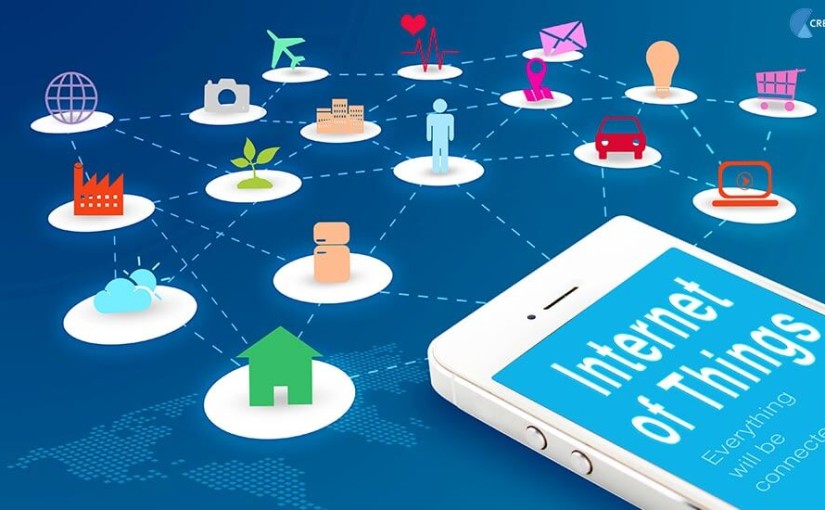
The Internet of Things connects everything through internet. The technology based on sensors, which can be embedded in any object and when sensors sense the data, the interaction between objects become possible.

Market for Internet of Things in Smart Buildings to Rise to over $85 Billion by 2020

IOT enables the communication between machine to person, machine to machine and person to person.

Know more about the basics of Internet of Things, here.

BIOT, building internet of things controls from lighting bulb, temperature, air quality to security.

Here are some promising benefits that intelligent automation offers in the built environment

Monitoring and Control

IOT centralized the management of resources consumption. Building managers can easily monitor the resources of different buildings and properties while sitting at one place.

Embedded sensors would let them know about the current status of parking space, elevators use water system and security system. Thereby they can control utilization of assets by communicating with the crew member of connected buildings anywhere, anytime.

Fault detection and Maintenance

It’s easy to take the initiatives and manage the situation before the incident happens rather than finding the fault and then maintaining it, once it has occurred.

Attached sensors in buildings would help in detecting any type of error in the machines and alert the engineers to repair the components.

Employing this approach reduces the adversity that fault may create and also alleviate the cost and time spent for daily inspection.

Energy Management

According to the United Nations Environment Program, buildings consume 40 percent of the energy of all electricity used and are the number one contributor to global CO2 emissions.

Integrating sensors in heating, ventilation and air conditioning systems can reduce a building’s carbon emissions and costs by turning off/on air conditioning in accordance to the temperature status or manage the lights by sensing the current light.

Embracing intelligent system will cut down power consumption by 30 percent.

Enhance Security

Managing fire situation is very critical to handle. But, with integrated building system, it becomes handy to manage such situation.

For instance, as fire alarms are triggered, smoke exhaust dampers get open automatically and fans start operating. The paging system informs the occupants about fire and simultaneously, provides some instructions as well.

System unlocks the doors for evacuation and security camera provides necessary information with fire view to emergency personnel.

Last word

Smart buildings encourage economic and environmental benefits by offering an apt solution to core concerns.

According to Gartner research, Internet of Things will grow to 26 billion units installed in 2020 representing an almost 30-fold increase from 0.9 billion in 2009,

It hints, in near future, more and more buildings will become smarter.

It means large energy saving, efficient management, reduced operating cost and higher ROI.

So, what are you waiting for?

Eliminate employing redundant technology and go for green buildings.

4 Reasons, Why You Should Update iOS App From 32-Bit To 64- Bit?

World’s leading Smartphone makers are racing to make mobile phone’s processors faster.

Last year, Apple took next step towards it with A7- 64-bit processor for iPhone 5S.

And, after a few months, Apple leaps forward with another declaration of mandating all the iOS 7 and core apps to be ported to 64-bit.

blue line

64- bit and iOS 8 requirements for app updates

From February 1, 2015, new iOS apps submitted to the App store must include 64-bit support and be built with the iOS 8 SDK.

After June 1, 2015, app updates will also need to follow the same requirements.

To enable 64 bit in your project, default X-code build settings of “Standard architectures” can be used to build a single binary with both 32-bit and 64-bit code is recommended.

blue line

The pioneer step of Apple has created ripples in the market, but many considered it as an Apple’s aggressive rollout.

There is nothing illustrated like existing apps with 32- bit architecture will be removed or its performance will be affected, if they don’t comply with 64- bit.

Even, after porting to 64- bit, the app will run in both 32-bit and 64-bit.

Let’s shine some light over; why you should get updated your app to 64-bit today

Better performance

High execution speed and best graphics in apps are the demand of present era. The 64-bit processor is twice as fast as the 32-bit processor. It introduces speed gains in both performance and graphics by providing CPU boosts 42 times faster than the original iPhone, with graphics up to 56 times faster.

The incredible move of Apple is a great opportunity for the developers to excite their users by making the app more powerful with 64-bit support incorporation.

Support the latest device

Those iOS apps are having just 32-bit support are not compatible to run on Apple’s latest offerings of such as iPhone 5, iPhone 5s, iPhone 6, iPhone 6+, iPad and iPad mini.

It won’t allow new iOS device owners to use those existing apps or permit old device owners to use apps built in iOS 8.

Apple’s recent declaration brought good news for them that enable developers to use X-code 6.1.1 version, which makes apps support almost for all devices.

Engage large audience

Huge base of Apple device enthusiasts is quickly adopting the new version of operating system. iOS 7 adoption has lagged behind that of iOS 8 due to the amazing sale of new devices and impeccable performance of the new upgrade.

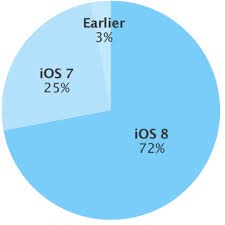
Now, 72% of people are using iOS 8, while iOS 7 is reserved only by 25% and 3% is held by others.

Building or updating your app in iOS 8 SDK support and 64-bit code means your app will hit 25% iOS 7 users and 72% iOS 8 users.

Thus, it is the excellent opportunity to captivate large consumer base with latest iOS 8 SDK.
graphBecome Mandatory

Last, but not least, developers are left with no choice after the announcement made by the Apple.

They have to use Apple’s iOS 8 software development kit for engineering new project or updating the existing enterprise project if it’s in 32-bit code only.

Complying with Apple’s demand, this update requires only for the first-time submission.

Epilogue

Apple’s transition to a comprehensive 64-bit app store is prodigious. Accommodating Apple’s requirement will improve the performance of iOS application and becomes a way to reach large consumer base.

Create a big bang by including iOS 8 and 64-bit architecture in your apps.

Here, at Credencys, we have a good team of iPhone developers who have had expertise in developing and deploying world-class solutions using latest tools, OS, and SDKs.

Get in touch with us today!

How Blend Of Augmented Reality And Big Data Would Help In Energy Management?

In the U.S.A, the industrial sector, which includes manufacturing, agriculture, construction and mining, accounts for nearly one third of all energy usage.

Every year, manufacturing industries spends $200 billion on energy facilities and waste nearly 30% of it.

Inefficiency in energy management is the key reason that’s keeping the industries away from power utilization for which they are paying.

Here, big data can turn the tide!

The potent tool collects useful and huge analytical data, which optimizes production quality, saves energy, and improves equipment service.

The real-time information about production equipment and system help in real-time decision making.

But, sharing the same data with management personnel when they stand before equipment is difficult.

Let’s understand through an example.

A food manufacturing plant is set up in a 600,000 square-foot area had thousands of machines that perform various functions. The performance data, power consumption, production and pretty more information about these machines is stored at the cloud.

Just by looking at the machines, engineering personnel will not receive data or can analyze the performance of equipment in real-time and thus, cannot make real-time decision on the round.

They have to browse stored information but did not get the information when he actually needs it.

Consequently, personnel can’t manage efficiently what they can’t measure

It requires equipment and process management to be smarter.

That’s where a blend of AUGMENTED REALITY and BIG DATA has answer to this problem.

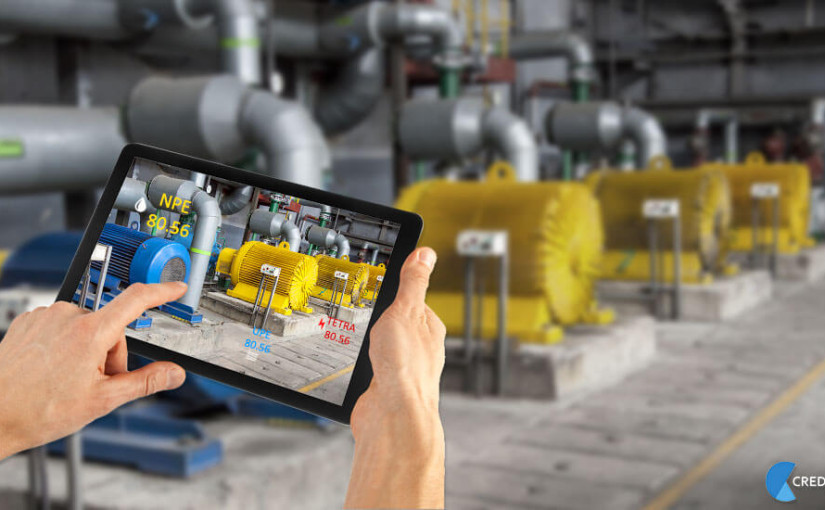
Augmented reality overlays relevant information over real world object in real-time, when viewed with any digital device

The amazing combination of technology would help in data visualization on machinery itself.

According to Arnaud Legrand, President and CEO of Energiency, inseparable solution for industries would save up to 20% more energy in a plant. With the combination of these two technologies, maintenance, raw materials, and waste management would also get benefited.

Amalgamation of enterprise tech would aid in significant cost savings, spot anomalies and potential equipment failures in a single view.

At CFIA 2015 conference, a company exhibited a new application that’s dedicated for efficient energy management in a food processing industry.

Energiency Augmented solution based on augmented reality and big data. It tracks different machine and displays relevant data when viewed with tablets or Epson Moverio BT-200 smart glasses.

In the video of app, three different machines having distinct functions that are used in dairy factory bottle production facilities are shown. When digital device points towards machine, the energy consumption information is pushed from the machine to Energiency’s cloud system.

Energiency Augmented app fetches the relevant data from the cloud and then demonstrates the same on screen. Initially, power consumption by the machine is shown, but as some error in its performance is detected, immediately on-screen diagnosis instructions appear.

Engineered solutions’ hands-free way to get data about surrounding machinery reduces the complexity, save energy and speed up the processes.

Innovative way to measure the things at right time leads to competitive advantage.


Epilogue

At EnergySMART 2015 conference, one thing resonated throughout the session that huge bucks are spent on wasted energy by those who are not aware of smarter energy management.

Savvy enterprises understand the importance of energy management.

Melding augmented reality and big data to serve the aforementioned purpose would be game-changer for manufacturing industries.

Data-driven approach in real-time would benefit more industries, as augmented reality has already hit numerous segments.

At Credencys, we thrive for developing excellent augmented reality and big data applications. And, now, team is all set to build and showcase the potential of this fantastic combination for your industry.

Drive your automated energy management journey with us!

Internet of Things: The Next Technology Frontier That’s Transforming Everything!

The digital world has passed impressive milestone of having number of internet connections outnumbered the number of people over the planet.

Till date, this tremendous growth has not shown any sign to slow down.

Internet connectivity has become the part and parcel of every individual’s life and changing many things.

Now, not only smartphones, desktop or tablets are connected via internet, while all objects can be connected. It spans from light bulbs to wearable to the home appliances.

This is INTERNET OF THINGS.

Take a sneak peek inside what exactly internet of things is

IOT enables connection among digital devices, all consumer objects and industrial equipment over the internet.

Information collected can be shared between person to person, machines to person or machine to machine, and data is stored and managed in the cloud.

But, what’s the magic IOT made over these static objects that they begin interacting?

Let’s shed some light on how this connected technology works

With every object, a programmed micro-controller is attached, where sensors sense the data and transmit it to the chip.

There are Different types of sensors that transmit a wide variety of data like- weather, movement, temperature, flow, location, environment, etc. Gathered information is processed and works accordingly.

Processed inputs are then sent back to other objects over the internet through sensors.

For instance, your fitness tracker can detect that you have fallen asleep and then automatically turns off the television.

Perplexed, right?

Here, IOT connected wearable and television. Sensors attached with wearable sensed that one is fallen asleep, and then sent same data to the sensors attached to television, where it is programmed to turn off the TV when it gains such information.

This way smart technology works.

Business impact

Under the umbrella of Internet of Things, a new type of application & services is recreating.

Smart thermostats, connected cars, parking sensors, activity trackers and more are already in place.

IOT world is projected to grow 200 Billion smart devices and around 26 objects, every human being will have by 2020. Source: IDC research.

Different industry verticals are hoping onto IOT bandwagon and designing compound applications to control and monitor objects anytime, anywhere.

With the upsurge in connected devices, earning potential is enormous.

According to Gartner research, by 2020, revenue opportunities for business from IOT will grow to more than $1 Trillion.

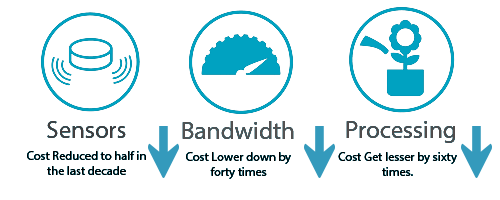
Plus, key obstacle- “The cost of connectivity” is alleviated with mitigating price of
IOT

Moreover, Smartphone penetration is sky-rocketing, that has become the personal gateway to the IOT.

Limitations are receding exponentially; the only limitation left is your imagination, so envision the possibilities and make them a reality with IOT.

Epilogue

The networked system of IOT stretched the boundaries of today’s enterprises.

The past has dictated what internet of thing is, present is perfectly harnessing the power of connectivity and future- “Everything is connected.”

Check, where do you stand?

Get in touch with our consultants & create a big bang by employing an intelligence system today.

In our next series, you will get to learn how IOT is reinventing different Industry verticals. Stay tuned with us.