


Product Data Syndication: The Complete Guide
Product data syndication is how brands, manufacturers, and distributors send accurate product information to every retailer, marketplace, and data pool, in the format each one requires. This guide explains how product data syndication works, the methods and tools, and how to automate it from your PIM.
In the dynamic world of eCommerce, where customer expectations continually evolve, high-quality product data is essential. Consumers today demand not just products, but an immersive and seamless shopping experience.
This experience hinges on accurate and comprehensive product information, from specifications and features to pricing and availability. This is where Product Data Syndication comes in.
This blog post guides eCommerce businesses through the intricacies of product data syndication, exploring its nuances, benefits, challenges, and best practices. From building a foundational understanding of syndication to exploring the tools and technologies that drive its success, we’ll journey through expert insights and future trends.
This post aims not only to inform but also to empower businesses with the knowledge they need to unlock their product data’s full potential in eCommerce.
What is Product Data Syndication?
Product data syndication is the systematic process of curating, standardizing, and distributing crucial product information across digital platforms and marketplaces. It involves distributing essential product details- attributes, images, and descriptions from a centralized source to multiple online destinations.
It helps a business maintain a consistent narrative across channels, giving consumers a clear, uniform product experience and fostering trust and brand loyalty.
Key Components of Product Data
Attributes
These are the distinct characteristics that define a product, such as size, color, specifications, and more. Syndication ensures these attributes aren’t lost in translation as a product moves through the digital landscape.
Consistent attribute presentation is crucial so customers can make informed decisions, regardless of the platform they choose.
Images
A product’s visual appeal is a powerful tool in the eCommerce arsenal. Syndication ensures high-quality images that capture every facet of a product are displayed consistently across platforms. This visual continuity not only enhances the overall aesthetic but also contributes to a cohesive brand image.
Descriptions
The narrative that accompanies a product- the description is the voice that speaks directly to the consumer. Syndication maintains the authenticity of these descriptions, ensuring a consistent tone and style.
Whether a product appears on a boutique website or a major e-commerce platform, the storytelling stays true to the brand’s identity.

Why Product Data Syndication is Important for eCommerce Success
The significance of product data syndication becomes paramount for several compelling reasons:
Consistency Across Platforms
Syndication guards consistency, ensuring a product’s story is told uniformly across diverse platforms. This consistency builds consumer trust, so they can engage confidently with a brand’s offerings, knowing they can rely on accurate, reliable information.
Enhanced Customer Experience
Product data syndication supports a seamless customer experience. Standardizing product data across platforms eliminates confusion and gives customers a unified, enjoyable shopping experience, from discovery to purchase.
The Role of PIM in Enhancing Customer Experience for Fashion Retailers
Expanded Reach and Visibility
For businesses looking to expand their digital footprint, product data syndication is the catalyst. By effortlessly sharing product data across channels, businesses can broaden their reach and ensure customers can discover their products wherever they shop and decide to buy.

Elevate Your eCommerce Strategy with Product Data Syndication
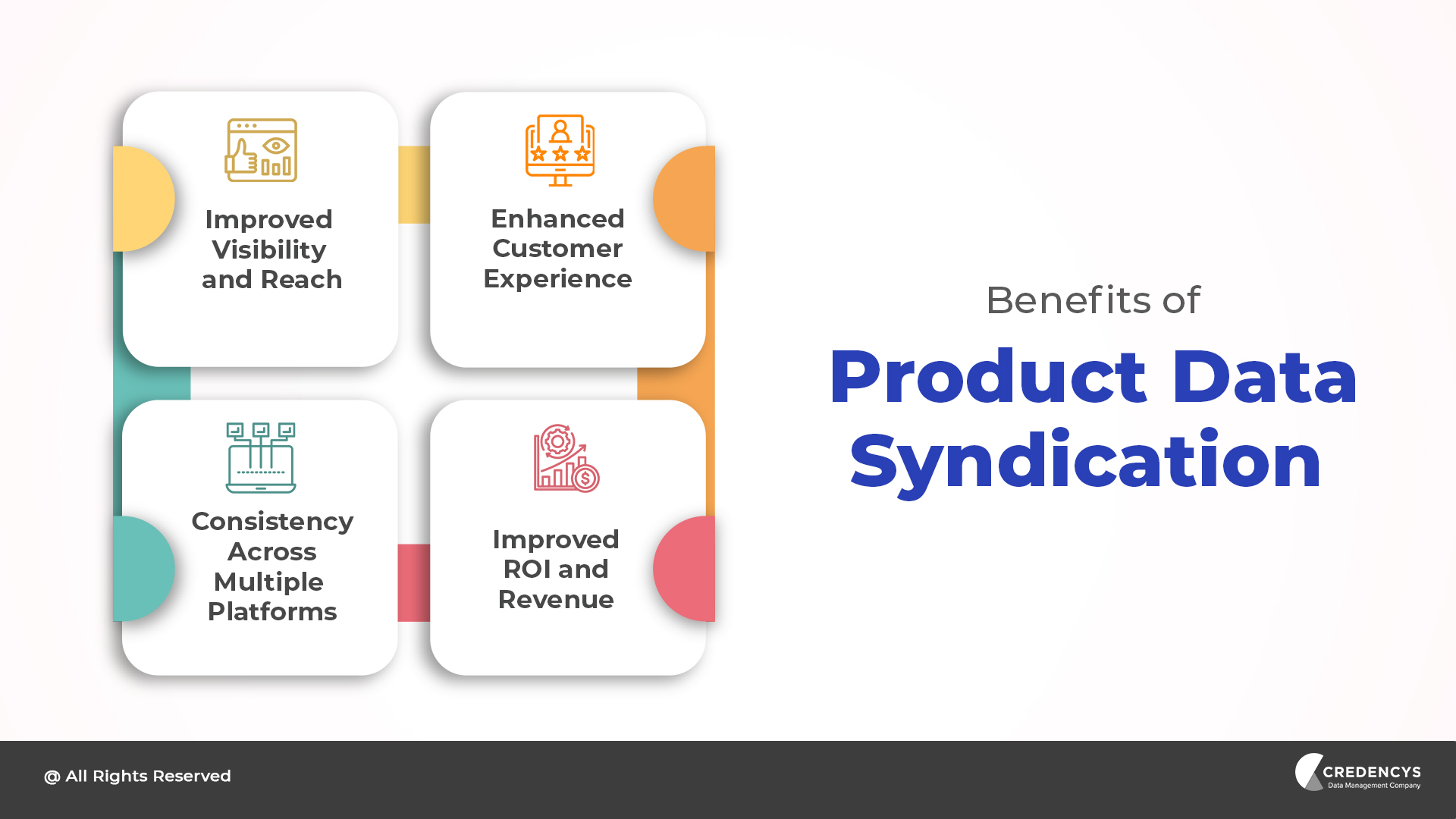
Benefits of Product Data Syndication
Let’s explore the tangible advantages of syndicating product data, and how it can shape success for businesses navigating the intricacies of the online marketplace.
Improved Visibility and Reach
- Global Presence: Product data syndication acts as a passport to the global marketplace, enabling businesses to extend their reach beyond geographic boundaries. By seamlessly sharing product information across diverse platforms, brands can build a truly international presence and reach new audiences and untapped markets.
- Multi-Channel Visibility: With the proliferation of online channels, from marketplaces and social media platforms to specialized e-commerce websites, syndication ensures that products are visible across a spectrum of touchpoints. This multi-channel visibility not only broadens the audience but also positions products where customers are actively searching.
Enhanced Customer Experience
- Consistent Information: One of the primary benefits of product data syndication is providing customers with consistent, accurate information, regardless of the platform they choose for their shopping journey. This consistency creates a seamless, trustworthy customer experience.
- Rich Media Experience: Syndication lets businesses showcase products in the best light by standardizing high-quality images and compelling descriptions. This rich media experience captivates customers, drives engagement, and supports informed purchasing decisions.
Consistency Across Multiple Platforms
- Brand Integrity: Maintaining brand integrity online is crucial to building trust. Product data syndication keeps the brand image consistent across online channels, reinforcing a unified identity and solidifying the brand in consumers’ minds.
- Efficient Updates: As products and information evolve, syndication streamlines updates and changes across multiple platforms. This efficiency saves time and resources while ensuring customers always see the most accurate, up-to-date information.
Improved ROI and Revenue
- Optimized Conversions: By providing a cohesive, immersive shopping experience, product data syndication plays a pivotal role in optimizing conversion rates. When customers see reliable, consistent information, they are more likely to make confident purchasing decisions.
- Marketplace Compliance: Many online marketplaces have specific data requirements. Syndicating product data in compliance with these standards improves a brand’s visibility on these platforms, increasing discoverability and potential sales.
How Product Data Syndication Works, Step by Step
- Centralize product data in a PIM.
- Map attributes and categories to each channel’s template.
- Transform values: units, titles, codes.
- Validate against the channel’s rules.
- Publish by feed, file, API, or data pool.
- Read channel feedback and fix rejections.
Product Data Syndication Methods Compared
| Method | Best for | Watch out for |
|---|---|---|
| Spreadsheet templates | A few retailers | Manual work and errors |
| Feeds (XML, CSV) | Marketplaces and shopping ads | Feed rules change often |
| APIs | Large platforms | Each API is different |
| GDSN data pools | Grocery, health, CPG retail | Needs GS1 GTINs and a data pool |
| Syndication platforms (e.g., Syndigo) | Many retailers at once | Subscription cost |
Product Data Syndication Tools
Most companies combine three kinds of tools: a PIM that holds the approved product record, a syndication platform such as Syndigo that knows each retailer’s requirements, and feed management for marketplaces and shopping ads. Compare PIM platforms in our PIM platform comparison matrix.
Challenges in Product Data Syndication
While the advantages of product data syndication are undeniable, the landscape also presents challenges. Let’s explore the hurdles that businesses may encounter on their journey toward effective syndication.
Recognizing and understanding these challenges is the first step in developing strategies to overcome them and maximize the benefits of this essential eCommerce practice.
Data Accuracy and Quality
- Inconsistent Data: Maintaining data accuracy across channels is challenging and can lead to inconsistent product information. Discrepancies in attributes, pricing, or availability can erode customer trust and impact the overall shopping experience.
- Quality Control: Ensuring product data quality is an ongoing effort. Inaccurate or incomplete information can lead to customer dissatisfaction and increased return rates. Robust quality control processes are essential to address this challenge.
Enhance Your eCommerce Success by Making Data Accuracy a Cornerstone of Your Strategy
Managing Updates and Changes
- Timely Updates: As products evolve and information changes, keeping updates timely across multiple platforms can be a logistical challenge. Delayed updates can lead to outdated information reaching customers, affecting their purchasing decisions.
- Version Control: Managing multiple versions of product data across platforms can create confusion and errors. Implementing a robust version control system is crucial for tracking changes and consistently presenting the latest, most accurate data.
Ensuring Compliance with Channel Requirements
- Diverse Channel Standards: Each online marketplace or retail channel may have specific data format and attribute requirements. Ensuring compliance with these diverse standards can be complex and time-consuming, especially for businesses operating on multiple platforms.
- Ever-Changing Requirements: Online channels frequently update their data requirements. Keeping up with these changes and adapting product data accordingly is an ongoing challenge, requiring businesses to stay agile in their syndication processes.
Overcoming Integration Challenges
- Integration with Existing Systems: Integrating product data syndication with existing systems, such as Enterprise Resource Planning (ERP) or Customer Relationship Management (CRM), can create integration challenges. Compatibility issues may arise, affecting the smooth flow of data.
- Data Security Concerns: Transmitting sensitive product data across platforms requires robust security measures. Businesses must balance seamless data flow with the need to protect confidential information from potential threats.
Best Practices for Effective Product Data Syndication
Navigating the complex landscape of product data syndication requires a strategic approach and adherence to best practices. Let’s explore guidelines and methodologies businesses can adopt to ensure seamless, effective product data syndication and maximize its impact across diverse eCommerce channels.
Establishing a Centralized Product Information Management (PIM) System
- Unified Data Repository: A centralized PIM system provides the foundation for effective product data syndication. It consolidates all product information in a single repository, enabling streamlined management and updates.
- Attribute Standardization: Enforce standardized attributes across all product listings. Consistent attribute names, formats, and values ensure products are represented uniformly across platforms.
Standardizing Data Formats and Taxonomies
- Consistent Taxonomies: Develop and follow consistent taxonomies to categorize products. A standardized taxonomy ensures that products are classified uniformly, enhancing searchability and discoverability across channels.
- Data Format Compatibility: Ensure the product data format meets each channel’s requirements. This includes standardizing image sizes and file formats and structuring data to align with each platform’s specifications.
Automating Data Updates and Distribution
- Real-time Updates: Implement automated processes to update data in real time. This ensures changes to product information, such as pricing or availability, propagate quickly across all channels, minimizing the risk of showing customers outdated data.
- Scheduled Syndication: Set a regular schedule to syndicate product data. Whether daily, weekly, or aligned with product release cycles, a consistent syndication schedule helps maintain data accuracy and keep customers informed.
Monitoring and Measuring Syndication Performance
- Analytics and Reporting: Utilize analytics tools to monitor syndication performance. Track key metrics such as product visibility, click-through rates, and conversion rates to assess the effectiveness of syndication strategies.
- Feedback Loops: Establish feedback loops to capture customer insights and experiences. Customer feedback can highlight areas for improvement in product data presentation and guide ongoing optimization efforts.

Revolutionize Your Product Data Management – Implement Best Practices Today
Future Trends in Product Data Syndication
The future of product data syndication holds exciting prospects, driven by cutting-edge technologies and evolving industry standards. Let’s explore emerging trends shaping product data syndication, offering a glimpse into the transformative possibilities awaiting businesses navigating the dynamic digital marketplace.
Integration of AI and Machine Learning for Enhanced Syndication
- Automated Content Generation: AI and ML algorithms will revolutionize content creation. Businesses can leverage these technologies to automate product descriptions and enrich product data.
- Predictive Analytics for Consumer Behavior: AI-driven predictive analytics will play a pivotal role in understanding consumer behavior. By analyzing data patterns, businesses can anticipate trends, preferences, and buying behaviors, optimizing product data syndication strategies for maximum impact.
Rise of Blockchain in Ensuring Data Security and Integrity
- Immutable Data Records: Blockchain technology provides an immutable, decentralized ledger that ensures the security and integrity of product data. As businesses seek to address data security concerns, blockchain will emerge as a robust solution for transparent and tamper-proof data records.
- Smart Contracts for Channel Compliance: Smart contracts on blockchain networks can automate compliance with diverse channel requirements. This ensures that product data syndication processes align seamlessly with the evolving standards of various eCommerce platforms.
Evolving Standards and Protocols in the Syndication Landscape
- Industry-wide Data Standards: Collaborative efforts will establish standardized data formats and taxonomies. This will simplify the syndication process and improve interoperability across platforms.
- Adoption of Schema.org Markup: Schema.org markup will become more prevalent. This structured data markup helps search engines understand and display product information, improving visibility and search rankings.
Personalization and Customization of Product Data
- Dynamic Product Recommendations: Personalization algorithms will become more sophisticated, offering dynamic and context-aware product recommendations. Businesses can tailor product data syndication to individual customer preferences, enhancing the overall shopping experience.
- Interactive Product Displays: Future syndication trends may include interactive product displays that let customers engage with 3D models, virtual try-ons, and immersive experiences. This level of interactivity transforms the traditional online shopping journey into a personalized and engaging exploration.
Summing Up
As we conclude our exploration into the intricacies of product data syndication, it becomes clear that this process is not just a technical necessity but a strategic imperative for businesses navigating the dynamic digital marketplace. From establishing a centralized product information management system to standardizing data formats and taxonomies, the best practices outlined provide a roadmap for businesses to ensure seamless, effective product data syndication.
By embracing these best practices and anticipating future trends, businesses can position themselves not only to thrive but to lead in the increasingly competitive and transformative world of eCommerce.
Transform Your eCommerce Journey with Product Data Excellence
Product Data Syndication: FAQ
What is product data syndication?
The process of sending accurate product information from one central source, usually a PIM, to retailers, marketplaces, distributors and data pools in the format each one requires.
What is the difference between syndication and publishing?
Publishing sends data to your own channels, such as your website. Syndication sends it to other companies’ channels, each with its own templates and rules.
What is GDSN?
The Global Data Synchronization Network: a GS1 network of certified data pools that lets suppliers share standard product data with retailers, used mainly in grocery, health, and CPG.
Do I need a PIM for product data syndication?
For more than a few channels, yes. A PIM keeps one approved record per product, which syndication then maps and sends to each channel.
Related: product content syndication services, Syndigo content syndication.
Learn more about GDSN from GS1, which runs the network.







Tags: