

The Scale and Complexity of Electrical Product Data
Electrical distributors manage extensive catalogs sourced from hundreds of manufacturers, each using different formats, attributes, classifications, and update cycles. As product volumes grow, teams struggle to maintain complete, consistent, and channel-ready information across ERP, e-commerce, branch systems, customer portals, and sales applications.
Inconsistent Manufacturer Data
Every supplier uses different templates, naming conventions, units, and attribute structures, increasing manual mapping and validation.
Missing Technical Attributes
Critical specifications, certifications, dimensions, and compatibility details are often incomplete, weakening search, comparison, and buying confidence.
Complex Classification Requirements
Products must align with manufacturer taxonomies, internal hierarchies, ETIM classes, and channel-specific category structures simultaneously.
Constant Product Changes
New launches, discontinuations, replacements, specification updates, and document revisions make catalog maintenance continuous and error-prone.
Fragmented Systems and Channels
ERP, spreadsheets, PIM, DAM, and commerce platforms may contain different versions of the same product record.

How Much is Your Product Data Costing You?
Get Your Score +90 days action plan in 3 minutes.
Check Your ScoreThe Strategic Role of PIM in Electrical Products Distribution
PIM gives electrical distributors a governed foundation for managing complex technical product information across manufacturers, systems, and channels. It helps standardize attributes, accelerate product onboarding, improve digital commerce, and ensure every team works with accurate, consistent, and channel-ready data.
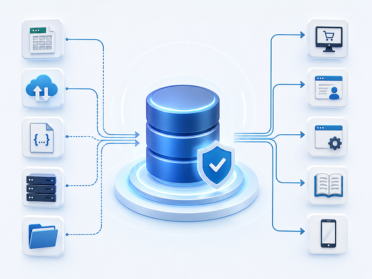
The Single Source of Truth
PIM creates one governed foundation for technical attributes, descriptions, classifications, product relationships, documents, images, and channel-specific content. It ensures teams across catalog operations, eCommerce, sales, and IT work with reliable product information.
- Consolidate data from manufacturers, ERP, spreadsheets, portals, and legacy applications
- Reduce duplicate and conflicting product records
- Maintain consistent product information across every channel
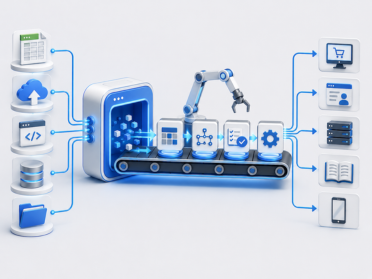
Efficient Manufacturer Data Onboarding
Manufacturer information may arrive through spreadsheets, portals, APIs, PDFs, data pools, and email attachments. PIM automates the mapping, validation, enrichment, and approval processes required to convert incoming information into channel-ready product records.
- Import product data from multiple files and feeds
- Map manufacturer attributes to your internal product model
- Identify incomplete records before publication
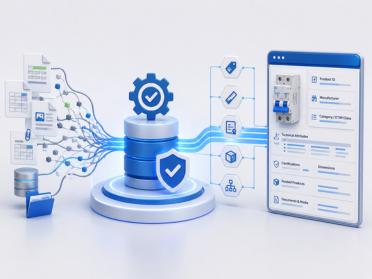
Standardized Technical Product Information
Electrical products require detailed information such as voltage, current, wattage, dimensions, materials, certifications, environmental ratings, and mounting requirements. PIM standardizes this information so that products can be classified, searched, filtered, compared, and distributed consistently.
- Normalize technical attribute names, values, and units
- Maintain internal, ETIM, and channel-specific taxonomies
- Apply category-specific validation and completeness rules

Omnichannel Agility and Product Consistency
Different channels may require different attributes, descriptions, formats, images, and documentation. PIM enables distributors to prepare information for each destination while maintaining one governed product record.
- Syndicate product information to e-commerce, portals, catalogs, and sales tools
- Manage channel-specific requirements without duplicating records
- Keep product updates synchronized across downstream systems

Data-Driven Digital Commerce and AI Readiness
Search engines, recommendation tools, product comparisons, and AI assistants depend on complete and machine-readable product information. PIM structures electrical attributes and product relationships so customers can find products using technical requirements, compatibility needs, and intended applications.
- Improve technical search, filtering, and product comparison
- Enable accessory, replacement, and compatible-product recommendations
- Prepare product information for natural-language search and AI applications
Our Approach to PIM Implementation Services
Our PIM implementation services help electrical distributors turn fragmented manufacturer data, technical attributes, taxonomies, and channel requirements into a scalable product-data foundation.
01
Assessment and Planning
Analyze your product catalog, manufacturer sources, systems, workflows, channels, and business goals to define a clear PIM implementation roadmap.
02
Customization and Configuration
Design the product-data model, taxonomies, technical attributes, workflows, user roles, and integrations required for your electrical catalog.
03
Enrichment and Governance
Cleanse and migrate existing product information, establish validation rules, assign data ownership, and configure enrichment and approval workflows.
04
Deployment and Training
Launch the PIM across priority categories and channels, train internal users, monitor performance, and provide ongoing post-deployment support.
Business Impact of PIM for Electrical Distributors
PIM transforms fragmented electrical product information into a governed business asset. It reduces operational effort, improves catalog accuracy, strengthens digital commerce, and helps distributors scale product assortments, channels, and AI initiatives without increasing manual complexity.



Real Business Impact: PIM Success Stories in Electrical Distribution
Leading Full-Line Electrical Distributor
58%
Faster Manufacturer Onboarding
Credencys implemented a centralized PIM solution to manage 240,000+ SKUs received from 185 manufacturers. Automated data ingestion, attribute mapping, validation, and approval workflows reduced manual catalog effort by 45% and improved product-data completeness by 32%.
Read MoreMid-Sized Electrical Distributor
41%
Fewer Zero-Result Searches
Credencys standardized and enriched 310,000+ product records across wire and cable, circuit protection, controls, wiring devices, and commercial lighting categories. Improved taxonomy, technical attributes, product relationships, and eCommerce integration increased product findability by 36% and accelerated digital assortment publication by 52%.
Read MoreRegional Industrial Electrical Distributor
64%
Faster Product Data Updates
Credencys connected 275,000 product records from 145 manufacturers across ERP, PIM, DAM, e-commerce, branch systems, and customer portals. The governed product-data architecture reduced duplicate records by 29%, lowered manual synchronization effort by 48%, and delivered consistent product information across every channel.
Read MoreReady to Modernize Your Electrical Product Data?
Build a trusted product-data foundation that accelerates manufacturer onboarding, improves catalog accuracy, strengthens digital commerce, and prepares your business for AI-powered product discovery.
Book a Free ConsultationWhy Leading Enterprises Choose Credencys?
Credencys helps enterprises turn complex data into trusted insights, intelligent operations, and measurable business growth. Here’s what makes us a preferred data and AI partner:

End-to-End Data Expertise
From data strategy to AI deployment, we cover the entire spectrum—Data Management, Engineering, Insights, and Intelligence—to ensure your data drives measurable business outcomes.

Domain-Focused Solutions
Whether you're in retail, automotive, or manufacturing, our purpose-built platforms solve industry-specific challenges with precision and speed.

Enterprise-Grade Partnerships
We collaborate with the best in the business to deliver future-ready, scalable, and secure solutions.

AI-First
We help you move beyond dashboards—accelerating AI readiness, deploying GenAI and enterprise AI agents, and enabling intelligent automation across your data ecosystem.
50+
Enterprise Clients
100%
Certified Consultants
15+
Years Experience
4.9/5
Client Satisfaction
We Build PIM Solutions for


Frequently Asked Questions
Product Information Management is a centralized system for collecting, standardizing, enriching, governing, and distributing electrical product information. It helps distributors manage technical attributes, classifications, descriptions, documents, images, product relationships, and channel-specific content across complex multi-manufacturer catalogs.
ERP systems primarily manage transactional information such as item numbers, suppliers, inventory, costs, pricing, and orders. PIM complements ERP by managing rich product information, including technical specifications, classifications, digital assets, product relationships, completeness rules, enrichment workflows, and channel-specific content.
Yes. Product information received through IDEA Connector can be integrated with a PIM platform for internal mapping, validation, enrichment, governance, and syndication. PIM can also manage ETIM classes, features, values, and units, helping distributors apply standardized technical classification across internal systems and customer-facing channels.
PIM improves the completeness and consistency of the technical attributes used by search, filters, product comparisons, and recommendation tools. When specifications such as voltage, current, dimensions, ratings, materials, certifications, and mounting types are structured correctly, customers can find and evaluate products more efficiently.
Yes. PIM can integrate with ERP, DAM, e-commerce, CRM, manufacturer feeds, supplier portals, data platforms, marketplaces, customer portals, and custom enterprise applications. The integration architecture depends on your platforms, data volumes, update requirements, workflows, and business processes.
Trusted by Best
Choosing Credencys means partnering with a team that’s deeply committed to unlocking the true value of your data. Here’s why industry leaders trust us:
Our Valued Clientele


Send us a Message
