


Application of AI in Marketing: Driving Results with Intelligence
Artificial Intelligence (AI) is rapidly reshaping the marketing landscape, helping brands deliver personalized experiences, automate tasks, and make smarter, data-driven decisions. What was once futuristic is now essential.
A recent Salesforce report found that over 80% of marketing leaders already use AI tools, whether for content creation, customer segmentation, or real-time analytics.
It’s clear: AI is no longer optional for businesses aiming to stay competitive. In this article, we will explore how AI is transforming marketing strategies, its key applications, and what the future holds for AI-powered marketing.
Understanding AI in Marketing
AI in marketing refers to the use of artificial intelligence technologies such as machine learning, natural language processing, and predictive analytics to enhance and automate marketing efforts. It enables marketers to analyze vast datasets, uncover patterns, and make real-time decisions that improve customer engagement and campaign performance.
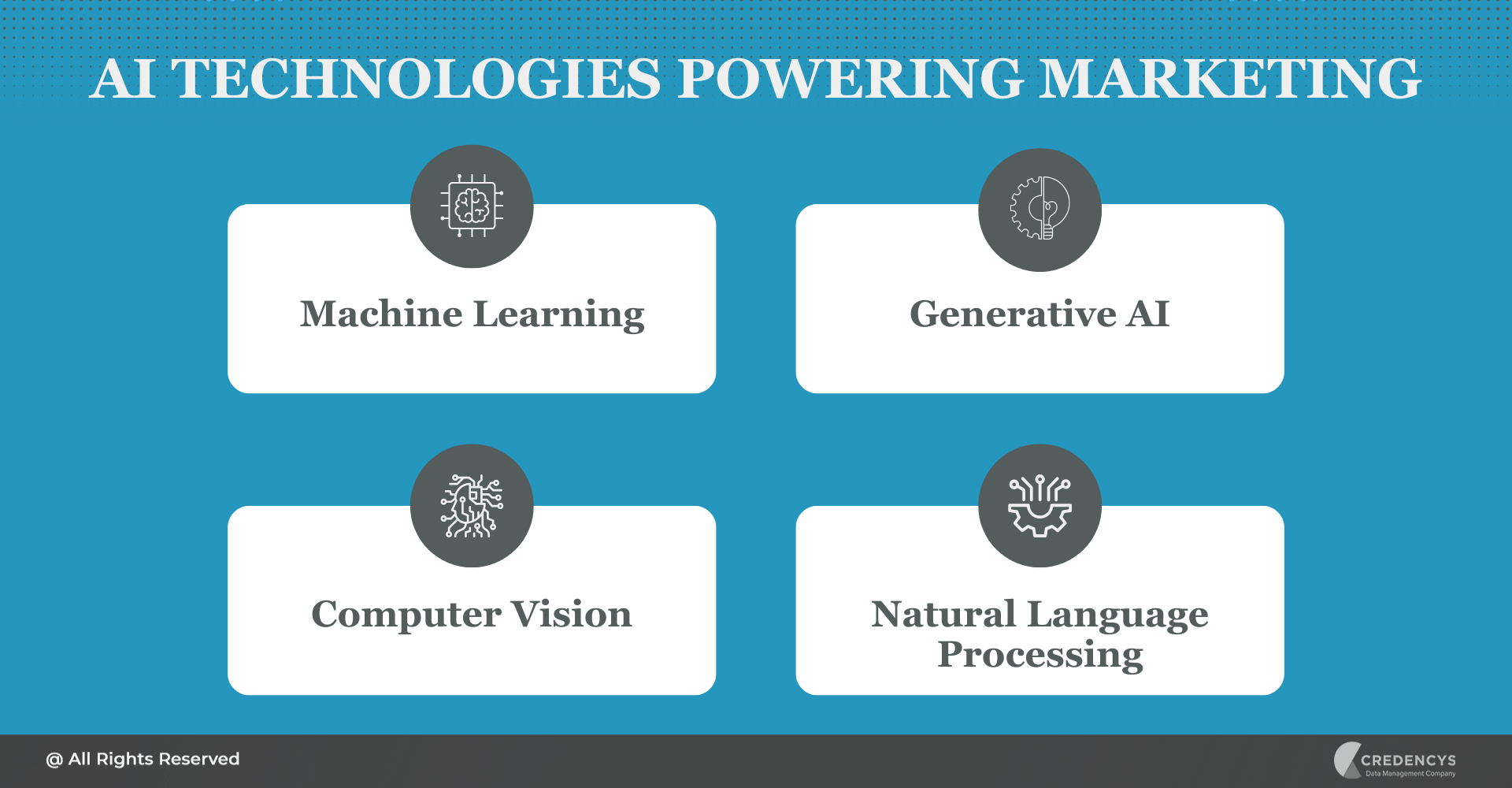
Key AI Technologies Powering Marketing
- Machine Learning: Helps systems learn from historical data to predict outcomes and optimize future actions.
- Generative AI: Tools like ChatGPT and DALL·E assist with content creation, ideation, and personalization at scale.
- Computer Vision: Used in visual recognition and content curation, especially in platforms focused on visual content.
- Natural Language Processing: Enables AI to understand and respond to human language, powering tools like chatbots and sentiment analysis.
Why It Matters
- Data-Driven Decisions: AI turns massive, complex datasets into actionable insights.
- Efficiency Gains: Automates repetitive tasks like A/B testing, lead scoring, and email scheduling.
- Hyper-Personalization: Enables marketers to tailor content and experiences for each individual user.
- Real-Time Optimization: Campaigns can be adjusted on the fly based on customer behavior and engagement patterns.
By integrating AI into their strategies, marketers can move beyond guesswork and gut feelings to create smarter, faster, and more impactful campaigns.
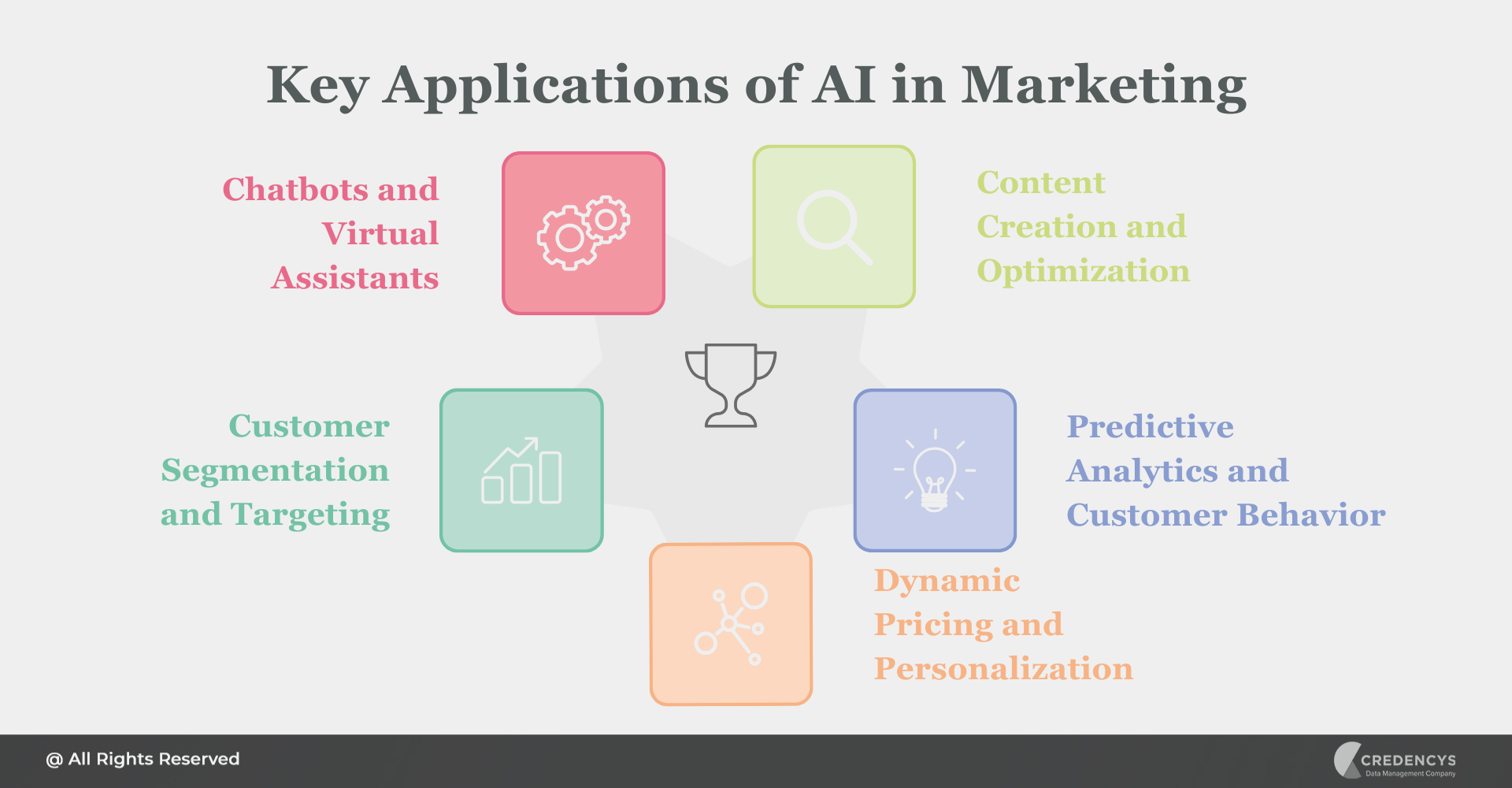
Key Applications of AI in Marketing
AI is revolutionizing how marketing functions across every stage of the customer journey. It empowers marketers to work smarter, not harder unlocking new levels of efficiency, personalization, and impact.
Below are some of the most prominent use cases of AI in modern marketing.
1. Chatbots and Virtual Assistants
AI-powered chatbots are becoming a go-to solution for customer interaction. These virtual assistants can handle everything from answering FAQs to guiding users through purchases, offering support around the clock.
By automating these touchpoints, brands can enhance customer satisfaction while freeing up human agents for more complex tasks.
2. Customer Segmentation and Targeting
Traditional segmentation based on demographics is no longer enough. AI enables marketers to analyze complex datasets, including browsing behavior, purchase history, and engagement patterns, to build highly nuanced customer segments.
These insights allow brands to craft personalized messages that feel tailor-made, increasing relevance and boosting campaign performance.
3. Dynamic Pricing and Personalization
AI enables real-time pricing strategies that adapt based on customer behavior, demand fluctuations, and competitor activity. It also powers hyper-personalized recommendations, delivering product suggestions, discounts, or content tailored to individual preferences.
This level of personalization not only improves user experience but also significantly boosts conversion rates and customer loyalty.
4. Predictive Analytics and Customer Behavior
One of the most powerful applications of AI is its ability to predict future customer actions. By analyzing historical data, AI models can forecast which customers are likely to convert, churn, or engage with specific content.
This predictive power helps marketers allocate resources more effectively, fine-tune messaging, and proactively nurture high-value leads, ultimately driving better outcomes.
5. Content Creation and Optimization
AI-driven tools are enabling marketers to create high-quality content faster than ever. From generating email subject lines to drafting social media posts and long-form articles, AI can assist at every stage of content creation.
It also helps optimize content by analyzing performance data and suggesting improvements for SEO, tone, and structure. This not only speeds up production but also ensures content resonates more effectively with the target audience.

Ready to Unlock the Full Potential of AI in your Marketing Strategy? Let our Experts Help you Implement Intelligent Solutions that Drive Real Results
Challenges and Ethical Considerations
As powerful as AI is, it comes with its share of challenges that marketers must navigate carefully to ensure responsible and effective use.
- Dependence on Data Quality: Poor data leads to poor outcomes. AI is only as effective as the data it’s trained on, so inconsistencies, inaccuracies, or incomplete data can significantly affect performance.
- Over-Automation Risks: While automation can improve efficiency, relying too much on it may dilute the human element in marketing. Customers still value empathy and authenticity, things AI hasn’t mastered yet.
- Algorithmic Bias: AI systems can unintentionally reinforce stereotypes or exclude certain groups if trained on biased data. This can lead to unfair targeting, damaged brand reputation, and potential regulatory scrutiny.
- Data Privacy Concerns: AI relies heavily on personal and behavioral data, raising significant privacy issues. With regulations like GDPR and CCPA, marketers must ensure transparency in data collection, usage, and storage to protect consumer rights.
- Lack of Transparency: Many AI models make decisions in ways that are difficult to explain or interpret. This lack of clarity can hinder accountability and make it challenging to justify decisions to stakeholders or customers.
By being mindful of these challenges, brands can adopt AI in a way that is ethical, customer-centric, and future-ready.
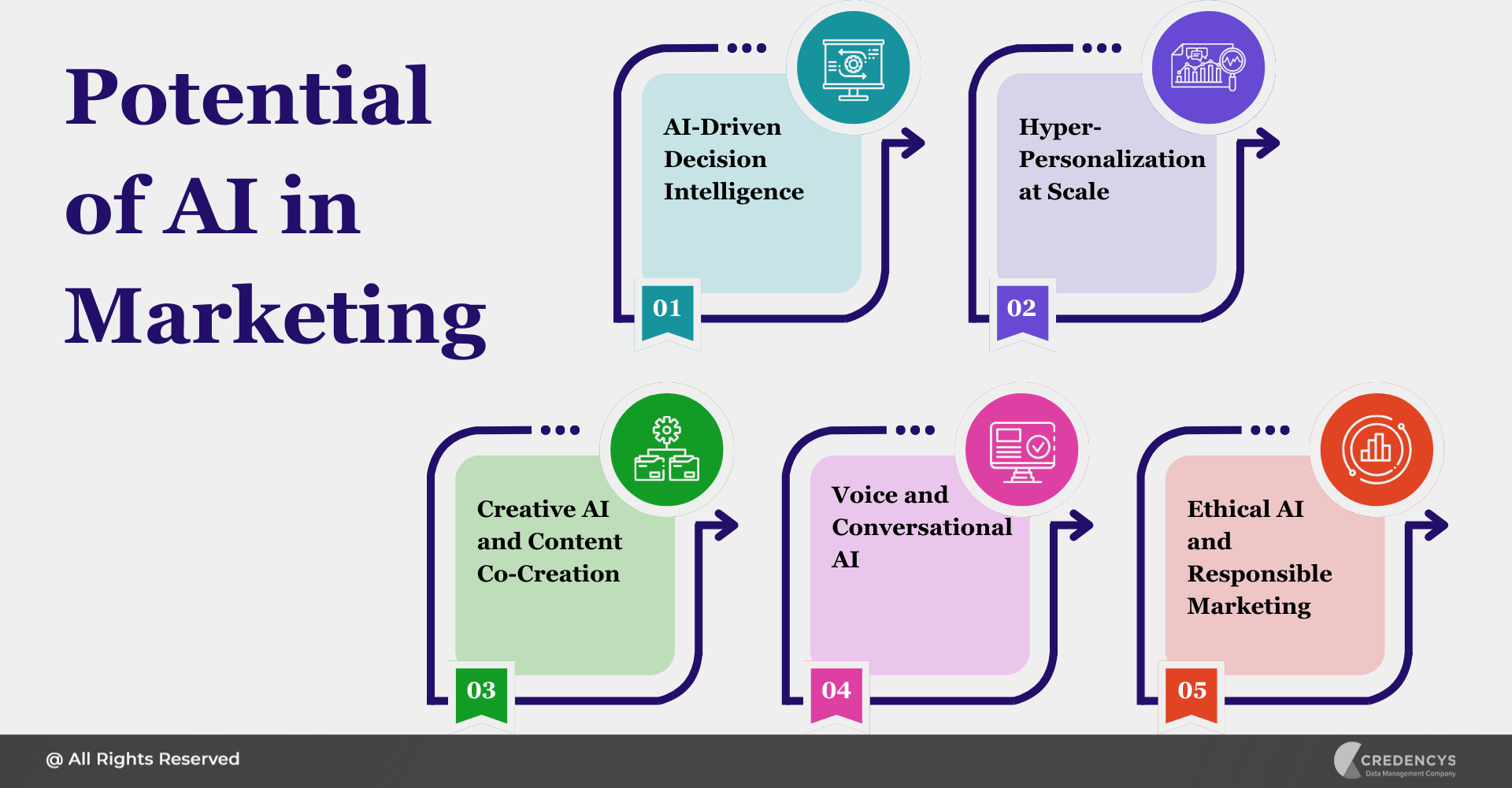
The Future of AI in Marketing
AI in marketing is still evolving, and what we are seeing today is just the beginning. As technology advances and data becomes more accessible, the future holds even greater potential for AI to redefine how brands connect with customers.
- AI-Driven Decision Intelligence: Marketing strategies will be increasingly guided by AI-powered insights that consider thousands of variables, enabling faster, data-backed decision-making with minimal guesswork.
- Hyper-Personalization at Scale: Future AI systems will deliver deeply personalized experiences across channels, not just based on past behavior, but also in real time and even anticipating customer needs before they arise.
- Creative AI and Content Co-Creation: Generative AI tools will evolve beyond basic content creation, enabling marketers to collaborate with AI in real time to generate visuals, video, copy, and entire campaign concepts faster and more cost-effectively.
- Voice and Conversational AI: With the rise of smart speakers and voice search, brands will increasingly rely on voice-driven AI to engage users. Conversational AI will also become more intuitive, creating seamless, human-like interactions through chatbots and virtual agents.
- Ethical AI and Responsible Marketing: As AI matures, there will be a stronger emphasis on explainability, bias mitigation, and ethical data use. Marketers will need to adopt frameworks that prioritize transparency and trust to align with both consumer expectations and regulatory pressures.
The future of AI in marketing is about augmentation. Marketers who embrace AI as a collaborative tool rather than a replacement will be best positioned to thrive in this new era.
Closing Thoughts
AI is no longer a futuristic concept in marketing, it’s a present-day powerhouse that’s reshaping how brands engage with their audiences. From automating routine tasks to delivering hyper-personalized experiences, AI empowers marketers to work smarter, move faster, and drive better outcomes.
Yet, with great power comes great responsibility. As businesses continue to adopt AI, it’s crucial to address challenges around privacy, bias, and transparency.
Success will depend not just on the technology itself, but on how ethically and strategically it’s used. The marketers who embrace AI as a partner will be the ones who lead the next wave of innovation.
By blending creativity with intelligent automation, they will unlock new opportunities to connect, convert, and grow in an increasingly digital-first world.
Want to Harness the Power of AI to Elevate your Marketing Game?





Tags: