


ERP migration has become a strategic priority for enterprises looking to modernize legacy systems, improve operational agility, and support AI-driven business initiatives. As organizations increasingly move to cloud-based operations, outdated ERP platforms often create challenges, including data silos, high maintenance costs, poor scalability, and limited real-time visibility.
In fact, recent industry reports suggest that more than 70% of ERP deployments are now cloud-based, highlighting the growing shift toward modern ERP ecosystems.
However, ERP migration is far more complex than simply moving data from one system to another. It involves application integration, process transformation, data governance, change management, and minimizing business disruption during transition.
This is why choosing the right ERP migration partner is critical for long-term success. In this article, we’ll explore some of the top ERP migration companies helping enterprises modernize their ERP landscape, along with the key factors businesses should consider before selecting a migration partner.
Types of ERP Migration
Organizations typically pursue ERP migration to improve operational efficiency, reduce infrastructure costs, enable real-time analytics, and support digital transformation initiatives. Depending on business requirements, ERP migration can take several forms, including:
- Legacy-to-cloud ERP migration
- ERP version upgrades
- Multi-system ERP consolidation
- Replatforming to modern ERP architectures
- Hybrid ERP modernization
A successful ERP migration strategy goes beyond technology replacement. It also focuses on improving data quality, streamlining business processes, integrating enterprise applications, and building a future-ready operational foundation.
Why Businesses Invest in ERP Migration Services
Legacy ERP systems often struggle to meet the demands of modern enterprises. Many organizations face challenges such as fragmented data, limited scalability, outdated user experiences, rising maintenance costs, and slow reporting capabilities.
As businesses grow and adopt digital-first operations, these limitations can directly impact productivity, decision-making, and customer experience. ERP migration helps organizations overcome these challenges by enabling a more agile, connected, and data-driven business environment.
Modern ERP platforms provide:
- Real-time visibility across operations
- Better integration with cloud applications and analytics tools
- Improved automation and workflow efficiency
- Enhanced security and compliance capabilities
- Scalability to support business growth
- AI and machine learning readiness
For many enterprises, ERP migration is also a critical step toward broader digital transformation initiatives, helping them modernize infrastructure, improve operational resilience, and gain a competitive advantage in rapidly evolving markets.
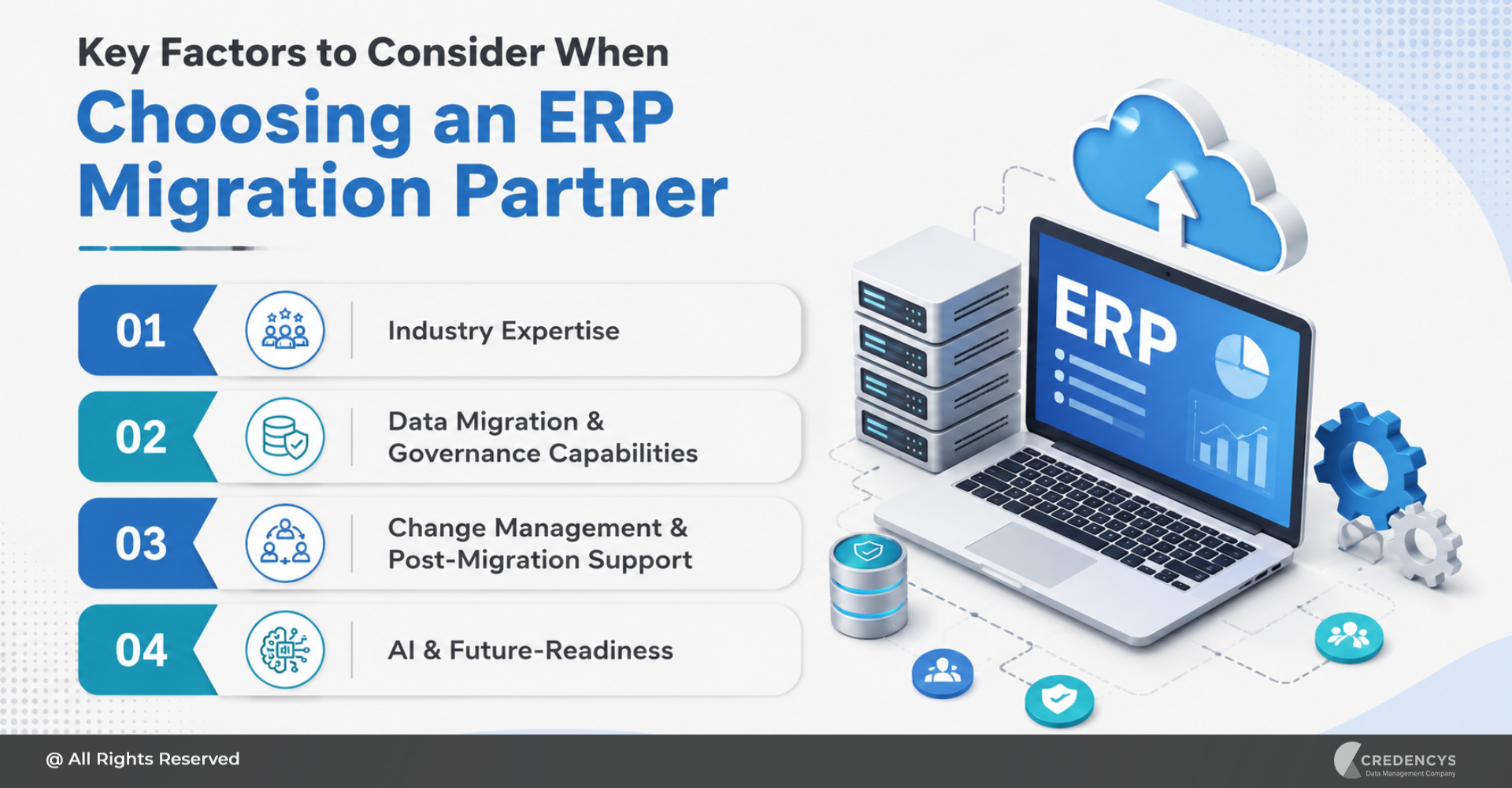
Key Factors to Consider When Choosing an ERP Migration Services Provider
Selecting the right ERP migration partner can significantly impact the success of your modernization initiative. Beyond technical implementation, businesses need a partner that understands industry workflows, data complexity, integration challenges, and long-term scalability requirements.
Here are some key factors enterprises should evaluate before choosing an ERP migration services provider:
1. Industry Expertise
Different industries have unique operational and compliance requirements. A migration partner with experience in retail, manufacturing, supply chain, healthcare, or finance can better align ERP modernization with business objectives and industry best practices.
2. Data Migration & Governance Capabilities
Data quality issues are one of the biggest reasons ERP migration projects fail. Look for providers with strong expertise in:
- Data cleansing and validation
- Master data management (MDM)
- Data governance frameworks
- Migration testing and reconciliation
- Cloud & Integration Expertise
Modern ERP systems must integrate seamlessly with CRM, eCommerce, analytics, supply chain, and third-party applications. Your migration partner should have expertise in cloud platforms, APIs, middleware, and enterprise integration strategies.
3. Change Management & Post-Migration Support
ERP migration affects business users across departments. Successful providers offer user training, change management support, performance optimization, and ongoing maintenance after deployment.
4. AI & Future-Readiness
As enterprises adopt AI-driven operations, businesses should prioritize ERP migration partners that can support automation, predictive analytics, and modern data architectures that enable future innovation.
Top ERP Migration Services Companies in 2026
Choosing the right ERP migration partner depends on your industry, modernization goals, budget, and existing technology ecosystem. Some providers specialize in large-scale enterprise transformations, while others focus on agile cloud migration and data modernization for mid-market businesses.
Below is a comparison of some of the top ERP migration services companies helping organizations modernize legacy ERP environments.
Credencys Solutions
Credencys Solutions helps enterprises modernize legacy systems through data-driven digital transformation and ERP modernization initiatives. The company focuses heavily on data engineering, cloud integration, analytics enablement, and enterprise system interoperability.
Key ERP Migration Capabilities
- Legacy ERP modernization
- Cloud ERP migration support
- Data migration and cleansing
- API and middleware integration
- Analytics and reporting enablement
- AI-ready data architecture support
Industries Served
- Retail
- Manufacturing
- Supply Chain & Logistics
- eCommerce
Best For
Mid-market enterprises looking for scalable ERP modernization with strong data integration and analytics capabilities.
Jade Global
Jade Global provides ERP migration services with strong expertise in Oracle, SAP, and cloud-based enterprise applications. The company focuses on helping businesses modernize legacy ERP environments while improving operational efficiency and application connectivity.
Key ERP Migration Capabilities
- Oracle and SAP ERP migration
- Cloud ERP modernization
- Enterprise application integration
- Managed ERP services
Best For
Organizations looking for cloud-focused ERP transformation and enterprise integration support.
GyanSys
GyanSys specializes in ERP transformation and enterprise modernization services across SAP and Microsoft ecosystems. The company is known for its industry-focused approach and strong expertise in supply chain and retail transformation initiatives.
Key ERP Migration Capabilities
- SAP S/4HANA migration
- Microsoft Dynamics modernization
- Supply chain integration
- ERP data transformation
Best For
Retail and manufacturing companies modernizing complex ERP environments.
Aspire Systems
Aspire Systems offers ERP migration and enterprise modernization services for mid-market organizations. The company focuses on cloud adoption, business process optimization, and seamless application integration.
Key ERP Migration Capabilities
- Cloud ERP migration
- ERP integration services
- Legacy application modernization
- Managed support services
Best For
Mid-sized businesses seeking agile ERP modernization and cloud transformation support.
Birlasoft
Birlasoft delivers ERP migration and digital transformation services with expertise across SAP, Oracle, and intelligent automation technologies. The company supports enterprises undergoing large-scale modernization initiatives.
Key ERP Migration Capabilities
- SAP and Oracle ERP migration
- Intelligent automation
- Data migration and governance
- Enterprise process transformation
Best For
Enterprises requiring ERP modernization with automation and operational optimization capabilities.
Argano
Argano provides end-to-end ERP migration and digital transformation services for organizations modernizing legacy systems and moving toward cloud-based operations.
Key ERP Migration Capabilities
- ERP consulting and modernization
- Cloud ERP implementation
- Business process transformation
- ERP integration and optimization
Best For
Organizations looking for a strategic ERP transformation and modernization partner.
| Company | Best For | Key Strengths | Industries Served |
|---|---|---|---|
| Credencys Solutions | Data-driven ERP modernization | Integration, cloud transformation, analytics | Retail, Manufacturing, Supply Chain |
| Jade Global | Oracle & SAP ERP migration | Cloud ERP and enterprise integration | Healthcare, Technology, Finance |
| GyanSys | SAP and Microsoft ERP transformation | Industry-focused ERP modernization | Retail, Manufacturing, Consumer Goods |
| Aspire Systems | ERP modernization for mid-market businesses | Cloud migration and application integration | Retail, SaaS, Logistics |
| Birlasoft | Enterprise ERP transformation | SAP, Oracle, and intelligent automation | Manufacturing, BFSI, Energy |
| Argano | End-to-end digital transformation | ERP consulting and cloud modernization | Manufacturing, Distribution, Retail |
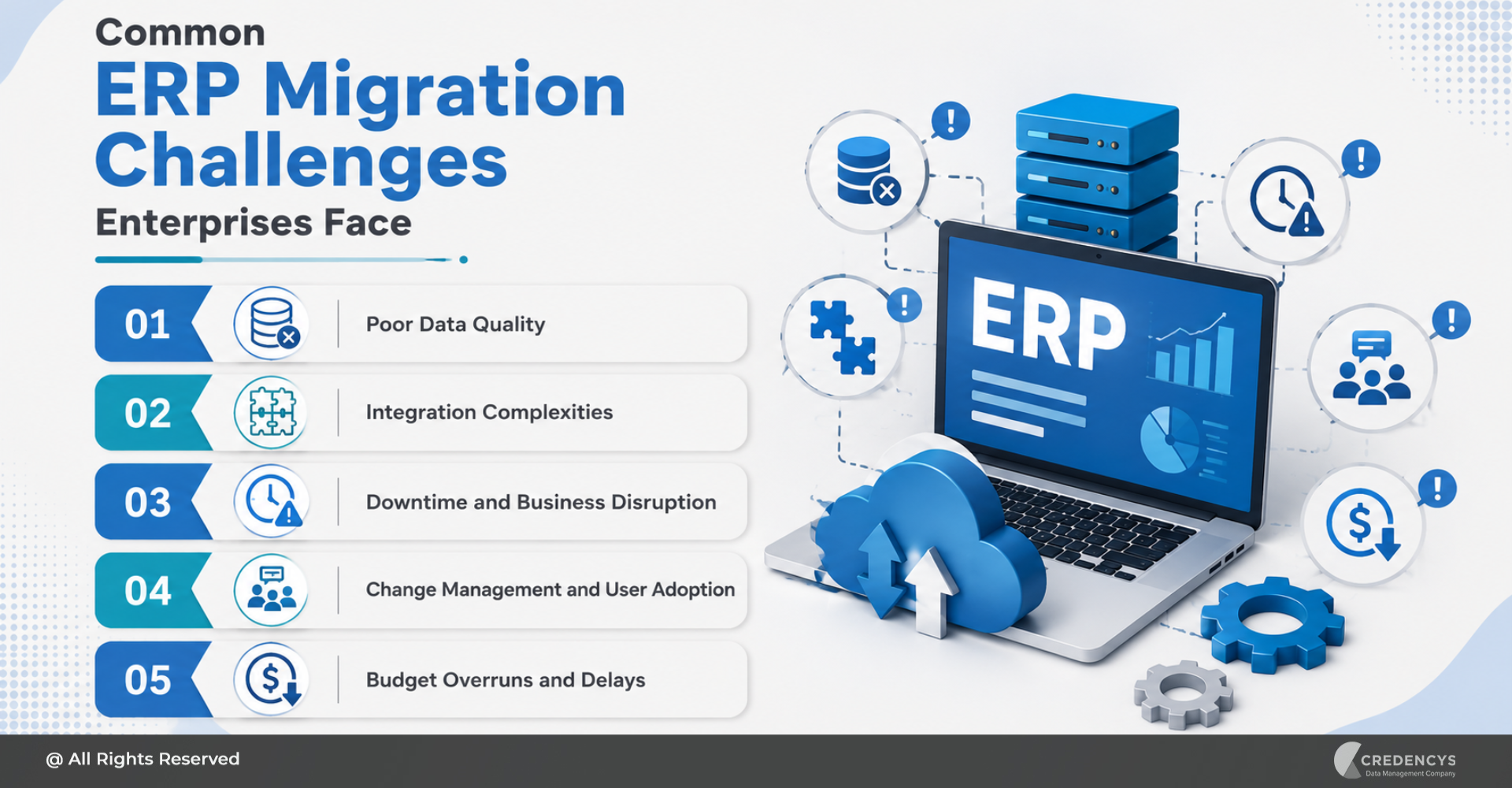
Common ERP Migration Challenges Enterprises Face
ERP migration projects are often complex and resource-intensive. Without proper planning and execution, businesses may face operational disruptions, data inconsistencies, budget overruns, and delayed implementation timelines.
Understanding these challenges early can help organizations reduce risks and improve migration success rates.
1. Poor Data Quality
Many legacy ERP systems contain duplicate, incomplete, or inconsistent data accumulated over years of operations. Migrating poor-quality data into a new ERP environment can lead to inaccurate reporting and operational inefficiencies.
2. Integration Complexities
Modern ERP systems must connect with multiple enterprise applications such as CRM, eCommerce, supply chain, analytics, and HR platforms. Ensuring seamless integration between these systems is often one of the biggest technical challenges during migration.
3. Downtime and Business Disruption
ERP migration can disrupt day-to-day business operations if not carefully managed. Unplanned downtime, failed data transfers, or system instability during deployment can affect productivity and customer experience.
4. Change Management and User Adoption
Employees often resist changes to familiar workflows and systems. Without proper training and change management strategies, businesses may struggle with low user adoption and reduced operational efficiency after migration.
5. Budget Overruns and Delays
ERP migration projects frequently exceed timelines and budgets due to unclear requirements, scope creep, inadequate testing, or underestimating migration complexity. This is why businesses should work with experienced ERP migration services providers that follow structured implementation and governance frameworks.
Best Practices for Successful ERP Migration
A successful ERP migration requires more than technical execution. Businesses need a well-defined strategy that aligns technology modernization with operational goals, data governance, and long-term scalability.
Following proven best practices can help reduce migration risks and improve overall project outcomes.
1. Conduct an ERP Readiness Assessment
Before starting migration, organizations should evaluate their existing ERP environment, data quality, integrations, workflows, and infrastructure dependencies. This helps identify potential risks, gaps, and modernization opportunities early in the process.
2. Define Clear Migration Objectives
Businesses should establish measurable goals for the migration initiative, such as improving operational efficiency, reducing infrastructure costs, enabling real-time analytics, or supporting cloud transformation initiatives.
3. Prioritize Data Cleansing
Migrating inaccurate or duplicate data can create long-term operational issues. Data cleansing, validation, and governance should be a critical part of the migration strategy to ensure high-quality data in the new ERP system.
4. Choose the Right Migration Approach
Organizations should select a migration strategy based on business complexity and operational requirements. Common approaches include:
- Big bang migration
- Phased migration
- Hybrid migration
Each approach offers different trade-offs in terms of risk, cost, and deployment speed.
5. Focus on Testing and Change Management
Comprehensive testing helps identify integration issues, workflow gaps, and system performance problems before deployment. At the same time, user training and change management programs are essential for improving employee adoption and minimizing operational disruption.
6. Partner With an Experienced ERP Migration Services Provider
Working with an experienced ERP migration partner can significantly improve project success rates. The right provider brings expertise in data migration, cloud modernization, enterprise integration, governance, and post-migration optimization.
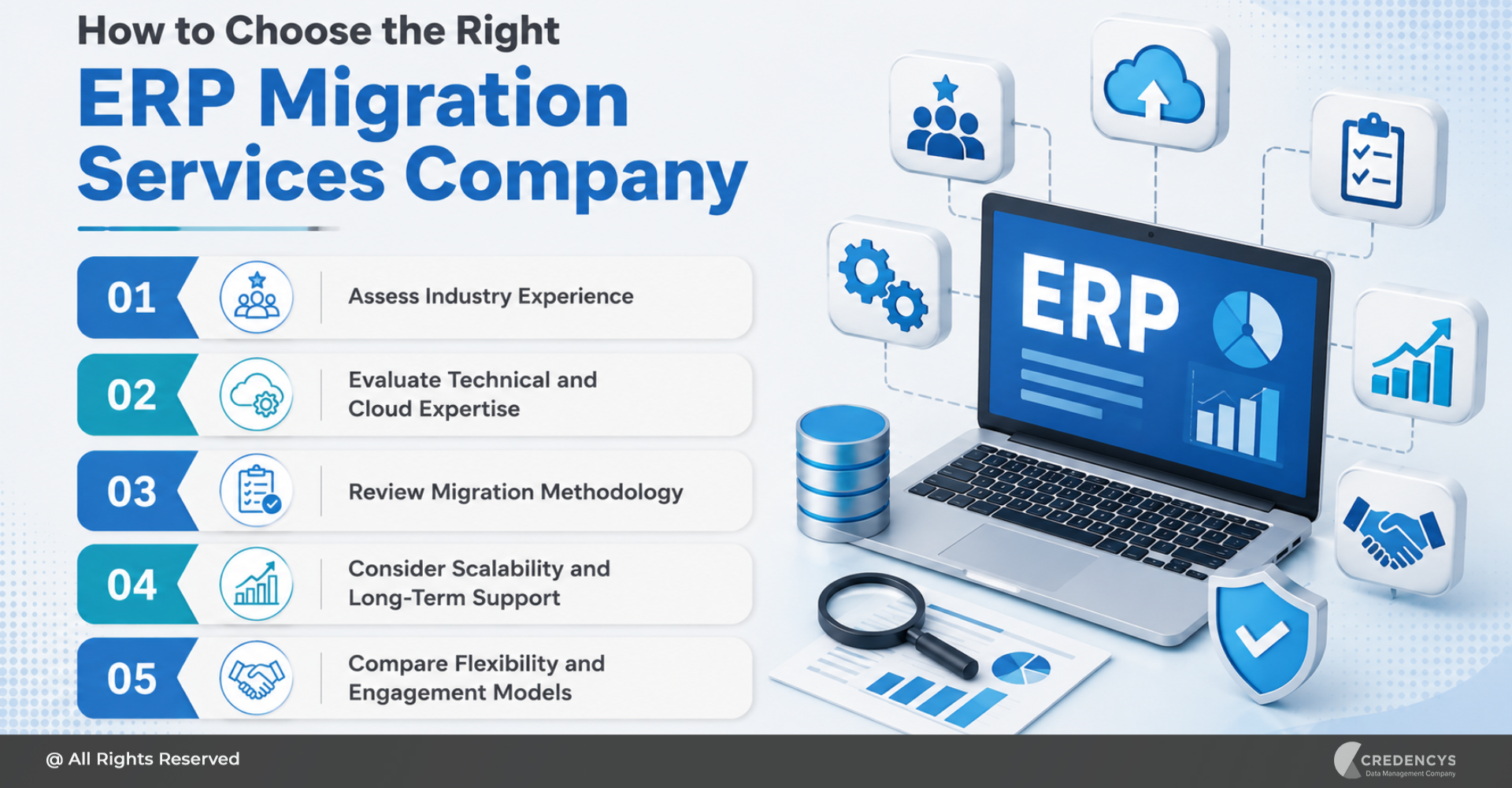
How to Choose the Right ERP Migration Services Company
Choosing the right ERP migration services provider can determine the success or failure of your modernization initiative. Beyond technical expertise, businesses should look for a partner that understands industry-specific workflows, long-term scalability requirements, and enterprise integration challenges.
Here are a few important factors to evaluate before selecting an ERP migration partner:
1. Assess Industry Experience
Choose a company with proven experience in your industry. ERP requirements in retail, manufacturing, healthcare, or logistics can vary significantly, and industry expertise helps reduce implementation risks and improve process alignment.
2. Evaluate Technical and Cloud Expertise
Your ERP migration partner should have strong capabilities in:
- Cloud ERP platforms
- Data migration and governance
- API and middleware integration
- Analytics and reporting enablement
- AI and automation readiness
This ensures your ERP environment remains scalable and future-ready.
3. Review Migration Methodology
A reliable ERP migration services company should follow a structured implementation framework that includes:
- Readiness assessment
- Migration planning
- Data validation
- Testing and quality assurance
- Post-migration support
Clear governance and risk management processes are essential for minimizing downtime and project delays.
4. Consider Scalability and Long-Term Support
ERP modernization is an ongoing journey. Businesses should select a partner that can provide continuous optimization, managed support, system enhancements, and integration support as operational needs evolve.
5. Compare Flexibility and Engagement Models
Mid-sized ERP migration providers often offer more personalized engagement, faster execution, and greater flexibility compared to large consulting firms. For many businesses, this results in better collaboration, quicker decision-making, and more cost-effective implementation outcomes.
Conclusion
ERP migration is a critical step toward building a more agile, scalable, and data-driven enterprise. As organizations modernize legacy systems and adopt cloud-first strategies, choosing the right ERP migration services partner becomes essential to minimize risk, improve operational efficiency, and accelerate digital transformation outcomes.
From data migration and system integration to cloud modernization and AI readiness, the right partner can help businesses navigate complex ERP transformation initiatives with greater confidence and long-term success. Whether you are planning to migrate from a legacy ERP platform or modernize an existing enterprise ecosystem, evaluating providers based on industry expertise, technical capabilities, and implementation approach is key to achieving successful results.
As ERP ecosystems continue to evolve, businesses that invest in modern, connected, and future-ready ERP environments will be better positioned to adapt, innovate, and compete in a rapidly changing digital landscape.



Tags: