How to develop on-demand Food Delivery App like DoorDash & GrubHub – Challenges and Solutions

In a short period, the on-demand App has outreached the global app industry and it keeps on growing at a steady pace. Among several on-demand apps, the food delivery applications storms significantly in the recent past all over the world.

We are living in a world, where everything happens at a rapid phase. People often struggle to prepare food for them in-between their tight schedule; the arrival of an on-demand food delivery app has become inevitable for such class people. Also, the on-demand food delivery app gets rid of the worries of reaching desired restaurants for parceling foods.

Here in this article, we are going to discuss in brief about developing an on-demand food delivery app just like DoorDash and GrubHub. Also, we planned to showcase the challenges faced by the on-demand food delivery apps along with the solutions.

About On-Demand Food Delivery Apps

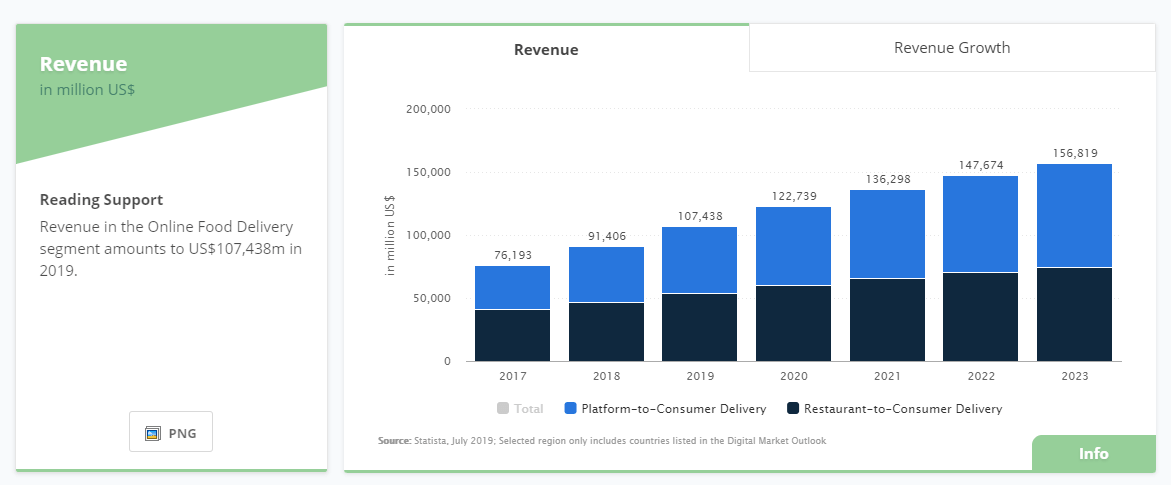
Over the years, you might personally witness the usage and popularity of the online food delivery application all over the world. Well, let’s dig deep into the on-demand food delivery app, it severs the prepared meals to the people who ordered right at their doorsteps. The On-demand food delivery app consists of two segments listed below.

Restaurant-to-Customer Delivery Segment: Here, after the orders made by the customers via on-demand food delivery platform (Just Eat, Delivery Hero, and so) or at the restaurant’s websites (e.g. Domino’s, and so), prepared meals delivered directly by the restaurants to the respective people.

Platform-to-Customer Delivery Segment: This Segment focuses on an online food delivery platform which plays a vital role in delivering the ordered meals to the people from the respective restaurants (e.g. DoorDash, Grubhub, Just Eat, and so).
Here are a few highlighting points about the on-demand food delivery app in the United States Market.

The revenue of the Online based on-demand food delivery segment is likely to expect the amount of US$ 23,991 Million in this New Year 2020.

In addition, the expected growth percentage of the on-demand food delivery app from the year 2020-2024 would be around 5.1%.

When compared with the global on-demand food delivery app manages to gain high revenues in China. The expected revenue amount is about US$ 45,909 Million in this New Year 2020.

How to Build a Successful On-Demand Food Delivery App?

The on-demand food delivery apps, DoorDash, GrubHub, UberEats and Deliveroo are the main attraction of many entrepreneurs to step into the on-demand food delivery business. If you are one among those, who look eager to develop one for your new business, consider making use of the below mentioned useful tip on how to create a successful food delivery app.

If you are planning to build a successful on-demand food delivery app just like DoorDast & GrubHub, then first you need to choose the right target audience for your business.

The Next thing would be creating a partnership with the top restaurants and building a strong relationship with the people who are in the food-producing business. As per the records, in the US only 10% of the orders go to restaurants, picking the right food establishments particularly from the locals is vital. Companies like Eat24 and GrubHub perfectly does this.

Well, you need to combine both payroll and contract employees for having smooth fleet services for your business.

Finally, your mobile applications must include premium and user-friendly features for its users. So, that it drives potential users again and again towards your applications.

Never underestimate the power of reputation. Having a good reputational value will grow your business on a new high as time goes on.

Solution for the Top Challenges Faced by On-Demand Food Delivery App

Well, before stepping into the business of starting an on-demand food delivery app, you need me to make sure about knowing all those challenges faced by the existing on-demand food delivery app along with the possible solutions.

Here we have listed the top 3 challenges faced by the food delivery app along with the solutions, take a look.

1. Users Loyalty

On-demand food delivery industry is facing a new service provider, the service provider needs to keep their loyal customers as interested in the services provided. Else, they would likely move with other service providers.

To avoid such a situation, customers should be treated with exclusive deals, offers, freebies and incentives based on their loyalty points. By doing so, your customers would feel like being treated with some special and royal approach.

2. Fluctuating Pricing Model

As the food delivery industry experiencing so many competitors, adopting new price models is quite common. However, if it keeps on going service provider who runs with small marginal profit faces hard to run business.

To avoid such a thing, you need to make sure of expanding your customer base. By offering multiple advertisements in channels and with attractive offers and discounts, the customer base can be increased significantly.

3. Finding Right Food Delivery App Developer and Logistics Staff

Engaging with the right developers and prolific logistic staff is essential to have a better mobile application and smooth business. If you go online, you can find a lot of mobile app developers and logistical staff however, picking reliable and reputable people is hard.

To pick the right people for your business app development always consider their portfolio and previous work on creating or managing food delivery apps. Besides, they have close monitoring of their development process and cross-check whether they utilize the latest technology for the on-demand food delivery mobile app development.

List of Important Features That Every Food Delivery App Must Have

Creating an on-demand food delivery app is the right choice if you want to start a business in an industry that has a bright future. However, you need to make sure about having a few exciting features on your business mobile application that should be in a lovable way by the customers.

Here are the few lists of essential features that every on-demand food delivery app should have.

  • Push Notifications
  • In-app ordering With Mobile Payments
  • Loyalty, Discount and Rewards Program
  • Location-Based Services
  • App on Multiple Platforms (iOS, Android, and so)
  • Social Media Integration
  • Personalization/Customization
  • Customer Feedback Portal

Whether Grubhub Going To be Acquired By Uber or DoorDash Soon

According to the news from The Wall Street Journal, the Chicago based On-demand food delivery app ‘GrubHub’ witnesses steep fall in its third-quarter earnings reported on last October. Owing to that, the shares of the GrubHub falls significantly. However, that is the time where the online on-demand food delivery industry witnessed several new competitors and the rising competitions are the main reason for the fall of GrubHub.

However, experts have predicted the growth of the GrubHub on upcoming days would be on a record low of double-digit numbers. Meanwhile, there has been spectacular news revolving as Uber or DoorDash might acquire GrubHub in the near future, let’s wait and see what is going to happen.

Bottom Line

With the right set of features and perfect app development model along with top-notch marketing techniques, you don’t need to worry about your future in the on-demand food delivery industry. Also, there has been significant evidence over the bright future of the on-demand food delivery industry full of opportunities. So make use of those wisely and have a bright and smart business.

Do you have an idea about on-demand food delivery app development, we, a mobile app development service providers, help you to convert your idea into successful application. Contact us to talk to our experts now.

Frequently Asked Questions about on-demand Food Delivery App

How much time will it take to develop on-demand food delivery app like DashDoor and GrubHub?

The approximate time of food delivery app development is 4 to 6 weeks. However, it totally depends on what platforms you are targeting, features and functionality, etc. For more details, you can contact us. Our experts will guide you and provide your quote for free.

Do you sign a NDA?

Yes, we sign NDA with all our clients that ensure your food-delivery app idea are completely safe with us.

Does Credencys develop Clone app or have clone script?

No, we don’t develop clone app, we develop features like other on-demand food delivery application from scratch.

How do my on-demand food delivery app make money?

There are many opportunities for you to earn like In-app advertising, through “Freemium” apps, Subscriptions for paid version and so on.



How Mobile App Development Solutions Can Solve These 4 Problems of Travel Industry

Do you know there are approximately 15% of people are using apps for tourism? As of September 2019, Travel and Tourism industry apps rank 5th among the most downloaded app category with 95.7% worldwide.

Mobile apps are part of the travel and tourism industry and 2020 will be a big year for the travel mobile app development. As the usage and penetration of mobile are at an all-time high, this encourages travel industry owners and mobile app development companies to build apps with the latest trends or technologies. Some important features like travel planning, accommodation booking, cab, and ticket booking, locating viewing and so on are developed by mobile app development companies to deliver multi-benefits for users and travel companies.

Many travel apps like Airbnb, Skyscanner, MyTSA have set their benchmarks in the travel and tourism industry. Recently, the travel app, Klook has raised $225 million from Softbank Vision Fund to deepen its investments in Japan for the upcoming 2020 Summer Olympics in Tokyo.

Let’s dive into some important features provided by the travel apps that encourage investors to invest. And, also check out important solutions offered by these apps for your business.

Top Mobile App Development Solutions for Travel Industry

1. Maintaining own standards

In this competitive era, where other companies are ready to hire your employees, it is mandatory to maintain the apparent standards of your travel business to cling the regular customers. You must not leave the travelers who are pleased with your services. Because sometimes it becomes difficult to provide all the services under one roof especially when it comes to booking service. Ensure to develop a mobile travel app that provides quick cab booking with just a few clicks.

Solution:

Be relaxed and sit back, just keep a few points in mind for getting exclusive customer experience.

  • Maintain schedules with all the agencies.
  • Create a checklist for all the services you are providing.
  • For the cab service, ensure that you hire experienced drivers and train them as per the customer’s requirement.

2. Make Booking procedure convenient

The mobile era is very convenient but competitive. People use smartphones for almost everything. You must be thinking that booking the services with your company is easy but the client may not feel the same. The old booking process would not work now with the client and thus, you need to develop the latest dashboards for the booking process.

Solution:

You can tie up with those travel agencies who allow the online booking process. There is also an option of having your travel agency invoice software as per your need that can be unified with your travel portal.

There are many travel invoice software apps available that provide professional invoices and keep track of payments. These apps also help to calculate the outstanding amount, taxes and so on, which is ideal for any travel business.
Give the clients multiple options to choose one as per their convenience.

3. Gaining client’s queries

Getting knowledge regarding the client’s requirements is a must in every business. The more you know your customers; the more you will fulfill their requirements with ease.

Solution:

Ask for advice, feedback or suggestions from your client using social media. By doing this, it becomes very easy to know their interests and accordingly, you can add related features in your travel application.

List the questions asked by the client and it will notify you regarding their demand and concerns.

4. Transactions streamlining

CA charges the agents by monitoring the gas distribution per vendor. Also, travel firms use various mobile applications to streamline transactions and provide customers with a straightforward experience. It is necessary to make clients feel comfortable by providing them their itineraries, accommodation information, boarding passes will be provided electronically for easy access.

Solution:

Using the online transaction system, the need of the company will be minimized in the form of hard copy documents and will also reduce the resources which will be needed to complete transactions.

If you are looking for an all-in-one solution for your travel application, you can contact Credencys Solution. We are developing cab booking solutions that increases your business’s customer base and give you higher revenue. Our expertise in travel application development is:

Passenger Application: These apps come with features like cab searching, fare calculation and quick cab booking through mobile.

Customizable ERP System: Developing a customized ERP solution that manages and records the booking, billings, accounts, and so on.

Driver Application: These apps are developed for drivers to maintain booking and payment history, getting route directions and maintain journey records.

Reporting System: It provides better insights with a consolidated view of booking status, sales, PoS, & dispatch-performance along with custom reporting and filters.

3rd Party Integration: Integrating 3rd party solutions for communication, voice assistance, payments, IoT and Analytics.

Resource Allocation: These help to monitor resources in real-time, booking assignments unproductive costs, optimize cabs & drivers allocation, and minimize booking response time.

At Credencys, we have developed Cab Bureau Application Suite, which is a cross channel SaaS-based application package that includes an ERP system, a driver app to receive booking information and a passenger app for online bookings.

Being standalone applications, it can be used in different combinations, regardless of business models, sizes or specific requirements. Our developed suite provides real-time tracking of vehicles and driver’s behavior. It also offers personalized themes for every cab company, which is best for branding requirements.

Developing For the Future (Conclusion)

All thanks to the developing travel app development solutions to make the travel industry a million-dollar industry. It offers faster and reliable services to the end-user and we are the one who provide travel app development services for Android and iOS platforms that benefits travel business owners and their users.

Planning to develop a travel application with multiple functionalities? We can help with ideation, design, and development. Contact Us now.

Frequently Asked Questions

How does mobile app development benefit the travel industry?

Mobile app development plays an important role for travel and tourism industry. Travel apps helps traveller in many ways, from helping cashless travel to 24*7 customer support, instant hotel booking and more.

Who will have ownership of code my travel application?

The ownership of code belongs to you (our clients) only.

Can you integrate various gateways in my travel application?

We have expert mobile app developers, who have expertise in integrating various gateway payments like Net banking, eWallets, Debit & Credit Cards and so on.

How do i get travel app like Airbnb?

If you are looking for travel like Airbnb that means you are well-aware of latest trends. We, at Credencys Solutions, have a team of mobile app developers, who suggest you the most exceptional features to integrate in your travel app development. Contact our experts now to discuss your requirements.


Mobile App UI/UX Trends To Start 2023 With

Do you know global app revenue will increase by more than 50% in 2023? Statistically speaking, in 2018, the mobile app industry generated 92.1 billion in global app revenue, which will increase by 139.6 billion by 2023, according to Newzoo report.

Mobile app users are increasing to 3.8 billion globally by 2023, and thus, a business can generate more incentive by developing engaging mobile with the latest UI/UX. We prefer using UI/UX trends not only for fulfilling the customers’ requirements but also to provide them a higher level of usability in their daily life.

UI trends of 2023

  • Custom made graphics
  • Motion effects
  • Usage of less contrasting gradient

UX trends of 2023

  • Designing of speed
  • No more loaders
  • UX audit

The technical ecosystem always affects trends. There are top 14 trends which we will cover here

Top 14 Mobile App UI/UX Trends

1. Full-screen smartphones

Nowadays, mobile phones are designed without borders and with edge screens. These bring change in their interface quite. These create challenges for the competitor for using the sharp-edged elements while designing the mobile UI and application design.

Moreover, iPhones do not have the button anymore and even android phones are losing the button providing the large display screens. To achieve a cleaner and full-screen display the navigation depends on the gestures. It is a challenging step to make users learn new things to inform of navigation styles.

Applications that run on the operating system are inhabiting the dark mode.

2. Unique animation

Unaligned designs and vast asymmetries not only help the platform but creates a friendly environment for a better experience. Additionally, for more attractions complex motion illustrations help to stand out even better. These illustrations make it easier for the company to brand the product. Fortunately, during this year, we will soon be thriving through animated elements like logos, illustrations, and texts.

Whenever a change is created, it should be tested well keeping in mind the conversion rates. We need to be tactical while taking bold solutions.

3. Storytelling

The intelligence of telling the story through the digital experience will always be the latest trend. A strong visual hierarchy is built itself by Typography. Typography is an extremely crucial element of UI, which plays a major role in getting user experience.

4. Developing applications for foldable devices

The foldable device has various advantages of sharing more space for detailed and immersive experience. There are multi-windows where a user can perform multi-tasks at the same time. Video streaming and gaming applications are more advantageous because of the increase in screen size.

5. Artificial intelligence and material learning

These two technologies work parallel when mobile application development is concerned. We can use the analytical ability for synchronizing machine learning with applications.

Artificial learning and material learning are already present in e-commerce applications as they allow the applications to make customized recommendations according to the data analyzed by the machine.

6. Augmented reality

Augmented reality stands for thinking out of the box and forgets the UI fixed to the screens. Google and Apple have already invented their AR with the platforms ARCore and ARKit, combining both the physical world and the digital world. There are different approaches to which the UI works.

  • Object-related, real-world objects that have restrained interaction.
  • Fixed screen space, where the user keeps the camera in a specific position.

The talent of creating augmented reality interfaces developing the 3D elements might become an efficient skill in the coming years.

7. Virtual reality

Virtual reality brings a lot of thrills in gaming applications for the gaming audience. Also, virtual reality would be the best possibility for healthcare to cure phobias or in education to enhance interaction.

Designers must get prepared to look out for the opportunity of creating the virtual space for collaboration.

8. Artificial Intelligence

In the year 2023, artificial intelligence will be integrated into almost all the possible devices. Artificial intelligence thrives to collect a lot of data that fulfill each and everyone’s requirement. The example of artificial intelligence can be described based on an application named Spotify where you can like or dislike the songs to figure out the taste in music.

Products will grain the ability to learn about the user’s behavior and a requirement for creating a better user experience. This ultimately leads to a higher conversion rate.

9. Attractive and responsive colors

Instead of owning the single color the brands are now responsive to their context. It has been now that brands are progressively adopting the concept of responsive colors. Applications such as Dropbox, Spotify, and Facebook have updated in their company brand.

10. Bold typography

Bold typography will take place in 2022. Not only it looks good but also it attracts users with its eye-catching solutions. It catches the user’s attraction to visit the application for more time. If we talk in contrast to the user interface, the text does not match will not bring out the expected results.

Without a strong value approach providing a solution to the user’s need and a call to the next action and next step towards conversion, there will be website risks to be a waste of time in both the design and development.

11. Rise of the chatbox

Chat boxes are considered an efficient way to extend customer relations management. More than 50% of the buyers will prefer do-it-yourself(DIY) service tools for online purchasing of any products.

Chat boxes will be earning around $8 billion in the cost savings of 2023. Approximately, there are 2.5 million applications in Google Play Store and about 1.8 million in the Apple App Store. There are several applications in the play stores which facilitate UI/UX services.

One of the best examples is Starbucks where they developed an application called “My Starbucks Barista” in which you need to mention the coffee you need. Integrating a chat box in the mobile application is considered a real business opportunity.

12. Skeuomorphic design

Skeuomorphism refers to the elements that are designed in a realistic way to simulate a real-life object with much proximity. The combination of soft shadows and gradients brings and element to life and looks too good.

But also, making the screen responsive with all the mixed skeuomorphic elements is always too challenging.

13. Custom Made Graphics

A good picture that shows relevancy with your business always adds more value to your business. Also, a relevant picture will add approach to your business.

The best way to get the relevant picture is to design your own picture using unique graphics. For eg. There is an event Olympic games in Tokyo in 2023, you can think on graphic, manga, and anime when you think of Japan. These drawings inspire the use of the unique graphics and special characters.

14. Testing

There are the times when the elements you install in mobile UI does not work properly which ruins the user experience. So, it is suggested to put efforts into mobile application UI testing. When it comes to testing of application the important thing to keep in mind is the depth to consider for UI screens.

Wrapping it

The world changes as there comes a change in the technology. There was a time when no one would have imagined the machine with size of the room would now fit in our pocket and the connection with the machine would then define the many aspects of our lives.

As we move on in 2023, we will find more usage of the technologies and more adoption of the technologies mentioned above. Everyone will be excited to know the things taking place in 2023 for Mobile App UI/UX.

Top 5 Reasons Why 80% of Mobile Apps Fail within First Year (And How to Avoid It)

Is the mobile app development is still a growing industry?

In our opinion, the industry is undoubtedly at its peak right now.

Today, 9 out of 10 people own a smartphone and 10 out of 10 of those people use mobile apps in their everyday lives.

So, that’s good news for businesses considering to build their own mobile app, right?

Well, it’s not.

You see, both the Apple App Store and Google Play Store are jam-packed right now with an abundance of mobile apps trying to be successful all at once.

According to Statista, a combined total of more than 4.42 million apps were available on the Apple App Store and Google Play Store in August 2019.

Another study by 42matters revealed that a total of 3,214 Android apps are released every day on Google Play Store, while a total of 1,044 iOS apps are released every day on the Apple App Store.

So, even though the number of smartphone users is at an all-time high right now, the immense competition makes it challenging for businesses to survive in the market.

In fact, about 80 percent of mobile apps get abandoned after their first use, according to CIO.

Why? – Well, the truth lies in the mistakes made by businesses while developing their mobile apps.

And in this blog post, we’ve revealed the top 5 reasons why the majority of mobile apps get abandoned and fail within its first year.

If you’re an entrepreneur, startup, business, or an enterprise company who is planning to build a mobile app, you will find this blog post particularly useful.

With that being said, let’s dive right in!

5 Reasons Why Mobile Apps Fail

Below, we’ve shared 5 important factors that generally lead to mobile app failure and possible ways to avoid making such costly mistakes.

1 – Lack of Originality

In the haste and desire to get their mobile apps on App Stores, businesses nowadays duplicate their competitors’ apps, which bear no fruit in the long run and fail.

This is the number one mistake that many businesses are making right now.

The app stores are already oversaturated with similar mobile apps right now. So if you want your app to survive in the market, you need to come up with a very strong value proposition.

In other words, your mobile app must have its own unique value proposition to win users’ in today’s market.

To come up with a UVP, you can start by drafting a vision statement for your mobile app.

Writing a vision statement will help you increase the chances of success and set your mobile app on the path towards the end goal of your mobile application.

2 – Poor User Experience

When developing a mobile app, you need to take care of a lot of different components to provide a great user experience.

For starters, your overall app design must be intuitive and appealing.

Secondly, it should also perform all the basic functionalities easily.

Apart from this, there are a couple of factors that you must avoid such as:

  • Long loading times
  • Difficult features accessibility
  • Slow app performance
  • Long registration process

All these factors result in a poor user experience, which you need to avoid at all costs.

Besides all these basic UX factors, you must also practice design thinking and establishing an in-depth user understanding to learn about their needs and possible ways you can fulfill them through your mobile app.

3 – Failing to Solve a Real-Life Problem

Innovation is supremely important in the mobile app industry.

And as we mentioned in the first point, if you’re simply creating a replica of your competitors’ mobile apps, you’re destined to meet failure sooner or later.

However, if you have a unique, innovative idea that solves a real-life problem for your target audience, then your mobile app is primed to be successful.

On the other hand, if you’re simply creating a mobile app with features and functionalities that already exist in the market, then it will most certainly bring a downfall.

So, come up with a fresh idea, which will entice your target audience and solves their most painful, real-life problems.

4 – Lack of Proper Monetization Strategy

Most businesses believe that if they simply develop a mobile app and market it, they’ll automatically get thousands of regular customers and make a fortune.

In reality, it’s the complete opposite.

Today, mobile businesses who’ve built their mobile apps struggle to survive, and one of the common reasons behind this is the lack of proper monetization strategy.

You see, even if you overcome the first 3 challenges like being original, solving a real-life problem, and providing a great user experience, your mobile app still has higher chances of failing a viable monetization strategy is not in place.

So, before embarking on the mobile app development journey, it’s imperative to research and select the right monetization method for your mobile app.

Fortunately for you, we’ve recently written an extensive blog post on 9 proven app monetization strategies to make money from the app.

Feel free to check out the blog post: 9 Proven Strategies for App Monetization

5 – Too Few or Too Many Features

Another common reason why mobile apps are abandoned after their first use is due to either having too many features or too few.

We’ve seen hundreds of real-life examples where businesses loaded their applications with too many features in the hopes of luring their target users but ended up sending them off to their competitors.

Similarly, if you add too few features (i.e.: less than 5), then there might still be an adverse effect.

So, if you want to hit the sweet spot for the number of features in your mobile app, the best approach is to go with MVP development.

MVP or Minimum Viable Product is a development technique used to build software products with only core features to test the idea in the market and receive feedback from the early adopters.

Conclusion

Any successful app did not rise on the top instantly. Most popular apps like Uber, Spotify, Netflix, etc. started with baby-steps and gradually grew to become the industry leaders that they are today.

Similarly, if you wish to survive and thrive in your niche, start small and scale big strategically. And if you need help, remember that our expert business consultants are always there for you to guide you on your mobile app development journey.

Feel free to reach out to us by filling the contact us form. And in case you’ve any queries, please share it in the comments below.

Frequently Asked Questions

Q:1 – What makes a bad app?

Ans: A bad app is any app that does not meet its target users’ needs and is poor in terms of user experience.

Q:2 – What percentage of mobile apps are successful?

Ans: According to reports, only 20% of mobile apps survive after its first year in the market.

Q:3 – Can a mobile app make you rich?

Ans: Yes. If you’ve built an app that is used by a vast amount of users, solves a real-life problem, and implemented the right monetization strategy.

Q:4 – What are some benefits of an app?

Ans: A mobile app can help to increase visibility, boost brand awareness, provide more value to customers, increases customer loyalty, and many more.

When Should You Consider Hiring Full-Stack Developers? [2023 Guide]

Are you thinking of hiring full-stack developers for your next project?

Well, hiring full-stack developers is a good idea, but you should hire only them if certain criteria are matched or if you can see a clear value-addition.

But what is a Full Stack Developer?

Unlike a specialized developer, a full-stack developer is someone who is capable of working on both, front-end as well as the back-end part of the project.

A specialized developer, on the other hand, is someone who is an expert in a single domain, which is either front-end, back-end, or software testing.

In simple words, full-stack developers are those rare skilled developers who have the required working knowledge of all development stages to build a full-fledged application.

However, hiring full-stack developers may not be a great choice in all cases.

Below, we’ve shared 3 instances where hiring full-stack developers will make more sense than hiring specialized developers.

3 Instances Where Hiring Full-Stack Developers is the Right Choice

Being one of the leading full-stack development companies, we often come across businesses that sometimes get stuck when it comes to making the decision – whether to hire specialized developers or full-stack developers.

If you’re in a similar dilemma, don’t worry.

You’re not the first who is confused about the decision.

In this blog post, we’ve revealed 3 cases where hiring a full-stack developer is a great option and why you should go for it.

1 – When You’re Just Starting Out or Building an MVP

It’s always a good idea to hire a single full-stack developer rather than 3 different specialists when starting out or building an MVP product.

This is mainly because of the fact that full-stack developers, compared to specialists, have a better understanding of all stages of project development and they can do so more efficiently than specialists.

In other words, full-stack developers are well-capable of turning your idea into a functional prototype product.

2 – When Your Business Needs a Technical Head

Full-stack developers are capable of and can easily fill the shoes of a technical head.

This is because most full-stack developers often have a great understanding of all components that go into developing a project, which can help to lead your project on its path to success.

Besides this, hiring a full-stack developer is also a great choice when you’re looking for a technical manager to supervise activities of your in-house development team.

3 – When You’ve Tight Budget

Let’s not hide the elephant in the room.

When you have a tight budget, it’s imperative to spend every cent wisely.

And when you hire a full-stack developer instead of a few specialist developers, you’ll obviously save a lot of money.

In other words, there is no need to hire multiple developers for each component of your project separately when you can easily get them developed by a single developer.

This way you will save a lot of money, which you can rather invest in other important areas of your project (i.e. marketing).

Bonus: Benefits of Hiring a Full-Stack Developer

1 – Bigger Picture

The main benefit of hiring a full-stack developer is that their services go beyond just writing code for your project.

In addition to coding, full-stack developers also have the experience needed to create a complete structure and add valuable input to your project as needed.

2 – Flexibility

When you’re developing a web or mobile application, you usually need front-end developers who can write code to create the user interface of your application, and back-end developers to write code for creating business logic to connect your application with the chosen content management system.

Full-stack developers, on the other hand, are well-versed with both front-end as well as back-end parts of the project and thus they offer great flexibility.

This basically helps businesses eliminate the need for conducting meetings between front-end and back-end developers, which greatly reduces the development time.

3 – Jack of all Trades & Master of One

As mentioned just above, full-stack developers are capable of working on both front-end and back-end, and this versatility helps businesses quickly identify bugs during the development process and eliminate them.

In addition to this, full-stack developers are also specialized in one of the technologies they have a working knowledge of, which is the main reason why businesses prefer to hire them in the first place.

Concluding Thoughts…

If you’re a startup or a business owner who is planning to build your own website or mobile app, hiring full-stack developers might be the right for you, especially if you’re building it for the first time.

Though specialized developers have their advantages, but they are more suited for building or upgrading complex solutions.

So, before you make any decision, it’s important to understand your requirements carefully.

We hope this blog post has helped you learn when to hire full-stack developers and when to hire specialized developers. In case you have any doubts, feel free to ask them in the comment section below.

Frequently Asked Questions

Q:1 – What is a full-stack developer?

Ans: A full-stack developer is a basically a programmer or an engineer who can work with both front-end and back-end of a website or mobile application, in addition to handling all database structure and basic DevOps.

Q:2 – What a full-stack developer do?

Ans: Full-stack developers usually work on the entire website or application all by himself as he has working knowledge and required skillsets to build a project.

Q:3 – Are full-stack developers in demand?

Ans: Yes, full-stack developers are in huge demand. In fact, enterprise companies and large-scale organizations treat them as invaluable assets in their business since they’re hard to find in today’s competition.

Q:4 – What does stack mean in coding?

Ans: A stack is basically a combination of technologies, programming languages, tools, and frameworks that goes into developing a project.


Flutter vs React Native – How to Select the Right One for Mobile App? (with Detailed Comparison)

Though native and cross-platform have their own pros and cons, organizations prefer cross-platform technologies for mobile app development due to many reasons.

Some of the competitive benefits offered by cross-platform technologies are cost-effectiveness and less time-consuming mobile app development.

Another reason people select cross-platform app development is it constantly evolves and launches modern technologies, frameworks, and platforms to meet the growing needs of the businesses and customers.

Flutter and React Native are the two leading cross-platform frameworks that are competing with each other to prove their worth for mobile app development. This post will help you to explore the key differences between these two technologies. Let’s have a detailed comparison.

Flutter vs React Native: A Detailed Comparison

Programming Languages

Flutter is based on the Dart programming language. It is very easy to learn and write the code. But, it is not so popular programming language and not used widely expect Google.

The adoption rate of Dart in the industry comparatively low. Moreover, the programming language helps in compiling the native code faster and simplifying the widget customization.

React Native used JavaScript as the core programming language. Undoubtedly, JavaScript is one of the highly popular technologies these days.

It is the highly preferred technology by developers for mobile app development. JavaScript is a powerful and widely accepted and adopted technology across the industry after years of use.

Verdict: JavaScript-based React Native is a more stable and reliable cross-platform framework to consider for your mobile app development.

User Interface

When it comes to create a user interface of mobile apps or build block components, Flutter and react-native are quite different from each other.

Flutter uses its proprietary visual, platform, structural, and interactive widgets. These widgets are inbuilt UI components and competent to replace the native UI components.

The framework has a flexible layered architecture that creates a customized UI design with native support and dynamism.

Well, the only drawback of Flutter is it doesn’t offer all the components that are essential for designing an app UI. The result is you need to compromise on user experience.

React Native uses native components of iOS and Android to create the UI. Moreover, it allows to select from the external UI kits such as React Native Elements, NativeBase, and React Native Material Kit.

Enabling developers with a large number of UI kits, it helps to design a robust UI for your mobile app.

Verdict: React Native is the best choice to create an engaging user interface for both the mobile operating systems.

Performance

If we talk about the app performance, then definitely Flutter wins the competition. Are you eager to explore how? Here you go.

Flutter develops apps without using the bridge of javascript for initiating interactions with the native components of the Android and iOS platforms. Thus, the speed of Flutter based development is expedited drastically compared to React Native.

React Native performs excellent when it comes to native app development. But when it comes to hybrid app development, sometimes developers face issues with application architecture.

Compare to React Native, Flutter allows developers to reuse the code. Moreover, the framework has a C++ engine that works flawlessly and supports the technology.

Verdict: Flutter gets the highest point in terms of delivering the best app performance as it runs hybrid apps with greater speed than React Native.

App Development Time

Flutter takes more time when it comes to mobile app development. The technology is new and requires considerable time for mobile app development. Flutter enables developers with high-quality usability but the framework demands more recognition compared to React Native.

React Native enables developers with the ready to use components that help them to utilize all elements to build an app without confronting many problems. It improves time to market of the mobile app, adds more to the user interface, and reduces development time tremendously. Using the capabilities of React Native, the app development process becomes quick and simple.

Verdict: React Native is the best option to pick to leverage accelerated mobile app development due to react to use components. While Flutter widgets are not adaptive so developers have to make the platform-specific adoption manually.

Documentation

Documentation one of the very time consuming and complex processes of mobile app development. And, Flutter facilitates developers with better documentation that simplifies their life by allowing them to create documentation of the mobile apps. Thus, as far the documentation is concerned, Flutter is the best choice.

Well, Flutter doesn’t have a strong community as React NAtive. But the support of the Google team is really good about the documentation. The Google team answers to the queries of Flutter documentation in a limited time span that helps the developers to get started with the Flutter sooner than React Native.

React Native has not so organized documentation process. Moreover, the framework removes the components which are useful in making the documentation process smoother. The framework offers general documentation and uses the external dev kits.

Verdict: Flutter is the clear winner when it comes to effective documentation of mobile app development.

Customer Base

Introduced in 2015 by Facebook, React Native leverages the larger customer base and industrial adoption than the Flutter that is introduced in 2017 by Google. React native is used by big brands such as Uber, Tesla, Walmart, Instagram, etc. On the other hand, Flutter is implemented by AppTree, Tencent, Alibaba, and more in their mobile apps.

React Native is already a well established and stable platform supported by a large community. Flutter needs time to gain stability like React Native. It has a bright future for sure and the ability to build next-generation mobile apps.

Verdict: Both technologies have their pros and cons. Developers need to make the right selection as per their design and development requirements.

Credencys Develops Cross-Platform Mobile Apps Using Flutter or React Native

Credencys has 10+ years of industry experience in developing Native, Hybrid and Cross-platform mobile app development. We have a team of 150+ seasonal developers to build custom mobile solutions. Though we have proven expertise in developing Flutter applications we hold more skills and experience in developing React Native mobile apps.

We have developed robust mobile solutions for startups, SMEs and large scale enterprises that help them streamline their business operations, boost customer engagement and retention, and cut down overhead costs. Get a cost-effective mobile solution by sharing your business ideas with our skilled team.

Frequently Asked Questions about Flutter vs React Native

Is Flutter better than React Native?

Tracking Flutter vs React Native performance, you can make the right choice for your mobile app development. Flutter allows developers to reuse the existing code. Thus, it makes their life easy. While React Native faces some issues with hybrid application architecture.

Will Flutter replace React Native?

Flutter uses its own components for Android and iOS app development by rendering them through an engine. On the other hand, React Native allows developers to bridge native models and native UI components.

Is Flutter faster than React Native?

Flutter compiles C/C++ library to Dart to make the app development less complex. This is consumed faster by the native code than a bridge between native models and native UI components of React Native. Thus, Flutter will deliver faster performance than react Native.

What is the difference between React Native and Flutter?

To build a mobile app, React Native uses components of the react library. The technology uses virtual DOM to communicate with the mobile platform UI components. Compared to Flutter, React Native provides less widgets. Moreover, the React Native components are highly adaptive.


10 Best React Developer Tools (to Speed Up React Development)

Invented in 2013 by Facebook, React started its journey as a JavaScript library that allows engineers to create highly dynamic user interfaces. But have you ever experienced the development capabilities of React?

Yes, React could be an amazing platform that develops more proactive and powerful mobile and web apps. There are around 30 to 40 different react developer tools that played a major role in making the react highly used and reliable.

Using React components, developers can build reusable and isolated blocks to create different applications. Beyond software solutions development, the tools help engineers deal with debugging, visibility, and performance.

Due to its versatile capabilities, React is used by all the big brands including Tesla, Facebook, Airbnb, Skype, and more. Here you have a list of the powerful react developer tools that empower developers to boost their productivity by

  • Bit
  • React Sight
  • React Developers Tools
  • Create React App
  • Storybook
  • React Bootstrap
  • React Styleguideist
  • Proton Native
  • React-Proto
  • Why did you render

Top 10 React Developer Tools for Web & Mobile App Development

1. Bit

It is the best tool for creating and sharing the react components. Bit enables developers with an online platform and a CLI tool where they can publish react components and share them with others.

Moreover, you can search for components created and published by third parties. Using third party stores you can access the full marketplace of components. You can easily understand that these components suppose to do just by reading some code.

Get a detailed view of each component and edit the code that used to render the preview. Ensure that the components fit into your needs before downloading and installing Bit for your project.

Bit offers a command-line tool that allows developers to track changes on each component individually without considering them as separate projects. Moreover, the tools allow to create your own component library.

2. React Sight

It is a chrome extension that you can install to perform react inspection related tasks. After installing the react developer tools extension in chrome, install React Sight extension.

React Sight displays your React app with a live component hierarchy tree of the entire app. Moreover, it supports redux, react fiber, and react-router.

While running local file URLs, ensure to enable “Allow access to file URLs” for both react sight and react developer tools. Install the extension in chrome and run the react app and open the react based website.

It is a react visualization tool with a prop tree viewer and live state that complements React dev tools.

3. React Developers Tools

The most obvious react tool to build react apps. Install the latest version (4th) of React developer tools extension in Chrome. The dev tools have tabs of components that are rendered on the screen. It also has subcomponents spawning from others.

Select the components and inspect or edit their props and state. Using the profiler tab, you can track app performance too. It helps to see how changing single components affect other components and help them to create a better component structure. Almost 1 million users are already using the Facebook invented tool.

4. Create React App

Invented by Facebook, create react app is a single command-line tool that allows developers to accelerate the process of setting up the environment for react app development. The react developer tool optimizes the app for production, sets up a developer environment, and enables programmers with a front-end build pipeline.

The tool allows developers to use any programming language for back-end development and save the time of engineers.

5. Storybook

React allows creating an intuitive UI using advanced components. When you want to create a UI that is separate from your business logic, this tool provides a sandbox. The sandbox works as a playground to create components.

The reason it is called storybooks because the sandbox documents the components as stories. Each story has stats. Each state can be compared with the visual test case. A story is basically a function that delivers value and is rendered to the screens.

6. React Bootstrap

Bootstrap is the popular CSS framework that provides a set of JavaScript functions and CSS classes to build wonderful UIs. It is very simple to use so you can use it without any technical knowledge of any of these technologies.

The React bootstrap has re-written the JavaScript bits to make it compatible with react. Not developers can use the bootstrap components just as they react components.

7. React Styleguideist

Another UI tool that is very interactive and interesting and can be used to create and showcase UI components. It allows developers to write UI code and simultaneously generate the UI. You can test the code and change the code in the rendered version if required.

8. Proton Native

Proton Native allows you to develop native desktop applications using react. Earlier, developers had to use JavaScript to build desktop react apps. The tool allows you to define the GUI elements and react components. The react developer tool is compatible with all Node.js modules as the Proton has a completely cross-platform nature.

9. React-Proto

This is the best react developer tool for engineers who focus more on visual design and less into coding. It allows you to create prototype UIs using drag & drop rather than writing code.

Well, this doesn’t mean it allows you to create app UI without writing a single line of code. It provides the prototyping components that developers need. You can take an image and use react proto to mark all potential components from that image as well as set props, names, and a hierarchy of the components.

Once you have all the components, export them into auto-generated code. You can customize the code later on. If you are working with a project that is already designed, then react proto is the best tool to save a lot of time for the initial setup of the project. Additionally, the app developed using this tool is compatible with all major systems.

10. Why did you render

When you want to debug the behavior of your component, this is the best tool to try. It is very important for developers to understand when to render and re-render the components as they are not always straightforward. Especially, if you have just started with the react development. Why did you render tool tells you when avoidable renders activate along with the reasons of why.

Takeaway

All the above react tools are used to serve different purposes such as to build web applications, create visuals, or write code. Well, these tools do not serve to any single purpose. You can use them together to complement each other.

Credencys has a team of React JS developers who have proven expertise and experience in using the advanced react developer tools. Offering end-to-end React JS development services, we speed up the app development cycle and help you to launch your web and mobile applications with improved time-to-market.

Frequently Asked Questions for React Developer Tools

How do I enable react developer tools in Firefox?

Using the react developer tools, you can inspect a react tree that involves components states, props, hierarchy, and much more. To install the react developer tools in your Firefox browser, just open the devtools and switch to the “Components” and “Profiler” tabs.

How do I open developer tools in Chrome?

To activate DevTools on any web page or app in Google Chrome, you have two options to choose from.

  • Open the Chrome menu (available at the top-right of your browser window) > select Tools > Developer Tools
  • Right-click on any page element > select Inspect Element

How do I add react extensions to Chrome?

To add react extensions in the Chrome browser, you need to go to chrome://extensions page and switch to developer mode. It allows you to locally install a Chrome extension. Now, either you can click on the LOAD UNPACKED and browse to [PROJECT_HOME]\build or just drag and drop the build folder.

What is a react developer?

React developer is an ultimate JavaScript library for front-end developers. It helps engineers to build a better web and mobile application by harnessing the potential of React technology.

Many organizations have started considering react as an essential skill for developers. It is very important for react developers to stay hungry to level-up or audit the skills related to Facebook’s prominent JavaScript Library.

Why is react so popular?

The key reasons behind the popularity of the react technology are: it is compatible with DOM API and allows developers to work with a virtual browser that is more efficient and easy-to-use than a real browser. Ultimately, the knowledge of JavaScript helps a programmer to be a better react js developer.


Retail App Development – 5 Features That Consumers Want Most!

Speed, customer experience, 24/7 access – these are the main elements that are driving the retail industry today.

But what is it that offers all three elements in one place?

Answer: mobile apps!

Right now, the worldwide retail industry is laser-focused on mobile platforms. And retailers who identified & invested early in mobile application development are now enjoying the fruitful benefits of it.

For instance, there were 150+ million US shopping app downloads in 2018, according to eMarketer.

Statista also revealed that after shopping online, 42% of consumers use a social network or shopping app, which suggests that these users either keep the shopping momentum going or tell their friends about their recent purchase.

All these data clearly prove that mobile app development is the way forward for the retailers and that the mobile apps will become the preferred choice for shopping in the coming years.

And in today’s blog, we’re going to share the 5 main features that consumers want the most in every retail app.

Retail App Development Features That Consumers Want The Most!

1 – Personalized User Experience

Online shopping experience has evolved a lot in the past recent years.

From desktop websites & mobile websites to mobile apps and now AI-powered applications, consumers today no longer have to deal with browsing through dozens of products to find what they want.

Today, retail apps are equipped with Artificial Intelligence & Machine Learning that help retailers to learn their customers’ buying preferences.

These preferences later help retailers to understand what exactly each customer wants and what is the best way to give it to them.

2 – Discounts through Push Notifications

Push Notifications are considered to be the most powerful tool to retain app users. And when they’re used right, it can sky-rocket your sales.

Today, most retail apps are leverage push notifications to keep their customers informed about their new products and about the exclusive discounts.

So, if you’re planning to build a retail app, implement a carefully planned push notification strategy to convert maximum users into paying customers.

For instance, you can leverage the customers’ behavior insights, preferences, and previous purchase history and notify them about the new discount offers on the items that they checked out recently.

3 – Loyalty Program

In today’s competitive world, a product differentiation strategy just simply doesn’t work.

And retailers have already realized it. Therefore, today most retailers offer some kind of loyalty program either through their website or mobile app.

A loyalty program, for those who don’t know, is a powerful strategy to retain the maximum number of customers by rewarding them on their repeat purchase.

And since today’s consumers spend 5+ hours on their smartphones, embedding a loyalty program in your retail app makes perfect sense.

In fact, according to Annex Cloud’s study, retailers who have implemented a customer loyalty program have witnessed the following results:

Increase in revenue by 5-10%.
Increase in the Customer purchase frequency by 5-20%.
Customers spending 5-20% more.

These data clearly prove that loyalty programs can successfully motivate the customers to buy more products and more frequently from a retailer.

4 – Fast Checkout

The checkout process in your retail app must be fast and easy.

And the reason is simple: Impulse buys.

Impulse buy is the most important advantage for retailers and the best way to capitalize on it is by making sure that the purchase process is done in the shortest number of steps possible.

In fact, if your customers face even the smallest glitch while shopping, they will most certainly abandon their shopping cart.

So, in order to combat this, implementing a fast checkout process is recommended. In other words, you can consider allowing your mobile app customers to save their addresses, card and other details to save their time and effort to make a purchase.

Apart from this, you can also implement fast return options so that customers don’t hesitate in making an impulse purchase, knowing that they can always easily return it.

5 – Wish Lists

Wish lists are among the customers’ top favorite features in shopping apps. Wish lists basically allow consumers to save, share, and shop products on the go.

In other words, the wish list feature helps consumers save their favorite items that they desire to buy or plan to buy in the near future.

Mobile buyers find the wishlist feature very helpful because it saves them a lot of time browsing the product catalog to find the one that they liked. Apart from this, the wishlist feature provides an immense amount of value to the retailers as well.

For instance, the wishlist feature helps online retailers improve the shopping experience of their customers, in addition to increasing the overall mobile app sales.

The bottom line is, wishlists feature offer so many benefits to both retailers as well as their customers that not implementing the feature could really affect the customers’ experience as well as revenue.

Concluding Thoughts…

So these are the 5 most important features to include in your retail mobile app. Besides these features, there are many other features that could add competitive value to your retail brand.

We, at Credencys, can help you implement these 5 most important features in the most cost-effective manner, while also suggesting the other relevant features for your retail brand.

So, if you’re interested in mobile application development for your retail business, contact us right away!

General FAQs for Retail App Development

Q:1 – What are retail apps?

Ans: Retail apps are basically mobile apps mostly developed by retail brands, businesses, and entrepreneurs to target smartphone users and convert them into customers.

Q:2 – Which are the best online shopping apps?

Ans: There are many best online shopping apps such as Amazon, AliExpress, Flipkart, and a lot of others. The basically depends on the product or item that you’re looking to buy.

Q:3 – How can I build my own app?

Ans: You can either use App Maker services such as AppyPie or outsource your retail app project to a mobile app development company, which is often recommended as they can help you build a retail app around your custom requirements.

Q:4 – Is there an app to find clothes from a picture?

Ans: Yes, there are many mobile apps that allows to find clothes and in fact any product from a picture. Here are the top 5 apps to find clothes from a picture:

  • Google Lens
  • CamFind
  • Amazon StyleSnap
  • Pinterest Lens
  • Screenshop


3 Food Delivery Challenges That Startups will Face in 2023 (And Their Solutions!)

The world is changing fast and so is the customers’ demands.

Back in the old days, for example, people longed for home delivery services for clothes, taxi, and food especially.

Today, it has turned into reality and food delivery is leading the on-demand economy.

The fame of food delivery apps is at its peak right now, and why not? – After all, it helps people to order their favorite food from their favorite restaurant within seconds.

According to Statista, the global food delivery market has already surpassed $107,400 Million US dollars in 2019 and it is forecasted to reach $156,819 Million US dollars by 2023.

online food delivery challenges 2020

In fact, 53% of traditional food ordering is conducted online today, while 47% is offline, proving that the future of food delivery app startups is bright.

But, with the increasing demand for food delivery apps, the food delivery startups and businesses are also facing serious challenges.

In this blog, we’ve addressed 3 such food delivery challenges that startups and businesses in the food industry will face in 2022.

3 Food Delivery Challenges You Need to be Aware of in 2022

Online food delivery has experienced tremendous growth in the past 3 years.

But when it comes to establishing a new food delivery app-based startup, there are many serious challenges that one needs to overcome.

Let’s look at these food delivery challenges and their possible solutions so that you can thrive in the food delivery industry in 2022.

1- Disruption by Giant Companies

Though the online food delivery market has great potential, but with the arrival of giant companies such as UberEats & Amazon Restaurant, capturing the market share will be a serious challenge for new startups in 2022.

You see, these giant companies have all the resources required to capture the majority of market share and therefore the independent food delivery startups are struggling to just survive in the market.

So, what’s the solution?

Here’s an Idea: adopt the Walmart model.

Walmart is a global retail giant. But when they started, they strategically entered into unexplored and relatively untouched markets like small towns and villages in the beginning.

This strategy allowed them to grow into a big company before they entered big cities.

Similar to Walmart, you could expand your online food delivery services in unexplored markets in your country, grow your customer base, and then take things forward from there.

2 – Neglecting Customer Loyalty

As new food delivery startups entering the market more often than before, retaining customers has become a serious challenge.

In today’s digital era, the number of choices matters the most to customers. That means, if your competitor is offering better or just more options than what you’re offering, it would be really difficult to keep the same customers for a long time.

The more the merrier is the key for food delivery startups.

You see, customers love more options, whether it’s the number of restaurants, types of food, incentives, discount offers, the more option a business offers simply gain customers’ loyalty.

So, What’s the solution?

It’s simple! – Offer more options!

Treat your customers with exclusive deals on a regular basis, offer freebies, partner with more restaurants, and deliver in remote areas. This will help you making your customers feel special, which will ultimately help you in earning their loyalty.

3 – Delivery Fulfillment Timeline

Technology has ruined us. Today, customers expected everything to be delivered in a minimum amount of time, which makes adhering to the fulfillment timeline a must.

This is especially true for food delivery startups. For instance, if a delivery timeline is missed, not only the brand reputation gets ruined, but the business also has to wave off the delivery charges.

In other words, new food delivery startups must make their delivery process as efficient as possible to avoid such serious impacts on their reputation.

So, what’s the solution?

Answer: Adopt a reliable last-mile delivery solution.

Last-mile delivery software offers a lot of benefits to online food delivery businesses.

For starters, it helps to enhance transparency, optimize the delivery route, gives real-time status updates, and also reduces delivery costs.

Overall, getting a last-mile delivery solution can surely boost the efficiency of deliveries and increase profits for an online food delivery startup.

Conclusion

The future of the online food delivery industry is undoubtedly full of opportunities. However, new startups must combat these 3 main food delivery challenges to survive high competition.

So, make sure that your mobile app development partner develops your food delivery app that helps in overcoming these challenges.

And if you have any questions, feel free to ask them in the comments below.

General FAQs for Food Delivery Challenges

Q:1 – How can I improve my food delivery business?

Ans: There are many ways you can improve your food delivery business. For example, you can market your website on social media, you can build an app to accept online ordering, or you can allow customers to place a scheduled delivery.

Q:2 – What are food delivery apps?

Ans: Food delivery apps basically allow customers to order their favorite food from any restaurant via their smartphones and get it delivered at their doorsteps.

Q:3 – What are the benefits of online ordering?

Ans: Online ordering helps to make the ordering process easier for both customers and restaurants, get better insights into customers’ behaviors, and helps to stay ahead in the market.

Q:4 – What are top food delivery apps in the market?

Ans: There are dozens of top food delivery apps in the market. They are listed as below:

UberEats
DoorDash
Postmates
Zomato
Grubhub
Seamless
goPuff.


11 Best iOS Libraries that Accelerate iPhone App Development

iOS developers love the open-source libraries of the platform. Do you know why?

Advanced iOS libraries allow them to build robust iPhone apps in a hassle-free way and by saving a lot of time. 

These are ready to use libraries that developers can directly use during iPhone app development rather than creating an app from scratch. It benefits to developers to invest more time on designing the unique features and functions of the app. 

Using the iOS libraries, developers can improve the time-to-market of the app by achieving all milestones successfully. Credencys has proven expertise in developing iPhone apps for the diversified industry verticals. 

In this post, we have covered the 11 most promising iOS libraries that ensure the seamless iPhone app development. Integrate them into your iPhone apps to build the app faster. 

Top 11 Open Source iOS Libraries that Speed Up the iPhone App Development

1. AFNetworkin

It is the most reliable iOS library that helps developers in networking and seamless integration of APIs. AFNetworking is an open-source, lightweight and fast networking library that uses Grand Central Dispatch and blocks.

Basically, it helps developers optimize code with higher performance primitives, improve responsiveness of the app, and enable with the easier concurrency model. AFnetworking is used for macOS, iOS, Watch OS and TV OS. 

The library takes care of basic networking requirements to the advanced ones, including SSL pinning and Network reachability. It contains robust APIs that manage high-level networking abstractions effectively. 

2. Alamofire

Alamofire is an HTTP library that is developed on the top of NSURLSession. It is the best library to simplify the networking of your iOS app. Though many new libraries are out there, the Swift based Alamofire remains the prime choice of iOS developers.  

Using the utility methods of the library, programmers can handle all types of networking requests and creates a native-like networking interface using Swift. Moreover, it simplifies the many networking tasks such as making uploading, downloading and getting JSONS a piece of cake and providing network communication for a multi-player game. 

The unique features of the library include pause and resume networking operations whenever required, subclassable private storage that makes the iPhone app development conducive to programmers using Swift.  

Credencys used Alamofire in Anand Rathi, Market Place Application, IoT Solution, Samsung, Jeep

3. SDWebImage

Undoubtedly, AFnetworking is a fast and open-source library that allows to load images from the web seamlessly using AFNetworking and UIImageView. 

But, there is another library known as SDWebImage, an asynchronous image downloader with cache support. The library stores decoded, original and compressed image files on the disk and caches the UIImage in the memory. Thus, it helps free up the iPhone memory by offering advanced iOS image management. 

Credencys used SDWebImage in Jeep

4. Masonry

Masonry is a lightweight library that makes AutoLayout hassle-free using simpler syntax. To make the AutoLayout code more readable and concise, the library uses its own chainable DSL.  It provides different methods that shorten the dozens of code lines for AutoLayout to a single line. 

5. MBProgressHUD

It’s an ultimate library that addresses all the image related gaps that are not fulfilled by other image libraries. MBProgressHUD enables iOS developers with the class that allows them to display a translucent Heads-Up Display (HUD) over images with text. Moreover, during the image loading, it offers labels and progress indicators too.  

Thus, when the iOS app takes too much time in image loading or performing the tasks, translucent indicators of MBProgressHUD prevent your app from abandonment by relieving the user anxiety. 

Credencys used MBProgressHUD in Nuevacare, Hilco Global, Anand Rathi, Market Place Application, Samsung, Jeep

6. CocoaLumberjack

CocoaLumberjack is a complete solution for all your logging needs. It is a robust library that has more capabilities in comparison to the humble print or NSLog. It contains powerful features such as grand central dispatch, lockless atomic operations, and multi-threading. 

The library is easy to use and faster than NSLog as it allows to make functions with minimum coding. To allow developers to log to a file and console simultaneously, CocoaLumberjack send one log statement to multiple loggers. Due to its flexibility and simplicity, it is highly used in enterprise-level logging solutions for iPhone or Mac applications. 

Credencys used CocoaLumberjack in IoT Solution, Market Place Application

7. Kingfisher

It is a Swift based library for caching and downloading the images. Kingfisher improves your app experience by catching the downloaded images in both disk and memory. The amazing features of the library are independent components cancelable downloading that boost app performance and speed. 

Kingfisher perfectly caches the images that quickly display your app to the users by caching the images later. There are other extensions such as UIButton, NSImage, and UIImageView that help directly in setting an image from a URL. 

Credencys used Kingfisher in Anand Rathi, Market Place Application, IoT Solution, Samsung

8. SwiftyJSON

The name of the library itself suggests it helps engineers to deal with JSON data in Swift.  SwiftyJSON is a free, open-source and simplified library. It eliminates all the optional chaining that is messy for programmers. 

Almost all developers face such issues. SwiftyJSON is the perfect solution that provides a hassle-free approach that seemed tough to achieve earlier. Using this library, developers will no longer face the same error that directly improves their productivity and efficiency by allowing to create the code flawlessly. 

Credencys used SwiftyJSON in Hilco Global, IoT Solution, Market Place Application, Samsung

9. Eureka

It is the best iOS library that works as a form builder in Swift. Eureka is used in form intensive apps. It helps programmers to save time and efforts for creating forms with repetitive and complex code. 

Instead of performing the repetitive tasks to create the forms, the library allows to create highly dynamic forms with reusable code. Thus, developers need to write the code once and use the same code anywhere. 

Moreover, Eureka’s abstraction performs duplication and code validation. Being supported by a large developer community, it is the best updated iOS library.   

10. SnapKit

SnapKit is the very popular iOS library that makes the AutoLayout easier to create and setup. Written in Swift, it allows to build iPhone apps with less code compared to traditional methods. The result is the app has cleaner coding that is more manageable and easy to review. It has a safe design that makes that helps developers to minimize the errors and prevent them from invalid concerns. 

11. JSONModel

Most of the iPhone apps work using the internet and interact with the remote server to send and receive data every now and then. A few of them require a little bit of data while others consume massive data by interacting with a remote server on a continuous basis. 

These days all the apps use JSON to interact with a remote server. Here JSONModel plays its role. It is an open-source library that validates JSON data. Moreover, it helps developers to fetch the JSON from the server, parse it, and initialize your model classes with JSON response from the server. 

The core job of JSONModel is to display the data in JSON format when the server receives a request from the API. It is a real time-saver for programmers if they need to create a more complex data model. 

Crednecys Embraces Advanced iOS Libraries for iPhone App development

Credencys has a team of 50+ iPhone developers who have proven experience in developing powerful iPhone apps by integrating robust iOS libraries. It saves time for the developers in terms of creating the same features and functions again and again. The result is they focus on developing the most dynamic and complex features that add value to the ultimate user experience. 

Frequently Asked Questions about iOS Libraries

What is an iOS library?

The iOS library is a collection of code and resources. It compiles one or more iOS architectures too.  

What is the Swift library?

Swift based libraries provide a common framework for the development and testing in Swift for Swift applications and packages. 

What is the dynamic library in iOS?

Dynamic libraries are not linked to consumer-facing apps, so they won’t be the part of the executable file. Such libraries can be linked or loaded into an app when the app is launched or runs. 

What is the static library in iOS?

A static iOS library is a collection of compiled functions, resources, and classes that can be used by iOS developers for iPhone app development. Such libraries are complied binary or fat files and can be shared amongst the different projects.