

Why PIM ERP Integration Becomes Complex
ERP and PIM serve different purposes, yet both systems often contain overlapping product information. Without clearly defined ownership, mappings, and synchronization rules, organizations can create duplicate records, inconsistent attributes, manual work, and unreliable downstream product data.
Duplicate Product Data Across ERP and PIM
Product identifiers, descriptions, units of measure, supplier information, categories, and other attributes may be entered and maintained separately across ERP and PIM, increasing manual effort and the risk of conflicting values.
Unclear System-of-Record Ownership
When teams do not clearly define whether ERP or PIM owns a particular field, changes can overwrite one another or create multiple versions of the same product information.
Manual Product Onboarding
CSV exports, spreadsheets, file transfers, and repeated data entry slow the movement of newly approved products from ERP into PIM for enrichment and publication.
Inconsistent Data Structures
ERP material and item structures rarely map directly to the taxonomies, attributes, variants, product relationships, and channel structures required by PIM.
Synchronization and Exception Management
Failed records, mapping errors, duplicate messages, missing identifiers, partial updates, and integration latency can create downstream product-data issues if they are not properly monitored and reconciled.

How Much is Your Product Data Costing You?
Get Your Score + 90-day action plan in 3 minutes.
Check Your ScoreHow PIM and ERP Should Work Together
ERP and PIM should complement one another rather than compete to become the master of the same information. ERP typically manages the operational and transactional data required to procure, manufacture, stock, price, and sell products.
PIM manages the enriched, structured, governed product information required by customers, partners, commerce platforms, marketplaces, catalogs, and digital channels. A scalable PIM ERP integration clearly defines data ownership and determines how approved information should move between both systems.
 ERP Typically Manages
 PIM Typically Manages
SKU or material number
Product titles and descriptions
Supplier and vendor references
Rich product attributes
Units of measure
Product taxonomy and classifications
Procurement information
Product relationships
Inventory references
Variants and inheritance
Operational item status
Localization
Base commercial references
Digital product content
Core material or item data
Channel-specific product information
The exact system of record depends on your existing architecture, applications, business processes, and product-data governance model. The objective is not to duplicate information between ERP and PIM. It is to ensure that each system owns the right data and that approved information moves reliably between them.
Our PIM ERP Integration Services
Credencys helps enterprises design, implement, and optimize PIM ERP integration around their existing systems, product-data models, business rules, and downstream channel requirements. From architecture and field mapping to synchronization, validation, monitoring, and exception handling, we build integrations designed for reliable product-data operations at enterprise scale.
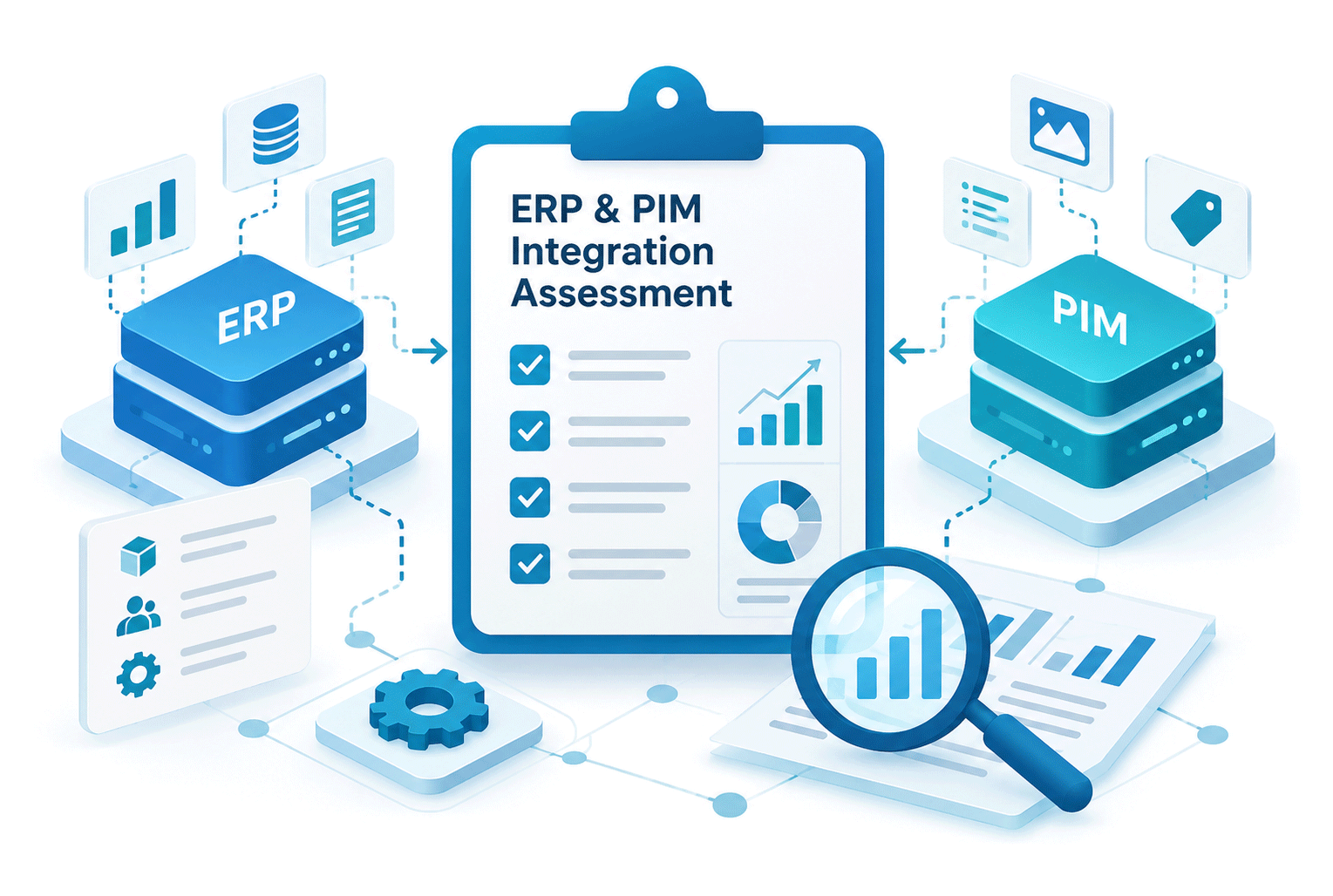
ERP & PIM Integration Assessment
Evaluate your current ERP and PIM environment to understand systems of record, product-data flows, business processes, integration dependencies, data volumes, APIs, synchronization frequency, and existing pain points. We define the integration requirements and identify where ownership, duplication, or workflow issues need to be resolved before development begins.
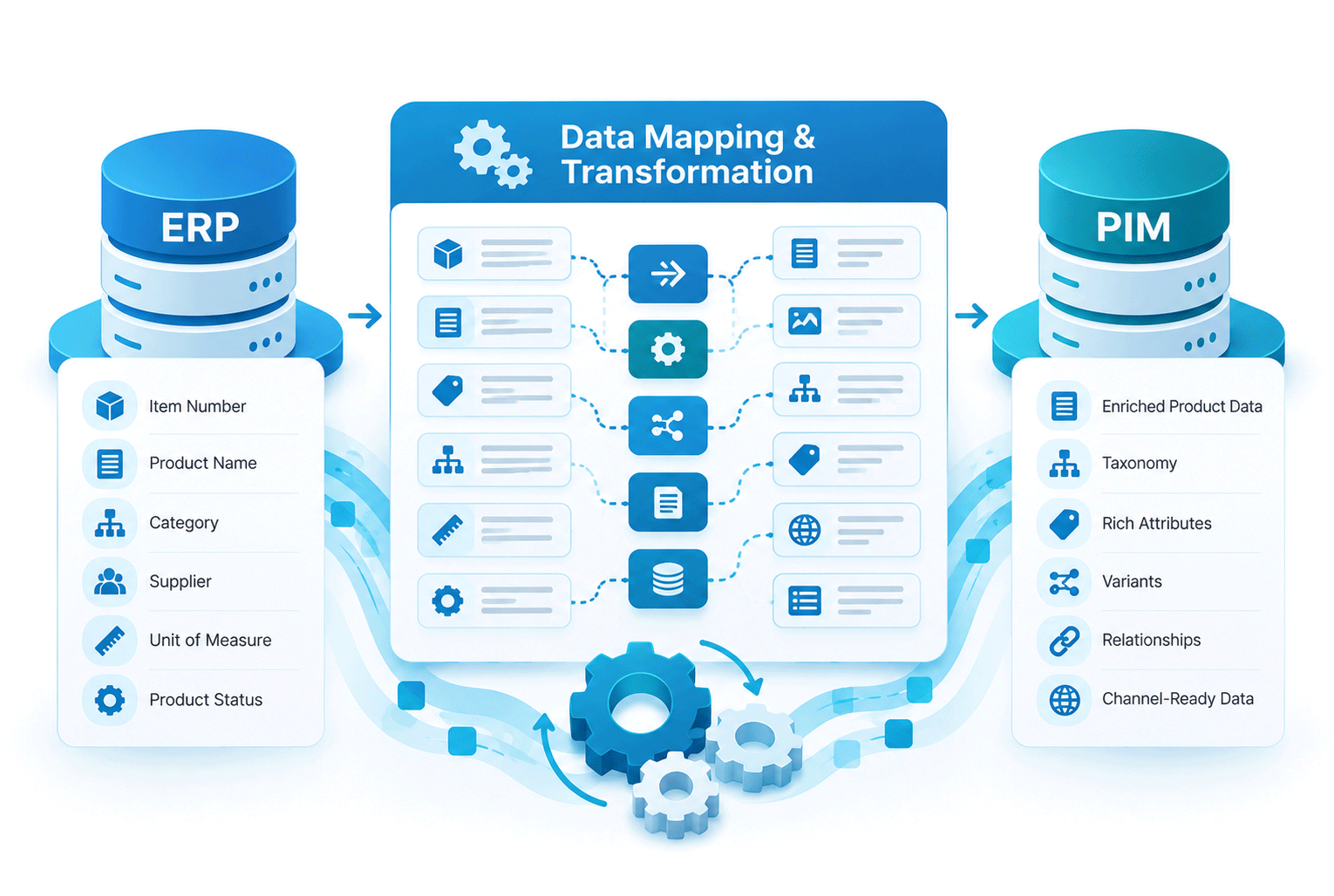
Product Data Mapping & Transformation
Map ERP item and material structures to PIM product models, categories, attributes, variants, identifiers, relationships, packaging information, and controlled values. Transformation rules standardize source data so ERP information can be reliably consumed by PIM without forcing downstream teams to manually restructure every product.
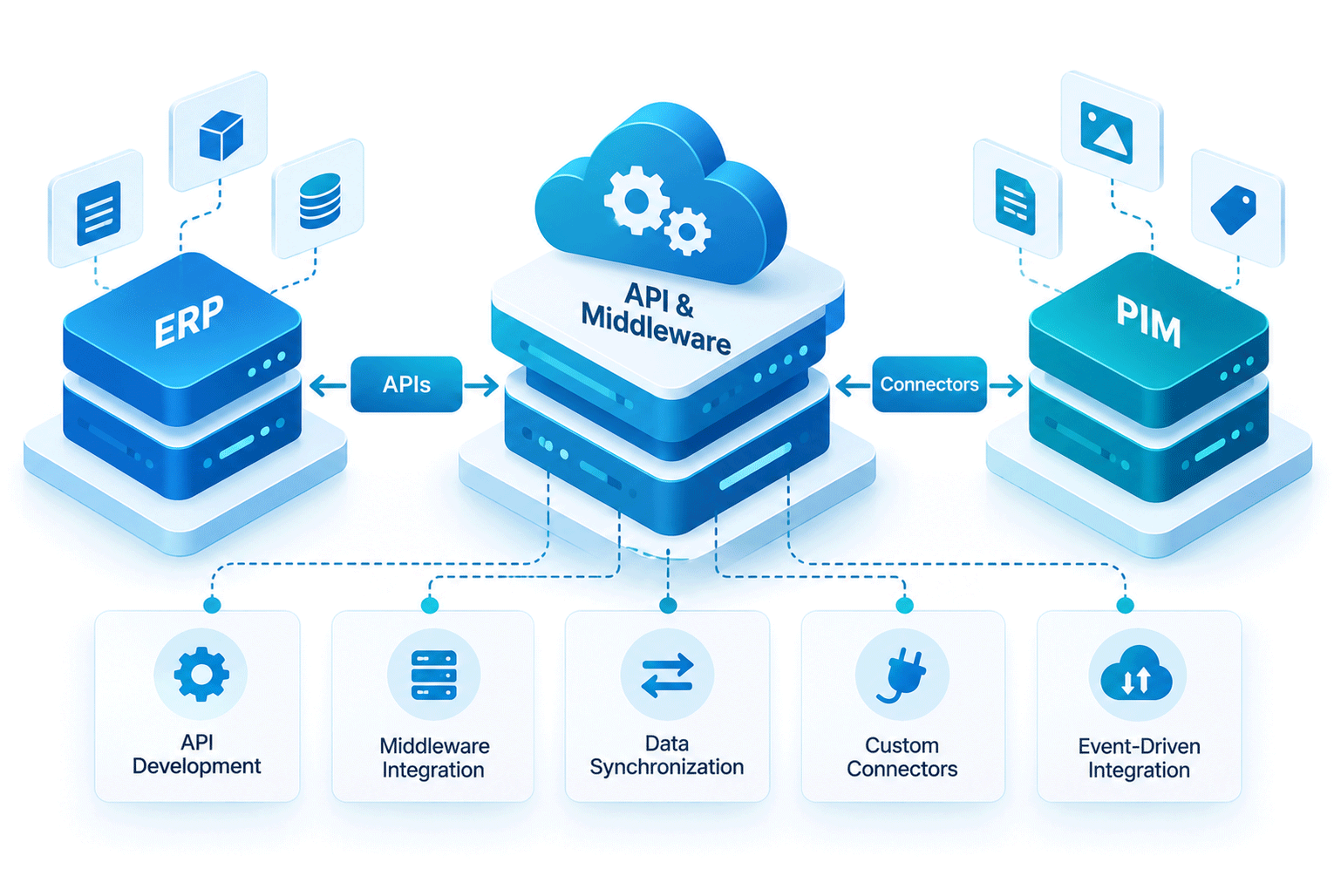
API, Middleware & Connector Development
Implement the appropriate integration architecture using APIs, middleware, iPaaS, message queues, event-driven workflows, scheduled synchronization, or file-based interfaces depending on your enterprise environment. We design the integration around maintainability, scalability, security, and existing technology investments.
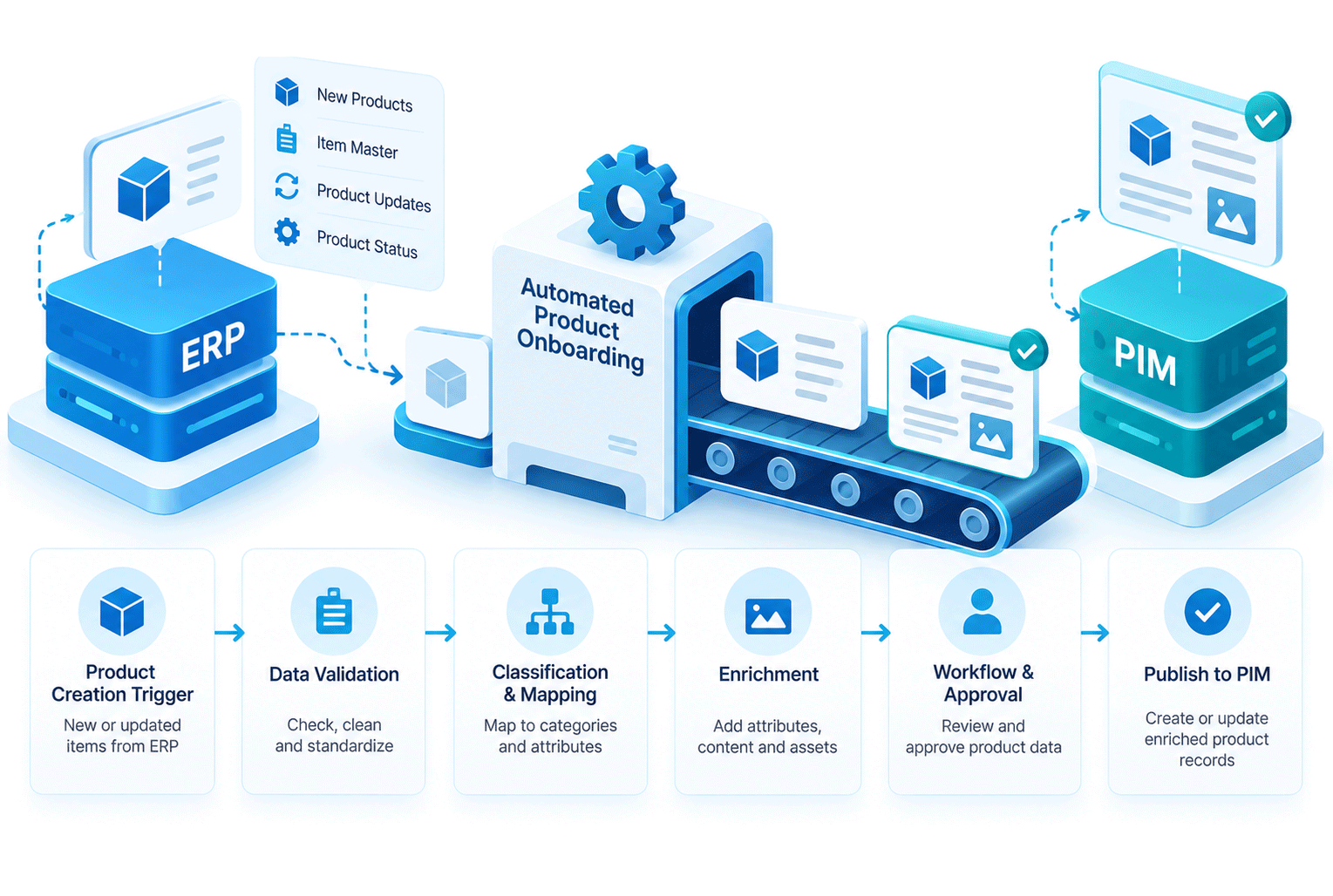
Automated Product Onboarding
Automatically initiate PIM product records when approved items, SKUs, or materials are created in ERP. New records can then move through enrichment, classification, digital asset association, completeness checks, review, and approval workflows before downstream publication.
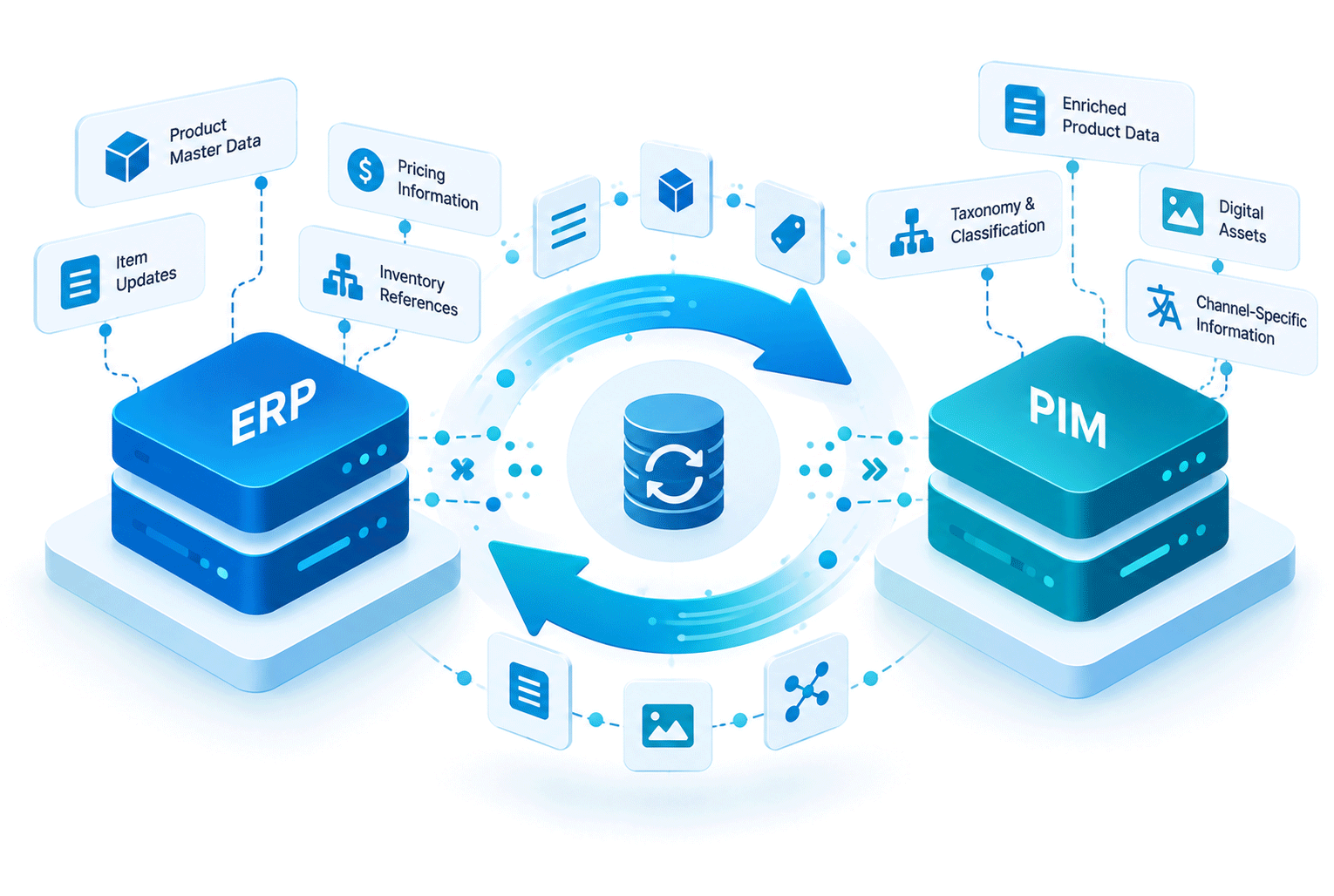
Bidirectional Data Synchronization
Where the business process requires it, enable governed two-way synchronization between ERP and PIM. Clearly defined ownership rules prevent circular updates and ensure that only approved fields flow back to the appropriate system.
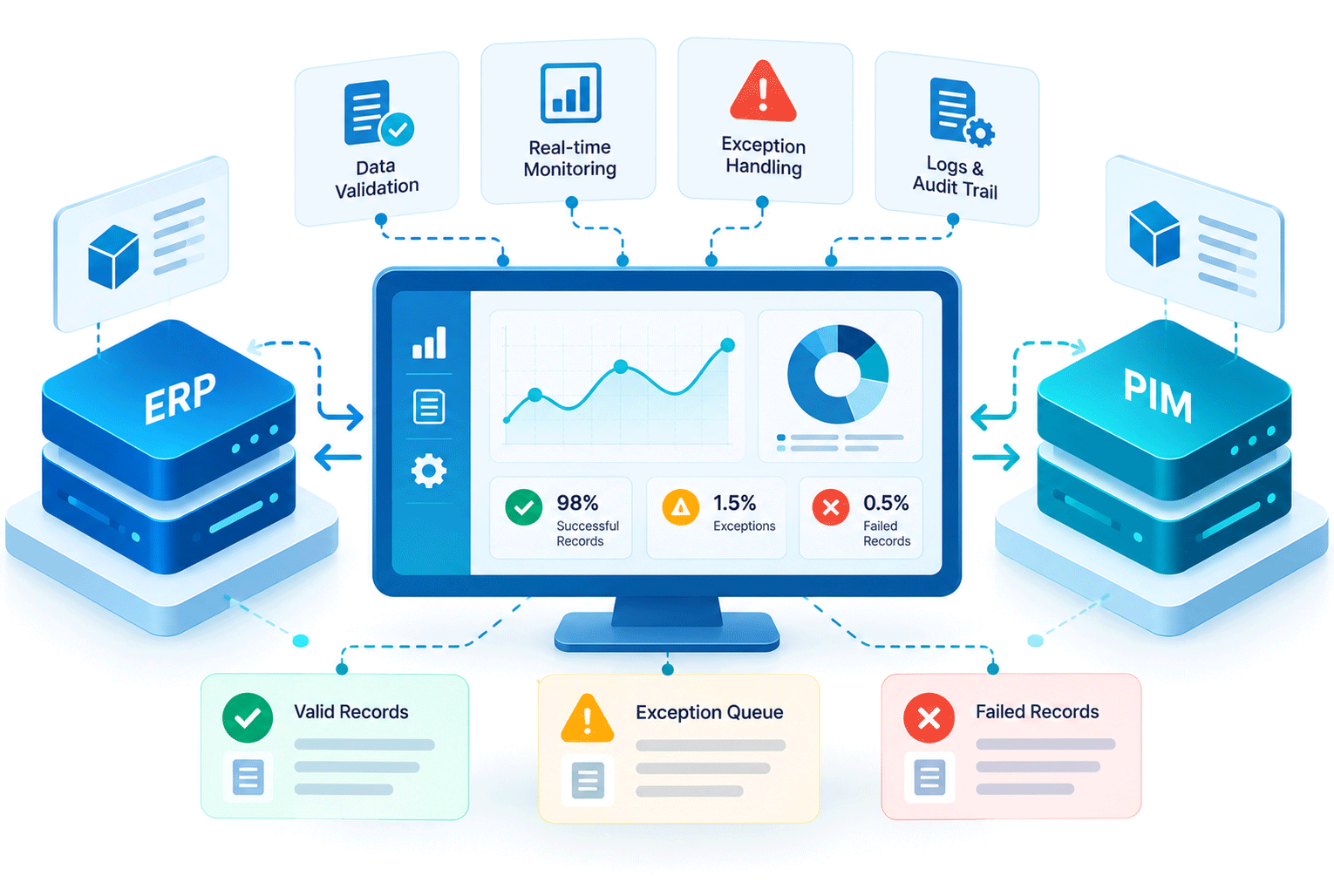
Validation, Monitoring & Exception Handling
Build operational visibility into integration performance through validation, reconciliation, logging, alerts, retries, and exception management. Failed or incomplete records can be identified and corrected before incorrect product information reaches downstream systems or customer-facing channels.
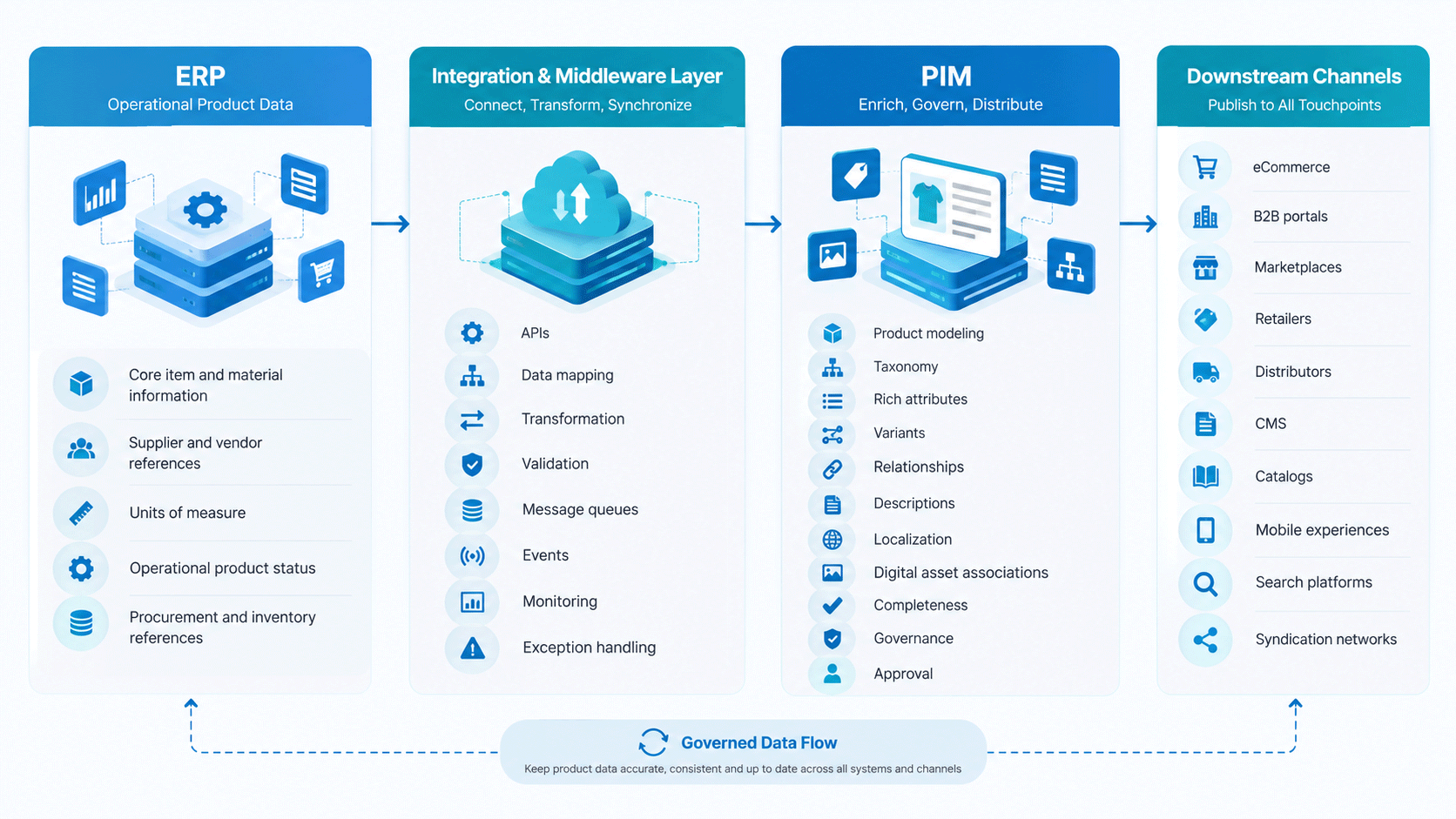
ERP Systems We Integrate with PIM
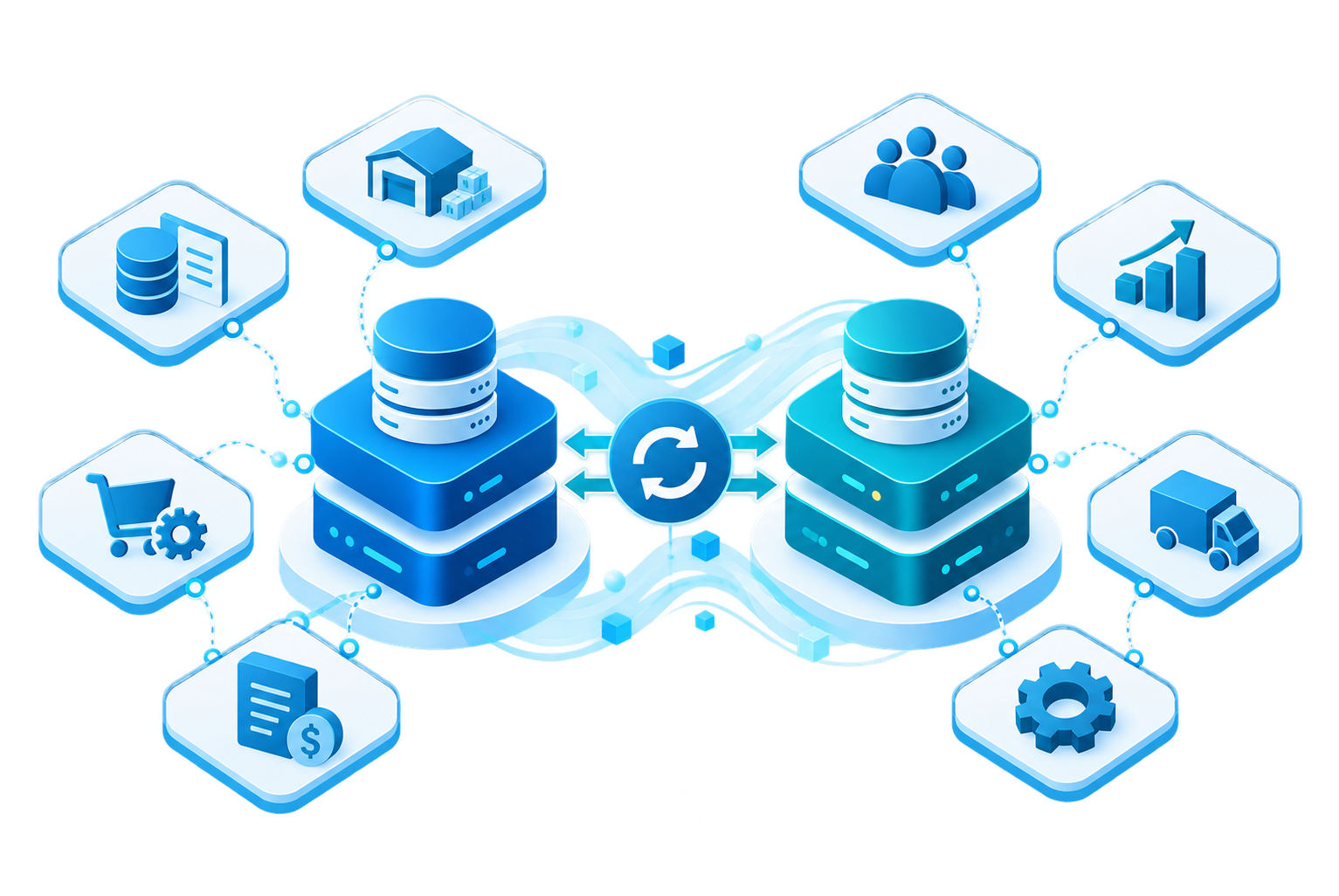
PIM ERP integration should adapt to your existing ERP landscape rather than forcing the business into a rigid integration model. We design product-data integrations around modern cloud ERP environments, established enterprise systems, and custom or legacy platforms.
PIM Platforms We Integrate with ERP
Credencys builds enterprise product-data solutions around platforms and architectures suited to complex integration requirements.

Integrate Pimcore PIM with ERP environments to manage product models, enrichment, workflow, digital assets, relationships, and downstream product-data distribution.

Connect Syndigo with enterprise product-data sources to support governed product content, enrichment, syndication, and channel requirements.
Enterprise PIM Environments
We can also assess existing enterprise PIM environments and design the appropriate integration architecture based on APIs, data models, middleware, and your organization’s technology standards.
Our Approach to PIM ERP Integration
We follow a structured integration approach that aligns product-data ownership, architecture, transformation, governance, and operational processes before connecting systems.
01 Integration Discovery & Assessment
Analyze ERP, PIM, product-data sources, current interfaces, business workflows, systems of record, synchronization requirements, data volumes, dependencies, downstream channels, and integration risks.
02 Architecture & Data Mapping
Define ERP-versus-PIM ownership, identifiers, field mappings, transformations, synchronization direction, validation rules, frequency, exception scenarios, and integration architecture.
03 Integration Development & Validation
Build the APIs, connectors, middleware flows, mappings, and validation logic required to move product information reliably between ERP and PIM. Test product creation, updates, failures, duplicates, data volumes, security, performance, and end-to-end business scenarios before production deployment.
04 Deployment, Monitoring & Optimization
Deploy the integration, establish reconciliation and operational monitoring, resolve exceptions, tune performance, and continuously optimize product-data flows as catalog structures and business requirements evolve.
Common PIM ERP Integration Use Cases
Organizations integrate ERP and PIM for different reasons depending on where products originate, how they are enriched, and how information reaches customers and partners.

Business Impact of PIM ERP Integration
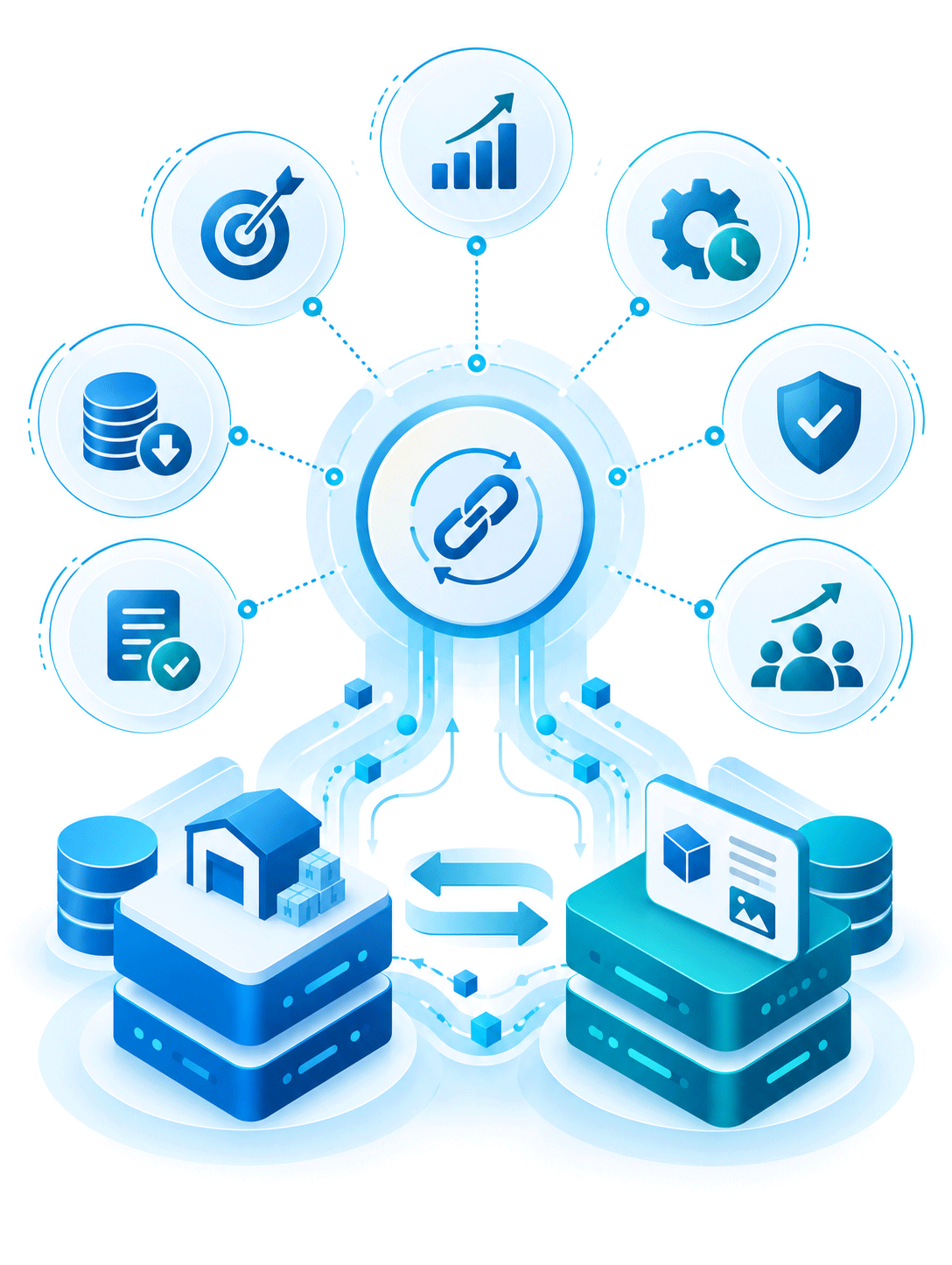
Integrating ERP and PIM creates a connected product-data flow from operational product creation through enrichment and downstream distribution. It reduces repetitive work, establishes clearer ownership, improves data consistency, and helps organizations scale product operations without maintaining disconnected copies of the same information.
Faster Product Onboarding
Automatically create or update PIM records when approved items become available in ERP, reducing delays between operational setup and product enrichment.
Less Duplicate Data Entry
Reduce repeated product creation, copying, spreadsheet preparation, and manual system-to-system updates.
Clearer Product Data Ownership
Define which system owns each field and business process so ERP and PIM do not maintain conflicting master records.
Improved Product Data Accuracy
Apply mapping, validation, synchronization, and governance rules to reduce inconsistent or outdated product information.
Faster Product Updates
Move approved changes between ERP and PIM without relying on repeated manual exports, uploads, and reconciliation.
Stronger Integration Reliability
Use monitoring, retry logic, reconciliation, and exception handling to identify failed product-data flows before they affect downstream channels.
Better Commerce Readiness
Transform operational ERP records into complete, categorized, enriched, and customer-ready product information.
Scalable Enterprise Architecture
Support growing product catalogs, new business units, multiple ERP environments, markets, brands, and downstream channels through a governed integration foundation.
Real Business Impact: PIM ERP Integration Success Stories
Global Kitchen & Dining Products Manufacturer
35%
Improvement in Operational Efficiency
Credencys implemented a centralized digital product-launch environment combining PIM, MDM, DAM, workflow automation, and ERP integration. The solution synchronized ERP with PIM for real-time product updates, helping eliminate duplicate information while supporting a more automated New Product Introduction process.
Read MoreAutomotive Aftermarket Products Leader
3X
Faster Operations
Credencys implemented a centralized PIM environment and integrated it with the client's ERP to streamline product onboarding and maintain consistent data flows. The solution also connected product information with DAM, ACES compatibility data, workflows, and automated syndication to downstream sales channels.
Read MoreGlobal Mining & Industrial Products Company
40K+
Products Managed Through a Connected PIM Environment
Credencys implemented a product information platform to replace manual ERP exports and spreadsheet-driven product-data sharing. The solution established bidirectional synchronization between the client's SYSPRO ERP and Pimcore PIM so updated product information could remain available across both environments while product enrichment and validation workflows were managed centrally.
Read MoreReady to Connect ERP and PIM?
Build reliable product-data flows between operational systems and customer-facing channels without duplicate entry, conflicting records, or fragile manual synchronization.
Book a Free ConsultationWhy Leading Enterprises Choose Credencys for PIM ERP Integration

Product Data Expertise
We combine PIM, MDM, data quality, taxonomy, product modeling, workflow, and syndication expertise to address the complete product-data lifecycle—not just the technical connection between two applications.

Enterprise Integration Experience
We design integrations around complex enterprise environments involving ERP, PIM, DAM, commerce, marketplaces, supplier systems, APIs, middleware, and legacy applications.

End-to-End PIM Capabilities
From product-data assessment and modeling to implementation, integration, migration, governance, syndication, and optimization, Credencys supports the broader PIM transformation around your integration.

Governance-First Architecture
We establish ownership, mappings, validation, synchronization rules, workflows, and exception management so integration improves product-data quality instead of simply moving inconsistent data faster.
50+
Enterprise Clients
100%
Certified Consultants
15+
Years Experience
4.9/5
Client Satisfaction
Frequently Asked Questions
PIM ERP integration connects the operational product information managed in an Enterprise Resource Planning system with the enriched product information managed in a Product Information Management system. ERP may provide SKUs, material numbers, supplier references, units of measure, operational statuses, and related master information, while PIM adds taxonomy, attributes, descriptions, relationships, digital content, localization, and channel-ready product information.
ERP and PIM often participate in different stages of the same product-data lifecycle. Without integration, teams may manually recreate ERP product records in PIM, export and import spreadsheets, maintain duplicate values, and reconcile changes between systems.
Integration automates approved product-data flows and reduces repetitive system-to-system maintenance.
ERP manages operational and transactional business processes such as procurement, inventory, finance, manufacturing, orders, and related item or material information. PIM manages enriched product information used by customers, sales teams, distributors, retailers, marketplaces, eCommerce, catalogs, and digital channels.
PIM complements ERP rather than replacing it.
There is no universal answer. ERP may own identifiers, material numbers, units, suppliers, operational statuses, or other core item information, while PIM may own taxonomy, enriched attributes, descriptions, relationships, localization, and channel content.
The correct ownership model should be defined field by field based on business processes and enterprise architecture.
Common ERP-to-PIM data can include:
- SKU or material number
- Product identifier
- Manufacturer or supplier reference
- Units of measure
- Pack information
- Operational product status
- Item hierarchy references
- Basic product attributes
- Lifecycle information
The exact data flow depends on which system is designated as the authoritative source for each field.
Trusted by Best
Choosing Credencys means partnering with a team that’s deeply committed to unlocking the true value of your data. Here’s why industry leaders trust us:
Our Valued Clientele


Send us a Message
