


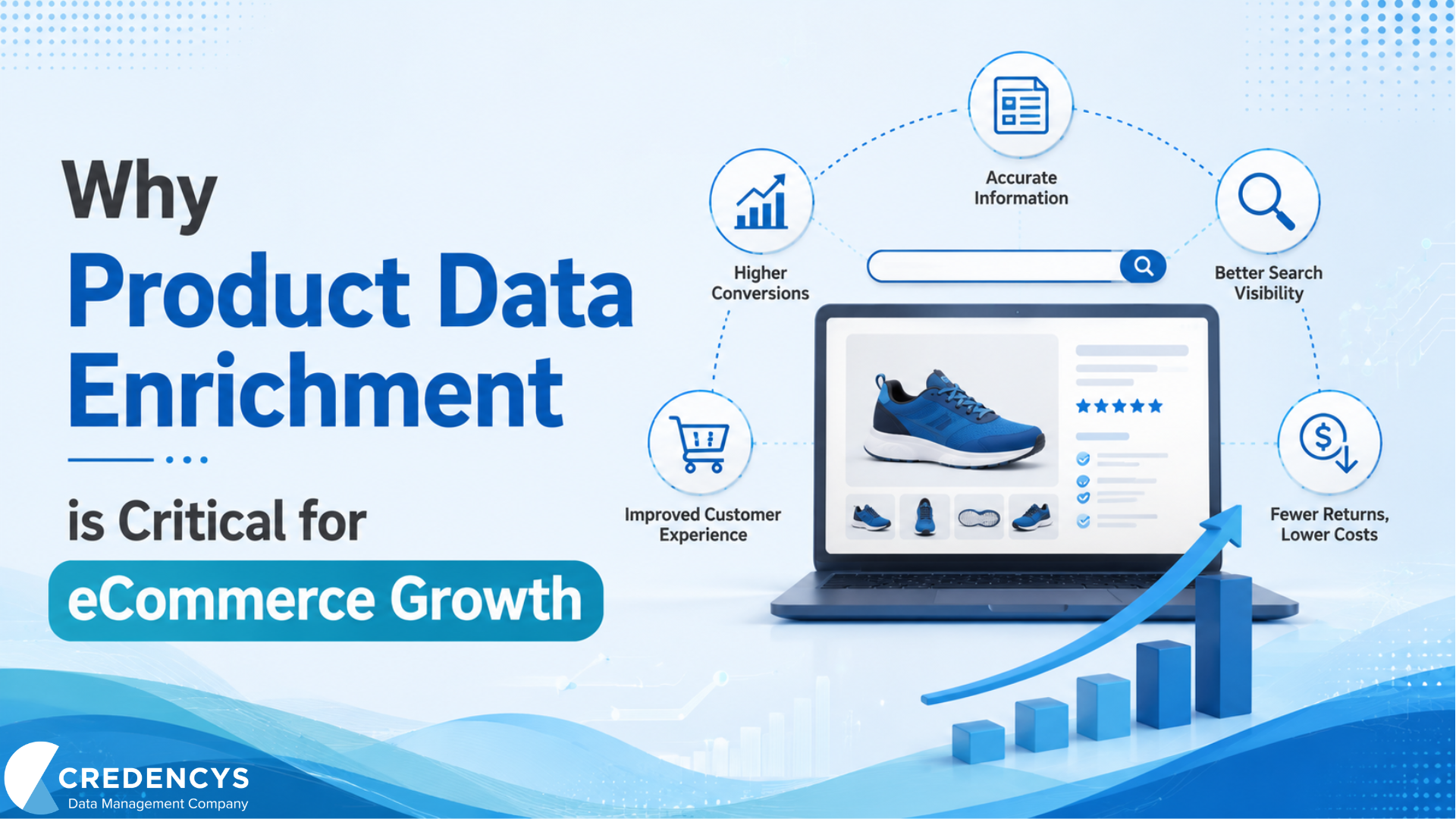
Product Data Enrichment: A Practical Guide
Product data enrichment turns basic supplier data into complete, accurate, and persuasive product information. This guide covers the product data enrichment checklist, the workflow, safe AI use, and how to measure impact.
Most eCommerce brands invest heavily in driving traffic: paid ads, SEO, and social campaigns. But conversions don’t happen on ads.
They happen on product pages. And product pages often have incomplete, inconsistent, or outdated product data, silently killing your conversions.
When customers don’t find the information they need:
- They hesitate
- They abandon
- They buy from competitors
In today’s digital-first buying journey, your product page is your storefront, salesperson, and brand experience; all in one. This is where product data enrichment becomes a game-changer.
Product data enrichment is what bridges the gap between product visibility and product conversion.
The Hidden Cost of Poor Product Data
Many organizations underestimate the impact of poor product data. But the consequences are far-reaching:
- Low conversion rates due to a lack of clarity
- High return rates from mismatched expectations
- Poor search visibility across Google and marketplaces
- Inconsistent customer experiences across channels
If your product pages fail to answer key questions instantly, you lose the sale.
What is Product Data Enrichment
Product data enrichment transforms raw, incomplete product data into rich, structured, customer-ready information. It involves enhancing your product catalog with:
- Complete and standardized attributes
- SEO-optimized titles and descriptions
- High-quality images and videos
- Contextual and usage information
- Accurate operational and logistical data
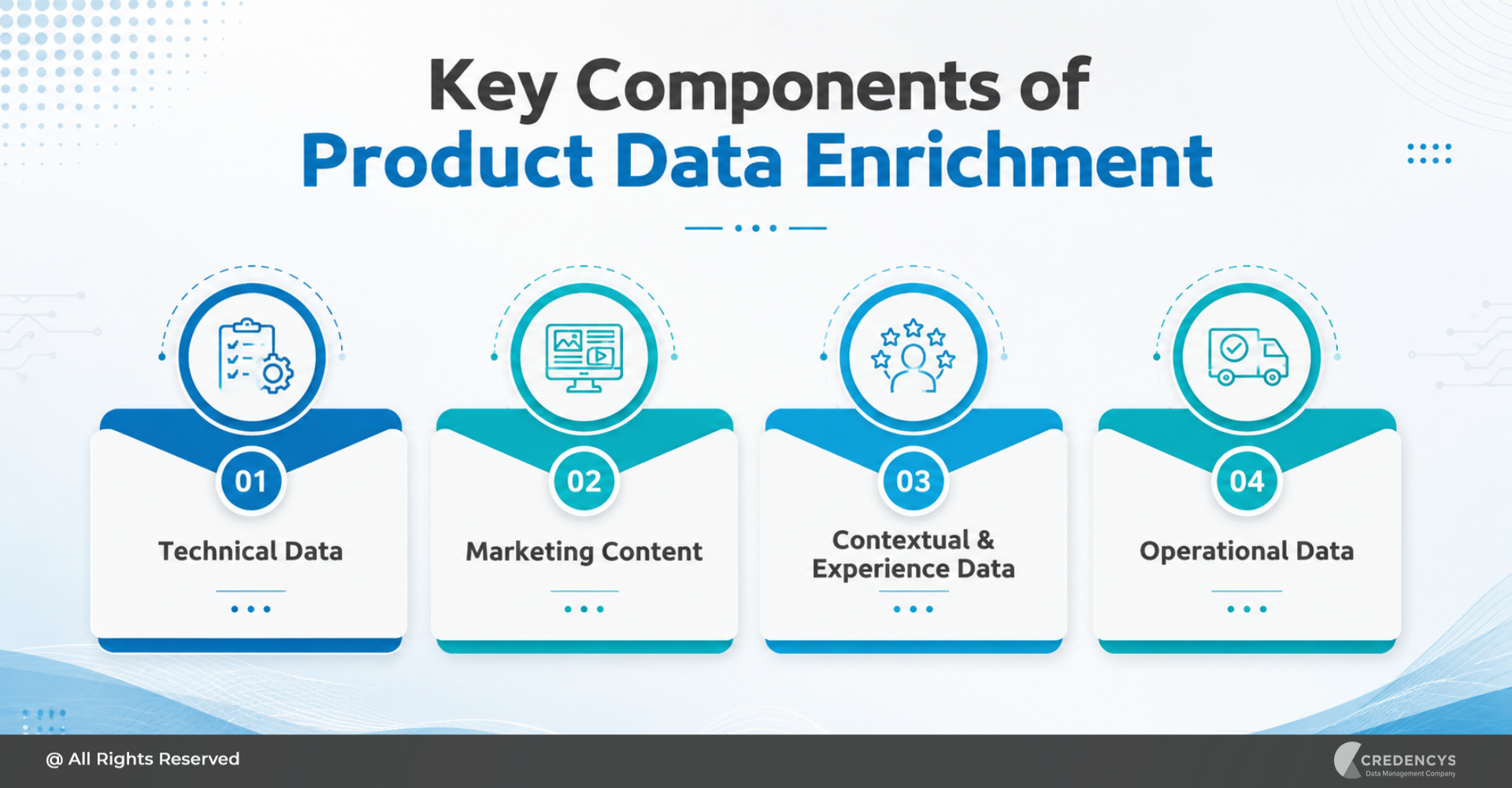
Key Components of Product Data Enrichment
High-performing eCommerce brands go beyond basic listings; they build product experiences that inform, persuade, and convert. Product data enrichment combines multiple layers of data that work together to reduce friction in the buying journey and improve overall performance.
Here are the key components that define truly enriched product data:
1. Technical Data
Technical data forms the backbone of your product information. It includes detailed specifications such as size, weight, material, dimensions, and compatibility.
This structured data enables accurate filtering, comparison, and search functionality, helping customers quickly find products that meet their exact requirements.
2. Marketing Content
Marketing content transforms raw product information into compelling narratives that drive conversions. This includes SEO-optimized titles, engaging descriptions, high-quality images, and videos that highlight product features and benefits.
Well-crafted content not only improves discoverability but also builds trust and influences purchase decisions.
3. Contextual & Experience Data
Contextual data adds depth by helping customers understand how the product fits into their lives. This includes use cases, buying guides, comparison tables, FAQs, and lifestyle content.
By answering common questions and showing real-world value, this layer reduces hesitation and builds confidence.
4. Operational Data
Operational data ensures that what is promised on the product page aligns with fulfillment and delivery. It includes inventory status, shipping details, packaging information, and compliance requirements.
Accurate operational data reduces post-purchase issues, improves transparency, and supports a seamless customer experience.
High-performing product pages combine information, persuasion, and usability.
How Product Data Enrichment Drives eCommerce Growth
Product data enrichment directly drives business performance. When product information is complete, structured, and engaging, it influences every stage of the customer journey, from discovery to post-purchase satisfaction.
Here’s how enriched product data translates into measurable eCommerce growth:
1. Higher Conversion Rates
Enriched product data reduces uncertainty by giving customers the information they need to decide with confidence. Detailed descriptions, clear specifications, and high-quality visuals reduce hesitation and build trust.
As a result, customers are more likely to complete their purchase instead of abandoning the page.
2. Better Search Visibility
Search engines and marketplaces rely heavily on structured and keyword-rich product data to rank listings. Enrichment improves the relevance and completeness of your product information, making it easier for search algorithms to index and surface your products.
This improves rankings, increases visibility, and drives more organic traffic.
3. Reduced Product Returns
Returns often stem from a mismatch between customer expectations and the actual product. Enriched data, accurate descriptions, specifications, and visuals, ensures customers fully understand what they are buying.
This alignment significantly reduces return rates and associated operational costs.
4. Omnichannel Consistency
Customers interact with brands across multiple channels, including websites, marketplaces, mobile apps, and social platforms. Enriched product data keeps information consistent and accurate across all touchpoints.
This consistency strengthens brand credibility and delivers a seamless customer experience.
5. Faster Time-to-Market
With structured data and streamlined enrichment processes, businesses can onboard and launch new products more efficiently. Automated workflows and standardized templates reduce delays and manual effort, enabling faster product rollouts.
This agility lets businesses capitalize on market opportunities faster.
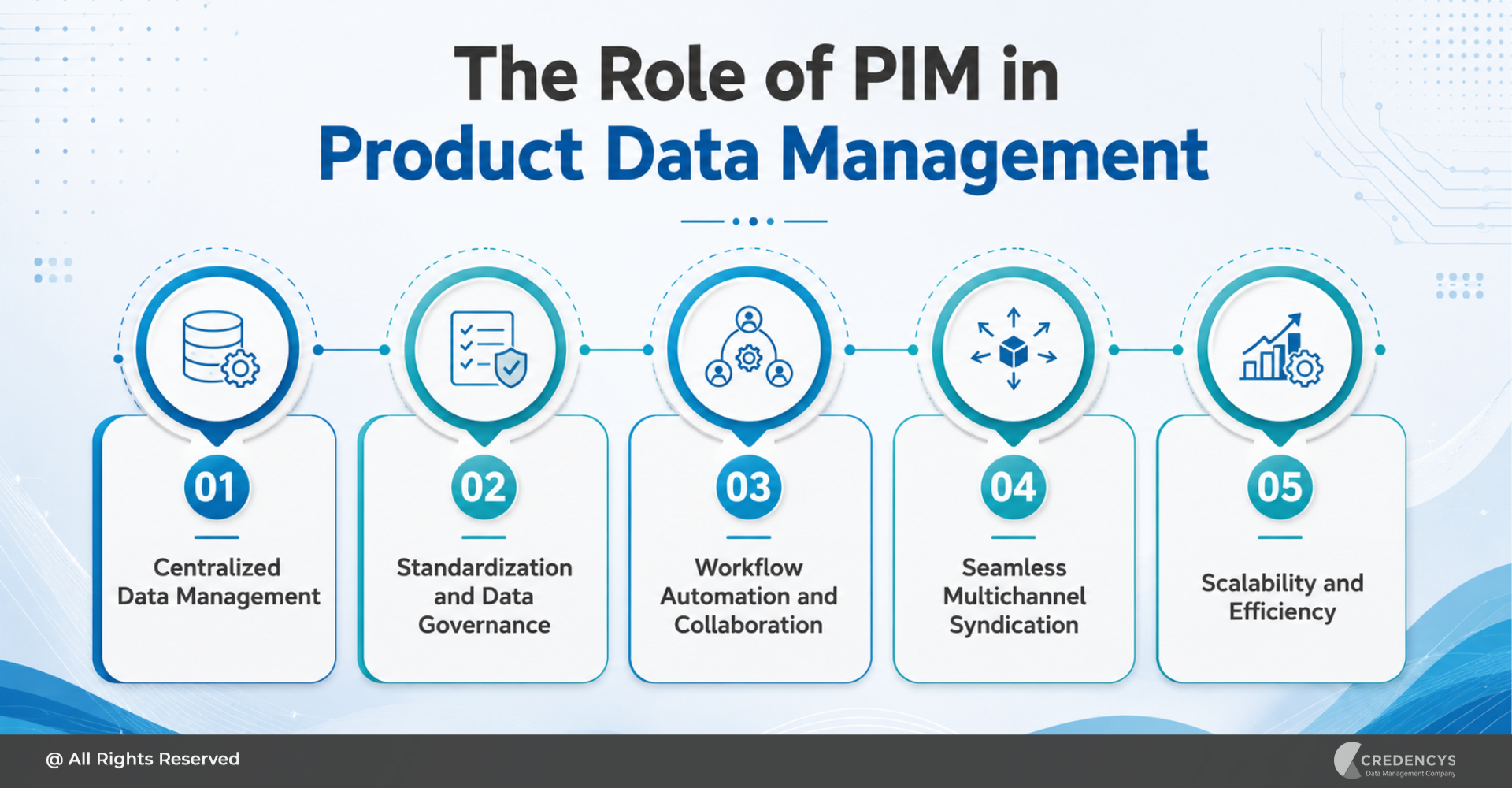
The Role of PIM in Product Data Management
As product catalogs grow in size, complexity, and number of sales channels, manually managing and enriching product data becomes increasingly inefficient. What works for a small catalog quickly becomes a bottleneck with thousands of SKUs, multiple data sources, and frequent updates.
A PIM system provides a foundation for scalable, consistent, and efficient product data enrichment.
1. Centralized Data Management
A PIM system brings all product data into a single, unified repository, eliminating silos across systems, teams, and regions. This centralization ensures that every stakeholder works with the same, up-to-date information, reducing inconsistencies and duplication while improving overall data accuracy.
2. Standardization and Data Governance
PIM enables organizations to define clear data models, attribute structures, and validation rules for different product categories. This ensures consistency across the catalog and enforces data quality standards, making it easier to maintain completeness and accuracy as the product portfolio expands.
3. Workflow Automation and Collaboration
Enriching product data often involves multiple teams: marketing, product, operations, and compliance. A PIM system streamlines this process by enabling structured workflows, task assignments, and approval mechanisms.
This improves collaboration, reduces manual effort, and accelerates enrichment cycles.
4. Seamless Multichannel Syndication
Different sales channels have different data requirements and formats. A PIM system allows businesses to tailor and distribute enriched product data across websites, marketplaces, mobile apps, and other platforms from a single source.
This ensures consistency while meeting each channel’s specific needs.
5. Scalability and Efficiency
As businesses grow, product data volume and complexity increase significantly. PIM systems handle this scale by automating repetitive tasks, reducing manual errors, and enabling faster updates.
This allows teams to focus on strategic initiatives rather than operational overhead.
Without a PIM, enrichment becomes a bottleneck rather than a growth driver.
Product Data Enrichment Checklist
- Title that follows your naming rules
- Key attributes for the category
- Feature bullets
- Long description
- Images and video
- Documents (manuals, datasheets, certificates)
- Translations
- SEO fields
- Related products
- Channel-specific fields
The Product Data Enrichment Workflow
Import supplier and ERP data, check it for gaps, assign tasks to the right teams, enrich, review, and publish. A PIM workflow makes sure nothing goes live incomplete.
Using AI for Product Data Enrichment, Safely
AI can draft descriptions, suggest attributes, and translate at scale. Ground it in the approved attributes in your PIM, give it brand and channel rules, and have a person review every batch.
See our AI product content service and AI product descriptions.
How to Measure the Impact
- Completeness by category and channel
- Time from product creation to publishing
- Conversion rate of enriched vs non-enriched products
- Return reasons linked to product information
- Site searches with no results
For a leading eCommerce agency, an AI-powered PIM made product data turnaround 70% faster.
How Credencys Helps You Turn Product Data into a Growth Engine
Most enterprises scatter product data across ERPs, supplier feeds, spreadsheets, and legacy systems. This fragmentation makes it hard to maintain consistency, scale enrichment efforts, and deliver a seamless customer experience.
This is where Credencys comes in. We help organizations move beyond fragmented data management and build a structured, scalable foundation that transforms product data into a true growth driver.
1. Product Data Strategy & Consulting
We start by assessing your current product data landscape, identifying gaps, inconsistencies, and inefficiencies across systems and processes. Based on this, we define a tailored product data strategy aligned with your business goals, customer expectations, and channel requirements, built for long-term scalability.
2. PIM Implementation & Optimization
As trusted partners of platforms like Pimcore and Syndigo, we help you implement and optimize PIM systems that centralize and standardize your product data. From data modeling to workflow design, we ensure your PIM becomes the backbone of efficient product data enrichment.
3. Large-Scale Product Data Enrichment
We enable businesses to enrich product catalogs at scale by combining domain expertise with structured processes. Whether it’s enhancing product attributes, improving descriptions, or standardizing data across categories, we ensure your product information is complete, accurate, and conversion-ready.
4. AI-Driven Content & Data Optimization
We use AI to accelerate and scale enrichment efforts by automating content creation, identifying missing attributes, and improving data quality. This reduces manual effort and keeps your product data continuously optimized for search, discovery, and personalization.
5. Seamless Integration with eCommerce Ecosystems
Product data doesn’t exist in isolation. We integrate your PIM and enrichment workflows with your broader ecosystem, including eCommerce platforms, marketplaces, ERPs, and analytics systems.
This ensures smooth data flow, consistent experiences, and real-time updates across all touchpoints.
6. Continuous Data Governance & Optimization
Product data enrichment is an ongoing process, not a one-time initiative. We help establish governance frameworks, validation rules, and monitoring mechanisms to ensure your data remains accurate, consistent, and aligned with evolving business needs.
Conclusion
Every product page acts as a digital touchpoint where customers evaluate, compare, and decide. When you enrich, structure, and align your product data with customer expectations, you improve discoverability, build trust, and reduce friction in the buying journey.
Businesses that invest in product data enrichment create better shopping experiences, reduce returns, and drive higher conversions. In a market where competition is a click away, winning brands treat product data as a growth engine, not just a backend asset.
Brands that invest in product data enrichment improve their listings and unlock growth.
For a channel example of the attributes to enrich, see Google Merchant Center’s product data specification.







Tags: