
The Scale and Complexity of Utility Material & Equipment Data
Electric, water, and gas utilities manage thousands of materials, components, devices, spare parts, and equipment types across suppliers, engineering standards, warehouses, projects, and field operations. As infrastructure expands and equipment changes, fragmented specifications, duplicate material records, incomplete documentation, and inconsistent supplier information make it difficult to maintain one trusted view of the materials and equipment used across the utility.
Related: PIM for equipment manufacturers and PIM ERP integration.
Fragmented Material and Equipment Data
Technical information may be distributed across ERP, EAM, GIS, engineering systems, spreadsheets, supplier files, shared drives, PDFs, and legacy databases.
Inconsistent Supplier Specifications
Manufacturers may describe similar equipment using different attribute names, units, classifications, model structures, and documentation formats, creating significant normalization work.
Duplicate and Poorly Structured Material Records
The same or similar material may exist under multiple descriptions, supplier numbers, manufacturer models, legacy identifiers, or business-unit records, increasing catalog complexity.
Complex Technical and Standards Data
Utility materials require detailed attributes such as voltage, pressure, capacity, size, material, ratings, connection type, environmental characteristics, standards, certifications, and application requirements.
Approved Materials and Lifecycle Changes
Utilities need to track approved manufacturers, approved models, replacements, discontinued equipment, technical alternatives, updated specifications, and supporting documents throughout long infrastructure lifecycles.

How healthy is your product data?
8 questions: a score, your two weakest areas and a 30/90-day plan.
Check my product dataThe Strategic Role of PIM in Utilities
PIM gives utilities a governed foundation for managing material and equipment information before that data is consumed by procurement, engineering, warehouses, field operations, asset management, and other enterprise systems. It helps utilities standardize supplier information, improve material-data quality, reduce duplicate records, manage approved equipment relationships, and give employees faster access to trustworthy technical information.
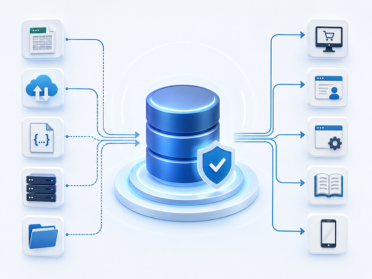
The Single Source of Truth
PIM creates one governed foundation for manufacturer information, material descriptions, equipment specifications, technical attributes, documents, approved relationships, and related content. It enables procurement, engineering, supply chain, warehouse, maintenance, and data teams to work with consistent information.
- Consolidate material and equipment data from suppliers, ERP, EAM, spreadsheets, and legacy systems
- Reduce duplicate, incomplete, and conflicting material records
- Maintain governed information across utility business units and systems

Supplier and Material Data Onboarding
New equipment and materials may arrive from manufacturers, distributors, engineering teams, contractors, and procurement sources in different structures and formats. PIM standardizes the intake and validation process before information enters the governed material catalog.
- Ingest supplier data from spreadsheets, files, APIs, portals, and technical documents
- Map incoming fields into standardized utility equipment models
- Identify missing specifications and documentation
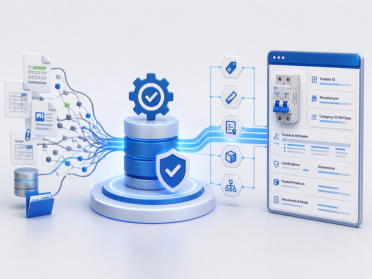
Standardized Utility Material & Equipment Information
Different utility equipment categories require very different data structures. Transformers, meters, breakers, valves, pumps, cables, conductors, pipes, fittings, sensors, protective equipment, and other materials cannot be governed through one generic attribute list.
- Define category-specific equipment and material models
- Standardize technical attributes, terminology, values, and units
- Maintain manufacturer and model identifiers

Approved Materials, Replacements, and Relationships
Utilities frequently need to distinguish between technically available equipment and equipment that has been reviewed and approved for specific applications. PIM can govern these relationships without attempting to replace engineering approval processes.
- Maintain approved manufacturers and approved models
- Connect materials with approved alternatives and replacements
- Manage discontinued and superseded equipment

Connected Utility Operations and AI Readiness
Trusted material information becomes more valuable when it can be reused across procurement, engineering, warehouse, field, and asset-management environments. PIM provides the governed equipment context these systems and emerging AI applications can consume.
- Integrate material information with ERP, EAM, GIS, procurement, and warehouse systems
- Improve technical material search and equipment lookup
- Support field and procurement access to approved documentation
Our Approach to PIM Implementation Services
Our PIM implementation services help utilities standardize material and equipment data, supplier information, technical specifications, approved-product relationships, and enterprise integrations.
01
Assessment and Planning
Analyze your material catalog, equipment categories, supplier sources, ERP and EAM landscape, engineering standards, duplicate records, documentation, workflows, and data ownership to define a clear PIM implementation roadmap.
02
Customization and Configuration
Design utility-specific material models, equipment categories, technical attributes, identifiers, approved-product relationships, validation rules, workflows, user roles, and enterprise integrations.
03
Enrichment and Governance
Cleanse and migrate existing material information, standardize descriptions and attributes, identify duplicate records, associate technical documentation, and establish review, approval, and data-governance workflows.
04
Deployment and Training
Launch PIM across priority material categories, suppliers, business units, and connected systems, train internal users, monitor data quality and adoption, and provide ongoing post-deployment support.
Business Impact of PIM for Utilities
PIM transforms fragmented material and equipment information into a governed enterprise data asset. It reduces manual data work, strengthens procurement and engineering processes, improves equipment-data accuracy, and helps utilities make trusted information available wherever infrastructure decisions are made.



Ready to Modernize Your Utility Material Data?
Build a trusted material and equipment data foundation that simplifies supplier onboarding, strengthens engineering and procurement decisions, reduces duplicate records, and keeps approved technical information connected across enterprise systems.
Book a Free ConsultationWhy Leading Enterprises Choose Credencys?
Credencys helps enterprises turn complex data into trusted insights, intelligent operations, and measurable business growth. Here’s what makes us a preferred data and AI partner:

End-to-End Data Expertise
From data strategy to AI deployment, we cover the entire spectrum—Data Management, Engineering, Insights, and Intelligence—to ensure your data drives measurable business outcomes.

Domain-Focused Solutions
Whether you're in retail, automotive, or manufacturing, our purpose-built platforms solve industry-specific challenges with precision and speed.

Enterprise-Grade Partnerships
We collaborate with the best in the business to deliver future-ready, scalable, and secure solutions.

AI-First
We help you move beyond dashboards—accelerating AI readiness, deploying GenAI and enterprise AI agents, and enabling intelligent automation across your data ecosystem.
50+
Enterprise Clients
100%
Certified Consultants
15+
Years Experience
4.9/5
Client Satisfaction
We Build PIM Solutions for


Frequently Asked Questions
PIM for Utilities is a centralized approach to collecting, structuring, enriching, governing, and distributing the material and equipment information used across a utility enterprise. It can manage manufacturer data, model numbers, technical specifications, material descriptions, standards references, documents, approved alternatives, replacements, classifications, and other equipment-related information.
Utilities often maintain equipment and material information across ERP, EAM, GIS, engineering systems, warehouse applications, spreadsheets, supplier documents, and legacy databases. Different systems may contain different descriptions, classifications, technical attributes, and identifiers for the same material.
PIM creates a governed information layer where material and equipment data can be standardized before it is reused across those enterprise systems.
They overlap, but they are not always identical. Material master management focuses on establishing authoritative material records, identity, governance, and business-critical master attributes.
PIM typically provides richer technical information, supplier content, documentation, classifications, relationships, enrichment workflows, and downstream distribution capabilities. For utilities, the strongest architecture may combine PIM and MDM capabilities depending on the complexity of the material environment.
Yes. The product model can support different equipment domains within the same governed environment. For example, electric utilities may require voltage, current, interrupting rating, conductor, or transformer attributes.
Yes. PIM can maintain which manufacturers, models, or materials are approved for particular categories, programs, regions, or applications. Approved-product status can be governed through workflows and supported with technical specifications, certificates, drawings, test reports, and engineering documentation.
Yes. Spare parts can be linked to the equipment they fit, with their attributes and approved suppliers, so maintenance teams find the right part.
Yes. Certificates, test reports and safety documents are linked to each material with validity dates, so teams can check compliance before a material is used.
Trusted by Best
Choosing Credencys means partnering with a team that’s deeply committed to unlocking the true value of your data. Here’s why industry leaders trust us:
Our Valued Clientele


Send us a Message
