
The Scale and Complexity of Retail Product Data
Retailers manage thousands or millions of products across suppliers, brands, categories, variants, markets, and sales channels. As assortments grow, fragmented product information, inconsistent supplier data, complex attributes, and channel-specific requirements make it harder to keep every product accurate, complete, discoverable, and ready to sell.
Fragmented Supplier Product Data
Product information often arrives from brands and suppliers through spreadsheets, portals, PDFs, APIs, ERP systems, and other sources with different structures, terminology, attributes, and levels of completeness.
Large and Constantly Changing Assortments
New products, seasonal collections, assortment changes, discontinued SKUs, replacements, and promotional ranges create continuous pressure on retail product-data teams.
Complex Variants and Product Relationships
Retail catalogs frequently include size, color, material, pack, style, model, configuration, and other variations that must remain connected to the correct product family, images, attributes, and channel content.
Different Marketplace and Channel Requirements
eCommerce platforms, marketplaces, retailers, stores, mobile apps, and other channels may require different categories, attributes, identifiers, descriptions, images, and content formats.
Slow Product Enrichment and Launches
Manual enrichment, spreadsheet-based approvals, repeated channel formatting, missing attributes, and disconnected workflows delay product launches and increase catalog-management effort.

How Much is Your Product Data Costing You?
Get Your Score + 90-day action plan in 3 minutes.
Check Your ScoreThe Strategic Role of PIM in Retail
PIM provides retailers with a governed product-data foundation for collecting, enriching, validating, relating, and distributing product information across brands, suppliers, markets, and commerce channels. It helps retail teams reduce manual catalog work, improve product-data quality, accelerate assortment launches, and deliver more consistent product experiences wherever customers shop.
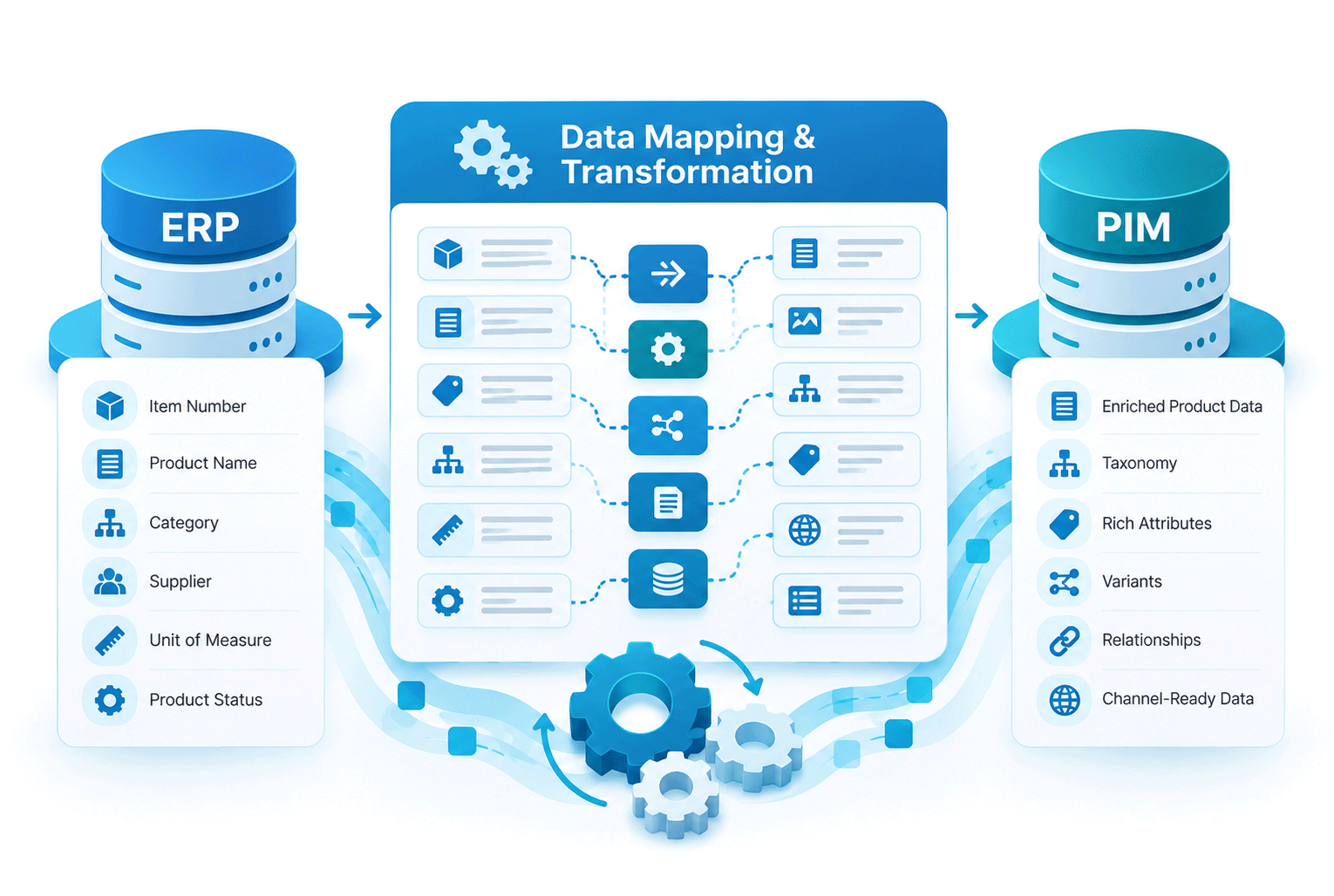
The Single Source of Truth
PIM centralizes product descriptions, identifiers, specifications, attributes, categories, variants, relationships, channel content, and associated digital assets. It enables merchandising, eCommerce, marketing, product, marketplace, and data teams to work from consistent and governed product information.
- Consolidate data from suppliers, ERP, spreadsheets, DAM, and legacy systems
- Reduce duplicate and conflicting product records
- Maintain consistent product information across brands, markets, and channels
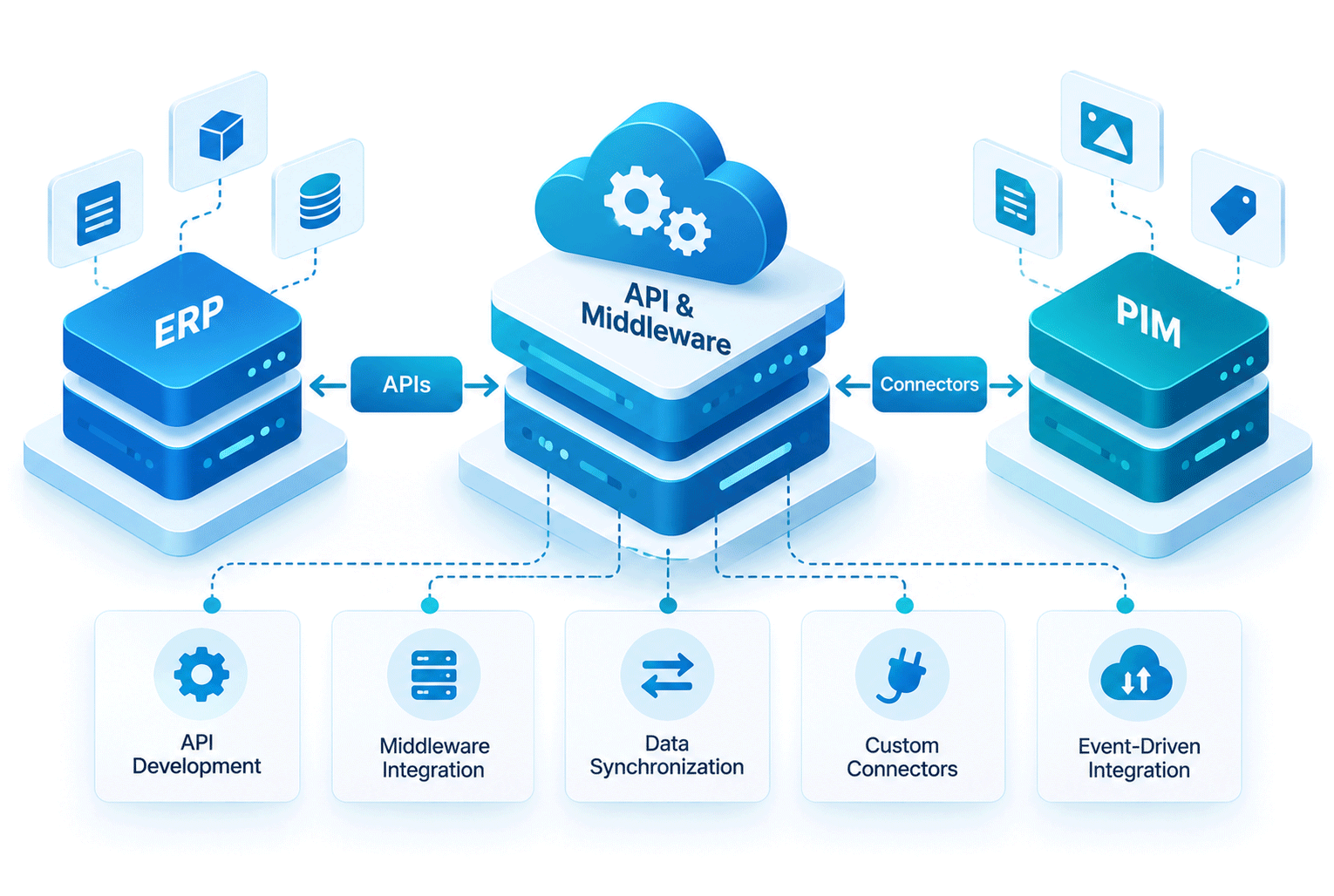
Supplier and Product Onboarding
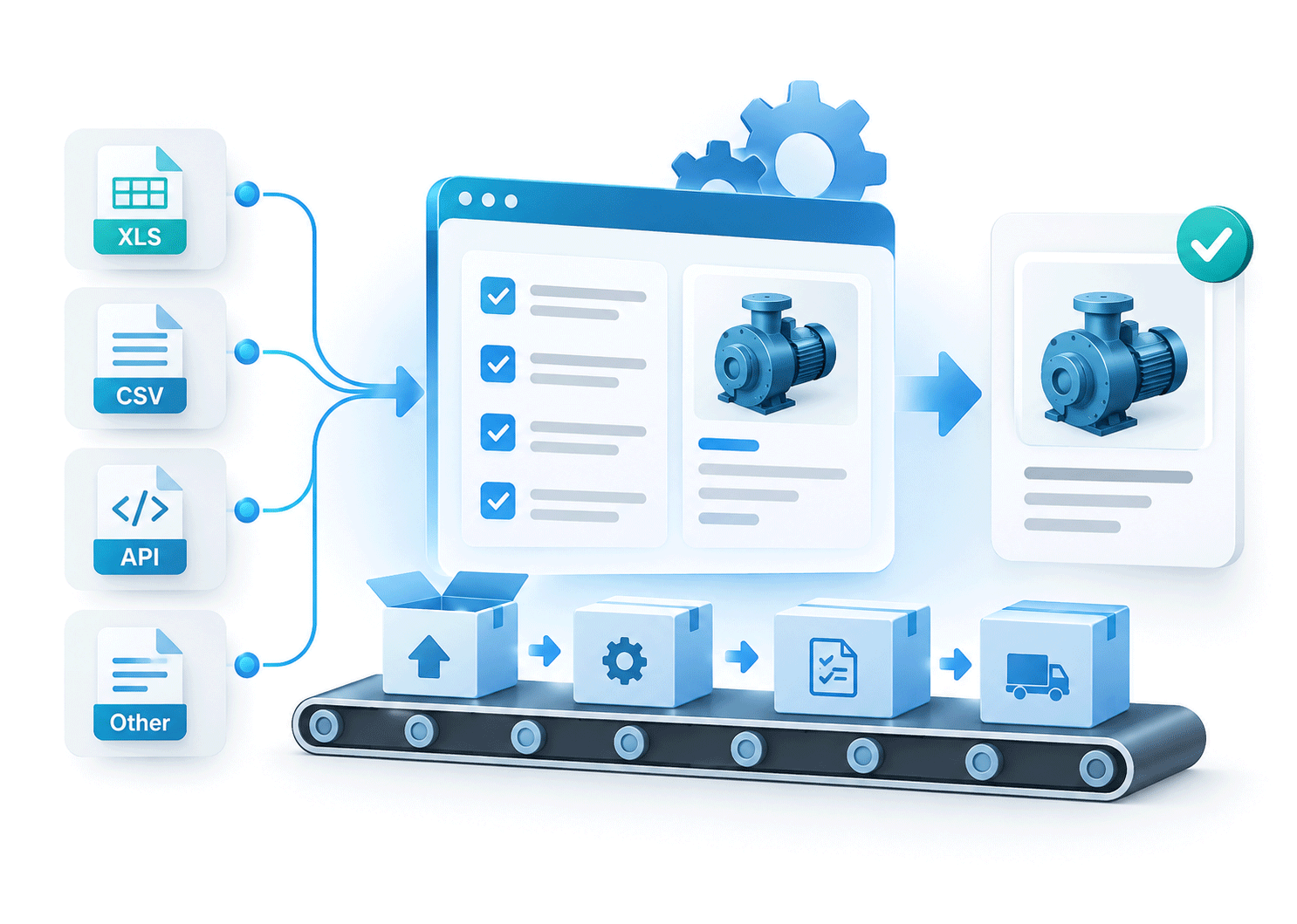
Retailers frequently receive incomplete or inconsistent product information from multiple suppliers. PIM standardizes incoming supplier data and moves products through structured enrichment, completeness, validation, and approval workflows before publication.
- Map supplier fields to governed retail attributes
- Normalize categories, values, terminology, and units of measure
- Identify missing or invalid product information
- Accelerate onboarding of new suppliers and products
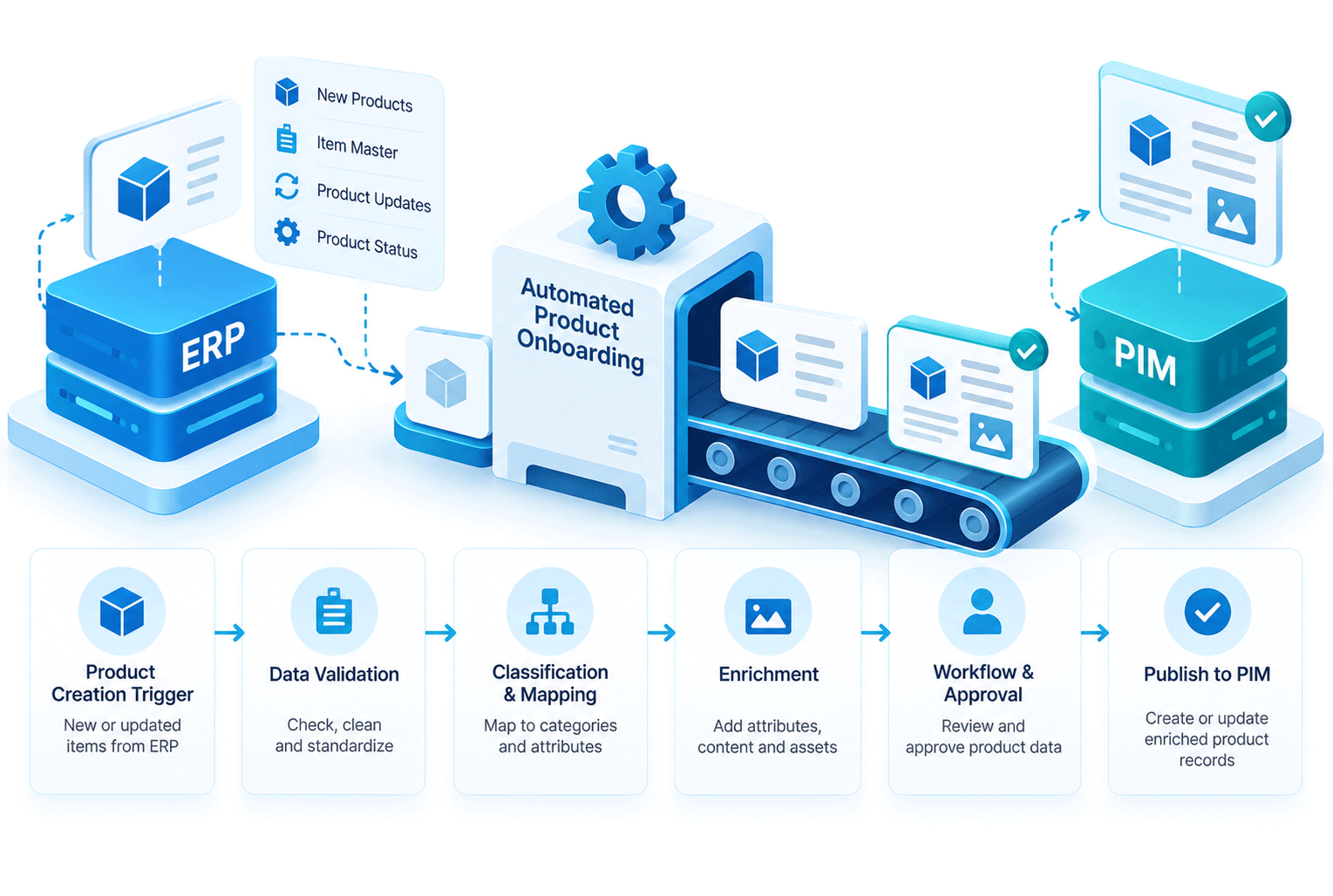
Retail Product Taxonomy and Variant Management
Effective product discovery depends on structured categories, attributes, and product relationships. PIM enables retailers to create scalable taxonomy structures and manage complex variations without maintaining disconnected copies of the same product information.
- Build category-specific product models
- Manage parent-child and variant relationships
- Standardize controlled attribute values
- Connect bundles, accessories, substitutes, replacements, and related products
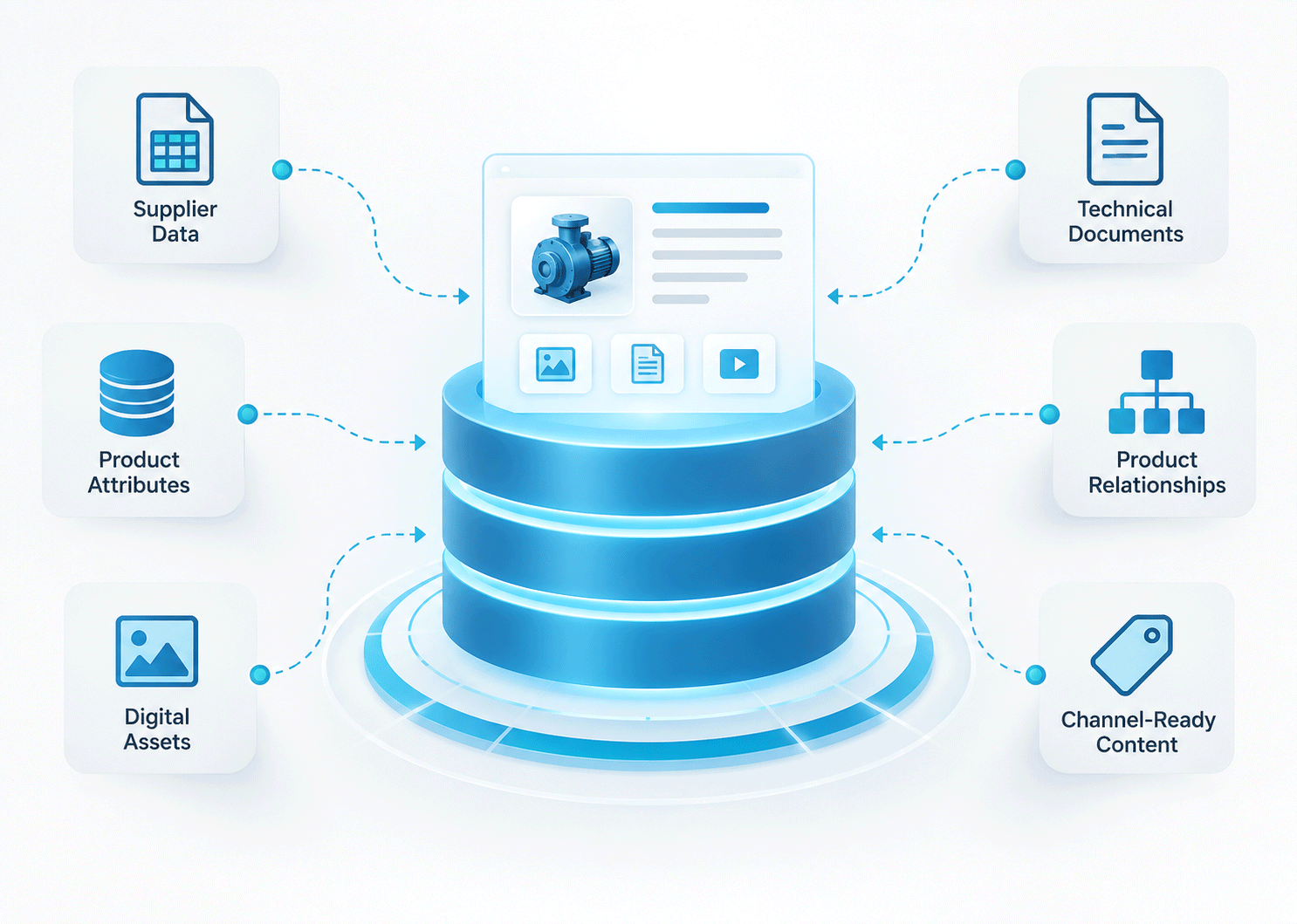
Omnichannel Product Content Syndication
Different commerce destinations require product data in different structures and formats. PIM enables retailers to maintain governed core information while preparing channel-specific content for eCommerce platforms, marketplaces, retailer feeds, stores, and other customer touchpoints.
- Map product information to channel-specific requirements
- Maintain channel-specific titles and descriptions
- Validate required attributes before publication
- Reduce repeated manual feed preparation
Commerce and AI Readiness
Modern retail experiences increasingly depend on structured product data for search, filters, recommendations, personalization, and AI-assisted shopping. PIM provides the trusted product context these applications need.
- Improve search and faceted navigation
- Support product comparison and recommendations
- Enable semantic and natural-language discovery
- Prepare governed data for AI-assisted enrichment and commerce applications
Omnichannel Retail Data
Retailers sell the same product in stores, online, in apps and on marketplaces. A PIM for retail keeps one approved record and adapts it to each channel:
Stores
Shelf labels, planograms and in-store systems get the same data as the website.
Web and app
Rich descriptions, attributes for filters, and images and videos.
Marketplaces
Titles, attributes and categories mapped to each marketplace’s rules.
Localisation
Languages, units and regional assortments managed in one place.
Proof: SM Retail achieved 59% faster pricing updates. For sector detail, see PIM for grocery, PIM for fashion and PIM for jewelry.
Our Approach to PIM Implementation Services
From initial assessment to deployment, we follow a proven four-step approach to implement PIM around your retail catalog, supplier ecosystem, commerce architecture, and business priorities.
01
Assessment and Planning
Analyze your product categories, suppliers, data sources, systems, workflows, channels, data-quality challenges, and business goals. Define the product-data architecture, implementation roadmap, governance model, integration priorities, and success metrics.
02
Customization and Configuration
Configure product models, categories, attributes, variants, relationships, workflows, validation rules, permissions, completeness requirements, and channel structures around your retail operations.
03
Enrichment and Governance
Cleanse and migrate existing product information, normalize supplier data, associate digital assets, define ownership, and establish enrichment, review, approval, and governance processes.
04
Deployment and Training
Integrate PIM with upstream and downstream systems, launch priority product categories and channels, train internal teams, monitor adoption, and continuously improve product-data quality.
Business Impact of PIM for Retail
PIM transforms fragmented retail product information into a governed business asset. It reduces manual product-data operations, improves catalog quality, accelerates assortment launches, and enables retailers to scale products, suppliers, markets, and channels without multiplying operational complexity.

Real Business Impact: PIM Success Stories in Retail
Leading Automotive Aftermarket Retailer
50%
Improvement in Data Compliance
Credencys implemented a centralized PIM solution to unify fragmented product information, standardize automotive product data, automate validation, and streamline product-data distribution across trading partners and digital channels.
Read MoreLuxury Watches & Jewelry Retailer
45%
Improvement in Product Data Accuracy
Credencys implemented an integrated PIM, DAM, MDM, and digital commerce solution to centralize complex product information, manage rich digital assets, and improve product-data consistency across customer-facing channels.
Read MoreReady to Modernize Your Retail Product Data?
Create a trusted product-data foundation that improves supplier onboarding, product enrichment, search and discovery, marketplace readiness, and omnichannel commerce.
Book a Free ConsultationWhy Leading Enterprises Choose Credencys?

End-to-End Data Expertise
Build connected product-data ecosystems spanning PIM, MDM, DAM, commerce, ERP, marketplaces, and enterprise applications.

Domain-Focused Solutions
Design product-data models, governance, workflows, and integrations around the realities of your industry and business operations.

Enterprise-Grade Partnerships
Leverage proven technologies and implementation expertise to build scalable PIM solutions aligned with enterprise requirements.

AI-First
Apply AI where it creates measurable value across product classification, enrichment, mapping, validation, search, and data-quality operations.
50+
Enterprise Clients
100%
Certified Consultants
15+
Years Experience
4.9/5
Client Satisfaction
We Build PIM Solutions for


Frequently Asked Questions
PIM for retail is a centralized approach to collecting, enriching, governing, and distributing product information across suppliers, brands, markets, and customer channels. It enables retailers to manage product descriptions, specifications, identifiers, categories, variants, relationships, digital assets, and channel-specific content from one governed product-data foundation.
Retailers frequently manage product information across supplier files, ERP, spreadsheets, DAM, eCommerce platforms, marketplaces, and other systems. PIM reduces this fragmentation by providing a centralized environment for product enrichment, governance, validation, and distribution.
This becomes increasingly valuable as catalogs, suppliers, markets, and channels grow.
PIM can ingest product information from supplier spreadsheets, files, APIs, portals, databases, and enterprise systems. Supplier fields can be mapped to standardized categories and attributes, normalized into controlled values, checked for completeness, enriched, reviewed, and approved before products are distributed to commerce channels.
Yes. Retail PIM can manage parent-child relationships and variants based on attributes such as:
- Size
- Color
- Material
- Style
- Capacity
- Pack quantity
- Model
- Configuration
- Other category-specific characteristics
Shared information can be inherited from the parent while SKU-specific information remains attached to the appropriate variant.
PIM structures product categories, attributes, specifications, relationships, and controlled values so search and merchandising applications have richer product context. This can improve:
- Keyword search
- Faceted navigation
- Filters
- Product comparison
- Related products
- Recommendations
- Semantic search
- Natural-language product discovery
It depends on your assortment, channels and data quality. A focused first release typically takes 3 to 6 months; larger programmes run in phases over 6 to 12 months or more. Discovery takes a few weeks and gives you a firm plan.
Trusted by Best
Choosing Credencys means partnering with a team that’s deeply committed to unlocking the true value of your data. Here’s why industry leaders trust us:
Our Valued Clientele


Send us a Message
