
The Scale and Complexity of Homewares Product Data
Homewares brands, manufacturers, wholesalers, and retailers manage diverse product information across suppliers, categories, materials, colors, patterns, dimensions, collections, sets, digital assets, and sales channels. As assortments expand and seasonal collections change, fragmented supplier data, inconsistent product attributes, complex variants, and disconnected content make products harder to manage, discover, and sell.
Related: PIM for furniture and PIM for retail.
Diverse Product Categories and Attributes
Kitchenware, tabletop, décor, bedding, bath, storage, household accessories, and other home products require different attributes such as dimensions, capacity, material, finish, pattern, care information, and product composition.
Fragmented Supplier Product Data
Product information may arrive from manufacturers and suppliers through spreadsheets, files, portals, PDFs, APIs, and other formats, often using different categories, terminology, attribute structures, and levels of completeness.
Complex Variants, Sets, and Collections
The same product may exist across multiple colors, patterns, materials, sizes, finishes, or pack configurations, while individual products may also belong to sets, collections, coordinating ranges, or seasonal assortments.
Asset-Heavy Product Experiences
Homewares products depend heavily on product photography, lifestyle images, swatches, detail shots, videos, care guides, instructions, packaging imagery, and other assets that must remain connected to the correct product and variant.
Frequent Assortment and Channel Changes
Seasonal collections, new colors, discontinued products, packaging changes, marketplace requirements, regional assortments, and promotional ranges create continuous product-data maintenance across channels.

How healthy is your product data?
8 questions: a score, your two weakest areas and a 30/90-day plan.
Check my product dataThe Strategic Role of PIM in Homewares
PIM gives homewares businesses a governed foundation for managing diverse product information across suppliers, product families, variants, collections, markets, and sales channels. It helps standardize product data, simplify supplier onboarding, manage product relationships, improve digital merchandising, and deliver accurate product information everywhere customers shop.
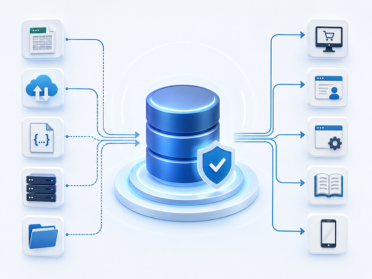
The Single Source of Truth
PIM creates one governed foundation for product descriptions, materials, dimensions, colors, patterns, finishes, specifications, images, documents, relationships, and channel content. It enables product, merchandising, marketing, eCommerce, sales, and supplier-management teams to work with consistent product information.
- Consolidate homewares data from suppliers, ERP, spreadsheets, DAM, and legacy systems
- Reduce duplicate and conflicting product records
- Maintain governed information across brands, collections, markets, and channels
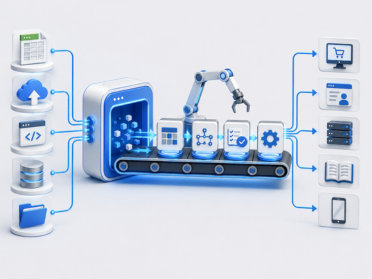
Product Variant and Collection Management
Homewares catalogs frequently contain families of related products differentiated by color, pattern, size, material, finish, capacity, or design. PIM structures these relationships without forcing teams to maintain disconnected copies of the same core product information.
- Manage parent-child relationships between products and variants
- Structure colors, patterns, materials, finishes, dimensions, and sizes
- Connect coordinating products, collections, ranges, and sets

Standardized Homewares Product Information
Different homewares categories require different product-data models. A cookware set, cushion, vase, storage container, dinnerware collection, and bathroom accessory should not all use the same generic attribute structure.
- Define category-specific product models and required attributes
- Standardize dimensions, materials, capacity, finish, pattern, and terminology
- Normalize supplier values and units of measure
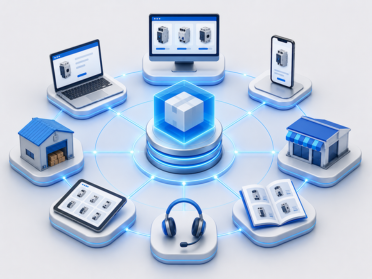
Rich Content and Omnichannel Merchandising
Customers often evaluate homewares based on how products look, coordinate, fit within a space, and work together as part of a collection. PIM connects structured product information with the digital assets and merchandising content required by each channel.
- Associate product and lifestyle photography with the correct products and variants
- Manage swatches, instructions, care content, videos, and supporting documents
- Publish product information to eCommerce, marketplaces, retailers, and catalogs

Digital Commerce and AI Readiness
Homewares customers increasingly discover products through filters, recommendations, visual merchandising, conversational search, marketplaces, and AI-assisted shopping experiences. Structured PIM data gives those applications the context they need to interpret product characteristics and relationships accurately.
- Improve search, filtering, comparison, and recommendations
- Support discovery by material, color, pattern, style, room, size, or product type
- Enable collection- and relationship-based cross-selling
Our Approach to PIM Implementation Services
From initial assessment to final deployment, we follow a proven four-step process to deliver a scalable PIM solution aligned with your homewares catalog, supplier ecosystem, product complexity, and commerce priorities.
01
Assessment and Planning
Analyze your product categories, suppliers, variants, collections, data sources, digital assets, systems, workflows, channels, and business priorities to define a clear PIM implementation roadmap.
02
Customization and Configuration
Design homewares-specific product models, categories, attributes, variant structures, collections, product relationships, validation rules, workflows, user roles, and integrations.
03
Enrichment and Governance
Cleanse and migrate existing product information, standardize supplier attributes and values, associate digital assets, establish data ownership, and configure enrichment, validation, review, and approval workflows.
04
Deployment and Training
Launch PIM across priority product categories, suppliers, collections, markets, and channels, train internal teams, monitor adoption, and provide ongoing post-deployment support.
Business Impact of PIM for Homewares
PIM transforms fragmented homewares product information into a governed business asset. It reduces manual catalog work, simplifies variant and collection management, improves product-data quality, and helps brands and retailers launch richer product experiences faster.



Real Business Impact: PIM Success Stories in Homewares
Custom Bathroom Products Manufacturer
55%
Reduction in Overhead Costs
Credencys implemented a centralized PIM and DAM solution for a manufacturer managing complex product families, compatibility combinations, and scattered product information. The solution established precise product relationships, automated catalog creation through EasyCatalog and Adobe InDesign, and syndicated governed product data to a customer-facing product visualizer.
Read MoreLeading Interior Design Products Brand
73%
Improvement in Customer Satisfaction
Credencys implemented an integrated PIM, DAM, MDM, and eCommerce solution to centralize complex product information, media assets, and product relationships across vendors, customers, and administrators. The solution introduced structured data models, bulk product management, workflow automation, and dedicated digital portals to simplify product operations and improve the customer experience.
Read MoreGlobal B2B2B Sourcing & Supply Chain Company
200+
Factory Partners Connected
Credencys implemented a centralized PIM and DAM platform to consolidate product information and media assets received from more than 200 factory partners. The solution replaced spreadsheet-, PowerPoint-, and email-driven processes with governed product onboarding, digital catalog creation, retailer product discovery, RFQ management, and automated workflows.
Read MoreReady to Modernize Your Homewares Product Data?
Build a trusted product-data foundation that simplifies supplier catalogs, variants, collections, digital assets, and omnichannel merchandising—so customers can find and evaluate the right products faster.
Book a Free ConsultationWhy Leading Enterprises Choose Credencys?
Credencys helps enterprises turn complex data into trusted insights, intelligent operations, and measurable business growth. Here’s what makes us a preferred data and AI partner:

End-to-End Data Expertise
From data strategy to AI deployment, we cover the entire spectrum—Data Management, Engineering, Insights, and Intelligence—to ensure your data drives measurable business outcomes.

Domain-Focused Solutions
Whether you're in retail, automotive, or manufacturing, our purpose-built platforms solve industry-specific challenges with precision and speed.

Enterprise-Grade Partnerships
We collaborate with the best in the business to deliver future-ready, scalable, and secure solutions.

AI-First
We help you move beyond dashboards—accelerating AI readiness, deploying GenAI and enterprise AI agents, and enabling intelligent automation across your data ecosystem.
50+
Enterprise Clients
100%
Certified Consultants
15+
Years Experience
4.9/5
Client Satisfaction
We Build PIM Solutions for


Frequently Asked Questions
PIM for Homewares is a centralized approach to collecting, structuring, enriching, governing, and distributing product information for home and household products. It helps brands, manufacturers, wholesalers, and retailers manage product descriptions, materials, dimensions, colors, patterns, finishes, variants, collections, sets, images, documents, and channel-specific content from one governed product-data foundation.
Homewares businesses frequently manage diverse catalogs assembled from multiple suppliers, brands, and product categories. Information may be spread across ERP, supplier files, spreadsheets, DAM, eCommerce, marketplaces, and other systems.
PIM standardizes that information so teams do not need to repeatedly clean, enrich, and maintain separate product records for every channel.
Yes. PIM can maintain standardized color, pattern, material, and finish attributes using controlled values and supplier mappings. This is particularly useful for homewares because suppliers may use different names for similar materials, finishes, or colors.
Structured values can then support search, filtering, marketplace feeds, comparisons, and product recommendations.
Yes. A product can be connected to both its individual sellable SKU and the sets or bundles in which it appears. The appropriate architecture depends on whether the set has its own SKU, GTIN, inventory record, pricing, and fulfillment logic.
PIM manages the product relationship and enriched information, while ERP or commerce systems typically manage inventory and transactional bundle behavior.
Yes. PIM can structure and validate relatively stable product attributes before information is distributed to Google Merchant Center, marketplaces, retailers, or feed-management platforms.
Google currently uses structured product information including identifiers, variants, materials, colors, patterns, images, and categories to understand and present products. PIM can govern this content while dynamic information such as inventory and price may continue to come from ERP or commerce systems.
Yes. Care and cleaning instructions are stored as attributes or documents and published with each product to every channel.
Yes. Lifestyle and room-set images are managed with packshots and linked to the right products and colours, so each channel gets the images it needs.
Trusted by Best
Choosing Credencys means partnering with a team that’s deeply committed to unlocking the true value of your data. Here’s why industry leaders trust us:
Our Valued Clientele


Send us a Message
