
The Scale and Complexity of Furniture Product Data
Furniture brands, manufacturers, and retailers manage product information across thousands of styles, variants, collections, materials, finishes, dimensions, configurations, digital assets, and sales channels. As catalogs expand, keeping every product combination accurate, complete, and commercially ready becomes increasingly difficult.
Related: PIM for homewares and PIM for retail.
Complex Product Variants and Configurations
A single furniture style may be available across multiple sizes, colors, fabrics, materials, finishes, orientations, components, and configurations, creating hundreds of valid product combinations.
Fragmented Product Information
Dimensions may live in ERP, materials and specifications in manufacturing systems, images in DAM, configuration data in spreadsheets, and commercial content in eCommerce or catalog platforms.
Inconsistent Dimensions and Technical Attributes
Furniture buyers depend on accurate width, height, depth, weight, materials, finishes, seating capacity, assembly requirements, and other specifications to determine whether a product fits their space and needs.
Asset-Heavy Product Catalogs
Furniture products require multiple images, lifestyle photography, swatches, diagrams, assembly instructions, videos, 3D models, certificates, and other assets that must remain connected to the correct product and variant.
Different Channel and Market Requirements
Retailers, marketplaces, dealers, showrooms, print catalogs, and regional websites may require different product attributes, image formats, descriptions, classifications, languages, and merchandising content.

How healthy is your product data?
8 questions: a score, your two weakest areas and a 30/90-day plan.
Check my product dataThe Strategic Role of PIM in Furniture
PIM gives furniture companies a governed foundation for managing complex product information across product families, variants, collections, systems, markets, and sales channels. It helps standardize furniture data, manage product relationships, accelerate product onboarding, improve digital product discovery, and deliver richer customer experiences across physical and digital channels.
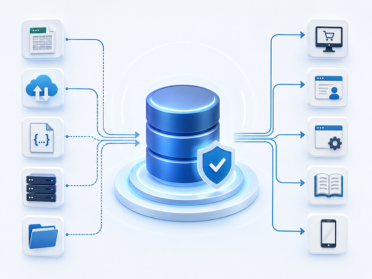
The Single Source of Truth
PIM creates one governed foundation for dimensions, materials, finishes, specifications, descriptions, images, documents, product relationships, and channel-specific content. It enables product, merchandising, marketing, eCommerce, sales, and operations teams to work from consistent product information.
- Consolidate furniture data from ERP, manufacturing systems, spreadsheets, DAM, and legacy platforms
- Reduce duplicate and conflicting product records
- Maintain trusted information across brands, collections, markets, and channels
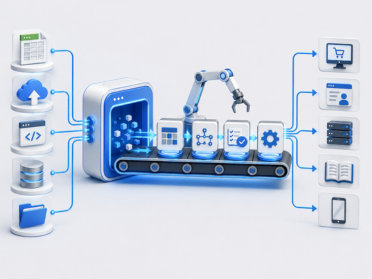
Product Variant and Configuration Management
Furniture catalogs frequently contain product families with multiple colors, materials, sizes, finishes, orientations, modules, and configuration options. PIM structures these relationships so valid product combinations can be managed without creating disconnected records for every variation.
- Manage parent-child product and variant structures
- Define colors, fabrics, materials, finishes, dimensions, and configuration options
- Connect compatible components, accessories, modules, and replacement products

Standardized Furniture Product Information
Product attributes may vary significantly across categories such as sofas, beds, tables, chairs, storage, office furniture, outdoor furniture, and accessories. PIM creates category-specific product models that standardize how this information is structured and governed.
- Standardize dimensions, materials, finishes, construction, and performance attributes
- Define category-specific attribute requirements and controlled values
- Apply validation and completeness rules before products are published

Omnichannel Product and Asset Consistency
Furniture customers move between websites, marketplaces, physical stores, showrooms, catalogs, social channels, and dealer networks before making a purchase. PIM helps maintain one governed product record while delivering the appropriate information and assets to each destination.
- Publish product content to eCommerce, marketplaces, showrooms, dealers, and catalogs
- Connect images, swatches, videos, manuals, and 3D assets with the correct variants
- Manage channel-specific descriptions, attributes, and content requirements
- Keep product changes synchronized across downstream channels

Digital Commerce and AI Readiness
Furniture purchases depend heavily on product discovery, visual context, comparison, customization, and confidence that a product will work in a particular space. Structured PIM data provides the foundation for richer digital shopping and AI-assisted product experiences.
- Improve search, filtering, comparison, and product recommendations
- Support attribute- and style-driven furniture discovery
- Enable product configurators and visualization experiences
- Prepare structured product information for natural-language search and AI applications
Our Approach to PIM Implementation Services
Through our PIM implementation services, furniture companies can centralize complex styles, variants, materials, finishes, dimensions, digital assets, and product relationships in one governed environment.
01
Assessment and Planning
Analyze your product portfolio, categories, variants, data sources, systems, digital assets, workflows, channels, and business priorities to define a clear PIM implementation roadmap.
02
Customization and Configuration
Design furniture-specific product models, attributes, variant structures, product relationships, workflows, user roles, validation rules, asset relationships, and integrations.
03
Enrichment and Governance
Cleanse and migrate existing product information, standardize attributes and values, establish data ownership, and configure enrichment, validation, review, approval, and change-management workflows.
04
Deployment and Training
Launch PIM across priority categories, brands, collections, markets, and channels, train internal users, monitor adoption, and provide ongoing post-deployment support.
Business Impact of PIM for Furniture
PIM transforms fragmented furniture product information into a governed business asset. It reduces manual catalog work, simplifies variant management, improves product-data quality, accelerates launches, and enables richer customer experiences across every selling channel.



Real Business Impact: PIM Success Stories in Furniture & Home Products
Leading Office Interior Design Brand
73%
Improvement in Customer Satisfaction
Credencys implemented a unified digital commerce solution using PIM, DAM, and MDM to centralize complex product information, digital assets, and product relationships while creating dedicated portals for vendors, customers, and administrators.
Read MoreGlobal B2B2B Sourcing & Supply Chain Company
200+
Factory Partners Connected
Credencys implemented a centralized PIM and DAM solution to consolidate product information and media assets coming from more than 200 factory partners. The solution replaced spreadsheets, PowerPoints, and email-driven processes with automated product onboarding, digital catalog creation, retailer product discovery, and RFQ workflows.
Read MoreLeading Home Furnishings eCommerce Agency
70%
Faster Product Data Turnaround
Credencys implemented an AI-powered PIM solution for an eCommerce agency managing more than 500,000 active SKUs across 70+ retail partners and 20+ home furnishing categories. The solution centralized product attributes and digital assets, automated product onboarding and enrichment, and established structured data governance to support growing retailer requirements.
Read MoreReady to Modernize Your Furniture Product Data?
Build a trusted product-data foundation that simplifies variants, improves product accuracy, enriches digital experiences, and keeps furniture information consistent across every channel.
Book a Free ConsultationWhy Leading Enterprises Choose Credencys?
Credencys helps enterprises turn complex data into trusted insights, intelligent operations, and measurable business growth. Here’s what makes us a preferred data and AI partner:

End-to-End Data Expertise
From data strategy to AI deployment, we cover the entire spectrum—Data Management, Engineering, Insights, and Intelligence—to ensure your data drives measurable business outcomes.

Domain-Focused Solutions
Whether you're in retail, automotive, or manufacturing, our purpose-built platforms solve industry-specific challenges with precision and speed.

Enterprise-Grade Partnerships
We collaborate with the best in the business to deliver future-ready, scalable, and secure solutions.

AI-First
We help you move beyond dashboards—accelerating AI readiness, deploying GenAI and enterprise AI agents, and enabling intelligent automation across your data ecosystem.
50+
Enterprise Clients
100%
Certified Consultants
15+
Years Experience
4.9/5
Client Satisfaction
We Build PIM Solutions for


Frequently Asked Questions
PIM for Furniture is a centralized approach to collecting, structuring, enriching, governing, and distributing product information for furniture products. It helps manufacturers, brands, and retailers manage dimensions, materials, finishes, variants, configurations, descriptions, specifications, images, documents, collections, product relationships, and channel-specific content from one governed product-data foundation.
Furniture catalogs contain complex product families and large numbers of variants based on characteristics such as size, color, material, fabric, finish, configuration, and orientation. Product information is also frequently spread across ERP, spreadsheets, manufacturing systems, DAM, websites, marketplaces, and catalogs.
Yes. PIM can define relationships between a base furniture product and different sizes, colors, fabrics, materials, finishes, orientations, modules, and other variations.
Yes. PIM can maintain the product information, attributes, options, relationships, and compatibility rules required by configurable products.
PIM gives eCommerce platforms structured information that can power better search, filters, comparisons, product detail pages, recommendations, and configuration experiences. Customers can evaluate products using attributes such as dimensions, material, finish, color, style, seating capacity, room type, configuration, and other relevant characteristics.
Yes. 3D models and AR files can be stored or linked like other digital assets and published with the right product and variant to channels that support them.
Yes. Assembly instructions, care guides and other documents are linked to products and published with them on your website and marketplaces.
Trusted by Best
Choosing Credencys means partnering with a team that’s deeply committed to unlocking the true value of your data. Here’s why industry leaders trust us:
Our Valued Clientele


Send us a Message
